New Mars Forums
You are not logged in.
- Topics: Active | Unanswered
Announcement
#1526 Re: Home improvements » Building high efficiency space style homes » 2024-06-02 11:34:38
depending on tax and town laws some will be prohibited while those wanting to be off grid inside a local township or city may be forced to hook up to services that they could do in a self-sufficient mode.
I suspect that most designs will have lots of high-tech features built into them.
Electrical, heat and cold storage are just a few that one will do.
#1527 Re: Meta New Mars » GW Johnson Postings and @Exrocketman1 YouTube videos » 2024-06-02 11:31:40
This current forum does not allow me to split and merge a post to the correct topic, but I can quote, and copy paste it to what I believe is the correct one.
#1528 Re: Single Stage To Orbit » SSTO Airframe and TPS Materials » 2024-06-02 11:30:27
I’m unsure where to post this. It and some of the preceding posts may well belong somewhere in the new SSTO topic.
Composite materials are tricky, and the advertising hype about them is very, very misleading.
The advertised high strengths are always ONLY in the fiber lay direction! Strength in the other directions is very much lower, and can be near-zero out of the fiber plane, depending essentially only upon the matrix properties. You have to “play God” and know all the necessary fiber lay directions to handle all the loads your structure might ever encounter. The odds of actually doing that successfully, first time up in a new design, are actually quite low.
These composite materials have strength only in the direction of the fiber lay, and even then ONLY so long as the matrix holds them in place! If the matrix fails for any reason at all, your material essentially turns into loose rags or threads or yarns. You can get strength in two directions, for some variable-with-angle level of strength in-plane, by using real woven cloth as your fiber.
The strength between two layers of fiber laid in different directions, or two layers of woven cloth oriented differently, is ONLY that of the matrix gluing them together, which is usually down in the 5-10 ksi range, and even then usually only by shear! If your stresses are 3-D, the material will fail at very low stress levels, in precisely the direction where fibers do not lay. It is inherent.
There is no practical way around that, other than fully-3-D fiber preforms, the manufacture of which is extremely difficult and horribly expensive. And the infiltration of those 3-D preforms with a matrix is also extremely difficult and horribly expensive! This is usually only done with metal matrix composites.
The tightly-woven tapes in particular are very strong in the long direction, when used in composite work. But if you try to use that by itself, in multiple layers of spiral wrap in alternating directions to make a cylindrical vessel, the only thing connecting one strip of tape to the next is matrix shear, with a low shear-bearing area from one tape strip to the next tape strip! Pressure test results of the vessel will be extremely disappointing! You might have considerable hoop strength, but you will inherently have almost zero longitudinal strength, and you will have essentially no bending strength as a tubular bending-loads-resisting structure (as in a cylindrical tank that is also an airframe component). These are best made with a few layers of woven fabrics, or many, many layers of yarn spin-wrapped in multiple different directions.
You cannot use composites, especially woven composites, in arbitrarily thin layers! The thinnest thickness of a one-layer woven cloth composite is the thickness of that cloth layer. Period. Set by the threads or yarns from which it was woven, but a bit larger due to the weave geometry. You are extremely unlikely to get the strengths you need, unless there are actually multiple layers with different fiber lay directions! This stuff simply cannot be arbitrarily thin! Formable metals can be arbitrarily thin, except that alpha-phase titanium cannot, only beta phase titanium can be formed into thin sheet (which ages at room temperature into uselessness, with big, weakly-bound grains).
The ceramic and carbon fibers that are now popular are indeed “good” for substantial exposure temperatures, by themselves. Generally speaking, the organic polymer matrices you must use with them are not! Most of the hydrocarbon-type polymers start charring at around 300-400 F, and even the silicones start charring at about 600 F.
Everything organic or silicone is fully carbonized by no more than 1000 F, into something soft and crumbly, resembling the charcoal in your BBQ grill, except that it may still be reinforced by the fibers, but only if those fibers were ceramic or carbon. That is not a particularly reusable material for heat exposures, but if the charcoal “hangs together” better with the fiber reinforcement, the hype can truthfully claim their material “survived” the exposure, as long as NOT A WORD was said about ever using it again!
None of the polymers, or other plastics that I have ever heard of, have more than utterly-trivial elongation capability soaked out cryogenically cold (way under 1%). Using such materials in composite cryogenic propellant tanks thus presents two extremely serious problems: (1) very brittle behavior conferring extreme fragility in any kind of handling, and (2) leakage of propellant through the inherent porosity of the composite, unless you can successfully add some sort of internal sealing layer (not a trivial exercise in and of itself).
Taken together, those cryo-cold fragility troubles, the weight of multiple fabric layers to get strength in more than one direction, and the inability to sustain high temperature exposures, plus the manufacturing costs, are EXACTLY why SpaceX abandoned its original composites-construction concept for its Starship, in favor of simply welding-up 300-series stainless steel sheets!
Not having to put a heat shield on the lee side surfaces with stainless steel saves a great deal of heat shield weight, and also saves some rather large manufacturing costs, which made stainless steel the far better choice for a stage that must also qualify as a re-entry vehicle from orbit, plus endure descent and landing loads. You can take 304/304L SS to 1200 F as many times as you like, although it will start corroding and scaling if you let it get any hotter than that. Nothing re-radiates efficiently enough for self-cooling until it reaches temperatures in that 1000-1200 F class. Organic-matrix composites never will survive that exposure, and still be usable a second time.
There is also the issue of stiffness, which is partly the moment of inertia of the geometry, and partly the modulus of elasticity of the material. Steels have a modulus of elasticity in the 30 million psi range. Aluminum is about 10 million psi. Carbon-epoxy gets close to aluminum, and the other things like glass-vinyl ester (or glass-polyester) are far less stiff than that. Even Kevlar-vinyl ester, while quite tough against impacts and punctures, is far less stiff. Depending upon what the structure has to do, the achievable stiffness may (or may not) be crucial. But carbon-epoxy (and the others I mentioned) is limited to under about 300 F exposure, if the epoxy matrix is to survive in a reusable condition!
And then there is detection of impact damage, to which any composite is critically vulnerable. Unless of catastrophic magnitude, it’s often hidden damage, you see nothing on the surface. Ignoring the advertising hype otherwise, the only way known to reliably detect hidden damage is by comparing before and after x-ray images, looking for differences. There has to be one taken before the impact, and the other after, for this to work.
Every square inch of the composite has to be in an as-built x-ray somewhere, so that after a suspected impact, a post-impact x-ray can be taken for direct comparison to the as-built x-ray. The advertising hype is wrong, there are NO general criteria for evaluating post-impact x-rays only! Nothing is reliable enough to permit that! These materials are simply too variable from one square inch to another, to permit that sort of thing. This requirement for as-built x-rays during manufacture acts to further drive-up costs.
There is also the question of joints. Everyone is familiar with the way the fiberglass fenders on a Corvette eventually tear out around the machine screws holding them in place. You simply cannot attach composite parts to other structures that way, it is not reliable, and it won’t last, especially if highly-loaded. Fiberglass or something else, it does not matter! Composites and conventional fasteners are simply incompatible.
What is required is a hybrid of alternating layers of the composite and shim-stock thin metal, with enough layer bond area to carry the loads by only matrix shear, from the metal layers holding the fasteners, into the composite layers that extend into the rest of the composite structure. There must be enough layers of the metal shim material to take the fastener loads as bearing loads without failing, which in turn means there must also be many layers of composite, in the region of the joint.
That’s very labor intensive (and therefore expensive) to accomplish, which is EXACTLY why I do not trust Boeing to have done that job correctly on the B-787. Neither do I trust Airbus to have done this job correctly, not after that Airbus lost its composite vertical fin and crashed in NYC many years ago. The fin tore out around the bolts holding it to the aluminum airframe (it was not a hybrid joint, surprise, surprise). But this hybrid technique worked like a charm with composite solid rocket motor cases and metal end closures, up to 4-5000 psi, as tested and well-proven.
If you get the idea that designing and building with these materials is difficult, and fraught with fatal pitfalls, then you understand the main point here. If you do this job wrong, you will achieve better weight reductions and more cost savings (although still more expensive than metal construction). However, the product WILL INEVITABLY FAIL unexpectedly in service, causing very serious and expensive legal issues of the “whose fault was this?” type. Such can be quite catastrophic.
On the other hand, if you do the design correctly, and avoid those unexpected failures in service, your product will cost even more, and it will save only a little weight, compared to equivalent metal construction. Top managers hate that. Rightly or wrongly (wrongly in my opinion), they tend to discount the legal troubles for unexpected failures in service, and will push you very hard to do the job wrong. (Which in turn is partly why the advertising hype lies so egregiously.)
I’m probably obsolete and out-of-date, regarding all the latest composite materials. But none of these older ones (or the new ones I am not familiar with) will have any different extreme directionality of their properties, or any different severe limitations on exposure temperatures for their organic matrices (including the silicones). And the metal matrix composites are still horribly expensive, and probably always will be. As well as exceedingly difficult to manufacture.
There are no “magic” materials!
GW
#1529 Re: Unmanned probes » X-37 Goes to Mars » 2024-06-02 11:27:18
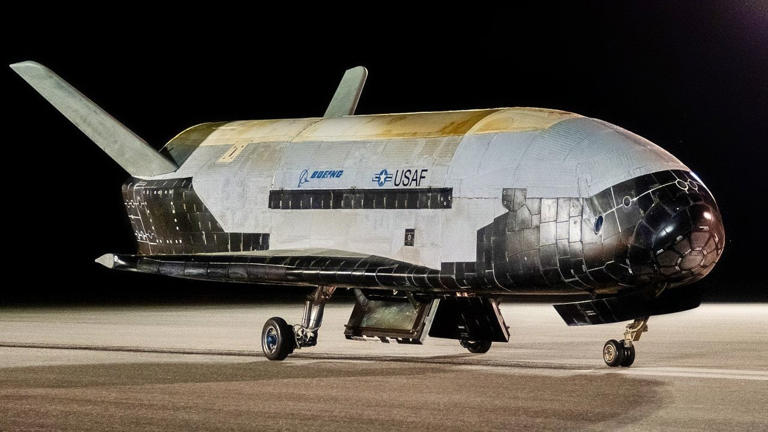
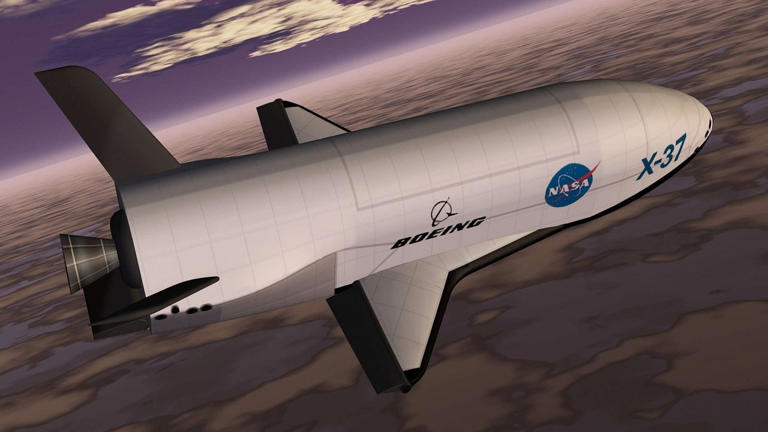
Here is another X-40A: Experimental Space Plane That Helped Create the X-37B

Summary and Key Points: The X-40A was an unmanned space maneuver vehicle, serving as the precursor to the X-37B spaceplane.
-Developed by Boeing's Phantom Works, it was 80-90% the size of the X-37B and was designed to test guidance, control, and landing systems.
-The X-40A conducted several drop tests from a helicopter, starting in 1998, to study its descent and horizontal landing capabilities.
-This testing provided valuable data for the development of the X-37B, which can orbit the Earth for extended periods and return autonomously.
-The X-40A is now displayed at the National Museum of the United States Air Force.
Meet the X-40A
After the space shuttle retired, it looked like it was the end of the line for vertically-launched and horizontally-landed reusable spacecraft. But the United States actually has an unmanned “mini-space shuttle” called the X-37B that can orbit the earth for up to 780 days. What was the precursor to that spaceplane?The X-40A provided the impetus for guidance and control during autonomous flight and gliding landings. This allowed the Americans to gain insight and flight experience to optimize the craft that would become the X-37B.
What Was the X-40A’s Mission?
The unmanned X-40A space maneuver vehicle was 80 to 90 percent the size of the X-37B. The craft was tiny – only 22-feet long and 2,600 pounds. It was dropped from a Chinook helicopter at 15,000 feet and then started its descent to land horizontally at Edwards Air Force Base. The X-40A had no engines – it was an aircraft created to study how the software and other internal systems would react to a 75-second free-flight descent and landing.The craft was built at Boeing’s Phantom Works at Seal Beach, California known for “black projects” and experimental aircraft. The first flight was in 1998 at Holloman Air Force Base in New Mexico. The X-40A, made of graphite-epoxy and aluminum, had to learn to land with wind gusts and make sure it didn’t do a face plant on touchdown. It conducted seven other landings under the guidance of NASA starting in 2001.
What Was the X-40A Used For?
The idea behind the X-40A program was to help the United States someday create a spacecraft (the X-37B) that could send out satellites and perform surveillance and logistic duties. The X-40A cost around $1 million to build and the program had $5 million invested in it.The Difficulty with Reusable Space Planes
The difficult part of a reusable space plane is the size of the cargo payload. It is desirable to cut launch costs so, for example, NASA could spend just $1,000 per pound of cargo instead of $10,000 per pound of cargo. Both the X-40A and X-37B are small crafts. The X-40A had a small payload bay and did not have a capture arm like the Space Shuttle - so that reduced its capabilities.x-38B
Also, the X-40A, having only a limited glide mission, could not prepare engineers for what would await the X-37B in space. Would it be cost-effective? Could it be turned around quickly for new flights without having to replace tiles? How flexible and responsive was the X-37B going to be?
All of these questions would come from lessons learned flying the X-37B, but the X-40A had an important role in developing a testbed for gliding and free-falling to land horizontally – the main aspect of having a reusable spaceplane.
You can see the X-40A now at the National Museum of the United States Air Force at Wright-Patterson Air Force Base.
#1530 Re: Home improvements » Solar cooking » 2024-06-02 10:33:02
https://en.wikipedia.org/wiki/Solar_cooker
People have built quite the variety of products that mostly relly on solar concentrating to bring heat levels up to what is needed to bake and more.
solar dishes are popular
#1531 Home improvements » Solar cooking » 2024-06-02 10:30:17
- SpaceNut
- Replies: 2
Some areas are going to be easier to use but thermal energy is what is needed.
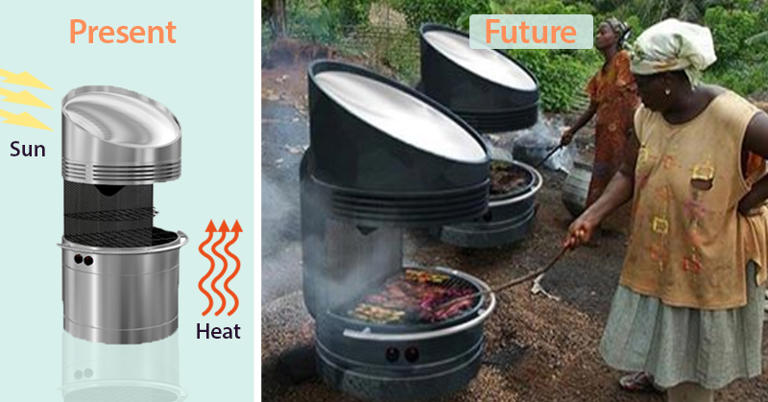
Wilson solar grill stores the sun's energy for fuel-free grilling every night
Sort of a back yard BBQ .
Grilled food is undeniably delicious, let it be burgers, chicken, corn on the cob, steak, or something more inventive. During warm weather, it's an enjoyable time to connect with family, neighbors, friends, and old acquaintances.
Unfortunately, our grills are harmful to the environment. Whether you use wood chips, charcoal, or propane, it releases emissions and creates poor air quality. Up until now, solar-powered cookers needed to the sun in order to function, which means that the environment suffers by night and evening barbecues, which, to be honest, is the prime time to have them.
This genius found the perfect solution for us to barbecue without ruining our environment.
Wilson Solar Cookers Without Fuel
MIT professor David Wilson developed a new solar technology that will bring a solar cooker that functions at night. This invention will significantly benefit developing nations who depend on wood for cooking.Wilson's technology concept harnesses the sun and stores the latent heat for cooking for up to twenty-five hours at temperatures above 450 degrees Fahrenheit. The technology uses a Fresnel lens to hold the sun's energy to melt a container of Lithium Nitrate which acts as a thermal-storing battery for 25 hours at a time. Afterwards, the heat is released for our favorite way to cook outdoors.
"There are a lot of solar cookers out there," Wilson says, "but surprisingly not many using latent-heat storage as an attribute to cook the food." There have been solar cookers, grills, and ovens made before, but they all had to be used during the day to function.
#1532 Re: Unmanned probes » X-37 Goes to Mars » 2024-06-02 10:25:53
The other version of a space plane.
NASA's X-34 Spaceplane: A High-Speed Vision Grounded by Reality
In the 1990s, NASA embarked on an ambitious project to develop a low-cost, reusable spaceplane capable of reaching hypersonic speeds. The X-34 spaceplane was designed to achieve Mach 8 and an orbit at 50 miles altitude, featuring advanced technology like GPS navigation, reusable fuel tanks, and automatic landing systems. Despite successful ground tests and captive carry flights, a series of technical issues and cost overruns led to the program’s cancellation in 2001. The X-34 could have revolutionized space access with flights priced at $500,000 each and a payload cost of $1,000 per pound, a stark contrast to the Space Shuttle’s $10,000 per pound.
NASA’s Marshall Space Flight Center initiated the X-34 program in 1996, aiming to frequent space more often and inexpensively than the Space Shuttle. The unmanned spaceplane was 58 feet long with a 28-feet wingspan and carried by a Lockheed L-1011 mothership. However, by 2000, it was clear the X-34 was not meeting its ambitious timeline and cost projections. The X-34 faced avionics and auto-landing system challenges, and program reviews indicated significant risks and potential cost overruns.
The two built X-34 prototypes, and the uncompleted third, ended up in increasingly unfortunate circumstances. Initially stored at Edwards Air Force Base’s North Base, they were left in dilapidated hangars exposed to the elements. There were fleeting glimpses of hope for their utilization, such as potential use by the Sierra Nevada Corporation for engine testbeds or display in a museum.
The X-34s briefly found themselves as laser designation practice targets for the Air Force and were later moved around various installations, including Mojave Air and Space Port and NASA’s Armstrong Flight Research Center. Ownership passed from NASA to the Air Force, and in a strange twist, the vehicles eventually landed in a backyard in Lancaster, California.
#1533 Home improvements » Building high efficiency space style homes » 2024-06-02 09:45:37
- SpaceNut
- Replies: 5
One of the ideas floated around for a period of time is to construct homes for earth to gain a means of financial gain. This has been shown to be something that earth people have constructed in the past.
13 Spaceship Homes That Are Out of This World
53 slides of images.
depending on locations and needs features will change.
#1534 Re: Terraformation » Are there numerical climate models to simulate Terraforming? » 2024-06-02 09:32:42
We know that mars needs are a thicker atmosphere, but heavy elements will not make it breathable as they will not stay aloft but will sink to the planet's surface.
A higher global field is also required so as to keep it from being blown away.
High altitude membranes tied to support retention is just a means to slow the loss rate.
Adding mass to mars is just another means to a slowed loss rate.
Getting the magnetic core to create a greater field is also something that will be needed long term.
#1535 Re: Not So Free Chat » News about 2024 Atlantic Hurricane Season Begins » 2024-06-02 09:26:28
You have the ability to create in that space and only some members can post or create within it unless the attributes are changed.
Keep in mind that the suns energy comes in across lots of wavelengths and the red end of the spectrum is heat that gets absorbed in air, water and land. Any energy from the sun needs to be captured before its absorbed by any of these.
#1536 Re: Life support systems » Architecture for Sea Level Rise on Earth » 2024-06-01 17:53:32
For a business one must have a state, town or city and last but least the landowner willing to pay the price to keep what they own from vanishing.
Building a seawall costs $25,000 on average, with a wide range between $10,000 and $100,000, depending on the size and type of seawall.
https://www.angi.com/articles/how-much- … eawall.htm
$150 – $600 seawall cost per linear foot
$15,000 – $60,000 Average cost to build 100’ seawall
Materials wood, steel, concrete and even others...
#1537 Not So Free Chat » News about 2024 Atlantic Hurricane Season Begins » 2024-06-01 17:43:12
- SpaceNut
- Replies: 12
The year is about to start
2024 Atlantic Hurricane Season
#1538 Re: Life support systems » Architecture for Sea Level Rise on Earth » 2024-06-01 17:33:12
Now back to the resources required and types.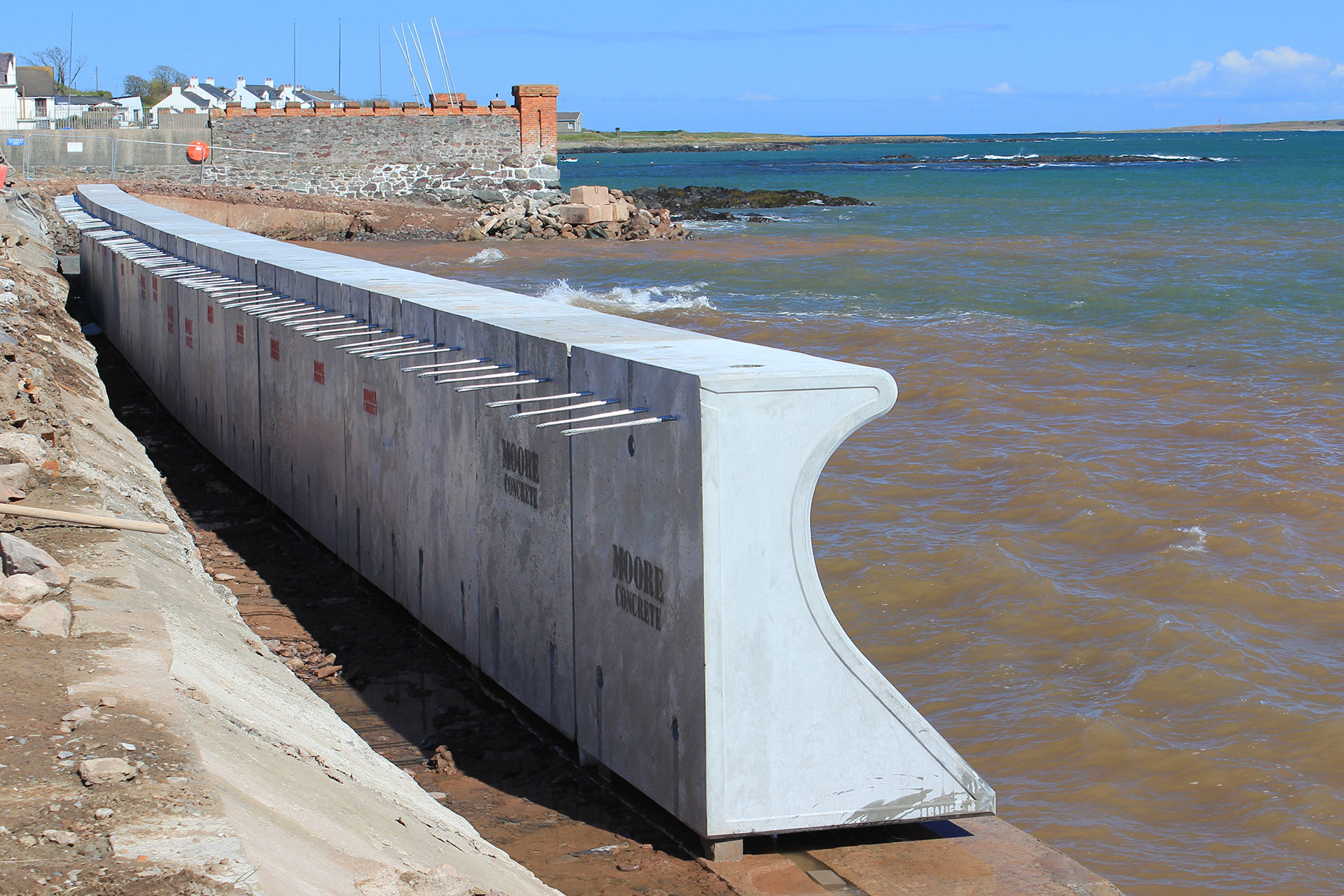
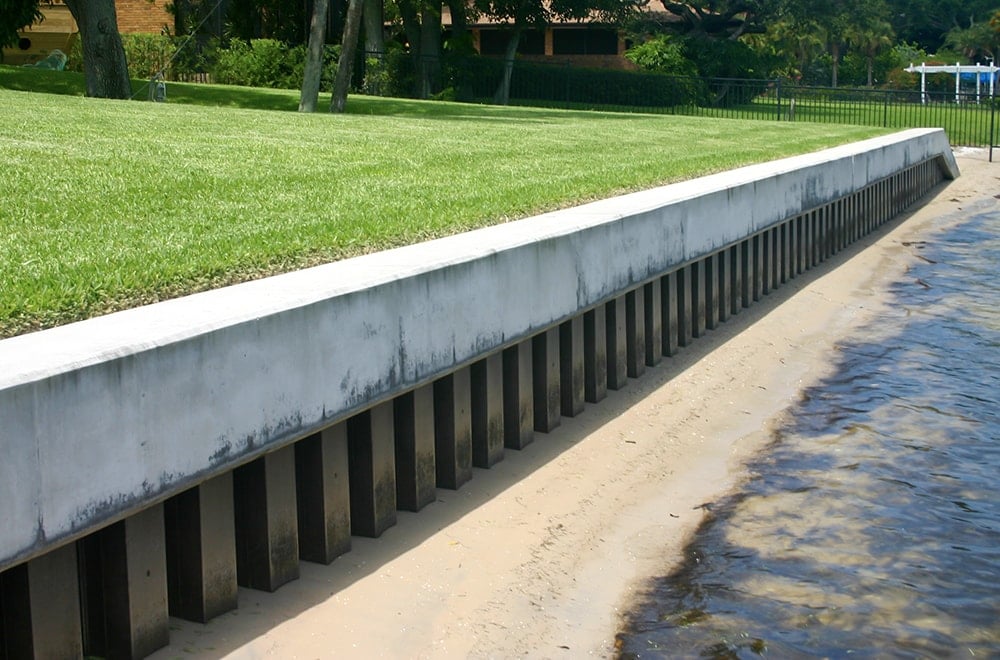
nice green lawn.
Normally pile is set then the wall is created.
#1539 Re: Human missions » Starship is Go... » 2024-06-01 17:17:47
Yusaku Maezawa A Japanese billionaire canceled his trip to the moon on a SpaceX rocket after too many delays as the voyage was scheduled for 2023..
Pulling the plug of business set up in Florida?
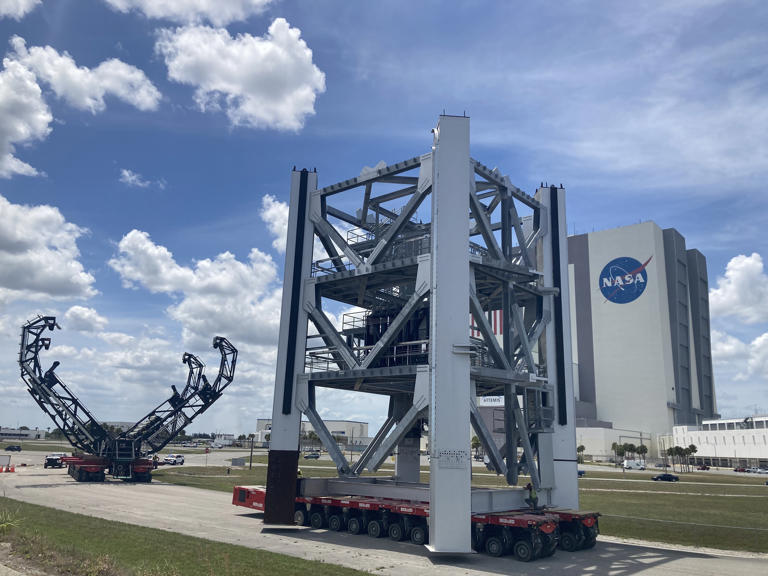
More SpaceX Starship launch tower hardware headed from KSC to Texas
#1540 Re: Life support systems » Architecture for Sea Level Rise on Earth » 2024-06-01 17:14:04
try each line in the post response until you find the line that is whining.
The Us has many oceans front waters that will be below if it keeps rising.
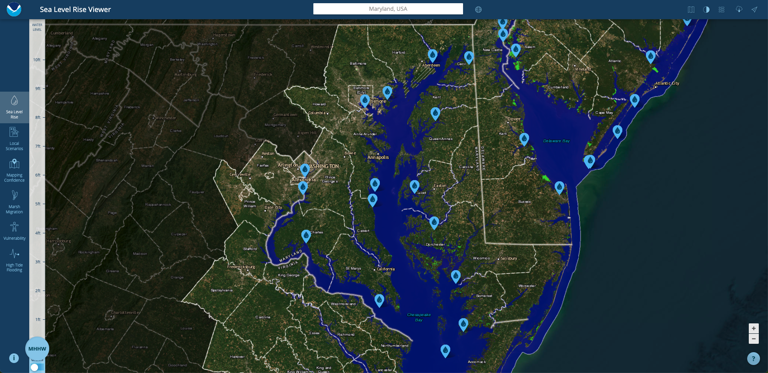
Maryland Map Shows Where State Could Be Underwater From Sea Level Rise
Panama prepares to evacuate first island in face of rising sea levels

Every year, especially when the strong winds whip up the sea in November and December, water fills the streets and enters the homes. Climate change isn't only leading to a rise in sea levels, but it's also warming oceans and thereby powering stronger storms.
The Gunas have tried to reinforce the island’s edge with rocks, pilings and coral, but seawater keeps coming.
#1541 Re: Meta New Mars » JoshNH4H Postings » 2024-06-01 16:10:55
Good to see you back and posting,
We have been working to make the website sustainable and are on the learning curve on what it takes.
#1542 Re: Science, Technology, and Astronomy » Rocket Equation » 2024-06-01 14:51:09
Not sure if I have all of the numbers yet but wanted to see what I could do with stages that are already con structed.
The equation is expressed as: Δv = Ve * ln (Mi/Mf)
Natural log IN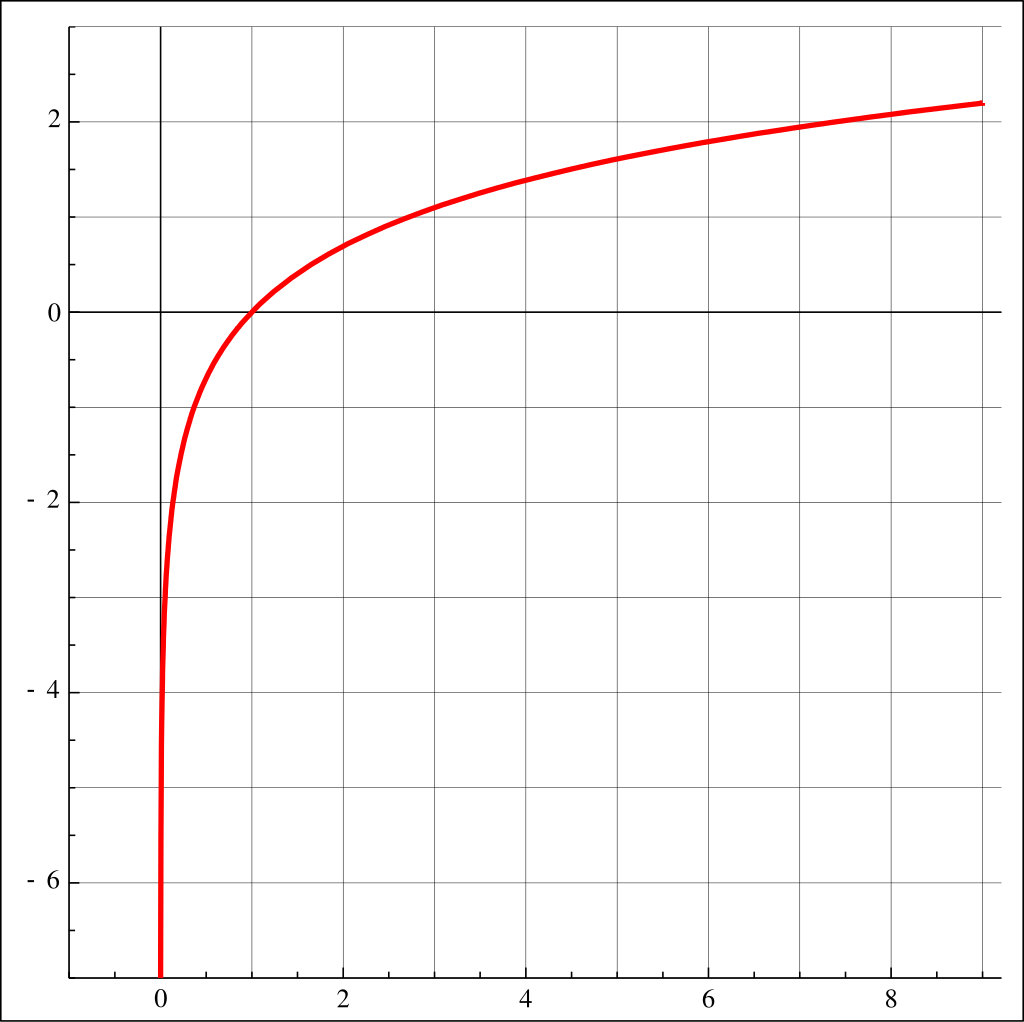
Where:
Δv = velocity change of the rocket
Ve = exhaust velocity of the propellant
Mi = initial mass of the rocket (including propellant)
Mf = final mass of the rocket (after propellant is expelled)
Falcon 9 first stage modified for ssto.
Mass (without propellant)[39] 22,200 kg (48,900 lb)
Mass (with propellant) 433,100 kg (954,800 lb)
Liquid oxygen tank capacity 287,400 kg (633,600 lb)
Kerosene tank capacity 123,500 kg (272,300 lb)
Payload fairing 1,700 kg (3,700 lb)
Thrust (stage total)[4] 7,607 kN (1,710,000 lbf) (sea level)
Specific impulse Sea level: 282 seconds
Propulsion models (Vex = 9.80667*Isp/1000) 2.76548094
MR = 433,100 kg / 22,000 kg = 19.6863
Rocket equation (reversed as MR = exp(dV/Vex))
Δv = 2.76548094 * 2.97992296 = 8.24092
#1543 Re: Single Stage To Orbit » SSTO Engine Technology » 2024-06-01 14:40:16
I began to wonder if the Falcon first stage with modifications would be capable of a single stage to orbit.
https://en.wikipedia.org/wiki/Falcon_9_Full_Thrust
Mass (without propellant)[39] 22,200 kg (48,900 lb)
Mass (with propellant) 433,100 kg (954,800 lb)
Liquid oxygen tank capacity 287,400 kg (633,600 lb)
Kerosene tank capacity 123,500 kg (272,300 lb)
Payload fairing 1,700 kg (3,700 lb)
Thrust (stage total)[4] 7,607 kN (1,710,000 lbf) (sea level)
Specific impulse Sea level: 282 seconds[
#1544 Re: Life support systems » Architecture for Sea Level Rise on Earth » 2024-06-01 14:27:11
We have had another chunk of ICE brake off the ice shelf of Antartica to which it will not be3 the last as we continue to have temperatures rise.
Future sea levels through 2100
Even teh everglases will disappear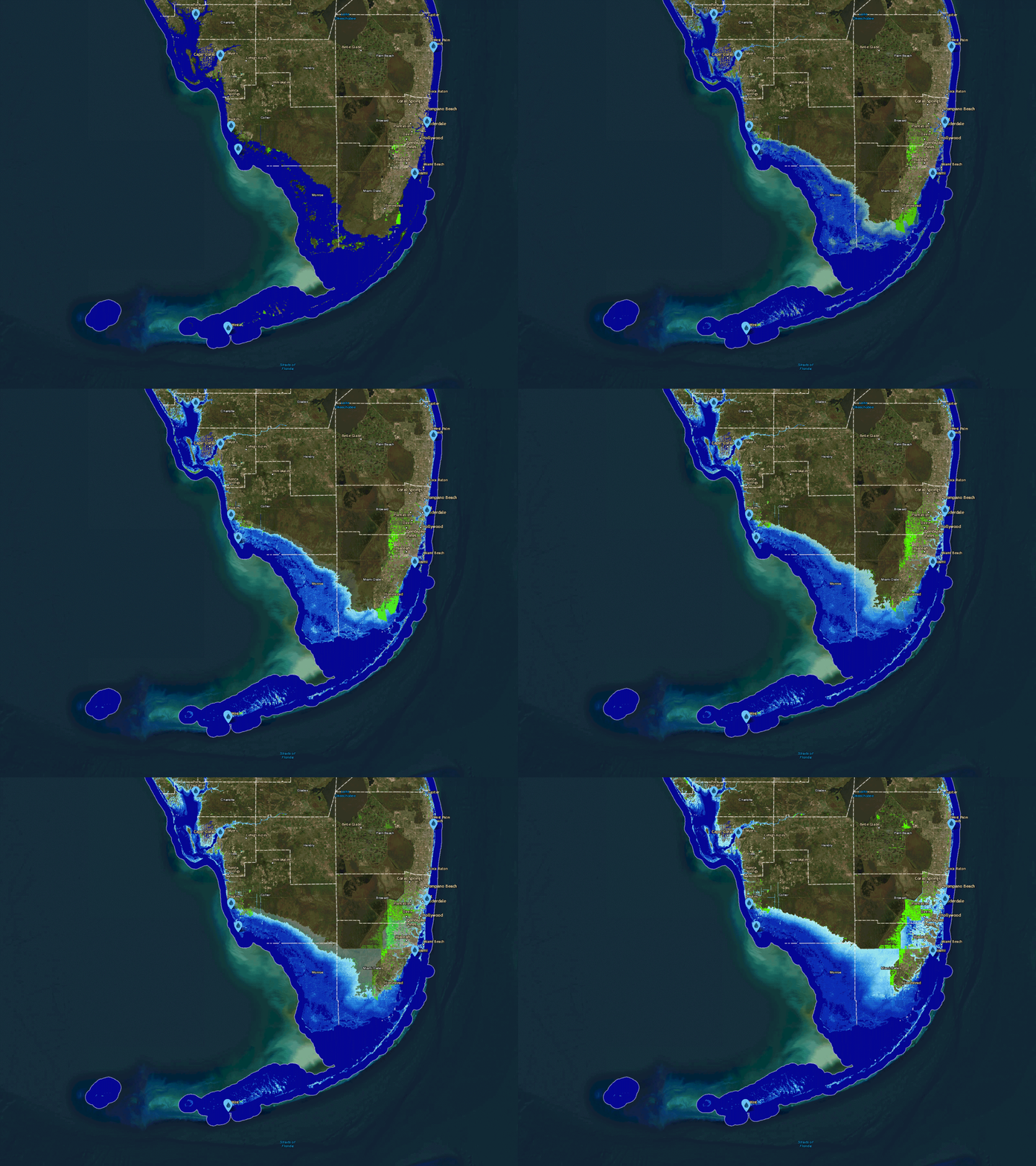
Venice attempts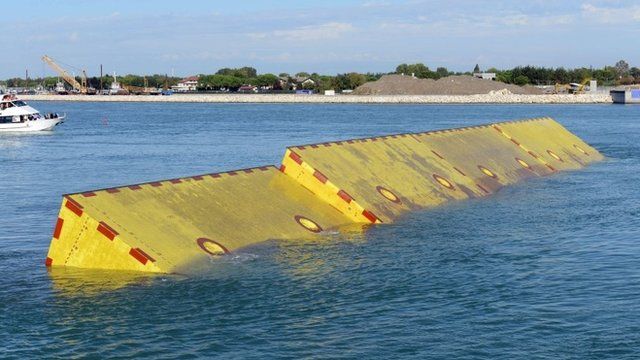
#1545 Re: Human missions » SpaceX 2018 Lunar Flyby » 2024-06-01 10:59:28
I believe that the Japanese billionaire Maezawa cancels moon flyby mission
#1546 Re: Human missions » Boeing Starliner OFT-2 » 2024-06-01 10:52:23
Well Boeing was indicating to Nasa that launch was a bad idea due to the leak. So, the outcome of trying did not change the providers stance to not launch.
#1547 Re: Science, Technology, and Astronomy » Why the Green Energy Transition Won’t Happen » 2024-06-01 10:50:29
Xcel Energy's huge solar and energy-storage facility in Becker, Minnesota, is getting closer to completion — and it's set to start pumping out power this fall, Canary Media reported.
Like many exciting energy projects that have recently been finished or are in development, the Sherco facility is being built on the former site of a coal-powered power plant. Coal produces toxic, heat-trapping air pollution when burned, so many states are shutting down their coal plants.
#1548 Re: Single Stage To Orbit » 500 passenger safety use requirements » 2024-06-01 10:28:24
Hamock do not make sense.
But the low gravity seat seems to be more to the use that space x has been using.
Here is the EVA suits that we will require even if hopefully not used.
#1549 Re: Single Stage To Orbit » 500 passenger safety use requirements » 2024-06-01 07:52:58
https://www.faa.gov/headquartersoffices … dimensions
One can assume that mass will alter seating as compared to that of an airplane.
https://www.fire.tc.faa.gov/pdf/handbook/00-12_apC.pdf

This is too heavy for use.
current space x crew seats
Airbus A380 is approved to hold 853 passengers and 20 crew, and has an interior volume of 550 square meters of floor space (if you assume 2m height, that's 1100 cubic meters). The Starship will have 1100 cubic meters of volume, unclear on how much is usable.
If we go with a rough weight estimate for 100 people + Suitcases + Seats + Floor to carry them would maybe be 250 kg per person in mass. Which would in that case mean 25t total 'payload' compared to and empty Starship upper stage.
This means we are max payload with no safety margin for anything else if payload is exceeded.
#1550 Re: Not So Free Chat » Politics » 2024-05-31 15:10:14
Trumps own history is to outrun the time limits and appeals process hoping to get his way to settle out of court never to face the real law that he did break.
Has Biden broken law or policy during his term? Possibly both and I want neither for another term in office.