New Mars Forums
You are not logged in.
- Topics: Active | Unanswered
Announcement
#801 Re: Exploration to Settlement Creation » WIKI Lighting use How and why things are not simple » 2025-12-10 14:56:12
the second is just a large scereen TV display for the rooms windows to give also what ever screen sceen is desired.
Slow Glass Individualized Service on Mars or Anywhere
third is to use typical room lighting LED fixtures as one wants.
Examining the energy requirements for growing crops with artificial lighting on Mars
I've long wondered about whether crops on Mars should be grown with natural or artificial lighting. There are tradeoffs between growing space/heating energy/lighting energy that are hard for me to evaluate without doing all the math. Today I've decided to take the first step by estimating the energy needs to feed a person using crops grown using artificial lighting.
Conversion of electricity to calories involves a lot of steps, each of which results in some degree of loss. Here's a summary of the losses:
Electricity -> Light: Wikipedia says 40% efficiency is typical for red LEDs, I assume at least 50% is feasible
Light -> Light absorbed by plants: With a reflective enclosure this can be quite high, I use a value of 90%
Light absorbed -> Energy stored in biomass: This lit review gives photosynthetic conversion efficiency of several types of crop plants, ranging from 2.8-4.9%
Energy in biomass -> Energy in edible portion: This can be approximated in some cases using the harvest index, which is harvest mass/total biomass. Example harvest index values can be found here.
Energy in edible portion -> Digestible calories: Not all of the energy stored in food is digestible. I have no clue what a reasonable value for this is though.
I put together a simple calculator in Google Sheets to estimate the power requirements. Using my best guesses at the parameters, here are my estimates for the power requirements for 2500 calories of the following crops:
Potatoes: 219 kWh
Corn: 286 kWh
Wheat: 349 kWh
Peanuts: 560 kWh
Soybeans: 1030 kWh
At mid-latitudes on Mars, a (Edit: 1 m2 ) 20% efficient solar panel produces about 0.5 kWh per day on average. So for solar panels to generate the necessary power, the number of m2 should be about double the power numbers above. These numbers are quite large, I would estimate that a balanced diet would take nearly 1000 m2 of solar panels to feed one person indefinitely. That's not crazy considering the ITS would need upwards of 50,000 m2 of solar panels to refuel in a reasonable time frame, but it still means a lot of mass brought from Earth to power greenhouses.
This doesn't tell us whether artificially or naturally lit greenhouses are superior yet though. Artificially lit greenhouses can cram in a lot more plants per pressurized volume, so if pressurized volume takes a lot of mass to provide, artificial lighting could still come out ahead. This is just one piece of the puzzle.
Also, I want to stress that this is just a quick and dirty estimate for this stuff. There are many possible sources of error in this analysis, here are the ones I think are most likely to make my results inaccurate:
Harvest index is probably a poor proxy for proportion of energy in edible portion because kcal/kg is probably much lower in the inedible portion. This biases energy need estimates upward.
For potatoes peanuts the harvest index includes the shell, I assumed the shell accounted for 25% of the energy
I used an estimate of 80% for percent of energy in the final product that is digestible, in practice it will vary from food to food and I have no idea what a reasonable value is.
These values are for typical crops today, ones used for spaceflight will probably have better photosynthetic efficiency and much higher harvest index
#802 Re: Exploration to Settlement Creation » WIKI Lighting use How and why things are not simple » 2025-12-10 14:50:44
Nice! The idea of projecting upward is particularly interesting! We could mount very light weight mirrors on the interior of the dome, and let the LED's projecting from below illuminate the entire interior.
The original idea was to mount panels on the interior wall, and that would have required lighting that would have needed cables to carry electricity, plus there would be need for periodic maintenance. Your suggestion of projecting light upwards would eliminate all those issues.
We actually had 2 different items for lighting for the inside of the dome and for the inside of the buildings.
First is the white wall of the inside of the dome can be used with a computer and several projector systems to lace any sceen that is desired.
or large-screen projection onto a wall, consider ultra short throw (UST) laser projectors which can create a massive, bright, 4K image from just inches away from the wall. For optimal image quality, especially in brightly lit rooms, pairing the projector with an Ambient Light Rejecting (ALR) screen is highly recommended.
Top Projector System Options
Here are some highly-rated projector systems suitable for large screens or walls:
Product Name Throw Type Resolution Brightness Key Features Price Range (USD)
Hisense PX3-PRO Ultra Short Throw (UST) 4K UHD 3,000 Lumens Google TV, Dolby Vision, great for gaming ~$3,000
Samsung The Premiere LPU9D Ultra Short Throw (UST) 4K UHD 3,450 Lumens Sleek design, smart capabilities with Alexa/Bixby, powerful built-in sound ~$6,000
Epson EpiqVision Ultra LS800 Ultra Short Throw (UST) 4K PRO-UHD 4,000 Lumens Android TV, Yamaha speakers, exceptionally bright picture in any lighting ~$2,800
Optoma HCPro-4400 Standard Throw 4K UHD 5,000 Lumens Dual laser, Dolby Vision/HDR10+, vertical/horizontal lens shift for flexible installation ~$6,000
Key Considerations for Your Setup
Throw Distance:
Ultra Short Throw (UST): Sits a few inches from the wall, ideal for small spaces or living rooms where a ceiling mount or long cable run is impractical.
Short Throw or Standard Throw: Requires more distance from the wall but can be installed at an angle or ceiling-mounted, offering more flexibility in some professional or dedicated home theater setups.
Ambient Light: Projectors with high lumen ratings (e.g., 3,000+ lumens) and/or an ALR screen perform well in brightly lit rooms. A plain white wall works best in a light-controlled (dark) room.
Screen vs. Wall: While you can project onto a wall, an Ambient Light Rejecting (ALR) screen is engineered with specific materials to reject ambient light, enhancing color, contrast, and overall picture quality dramatically compared to a painted wall.
Resolution: 4K UHD and 4K PRO-UHD projectors provide stunning clarity and detail on large displays, making for an immersive viewing experience
For a large screen or wall projection system, key factors are high brightness (lumens), high resolution (4K recommended), appropriate throw distance, and a quality ambient light rejecting (ALR) screen.
Here is a guide and some recommended systems in BBCode format:
Guide to Choosing a Large Screen Projector System
To ensure a vibrant, clear image on a large scale (120 inches or more), especially in rooms with ambient light, consider the following specifications:
Brightness (Lumens): For large screens in a dark room, 1,500-2,000 lumens might suffice. For rooms with moderate to high ambient light (e.g., living rooms, conference halls with windows), aim for 3,000 to 6,000+ lumens. Laser projectors often provide more consistent brightness and longer life than lamp-based models.
Resolution: For large screen sizes, 4K resolution (3840x2160 pixels) is highly recommended to prevent the image from looking pixelated.
Throw Distance:
Ultra Short Throw (UST): Sits just inches from the wall/screen, ideal for smaller rooms and avoiding shadows.
Standard/Long Throw: Placed further back, often ceiling mounted, requiring more room space.
Screen Type: A quality Ambient Light Rejecting (ALR) or Ceiling Light Rejecting (CLR) screen is crucial for maintaining image vibrancy in well-lit environments, as a standard white wall or screen will look washed out.
Recommended Projector Systems
Here are a few high-performance projectors suitable for large screens (up to 150 inches), along with general screen guidance:
High-End Home Cinema (Standard Throw)
Epson Pro Cinema LS12000: A premium 4K Pro-UHD laser projector with exceptional color and contrast ratio, ideal for dedicated home theaters. It features extensive motorized lens shift for flexible installation.
Brightness: 2,700 lumens
Light Source: Laser (rated for 20,000 hours)
Screen Pairing: Pairs well with a high-quality 120"+ matte white or high-contrast screen.
Ultra Short Throw (UST) (for bright rooms/living areas)
Epson EpiqVision Ultra LS800: One of the brightest UST projectors available, designed to be placed near the wall. It's bright enough to be used in well-lit rooms and can produce an image up to 150 inches.
Brightness: 4,000 lumens
Light Source: Laser
Screen Pairing: Requires a specific UST/ALR screen for best performance in ambient light.
Hisense PX3-PRO: A triple laser 4K UST projector that supports Dolby Vision and is great for gaming due to low input lag in game mode.
Brightness: Approx. 3,000 lumens
Light Source: Triple Laser
Screen Pairing: Best used with an ALR screen designed for UST projectors.
Large Venue/Auditorium (Professional Grade)
Optoma ZU820T: A powerful professional installation laser projector designed for large venues, offering very high brightness.
Brightness: 8,800 lumens
Light Source: Laser
Screen Pairing: Suitable for very large screens (over 150 inches) in large halls or auditoriums where high ambient light is a concern.
When selecting a screen, consider brands like Elite Screens, Da-Lite, or Spectra Projection which offer various sizes and materials optimized for different projector types and lighting conditions
#803 Re: Exploration to Settlement Creation » WIKI Lighting use How and why things are not simple » 2025-12-09 18:22:18
USB-powered LED light bars are very common and versatile, offering solutions for under-cabinet lighting, desk lamps, TV backlighting, and accent lighting, available in basic on/off, dimmable, color-changing (RGB/RGBIC), and smart/app-controlled versions that plug into any standard USB port (like from a computer, TV, or power bank). They are known for energy efficiency, easy installation (often with adhesive), and are popular for gaming setups and home ambiance.
Types & Features:
Basic/Task Lighting: Simple, bright white light bars for under shelves, cabinets, or as a desk lamp, often with adhesive backing and a simple inline switch.
Smart & RGB: Color-changing bars (RGB/RGBIC) with music sync, app control (Wi-Fi/Bluetooth), and voice assistant compatibility (Alexa/Google Home) for dynamic room ambiance.
Motion Sensor: Some models include PIR sensors to turn on/off automatically when movement is detected, ideal for closets or hallways.
Monitor Light Bars: Designed to sit atop a monitor, directing light onto the desk without screen glare.
Rechargeable: Some portable versions have built-in batteries, charged via USB.
Common Uses:
Under Cabinet/Shelf Lighting
TV/Monitor Backlighting (Bias Lighting)
Desk & Task Lighting
Gaming Setups
3D Printer Enclosures
How They Work:
They draw power (typically 5V) from any standard USB-A port, requiring low amperage.
They come with attached USB cables, sometimes with an inline switch or remote, and often include adhesive for mounting
a tiered approach to what might be the shape of buildings within the dome.
https://newmars.com/phpBB3/download/file.php?id=7
possible homes within a large crater
https://newmars.com/phpBB3/download/file.php?id=4
individual LEDs are separated into 3 levels types and even more for color spectrum.
30 Lumen
40 Lumens
50 for the bright Lumen
Most of us have seen the rope strips leds that not only have color but we can make a variety to go to mars.

https://l-e-journal.com/upload/iblock/d … 5e051f.pdf
Notice the red and blue colors are all we need of the light spectrum.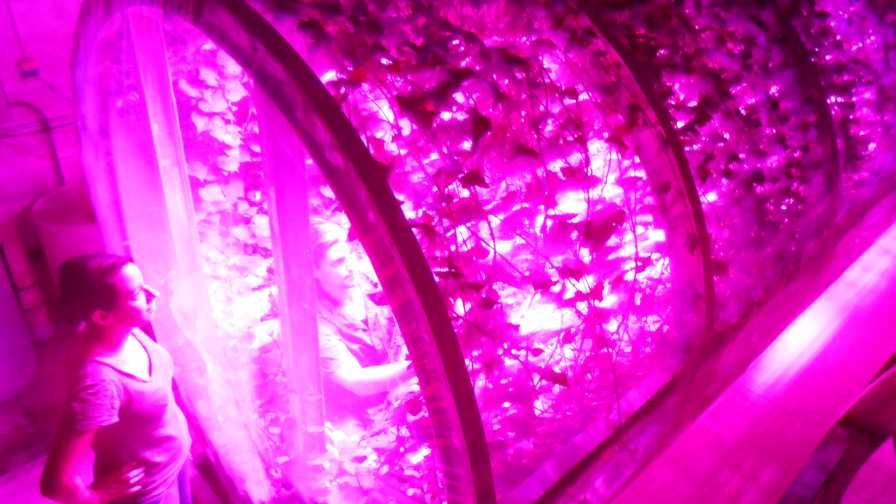
I have been looking back on the use of a greenhouse as a part of life support and have made a couple posts about where nasa is Mars Lunar Greenhouse
This could be something that we not only can use as a base design onboard the ship but since the level of people that might remain on the large ship continuing to grow food we will want a similar system on the mars surface to give replacement parts and general knowledge for its use.
The buried units on the mars surface will require a sleeve for it to reside within.
Mars-Lunar Greenhouse (M-LGH). Funded by NASA Ralph Steckler Program, our team has designed and constructed a set of four cylindrical innovative 5.5 m (18 ft) long by 1.8 m (7 ft) diameter membrane M-LGHs with a cable-based hydroponic crop production system in a controlled environment that exhibits a high degree of future Lunar and/or Mars mission fidelity.
Bioregenerative Life Support
• Per Person Basis
0.84 kg/day O2
3.9 kg/day H2O
50% of 11.8 MJ/day [BVAD Values, 2006]
•2000 Cal/day diet
•Buried habitat
•Six month crew change duration
•Solar for energy supply
•Autonomous deploymentAverage daily water consumption 25.7 L day-1
Average daily CO2 consumption 0.22 kg day-1
Average daily elec. power consumption 100.3 kWh day-1 (361 MJ)24 ± 4 g biomass (ww) per kWh, or
(83 g biomass (ww) per MJ)
edible + non-edible biomass35.9 min day-1 labor use for operations
Of course the question comes to how much of the life support we will need as its based on available power.
GREENHOUSE DESIGN FOR A MARTIAN COLONY
A 40,000 cubic meter (approx. 430,000 sq ft) greenhouse is a very large, industrial-scale facility requiring high-efficiency, commercial-grade LED lighting to supplement natural light and maximize yield, with a recommended power density of 20-40 watts per square foot. Recommended LED Lighting Solutions Horticulture Lighting Group (HLG) Greenhouse Pro HE: High-efficiency (up to 3.62 μmol/J) with a 5'x5' flowering footprint designed for 1:1 replacement of HPS lamps, reducing operational costs.Verjure Pro Series LED VPS4: Designed for large-scale greenhouse operations, featuring a 520W output and a wide form factor for uniform light distribution.Verjure Arize Element L2000: A 630W, IP66-rated fixture optimized for high-yield crops, offering 2,000 μmol/s output and designed to withstand high-humidity greenhouse environments.Photontek XT 1000W CO2 Pro: Suitable for high-density, high-intensity requirements, delivering 2925 μmol/s for 5'x5' to 6'x6' areas. Key Considerations for a 40,000 \(m^{3}\) Facility Light Density: Aim for 32 watts of actual power per square foot for high-demand, flowering, or fruiting crops.Voltage: Use 277V-480V systems to minimize wiring costs and improve energy efficiency for large-scale operations.Spectrum: Utilize full-spectrum lights with enhanced red wavelengths (e.g., Deep Red boost) for maximum yield.Environmental Protection: Fixtures should be IP65 or IP66 rated to withstand moisture and dust.Layout: Install fixtures 30-90 cm (1-3 ft) above the canopy to ensure uniform coverage, potentially using light movers or, for vertical farms, specialized stacking. Operational Strategies Lighting Duration: Run lights for 12-16 hours per day to achieve the necessary Daily Light Integral (DLI).Management: Use smart, dimmable fixtures with control systems for, e.g., simulating sunrises and sunsets.Efficiency: LEDs are 1:1 replacements for 1000W HPS, often using 40% less energy for the same light output
#804 Re: Exploration to Settlement Creation » WIKI Lighting use How and why things are not simple » 2025-12-09 18:16:51
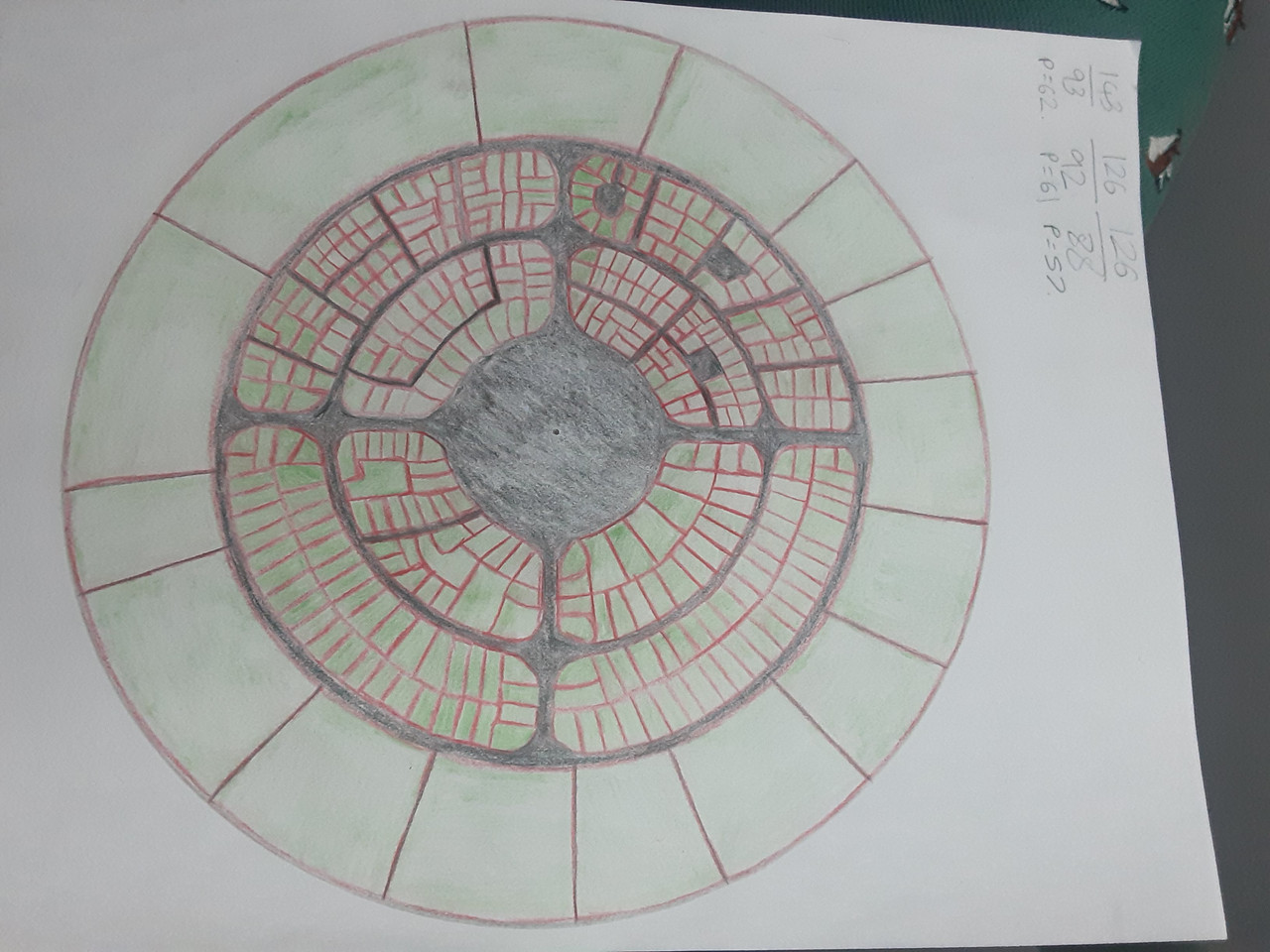
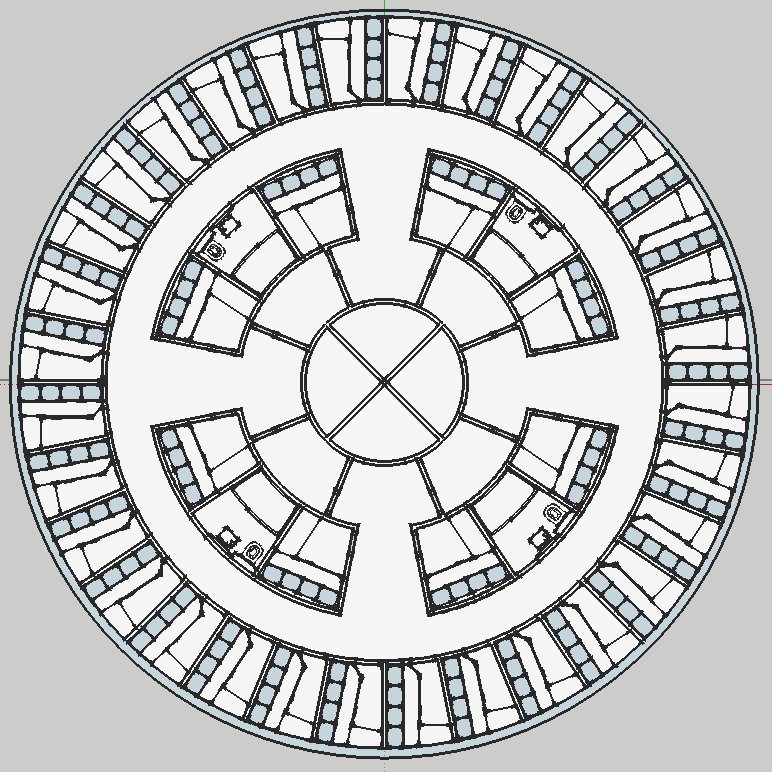
If we have structures inside as noted in a couple of designs for inside for the people to live in such as multiple buildings.
The inside of the building will also need lighting as its not likely that we will have normal windows or doors for the structures.
Which is easier to build on mars per square kilometer; greenhouse windows or photovoltaics/LEDs?

On Earth, greenhouses are easy to build: just a frame and panes of glass. On Mars, the structure has to be pressurized, making the structure heavier.
A pane of glass that can contain 0.33 bar is going to be thick: a load of 4 kN/m2 already needs 2x 25 mm of glass, and 1/3 bar is 33 kN/m2. Plastic may be thinner, but not 100 times thinner.
Nasa plan is an inflatable unit that acts as a complete life support system.
Inflatable Transparent Structures for Mars Greenhouse Applications
electrical could be place into channels.
#805 Re: Exploration to Settlement Creation » WIKI Lighting use How and why things are not simple » 2025-12-09 18:12:47
Space Crop Considerations for Human Exploration
For a Mars dome used for agriculture, the required LED lighting intensity should provide a Photosynthetic Photon Flux Density (PPFD) in the range of 400 to 1000 µmol/m²/s, depending on the growth stage and specific crop type. The specific dome dimensions (200m diameter, 120m tall) define the physical space, but the intensity is determined by the biological needs of the plants being grown within that space.
Key Metrics for Martian Agriculture Lighting
In a controlled-environment agriculture (CEA) setting like a Mars habitat, natural sunlight is generally insufficient or too hazardous due to radiation and dust, making artificial LED lighting the primary solution.Photosynthetic Photon Flux Density (PPFD):
This is the critical measurement for plant growth, quantifying the number of photosynthetically active photons (400-700 nm wavelength) that hit a square meter each second (µmol/m²/s).Target Intensity Ranges (PPFD):
Seedlings/Clones: 200-400 µmol/m²/s.
Vegetative Growth: 400-600 µmol/m²/s.
Flowering/Fruiting (high-light plants): 600-1000 µmol/m²/s (or even higher with CO2 supplementation).System Design Considerations
The large size of the dome requires a sophisticated lighting system design, likely utilizing a vast array of high-efficiency, full-spectrum LED fixtures rather than a few central lights.Fixture Placement:
To ensure even light distribution and the correct PPFD, fixtures would need to be strategically placed and potentially layered (e.g., in vertical farming racks).Energy Efficiency:
High-quality LEDs consume less power for the same light output. Given the energy constraints on Mars, maximizing efficiency is paramount.Light Spectrum ("Light Recipes"):
Different light spectra can optimize biomass or nutrient content. A full-spectrum or "white" light with some far-red might be chosen for balanced growth, while a red/blue mix could maximize certain phytonutrients.Daily Light Integral (DLI):
The total amount of light received over a day is also crucial. For high-yield crops, this typically ranges from 10-30 mol/m²/day.
Ultimately, the exact intensity will be a function of the specific crops selected for the habitat and the overall system design (e.g., if CO2 levels are elevated, higher light intensities can be utilized for maximum growth
About the Lumens to PPF (umol/s) Calculator
Low Pressure Greenhouse Concepts for Mars
Orbital Eccentricity: Mars' orbit is more elliptical than Earth's, causing the solar irradiance at the top of the atmosphere to vary between approximately 497 W/m² (aphelion, farthest from Sun) and 723 W/m² (perihelion, closest to Sun).
Average Surface Levels: Factoring in day/night cycles, seasons, and dust storms, the average solar power available on the Martian surface is much lower, with estimates ranging from 100-200 W/m².
Solar Electric Power System Analyses for Mars Surface Missions
#806 Exploration to Settlement Creation » WIKI Lighting use How and why things are not simple » 2025-12-09 18:12:29
- SpaceNut
- Replies: 27
This is no longer a discussion topic
Old title was Dome LED lighting and for crops
Why I have made use of the dome information within art given to us by Caliban?
Has to do with complete reason for going to mars to stay.
Something that is imported, built with insitu materials when possible plus all the requirements to make mans presence to stay.
When the construction on Mars will not happen is until all things are planned fully for a future where we stay and expand human presence within the stars. Building for man is not simple and requires many things beyond building a structure that is part of the process. Man's requirements are not simple and while one wants them to be separate we must make things connective from each part and not ignoring those other topics as to purpose and actions for the final goal.
Fishbone theory, or the Fishbone Diagram (also known as an Ishikawa Diagram or Cause-and-Effect Diagram), is a visual tool for root cause analysis that maps out potential causes of a problem in a fish-skeleton-like structure, helping teams brainstorm, categorize, and identify underlying issues, not just symptoms, for better problem-solving in quality control and management. The problem is the "head," and major causes branch off the "backbone" as "ribs," with sub-causes extending further, revealing hidden linkages and process bottlenecks for future improvements.
Man needs and requires, short list....FISHBONE
AIR, atmospheric scrubbing and replenishment
WATER, recovery from mars soil, creation by advance process such as Sabatier reactor ect.
FOOD, growth, processing, preserving
SHELTER, protections from mars quakes, mars durna cycle of freeze
RADIATION PROTECTION, shielding for reactors and cosmic
WASTE PROCESSING, making it into fertilizer, water recovery
POWER, derived from imported reactors, RTG's, Solar, Batteries ect.
Heat, cooling, humidity management ect.
Medical care involves wellness checks, minor treatment, surgery
MANY OF these have topics to put content as to how these are interact with construction but they fail if these do not connect. Each have there own sub category for what is done with each.
They are are recognized as need numbers to make the building on Mars sustainable. None stand alone and will have many solutions to how to get there including cannibalizing's what is used to ship the imported items within to create new things from them.
Using brick and support of 2 meters of regolith for shielding means the wall of Caliban's parabolic dome requires a wall thickness.
To support 2 meters of regolith on a parabolic dome of this scale with 0.5 bar internal pressure, the required brick wall thickness is approximately 1.0 meter at the base and 0.1 meters at the apex, assuming a tensile strength of 2 MPa for reinforced masonry.
The brick wall thickness should be approximately 0.10 meters (10 cm) at the top of the dome, increasing to 1.0 meter at the base to safely contain the internal pressure and support the regolith load
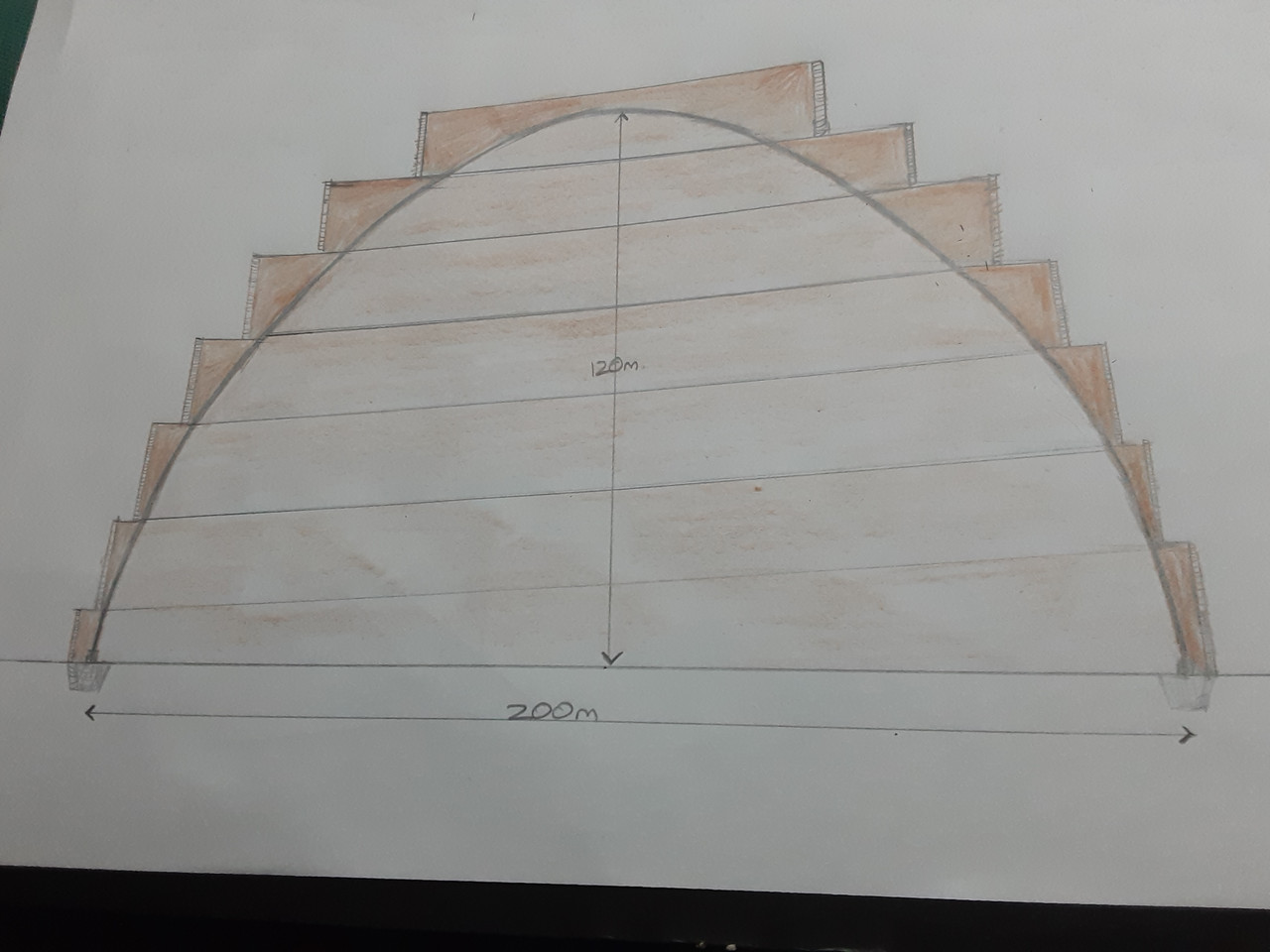
A questioned raised is for people and more.
Of course you recognize that lighting is done with LED panels inside the dome.
The entire complex must be powered by a robust fission reactor. I assume the reactor will be some distance away from the dome, and one of the excavated volumes in the crater wall would be a logical place for such a system.
We can mount the LEDs in panels around the inside pointing towards the dome surface or you can mount them on poles to point upward rather than mounting them which could cause damage to the structure.
Stuff for crops
Crops
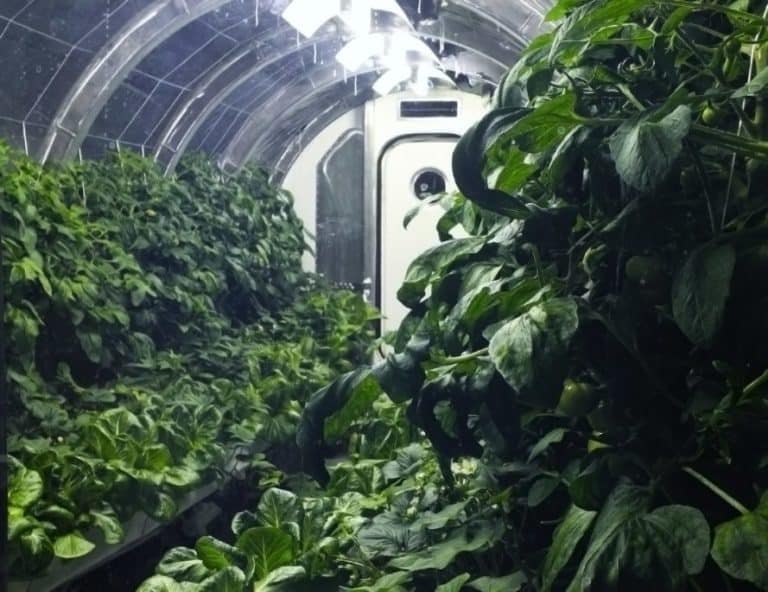
Greenhouse - hydroponics vs soil
Plants need a range of lumens, from 50-250 lumens per square foot for low-light plants to 1,000+ for high-light plants, but specific needs vary by plant type and growth phase. For example, seedlings often require at least 2,000–3,000 lumens per square foot, while mature plants in the flowering stage may need 5,000–10,000 lumens per square foot.
Plant Type Lumens per Square Foot Low Light (e.g., Pothos, Calathea) 50–250
Medium Light (e.g., Rubber Plant, Fiddle Leaf Fig) 250–1,000
High Light (e.g., Succulents, Cacti) 1,000+ Seedlings 2,000–3,000
Flowering or Fruiting 5,000–10,000Important considerations
Know your plant: Research the specific light requirements for your plant species, as needs can vary significantly.
Growth stage: Seedlings and flowering plants have different light needs than mature, vegetative plants.
Distance: The intensity of light drops significantly with distance, so place your lights correctly to ensure the plant canopy receives the needed lumens.
Other factors: Lumens measure brightness for human eyes, but plants also need specific wavelengths (color) for growth, which is measured in Kelvin. Look for full-spectrum grow lights to cover the necessary red and blue light
Dome will need many control systems to keep the people safe.
Humidity Moisture Habitat Air Management
We will need plumbing for all services within the dome.
Power Distribution by pipelines on Mars.
For Mars greenhouses, LED systems need high efficiency, tailored full-spectrum (red/blue emphasis), high PPFD (400-1000+ µmol/m²/s), and robust dust/thermal management, aiming for 300-600 W/m² power density, providing much-needed light during dust storms or low Martian sun, using specialized spectrums (UV/IR) for optimal crop stages, and integrated with closed-loop life support for power efficiency.
Key Requirements for Martian LED Systems
Light Intensity (PPFD): High levels are crucial, often exceeding Earth recommendations due to Mars' weaker sunlight. Aim for 400-600 µmol/m²/s for vegetative growth and 800-1000+ µmol/m²/s for flowering/fruiting.
Spectrum Control: Full-spectrum LEDs are essential, but customizable ratios are better.
Blue (400-500nm): For vegetative growth, compact structure.
Red (600-700nm): For flowering, fruiting, biomass.
UV & IR: For specific needs like enhancing biomass (UV) or promoting rest phases (IR).
Power Efficiency: Critical due to limited Martian energy. Aim for power densities of ~300-600 W/m² (much lower than full sunlight).
Dust Storm Resilience: Systems must operate reliably when external sunlight is blocked for months, requiring robust, sealed units.
** Thermal Management:** LEDs generate heat that must be managed within the pressurized greenhouse, potentially requiring heat sinks or integration with life support systems.
** Photoperiod:** Programmable timers (e.g., 18 hrs on/6 hrs off) to mimic Earth cycles.
Example Power & Intensity Targets
Power Density: ~300-600 W/m².
PPFD: 400-600 µmol/m²/s (veg) to 800-1000+ µmol/m²/s (flower).
System Design Considerations
** Modular Design:** Allows for easy replacement and scalability.
Uniformity: Overlapping light patterns for even canopy coverage.
** Integration:** Linked with environmental controls (temp, humidity, CO2)
#807 Re: Exploration to Settlement Creation » WIKI Project construction design meaning for insitu materials » 2025-12-09 18:05:26
Away to fit in the rooms in the dome

looking up at the top from the inside of a We finally know why Roman concrete has survived for nearly 2,000 years

#808 Re: Exploration to Settlement Creation » WIKI Project construction design meaning for insitu materials » 2025-12-08 19:13:01
This is one of the starships floor plans posts that make sense for crews first homes.
The terrraced over layed hill would have greater numbers for each floor
#809 Re: Meta New Mars » kbd512 Postings » 2025-12-08 18:48:26
Energy requirement, mass of equipment, plus foot print volume required to send to Mars.
Repairability risk of parts not mechanical.
#810 Re: Meta New Mars » Housekeeping » 2025-12-08 18:17:54
I was wondering about the larger what appears to be raised in the center but rimmed with a trough around them. It might be easier to use the large rimmed crators to at least visit to check them out as well.
#811 Re: Home improvements » Misc. Home Projects » 2025-12-08 16:38:49
This design can be built Horizontal or vertical in form https://www.instructables.com/55-Gallon-Drum-Turbine/
#812 Re: Exploration to Settlement Creation » WIKI Constructing things on Mars equipment needs » 2025-12-08 16:28:35
As noted in Housekeeping post if we do use Earth vehices we will need to modify them for the cold which will turn some fuels solid, others to gel and more. Each vehicle will need engine modifications.
Internal combustion engines for Mars
tahanson43206,
If you have to carry the fuel and oxidizer with you, as you would on any planet except Earth, then pure Carbon doesn't require extra Oxygen atoms to combine with the Hydrogen atoms.
Kilograms of Pure Oxygen for Complete Combustion of 1kg of fuel:
Pure Carbon (32.8MJ/kg; 1kg powdered graphite = 1.05-1.15L; 28.52MJ/L): 2.67kg (2.34L); 3.49L ttl vol, 9.40MJ/L incl O2
Gasoline (44-46MJkg; 1kg = 1.2-1.4L; 32.86MJ/L): 2.3-2.7kg (2.37L); 3.77L ttl vol, 12.20MJ/L incl O2
Kerosene (43-46MJ/kg; 1kg = 1.25L; 36.8MJ/L): 2.93kg (2.57L); 3.82L ttl vol, 12.04MJ/L incl O2
Diesel (42-46MJ/kg; 1kg = 1.16-1.2L; 38.33MJ/L): 3.4kg (2.98L); 4.18L ttl vol, 11.00MJ/L incl O2
Methane (50-55.5MJ/kg; 1kg LCH4 = 2.36L; 23.52MJ/L): 4kg (3.51L); 5.87L ttl vol, 9.45MJ/L incl O2
Hydrogen (120-142MJ/kg; 1kg LH2 = 14.1L; 1L = 10.07MJ/L): 8kg (7.01L); 21.11L ttl vol, 6.73MJ/L incl O2LOX is 1,141kg/m^3 or 1.141kg/L
What can we conclude from that?
1. LH2 is a pretty pedestrian fuel when you need to store the cryogenic oxidizer, too.
2. There's not much difference between pure Carbon powder and Methane, except that making Methane is a lot more difficult and requires a lot more energy and technology than bubbling collected CO2 through a column of liquid Gallium eutectic. You need equipment to collect both H2O and CO2, a Sabatier reactor, a reverse fuel cell, and a really good electrical power source.
3. You do get 17% to 30% more energy per total volume by combusting diesel / kerosene / gasoline, in comparison to Carbon powder, but if you thought making Methane was energy intensive, you're going to need to add a lot more energy-intensive equipment to your chemistry set, and of course, you only get that additional energy by combusting it using additional O2 mass, which means you need to make more O2 from some combination of H2O and CO2. It's a pretty safe bet that all those additional chemical reaction steps will cannibalize whatever gains a dense liquid hydrocarbon fuel provides.
4. The relative complexity of obtaining LCO2 feedstock, on Earth or Mars, is pretty low. It's everywhere in the atmosphere and in the oceans here on Earth. Mars helps us out a bit by having a nearly-pure CO2 atmosphere, but at absurdly low density. Speaking of absurdly low density, LH2 looks great, best of all fuels, except when you must consider the mass of the storage equipment, and then it doesn't look so hot.
5. Of all the fuels listed, and any other liquid hydrocarbon fuels that weren't, if you throw a kilogram of Carbon on the ground, here on Earth or on Mars, that same kilogram of pure Carbon fuel will still be there the next day. We can't make the same claim about any of those other fuels. Carbon doesn't require special storage of any kind. If storing a cryogenic oxidizer is a pain we'd rather not deal with, then why compound the problem with fuels which also have special storage requirements?
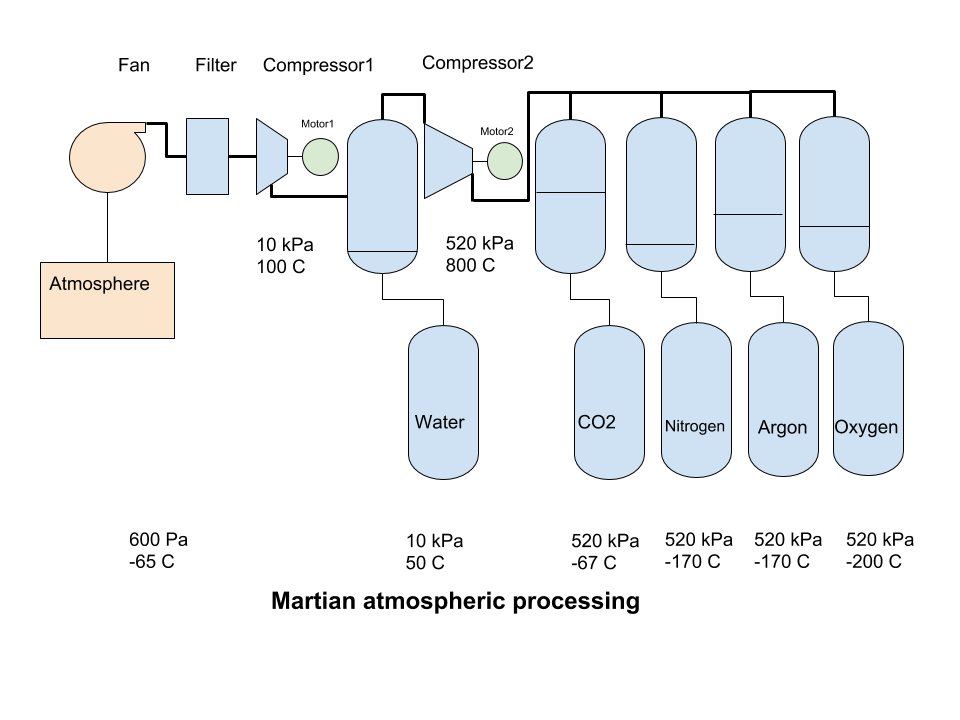
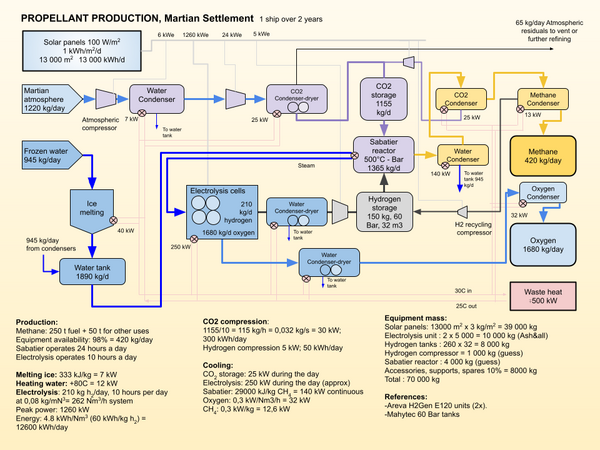
Mars Insitu Fuels made from atmosphere, regolith, water
Mars Water regolith soils 1 foot depth only
#813 Re: Science, Technology, and Astronomy » CO2 capture processing storage applications on Mars » 2025-12-08 16:21:18
#814 Re: Exploration to Settlement Creation » WIKI Constructing things on Mars equipment needs » 2025-12-07 17:23:37
To move 10 cubic meters of Mars regolith, you would need a tandem axle dump truck or a medium-to-large single-axle dump truck. A standard commercial tandem axle dump truck typically holds between 7.6 to 10.7 cubic meters (10 to 14 cubic yards) of material, making it a suitable option for exactly 10 cubic meters.
Dump Truck Options for 10 Cubic Meters
Medium Dump Truck (Single Axle):
These can hold a load volume of 3 to 6 cubic meters, so you would likely need two trips, or a very large single-axle model near its upper limit.Tandem Axle Dump Truck:
This is the most efficient option, as its typical capacity of 7.6 to 10.7 cubic meters can handle the entire volume in a single load. Some models can even handle up to 13 to 20 cubic meters.
Large Dump Truck (Tri-Axle/Super Dump): These trucks have capacities ranging from 13 to over 25 cubic meters, which would easily manage the load, though the truck might not be operating at full volumetric capacity.
Important ConsiderationsWeight vs. Volume:
The weight of the regolith (Martian soil) is a critical factor, even more so than volume. The density of material matters in determining the actual safe load capacity to avoid overloading the truck's weight limits.Martian Gravity:
The user's prompt specifies "Mars regolith," which implies an off-world scenario. The lower gravity on Mars (roughly 38% of Earth's gravity) would significantly alter the weight constraints and potentially allow a standard Earth-rated dump truck to carry a larger mass of material than it could on Earth, assuming the engineering for the martian environment is addressed.Equipment Specialization:
For actual off-world operations, the equipment would be specifically designed for the Martian environment, likely featuring wider cutting heads or different axle configurations to handle the unique terrain and gravity conditions.
How Many Cubic Yards Are in a Dump Truck?

Larger dump trucks can carry approximately 10 to 16 cubic yards of material. However, the total volume is not usually the limiting factor. In most cases, the vehicle’s weight limit will determine how much material you are ultimately able to safely transport.
So a dump truck that we could use is
A tri-axle dump truck typically weighs between 25,000 and 35,000 pounds when empty, but can weigh up to 80,000 pounds when fully loaded, depending on the load and local regulations. The specific weight varies based on the materials used to construct the truck (e.g., aluminum bodies are lighter than steel), the size and type of the dump body, and the weight of the fuel and driver
Electric drive heavy earth-moving equipment for Mars requires robust, cold-resistant components (motors, actuators, hydraulics with special fluids/seals) and power sources (batteries, potential nuclear), leveraging electric motors for efficiency in thin atmosphere, with concepts like track systems (Mars Crawler) for modularity, adapting proven Earth mining tech (Tesla motors, Bobcat designs) for extreme Martian conditions (low temp, near-vacuum), focusing on electric actuation over hydraulics where possible.
Key Design Considerations for Mars:
Power & Propulsion:
Electric Motors: Preferred due to the lack of oxygen for combustion engines.
Power Sources: Batteries (lithium-ion) and potentially radioisotope thermoelectric generators (RTGs) for remote power.
Cold Operation: Motors need thermal management, potentially sealed systems, as air cooling is inefficient in Mars' thin atmosphere.Mechanical Systems:
Hydraulics: Require specialized low-vapor-pressure fluids and durable polymer seals to prevent brittleness and evaporation in extreme cold and low pressure.
Actuators: Electric actuators (like piezoelectric) are being developed for precision and reliability in space.
Materials: Lighter, stronger materials like titanium alloys might replace steel for structural components, reducing mass.Chassis & Mobility:
Tracked Systems: Offer stability and can distribute weight effectively on loose regolith (Mars Crawler concept).
Suspension: Similar to existing rovers (e.g., rock-bogie systems) for uneven terrain.
Modularity: Interchangeable tools (buckets, drills) on a base platform (Mars Crawler) for versatility.Operational Environment:
Temperature Extremes: All components must function from cold to frigid temperatures.
Low Pressure: Affects fluid dynamics and heat transfer; systems need to be sealed or adapted.
Dust: Seals and mechanisms must resist pervasive Martian dust.Inspiration from Earth & Space:
Mine Loaders: Models like large electric mine loaders provide power and robustness, adaptable for road grading and heavy lifting on Mars.
Electric Conversions: Companies converting Bobcat loaders to all-electric show potential for Mars applications.
Spacecraft Tech: Precision actuators from rovers like Perseverance demonstrate technology for reliable space operation.Example Concepts:
Mars Crawler: A track-based platform with modular attachments (e.g., 3D printers, digging tools) run by powerful electric motors.
Electric Tractors: Powerful electric units similar to large mine loaders, capable of pulling heavy freight trains or grading roads
#815 Re: Exploration to Settlement Creation » WIKI Constructing things on Mars equipment needs » 2025-12-07 17:14:26

open pit seems to be the easiest to gather ore.
The equipment needed to make hot sulfur regolith bricks for Mars in-situ buildings involves machinery for excavation, material processing, heating/mixing, and automated construction, likely in the form of a robotic 3D printing system.
The key equipment can be categorized by function:
Raw Material Acquisition and Processing
Excavation Rovers/Machinery:
Automated diggers or rovers designed for low-gravity and remote operation to mine the Martian regolith (soil) and extract sulfur from sulfates and sulfides.
Crushing and Milling Equipment: Machines to break down the excavated regolith and sulfur compounds into a uniform aggregate size suitable for mixing and extrusion.
Chemical Processing Unit:
Equipment, possibly including a thermochemical or electrochemical processing system (like a solid oxide electrolysis cell), to refine the sulfur compounds into elemental sulfur, which is the required binder material.
Sieving/Separation Systems:
Mechanisms to ensure the proper particle size distribution of the regolith aggregate, as optimized mixtures can achieve higher compressive strengths.Brick Production and Construction
Storage and Feeding System:
Hoppers or containers to store the processed regolith and elemental sulfur and feed them at a precise, pre-designed weight ratio (around 65% aggregate to 35% sulfur is a common ratio) into the mixing apparatus.
Heated Mixer/Extruder:
A core component that heats the mixture to above sulfur's melting point (around 120°C) to liquefy the sulfur, uniformly mixes it with the regolith aggregate, and then extrudes the hot, molten sulfur concrete.
This system requires closed-loop heating control and monitoring systems to maintain precise temperature levels.
3D Printing System (Gantry or Robotic Arm):
An automated construction system that receives the hot mixture from the extruder and precisely deposits it in specific forms (layers) to build walls or structures directly on site.
Power Systems:
A robust, reliable power source is essential to run all the machinery, particularly the energy-intensive heating and processing units. This would likely involve solar panels and energy storage systems.Ancillary Equipment
Robotic Control Systems:
The entire operation is envisioned to be largely autonomous, requiring advanced robotic control and monitoring systems due to the communication lag with Earth and the need for reliable, continuous operation in a harsh environment.
Testing Apparatus:
Equipment to perform quality control tests on the finished material, such as compression and flexural strength testers, to ensure structural integrity.
Thermal Management Systems:
Equipment to manage heat and prevent issues like sulfur sublimation in a vacuum or under large temperature swings
A Mars open-pit mining operation, even one of 200m diameter, would rely on modified versions of terrestrial open-pit equipment, adapted for the Martian environment (low gravity, extreme cold, dust, and lack of atmosphere). The primary functions—excavation, loading, hauling, and processing—remain the same.
Key Equipment Categories & Adaptations
Excavation and Loading Equipment:
Large Hydraulic Excavators/Rope Shovels: These would be the primary tools for digging and loading broken material into haul trucks.
Bucket-Wheel Excavators (BWEs): For large, continuous digging operations, BWEs are efficient for continuously moving large volumes of material.
Bulldozers & Wheel Loaders: Used for site preparation, clearing overburden (regolith), and maintaining the working area.
Adaptation Insight: Lower gravity on Mars (38% of Earth's) means reduced ground pressure for digging, so equipment may need modifications (e.g., dual-barrel digging wheels for traction, as explored by NASA for lunar robots).
Haulage and Transportation:
Large Mining Trucks: Essential for transporting large quantities of ore and waste rock from the pit to processing plants or waste dumps.
Conveyor Systems: May be used for more efficient, continuous transport over specific, long distances, potentially integrated with BWEs.
Adaptation Insight: Tires and hydraulic seals must be made of materials that can withstand the extreme cold, as many Earth-based materials become brittle. Haul road maintenance using graders and dozers is critical for efficiency.
Drilling and Blasting (Optional but likely):
Large-Diameter Rotary/Percussion Drill Rigs: Used to drill blast holes for breaking up hard rock formations that excavators cannot manage alone.
Explosive Delivery Systems: While potentially complex due to the need to manufacture explosives (like AN/FO) on-site or transport them from Earth, blasting is a highly efficient way to fragment large amounts of rock.
Processing Equipment:
Primary Crushers: Large gyratory or jaw crushers would be needed to break down raw material to a manageable size before further processing.
Analytical Instruments: Tools like the Rock Abrasion Tool (RAT) used on Mars rovers, spectrometers, and real-time analyzers would be necessary for on-site geological analysis and quality control of the extracted material.
Adaptation Insight: Processing plants would need to be enclosed and possibly heated to function effectively in the harsh environment.
Supporting Infrastructure & Automation:
Power Systems: Large operations require significant power, likely from advanced nuclear, solar, or a combination of sources.
Automated/Remotely Controlled Systems: Due to the hostile environment, a high degree of automation, robotics, and remote operation would be essential to ensure continuous operation and human safety.
Life Support Systems: Pressurized operator cabins (if human-crewed) or remote operation centers would be required.
The specific type of equipment would ultimately depend on the target resource (e.g., water ice, iron-bearing minerals) and the specific geological properties of the Martian site
#816 Re: Meta New Mars » Housekeeping » 2025-12-07 13:33:46
Done as I did not see it but the topic is to collect types, mass and more for the equipment that is needed to be sent to mars.
#817 Re: Exploration to Settlement Creation » WIKI Constructing things on Mars equipment needs » 2025-12-07 09:34:22
https://newmars.com/forums/viewtopic.ph … 14#p155614
MARSHA:
Teslarati 3D-Printed Mars Habitat could be a perfect for early spaxeX starship colonies, MARSHA
I do https://www.teslarati.com/3d-printed-ma … -colonies/
Thanks for the link to others wanting to print habitats on mars or other places but what they do not go into is the prep side of the equation needed to make the materials to be use for the machinery to utilize it to build with from the insitu resources.
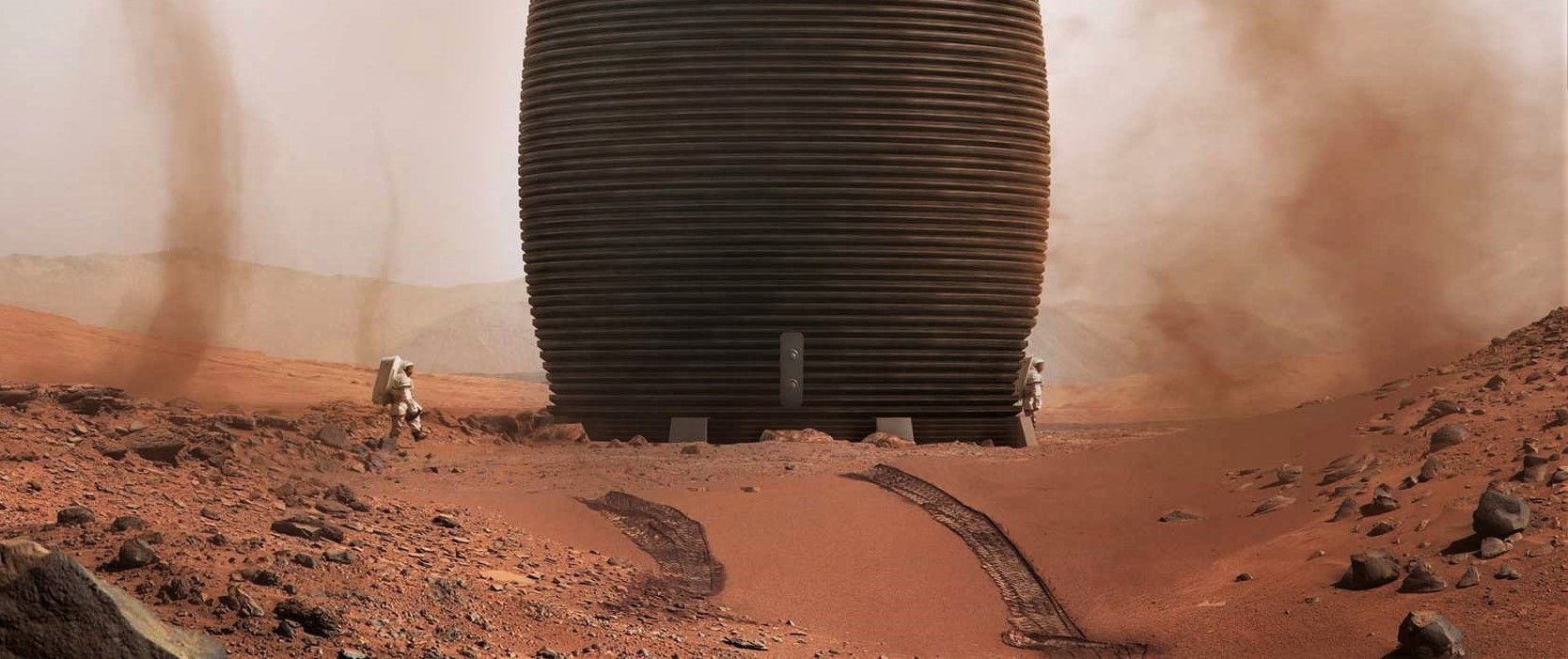
Very cone like indeed...
This is from AI SpaceFactory achieved second place in the latest phase of a NASA-led competition
If I do find the other simular posts I will copy them here so that we will have a list of whom are attempting the technology, the equipment and the materials information of what is targeted for insitu materials.
3D-printed Mars habitat a biorenewable plastic (PLA) reinforced with locally-sourced basalt fiber – also accounts for many of Mars’ shortcomings, as plastics happen to be some of the best materials for radiation shielding per unit of mass. Featuring a duo of PLA shells placing a meter or more of plastic between living areas, MARSHA would permit relatively acceptable radiation levels while avoiding the downsides of locating habitats underground or burying them under several meters of Martian regolith.
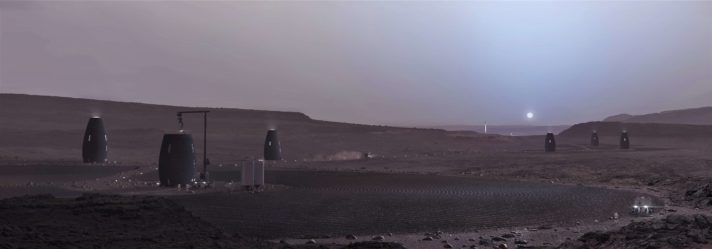
NASA's Centennial Challenges: 3-D Printed Habitat Challenge
https://www.nasa.gov/directorates/space … index.html
3D-Printed Habitat Challenge. NASA and its partners are holding a $3.15 million competition to build a 3D printed habitat for deep space exploration, including the agency’s journey to Mars. The multi-phase challenge is designed to advance the construction technology needed to create sustainable housing solutions for Earth and beyond.
https://www.nasa.gov/directorates/space … mpetition/
After two stages where NASA awarded a total of over $1 million to competitors, the final prize was awarded to the top 5 projects.
Something that I would suggest is dropping a unit in one of the analog areas and run the insitu use processes from scratch to see just how hard it is to prepare the raw materials to make it ready for use for the equipment. Measure and test all aspects of it so that we can have better control to what we might find from the earth use.
https://www.3dprintingmedia.network/top … mpetition/

Team Zopherus of Rogers, Arkansas – $20,957.95
AI. SpaceFactory of New York – $20,957.24
Kahn-Yates of Jackson, Mississippi – $20,622.74
SEArch+/Apis Cor of New York – $19,580.97
Northwestern University of Evanston, Illinois – $17,881.10

These are beautiful for sure

A very firmiliar designed floor layout
#818 Re: Exploration to Settlement Creation » WIKI Constructing things on Mars equipment needs » 2025-12-07 09:13:58
I think that preload of equipment can be done with this concept as we need storage for it when not in use.

Oldfart1939 wrote:I did a bit of research on the Bobcat website last night, and perhaps we should include 2 excavators (tracked backhoes). They're heavier and more bulky than the front loader Bobcat skid-steer units, but these would allow excavation of habitat shelter trenches more rapidly and effectively than front-loader units.
I see you're doing construction. Not just the first exploration/science mission, but construction. The Mars Homestead project assumed 12 crew to construct the first permanent human base. Yes, we believed a construction vehicle was required. I would like to make a suggestion.
This is a typical Bobcat skid-steer loader. There are various sizes. This one is S450. ("S" for skid) Rated Operating Capacity: 1,370lb. Operating weight: 5,370lb
The thing that makes it "skid-steer" is it's wheels. It's wheels don't turn, to steer the vehicle you turn the wheels on one side while wheels on the other do not turn. Or to pivot in place, turn wheels on the other side backward. This means the wheels literally "skid" across the ground as it's steering. Be advised: operating this on grass will tear up the grass. This works very well on pavement or hard or very firm ground. It doesn't work so well on loose soil/dirt/sand/gravel at an incline.This is a typical Bobcat compact track loader. This one is T450. ("T" for track) ROC: 1,490lb. Operating weight: 6,424lb
Track vehicles work better on loose ground and inclines. The track provides more traction. I'm suggesting a compact track loader would be more appropriate for Mars.An excavator can be compact. The first is E10, Rated Lift Capacity 527lb, Operating weight 2,593lb. The second is E20, RLC 1,098lb, Operating weight 4,306lb.
https://assets.bobcat.com/excavators/misc/r-series/bobcat-e10-nav_pm_list.jpgBobcat has become known for compact construction vehicles. Other brands manufacture competing vehicles: John Deere, Case, Caterpillar, New Holland, others.
Heavy Equipment Guide: Companies by Skid-Steer LoadersAny vehicle would have to be customized for Mars. One suggestion I made was to manufacture the vehicle with titanium alloy instead of steel. Titanium has the same weight (mass), but greater strength. That allows making structural members like arms to lift the bucket thinner, so lighter. Hydraulics will have to be adjusted for extreme cold of Mars. And the engine can't breathe air, Mars has no oxygen. Well, practically none; not enough for combustion. When Robert Zubrin and David Baker proposed Mars Direct in 1990, they suggested using methane/oxygen because the ERV would need that for propellant anyway. Just make a bit more for the rover. But rather than using electricity to run ISPP, you could just operate the vehicle with electricity. At least one company specializes in electric conversion of Bobcat vehicles. And Bobcat themselves is working on all electric vehicles using lithium-ion batteries. They're even working on all electric actuators instead of hydraulics; intended for cold climates like Alaska.


Some of the equipment to be sent to mars
Mars Fuel depot and more from Coal plus
This equipment list is in support of 20 - 50 crew members that will be on a mission to build on mars with insitu resources.
4 excavator rovers , 2 bulldozers, 2 regolith processing units, 1 or 2 loaders
Crew & Cargo Requirements (Initial Mission Concept):
Crew: Two Starships for crew, potentially 10-20 people per ship, though future missions aim for 100+.
Cargo: Four Starships for supplies (habitat, ISRU equipment, food, etc.), carrying about 100 tonnes each (400 tonnes total).
If block 3 is where we will be for tonnage then we will have more capacity to deliver a better start to mars.
#819 Re: Exploration to Settlement Creation » WIKI Constructing things on Mars equipment needs » 2025-12-07 09:11:05
While no operational 3 m diameter TBM specifically for Mars currently exists, the development of such equipment is a key concept in proposed strategies for establishing a Martian colony.
Current Status of Mars Tunneling Equipment
Conceptual Stage:
Current discussions revolve around the concept of using tunneling technology for Mars habitats, providing protection from cosmic radiation and micrometeorites, and leveraging the thermal stability of the subsurface.
Earth-based Prototypes:
Companies like The Boring Company (TBC) are developing advanced, all-electric Tunnel Boring Machines (TBMs) for Earth-based projects (e.g., the Prufrock series, which creates a tunnel approximately 3.7m/12ft in diameter).Technology Transfer:
While TBC's current machines are unlikely to be deployed on Mars without significant modification, the technology and engineering experience gained (such as automation and faster boring speeds) are seen as foundational for developing future off-world systems.
Prototype Drills:
Research has been conducted on smaller-scale "3-meter-class Mars drill prototypes" for scientific exploration of the shallow subsurface, but these are for drilling, not large-scale tunneling for habitats.
Transportability:
A 3m-class TBM (or its segments) is considered potentially transportable by a SpaceX Starship, which has an 8m diameter cargo bay.Key Challenges for Martian TBMs
Atmosphere:
Earth TBMs use significant amounts of water for cooling and other operations, which would be a major challenge in Mars's cold, near-vacuum atmosphere.Automation:
Due to communication delays and the need for efficient pre-human construction, Martian equipment would require a high degree of automation and robotic operation.Geology & Materials:
The machines would need to be adapted to Mars's unique rock and soil conditions. Also, instead of concrete segments (which are heavy to transport), innovative methods like sintering the excavated rock or using local materials for tunnel lining would be necessary.In short, 3 m diameter equipment for Mars is an active area of conceptual development and technological aspiration, leveraging Earth-based innovations, but is not yet a developed or deployed product.
Elon Musk's Boring Company develops advanced tunnel boring machines (TBMs), like the Prufrock series, with the long-term goal of enabling underground Martian cities for radiation protection, resource extraction (ice/metals), and efficient habitat construction, potentially using Starship for transport, with Earth projects providing crucial tech and operational experience for Mars colonization needs. The technology focuses on rapid, automated tunneling, which is vital for establishing self-sufficient subterranean life on Mars, where surface conditions are harsh.
How Boring Company Tech Applies to Mars:
Radiation Shielding:
Mars' surface lacks atmosphere, exposing settlers to lethal radiation; burying habitats under Martian rock provides natural shielding.
Resource Utilization:
TBMs can excavate for essential water ice and minerals, crucial for life support and fuel.
Rapid Infrastructure:
High-speed, automated digging allows for quick creation of tunnels for transport (like Hyperloop) and pressurized living spaces, reducing human exposure to dangerous conditions.
Autonomous Operations:
Earth-based experience with "no prior site prep" TBMs (like Prufrock) prepares for robotic deployment on Mars for automated base building.Key Technologies & Challenges:
Prufrock TBMs:
Designed for rapid, continuous excavation, with capabilities to start digging immediately, a major leap from traditional methods.SpaceX Integration:
While Starship can carry heavy payloads, transporting massive TBMs (like 1,200-ton machines) poses a challenge, requiring multiple launches or lighter designs.
Atmospheric Advantage:
Mars' thin atmosphere makes underground Hyperloop tunnels ideal, as an artificial vacuum isn't needed.The Vision:
The Boring Company's work on Earth, including rapid tunneling for tunnels and loops, serves as a practical testbed for the advanced, automated digging needed for large-scale Martian settlements, fulfilling Musk's vision for a multi-planetary humanity.
While there are no companies currently manufacturing tunnel boring machines (TBMs) actively deployed on Mars, several organizations are developing technology for in-situ resource utilization (ISRU) and underground excavation, with some targeting large-diameter,, deep-drilling applications.
Honeybee Robotics: Currently the most prominent organization in this space, developing specialized planetary drills for NASA. Their "RedWater" concept aims to drill for water ice on Mars. They have tested a 3-meter deep drill (LISTER) for lunar, applications that could inform Martian, sub-surface exploration.
The Boring Company (TBC): Founded by Elon Musk, TBC develops rapid-digging technology that, while currently used for terrestrial infrastructure (e.g., Prufrock machines), is often speculated to be a precursor for developing Mars-compatible boring equipment for creating underground habitats and mining.
Earthgrid: A startup developing plasma-powered tunnel boring robots, which are designed to cut through rock and soil much faster than traditional methods, with potential applications for underground mining in space.
Planet Enterprises: Developed "Borebots," a concept for deep, autonomous drilling specifically designed for searching for, or extracting, water in the Martian south pole.
Technical Context for Mars Boring:
Diameter Requirements: While current NASA drills on Mars are small (e.g., 16mm-50mm for sampling), future habitat construction requires much larger diameters.
Challenges: Martian boring machines need to operate in extreme cold, low gravity, and without tethered power.
Goal: The primary goal of large-scale, deep boring on Mars is to establish underground habitats to protect against high radiation levels on the surface and to access subsurface water ice
Based on current industry trends, technology development, and public statements from Elon Musk and his ventures, The Boring Company (TBC) is the primary organization positioning itself to create large-diameter tunnels on Mars. Their "Prufrock" tunnel boring machines (TBMs) are designed with features that could be adapted for Mars to build underground, radiation-shielded habitats.
Here are the details on companies and technologies related to this goal:
1. The Boring Company (TBC)
Relevance: Founded by Elon Musk to revolutionize tunneling for Earth, the company’s technology is considered a key enabler for building subterranean cities on Mars to protect against surface radiation.
Diameter: While current Prufrock machines are smaller, they have already developed 8m diameter machines (Prufrock), which are close to the 9m diameter of a SpaceX Starship cargo fairing, potentially allowing them to be transported.
Mars Adaptation: TBC aims to achieve "Zero-People-In-Tunnel" (ZPIT) mining, where the machine operates autonomously, making it ideal for the harsh Martian environment.
Capabilities: Prufrock is designed for "porpoising"—launching directly from the surface without a large excavation pit—and can install tunnel liners simultaneously with mining.
2. Emerging Technologies and Partners
Earthgrid: A San Francisco-based startup developing plasma-boring robots that use high-temperature plasma torches to vaporize rock (spallation). This technology could potentially be more efficient on Mars than traditional mechanical TBMs that require large amounts of water for cooling and slurry.
Honeybee Robotics: A subsidiary of Redwire, Honeybee has been developing deep drilling technologies (like the Planetary Deep Drill) capable of penetrating tens to hundreds of meters into Martian ice and rock.
NASA (MMPACT): NASA is partnering with industry, including researchers from the University of Southern California, to develop 3D printing technologies (Contour Crafting) that could use local Martian regolith to build infrastructure.
Challenges for 9m Mars Boring
Transportation: A Prufrock TBM weighs roughly 1,200 metric tons, requiring multiple Starship launches to transport, which presents a significant logistics hurdle.
Optimization: While Earth-based TBMs work in wet, sedimentary, or hard rock conditions, a Mars machine would need to be optimized for low gravity and specific surface materials
#820 Exploration to Settlement Creation » WIKI Constructing things on Mars equipment needs » 2025-12-07 09:09:12
- SpaceNut
- Replies: 32
This is not a discussion topic
Old title was Boring plus Drilling tech, 3D printing insitu and Tunneling equipment
I was reminded by Void while doing the daily recap of Boring on Mars.
Topic Drill Technology - Microwave - Traditional - Others
Of course we are talking Industrial development on Mars from landing,toehold, foothold and settlement to full blown colonization.
We need all types of equipment to dig into mars literally so as to make hospitable spaces for man to survive in and with in for a variety of reasons.
Also needed will be ore processing and brick making plus more to build on Mars.
Scientists and engineers have proposed several methods and "equipment" concepts for making bricks on Mars using local resources (in-situ resource utilization), primarily Martian regolith (soil). A key discovery is that simple compression, without binders or heat, can create bricks stronger than steel-reinforced concrete.
Proposed Equipment and Methods
Since transporting all construction materials from Earth would be prohibitively expensive, research focuses on using the iron oxide-rich Martian soil itself.
High-Pressure Mechanical Press/Hammer:
The most promising method uses sheer pressure. Researchers at UC San Diego accidentally discovered that by enclosing Mars simulant in a flexible container (like a rubber tube) and applying high pressure, they could form solid, strong pellets which can be cut into brick shapes. The necessary "equipment" could be a robotic, high-pressure compacting device or even a simple hammering mechanism operated by future astronauts.3D Printing Systems:
This is a major focus of ongoing research.
Regolith melting: One idea involves melting the regolith with lasers or focused solar energy and pouring it into molds, though this requires significant energy.
Binder extrusion:
Regolith could be mixed with a binder (polymer or even human-derived materials like blood plasma protein or urea) and extruded through a 3D printer to build structures autonomously.
Kilns/Furnaces:
Early proposals suggested using a nuclear-powered or solar furnace to bake the bricks, similar to ancient Earth methods. This method would require a significant power source and complex equipment to capture any released water for reuse.The equipment needed to create hot sulfur regolith bricks for Martian in-situ buildings involves machinery for excavation, processing, mixing, heating, and molding the materials. A 1200°C kiln is used for sintering processes with other potential binders, but for sulfur concrete, the required temperature is much lower (around 120°C to melt the sulfur).
Materials Acquisition & Processing
Excavation and Sifting Equipment:
Robotic excavators or rovers with digging mechanisms to collect the Martian regolith. Sifting or refining machinery may be needed to achieve the optimal particle size distribution for the aggregate.
Sulfur Extraction and Refining Unit:
A chemical processing plant to extract elemental sulfur from Martian sources (sulfides/sulfates), likely involving high-temperature oxidation and reduction processes.
Storage Tanks/Hoppers:
Secure storage for both the raw regolith powder and the extracted, refined sulfur (solid and liquid).Brick Production & Molding
Heated Mixer (e.g., Pugmill or Drum Mixer): An industrial mixer capable of hot-mixing the dry regolith aggregate with molten sulfur (liquid at ~120°C). The mixer must have robust seals to handle the abrasive dust and potentially a controlled atmosphere (CO₂-rich).Heating System/Kiln:
While a 1200°C kiln is used for other methods like sintering, sulfur bricks only need a melting temperature of around 120°C. This heating could be powered by a solar furnace or a nuclear reactor's waste heat. The system needs precise temperature control to prevent boiling and ensure uniform heating.Molding/Casting System:
Molds (potentially made from 3D printed durable thermoplastics like PEEK or metal) or a robotic extrusion system (like a 3D printer) to form the liquid mixture into desired brick shapes.
Curing Area:
A controlled environment where the bricks can cool and solidify (harden through physical crystallization, not hydration).
Power Supply:
A robust, reliable power source (e.g., solar panels with battery storage or a fission reactor) capable of powering all machinery autonomously.Ancillary and Support Equipment
Autonomous Robotic Systems:
The entire process is envisioned to be highly automated due to limited human labor on Mars.
Dust Mitigation Systems:
Given the pervasive, fine nature of regolith dust, equipment must incorporate advanced seals and filtration to prevent damage and contamination.
Quality Control and Testing Apparatus:
Equipment to test the compressive and flexural strength of the final bricks to ensure they meet structural requirements.
Thermal Management Systems:
Equipment to manage the significant temperature variations and maintain consistent operating temperaturesBiomaterial Production Systems: Emerging research involves using synthetic biology, like engineered lichens or bacteria, to create a self-growing, concrete-like material from the Martian soil. This would require specialized bioreactor equipment and the necessary organic inputs.
Key Advantage
The simple, no-bake, no-binder method using a mechanical press is a leading candidate because it requires the least amount of complex machinery, energy, and additional materials transported from Earth, making it highly practical for initial manned missions
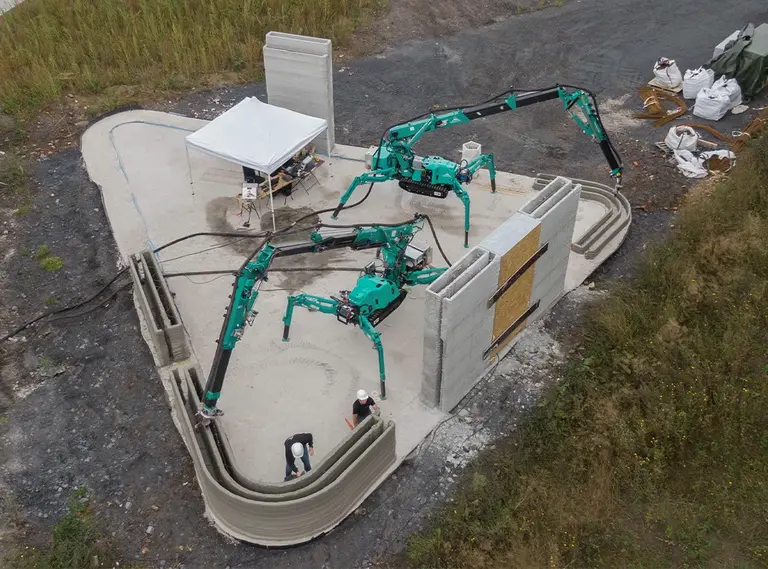
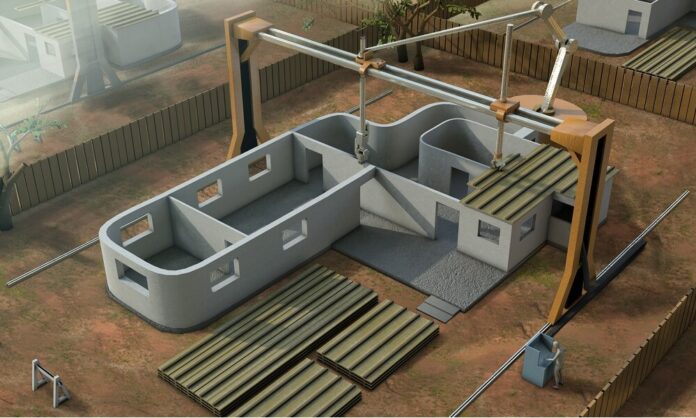
basalt sand/regolith can be used to 3D print a habitat on Mars, but not directly as a 100% pure, raw powder. It requires a binding agent or a sintering process to form solid structures.
NASA-awarded concepts, such as AI SpaceFactory's "MARSHA" project, successfully used a composite material derived from basalt fiber mixed with a biodegradable, bio-polymer binder (PLA) produced from plant waste, demonstrating that indigenous materials can be used for in-situ construction.
Here is the breakdown of how basalt is used in Martian 3D printing:
1. The Method: Basalt Composites (Most Feasible)
Basalt Fiber + Bioplastic (PLA): AI SpaceFactory used a basalt fiber-reinforced polylactic acid (bf-PLA). The basalt is extracted from local rock, and the PLA is derived from plants grown on Mars, making it renewable.
Performance: This composite passed NASA’s pressure, smoke, and impact tests, proving to be stronger and more durable than traditional concrete.
Basalt-Cement Mixture: Another approach involves creating a "Martian concrete" using pulverized basalt rock, water (if available), and a binder.
2. Alternative: Sintering (Direct with Heat)
Selective Laser Melting: Raw Martian basalt regolith can be heated to over 1,100°C–2,000°C, causing it to melt and solidify into a solid, glass-like material.
Challenges: This process is extremely energy-intensive, making it difficult to power with current solar technology on Mars for building entire structures.
3. Key Challenges to Direct Use
Need for Binders: Raw, fine-grained, sharp-edged basalt regolith on its own is not adhesive. It requires a binder to be 3D printed, particularly in low-pressure, low-temperature environments.
Thermal Management: The extreme temperature fluctuations on Mars (-153°C to +20°C) can cause rapid cooling and warping of materials like PLA during the printing process.
Energy Requirements: Producing enough basalt fiber or sintering large amounts of rock requires immense power (kilowatts per hour).
Summary of Feasibility
Basalt is considered a premier "in-situ" material because it is abundant on Mars. While not used as a pure, raw powder, it acts as the primary ingredient (filler) in 3D-printable compounds
#821 Re: Unmanned probes » Viking Landers » 2025-12-07 08:05:59
First images where we saw Frost 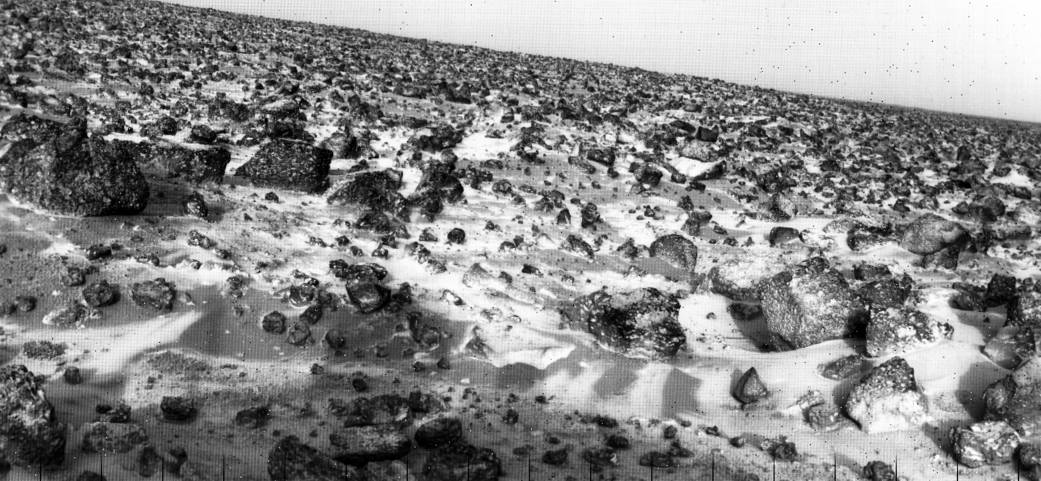
#822 Re: Unmanned probes » Viking Landers » 2025-12-07 08:00:10
https://science.nasa.gov/mission/viking-1/
We have longed to get man on mars and how many landers or rovers do we need before we attempto see man on mars?
#823 Unmanned probes » Viking Landers » 2025-12-07 07:56:14
- SpaceNut
- Replies: 3
I was surprised that we did not have a seperate topic for the firsts steps to a planet not ours.
NASA's Viking 1 landed on Mars on July 20, 1976, in the Chryse Planitia region, becoming the first successful US lander on the planet, sending back the first close-up photos and extensive data about the Martian surface, atmosphere, and geology, including surprising chemical activity but no definitive signs of life, operating far beyond its planned 90 days.
Key Details:
Launch:
August 20, 1975, on a Titan-Centaur rocket.
Landing Date:
July 20, 1976 (the same day as the Apollo 11 anniversary).
Landing Site:
Chryse Planitia (the "Golden Plains").
Technology:
Used heat shields, parachutes, and descent engines with 18 nozzles to minimize soil disturbance, protecting potential life.
Science Goals:
Searched for life, analyzed soil chemistry, imaged the surface, and studied the atmosphere and weather.
Key Findings:
Discovered volcanic soil, a thin CO2 atmosphere, evidence of ancient water, and enigmatic soil chemistry, but no confirmed life.
Longevity:
Operated far longer than its 90-day goal, with the lander sending its last data in November 1982.Significance:
Viking 1 (and its twin, Viking 2) revolutionized understanding of Mars, providing the first comprehensive look at its surface and paving the way for future missions to the Red Plan
It is just one of the city sites to target for mars first colonization.
#824 Re: Exploration to Settlement Creation » A City Rises on the Plain... » 2025-12-07 07:48:16
So where is it relative to what we have already sent landers to.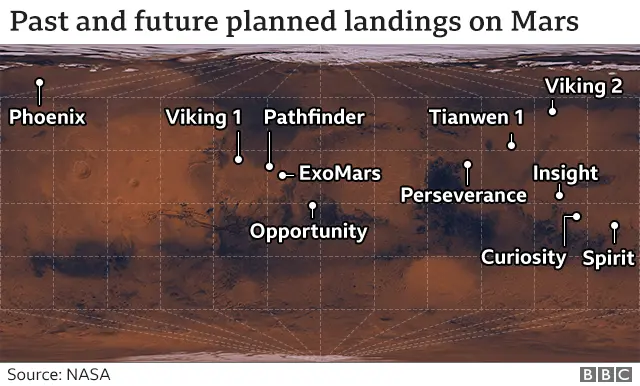
tahanson43206 close up view of the site
https://newmars.com/phpBB3/download/file.php?id=41
#825 Re: Exploration to Settlement Creation » WIKI Project construction design meaning for insitu materials » 2025-12-06 19:13:49
Some think that sulfur as a binder but it means processing the ingredients to make a regolith brick with such maters which are being done with 3D printing while still hot.
I Overview
Scientists develop Martian concrete for building in space
Building concrete floors on Mars involves using local materials like Martian soil (regolith) and sulfur (abundant on Mars) or even protein-based binders, eliminating water needs, often using 3D printing robots for efficient construction of habitats that resist extreme cold, radiation, and dust, making structures strong yet light enough for space transport. Key methods focus on sulfur concrete (heating sulfur to bind soil) or biocomposites, creating strong, recyclable materials for floors and walls.Key Materials & Methods
Sulfur Concrete:
Process:
Mix sulfur (heated to ~240°C to liquefy) with Martian soil (regolith) as aggregate, then let it cool.
Benefits:
Water-free, strong as traditional concrete, recyclable, resistant to cold, salt, and acid.
Application:
Can be 3D printed directly, ideal for robotic construction.
Biocomposites (Using Human/Biological Materials):
Process: Mix Martian simulant with human serum albumin (a blood protein) or chitin (from insects/crustaceans) as binders.
Benefits:
Creates strong materials (ERBs) that can be 3D printed; chitin could come from farmed insects.
Magnesium-Silicon Binders:
Process:
Mix magnesium and silicon (found in Martian basalt) to create a cement-like binder.
Benefits:
Strong, behaves like Earth cement but potentially stronger.
Construction for Floors & Habitats
3D Printing:
Robotic arms with extruders print structures layer-by-layer using molten sulfur or other mixes.
In-Situ Resource Utilization (ISRU):
Using local resources drastically cuts down on expensive imports from Earth.
Design:
Structures are often designed for compressive strength (like domes or vertical layouts) to suit concrete, with floors as integral parts.
Why it Works on Mars
Water Scarcity:
Traditional concrete needs water, but these methods use sulfur or other binders, perfect for Mars' dry environment.
Abundant Sulfur:
Mars has vast sulfur deposits, making it an ideal binding agent.
Harsh Environment:
Martian concrete needs to withstand extreme temperatures, low pressure, and radiation, properties these new materials offer
AI Overview
Scientists are actively researching ways to create building materials, including bricks, on Mars using in-situ resource utilization (ISRU). One method under investigation involves using epoxy resins or other polymers as binders for Martian soil simulants.Methods for In-Situ Martian Bricks
The goal of ISRU is to minimize the need to transport heavy building materials from Earth, making long-term settlement more feasible.Several binding agents and methods are being explored:
Epoxy Resin/Polymer Binders:
Researchers have successfully synthesized stable bricks in lab experiments by mixing Martian regolith simulant with an epoxy-resin or other polymers. This approach involves creating a composite material that can be poured into molds or used in 3D printing systems, the latter of which allows for complex shapes.Pressure Compaction ("No-Bake" Bricks):
Engineers at UC San Diego accidentally discovered that by applying high pressure alone, without any polymers or heat, Martian soil simulant can form strong, durable bricks. The iron oxide in the soil acts as the binding agent when compacted.Biological Processes:
In collaboration with the Indian Space Research Organisation (ISRO), researchers at the Indian Institute of Science (IISc) developed "space bricks" using a slurry of Martian soil simulant, guar gum, bacteria (Sporosarcina pasteurii), urea, and nickel chloride. The bacteria induce the precipitation of calcium carbonate crystals, binding the soil particles together.
Sulfur-based Materials:
Another promising waterless method involves using molten sulfur as a binder for Martian regolith. This creates a type of extra-terrestrial concrete ("Marscrete") with high compressive strength suitable for construction.
Sintering/Heating:
Other methods explore using high temperatures (sintering) to fuse the soil particles into a solid mass, potentially powered by nuclear or solar energy on Mars.Applications and Future Steps
These in-situ bricks would be used to construct essential infrastructure, such as protective shelters and research stations, that can withstand the harsh Martian environment (low pressure, extreme temperatures, high radiation). Future research involves scaling up production, testing materials in simulated Martian atmospheres, and developing automated robotic construction methods