New Mars Forums
You are not logged in.
- Topics: Active | Unanswered
Announcement
#51 Re: Meta New Mars » Housekeeping » 2026-01-11 07:02:42
The computer print options can convert to Microsoft version of pdf or save those excel files to pdf and save it as a name of choosing. Then upload the files to the image server.
Best wishes to GW's 50th and beyond...
#52 Re: Meta New Mars » phpBB3 Demonstration Forum on Azure » 2026-01-10 19:34:33
Much like the images the attachment can be any file format. So all documents can be kept even if we do not own them by this space on our servers. The any thing that we link directly can be updated for our saved copy instead reducing dead links.
#53 Re: Meta New Mars » Housekeeping » 2026-01-10 19:31:37
Much like news articles that have been linked in discussions the links go dead as there is no archive system.
Usernames give personal and private aspects of the forums posts but when we have a crash these posts are lost much like these of the past great crashes.
All posts in the database that we have are backed up but if missed we can lose information as a result of server issues.
The excel pages of tables we dumped to restore the website for the updated php files, that we used is also a method to store if those are kept but there is no reason to prune posts on the websites forum database.
Dead links happen as system crashes that are not even ours and are restored to keep websites going.
Myself I have stayed due to investing post time with researched data to become knowledgeable so that I could learn what we are discussing.
I am a bit under the weather as I have had a low temp and headache pain that is dull, I see a doctor on Monday but most likely it is going to be well care and not medical care/treatment of what is happening. My hearing in the left ear is still gone for the most part.
#54 Re: Exploration to Settlement Creation » Project construction design meaning for insitu materials » 2026-01-10 15:37:59
Bump for new title and modified content
#55 Re: Human missions » Mars Insitu Fuels made from atmosphere, regolith, water » 2026-01-10 15:30:26
title restored
#56 Re: Exploration to Settlement Creation » Mars structure heating requirements » 2026-01-10 15:28:00
Bump new title making a broader possible content
#57 Re: Exploration to Settlement Creation » Radiation amount type risk mitigation » 2026-01-10 15:24:30
Bump title restored and content added to
#58 Re: Human missions » Risk mitigation priorities for crewed missions to mars » 2026-01-10 15:19:11
bump for new title and content changes
#59 Re: Exploration to Settlement Creation » Mars Airlocks and uses » 2026-01-10 15:18:28
bump for new title and content changes
#60 Re: Exploration to Settlement Creation » Constructing things on Mars equipment needs » 2026-01-10 15:17:48
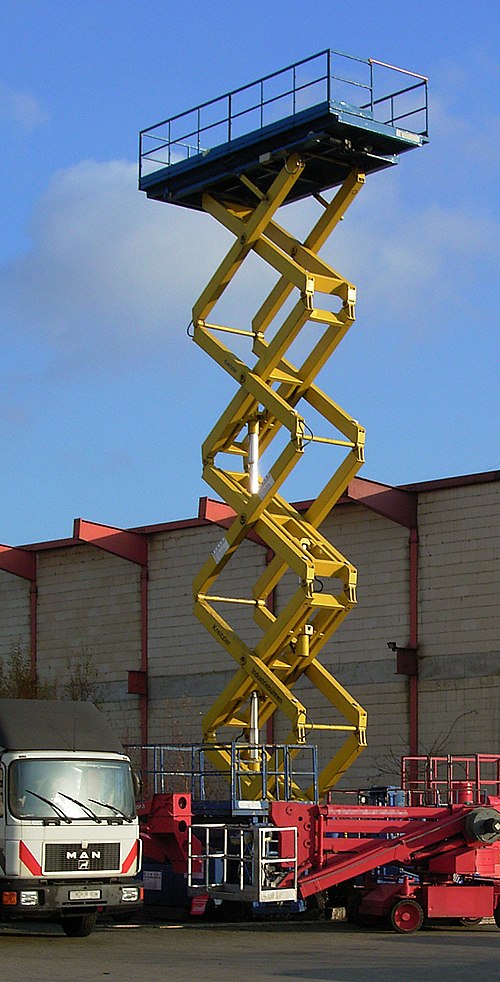
Another useful piece of equipment for constructing from inside a ceiling or dome top from a Void topic post
#61 Re: Exploration to Settlement Creation » Designing Mars equipment garage » 2026-01-10 15:17:03
bump for new title and content changes
POST 8 now contains the dimensions minimum at the point with ceiling and roof height, which was added after equipment sizing.
#62 Re: Exploration to Settlement Creation » Lighting use How and why things are not simple » 2026-01-10 15:16:18
bump for new title and content changes
#63 Re: Meta New Mars » Recruiting expertise for NewMars Forum topics: » 2026-01-10 13:17:44
As a follow up to the post about a new member application, I am duty bound to report that the application did not pan out. The applicant seemed to be focused upon publicity for an activity of interest to him, and not in any way interested in the forum. The individual was provided numerous opportunities to show even a tiny bit of interest in the forum. In the end I declined the inquiry. I will note that kbd512 provided a word of support for the idea of having someone with a particular skill set in the group, but in my opinion, having a strong skill set is not enough. I am looking for people who are team players and who are willing to trade our interest in them for their support of others.
I gathered that from just the first glimpse of content as the propertied website was stale and had the buzz words.
#64 Re: Exploration to Settlement Creation » What Are The Best Settlement Sites on Mars? » 2026-01-10 13:14:59
New item: Before the recent computer outage, you had ** just ** posted about two locations on Mars that are obvious and natural sites for evaluation for settlement. I'm hoping you will consider developing these sites.
As we are attempting to move into a new phase of membership, we have unique capabilities that allow us to (potentially) compete with others for the kind of person who is going to be settling Mars, or working on supplies and services to support Mars settlement.
Your identification of two attractive sites could be the starting point for entire Index level Categories.
This is entirely up to you to consider. No one else is going to take on the awesome responsibility that falls to you as the Senior Administrator.
What I have in mind is creating Index level entry for specific locations on Mars.
Such an Index level might have a name like: Settlement Sites
This would be at the same level as New Mars (Mars Society) (Acheron Labs) (Infrastructure Development) (Dorsa Brevia) etc...
Inside that new Category would be forums for each site. The three candidates to start with are:
1) Calliban's Crater
2) One of the two openings you found
3) The other opening you found.In addition, this new Category would include fora for actual settlement sites. At some point, humans are going to land and begin work to create a settlement. We can have a Category in place to allow us to create a forum to track just that landing.
These fora would be identified by a short text name and the coordinates.
For example, Calliban's Crater Latitude Longitude
Here is an example of an image that we might provide for each location:
file.php?id=41The crater with the label "Calliban" is the right size to hold a dome with the same diameter as the New Orleans Superbowl
More choices give a better reason for where we will do Mars construction
#65 Re: Exploration to Settlement Creation » What Are The Best Settlement Sites on Mars? » 2026-01-08 18:07:26
Here is another possible
This mysterious hole on Mars could be key to keeping astronauts alive there]

#66 Re: Science, Technology, and Astronomy » Coal-fired Brayton Cycle Supercritical CO2 Boilers » 2026-01-08 17:50:52
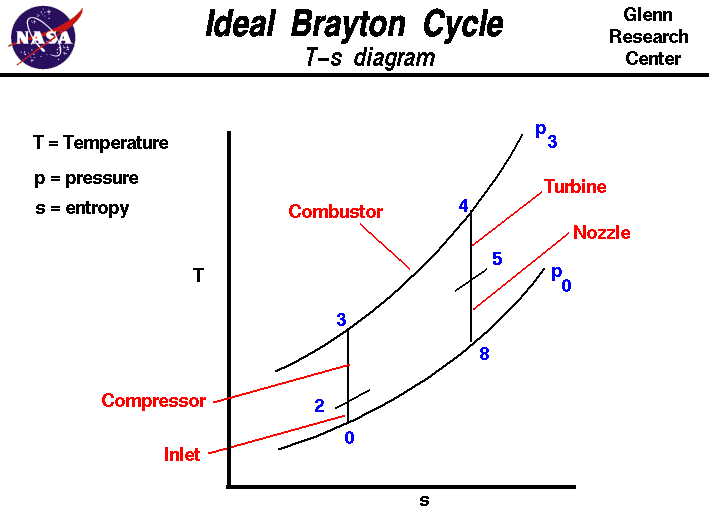
https://www.grc.nasa.gov/www/k-12/airplane/brayton.html
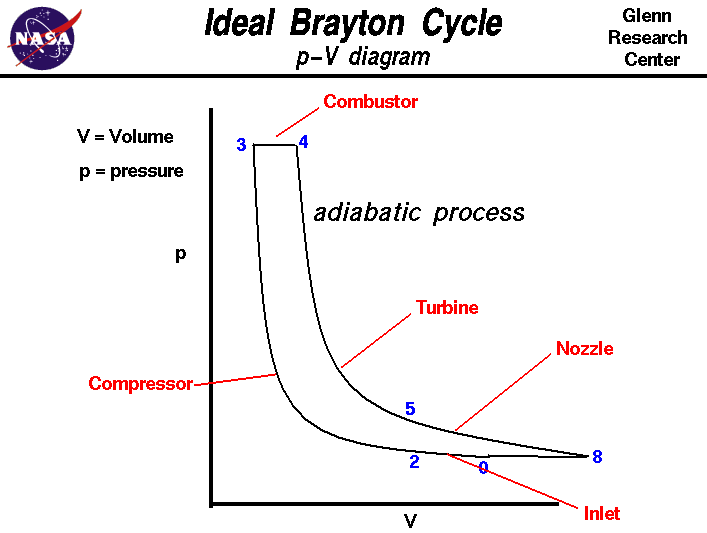
talked about in several other topic in science folder for thermal energy.
#67 Re: Meta New Mars » Topic Title Discipline and Free Style Posting » 2026-01-04 15:26:08
Title now dead and so is project discussion.
For SpaceNut .... I am happy to report that we have an inquiry about membership.
You've been learning how to change the topic title, and your initial experiments have left two important topics with humorous titles that are inappropriate for long term use. Please update them as soon as possible so our guest will not get the wrong impression.
(th)
Not experimenting just allowing you to get over it being the guide to discussion.
Not all topics are projects but the beginning query for input that is creative and not judging how one must get to an end goal.
For SpaceNut ... in tonight's Google Meeting, kbd512 asked if the software we have can fork a topic? I don't know, but it reminded me of your fishbone idea.
Projects use Fishbone to address what some call parking lot side discussion. Or in this case what you did not want in opinioned for thought that it is a simple project.
tahanson43206,
SpaceNut's going in his own directions with his own topic, which he's entitled to do. He's focused on some things you don't want him to focus on, but if that ultimately helps him to circle back around to the central idea or theme of the topic, then so be it. Maybe he's right to focus on radiation or robots or whatever, or maybe not.
Why can't we develop topics as stream-of-thought, and then selectively edit or break them into sub-topics at a later time?
To the extent that any concept can be refined into a single coherent topic with zero deviations, I think that's great, but so much about space exploration and colonization involves multi-domain problem sets that I don't know how well that would work in actual practice.
I was the topic starter and owner. Not wanting direction to what you had opinion for. Those did not provide information or content to support.
#68 Re: Exploration to Settlement Creation » Constructing things on Mars equipment needs » 2026-01-04 15:24:05
Thank you for your support KBD512 since the garage topic is now dead....thou these are still possible items for other building.
Also if a flavor of co,o2 engine might be plausible.
Found that we need, This equipment list in support of 20 - 50 crew members that will be on a mission to build on mars with insitu resources.
4 excavator rovers , 2 bulldozers, 2 regolith processing units, 1 or 2 loaders
If the first mission sends these we can do quite a bit even with small size home projects size.
Excavators & mining rovers (3-8 m length 2-3 m width, 3-5 m Length)
Bulldozers/ tractors ( 4-6 m Lengths, 2-3 m widths, 3 m height)
Processing units ( crushers, separators) 5 - 10 m foot print per unit
Loaders and transport (6-8 m Length)
For large earthmoving equipment, repair bay sizes need significant width (14-20+ ft), height (14-20+ ft for dump trucks/excavators), and length (30-80+ ft) to accommodate massive machines, allowing for ample clearance (3+ ft) around vehicles, open beds, and service pits, with standard large bay sizes often starting around 40x60 ft or larger, depending on equipment dimensions and the need to work on trailers or raised components.
Key Dimensions to Consider
Width: Aim for at least 14-20+ feet per bay, providing clearance for large tires, extended tracks, and mechanics to move around freely, preventing side collisions.
Height: Crucial for dump trucks, allowing beds to fully extend (often 20+ ft high) for hydraulic work; even larger heights (20-25+ ft) are common for heavy machinery.
Length: Must fit the longest machine plus clearance for service pits, stairs, and working space (e.g., a 25ft truck + pit/stairs needs 30-40+ ft bay length).
Clearance: Minimum 3 feet of space on all sides of the equipment and bay doors for safe operation, with more needed for pits and stairs.Common Bay & Building Sizes
Single Bay: Large bays for massive equipment might be 20-25 ft wide, 40-60 ft long, and 14-20+ ft high.
Multi-Bay Structures: Look for buildings like 40x60 ft, 40x80 ft, or 50x100 ft for general large equipment shops, often featuring clear spans.High-Profile Models: Steel buildings with 20+ ft center heights (e.g., 42-21 or 52-25 models) are cost-effective for dump truck hydraulics.
Factors Influencing SizeType of Equipment: Excavators, dozers, haul trucks, and articulated loaders have vastly different footprints.
Service Needs: Do you need space for a service pit, overhead cranes, or lifts?.
Trailer Access: If you service trucks with trailers, you need bay length for both.Recommendation: Start by measuring your largest piece of equipment (length, width, height when raised/dumped) and add at least 3 feet on all sides and ends for working clearance and doors to get your minimum bay dimensions
#69 Re: Exploration to Settlement Creation » Designing Mars equipment garage » 2026-01-04 14:53:00
Content now has no meaning to and end goal. now dead on arrival.
#70 Re: Exploration to Settlement Creation » Designing Mars equipment garage » 2026-01-04 14:19:29
Magic of insitu means nothing without the prefixes of how you are going to get there.
1. How large is unknown until you specify how much equipment will be in it by, shape, size footprint, roof clearances. Picking a magic number is meaningless.
2. determining the materials that are going to be turned into the structure via brick, block, floors, architectural shape ect..
3. what process will be used with the insitu materials
4. how will it be made use or features it will have as it has to do with the crews that will be within it.
5. how is it powerd, lighted, given crew protection,
The list goes on but all some wanted was a dumb insitu structure that does nothing but keep the equipment from being sandblasted, which is not enough.
If you use the processing to get water it leaves dry regolith if you have the equipment to make bricks then you can use that to build any such structure desired.
Other options are to reduce mass to import to mars, risk to crew for the construction, to reduce time to make the structure.
If you have a dozer you make a trench and let it just set in it unprotected...
Working now in the back ground...
For 0.5 bar (half Earth's sea-level pressure) on Mars, optimal building shapes are spheres, cylinders, or parabolic arches because these curved forms efficiently handle the large internal-to-external pressure difference, converting tension forces effectively, with inflatable structures (often buried/covered in regolith) or 3D-printed concrete domes using local materials being favored for their structural integrity and radiation shielding.
Key Structural Principles:
Compression is Key: The low external pressure means internal air pressure pushes outwards significantly. Shapes that handle stress in compression (like arches and domes) are superior to flat surfaces which would buckle.Tension Strength: Spheres and cylinders are excellent at distributing tension evenly, making them ideal for pressurized containers.
Recommended Shapes & Designs:
Cylinders/Spheres: Often proposed as metal or inflatable structures, sometimes half-buried for protection. Cylinders can be built in trenches with tension wraps.Dome Structures: Optimized parabolic or spherical domes, potentially using In-Situ Resource Utilization (ISRU) materials like Martian concrete, are efficient for large areas.
Inflatable Modules: Lightweight, easy to transport, and deployable, these membranes (like TransHab concepts) are inflated and then covered with regolith for shielding.
Vaults & Arches: Symmetrical parabolic arches, built from local materials, are designed to maximize compression and minimize tensile stress, creating strong, self-supporting forms.
Considerations for Martian Environments:
Radiation & Micrometeoroids: Structures need significant shielding (thick regolith, multi-layered walls) to protect against solar/cosmic radiation and impacts.Thermal Insulation: The design must manage extreme temperature swings, often using layered materials or burying structures.
ISRU: Using Martian soil (regolith) for 3D printing or as shielding is crucial to reduce reliance on Earth imports
#71 Re: Meta New Mars » Bookmark Bookmarks Find it Again help » 2026-01-04 14:05:51
None of these bookmarked topics have any meaning to any end goal. project died before ever appearing on mars.
Fishbone
#72 Re: Meta New Mars » Topic Title Discipline and Free Style Posting » 2026-01-04 13:54:06
Here is the previous attempt to New Mars Topic Proposals to try to keep discussions on topic.
Titles are character limited to a few key words that do not cover the range of a discussion and creates to narrow or no discussion at all.
#73 Re: Exploration to Settlement Creation » Constructing things on Mars equipment needs » 2026-01-04 13:45:30
Rock crushing equipment for Mars focuses on small, robust systems like NASA's SPADE (Sample Processing And Distribution Experiment), using jaw crusher designs or hybrid piston/attrition mills to access unweathered interiors for analysis, preparing fine powders for instruments like CheMin, with key features being durability, minimal consumables, and ability to produce fine, instrument-ready material. These systems, often integrated into rovers, aim to overcome Martian dust and weathering to study geology and potential past life.
Key Technologies & Concepts
SPADE (Sample Processing and Distribution Experiment): A NASA system integrating a jaw-crusher-based rock crusher with a sample sorting and distribution wheel to feed instruments, designed for rover use.
Hybrid Piston/Attrition Mills: A strong choice for Mars due to their ability to produce very fine, uniform particles (below 150 microns) suitable for analysis, notes a LPI document.
Rock Abrasion Tool (RAT): Used on Spirit & Opportunity rovers, this tool grinds rock surfaces to remove dust, allowing for closer inspection, though not a full crusher.
CheMin (Chemistry and Mineralogy) Instrument: The destination for crushed samples, using X-ray diffraction to identify minerals in finely powdered rock, as explained by NASA.gov.
Design Considerations for Mars
Access Unaltered Material: The primary goal is to get past the dusty, weathered surface (rind) to the pristine rock interior.
Instrument Feed: Producing material in a fine powder or specific grain size (like <150 microns) is crucial for instruments like CheMin and TEGA.
Durability & No Consumables: Systems must be robust and not rely on consumables that would run out on Mars, according to a Wiley Online Library article.
How They Work (Simplified)
Crushing: A robotic arm positions the rover over a rock, and the crusher (like a jaw or piston) breaks it down.
Sorting: Fragments and fine dust are separated.
Distribution: A sample wheel moves the processed material to various in-situ instruments for analysis.
SPADE: A rock-crushing and sample-handling system developed for Mars missions
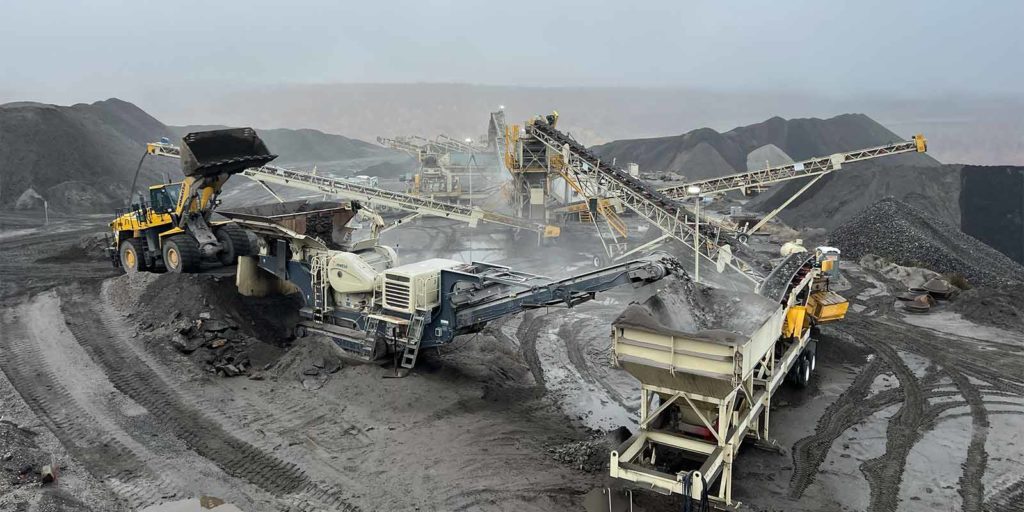
Earth rock crushing equipment breaks large rocks into smaller aggregates for construction, mining, and recycling, primarily using Jaw Crushers (compression), Impact Crushers (striking), Cone Crushers (compression/shear), and Vertical Shaft Impact (VSI) Crushers (high-speed impact), available in stationary or mobile formats to suit different stages (primary, secondary, tertiary) and material hardness, producing gravel, sand, cement, and processed demolition waste.
Types of Crushers
Jaw Crushers: Use powerful compression between two jaws; great for primary crushing hard materials, producing angular aggregate, according to Senya Crushers and Wagner Equipment Co..
Impact Crushers (Horizontal & Vertical): Rely on striking or throwing rocks at high speed; ideal for secondary/tertiary stages, creating well-shaped products, say Wagner Equipment Co. and Wikipedia.
Cone Crushers: Use a rotating cone within a concave bowl; excellent for producing high-quality cubical aggregates in secondary/tertiary crushing, notes the Weir Group.
Vertical Shaft Impact (VSI) Crushers: Use a high-speed rotor to throw rocks, creating fine, cubical particles, useful for high-quality sand, notes Wikipedia.
Gyratory Crushers: Similar to cone crushers, often used in primary crushing for large volumes, says Metso.
Key Features & Applications
Mobile vs. Stationary: Machines are available as portable units for on-site flexibility or as large, fixed plants, according to Wikipedia.
Stages: Different crushers handle primary (big rocks), secondary (medium rocks), and tertiary (fine) crushing, according to Wagner Equipment Co. and Williams Patent Crusher & Pulverizer Company.
Applications: Used for mining, quarrying, recycling concrete/asphalt, and producing gravel, sand, and cement, state Williams Patent Crusher & Pulverizer Company and Metso
#74 Re: Exploration to Settlement Creation » Constructing things on Mars equipment needs » 2026-01-04 13:39:35
For Mars, engineers are designing smaller, electric, autonomous mining vehicles like NASA's IPEx (bulldozer/dump truck) for lunar use, adaptable for Mars's low gravity, focusing on In-Situ Resource Utilization (ISRU) to build habitats from regolith (Martian soil). Concepts envision hybrid systems using small, nimble rovers with blades/buckets, powered by nuclear or solar energy, potentially building on Earth-based designs like modified excavators or even (conceptually) pressurized Cybertrucks, prioritizing efficiency and scalability over large, heavy Earth machinery.
Key Design Considerations for Mars Hauling:
Power: Diesel is out; electric motors powered by solar arrays or nuclear sources are essential.
Autonomy/Teleoperation: Vehicles will likely be self-driving or remotely operated to reduce risk to astronauts.
Size & Scale: Smaller, lighter, modular machines (like 1-5 ton excavators/dumpers) are favored for easier transport and maneuverability in low gravity, with redundancy built-in.
Functionality: Combine functions: a rover with a blade (grader/dozer) and a hopper (dump truck) for moving regolith to build roads or create radiation shielding.
Resource Utilization (ISRU): Moving regolith is key for creating "marscrete" and shielding habitats.Examples & Concepts:
NASA's IPEx: A robotic system for lunar soil mining, combining bulldozer and dump truck functions, a blueprint for Mars.
Airbus's "Interplanetary Dump Truck": A concept for bringing Mars rocks back to Earth, focusing on sample return.
Reddit/SpaceX Concepts: Discussions suggest small, electric, autonomous rovers with excavator/loader attachments, potentially leveraging mature Earth tech like small excavators or even modified Cybertrucks for pressurized transport.
In essence, think less "big rig" and more "fleet of smart, electric robotic work vehicles" suited for low gravity and self-sufficiency
Nasa ISRU Pilot Excavator
An "earth dump or hauling truck" refers to dump trucks, versatile vehicles that move loose materials like dirt, gravel, sand, and demolition waste for construction, site prep, and road building, with specific types like articulated dump trucks (ADTs) handling rough terrain and off-highway haul trucks moving massive loads in mines, all designed to efficiently transport and unload bulk materials.
Key Types & FunctionsStandard Dump Trucks: Common on roads, transporting typical construction aggregates and debris over short to medium distances.
Articulated Dump Trucks (ADTs): Feature a pivot point (articulation) between the tractor and the dump body, offering excellent maneuverability and off-road capability for rugged sites.
Off-Highway/Haul Trucks: Massive, heavy-duty vehicles used in mining and large construction projects for extremely long hauls and huge payloads, often exceeding standard road limits.
Side Dumps & Transfer Dumps: Specialized designs for faster unloading or handling specific materials like asphalt.
What They Haul
Dirt, sand, gravel, crushed stone
Asphalt, concrete
Demolition debris, construction waste
Sod, brush
Where They're Used
Construction site preparation and excavation
Road building and maintenance
Mining operations (haul trucks)
Landscaping and site grading
In essence, any truck moving earth, sand, gravel, or similar bulk materials on or off-site for construction or demolition falls under the category of an earth dump or hauling truck, with the specific type chosen for the job's terrain and load size
Types of Dump Trucks and Their Applications in the Construction Industry
#75 Re: Exploration to Settlement Creation » Constructing things on Mars equipment needs » 2026-01-04 13:27:15
So where are we with what NASA has been working on.
For Mars, bulldozers are envisioned as lightweight, multi-rover systems (like NASA's 8-lb prototypes) or larger autonomous units (like RASSOR 2.0 at 66 kg) built from aluminum, leveraging Mars's 40% Earth gravity for reduced mass, potentially 5,000-6,000 lbs for a substantial vehicle, to excavate regolith for outposts and habitats, using smaller, coordinated units or powerful bucket drums for efficient, lower-power digging.
Key Concepts & Designs:
Small Swarms: NASA developed 8-pound bulldozer rovers that work in coordinated groups, sharing excavation tasks for better efficiency than one large machine.
Autonomous Excavators: Concepts like RASSOR 2.0 (66 kg) use bucket drums and autonomous controls for high-volume regolith mining (tons per day).
Materials: Lightweight materials like aluminum are preferred over steel to account for lower Martian gravity (about 38% of Earth's).
Mass Considerations: A hypothetical larger, more powerful bulldozer might weigh 5,000-6,000 lbs (2,268-2,721 kg) on Mars, with batteries being a significant factor.
Size & Mass Examples:
NASA Prototype (2001): ~8 pounds (3.6 kg).
RASSOR 2.0 (2016): 66 kg (~145 lbs).
Hypothetical Earth-Equivalent: A larger machine might weigh 5,000-6,000 lbs (2,268-2,721 kg) in Martian gravity.
Purpose:
Site Prep: Creating landing pads, roads, and trenches for utilities.
Habitat Construction: Excavating for buried habitats and radiation shielding.
Resource Extraction: Mining regolith for In-Situ Resource Utilization (ISRU)
This is for moon first and is not what will be needed for mars