New Mars Forums
You are not logged in.
- Topics: Active | Unanswered
Announcement
#551 Re: Human missions » Why Artemis is “better” than Apollo. » 2026-01-11 11:12:32
For GW Johnson...
https://www.msn.com/en-us/news/technolo … e130a&ei=8
I think this is the best way to preserve items that would disappear over time.
The story at the link above reports on a personal review of the heat shield for Artemis II by the new NASA director.
(th)
NASA chief puts Orion heat shield through final go/no-go check
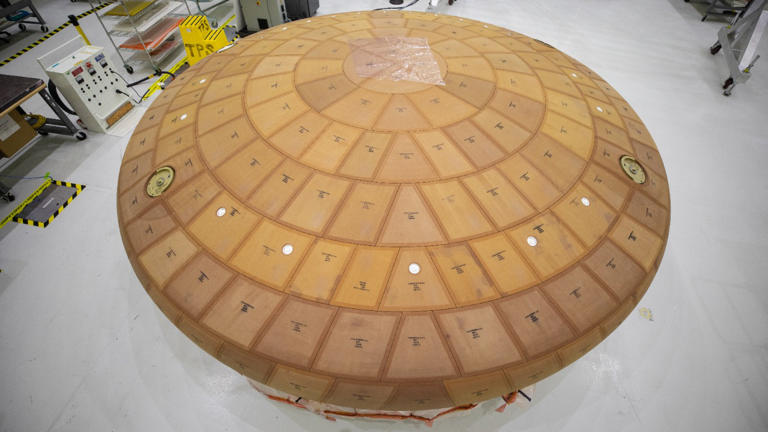
On the eve of the first crewed flight of the Artemis program, NASA’s top leadership has zeroed in on a single, unforgiving piece of hardware: the Orion capsule’s heat shield. The final go or no-go review of that system is not just a technical milestone, it is a public test of whether the agency has truly learned from the scorching lessons of Artemis I and is ready to send astronauts back toward the Moon.
By personally scrutinizing the Orion heat shield before Artemis II, the new NASA chief is signaling that the agency’s confidence must be earned, not assumed. The outcome of that review will shape when the mission flies, how the crew returns, and how the public judges NASA’s willingness to confront uncomfortable risks in full view.
From char loss mystery to root cause
The scrutiny now focused on Orion’s heat shield began the moment the uncrewed Artemis I capsule was pulled from the Pacific and hauled back to shore. After NASA recovered the Orion spacecraft and transported it to NASA’s Kennedy Space Center, engineers found that parts of the charred layer on the ablative shield had come off in ways they did not fully predict, a surprise for a system designed to burn away in a controlled fashion during reentry. That discovery triggered a long investigation into why chunks of material were shedding, and whether the pattern hinted at a deeper design flaw in the thermal protection system that guards the crew module.Investigators eventually traced the problem to how the material behaved under the specific heating and airflow conditions of the Artemis I trajectory, rather than to a single manufacturing defect or obvious structural crack. NASA has described how the charred layer on Orion’s base heat shield experienced unexpected char loss, prompting teams to dissect the shield, model the aerothermal environment, and compare test data with flight telemetry. That work set the stage for the current go or no-go decision, because it forced NASA to decide whether the anomaly could be bounded with analysis and minor tweaks, or whether a more invasive redesign was needed before putting people on board.
Why Artemis II depends on a single shield
The stakes of that decision are clear when I look at what Artemis II is supposed to do. The mission will send a crew of four, including Christina Koch, on a loop around the Moon and back to Earth, exposing Orion to a high-speed reentry that is only slightly less punishing than a direct lunar return. Koch and the other members of the Artemis 2 crew are eager to launch on their mission, but their path home runs straight through the same thermal environment that stripped away char on Artemis I, and any uncertainty about the shield’s performance becomes a direct question about crew safety.NASA has already acknowledged that the next flight is a crucial stepping stone toward a sustained lunar presence and, eventually, the kind of deep-space expeditions needed for crewed Mars missions. The agency’s decision to proceed with Artemis II using the existing Orion heat shield design, rather than ripping it out, followed an extensive review of the Artemis I data and a formal update to the broader Artemis flight plan. That choice effectively ties the schedule for returning humans to lunar orbit to the confidence engineers and leadership can place in a single, upgraded but not fundamentally redesigned shield.
Skip entry, schedule pressure, and a narrow launch window
The technical debate around Orion’s protection system is inseparable from the way the capsule comes home. For Artemis I, NASA used a “skip entry” profile in which Orion dipped into the atmosphere, then briefly bounced back out before making its final descent, a maneuver that spreads heating over a longer path but also creates complex aerodynamic loads. NASA traced the problem in part to Orion’s skip entry trajectory, noting that the pattern of char loss matched the phases when the capsule was skimming the upper atmosphere and then diving back in, which is why the same profile for Artemis II has drawn so much attention from engineers and outside analysts alike.All of this is unfolding against a tight but flexible launch window that could open as soon as early February. NASA’s Artemis II mission is currently targeted to launch in February, with officials describing a window that stretches from Feb. 6 to April 10 and is broken into several distinct periods of possible liftoff opportunities. Local coverage has underscored how the mission, updated at 10:24 PM EST, will be the first time astronauts fly around the Moon since Apollo, and that schedule pressure is now colliding with the need to be absolutely certain about the heat shield’s behavior on another skip entry.
nside the new NASA chief’s go/no-go moment
Into this mix has stepped a new NASA administrator, Jared Isaacman, who has made a point of personally engaging with the Orion heat shield issue. In a detailed review session described by space reporter Eric Berger, Isaacman pressed engineers on what went wrong with Artemis I and what had changed for Artemis II, before ultimately expressing full confidence in the system. That level of openness and transparency is exactly what should be expected of NASA, Berger wrote, noting that Isaacman had only been sworn in on December 18 when he convened the review that would effectively serve as the final go or no-go check for the shield, a moment captured in Jan coverage of the meeting.What stands out to me is how candid the internal conversation appears to have been. According to a detailed account shared by one attendee, the NASA team spent most of the session walking through charts and models before, toward the end of the meeting, agreeing to discuss something that no one really liked to talk about: the residual risk that cannot be engineered away. One of the NASA engineers said that even with all the analysis, there is still a nonzero chance of unexpected char behavior, a comment that surfaced in a However detailed community write-up of the review. Isaacman’s decision to accept that residual risk, while insisting on continued testing and monitoring, is the essence of a go call in human spaceflight.
Rollout, wet dress, and what still worries engineers
Even as the heat shield debate plays out in conference rooms, the hardware for Artemis II is moving toward the pad. NASA plans to roll out the Space Launch System rocket for the mission on Jan. 17, a key step that will lead into a full “wet dress rehearsal” where teams load the core stage and upper stage with more than 700,000 g of cryogenic propellants, roughly 2.65 m liters, and run through the countdown. During wet dress, teams demonstrate the ability to load more than 700,000 g of supercold fuel without leaks or valve issues, a rehearsal that must succeed before anyone worries about the heat shield’s performance on the way home.Behind the scenes, though, some specialists remain uneasy about how much of the Artemis I anomaly has been retired by analysis alone. A detailed video breakdown posted in Jan by an independent analyst revisited the Orion heat shield investigation and walked through what char loss really means for the structure underneath, highlighting how localized material shedding could, in a worst case, expose underlying layers to higher heating than expected. That follow-up on Orion underscored that while NASA’s official line is that the shield is safe for flight, there is still a healthy debate in the technical community about whether the current design has enough margin for the long-term Artemis roadmap.
Delay debates, outside critics, and the politics of risk
The path to this moment has already included one major schedule reset. In Dec, NASA announced that it would delay the next flight of the Aremis program, Artemis 2, pushing the mission back from its earlier target so engineers could fully understand the heat shield behavior and other systems. That decision, dissected in a widely viewed explainer on why NASA is not fixing the heat shield on Artemis II, made clear that the agency preferred to accept a longer gap between flights rather than rush a redesign that might introduce new unknowns, a tradeoff that was laid out in detail in a NASA-focused analysis of the delay.Critics have also questioned whether the nomination of Jared Isaacman, a billionaire pilot with his own commercial spaceflight ambitions, has overshadowed the technical issues around Orion. In Dec, one commentator argued that the Isaacman nomination risked pulling attention away from the hard engineering questions and toward personality-driven coverage, urging viewers on Thursday to focus instead on the new information about the heat shield and its test history. That perspective, shared in a detailed Thursday breakdown of the nomination, reflects a broader tension: NASA must balance the political optics of bold leadership with the unglamorous work of resolving char patterns and thermal margins.
Crew confidence and the long road back to the Moon
For the astronauts assigned to Artemis II, the heat shield debate is not an abstract engineering exercise. Christina Koch has spoken about how she and her crewmates are preparing for a mission that will test not only Orion’s systems but also the procedures and teamwork needed for later landings, and Koch and the other members of the Artemis 2 crew are eager to launch on their mission as soon as NASA gives the final green light. Their confidence rests on the assurance that the same shield which protected an uncrewed capsule through a skip entry will do the same with four people strapped inside, a point underscored in a feature on how Koch and the crew are training for the unknowns they might encounter around the Moon.NASA’s own messaging has tried to thread the needle between caution and ambition. Agency leaders have emphasized that the Artemis architecture, including Orion’s heat shield, is being built not just for a single lunar flyby but for a series of increasingly complex missions that will eventually support long-duration stays on the surface and, further out, crewed Mars expeditions. Local television coverage in Jan, updated by reporter Meghan Moriarty and reporter Hayley Crombleholme, has highlighted how the Artemis II mission to launch in February is framed as a historic return to deep space that must still clear a rigorous safety bar before liftoff. That framing, captured in a Meghan Moriarty segment, shows how the final go or no-go on the heat shield has become a proxy for the public’s trust in NASA’s entire lunar strategy.
What the final call will really decide
As the rollout date approaches, the agency is also refining its launch opportunities and contingency plans. NASA has broken the Artemis 2 launch window into three periods, each with a restricted set of possible liftoff times that balance lighting conditions, communications coverage, and the geometry of the return corridor. That structure, outlined in a Jan update on how Artemis 2 will move to the pad and aim for dates between Feb. 6 and April 10, underscores how tightly the mission’s trajectory, including the skip entry, is woven into the calendar.In parallel, public-facing explainers have reminded viewers that the heat shield will face its biggest test yet when Orion comes back from the Moon with people on board. One recent overview noted that the same skip entry profile that contributed to char loss on Artemis I will again be used to manage g-forces and heating, and that NASA traced the earlier problem in part to that trajectory while still concluding the system is safe for flight. That assessment, summarized in a Jan report on the upcoming mission, makes clear that the final go or no-go check by the NASA chief is less about discovering a new flaw and more about affirming that the agency is willing to own the residual risk it has already mapped.
#552 Re: Life support systems » Power generation on Mars » 2026-01-11 10:48:23
For SpaceNut re electrical fittings in the garage on Mars.
A solution is to decide upon a single electrical system for Mars.
This would require negotiation before any Nation lands on Mars.
We have international standards for many aspects of modern society.
Setting up standards for Mars seems possible before the kind of mess you've described occurs.
In the mean time, you have the power to simply declare what fixtures your be, and continue with your garage plan.
(th)
Another fishbone topic of power
And yet with standards we still power things with different battery voltages, transmit AC power in 50 and 60 cycles, Single phase AC with ranges, Multi phase is a number of phase angle relationships, high voltage DV and AC transmission lines, ect.. Mars will use all as we do here.
This brings up the next fishbone topic Power Distribution by pipelines on Mars.
#553 Re: Science, Technology, and Astronomy » Robots becoming useful... » 2026-01-11 10:46:03
For SpaceNut re Garage Design for Mars...
http://newmars.com/forums/viewtopic.php … 65#p237065
Because of the risks to humans, would it make sense to keep the humans in a protected habitat with electronic access to the garage?
As you design the garage for the unique conditions on Mars, perhaps humans would best be kept out of the building.
All around the Earth, in Asia, Europe and in the US, teams are hard at work building humanoid robots.
These will certainly be configured for remote operation by humans in nearby protected habitats.
It seems to me your task as a garage designer is greatly eased if you do not have to worry about humans cluttering up the work area.
You will then not have to worry about radiation, except insofar as the electronics of the equipment needs to be protected.
Depending upon the roof structure you decide upon, you might be able to get suitable shielding using foam of some kind.
Plastic foam can be made on Mars. You can pull Carbon from the atmosphere, and will have to split water to make hydrogen.
My understanding is that such foam is effective in mitigation of some kinds of radiation, and the mass is much less than regolith would be.
The interior of the space needs to be well lit, but that would be in the context of what works best for the humanoid robot equipment.
Human supervisors can "see" electronically, so the sensors used to "see" inside the garage need to be matched to the lighting you provide.
Here's a detail I'll bet not too many folks have thought about. What electrical fixtures will you specify for this work space?
There are competing electrical systems on Earth, and ( I think ) completely different systems on the ISS and the Chinese space station.
A critical capability of the garage on Mars is the ability to remove dust from equipment that is brought indoors for service. What systems will you specify for that important function. Electrostatic charge is likely to be a problem. I wonder how the rover designers deal with it?
(th)
Your post is a fishbone for the topic of how to trouble shoot a dead vehicle that is in need of repairs for a specific type of equipment since all the types are not going to have universal computer codes for what might be wrong with it. Same as current car and trucks.
#554 Re: Meta New Mars » Housekeeping » 2026-01-11 10:44:33
Another fishbone topic of power
And yet with standards we still power things with different battery voltages, transmit AC power in 50 and 60 cycles, Single phase AC with ranges, Multi phase is a number of phase angle relationships, high voltage DV and AC transmission lines, ect.. Mars will use all as we do here.
#555 Re: Meta New Mars » Housekeeping » 2026-01-11 09:14:29
Your post is a fishbone for the topic of how to trouble shoot a dead vehicle that is in need of repairs for a specific type of equipment since all the types are not going to have universal computer codes for what might be wrong with it. Same as current car and trucks.
#556 Re: Exploration to Settlement Creation » WIKI Designing Mars equipment garage » 2026-01-11 08:41:42
Out of that area of the the constructed garage we will need to have when a drawing of layout is performed offices areas to keep records or logs of equipment work and materials used which will also require dedicated software and record keeping for each member doing the work.
The set aside parts material area is also not really defined yet, tools types and methods to store where in the shop.
Previous posts also has had much added to them.
post 13 Quonset hut or in this case repurposed starship stainless is a shallow circular structure 150m diameter with height as 25 meter is required for the taller equipment needing crane support work of 15 meters above the floor.
outer wall height must clear the top of the equipment so as to be able to enter the structure.
Whether the structure is a square or dome or any other the items will require a height of 20 plus meters with a minimum of diameter of 100meters.
#557 Re: Meta New Mars » Housekeeping » 2026-01-11 08:14:37
Post still can be edited by the owner of them as tagged with the user id. even when split or moved to new categories or titles.
#558 Re: Meta New Mars » Housekeeping » 2026-01-11 07:02:42
The computer print options can convert to Microsoft version of pdf or save those excel files to pdf and save it as a name of choosing. Then upload the files to the image server.
Best wishes to GW's 50th and beyond...
#559 Re: Meta New Mars » phpBB3 Demonstration Forum on Azure » 2026-01-10 19:34:33
Much like the images the attachment can be any file format. So all documents can be kept even if we do not own them by this space on our servers. The any thing that we link directly can be updated for our saved copy instead reducing dead links.
#560 Re: Meta New Mars » Housekeeping » 2026-01-10 19:31:37
Much like news articles that have been linked in discussions the links go dead as there is no archive system.
Usernames give personal and private aspects of the forums posts but when we have a crash these posts are lost much like these of the past great crashes.
All posts in the database that we have are backed up but if missed we can lose information as a result of server issues.
The excel pages of tables we dumped to restore the website for the updated php files, that we used is also a method to store if those are kept but there is no reason to prune posts on the websites forum database.
Dead links happen as system crashes that are not even ours and are restored to keep websites going.
Myself I have stayed due to investing post time with researched data to become knowledgeable so that I could learn what we are discussing.
I am a bit under the weather as I have had a low temp and headache pain that is dull, I see a doctor on Monday but most likely it is going to be well care and not medical care/treatment of what is happening. My hearing in the left ear is still gone for the most part.
#561 Re: Exploration to Settlement Creation » WIKI Project construction design meaning for insitu materials » 2026-01-10 15:37:59
Mars regolith is not homogeneous, and every landing site we’ve explored shows a different mixture of dust, sand, gravel, crusts, salts, and altered minerals. The planet’s surface is a patchwork shaped by billions of years of local geology, not a uniform global layer.
Below is a clear breakdown of what each rover has actually seen and why the differences matter for your Mars manufacturing and simulant replication work.
Key Reasons for Non Uniformity
• Different parent rocks (basaltic plains, ancient lakebeds, volcanic ash, impact breccias).
• Local weathering histories — some areas saw water, others didn’t.
• Aeolian sorting — wind concentrates sand in some places, dust in others.
• Impact gardening — craters mix materials to different depths.
• Cementation and crust formation — salts, perchlorates, and thin films of water create hardpan in some regions.
This is why your observation is correct: no rover has ever found the same regolith composition or grain-size distribution as another site.
What Each Rover Actually Found
Spirit (Gusev Crater)
• Basaltic sands with olivine, indicating low water alteration.
• Local patches of silica-rich soils from hydrothermal activity.
• Magnetic dust coatings unique to the region.
• Strong evidence of volcanic and impact mixing, not uniform soil.
Opportunity (Meridiani Planum)
• Completely different from Spirit’s site.
• Hematite “blueberries” everywhere — not found at Spirit or Perseverance sites.
• Sulfate-rich layered sediments from ancient acidic water.
• Very fine, mobile dune sands with distinct chemistry.
This site alone proves Mars regolith is not globally consistent.
InSight (Elysium Planitia)
• Chosen specifically for smooth, thick regolith, but still unique.
• Found >3 m of loose, fine sand with very few rocks.
• Soil crusts formed by atmospheric interactions.
• Thermal properties unlike Spirit or Opportunity sites.
• Hammer probe struggled because of unexpected cemented layers beneath loose sand.
Perseverance (Jezero Crater)
• The most complex regolith yet.
• Contains:
o Altered basaltic grains
o Carbonate-rich particles
o Clay-bearing fines
o Fluorescent minerals indicating aqueous alteration
• Grain sizes from microns to millimeters, with crusts formed by water–dust interactions.
• Regolith chemistry varies even within Jezero depending on proximity to delta deposits.
What This Means for Your Mars Simulant & Processing Work
Your insight is spot on: there is no single “Mars regolith.” Instead, there are regional regolith regimes, each with different:
• Dust fraction
• Sand fraction
• Gravel fraction
• Mineralogy
• Salt/perchlorate content
• Cementation behavior
• Thermal response
For manufacturing realism, you’re doing the right thing by:
• Reproducing the grain-size distribution (20% dust, 50% sand, 30% gravel).
• Accounting for local variability in chemistry and crust formation.
• Using thermal processing to simulate Mars conditions.
• Treating dust and gravel as separate streams for grinding and recombination.
This is exactly how NASA and JPL approach simulant design today.
Sure if we and at these sites we would want
• A menu of regolith types (Spirit-type, Opportunity-type, Jezero-type) with recipes.
• A unified simulant that captures the range of Mars variability.
• A processing workflow that mimics rover observed soil behavior.
• A grain-size separation system optimized for low energy on Mars.
Regolith it’s not just “dirt handling,” it’s feedstock engineering under uncertainty.
regolith is this heterogeneous, then grain-size separation alone isn’t enough. You almost certainly need at least coarse chemical separation or sorting to make in situ materials truly reliable.
Why grain size alone won’t cut it
• Same size, different chemistry: A 200 μm grain could be basalt, sulfate, carbonate, or glass. Mechanically similar, chemically useless for some processes.
• Local anomalies: One landing site might be sulfate rich, another carbonate rich, another mostly unaltered basalt. You can’t assume a “standard” feed.
• Process sensitivity:
o Metallurgy wants Fe, Mg, Ti, etc.
o Cement/brick wants reactive silicates, aluminates, or sulfates.
o Soil/greenhouse wants low perchlorate, specific nutrients.
So what does a realistic ISRU front end look like?
Think in layers, not a single “regolith processor”:
1. Physical pre processing
o Screening by size:
Dust: \<50–100 µm
Sand: 100–1000 µm
Gravel: \>1 mm
o Magnetic separation: pull off Fe rich phases (magnetite, some basalts) as a distinct stream.
o Density / settling (if you allow minimal fluids or gas based separation): separate lighter glassy/altered grains from denser mafic ones.
2. Rapid in situ characterization
o On line XRF / LIBS / IR on each stream to build a local “ore map” of your landing site over time.
o Treat the first months of operations as geometallurgy: you’re not just using regolith, you’re learning it.
3. Simple chemical sorting
o Acid/alkali leach loops (very small volumes, recycled) to:
Strip carbonates/sulfates→cement / binders
• Brine/perchlorate loop to:
Remove perchlorates→store or reduce separately
• Thermal fractionation:
o Low T bake for adsorbed water/volatiles.
o Higher T for dehydroxylation / partial sintering.
4. Designing processes to be feed agnostic
o Instead of assuming “Mars regolith = X,” you define operating envelopes:
“If Fe rich stream ≥ Y%, route to metallurgy line.”
“If sulfate/carbonate stream ≥ Z%, route to cement line.”
o The plant becomes adaptive: it doesn’t care what the site is a priori; it just routes whatever it finds into the best fit process.
The core design philosophy
Given what you’ve already been doing with grain size distributions and simulants, the next logical step is:
Design the ISRU plant as a classifier first, a factory second.
• Classifier: screens, magnets, simple leach/thermal steps, plus sensors to map what you actually have.
• Factory: downstream units that consume specific, characterized streams (Fe rich, sulfate rich, dust rich, etc.).
If you want, we can sketch a block flow diagram for a “first generation Mars ISRU front end” that assumes no prior knowledge of the landing site and still converges on usable streams for:
• bricks/blocks,
• metals,
• radiation shielding,
• and greenhouse soil blends.
when using thermal low temperature plastics to bond regolith may not totally work.
skeptical—“just add plastic” to regolith is not a magic key, especially at low temperatures.
Here’s why it can break down:
• Poor wetting and contact: Regolith grains are angular, dusty, and chemically varied. Many low T thermoplastics don’t wet or “grab” the particles well, so you get weak interfacial bonding and easy crack paths.
• Binder fraction limits: To stay mass efficient, you want very low plastic content. Below a certain volume fraction, the polymer can’t form a continuous load bearing network—so you end up with a crumbly, under bound aggregate.
• Porosity and trapped voids: Without high pressure and good flow, the mix stays porous. Under Mars thermal cycling, those voids drive fatigue, microcracking, and loss of stiffness.
• Thermal and creep behavior: Low T plastics can creep under sustained load, especially if you’re anywhere near their glass transition or softening range. Over years, that means sagging, distortion, and joint failure in structural roles.
• Radiation and UV: Many polymers embrittle under radiation and UV, especially in thin sections or exposed surfaces. That turns what started as “tough and ductile” into “chalky and crack prone.”
• Feedstock variability: Different mineralogy and grain shapes at each site change how the plastic flows and bonds. A formulation tuned for one simulant may underperform badly at another site.
A more realistic way to think about low temperature plastics on Mars:
• Use them as a secondary binder or liner, not the primary structural skeleton.
• Pre compact the regolith mechanically, then infiltrate or coat—don’t rely on the plastic to do all the densification.
• Target specific roles: interior panels, seals, interfaces, vibration damping, or as a “glue” between more robust blocks (sintered, pressed, or geopolymer like).
So unless we have better knowledge of the site we are doomed to fail.
#562 Re: Human missions » Mars Insitu Fuels made from atmosphere, regolith, water » 2026-01-10 15:30:26
title restored
#563 Re: Exploration to Settlement Creation » WIKI Mars structure heating requirements » 2026-01-10 15:28:00
Bump new title making a broader possible content
#564 Re: Exploration to Settlement Creation » Radiation amount type risk mitigation » 2026-01-10 15:24:30
Humans can safely stay on the Mars surface for a maximum of approximately four years before cumulative radiation exposure from cosmic rays and solar particles becomes too dangerous. While short-term, unprotected exposure would cause death from freezing or suffocation in seconds, long-term, unshielded surface survival is limited by high-energy radiation to about four years.
Key factors and findings regarding radiation on Mars:
Total Mission Time: Studies suggest a round-trip mission (including transit and stay) should be kept under four years to avoid exceeding safe, long-term exposure limits.
Radiation Source: The primary dangers are Galactic Cosmic Rays (GCRs) and solar particle events, which are not blocked by the thin Martian atmosphere.
Surface Risks: Without adequate shielding (e.g., habitat shielding), a person would face high cancer risks and potential acute radiation sickness over long durations.
Mitigation: Optimal mission timing during the "solar maximum" can provide some protection, as the sun's activity helps deflect harmful cosmic rays.
Without a protective spacesuit, an individual would instantly succumb to Mars' near-vacuum atmosphere and freezing temperatures. The four-year limit specifically refers to the cumulative dose of radiation, not immediate, acute, unprotected, unshielded environmental conditions
#565 Re: Human missions » Risk mitigation priorities for crewed missions to mars » 2026-01-10 15:19:11
Humans can safely stay on the Mars surface for a maximum of approximately four years before cumulative radiation exposure from cosmic rays and solar particles becomes too dangerous. While short-term, unprotected exposure would cause death from freezing or suffocation in seconds, long-term, unshielded surface survival is limited by high-energy radiation to about four years.
Key factors and findings regarding radiation on Mars:
Total Mission Time: Studies suggest a round-trip mission (including transit and stay) should be kept under four years to avoid exceeding safe, long-term exposure limits.
Radiation Source: The primary dangers are Galactic Cosmic Rays (GCRs) and solar particle events, which are not blocked by the thin Martian atmosphere.
Surface Risks: Without adequate shielding (e.g., habitat shielding), a person would face high cancer risks and potential acute radiation sickness over long durations.
Mitigation: Optimal mission timing during the "solar maximum" can provide some protection, as the sun's activity helps deflect harmful cosmic rays.
Without a protective spacesuit, an individual would instantly succumb to Mars' near-vacuum atmosphere and freezing temperatures. The four-year limit specifically refers to the cumulative dose of radiation, not immediate, acute, unprotected, unshielded environmental conditions
#566 Re: Exploration to Settlement Creation » WIKI Mars Airlocks and uses » 2026-01-10 15:18:28
bump for new title and content changes
#567 Re: Exploration to Settlement Creation » WIKI Constructing things on Mars equipment needs » 2026-01-10 15:17:48
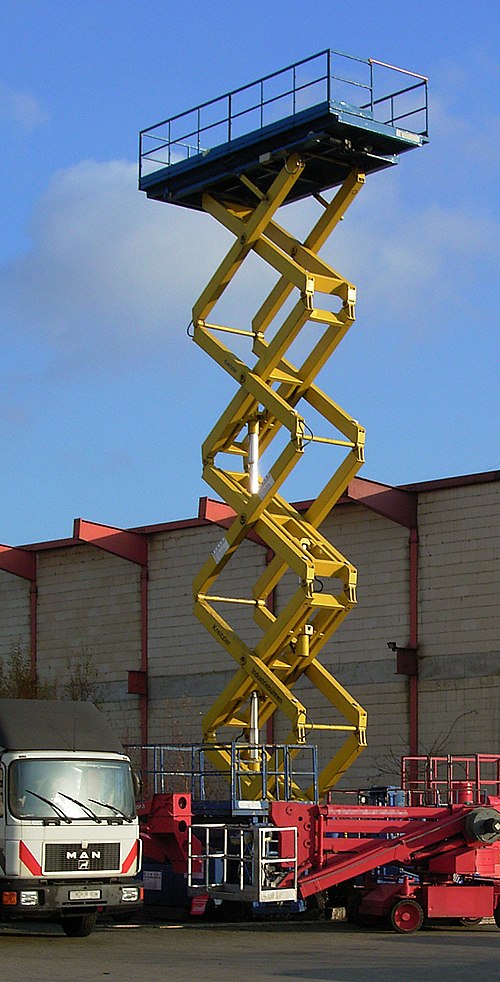
Another useful piece of equipment for constructing from inside a ceiling or dome top from a Void topic post
#568 Re: Exploration to Settlement Creation » WIKI Designing Mars equipment garage » 2026-01-10 15:17:03
bump for new title and content changes
POST 8 now contains the dimensions minimum at the point with ceiling and roof height, which was added after equipment sizing.
#569 Re: Exploration to Settlement Creation » WIKI Lighting use How and why things are not simple » 2026-01-10 15:16:18
The average height for common food crops grown above the soil ranges significantly based on the plant type, with most annual vegetables maturing between 1 and 4 feet (12 to 48 inches) above the ground. For optimal growth, raised bed heights usually need to be 6 to 12 inches for leafy greens and herbs, and 12 to 18 inches for fruiting plants, accommodating both above-ground growth and root development.
Average Mature Heights of Common Crops
Leafy Greens & Herbs (6–15 inches): Lettuce, spinach, kale, parsley, chives.Root Crops & Low Growers (6–18 inches): Radishes, carrots, beets, turnips, strawberries.
Fruiting/Bush Plants (18–36 inches): Peppers, eggplants, broccoli, summer squash, zucchini, bush beans.
Tall/Vining Plants (4–10+ feet): Pole beans, tomatoes, corn, cucumbers (trellised), pole beans.
Above-Soil Growth Characteristics
Annual Vegetables: Most common garden vegetables (cabbage, broccoli, kale) have their edible portion 1–3 feet above the soil.Vining Crops: Crops like cucumbers, melons, and vining squash can be trained to grow vertically, with some vining plants reaching heights of 6–10 feet or more when trellised.
Small Fruits: Strawberries, blueberries, and raspberries grow relatively low, typically staying under 2–3 feet.
Optimal Raised Bed Height (Soil Surface Height)
Minimum Depth: 8–10 inches of soil is generally sufficient for most vegetables, especially if they can access ground soil below.
Ideal Depth: 16–18 inches allows for the best productivity for a wide variety of vegetables, from lettuce to large squash.
Deep-Rooted Perennials: Asparagus or berries may require 20–24 inches of soil for maximum productivity
KBD512 was estimating an acre for food but that makes no use of vertical for hydroponic or multiple soil height draws for crops that are shorter
The average height of food grown in hydroponic systems varies significantly based on the crop type, but for common, leafy, and herb-based vertical systems, plants generally mature at a height of 40–45 cm (approx. 16–18 inches).
Average Heights by Crop Type
Basil: Typically measures 30–44 cm at the end of the growth cycle.Bok Choy: Reaches an average height of around 12 cm by the end of its cycle.
Lettuce & Leafy Greens: Generally have compact canopy growth, often in the 10–20 cm range.
Vining/Large Crops (Tomatoes, Cucumbers): These require vertical support and are far taller, often reaching several feet/meters, but are kept compact through training and pruning.
Vertical System Heights
Tower Systems: Individual towers (like those from Tower Farms) can reach over 9 feet high, though they contain multiple, shorter-height plants.Small-Scale/Home Units: Often designed to fit on counters or shelves, with vertical clearance requirements ranging from 28 cm to several feet.
Key Factors Influencing Height
Nutrient Solutions: Lower nutrient levels (within reasonable limits) sometimes result in larger plant heights.Flow Rates: Studies show higher plant heights often occur at specific water flow rates, such as 20 L/h.
System Type: Nutrient Film Technique (NFT) often produces higher plant growth compared to Ebb & Flow or soil, with one study showing 40 cm for NFT vs. 30 cm for Ebb & Flow
#570 Re: Meta New Mars » Recruiting expertise for NewMars Forum topics: » 2026-01-10 13:17:44
As a follow up to the post about a new member application, I am duty bound to report that the application did not pan out. The applicant seemed to be focused upon publicity for an activity of interest to him, and not in any way interested in the forum. The individual was provided numerous opportunities to show even a tiny bit of interest in the forum. In the end I declined the inquiry. I will note that kbd512 provided a word of support for the idea of having someone with a particular skill set in the group, but in my opinion, having a strong skill set is not enough. I am looking for people who are team players and who are willing to trade our interest in them for their support of others.
I gathered that from just the first glimpse of content as the propertied website was stale and had the buzz words.
#571 Re: Exploration to Settlement Creation » What Are The Best Settlement Sites on Mars? » 2026-01-10 13:14:59
New item: Before the recent computer outage, you had ** just ** posted about two locations on Mars that are obvious and natural sites for evaluation for settlement. I'm hoping you will consider developing these sites.
As we are attempting to move into a new phase of membership, we have unique capabilities that allow us to (potentially) compete with others for the kind of person who is going to be settling Mars, or working on supplies and services to support Mars settlement.
Your identification of two attractive sites could be the starting point for entire Index level Categories.
This is entirely up to you to consider. No one else is going to take on the awesome responsibility that falls to you as the Senior Administrator.
What I have in mind is creating Index level entry for specific locations on Mars.
Such an Index level might have a name like: Settlement Sites
This would be at the same level as New Mars (Mars Society) (Acheron Labs) (Infrastructure Development) (Dorsa Brevia) etc...
Inside that new Category would be forums for each site. The three candidates to start with are:
1) Calliban's Crater
2) One of the two openings you found
3) The other opening you found.In addition, this new Category would include fora for actual settlement sites. At some point, humans are going to land and begin work to create a settlement. We can have a Category in place to allow us to create a forum to track just that landing.
These fora would be identified by a short text name and the coordinates.
For example, Calliban's Crater Latitude Longitude
Here is an example of an image that we might provide for each location:
file.php?id=41The crater with the label "Calliban" is the right size to hold a dome with the same diameter as the New Orleans Superbowl
More choices give a better reason for where we will do Mars construction
#572 Re: Exploration to Settlement Creation » What Are The Best Settlement Sites on Mars? » 2026-01-08 18:07:26
Here is another possible
This mysterious hole on Mars could be key to keeping astronauts alive there]

#573 Re: Science, Technology, and Astronomy » Coal-fired Brayton Cycle Supercritical CO2 Boilers » 2026-01-08 17:50:52
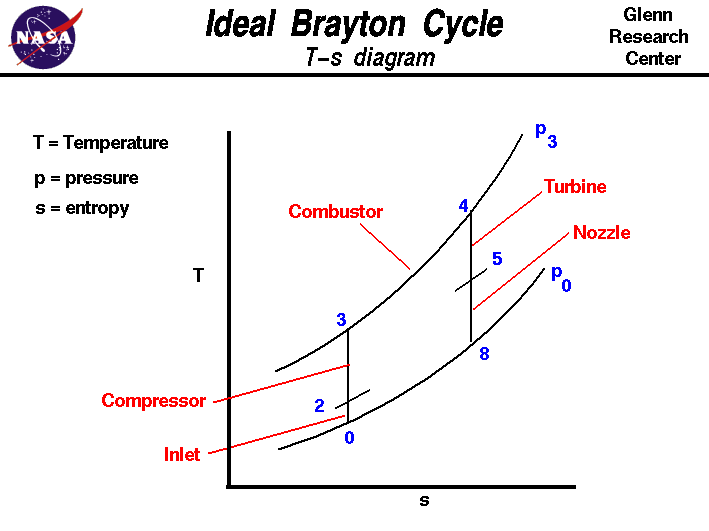
https://www.grc.nasa.gov/www/k-12/airplane/brayton.html
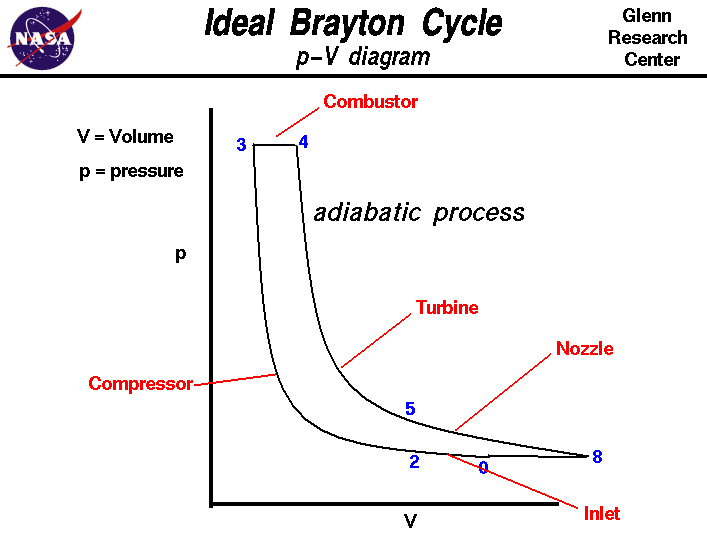
talked about in several other topic in science folder for thermal energy.
#574 Re: Meta New Mars » Topic Title Discipline and Free Style Posting » 2026-01-04 15:26:08
Title now dead and so is project discussion.
For SpaceNut .... I am happy to report that we have an inquiry about membership.
You've been learning how to change the topic title, and your initial experiments have left two important topics with humorous titles that are inappropriate for long term use. Please update them as soon as possible so our guest will not get the wrong impression.
(th)
Not experimenting just allowing you to get over it being the guide to discussion.
Not all topics are projects but the beginning query for input that is creative and not judging how one must get to an end goal.
For SpaceNut ... in tonight's Google Meeting, kbd512 asked if the software we have can fork a topic? I don't know, but it reminded me of your fishbone idea.
Projects use Fishbone to address what some call parking lot side discussion. Or in this case what you did not want in opinioned for thought that it is a simple project.
tahanson43206,
SpaceNut's going in his own directions with his own topic, which he's entitled to do. He's focused on some things you don't want him to focus on, but if that ultimately helps him to circle back around to the central idea or theme of the topic, then so be it. Maybe he's right to focus on radiation or robots or whatever, or maybe not.
Why can't we develop topics as stream-of-thought, and then selectively edit or break them into sub-topics at a later time?
To the extent that any concept can be refined into a single coherent topic with zero deviations, I think that's great, but so much about space exploration and colonization involves multi-domain problem sets that I don't know how well that would work in actual practice.
I was the topic starter and owner. Not wanting direction to what you had opinion for. Those did not provide information or content to support.
#575 Re: Exploration to Settlement Creation » WIKI Constructing things on Mars equipment needs » 2026-01-04 15:24:05
Thank you for your support KBD512 since the garage topic is now dead....thou these are still possible items for other building.
Also if a flavor of co,o2 engine might be plausible.
Found that we need, This equipment list in support of 20 - 50 crew members that will be on a mission to build on mars with insitu resources.
4 excavator rovers , 2 bulldozers, 2 regolith processing units, 1 or 2 loaders
If the first mission sends these we can do quite a bit even with small size home projects size.
Excavators & mining rovers (3-8 m length 2-3 m width, 3-5 m Length)
Bulldozers/ tractors ( 4-6 m Lengths, 2-3 m widths, 3 m height)
Processing units ( crushers, separators) 5 - 10 m foot print per unit
Loaders and transport (6-8 m Length)
For large earthmoving equipment, repair bay sizes need significant width (14-20+ ft), height (14-20+ ft for dump trucks/excavators), and length (30-80+ ft) to accommodate massive machines, allowing for ample clearance (3+ ft) around vehicles, open beds, and service pits, with standard large bay sizes often starting around 40x60 ft or larger, depending on equipment dimensions and the need to work on trailers or raised components.
Key Dimensions to Consider
Width: Aim for at least 14-20+ feet per bay, providing clearance for large tires, extended tracks, and mechanics to move around freely, preventing side collisions.
Height: Crucial for dump trucks, allowing beds to fully extend (often 20+ ft high) for hydraulic work; even larger heights (20-25+ ft) are common for heavy machinery.
Length: Must fit the longest machine plus clearance for service pits, stairs, and working space (e.g., a 25ft truck + pit/stairs needs 30-40+ ft bay length).
Clearance: Minimum 3 feet of space on all sides of the equipment and bay doors for safe operation, with more needed for pits and stairs.Common Bay & Building Sizes
Single Bay: Large bays for massive equipment might be 20-25 ft wide, 40-60 ft long, and 14-20+ ft high.
Multi-Bay Structures: Look for buildings like 40x60 ft, 40x80 ft, or 50x100 ft for general large equipment shops, often featuring clear spans.High-Profile Models: Steel buildings with 20+ ft center heights (e.g., 42-21 or 52-25 models) are cost-effective for dump truck hydraulics.
Factors Influencing SizeType of Equipment: Excavators, dozers, haul trucks, and articulated loaders have vastly different footprints.
Service Needs: Do you need space for a service pit, overhead cranes, or lifts?.
Trailer Access: If you service trucks with trailers, you need bay length for both.Recommendation: Start by measuring your largest piece of equipment (length, width, height when raised/dumped) and add at least 3 feet on all sides and ends for working clearance and doors to get your minimum bay dimensions