New Mars Forums
You are not logged in.
- Topics: Active | Unanswered
Announcement
#1 2026-01-15 07:35:43
- tahanson43206
- Moderator
- Registered: 2018-04-27
- Posts: 26,169
Ring Habitat on Mars Doughnut Torus
This topic is inspired by a suggestion from kbd512.
In discussion of domes that might be built on Mars, kbd512 suggested building a half-torus shaped structure.
Calliban had suggested a dome the size of the famous Superbowl at New Orleans.
Calliban's design would employ all native materials for the structure, and it would employ no imported materials at all for the primary structure.
kbd512's concept would employ a blend of local and imported materials.
This topic is offered for NewMars members who might wish to help kbd512 develop his idea.
It would be helpful to know the dimensions of the structure kbd512 has in mind.
The torus will have a diameter, and the ring of the torus will have a diameter.
In this early stage of definition of the concept, we do not know if kbd512 has a shape in mind for the cross section of the half ring.
Calliban has suggested a catenary shape so that forces are distributed evenly throughout the material of the wall of the ring.
This topic has significant growth potential.
The Stanford Torus is a model to study, since it dealt with many of the issues that will confront the designer of a half ring set on Mars.
I asked Google for help with the terminology:
AI Overview
Torus Shape – Definition, Examples, and Diagrams
A torus has two main diameters: the Major Diameter, which defines the overall size (center-to-center of the tube), and the Minor Diameter, which determines the thickness of the tube itself, often called the tube diameter or core diameter. These correspond to the Major Radius (distance from center of hole to center of tube) and Minor Radius (radius of the tube's cross-section) respectively.
Key Terms:
In the context of Calliban's dome, diameter is 200 meters at the ground, and the height is 120 meters.
The major and minor diameters remain to be defined for kbd512's ring habitat.
(th)
Last edited by tahanson43206 (2026-01-15 07:41:23)
Offline
Like button can go here
#2 2026-01-15 07:36:21
- tahanson43206
- Moderator
- Registered: 2018-04-27
- Posts: 26,169
Re: Ring Habitat on Mars Doughnut Torus
This post is reserved for an index to posts that may be contributed by NewMars members.
Index:
On January 18, 2026, kbd512 made a critical decision that allows this project to proceed.
https://newmars.com/forums/viewtopic.ph … 75#p237375
In the post at the link above, kbd512 is reported to have decided to plan for a population of 1000 individual humans.
On January 25, 2026, kbd512 made another critical decision that allows this project to proceed.
He chose a location on Mars near a large ice bearing crater. 73 North Latitude, 165 East Longitude
This location trades proximity to the equator for proximity to water
(th)
Last edited by tahanson43206 (2026-01-26 13:45:29)
Offline
Like button can go here
#3 2026-01-15 15:03:18
- SpaceNut
- Administrator
- From: New Hampshire
- Registered: 2004-07-22
- Posts: 30,870
Re: Ring Habitat on Mars Doughnut Torus
Here is what was in the re-purposed starship stainless shell.
If we provide 125m^3 of pressurized volume for each family of 4, then we need approximately 10 Super Domes worth of pressurized volume to house a million people. Domes tend to have a lot of unusable space, though. What about a ring?
This sounds just like what a caretaker doughnut design from empty starships would be.
Leave the crewed ship in the center of what is constructed from the ships hull materials.
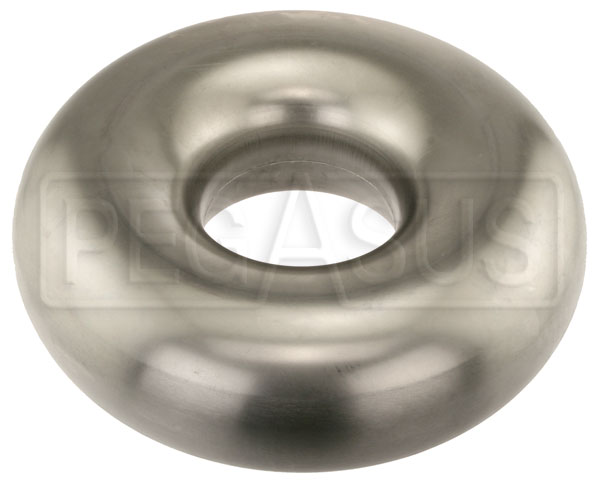
The proposed project of creating a 9-meter stainless steel doughnut cross-section with a crewed starship in the center, utilizing materials from unused cargo ships, is not technically feasible using current industrial and engineering methods.
Here are the key reasons why this concept is impractical:
Material Limitations:
Steel Type: The steel used in standard cargo ships is not typically high-grade stainless steel suitable for precision aerospace or habitat construction. It is standard structural steel, which has different properties regarding corrosion resistance, strength-to-weight ratio, and material consistency.
Repurposing Difficulty: While steel can be recycled, melting down and reshaping massive cargo ship hulls into a precise, large-scale, high-quality "doughnut" cross-section requires specialized industrial remelting processes (like electroslag remelting for high-grade applications) that are complex and costly, making on-site or large-scale transformation unfeasible.
Material Integrity: The structural integrity of repurposing cut and welded sections of existing cargo ships for such a specific, high-stress application (especially if intended for space or extreme environments) would be difficult to guarantee without extensive and costly engineering.
Engineering and Design Challenges:
Structural Requirements: Designing a 9-meter "doughnut" structure to house a starship would have highly specific operational and stiffness requirements that repurposed, potentially compromised, cargo ship materials cannot easily meet.
Scale and Precision: The precision needed for a 9-meter cross-section that interacts seamlessly with a crewed starship is immense. Achieving this precision by modifying large, existing, non-uniform cargo ship sections is impractical.
Feasibility vs. New Construction: It would be significantly more efficient, reliable, and cost-effective to produce the necessary components using new, purpose-built stainless steel designed for the specific application rather than attempting to salvage and heavily modify existing ship parts.
In summary, the foundational materials and engineering processes required to create such a specific, high-specification structure from generic, used cargo ships make the project technologically unviable.What challenges are
You will need 4 sections of the 60 m tube to achieve a total length of 240 m. The final circle will have an approximate diameter of \(76.4\) m.
Step 1: Calculate material needs First, determine the total length of tubing required. The user's desired circumference is 240 meters. The calculation confirms that exactly 4 of the 60-meter tubes are needed to reach this length. The 9 m diameter of the individual tubes is the cross-sectional diameter, not the circle's final diameter.
Step 2: Join the tubes Join the four 60-meter stainless steel tubes end-to-end to create one continuous 240-meter length. This is typically done by welding the joints, which requires specific techniques for stainless steel.
Step 3: Form the circle The 240-meter length of tube must be mechanically bent or rolled into a circular shape. Given the large scale, specialized industrial equipment for bending large diameter, thick-walled (implied by 9m diameter) steel is necessary.
Step 4: Cut and finish A final, precise cut will be needed to join the two ends of the 240-meter length after it is formed into the circle. For cutting stainless steel tubes, common methods include using a portable band saw or an angle grinder with a cut-off wheel, applying slow speed and cutting oil to manage the material's hardness and heat.
Answer: You will need to use 4 of the 60 m tubes to achieve a total length of 240 m. The final circle made from this length will have a diameter of approximately \(76.4\) m (\(240/\pi \)). The tubes must be joined end-to-end and then formed into the circular shape, requiring precise cuts and welding to secure the final joint
That means the inside diameter is 76.4 - 18 = 54 m diameter
The volume of the doughnut shape is approximately 15268.14 cubic meters.
Make 3 floors similar to a submarine flight decks. Assume that the three are 2.5 meters ceiling to floor for each.
wondering if rooms could be like these blocks

Offline
Like button can go here
#4 2026-01-15 15:05:28
- SpaceNut
- Administrator
- From: New Hampshire
- Registered: 2004-07-22
- Posts: 30,870
Re: Ring Habitat on Mars Doughnut Torus
For kbd512 re post in SpaceNut's Superdome topic ...
https://newmars.com/forums/viewtopic.ph … 62#p237162
Nice vision !!!
I hope that it comes to pass.
It certainly ** could ** come to pass.
As a reminder, Calliban's dome has varied in population but the starting number is 1000.
The logistics of providing sewer service, heating, water, power, communications and interior structures (ie, living and retails space) seem to lead toward solving the 1000 person population problem before advancing to something greater.
Thus your vision of a population of 1,000,000 people could be realized with 1000 domes. Mars has ** plenty ** of room for that many domes, since they are only 200 meters in diameter. That said, it appears that siting the domes in craters has advantages.
Calliban's vision was to create the domes out of locally sourced material, which led to his initial idea of bricks, followed by the suggestion of "voudrois" shaped blocks. Calliban's concept includes the Ziggurat ramps to facilitate construction while simultaneously providing force to resist the internal pressure of .5 bar for the standard Mars habitat atmosphere.
In any case, it is good to see SpaceNut's topic developing, and your post adds to the flow.
(th)
For kbd512 ... There is a new topic available if you would care to develop your ideas for a ring shaped habitat on Mars...
https://newmars.com/forums/viewtopic.php?id=11287
Please begin by setting the dimensions so that others can begin to help to build up a vision of the idea.
The Stanford Torus may be larger than you have in mind, but is a well developed model that might provide inspiration for your concept.
Unlike Calliban's dome, your concept appears to have potential for construction outside a Crater.
It will definitely be interesting to see what members do with the concept, but it needs dimensions so that folks have something to work with.
(th)
Since the details were missed for number of meters for the number. which was above my information in the quote.
If we provide 125m^3 of pressurized volume for each family of 4,
Math: 1000 / 4 = 250 family units but that does nothing else other than house people....
250x 125 m^3 = 31,250 cubic meters of volume
Offline
Like button can go here
#5 2026-01-15 15:12:33
- SpaceNut
- Administrator
- From: New Hampshire
- Registered: 2004-07-22
- Posts: 30,870
Re: Ring Habitat on Mars Doughnut Torus
You also missed the secondary choice to bring all materials
SpaceNut,
I was thinking of using a combination of 304L from the expended Starships and indigenous materials in a "space frame" design wherein the Starship steel provides external structural support so that locally-sourced cast basalt tiles interlock into the space frame and are pressed outwards and into the space frame by internal pressurization, with sealing accomplished using either a thin internal layer of stainless sheet steel welded into the space frame, over the top of the inner tile faces, or a Silicone-based adhesive sealant could also be used. We can bring enough 304L and Silicone sealant from Earth to build this kind of structure by scrapping / recycling the Starships. I don't think it's feasible to bring enough concrete or basalt tiles, hence why that material must be locally sourced.
Do you remember the structure of the "Biosphere 2" built in Arizona?
So, imagine that we create a giant ring-shaped habitat, rather than a Super Dome, so as to keep tensile stresses sane, so as to economize on recycled steel, so as to allow us to safely use cast basalt tiles without the thickness of said tiles needing to greatly resemble the stones used to build the pyramids. This maximizes internal volume, minimizes material consumption. We can still build a Super Dome from locally sourced meteorite Nickel-steel, but for sake of argument presume that we can only handle local production of indigenous liquid water, atmospheric gases, and one construction material that we only have to melt and cast into a limited number of molds. More could always be done using more equipment and labor, but we have to bring those things with us.
That changes everything for what is going to be required as well.
Offline
Like button can go here
#6 2026-01-15 22:00:36
- kbd512
- Administrator
- Registered: 2015-01-02
- Posts: 8,533
Re: Ring Habitat on Mars Doughnut Torus
This Stanford Torus structure artistic rendering from Nichlas Benjamin is more in line with what I had in mind for the exterior support rest of the habitation ring:

Except that I wanted a shape that maximizes usable floor space, which implies more of a D-shaped toroidal structure, like a tokamak.
The interior of this D-shaped tokamak is broadly similar to what I had in mind: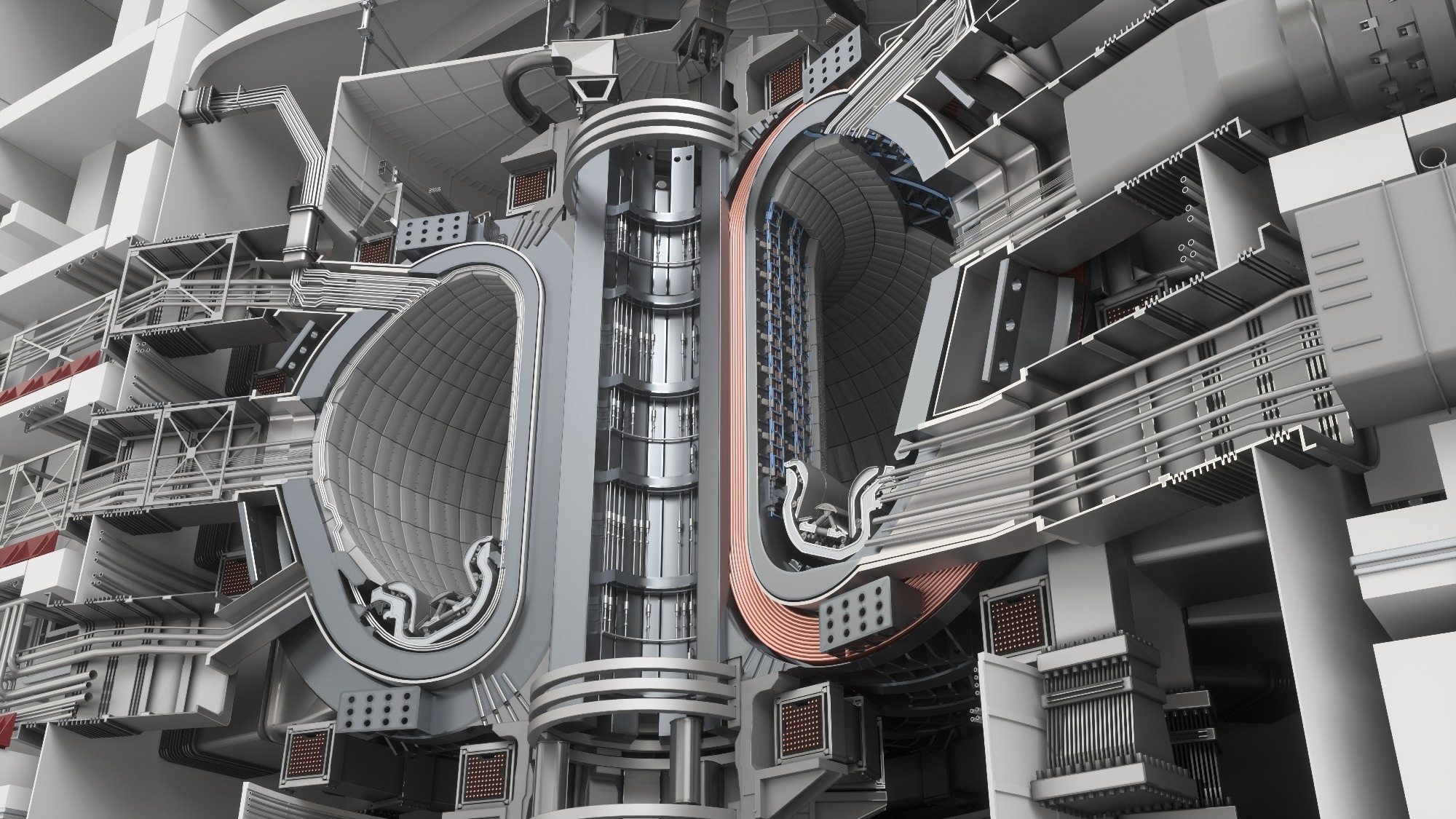
The structure would only be one or perhaps two stories high, with the bottom of the torus housing water piping and the top housing electrical power cables, data cables, and light pipes.
Try to visualize all those interior metal electromagnet "tiles" being replaced with cast basalt tiles: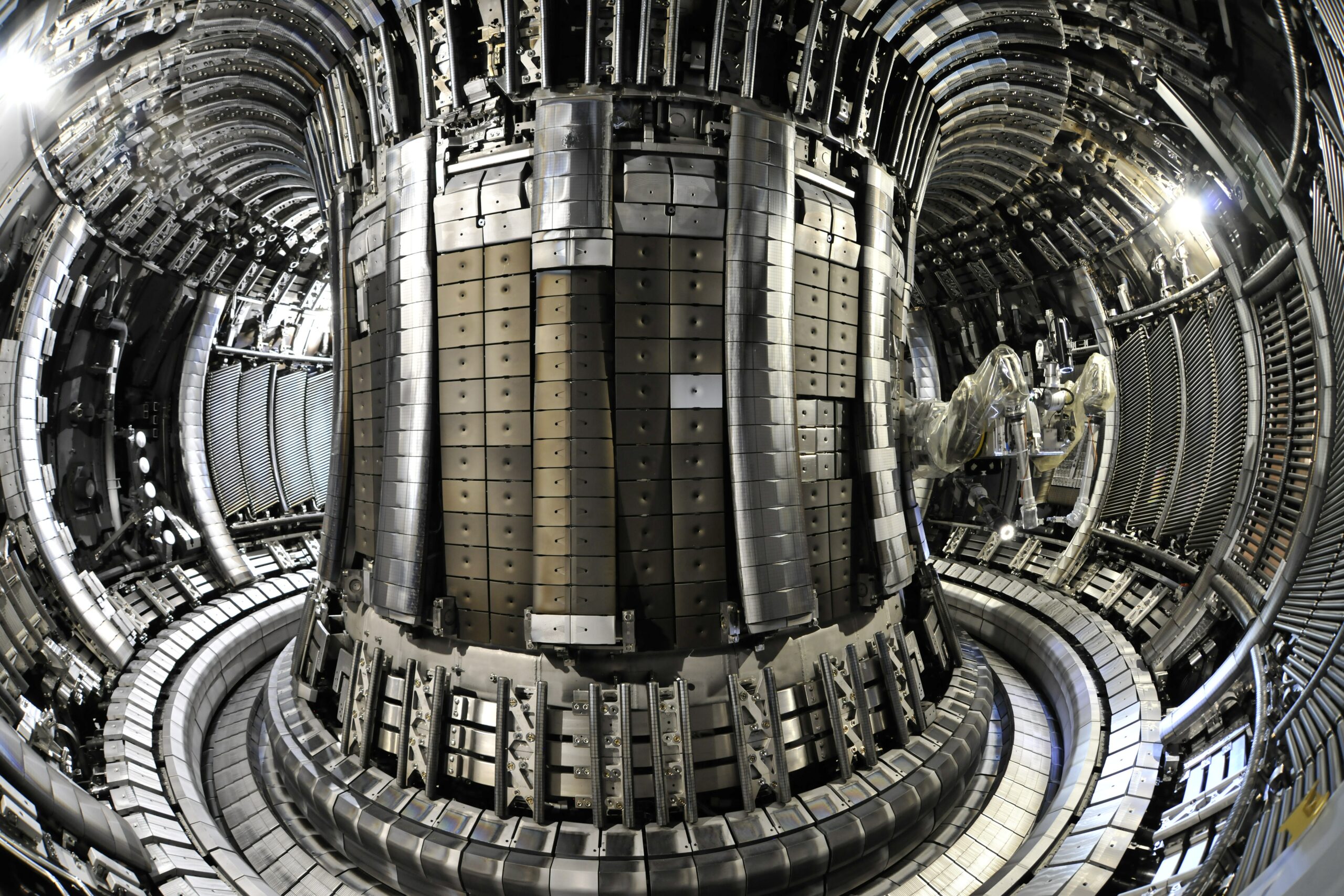
The interior would be lined with cast basalt tiles like these: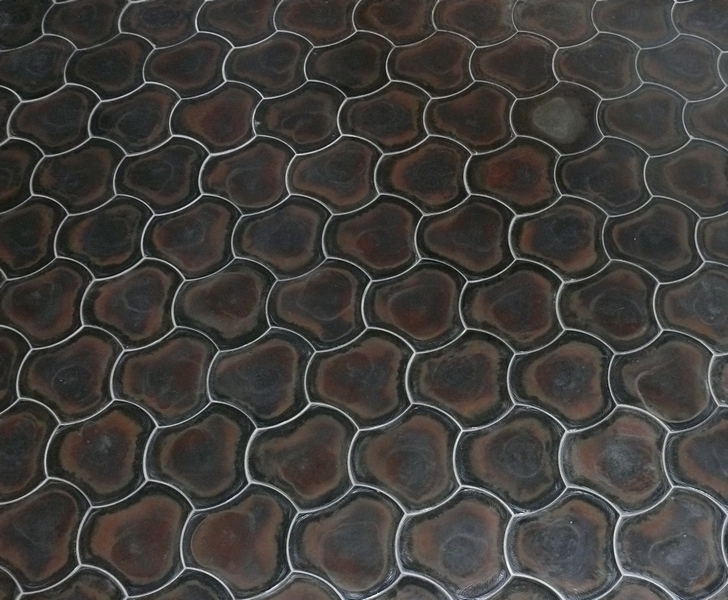
Basalt can be cast into relatively complex shapes and has a strikingly beautiful natural appearance: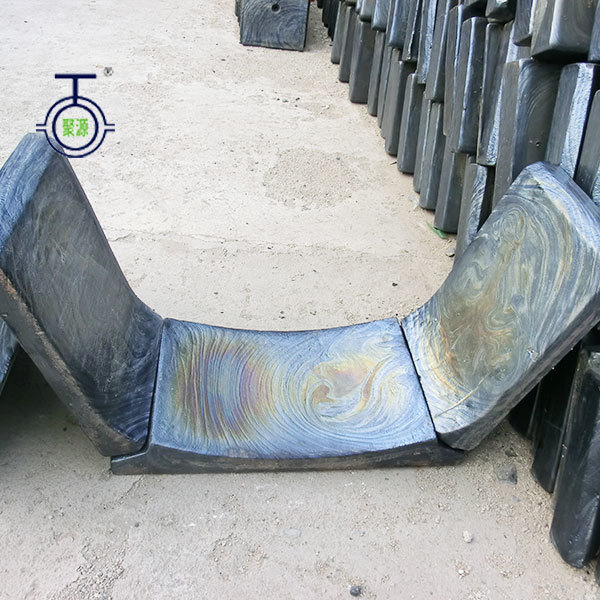
So, basic concept is as follows:
1. D-shaped torus to provide more usable floor space without an excessive number of floors requiring elevators, with reduced structural materials strength and therefore mass requirements, relative to a Super Dome.
2. Starship's 304L stainless steel is converted into a tubular exoskeleton / space frame. The external frame is intended to allow for thermal expansion and contraction in the Martian temperature extremes between day and night.
3. Cast basalt tiles / blocks are inserted into the frame and sealed using Silicone caulk.
4. Liquid CO2 will be pumped through the space frame in an attempt to improve upon the room temperature strength of 304L, and to regulate its temperature to avoid excessive expansion and contraction. We want to keep that stainless cold, definitely below zero, because it's weaker than A36 at room temperature, but not mildly cryogenic because we start to lose ductility and we definitely want to keep that. We're after about 517MPa to 621MPa. We don't go any colder than is required to achieve that yield strength.
5. The structure size / progression is ultimately limited by the number of arriving Starships. We have around 70t of the right kind of material to work with per Starship. The engines are higher grades of stainless that would be repurposed for making fasteners, tooling, and molds.
304L Temperature vs Yield Stress for Conventional 304L (green) and Laser Powder Bed Fusion (red):
As the graph above shows, laser sintering of 304 powder delivers high yield strength, partially due to formation of martensite, but we don't want martensite formation in a steel exposed to cryogenic temperatures, so we're sticking with a conventional cold-rolled seamless tubing material produced in a miniature electric arc furnace that accepts bits of recycled Starship hull scrap steel. The yield strength mechanical property is reduced, but that other important metallurgical property, namely an austenitic grain structure which confers ductility at very low temperatures, is more important for our application than pure tensile strength, which we are "thermally improving" by keeping the steel cold using cold LCO2.
Offline
Like button can go here
#7 2026-01-16 17:35:38
- SpaceNut
- Administrator
- From: New Hampshire
- Registered: 2004-07-22
- Posts: 30,870
Re: Ring Habitat on Mars Doughnut Torus
For kbd512 ... There is a new topic available if you would care to develop your ideas for a ring shaped habitat on Mars...
https://newmars.com/forums/viewtopic.php?id=11287
Please begin by setting the dimensions so that others can begin to help to build up a vision of the idea.
The Stanford Torus may be larger than you have in mind, but is a well developed model that might provide inspiration for your concept.
Unlike Calliban's dome, your concept appears to have potential for construction outside a Crater.
It will definitely be interesting to see what members do with the concept, but it needs dimensions so that folks have something to work with.
(th)
It could be the same size or different due to other factors yet not determined...
For kbd512 re D shaped habitat ring ...
https://newmars.com/forums/viewtopic.ph … 29#p237229In some habitat designs, regolith is piled on top to provide radiation shielding. Is the structure you've considering strong enough to handle that load? The cast basalt panels might be strong enough to handle the compression load.
A regolith outer layer would provide thermal buffering, although some heat will be lost as the planet sucks energy out of any structure. Heat from a fission reactor might provide a constant supply of fresh thermal energy for an extended period.
Your D shaped structure has the distinct advantage of solving the foundation problem that other designs must handle.
(th)
Again shape still may change as its never been built as if we are on mars.
It is unknown how fast the mining of ore, processing to be able to cast panels, but to make and weld the frame is also a question. Time and crew size plus equipment causes the build to be pushed across multiple cycles.
reminds me of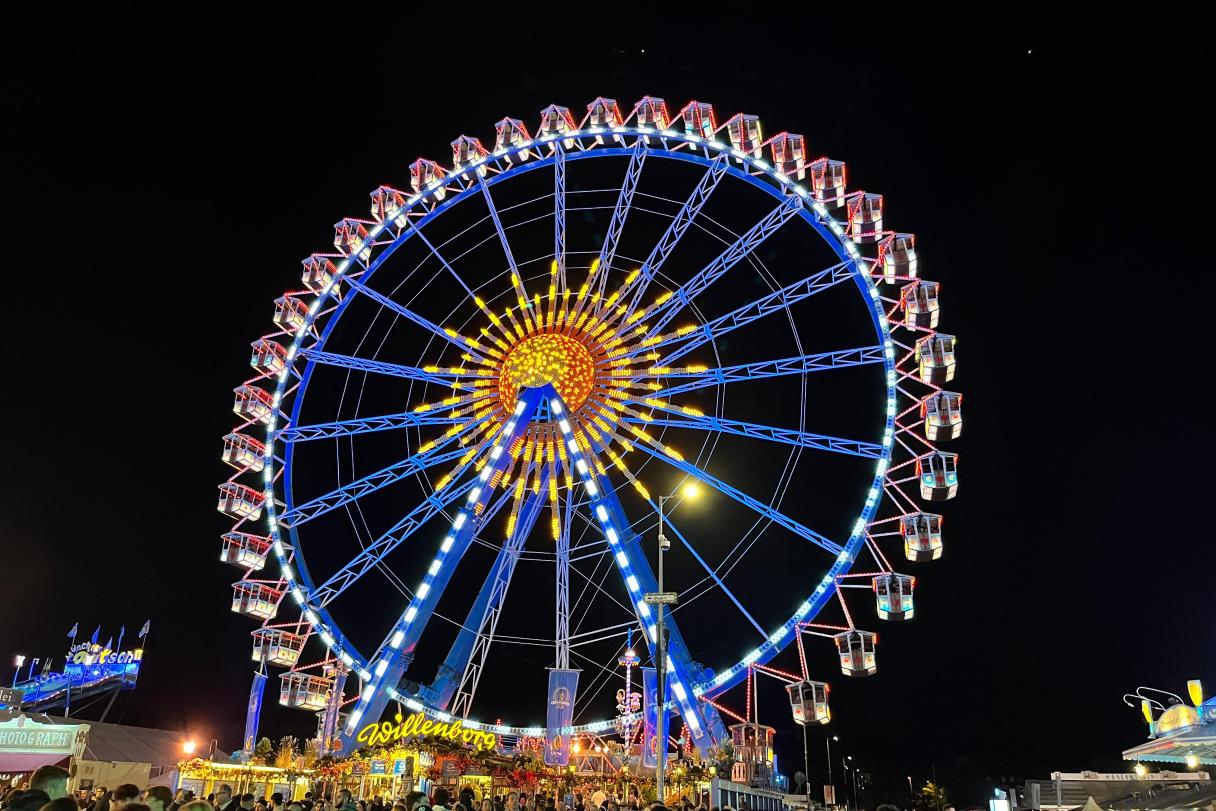
Offline
Like button can go here
#8 2026-01-16 17:46:59
- SpaceNut
- Administrator
- From: New Hampshire
- Registered: 2004-07-22
- Posts: 30,870
Re: Ring Habitat on Mars Doughnut Torus
Funny we have been there for Cast Basalt
With Basalt melting at temperatures of 1175 - 1350°C, depending on composition.
Similar equipment for other mining operations.
Basalt mining and processing require extremely wear‑resistant, high‑capacity equipment because basalt is one of the hardest and most abrasive natural stones. The core machinery includes drilling/blasting tools, heavy-duty loaders, jaw and cone crushers, VSI sand makers, vibrating screens, and dust‑controlled conveyor systems.
Below is a clear, structured breakdown of the full equipment lineup and process flow, grounded in the latest industry data.
? What Equipment Is Used for Basalt Mining & Processing?
1. Mining / Quarrying Equipment
Basalt is typically extracted from open‑pit quarries.Extraction Tools
Drilling rigs – for blast‑hole drilling in hard rock.Explosives & blasting systems – controlled fragmentation of basalt benches.
Hydraulic excavators (30–70 ton) – for loading blasted rock.
Wheel loaders & haul trucks – transport raw basalt to the processing plant.
? 2. Primary Processing Equipment (Crushing)
Basalt’s hardness (Mohs 5–6.5) demands high‑strength crushing machines.Primary Crusher
Jaw CrusherHandles large basalt blocks up to 700–1200 mm.
High-strength manganese plates.
Example: C6X Jaw Crusher.
Secondary Crusher
Hydraulic Cone CrusherIdeal for medium-hard basalt.
Produces uniform, cubical aggregates.
Multi‑cylinder design reduces wear costs.
Tertiary Crusher (Optional)
VSI Sand MakerUsed when producing manufactured sand or highly cubic aggregates.
Common in asphalt and concrete aggregate plants.
? 3. Screening & Sorting Equipment
Vibrating screens (2–4 decks)Separate crushed basalt into size fractions (e.g., 0–5 mm, 5–12 mm, 12–22 mm).
High-strength screen meshes
Required due to basalt’s abrasiveness.
? 4. Material Handling Systems
Belt conveyors (650–1000 mm width)Abrasion‑resistant belts and dust‑proof covers.
Hoppers & feeders
Heavy-duty vibrating feeders with wear liners.
? 5. Optional Processing Equipment
Depending on the final product:For Manufactured Sand
VSI or HVI sand-making machinesAir separators for fine control
For High‑Quality Aggregates
Hydraulic cone crushers (HPT, HP series)Washing systems (log washers, spiral washers)
For Basalt Fiber Production
Basalt melting furnaceFiber drawing equipment
Winding machines
? 6. Typical Basalt Crushing Plant Configuration
Based on industry-standard setups:Stage Equipment Purpose
Feeding Hopper + Vibrating Feeder Regulated feeding of raw basalt
Primary Jaw Crusher First-stage size reduction
Secondary Cone Crusher Produces uniform aggregates
Tertiary VSI Crusher Sand making / shaping
Screening Multi‑deck Vibrating Screen Size classification
Conveying Belt Conveyors Material transport
Example capacity: 250–450 TPH basalt plant with jaw + cone + VSI + screens.? Tips for Choosing Basalt Processing Equipment
Prioritize wear resistance (manganese steel, ceramic liners).Use compression crushers (jaw + cone) to reduce wear costs.
Ensure dust suppression for environmental compliance.
Choose variable-speed feeders to stabilize plant output.
For sand production, include VSI or HVI machines.
? Sources
MINEVATE Basalt Crushing & Screening PlantLiming Heavy Industry Basalt Crusher Overview
Zoneding Basalt Crushing Plant Guide
CCE Online News – Basalt Quarry Equipment Selection
Fote Machinery – Basalt Crushing Process & Machines
Designing interlocking cast‑basalt thick tile panels for use on Mars is a fascinating challenge because it blends planetary engineering, materials science, and in‑situ resource utilization (ISRU). You’re essentially asking: How could we manufacture basalt‑based structural panels on Mars that lock together like giant LEGO blocks and survive Martian conditions?
Let’s build a complete, realistic process from extraction to finished interlocking tiles.
? 1. Basalt as a Martian Manufacturing Feedstock
Basalt is abundant on Mars. It’s chemically similar to terrestrial basalt and ideal for:Casting into tiles or panels
Melting into basalt fiber
Forming abrasion‑resistant surfaces
Thermal and radiation shielding
Its melting point (~1200–1250°C) is high but manageable with electric or solar‑thermal furnaces.
? 2. Full Process for Creating Interlocking Cast Basalt Panels on Mars
Step 1 — Basalt Collection & Pre‑Processing
Robotic excavators or small autonomous rovers gather basalt rubble.Material is crushed into uniform feedstock (5–20 mm).
Magnetic separation removes iron-rich particles if needed for furnace efficiency.
Mars advantage: Low gravity reduces wear on crushers and conveyors.
Step 2 — Melting the Basalt
Basalt must be melted into a homogenous liquid.Possible furnace types for Mars
Solar‑thermal concentrator furnaceUses mirrors to reach >1300°C
No oxygen required
Ideal for daytime production
Electric resistance furnace
Powered by nuclear or solar arrays
More stable temperature control
Induction furnace
Efficient if basalt is pre‑enriched with iron
The melt is held at ~1250–1350°C.
Step 3 — Casting Into Interlocking Tile Molds
This is the heart of your idea.Tile geometry
Interlocking basalt tiles could use:Tongue‑and‑groove edges
Dovetail joints
Hexagonal puzzle‑fit geometry
Male/female castellated edges
These shapes prevent lateral shifting and allow construction without adhesives.
Casting process
Pre‑heated molds (steel, ceramic, or regolith‑ceramic composite) are prepared.Molten basalt is poured into molds under low atmospheric pressure.
Controlled cooling prevents cracking.
Annealing phase relieves internal stresses.
Thickness:
20–80 mm for structural panels
100–150 mm for radiation shielding or load‑bearing walls
Step 4 — Controlled Cooling & Annealing
Mars’ environment is extremely cold, so cooling must be regulated, not passive.Tiles are cooled in insulated chambers to avoid thermal shock.
Annealing at 500–600°C for several hours improves toughness.
Step 5 — Surface Finishing
Depending on use:Polished for interior habitats
Textured for traction on exterior walkways
Grooved for mechanical interlock with regolith backfill
Coated with thin basalt‑fiber mesh for crack resistance
Step 6 — Quality Testing
Tiles must survive:Thermal cycling from −120°C to +20°C
Dust abrasion
Low‑pressure fracture tests
Radiation exposure simulations
Impact resistance (meteoroid micro‑debris)
? 3. Assembly of Interlocking Panels on Mars
Dry‑fit construction
Because water is scarce, tiles should assemble without mortar.Possible assembly methods
Robotic arms place tiles into interlocking patterns.Regolith backfill locks panels in place.
Basalt‑fiber tie rods or pins reinforce joints.
Vacuum‑tight interior walls may use a thin polymer seal between tiles.
? 4. Why Cast Basalt Panels Are Ideal for Mars
Radiation shielding (dense, high‑silica material)Thermal stability
Abrasion resistance against dust storms
ISRU‑friendly (basalt is everywhere)
Non‑toxic, non‑flammable
Long lifespan
Interlocking geometry reduces the need for adhesives, which are expensive to transport from Earth.
? 5. Optional Enhancements
Basalt‑fiber reinforcement
Mixing chopped basalt fiber into the melt increases toughness.Hollow‑core tiles
Reduce mass and improve insulation.Embedded channels
For wiring, heating loops, or gas lines.Self‑locking hexagonal tiles
Inspired by honeycomb structures for pressure‑resistant habitats.If you want, I can also design:
A specific interlocking geometryA full production line layout for a Martian basalt tile factory
A tile panel standard (dimensions, tolerances, strength specs)
A robotic assembly system for building habitats with these tiles
The most promising sites cluster around volcanic provinces, ancient lakebeds, and polar regions, according to recent analyses.
Below is a clean, practical breakdown of where humans would actually mine on Mars based on current science.
? 1. Best Locations for Basalt Mining (for cast basalt tiles, ISRU construction)
Basalt is everywhere on Mars, but the richest, freshest, and easiest‑to‑access deposits are:Tharsis Volcanic Province
Includes Olympus Mons, Ascraeus Mons, Pavonis Mons, Arsia MonsGiant basaltic shield volcanoes
High‑purity basalt ideal for casting, fiber production, and structural materials
Highlighted as resource‑rich volcanic zones
Elysium Planitia
Young basaltic lava plainsSmooth terrain → easy rover access
Good for large‑scale basalt tile production
Gale Crater Region
Curiosity rover confirmed basaltic provenance in sedimentsAbundant basalt fragments transported by ancient rivers
Jezerο Crater
Perseverance rover found basaltic igneous rocks in crater floorEasy to collect and crush for ISRU
❄️ 2. Best Locations for Water Ice Mining
Water ice is the most valuable early resource.Mid‑Latitude Ice Deposits
Arcadia PlanitiaUtopia Planitia
Vast subsurface ice sheets
Easy to access with shallow drilling
Polar Regions
North Polar Layered DepositsThick, clean water ice
Highest volume but harder to reach for early missions
? 3. Metal & Mineral Mining Locations
Based on rover samples and meteorite analysis:Volcanic Slopes of Tharsis & Elysium
Likely sources of:Nickel
Chromium
Titanium
Identified as high‑value targets for future mining robots
Hematite‑Rich Regions
Meridiani Planum (Opportunity rover site)Contains iron oxides (hematite “blueberries”)
Sulfur, Chlorine, Potassium, Phosphorus
Widely distributed in Martian regolithUseful for agriculture, batteries, and chemical processing
? 4. Best Locations for Construction Materials (Regolith, Basalt, Silicates)
Valles Marineris walls – layered basalt and sedimentLava tubes in Tharsis & Elysium – natural shelters + basaltic rock
Isidis Basin – basaltic plains with fine regolith
?️ 5. Summary Table: What to Mine and Where
Resource Best Locations Why
Basalt Tharsis, Elysium, Gale, Jezero Casting, tiles, fibers
Water Ice Arcadia, Utopia, Poles Life support, fuel
Metals (Ni, Ti, Cr) Tharsis volcanoes Concentrated in volcanic flows
Iron Oxides Meridiani Planum Hematite nodules
Silicates Everywhere Glass, ceramics
Salts & Volatiles Regolith globally Agriculture, chemistry
? If your goal is specifically basalt tile production for Mars:
The top two mining zones are:⭐ Elysium Planitia
Flat, accessible, young basaltIdeal for large automated factories
⭐ Tharsis Montes (volcano slopes)
Highest‑quality basaltRich in metals for tools and furnace components
If you want, I can also map out:
A full mining + processing base layout
A site selection comparison (Elysium vs Tharsis vs Jezero)
A logistics plan for transporting basalt to a casting facility
Offline
Like button can go here
#9 2026-01-17 19:58:22
- SpaceNut
- Administrator
- From: New Hampshire
- Registered: 2004-07-22
- Posts: 30,870
Re: Ring Habitat on Mars Doughnut Torus
The industrial production of cast basalt blocks is a multi-stage process involving melting raw basalt at very high temperatures and annealing it to create a durable, abrasion-resistant product. The total, comprehensive production cycle is often shortened in modern methods to roughly 5 to 6 days (approx. 130 hours), according to manufacturing patents.
Here is the breakdown of the time required for each phase:
Mining/Quarrying (Raw Material Gathering): Variable, depending on the scale of the operation, but typically, this is done in bulk.
Melting (Smelting): Basalt is melted at temperatures between 1280°C and 1500°C. Some studies indicate that the melting process itself, in a batch furnace, lasts about 4.5 hours.
Molding (Casting): The molten basalt is poured into molds or cast into cylinders. This is done shortly after melting.
Annealing (Heat Treatment/Crystallization): This is the most crucial, time-intensive step. The molded basalt is placed in a kiln for annealing to eliminate internal stresses and form a microcrystalline structure. This process usually takes 16 to 21 hours, though some specialized processes might take longer depending on the thickness of the material.
Cooling to Room Temperature: After annealing, the tiles are cooled, which can take an additional 9 to 14 hours.
Total Production Cycle Time:
Older, traditional methods could take significantly longer.
Modern, optimized manufacturing processes aim for a, total production cycle (from raw material to finished cast) in a significantly shorter timeframe, with some patents mentioning a, total cycle of 130+ hours (approx. 5.4 days).
Other Factors:
Preparation: Before melting, the basalt may need to be crushed into smaller particles.
Customization: Special molds and cooling processes for specific shapes or custom designs may increase the total turnaround time
Making things fast if we collect mars basalt sand.

Black Sand Dunes on Mars taken by NASA’s Curiosity Rover,
It appears that, Mars has abundant basalt sand, derived from volcanic activity, making up much of its dark dunes and regolith, with minerals like olivine, unlike Earth's quartz-dominant sands, creating unique features like "sandfall" streaks from sublimating dry ice.
Key Characteristics
Volcanic Origin: Mars's surface is dominated by basaltic rocks, the same dark volcanic rock common on Earth, so Martian sand is typically basaltic.
Dark Color: This basalt composition gives Martian sand its characteristic dark color, similar to dark volcanic sand beaches on Earth.
Primary Minerals: The sand contains igneous minerals like olivine and pyroxene, indicating formation through physical breakdown (wind, thermal stress) rather than extensive chemical weathering.
Dune Fields: Vast dune fields, such as the North Polar erg and the Bagnold Dunes, are composed of this basaltic sand.
Unique Martian Phenomena
Dark Sand Cascades: In the Martian spring, sunlight warms seasonal dry ice (frozen CO2) on dunes, causing it to sublimate (turn to gas) and trigger sand slides, leaving behind dark streaks that look like "trees" or "sandfalls".
Light Dust Cover: While the sand is dark, much of the Martian surface is covered by lighter-toned dust, which can obscure the dark sand unless it's actively moving or newly exposed.
Exploration
Curiosity Rover: The rover has extensively studied dark basaltic dunes in the Bagnold Dune Field, observing active sand movement and ripple formation.
BASALT Program: NASA's BASALT (Biologic Analog Science Associated with Lava Terrains) project studies Earth's volcanic areas to understand potential Martian environments for human exploration
Basalt sand is widespread on Mars, forming vast dark dunes, especially around the North Polar erg (Olympia Undae), where winds sculpt them into active patterns, and in regions like Meridiani Planum (seen by Opportunity) and near volcanoes like Syrtis Major, often appearing dark or blueish due to mineral composition, contrasting with the reddish dust and sometimes mixed with gypsum.
Key Locations & Features:
North Polar Region (Olympia Undae): A massive ring of basaltic (and some gypsum) sand dunes, some over 100 feet high, showing active movement and sublimation-driven "tree-like" streaks.
Meridiani Planum: Explored by the Opportunity rover, this area features basaltic sand grains, sometimes forming spherical aggregates, with distinct dark patches.
Syrtis Major: A large volcanic region where dark basaltic sand and rock are prominent, showcasing volcanic origins for the sand.
Impact Craters: Many craters expose underlying basalt layers, providing sources for sand that gets reworked by wind.
Characteristics:
Color: Dark, often appearing black or bluish in images due to volcanic minerals like olivine.
Formation: Created from volcanic eruptions and mechanical weathering, then shaped by wind (aeolian processes).
Activity: Dunes are very active, shifting significantly over time, influenced by seasonal frost and dry ice sublimation.
How it's Found:
Orbital imagery (like NASA's Mars Reconnaissance Orbiter (MRO) and its HiRISE camera) reveals large dune fields.
Rovers (Curiosity, Opportunity) analyze surface sands up close, confirming their basaltic composition
Offline
Like button can go here
#10 2026-01-18 18:17:57
- SpaceNut
- Administrator
- From: New Hampshire
- Registered: 2004-07-22
- Posts: 30,870
Re: Ring Habitat on Mars Doughnut Torus
Basalt sand processing is a multi-stage industrial process, rather than a single-step action. Because basalt is an extremely hard, high-density rock (\(2.8-3.0\text{\ g/cm}^{3}\)), processing focuses on efficient, multi-stage crushing, typically lasting for a few minutes per batch, but operating continuously. Basalt Sand Processing Time Chart Note: This represents the mechanical processing time of rock-to-sand in a typical industrial crusher.
Production Stage OperationEstimated Time (Duration)
1. FeedingVibrating Feeder (removes debris)Continuous (immediate)
2. Primary CrushingJaw Crusher (\(>300\text{mm}\rightarrow <50\text{mm}\))Seconds to Minutes
3. Secondary/FineCone Crusher (\(50\text{mm}\rightarrow \text{smaller}\))Seconds to Minutes
4. Sand MakingVSI Crusher (shapes and grinds)Seconds to Minutes
5. ScreeningSeparating particle sizesContinuous (concurrent)
6. Washing/DewateringWashing & Drying (if wet process)10–30+ minutes
Total Cycle TimeRaw Rock \(\rightarrow \) Finished Sand\(<1\text{\ hour\ per\ batch}\)
Key Processing Steps & Considerations
Crushing Technology: Due to the hardness of basalt, laminated principle crushing equipment is recommended to minimize wear and tear.
Production Volume: Large-scale, high-capacity plants (e.g., 350-400 TPH) are common for basalt, focusing on creating construction aggregate, asphalt material, and manufactured sand.
Dry vs. Wet Process: Dry, vertical shaft impact (VSI) crushers are often used to create a uniform particle size, while wet processes are used to wash and remove fine dust.
Performance Metrics: The process aims for high efficiency, with a high crushing rate and low operational costs
[table]
[tr][td][b]Process Step[/b][/td][td][b]Description[/b][/td][td][b]Estimated Time[/b][/td][/tr]
[tr][td]1. Quarrying/Mining[/td][td]Extracting raw basalt rock[/td][td]1-3 Days[/td][/tr]
[tr][td]2. Primary Crushing[/td][td]Jaw crusher reduces rock size[/td][td]2-5 Hours[/td][/tr]
[tr][td]3. Secondary/Fine Crushing[/td][td]Cone crusher/Impact crusher[/td][td]3-6 Hours[/td][/tr]
[tr][td]4. Screening[/td][td]Separating by particle size[/td][td]1-2 Hours[/td][/tr]
[tr][td]5. Washing/Drying[/td][td]Removing fines/Moisture control[/td][td]4-12 Hours (varies by drying method)[/td][/tr]
[tr][td]6. Bagging/Shipping[/td][td]Packaging and dispatch[/td][td]1-2 Days[/td][/tr]
[/table]
Typical Production Metrics
Production Capability: 154,000 T/month (system capacity).
Throughput: 30–700+ t/h (depending on line size).
Basalt Hardness: High (139-185 MPa) requires heavy duty equipment.
Offline
Like button can go here
#11 2026-01-18 19:53:20
- SpaceNut
- Administrator
- From: New Hampshire
- Registered: 2004-07-22
- Posts: 30,870
Re: Ring Habitat on Mars Doughnut Torus
Isogrid technology, which involves creating rigid, lightweight triangular-stiffened structures, is a critical technique for designing space-hardened habitats and shells on Mars. While specific "plug-and-play" software labeled "Isogrid Maker for Mars" does not exist, aerospace and structural engineers use several advanced CAD and simulation tools to model these, often utilizing additive manufacturing (3D printing) for implementation.
Key Software and Modeling Techniques for Mars Domes:
Autodesk Fusion 360: Used for parametric modeling of isogrid structures. It allows engineers to create, test, and adapt the geometry of triangular ribs, which is critical for optimization.
Continuous Composites (CF3D): NASA-selected technology that uses advanced robotics to print continuous carbon fiber in isogrid rib patterns for space applications.
Finite Element Analysis (FEA) Software: Tools like ANSYS or NASTRAN are used to simulate the structural loads (internal pressure vs. external atmosphere) on isogrid domes to ensure they can withstand Martian conditions.
Roboze One+400: A 3D printer specifically used in research for producing high-performance, lightweight isogrid structures.
Geodesic Dome Calculators: For the basic geometry of polyhedral domes, tools that calculate chord factors and strut lengths are used.
Applications on Mars:
3D Printed Shells: Research suggests using 3D-printable inner spherical shells and outer parabolic domes to protect habitats from the Martian climate.
Regolith Manipulation: Techniques like sintering or microwave melting of Martian regolith are planned for creating geodesic domes.
Structural Efficiency: Isogrid designs are used to minimize mass while maximizing pressure resistance, necessary for transporting materials from Earth or using indigenous resources.
Commonly Used Tools:
CAD: Autodesk Fusion 360, SolidWorks, CATIA.
Analysis: ANSYS, Abaqus, Altair HyperWorks.
Manufacturing: Specialized 3D printing software (slicers for robotic arms).
These tools are part of a broader approach to designing and testing Martian habitat structures, which must be both lightweight for transit and rigid enough to handle the 101 kPa pressure differential on Mars
These are the quick google of software to use in a isogrid construction.
Offline
Like button can go here
#12 2026-01-18 20:10:44
- SpaceNut
- Administrator
- From: New Hampshire
- Registered: 2004-07-22
- Posts: 30,870
Re: Ring Habitat on Mars Doughnut Torus
We launched the evening with discussions of kbd512's vision of a ring/dome habitat
SpaceNut joined in with numerous suggestions for materials and procedures.
We settled on a population to serve: 1000
That is a nice round number to work with. SpaceNut agreed to consult his AI friends to see if any of them can work out the requirements for all the equipment needed to sustain that population.
We are in need of fresh water and sewerage systems, and the equipment to recover fresh water from the sewerage.
SpaceNut is in an industry that deals with humans in closed life support environments.
Hopefully he will be able to help kbd512 size the complex.
Kbd512 gave us an expectation that some support systems would be inside the building and some outside.
To build for 1,000 a dome with isogrid structure of mars materials to use and do develop of stainless insitu materials is going to be a 40 year plus plan involving heavy mining and smelting, with a 1-meter deep, 8x8 km pit of regolith necessary for material to sustain a large population's infrastructure.
Leaving even more time for getting the cast basalt processing for insertion into the grid.
Offline
Like button can go here
#13 2026-01-18 20:46:20
- tahanson43206
- Moderator
- Registered: 2018-04-27
- Posts: 26,169
Re: Ring Habitat on Mars Doughnut Torus
The project is under way!
kbd512 has taken the important step of DECIDING the population to be served.
Everything else will flow from that critical decision. Every detail of the project plan will flow from that one critical decision.
That is the role of a leader.
The rest of us are able to perform our responsibilities because someone in authority has made a decision.
All we have to do now is to implement that decision.
SpaceNut has volunteered (with some arm twisting) to discover what equipment and related supplies are needed to sustain that population. With that information, kbd512 will be able to size the structure.
kbd512 has already predicted that he will place some equipment outside the building and other equipment inside.
SpaceNut will work with multiple AI assistants to find the answers to all the questions that will arise.
When SpaceNut runs into a situation that requires another decision, kbd512 will make that decision and we will proceed.
Ultimately if all goes well, we will have in hand a detailed project plan that specifies every nut and bolt, and more importantly, when that nut/bold pair are needed and exactly how much torque to apply to the nut to secure the piece in question.
This project is comparable in complexity to building a nuclear powered submarine.
Fortunately, SpaceNut has spent decades in an industry closely related to nuclear powered submarines.
This forum is looking for persons with appropriate knowledge who will be willing to allocate some of their precious personal time to advancing the project.
Mars Society is the sponsor who allocates funds to support this forum. Any success achieved by this forum will flow to the credit of the Mars Society.
Mars Society members are welcome to join this forum. However, we are moving away from the entertainment business model with which this forum began. We have an opportunity to transition to a knowledge store with a focus on the Mars Settlement problem.
(th)
Offline
Like button can go here
#14 2026-01-19 06:02:32
- SpaceNut
- Administrator
- From: New Hampshire
- Registered: 2004-07-22
- Posts: 30,870
Re: Ring Habitat on Mars Doughnut Torus
KBD512 needs to start the wiki document for constructing structure for a 1,000 crewed on Mars station to place all items as decided with in.
Just a reminder Calliban's dome has varied in population but the starting number is 1000 could only support 350 crew with life support for the size of of the 200m diameter parabolic 120m tall with probably 50 meters deep to house greenhouse, waste recovery and other such thing.
Deciding on shape structure is as you can see still is in concept.
Internal support is still unknown but if we are using submarine and aircraft construction for internal spaces then this is not a home style for civilians.
locations for Basalt and for Iron to make steel or stainless with
If we go with stainless steel ISOGRID then where is the source other than the build up of empty unused starship cargo ship which is in the neighborhood of 70MT of the ships hull and more. Other items can be removed and set aside for building.
The facts of mars for plumbing are going to be below the structures floor but inside the pressurized area hull of 0.1 M with depth of the floor depends on materials and where there is more floors above. ceiling are 2 meters tall with lighting 0.05M, electrical 0.05M, HAVC 0.3m set aside to keep these out of the way of the people with in. This layout repeats for the next and so on.
That means the proposed 125m^3 of pressurized volume for each family of 4 is a rectangle of 2.5 m tall with 5 m wide x 10 m long.
1,000 crew / 4 means 250 such rooms but that is not all of the internal requirement as hall ways are need on both side of these so that is 2.5 M x 1 M wide x 2 x 250 x 10 M = 62,500 cubic meter for living space regardless of shape for sleeping quarters.
Greenhouse volume for 1,000 need per single person is 2m x 4m x5m = 40 cubic meter x 1,000 = 40,000 cubic m volume to add to the sleeping quarters.
running total is 62,500 x 40,000 = 102,500 cubic meters
Volume of space still not complete
other things to consider are rest rooms, showers and Private Hygiene: ? sq meters per crew. or this not in the family room but in a common area
Health/Medical Area: 23-28 sq meters per crew patient bed for monitoring, leave space for all side of bed
surgery suite and triage room for emergency care ?
4 lights for each room but how many outlets for each as they may have a drop down desk area ?
outside item:
NASA indicates 10kw per crew for all power needs for safety but I think that is not counting things for building or for mining
1,000 x 10 kw = 10 Meg watt supply hopefully crews will know enough to shut stuff off. This does sound like over kill of capability.
So far only KRUSTY and scaled up versions are known to be going to Mars. for 10kw there is 30 kw of thermal that must be dissipated into the mars air or soils.
current wiki for human waste management AI content plus we have the starship fuel tanks to make use of for this purpose.
A 4-person crew can generate up to 2,500 kg of waste in a one-year mission.
A 3-year, 8-person crew is projected to generate roughly 12,600 kg of inorganic waste alone.
Exercise/Equipment: have 2 ways to think of is this the a consolidated gym are like a planet fitness
Gym Facility Requirements (1,000 Personnel)
Total Area: ~3,000–5,000 square meters (based on 3–5 sq/m per person for a "station" or commercial standard).
Equipment Density: Roughly 10–30 sq/ft (1–3 sq/m) per piece of equipment for comfort, or 20–50 sq/ft for strength training.
Structure still requires airlocks to most likely be shipped to the site before construction starts.
Building a large-scale stainless steel isogrid dome on Mars to house 1,000 crew members requires an industrial-scale, multi-decade construction effort, focusing on in-situ resource utilization (ISRU) to minimize the immense cost of transporting materials from Earth.
Structural Design and Engineering Isogrid Structure: An isogrid—a triangular pattern of ribs—provides high stiffness-to-weight ratios, ideal for resisting the high tensile stresses of a pressurized dome against the near-vacuum of Mars.
Dome Sizing: To house 1,000 people, the structure would likely need to be a large, multi-hectare habitat, similar to "mega dome" concepts.
Dimensions: A 20-meter high, 24mm thick steel plate wall, bolstered by vertical stringers, can withstand internal pressure.
Anchoring: Large domes create immense upward pressure (approx. 10 tonnes per \(m^{2}\)). The dome must be anchored deeply into the ground, likely using the weight of Martian regolith.
Construction Process and Materials Stainless Steel Sourcing: Stainless steel components can be fabricated on-site. Using locally sourced materials requires 40-50 years of development, involving heavy mining and smelting, with a 1-meter deep, 8x8 km pit of regolith necessary for material to sustain a large population's infrastructure.
Fabrication: Panels would be manufactured on Mars and welded in place to create a pressure-tight, airtight structure.
Prefabrication Limits: Due to transport constraints, domes cannot be brought in one piece; they must be constructed using modular, assembled components.
Protection: The steel shell must be shielded from radiation and micrometeoroids, typically by covering it with 1–3 meters of compacted Martian regolith.
Challenges and Considerations Atmospheric Pressure: The 78,000 tonnes of force on a 100-meter dome requires massive, specialized structural engineering.
Surface Conditions: Extreme cold and dust storms will hinder construction, requiring durable, automated robotic equipment.
Alternative Approaches: While steel is possible, some experts suggest that 3D-printed regolith, ice, or carbon fiber might be more efficient in terms of weight and material, as bringing steel from Earth is too costly.
Redundancy: To prevent single-point failures, the habitat should consist of multiple interconnected domes rather than one single, massive structure
Stainless steel isogrid dome construction on Mars offers a robust method for creating large-volume, pressurized habitats, leveraging high-strength, lightweight, and durable materials that can be transported from Earth or potentially manufactured on-site. Isogrid structures (triangular, lattice-reinforced, or sandwich panels) are engineered for maximum stiffness, providing the necessary pressure vessel strength to withstand the high-pressure differential (approx. 14.6 PSI) between a breathable, pressurized interior and the near-vacuum, low-pressure (0.1 PSI) Martian environment.
Key Aspects of Stainless Steel Isogrid Dome Construction on Mars
Structural Integrity: Isogrid designs, often used in aerospace for their exceptional strength-to-weight ratio, are considered for large domes to manage the massive tension loads on the dome surface. These designs use stiffeners to prevent the panels from "ballooning".
Material Advantages: Stainless steel is deemed more cost-effective to produce and, for certain applications, more reliable than inflatable alternatives. SpaceX, for instance, has developed technologies to work with stainless steel for large pressure vessels.
Construction Process:
Modular Assembly: Domes would likely be constructed from smaller, manageable panels rather than being sent as one large unit, given cargo constraints (e.g., SpaceX's 12m diameter limit).
Welding and Joining: Electron beam welding or similar advanced, automated techniques would be used to join panels, taking advantage of the vacuum of space (or, by extension, the Martian atmosphere) for high-quality welds.
Foundations: The structure would likely be anchored firmly into the Martian regolith to withstand internal pressures and environmental stressors.
Environmental Protection: While the steel provides the pressure vessel, additional layers are needed for radiation shielding and to handle the extreme temperature differences (around -63°C average).
Regolith Shielding: Covering the dome with 3–5 meters of local soil (regolith) is proposed to protect against high radiation levels and micrometeoroid impacts.
Hybrid Designs: Using a "thermos" style, with an inner pressurized steel hull and an outer shell, is a potential design to manage thermal and structural loads simultaneously.
Potential Challenges:
Massive Pressure Load: A large, unburied dome would need to be extremely heavy to prevent it from bursting. This requires significant anchoring and material strength.
Transport Costs: Moving large amounts of steel from Earth is expensive, necessitating, in the long term, on-site, in-situ resource utilization (ISRU) to create construction materials.
Stainless steel isogrid domes are a viable, high-tech option, often discussed in parallel with other techniques like 3D-printed ice habitats or underground, excavated, or "buried," in-situ, "dome-on-a-crater" conceptsConstructing a stainless steel isogrid dome on Mars to maintain an internal atmosphere of 0.5 bar (approx. 7.25 psi, similar to Apollo-era spacecraft) is an engineered solution designed to balance high structural efficiency with the need to withstand intense internal tensile stress. At this pressure, the dome is primarily a pressure vessel, requiring superior anchorage to prevent it from lifting or buckling.
1. Structural Design & Advantages (Isogrid)
An isogrid structure—a triangular, lattice-like reinforcement on the interior of the skin—is ideal for a Mars dome because it offers high bending stiffness with minimal material weight.
Tensile Strength: Because the 0.5 bar internal pressure far exceeds the 0.006 bar external pressure, the dome is under constant, significant tension. Isogrid structures efficiently manage these hoop stresses.
Material Selection: Stainless steel is favored for its high strength-to-weight ratio, ease of welding/prefabrication on-site, and high cryogenic strength at low temperatures.
Shape Optimization: While geodomes are common, low-pressure Mars environments might favor "egg-like" or flatter shell geometries to better distribute the internal pressure loads.2. Construction Methodology on Mars
Constructing such a structure requires automated, robotic assistance to handle hazardous, low-pressure, and cold conditions.
Prefabrication and Welding: Stainless steel panels can be pre-manufactured on Earth and transported, then welded together on-site. Welding is considered feasible for stainless steel compared to other materials like carbon fiber.
Anchorage: The dome must be heavily anchored to the Martian surface to prevent it from lifting off, requiring foundation engineering or covering the dome with several meters of regolith (soil) for ballast and radiation shielding.
In-Situ Resource Utilization (ISRU): Long-term construction can leverage ISRU by producing steel on Mars using local iron oxide and carbon, although this is a long-term goal.3. Key Challenges at 0.5 Bar
Pressure Management: The dome must maintain its structural integrity under constant outward pressure, necessitating robust sealing against air loss.
Material Embrittlement: Although stainless steel has good low-temperature properties, it must be carefully selected to avoid becoming brittle in extreme cold.
Dust Accumulation: Abrasive Martian dust can settle on the dome, reducing solar gain and requiring maintenance.
Radiation Protection: While 0.5 bar of pressure provides some, it is insufficient to block harmful cosmic radiation; therefore, a covering of regolith is often necessary.4. Comparison with Alternatives
vs. Rigid Domes: Stainless steel isogrid provides superior strength over standard rigid domes but is heavier to transport.
vs. Inflatable Domes: While lighter, inflatable structures (like the NASA Ice Home concept) require thicker insulation layers to prevent freezing and, often, a protective outer shell.
vs. Cut-and-Cover: Using buried or "cut and cover" techniques is often preferred for long-term, high-pressure habitation to minimize tension, whereas isogrid domes are excellent for high-volume work/living spaces.
A 0.5 bar environment represents a balance between the high cost of maintaining a 1-bar Earth-like atmosphere and the metabolic needs of humans, making it a viable, high-efficiency compromise for Martian habitationYes, an isogrid structure made from flat stainless steel sheets is a viable concept for large Martian habitats, offering high strength-to-weight with triangular ribs from single sheets, ideal for withstanding Martian pressure/loads while being potentially manufacturable (even 3D printed) in-situ or from pre-fab, balancing lightweight needs with Mars's harsh environment, though material processing and thermal swings remain key challenges.
Why Isogrids Work for Mars:
Strength & Lightness: Isogrids, essentially thin skins with stiffening ribs (often triangular), provide high structural stiffness and strength while minimizing mass, crucial for space structures.
Single-Sheet Fabrication: They can be machined or printed from single sheets, reducing complex assembly and potential leak points compared to honeycomb structures.
Isotropic Properties: The triangular pattern makes them behave like an isotropic material (same properties in all directions), offering uniform performance.
Material Adaptability: While traditionally metal, new additive manufacturing allows printing composite isogrids, and stainless steel offers durability.
Stainless Steel & Mars:
Durability: Stainless steel offers excellent resistance to corrosion and extreme temperatures, making it suitable for the harsh Martian environment.
Manufacturability: While requiring significant energy, it's a known material, and techniques like additive manufacturing (3D printing) are being explored for creating these structures on Mars using local resources or brought materials.
Challenges & Solutions:
Thermal Swings: Extreme temperature variations on Mars (e.g., 20°C to -73°C) can affect material adhesion and performance, requiring software/design solutions.
In-Situ Resource Utilization (ISRU): Processing Martian regolith or imported steel into printable/formable sheets for these structures is a major engineering hurdle.
Habitat Design: Integrating isogrid panels with other systems (like regolith shielding for radiation) and ensuring airtightness for large volumes remains complex.
In essence, an isogrid made from flat stainless steel sheets is a strong structural choice, but its practical application on Mars hinges on advanced manufacturing and material science to overcome thermal and processing challenges
Last edited by SpaceNut (2026-01-19 06:35:10)
Offline
Like button can go here
#15 2026-01-22 19:06:45
- SpaceNut
- Administrator
- From: New Hampshire
- Registered: 2004-07-22
- Posts: 30,870
Re: Ring Habitat on Mars Doughnut Torus
A 10-megawatt (MW) nuclear reactor designed for Mars, often classified as a "Megapower" or small modular reactor (SMR), would likely be a compact, transportable unit, potentially fitting on a large flatbed truck or within a Starship payload bay, measuring roughly 10–20 meters in height. Such units are designed to operate within a small footprint (kilopower systems).
Key Details on 10MW Mars Reactor Sizes:
Scale: While 1–10 kilowatt (kW) reactors (Kilopower) are the size of a wastepaper basket, a 10 MW unit (10,000 kW) requires a much larger, though still "modular" design.Dimensions: Similar Megapower designs for space applications use compact, modular layouts with Stirling engines, enabling units to be transported in segments and assembled on-site, possibly similar in footprint to a small industrial building.
Configuration: These reactors are often designed to be buried in the Martian regolith for shielding or placed in a shallow crater.
Power Density: A 10 MW reactor is considered a "micro-reactor" in terrestrial terms (1–20 MW) but provides significant power for, say, propellant production and colony infrastructure.
For context, a 10 MW system produces 1,000 times the power of the 10 kW units currently being developed by NASA for early Mars missions
Maximizing electrical power output from a nuclear reactor delivered by Starship to a base on Mars
https://marspedia.org/Nuclear_power
A 10-megawatt (MW) nuclear reactor for Mars is significantly more compact than an equivalent solar farm, with a core unit that can fit into a relatively small area, although safety considerations require a wider exclusion zone. While current NASA "Kilopower" technology is in the 10-kilowatt (kW) range (40kW total for a base), a 10 MW system, which is 1,000 times more powerful, would likely be a small modular reactor (SMR) or a similar design.
Physical Size of Unit: A 10 MW SMR or similar reactor could likely fit within a very small footprint, potentially just a few hundred square meters for the reactor building itself, similar to, or smaller than, a small Earth-based SMR.
Total Footprint & Safety Zone: While the core, power conversion, and radiator systems are compact, radiation shielding requires an exclusion zone. Based on safety considerations for space-based reactors, a 10 MW reactor would likely require an exclusion area of several acres to several dozen acres (considerably less than 1 square mile, which is 640 acres) for safety and security, though this can be minimized if the reactor is buried or if the zone is sparsely used.
Comparison to Solar: A 10 MW solar farm on Mars would require roughly 50-100 acres, and potentially up to hundreds of acres for necessary battery storage. A 10 MW nuclear reactor would have a drastically smaller, more localized footprint.
Key Factors for 10 MW Nuclear on Mars:
Safety Requirements: Radiation shielding, such as burying the reactor, is essential to reduce the exclusion zone size.Mass vs. Size: The primary challenge is not the area required to build it on the ground, but the mass and volume limitations of transporting it from Earth to Mars, often requiring assembly on-site.
Efficiency: Small modular reactors (SMRs) are highly efficient, with an estimated capacity factor of around 90 percent
Navigating Nuclear: Microreactors, SMRs, and Traditional Plants
Offline
Like button can go here
#16 2026-01-25 19:59:54
- SpaceNut
- Administrator
- From: New Hampshire
- Registered: 2004-07-22
- Posts: 30,870
Re: Ring Habitat on Mars Doughnut Torus
Last week we set the number of colonists at 1,000 people. I'm still trying to come up with my estimates for the life support requirements, because that sets the power requirements.
Net Habitable Volume Requirements are driven by this document from NASA:
Defining the Required Net Habitable Volume for Long-Duration Exploration MissionsTheir defined minimum volume for 6 crew members is 27.3m^3. For this proposed facility, I'm estimating 125m^3 of net habitable volume per person, which works out to 125,000m^3, equivalent to a "box" style building with dimensions of 50mL x 50mW x 50mH. My initial estimates still show quite a bit more tensile material to work with, though, assuming 10 Starships worth of 304L, so I think it will be significantly larger than that.
When I have my numbers for life support, power, and materials available, I can then estimate how much basalt needs to be extracted and converted into tiles.
Based on the landing capabilities of SpaceX's Starship and the geography of the 82-kilometer-wide Korolev Crater, multiple Starships could theoretically land very close to one another—potentially within tens of meters of each other on the flat, ice-covered, or rocky regions of the crater floor.
However, the practical limits on landing proximity are determined by safety constraints rather than guidance precision.
Key Factors for Landing Proximity at Korolev Crater
High-Precision Landing Capability: Starship is designed for pinpoint landing, with simulations and tests suggesting accuracies within 3 to 10 meters.
Geographical Advantages: The Korolev crater is 82 km across and filled with a 1.8 km thick sheet of water ice, providing a vast, flat, and stable surface ideal for landing multiple vehicles.
Safety Constraints (Landing Closely): To avoid damage from flying debris, plume interaction, and thermal shock, multiple Starships would likely maintain a minimum distance of 100 to 300 meters between ships.
Operational Considerations: Landing too closely increases the risk of a single malfunction (such as a rocket tipping over) affecting neighboring ships.
Feasibility at Korolev
Landing Site: The floor of the crater is largely filled with water ice, but landing directly on the center ice mound might require specialized preparations to prevent melting.
Proximity: While Starships could land side-by-side, a safer operational,, "village" layout would likely place them a few hundred meters apart, creating a dense "spaceport" effect within the 82-km diameter crater, which is plenty of space for dozens of vehicles.
The main constraint on "how close" is the safety of the infrastructure around the landing zone, not the navigation of the vehicles themselves
But we want just outside of the crater.
Multiple Starships can land in close proximity on Mars, with current planning suggesting a separation distance of within a few kilometers to support the development of an outpost. While the initial target for landing navigation is quite precise—within a few hundred meters (a <200m diameter ellipse)—actual touchdown points will likely be spaced further apart to prevent damage from landing debris.
Key Details on Proximity and Landing Site Selection:
Separation Constraints: The primary constraint on landing proximity is the need to prevent damage from rocket exhaust and kicked-up debris. Safe separation distances are projected to be in the range of hundreds of meters to a few kilometers.
Precision: Starship utilizes terrain-relative navigation aimed at achieving a landing circle less than 200 meters in diameter, with high-accuracy,, smaller landing ellipses potentially possible.
Landing Location: Rather than the icy depths of Korolev Crater, early missions are likely to target equatorial regions (such as Arcadia Planitia or near Hellas Planitia) below -2 km elevation, which provide warmer temperatures and better solar power access.
Infrastructure Layout: To manage the risk of debris, multiple ships will likely be landed in a "swarm" or "field" configuration, allowing for close, yet safe, operations, similar to how landing sites are arranged at Starbase, Texas.
Safety Buffer: While landing within "walking distance" is possible, a distance of at least 100 meters is recommended to avoid immediate, intense engine exhaust impacts.
The goal is to land in a flat, stable, low-lying area that provides access to shallow subsurface ice for, for instance, producing fuel, rather than in deep craters
How flat is the crater slopes as we want the ice with in the crater...
Offline
Like button can go here
#17 2026-01-25 20:08:56
- SpaceNut
- Administrator
- From: New Hampshire
- Registered: 2004-07-22
- Posts: 30,870
Re: Ring Habitat on Mars Doughnut Torus
kbd512 identified a location ... 73 north lattitude 165 degrees East longitude.
Wikipedia is a resource ... images are available
https://en.wikipedia.org/wiki/Korolev_(Martian_crater)
kbd512 identified a location in the lower right hand corner, near an ice field as of interest for the ring habitat
For kbd512 re ring habitat topic in NewMars....
We have three people "working" on the topic at the moment.
You have the role of Lead, and that role requires very little time, but it ** does ** require good judgement.
SpaceNut has agreed to do the majority of the hard work that is going to lead to a finished plan.
We are still in the early decision making process. Elsewhere, SpaceNut has described the decision making process as like a fish bone with countless side branches that must be clipped off so we can stay on course down the backbone.
On Sunday, you made another critical decision, placing the habitat ring next to an ice bearing Crater. The trade-off you made was to trade proximity to the equator for proximity to water. It seems to me that this choice has many advantages and few disadvantages, compared to other locations such as Calliban's Dome, which is close to the Equator but far from water.
Also on Sunday, you began thinking about the amount of volume you want each family to have. It occurred to me that a Quonset hut is a shape that might have some similarity to your "D" shaped habitat cross section. A Quonset hut can be evaluated on Earth for suitability for a family. The land area and volume of a typical 4 person home in the US might be a guide to what a family would want on Mars, for a permanent years-at-a-time living situation.
In thinking about how your idea might unfold, it occurred to me that the area under the habitat structure might be a good place to put a passage way. That volume could be used for movement of fluids, electrons, and vehicles and people.
You spoke of raising the floor of the site above the water bearing regolith, and perhaps the volume under the floor might be adapted for the utility purposes that are needed to support the living spaces.
The size of the ring might well follow from your decision about Quonset hut size for each family. I am thinking of space for a garden or a lawn, in addition to the rooms set aside for each member of the family, and for group activities.
(th)
Another view of the Korolev

Offline
Like button can go here
#18 2026-01-26 12:06:03
- SpaceNut
- Administrator
- From: New Hampshire
- Registered: 2004-07-22
- Posts: 30,870
Re: Ring Habitat on Mars Doughnut Torus
kbd512 wrote:Last week we set the number of colonists at 1,000 people. I'm still trying to come up with my estimates for the life support requirements, because that sets the power requirements.
Net Habitable Volume Requirements are driven by this document from NASA:
Defining the Required Net Habitable Volume for Long-Duration Exploration MissionsTheir defined minimum volume for 6 crew members is 27.3m^3. For this proposed facility, I'm estimating 125m^3 of net habitable volume per person, which works out to 125,000m^3, equivalent to a "box" style building with dimensions of 50mL x 50mW x 50mH. My initial estimates still show quite a bit more tensile material to work with, though, assuming 10 Starships worth of 304L, so I think it will be significantly larger than that.
When I have my numbers for life support, power, and materials available, I can then estimate how much basalt needs to be extracted and converted into tiles.
The reference document is for a trans habitat travel to mars and is not typical for a surface document and may not always scale up to yield accurate or justified numbers.
This just what starship crewed is providing with SpaceX Starship (spacecraft)
The SpaceX Starship features approximately \(1,000\text{--}1,100\text{\ m}^{3}\) of pressurized internal volume, with roughly \(500\text{--}600\text{\ m}^{3}\) dedicated to usable, habitable space for crew and supplies on Mars missions. While designed for up to 100 people, initial, more comfortable missions are expected to hold a crew of 10–20, featuring private cabins, common areas, and specialized life support
Offline
Like button can go here
#19 2026-01-26 12:32:55
- SpaceNut
- Administrator
- From: New Hampshire
- Registered: 2004-07-22
- Posts: 30,870
Re: Ring Habitat on Mars Doughnut Torus
Please be brave to post in the topic
For SpaceNut re post on kbd512's ring habitat...
http://newmars.com/forums/viewtopic.php … 47#p237647
Thanks for finding and showing that hint about SpaceX more spacious accommodation for travelers.
For kbd512's habitat, I think we should be thinking of long term comfort. Those 1000 people kbd512 is going to shelter will need lots of space. There will eventually be kids in that volume, so it needs to be spacious.
I haven't read the paper you linked, but I'm hoping it is leading in the direction of spacious quarters.
I think a good model for scale is a motel, but not an economy one. This is NOT a time to be limited in thinking.
Mars has plenty of raw material to be shaped into comfortable quarters, so I hope you will lean toward spacious comfort and away from cramped economy.
It may be a good time to remind everyone, participants and readers alike.... this is NOT a NASA project.
This is the Capitalist System at work.
We are NOT building something that government bureaucrats requested, as might be the case for a military base.
We ARE working on a decent quality long term living situation where people would actually pay good money to live for six Earth months or longer.
RobertDyck has cited Earthly ocean going ships as examples to study. Some people actually live on such ships for years at a time, but they are free to walk out on the deck where the open ocean is all to be seen, along with the wide open sky.
The habitat you are helping kbd512 to design is NOT going to have ** anything ** open to the environment, and that environment is going to be deadly on both the short term and the long term.
Speaking of RobertDyck ... he has published some of an architectural study in which he took part. As I recall the images, there was plenty of space provided for residents and visitors.
The structure you are helping kbd512 to design needs to be like that. Safe and comfortable, but uplifting to the spirits as well. How you and kbd512 will achieve that I don't know, but what I ** do ** know is that the customers who will pay good money to live in this habitat will be looking for it.
(th)
The vision of both Kbd512 and Robertdyck for large ship can both be used for some layout information but they differ greatly.
Since we are processing stainless steel from multiple starships, we will need to have the largest volume to work with.
Which is a progression of landed not used vehicle approx. 70m tonnes that remain after each crew change until we have enough to build with.
Which once remelted and formed into the structural elements can be used to create the settlement building.
Offline
Like button can go here
#20 2026-01-26 15:09:03
- SpaceNut
- Administrator
- From: New Hampshire
- Registered: 2004-07-22
- Posts: 30,870
Re: Ring Habitat on Mars Doughnut Torus
For kbd512 re Ring Habitat on Mars...
SpaceNut described the decision tree for a project as like the bone structure of a fish.
That image stuck with me ... At the same time, the "D" shape you described reminds me of Quonset huts.
Now (an hour or so later after daily chores are complete) it came to me that the two ideas might go together...
If you set up a string of Quonset huts for the roadway and then extend Quonset huts like spokes on both the inside and outside, you could provide comfortable (and private) quarters for 250 families and keep the circumference of the entire structure to a lesser value than might otherwise be the case.
We have members who can draw with computers. It would be fun to see what that idea might look like.
We also have members who can persuade AI drawing programs to create images, so perhaps someone will venture in that direction.
This would be like SpaceNut's fishbone structure looped into a circle.
(th)
A 1,000-crew, self-sustaining Mars habitat utilizing a ring-shaped, Quonset-hut design made of stainless steel offers a durable, high-volume, and potentially scalable solution to extraterrestrial habitation. By leveraging a curved structural form, the habitat distributes pressure efficiently while allowing for modular construction using materials suitable for the harsh Martian environment, such as stainless steel (analogous to Starship technology).
Structural & Design Concepts
Quonset Hut Shape: The semi-circular cross-section is ideal for pressure vessels, as it distributes stress uniformly. Large-scale, curved metal arches provide high durability and resistance to exterior pressure loads.
Ring Configuration: A ring shape allows for a modular, expandable colony where segments can be added, and it provides a circular, continuous loop for efficient, self-contained, and self-sufficient living spaces.
Dimensions & Pressure: To house 1,000 crew members, a large-radius ring (likely over 500 meters in diameter) would be required to provide sufficient living, working, and agricultural space. The 0.5 bar pressure (roughly half Earth's sea-level pressure) is a common, manageable target for reducing structural load compared to 1 bar while still allowing human comfort.
Materials: Stainless steel is a prime candidate due to its high strength, relatively low cost, and durability, especially under the extreme temperature fluctuations on Mars. It also allows for easier welding/fabrication using robots (such as "Atomic Liberation of Propellant and Habitat" (ALPH) units).
Sustainability & Life Support (In-Situ Resource Utilization - ISRU)
A self-sustaining colony requires producing resources on-site to minimize resupply from Earth:
Shielding: To protect against radiation and potential, albeit low, atmospheric leakage, the stainless steel structure would likely need to be covered by 1-2 meters of Martian regolith.
Food Production: Hydroponic or aquaponic systems, potentially using processed Martian regolith, would be integrated into the habitat, perhaps in specialized greenhouse segments of the ring.
Water & Air: Local water ice could be mined to supply water for drinking, cleaning, and electrolysis to produce oxygen for breathing and hydrogen for fuel.
Construction Materials: While the initial structure uses transported or on-site fabricated steel, subsequent expansion could utilize 3D-printed materials made from local basalt fiber and binders.
Safety and Operational Factors
Pressurization Risk: The 0.5 bar pressure differential requires robust construction to avoid explosive decompression, with particular attention to airlocks and structural seams.
Modular Safety: The ring structure should be segmented with pressure-tight, closable doors (airlocks) to allow for sealing off damaged sections without affecting the entire colony.
Energy Generation: The colony would require massive solar arrays and, most likely, compact nuclear reactors to sustain the 1,000-person population, greenhouses, and processing machinery.
This configuration provides a sustainable, long-term habitat that combines the proven, rugged design of a Quonset hut with modern, material-efficient, and self-reliant Mars technologies
Offline
Like button can go here
#21 2026-01-26 16:19:44
- tahanson43206
- Moderator
- Registered: 2018-04-27
- Posts: 26,169
Re: Ring Habitat on Mars Doughnut Torus
This post will attempt to illustrate what a spoked wheel of Quonset huts on Mars might look like.
I forget to specify that the spokes must be connected to the roadway ring.
Conversation with Gemini
Image of Quonset huts in circular array on Mars - Hello Again! And thank you for your assistance with many previous requests. This one is for an image. We would like to house 250 families in quonset huts on Mars. The setting is a plain with craters some distance away. The configuration is what we would like to see. There would be a continuous ring of quonset huts making up a roadway. Branching from these huts would be individual family dwellings, with some inside and some outside the roadway ring. We can imagine 124 family dwellings inside the ring, and 126 outside, or such proportions as would make the most sense. The actual dwellings would be immersed in regolith for radiation protection, but in this drawing we would like to see the array before the covering is applied. These are large quonset huts, with space equivalent to a typical urban family dwelling in the United States.
Very nice! Thank you!
You’re very welcome! I’m glad that visualization of the Martian colony hit the mark. The scale of those quonset huts against the red plains really puts the ambition of housing 250 families into perspective.
Since these dwellings are designed to be eventually immersed in regolith for radiation protection, would you like me to generate a "Phase 2" image showing the same colony once it has been partially or fully covered by the Martian soil?
It is kind of you to ask but for our purposes the image works best. We are illustrating an article about possible living situations on Mars, and this image conveys a number of important elements.
That makes perfect sense. Showing the colony "exposed" like this is a much more effective way to illustrate the architectural layout and the sheer scale of the community for your readers. A mound of red dirt, while realistic for radiation shielding, certainly doesn't tell the story of the structure as well as your Quonset ring does!
It’s a fascinating concept—blending that classic 20th-century industrial aesthetic with the high-tech necessity of a Martian hub.
The image is too large for our Image Server so I'll have to shrink it and return later to add the link.
This is the jpeg version. Some of the rich color texture is lost, but the basic idea seems to survive.
What I have in mind is those spokes connecting to the central roadway, so the roadway can be pressurized as well as the Quonset huts.
In the Mars context, the entire collection would be covered with regolith.
(th)
Last edited by tahanson43206 (2026-01-26 18:09:49)
Offline
Like button can go here
#22 2026-01-26 18:23:10
- SpaceNut
- Administrator
- From: New Hampshire
- Registered: 2004-07-22
- Posts: 30,870
Re: Ring Habitat on Mars Doughnut Torus
Here are the ones copilot generated without spokes as fed in from post 20 above
Offline
Like button can go here
#23 2026-01-26 18:38:50
- tahanson43206
- Moderator
- Registered: 2018-04-27
- Posts: 26,169
Re: Ring Habitat on Mars Doughnut Torus
For SpaceNut re nice drawings by Co-Pilot! Neat!
Here is Gemini's Nano Banana trying again. It added airlocks and some regolith covering.
I think we are starting to get somewhere. We still need kbd512's decision on size of each family dwelling.
The arithmetic can flow from that.
(th)
Offline
Like button can go here
#24 2026-01-26 18:44:03
- SpaceNut
- Administrator
- From: New Hampshire
- Registered: 2004-07-22
- Posts: 30,870
Re: Ring Habitat on Mars Doughnut Torus
Its still just art from what it thinks meets what the words are telling it.
So the Quonset hut from repurposed starship emptied stainless steel shell seems to be winning for materials to use.
This is where we need the smelting information so as to reform the materials and start the process to make insitu resource use.
Smelting is also required to make the basalt blocks as well. So the stainless and basalt use the same unit?
Offline
Like button can go here
#25 2026-01-26 22:22:26
- tahanson43206
- Moderator
- Registered: 2018-04-27
- Posts: 26,169
Re: Ring Habitat on Mars Doughnut Torus
For SpaceNut .... we have an opportunity to create a detailed model of the ring habitat
Here is the opening shape I have chosen. It is a simple sphere.
My thinking is to stretch the sphere into the shape we see in railroad cars that carry gas under pressure.
We can create as many of the shapes as we want, but I am thinking of 250 for the habitats and as many as are needed to make the roadway ring.
kbd512 wanted the habitats to be on stilts to keep them above the water soaked regolith, so we could add stilts.
The cylinders could have the habitat Quonset hut in the top half and the utilities and storage in the bottom, much like an airliner fuselage.
Here is an example:

This example is interesting because I ** think ** it shows the absolute minimum amount of material that engineers can allocate to the function of the end cap for a pressure vessel. Management would drive the cost of the tank to the absolute minimum able to safely perform it's function, so the example we see shows that that would look like.
(th)
Last edited by tahanson43206 (2026-01-27 07:44:36)
Offline
Like button can go here