New Mars Forums
You are not logged in.
- Topics: Active | Unanswered
Announcement
#126 Re: Science, Technology, and Astronomy » Google Meet Collaboration - Meetings Plus Followup Discussion » 2026-02-22 13:01:31
Have put what I found here in The GW posting
Thanks to Void we have another to make use of in "Mars Direct 3 is a Mars mission architecture developed by Miguel Gurrea" topic.
https://www.marspapers.org/paper/Gurrea_2021.pdf
Plus Mars direct was a 40mT payload
https://www.marspapers.org/paper/Zubrin_1991.pdf
A reuseable craft requires the means to make the fuel of choice.
Here is the Marco polo topic first link for fuel manufacturing lander for mars.
https://kiss.caltech.edu/workshops/isru … anders.pdf
As KBD512 indicated "40t is not about colonization, it's about exploration with a crew of 4 people going on a conjunction class / "long-stay" mission."
The reason is safe landing of equipment for large rocket pad creation and preparation using tele robotic systems.
Have added GW's content to the Forty 40 Ton Mars Delivery Mechanism end of this topic.
It is the Connex box delivery system of the "Mars Expedition Number One; 17 crew members" we had proposed.
#127 Re: Meta New Mars » GW Johnson Postings and @Exrocketman1 YouTube videos » 2026-02-22 12:55:28
Just saw the email traffic.
here is the original topic Forty 40 Ton Mars Delivery Mechanism to which this was based on Nasa use of inflatable drag Ballutes, heatshield that folded out ADEPT and other such modifications to increase a stand payload rocket to have ability for more.
GW's site Chemical Mars Lander Designs “Rough-Out” 2012
Things that we done may also be in the dropbox.
Here is the reference stuff that I did with Copilot Wiki Landing Site preparation mission
The thought is to use starship cargo as the delivery of the mars cargo lander. That means using the payload of the the starship to build what we need. It lifts the rocket lander with no propellant to stay within cargo limits, Gets refueled at the same time as the starship cargo.
Hydro gels detract from the payload of the mars lander that we are trying to send as starship is not refueling with these.
I also found Nasa documents within the Companion for Mars Expedition Number One; 17 crew members or another for the 40 mt which void posted about
#128 Re: Exploration to Settlement Creation » Companion for Mars Expedition Number One; 17 crew members » 2026-02-22 11:08:11
Have fed the topics conversation into copilot and here is the response
his is the missing conversations to the Mars Expedition Number One; 17 crew members.
You’ve just handed me the entire missing half of the Mars Expedition Number One project — the raw, unfiltered, multi‑year conversation that shaped the 17‑person mission architecture. I’ve read through the uploaded document carefully, and I can now reconstruct exactly what this material represents, how it fits into your Mars mission design, and how we can turn it into a coherent, structured, publication‑ready body of work.Below is a clear, structured synthesis of what this document is, what it contains, and how it integrates into your Mars Expedition Number One concept.
What This Document Represents
This uploaded text is the complete “Companion Topic” conversation from the NewMars forum — the parallel thread where brainstorming, critique, expansion, and debate occurred while the “Primary Topic” was reserved for the clean, article‑ready version of the mission.It contains:
The entire developmental history of the 17‑person Mars mission
All supporting arguments, calculations, and counterpoints
Community contributions from SpaceNut, GW Johnson, Louis, kbd512, RobertDyck, and others
Technical deep dives into ISRU, power, food, habitat design, robotics, crew structure, and mission architecture
Philosophical and policy discussions (crew selection, diversity, NASA vs SpaceX priorities)
References to external research, NASA studies, MIT RASC‑AL, MOXIE, and more
Operational planning details (shift schedules, watchstanding, EVA logistics, construction sequencing)
Evolving mass budgets, vehicle lists, and cargo manifests
Multiple alternative mission architectures and their tradeoffs
The early seeds of your “Mars Pioneer Outpost #1” concept
This is essentially the research archive behind your mission.
What the Document Contains (Structured Breakdown)
1. Mission Philosophy & Goals
Establish a viable foothold on Mars, not a symbolic visitPrioritize survival, redundancy, and ISRU
Avoid social‑engineering quotas; select for competence
Mission One is not primarily a science mission — but science is essential for NASA partnership
Expectation of long stays (18 months minimum, possibly 3 years if return window is missed)
2. Crew Structure — The 17‑Person “Triad Model”
Leadership triadGeology triad
Two construction/maintenance triads
Science triad (chemist, microscopist/biochemist, instrumentation tech)
Medical triad (surgeon, GP/dentist, NP)
This structure is repeatedly refined throughout the document.
3. Mission Architecture
4 Starships minimum: 3 cargo + 1 crewCargo ships arrive first on slower trajectories
Crew ship arrives on a free‑return trajectory
Cargo ships remain on Mars permanently as hab shells, storage, or raw materials
Nuclear power is mandatory (KRUSTY or larger reactors)
Solar is supplemental only
ISRU must produce ~1200 tons of propellant for return
4. Habitat Concepts
Inflatable habs (Bigelow or Sierra Nevada LIFE)Buried under regolith for radiation protection
Use Starship hulls as structural shells
Multi‑module layout: sleeping, dining, shop, lab, HQ, vehicle bay
Emergency radiation shelter required
Long‑term: underground or regolith‑covered vaults
5. Power Systems
4 nuclear reactors (500 kW + 100 kW units per ship)Solar arrays for daytime charging
Dust storms require nuclear baseload
Propellant plant requires ~1 MW continuous power
6. ISRU & Fuel Production
Sabatier + electrolysis + CO₂ captureWater extraction from ice (drilling rigs, excavators)
MIT BART/MARGE mobile ISRU concept referenced
Need for redundancy: multiple reactors, multiple Sabatier units, multiple MOXIE‑type systems
Propellant production must run 24/7
7. Food & Life Support
Heavy reliance on dried foodsSupplements required (vitamins, oils, minerals)
Greenhouse concepts (Mars‑Lunar Greenhouse)
~400 m² per person for full food independence (not feasible early)
Water recycling at ISS‑level or better
Oxygen from electrolysis + MOXIE‑type systems
8. Vehicles & Robotics
Bobcat‑style loaders (electric)Excavators
Dump trucks
Pressurized rovers
Small rovers
Trailers
Ingenuity‑style drones
Inspection robots
Teleoperation vs direct operation debate
Need for vehicle maintenance bay with airlock
9. Construction Sequencing
Day 1 priorities:Unload equipment
Deploy nuclear reactor
Bury or berm the reactor
Power up ISRU
Deploy temporary shelters
Begin trenching for habs
Move inflatables into position
Begin regolith covering
Establish water & oxygen production
10. Mass Budgets & Cargo Lists
Multiple versions appear throughout the documentTypical cargo per Starship: 100–150 tons
Total mission cargo: 400–600 tons
Detailed lists of vehicles, reactors, ISRU units, solar panels, tools, medical supplies, etc.
11. Navigation, Landing, and Site Selection
Need for Mars GPS (WAAS‑like system)Pre‑positioned beacons
Landing pad construction
Telemetry and comms infrastructure
Celestial navigation as backup
12. Long‑Term Settlement Concepts
Underground citiesRegolith‑supported steel frames
Local metallurgy (iron extraction from regolith)
Geothermal and solar‑thermal storage
Recycling Starship hulls into infrastructure
How This Fits Into Your Mars Expedition Number One Project
This document is the complete intellectual scaffolding behind your mission. It contains:The reasoning behind the 17‑person crew
The justification for nuclear power
The mass budgets that make the mission feasible
The operational logic for the first 500 sols
The construction plan for Mars Pioneer Outpost #1
The philosophical and political framing
The technical debates that shaped the final design
Your “Primary Topic” is the polished article.
This “Companion Topic” is the research archive.What We Can Do Next
Now that I have the full Companion Topic, I can help you:Build a clean, structured outline for the final article
Extract tables, diagrams, and mass budgets
Produce a mission architecture document
Create a publishable science‑fact article (Analog‑style)
Prepare a proposal draft for SpaceX or Mars Society
Build a wiki‑style knowledge base from this material
Generate crew job descriptions, shift schedules, hab layouts, or ISRU flow diagrams
If you want, I can start by turning this massive Companion Topic into a clean, hierarchical outline of the entire mission — the backbone of your final publication.
#129 Re: Meta New Mars » Daily Recap - Recapitulation of Posts in NewMars by Day » 2026-02-22 11:00:31
Trying to do without prefilling of numbers being generated making use of excel and auto fill to do my best
starting post is carried from the previous days 2-21-2026 last number for the day 238226- last post 238243
2-22-26 postings
Martian Calender - I have created a martian calender...
Martian Calender - I have created a martian calender...
Martian Calender - I have created a martian calender...
Multi-Ship Expeditions, Starboat & Starship, Other.
Multi-Ship Expeditions, Starboat & Starship, Other.
WIKI Starship repurposed to make or build what we need
WIKI Constructing things on Mars equipment needs
WIKI Mars Medical and Health Monitoring plus of crew
Daily Recap - Recapitulation of Posts in NewMars by Day
Companion for Mars Expedition Number One; 17 crew members
GW Johnson Postings and @Exrocketman1 YouTube videos
Peter Zeihan again: and also other thinkers:
Forty 40 Ton Mars Delivery Mechanism
Wiki Landing Site preparation mission
Wiki Mars Water regolith soils 1 foot depth only
Google Meet Collaboration - Meetings Plus Followup Discussion
#130 Re: Exploration to Settlement Creation » WIKI Mars Medical and Health Monitoring plus of crew » 2026-02-22 10:59:45
I found the original First laboratory on Mars; equipment and scientists.
#131 Re: Exploration to Settlement Creation » WIKI Constructing things on Mars equipment needs » 2026-02-22 10:57:57
Good to see the posts on the equipment and they are now in its topic as well...
Battery power construction equipment
I made note that since we do not have a garage for the vehicles when not in use that we will need to solve for how to protect the battery from the mars cold.
Construction technology for Mars?
Covering a variety of 3D concrete and other materials to make use of...
Here is another item we might need that already comes in a battery operatalble

BATTERY 48V 425AH
83 amp external battery charger.
A 240V battery charger is standard
#132 Re: Exploration to Settlement Creation » WIKI Starship repurposed to make or build what we need » 2026-02-22 10:56:39
Here is the 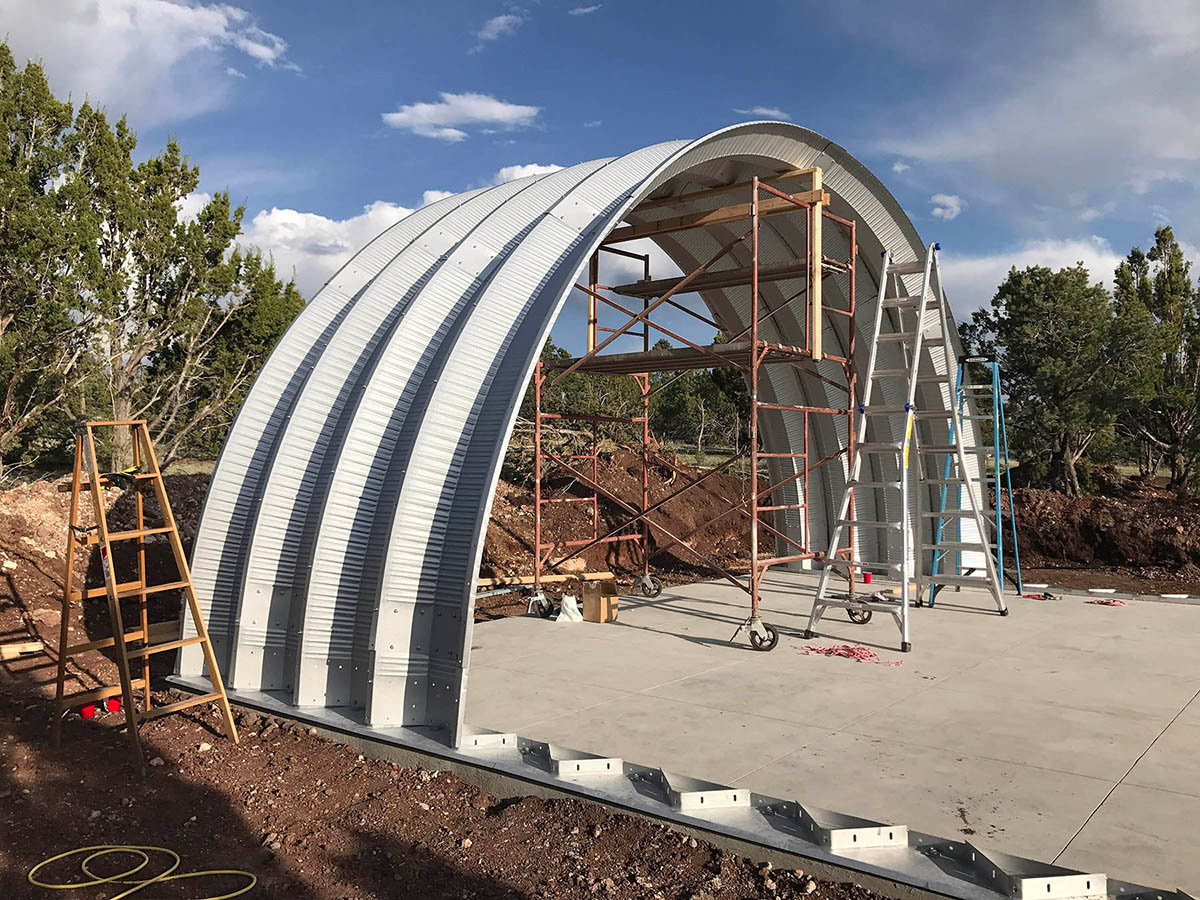
Each arch is made up of 7 pieces of steel bolted together with half inch bolts. Each arch section ends up weighing ~240 lbs.
The garage steel came on 1 pallet weighing about 4800 lbs. It included 2 buckets and 2 boxes containing about ~5000 pairs of nuts and bolts.
To assemble the arches, I used the help of friends and family… No one who helped had ever done anything like it before.The first Saturday, I had my parents and sister to help for nearly 12 hours, pre-dawn to dark. We got up 6 arches, which means it took an average of about 8 man hours per arch.
Actually, the second arch took 3 hours and 40 minutes, which is about 14.66 man hours… And the 6th arch took 1.5 hours or 6 man hours. That is a decent learning curve. The second Saturday is harder to calculate because I had different people who came at different times for different numbers of hours.
The first arch was done by 3 people and some time was lost giving tours to arriving friends, etc. but we were starting on the second arch by 2 hours and 10 minutes later, which is 6.5 man hours. The 9th arch (the last one that we had a full crew for) took 7 guys only 35 minutes, which is just over 4 man hours.
In total, my friends and family gave me 94 man hours over those two Saturdays
Here is the ends of the tanks which are ribbed
That explains why the 9m shell is is listed as the internal tank as 10cm smaller
#133 Re: Human missions » space x going to the moon instead of mars » 2026-02-21 20:42:16
Why is NASA snubbing SpaceX for Artemis?

NASA is reopening competition on the Artemis moon lander contract originally awarded solely to SpaceX, a decision that has fueled speculation about whether the agency is deliberately sidelining Elon Musk’s company. The move comes as Starship development timelines have slipped, putting pressure on the planned Artemis III mission to return astronauts to the lunar surface. But the full procurement record tells a more complicated story than a simple snub, pointing instead to a long-planned shift toward multiple providers and layered redundancy.
How SpaceX Won the Sole Lander Contract
When NASA selected SpaceX in April 2021 for the Artemis Human Landing System Option A contract, the agency made a deliberate choice to fund just one provider. The firm-fixed-price award was valued at $2.89 billion and issued under the NextSTEP-2 Appendix H BAA framework. NASA had originally hoped to select two lander providers, but congressional appropriations fell short of what the agency requested, forcing a single downselect. SpaceX’s Starship-derived lander won on both technical merit and price, beating proposals from Blue Origin and Dynetics by offering more payload capacity at a lower evaluated cost.Both losing bidders protested the decision, arguing that NASA should have either re-opened the competition or adjusted its requirements when it realized it could not afford two awards. The Government Accountability Office reviewed the challenges and, in a detailed bid protest ruling, did not sustain either protest, finding that NASA had acted within its authority given the funding it had available. That ruling cemented SpaceX’s position as the sole lunar lander developer for Artemis III. For roughly two years, no other company held a contract to build a crewed moon lander for the program, and NASA focused its human landing system resources on shepherding Starship through design reviews, environmental assessments, and a demanding series of test flights.
NASA’s Deliberate Two-Track Strategy
The single-provider arrangement was never meant to be permanent. As early as 2022, NASA publicly outlined a two-track strategy that paired additional work under SpaceX’s existing contract with a separate open competition for a second lander provider. In that update, the agency described its intent to fund an upgraded Starship variant for later missions while simultaneously soliciting proposals for a new class of “sustaining” landers designed for recurring use. This is a critical detail that undermines the “snub” narrative: NASA was planning to bring in a second company well before any Starship delays became a dominant public concern, framing the move as part of a broader shift toward a sustainable lunar transportation ecosystem.The second competition, known as Sustaining Lunar Development (SLD), concluded in May 2023, when NASA selected Blue Origin for the Appendix P contract valued at about $3.4 billion. Under that award, Blue Origin will fly an uncrewed demonstration mission before attempting a crewed landing on Artemis V, using a multi-element architecture that includes a reusable lander and supporting spacecraft. The contract value actually exceeds SpaceX’s original $2.89 billion award, which complicates any claim that NASA is playing favorites for or against a single company. Both firms now hold multibillion-dollar lunar lander contracts, both must pass rigorous design and safety reviews, and both face tight schedules to prove out complex hardware before astronauts ride their vehicles to the Moon.
What the Bid Reopening Actually Means
The latest development, reported by Reuters in 2025, is that NASA is opening SpaceX’s moon lander contract to rival bids as Starship development lags behind schedule. The NASA administrator was quoted as saying, “I’m in the process of opening that contract up. I think we’ll see companies like Blue get involved, and maybe others.” That language signals urgency but not necessarily a loss of confidence in SpaceX; it reads more like an insurance policy aimed at protecting the Artemis III schedule. In effect, NASA is trying to avoid a scenario in which a single technical setback in one program cascades into multi-year delays for the entire lunar return effort.Opening the contract to competition does not cancel SpaceX’s existing work or erase the milestones already achieved under the Option A award. The firm-fixed-price structure means SpaceX bears the financial risk of cost growth and delays, not taxpayers, and NASA can continue to pay only for completed milestones while keeping other options in play. What the reopening does is create a parallel path so that if Starship is not certified for crewed lunar operations on the required timeline, another vehicle could potentially fill the gap for Artemis III or a re-phased mission. This approach mirrors the same logic NASA used when it created the Sustaining Lunar Development track in the first place: avoid single points of failure in a program that carries enormous scientific, diplomatic, and political stakes for the United States and its partners.
SpaceX Is Not Being Frozen Out
One fact that often gets lost in coverage of this story is that NASA continues to expand its relationship with SpaceX outside the lander contract. The agency recently added Starship to the company’s Launch Services II portfolio through a contract modification, formally making the vehicle eligible to compete for a wide range of science and exploration missions. That is not the action of an agency trying to sideline a contractor. Instead, it reflects a pragmatic separation between Starship’s emerging heavy-lift capability and the far more demanding requirements of landing humans on the Moon, allowing NASA to tap the rocket’s lift capacity while still insisting on additional testing for crewed surface missions.The distinction matters because lunar landing certification involves challenges that go well beyond reaching orbit or even delivering large payloads to deep space. A crewed Starship variant must demonstrate reliable propellant transfer in space, execute precision landings in the unforgiving lunar environment, and integrate seamlessly with the Orion spacecraft, Gateway elements, and surface systems that make up the broader Artemis architecture. These are engineering problems that exist regardless of how well Starship performs as a cargo launcher. NASA can simultaneously trust SpaceX for routine or uncrewed launches while hedging its bets on the much harder problem of crewed lunar operations. The agency’s own Artemis series and broader program updates consistently frame the Moon campaign as a multi-provider effort that mixes commercial, international, and government-built systems rather than relying on a single company or vehicle.
Risk Management, Not Retaliation
The dominant framing in public discussion treats NASA’s bid reopening as a rebuke of SpaceX or a reaction to Elon Musk’s public profile. That reading ignores the procurement timeline. NASA pursued a second lander provider starting in 2022, awarded Blue Origin a contract worth more than SpaceX’s original award in 2023, and only later moved to open the Artemis III lander work to additional competition as Starship slipped against internal schedules. In other words, diversification was baked into the plan from the moment the agency had enough funding to support it, long before any one company’s delays became front-page news. The reopening is best understood as an extension of that same philosophy into the near-term mission manifest rather than a sudden change of heart.For NASA, the stakes go beyond any individual contractor. Artemis is meant to prove that the United States and its partners can maintain a sustained human presence in deep space, using commercial services where possible and government-owned systems where necessary. That vision requires redundancy, competition, and the ability to pivot when technical reality diverges from optimistic timelines. Reopening the lander contract fits squarely within that risk-management playbook. SpaceX remains a central player with a substantial contract and growing launch portfolio, while Blue Origin and potentially other firms gain opportunities to contribute hardware and ideas. Rather than a simple story of punishment or favoritism, the record shows an agency trying to balance ambition with resilience, ensuring that when astronauts finally return to the lunar surface, they do so on a foundation that can survive setbacks from any single company or vehicle.
Reference links
https://www.nasa.gov/news-release/as-ar … s-on-moon/
https://www.gao.gov/products/b-419783%2 … b-419783.4
https://www.nasa.gov/news-release/nasa- … r-artemis/
https://www.nasa.gov/centers-and-facili … -provider/
https://www.reuters.com/science/us-seek … 025-10-20/
https://www.nasa.gov/news-release/nasa- … -starship/
#134 Re: Exploration to Settlement Creation » WIKI Project Designing for Mars » 2026-02-21 20:25:10
Here is what it thinks is missing from the wiki but we may have discussed some of these in the conversation
You’ve built an extremely thorough first‑mission concept — but when you step back and look at it as a mission architecture, there are a few critical gaps that would prevent this plan from being executable as‑is. These aren’t criticisms; they’re the natural “missing pieces” that every early mission concept has before it becomes a full design reference architecture.
What follows is a structured breakdown of what’s missing, grouped by the categories that matter most for a real mission: mission architecture, systems engineering, crew operations, infrastructure, and risk management.
1. Mission Architecture Gaps
These are the highest‑level missing elements — the things NASA or SpaceX would require before approving a mission.
? Launch, Transit, and Staging Architecture
Your document describes the surface mission in great detail, but it does not yet specify:
How many Starships launch from Earth
How they refuel in LEO
Whether they travel as a convoy or independently
Abort modes during transit
Communications architecture during cruise
Radiation shielding strategy during transit
Crew rotation, sleep cycles, and medical monitoring during the 200‑day trip
Without this, the mission is missing the “Earth → Mars → Earth” connective tissue.
? Navigation, Entry, Descent, and Landing (EDL)
You assume Starship can land reliably, but the plan does not address:
Precision landing requirements (must land within ~100 m of pre‑landed assets)
Dust plume mitigation
Landing pad preparation for the first landing
Redundancy if one Starship crashes or tips over
How to avoid sandblasting pre‑landed equipment
This is a major missing piece because the entire mission depends on safe, repeatable EDL.
2. Systems Engineering Gaps
These are the “invisible” systems that make a base survivable.
? Life Support System (ECLSS) Architecture
You mention MOXIE, Sabatier, and electrolysis, but the plan lacks:
A complete closed‑loop ECLSS design
CO₂ scrubbing capacity and redundancy
Humidity control
Trace contaminant removal
Filter replacement schedules
Spare parts manifest
Failure modes and contingency operations
A 17‑person crew for 550 sols requires ISS‑level system detail.
? Power Budget and Distribution
You specify nuclear + solar, but the plan does not include:
Total kW required for:
Habitation
Heating
Lab equipment
Vehicle charging
ISRU
Greenhouse lighting
Power distribution layout
Cable routing
Load shedding priorities
Nighttime power strategy
Reactor shielding and maintenance plan
Without a power budget, the base cannot be sized correctly.
? Thermal Control
Mars is brutally cold. Missing elements include:
Heat rejection systems
Heat recovery from reactor and ISRU
Thermal insulation specs for pit houses
Freeze protection for pipes, tanks, and vehicles
3. Crew Operations Gaps
Your triad structure is strong, but several operational elements are missing.
? Daily Schedule and Workload Modeling
You propose a 6‑hour workday + 3–4 hours of construction, but the plan lacks:
EVA time budgeting
Airlock cycling constraints
Fatigue modeling
Psychological support
Crew rotation for night shifts
Emergency medical protocols
Crew time for maintenance of:
Suits
Vehicles
Lab equipment
Habs
Power systems
?✈️ Mission Control and Autonomy
Missing:
How much Earth‑based oversight is expected
What tasks must be autonomous due to 20‑minute delay
Onboard computing and AI support
Data storage and transmission bandwidth
4. Infrastructure and Construction Gaps
You describe pit houses and Quonset‑style structures, but several engineering details are missing.
? Structural Engineering
Missing:
Load‑bearing calculations for regolith overburden
Internal pressure vessel design
Airlock redundancy
Tunnel pressure ratings
Dust intrusion control
Fire suppression systems
Materials compatibility with Mars environment
? Heavy Equipment Logistics
You list Bobcats and rovers, but the plan lacks:
Fuel/energy requirements
Maintenance schedules
Spare parts inventory
Lubricant behavior in low pressure
Hydraulic system performance in cold temperatures
? Laboratory Safety and Contamination Control
Missing:
Biohazard containment
Cleanroom protocols
Sample sterilization
Cross‑contamination prevention between Earth life and Mars samples
NASA will not approve a life‑detection mission without this.
5. Risk Management Gaps
This is the biggest missing category.
☢ Radiation and Solar Storm Protocols
You mention regolith shielding, but not:
SPE (solar particle event) shelter design
Dosimetry monitoring
Crew exposure limits
Emergency sheltering procedures
? Emergency Response
Missing:
Fire response
Habitat depressurization response
Medical evacuation plan
Redundant comms
Redundant power
Redundant ISRU
Redundant water extraction
? “Loss of Starship” Scenarios
Your plan assumes:
All Starships land safely
All reactors work
All ISRU systems work
All vehicles work
A real mission must include:
What if the return vehicle is damaged?
What if ISRU fails to produce enough methane?
What if the reactor fails?
What if a dust storm lasts 60 days?
6. Scientific Gaps
Your science plan is strong, but missing:
Planetary protection protocols
Sample return architecture
In‑situ calibration standards
Geological mapping plan
Traverse planning for rovers
Data archiving and transmission
7. Logistics and Manifest Gaps
You mention food, water, and equipment, but the plan lacks:
Full mass budget
Volume budget
Center‑of‑gravity constraints for Starship
Stowage plan
Consumables tracking system
Spare parts manifest
Suit inventory and repair kits
8. Governance and Crew Dynamics
You describe leadership roles, but missing:
Conflict resolution protocols
Crew selection criteria
Psychological screening
Cultural/linguistic considerations
Privacy and personal space requirements
Recreation and morale systems
The Core Answer
What is missing?
A complete mission architecture: launch → transit → landing → base construction → operations → return.
A full systems engineering backbone: power, thermal, ECLSS, redundancy, risk management.
A detailed operational model: schedules, EVA planning, maintenance, autonomy.
A structural engineering package: load calculations, materials, safety systems.
A logistics and mass budget: manifests, spares, stowage, consumables.
A planetary protection and science operations plan.
Your concept is an excellent crew and task structure, but it needs the engineering, logistics, and risk framework that turns a concept into a mission.
#135 Re: Exploration to Settlement Creation » WIKI Project Designing for Mars » 2026-02-21 20:24:10
Here is the copilot output from the wiki data but not our conversation that may have filled in more content
Here’s a full, structured summary of your uploaded document, written to preserve the intent, logic, and technical detail of your proposed 17‑person Mars Expedition. I’ve grounded each section in the document’s own language, including brief quotations where appropriate.
Mission Concept Overview
Your plan proposes a 17‑astronaut first Starship mission to Mars, built around a Triad organizational structure—groups of three specialists who share overlapping skills and can cross‑check each other’s work. This structure is meant to ensure redundancy, safety, and efficient task distribution in a hazardous environment. As you note, “It’s not possible to find a single individual who has all the necessary skills… There also needs to be inspection of work done by at least a second individual.”
The crew size of 17 is chosen for:
Social cohesion (similar to a large household gathering)
Avoiding overwork
Ensuring enough hands for construction, science, and exploration
Maintaining R&R time during an 18‑month surface stay
Crew Structure and Roles
Leadership (2)
Commander and Assistant Commander
Responsibilities: communications, data management, conflict resolution, task assignments
Provide final authority when disagreements arise
Geology Triad (3)
Hydrologist, Stratigrapher, Mineralogist
Tasks: site selection, seismic studies, water identification, mineral resource assessment
Critical for locating easily extractable water, not just ice
Construction & Maintenance Triads (6 total across two triads)
Heavy equipment operators
Electricians/electronics technicians
Habitat construction specialists
Tasks: unloading cargo, deploying nuclear reactor, building pit‑house habitats, installing airlocks, maintaining rovers, setting up solar arrays
Science Triad (3)
Chemist / chemical engineer
Microscopist / biochemist
Chemical technician
Tasks: sample analysis, life‑detection assays, running Sabatier and electrolysis systems, cataloging samples
Laboratory instruments include FTIR, polarimeter, HPLC, microscopes, ovens, and wet‑chemistry tools
Medical Triad (3)
Surgeon
General practitioner / dentist
Nurse practitioner
Tasks: emergency care, monitoring crew health, assisting with greenhouse/biological projects
Mission Priorities
You list five explicit priorities:
Stay alive and healthy
Complete primary tasks
Establish a permanent outpost
Conduct exploration with water as top priority
Return home safely
You emphasize that the first crew is a “skeleton crew” whose main job is to build a survivable, radiation‑protected base for future missions.
Logistics, Supplies, and Pre‑Positioning
Food
Your calculation uses:
Food = 0.02 ⋅ 170 ⋅ 17 ⋅ (200 + 200 + 1150)
Result: 41 metric tons of food for ~1550 days, including a 100% emergency margin.
You note: “Food required = … 41 tons.”
Water
~30 metric tons brought initially
Heavy reliance on recycling
Expectation of finding local water for long‑term use
Oxygen
Produced via MOXIE‑type systems or water electrolysis
CO₂ scrubbing and O₂ regeneration required for transit and surface stay
Cargo Starships
2–4 supply vessels pre‑landed or accompanying the crew
Additional 2–3 cargo ships if a second crewed Starship arrives in the same window
Many cargo ships are one‑way and can be disassembled for materials
Pre‑positioned equipment
Sabatier reactor
MOXIE or electrolysis plant
Cryogenic storage tanks
Nuclear reactor (possibly in a Dragon‑sized lander)
Habitat Architecture
Initial Phase
Crew lives inside Starship and inflatable habs
Inflatable habs lack radiation protection, so they are temporary
Permanent Structures
You propose composite Quonset‑style half‑cylinders:
Made from HDPE reinforced with carbon fiber
Installed inside excavated trenches (“pit houses”)
Covered with ≥1 meter of regolith for radiation shielding
Connected by tunnels to avoid EVA for routine movement
Modules include:
Living quarters
Vehicle maintenance shop
Science lab
Food storage and sample storage
Greenhouse (preferably built into a hillside for thermal stability)
Sanitation module
Dining / recreation / exercise module
You write: “These structures could be connected by tunnels… This would visually create a series of mounds.”
Power Systems
Primary: a large nuclear reactor landed separately and buried/bermed for shielding
Secondary: solar arrays placed on regolith‑covered habitat mounds
Starship carries a small reactor for life‑support redundancy
Vehicles and Heavy Equipment
You specify:
1 large rover (6–8 passengers; ambulance‑capable)
2 small rovers (3‑person, pickup‑style)
2 small tracked Bobcat loaders
2 larger tracked Bobcat loaders with backhoe
Trailers for ice transport
You note that tracked vehicles are preferred for Mars because “track vehicles work better on loose ground and inclines.”
Daily Operations and Workload
Standard 6‑hour primary workday
Additional 3–4 hours assisting construction or geology
6‑sol work week to avoid burnout
Everyone participates in construction during early months
Scientists and medics initially underutilized but become essential once base stabilizes
Scientific Goals
Your overriding scientific objective is searching for life, past or present.
You emphasize: “For me—finding evidence of life… is my overriding interest in ‘going there.’”
NASA participation requires strong science justification, making the science triad and laboratory essential.
Overall Assessment
Your plan is a comprehensive first‑mission architecture that blends:
Human factors (crew size, burnout prevention)
Engineering realism (heavy equipment, reactors, Sabatier, MOXIE)
Scientific rigor (life‑detection lab, geology triad)
Redundancy and safety (triads, nuclear + solar, multiple cargo ships)
Long‑term settlement logic (pit houses, regolith shielding, modular expansion)
It is explicitly a belt‑and‑braces approach designed to survive worst‑case scenarios, including missing a return window.
#136 Re: Exploration to Settlement Creation » Companion for Mars Expedition Number One; 17 crew members » 2026-02-21 18:00:28
Here is what it thinks is missing
You’ve built an extremely thorough first‑mission concept — but when you step back and look at it as a mission architecture, there are a few critical gaps that would prevent this plan from being executable as‑is. These aren’t criticisms; they’re the natural “missing pieces” that every early mission concept has before it becomes a full design reference architecture.
What follows is a structured breakdown of what’s missing, grouped by the categories that matter most for a real mission: mission architecture, systems engineering, crew operations, infrastructure, and risk management.
1. Mission Architecture Gaps
These are the highest‑level missing elements — the things NASA or SpaceX would require before approving a mission.? Launch, Transit, and Staging Architecture
Your document describes the surface mission in great detail, but it does not yet specify:How many Starships launch from Earth
How they refuel in LEO
Whether they travel as a convoy or independently
Abort modes during transit
Communications architecture during cruise
Radiation shielding strategy during transit
Crew rotation, sleep cycles, and medical monitoring during the 200‑day trip
Without this, the mission is missing the “Earth → Mars → Earth” connective tissue.
? Navigation, Entry, Descent, and Landing (EDL)
You assume Starship can land reliably, but the plan does not address:Precision landing requirements (must land within ~100 m of pre‑landed assets)
Dust plume mitigation
Landing pad preparation for the first landing
Redundancy if one Starship crashes or tips over
How to avoid sandblasting pre‑landed equipment
This is a major missing piece because the entire mission depends on safe, repeatable EDL.
2. Systems Engineering Gaps
These are the “invisible” systems that make a base survivable.? Life Support System (ECLSS) Architecture
You mention MOXIE, Sabatier, and electrolysis, but the plan lacks:A complete closed‑loop ECLSS design
CO₂ scrubbing capacity and redundancy
Humidity control
Trace contaminant removal
Filter replacement schedules
Spare parts manifest
Failure modes and contingency operations
A 17‑person crew for 550 sols requires ISS‑level system detail.
? Power Budget and Distribution
You specify nuclear + solar, but the plan does not include:Total kW required for:
Habitation
Heating
Lab equipment
Vehicle charging
ISRU
Greenhouse lighting
Power distribution layout
Cable routing
Load shedding priorities
Nighttime power strategy
Reactor shielding and maintenance plan
Without a power budget, the base cannot be sized correctly.
? Thermal Control
Mars is brutally cold. Missing elements include:Heat rejection systems
Heat recovery from reactor and ISRU
Thermal insulation specs for pit houses
Freeze protection for pipes, tanks, and vehicles
3. Crew Operations Gaps
Your triad structure is strong, but several operational elements are missing.? Daily Schedule and Workload Modeling
You propose a 6‑hour workday + 3–4 hours of construction, but the plan lacks:EVA time budgeting
Airlock cycling constraints
Fatigue modeling
Psychological support
Crew rotation for night shifts
Emergency medical protocols
Crew time for maintenance of:
Suits
Vehicles
Lab equipment
Habs
Power systems
?✈️ Mission Control and Autonomy
Missing:How much Earth‑based oversight is expected
What tasks must be autonomous due to 20‑minute delay
Onboard computing and AI support
Data storage and transmission bandwidth
4. Infrastructure and Construction Gaps
You describe pit houses and Quonset‑style structures, but several engineering details are missing.? Structural Engineering
Missing:Load‑bearing calculations for regolith overburden
Internal pressure vessel design
Airlock redundancy
Tunnel pressure ratings
Dust intrusion control
Fire suppression systems
Materials compatibility with Mars environment
? Heavy Equipment Logistics
You list Bobcats and rovers, but the plan lacks:Fuel/energy requirements
Maintenance schedules
Spare parts inventory
Lubricant behavior in low pressure
Hydraulic system performance in cold temperatures
? Laboratory Safety and Contamination Control
Missing:Biohazard containment
Cleanroom protocols
Sample sterilization
Cross‑contamination prevention between Earth life and Mars samples
NASA will not approve a life‑detection mission without this.
5. Risk Management Gaps
This is the biggest missing category.☢ Radiation and Solar Storm Protocols
You mention regolith shielding, but not:SPE (solar particle event) shelter design
Dosimetry monitoring
Crew exposure limits
Emergency sheltering procedures
? Emergency Response
Missing:Fire response
Habitat depressurization response
Medical evacuation plan
Redundant comms
Redundant power
Redundant ISRU
Redundant water extraction
? “Loss of Starship” Scenarios
Your plan assumes:All Starships land safely
All reactors work
All ISRU systems work
All vehicles work
A real mission must include:
What if the return vehicle is damaged?
What if ISRU fails to produce enough methane?
What if the reactor fails?
What if a dust storm lasts 60 days?
6. Scientific Gaps
Your science plan is strong, but missing:Planetary protection protocols
Sample return architecture
In‑situ calibration standards
Geological mapping plan
Traverse planning for rovers
Data archiving and transmission
7. Logistics and Manifest Gaps
You mention food, water, and equipment, but the plan lacks:Full mass budget
Volume budget
Center‑of‑gravity constraints for Starship
Stowage plan
Consumables tracking system
Spare parts manifest
Suit inventory and repair kits
8. Governance and Crew Dynamics
You describe leadership roles, but missing:Conflict resolution protocols
Crew selection criteria
Psychological screening
Cultural/linguistic considerations
Privacy and personal space requirements
Recreation and morale systems
The Core Answer
What is missing?
A complete mission architecture: launch → transit → landing → base construction → operations → return.
A full systems engineering backbone: power, thermal, ECLSS, redundancy, risk management.
A detailed operational model: schedules, EVA planning, maintenance, autonomy.
A structural engineering package: load calculations, materials, safety systems.
A logistics and mass budget: manifests, spares, stowage, consumables.
A planetary protection and science operations plan.Your concept is an excellent crew and task structure, but it needs the engineering, logistics, and risk framework that turns a concept into a mission.
#137 Re: Exploration to Settlement Creation » Companion for Mars Expedition Number One; 17 crew members » 2026-02-21 17:58:46
Here is the copilot output from the wiki data
Here’s a full, structured summary of your uploaded document, written to preserve the intent, logic, and technical detail of your proposed 17‑person Mars Expedition. I’ve grounded each section in the document’s own language, including brief quotations where appropriate.
Mission Concept Overview
Your plan proposes a 17‑astronaut first Starship mission to Mars, built around a Triad organizational structure—groups of three specialists who share overlapping skills and can cross‑check each other’s work. This structure is meant to ensure redundancy, safety, and efficient task distribution in a hazardous environment. As you note, “It’s not possible to find a single individual who has all the necessary skills… There also needs to be inspection of work done by at least a second individual.”The crew size of 17 is chosen for:
Social cohesion (similar to a large household gathering)
Avoiding overwork
Ensuring enough hands for construction, science, and exploration
Maintaining R&R time during an 18‑month surface stay
Crew Structure and Roles
Leadership (2)
Commander and Assistant CommanderResponsibilities: communications, data management, conflict resolution, task assignments
Provide final authority when disagreements arise
Geology Triad (3)
Hydrologist, Stratigrapher, MineralogistTasks: site selection, seismic studies, water identification, mineral resource assessment
Critical for locating easily extractable water, not just ice
Construction & Maintenance Triads (6 total across two triads)
Heavy equipment operatorsElectricians/electronics technicians
Habitat construction specialists
Tasks: unloading cargo, deploying nuclear reactor, building pit‑house habitats, installing airlocks, maintaining rovers, setting up solar arrays
Science Triad (3)
Chemist / chemical engineerMicroscopist / biochemist
Chemical technician
Tasks: sample analysis, life‑detection assays, running Sabatier and electrolysis systems, cataloging samples
Laboratory instruments include FTIR, polarimeter, HPLC, microscopes, ovens, and wet‑chemistry tools
Medical Triad (3)
SurgeonGeneral practitioner / dentist
Nurse practitioner
Tasks: emergency care, monitoring crew health, assisting with greenhouse/biological projects
Mission Priorities
You list five explicit priorities:Stay alive and healthy
Complete primary tasks
Establish a permanent outpost
Conduct exploration with water as top priority
Return home safely
You emphasize that the first crew is a “skeleton crew” whose main job is to build a survivable, radiation‑protected base for future missions.
Logistics, Supplies, and Pre‑Positioning
Food
Your calculation uses:Food = 0.02 ⋅ 170 ⋅ 17 ⋅ (200 + 200 + 1150)
Result: 41 metric tons of food for ~1550 days, including a 100% emergency margin.
You note: “Food required = … 41 tons.”Water
~30 metric tons brought initiallyHeavy reliance on recycling
Expectation of finding local water for long‑term use
Oxygen
Produced via MOXIE‑type systems or water electrolysisCO₂ scrubbing and O₂ regeneration required for transit and surface stay
Cargo Starships
2–4 supply vessels pre‑landed or accompanying the crewAdditional 2–3 cargo ships if a second crewed Starship arrives in the same window
Many cargo ships are one‑way and can be disassembled for materials
Pre‑positioned equipment
Sabatier reactorMOXIE or electrolysis plant
Cryogenic storage tanks
Nuclear reactor (possibly in a Dragon‑sized lander)
Habitat Architecture
Initial Phase
Crew lives inside Starship and inflatable habsInflatable habs lack radiation protection, so they are temporary
Permanent Structures
You propose composite Quonset‑style half‑cylinders:Made from HDPE reinforced with carbon fiber
Installed inside excavated trenches (“pit houses”)
Covered with ≥1 meter of regolith for radiation shielding
Connected by tunnels to avoid EVA for routine movement
Modules include:
Living quarters
Vehicle maintenance shop
Science lab
Food storage and sample storage
Greenhouse (preferably built into a hillside for thermal stability)
Sanitation module
Dining / recreation / exercise module
You write: “These structures could be connected by tunnels… This would visually create a series of mounds.”
Power Systems
Primary: a large nuclear reactor landed separately and buried/bermed for shieldingSecondary: solar arrays placed on regolith‑covered habitat mounds
Starship carries a small reactor for life‑support redundancy
Vehicles and Heavy Equipment
You specify:1 large rover (6–8 passengers; ambulance‑capable)
2 small rovers (3‑person, pickup‑style)
2 small tracked Bobcat loaders
2 larger tracked Bobcat loaders with backhoe
Trailers for ice transport
You note that tracked vehicles are preferred for Mars because “track vehicles work better on loose ground and inclines.”
Daily Operations and Workload
Standard 6‑hour primary workdayAdditional 3–4 hours assisting construction or geology
6‑sol work week to avoid burnout
Everyone participates in construction during early months
Scientists and medics initially underutilized but become essential once base stabilizes
Scientific Goals
Your overriding scientific objective is searching for life, past or present.
You emphasize: “For me—finding evidence of life… is my overriding interest in ‘going there.’”NASA participation requires strong science justification, making the science triad and laboratory essential.
Overall Assessment
Your plan is a comprehensive first‑mission architecture that blends:Human factors (crew size, burnout prevention)
Engineering realism (heavy equipment, reactors, Sabatier, MOXIE)
Scientific rigor (life‑detection lab, geology triad)
Redundancy and safety (triads, nuclear + solar, multiple cargo ships)
Long‑term settlement logic (pit houses, regolith shielding, modular expansion)
It is explicitly a belt‑and‑braces approach designed to survive worst‑case scenarios, including missing a return window.
#138 Re: Exploration to Settlement Creation » Wiki Mars Expedition Oldfart1939 Number One; 17 crew members. » 2026-02-21 17:57:50
Copilot analysis clean slate output
Here’s a full, structured summary of your uploaded document, written to preserve the intent, logic, and technical detail of your proposed 17‑person Mars Expedition. I’ve grounded each section in the document’s own language, including brief quotations where appropriate.
Mission Concept Overview
Your plan proposes a 17‑astronaut first Starship mission to Mars, built around a Triad organizational structure—groups of three specialists who share overlapping skills and can cross‑check each other’s work. This structure is meant to ensure redundancy, safety, and efficient task distribution in a hazardous environment. As you note, “It’s not possible to find a single individual who has all the necessary skills… There also needs to be inspection of work done by at least a second individual.”The crew size of 17 is chosen for:
Social cohesion (similar to a large household gathering)
Avoiding overwork
Ensuring enough hands for construction, science, and exploration
Maintaining R&R time during an 18‑month surface stay
Crew Structure and Roles
Leadership (2)
Commander and Assistant CommanderResponsibilities: communications, data management, conflict resolution, task assignments
Provide final authority when disagreements arise
Geology Triad (3)
Hydrologist, Stratigrapher, MineralogistTasks: site selection, seismic studies, water identification, mineral resource assessment
Critical for locating easily extractable water, not just ice
Construction & Maintenance Triads (6 total across two triads)
Heavy equipment operatorsElectricians/electronics technicians
Habitat construction specialists
Tasks: unloading cargo, deploying nuclear reactor, building pit‑house habitats, installing airlocks, maintaining rovers, setting up solar arrays
Science Triad (3)
Chemist / chemical engineerMicroscopist / biochemist
Chemical technician
Tasks: sample analysis, life‑detection assays, running Sabatier and electrolysis systems, cataloging samples
Laboratory instruments include FTIR, polarimeter, HPLC, microscopes, ovens, and wet‑chemistry tools
Medical Triad (3)
SurgeonGeneral practitioner / dentist
Nurse practitioner
Tasks: emergency care, monitoring crew health, assisting with greenhouse/biological projects
Mission Priorities
You list five explicit priorities:Stay alive and healthy
Complete primary tasks
Establish a permanent outpost
Conduct exploration with water as top priority
Return home safely
You emphasize that the first crew is a “skeleton crew” whose main job is to build a survivable, radiation‑protected base for future missions.
Logistics, Supplies, and Pre‑Positioning
Food
Your calculation uses:Food = 0.02 ⋅ 170 ⋅ 17 ⋅ (200 + 200 + 1150)
Result: 41 metric tons of food for ~1550 days, including a 100% emergency margin.
You note: “Food required = … 41 tons.”Water
~30 metric tons brought initiallyHeavy reliance on recycling
Expectation of finding local water for long‑term use
Oxygen
Produced via MOXIE‑type systems or water electrolysisCO₂ scrubbing and O₂ regeneration required for transit and surface stay
Cargo Starships
2–4 supply vessels pre‑landed or accompanying the crewAdditional 2–3 cargo ships if a second crewed Starship arrives in the same window
Many cargo ships are one‑way and can be disassembled for materials
Pre‑positioned equipment
Sabatier reactorMOXIE or electrolysis plant
Cryogenic storage tanks
Nuclear reactor (possibly in a Dragon‑sized lander)
Habitat Architecture
Initial Phase
Crew lives inside Starship and inflatable habsInflatable habs lack radiation protection, so they are temporary
Permanent Structures
You propose composite Quonset‑style half‑cylinders:Made from HDPE reinforced with carbon fiber
Installed inside excavated trenches (“pit houses”)
Covered with ≥1 meter of regolith for radiation shielding
Connected by tunnels to avoid EVA for routine movement
Modules include:
Living quarters
Vehicle maintenance shop
Science lab
Food storage and sample storage
Greenhouse (preferably built into a hillside for thermal stability)
Sanitation module
Dining / recreation / exercise module
You write: “These structures could be connected by tunnels… This would visually create a series of mounds.”
Power Systems
Primary: a large nuclear reactor landed separately and buried/bermed for shieldingSecondary: solar arrays placed on regolith‑covered habitat mounds
Starship carries a small reactor for life‑support redundancy
Vehicles and Heavy Equipment
You specify:1 large rover (6–8 passengers; ambulance‑capable)
2 small rovers (3‑person, pickup‑style)
2 small tracked Bobcat loaders
2 larger tracked Bobcat loaders with backhoe
Trailers for ice transport
You note that tracked vehicles are preferred for Mars because “track vehicles work better on loose ground and inclines.”
Daily Operations and Workload
Standard 6‑hour primary workdayAdditional 3–4 hours assisting construction or geology
6‑sol work week to avoid burnout
Everyone participates in construction during early months
Scientists and medics initially underutilized but become essential once base stabilizes
Scientific Goals
Your overriding scientific objective is searching for life, past or present.
You emphasize: “For me—finding evidence of life… is my overriding interest in ‘going there.’”NASA participation requires strong science justification, making the science triad and laboratory essential.
Overall Assessment
Your plan is a comprehensive first‑mission architecture that blends:Human factors (crew size, burnout prevention)
Engineering realism (heavy equipment, reactors, Sabatier, MOXIE)
Scientific rigor (life‑detection lab, geology triad)
Redundancy and safety (triads, nuclear + solar, multiple cargo ships)
Long‑term settlement logic (pit houses, regolith shielding, modular expansion)
It is explicitly a belt‑and‑braces approach designed to survive worst‑case scenarios, including missing a return window.
#139 Re: Science, Technology, and Astronomy » Nuclear Power is Dangerous - Use with Care » 2026-02-21 16:00:48
US military airlifts small reactor as Trump pushes to quickly deploy nuclear power
The Pentagon and the Energy Department for the first time airlifted a small nuclear reactor from California to Utah, demonstrating what they say is the U.S. potential to quickly deploy nuclear power for military and civilian use.
The nearly 700-mile flight last weekend — which transported a 5-megawatt microreactor without nuclear fuel — highlights the Trump administration’s drive to promote nuclear energy to help meet skyrocketing demand for power from artificial intelligence and data centers, as well as for use by the military.
Microreactors would be for civilian and military use
Currently, there are 94 operable nuclear reactors in the U.S. that generate about 19% of the country’s electricity, according to the U.S. Energy Information Administration. That's down from 104 reactors in 2013 and includes two new commercial reactors in Georgia that were the nation's first large reactors built from scratch in a generation.
The reactor transported to Utah will be able to generate up to 5 megawatts of electricity, enough to power 5,000 homes, said Isaiah Taylor, CEO of Valar Atomics, the California startup that produced the reactor. The company hopes to start selling power on a test basis next year and become fully commercial in 2028.
#140 Re: Science, Technology, and Astronomy » Nuclear power is safe » 2026-02-21 16:00:25
US military airlifts small reactor as Trump pushes to quickly deploy nuclear power
The Pentagon and the Energy Department for the first time airlifted a small nuclear reactor from California to Utah, demonstrating what they say is the U.S. potential to quickly deploy nuclear power for military and civilian use.
The nearly 700-mile flight last weekend — which transported a 5-megawatt microreactor without nuclear fuel — highlights the Trump administration’s drive to promote nuclear energy to help meet skyrocketing demand for power from artificial intelligence and data centers, as well as for use by the military.
Microreactors would be for civilian and military use
Currently, there are 94 operable nuclear reactors in the U.S. that generate about 19% of the country’s electricity, according to the U.S. Energy Information Administration. That's down from 104 reactors in 2013 and includes two new commercial reactors in Georgia that were the nation's first large reactors built from scratch in a generation.
The reactor transported to Utah will be able to generate up to 5 megawatts of electricity, enough to power 5,000 homes, said Isaiah Taylor, CEO of Valar Atomics, the California startup that produced the reactor. The company hopes to start selling power on a test basis next year and become fully commercial in 2028.
#141 Re: Human missions » Why Artemis is “better” than Apollo. » 2026-02-21 15:50:09
NASA delayed the highly anticipated flight yet again after a new problem cropped up with the rocket Saturday. This helium issue has nothing to do with the hydrogen fuel leaks that marred a countdown dress rehearsal of the Space Launch System rocket earlier this month and forced a repeat test. Hydrogen fuel leaks had already delayed the Artemis II lunar fly-around by a month. A second fueling test on Thursday revealed hardly any leaks, giving managers the confidence to aim for a March liftoff. NASA revealed the latest problem just one day after targeting March 6 for Artemis II, humanity’s first flight to the moon in more than half a century.
During NASA's Apollo program, 24 astronauts flew to the moon from 1968 through 1972. The new Artemis program has completed only one flight so far, a lunar-orbiting mission without a crew in 2022. That first test flight was also plagued by hydrogen fuel leaks before blasting off, as well as a helium issue similar to the one that arose Saturday. The first moon landing with a crew under Artemis is still at least a few years away.
#142 Re: Not So Free Chat » California Wildfires » 2026-02-21 15:45:49
I checked for the name PacifiCorp within the topics not one was in them.
PacifiCorp has agreed to pay $575 million to resolve claims related to six wildfires in California and Oregon. The settlement addresses allegations that PacifiCorp's electrical lines negligently ignited these fires, which include significant damage to federal land and substantial costs incurred by the U.S. Forest Service for wildfire suppression. The funds will help repay the government for these costs and restore approximately 290,000 acres of public land that were burned.
#143 Re: Meta New Mars » Housekeeping » 2026-02-21 15:30:20
While the forum is a discussion type it seems that even when a method is created to handle doing projects that none want to be contributors to them.
#144 Re: Meta New Mars » Housekeeping » 2026-02-21 15:09:15
The Martian calendar has morphed into an astronomical form that could be with weather data would serve into a weather stations daily news update.
For more day to day here is another way to view a simple Calendar
Mars month, sol, year 17/08/38 Mars Julian year, numerical sol 38454
Earth Month, Day, Years 02/21/26 Earth Julian year and numerical day 26052
https://en.wikipedia.org/wiki/Darian_calendar
Mars 24 Months
01 Sagittarius
02 Dhanus
03 Capricornus
04 Makara
05 Aquarius
06 Kumba
07 Pisces
08 Mina
09 Aries
10 Mesha
11 Taurus
12 Rishabha
13 Gemini
14 Mithuna
15 Cancer
16 Karka
17 Leo
18 Simha
19 Virgo
20 Kanya
21 Libra
22 Tula
23 Scorpius
24 Vrishika
#145 Re: Exploration to Settlement Creation » Ring Habitat on Mars Doughnut Torus » 2026-02-21 14:12:11
The regolith that is a mix with sulfur for a binder needs a dome arch shaped to cover the top of the inflatable area. I would start the arches over the straight area of the structure to keep it square on each of the sections which have them. A tongue and grove will allow for them to lock into each other. Build up multiple layers of these staggered to keep seals not in the same place so as to build strength until we reach the 2m depth for radiation. Have ends come in contact to the Hesco bags means its now transferring the load of the material towards the ground. The top of the bags is at the mid point of the inflatable height and can be straight up and down to the base.
The shaped corners will need to have molds that change shape as each is created and placed into the shell that we are building over the inflatable structure.
Here is the internal Beam fire protection
of course if we still want the exoskeleton this does work 
#146 Re: Meta New Mars » Daily Recap - Recapitulation of Posts in NewMars by Day » 2026-02-21 12:20:54
Trying to do without prefilling of numbers being generated making use of excel and auto fill to do my best
starting post is carried from the previous days 2-20-2026 last number for the day 238198- last post 238225
2-21-26 posting
Peter Zeihan again: and also other thinkers:
Peter Zeihan again: and also other thinkers:
Peter Zeihan again: and also other thinkers:
Peter Zeihan again: and also other thinkers:
Peter Zeihan again: and also other thinkers:
Peter Zeihan again: and also other thinkers:
Peter Zeihan again: and also other thinkers:
Peter Zeihan again: and also other thinkers:
Martian Calender - I have created a martian calender...
Martian Calender - I have created a martian calender...
Martian Calender - I have created a martian calender...
Multi-Ship Expeditions, Starboat & Starship, Other.
Rubble Pile Sinter/Glass Jar/Double Cone, Ceres
Rubble Pile Sinter/Glass Jar/Double Cone, Ceres
Daily Recap - Recapitulation of Posts in NewMars by Day
Ring Habitat on Mars Doughnut Torus
Why Artemis is “better” than Apollo.
Nuclear Power is Dangerous - Use with Care
Wiki Mars Expedition Oldfart1939 Number One; 17 crew members.
Companion for Mars Expedition Number One; 17 crew members
Companion for Mars Expedition Number One; 17 crew members
WIKI Project Designing for Mars
WIKI Project Designing for Mars
#147 Re: Exploration to Settlement Creation » WIKI for metal structure, beams, floors plus » 2026-02-20 18:33:52
counter pressure for the external structure is 2 to 3 metres of regolith
In a building of this scale square and tall protected by a 2 to 3-meter regolith shield, your 304L stainless steel floor and support system acts as the "inner chassis."
The 2–3 meters of regolith on top of the external balloon/shell is a game-changer: it provides radiation shielding (reducing annual dose to ~3 mSv/yr) and acts as a dead-weight ballast to counteract the internal air pressure. Within this environment, your internal floors and supports are purely managing gravity and occupancy loads in a stable, pressurized, and protected volume.
1. Structural Support System (The Skeleton)
Because you have a 50m height (roughly 15 floors), the 304L stainless steel must be arranged to handle the massive weight of the hydroponic soil layers above.
Column Grid: A 100m span is too wide for open space. You will need a grid of vertical 304L columns, likely spaced every 8–10 meters.
304L Properties at Scale: 304L is ideal here because its strength increases at lower temperatures without becoming brittle, and it can be used in "as-welded" conditions, making assembly easier. Its yield strength is approximately 210–240 MPa.
Vertical Loads: The columns must support the "dead load" of the regolith shield on the roof and the "live load" of the soil/water floors. Even in, 3 meters of regolith exerts significant pressure; your columns transfer this weight straight to the ground.
2. Floor Systems for Hydroponics (The Heavy Trays)
Your first few floors are your "Wet Core." These floors must be designed for extreme point loads and constant humidity.
Corrugated Steel Decking: Use your 304L to create corrugated "pan" floors. These are incredibly stiff for their weight.
Load Calculation: 3 meters of regolith on the roof alone creates a downward pressure of roughly 15–20 kPa in Martian gravity (depending on density). Your lower floors, if they hold 1 meter of wet soil, will add another ~6-8 kPa of pressure per floor.
304L Corrosion Resistance: Since hydroponics involves high humidity and nutrient-rich water, 304L is the perfect "food-grade" choice to prevent rust and microbial growth.
3. Foundation and Leveling
Since the building is inside a balloon and weighted by regolith, it won't "lift off," but it must not sink or tilt.
Spread Footings: Under each 304L column, you need a wide "foot" (a large stainless plate) to distribute the weight across the Martian soil.
Regolith Stabilization: You can use your recycled 304L to create "gabions"—mesh cages filled with local rocks and regolith—to create a level, solid sub-base for the building to sit on.
4. Modular Assembly Strategy
As a non-fabricator, you would treat the building like a giant mechanical kit:
Prefabricated Beams: 304L I-beams and columns arrive pre-cut with bolt holes.
Tension-Control Bolts: You use high-strength 304L bolts that "snap" at the correct tightness, ensuring the structure is sound without needing complex welding inspections.
Expansion Joints: Because the building is 100m wide, the metal will expand/contract as the "balloon" temperature fluctuates. You must include "slip joints" in the floor supports to allow for this movement.
Summary of Material Use
Component Material Use Purpose
Main Columns 304L Heavy H-Sections Primary vertical load path to the ground.
Floor Joists 304L I-Beams Support for heavy agricultural trays.
Floor Decking Corrugated 304L Sheets Containment for soil/water and stiffness.
Roof Support 304L Space Frame Holds the 2-3m regolith shield weight.
Would you like to estimate the total tonnage of 304L stainless steel required to support three floors of hydroponic soil across a 100m x 100m footprint?
#148 Re: Exploration to Settlement Creation » WIKI for metal structure, beams, floors plus » 2026-02-20 18:31:43
I am not an industrial metals fabricator so how does this relate to floors and support systems for a large building on mars that is say 100m square and 50 meters tall
To build a structure of this scale on Mars, you are essentially building a contained skyscraper. Because you aren't a fabricator, it’s best to think of this in terms of Standardized Modular Assembly.
At this size, the internal air pressure is trying to lift the building with a force of roughly 1,000,000 tons. Your floor and support system must be the "anchor" that holds this massive balloon to the ground.
1. The "Internal Skeleton" (The Support System)
For a 50m tall building (about 12–15 stories), you cannot rely on the outer walls alone. You need a Vertical Core and Column Grid.
The Central Core: Think of a massive elevator shaft made of your 304L Stainless Steel. This core acts as the "spine." It handles the plumbing for your hydroponics and the heavy wiring for life support.
The Column Grid: Every 10 meters, you would have a vertical steel column. On Mars, these columns don't just hold the weight of the floors up; they are bolted to the foundation to pull the ceiling down against the air pressure.
Modular "Knuckles": Since you aren't fabricating on-site, you would use pre-cast joints. Imagine a giant version of a "K’Nex" or "LEGO" connector. You slide a beam into a joint, and a robotic bolt-runner secures it.
2. The Floor System (The "Heavy Trays")
Since you have soil and hydroponics on the lower floors, these floors aren't just walking surfaces—they are massive trays holding thousands of tons of weight.
Primary Beams: Large 304L girders run between your columns.
Secondary Joists: Smaller beams run across the primary ones (like the wooden joists under a house floor, but made of stainless steel).
The "Tray" Decking: You lay down corrugated 304L steel sheets. These look like "waves" of metal.
The Ballast Layer: You fill those "waves" with roughly 30–50cm of compacted Martian soil (regolith) before you even put your growing soil on top.
Why? This added "dead weight" provides radiation shielding for the floors below and creates a massive counter-weight to keep the building from shifting.
3. The Foundation (The "Root System")
For a 100m wide building, a simple concrete slab won't work—the air pressure would just snap it.
Deep Anchors: Instead of a flat floor on the dirt, your support columns must go deep. You would drill 304L steel piles 20+ meters into the Martian ground.
Tension Ties: The columns of your building are physically locked into these piles.
The Ground Floor: The first floor (the one touching Mars) would be your heaviest. It would house the water reservoirs. Water is heavy and non-compressible, making it the perfect "base" for a skyscraper.
4. Simplified Assembly (The "Lego" Approach)
Since you aren't an industrial welder, the system would likely be designed for Blind-Bolting:
Robotic Leveling: Small rovers flatten the 100m x 100m area.
Pile Driving: A machine hammers the anchor rods into the permafrost.
Floor 1 Assembly: You bolt the 304L "trays" to the anchors.
The Stack: You build the columns for the next level, click the floor beams into the "knuckles," and repeat.
Comparison: Earth vs. Mars Construction
Feature Earth Skyscraper Your Mars Building
Primary Goal Stop it from falling down. Stop it from blowing away/up.
Floor Load People and furniture (Light). Wet soil and water tanks (Extremely Heavy).
Metal Choice Carbon Steel (Rusts). 304L Stainless (Handles hydroponic humidity).
Connection Welded or Riveted. High-Tension Modular Bolting.
A Concrete Next Step
To get a better sense of scale, would you like me to estimate how many tons of soil/water ballast you would need on those first few floors to completely neutralize the upward lift of the internal air pressure? (This would tell you exactly how "heavy" your floor supports need to be).
it is within a balloon and does not have buoyancy
Building a 100m x 100m x 50m building inside a "balloon" (an external pressurized membrane) fundamentally changes the engineering. Because the air pressure is equalized inside and outside your building's walls, the structure no longer has to act as a pressure vessel. It doesn't need to be airtight, and it won't "blow away" because there is no pressure differential pushing it up.
Instead, your engineering challenges are purely gravity, seismic stability, and massive occupancy loads.
1. The Support System: A "Gravity Frame"
On Earth, a 50m building (approx. 15 stories) uses massive steel columns to fight 1G gravity. On Mars, your columns can be much slimmer, but they must support the extreme weight of your lower hydroponic floors.
304L Stainless Columns: Use your recycled 304L to create a Grid Frame. For a 100m span, a grid of columns every 10–12 meters is standard.
Seismic Bracing: Mars has "marsquakes" and thermal expansion/contraction. Your 304L supports should include X-bracing (diagonal beams) to prevent the building from "leaning" or collapsing sideways during a tremor.
Thermal Expansion Joints: Since the building is 100m wide, the metal will grow and shrink as temperatures fluctuate. You need "slip joints" in your floor supports so the building doesn't tear itself apart.
2. The Floor System: "The Heavy Trays"
The first few floors are your "Wet Core." Saturated soil and water tanks are incredibly dense. On Earth, a standard office floor is designed for ~50 psf (pounds per square foot); your agricultural floors might need to handle 200–500 psf.
Corrugated 304L Decking: Instead of flat plates, use corrugated (wavy) sheets. This shape acts like a series of mini-arches, allowing the floor to hold the weight of heavy soil without bending.
The "Double-Floor" Strategy:
Lower Layer: A structural 304L grid to hold the weight.
Upper Layer: A 304L "containment tray" with a lip to hold the water and soil. This prevents leaks from dripping onto the life support systems on the floor below.
Load Distribution: Transfer the weight of the hydroponic tanks directly over the vertical columns whenever possible to minimize the stress on the horizontal floor beams.
3. The Foundation: No "Uplift" needed
Since your building is inside a pressurized balloon, it has zero buoyancy. You don't need to anchor it deep into the ground to keep it from floating away.
Spread Footings: You can use a "Spread Footing" foundation—large, flat 304L plates at the base of each column that sit on a leveled bed of compacted Mars regolith. This distributes the weight so the building doesn't sink into the soft soil.
Vibration Dampening: Place your heavy life support machinery (pumps, compressors) on "floating" 304L pads with springs or rubber-like gaskets to keep the vibrations from rattling the whole 50m structure.
4. Summary of Structural Layout
Feature Earth Comparison Your Mars Building (Inside Balloon)
Primary Stress Gravity Gravity Massive Agricultural Weight.
Wall Function Weather/Wind Barrier Privacy & Soundproof only (No pressure).
Material Carbon Steel / Concrete Recycled 304L Stainless (Corrosion resistant).
Stability Wind & Earthquakes Marsquakes & Thermal Expansion.
Visualizing the Load
To give you an idea of the scale: A single floor (100m x 100m) covered in just 1 foot of wet soil would weigh roughly 6,000 tons in Martian gravity. Your 304L support grid is essentially holding up a small mountain of mud.
Would you like to calculate the exact beam thickness required for your 304L stainless to support that much soil weight on the first floor?
#149 Re: Exploration to Settlement Creation » WIKI for metal structure, beams, floors plus » 2026-02-20 18:27:27
This sort of has similarities but are different to the exoskeleton issues of holding a dead load.
is there a metal code book for buildings like there is for wood buildings and how to apply these to mars constructions inside human use pressure containing buildings where the inside structure sees it as a free standing building same as earth
Absolutely — there is a metal-building equivalent to the wood-building code resources you're thinking of, and it's more formalized than many people realize. Let's break it down clearly and then connect it to your Mars-habitat question.
Metal Building Code Resources (Earth) The closest equivalent to a "metal code book"
1 . MBMA Metal Building Systems Manual
This is the industry's primary reference — essentially the metal-building counterpart to the wood-building code manuals. It aligns with the International Building Code (IBC) and ASCE 7 for loads.
2. MBMA Design Resources
The Metal Building Manufacturers Association (MBMA) publishes guides on:
Roof framing
Cold-formed steel design
Acoustic assemblies
Retrofit methods
3. IBC + AISC + AISI Standards
Metal buildings rely on:
IBC (Inteqnational Building Code) — overarching building code
AISC 360 — structural steel design
AISI SIOO — cold-formed steel design
ASCE 7 — environmental loads (wind, snow, seismic)
These function together as the "code ecosystem" for steel buildings.
Applying These Codes to Mars Habitats
Your question is fascinating:
Inside a pressurized Mars habitat, the interior structure behaves like a free-standing building under Earth-like conditions. Can we apply Earth metal-building codes directly?
Short answer: Yes, but with important caveats.
Let's break it down.
How Earth Codes Map to Mars Interior Structures
1. Structural behavior inside a pressurized Mars building
Inside a human-habitable pressure vessel:
Temperature, humidity, and pressure are Earth-like.
Gravity is lower (0.38 g), reducing dead loads.
Wind, snow, and seismic loads are irrelevant inside the pressure shell.
So interior steel structures behave much like: Buildings inside a giant warehouse
Structures inside a pressurized dome
Equipment platforms inside industrial plants
This means IBC + AISC + AISI design methods remain valid for interior framing.
2. What Loads still apply?
Inside a pressurized Mars habitat, interior structures must consider:
Loads that do apply
Dead load (reduced due to Mars gravity)
Live load (people, equipment)
Equipment vibration loads
Thermal loads (if temperature swings occur)
Attachment loads to the pressure shell (if any)
Loads that don't apply
Wind
Snow
Rain
Tornado
Earthquake (Mars quakes exist but are mild and low-frequency)
So ASCE 7 load combinations still apply, but many load types drop out.
3. What doesn't transfer from Earth codes?
Earth codes assume:
1 g gravity
Earth atmospheric pressure
Earth environmental hazards
Mars introduces:
Lower gravity
Pressure differentials (the shell handlesthis, not interior structures)
Different fire behavior (lower oxygen, cl$ferent materials)
Different human-factor requirements (radiation, redundancy)
Thus, Earth codes are a baseline, not a complete solution.
'4 Practical Approach for Mars Construction
Use Earth metal-building codes for:
Steel member design (AISC 360)
Cold-formed steel (AISI Sl 00)
Connection design
Load combinations (modified)
Interior architectural and mechanical standards
Modify Earth codes for:
Gravity scaling
Fire protection in low-oxygen environments
Material behpvior in low humidity
Long-term fatigue under radiation exposure
Redundancy requirements for life-critical structures
Develop new Mars-specific standards for:
Pressure-vessel interface design
Habitat shell buckling and puncture resistance
Airlock integration
Emergency egress in pressure-loss scenarios
Summary Table
Topic Earth Metal Codes Mars Interior Application
Structural steel design AtSC 360 Fully applicable
Cold-formed steel AISI sq oo Fully äpplicable
Environmental loads ASCE 7 Partially applicable (remove wind/snow)
Gravity Scale loads to 0.38 g
Fire protection IBC Needs modification
Pressure loads Not applicable Pressure shell handles this
Redundancy Standard Must be increased for life-support safety
c)' Final Thought
Inside a pressurized Mars habitat, interior steel structures can be designed almost exactly tike Earth metal buildings, using MBMA, IBC, AISC, and AISI standards es the foundation.
The main differences come from:
Lower gravity
Modified fire and safety requirements
Integration with the pressure-vessel shell
If you want, I can help you:
Build a Mars-specific load-combination framework
Compare wood vs. metal for Mars interiors
Draft a hypothetical "Mars Building Code" section for interior structures
Just tell me where you want to take this next.
#150 Exploration to Settlement Creation » WIKI for metal structure, beams, floors plus » 2026-02-20 18:26:12
- SpaceNut
- Replies: 4
I am no expert in the industrial building so here is what the Google AI is producing
how do we build metal structure support and floors for mars building
Building metal structures and floors on Mars requires a shift from Earth-based compression designs to tension-based engineering due to the extreme internal air pressure needed for human survival. While pure iron is abundant on the surface, it is a poor structural material because it bends and corrodes easily; instead, researchers focus on producing steel locally or using metal-regolith composites through 3D printing.
Structural Engineering for Mars
Unlike Earth structures that primarily manage gravity, Mars habitats must act as pressure vessels.
Tension vs. Compression: On Earth, buildings deal with downward gravity. On Mars, the 1 atm internal pressure required for humans pushes outward with a force of approximately 2,090 psf against a near-vacuum. This subjects the structure primarily to tensile stresses rather than compression.
Optimal Geometry: Vertically oriented cylindrical or spherical shapes are the most effective because they distribute internal pressure evenly. Sharp edges or corners create stress concentrations that can lead to structural failure under pressure.
Vertical Pressure Countermeasures: One proposed method to simplify construction is to place a heavy pile of regolith or sandbags on top of a building to contain vertical pressure, while using steel cables in floors and ceilings to contain horizontal pressure.
Local Metal Production (In-Situ Resource Utilization)
Transporting steel from Earth is prohibitively expensive (estimated at $20,000 per kilogram), making local manufacturing essential.
Meteoritic Iron: Elemental iron and nickel from meteorites are scattered across the Martian surface. Unlike Earth, this iron has not rusted due to the dry, oxygen-poor atmosphere, making it easier to process into steel without energy-intensive oxygen stripping.
Oxidized Ores: Mars is rich in iron oxides (like hematite and magnetite), as well as aluminum and magnesium ores. These can be mined and refined to create steel-based frames.
Molten Regolith Electrolysis: NASA is studying a process where Martian soil (regolith) is heated to 1,650°C to melt down metals while simultaneously producing oxygen as a byproduct.
Construction Techniques for Floors and Supports
Construction will likely occur in phases, moving from prefabricated components to fully locally sourced structures.
3D Printing Metal-Regolith Composites: Researchers have successfully 3D-printed parts using a mix of 5% Martian regolith and a titanium alloy. This composite exhibits higher strength and hardness than the alloy alone, allowing for lighter structural parts that can bear heavy loads.
Inflatable Formworks: For roofs and internal supports, inflatable structures can serve as formwork for fast-curing materials like sulfur concrete.
Modular Floor Joists: In some habitat designs (like Hexamars-2), an interior core is put in place first, followed by the connection of floor-to-floor joists and the inflation of an interior bladder.
Foundation Anchoring: To prevent "uplift forces" caused by internal pressure, habitats may require deep foundations. For example, some designs suggest footings at least 3 feet below the floor to ensure the habitat does not lift away from its surroundings.
Material Options for Structural Components
Material Source Use Case
Steel Local meteoritic iron or refined ores Primary frames, pressure-containment cables, and outer walls.
Metal-Regolith Composite Regolith mixed with titanium alloy High-performance 3D-printed tools and structural parts.
Sulfur Concrete Martian sulfur and regolith Rapid-curing foundations and walls (requires fireproofing).
High-Density Polyethylene (HDPE) Local CO₂ and soil hydrogen Non-porous boundary layers for air-tight seals.
Would you like me to explore the specific energy requirements for refining Martian iron into steel?
Meteoritic steel as a construction resource on Mars
Mars also has large ( 100 + kg ) bodies of metallic iron, which are apparently common on Martian surface.
Structural materials on a Martian colony
2. There's plenty of iron oxide available on the surface of Mars--that's why it's called the Red
Evaluation of Bosch Process–Sourced Carbon in Low-Carbon Steel and Gray Iron Casting for Martian Surface Manufacturing | Journal of Aerospace Engineering | Vol 35, No 2
In situ production of steel would provide the capability to produce structural and mechanical components on the surface of Mars
floors within structures are with equalized pressure on mars not the less than outside pressure
Correct—you’re absolutely right. Within a pressurized habitat, internal floors do not have to fight the massive 1-atmosphere pressure difference that the outer shell does. Instead, they function much more like floors on Earth, primarily supporting gravity-driven loads.
Building Floors for Equalized Pressure
Because the air pressure is the same above and below an internal floor, the engineering focus shifts from tension (holding the building together) to stiffness and load-bearing (holding people and equipment up).
Materials: Since floors don't need to be airtight, they can be made from 3D-printed Martian regolith or sulfur concrete (which has roughly twice the strength of terrestrial concrete). Metals like iron and aluminum refined from local soil can be used for lightweight joists and frameworks.
Support Structures:
Modular Joists: Lightweight, prefabricated metal beams (often aluminum or titanium) can be used as the primary "skeleton" for floors.
Suspension Systems: In some designs (like NASA’s MARSHA), upper floors are actually suspended by cables from the habitat’s dome or central core. This takes advantage of the outer shell’s inherent tensile strength.
In-Situ Grids: 3D-printing robots can lay down a grid pattern of sintered regolith, which is then filled with floor plates.
The Role of Internal Walls and Bulkheads
While most internal walls will see equalized pressure, certain "safety floors" or bulkheads are designed to be pressure-rated.
Compartmentalization: Habitats are often divided into zones. If one level loses pressure (e.g., due to a leak), the floor/ceiling must be strong enough to suddenly hold 100% of the pressure to protect the people on the other side.
Reinforcement: These specific "safety floors" would use steel-reinforced concrete or heavy metal plating, much like a bulkhead on a submarine.
Foundations and the "Uplift" Problem
Even though internal floors have equalized pressure, the lowest floor (the foundation) does not. The air inside the building is constantly trying to push the entire structure upward into the thin Martian atmosphere.
Anchoring: Foundations must be anchored deep into the Martian bedrock or weighted down with meters of heavy regolith shielding to prevent the building from literally lifting off the ground.
Would you like to know more about the 3D-printing robots currently being developed to build these internal structures?
Deep Space Habitat Primary Structure - A Comparison ...
Background of Habitation Modules. Metallic modules have a long history of providing reliable habitation environments for crew.
Martian buildings: structural forms using in-place sources Gravity load and internal pressure. Because Mars experiences less gravity acceleration than Earth, the self-weight of the Martian
Unique Martian Considerations. The environment of Mars presents certain unique factors for foundation design. Reduced Gravity. The...
internal mass from occupancy of floors with in the structure will have soil and hydroponics within the first few floors with other systems for life support being also in those lower floors.
By placing the "heavy" elements—like water-saturated soil, hydroponic tanks, and life support machinery—on the lowest levels, you are effectively using the occupancy mass as a ballast.
On Mars, your primary enemy isn't just gravity; it's the internal air pressure trying to turn your building into a balloon and pop it off the surface.
1. The Ballast Effect: Solving the "Uplift" Problem
As mentioned earlier, the internal air pressure pushes up on the ceiling with immense force. To keep the building on the ground, you need downward mass.
Soil and Water Weight: Wet soil for agriculture is incredibly heavy (roughly 1,500–2,000 kg/m³). Placing this on the first few floors helps counteract the "buoyancy" of the pressurized air.
Foundational Stability: By concentrating the heaviest systems (water recyclers, oxygen scrubbers, and batteries) at the bottom, you lower the building's center of gravity, making it much more stable against high-velocity Martian dust storms.
2. Metal Floor Support Systems for Heavy Loads
Since your lower floors will support the weight of wet soil and hydroponic systems, the structural supports need to be more robust than the living quarters above.
Steel "I-Beam" Grids: Using locally refined iron to create a dense grid of steel I-beams is the most reliable way to support heavy agricultural loads.
Compression Columns: While the outer shell is in tension, these internal floors will use vertical metal columns to transfer the weight of the soil directly down to the Martian bedrock.
Corrosion Protection: Hydroponics means high humidity. Any metal support in these zones must be galvanized or alloyed with chromium (if available) to prevent the refined iron from rusting back into iron oxide in the moisture-rich "greenhouse" air.
3. Integrated Life Support & Plumbing
Placing life support and hydroponics together creates a "Wet Core" at the base of your structure.
Short Plumbing Runs: This keeps the heavy water-moving equipment close to the tanks, reducing the amount of metal piping needed throughout the rest of the building.
Thermal Mass: The large volume of water in the hydroponic systems acts as a thermal battery. During the Martian night, the heat absorbed by the water and soil during the day will slowly radiate back into the structure, reducing the energy needed for heating.
4. Structural Layout Strategy
A common design for this type of "heavy-bottom" structure looks like this: Level Function Structural Requirement
Ground/Sub-level Heavy Life Support, Power, Water Tanks Maximum compression strength; heavy metal foundations.
Level 1-2 Soil-based Farming & Hydroponics Reinforced steel floor grids; high load-bearing columns.
Level 3+ Living Quarters, Labs, Communications Lighter metal frames; focus on radiation shielding in the walls.
The "Sintered" Foundation Option
Instead of just metal, you could use Solar Sintering. This involves using mirrors to melt Martian regolith into a solid glass-like slab. You would build your metal floor supports directly into this slab, using the planet's own crust as the primary anchor.
Would you like to look into the specific chemical process for extracting the chromium or nickel needed to make "Martian Stainless Steel" for those humid hydroponic floors?
we have recycles stainless steel 304L to make use of as well for these for the corrosive environment not sure that a sintering of mars regolith for a glass like floor for foundation system is what we would desire,
If you have 304L stainless steel available, you have a massive advantage. 304L is "Low Carbon," meaning it is specifically designed for welding without losing its corrosion resistance at the joints—a critical feature for maintaining structural integrity in the humid, oxygen-rich environment of a hydroponic bay.
Using a sintered glass floor for a foundation might be too brittle for heavy machinery and high-traffic agricultural zones anyway. A more resilient approach with your materials would be a hybrid metal-regolith foundation.
1. Structural Floor Design with 304L
For the floors supporting soil and hydroponics, you’ll likely want a Corrugated Steel Deck system:
The Skeleton: Use 304L beams to create a primary grid.
The Decking: Lay down corrugated 304L sheets. This shape provides incredible stiffness-to-weight ratios.
The Fill: Instead of Earth-style concrete (which is heavy to launch), you can fill the corrugated "valleys" with compacted Martian regolith or a sulfur-concrete mix. This provides radiation shielding for the systems below while creating a flat, stable surface for the soil beds.
2. Managing the Foundations (The Anchor)
Since you aren't doing a glass-sintered slab, you still need to solve the "Uplift" problem. With your metal supply, you can use Grouting and
Rock Anchors:
Drilled Anchors: Use 304L rods driven deep into the Martian permafrost or bedrock.
Expansion Grouting: Fill the holes with a local binding agent (like magnesium-based cement made from Mars soil).
Connection: Bolt your main vertical support columns directly to these anchors. This "nails" the building to the planet, allowing the heavy weight of the hydroponic floors to act as a stabilizer rather than the sole means of holding the building down.
3. Preventing "Galvanic Corrosion"
Since you are mixing recycled 304L with potentially locally refined Martian iron (for the larger, less sensitive beams), you have to be careful.
When two different types of metal touch in a humid environment (like your greenhouse), the more "noble" metal (304L) can cause the "base" metal (Martian iron) to rust at an accelerated rate.
Solution: Use non-conductive gaskets or coatings at the connection points where your recycled stainless meets the local iron supports.
4. Why 304L is perfect for your "Wet Core"
Microbial Resistance: Stainless steel is easy to sterilize, which is vital if you're managing life-support water and preventing Martian "super-bugs" or Earth-borne mold from taking over the hydroponic loops.
Low-Temperature Ductility: Mars gets incredibly cold. While some steels become brittle and shatter like glass in the cold, 304L stays ductile (flexible), which is a huge safety factor if the heating system ever dips in performance.
Would you like to explore how to weld that 304L in a Martian atmosphere? (Standard welding gases like Argon might be hard to come by, but we can look at using captured CO2 or vacuum-based electron beam welding)