New Mars Forums
You are not logged in.
- Topics: Active | Unanswered
Announcement
#826 Re: Meta New Mars » Housekeeping » 2025-12-06 19:03:28
So where is it relative to what we have already sent landers to.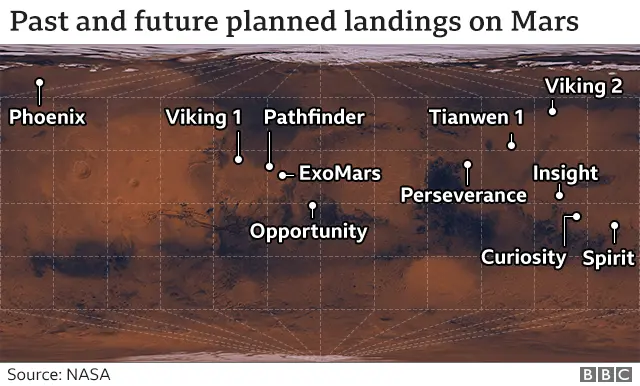
#827 Re: Meta New Mars » Bookmark Bookmarks Find it Again help » 2025-12-06 16:19:49
Caliban's selection item steps for where to build
#828 Re: Meta New Mars » Housekeeping » 2025-12-06 07:14:02
All done for those
#829 Re: Exploration to Settlement Creation » WIKI Project construction design meaning for insitu materials » 2025-12-04 16:41:07
One more thing to think of
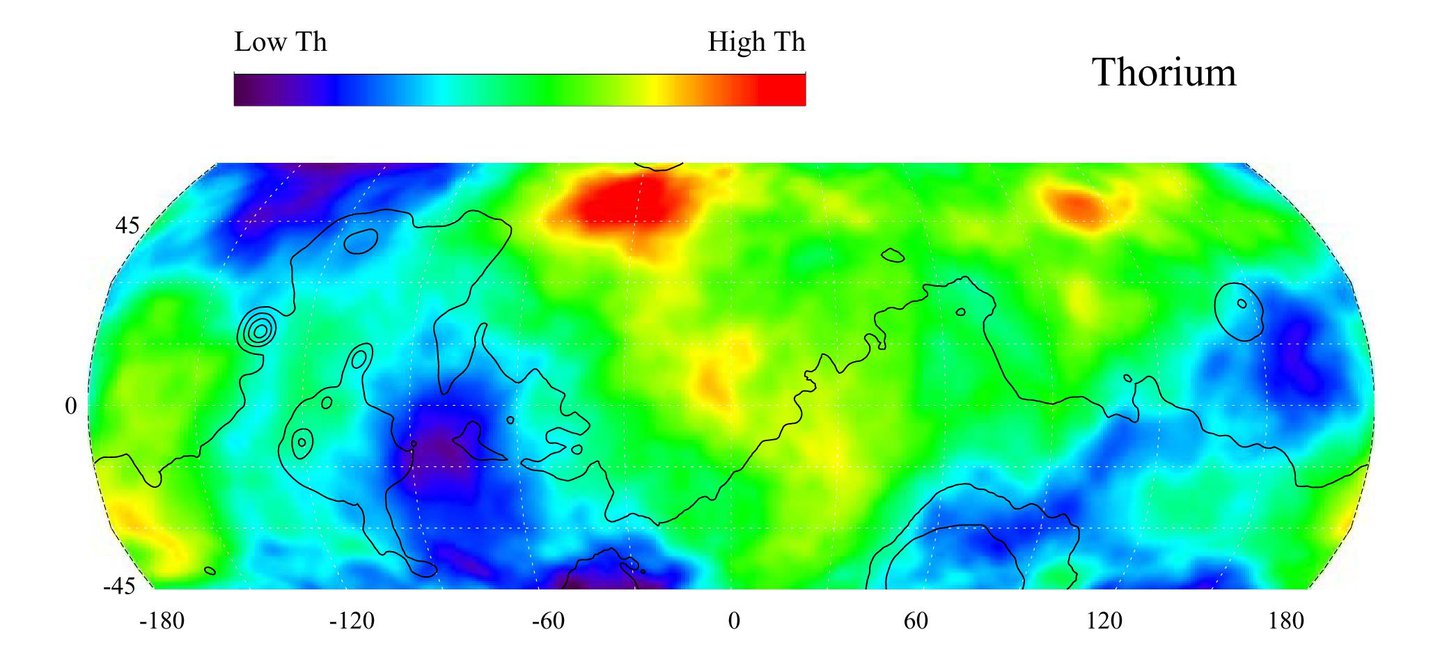
A map of thorium on Mars, created by NASA's Mars Odyssey spacecraft, shows that thorium is not evenly distributed across the planet. High concentrations are found in the northern part of Acidalia Planitia, while areas to the north of Olympus Mons and the Tharsis and Elysium Mons volcanoes show lower abundance. The map, generated using gamma-ray spectroscopy, reveals these surface concentrations of thorium, a naturally radioactive element.
Key features of the Mars thorium map
Data source: The data comes from the gamma-ray spectrometer on NASA's 2001 Mars Odyssey mission, which detects elements by measuring gamma rays they emit after being activated by cosmic rays.
High thorium areas: The highest concentration of thorium is located in the northern part of Acidalia Planitia.
Low thorium areas: Areas with low thorium content are widespread, including locations north of Olympus Mons, east of the Tharsis volcanoes, and south and east of Elysium Mons.
Geological insights: The map helps scientists understand Mars's volcanic history and the composition of its surface, including variations in magmatic water over time
#830 Re: Meta New Mars » Housekeeping » 2025-12-04 15:54:16
The termination gives until the 19th of Dec. to settle and then it goes to court but at least I am free of the contracts.
There are possibility that old files on the server may be of use that had been saved from the last crash.
#831 Re: Unmanned probes » Mars Reconnaissance Orbiter » 2025-12-03 15:29:54
Here is the original topic Mars Reconnaissance Orbiter (MRO)
#832 Re: Home improvements » Misc. Home Projects » 2025-12-03 15:13:50
I know how it feels being on my homes roof that is 16 ft off the ground.
#833 Re: Meta New Mars » Housekeeping » 2025-12-03 15:09:04
Winter is here for me with the first snow of the year. While it was not alot just 5 or 6 inches it sure is colder now. Have started to run the pellet stove to creat a bit of heat in the basement even though the building is still wide open. Trying to solve the dividing of the large basement to close off some of the entry path where the heatis exiting up the stairwell entry way.
#834 Re: Exploration to Settlement Creation » A City Rises on the Plain... » 2025-12-03 14:43:17
GW link for AboveGround Mars Houses
#835 Re: Human missions » International Space Station (ISS / Alpha) » 2025-12-03 06:54:20
The eggs in just 1 basket issue raises its head once more.
#836 Re: Human missions » Boeing Starliner OFT-2 » 2025-12-03 06:51:13
seems that Nasa can just trust it for cargo for now.
#837 Re: Home improvements » Solar Installation in McGregor, Texas August 2024 Start » 2025-12-03 06:49:22
Nice to hear you are being rewarded by savings in reduced cost to get power. Now to bank the savings for later so as to get that number to be such that it goes back into your pocket.
#838 Re: Home improvements » Misc. Home Projects » 2025-12-02 15:07:08
Must DYI windmills make use of a car hub/axle assembly attaching the blades to the disk. The complete assembly is easier to balance and mount in the end. Use one of the mount types that have the 4 holes for the mounting.
#839 Re: Meta New Mars » Housekeeping » 2025-12-02 15:01:36
Each post number is viewed for the tag which is copied and then a back arrow is given to load the unedited post.
example
http://newmars.com/forums/viewtopic.php … 44#p235744 gets the tag Daily Recap - Recapitulation of Posts in NewMars by Day
edit the post is done next to open the post for editing.
to make it a link as I have been doing the url needs the ] bracket deleted with a = put in its place.
At the end of the id number you need to place a ] then insert the topic tag
once the edit is finished the submit button is pushed and the topic post will refresh
that will make the url = htt p://newm ars.com/for ums/viewto pic.p hp?p id= 235744# p235744 ]Daily Recap - Recapitulation of Posts in NewMars by Day
[ /u rl] inserted space to make text for the example
viewed post change
Daily Recap - Recapitulation of Posts in NewMars by Day
Then see where the next item in the post goes and repeat copy of topic tag.
repeating the go back to the unedited post and edit it...until all are finished.
Once all is done you can move topics around to give the sequence for each tag one post to the next
#840 Re: Meta New Mars » Housekeeping » 2025-11-30 19:16:43
example
http://newmars.com/forums/viewtopic.php … 44#p235744 Daily Recap - Recapitulation of Posts in NewMars by Day
to make it a link as I have been doing the url needs the ] bracket deleted with a = put in its place.
At the end of the id number you need to place a ] then insert the topic tag
that will make the url = htt p://newm ars.com/for ums/viewto pic.p hp?p id= 235744# p235744 ]Daily Recap - Recapitulation of Posts in NewMars by Day
[ /u rl] inserted space to make text
#841 Re: Exploration to Settlement Creation » WIKI Project construction design meaning for insitu materials » 2025-11-30 18:45:37
I am coming into earths season of winter where the sill foundation heave with the frost, and cold cycles. Mars have them for not only brime water but for co2 as well. Which I see in my concrete block cement that are used in my cellar. Some cracks on the inside while other are only on the outside but I have a few that go straight through.
Mars has two types of seasonal frost and ice: carbon dioxide (CO2) "dry ice" that forms in winter and retreats in summer, and water ice frost that forms at lower latitudes in specific conditions. The CO2 frost forms the planet's polar ice caps, which can reach a maximum depth of 1.5 to 2 meters in winter, while water ice frost is found in smaller quantities, primarily on pole-facing slopes at lower latitudes.
Carbon dioxide (CO2) frost and freeze depthFormation:
In the fall and winter, atmospheric CO2 freezes and forms a seasonal polar cap on the surface.Depth:
At its maximum depth in mid-winter, the CO2 frost can reach 1.5 to 2 meters at the poles.Retreat:
As the seasons change and the sun returns, the CO2 sublimates (turns directly into gas), and the ice cap recedes.
Atmospheric Transport: The sublimation process releases large amounts of dust and water vapor, which can create Earth-like frost and clouds.Water ice frost and freeze depth
Formation:
Water ice frost is found on Mars primarily in the form of small patches at lower latitudes, especially on pole-facing slopes where temperatures are lower. It can also be found subsurface in the northern hemisphere and in the southern polar regions.Freeze Depth:
The freeze depth of water ice is more complex to measure, but some studies suggest the depth can range from less than 1 cm to over 19 cm in certain areas.Sublimation:
Like CO2 frost, water ice also sublimates during the summer, with some being trapped under the CO2 ice and re-freezing as water ice fans.Seasonal variations
Winter:
CO2 ice accumulates at the poles, and the seasonal polar caps grow. Water ice also forms subsurface deposits in the northern hemisphere.Spring:
As temperatures rise, the CO2 ice begins to sublimate, and the seasonal polar caps start to recede.Summer:
The CO2 ice sublimates completely, and the polar caps disappear, while the water ice deposits also begin to sublimate and retreat.Autumn:
The polar caps begin to re-form as temperatures drop again
Insight showed this with the hammer drill that did not reach depth.
#842 Re: Meta New Mars » Housekeeping » 2025-11-30 18:34:07
The topic tag is located at the top and at the bottom of the loaded page from the msql data record location post number.
I then take each duplicate and move it to make the posts seem like one followed the other after the first entry I find in the consecutive numbers that are pulled.
Hopefully the server has the file space for the phpbb3 as that was one of the reasons for a crash from what I remember.
#843 Re: Meta New Mars » Daily Recap - Recapitulation of Posts in NewMars by Day » 2025-11-30 16:06:05
Here is the tags
Here are numbers for Saturday:
Current active post is 235767 - 235743 --> 24 new posts since previous report
We can see the return of Calliban and RobertDyck in the weekend bump.
Successfully generated 24 URLs from PID 235744 to 235767:
http://newmars.com/forums/viewtopic.php … 44#p235744 Daily Recap - Recapitulation of Posts in NewMars by Dayhttp://newmars.com/forums/viewtopic.php … 45#p235745 Martian Calender - I have created a martian calender...
http://newmars.com/forums/viewtopic.php … 46#p235746 Brick on Mars
http://newmars.com/forums/viewtopic.php … 47#p235747 kbd512 Postings
http://newmars.com/forums/viewtopic.php … 48#p235748 Calliban Postings including links to notable contributions
http://newmars.com/forums/viewtopic.php … 49#p235749
http://newmars.com/forums/viewtopic.php … 50#p235750
http://newmars.com/forums/viewtopic.php … 51#p235751
http://newmars.com/forums/viewtopic.php … 52#p235752
http://newmars.com/forums/viewtopic.php … 53#p235753
http://newmars.com/forums/viewtopic.php … 54#p235754
http://newmars.com/forums/viewtopic.php … 55#p235755
http://newmars.com/forums/viewtopic.php … 56#p235756
http://newmars.com/forums/viewtopic.php … 57#p235757
http://newmars.com/forums/viewtopic.php … 58#p235758
http://newmars.com/forums/viewtopic.php … 59#p235759
http://newmars.com/forums/viewtopic.php … 60#p235760
http://newmars.com/forums/viewtopic.php … 61#p235761
http://newmars.com/forums/viewtopic.php … 62#p235762
http://newmars.com/forums/viewtopic.php … 63#p235763
http://newmars.com/forums/viewtopic.php … 64#p235764
http://newmars.com/forums/viewtopic.php … 65#p235765
http://newmars.com/forums/viewtopic.php … 66#p235766
http://newmars.com/forums/viewtopic.php … 67#p235767For SpaceNut ... please ask your AI friend if it can perform the updates you've been doing.
Some AI systems can read the Internet. Some are limited to just "talking" through the browser.
You'd have to ask your AI friend what it might be able to do. It might offer to write a program to run on your computer.
It might be that your computer supports JavaScript, which your AI friend could certainly write. In that case, you would select the JavaScript as a tab on your browser. It would be interesting to see what your AI friend can do.One thing to keep in mind is that reading the Internet with JavaScript is one thing. ** Writing ** back to the Internet is quite another. A solution is to ask your AI friend to write a JavaScript that reads the NewMars forum and writes the updated URL's to your hard drive as a file, or it might be able to write to the Clipboard which is even better, because that way you don't have to grant permission to write to your hard drive.
In that case you would simply paste the clipboard into the Recap post as an edit. Don't worry about deleting the original URL list.
The two can occupy the post together.
(th)
#844 Re: Exploration to Settlement Creation » Domed habitats... - ...size, materials, and more. » 2025-11-29 19:15:11
I do not know why you are hand waving on the parabolic dome as its only 1/4 parabolic as an arch around a circle.
https://byjus.com/maths/standard-equations-of-parabola/
The parabolic curve equation depends on its orientation, with the two main standard forms being \((x-h)^{2}=4p(y-k)\) for a vertical parabola and \((y-k)^{2}=4p(x-h)\) for a horizontal parabola. In these equations, \((h,k)\) is the vertex, and \(p\) is the distance from the vertex to the focus. The sign of \(4p\) determines the direction the parabola opens. This video provides a step-by-step guide to writing equations for parabolas:
Vertical parabola: \((x-h)^{2}=4p(y-k)\) Opens upward: If \(p>0\) (or \(4p\) is positive).Opens downward: If \(p<0\) (or \(4p\) is negative).Axis of symmetry: \(x=h\).Focus: \((h,k+p)\).Directrix: \(y=k-p\). Horizontal parabola: \((y-k)^{2}=4p(x-h)\) Opens to the right: If \(p>0\).Opens to the left: If \(p<0\).Axis of symmetry: \(y=k\).Focus: \((h+p,k)\).Directrix: \(x=h-p\).
Simplified form (vertex at the origin) When the vertex \((h,k)\) is at the origin \((0,0)\), the equations simplify: Vertical parabola: \(x^{2}=4py\).Horizontal parabola: \(y^{2}=4px\). The graph of a quadratic equation is a parabola.If "a" is positive, the parabola will open up (smile). If "a" is negative, the parabola will open down (frown). If the absolute va...Amarillo CollegeParabolasThe parabola opens upwards or to the right if the \begin{align*}4p\end{align*} is positive. The parabola opens down or to the left...CK-12 FoundationFind the Equation of a Parabola Given Focus and Vertex and Graphso it's going to be y -1 which is like y + 1^ 2ar equals 4 p * x - h which h is 2. and then 4 * this distance p which is 2 the dis...YouTube
What is an open pit?
An open pit is a large-scale, surface-based mining excavation created by removing large quantities of rock and earth to access mineral deposits located near the surface. This method involves drilling, blasting, and hauling material in a series of tiered steps to extract resources like coal, copper, and iron ore. Open-pit mines are common because they are more economical than underground mining for large, near-surface deposits, though they have significant environmental impacts.
Key characteristics and processes
Surface excavation:
The primary feature is a large, open-air pit, which can be a hole in the ground or a section of a hilltop removed.Stepped design:
To maintain stability and prevent rockfalls, the pit walls are not vertical but are instead stepped into a series of benches (flat surfaces) and batters (inclined walls).
Mining operations:
The process involves land clearing, topsoil stripping, drilling and blasting to break up rock, loading the material, and hauling it to stockpiles for processing.Ore and waste:
The extracted material is sorted into ore (the valuable mineral deposit) and waste rock. Waste rock is piled up in designated areas, often in a stepped manner, while the ore is transported for processing.Advantages and disadvantages
Advantages:
Cost-effective:
It is a more economical method than underground mining for large deposits.Efficiency:
It allows for quick and continuous access to mineral deposits.Safety:
It eliminates some of the safety hazards associated with complex underground operations.Equipment use:
It allows for the use of heavy and bulky machinery.Disadvantages:
Environmental impact:
Open-pit mines can cause significant environmental damage, including deforestation, water contamination, and air pollution.Land use:
They require large areas of land and can drastically alter the landscape.Examples of open-pit mines
Bingham Canyon Mine, Utah:
One of the world's deepest open-pit mines, it has been in operation since 1906 and has yielded millions of tons of copper, gold, and other metals.Rössing Mine, Namibia:
A large open-pit uranium mine that has been in operation since 1976
Aka mining for brick useable ore....
#845 Re: Exploration to Settlement Creation » Domed habitats... - ...size, materials, and more. » 2025-11-29 17:43:27
Open-pit mines commonly use a spiral haul road system to move material from the pit bottom to the surface. A road width of 5 meters is narrow for typical large-scale mines, which often require widths of 3.5 times the largest truck's width for safety, but it is feasible for smaller operations using smaller equipment.
Design Considerations for a 200m Deep Spiral Pit
The design of a spiral haul road system in a 200m deep open-pit mine involves a balance of safety, operational efficiency, and geotechnical stability.Road Width (5m):
This width suggests the use of relatively small mining trucks, potentially in a single-lane configuration with occasional passing areas. Typical primary two-way haul roads can be much wider (e.g., 20m or more) to accommodate large capacity trucks. The narrow width would necessitate strict traffic management protocols.Pit Depth (200m):
This is a moderate depth for an open-pit mine, with much deeper mines existing globally. The depth influences the overall pit slope angle and the total length of the spiral road required to maintain a safe gradient.Haul Road Gradient:
To ensure safe and efficient truck haulage, the road gradient (slope) is a crucial design parameter. Gradients are typically kept between 8% and 10% (around 4.5 to 5.7 degrees) to manage braking capacity and speed. A constant, gentle gradient allows for a smooth spiral descent.Berms and Benches:
The open-pit walls are terraced with horizontal ledges called berms, which enhance slope stability and catch falling rock. The road itself can be incorporated into these bench designs.Radius of Curvature:
The spiral design must incorporate suitable turning radii to accommodate the specific mining equipment (trucks) being used, as sharp curves can slow operations and pose safety risks.Visual Examples
Below are images illustrating the typical geometric layout and scale of open-pit mines with spiral haul roads:
Now for Mars
he design of an open-pit mining spiral for Mars requires considering the planet's lower gravity, atmospheric conditions, and soil/rock mechanics. Conventional terrestrial mine design principles would need significant modification to account for the Martian environment.
Key considerations for a 200 m deep open-pit mine with a 5 m wide road on Mars include:
Slope Stability:
With Martian gravity being approximately 38% of Earth's, the effective weight of the rock is less. This allows for steeper pit wall angles than on Earth, which could make a 200 m depth more efficient in terms of excavated waste material relative to ore access. Geotechnical studies would be critical to determine the maximum stable angle for the specific Martian regolith or rock type.Road Design:
A 5 m wide road is relatively standard for single-lane industrial traffic. The slope (gradient) of the spiral road would be a primary design factor. On Earth, a 2% slope is common for heavy rail systems, but haul trucks in mines can handle steeper grades (up to 8-10%).Excavation and Haulage:
The equipment used for excavation and material transport (haulage) would need to be specifically designed or modified for low-gravity, low-atmosphere operations.Environmental Factors:
The near-vacuum atmosphere (about 1% of Earth's atmospheric pressure), extreme temperatures, and pervasive dust storms would require specialized, sealed, and possibly autonomous, machinery.Automation:
Due to the harsh conditions, the mine is likely to be operated by remote or autonomous systems, as is being explored with current Mars rovers.Resource Identification:
The design assumes a valuable resource is present. Missions such as the Mars Orbiter for Resources, Ices, and Environments (MORIE) are concept studies focused on identifying and quantifying potential resources like water ice, which could be critical for an off-world colony.In summary, a 200 m deep open-pit spiral mine on Mars is a feasible engineering concept that would leverage the planet's unique gravity and environmental conditions to potentially create a more efficient mine design compared to terrestrial equivalents. The specific design would rely on detailed data about the local geology.
#846 Re: Exploration to Settlement Creation » Domed habitats... - ...size, materials, and more. » 2025-11-29 17:38:54
A brick parabolic dome of 200 m diameter to cap or top of a structure on Earth. With no defined information for how high.
A 200-meter parabolic dome is a feasible, albeit massive, engineering structure typically constructed using reinforced concrete or steel, not solely with brick. The maximum span for domes made primarily of traditional brick is much smaller, such as the 45.5-meter dome of the Florence Cathedral.
Engineering and Construction
Modern, large-span domes and dishes (parabolic, in section) in the 200-meter range are designed as lightweight, strong structures and utilize modern engineering materials and techniques:Materials Structures of this size are commonly built with materials like reinforced concrete or steel. Reinforced concrete domes are often designed as thin shells, which distribute stress efficiently across the structure.
Parabolic Shape The parabolic or funicular (curve of a hanging chain, which when inverted is a stable arch or dome shape) form is highly efficient for distributing weight and handling various loads.
Large-Scale Examples
The CNIT Exhibition Hall in Paris features six intersecting double-shell parabolic vaults spanning 216 meters, a structure made of reinforced concrete with supports only at the apexes.The 200-inch (approx. 5-meter) Hale telescope at Palomar used the largest single piece of glass ever made for its parabolic dish, demonstrating the use of specialized materials for specific functions.
Modern large dishes, such as those used for amateur radio or scientific listening, use lightweight materials like aluminum mesh.
Brick Limitations
While incredibly durable and strong in compression, traditional brick construction for domes has span limitations due to the material's properties and construction logistics:Span The largest known brick dome, the Florence Cathedral dome, has a diameter of 45.5 meters.
Method Historical brick domes were built without scaffolding by using advanced techniques like the opus spicatum (herringbone) pattern and relying on the dome's self-supporting geometry during construction.Modern Use Today, brick is primarily used as a finish or in smaller-scale architectural features, such as pizza ovens or custom house domes, rather than for the primary load-bearing structure of a 200-meter span.
In summary, a 200-meter parabolic structure is a feat of modern engineering using concrete or steel, far exceeding the scale and material capabilities of traditional brick construction methods for the primary load-bearing shell.
Now for Mars
Building a 200-meter parabolic dome or dish on Mars using bricks made from local materials is a concept found in theoretical discussions and architectural design challenges, but not in current, active construction plans. The primary challenges involve logistics, construction methods, and material properties in the harsh Martian environment.
Feasibility and Concepts
Material Sourcing:
Researchers have developed methods to create "space bricks" or "astrocrete" by mixing Martian regolith (soil) with binding agents like bacteria or a protein found in human waste (urea), which makes strong, concrete-like materials. This would allow materials to be sourced on-site, a significant advantage given the cost of transporting materials from Earth (estimated at nearly $2 million per brick).Construction Logistics:
Traditional bricklaying by suited astronauts is considered highly unrealistic due to the difficulty of working in the Martian atmosphere. Proposed solutions often involve highly automated systems:Robotic Construction:
Automated robots could follow a spiral path to lay bricks and compact layers of regolith, which is an elegant solution to the construction logistics challenge.3D Printing:
The most common approach in recent habitat design competitions is additive manufacturing (3D printing) using local soil to build structures autonomously before humans arrive.Purpose:
A 200m dome or dish on Mars could serve various purposes in theoretical designs, such as:
Habitats/Public Spaces: Providing large internal volumes for living quarters, parks, or agricultural areas.Radiation Shielding:
Thick layers of regolith or ice, often integrated into the dome design, are necessary to protect occupants from galactic cosmic rays and solar radiation, which transparent domes alone cannot do effectively.Key Design Considerations
Radiation Protection:
The primary design driver for any long-term Mars habitat is robust radiation shielding. Domes are often envisioned with thick outer shells of packed regolith or water ice (an excellent shield) built over an inner pressurized structure.Structural Integrity:
The low Martian gravity (38% of Earth's) is an advantage for building large structures, but the internal air pressure required for human life exerts a significant outward force that must be countered by the structure's mass or design.Size:
A 200-meter dome is a significant engineering challenge, but within the realm of theoretical feasibility in large-scale Mars colony concepts.In summary, while the idea of a large, brick-built structure is purely conceptual at this stage, it leverages promising research into using Martian resources for future settlement, focusing on automated construction methods rather than manual labo
With out an inner support structure of metals it seems not as easy to do.
#847 Re: Meta New Mars » Housekeeping » 2025-11-29 11:59:07
Buckling is due to floors and other mass that will get support vai the dome wall.
#848 Re: Exploration to Settlement Creation » A City Rises on the Plain... » 2025-11-28 17:53:24
A brick column on Mars can be theoretically over 2.6 times taller than an identical one on Earth due to the lower gravity (approximately 38% of Earth's gravity). The ultimate height is limited by the compressive strength of the brick material and the column's tendency to buckle, which is less of a concern on Mars than on Earth.
Key Factors for Brick Columns on Mars
Gravity:
Mars' surface gravity is about 3.7 m/s², or 0.38 g. This means any given mass of a column will weigh less, reducing the compressive stress at the base and allowing for greater heights before the material's strength limit is reached.Compressive Strength:
Martian bricks made from compacted regolith have been tested and found to have a flexural strength comparable to ordinary clay bricks on Earth. The maximum theoretical height for a simple compression structure (like a solid column) on Earth is around 7.4 km for granite. On Mars, this theoretical limit would be proportionally higher, potentially exceeding 19 km if only self-weight crushing is considered.Buckling:
In reality, long, thin columns on Earth typically fail due to buckling long before their material's intrinsic compressive strength limit is reached. The lower gravity on Mars also reduces this tendency to buckle, but factors like the column's slenderness (width-to-height ratio) and lateral stability become crucial design considerations.Environmental Factors:
For practical use in a Martian habitat, the main challenges are not just gravity and compression.Pressure:
Pressurized habitats create significant tension on the walls, for which traditional unreinforced masonry is ill-suited unless heavily reinforced or used only in compression-focused structures (like surrounding an inner pressure vessel).
Wind Loads: While Mars' atmosphere is thin, high-speed wind gusts during intense dust storms must be factored into structural design.Construction Code:
Standard Earth building codes limit unreinforced masonry walls to heights of around 10.3 meters (35 ft) or a 20:1 height-to-width ratio for piers in certain conditions, largely due to concerns about wind and seismic activity. Martian construction would require new codes developed for the specific environment.In summary, a brick column on Mars would be significantly stronger relative to the weight it needs to support. While a theoretical "maximum height" could be many kilometers under ideal, lab-controlled conditions, practical engineering for a functional, safe habitat on Mars would impose stricter limitations based on pressure containment, wind, and material properties, leading to much more moderate building heights.
https://www.wikihow.com/Build-Brick-Columns
A brick column can act as a support for a floor beam, transferring the load from the beam down to the foundation, although steel or wooden beams are more common. For a new installation or replacement, the brick column is typically built on a solid footing. The beam is then placed on top of the column, often with steel connectors, to provide a stable base for floor joists and the floor itself.
How a brick column supports a floor beam
Load transfer:
A brick column's primary function is to withstand vertical, compressive loads. It transfers the weight from the beam directly to the foundation.Beam integration:
The beam rests on the top of the column. The two work together, with the column providing vertical support and the beam spreading the load to the columns.Foundation:
A proper footing is crucial for any column, including brick ones, to ensure stability. The footing needs to be deep enough and strong enough to support the weight, especially on softer soils.Reinforcement:
For added strength, a brick column can be filled with concrete and rebar before the beam is installed.Alternatives and modern practices
Steel columns:
In many cases, especially with open floor plans or when a load-bearing wall is removed, steel columns are used because they can be designed to be more compact and are often easier to install than brick.Wood posts:
For certain applications, a 4x4 or 6x6 wood post is used to support a beam.Structural beams:
Modern construction often uses engineered wood or steel I-beams to support floors and roofs, which are then supported by columns or other beams.When to use a brick column
Aesthetic choice:
A brick column can be a good choice if the desired look is a more traditional or classic style.Matching existing structure:
If the home is already built with brick, it can be easier to match and integrate new brick columns into the existing structure.Structural necessity:
A brick column is ideal for situations where the load requires a very high degree of compression resistance.
Other support: Brick columns are also commonly used for other purposes like fences, mailboxes, and gate posts
#849 Re: Exploration to Settlement Creation » WIKI Project construction design meaning for insitu materials » 2025-11-28 16:09:25
Why would we cheap material thickness as from what I have seen of the bricks seem to be brittle coming out ot the compression form. I know that is the number Caliban put in the description but so far we have not made real bricks on mars at temp or from raw regolith.
Metric brick dimensions vary by region, but common sizes include the Metric Modular (\(190\times 90\times 90\) mm or \(194\times 92\times 57\) mm) and the UK standard brick (\(215\times 102.5\times 65\) mm).
For a nominal size, the Metric Modular is often specified as \(200\times 100\times 100\) mm to include a \(10\) mm mortar joint.
Common metric brick sizes Metric Modular (actual size):
\(190\times 90\times 90\) mm or \(194\times 92\times 57\) mm.
Often specified as nominal size: \(200\times 100\times 100\) mm to account for a \(10\) mm mortar joint.UK Standard Brick: \(215\times 102.5\times 65\) mm.
Metric Norman: \(290\times 90\times 57\) mm.
South African Standard: \(222\times 106\times 73\) mm.
Swedish Standard: \(250\times 120\times 62\) mm.
How to choose the right size Identify the region:
The specific dimensions depend on the country or region where you are building.Consider the nominal vs. actual size:
Some standards, like the Metric Modular, have both an "actual" size and a "nominal" size that includes the typical mortar joint for planning purposes.Match existing bricks:
If you need to match existing brickwork, a small deviation is usually acceptable, as the mortar joint can absorb a few millimeters of difference. It is best to choose a brick that matches the height of the existing course as closely as possibleHere are common metric brick dimensions output in BBCode format, specifying both the brick's actual manufactured size and its nominal size (which includes an allowance for a standard mortar joint, typically 10mm).
Dimensions are listed as Length x Width x Height.
Common Metric Brick Dimensions
[li]Standard UK Metric Size (widely adopted since 1970):[/li]
[] Actual Size: 215 mm x 102.5 mm x 65 mm
[] Nominal Size (with 10mm joint): 225 mm x 112.5 mm x 75 mm[li]International Modular Size (common in countries like India):[/li]
[] Actual Size: 190 mm x 90 mm x 90 mm
[] Nominal Size (with 10mm joint): 200 mm x 100 mm x 100 mm[li]US Modular Size (metric conversion):[/li]
Actual Size: 194 mm x 92 mm x 57 mm
[li]European "Normal Format" (NF):[/li]
Actual Size: 240 mm x 115 mm x 71 mm
Note: Actual dimensions can vary slightly by manufacturer and region due to tolerances. The nominal dimensions are generally used for design and estimating purposes to fit within modular building systems.
Grade A engineering bricks in the UK typically have the following dimensions in metric units:
Length: 215 mm
Width (Depth): 102.5 mm
Height: 65 mm (other heights like 73mm and 80mm are also available)
These are the actual dimensions of the brick unit.When planning construction, a standard 10 mm mortar joint is usually included, making the "working size" for calculation purposes 225 mm x 112.5 mm x 75 mm.
Grade A engineering bricks are defined by their physical properties rather than their size, specifically having a high compressive strength of greater than 125 N/mm² and low water absorption of less than 4.5%
#850 Re: Human missions » Moxie and only Moxie Oxygen creation » 2025-11-27 17:23:39
https://www.nasa.gov/space-technology-m … ent-moxie/
update:
The largest solid oxide electrolyzer (SOE) developed for Mars is the mission-scale SOXE stack by OxEon Energy, a 33x scaled-up version of the toaster-sized MOXIE device on NASA's Perseverance rover, designed to produce propellant for human return missions, though the MOXIE unit itself was the first SOE to operate on Mars, generating oxygen from CO2. On Earth, Bloom Energy's 4 MW Bloom Electrolyzer is the world's largest SOE system, stemming from that original NASA Mars technology.
For Mars Missions (Technology for Future Human Exploration):
MOXIE (Mars Oxygen ISRU Experiment): This small, toaster-sized SOE device on the Perseverance rover successfully demonstrated solid oxide electrolysis on Mars, producing oxygen from the thin CO2 atmosphere.
OxEon Mission-Scale SOXE: OxEon scaled up its MOXIE technology significantly (33x) for potential Mars crewed missions, aiming to produce large quantities of oxygen for propellant (Mars Ascent Vehicle) and life support, according to this TTU DSpace Repository document and OxEon Energy's website.
For Earth (Current Largest SOE):
4 MW Bloom Electrolyzer: Bloom Energy built the world's largest solid oxide system, operating at NASA's Ames Research Center, with roots in the original Mars technology to produce clean hydrogen for terrestrial decarbonization.
In summary, MOXIE was the first SOE on Mars, OxEon scaled it up for future large-scale Mars needs, and Bloom Energy created the largest SOE on Earth based on that heritage