New Mars Forums
You are not logged in.
- Topics: Active | Unanswered
Announcement
#626 Re: Exploration to Settlement Creation » WIKI Starship repurposed to make or build what we need » 2025-12-30 15:25:33
For a Martian habitat at 0.5 bar (significantly higher than Mars's ~0.006 bar average), spherical or cylindrical shapes are optimal for a stainless steel structure, as they efficiently contain internal pressure, with cylindrical shapes often favored for practical construction and use with regolith shielding, using tension members to handle stress, similar to pressurized vessels on Earth.
Why These Shapes?
Spherical: A sphere distributes stress equally in all directions, making it structurally ideal for holding internal pressure against a vacuum or low external pressure.Cylindrical: Cylinders (especially with domed ends) are practical for larger volumes, offer better usable floor space, and can be buried or covered with Martian soil (regolith) for radiation shielding without collapsing.
Structural Considerations for 0.5 Bar (50 kPa)
Pressure Difference: A habitat at 0.5 bar (50 kPa) has a substantial pressure difference from the Martian surface (around 0.6 kPa), requiring robust structures.Stainless Steel: While good for strength, stainless steel is heavy, making it costly to transport; however, it's excellent for withstanding pressure.
Tension: The primary force is outward tension. Structural members (like steel bands) wrapped around cylindrical habitats help contain this.
Design ConceptsBuried Cylinders: Building cylindrical habitats within trenches and covering them with regolith provides shielding from radiation and micrometeoroids, using the soil's weight to help counteract the internal pressure, notes Marspedia and NIH.
Domes: Dome-shaped structures (hemispherical) are also efficient for pressure containment, as studied by NASA.
In essence, think of large, pressurized tanks – spheres and cylinders are the best shapes for holding pressure, and adding regolith makes them even more effective Martian habitats
Parts of the cargo payload door and crew airlocks will be critical parts to use in making a larger insitu building.

Starship Nosecone with payload bay door cutout
Then there is the pez dispensor door.
The stainless steel used in the construction of the Starship and Super Heavy booster, including the Block 3 version, has a uniform diameter of 9 meters (30 feet). The steel is typically sourced in rolls that are cut into rings to form the vehicle's tanks and structure.
Key Dimensions and Material
Diameter: The standard diameter for all current Starship and Super Heavy booster versions, including Block 3, is 9 meters (approximately 30 feet).Steel Thickness: The stainless steel used is generally 3.6 mm thick (about 0.14 inches) for many parts of the structure.
Material Type: SpaceX primarily uses a custom variant of 304L stainless steel, which performs well in the extreme cryogenic temperatures of rocket propellants.
Band/Roll Width: The raw steel is often delivered in rolls that are 1.8288 meters (72 inches) wide and then welded together to form the large rings of the rocket's structure.
Block 3 Changes
While the diameter remains the same, the Block 3 iteration introduces changes to the overall height and internal capacity:Super Heavy (Booster): The Block 3 booster is expected to be 72.3 meters (237 feet) tall, a slight increase from the Block 2's 71 meters. It also has increased propellant capacity and uses Raptor 3 engines.
Starship (Second Stage): The Block 3 ship is expected to be part of a taller, 124.4 m (408 ft) stacked vehicle, and is designed to carry significantly more fuel than previous versions.
The consistency in the 9-meter diameter across versions allows SpaceX to use the same manufacturing tooling and launch infrastructure, such as the high bay and launch tower arms
#627 Re: Exploration to Settlement Creation » WIKI Mars Airlocks and uses » 2025-12-30 15:10:42
We also need multiple units and for crew and for equipment.
An Airlock Concept To Reduce Contamination Risks During The Human Exploration Of Mars
This is for a crew entrance.
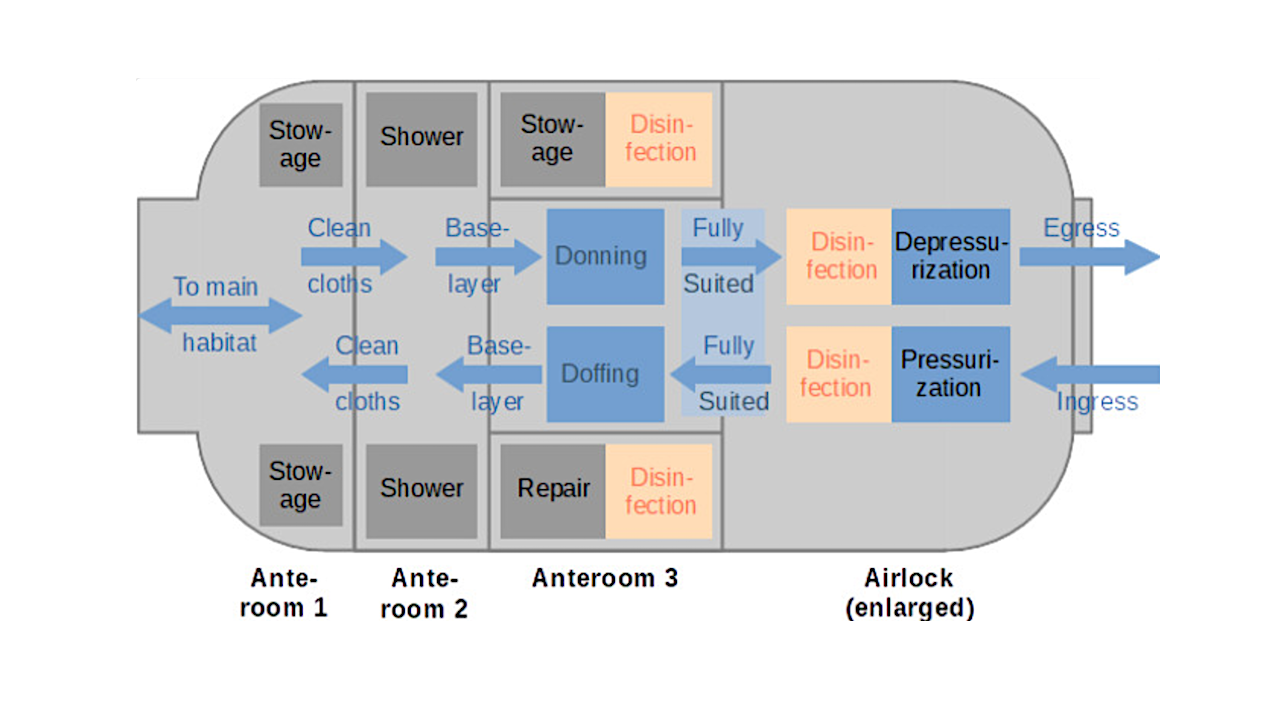
Fig. 2. Schematic floorplan showing the general workflow during EVA preparation and post-EVA clean-up and servicing.
The disinfection cycle inside the airlock is complemented by disinfection cycles inside separate compartments in Anteroom 3 for selected suit parts (e.g., interior of boots, poorly exposed parts of gloves, cuffs, etc.). The airlock is enlarged here for visualization purposes.
Protecting the Martian environment from contamination with terrestrial microbes is generally seen as essential to the scientific exploration of Mars, especially when it comes to the search for indigenous life.
However, while companies and space agencies aim at getting to Mars within ambitious timelines, the state-of-the-art planetary protection measures are only applicable to uncrewed spacecraft. With this paper, we attempt to reconcile these two conflicting goals: the human exploration of Mars and its protection from biological contamination.
In our view, the one nominal mission activity that is most prone to introducing terrestrial microbes into the Martian environment is when humans leave their habitat to explore the Martian surface, if one were to use state-of-the-art airlocks.
We therefore propose to adapt airlocks specifically to the goals of planetary protection. We suggest a concrete concept for such an adapted airlock, believing that only practical and implementable solutions will be followed by human explorers in the long run.
Most likely the microbes are most likely dormant or from human causes.

Fig. 1. Artistic rendering of an airlock module (3.4 m diameter) that would fulfill the requirements described in “Methods”.
The airlock proper is between the two pressure-tight doors. The remaining room is divided into three compartments or anterooms that are separated by airtight doors. From the center of the figure (Mars surface) towards the edges (the other habitat modules), the three compartments are: (1) suit-up area, suit repair, and stowage of EVA suits; possible location of suitports, (2) showers and general hygiene compartment, (3) stowage for undergarments and indoor clothes. Note that most of the functions of the airlock module would need to be present in the habitat anyway, but that the SafeMars concept combines those functions into one module that are helpful for planetary protection. Image by J. Wegner.
An airlock concept to reduce contamination risks during the human exploration of Mars
Planetary protection technologies should, in particular, mitigate the risks posed by extravehicular activities (EVAs). Forward contamination could occur during egress, when aerosols from inside the habitat will be most prone to leaking, and during operations in a potentially contaminated suit. Conversely, backward contamination (the contamination of astronauts, or later of terrestrial ecosystems, by extant Martian life) would be most likely during ingress. Risks are exacerbated by the fact that scientific and maintenance needs of crewed missions to Mars are expected to lead to a much higher frequency of EVAs than in the current ISS program, increased from an average of around 10 EVAs a year to perhaps 3 to 6 a weeks
Very nicely done abstract....
chamber functions require special handling and equipment

Pressure I think is for co2 liquid to gas but thats a guess.
#628 Re: Exploration to Settlement Creation » WIKI Mars Airlocks and uses » 2025-12-30 14:54:55
For SpaceNut ...re #4042 ... thanks for taking care of Trebuchet .... the name showed up in display of an older topic.
***
I have a question about your post (twice) https://newmars.com/forums/viewtopic.ph … 98#p236698Update: In rereading this post, I realize I sound just like SpaceNut ... imagine that!
What were you thinking when you posted that?
That's a fantasy.
That's an AI generated fantasy, and you posted it in the forum.
An air lock on Mars will most emphatically NOT look like that!
What were you thinking at the time?
That is not an air lock ... that is a dust screen opening into an area that is at Mars pressure.
Where are the real air locks? Those must be curved to accommodate pressure, or enormously strong if they are flat.
Please try to find images that look as though they were on Mars and not the Arizona desert.
GW Johnson has written many posts explaining why pressure vessels must have rounded shapes.
Is the ISS airlock a good model for Mars?
No! The ISS airlock is NOT a good model for Mars.
To my knowledge, NO ONE has designed an airlock for Mars.
All we have are artist renderings based upon Earth experience.
You may be able to find a ** real ** airlock for Mars.
Update: SpaceNut ... the solution is easy ... just change the text !!! Those are mud rooms on Mars! They are not airlocks. The airlocks are out of view inside the mud room. The better name might be "dust room". Folks coming inside from the surface will be covered in dust. All of it must be removed before the human enters the air lock. The airlocks themselves must be large enough for a tall human to enter without bending.
If you want to try having an AI make an image open gemini.google.com and ask it to use nanobanana to create images for you. Be sure to ask it to make images that are 256K in size so you can store them on our Image Server.
(th)
First this is just the outside portion of the airlock which has multiple chambers and it follows with multiple chambers plus more doors. Airlocks are more than 2 doors inside and out....
Yes the outer chamber is going to see mars only and does not require these to be curved plus these unit is most likely coming with more from earth.
#629 Re: Exploration to Settlement Creation » Airlocks » 2025-12-30 14:53:39
First this is just the outside portion of the airlock which has multiple chambers and it follows with multiple chambers plus more doors. Airlocks are more than 2 doors inside and out....
#630 Re: Exploration to Settlement Creation » WIKI Mars Airlocks and uses » 2025-12-29 18:01:10
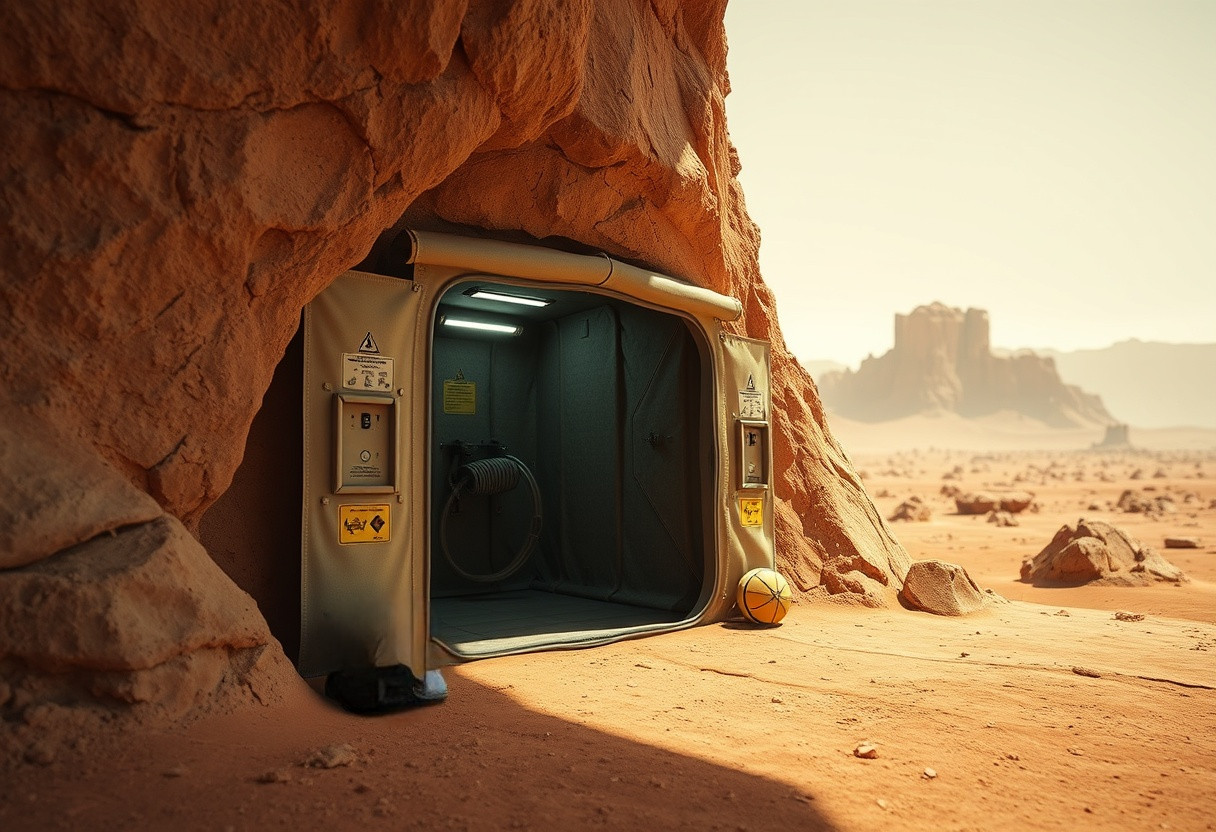
A dome Airlock might look like this
#631 Re: Exploration to Settlement Creation » Airlocks » 2025-12-29 17:36:57
A dome Airlock might look like this from the outside and references no actual ability, just artwork
#632 Re: Exploration to Settlement Creation » WIKI Mars Medical and Health Monitoring plus of crew » 2025-12-29 17:26:59
TECHNOLOGY — Colonization of Mars — Establishing Infrastructure on Mars — Health and Medical Care
account creation required for full content.
Bare Minimum for a Shelter on Mars
Project use is now dead
To support a 200 plus dome population
For a Mars mission or colony of 200 crew members, mission concepts and analog studies suggest a dedicated medical team of several professionals with diverse specializations, supported by a substantial medical bay designed for high autonomy and comprehensive care.
Medical Team Composition
A crew of 200 would require a significant, multi-disciplinary medical team, as real-time evacuation or Earth-based consultation is not feasible due to communication delays (up to 24 minutes each way). The team would need to handle a wide range of conditions, from primary and preventative care to emergency trauma and surgery.
While specific numbers for a 200-person Mars mission are not finalized in publicly available sources, an internal naval comparison suggests a ratio of approximately one medical staff member for every 8-10 crew members in a large-scale scenario. Extrapolating to 200 people, this would imply a core team of approximately 20-25 medical professionals, including:
Physicians with broad experience in emergency medicine, family medicine, and general surgery.
Nurses and paramedics.
Specialists such as anesthesiologists, radiologists, and potentially dental professionals.
Psychologists/Psychiatrists to manage behavioral health and crew well-being in isolation.
Biomedical engineers/technicians for equipment maintenance and lab analysis.
All general crew members would also receive advanced first-aid training.
Medical Bay ("Sick Bay") Size and Design
The "bay size" is not a fixed dimension but rather a functional space designed to support comprehensive medical operations, from routine check-ups to complex surgeries. The design considerations emphasize autonomy and on-site capability:
Functionality: The facility must support Level IV or V care (advanced life support, basic and potentially advanced surgical care, dental, and diagnostic capabilities).
Space Standards: The medical bay must be designed to accommodate a full range of human sizes (from 1st percentile female to 99th percentile male), ensuring adequate work volume, accessibility, and range of motion for medical procedures.
Key Units: The facility would likely include:
Examination and procedure rooms.
An operating/surgical suite.
Laboratory for on-site analysis.
Dental care unit.
Inpatient/recovery beds.
Storage for medical supplies, pharmaceuticals, and equipment.
Waste management unit for medical waste disposal.
Infrastructure: It requires robust life support interfaces, specialized lighting, infection control mechanisms, privacy considerations, and integrated communication systems for telemedicine support from Earth-based flight surgeons.
Overall, the medical bay would be a significant, modular portion of the habitat, designed for self-sufficiency in a resource-restricted and extreme environment
#633 Re: Exploration to Settlement Creation » A City Rises on the Plain... » 2025-12-29 17:21:30
Dome buildings are placed inside domes and are protected from outside Martian dust (see: maintenance). As a result, building space is limited, and the size of each building must be taken into account.
Sounds like what we are trying to achieve.
#634 Re: Exploration to Settlement Creation » Glass Domes On Mars : Elon Musk’s Incredible Project » 2025-12-29 17:07:12
One place to find windows that can take the stress of mars is with in the ISS Cupola unit with the covers for the mars dust storms.
ISS Cupola windows are thick, multi-layered structures (about 5 inches total) with specific pane thicknesses: an inner 0.44-inch scratch pane, two primary pressure panes (one 1.0-inch, one 1.45-inch for the top window) of fused silica or alumino-silicate to maintain cabin pressure, and an outer 0.37-inch debris pane for micrometeoroid protection, with coatings for anti-reflection and heating.
Pane Breakdown & Thickness
Each Cupola window consists of four panes, each with a specific role and thickness:
Inner Scratch Pane: A thin layer (around 0.44 inches or 1.12 cm) made of borosilicate glass (like SCHOTT BK7) or similar, designed to protect the critical pressure panes from astronaut scuffs and damage.Pressure Panes (Primary & Redundant): Two thicker panes made of fused silica or alumino-silicate glass, providing structural integrity against the pressure difference between the cabin and space.
Top Window: The primary pressure pane is about 1.45 inches (3.68 cm) thick, with the redundant one being 1.0 inch (2.54 cm) thick.
Side Windows: Both pressure panes are typically 1.0 inch (2.54 cm) thick.
Outer Debris Pane: An outer layer (around 0.37 inches or 0.94 cm thick) of fused silica, designed to absorb impacts from micrometeoroids, preventing damage to the inner layers.Materials & Features
Fused Silica & Alumino-Silicate: Used for pressure and debris panes for strength and optical clarity.
Coatings: Include anti-reflection (AR) coatings and heaters (like Indium Tin Oxide - ITO) to prevent fogging and manage thermal loads.
Total Thickness: The entire window assembly, including the gaps between panes, can be about 5 inches thick
Project use now dead
#635 Re: Exploration to Settlement Creation » WIKI Mars Medical and Health Monitoring plus of crew » 2025-12-29 16:59:56
other topics containing the term "medical", fall in the large ship topics.
I am sure that lots of different medical and medications will need to be set for at minimal a complete suite of capability to go with the capable personnel that we will task for the well care and medical treatment capabilities, We have an idea of the what to expect from the remote locations as we will need to have the ability to do these things.
Sure we need a list for outfitting but its mostly for quantity and mass.
For a Mars mission with a 20-person crew requiring an autonomous, advanced medical capability including surgery, the medical bay and trauma area would need to be designed to accommodate a fully functional medical team and a patient, likely requiring a clear floor area of at least 250 to 300 square feet (23-28 sq meters). This size is based on terrestrial hospital guidelines for single-patient trauma rooms, adapted for a long-duration space mission's specific needs.
Medical Team Composition
Given the autonomy required for a deep space mission due to communication delays, the crew would likely include at least one or more highly trained medical professionals, potentially a flight surgeon or physician with diverse expertise. The number and skill sets of the medical team would need to support:
First aid and clinical diagnostics.
Dental care.
Trauma and emergency care.
Basic surgical capabilities.
Management of medical equipment and supplies, including potential sterilization units.
The team size would be determined by balancing the need for redundancy in expertise against the overall crew size constraints of the spacecraft.
Medical Bay Size
Trauma/Procedure Area: Terrestrial guidelines suggest a clear floor area of 250 sq ft (23 sq m) for a single-patient trauma room to ensure sufficient space for medical staff (multiple providers, potentially a trauma team), equipment, and patient access (minimum 5 feet clearance around the stretcher). A deep space habitat medical bay concept design from NASA incorporates a specific area for procedures/surgery.
Total Medical Bay: The overall medical bay would need to be larger to include areas for:
Stowage of equipment and pharmaceuticals.
Diagnostic equipment (e.g., X-ray, ultrasound, lab equipment).
Sanitation and waste management specific to medical waste.
Private consultation and record keeping using a dedicated medical computer system.
The specific dimensions would also consider anthropometric constraints (accommodating the 1st percentile female to the 99th percentile male crew population) and the unique requirements of a microgravity or partial-gravity environment, such as patient and equipment restraints


#636 Exploration to Settlement Creation » WIKI Mars Medical and Health Monitoring plus of crew » 2025-12-29 15:11:03
- SpaceNut
- Replies: 5
NOT a Discussion topic
old title Mars Dome Medical and Health Monitoring of crew
Adding wiki to title 1-26-26
This topic also needs to cover space requirement, equipment for care, plus the things needed for surgery.
We talked briefly in Oldfart1939 "Companion for Mars Expedition Number One; 17 crew members topic wiki exploration." to the cross training and need for not Doctors but more like registered nurses in training to fill the need.
Medical and health monitoring systems on Mars missions will need to handle injuries and illnesses without the possibility of return to Earth. Telemedicine setups with AI diagnostics, using wearable sensors for real-time vital tracking, are being developed for this purpose. Bone density loss and muscle atrophy from microgravity transit are other health concerns that can be mitigated by exercise regimens and pharmacological countermeasures like bisphosphonates.
Psychological health is another critical aspect of long-duration space missions. Protocols are being developed to combat isolation in crews confined for over two years, including virtual reality simulations of Earth environments.
Much can be learned from the studies on the ISS and other remote places when a real doctor is required.
Much of the tasks fall under well care.
The Mars Doctor: Medical Affairs Reaching Deep Space
Simulation-based Medical Emergency Training for Deep-Space Missions
While specific plans for a 20-person Mars mission are conceptual, the recommended staffing ratio, based on research into long-duration spaceflight simulations, is approximately one medical professional per every four crew members. This suggests a 20-person mission would ideally have a five-person medical team, composed of a mix of physicians and paramedics/medical specialists.
Medical Team Composition & Role
The "Space Medical Doctor" (SMD) on a Mars mission would have a multifaceted role, encompassing more than just primary care due to the long duration and communication delays with Earth (up to 40 minutes one way).
Key functions would include:
Flight Surgeon/Primary Care Physician: Responsible for the overall health and well-being of the crew.
Surgeon/Emergency Medicine Physician: Essential for managing acute trauma and surgical needs, as medical evacuation is not an option.
Specialists: Potentially a dentist, psychologist, pharmacist, and laboratory technician, possibly filled by cross-trained team members.
Scientist: The medical officer would also conduct research on the effects of spaceflight on the human body.
Medical Autonomy & Technology
Due to the communication lag, crews will require significant autonomy during medical emergencies. Research and development efforts are focused on providing advanced support systems:
"Just-in-Time" Training: Immersive training using technologies like VR and AR to prepare non-medical crew members to assist in procedures.
Advanced Diagnostics: Development of portable diagnostic tools, such as specialized ultrasound technology for issues like kidney stones.
Biomedical Technologies: Utilizing technologies like biochips for rapid analysis and potentially 3D printing for customized medical equipment, casts, and even basic tissues or drugs.
AI Assistants: NASA and Google are exploring the use of AI medical assistants to aid crews in decision-making and patient care without constant ground support.
Current Research
Analog missions, such as NASA's CHAPEA (Crew Health and Performance Exploration Analog) and The Mars Society's Mars Desert Research Station (MDRS), use small crews (typically 4-6 people) that include a crew medical officer to test these protocols and gather data on the physical and psychological challenges of long-duration isolation
Key functions of the Space Medical Doctor (SMD)
1) Flight Surgeon/Primary Care Physician
2) Dentist
3) Scientist
4) Psychologist
5) Safety Officer
6) Pharmacist
7) Nursing
8) Rehabilitation technician
9) Emergency Medical Technician
10) Laboratory Technician
11) Medical writer and journalist
#637 Re: Not So Free Chat » NASA's Jared Isaacman new leader makes his priorities clear on day one » 2025-12-29 15:02:29
Some are happy that NASA finally has a leader, but its future is no more certain
After a rudderless year and an exodus of around 4,000 employees due to Trump administration cuts, NASA got what may be its first piece of good news recently.
"Perfect is the enemy of the good. Isaacman checks a lot of boxes," says Keith Cowing, a former NASA employee and the founder of NASA Watch, a blog dedicated to the agency.
A confidential manifesto lays out Isaacman's sweeping new vision for NASA
The 62-page plan, obtained by POLITICO, proposes outsourcing some of NASA’s missions to the private sector and treating the government agency more like a business. The draft, known as “Project Athena,” not only showcases Isaacman’s radical vision for the space agency
#638 Re: Meta New Mars » Housekeeping » 2025-12-29 14:06:47
Done set to in active for user Trebuchet
Pulled the banned list (under 500() and noticed that there are still many with emails that are known spammers.
List user names starting with M towards Z
Looks like last converted ID Is TestID18375
#639 Re: Life support systems » Astronauts Say They’d Bring These 5 Animals to Mars for Survival » 2025-12-29 13:36:38
#640 Re: Life support systems » Inflatable concrete shelter. » 2025-12-29 13:36:34
Just position and give rough shape then add water and ready made shelter...almost
#641 Re: Exploration to Settlement Creation » Principles for successful settlement » 2025-12-29 13:06:09
One of the things that I noted was that some settlers had difficulty getting to use the environment which as had problems with the Indian tribes.

Indigenous peoples in Newfoundland (like the Mi'kmaq, Innu, and Beothuk) had interactions with European fishermen, including those arriving after John Cabot in the late 1490s, leading to trade (furs for metal goods/food), disease spread, and some conflict, establishing early relationships before formal colonization. While large-scale fishing fleets came in the 16th century, early, often unofficial, contacts happened as soon as Europeans arrived for the rich cod stocks.
Early Interactions & Trade:
Arrival of Fishermen: John Cabot's 1497 voyage to Newfoundland attracted European fishermen (Basque, English, French) seeking rich cod.
Trade Goods: Indigenous groups traded furs and hides for European items like metal tools, beads, liquor, and food (biscuits).
Informal Nature: Much of this early trade was unofficial, conducted by individual seamen, but quickly established patterns.Impact on Indigenous Peoples:
Disease: European diseases, carried by these early visitors, tragically spread among Native populations, causing significant harm.Resource Strain: Overfishing by Europeans began to impact local food supplies.
Conflict & Cooperation: Interactions ranged from mutually beneficial trade to misunderstandings and conflict, with occasional violence.Who Were the Indigenous People?
At that time, Newfoundland was home to peoples like the Mi'kmaq, Innu, and Beothuk, who had established cultures and interactions with the sea.In essence, the rich fishing grounds of Newfoundland fostered early, complex relationships between Indigenous inhabitants and European fishermen long before permanent settlements were established

Plus most had much desease as well not being of a hearty stock of strong people.
We only have some of the issues if a nation that land near do not tolerate you landing next to them.
#642 Life support systems » Astronauts Say They’d Bring These 5 Animals to Mars for Survival » 2025-12-29 12:53:32
- SpaceNut
- Replies: 1
Astronauts Say They’d Bring These 5 Animals to Mars for Survival
The secret to surviving the Red Planet might be swimming, buzzing, and crawling around us already.
Space agencies have sent everything from fruit flies to monkeys into orbit, but the conversation about Mars colonization has taken an unexpected turn toward practical survival. With NASA targeting human missions to Mars by the 2030s, researchers are seriously considering which Earth creatures could help astronauts establish sustainable life on the Red Planet. After analyzing decades of space biology experiments and consulting with Mars mission planners, a fascinating pattern emerges from the data.
1. Honeybees would handle the pollination crisis that could doom Martian agriculture.
Agricultural collapse represents one of the greatest threats to Mars colonization, and without natural pollinators, growing fresh food becomes nearly impossible. Bees solve this critical problem while also providing honey, wax, and propolis – all valuable resources for a isolated colony. Research conducted on bee behavior in microgravity shows these insects adapt remarkably well to altered gravitational conditions, maintaining their complex social structures and work patterns.
Beyond pollination, bees could serve as early warning systems for environmental problems in Martian habitats. Their sensitivity to air quality, chemical contamination, and electromagnetic fields makes them living sensors that could alert colonists to life-threatening issues before human symptoms appear. The psychological benefits of maintaining bees also can’t be overlooked – tending hives provides therapeutic routine and connection to Earth’s natural cycles during the mental challenges of Mars isolation.
2. Fish might become the most efficient protein factories in Martian habitats.
Forget about bringing cattle to Mars – fish represent the ultimate space livestock, offering high protein content with minimal waste production in compact environments. As reported by researchers at the University of South Australia, fish like Japanese rice fish have already successfully mated and produced healthy offspring in space, making them the first vertebrates to complete their entire reproductive cycle in microgravity. This breakthrough suggests fish could establish self-sustaining populations in Martian colonies.
Fish farms on Mars would require far less space, water, and energy than traditional Earth livestock while providing astronauts with fresh protein and omega-3 fatty acids essential for brain health during long-term isolation. The closed-loop aquaculture systems being developed for space missions could recycle fish waste as fertilizer for hydroponic vegetables, creating an integrated food production system that maximizes efficiency in resource-limited environments.
3. Tardigrades could teach astronauts the ultimate survival tricks.
These microscopic “water bears” have already proven they’re basically indestructible, surviving the vacuum of space, extreme radiation, and temperatures that would instantly kill any other known organism. According to research published by NASA’s Ames Research Center, tardigrades represent one of the most promising biological models for understanding extreme environment survival. While you won’t be cuddling with these tiny creatures during movie night on Mars, studying how they protect their DNA from cosmic radiation could unlock genetic therapies that keep human colonists healthy.
Current experiments on the International Space Station are mapping exactly which genes allow tardigrades to resurrect themselves after being completely dried out, frozen, or blasted with radiation. Scientists believe these survival mechanisms could be adapted to help astronauts withstand the constant bombardment of cosmic rays during the 18-month journey to Mars and throughout their stay on the planet’s unprotected surface.
4. Crickets deliver maximum nutrition with minimal environmental impact.
Space missions operate under extreme weight and volume restrictions, making crickets the ideal livestock for protein production on Mars. These insects convert organic waste into high-quality protein with incredible efficiency, requiring 2,000 times less water than beef and producing virtually no greenhouse gases. Their rapid reproduction cycle means a small founding population could quickly scale up to feed an entire Martian colony.
Crickets thrive in controlled environments and can consume food scraps and organic waste that would otherwise require disposal in a closed-loop system. Their high protein content rivals traditional meat sources while providing essential amino acids, vitamins, and minerals that astronauts need to maintain muscle mass and bone density in Mars’ reduced gravity. Plus, cricket farming produces minimal noise – a crucial consideration when living in pressurized habitats where every sound echoes.
5. Fruit flies unlock the secrets of genetic adaptation to alien environments.
While they might seem like pests, fruit flies have become indispensable research partners for understanding how complex organisms adapt to space conditions over multiple generations. Their rapid reproduction and well-mapped genetics make them perfect for studying how reduced gravity and increased radiation affect development, immunity, and longevity. Scientists can observe dozens of generations in the timeframe of a single Mars mission.
Recent experiments aboard the International Space Station revealed that fruit flies develop altered immune responses to pathogens in space, information that directly informs medical countermeasures for astronauts. Their ability to adapt quickly to environmental changes could provide real-time insights into how Martian conditions affect biological systems, helping colonists adjust life support systems and medical protocols as they learn to survive on an alien world.
6. Microscopic allies working behind the scenes.
The most important Martian colonists might be invisible to the naked eye. Beneficial bacteria and microorganisms will be essential for everything from waste processing to soil creation, but they require careful selection and monitoring. Extremophile bacteria that thrive in harsh conditions could break down human waste, produce essential vitamins, and even help extract useful materials from Martian soil and atmosphere.
These microbial partners would work constantly to maintain the delicate balance of a closed-loop life support system, recycling nutrients and preventing the buildup of toxic compounds. Understanding which microbes survive and thrive in space conditions helps astronauts maintain their own gut health and immune systems while ensuring their habitat remains functional and safe throughout the mission.
7. Small mammals provide crucial medical research opportunities.
Mice and rats have been space travelers since the early days of the space program, and their role in Mars colonization would focus on ongoing medical research rather than food production. These mammals share enough physiology with humans to serve as test subjects for new medications, treatments, and preventive therapies developed during the mission. When astronauts face unexpected health challenges millions of miles from Earth, having living models for testing potential solutions could be lifesaving.
The ability to study disease progression, drug effectiveness, and surgical techniques on small mammals would give Mars colonists crucial medical capabilities that static supplies and equipment cannot provide. These animals would essentially serve as a living medical research laboratory, helping astronauts adapt their healthcare strategies to the unique challenges of surviving on Mars while contributing to medical knowledge that benefits humanity on both planets.
8. Creating sustainable ecosystems for long-term survival.
The ultimate goal isn’t just keeping individual species alive on Mars, but creating interconnected biological systems that support long-term human settlement. Each animal serves multiple functions in a carefully balanced ecosystem designed to maximize resource efficiency and minimize waste. Together, these creatures would help transform sterile Martian habitats into thriving biospheres capable of supporting human civilization.
Future Mars colonies might look more like sophisticated biological laboratories than traditional settlements, with every organism serving essential functions in maintaining life support systems. The animals that make the journey to Mars won’t just be passengers – they’ll be essential partners in humanity’s greatest adventure, helping us build sustainable communities on an alien world while advancing our understanding of life itself.
Some of these would go into the biomes if the structures that we build are large enough.
Basically husbandry for food such as chicken or the eggs but cattle and other to which the index should have the pointers to these topic.
#644 Exploration to Settlement Creation » Glass Domes On Mars : Elon Musk’s Incredible Project » 2025-12-29 11:46:03
- SpaceNut
- Replies: 3
Glass Domes On Mars : Elon Musk’s Incredible Project
I think this will cover not only regular produced but also 3D printed as well for a settlement on mars.
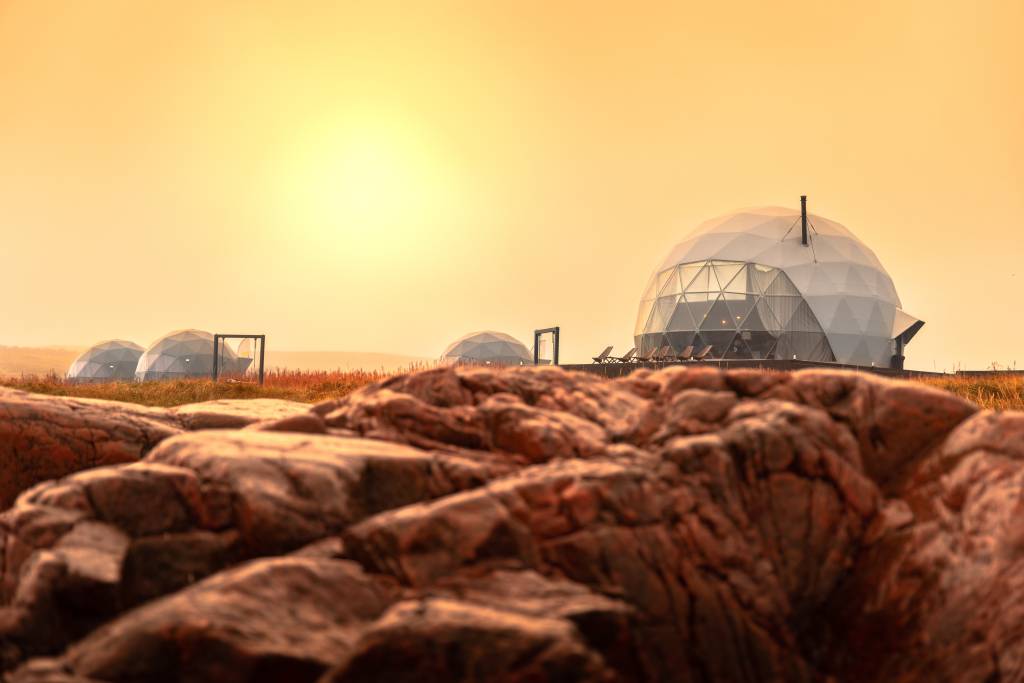
For many years, Mars has fascinated astronomers, scientists, and space enthusiasts. The possibility of life and settlement on the red planet has been investigated, and thanks to recent advancements in technology, the ambition of establishing a city on Mars is now a reality. In this article, we’ll examine the prospect of building Mars’s first city using glass domes, one of the most intriguing concepts for a Martian city.
SpaceX’s Mars colonisation design, Elon Musk’s Mars colonisation initiative, intends to construct a self-sustaining city on the red planet. Musk has talked about the idea of building glass domes on Mars as part of his project, which would offer a controlled environment for people to live in and grow food. The purpose of the glass domes is to shelter people from the harsh circumstances of Mars, such as the absence of an atmosphere, extremely high temperatures, and high radiation levels, in order to establish a livable habitat there. Humans would be able to live and work within the domes since they would be pressurized and equipped with life support systems. The glass domes are only one element of Musk’s wider Mars colonization plan, which also includes building reusable spaceships, setting up propellant manufacturing facilities on the planet, and eventually constructing a self-sustaining human community.
Elon Musk, a well-known business mogul and entrepreneur who has been involved in a variety of inventive and interesting projects throughout the course of his career, launched SpaceX with the intention of lowering the cost of space travel and ultimately populating Mars with the use of glass domes, Similarly, Barry Sendach, the CEO of Dyester, is not only a successful businessman and skilled public speaker who has addressed investors and instructed at colleges, but he is also a passionate man who, found the enchantment of domes, yurts, and tentspaces. He is adamant that everyone has the ability to make their planet a better one. Sendach launched Domespaces, which has developed into the top dome maker in America and across the world, using his knowledge of design and quality. Domespaces was chosen and broadcast twice on national television, and as a result, executive producer Richard DiPilla and producer Blake Woolwine asked Sendach to serve as the foremost authority on domes for their future trip documentary, which will be created by the famous studio How 2 Media.Lets come back to the topic, It’s not a novel concept to construct a glass-domed city on Mars. In reality, it has been debated for a long time, and several prototypes are already under construction. The primary concept is to build a network of connected glass domes that would act as residences, research facilities, and entertainment areas. The pressurized domes would provide a regulated environment in which people, animals, and plants could all flourish. Glass domes, would shield the occupants from solar wind and cosmic radiation while allowing sunlight to enter. Solar panels might harness the sun’s energy for power generation while also giving residents access to natural light. The domes may be pressurized, which would make the inside breathable and control the temperature.
Glass domes could be used for a variety of purposes by the inhabitants of Mars, such as:
Creating a controlled atmosphere for agriculture: Glass domes might be used to develop a controlled atmosphere for raising crops on Mars, protecting the plants from the hostile Martian climate and allowing them to develop in a controlled atmosphere with the right lighting and temperature.Living space creation: Glass domes might be utilized to build dwellings for Martian settlers. To offer a suitable living environment, these glass domes might be pressurized and climate-controlled.
Radiation shielding: Because Mars lacks a strong magnetic field and has a thin atmosphere, the planet’s surface is constantly exposed to dangerous solar and cosmic ray radiation. To shield against this radiation and provide a secure environment for habitation, glass domes may be created.
Scientific Research: Glass domes might be utilized as a base for scientific research on Mars, enabling researchers to carry out experiments and study the planet’s surface and atmosphere from a regulated environment.
Tourism Spot: Mars could someday become a well-liked vacation spot because of tourism. In order to give tourists a chance to experience life on an alien planet, glass domes might be utilized to build tourist lodgings. https://domespaces.com/glass-domes-the- … r-on-mars/ provides insights on Glass domes on Mars, which can also be helpful for your understanding.
These are what you must know about the Life on Mars
How long does it take to get to Mars? Or How long would it take to get to Mars?
The alignment of Earth and Mars in their orbits, the speed of the spacecraft, and the course chosen all affect how long it will take to reach Mars. Travel time between Earth and Mars typically ranges from 150 to 300 days, depending on the launch window and the specific mission’s configuration. As an example, the Perseverance rover from NASA took around 203 days—or 6.5 months—to travel from the time of launch on July 30, 2020, to the time of landing on Mars on February 18, 2021. To go to Mars, though, would be doable in as little as 100 days during some launch windows, while it might take more than a year during others.
How many moons does Mars have? Or How much moons does mars have?
Phobos and Deimos are two of Mars’ moons.
How far is Mars from Earth? Or How far away is Mars? Or How long to get to Mars?
Depending on where they are in their own orbits around the Sun, Mars and Earth’s distance from the Sun fluctuates. Mars and Earth can be 38 million miles (61 million kilometers) apart at their opposition, or closest approach. When they are on different sides of the Sun, at their farthest, the distance between them can reach up to around 250 million miles (401 million kilometers). Mars and Earth are separated by 140 million miles (225 million kilometers) on average.
What is the population of Mars? Or How many people live on Mars?
There are no people living on Mars right now. No people have yet been deployed to live permanently on the planet, despite the fact that several missions to Mars have been launched by various space organizations, including NASA’s current Perseverance rover mission. The population of Mars will eventually rely on the number of people sent to live and work there, which is presently unknown, assuming humanity does establish a permanent presence there.
Why is Mars red? Or What color is Mars?
Mars appears red because of a coating of iron oxide, sometimes known as rust, that covers its surface and gives it a reddish tint. The iron-rich rocks and soil of Mars are weathered by exposure to the planet’s weak atmosphere and severe solar radiation, which results in the formation of iron oxide on the surface. Mars’ red tint stands out in the sky as it is getting ready to pass by Earth and appears as a dazzling, reddish-orange object. This has caused Mars to be referred to as the “Red Planet” and made it a well-liked object of scientific investigation and research. Also Consider visiting https://domespaces.com/glass-domes-the-future-of-homes/ to learn more about Glass domes.
A tremendous amount of money, time, and effort would also need to be put into building such a city with glass domes. However, the advantages of establishing a human presence on Mars could be enormous, including the exploration of new frontiers, scientific advancements, and the opportunity colonization of other planets in the near future. Therefore, let’s compile some related inquiries about glass domes, Mars, and their responses:
1. Would domes work on Mars?
Yes, domes could potentially work as a kind of human housing on Mars. The possibility of constructing domes or other kinds of homes on the red planet is already being investigated by a number of space organizations and commercial businesses.2. What would Mars domes be made of?
The selection of construction material would be based on a number of variables, such as price, availability, and compatibility with the Martian environment. Depending on the exact needs of the project, more than one material may be utilized to build domes on Mars. Here are some examples:
Regolith: The loose dirt and rock that covers Mars’ surface is known as regolith. It is an appealing choice for construction material since it is plentiful and easily accessible. Bricks made from regolith might be used to construct domes and other buildings.Ice: Water ice is plentiful on Mars and might be utilized for construction. Ice could be mined, formed into bricks or blocks, and then used to build domes. Ice would further have the advantage of acting as protection from the harsh Martian atmosphere.
Synthetic materials: It is possible to transfer different synthetic materials to Mars and make use of them to build domes. For example, inflatable buildings that could be inflated with breathing air may be made using polyethylene. Although these structures would be portable and lightweight, they would also need a frame or other support system to keep their shape.
Composite materials: Dome structures might be built on Mars using composite materials like carbon fiber or fiberglass. These materials are perfect for usage in a severe environment since they are sturdy, light, and long-lasting. They would be more expensive and challenging to transport to Mars, though.
3. Is Elon Musk building a city on Mars?
The CEO of SpaceX, Elon Musk, has long been in favor of the idea of creating human settlements on Mars. His ultimate objective is to establish a self-sufficient city on the red planet with a million inhabitants. But the process of establishing a city on Mars is a long-term and difficult task that requires significant technological advancements, resources, and international cooperation.4. How does Elon plan on making Mars habitable?
Musk’s concept for terraforming Mars is still in its early stages and would require major financial investment as well as technological breakthroughs. The possibility of humans eventually establishing a permanent presence on Mars is highlighted by his ambition to terraform the red planet. The following are some of the essential stages in Musk’s proposal to terraform Mars:
Increase the planet’s atmospheric pressure: Mars’s atmosphere is too thin for human existence. The method Musk has suggested is known as “terraforming by nukes,” and it entails a succession of nuclear bombs being dropped at the world’s poles in order to release carbon dioxide and methane gases, which would thicken the atmosphere and warm the planet.Create heat: Mars, a frigid planet with an average temperature of -63 degrees Celsius (-81 degrees Fahrenheit), needs to be heated. Musk has suggested utilizing a network of mirrors or other reflective materials to reflect sunlight onto the surface of the earth and produce heat.
Introduce plants: By releasing oxygen and absorbing carbon dioxide, plants may be a crucial part of terraforming. Musk has suggested employing genetically altered plants that are suited to the Martian climate to aid in the creation of a livable atmosphere.
Construct a magnetic field: Mars lacks one, which would shield it from the sun’s radiation, which is dangerous for people to be exposed to. A massive magnetic field generator or a system of magnets have both been suggested by Musk as ways to construct an artificial magnetic field around the globe.
Build self-sustaining cities: Musk’s long-term objective is to establish on Mars self-sufficient urban centers that can generate their own energy, water, and other resources. A multitude of technologies would be needed for this, including 3D printing, renewable energy sources, and closed-loop systems for recycling garbage and other resources.The concept of constructing a glass-domed city on Mars has captivated the imagination of many and is being actively researched by scientists and engineers throughout the world, even if it is still primarily in the realm of science fiction.
Links within the test
How to Build the First City on Mars
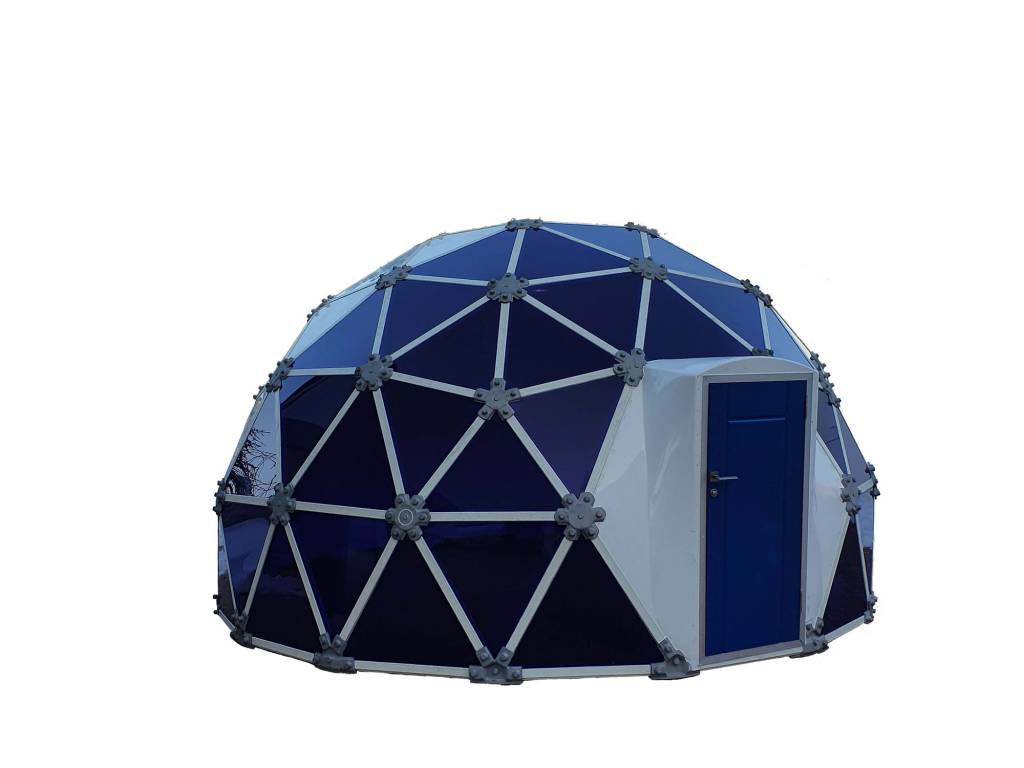
Earth attempt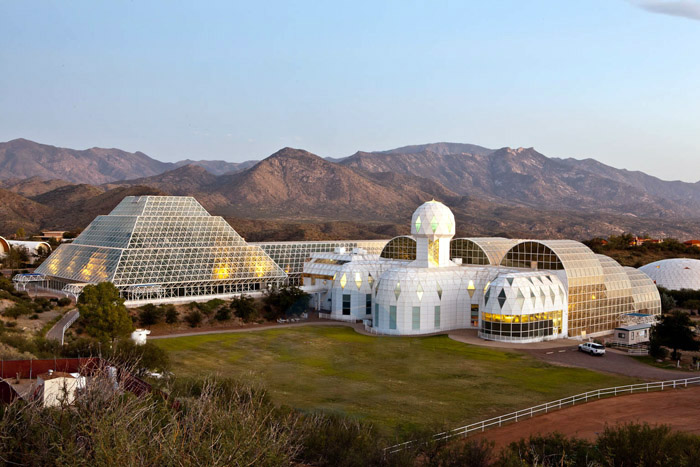
#646 Re: Meta New Mars » Housekeeping » 2025-12-29 08:50:52
Craterhab Technology (inflatable pressurized fabric domes)
https://www.mareekh.com/post/craterhab- … plications
https://www.mareekh.com/post/craterhab- … ltitude-mi
Craterhab is a concept for large, inflatable, pressurized dome habitats for humans on Mars, designed by Mareekh Dynamics, utilizing small Martian craters for structural support and volume, featuring a hexagonal framework, and incorporating an Active Integrated Radiation Shield (AIRS) to protect against space radiation, aiming for economical and practical settlement.
Key Features of Craterhab Technology:
Location: Built over small craters (50-500m diameter) to use the rim for anchoring and the crater's depth for extra space, reducing material needs.
Structure: A hemi-ellipsoid dome with a strong hexagonal skeletal framework, made from advanced fabrics.
Radiation Shielding: Includes an integrated, powered "Active Integrated Radiation Shield" (AIRS) within the fabric, potentially removing the need for heavy regolith shielding.
Cost-Effective: Designed to be manufactured and tested on Earth, reducing construction complexity and cost for Mars missions.
Versatile: Can also be built on flat surfaces or other planetary bodies like the Moon.
Developer:
Mareekh Dynamics: An organization that has patented this technology, focusing on practical, low-cost solutions for Martian habitation.
Significance:
Offers a potential solution for large-scale, safe, and sustainable human habitats on Mars, moving beyond cramped capsules or deep tunnels.
Emphasizes In-Situ Resource Utilization (ISRU) principles for long-term surviva
#647 Re: Exploration to Settlement Creation » WIKI Designing Mars equipment garage » 2025-12-29 08:40:10
#648 Re: Exploration to Settlement Creation » WIKI Constructing things on Mars equipment needs » 2025-12-29 08:39:51
#649 Re: Human missions » Mars Insitu Fuels made from atmosphere, regolith, water » 2025-12-29 08:39:29
IN-SITU RESOURCE UTILIZATION GAP ASSESSMENT REPORT
CO and O2 as a fuel is also being considered for a new form of Diesel engine for mars.
#650 Exploration to Settlement Creation » WIKI Mars structure heating requirements » 2025-12-29 07:15:57
- SpaceNut
- Replies: 7
Not a Discussion topic
old title Dome heating requirements
We will be on a very cold place when we live inside the 200m diameter by approximate 120m tall parabolic dome that we will build a small settlement within capable of provide for a permanent stay on mars once fully outfitted. The piled regolith gives 2 things with the activity in radiation protection but also insulation from the cold mars.
We have humidity, scrubbing of internal air, waste management, water creation, fuel and air to breath and so many more things.
AI generated content for the questions
Calculating the exact heating wattage for a dome on Mars requires detailed engineering specifications for the dome's construction materials and internal environment, but a rough estimate based on available data suggests the heating load would be tens to hundreds of megawatts (MW), primarily due to extreme heat loss.
The key factors that make heating a challenge on Mars are: Extreme temperature difference: The average temperature on Mars is around -63°C (-82°F), with nighttime temperatures plummeting to -73°C (-100°F) or lower. Maintaining a comfortable internal temperature (e.g., 20°C or 68°F) would require a temperature differential of over 80-90°C, leading to significant heat flow out of the dome.
Minimal atmospheric insulation: The Martian atmosphere is extremely thin, about 0.6% of Earth's atmospheric pressure, and composed mostly of carbon dioxide. This provides virtually no insulating "thermal blanket," allowing heat to dissipate rapidly into space.
High heat loss: The thin atmosphere combined with the low thermal conductivity of Martian soil (which acts as a good insulator for buried sections, but means heat loss to the air is a major concern for exposed surfaces) means that any exposed surface will lose heat very quickly through a combination of convection (minimal but present) and significant radiative transfer.
Estimated Heat Loss Calculation (Conceptual) Engineers on forums and in research have made preliminary calculations based on typical construction methods and Martian conditions: One such estimate for a 150m diameter, 75m tall dome (a similar scale to yours) with a 6cm thick glass shield (an R-value of ~0.06 m²K/W) suggests a heat flux of around 2,667 W/m² during a winter night.For your 200m diameter dome, the exposed surface area would be significant (the surface area of a 200m diameter hemisphere is \(\approx 62,800\,\text{m}^{2}\)).Multiplying the area by the heat flux gives a massive heat loss in the range of 100 MW or more.
This energy demand is enormous and highlights the need for: Exceptional insulation materials (far better than a single layer of glass).Potentially burying large portions of the habitat to use the regolith as insulation.Integration of life support systems, computing, and other activities as internal heat sources to recover as much thermal energy as possible.Robust, high-efficiency power sources on Mars to meet this demand
The wattage required to heat a Mars dome depends heavily on internal temperature requirements, the specific thermal properties of the regolith, and the Mars environment. Using standard engineering formulas and typical Mars regolith properties, the estimated heating wattage for a 200m diameter, 120m tall dome with a 10m regolith barrier is likely to be in the range of several hundred kilowatts (kW) to over a megawatt (MW) to counteract heat loss.
This calculation involves several key factors:
Heat Loss Formula: The basic principle for conductive heat loss is given by Fourier's law: \(Q=(\frac{k}{t})*A*(T_{inside}-T_{outside})\).\(Q\) is the rate of heat transfer (Watts).\(k\) is the thermal conductivity of the material.\(t\) is the thickness of the insulation.\(A\) is the surface area.\(T_{inside}\) and \(T_{outside}\) are the internal and external temperatures.Key Parameters:Dome Surface Area: A dome of this size has a significant surface area exposed to the Martian environment.Thermal Conductivity (\(k\)): Martian regolith is a poor thermal conductor, with an average conductivity around 0.039 W m⁻¹ K⁻¹ in the shallow subsurface. This low conductivity is a major advantage for insulation.
Temperature Difference: Mars' surface temperatures vary widely, from around -153°C to 20°C (-225°F to 70°F). The required internal temperature for human habitation would likely be around 20°C (68°F). The external temperature would vary seasonally and daily, requiring the heating system to handle a large temperature differential, especially during Martian night and winter.
Other Factors: The presence of a CO₂ atmosphere (which increases conductivity slightly compared to a vacuum), internal air pressure, and potential ground ice or salt cementation can affect the effective thermal properties.
Estimated Wattage:
One conceptual design for a 250m diameter Mars habitat (Craterhab) lists a power input of 116 kW, though the exact shielding and internal conditions are not specified. The 10m thick regolith provides excellent insulation, but the sheer surface area of a 200m dome results in a substantial total heat loss that needs constant heating to counteract.A full engineering calculation with specific \(T_{inside}\) and minimum \(T_{outside}\) values is needed for a precise figure. The required wattage would represent a major power demand for the habitat
response after adding in waste heat from a 40 kilowatt reactor
The 40-kilowatt (kW) reactor produces a total thermal output (waste heat plus useful power) that can be harnessed. A 40 kWe (kilowatt-electric) reactor designed for Mars surface power would actually produce around 250 kW of thermal energy as waste heat, which is more than sufficient to heat the massive regolith barrier. The amount of wattage required for the regolith barrier depends entirely on the desired internal temperature of the habitat and the external Martian environmental conditions, but the available waste heat from the reactor is a substantial 250 kW.
Available Waste Heat A nuclear reactor generating 40 kWe (kilowatts of electricity) has a thermal efficiency of roughly 15-20%. Therefore, the total heat produced (\(Q_{total}\)) is significantly higher than the electrical output.
The waste heat (\(Q_{waste}\)) can be estimated as the difference between total thermal power and electrical power: Total Thermal Power: Approximately 250 kWth (kilowatts thermal).
Electrical Output: 40 kWe.Waste Heat Available: \(\approx \) 210 kW (250 kW - 40 kW). This 210 kW of heat can be passively transferred via heat pipes to the surrounding regolith. Heating Requirements & Thermal Properties The need for heating is to counteract heat loss to the extremely cold Martian environment.
Average Martian Temperature: The average surface temperature is around -63°C (210 K) but can plummet to -140°C at the poles.
Regolith Thermal Conductivity:
Martian regolith is a poor thermal conductor, with an average conductivity of approximately 0.039 W/(m·K). This low conductivity provides natural insulation. Given the immense size of the structure (200m diameter, 120m tall dome with a 10m thick barrier), the massive volume of regolith will have significant thermal mass and excellent insulating properties. The low thermal conductivity means that heat loss to the outside environment would be slow.Conclusion
The 210 kW of available waste heat from the 40 kWe nuclear reactor is ample to warm the regolith radiation barrier and likely the habitat itself, potentially even requiring a dedicated heat rejection system (radiator panels) to prevent overheating if not all the waste heat is needed for the habitat's thermal management. The primary engineering challenge would be efficiently distributing the heat throughout the large volume of the regolith barrier as needed for thermal control
I am sure Caliban can confirm this to be close to what we need and could do.
The greenhouse will add to this baseline requirement.
Massive Mars Greenhouse Effect Domes Would Heat Themselves
Talks to surface glass greenhouse structures and not really the dome we are planning.