New Mars Forums
You are not logged in.
- Topics: Active | Unanswered
Announcement
#51 Re: Not So Free Chat » Politics » 2026-02-02 12:00:32
RobertDyck,
I realize you are emotionally invested in your candidate for President, but seriously it’s time toopen your eyes.
You want your emotions validated. You came to the wrong place for that. Other people are allowed to have opinions which do not reflect your own. That doesn't make them "totally wrong" and you "totally right".
President Trump is Bill Clinton 2.0. He's a 1990s Democrat who has adopted or co-opted "good for the goose, good for the gander" policies that are anathema to people who want special treatment.
Take the medicine and quit complaining about the taste.
Even the Russians laughed at America for electing Trump a second time. The woman who heads RT News (formerly Russia Today) said Americans have an attention span of a goldfish.
Do you think I care about what RT News thinks of President Trump?
You clearly do, so tell us why that is.
As for “child rapists”, the only one you need to concern yourself with is named Danald J. Trump. There are already pictures released from the Epstein files. How many times has Trump appeared in the Epstein files?
Leftists don't care about children and never have, unless they can find some way to exploit them for political gain. If there was any tangential evidence of criminality on President Trump's part, every Democrat in America would've used it against him already. To quote one of my favorite leftist FBI Agents, "There's no there there."
Yes, the woke people need to be stopped.
Nobody on the left is ever going to do that. That's a major part of why we President Trump was re-elected. Every opportunity was presented to stop doubling and tripling down on pure insanity, but they refused to stop. Once Democrats become entranced with their latest bad idea, they never let go of it until long after it's apparent to everyone else that the idea is a failure.
Yes, Obama created more regulations than any President. Obama hired academics who created regulation based on ideology, not anything practical.
The only personalities involved in left wing politics at this point are activists, community organizers, and self-loathing academics who have been lost in their luxury communism beliefs for so long that they forgot what kitchen table economics is like for the other 90% of the people living in America. The Democrats who do get elected are "give us all of your money so we can redistribute it to ourselves" shysters who never fail to make life worse for the people they don't feel they serve, because they're too busy serving themselves.
Yes, the damage must be corrected. But two wrongs do not make a right.
Damage correction means different things to different people.
Who could replace the Vice President? Choosing a Democrat is not going to happen. JD Vance is worse than Trump.
Both President Trump and Vice President Vance were Democrats who became disillusioned with the wholesale destruction of the American economy and family that Democrats inflicted upon the people they no longer serve.
Vance wants to treat the Constitution as toilet paper.
When Democrats in President Biden's administration were rolling out the red carpet for illegal alien rapists and murderers, you were completely silent on the matter. Your credibility with anyone who is not a leftist, on matters pertaining to the law, is starting at zero.
If you expect me to hear you out, then you'd best get on with the process of posting one of your typical whiny rants about all the illegal and destructive things the Democrat Party has done to Americans in pursuit of their luxury communism dystopia. I'm going to respond to it like any typical liberal, meaning I'm going to respond the way you do, so I'm going to call you every name I can think of, I'm going to make emotional bad faith non-arguments that don't address your arguments, utterly refuse to acknowledge facts the way you do, and then tell you how wrong you are.
Alternatively, make a good faith argument supported by data, rather than your personal beliefs about the data, and we'll go from there.
#52 Not So Free Chat » Cost-Effective Credible National Defense » 2026-02-01 20:19:17
- kbd512
- Replies: 7
In the same theme as the topic I posted related to reestablishment of manufacturing competence, I think reestablishment of national defense competence is of equal importance. As strange as this concept may seem to some people, a credible national defense procurement and force structure strategy for a nation with limited defense funding does not automatically mean that their military forces are significantly less combat capable than a nation such as the United States of America, which has a functionally unlimited ability to spend money on its national defense. In many ways, unlimited budgets invite highly questionable procurement strategies because one functional knowledge domain which has consistently proven to be a weak point across virtually all military services is development and refinement of realistic Concept of Operations (CONOPS) for execution of fighting doctrine and usage of defense assets and personnel.
Bright shining examples of this include employment of autonomous systems and beyond visual range (BVR) guided missile intercepts of enemy bombers, fighters, and missiles, many decades before any technology was mostly ready to do this with a better that 50/50 chance of success when all training and operational procedures were followed. An entire fighting doctrine was built around the false belief that all air combat would be conducted at extended ranges and dogfighting was therefore irrelevant because it would never happen. At the start, appropriate training to employ this then-new fighting doctrine in a realistic manner was never provided. The problem was so acute that fighter weapon schools were established to teach employment of weapon systems to both air and ground crews. The first missiles using tube-based electronics were so delicate that normal handling caused operational issues, to the point that a pilot squeezing the trigger was not even guaranteed to see the missile leap off the launch rail, much less guide to the target, or the warhead detonate when passing within lethal distance. Initial work began in the 1940s, but until the solid state electronics and improved seekers of the 1980s, merely having a chance at a successful engagement was almost entirely a result of the pilot positioning his aircraft and only taking missile shots from a near-ideal positions for the missiles to execute the intercept.
Needless to say, all these significant limitations did not describe typical positional advantage achievable during mock fighting, much less actual combat. In real air combat, prior to the improved generation of weapons fielded in the 1980s, all BVR missile shots had less than a 10% chance of intercepting their targets. All military forces which employed BVR radar-guided missiles in air combat quickly learned that it was a very expensive luxury capability, truly fantastic when it worked, which was not very often, but in no way could it assure the outcome of air combat engagements. An aware target would generally defeat BVR missiles fired at them, whether from the ground or other aircraft. Hundreds of billions of dollars were devoted to this technology across dozens of nations using fighter jets and air defense systems using air search radars and radar-guided BVR missiles. It took 40 years of development work before the odds of a successful intercept were better than a coin toss, because the tech simply wasn't ready to meet conceptual expectations of how it would be used. Worse than that, far too little realistic training and testing was conducted to "know" that what the military wanted to achieve wasn't even possible, let alone practical, absent dramatic improvements to computers, sensors, and institutionalized knowledge from continuous training for development and refinement of air combat fighting doctrine. There was either a refusal to accept the limitations or a lack of general awareness amongst people in development and procurement regarding realistic expectations for the weapon systems they were purchasing, with the anticipation of acquiring all-weather BVR radar-guided air intercept capabilities. In other words, everyone was heavily relying upon something to "just work as intended" that was in no way ready to do so.
We see AI-enhanced combat drones showing the same technological readiness limitations today. They look brilliant for a few moments, then do something completely ridiculous that requires human operator intervention, else they crash or otherwise fail to complete their assigned missions. While everyone is breathlessly proclaiming that combat drones are "the future of all warfare", we should probably use all historical military experience with development and employment of BVR radar-guided missiles as a very pointed "warning order" related to how relevant and effectual these AI-enhanced combat drones truly would be, if any nation relies upon them to "deliver victory" in the short term. In another 10 to 20 years, they'll probably complete missions successfully more often than not. Everything I've seen indicates they're a very promising future technology, but in no way ready for combat against a peer level adversary. A shrewd national defense strategist with a budget to adhere to would continue earnest AI combat drone and weapons development while refraining from making any large purchase orders for technologies that simply are not ready for combat.
Any budget-limited nation which wants to retain competitive military capabilities must be very shrewd about when and where it chooses to purchase or outsource procurement of systems with substantial acquisition and sustainment costs. There's no faster way to handicap your military than to spend large sums of money on doctrinally-disconnected "new capabilities" that you cannot capitalize on. The US military has proven highly susceptible to this problem. Most people would view purchase of a BVR radar guided missile without airframes equipped with powerful air search radars as a pointless waste of money, for example. AI-enhanced combat drones using today's tech would be similarly encumbered.
We'll first highlight what I consider to be non-negotiable defense systems, then explain how the associated core combat capabilities represented by those systems, or functionally equivalent capabilities, can be acquired without bankrupting a modern industrialized nation.
I. Artillery
This can include anything from 105mm or 155mm gun-launched shells, to artillery rockets, to ballistic missiles, to long range loitering munitions like the Iranian Shahed-136 drones. Modern 155mm gun-based artillery systems have become so expensive to purchase and maintain that it might be cheaper to build drones to carry those 155mm artillery shell-sized warheads to their targets. The difference is in marginal cost per successful engagement, which will be higher with a drone or rocket-based artillery systems than it is with gun-based artillery systems. The support infrastructure for drones vs cannons is also different, not eliminated. Drones and rockets / missile artillery require physically larger and more expensive vehicles to deploy and maintain them.
M777 towed howitzers have an initial purchase price of about $5M. The cost to fire the unguided / unassisted shells is fairly low, at around $3K per shell. If your loitering munitions cost around $25K per weapon to mass produce, then you can procure around 200 munitions for the same cost as the howitzer itself. Howitzer crews don't materialize out of thin air, either, which means an entire training and logistics pipeline is required to continue to have trained artillery operators and serviceable guns. As of today, drones still require operators and maintainers. If the total number of required attacks is low and the chance of success is high, there will be some kind of inflection point where beyond a certain number of munitions fired off to attack the enemy, conventional artillery makes more economic sense than drones / loitering munitions or artillery rockets / guided missiles. At the same time, long range drones like Shahed can provide the range to conduct deep strikes that far more expensive missile-based artillery systems would otherwise be required to execute. Shaheds are much slower than missile-based systems, but the number of attack opportunities is much greater because per-unit cost is far lower than that of ballistic weapons.
II. Integrated Air Defense Systems
The core of any modern integrated air defense system is a networked system of surveillance / tracking / missile mid-course guidance radars. These long range / high power radars are inevitably expensive, but vital to air defense. If there is no awareness of threats posed by incoming enemy missiles and aircraft, then there is no possibility of intercepting them.
There are 4 categories of air defense interceptor missiles:
hypersonic / ballistic missile and nuclear warhead threats - THAAD / SM3
long range high capability radar guided interceptors - Patriot / SM6
medium range radar guided - ESSM / NASAMS
short range infrared guided - Sidewinder / IRIS / MICA derivatives
man portable air defense systems - Stinger / Starstreak / Mistral
There are 3 categories of air defense guns:
35-76mm autocannons (some of these now have data-linked self-guided shells as ammo options)
20-30mm caliber autocannons (close-in weapon systems used to put a "Wall of Lead" in front of missiles or drones)
12.7-15mm heavy machine guns (typically used to kill drones and helicopters)
It's unreasonable to expect most nations to have the resources to locally design and produce their own version of THAAD or Patriot. As sophisticated as medium range radar guided missiles have become, even those may be a bridge too far. If you cannot produce your own IR guided missiles and autocannons, then you need to fix that.
The inability to purchase the components to create active radar guided missiles does not mean BVR radar-directed intercepts are impossible to effect. A missile's mid-course guidance is still provided by its launching platform, which means greatly improved modern IR seekers can still be used for terminal guidance to targets without indigenous or even acquired miniaturized onboard missile radars and guidance computers. Against stealthy targets, IR seekers typically out-range onboard missile radars, often by a considerable margin. The radar and guidance computer technology items represent a disproportionate percentage of a BVR radar-guided missile's total cost. A drastically lower cost option is use of modern IR seekers, which are also nearly impossible to distract or confuse because they cannot as easily be "jammed", unlike radar-based systems.
III. Off-Road Mobile Armored Transport Vehicles
The ability to effectively transport soldiers, food, water, equipment, fuel, and weapon systems around the battlefield has been a military requirement since armies existed. While the means of transport have varied greatly over time, all modern armies use motorized vehicles. Parts of civil vehicles can be adapted to battlefield use, or at least benefit from a domestic automotive industry that nominally makes vehicles for civil on-road and off-road use. Significant procurement cost increases tend to be driven by bespoke vs off-the-shelf solutions where the technology item in question is not shared with any civil motorized vehicle.
Tank engines used to be then-common automotive engines with bespoke transmissions / gearboxes. When there was no difference at all between a tank engine and a semi truck engine, the cost of the engine development and procurement was nominal. It's not written in stone anywhere that a tank absolutely requires a bespoke engine design which is not shared with any other civil vehicle. Unsustainable weight increases created the requirement for specialized tank engines. Advanced armor materials and uncrewed turrets with autoloaders will help return armored vehicle weights to the realm of sanity, as will resisting the temptation to load up every armored vehicle with "some of everything". A tank was originally intended to provide direct fire support to infantry assaults using a large caliber highly mobile cannon. We've since added anti-tank missiles, surface-to-air missiles, anti-drone machine guns or light cannons, active protection systems, lasers, and an array of sensors that would make Cold War era fighter pilots jealous.
It's still possible to cap vehicle weights at 40t (the GVWR of a fully loaded semi-truck) by using single crew compartment tank designs (uncrewed turrets) with adequate 360 degree protection to assure crew survival while accepting vehicle losses from modern anti-tank weapons. Even if all those other systems are added to armored vehicles, increasing their weight and cost to impractical figures, losses to enemy anti-tank weapons remain inevitable. There is still no active protection system against anti-tank mines, for example. That doesn't mean we should attempt to add one to the tank, either. There's no point to "gold plating" a direct fire artillery piece which immediately becomes the target of choice for everyone else on the battlefield. Save the crew and sacrifice the vehicle. You're going to do that irrespective of how many additional expensive protection systems you burden the tank with. If losing a tank or other armored fighting vehicle was not a multi-million dollar loss involving a collection of difficult-to-replace systems-based capabilities, then your military can afford to "eat" the vehicle loss and make more replacement vehicles. If you still require those other weapons and sensors, then put them in separate specialist vehicles instead of attempting to transform every armored vehicle into the land-based equivalent of a tactical fighter jet.
Combined arms maneuver warfare provides complementary protection of disparate forces by mixing the capabilities of tanks, artillery, other armored fighting vehicles armed with autocannons and missiles, infantry, air defense systems, and aircraft to achieve outcomes not possible using any specific type of weapon system alone. As important as establishing air superiority is to successful combat operations, aircraft alone cannot take ground from the enemy and hold it. Coordination of movements and sharing of positional data is far more effective than trying to use singular assets to operate in a vacuum.
Armored off-road capable motorized vehicles is the one category with the widest possible array of affordable, practical, and survivable solutions. It's also not clear that one vehicle type provides any kind of insurmountable technological advantage over another type. There is such a thing as appropriateness to task, but that's as far as it goes.
IV. Air Forces and Air Assault Vehicles
There's a persistent yet false interpretation of what turbine engines actually permitted military aircraft to do. Achieving faster flight speeds is the colloquially stated reason for their development, and turbine powered aircraft typically fly faster than piston engine aircraft. It seems obvious, and is in fact used that way by most aircraft designers, but that explanation is wrong from an engineering perspective. Simply put, turbine engines offered aircraft designers greater payload-to-distance by reducing the engine mass to deliver a given amount of thrust. Delivering more power per unit of engine weight allowed aircraft designers to design aircraft to choose between faster flight speeds or pushing more payload through the air. For military purposes, this significant design advantage was most frequently used to make aircraft fly faster.
Unfortunately, the instant you demand that an aircraft to fly at high subsonic speeds or faster, you run into a basic flight physics challenge. There's a very steep rise in aerodynamic drag which dictates airframe shaping and minimum wing loading to minimize lift-induced drag at higher flight speeds. In turn, wing loading dictates minimum takeoff and landing speeds. There's a very narrow range of reasonably efficient cruise flight speeds for turbofan and turbojet engines, coupled with an extreme cost increase.
It would be fair to say that manufacturing and maintaining turboprop and turboshaft engines, which are the least expensive types of turbine aircraft engines, are at least ten times more costly than equivalently powerful piston engines. Turbofan and turbojet engines are significantly more costly to make and operate than equivalently powerful turboprop engines. If you're not flying at high subsonic speeds at altitudes above 20,000ft or so, then even high-bypass turbofan engines tend to be horrendously inefficient, relative to piston engines, for the power generated. Propellers are more efficient "wings" than the much smaller fan blade "wings" in a turbofan or turbojet engine, until you reach a certain speed at higher altitudes. You're not "free" to travel at higher speeds and altitudes, you're effectively limited to exclusively operating in that narrowly defined flight regime because any deviation severely affects range, speed, and acceleration performance.
A modern computer-controlled 550hp spark-ignited and liquid-cooled automotive piston engine will cost about $25,000. A 550hp PT-6A turboprop engine costs around $1M, so it's 40 times more expensive for the same power generated. The PT-6A is about half the weight of the automotive engine, but it's fuel burn rate is significantly greater than the piston engine, especially at lower altitudes. Inside of 4 hours of flight time using onboard fuel, and perhaps as little as 2 hours at lower altitudes, the turbine engine's apparent weight advantage over the piston engine is gone. It does not matter to flight physics at all whether an airframe must carry additional fuel weight or engine weight to remain airborne. However, a significant change in fuel burn rate will at least partially dictate cost per flight hour. At 33,000ft, the PT-6A is only generating roughly 1/3rd of its sea level power output because its compressor section operates on ambient atmospheric pressure and must be driven by hot gas expansion through the expansion section. An appropriately turbocharged and intercooled piston engine, on the other hand, can maintain 100% of sea level power output at altitudes up to 36,000ft, which was achieved during WWII.
Early avionics, sensors, and weapons were very large and heavy because their electronics were large and heavy. 2025 electronics have been miniaturized to the point that a smart phone has more than sufficient computing power to operate every system and sensor aboard combat aircraft. The precision of modern missiles almost entirely negates the requirement for a massive warhead to eliminate a target. Modern composite airframe materials are meaningfully lighter than Aluminum or steel for the same strength and stiffness provided. The net effect has been to dramatically reduce the mass of sensors and weapons required to find, fix, and eliminate a target, thus the airframe they're attached to. It would be fair to say that piston engine aircraft could carry most of the sensors and weapon systems in a practical manner, at greatly reduced cost relative to any turbine engine aircraft, while flying at the same speeds that are typical of "best maneuvering speeds" for fighter jets.
Whenever fighter jets slow down to turn well enough to evade incoming missiles, best maneuvering speeds range between 350 and 550mph, with most tactical fighter jets exhibiting best maneuvering characteristics between 400 and 500mph. Oddly enough, we developed piston engine aircraft that could cruise between 400 and 450mph, at the same altitudes where modern fighter jets typically operate at (25,000 to 35,000ft), during WWII. The significant increase in cruising speeds of fighter jets does not alter flight physics to enable them to turn better at high subsonic or supersonic speeds, nor "get away with" cruising at high subsonic speeds without burning fuel at a much faster rate. The closest approximation to how modern tactical fighter jets actually operate is by economically cruising at speeds functionally unattainable by piston engine fighters, only to revert back to WWII flight speeds during evasive maneuvers. Even if some fighter jets are technically or functionally capable of out-running a missile, in actual practice air intercept missiles are at least twice as fast as the fighter jets they're fired at. In simple terms, you're never out-running a rocket engine missile in either a turbine or piston engine fighter, but if you can maneuver well, then you can use their speed against them by turning inside of them with a correctly timed evasive maneuver.
If you no longer require enormous carrying capacity provided by more powerful but drastically more expensive and difficult to produce turbine engines, per unit of engine weight, and you'll always need to evade inbound missiles and occasionally dogfight with other fighter type aircraft at flight speeds functionally identical to WWII era piston engine aircraft, is there still an insurmountable advantage offered by turbine engine aircraft and higher flight speeds?
If your air force can affordably field multiple squadrons of piston engine aircraft with identical sensor and weapons capabilities as any other modern tactical fighter jet, can a military that exclusively operates far fewer numbers of turbine engine fighter jets ever win a war of attrition, or do they get to shoot down a handful of your far less costly piston engine fighters, and then still lose the war on the first day after your remaining piston engine fighters bomb all of their much fancier fighter jets on the ground?
The F-15 is a fine flying and fighting machine, clearly much more capable than the P-51s that came before it, but it's also a $100M machine that cannot physically be in 100 different places at the same time. If we pit 100 P-51s against 1 F-15, then the P-51s still win every time, even if they loose 100% of their dogfights against F-15s. The F-15 still requires weapons, which means it still has to land somewhere to rearm. Let's assert that our lone F-15 can shoot down an entire squadron of P-51s. He'll be an "ace" for every bit of a half day, because the remaining 7 squadrons of P-51s will then proceed to strafe or bomb his F-15 on the ground. It no longer matters how individually capable the F-15 is. The problem it's run into is purely a numbers game, and the F-15 loses that fight every single time.
The US Air Force ran an entire series of war games under the moniker "Project J-CATCH" during the 1970s and 1980s using F-4s / F-15s / A-7s / A-10s to intercept helicopter gunships which could fly no faster than 200mph. Using BVR missile shots, the kill ratio in favor of the F-15s was 2.9:1. F-4s attempted to merge with and dogfight the gunships, using Sidewinders and Vulcan autocannons. At that point, both the F-4s and later the F-15s were killed as often or more often than they killed the gunships. WVR dogfights managed 0.7:1 to as high as 1:1 kill ratios in some instances. More maneuverable A-10s carrying minimal air-to-ground ordnance only achieved 1.3:1. The gunships were vulnerable to BVR missile shots because they initially had no radar warning receivers to let them know when they were being attacked. The most frequent problem reported by the fighter pilots who flew against the gunships was that gunships were difficult to find on radar and EO / IR sensors due to ground clutter. They were also much smaller than fighter jets, especially Huey Cobras, therefore difficult to visually acquire. The recommendation regarding combat tactics was that fighter jets should never attempt to dogfight a slower but more maneuverable opponents, because all the thrust and speed their engines could provide was insufficient to avoid 1:1 kill ratios, and to only engage them using BVR missiles when absolutely necessary. The conclusion reached was that fighter jets should use superior speed to avoid them altogether. This only works to a point. When those same opponents resolve to attack your airfield, then what?
MiG-19s are very maneuverable as fighter jets go, and able to turn inside a F-16 in a rate-fight, which is not easy to do. Several MiG-19s were lost attempting to shoot down A-1 Skyraiders during the Viet Nam War using IR guided missiles and cannon fire. The A-1s involved were laden with ordnance for use against ground targets, but had little difficulty turning inside the MiG-19s and hosing them down with 20mm cannon fire. The Vietnamese pilots attempted both high speed passes and maneuvering for positional advantage. Neither tactic proved effective against the A-1s when they were aware that they were being attacked. If A-1s were fabricated from composites to further reduce weight and increase maneuvering limits, and equipped with modern miniaturized air search radars, radar warning receivers, plus Sidewinder or Peregrine missiles, then attacking them using F-15s or F-16s or similar tactical fighter jets would most likely result in 1:1 kill/loss ratios at best. The problem, of course, is that a single F-15 or F-16 costs more than a squadron of A-1s, and a F-15 burns about as much fuel per hour as a squadron of A-1s.
During WWII, several nations made more piston engine fighters per month than the total number of modern fighter jets in existence. Fighter jets are awesome, and the little boy inside me still loves them to pieces, but my more rational adult brain tells me that they still cannot be in more places than we have flyable physical copies of them to fight with. Most of the time half of any given fighter jet squadron is down for maintenance. We don't have 100+ maintainers who work on 4-12 jets in a squadron because they work perfectly all of the time. You fly a fighter jet, something on it inevitably breaks, and then the rest of the day is spent diagnosing and fixing it. This is understood and accepted by people who have actually served in fighter squadrons in any capacity. If the jets are on the ground, then the maintainers are fixing whatever broke the last time they flew. There's also a major difference between flyable vs fully mission capable.
Many people remain completely convinced that speed alone confers an insurmountable technical advantage to turbojet / turbofan engine aircraft, despite all evidence to the contrary from actual and mock air combat engagements. The conclusion I reached is the one supported by my personal knowledge of flight physics from actually flying piston engine aircraft, my time spent supporting a carrier based squadron and air wing that flew combat missions over Afghanistan, and all available evidence collected over the decades on air combat tactics development to evaluate the limitations of jet powered tactical fighters flown against dissimilar adversaries. Speed matters when getting to a target area. Maneuverability then determines whether or not you come home alive. There are no free lunches in aeronautical engineering, so if you design an airframe and engine combination to deliver fantastic speed then you necessarily give up some maneuverability. Balance is what we should strive for. If you already know that all real world fighting will occur at flight speeds readily achievable using piston engines, then truck loads of money can be saved on engines and airframes, then redirected towards more capable sensors and weapons. The sensors do the finding and the weapons do the killing, not the aircraft itself, unless we're talking about kamikazes.
You can spend unlimited money on faster airframes and more powerful engines, but doing so doesn't change fundamental flight physics related to economical cruise flight speeds nor the ability to maneuver well enough to evade incoming missiles or gain positional advantage. You can't engage a turbine powered aircraft in a vertical fight using a piston powered aircraft but that's about it. In the real world you still fight using the strengths of your aircraft. If you pair modern lightweight / compact sensors and weapons with modern high-output automotive piston engines and composite materials for airframes, then you'll be able to manufacture and maintain several squadrons worth of aircraft for the same cost as a single tactical fighter jet. You do not need to bankrupt your nation's air forces with bespoke turbine power plants and functionally unusable speed due to fuel burn rates.
The individual piston engine aircraft are less capable than a singular turbofan powered aircraft, but collectively they deliver vastly more usable combat capability by virtue of at least some of them being fully mission capable and by sheer numbers allowing them to overwhelm enemy air defenses.
#53 Re: Human missions » Risk mitigation priorities for crewed missions to mars » 2026-02-01 18:56:15
I think we've beaten the radiation problem to death.
There's a 6 month transit period where GCR exposure will be high, for the reason GW already mentioned. The maximum exposure is on-par with the annual radiation dose experienced by residents of Ramsar, Iran, over their entire lifetime, although the doses are not precisely equivalent because GCR is more energetic, and therefore more damaging, relativistic nuclei, mostly Protons with some heavier nuclei up to the weight of Iron or so. Once we get to the surface of Mars, regolith shielded structures provide adequate mitigation of all forms of radiation exposure. The same is true of lunar regolith. SPE / CME from the Sun, as GW also noted, absolutely can be a lethal event within minutes to hours of exposure. Fortunately, SPE / CME radiation is also very easy to shield against. Water or plastic works best for SPE / CME shielding, although any material containing Hydrogen has roughly the same molecular weight as the stream of Protons from the Sun or most GCR for that matter, thus elastic collisions between the Protons and Hydrogen-rich material can absorb all or most of the radiation dose.
SPE / CME / GCR exposure on the surface of Mars is significantly reduced because the planet itself blocks half of the potential dose. The Martian atmosphere, thin as it is, also provides substantial protection unless the SPE / CME / GCR Proton stream is almost directly overhead, which is where most of a habitation structure's regolith shielding needs to be to absorb the dose. If you build a structure in a natural depression or one created through excavation, then regolith is only required for overhead shielding.
#54 Re: Meta New Mars » kbd512 Postings » 2026-01-31 16:43:07
SpaceNut,
I agree that extensive site prep is a must. We are not going to send 1,000 colonists to Mars with no permanent place to live. Even after the structure is built, it must be stocked with locally grown food and locally acquired water. Furnishings, bedding, towels, toiletries, kitchenware, and clothing mills must also be present. Then and only then can we send more than a construction and maintenance crew.
#55 Re: Not So Free Chat » Politics » 2026-01-31 16:26:43
In their own words, these fanatical and violent leftists view federal law enforcement agents arresting illegal alien child rapists and murderers as "literal nazi gunmen". They call their home state of Minnesota a "battlefield". They claim that they are "at war" with our federal government. At least they now believe in our Second Amendment, which is "progressive" for them, I guess, except that they still don't accept the results of the last election, which was the American electorate collectively exercising their First Amendment rights. That means they still don't believe in "our democracy".
Most of these goobers are delusional "larpers" (live-action role players) who seem to think only their beliefs are "morally correct". In actual practice, they're cannon fodder for our home-grown communist revolutionary wannabes. To be perfectly clear with my leftist Americans, I know how important "larping" is to all of you. I know that dressing up in costumes and pretending to be someone else is an important part of your core identity. As a personal entertainment practice, I take no issue with this. However, if you "play dress up" as a soldier and then engage in violence against federal law enforcement agents, I can tell you as someone who has worn our nation's uniform that you will then be treated as "the enemy", because that is how you have chosen to present yourself to the rest of society. After you publicly state that is what you are, do not whine about being treated as what you claim you are.
Since none of y'all have ever picked up a real history book to know where "your socialist movement" (your brain-bowel movements to people who have studied history or lived in communist countries), you should know that the very first groups of people that the Russian and Chinese communists imprisoned and murdered after they seized power were the artists, actors, and other assorted misfits within their societies. That means the communists convincing you to toss yourselves into a meat grinder today will make you disappear soon after they seize power, because if you were successful in your revolution, then you're a threat to their power.
The Horst Wessel effect refers to the Nazi propaganda machine’s successful transformation of SA member Horst Wessel from an obscure stormtrooper into a revered martyr and mythic hero following his death in 1930. Joseph Goebbels utilized Wessel’s killing by communists to create a cult of personality, using his lyrics—the "Horst Wessel Lied"—as a national anthem to sanitize political violence and encourage absolute devotion to the Nazi movement.
Key elements of this propagandistic effect included:
Martyrdom Myth: Wessel was portrayed as a saintly, self-sacrificing figure, despite his actual life as a pimp and SA leader, transforming his sordid death into a foundational Nazi myth.
The leftist propagandists have already used mass media extensively to portray Alex Pretti, a violent street thug, as a self-sacrificing ICU nurse. They've even used AI-manipulated videos with ICE agents who had no heads to manipulate public perception of what happened.
Iconography and Cult: His grave became a shrine, and he was honored through films (e.g., Hans Westmar), biographies, and the renaming of places, such as Friedrichshain to Horst-Wessel-Stadt.
I stopped counting after seeing 2 dozen different styles of T-shirts making references to Alex Pretti and Renee Good. My personal favorites were "Be Good - Be Pretti" by Tee Public, and "I am Good and Pretti" from a store on Etsy. All the iconography seems to be saying, "be someone who assaults law enforcement officers". The unspoken part is that you're also choosing to be someone who gets shot in the streets after larping as a communist revolutionary foot soldier who has no clue or care that they're being manipulated like "meat puppets" by their leftist politicians- essentially, cannon fodder for their communist cause.
Symbolic Anthem: The song "Die Fahne hoch" (The Flag on High), which Wessel wrote, was elevated to the status of a co-national anthem, promoting the ideals of violence and loyalty to the Führer.
NPR - Bruce Springsteen releases anti-ICE protest song 'Streets of Minneapolis'
LarryLongTroubadour - Ballad of Alex Pretti by Larry Long
Not One More - A Song for Alex Pretti | The Midnight Republic
Justification for Violence: The narrative was used to rationalize SA retaliation against communists and solidify the party's image of aggressive bravery.
The leftist mass media, leftist political office holders, and the rank and file leftists have all used the deaths of Renee Good and Alex Pretti as justification for further violence, but that justification process began long before either of those two cretins met their ends. The moment the massive fraud scheme was revealed to the public, it was necessary for Minnesota Democrats to avert attention away from their criminal enterprise by using violence against federal law enforcement.
#56 Re: Not So Free Chat » Politics » 2026-01-31 14:02:19
offtherock,
its very questionable ethically to be doxing some private information here about somebody.
Only publicly released information provided by Alex Falconer in a YouTube video has been posted here:
MNHouseinfo - Informational interview with Rep.-elect Alex Falconer (DFL-Eden Prairie)
we have no way of knowing or understanding if this should really be here.
Alex Falconer publicly claims he's running a "resistance network" against ICE
I'm going to take Alex Falconer at his word. You are free to fabricate an entirely fictitious alternate reality in your mind.
its lawless
If you think it's "lawful" for members of the Minnesota state government to post real-time information about the locations of ICE agents who are in the process of executing arrest warrants for illegal alien child rapists and murderers, then there is no definition of "lawlessness" that you and I will agree upon.
#57 Re: Not So Free Chat » Politics » 2026-01-31 02:52:57
clark,
Here's a video showing the behavior of your perfect little angel towards ICE a few days before he was shot:
Associated Press - New video shows Alex Pretti in scuffle with federal officers days before his death
These two goobers were caught using Signal Chat to provide real time locations of ICE agents to street thugs like Alex Pretti:
Goober #1:
Goober #2:
#58 Re: Not So Free Chat » Politics » 2026-01-31 01:32:01
clark,
But “they’re trained to fight back” is not a moral blank check, and it’s not even the standard we claim to hold law enforcement to.
If people like Alex Pretti cared at all about morality, they would not assault law enforcement officers in the process of executing an arrest warrant on a child rapist.
Officers aren’t trained to win gunfights as a first principle
If you don't win your gunfights first, then you don't get to apply any other principles.
And “just fight it in court” is a nice slogan until you remember that court is slow, expensive, unevenly accessible, and doesn’t resurrect people.
If Alex Pretti was kept in jail by the State of Minnesota after he assaulted two federal law enforcement officers and vandalized their vehicle 11 days before he was shot during his final assault against federal law enforcement officers, then he'd most likely still be alive today. That means he wouldn't need to be resurrected because he'd still be sitting in a jail cell where he belongs.
Alex Pretti was released because the State of Minnesota and the City of Minneapolis are run by criminals who clearly don't care at all about the people they're supposed to protect and serve, unless Minnesota Democrats now exclusively protect and serve thieves, rapists, and murderers. They keep paying and encouraging their hooligans to fight with federal law enforcement officers, then bailing them out after they get arrested for assaulting federal law enforcement officers, so there's no other logical conclusion to reach.
The signal chat excerpts between Walz, Frey, and their street thugs indicate the violence they're perpetrating is intended to distract attention away from the fact that Walz and Frey were active participants in an organized crime ring which fraudulently disbursed about ten billion dollars worth of Medicaid funding to people who only provided care to their wallets. After having been caught stealing from the federal government, they then thought to themselves, let's add incitement to violence, funding violent organized criminal activities against federal law enforcement, and insurrection to our list of federal charges.
The legal system is exactly why we demand higher restraint from the state: because the government gets more authority, more weapons, more protection, and more second chances than the average person.
The duty to exercise restraint on the part of the state doesn't mean its citizenry are allowed to actively seek out federal law enforcement officers to assault to avert attention away from the criminal activities of their local and state government officials. Thieves like Walz and Frey will always feel entitled to what other people have, but that doesn't mean that they are.
But the state doesn’t get to respond like a rival gang
Gang members randomly attack other people who they believe are part of rival gangs. Whether they are or not is irrelevant to them. This is precisely what the left does, and why they eventually lose public support. If any law enforcement agency starts doing that, then we're in agreement that they're acting like a gang. That's not what happened here, but you are welcome to go through as many anti-logic loops in your head as are required to believe otherwise.
The whole point of professional policing is that the people with the badges are supposed to be the adults in the room—especially when someone else is acting like an idiot.
I'm disappointed that you, a leftist, refuse to support Alex Pretti's right to choose between a court battle and a gun battle. Our professional federal officers worked with Alex Pretti, a professional local street thug and idiot, to save him and the tax paying general public from a slow, expensive, and unevenly accessible criminal trial, which would most likely have resulted in a slow and expensive prison sentence.
WTF is wrong with expecting that we can complain about our government and how our government operates without the fear of being shot down dead in the street like a dog?
You don't "complain about your government" by chasing after federal law enforcement officers and assaulting them in the streets while they're in the process of arresting child rapists. The question you're really asking is, "Why isn't our federal government playing our stupid games by our stupid rules?" The answer is simple and direct. When the left refuses to interact civilly with people who were previously behaving in a civil manner towards them, they only have themselves to blame.
Looks like the leftist communists didn't need to vote; Trump boot lickers are more than happy to grab their ankles while cosplaying a day on Epstein's island.
Our leftist communists are still pretending that laws don't exist if they disagree with them. Everyone else seems to accept that this is not how the law works.
#59 Re: Meta New Mars » kbd512 Postings » 2026-01-29 02:08:49
SpaceNut,
The figures I quoted for the life support equipment were provided on the basis of 4 permanent crew members. If there's something they neglected to include, then I don't know about it and would need to reassess, but my assumption is that what NASA choose to make public is "totality of testing results". Broadly speaking, each new life support system they field is a clear generational improvement upon what it replaces or augments. The CAMRAS and IWP systems tested aboard ISS were, in point of fact, sized to support 4 crew members per system, quite possibly because they were ultimately developed to be used aboard Orion, which was designed to support extended duration lunar missions with 4 crew members, and it even said that in the documentation provided by NASA.
Do they have some excess capacity built into them?
Yes, by deliberate design, but the performance margins are meager. However, they were intended to provide long duration life support to 4 physically active crew members. If there are 2 children and 1 woman per physically "more active" man, then performance margins are adequate. Women and children typically consume less oxygen and drinking water than a full grown man because their body mass is less than that of a full grown man. We would not expect them to perform dangerous and arduous EVA construction type activities as a general rule, either.
Starship V1 304L Major Component Masses
3 Bulkheads: 9939kg
19 full rings: 30799kg
1.42m tall bottom ring (77.64%): 1258.5kg
LOX Header tank: 632.6kg
Fairing: 8974kg
51,603kg - Starship V1 primary structure 304L stainless steel to work with
Starship V3 will provide modestly more metal than that, but we'll consider the excess "kerf"- lost to the fabrication processes.
37,050m of 30mm OD / 2mm wall thickness 304L tubing per Starship primary structure.
10 Starships provide 370,500m of tubing to work with.
Let's set the interior volume at 250,000m^3. I'm not going to worry about the individual housing idea for now. That was someone else's idea, so they can figure out the material and other requirements if they're truly interested in pursuing it.
The third figure / image in this Math Stack Exchange is the vessel shape I had in mind:
Why the principal curvature lines intersect in the sphere?
If you click on each image, you can see them in your browser's address bar, and the image file name I'm referring to is "rEMGS.gif".
For a "double toroid" 250,000m^3 interior volume structure, we shall approximate the structure as a pair of inflatable tori with an inner radius of 50m and an outer radius of 70.50385m, which provides an interior volume of 125,000.430m^3 and surface area of 24,385.748m^2 per torus. This is being done purely to determine, roughly speaking, how closely-space the external 304L tubular support structure can be.
Suppose we will use two layers of 300g/m^2 Vectran fabric, which we will fill with finely pulverized regolith- sort of like an enormous Hesco barrier, and the external stainless tubing will support the mass of this toroidal Hesco-type structure. We'll use the basalt tiles later after we figure out how to make those and where to source the material from. For now, this structure will be regolith scooped off the surface of the planet and poured into silicone-impregnated Vectran bags, and supported externally by stainless steel tubing to absorb the tensile loads from internal pressurization. The 304L tubing will be threaded through loops sewn into the exterior of the bags. This is a steel and regolith bag reinforced "pup tent" structure, for all intents and purposes.
48,771.496m^2 * 0.3kg/m^2 = 14,631kg of Vectran
We could bring 100,000kg of Vectran, if so required. The bottom line is that if all we need to do to obtain building materials is to scoop it off the ground, and possibly grind it up or remove the large rocks, we can manage to do that.
Martian regolith is 1,500-2,000kg/m^3.
Chris Stelter's article over at Selenian boondocks points out something that should be obvious about radiation protection on Mars, but isn't. The incident angle at which any SPE / CME / GCR radiation particles are received matters quite a lot, as it relates to how much shielding the atmosphere provides. Most of the required regolith protection is only spread across a 70 degree overhead arc for your habitat module, because the Martian atmosphere, thin as it is, dramatically reduces the required shielding thickness of the walls. The total dose per year is still substantial, in the range of 8 to 33 REM, and needs to be reduced to 5 REM per year.
If the habitat was located at the bottom of the Hellas Basin, then substantial additional shielding would be provided by both the walls of the crater and thicker atmosphere due to depth below MSL. Unfortunately, safe touchdown there is dubious at best. The radiation protection advantage is unlikely to offset the considerable danger to colonists associated with merely trying to land in terrain so rugged, plus the potential difficulties with site prep due to terrain features and the potential requirement to dig to considerable depth to reach the buried ice deposits there. It's tempting, but landing to the south of the rim of Korolev crater is likely to be much more conducive to a safe arrival, and there's an enormous ice deposit both in and surrounding that crater.
I agree with your AI that to make this colony truly productive, rather than a survival bunker, lots of additional power and equipment will be required. I'd like to keep the initial design work focused on building a habitat module for 1,000 colonists. Keeping 1,000 people alive and healthy on another planet is a monumental achievement unto itself.
#60 Re: Meta New Mars » kbd512 Postings » 2026-01-27 23:45:28
Well, here are some solid numbers to work with that come from actual testing aboard ISS and in NASA's labs:
Astronaut daily CO2 production is about 1kg per person and they consume 1 gallon of water per person.
Thermally-Regenerated 4-Bed Solid Amine CO2 Removal System with Air and Water Save Features (CAMRAS):
400W 120VAC constant power draw for 1 of 4 sequentially heated amine beds.
415W average / 526W peak 28VDC power draw for fans, pumps, and control electronics.
4.71kg of maximum demonstrated CO2 removal capacity per day aboard ISS over a 1,000 day test.
The system is therefore "sized" for 4 astronauts, or 1/250th of our colony's head count.
926W * 250 = 231,500W of constant power to support CO2 scrubbing for 1,000 colonists, with a 17.75% CO2 removal performance margin for degraded system operation.
Cumulative air mass vented to space over 1,000 days of operation: 16.1lbm, so 4,025lbm over 1,000 days for 1,000 colonists, which equates to 4.025lbm of required atmospheric replenishment per day 78% N2, 21% O2, and 1% Ar. I've no idea how to source the N2 yet, but the O2 can be provided by CO2 and the Martian atmosphere also contains 2.7% Nitrogen and 1.6% Argon by mass.
Cumulative water mass vented to space over 1,000 days of operation: 67.9lbm, so 16.9775lbm / 2.04 gallons per day for 1,000 people. The water save feature of CAMRAS is crucial to life support, otherwise 80.4lbm / 9.64 gallons per day would be lost for 1,000 colonists.
Ionomwer Water Processor (IWP) Assembly peak power draw: 195W
Urine Processor Assembly (UPA) active / standby power draw: 424W / 108W
Water Recovery System (WRS; UPA + IWP) time averaged power draw: 743Wh/hr
743W * 250 = 185,750W
ISS Waste Water Recovery Per Day: 34.34 gallons / 130L per day (98% recovery rate)
This implies that total water processing for 1,000 colonists will be 2,146.25 gallons per day.
Minimal Life Support Power Draw: 417,250W
That figure does not include fan-based air circulation / ventilation, waste heat removal, or more advanced life support functions such as hot showers and cooking / cleaning, merely the minimum CO2 scrubbing and waste water recovery to keep 1,000 people alive.
It would be reasonable to assume that 417,250W of power draw is ultimately dissipated as waste heat, which needs to be rejected to space via radiators. 1,000 colonists, all working about as hard as they could sustain for 1 hour, would generate just under 98,000W of waste heat.
The fan power to deliver 15 air changes per hour to a 144,000ft^3 / 4,078m^3 auditorium filled with 1,000 people is 36,000CFM, so 36,000CFM * 0.8W/CFM = 28,800W. This structure is approximately 31X larger, so we can probably get away with as few as 4 complete air changes per hour because it's so big. The smaller the interior volume of a structure relative to the number of people inside, the more air changes per hour are required to keep the air fresh. However, that still bumps our total wattage up to 59,520W. If we really want to be completely pedantic about this, then 892,800W is required to provide 15 air changes per hour for a 125,000m^3 internal volume structure. It'll be like living inside a wind tunnel, though, so perhaps that's a bit over-the-top.
3MW worth of power for 1,000 colonists is likely more than sufficient for basic life support functions, to include hot showers and interior lights, especially if we use some of that waste heat to warm up our frosty cold fresh water supply.
However...
After we include grow lights for crops, our power requirements increase considerably. Indoor food production requires 20-50W/ft^2, up to 60W/ft^2 for tomatoes / peppers / fruits. Indoor food farming as a general practice has an energy intensity of 850–1150 kWh/m^2/year.
Crop Yields, kcal Per Square Meter Per Year
Potatoes: 4,398
Corn: 3,039
Wheat: 1,581
Soybeans: 519
38.8kWh/kg is a rough industry average power consumption for indoor vertical farming.
A family of 4 supposedly needs 2.9 million calories per year.
1 acre = 4046.86m^2
Roughly speaking, 1 acre will feed 24 colonists by using a staple crop like potatoes, which means "the farm" needs to be 168,819m^2.
2,083,333kg of potatoes * 38,800Wh/kg implies 80,833,320,400Wh/year, or 9,227,548W of constant power input.
Roughly speaking, our 1,000 colonists require a constant power input of 12MWe for air / water / food at all times. The average American citizen apparently consumes 9,334W of constant input power, time-averaged over a year. Therefore, our Martian colonists are merely well-to-do Americans "living their best life" on another planet. There will undoubtedly be much higher total input power requirements for other economic activities, but I'm still shocked at how American-like this colony is, on the basis of total power consumption.
People living in Qatar, Iceland, Singapore, and the UAE apparently all consume significantly more energy per capita than Americans do. People living in Qatar require 25,907W of constant power input, while people living in Iceland require a constant power input of 19,121W. Perhaps what our Martian colonists are really going to demonstrate to people still living on Earth is how to live efficiently when every last bit of air, water, and food has to either be recycled or made from scratch.
Current data indicates that we need to drill wells approximately 10-14km deep to access 150C temperatures for supercritical CO2 turbo-electric generators to produce 3MWe per unit. A geothermal energy company apparently has been testing 3MWe supercritical CO2 gas turbines in Texas using 150C operating temperatures and the "thermosiphon" effect of SCO2's dramatic volume increase to eliminate the need for pumping power to bring the "hot" CO2 back to the surface to drive the turbine. Since we made that work here on Earth, over the same target depth, we can obviously make it work on Mars, albeit with greater difficulty. If we manage to hit a natural gas well, then we're definitely in business.
If someone has a 10-15MWe micro nuclear reactor that doesn't require any water for cooling and electric power generation, that would be very useful to have on Mars. While such systems do exist and are in testing, to my knowledge none are currently certified for commercial electric power generation. If / when such systems do become available, we would want to take several of those with us, provided that they only require limited site prep to deploy and use. Across all the various different kinds of power systems, nuclear heat is the most reliable form of thermal power generation. However, getting your hands on any nuclear reactor implies you have extensive and recurrent training and certification to use it. That said, we could probably stipulate that anyone going to Mars has an advanced education and could be trained to use the equipment safely. The US Navy has operated nuclear reactors over the past human lifetime without a single meltdown, so whatever they're doing is obviously working. Therefore, if we do choose to operate reactors, then we're sending our reactor operators to the Navy's schools for indoctrination, training, and testing.
Personally, I'm in favor of geothermal, solar thermal, nuclear thermal, and a natural gas well. We can have our academic debate over which form of heat is "the best" at a later date.
#61 Re: Meta New Mars » kbd512 Postings » 2026-01-27 12:26:39
tahanson43206,
I think we could do something like that. We may or may not need extra materials. I don't know yet. So long as we don't attempt to create something for which there are gross material requirements far in excess of what we could reasonably bring with us or source locally, we can modify or amend this idea as-required. I'm not fixated on any particular idea or plan. As long as we don't try to take this concept and transform it into something unworkable, then it can go wherever the group thinks works best. If that means some sort of central structure with separate personal living spaces for the colonists, that's fine with me.
#62 Re: Meta New Mars » kbd512 Postings » 2026-01-25 20:46:07
tahanson43206,
I was in the waiting room for 8 to 10 minutes, at which point I decided I wasn't going to get in, so I disconnected from the meeting and then reconnected to see if you would receive a notification the second time around.
#63 Re: Science, Technology, and Astronomy » Google Meet Collaboration - Meetings Plus Followup Discussion » 2026-01-25 19:08:38
tahanson43206,
Is the meeting up and running? I'm in the waiting room.
#64 Re: Science, Technology, and Astronomy » Google Meet Collaboration - Meetings Plus Followup Discussion » 2026-01-25 19:02:52
Last week we set the number of colonists at 1,000 people. I'm still trying to come up with my estimates for the life support requirements, because that sets the power requirements.
Net Habitable Volume Requirements are driven by this document from NASA:
Defining the Required Net Habitable Volume for Long-Duration Exploration Missions
Their defined minimum volume for 6 crew members is 27.3m^3. For this proposed facility, I'm estimating 125m^3 of net habitable volume per person, which works out to 125,000m^3, equivalent to a "box" style building with dimensions of 50mL x 50mW x 50mH. My initial estimates still show quite a bit more tensile material to work with, though, assuming 10 Starships worth of 304L, so I think it will be significantly larger than that.
When I have my numbers for life support, power, and materials available, I can then estimate how much basalt needs to be extracted and converted into tiles.
#65 Re: Science, Technology, and Astronomy » Reestablishing Domestic Manufacturing Competence » 2026-01-25 18:20:33
There's no new manufacturing I'm aware of, but one single redevelopment project for the Sea Coast Landing is half a billion dollars, so it's not as if nobody is investing new money into New Hampshire in 2025. Apparently part of that project or some other "Seacoast" project will include new industrial spaces, at 100 New Hampshire Avenue in Portsmouth, which I presume will be used for local industrial projects. The businesses coming back or expanding in New Hampshire appear to be mostly retail and family oriented stuff, but a new job is still a job.
How difficult, relatively speaking, is it to move large quantities of people and materials in and out of New Hampshire?
How big is the workforce there?
#66 Re: Science, Technology, and Astronomy » Reestablishing Domestic Manufacturing Competence » 2026-01-25 15:54:31
SpaceNut,
I literally went to the first item on President Trump's list and found this:
Apple’s Major Investment Cements Houston as a Leading U.S. Manufacturing and Tech Hub
Houston has scored a major win in the global manufacturing and technology race. Apple announced plans to open an advanced manufacturing facility in the Houston region. Part of a $600 billion national investment, the new 250,000-square-foot facility will bring AI-driven manufacturing to Houston, reshoring critical operations from overseas.
The facility, set to open in 2026, will focus on the production of servers that support Apple Intelligence, the tech giant’s AI software system. By relocating this key manufacturing process from abroad to the U.S., Apple is making a strong statement about Houston’s role in the future of American high-tech manufacturing.
Yep, thar she be: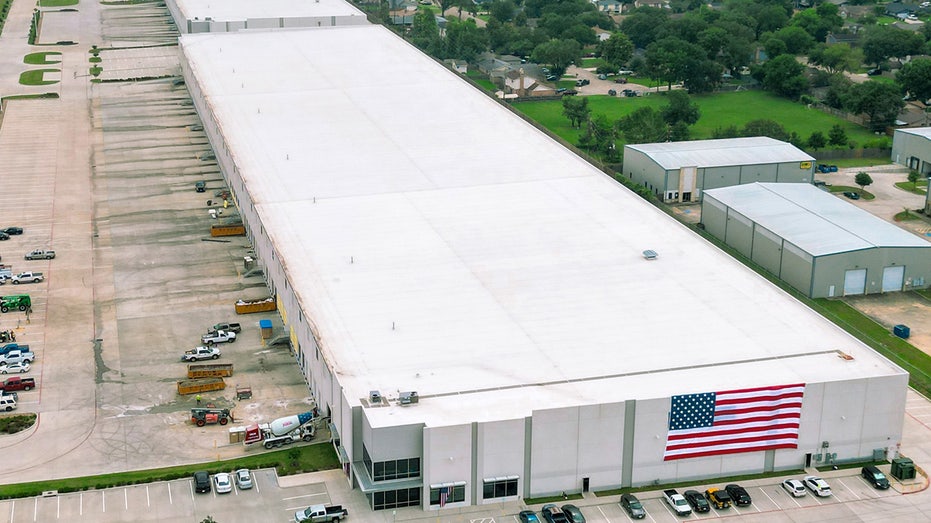
I found that with less than 5 seconds of searching.
If you're not finding anything, then maybe it's because the tools you're using don't want you to find anything.
Regardless, it won't change the nature of reality.
The money is real, the buildings are real, and the people going into and out of them are real, because the jobs are real.
#67 Re: Not So Free Chat » Politics » 2026-01-25 15:43:00
SpaceNut,
When you actively seek out law enforcement officers to fight with, you should expect them to fight back, because that is what we train them to do. They are not obligated to twiddle their thumbs and wait for you to shoot them. All of this insanity could have been avoided by allowing those officers to do their jobs, then fighting a legal battle in court. If you attempt to fight a gun battle in the streets using weapons against people who are better trained and equipped than you are, the only likely outcome is that you lose your life.
#68 Re: Science, Technology, and Astronomy » Reestablishing Domestic Manufacturing Competence » 2026-01-25 14:56:35
TRUMP EFFECT: A Running List of New U.S. Investment in President Trump’s Second Term
Since President Donald J. Trump took office, his unwavering commitment to revitalizing American industry has spurred trillions of dollars of investments in U.S. manufacturing, production, and innovation — and the list only continues to grow.
Here is a non-comprehensive running list of new U.S.-based investments in President Trump’s second term:
Apple announced a $600 billion investment in U.S. manufacturing and workforce training as it brings additional components of its supply chain and advanced manufacturing back to the U.S. — along with an American manufacturing program to incentivize its suppliers to make their products in the U.S.
Project Stargate, led by Japan-based Softbank and U.S.-based OpenAI and Oracle, announced a $500 billion private investment in U.S.-based artificial intelligence infrastructure.
NVIDIA, a global chipmaking giant, announced it will invest $500 billion in U.S.-based AI infrastructure over the next four years amid its pledge to manufacture AI supercomputers entirely in the U.S. for the first time.
Micron Technology, the sole U.S.-based manufacturer of advanced memory chips, announced a $200 billion investment in its U.S.-based manufacturing and production of advanced memory chips — including construction of a second chip fabrication facility in Boise, Idaho, and modernizing its Manassas, Virginia, facility.
IBM announced a $150 billion investment over the next five years in its U.S.-based growth and manufacturing operations.
Taiwan Semiconductor Manufacturing Company (TSMC) announced a $100 billion investment in U.S.-based chips manufacturing.
Johnson & Johnson announced a $55 billion investment over the next four years in manufacturing, research and development, and technology — including a $2 billion dedicated manufacturing facility at the FUJIFILM site in Holly Springs, North Carolina.
AstraZeneca announced a $50 billion investment for medicines manufacturing and research in the U.S.
Roche, a Swiss drug and diagnostics company, announced a $50 billion investment in U.S.-based manufacturing and research and development, which is expected to create more than 1,000 full-time jobs and more than 12,000 jobs including construction.
Bristol Myers Squibb announced a $40 billion investment over the next five years in its research, development, technology, and U.S.-based manufacturing operations.
Amazon announced a $20 billion investment to expand its cloud computing infrastructure in Pennsylvania, creating at least 1,250 new high-skilled jobs, a $10 billion investment to build new data centers in North Carolina, and has committed to a $4 billion investment in small towns across America, creating more than 100,000 new jobs and driving opportunities across the country.
Eli Lilly and Company announced a $27 billion investment to more than double its domestic manufacturing capacity.
Vantage Data Centers announced a $25 billion investment to build a mega-scale 1.4GW data center campus in Shackelford County, Texas — which will employ more than 5,000 people across construction and ongoing operations.
United Arab Emirates-based ADQ and U.S.-based Energy Capital Partners announced a $25 billion investment in U.S. data centers and energy infrastructure.
Google announced a $25 billion investment in data center and AI infrastructure.
Blackstone announced a $25 billion investment in digital and energy infrastructure across Pennsylvania.
Novartis, a Swiss drugmaker, announced a $23 billion investment to build or expand ten manufacturing facilities across the U.S., which will create 4,000 new jobs.
Hyundai announced a $21 billion U.S.-based investment — including $5.8 billion for a new steel plant in Louisiana, which will create nearly 1,500 jobs.
Hyundai also secured an equity investment and agreement from Posco Holdings, South Korea’s top steel maker.
Hyundai later increased its total U.S.-based investment to $26 billion.
John Deere announced plans to invest $20 billion over the next decade in American expansion, production, and manufacturing.
United Arab Emirates-based DAMAC Properties announced a $20 billion investment in new U.S.-based data centers.
France-based CMA CGM, a global shipping giant, announced a $20 billion investment in U.S. shipping and logistics, creating 10,000 new jobs.
Sanofi announced it will invest at least $20 billion over the next five years in manufacturing and research and development.
Venture Global LNG announced an $18 billion investment at its liquefied natural gas facility in Louisiana.
GlobalFoundaries announced a $16 billion investment to boost its U.S.-based chip production, including expanding existing plants in New York and Vermont.
FirstEnergy Corp. announced a $15 billion investment in infrastructure enhancements.
Stellantis announced a $13 billion investment in the U.S. — the largest single investment in the company’s history — to expand its U.S.-based production by over 50%.
Gilead Sciences announced an $11 billion boost to its planned U.S.-based manufacturing investment.
AbbVie announced a $10 billion investment over the next ten years to support volume growth and add four new manufacturing plants to its network — including a $195 million investment to expand its U.S.-based drug production capacity.
Merck & Co. announced it will invest a total of $9 billion in the U.S. over the next several years after opening a new $1 billion North Carolina manufacturing facility — including in a new state-of-the-art biologics manufacturing plant in Delaware, which will create at least 500 new jobs.
PPL announced a $6.8 billion investment to expand grid capacity and modernize transmission.
CoreWeave, Inc., announced a $6 billion investment in data center expansion.
Westinghouse announced a $6 billion investment to build ten large nuclear reactors in the U.S.
Pratt Industries announced a $5 billion investment to create 5,000 new manufacturing jobs in Ohio, Michigan, Pennsylvania, and Arizona.
South Korea-based Hanwha Group announced a $5 billion infrastructure investment at the Hanwha Philly Shipyard to boost local shipbuilding.
GlobalWafers, a Taiwanese silicon wafer manufacturer, announced a $4 billion investment in its U.S.-based production.
Thermo Fisher Scientific announced it will invest an additional $2 billion over the next four years to enhance and expand its U.S. manufacturing operations and strengthen its innovation efforts.
Clarios announced a $6 billion plan to expand its domestic manufacturing operations.
Belgium-based drugmaker UCB announced a $5 billion investment in a new U.S.-based factory.
Ford announced it will invest $5 billion across its Kentucky and Michigan manufacturing plants to deliver a new midsize truck and advanced batteries.
General Motors announced it will invest $4 billion in U.S.-based manufacturing as it shifts more vehicle production from Mexico to the U.S., including in Michigan, Kansas, and Tennessee.
Mitsubishi announced a $3.9 billion investment in energy.
Regeneron Pharmaceuticals, a leader in biotechnology, announced a $3 billion agreement with Fujifilm Diosynth Biotechnologies to produce drugs at its North Carolina manufacturing facility.
Kraft Heinz announced a $3 billion investment to upgrade its U.S. factories — its largest investment in its plants in decades.
GE Appliances announced a $3 billion investment in its U.S.-based manufacturing, onshoring 1,000 jobs and expanding its plants across five states.
NorthMark Strategies, a multi-strategy investment firm, announced a $2.8 billion investment to build a supercomputing facility in South Carolina.
Biogen announced a $2 billion investment in North Carolina-based manufacturing.
Mars, Inc., announced a $2 billion investment in its U.S.-based manufacturing operations.
Kimberly-Clark announced a $2 billion investment to expand its U.S. manufacturing operations, including a new advanced manufacturing facility in Warren, Ohio, an expansion of its Beech Island, South Carolina, facility, and other upgrades to its supply chain network.
Chobani, a Greek yogurt giant, announced $1.7 billion to expand its U.S. operations.
$1.2 billion to build its third U.S. dairy processing plant in New York, which is expected to create more than 1,000 new full-time jobs.
$500 million to expand its Idaho manufacturing plant.
Corning announced it is expanding its Michigan manufacturing facility investment to $1.5 billion, adding 400 new high-paying advanced manufacturing jobs for a total of 1,500 new jobs.
First Solar announced the inauguration of its $1.1 billion high-tech manufacturing facility in Louisiana, which projected to directly employ over 800 people.
Carrier announced an additional $1 billion investment in its U.S. manufacturing, innovation, and workforce expansion, which is expected to create 4,000 new jobs.
GE Aerospace announced a $1 billion investment in manufacturing across 16 states — creating 5,000 new jobs.
Hikma Pharmaceuticals announced a $1 billion investment to expand its U.S.-based manufacturing and research capabilities.
Anduril Industries announced a $1 billion investment for a new autonomous weapon system facility in Ohio.
Live Nation Entertainment announced a $1 billion investment to build 18 new live music venues across the U.S.
Williams International announced a $1 billion investment for a new high-volume aviation gas turbine engine manufacturing facility in Okaloosa County, Florida.
Amgen announced a $900 million investment in its Ohio-based manufacturing operation.
Merck Animal Health announced an $895 million investment to expand their manufacturing operations in Kansas.
General Motors announced an $888 million investment at its propulsion plant in Tonawanda, New York.
Schneider Electric announced it will invest $700 million over the next four years in U.S. energy infrastructure.
GE Vernova announced it will invest nearly $600 million in U.S. manufacturing over the next two years, which will create more than 1,500 new jobs.
Abbott Laboratories announced a $500 million investment in its Illinois and Texas facilities.
AIP Management, a European infrastructure investor, announced a $500 million investment to solar developer Silicon Ranch.
Jabil announced a $500 million investment in manufacturing and AI data center infrastructure across the southeastern U.S.
Hitachi announced a $457 million investment in a new power transformer facility in Virginia.
Wistron Corp, a Taiwanese electronics and AI server manufacturer, announced a $455 million
London-based Diageo announced a $415 million investment in a new Alabama manufacturing facility.
Lego announced a $366 million investment to build a new distribution center in Prince George County, Virginia.
The Bel Group announced a $350 million investment to expand its U.S.-based production, including at its South Dakota, Idaho and Wisconsin facilities — which will create 250 new jobs.
Dublin-based Eaton Corporation announced a $340 million investment in a new South Carolina-based manufacturing facility for its three-phase transformers.
Anheuser-Busch announced a $300 million investment in its manufacturing facilities across the country.
Whirlpool Corporation announced a $300 million investment in its U.S. laundry manufacturing facilities.
Germany-based Siemens announced a $285 million investment in U.S. manufacturing and AI data centers, which will create more than 900 new skilled manufacturing jobs.
Clasen Quality Chocolate announced a $230 million investment to build a new production facility in Virginia, which will create 250 new jobs.
Hadrian, a defense manufacturing startup, announced a $200 million investment to build a large-scale manufacturing and software hub in Mesa, Arizona.
Fiserv, Inc., a financial technology provider, announced a $175 million investment to open a new strategic fintech hub in Kansas, which is expected to create 2,000 new high-paying jobs.
Paris Baguette announced a $160 million investment to construct a manufacturing plant in Texas.
Philips announced a $150 million investment in U.S. manufacturing and research facilities.
Siemens Healthineers announced a $150 million investment to expand production, including relocating manufacturing operations for its Varian company from Mexico to California.
JBS USA announced a $135 million investment for a new sausage production facility in Perry, Iowa.
TS Conductor announced a $134 million investment to build an advanced conductor manufacturing facility in South Carolina, which will create nearly 500 new jobs.
Switzerland-based ABB announced a $120 million investment to expand production of its low-voltage electrification products in Tennessee and Mississippi.
Saica Group, a Spain-based corrugated packaging maker, announced plans to build a $110 million new manufacturing facility in Anderson, Indiana.
Hotpack, a Dubai-based maker of food packaging materials and related products, announced a $100 million investment to establish its first U.S. manufacturing facility in Edison, New Jersey.
Charms, LLC, a subsidiary of candymaker Tootsie Roll Industries, announced a $97.7 million investment to expand its production plant and distribution center in Tennessee.
Toyota Motor Corporation announced an $88 million investment to boost hybrid vehicle production at its West Virginia factory, securing employment for the 2,000 workers at the factory.
Glaukos Corporation, a pharmaceutical drug and medical device company, announced an $82 million investment in Huntsville, Alabama, for manufacturing and research and development, which will bring 154 full-time jobs by 2030.
China-based Kingsun announced an $80 billion investment to establish its first U.S. manufacturing facility in North Carolina.
Rolls-Royce announced a $75 million investment to expand its South Carolina manufacturing facility.
Hanwha Ocean announced a $70 million investment to expand its Philadelphia shipyard.
Hitachi Energy announced a $70 million investment in energy infrastructure.
Century Aluminum announced it will invest $50 million to revive its South Carolina manufacturing plant for the first time in a decade, bringing its production back to 2015 peak levels.
Canada-based Silver Hills Bakery announced a $48.5 million investment to revive the former Kellogg’s facility in Tennessee.
AeroVironment, a defense contractor, announced a $42.3 million investment to build a new manufacturing facility in Utah.
Paris-based Saint-Gobain announced a new $40 million NorPro manufacturing facility in Wheatfield, New York.
India-based Sygene International announced a $36.5 million acquisition of a Baltimore biologics manufacturing facility.
Asahi Group Holdings, one of the largest Japanese beverage makers, announced a $35 million investment to boost production at its Wisconsin plant.
The GE Aerospace Foundation announced a $30 million workforce skills training program to prepare the next generation of its U.S.-based workforce.
Valbruna Slater Stainless announced a $28 million investment in its stainless steel and nickel alloys bars manufacturing plant in Fort Wayne, Indiana.
Nortian Foodtech announced a $22.2 million investment in a Missouri manufacturing facility.
Cyclic Materials, a Canadian advanced recycling company for rare earth elements, announced a $20 million investment in its first U.S.-based commercial facility, located in Mesa, Arizona.
Guardian Bikes announced a $19 million investment to build the first U.S.-based large-scale bicycle frame manufacturing operation in Indiana.
Amsterdam-based AMG Critical Minerals announced a $15 million investment to build a chrome manufacturing facility in Pennsylvania.
NOVONIX Limited, an Australia-based battery technology company, announced a $4.6 million investment to build a synthetic graphite manufacturing facility in Tennessee.
LGM Pharma announced a $6 million investment to expand its manufacturing facility in Rosenberg, Texas.
ViDARR, a defense optical equipment manufacturer, announced a $2.69 million investment to open a new facility in Virginia.
That doesn’t even include the U.S. investments pledged by foreign countries:
United Arab Emirates committed to investing $1.4 trillion in the U.S. over the next decade.
Qatar committed to generating $1.2 trillion in an economic exchange between the two countries.
Japan announced a $1 trillion investment in the U.S.
Saudi Arabia committed investing $600 billion in the U.S. over the next four years.
South Korea committed to a $450 billion investment in U.S. energy products.
Bahrain announced $17 billion in U.S. investment.
Taiwan announced a pledge to boost its U.S.-based investment.
#69 Science, Technology, and Astronomy » Reestablishing Domestic Manufacturing Competence » 2026-01-25 05:45:47
- kbd512
- Replies: 17
There seems to be an extreme reluctance on the part of western nations to acknowledge that globalism has failed, and that globalism as a trade practice has only served to transfer enormous amounts of wealth from the hands of their own people, into the hands of people who consider themselves to be adversaries of the west, if not self-declared enemies of the western liberal economic order. As a defense strategy against aggressor nations, the idea that we'd never go to war with nations we trade a lot with has utterly failed in the case of Ukraine and is highly likely to fail in the case of Taiwan if China's communist government pursues its "One China" policy to its publicly stated logical conclusion. That strategy appears to be part of China's "defined on paper" national defense doctrine, and reiterated by every successive Premier of the Chinese Communist Party. The thinking on this issue is therefore unlikely to change, merely because power transfers from Xi Xinping to a new Premier.
Since the 1970s, America's trade relationship with China was nominally intended to separate them from the Soviet Union, which Russia's President Putin seems hellbent on reestablishing for national prestige reasons. The slow-motion problem that this ill-advised America-China trade strategy caused was American businesses making manufacturing decisions that had national security and social cohesion implications. American and indeed all western businesses shipped every industrial and manufacturing job they could overseas to take advantage of cheaper foreign labor. At first, this appeared to enable people living in western nations to take advantage of cheaper foreign-made goods. This drove prices down, but also depressed wages to the point that middle class families could no longer afford to start families. Fast forward several decades and a growing number of people who would otherwise have been considered "middle class" can no longer afford necessities, much less a quality secondary education, stable job, and family of their own. This happened because owning and participating in the means of production is how most people became "middle class" to begin with. Worse than that, since most non-greenfield innovation happens within the realm of manufacturing, not having manufacturing plants means all the innovations making manufacturing cheaper / faster / better don't necessarily provide a direct benefit to people who merely "receive" those manufactured goods. Take away manufacturing jobs and most of us revert back to serfdom, but without the benefit of living on a farm where we might not starve when the factory jobs disappear.
One of my very first jobs after completion of six years of military service, while I was still working my way through college, was working in Dell's computer manufacturing plant in Round Rock, which was very near Austin, Texas. They shut that plant down and farmed out the jobs there to countries all over Asia. Needless to say, if China ever invades Taiwan, "Dude, you're not getting your Dell", until the war is over. Michael Dell is many things, but a forward-thinking military strategist who doesn't drop all of his manufacturing eggs into a single basket is not one of them. Knowingly or not, he's made a manufacturing decision with strategic implications, one that affects the very survival of his business, and he's hoping it pays off. Unfortunately for him and his employees, hope is not a strategy. Whilst some random "dude who is not getting his Dell" may not affect national defense very much, the US DoD is also a major Dell customer which would cease to function well without them. Someone ought to have told him, "Hey, tech-bro, we still need our snazzy Dell computers if the Chinese decide to blow up your factories in Asia. Keep one of those manufacturing plants open here in America and we'll pay you extra for it, because we always need computers for our military and that's never going to change." There was a time when our military defense contractors made and serviced every part for their computers because nobody else could afford to make and use computers. That era has long since past. The military gets their computers from the same store that everybody else does because that is the only way to have a modern computer with the latest and greatest capabilities.
The era of "specialty store" defense hardware and software is largely over. To a point, the software running on military computers is "unique" to DoD requirements, but there is no such thing as a modern military that does not require commercial computing hardware and lots of it. The crypto equipment is "special". Everything else is COTS technology, because otherwise it's 10+ years out-of-date by the time someone thinks it's ready for field deployment (which probably means it's not). It's better to take something that already works and adapt it, than it is to "roll-your-own" computing solution. That said, this only works when you have computes to begin with. They don't last forever and all new capabilities demand improved hardware and software, which means they get completely replaced every 5 years or so.
Following the manufacturing catastrophe during the COVID global pandemic, where all those Asian goods were completely unavailable at any price because the global economy shut down, the wisdom of self-sufficiency to the degree that a nation can manage has reasserted itself. We are now living through an era of re-shoring of those manufacturing jobs, which will be a long and painful process. The upside is that on the other end of that chaotic and spastic process, there's at least a chance for our children to enjoy economic prosperity. If your nation doesn't physically control the means of production by virtue of having those factories in your own country, then you will "own nothing and probably not be happy". Absent local control over the means of production, you're left at the mercy of people who either envy you or, more likely, hate you and want to take everything you have. National leadership allowed their businesses to hand over production to foreign nations. This is always a mistake. This always destroys the wealth of your nation, because it destroys their people. You can hold every last dollar in the world, but if you have no people because your business practices starved them to death, then you're living in self-imposed exile and you can't even trade dollars for food with people who don't exist. This is a stupid game to play and a long slow economic suicide is a very stupid prize to "win".
The end results of the Ukraine War were famine in sub-Saharan Africa and destruction of the supply chain for many critical minerals and metals required by computers used by advanced weapon systems, all so-called "green energy" technologies, and various other industrial outputs, most notably pig iron and steel.
The end results of a war over Taiwan would likely include complete breakdown of trade between China and other Asian nations, loss of access to the bulk supply of minerals and metals required for advanced microchip fabrication, which China dominates, loss of over 90% of the global supply of advanced microchips, which are almost exclusively fabricated in Taiwan by Taiwan Semi-Conductor Manufacturing, the free flow of critical energy products between the Middle East and Asia, and the imported foodstuffs necessary to feed many of the Chinese people (pork, soy beans, fresh fruits and vegetables, etc). In short, this is an economic catastrophe of globalized proportions.
It's a bit hard to fathom why anyone thought this state of affairs could continue into perpetuity, but it's coming to an end via simple demographics, even if China never invades Taiwan. As the old saying about war goes, the enemy gets a vote. In this case, demographics is not an enemy which anyone can "fight" against as the idea is typically understood. You cannot fight decisions about how many children the Chinese decided to have, or not have in this case, which were made decades ago. That thorny problem is already "baked-into-the-cake" for at least another 25 years.
This part of the post is a preamble to "what comes next". It was a very brief explanation pertaining to "How did we get here?" and, "What are the implications?"
In order of importance, every nation, to the degree it can, needs to reestablish self-sufficiency in the following areas:
1. Energy production, in all its various forms
This will look different for every nation on Earth, but a secure domestic energy supply to provide life-sustaining power to do work is mandatory.
2. Food and fresh water production
This ought to be self-explanatory. There is no human civilization, advanced or otherwise, without nutritious food and clean drinking water.
3. First aid supplies and WHO listed essential medicines
As a general rule, other nations are willing to supply these if your nation struggles to do so and they have any to provide, but a national formulary that cannot make acetaminophen, for example, is in bad shape.
We have a significant list of "must-haves", but here it is:
WHO Model List of Essential Medicines
4. The means to produce reliable motorized transport and construction equipment
Manufacturing personal vehicles is a choice, but reliable transport of people and goods is a must, forever and always
5. The means to produce essential defense articles for national defense
If you cannot defend what you have, then it doesn't matter how great your other production capabilities happen to be.
#70 Re: Meta New Mars » kbd512 Postings » 2026-01-24 18:32:40
tahanson43206,
Whenever a gas expands, it also cools down quite a bit. CO2 is famous for its "cold" discharge from fire extinguishers. I can personally attest to how cold it gets, having used them on real fires aboard ship. Plain old gas or liquid CO2 discharged through the cutting head would cool the cutter. Heat from friction becoming so intense that it melts the cutter is what typically dulls the cutter because industrial rock cutters are always much harder than the materials they cut or drill through. If these cutting bits had small passages drilled through them so that liquid or gaseous CO2 could absorb and carry away the heat generated during rock cutting, then the cutter could continue to cut as long as the coolant supply was expanded through holes in the cutters.
I happen to think that pressurized coolant, meaning liquid CO2, would work best, because pressurization keeping the CO2 inside the cutting head or drill bit in a liquid state would prevent gas expansion cooling to the point where residual water vapor trapped in the CO2 would freeze and potentially clog these very narrow coolant passages. This implies some kind of rotary pump to maintain coolant pressure within the cutting head or drill bit. All of this could be done using the same shaft for a high speed cutter, or a separate geared pump for lower speed cutters. A high speed rock drill might not need the weight and complexity of a separate geared pump, for example, whereas a much lower speed tunnel boring machine almost certainly requires a coolant pressurization pump and system to circulate coolant to the dozen or more rock cutting heads. Using supercritical CO2 would require considerable pumping power to maintain sufficient pressurization, but would also work.
These means hand tools like pneumatic rock drills would use plain old liquid CO2 as their coolant.
Ingersoll-Rand pneumatic rock drill:
Worker using a larger Atlas Copco pneumatic rock drill:

Assortment of pneumatic rock drilling heads:
These cutting heads already have holes drilled in them that could be used to exhaust expanded CO2 coolant through:
A much larger pneumatic rock drill mounted to a vehicle:
He has a shop vac to vacuum pulverized dust out of his bore hole. This obviously won't work on Mars due to the minor atmospheric pressure difference between Mars sea level and a hard vacuum. Therefore, a compressed air gun will be needed to blow the dust out of the bore hole.
Hydraulic fracturing using water and CO2 could also be used to greatly limit or entirely eliminate explosives used in excavation and quarrying operations. Fracking has already begun to replace explosives in underground mining operations. There's less of a cave-in risk associated with fracking in an underground mineshaft, and no possibility of blowing yourself up.
#71 Re: Not So Free Chat » Politics » 2026-01-24 17:25:05
SpaceNut,
If you point a firearm at a law enforcement officer, they will shoot you! This outcome is the real physical world reminder that the law still applies to you, regardless of how you perceive yourself. Nobody is forcing these dimwits to engage in this idiocy. They're being encouraged to act like street thugs by Democrat politicians and media cretins who don't get shot by the Police because they never show up to these clown shows.
How many lunatic leftists are prepared to die to attempt (and fail) to prevent law enforcement from arresting the usual assortment of illegal alien child rapists and murders that the Biden (Democrat) administration rolled out the red carpet for?
I guess we're about to find out.
I'm quite pleased that our radical leftists have now decided that they support The Second Amendment to our Constitution, but if they want to use their 2A rights to murder law enforcement officers, then they're going to find out that Republicans have been 2A supporters far longer than they have been. Either think before you act, or suffer the consequences when you don't.
FYI...
Renee Good was apparently sent $15,000 USD, via Venmo, by the Mayor of Minneapolis, Jacob Frey (Democrat), on the 3rd of January, mere days before her lunatic behavior towards law enforcement cost her her life, with the payment description set to "Melt ICE". Presumably, that payment was made to act like a prototypical leftist lunatic. You can't spend bribe money you received from the Democrat Party to act like a street thug after you've been shot. I'm sure it's "just a joke" since this is a leftist we're talking about here, but one of her Venmo payments she made out to someone else had that payment description set to "terrorism".
A normal person can be forgiven for thinking that people like Renee Good are terrorists when they pay other people for "terrorism".
Radical leftists are free to continue LARPing as a revolutionaries, but they should know that most revolutionaries get shot in the streets.
#72 Re: Science, Technology, and Astronomy » Planetary Cores and potentials for geothermal power. » 2026-01-23 13:52:36
Calliban,
I don't think we're going to build much underground to start off with, primarily because the equipment and energy requirements for tunneling are so substantial. It's not impossible to do and may be advantageous in select locations, but there is no absolute requirement to build underground when above-ground structures can still be adequately shielded against radiation. Any GCR mitigated structure is a SPE / CME impervious structure by default. Those are the only forms of radiation known to be problematic on Mars, so 1-2m of regolith protection creates an Earth sea level radiation environment. I think we can create tensile structures made from recycled Starship 304L stainless steel and compressive structures using cast basalt tiles, as you already suggested. The walls of the structure can be "bermed" with regolith piles. There will still be direct overhead GCR that makes it through, but much less, so if the base (shielded by the planet itself) and walls (shielded by the regolith piles) are there, you simply deal with not having perfect GCR protection. People who live on mountain tops or fly commercial aircraft for decades of their lives don't seem to have dramatically higher cancer rates later in life.
If we limit ourselves to singular building materials, then we end up with either impossible materials importation or impossible indigenous materials processing requirements. Here on Earth, every structure is built using a combination of materials that are most ideal for resisting either tensile or compressive forces. We may be able to technically build a skyscraper using concrete or steel alone, but the energy and therefore monetary tradeoffs involved in structures built that way are so over-the-top that nobody actually does that unless someone with more money than common sense comes along and doesn't care what it costs. That's how we get buildings like the Burj Khalifa, but those are one-of-a-kind things.
We've already decided that even though we have the tech to house everyone in a pyramid carved from enormous rock slabs, it's inefficient and wasteful, therefore we're not doing that as a general practice. I have to believe that a city on Mars will still be subjected to the energy / engineering / economic / timeline factors which drive housing development here on Earth. If you have enough personal wealth, someone will build a rock slab home for you, but most millionaires and billionaires still live in larger / fancier versions of what you see average middle class people living in. Historic homes are the only ones "built differently". Architects live for projects like those, but the rest of the time it's pretty meat-and-potatoes.
I've been in multi-million dollar homes owned by wealthy people here in Houston. Their slabs are still concrete. Their walls still use pine even though they could easily afford hardwoods. They still have a roof using shingles or tiles. Their floors, wall coverings, and furnishings are much nicer, but not fundamentally different. The craftsmanship is better. We still sit at a wooden table and so do they. The near total lack of exceptions seems to indicate that even when money is far less of a factor, engineering and economy don't change. President Obama still lives in a seaside McMansion, not an abandoned missile silo. President Trump still lives in one of his seaside luxury hotels. Elon Musk still lives at work because he's not interested in anything else. Jeff Pena lives in a Scottish castle because he has a castle fetish. He's not the only one, but the Vanderbilts and Rothschilds of the world live in prototypical mansions. Governments create giant reinforced underground shelters to shield themselves from their own poor decision making, and to alleviate their own paranoia, but only using other peoples' money.
If someone hands me $10M tomorrow, I'm not going to live in a bunker. Moving is exhausting. I'm very happy right where I'm at. I might travel and spend more time with my family, but that's about it. I would imagine it's largely the same for almost every other person, even though there are eccentric exceptions. As far as what I think we'll build on Mars is concerned, I think we'll spend the minimum amount of money for adequate shelter, then worry about style later. If we apply sound basic engineering principles, then in all probability our colonists won't have much to worry about. The key to good engineering will be finding people who are willing to adhere to the fundamentals because they accept how important those are, rather than people looking to prove how smart or creative they can be. There's nothing wrong with being smart and creative. However, I don't want a creative type of person assessing the load carrying capacity of my home's foundation when rigid adherence to applicable engineering code determines whether or not the walls collapse or remain upright when the foundation shifts. That's an actual problem here in Houston, and a serious one.
#73 Re: Not So Free Chat » Politics » 2026-01-23 12:27:06
Calliban,
I think CANZUK could do just as good a job of colonising Mars as the US.
I hope that you can, and wish you good fortune on your journey.
#74 Re: Not So Free Chat » Politics » 2026-01-23 10:44:00
RobertDyck,
America can't make anything anymore. The last truck axle made in the US was made over 2 decades ago. America can'take vehicles without foreign partners.
You are impressively committed to either deliberately lying or stunning displays of ignorance, I'll give you that.
U.S. Axle
Northern Industrial Manufacturing
American Axle & Manufacturing
Mack Trucks
Alloy USA
Cummins
If you don't think we make injection molded plastic parts or home furnishings, then please learn how to use Google.
Every false statement you make, which is refuted by a 5 second duration Google search, only serves to reconfirm what I already know to be true. It's as if you don't accept objective reality, only whichever version of unreality best serves your belief system. You've almost convinced me that I can immediately discount whatever assertions you make on the basis of you making them alone.
Electrical transformers for utilities are foreign made.
No doubt about that, but they're still made here in America as well:
Virginia Transformer Corp
Pennsylvania Transformer Technology, Inc
WEG Transformers USA
GE Grid Solutions
Efacec Power Transformers, Inc
Olsun Electronics Corporation
Hammond Power Solutions
Maddox Technologies
Meta Power Solutions
Larson Electronics
You don't understand. So-called American Cars are made as a collaboration between US, Canada and Mexico.
They don't truly need to be. That was my point, and it is factually true. America has all the manufacturing and tech required to do it completely domestically, whether it's typically done that way or not. Do you know who else does as well? Canada and Mexico. All 3 nations have all the metals, plastics, rubbers, and electronics manufacturing facilities, small though they may be in certain cases, that 100% American made or 100% Canadian made or 100% Mexican made vehicles are achievable using ONLY existing domestic manufacturing facilities already in operation. These vehicles won't all be precisely equivalent, but they would still be 100% functional passenger motor vehicles.
This isn't some pedantic point about "American exceptionalism", this is "everybody-already-knows-how-to-make-a-car-ism".
If you had any ability whatsoever to "read between the lines" (the hallmark of someone who has been educated vs indoctrinated), then you'd at least acknowledge that what I'm telling you, is that every western nation has the ability to make every bit of their own tech, even if they don't have the capacity to make 100% of it at this very instant in time. They clearly don't want to, but only because someone is getting "lazy rich" by selling cheap rubber dog crap out of Hong Kong while the other 99% of their fellow countrymen continually get poorer because they no longer hold the manufacturing jobs that made their nations wealthy to begin with!
I don't want to continue down this path to serfdom merely because a literal handful of smart and wealthy but completely unscrupulous and immoral people want to add a few more digits to their offshore retirement accounts. They'll still be able to become obscenely rich if they employ their own people.
Since you're clearly not a member of that 1%, and at this stage in your life you likely never will be, why would you continue to support that insanity?
Tell me why you don't want 100% Canadian made cars and fighter jets?
Would you rather service cash registers than write code for fighter jets?
I keep asking you real questions about what you actually want and you keep responding with autistic non-sequitur history lessons that fail to address anything related to why we should keep playing reindeer games that destroy our own people.
Why do you want to keep volunteering to play a game that leaves you empty?
#75 Re: Science, Technology, and Astronomy » Geothermal Storage of Renewable Thermal Energy » 2026-01-23 00:15:21
tahanson43206,
Silicon Nitride coatings do not add much weight or restrict the interior pipe diameter the way cast basalt liners do. It's applied by chemical vapor deposition and is thus chemically bonded to the base metal. This specific type of coating is exceptionally resistant to salts, even at elevated temperatures.
Externally applied ceramic thermal barrier coatings are a possibility for lower cost and lighter weight heat retention. These coatings can be applied by plasma spray or sprayed on like paint and then baked-on in an oven. If we're talking about Mars, it's near-vacuum atmosphere doesn't allow for much convective or conductive heat loss to occur. If you have a lot of pipe to insulate, weight / money matters, and your system can eat some heat loss, then ceramic coatings are likely to be a more cost-effective option. A ceramic thermal barrier coating won't absorb water, thus won't accelerate corrosion damage over time. It's also easier to inspect a "bare pipe" for signs of damage.
If you do have plenty of locally sourced basalt fiber to work with, then fiber still provides better insulation than a much thinner ceramic aerospace coating. If the pipe is glowing hot, you definitely want the overwrap. Mars has very little atmospheric water vapor for an insulation overwrap to trap (however briefly) and cause external corrosion damage. That said, inspecting piping could be very time consuming if wraps need to be removed, and some atmospheric dust would inevitably get trapped under the overwrap. We need some kind of CO2 sprayer to clean off the pipe before the wrap is fastened in place.
Perchlorates are known to be highly reactive with Iron at elevated temperatures. Pure Silicon will become violently reactive with perchlorates above 500C or so. While Silicon Nitride is exceptionally inert against pure salts, maybe not if the pipe's external surface temperature will exceeds500C, at which point those perchlorates are likely to start oxidizing a Nitride coating. This is an interesting materials problem. Given the presence of perchlorates in the abrasive blowing dust carried by the Martian atmosphere, I'd be curious to know what a close-to-optimal coatings solution entails if the pipe will carry salt heated to above 500C. Maybe we should ensure that temperatures are kept modest to avoid such a problem.
The problem with cheaper Alumina-based ceramic coatings is that those don't actually hold up very well, long-term, to hot salt. Uniform internal application to the pipe would also be rather difficult. Silicon Nitride does much better if the chemical attack involves salt and water. However, then there's this perchlorate problem to deal with on Mars. Even though the atmosphere is mostly CO2, the piping will be pelted with "oxy-dust", which will then become aggressively oxidative above a given temperature range. I need to think about application of different internal and external coatings. Now that I've given this some cursory thought, I don't think a single coating can be used.