New Mars Forums
You are not logged in.
- Topics: Active | Unanswered
Announcement
#1 Yesterday 05:45:47
- kbd512
- Administrator
- Registered: 2015-01-02
- Posts: 8,457
Reestablishing Domestic Manufacturing Competence
There seems to be an extreme reluctance on the part of western nations to acknowledge that globalism has failed, and that globalism as a trade practice has only served to transfer enormous amounts of wealth from the hands of their own people, into the hands of people who consider themselves to be adversaries of the west, if not self-declared enemies of the western liberal economic order. As a defense strategy against aggressor nations, the idea that we'd never go to war with nations we trade a lot with has utterly failed in the case of Ukraine and is highly likely to fail in the case of Taiwan if China's communist government pursues its "One China" policy to its publicly stated logical conclusion. That strategy appears to be part of China's "defined on paper" national defense doctrine, and reiterated by every successive Premier of the Chinese Communist Party. The thinking on this issue is therefore unlikely to change, merely because power transfers from Xi Xinping to a new Premier.
Since the 1970s, America's trade relationship with China was nominally intended to separate them from the Soviet Union, which Russia's President Putin seems hellbent on reestablishing for national prestige reasons. The slow-motion problem that this ill-advised America-China trade strategy caused was American businesses making manufacturing decisions that had national security and social cohesion implications. American and indeed all western businesses shipped every industrial and manufacturing job they could overseas to take advantage of cheaper foreign labor. At first, this appeared to enable people living in western nations to take advantage of cheaper foreign-made goods. This drove prices down, but also depressed wages to the point that middle class families could no longer afford to start families. Fast forward several decades and a growing number of people who would otherwise have been considered "middle class" can no longer afford necessities, much less a quality secondary education, stable job, and family of their own. This happened because owning and participating in the means of production is how most people became "middle class" to begin with. Worse than that, since most non-greenfield innovation happens within the realm of manufacturing, not having manufacturing plants means all the innovations making manufacturing cheaper / faster / better don't necessarily provide a direct benefit to people who merely "receive" those manufactured goods. Take away manufacturing jobs and most of us revert back to serfdom, but without the benefit of living on a farm where we might not starve when the factory jobs disappear.
One of my very first jobs after completion of six years of military service, while I was still working my way through college, was working in Dell's computer manufacturing plant in Round Rock, which was very near Austin, Texas. They shut that plant down and farmed out the jobs there to countries all over Asia. Needless to say, if China ever invades Taiwan, "Dude, you're not getting your Dell", until the war is over. Michael Dell is many things, but a forward-thinking military strategist who doesn't drop all of his manufacturing eggs into a single basket is not one of them. Knowingly or not, he's made a manufacturing decision with strategic implications, one that affects the very survival of his business, and he's hoping it pays off. Unfortunately for him and his employees, hope is not a strategy. Whilst some random "dude who is not getting his Dell" may not affect national defense very much, the US DoD is also a major Dell customer which would cease to function well without them. Someone ought to have told him, "Hey, tech-bro, we still need our snazzy Dell computers if the Chinese decide to blow up your factories in Asia. Keep one of those manufacturing plants open here in America and we'll pay you extra for it, because we always need computers for our military and that's never going to change." There was a time when our military defense contractors made and serviced every part for their computers because nobody else could afford to make and use computers. That era has long since past. The military gets their computers from the same store that everybody else does because that is the only way to have a modern computer with the latest and greatest capabilities.
The era of "specialty store" defense hardware and software is largely over. To a point, the software running on military computers is "unique" to DoD requirements, but there is no such thing as a modern military that does not require commercial computing hardware and lots of it. The crypto equipment is "special". Everything else is COTS technology, because otherwise it's 10+ years out-of-date by the time someone thinks it's ready for field deployment (which probably means it's not). It's better to take something that already works and adapt it, than it is to "roll-your-own" computing solution. That said, this only works when you have computes to begin with. They don't last forever and all new capabilities demand improved hardware and software, which means they get completely replaced every 5 years or so.
Following the manufacturing catastrophe during the COVID global pandemic, where all those Asian goods were completely unavailable at any price because the global economy shut down, the wisdom of self-sufficiency to the degree that a nation can manage has reasserted itself. We are now living through an era of re-shoring of those manufacturing jobs, which will be a long and painful process. The upside is that on the other end of that chaotic and spastic process, there's at least a chance for our children to enjoy economic prosperity. If your nation doesn't physically control the means of production by virtue of having those factories in your own country, then you will "own nothing and probably not be happy". Absent local control over the means of production, you're left at the mercy of people who either envy you or, more likely, hate you and want to take everything you have. National leadership allowed their businesses to hand over production to foreign nations. This is always a mistake. This always destroys the wealth of your nation, because it destroys their people. You can hold every last dollar in the world, but if you have no people because your business practices starved them to death, then you're living in self-imposed exile and you can't even trade dollars for food with people who don't exist. This is a stupid game to play and a long slow economic suicide is a very stupid prize to "win".
The end results of the Ukraine War were famine in sub-Saharan Africa and destruction of the supply chain for many critical minerals and metals required by computers used by advanced weapon systems, all so-called "green energy" technologies, and various other industrial outputs, most notably pig iron and steel.
The end results of a war over Taiwan would likely include complete breakdown of trade between China and other Asian nations, loss of access to the bulk supply of minerals and metals required for advanced microchip fabrication, which China dominates, loss of over 90% of the global supply of advanced microchips, which are almost exclusively fabricated in Taiwan by Taiwan Semi-Conductor Manufacturing, the free flow of critical energy products between the Middle East and Asia, and the imported foodstuffs necessary to feed many of the Chinese people (pork, soy beans, fresh fruits and vegetables, etc). In short, this is an economic catastrophe of globalized proportions.
It's a bit hard to fathom why anyone thought this state of affairs could continue into perpetuity, but it's coming to an end via simple demographics, even if China never invades Taiwan. As the old saying about war goes, the enemy gets a vote. In this case, demographics is not an enemy which anyone can "fight" against as the idea is typically understood. You cannot fight decisions about how many children the Chinese decided to have, or not have in this case, which were made decades ago. That thorny problem is already "baked-into-the-cake" for at least another 25 years.
This part of the post is a preamble to "what comes next". It was a very brief explanation pertaining to "How did we get here?" and, "What are the implications?"
In order of importance, every nation, to the degree it can, needs to reestablish self-sufficiency in the following areas:
1. Energy production, in all its various forms
This will look different for every nation on Earth, but a secure domestic energy supply to provide life-sustaining power to do work is mandatory.
2. Food and fresh water production
This ought to be self-explanatory. There is no human civilization, advanced or otherwise, without nutritious food and clean drinking water.
3. First aid supplies and WHO listed essential medicines
As a general rule, other nations are willing to supply these if your nation struggles to do so and they have any to provide, but a national formulary that cannot make acetaminophen, for example, is in bad shape.
We have a significant list of "must-haves", but here it is:
WHO Model List of Essential Medicines
4. The means to produce reliable motorized transport and construction equipment
Manufacturing personal vehicles is a choice, but reliable transport of people and goods is a must, forever and always
5. The means to produce essential defense articles for national defense
If you cannot defend what you have, then it doesn't matter how great your other production capabilities happen to be.
Offline
Like button can go here
#2 Yesterday 07:21:24
- tahanson43206
- Moderator
- Registered: 2018-04-27
- Posts: 24,029
Re: Reestablishing Domestic Manufacturing Competence
This post is reserved for an index to posts that may be contributed by NewMars members.
The topic itself is surely an important one in any context, but certainly in the context of Mars.
Mars residents need to become independent of Earth as soon as possible, and that can best happen in the early planning stages.
Whatever methods may be devised to achieve independence on Earth can and should be replicated in planning for Mars.
I hope this topic will be filled with positive suggestions and not with laments for decisions made in the past.
The question this topic has the opportunity to address is whether the United States has what it takes to carry out the complex manufacturing techniques at the quality and in the quantity that others on Earth have achieved.
Leadership is the key, but the willingness of the population to work as hard as is necessary is a question as well.
With any luck, this topic will prove interesting for future readers.
Index:
(th)
Offline
Like button can go here
#3 Yesterday 08:35:33
- SpaceNut
- Administrator
- From: New Hampshire
- Registered: 2004-07-22
- Posts: 30,323
Re: Reestablishing Domestic Manufacturing Competence
Business that have left the US
AI Overview
A variety of American businesses either left the U.S. or closed down entirely during the 1960s, a decade of significant shifts in the U.S. economy. This included the merger of prominent brands, the expansion of some companies into foreign markets, and the failure of many smaller businesses.
Acquisition and consolidation
The 1960s saw many companies become targets for acquisition, leading to the disappearance of once-familiar names.
Good Humor: The Ohio-based ice cream company, founded in the 1920s, was purchased in 1961 by the British-Dutch company Unilever.
Kinney Shoes: This shoe retailer, which started in 1894, was acquired by the F.W. Woolworth Corporation in 1963. It was later shut down completely in 1998, though its legacy remains part of Foot Locker.
Ling-Temco-Vought (LTV): In the 1960s, conglomerates like LTV expanded rapidly by acquiring other businesses. As the era ended, many of these highly leveraged companies saw their fortunes unravel.
American Motors Corporation (AMC): Formed by a merger in 1954, AMC struggled to compete with the "Big Three" U.S. automakers and was eventually acquired by Chrysler in 1979.
Expansion overseas
Many U.S. companies started moving production and expanding operations into other countries, spurred by foreign competition and changes in international trade laws.
Offshoring and nearshoring: U.S. manufacturing began moving to countries with lower labor costs. For example, some factories moved to Mexico, a process facilitated by customs laws that incentivized U.S. firms to conduct labor-intensive assembly operations there.
McDonald's: The fast-food chain expanded internationally in the 1960s, opening its first locations in Canada and Puerto Rico in 1967.
Business failures
For many small businesses and retailers, the 1960s were a time of increased competition from larger corporations.
Decline of small farms: Nearly a million small farms disappeared in the 1960s, consolidated into larger operations that benefited from new farming technologies and government subsidies.
End of an era for retailers: While some famous brands like Woolworth's, Montgomery Ward, and Gimbels wouldn't vanish until later decades, the 1960s marked a period of declining relevance as they struggled against newer competitors like discount chains.
Early signs of deindustrialization
While most major job losses happened later, the 1960s showed early signs of deindustrialization, particularly in the "Rust Belt."
Competition from Europe and Japan: By the mid-1960s, European and Japanese industries had recovered from WWII and began producing cars and other goods that competed directly with U.S. manufacturers.
Early manufacturing job shifts: The manufacturing sector began a longer-term decline in its share of total U.S. employment. The industry moved production to lower-cost domestic areas and, increasingly, overseas
Major US businesses did not "leave" the country in the 1970s, but many either declined, went bankrupt, or were acquired by international conglomerates due to significant economic turmoil. Key factors contributing to this trend included stagflation, increased foreign competition, and two severe oil crises.
Iconic brands that faded or were sold
Oldsmobile: At its peak, this General Motors brand produced America's best-selling car in 1976. However, it saw declining sales as flashier import models gained popularity in the following decades, and GM ultimately discontinued the marque in 2004.
Howard Johnson's: A roadside icon famous for its orange-roofed restaurants, Howard Johnson's was a popular fast-food chain that peaked in the 1970s. However, it struggled to adapt to new competition and evolving consumer tastes, with the brand's restaurant business eventually dissolving.
Woolworth's: The F.W. Woolworth Company, a beloved "five-and-dime" store chain, began facing financial difficulties in the latter half of the 20th century. While it survived into the 1990s, the company eventually closed its US stores.
Sunglass Hut: While the brand still exists, its American ownership ended in the 70s. Founded in Miami in 1971, optometrist Sanford Ziff grew the company to 100 stores by 1986. The Ziff family sold their interest, and Italian eyewear giant Luxottica acquired the chain in 2001.
Reasons for business decline in the 1970s
The era's economic upheaval created a challenging environment for many American businesses.
Stagflation: This unusual economic combination of stagnant growth and high inflation meant consumers had less purchasing power, which hurt sales. Companies could not simply raise wages to compensate, leading to worker dissatisfaction and pressure on profits.
Increased competition: After decades of American dominance, new overseas competition emerged from economies like Japan and Germany. This was particularly impactful on US manufacturing, as foreign companies offered more fuel-efficient cars and cheaper, higher-quality products.
Oil crises: Two major oil price shocks in 1973 and 1979 quadrupled oil prices and caused gas shortages. This sent production costs soaring and drastically shifted consumer demand away from large, gas-guzzling vehicles.
Deindustrialization: This trend began in the 1970s as companies sought cheaper labor, moving jobs and capital out of established industrial centers. This shift hit cities in the "Rust Belt" especially hard, weakening the tax base and local economy
Multiple well-known U.S. businesses and entire industries failed or underwent significant decline in the 1980s, primarily driven by a severe economic recession and the Savings and Loan crisis.
Notable businesses that left in the 1980s
Retail and entertainment
D'Lites: A fast-food chain that offered health-conscious options, D'Lites filed for bankruptcy in 1986, largely because larger competitors started offering healthier items and the public's interest in healthy eating waned.
E.J. Korvette: One of the original discount department stores, E.J. Korvette filed for bankruptcy in 1980 and liquidated its stores.
Toys "R" Us (pre-reorganization): While the brand continued, its financial troubles began in the 1980s amid increasing competition.
F.W. Woolworth Company: The five-and-dime store giant started its long decline in the 1980s, although it continued operating for years.
Babbage's: A software and video game retailer that is now part of GameStop.
Pizza Time Theatre: Founded by Atari creator Nolan Bushnell, this franchise with animatronics went bankrupt in 1984 and merged with competitor ShowBiz Pizza Place, which later rebranded as Chuck E. Cheese's.
Video rental stores: The home video rental business took off in the 1980s with the rise of VHS, but many local and smaller chains failed during this time.
Financial sector
The Savings and Loan (S&L) crisis of the 1980s led to the failure of over 1,000 S&L institutions.
Lincoln Savings and Loan Association: A California-based S&L that was central to the political scandal involving the Keating Five, failed in 1989.
Financial Corporation of America: The parent company of American Savings and Loan, this was the largest S&L at the time of its 1988 bankruptcy.
Industrial sector
Bethlehem Steel: Once the second-largest U.S. steel producer, the company was in decline by the late 1980s due to foreign competition and decreasing domestic demand for manufactured goods. Though the company did not file for bankruptcy until 2001, its shipbuilding business was gone by 1997.
Texaco: The American oil company filed for bankruptcy in 1987 in the middle of a legal dispute with Pennzoil. It emerged from bankruptcy in 1988 and was later acquired by Chevron.
Economic conditions driving 1980s business failures
The early 1980s recession: The U.S. suffered back-to-back recessions from 1980 to 1982. In an effort to combat high inflation, the Federal Reserve raised interest rates, which led to a sharp increase in unemployment and a decline in manufacturing.
The Savings and Loan crisis: Deregulation in 1980 allowed S&Ls to pursue higher-risk investments. When interest rates rose, many became insolvent, and risky commercial real estate loans turned sour. The crisis ended up costing taxpayers an estimated $124 billion.
Global competition: U.S. industrial and manufacturing firms faced new pressure from lower-cost labor in other countries, leading to a decline in America's industrial base
Several major U.S. businesses either left or went out of business in the 1990s, often due to bankruptcy or acquisition. Examples include the major retailer Montgomery Ward and the electronics company Compaq Computers, which was bought by Hewlett-Packard in 2002. The decade also saw major shifts in retail, leading to the bankruptcy and closure of numerous smaller chains and the decline of large department stores like Montgomery Ward, according to this Quora post and this Facebook post.
Montgomery Ward: A major department store that struggled with competition from big-box retailers and filed for bankruptcy, eventually closing all stores in 2001.
Compaq: A computer company that was a dominant force in the 1990s but was acquired by Hewlett-Packard in 2002, effectively ending its independent existence.
Edison Brothers Stores: A parent company to many 90s retailers like Coconuts and Sam Goody's, it went bankrupt in the 1990s and sold off its various brands.
Circuit City: The electronics retailer struggled with competition and filed for bankruptcy in 2008, closing all its stores.
Tower Records: The once-dominant music retailer filed for bankruptcy in 2006.
Radio Shack: The electronics chain filed for bankruptcy in 2015, marking the end of an era for the company.
Blockbuster: The video rental giant was unable to compete with the rise of streaming services and filed for bankruptcy in 2010.
Toys "R" Us: The toy retailer, once a symbol of childhood, filed for bankruptcy in 2017 and closed its stores, though the brand has since made a comeback.
Other businesses that left in the 90s
Pan Am: The airline ceased operations in 1991.
Kodak: The photography giant struggled to adapt to the digital age, filing for bankruptcy in 2012.
Enron: The energy company was involved in a massive accounting scandal that led to its collapse in 2001.
Polaroid: The instant photography company filed for bankruptcy in 2001.
Some of the most prominent U.S. businesses to leave or disappear during the 2000s were major brands in technology, retail, and manufacturing. The reasons they left varied, including failure to adapt to new technology, poor management, intense competition, and—in the case of companies that relocated overseas—corporate tax inversions.
Companies that went out of business
Blockbuster: The video rental giant failed to adapt to the rise of online DVD rentals (like Netflix) and streaming services. The company filed for bankruptcy in 2010.
Compaq: Once the largest personal computer supplier, Compaq was acquired by Hewlett-Packard in 2002. Internal conflicts and poor strategy weakened the brand, which was phased out by HP.
Enron: The energy company collapsed in 2001 due to a massive accounting fraud scandal that hid billions in debt.
Lehman Brothers: The 150-year-old investment bank declared bankruptcy in 2008, holding over $600 billion in assets. Its collapse is considered a significant event that contributed to the global financial crisis.
Limewire: This popular peer-to-peer file-sharing software was shut down in 2010 after a U.S. federal court ruled that it had committed copyright infringement.
WorldCom: This telecommunications rival to AT&T was undone by a major accounting fraud scandal in the early 2000s. It filed for bankruptcy and was later acquired by Verizon.
Borders: The book and music retailer struggled to compete with online competitors and filed for bankruptcy in 2011.
Companies that moved overseas
Anheuser-Busch: The St. Louis-based beer maker was acquired by the Belgian company InBev for $52 billion in 2008. The new parent company, AB InBev, is headquartered in Belgium.
Seagate Technology: The hard-drive manufacturer moved its global headquarters to the Cayman Islands in 2000 and then to Ireland in 2010.
Tyco International: This diversified manufacturing conglomerate relocated its incorporation to Bermuda in 1997. It faced a major scandal in the early 2000s involving its top executives, who were convicted of looting the company.
Accenture: The consulting firm, spun off from the accounting firm Arthur Andersen, reincorporated in Bermuda in 2001.
IBM's Personal Computer division: In 2005, IBM sold its PC division to the Chinese company Lenovo. This move enabled IBM to focus on software and services.
Cooper Industries: This electrical products manufacturer reincorporated in Bermuda in 2002. It was acquired by Eaton in 2012.
Ingersoll-Rand: The industrial manufacturer moved its incorporation to Bermuda in 2002. It has since relocated its official domicile to Ireland.
Factors that drove companies to leave the US
Acquisitions and foreign ownership: Many American brands, such as Sunglass Hut, Ben & Jerry's, and Anheuser-Busch, were acquired by foreign companies during this era.
Corporate tax inversions: To lower their corporate tax burdens, some companies reincorporated their businesses overseas, often in countries with lower tax rates.
Failure to innovate: Companies like Blockbuster and Compaq were unable to adapt to new technologies and market shifts, leading to their demise.
Financial crisis and poor management: The 2008 financial crisis devastated many businesses, including Lehman Brothers. Other companies, like WorldCom and Enron, suffered from corporate misconduct and accounting scandals.
Shifting manufacturing overseas: The trend of outsourcing manufacturing accelerated in the 2000s. Companies seeking lower labor costs and less regulation moved production to countries like China and Mexico
Multiple U.S. businesses either left the country, went out of business, or moved significant operations overseas during the 2010s due to factors such as globalization, shifting consumer trends, and tax laws.
Iconic companies that went defunct
Blockbuster: The video rental giant declared bankruptcy in 2010. It had failed to compete with the rise of streaming services like Netflix and mail-order rentals.
Borders: The bookstore chain went out of business in 2011. Like Blockbuster, it was unable to adapt to the rapidly changing retail landscape dominated by online sellers like Amazon.
RadioShack: A decades-old electronics retailer, RadioShack began closing stores in 2010 and filed for bankruptcy in 2015.
Toys R Us: After years of competition from big-box retailers and e-commerce, the iconic toy store declared bankruptcy in 2017.
Barneys New York: The luxury department store closed its doors in 2019 after facing financial difficulties throughout the decade.
American Apparel: This apparel retailer, known for its "Made in the USA" manufacturing, lost its cultural relevance and was purchased out of bankruptcy by a Canadian company in the mid-2010s.
Companies that moved their headquarters (corporate inversions)
Corporate inversions were a major trend in the early 2010s, where U.S. companies would merge with smaller foreign firms to reincorporate abroad and reduce their tax burden. The U.S. government put the kibosh on such deals in 2014.
Burger King: In 2014, the fast-food chain merged with Canadian company Tim Hortons to form Restaurant Brands International, which was headquartered in Canada.
Seagate Technology: The hard-drive manufacturer officially moved its global headquarters to Ireland in 2010.
Valient: The pharmaceutical company merged with Canada's Biovail in 2010 and relocated its headquarters to Canada.
Companies that offshored operations
A large number of companies offshored manufacturing and other operations during the 2010s to reduce costs, leading to job losses in the U.S..
Cisco Systems: Between 2010 and 2014, the networking company saw its percentage of overseas workers rise from 25% to 46%, primarily in China and India.
Hewlett-Packard (HP): In 2010, the company laid off human resources employees in the U.S., transferring their functions to Panama.
Hilton Worldwide: Also in 2010, the hotelier moved a reservations center to the Philippines to save money.
Ford Motor Company: A significant portion of Ford's workforce was moved out of North America during the 2010s. By 2009, the North American workforce made up only 37% of its total payroll.
JPMorgan Chase: The bank moved its telephone banking operations to the Philippines in 2010
Since the start of the 2020s, numerous US businesses have either gone bankrupt or significantly downsized, with the COVID-19 pandemic serving as a major catalyst for existing financial troubles. Many of these were retailers and restaurant chains that struggled with lockdowns, reduced foot traffic, and shifts in consumer behavior.
Some of the most prominent businesses that went under or dramatically downsized since 2020 include:
Retailers
Bed Bath & Beyond: The home goods retailer, a "recent COVID-19 failure" according to U.S. News, officially filed for bankruptcy in 2023.
Lord & Taylor: After filing for bankruptcy in 2020, the department store chain closed all of its remaining locations in 2021.
J.C. Penney: The long-standing department store filed for bankruptcy in 2020. It was eventually purchased by mall owners Simon Property Group and Brookfield Asset Management, which led to a smaller footprint.
Neiman Marcus: The luxury department store filed for bankruptcy in 2020 and emerged with a reduced debt load.
Pier 1 Imports: The home goods retailer filed for bankruptcy in 2020 and liquidated all of its stores. Its brand name was later relaunched as an online-only store.
Tailored Brands: The parent company of Men's Wearhouse and JoS. A. Bank, filed for bankruptcy in 2020 due to decreased demand for professional wear. It closed hundreds of stores and emerged with less debt.
GNC: The nutrition and supplement retailer filed for bankruptcy in 2020 and closed a significant number of its stores.
Stein Mart: The discount retail chain filed for Chapter 11 bankruptcy in 2020 and liquidated its stores.
Papyrus: The stationery and card company went out of business in early 2020, closing all of its stores.
Century 21: The off-price retailer filed for bankruptcy in 2020 and shuttered its physical stores.
Brooks Brothers: The menswear retailer, which had struggled as business attire became more casual, filed for bankruptcy in 2020 but was later purchased and saved from total shutdown.
Restaurants and entertainment
Friendly's: The family-friendly restaurant chain filed for Chapter 11 bankruptcy in 2020.
Sizzler: The restaurant chain filed for bankruptcy in 2020, blaming the pandemic for indoor dining closures.
Souplantation / Sweet Tomatoes: The parent company of these buffet restaurants announced the permanent closure of all 97 US locations in 2020.
Chuck E. Cheese: The parent company of the family entertainment chain filed for bankruptcy in 2020.
Cirque du Soleil: The entertainment company filed for bankruptcy in 2020 after the pandemic halted its productions.
Le Pain Quotidien: The cafe and bakery chain filed for bankruptcy in 2020 and sold all of its US locations.
Other sectors
Hertz: The car rental company filed for bankruptcy in 2020 as travel came to a halt during the pandemic.
Remington Arms: The gun manufacturer filed for bankruptcy in 2020.
24 Hour Fitness: The gym chain filed for bankruptcy in 2020 after pandemic-related closures.
Gold's Gym: The fitness chain filed for bankruptcy in 2020 but planned to keep hundreds of locations open.
Intelsat: The satellite operator filed for bankruptcy in 2020 but continued operations
While jobs are being filled the issue is old businesses have comeback after leaving.
Sure new business have stated
Data from the US Census Bureau shows a record-breaking 5,481,437 new businesses were started in 2023. The onset of the pandemic in 2020 has driven a surge in new business creation, so the number of new businesses is trending up. On average, there are 4.7 million businesses started every year.
Offline
Like button can go here
#4 Yesterday 08:37:04
- SpaceNut
- Administrator
- From: New Hampshire
- Registered: 2004-07-22
- Posts: 30,323
Re: Reestablishing Domestic Manufacturing Competence
The 1960s saw the rise of new businesses in various sectors, including fast food franchises like Domino's Pizza and the first discount retailers such as Kmart, Walmart, and Target. The decade was also characterized by the growth of large conglomerates, the development of shopping centers, and the establishment of tech and service companies like Medtronic, Dolby Laboratories, and Instinet.
Retail and consumer goods
Discount Retailers: Kmart was the first, opening in 1962, followed by Walmart and Target in the same year, which introduced a new model of bulk purchasing to offer lower prices.
Franchises: The franchise boom was in full swing, with chains like Domino's Pizza, McDonald's, and Holiday Inn expanding rapidly.
Shopping Centers: More than 8,000 shopping centers were built during the decade, changing how and where people shopped.
Technology and services
Tech and Manufacturing: Companies like Medtronic, Teradyne, and Dolby Laboratories were founded.
Financial Services: NationsBank, Duane Reade, and Jackson Hewitt were among the new financial and service businesses.
Logistics and communication: Sea-Land Service pioneered containerized shipping, and Instinet launched an electronic system for institutional investors.
Conglomerates and hospitality
Conglomerates: A wave of business acquisitions led to the formation of large, diversified conglomerates like ITT Corp. and Litton Industries.
Hospitality: New hotels were built to accommodate the growing population, and new restaurant chains emerged, such as the Playboy Club
he 1970s saw the establishment of many new US businesses, particularly in the tech sector with the rise of semiconductors and venture capital firms like Sequoia Capital and Kleiner Perkins. Other notable companies started in this decade include retail giants like Days Inn, Chili's, and Chi-Chi's; technology and software companies such as Atari and Microsoft; and others like Intel and Acadian Ambulance. The business landscape also reflected broader societal changes, with the emergence of niche stores catering to specific subcultures, such as record stores and boutiques.
Technology and computing
Intel: A major player in the semiconductor industry, which saw significant growth in memory products like the Intel 1103 DRAM.
Microsoft: Founded in 1975 by Bill Gates and Paul Allen.
Atari, Inc.: Founded in 1972, it became a major force in the video game industry.
Venture capital firms: The decade saw the founding of Silicon Valley's top venture capital firms, such as Sequoia Capital and Kleiner Perkins Caufield & Byers, both established in 1972.
Retail and services
Days Inn: A hotel chain that began in the 1970s.
Chili's and Chi-Chi's: Two popular restaurant chains that were established during this period.
Apple Computers: Though not a business startup in the 1970s, the company was founded in 1976.
Specialty stores: A rise in niche stores, including record stores and boutiques, reflected the segmentation of the market and counterculture movements.
American Home Shield: A company that was established in 1971.
Other notable businesses
Amdahl Corporation: A computer company established in the 1970s.
Acadian Ambulance: A company that was established in 1971.
DeLorean Motor Company: A car company established in 1975
The 1980s saw the establishment of many new US businesses, spanning various sectors like technology, retail, and direct sales. Notable tech companies founded during this decade include Adobe Inc. and Synnex. Retail and service-based companies like The UPS Store and ShowBiz Pizza Place also emerged. The direct selling industry experienced significant growth, with companies like Herbalife and The Pampered Chef being founded in the 1980s.
Technology and software
Adobe Inc.: A company that would become a giant in the software industry.
Synnex: A technology services company.
Access Software: A video game developer.
Symbolics: A computer company specializing in Lisp machines.
Retail and food service
ShowBiz Pizza Place: A family entertainment center and restaurant chain.
The UPS Store: A retail franchise focused on packing and shipping services.
Amy's Kitchen: A company that prepares and sells frozen organic meals.
Sierra Nevada Brewing Co.: A craft brewery.
Direct sales
Herbalife: A company that sells nutrition, weight management, and skincare products.
The Pampered Chef: A company specializing in kitchen tools.
Nu Skin: A company in the beauty and wellness sector.
Stampin' Up!: A company focused on paper crafting supplies.
Other sectors
Aéropostale: An American lifestyle clothing company.
Airgas: A distributor of industrial gases.
American Graphics Institute: A company providing design and technology training
The 1990s saw the rise of new businesses in both the retail and tech sectors, driven by the advent of the internet and the growth of large-scale retail. Prominent examples include the expansion of big-box stores like Walmart and Target and the founding of online pioneers such as Amazon and eBay. The tech industry also saw the emergence of companies like AOL and Yahoo!.
Tech and e-commerce
Amazon and eBay: Founded in the 1990s, these companies were early pioneers of e-commerce, providing online alternatives to traditional brick-and-mortar stores.
AOL and Yahoo!: The 1990s saw the massive growth of the internet, and companies like AOL, with its dial-up service, and Yahoo!, a search engine and web portal, became household names.
Palm: This company was a leader in the early personal digital assistant (PDA) market before the rise of modern smartphones.
Retail
Big-box retailers: Companies like Walmart and Target expanded significantly in the 1990s, offering a wide variety of products at low prices and changing the retail landscape.
Blockbuster: The video rental giant was at its peak in the 1990s before the advent of streaming services.
Einstein Bros. Bagels: This coffee and bagel chain was established in 1995.
Other sectors
Alamo Drafthouse Cinema: A unique cinema-and-restaurant concept, the Alamo Drafthouse was founded in 1997.
Align Technology: This company, founded in 1997, is the maker of the Invisalign clear aligners.
Energy Transfer: This company, founded in 1995, is a major player in the midstream energy sector
The 2000s saw a rise in new businesses across various sectors, particularly in technology, with notable examples including Alarm.com, 2U, and 5-hour Energy. The decade also witnessed the founding of companies focused on areas like e-commerce, with Ocado launching in 2000, and the emergence of businesses in fields that would grow to include telemedicine and clean beauty by the end of the decade and into the next.
Technology and internet companies
Alarm.com: A company specializing in the smart home and security sector, founded in 2000.
2U: An online education platform that was established in 2008.
ActiveCampaign: A marketing automation and email marketing software company, founded in 2003.
51 Minds Entertainment: An entertainment production company that began in 2004.
Consumer goods and food
5-hour Energy: The popular energy shot brand was created in 2004.
AG Jeans: A denim and apparel company established in 2000.
4moms: A company that produces innovative children's products, founded in 2005.
Other notable companies
Ocado: Although based in the UK, this e-commerce grocery company launched in 2000 with a tech-focused approach to home delivery.
Acceleron Pharma: A biopharmaceutical company that started in 2003
he 2010s saw the rise of many new US businesses, particularly in technology, such as the mobile app economy giants like Uber, Spotify, and Snapchat. While the decade had a lower overall entrepreneurship rate compared to previous eras, it was marked by a surge in highly influential tech startups that grew rapidly through digital platforms and venture capital. Notable examples include Square, Airbnb, and Pinterest, as well as The Real Real in the luxury resale market.
Examples of new businesses from the 2010s
Technology and Apps:
Uber: Founded in 2009, the ride-sharing service grew exponentially throughout the 2010s to become a global mobility giant.
Square: Launched in 2010, this company revolutionized small business payments by creating a simple credit card reader for mobile devices.
Spotify: After launching in Europe in 2008, it entered the US in 2011, shifting the music industry from ownership to a streaming subscription model.
Snap Inc.: The parent company of the Snapchat app, which launched in 2011, became a major player in the social media landscape.
Pinterest: This visual discovery engine launched in 2010 and became a leading platform for inspiration and e-commerce.
E-commerce and Services:
The Real Real: Founded in 2011, this online luxury resale retailer grew rapidly, eventually opening its first brick-and-mortar store in 2017.
Airbnb: While founded in 2008, the short-term rental platform saw its most significant growth in the 2010s.
Beyond Meat: This plant-based meat company was founded in 2009 but gained significant traction in the 2010s before its major IPO in 2019.
Other industries:
Instant Pot: This multi-cooker became a household name after its 2010 release, supported by a massive social media community.
GoFundMe: The online fundraising platform was founded in 2010, providing a new way for individuals and organizations to raise money.
Entrepreneurship trends in the 2010s
Lower Entrepreneurship Rate: The decade was marked by one of the lowest rates of new business creation in recent US history.
Slow Job Growth: New firms hired fewer workers in 2019 than they did in 1982, despite the larger overall workforce.
Growth of the Mobile App Economy: The mobile app store ecosystem provided a new, low-capital way for many startups to reach a massive scale very quickly
Since 2020, the U.S. has experienced a historic surge in new business applications, with record-breaking numbers filed in 2021 and 2023. This sustained period of high business creation is a significant shift from previous decades and was primarily driven by pandemic-induced disruptions and a changing labor market.
New business applications per year
Data based on information from the U.S. Census Bureau.
Year Business Applications Change vs. Prior Year Notes
2020 4.4 million +24.5% A sharp increase during the first year of the pandemic, with applications soaring 51% higher than the 2010–2019 average.
2021 5.4 million +23.5% A new annual record for business applications, largely influenced by pandemic-era economic and labor shifts.
2022 5.0 million -6.0% A slight dip from the 2021 peak, but applications remained well above pre-pandemic levels.
2023 5.5 million +8.1% The highest number of new business applications ever recorded in a calendar year.
2024 5.21 million -4.77% A moderation from the 2023 peak, though still a period of robust entrepreneurship.
2025 Projected millions +3.15% (partial data) As of August 2025, over 3.5 million applications had been submitted, indicating that a high level of business formation is continuing.
Key drivers and characteristics of the boom
Pandemic as a catalyst: The COVID-19 pandemic fueled entrepreneurship by necessity, as many people who lost their jobs started their own businesses.
Shift in work: The rise of remote work and the gig economy gave people more flexibility to pursue entrepreneurial ventures.
Growth in specific sectors: Initial growth was most significant in sectors that supported the "home-based economy," such as e-commerce (retail trade), transportation, and personal services.
Increased diversity: New entrepreneurs in the 2020s have been more diverse than in the past, with women, Black, Asian, and Hispanic shares of self-employed Americans near all-time highs.
Mix of high and low-propensity businesses: The surge included both "high-propensity" businesses, which are likely to hire employees, and a large number of sole proprietorships and ventures less likely to have a payroll.
Long-term outlook
This era of heightened business creation marks a new, higher "plateau" for entrepreneurship in the United States. The surge has proven to be more than a temporary blip, representing a lasting shift in the country's economic landscape
So the shift of job types is clear.
Offline
Like button can go here
#5 Yesterday 08:37:37
- SpaceNut
- Administrator
- From: New Hampshire
- Registered: 2004-07-22
- Posts: 30,323
Re: Reestablishing Domestic Manufacturing Competence
There is another part of the picture and that is the businesses that failed.
Notable American businesses that failed in the 1960s include the Studebaker Corporation, the Lehigh and New England Railroad, and early ventures by American Motors (AMC). These failures highlight how quickly a company's fortunes could change due to new competition, changing consumer tastes, and poor management.
Studebaker Corporation
For over a century, Studebaker was a household name that produced wagons, cars, and trucks. But intense competition and insufficient resources eventually led to its downfall.
The rise of compact cars: In the late 1950s, Studebaker's compact Lark model had a sales bump. But its advantage disappeared in the 1960s when the "Big Three" (General Motors, Ford, and Chrysler) introduced their own compacts.
Lack of capital: Studebaker lacked the funds to invest in the frequent redesigns needed to compete with larger automakers. This led to cost-cutting measures, including closing its main factory in South Bend, Indiana, in 1963.
High-risk gamble: In a final effort to boost sales, Studebaker released the innovative Avanti sports coupe in 1963. However, production problems and a costly labor strike doomed the project. The company ceased all automotive production in 1966.
American Motors Corporation (AMC)
While AMC survived the 1960s, its missteps during this decade paved the way for its later collapse. After early success with compact, economical cars, management decided to chase trends instead of building on its niche.
Failed strategy: In the mid-1960s, AMC's strategy was to compete directly with the Big Three by creating trendy, larger, and more powerful vehicles.
Disastrous model: A prime example of this failure was the 1965 Marlin, a large and ungainly "pony car" meant to compete with the wildly successful Ford Mustang.
Lost momentum: By abandoning its unique focus on smaller, efficient cars, AMC lost its edge. When the larger automakers began making more economical vehicles in the 1970s, AMC could not keep up due to its limited resources.
Lehigh and New England Railroad (LNE)
Many American railroad companies struggled in the 1960s, a trend that accelerated in the following decade. The LNE was a major early casualty.
Dependence on coal: The LNE's fortunes were tied to the anthracite coal industry in Pennsylvania. As the demand for coal rapidly declined, the railroad's future became untenable.
Preemptive shutdown: Even while still turning a profit, the LNE's board saw the writing on the wall and decided to cease all railroad operations in October 1961, liquidating while they still had assets.
Pan American World Airways (Pan Am)
Though the company did not go bankrupt until 1991, the roots of its decline can be found in the 1960s. After being the world leader in international travel, the airline began to face significant challenges.
Overextension: Under CEO Juan Trippe, Pan Am became overextended with a sprawling route system that was costly to maintain.
Large investment: The company made a massive investment in a fleet of Boeing 747 jumbo jets in the mid-1960s. This proved to be a risky move, as an economic downturn and rising fuel prices in the following decade made the jets much more costly to operate.
Growing competition: The 1960s saw intense competition from both foreign and domestic airlines. Without a strong domestic route network, Pan Am was left vulnerable
Several notable US businesses failed in the 1970s due to various factors like changing consumer preferences, technological advancements, and economic downturns, including department store chains like Bonwit Teller and W.T. Grant, and the Franklin National Bank. The decline of large manufacturing employers also had a devastating impact on regional economies, as seen with the "Boeing Bust" in Seattle.
Retail
W.T. Grant: A large department store chain that went bankrupt in 1976.
Bonwit Teller: An upscale department store that eventually lost its prestige and was demolished.
S. S. Kresge: In 1977, this company sold its original stores and renamed the Kmart stores to Kmart.
E. J. Korvette: Another large retail chain that is no longer in business.
Bonwit Teller: An upscale department store that lost its prestige and was eventually demolished.
Banking
Franklin National Bank: A large bank that failed in 1974 due to issues in its foreign exchange portfolio and was eventually acquired by European-American Bank & Trust Company.
Technology
Sony Betamax: While a 1975 invention, the Betamax format ultimately lost the "format war" to VHS, largely because rival companies adopted the competing VHS format and Sony kept its format proprietary.
Manufacturing
Boeing: The cancellation of the SST program in 1971 led to massive layoffs and a significant economic downtown in the Seattle area, a period known as the "Boeing Bust".
Other sectors
Pan American World Airways (Pan Am): The airline, once a symbol of American innovation in air travel, failed to withstand economic pressures and turbulent times, collapsing in 1991
Several major US businesses failed in the 1980s due to various factors like market shifts, failed product launches, and the Savings and Loan crisis. Examples include KCO, a video game and toy company that went bankrupt after an overextension into computers, and the failure of RJ Reynolds' "Premier" smokeless cigarettes. The steel industry also began its major decline in the late 1980s, with Bethlehem Steel starting its decline during that period, and the Savings and Loan crisis led to the failure of many financial institutions.
KCO: The company, known for Cabbage Patch Kids, went bankrupt in the mid-1980s after launching the unsuccessful Atom computer and failing to compete with Nintendo's NES.
RJ Reynolds: Introduced a failed smokeless cigarette called "Premier" in 1989, which was pulled after only five months due to poor consumer reception and a high cost of over $300 million.
Bethlehem Steel: Began its significant decline in the late 1980s as the US transitioned away from industrial manufacturing, although it didn't fully close until 1998.
Savings and Loan institutions: The Savings and Loan crisis of the 1980s and early 1990s resulted in the failure of many banks, with 1,617 FDIC-insured commercial and savings banks closing or receiving financial assistance during that period
Several major US businesses failed in the 1990s due to factors like increased competition, failure to adapt to market changes, and poor management, including the iconic department store chain Woolworth's and PC manufacturer Compaq. Other notable failures include the defunct toy retailer KB Toys and Frito-Lay's fat-free "WOW! Chips" line, which failed due to digestive side effects.
Retail and department stores
Woolworth's: Faced increasing competition from stores like Walmart and Target, leading to the closure of its U.S. five-and-dime stores in 1997 before the parent company rebranded as Foot Locker.
KB Toys: Went bankrupt and vanished due to competition from big-box retailers and the rise of e-commerce.
Gantos: A women's clothing chain that filed for bankruptcy and liquidated its stores by the end of the decade.
Technology
Compaq: Once the largest PC supplier, it faltered due to product quality issues and an inability to keep up with low-cost competitors like Dell. The company was eventually acquired by Hewlett-Packard in 2002.
Etoys.com: An early online toy store that collapsed when the dot-com bubble burst.
Tiger Electronics: Its "Arzone" portable gaming device failed due to its blurry screen and clunky gameplay.
Food and drink
Frito-Lay WOW! Chips: The "fat-free" chips, made with Olestra, caused severe digestive issues for many consumers, leading to the product's failure.
Zima: This clear, carbonated malt beverage was marketed as a sophisticated alternative to beer but failed to gain traction with consumers.
Other
Blockbuster Video: While its collapse occurred in the early 2000s, its failure to adapt to streaming and buy Netflix was rooted in the 1990s, making it a notable example of a 90s-era business failing to look ahead
Several major US businesses failed in the 2000s due to issues like accounting scandals, failure to adapt to new technology, and a lack of innovation. Prominent examples include Enron and WorldCom (accounting fraud), Blockbuster and Polaroid (failure to adapt to digital streaming and photography, respectively), and the dot-com bubble failures like Pets.com and Webvan.
Failed due to accounting scandals
Enron: Once a leading energy company, its collapse in 2001 was one of the largest accounting scandals in history, says the FBI.
WorldCom: The telecommunications giant also collapsed due to a massive accounting scandal in 2002.
During the 2010s, many long-standing US businesses failed due to a combination of new technology, shifting consumer behavior, and heavy debt. The "retail apocalypse" was a primary driver, as e-commerce giants like Amazon displaced traditional brick-and-mortar stores.
Prominent failures in the 2010s
Retail
Toys "R" Us: Filed for bankruptcy in 2017 and closed all US stores in 2018. It struggled to compete with Amazon and Walmart and was burdened with massive debt from a leveraged buyout in 2005. The brand later attempted a comeback with a smaller footprint.
Sears Holdings Corp: The parent company of Sears and Kmart filed for bankruptcy in 2018. The iconic department store chain suffered a slow decline from intense competition from big-box and online retailers.
Borders: The bookstore giant filed for bankruptcy in 2011 and liquidated its remaining stores. It failed to adapt to the shift to online bookselling and e-readers, leaving its customers and website to its competitor, Barnes & Noble.
Payless ShoeSource: The discount shoe retailer filed for bankruptcy in 2017 and 2019, closing all 4,400 stores across 30 countries. It was unable to compete with online retailers and other discount stores.
RadioShack: Known for electronics and batteries, RadioShack filed for bankruptcy twice during the decade (2015 and 2017). It was a victim of changing tech trends and fierce online competition.
The Bon-Ton: The regional department store chain, which operated stores like Carson's and Younkers, filed for bankruptcy in 2018 and liquidated after not turning a profit since 2010.
American Apparel: The clothing retailer filed for bankruptcy in 2015 and 2016, weighed down by debt and sales declines. The brand now operates as an online-only business.
Entertainment
Blockbuster: The video rental chain, which once had over 9,000 stores, filed for bankruptcy in 2010. The company failed to adapt to the new competitive landscape of Netflix, Redbox kiosks, and streaming services.
Movie Gallery: This competitor to Blockbuster and parent of Hollywood Video filed for bankruptcy in 2010, resulting in the closure of all its 2,400 US locations.
Technology and others
Theranos: The blood-testing startup, founded by Elizabeth Holmes, was one of the most high-profile tech failures of the decade. The company, which was valued at $9 billion at its peak, dissolved in 2018 after it was exposed as fraudulent.
Eastman Kodak Co.: The film photography giant filed for Chapter 11 bankruptcy in 2012. The company, which invented the first digital camera, failed to capitalize on the digital revolution and was a "corporate America poster child" for a company that resisted transition.
BlackBerry: Once a leader in mobile devices, BlackBerry's popularity waned in the 2010s due to its slow adoption of touchscreen technology and app ecosystems. The company exited the smartphone business in 2016 to focus on cybersecurity.
Hummer: The SUV brand was discontinued in 2010 after parent company General Motors filed for bankruptcy the year before. The brand fell out of favor following the 2008 oil price spike and a shift toward fuel-efficient vehicles
Many US businesses failed in the 2020s, especially during the initial COVID-19 pandemic, including retailers like J.C. Penney, Neiman Marcus, J. Crew, and Brooks Brothers. Other significant failures included Bed Bath & Beyond, which went bankrupt in 2023, and Pier 1 Imports, Modell's Sporting Goods, and Art Van Furniture, which all filed for bankruptcy in 2020. Financial institutions like First Republic Bancorp and SVB Financial Group also failed.
Major retail bankruptcies in the 2020s
Bed Bath & Beyond: Filed for bankruptcy in 2023.
J.C. Penney: Filed for bankruptcy in 2020.
Neiman Marcus: Filed for bankruptcy in 2020.
J. Crew: Filed for bankruptcy in 2020.
Pier 1 Imports: Closed all stores after filing for bankruptcy in 2020.
Modell's Sporting Goods: Filed for bankruptcy in 2020.
Art Van Furniture: Filed for bankruptcy in 2020.
Brooks Brothers: Filed for bankruptcy in 2020.
Tuesday Morning: Filed for bankruptcy in 2020.
Sur La Table: Closed many stores during its 2020 bankruptcy process.
Lord & Taylor: Filed for bankruptcy in 2020.
Financial sector failures
First Republic Bancorp: Failed during the banking turmoil in 2023.
SVB Financial Group: Failed during the banking turmoil in 2023
Offline
Like button can go here
#6 Yesterday 08:46:26
- SpaceNut
- Administrator
- From: New Hampshire
- Registered: 2004-07-22
- Posts: 30,323
Re: Reestablishing Domestic Manufacturing Competence
"reestablish self-sufficiency" for whom the user or the creator? As the current is making it not affordable.
Farmers make plenty of food but by time it gets to the consumer its no longer affordable...
The reason of getting cheap labor AKA slaves is a thing of the past that should be buried but corporate want fat profits that always lands on the head of the people whom work for them.
Wages, benefits or insurances, pensions or retirement but these are the things for loyalty and demanded by states and federal government.
Taxes from town, state, and federal government putting there hands into the pocket of the company.
Regulations for companies that forgot how to be responsible for the waste created.
Offline
Like button can go here
#7 Yesterday 09:49:46
- tahanson43206
- Moderator
- Registered: 2018-04-27
- Posts: 24,029
Re: Reestablishing Domestic Manufacturing Competence
For kbd512 re this topic and my reply to SpaceNut in housekeeping...
In re-reading my post to SpaceNut I realized the answer to the challenge you posed may actually be right in front of us, and I missed it in the first round.
We Americans ** can ** replicate everything the Chinese and other Asians are doing, but it will take a prodigious effort.
Elon Musk and others in the current tech community are on the verge of creating humanoid robots with thinking ability at the level of ChatGPT5.2 and Gemini 3.
In order to replicate current Chinese and Asian productivity, Americans must build and train humanoid robots at a furious pace.
Fortunately, once the first generation of robots exists, they can reproduce themselves.
Science Fiction writers have been thinking about this exact scenario for decades..
I had noted that the challenge for older humans is how to persuade younger ones to replicate what Chinese and Asians are already doing.
I don't see a chance that more than 1 young American would be interested in dedicating their life to learning how to replicate anything that the current generation of Chinese and Asians are doing.
What ** does ** motivate young Americans? I have no idea, other than what little I can pick up from the media.
Does it make sense to warn young Americans about the future if they stay on their present course? Maybe.
How's that going?
In order to close this post on a positive note, we have a robotics topic, and I've just been contacted by the manufacture of a robot kit that I assembled. The kit was well designed, well made, well documented and (comparatively) easy to assemble. I was unable to continue to placing the robot into service because (a) I do not have an Arduino and (b) I was unable to sustain the energy flow needed to learn how to substitute another computer for an Arduino. Once the energy flow was broken, I set the project aside.
I relate this little story as a reminder that Americans ** can ** learn how to assemble and operate educational robots, and the learning should transfer to intelligent humanoid robots. Thus, the potential exists at a theoretical level, for young Americans to learn how to interact with intelligent humanoid robots so that your goal of replication of Asian manufacturing might be achieved.
(th)
Offline
Like button can go here
#8 Yesterday 11:57:08
- SpaceNut
- Administrator
- From: New Hampshire
- Registered: 2004-07-22
- Posts: 30,323
Re: Reestablishing Domestic Manufacturing Competence
You seem to have forgotten my past which was manufacturing assembly by hand that moved to getting cheap parts from Mexico for poor quality to pulling it back and to going with automated line assembly that reduced people to button pushers to keep the line producing product.
So labor hours was the issue for making profits and then came the bill for the electrical change over for automation followed by closing and moving south where labor was cheaper.
Moving to automation when power is not regulate to keep cost down will not work.
Energy is already capable of independence but wants cheap fuel sources but even when they are available the prices to its customers still goes up.
As kbd512 indicate its not that we can not manufacture we do not pay well enough to keep people loyal to stay for the low pay. This has to due with location of the plant and nothing will fix that.
Automation and Robots are just the new slave labor but it comes at an energy cost that business are not willing to pay at the same rate as those that need them for residential use.
Offline
Like button can go here
#9 Yesterday 12:26:09
- tahanson43206
- Moderator
- Registered: 2018-04-27
- Posts: 24,029
Re: Reestablishing Domestic Manufacturing Competence
For SpaceNut .... You cannot find a single American young person who wants to try to raise a family on the kind of labor that worked for our parents and grand parents. The cost of raising children now includes the cost of a college education, and that's after 12 years of preparatory education.
The family needs a comfortable home in a comfortable neighborhood, good health care and a variety of amenities including recreational opportunities.
You cannot find a single young American who wants to try to raise a family by picking fruits and vegetables, and these are important tasks that must be accomplished. The problem is that American consumers do not want to pay the price that would occur if wages sufficient to raise a family were paid to workers.
Meanwhile our Asian competitors are clearly NOT afraid of hard work and are willing to live in whatever circumstances their employers are able to justify.
in the past, humans found a way to persuade other humans to perform work without compensation. Void recently brought those times back to our attention.
This topic is about Reestablishing Domestic Manufacturing Competence
I'm curious to see if you can create a post that is about Reestablishing Domestic Manufacturing Competence
So far all I have seen is laments for past glories.
This topic is presumably about Reestablishing Domestic Manufacturing Competence
Please see if you or your AI friend can think of anything positive to contribute to this topic!
(th)
Offline
Like button can go here
#10 Yesterday 12:39:51
- SpaceNut
- Administrator
- From: New Hampshire
- Registered: 2004-07-22
- Posts: 30,323
Re: Reestablishing Domestic Manufacturing Competence
Manufacturing is not gone is just smaller than the companies that are of old. Some times they grow to rival those companies but for the most part they just last until they are bought out. Then they leave as usually its a competitor that buys them.
The rate of what it took to raise a child is not even part of the equation as when to what we had versus today as the cost to live requires more due to other factors.
Manufacturing jobs in the U.S. generally pay an average of $20 to $25 per hour, or roughly $42,000 to $52,000 annually, depending on skill level and specific industry. While entry-level roles can start lower, skilled roles such as manufacturing technicians or specialized machinists can exceed $60,000 a year.
Key details on manufacturing wages:
Average Hourly Rates: Estimates suggest a range from roughly $17 per hour for general factory workers to over $29 per hour for more specialized roles.
Annual Earnings: While many roles fall between $42,000 and $60,000, 90th percentile earners in manufacturing can reach over $67,500 annually.
Factors Affecting Pay: Wages vary significantly based on location, company size, and specific job duties (e.g., assembly vs. high-skill operator).
Job Roles:
Manufacturing Technician: Average ~ $23.57/hr.
Production Worker: Median wage ~$18.00/hr.
Assembler/Operator: Ranges from roughly $13 to $19 per hour.
Pay often includes additional incentives, such as bonuses for skill certifications or overtime opportunities
Billionaire Trump tells families to just 'give up' products as prices soar Trump has framed the cost of living crunch as a matter of personal choice, for extra's as in not needed to survive.
When most have done so long ago.....
Just on a side note I started to have my children in 1994 with a wage in what was the Cabletron Systems at just less than $8.00 hr.
So the equation of people versus automation change in energy costs
In the U.S. manufacturing sector, automation generally reduces overall operational costs despite increasing direct electrical consumption for equipment. While industrial energy consumption constitutes over 10% of total operating expenses for manufacturers, implementing automated systems typically results in a 30% to 50% reduction in energy usage for HVAC, lighting, and specialized machinery.
Impact on Electricity Costs
Reduced Consumption: Automated systems, such as those using Variable Speed Drives (VFDs) and smart sensors, optimize energy usage by shutting down unused equipment, reducing motor speeds during low demand, and optimizing production cycles.
Energy Savings: Real-world implementations show that advanced automation can lead to 22% reductions in monthly electricity bills and up to 86% energy reduction during peak hours.
Predictive Maintenance: AI-powered automation reduces energy spikes caused by malfunctioning or inefficient machinery, which can otherwise cause unnecessary power consumption.
Increased Efficiency: For example, one advanced industrial robot service was able to reduce machine energy usage by 30% while maintaining optimal performance.
Factors Affecting Costs
Initial Investment: While long-term energy costs decrease, the initial investment for robotic systems can range from $50,000 to over $150,000 per robot, plus integration and facility prep costs.
Industry Trends: U.S. manufacturing firms spend roughly $230 billion on energy annually, but automation is increasingly used to mitigate this cost.
Grid Demand: As manufacturing becomes more automated, the reliance on stable, affordable energy increases, especially with new demands from AI, which have caused some areas to experience up to 267% higher electricity costs over the past five years.
Overall Financial Impact
Automated systems often result in a net savings, with some companies experiencing 12% to 16% reductions in overall operational costs due to a combination of lower labor, waste reduction, and better energy management
n US manufacturing, automation is rapidly becoming more cost-effective than human labor, with ROI for many projects achieved in under 24 months. While automation increases electrical consumption, it often reduces total operating costs and significantly cuts labor requirements—sometimes by up to 80% for specific processes—driven by a shift toward total cost of ownership (TCO) analysis rather than just upfront, low-cost labor.
Cost of Automation vs. Labor Replacement
Labor Substitution: A 2015 analysis suggested that robots could cut U.S. labor costs by 22%. Current data shows that for tasks like assembly or, in the future, with humanoid robots (projected at $50,000 per unit by 2050, matching one year of labor), robots are becoming more economical than hiring, especially as labor costs rise.
Case Studies: A 2017 case study showed a $432,000 automation system replacing 16 workers (across two shifts), which paid for itself in the first year.
Productivity Gains: Automation often reduces total labor usage by 1.4x to 2.3x.
Electrical Power and Energy Efficiency
Energy Impact: While adding robots increases electrical needs, they often reduce energy usage per unit by improving speed and reducing waste.
Energy Reduction: Advanced robots can reduce machine energy usage by 30% while increasing throughput by up to 300%.
Manufacturing Energy Usage: Industrial energy accounts for about 10% of a manufacturing company's operating expenses, and automation helps lower these costs through precision, reducing the need for rework.
Trends in US Manufacturing
Reshoring: Automation enables US companies to overcome higher labor costs, allowing them to compete with offshore manufacturing.
Labor Shortage: The US manufacturing sector is facing a projected shortfall of 1.9 million skilled workers by 2033, making automation a necessity for survival.
Job Impact: While jobs are displaced, automation often shifts demand toward higher-skilled workers who can operate, maintain, and repair the new, automated technologies
This is why it fails as it did not continue the cost to program or fix only to produce items count....But the hard work is that people will work
The "new slave labor" in US manufacturing that is replacing human workers is not a traditional form of forced human labor, but rather the rapid adoption of AI-powered automation and advanced robotics (often referred to as "sewbots" or "industrial robots"). These technologies are increasingly used to perform repetitive, manual, and physically demanding tasks 24/7 without fatigue, effectively displacing low-skilled human workers and, in some cases, enabling companies to bring manufacturing back to the US by reducing labor costs by up to 50%.
Here is a breakdown of how this shift is occurring:
Automation as the New "Labor Force": In industries like textiles, footwear, and automotive, robots are being deployed to take over jobs previously done by hand. For instance, "sewbots" are replacing humans in garment assembly, with one machine potentially doing the work of 10 people.
Economic Drivers: High-intensity automation allows US manufacturers to combat high domestic labor costs, making onshore production competitive against overseas factories.
The "Worker as Robot" Phenomenon: Beyond direct replacement, a form of "modern slavery" in the workplace involves organizing manufacturing into cells where humans are forced to operate in a "clockwork of continuous motion" alongside machines, with no idle time, effectively treating human workers as if they were machines.
Impact on Human Labor: While automation reduces the need for manual labor, it creates a high-intensity work environment for the remaining workers who must manage these machines.
Other Aspects of Forced Labor in Manufacturing
While robots are the primary driver of replacing human labor in US factories, the broader supply chain still faces issues with literal forced labor, including:
Prison Labor: In the US, some manufacturers utilize prison labor, which is often considered a coercive and exploitative system.
Global Supply Chain Exploitation: Goods produced with child or forced labor abroad (such as in mining for components) continue to enter US markets, according to the Department of Homeland Security
Offline
Like button can go here
#11 Yesterday 14:56:35
- kbd512
- Administrator
- Registered: 2015-01-02
- Posts: 8,457
Re: Reestablishing Domestic Manufacturing Competence
TRUMP EFFECT: A Running List of New U.S. Investment in President Trump’s Second Term
Since President Donald J. Trump took office, his unwavering commitment to revitalizing American industry has spurred trillions of dollars of investments in U.S. manufacturing, production, and innovation — and the list only continues to grow.
Here is a non-comprehensive running list of new U.S.-based investments in President Trump’s second term:
Apple announced a $600 billion investment in U.S. manufacturing and workforce training as it brings additional components of its supply chain and advanced manufacturing back to the U.S. — along with an American manufacturing program to incentivize its suppliers to make their products in the U.S.
Project Stargate, led by Japan-based Softbank and U.S.-based OpenAI and Oracle, announced a $500 billion private investment in U.S.-based artificial intelligence infrastructure.
NVIDIA, a global chipmaking giant, announced it will invest $500 billion in U.S.-based AI infrastructure over the next four years amid its pledge to manufacture AI supercomputers entirely in the U.S. for the first time.
Micron Technology, the sole U.S.-based manufacturer of advanced memory chips, announced a $200 billion investment in its U.S.-based manufacturing and production of advanced memory chips — including construction of a second chip fabrication facility in Boise, Idaho, and modernizing its Manassas, Virginia, facility.
IBM announced a $150 billion investment over the next five years in its U.S.-based growth and manufacturing operations.
Taiwan Semiconductor Manufacturing Company (TSMC) announced a $100 billion investment in U.S.-based chips manufacturing.
Johnson & Johnson announced a $55 billion investment over the next four years in manufacturing, research and development, and technology — including a $2 billion dedicated manufacturing facility at the FUJIFILM site in Holly Springs, North Carolina.
AstraZeneca announced a $50 billion investment for medicines manufacturing and research in the U.S.
Roche, a Swiss drug and diagnostics company, announced a $50 billion investment in U.S.-based manufacturing and research and development, which is expected to create more than 1,000 full-time jobs and more than 12,000 jobs including construction.
Bristol Myers Squibb announced a $40 billion investment over the next five years in its research, development, technology, and U.S.-based manufacturing operations.
Amazon announced a $20 billion investment to expand its cloud computing infrastructure in Pennsylvania, creating at least 1,250 new high-skilled jobs, a $10 billion investment to build new data centers in North Carolina, and has committed to a $4 billion investment in small towns across America, creating more than 100,000 new jobs and driving opportunities across the country.
Eli Lilly and Company announced a $27 billion investment to more than double its domestic manufacturing capacity.
Vantage Data Centers announced a $25 billion investment to build a mega-scale 1.4GW data center campus in Shackelford County, Texas — which will employ more than 5,000 people across construction and ongoing operations.
United Arab Emirates-based ADQ and U.S.-based Energy Capital Partners announced a $25 billion investment in U.S. data centers and energy infrastructure.
Google announced a $25 billion investment in data center and AI infrastructure.
Blackstone announced a $25 billion investment in digital and energy infrastructure across Pennsylvania.
Novartis, a Swiss drugmaker, announced a $23 billion investment to build or expand ten manufacturing facilities across the U.S., which will create 4,000 new jobs.
Hyundai announced a $21 billion U.S.-based investment — including $5.8 billion for a new steel plant in Louisiana, which will create nearly 1,500 jobs.
Hyundai also secured an equity investment and agreement from Posco Holdings, South Korea’s top steel maker.
Hyundai later increased its total U.S.-based investment to $26 billion.
John Deere announced plans to invest $20 billion over the next decade in American expansion, production, and manufacturing.
United Arab Emirates-based DAMAC Properties announced a $20 billion investment in new U.S.-based data centers.
France-based CMA CGM, a global shipping giant, announced a $20 billion investment in U.S. shipping and logistics, creating 10,000 new jobs.
Sanofi announced it will invest at least $20 billion over the next five years in manufacturing and research and development.
Venture Global LNG announced an $18 billion investment at its liquefied natural gas facility in Louisiana.
GlobalFoundaries announced a $16 billion investment to boost its U.S.-based chip production, including expanding existing plants in New York and Vermont.
FirstEnergy Corp. announced a $15 billion investment in infrastructure enhancements.
Stellantis announced a $13 billion investment in the U.S. — the largest single investment in the company’s history — to expand its U.S.-based production by over 50%.
Gilead Sciences announced an $11 billion boost to its planned U.S.-based manufacturing investment.
AbbVie announced a $10 billion investment over the next ten years to support volume growth and add four new manufacturing plants to its network — including a $195 million investment to expand its U.S.-based drug production capacity.
Merck & Co. announced it will invest a total of $9 billion in the U.S. over the next several years after opening a new $1 billion North Carolina manufacturing facility — including in a new state-of-the-art biologics manufacturing plant in Delaware, which will create at least 500 new jobs.
PPL announced a $6.8 billion investment to expand grid capacity and modernize transmission.
CoreWeave, Inc., announced a $6 billion investment in data center expansion.
Westinghouse announced a $6 billion investment to build ten large nuclear reactors in the U.S.
Pratt Industries announced a $5 billion investment to create 5,000 new manufacturing jobs in Ohio, Michigan, Pennsylvania, and Arizona.
South Korea-based Hanwha Group announced a $5 billion infrastructure investment at the Hanwha Philly Shipyard to boost local shipbuilding.
GlobalWafers, a Taiwanese silicon wafer manufacturer, announced a $4 billion investment in its U.S.-based production.
Thermo Fisher Scientific announced it will invest an additional $2 billion over the next four years to enhance and expand its U.S. manufacturing operations and strengthen its innovation efforts.
Clarios announced a $6 billion plan to expand its domestic manufacturing operations.
Belgium-based drugmaker UCB announced a $5 billion investment in a new U.S.-based factory.
Ford announced it will invest $5 billion across its Kentucky and Michigan manufacturing plants to deliver a new midsize truck and advanced batteries.
General Motors announced it will invest $4 billion in U.S.-based manufacturing as it shifts more vehicle production from Mexico to the U.S., including in Michigan, Kansas, and Tennessee.
Mitsubishi announced a $3.9 billion investment in energy.
Regeneron Pharmaceuticals, a leader in biotechnology, announced a $3 billion agreement with Fujifilm Diosynth Biotechnologies to produce drugs at its North Carolina manufacturing facility.
Kraft Heinz announced a $3 billion investment to upgrade its U.S. factories — its largest investment in its plants in decades.
GE Appliances announced a $3 billion investment in its U.S.-based manufacturing, onshoring 1,000 jobs and expanding its plants across five states.
NorthMark Strategies, a multi-strategy investment firm, announced a $2.8 billion investment to build a supercomputing facility in South Carolina.
Biogen announced a $2 billion investment in North Carolina-based manufacturing.
Mars, Inc., announced a $2 billion investment in its U.S.-based manufacturing operations.
Kimberly-Clark announced a $2 billion investment to expand its U.S. manufacturing operations, including a new advanced manufacturing facility in Warren, Ohio, an expansion of its Beech Island, South Carolina, facility, and other upgrades to its supply chain network.
Chobani, a Greek yogurt giant, announced $1.7 billion to expand its U.S. operations.
$1.2 billion to build its third U.S. dairy processing plant in New York, which is expected to create more than 1,000 new full-time jobs.
$500 million to expand its Idaho manufacturing plant.
Corning announced it is expanding its Michigan manufacturing facility investment to $1.5 billion, adding 400 new high-paying advanced manufacturing jobs for a total of 1,500 new jobs.
First Solar announced the inauguration of its $1.1 billion high-tech manufacturing facility in Louisiana, which projected to directly employ over 800 people.
Carrier announced an additional $1 billion investment in its U.S. manufacturing, innovation, and workforce expansion, which is expected to create 4,000 new jobs.
GE Aerospace announced a $1 billion investment in manufacturing across 16 states — creating 5,000 new jobs.
Hikma Pharmaceuticals announced a $1 billion investment to expand its U.S.-based manufacturing and research capabilities.
Anduril Industries announced a $1 billion investment for a new autonomous weapon system facility in Ohio.
Live Nation Entertainment announced a $1 billion investment to build 18 new live music venues across the U.S.
Williams International announced a $1 billion investment for a new high-volume aviation gas turbine engine manufacturing facility in Okaloosa County, Florida.
Amgen announced a $900 million investment in its Ohio-based manufacturing operation.
Merck Animal Health announced an $895 million investment to expand their manufacturing operations in Kansas.
General Motors announced an $888 million investment at its propulsion plant in Tonawanda, New York.
Schneider Electric announced it will invest $700 million over the next four years in U.S. energy infrastructure.
GE Vernova announced it will invest nearly $600 million in U.S. manufacturing over the next two years, which will create more than 1,500 new jobs.
Abbott Laboratories announced a $500 million investment in its Illinois and Texas facilities.
AIP Management, a European infrastructure investor, announced a $500 million investment to solar developer Silicon Ranch.
Jabil announced a $500 million investment in manufacturing and AI data center infrastructure across the southeastern U.S.
Hitachi announced a $457 million investment in a new power transformer facility in Virginia.
Wistron Corp, a Taiwanese electronics and AI server manufacturer, announced a $455 million
London-based Diageo announced a $415 million investment in a new Alabama manufacturing facility.
Lego announced a $366 million investment to build a new distribution center in Prince George County, Virginia.
The Bel Group announced a $350 million investment to expand its U.S.-based production, including at its South Dakota, Idaho and Wisconsin facilities — which will create 250 new jobs.
Dublin-based Eaton Corporation announced a $340 million investment in a new South Carolina-based manufacturing facility for its three-phase transformers.
Anheuser-Busch announced a $300 million investment in its manufacturing facilities across the country.
Whirlpool Corporation announced a $300 million investment in its U.S. laundry manufacturing facilities.
Germany-based Siemens announced a $285 million investment in U.S. manufacturing and AI data centers, which will create more than 900 new skilled manufacturing jobs.
Clasen Quality Chocolate announced a $230 million investment to build a new production facility in Virginia, which will create 250 new jobs.
Hadrian, a defense manufacturing startup, announced a $200 million investment to build a large-scale manufacturing and software hub in Mesa, Arizona.
Fiserv, Inc., a financial technology provider, announced a $175 million investment to open a new strategic fintech hub in Kansas, which is expected to create 2,000 new high-paying jobs.
Paris Baguette announced a $160 million investment to construct a manufacturing plant in Texas.
Philips announced a $150 million investment in U.S. manufacturing and research facilities.
Siemens Healthineers announced a $150 million investment to expand production, including relocating manufacturing operations for its Varian company from Mexico to California.
JBS USA announced a $135 million investment for a new sausage production facility in Perry, Iowa.
TS Conductor announced a $134 million investment to build an advanced conductor manufacturing facility in South Carolina, which will create nearly 500 new jobs.
Switzerland-based ABB announced a $120 million investment to expand production of its low-voltage electrification products in Tennessee and Mississippi.
Saica Group, a Spain-based corrugated packaging maker, announced plans to build a $110 million new manufacturing facility in Anderson, Indiana.
Hotpack, a Dubai-based maker of food packaging materials and related products, announced a $100 million investment to establish its first U.S. manufacturing facility in Edison, New Jersey.
Charms, LLC, a subsidiary of candymaker Tootsie Roll Industries, announced a $97.7 million investment to expand its production plant and distribution center in Tennessee.
Toyota Motor Corporation announced an $88 million investment to boost hybrid vehicle production at its West Virginia factory, securing employment for the 2,000 workers at the factory.
Glaukos Corporation, a pharmaceutical drug and medical device company, announced an $82 million investment in Huntsville, Alabama, for manufacturing and research and development, which will bring 154 full-time jobs by 2030.
China-based Kingsun announced an $80 billion investment to establish its first U.S. manufacturing facility in North Carolina.
Rolls-Royce announced a $75 million investment to expand its South Carolina manufacturing facility.
Hanwha Ocean announced a $70 million investment to expand its Philadelphia shipyard.
Hitachi Energy announced a $70 million investment in energy infrastructure.
Century Aluminum announced it will invest $50 million to revive its South Carolina manufacturing plant for the first time in a decade, bringing its production back to 2015 peak levels.
Canada-based Silver Hills Bakery announced a $48.5 million investment to revive the former Kellogg’s facility in Tennessee.
AeroVironment, a defense contractor, announced a $42.3 million investment to build a new manufacturing facility in Utah.
Paris-based Saint-Gobain announced a new $40 million NorPro manufacturing facility in Wheatfield, New York.
India-based Sygene International announced a $36.5 million acquisition of a Baltimore biologics manufacturing facility.
Asahi Group Holdings, one of the largest Japanese beverage makers, announced a $35 million investment to boost production at its Wisconsin plant.
The GE Aerospace Foundation announced a $30 million workforce skills training program to prepare the next generation of its U.S.-based workforce.
Valbruna Slater Stainless announced a $28 million investment in its stainless steel and nickel alloys bars manufacturing plant in Fort Wayne, Indiana.
Nortian Foodtech announced a $22.2 million investment in a Missouri manufacturing facility.
Cyclic Materials, a Canadian advanced recycling company for rare earth elements, announced a $20 million investment in its first U.S.-based commercial facility, located in Mesa, Arizona.
Guardian Bikes announced a $19 million investment to build the first U.S.-based large-scale bicycle frame manufacturing operation in Indiana.
Amsterdam-based AMG Critical Minerals announced a $15 million investment to build a chrome manufacturing facility in Pennsylvania.
NOVONIX Limited, an Australia-based battery technology company, announced a $4.6 million investment to build a synthetic graphite manufacturing facility in Tennessee.
LGM Pharma announced a $6 million investment to expand its manufacturing facility in Rosenberg, Texas.
ViDARR, a defense optical equipment manufacturer, announced a $2.69 million investment to open a new facility in Virginia.
That doesn’t even include the U.S. investments pledged by foreign countries:
United Arab Emirates committed to investing $1.4 trillion in the U.S. over the next decade.
Qatar committed to generating $1.2 trillion in an economic exchange between the two countries.
Japan announced a $1 trillion investment in the U.S.
Saudi Arabia committed investing $600 billion in the U.S. over the next four years.
South Korea committed to a $450 billion investment in U.S. energy products.
Bahrain announced $17 billion in U.S. investment.
Taiwan announced a pledge to boost its U.S.-based investment.
Offline
Like button can go here
#12 Yesterday 15:05:37
- SpaceNut
- Administrator
- From: New Hampshire
- Registered: 2004-07-22
- Posts: 30,323
Re: Reestablishing Domestic Manufacturing Competence
I did a check with copilot to see where are these going in for state location which also includes states getting nothing
These states appear at least once in the investment list:
States Mentioned
AlabamaArizona
California
Delaware
Florida
Idaho
Illinois
Indiana
Iowa
Kansas
Kentucky
Louisiana
Michigan
Mississippi
Missouri
New Jersey
New York
North Carolina
Ohio
Pennsylvania
South Carolina
South Dakota
Tennessee
Texas
Utah
Vermont
Virginia
West Virginia
Wisconsin
States Mentioned Indirectly (multi-state or unspecified expansions)
These were referenced as “across the U.S.” or “across multiple states,” but without specific locations:Georgia (only implied via “southeastern U.S.”)
Maryland (Baltimore facility acquisition)
Colorado (not mentioned)
Washington (not mentioned)
Oregon (not mentioned)
Nevada (not mentioned)
States NOT mentioned at all
If you're curious, the document includes no investments in:Alaska
Arkansas
Colorado
Connecticut
Hawaii
Maine
Massachusetts
Minnesota
Montana
Nebraska
Nevada
New Hampshire
New Mexico
North Dakota
Oklahoma
Oregon
Rhode Island
Washington
Wyoming
? Want a map or a table?
If you want, I can also create:A table showing each company and the state they’re investing in
A count of how many investments each state is getting
A U.S. map highlighting the states receiving investment
A summary by region (South, Midwest, Northeast, West)
Offline
Like button can go here
#13 Yesterday 15:54:31
- kbd512
- Administrator
- Registered: 2015-01-02
- Posts: 8,457
Re: Reestablishing Domestic Manufacturing Competence
SpaceNut,
I literally went to the first item on President Trump's list and found this:
Apple’s Major Investment Cements Houston as a Leading U.S. Manufacturing and Tech Hub
Houston has scored a major win in the global manufacturing and technology race. Apple announced plans to open an advanced manufacturing facility in the Houston region. Part of a $600 billion national investment, the new 250,000-square-foot facility will bring AI-driven manufacturing to Houston, reshoring critical operations from overseas.
The facility, set to open in 2026, will focus on the production of servers that support Apple Intelligence, the tech giant’s AI software system. By relocating this key manufacturing process from abroad to the U.S., Apple is making a strong statement about Houston’s role in the future of American high-tech manufacturing.
Yep, thar she be: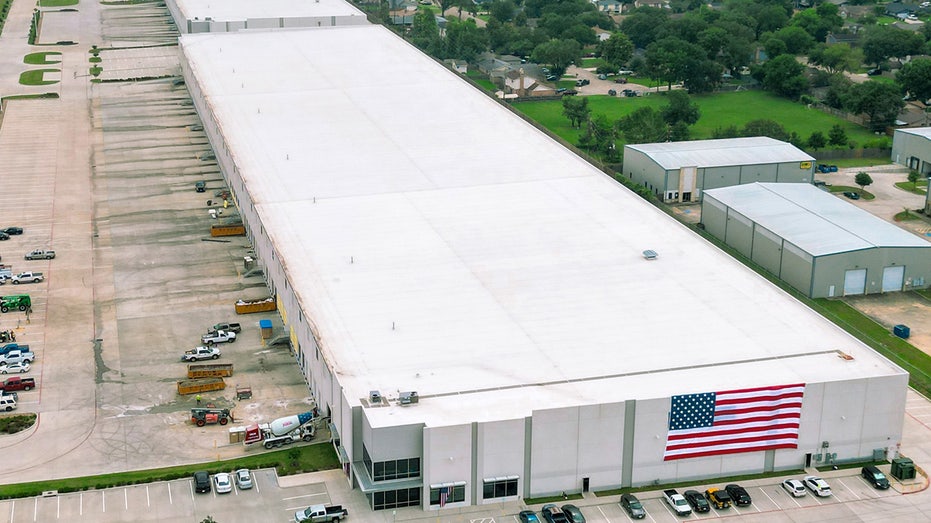
I found that with less than 5 seconds of searching.
If you're not finding anything, then maybe it's because the tools you're using don't want you to find anything.
Regardless, it won't change the nature of reality.
The money is real, the buildings are real, and the people going into and out of them are real, because the jobs are real.
Offline
Like button can go here
#14 Yesterday 16:06:18
- SpaceNut
- Administrator
- From: New Hampshire
- Registered: 2004-07-22
- Posts: 30,323
Re: Reestablishing Domestic Manufacturing Competence
Texas is in the top part of the list for states that are having business coming to them.
It appears NH is on the short end of the straw.
Under Biden these were to happen
Under the Biden-Harris administration, the 2022 CHIPS and Science Act has catalyzed over $400 billion in private investments for U.S. semiconductor manufacturing. Major projects include TSMC in Arizona ($6.6B+ funding), Intel in four states ($7.86B+ funding), and Micron in New York/Idaho ($6B+ funding), creating thousands of construction and manufacturing jobs.
Key semiconductor projects and funding under the Biden administration include:
TSMC Arizona: Awarded up to $6.6 billion to build three leading-edge factories in Phoenix, representing over $65 billion in total investment.
Intel: Finalized $7.86 billion in funding to support major projects in Arizona, New Mexico, Ohio, and Oregon.
Micron Technology: Awarded $6.1 billion for projects in New York and Idaho, with groundbreaking in New York marking a massive investment for the region.
Samsung Electronics: Received funding to expand its advanced manufacturing capability in Texas.
Hemlock Semiconductor (Michigan): Proposed $325 million to boost production of critical polysilicon materials.
The initiative aims to reverse the decline in U.S. chip manufacturing, which had fallen to a small fraction of global production, by securing supply chains for artificial intelligence and national security needs. The projects are expected to generate over 115,000 manufacturing and construction jobs across the country
So where are they under the promises of the past?
Only Micron Technology in NY has broken ground
Offline
Like button can go here
#15 Yesterday 16:14:17
- tahanson43206
- Moderator
- Registered: 2018-04-27
- Posts: 24,029
Re: Reestablishing Domestic Manufacturing Competence
For SpaceNut .... New Hampshire is sitting on unlimited thermal energy.
This forum recently published news about technology to harvest geothermal energy without water or pollution.
The information is available for free to anyone. You ** do ** have to ** look ** for it.
From my perspective, harvesting geothermal energy is part of Domestic Manufacturing.
You live in New Hampshire. You are one of the few residents who know anything about this. It is up to ** you ** to share the news with your fellow residents.
Please spare me your default downer response. Put that in your private collection that people can't see, and advance to the positive response that is waiting to be posted.
(th)
Offline
Like button can go here
#16 Yesterday 16:24:48
- SpaceNut
- Administrator
- From: New Hampshire
- Registered: 2004-07-22
- Posts: 30,323
Re: Reestablishing Domestic Manufacturing Competence
You are referring to MIT finding a place for geothermal in New Hampshire, up in the Conway area that they believe it's from radioactive decay that is 6.5 kilometers (roughly 4 miles), deep 400°F+ (200°C). temperature.
Estimated Costs and Feasibility (6.5 km Range)
Drilling Costs: The most significant expense. Drilling a single 4-kilometer (2.5-mile) well costs roughly $5 million, but costs for depths exceeding 6 kilometers (nearly 4 miles) can rise to $20 million per well or more.
Capital Costs: Deep geothermal projects, particularly EGS, often have capital costs exceeding $4,000–$6,000 per kW, which is higher than solar or wind, but comparable to other baseload power sources.
LCOE (Levelized Cost of Energy): While geothermal in hotspots is 6¢/kWh,, outside of those, enhanced geothermal heat can cost 2–14¢/kWh-th, with electricity generation often costing five times more than heat generation.
NH Specifics: A 2007 report (referenced in 2016) suggested that while the Conway Granite has high geothermal potential due to natural radiation, it would be among the most expensive sites in the country to develop due to the required drilling depth
pockets need to be even deeper than this....
Offline
Like button can go here
#17 Yesterday 18:20:33
- kbd512
- Administrator
- Registered: 2015-01-02
- Posts: 8,457
Re: Reestablishing Domestic Manufacturing Competence
There's no new manufacturing I'm aware of, but one single redevelopment project for the Sea Coast Landing is half a billion dollars, so it's not as if nobody is investing new money into New Hampshire in 2025. Apparently part of that project or some other "Seacoast" project will include new industrial spaces, at 100 New Hampshire Avenue in Portsmouth, which I presume will be used for local industrial projects. The businesses coming back or expanding in New Hampshire appear to be mostly retail and family oriented stuff, but a new job is still a job.
How difficult, relatively speaking, is it to move large quantities of people and materials in and out of New Hampshire?
How big is the workforce there?
Offline
Like button can go here
#18 Yesterday 18:27:41
- SpaceNut
- Administrator
- From: New Hampshire
- Registered: 2004-07-22
- Posts: 30,323
Re: Reestablishing Domestic Manufacturing Competence
quick check gives 100 New Hampshire Avenue in Portsmouth is a 102,000-square-foot Class A warehouse/distribution facility located at the Pease International Tradeport. As of late 2025, the facility is occupied by Georgia-Pacific and a subsidiary of HCA Healthcare. It is used for mission-critical logistics and distribution, developed by The Kane Company and Tidemark.
This on the old Pease Airforce base reclaimed lands.
The Portsmouth Pease International Tradeport in New Hampshire hosts a diverse mix of over 250 businesses, focusing on aerospace, manufacturing, technology, and professional services. Major tenants include Sig Sauer, Lonza, Sprague Operating Resources, and Hypertherm, along with airlines like Allegiant and Breeze Airways operating from the airport.
Key Business Sectors at Pease:
Manufacturing & Engineering: Sig Sauer (firearms), Lonza (biotechnology), Hypertherm (cutting systems), and Textiles Coated International.
Aviation & Aerospace: Port City Air (FBO), Seacoast Aviation Air Cargo, and airlines Allegiant and Breeze.
Corporate & Professional Services: Atlas Commodities, Two International Group, Stewart Title, and various IT/consulting firms.
Healthcare & Technology: Thrive Health Career Institute, Smile Design Center, and various engineering firms.
Hospitality & Services: Cisco Brewers (at the former Redhook site), various restaurants, a US Post Office, and Service Credit Union.
The Tradeport serves as a major employment hub for the Seacoast region, combining corporate offices with industrial manufacturing
Offline
Like button can go here