New Mars Forums
You are not logged in.
- Topics: Active | Unanswered
Announcement
#26 2026-02-20 14:48:57
- Void
- Member
- Registered: 2011-12-29
- Posts: 9,623
Re: Rubble Pile Sinter/Glass Jar/Double Cone, Ceres
I want to clone a post here as I want to expand on it beyond Ceres: https://newmars.com/forums/viewtopic.ph … 79#p238179 From "Index» Terraformation» Ceres", Post #188.
Quote:
Previously disks and cylinders have been considered, I like a double cone jar:
The above drawing is a "Cut-Away" I show one major "Double Cone" in the center, with a rotator, and four smaller attached "Double-Cones".
#1 might be used as a greenhouse. #3 might be used as a radiator.
the rotator inside of the major double-cone jar, can be throttled up or down as per spin rate. During high spin rate, the air will be pumped out of the gap between the spinner and the spinner and the Jar. But periodically air from inside of the spinner can be let out into the gap, after the spin rate has been reduced. So, spin gravity would be periodic.

I regard the double cone shape as of interest, as it might be made of large compressive blocks of materials, and yet wrapped in tensile materials to hold it together. One method to make the blocks is in a form where regolith can be glued together using a Urea-Microbe method.
I think that the blocks could be glued together with something like tar, and that a balloon inside could further assure air tightness.
An internal spin gravity device could be relatively light weight, like an aircraft structure. It would only have full gravity in a ring at it's largest perimeter, and only when at full speed.
The block structures not themselves spinning could be attached to others of their kind to form very large assemblies.
If facilities at locations similar to Ceres could mass produce these, then some of them could be put into elliptical orbits around the sun to merge with major terrestrial crossing asteroids, and to then consume them.
Some of these might then eventually be made synchronous to a world that has a largely circular orbit around the sun. So they would do repeat returns like a boomerang.
Ending Pending 
.
Last edited by Void (2026-02-20 15:03:44)
Is it possible that the root of political science claims is to produce white collar jobs for people who paid for an education and do not want a real job?
Offline
Like button can go here
#27 2026-02-20 21:28:59
- Void
- Member
- Registered: 2011-12-29
- Posts: 9,623
Re: Rubble Pile Sinter/Glass Jar/Double Cone, Ceres
The thing that I think could be of importance is that not that long after Starships are working with the Moon and Deimos/Phobos/Mars, it will be very possible to be working with small worlds like Ceres.
With robotic mater manipulation, and robots building robots, if satisfactory build methods can be developed then I think that at a fast rate their will be habitation of vase amounts creatable from worlds like Ceres.
Imagine a robot action tunneling into Ceres, 50 km deep. Rendering materials, and then they being used to make shelter for intelligent activities. In the tunnels on Ceres the Robots could be quite functional at temperatures below 0 C, I am speculating. They will not need nearly as much lighting as we do. Humans could be there in special spaces, but in orbit of Ceres it may be rather easy to provide g forces suitable to various needs.
Quote:
I want to clone a post here as I want to expand on it beyond Ceres: https://newmars.com/forums/viewtopic.ph … 79#p238179 From "Index» Terraformation» Ceres", Post #188.
Quote:
Previously disks and cylinders have been considered, I like a double cone jar:
The above drawing is a "Cut-Away" I show one major "Double Cone" in the center, with a rotator, and four smaller attached "Double-Cones".
#1 might be used as a greenhouse. #3 might be used as a radiator.
the rotator inside of the major double-cone jar, can be throttled up or down as per spin rate. During high spin rate, the air will be pumped out of the gap between the spinner and the spinner and the Jar. But periodically air from inside of the spinner can be let out into the gap, after the spin rate has been reduced. So, spin gravity would be periodic.
The "Double-Cone-Shell" may be thick enough to protect from the radiation environments.
https://www.nasa.gov/wp-content/uploads … elding.pdf
Quote:
2 to 3 metres
To protect from radiation on the Moon, a lunar base will need to be shielded by 2 to 3 metres of regolith. This thickness is necessary to reduce the annual radiation doses from an unshielded level to a safer target. The regolith, which is the moon's surface layer of rock and dust, serves as a blanket of protection against cosmic rays and solar particles. The specific amount of regolith required can be estimated using a radiation shielding calculator, which takes into account the density of the local soil, the mass attenuation coefficient, and the surface area to be covered.
NASA
+1
So, this may be very large blocks of Urine-Bricks, perhaps in forms that will resemble Lego's.
https://en.wikipedia.org/wiki/Lego
Image Quote: 
Perhaps with a bit of magnetism in them but perhaps also actually glued together in some way.
You could put a metal shell around the double cone structure if you liked, and then wrap it in high tensile materials such as steel bands, and/or Carbon wrap of some kind.
Perhaps some protective materials over that to deal with impactors.
When you had a lightweight rotator inside of one of these, you could calculate that if there is a breach in the spinner, the air loss, being absorbed by the protective outer shell, would not allow a lethal vacuum exposure. Your ears might pop, but you could survive without serious injury.
Some people might say "Where are the windows". Well, if you want to look out at space, perhaps at Ceres, you could have a window somewhere for that, perhaps in attached smaller double cone #2 or #4.
#1 might be arranged so that you had some sunlight ported into it.
It is quite possible that an almost infinite amount of double cone structures could be connected to each other in orbit of Ceres. You might have rings of them around the little dwarf planet.
So, I argue that the potential for Cere may be very large.
And then it looks like fustian power is going to appear some time not too far from now.
Although you could do double cone structures in the hill sphere of Jupiter, using solar, fusion would be quite a boost as well.
Look at the size of the Hill Sphere of Jupiter and some of the other outer worlds: https://en.wikipedia.org/wiki/Hill_sphere
Image Quote: 
It is apparently true that for the orbits of Io, Europa, and Ganymede, the radiation is lethal to quite a challenge, but for Callisto it is said to be not too bad. I am going ot guess that some parts of the magnetic field of Jupiter are better than that of for Callisto.
In any case, Callisto being ~2X as bad as Earth/Moon???? It would be a workable situation. And probably Ganymede could be mined as well, I expect.
It is thought that Ceres and Callisto may have Nitrogen, perhaps in the form of Ammonia.
https://en.wikipedia.org/wiki/Callisto_(moon)
Quote:
Ammonia on Callisto is a topic of interest in the context of its potential for terraforming.
Callisto's surface is rich in carbon dioxide and molecular oxygen, which are essential for life, but it also contains ammonia.
1
The moon's atmosphere is primarily composed of carbon dioxide, and the presence of ammonia could be significant for sustaining life, as it may help convert carbon dioxide into nitrates, which are necessary for biological processes.
2
The idea of terraforming Callisto involves creating a stable atmosphere with heavy inert gases, which could be achieved by filling the atmosphere with nitrogen and possibly ammonia.
2
The potential for ammonia on Callisto suggests that it could be a suitable candidate for supporting life, especially with the right conditions for conversion and stabilization.
1Thus, ammonia plays a crucial role in the potential for life on Callisto, particularly in the context of its terraforming efforts.
2 Sources
Nitrogen is of course of interest for artificial atmospheres, and for the Urea that might be used with microbes to make giant blocks.
https://en.wikipedia.org/wiki/Urea
Image Quote: 
https://www.spacereference.org/asteroid … st%20point.
Quote:
Ceres's spectral type G (Tholen) / C (SMASSII) indicates that it is likely to contain water, iron, nickel, cobalt, nitrogen, and ammonia. Ceres's orbit is 1.58 AU from Earth's orbit at its closest point.
It would expect lots of Carbon as well.
Ending Pending
Last edited by Void (2026-02-20 22:13:47)
Is it possible that the root of political science claims is to produce white collar jobs for people who paid for an education and do not want a real job?
Offline
Like button can go here
#28 2026-02-21 12:17:31
- Void
- Member
- Registered: 2011-12-29
- Posts: 9,623
Re: Rubble Pile Sinter/Glass Jar/Double Cone, Ceres
A mixture of matter and energy and means of manipulation makes Earth valuable.
Ceres/Asteroid Belt, are the other place that I see as being similar.
But the difference is the gravity wells.
Deimos/Phobos/Mars are interesting as well, but energy is perhaps not as good and the gravity well for Mars is still somewhat significant.
Mars does have Nitrogen but not so much to spare. If Ceres does have Ammonia, then it has a very useful asset.
Energy for Ceres could be though microwaves or lasers, and possibly space elevators.
If Space Elevators could not carry cargo, they might conduct electricity.
But with a low gravity, and a small tilt in axis, ground solar installations might be practical also.
I am sure that Deimos/Phobos/Mars will not be ignored, but if they did not exist, another way to handle things, would be to join our Moon effort to a Ceres/Asteroid Belt effort.
I sort of think that for that it might be that ships will be built at both locations.
Our Moon could use a bulk of what Ceres has, but Ceres could support a lot of artificial habitat.
Ending Pending
Last edited by Void (2026-02-21 12:27:20)
Is it possible that the root of political science claims is to produce white collar jobs for people who paid for an education and do not want a real job?
Offline
Like button can go here
#29 2026-02-21 20:14:49
- Void
- Member
- Registered: 2011-12-29
- Posts: 9,623
Re: Rubble Pile Sinter/Glass Jar/Double Cone, Ceres
Quote:
Previously disks and cylinders have been considered, I like a double cone jar:
The above drawing is a "Cut-Away" I show one major "Double Cone" in the center, with a rotator, and four smaller attached "Double-Cones".
#1 might be used as a greenhouse. #3 might be used as a radiator.
the rotator inside of the major double-cone jar, can be throttled up or down as per spin rate. During high spin rate, the air will be pumped out of the gap between the spinner and the spinner and the Jar. But periodically air from inside of the spinner can be let out into the gap, after the spin rate has been reduced. So, spin gravity would be periodic.
My logic for synthetic gravity in a double cone is that the ring with highest gravity is not likely to be required all day long for a human. At least I suspect that.
People do not spend 24 hours a day standing and straining in a 1 g gravity. If much of your day is at 1 g, you might have your bedroom somewhere with lesser gravity.
But time will tell. It seems likely that some humans of some kind will live some of the time on the Moon, and we will get some information on physical reactions to 1/6 g for humans and test biology. That may tell us important things.
I see the double cone as being intermediate between the torus, and the cylinder. I have shown where a Torus could be put into the Double Cone Structure.

So, you could put the typical spokes into it like a Starford Torus, but I think it is just easier to walk up the incline to get to the null gravity points on each apex of each cone.
Ending Pending
So that living in orbit of Ceres might not seem a grim thing, I have added a possible method of greenhouse. Very low gravity and at least somewhat lighted.

Ending Pending
Last edited by Void (2026-02-21 20:41:29)
Is it possible that the root of political science claims is to produce white collar jobs for people who paid for an education and do not want a real job?
Offline
Like button can go here
#30 2026-02-24 10:00:00
- Void
- Member
- Registered: 2011-12-29
- Posts: 9,623
Re: Rubble Pile Sinter/Glass Jar/Double Cone, Ceres
A problem with building a shell out created "Stone", is reaction to temperature changes.
One solution would be to keep relatively constant temperature inside the shell.
The other is to build in methods to tolerate the cracking which this structure may be prone to. You might actually build in planed cracks and put caulking in them of some kind???
The rock shell will be wrapped in tensile materials such as Steel Bands and Carbon Materials, I think. Outside of that some kind of thermal insulation that also handles impactors.
Then you might have a balloon insert inside of the rock shell.
It might be possible to make an entire rock shell inside of a form, if you had a form that large.
You would pressurize the insides just a bit, and then bring in regolith tailings, (Presuming you extracted some minerals). Then bring in water and Urea. Mix it up and splat it onto the interior walls and let the microbes do their work. Rinse and repeat.
https://nextnature.org/en/magazine/stor … rick-urine
Quote:
This bio-brick is made out of urine mixed with sand and bacteria
Helen Swingler
October 30th, 2018The world’s first bio-brick grown from human urine has been unveiled by University of Cape Town (UCT) master’s student in civil engineering Suzanne Lambert, signalling an innovative paradigm shift in waste recovery
The bio-bricks are created through a natural process called microbial carbonate precipitation. It’s not unlike the way seashells are formed, said Lambert’s supervisor Dr Dyllon Randall, a senior lecturer in water quality engineering.
In this case, loose sand is colonised with bacteria that produce urease. An enzyme, the urease breaks down the urea in urine while producing calcium carbonate through a complex chemical reaction. This cements the sand into any shape, whether it’s a solid column, or now, for the first time, a rectangular building brick.
For the past few months Lambert and civil engineering honours student Vukheta Mukhari have been hard at work in the laboratory testing various bio-brick shapes and tensile strengths to produce an innovative building material. Mukhari is being co-supervised by Professor Hans Beushausen, also from the civil engineering department. Beushausen is helping to test the products.
The development is also good news for the environment and global warming as bio-bricks are made in moulds at room temperature. Regular bricks are kiln-fired at temperatures around 1 400°C and produce vast quantities of carbon dioxide.
The strength of the bio-bricks would depend on client needs.
“If a client wanted a brick stronger than a 40% limestone brick, you would allow the bacteria to make the solid stronger by ‘growing’ it for longer,” said Randall.
“The longer you allow the little bacteria to make the cement, the stronger the product is going to be. We can optimise that process.”
Images: The various stages of the making of the world’s first bio-brick created from human urine in a process not unlike the way seashells are formed.
Foundational work
The concept of using urea to grow bricks was tested in the United States some years back using synthetic solutions, but Lambert’s brick uses real human urine for the first time, with significant consequences for waste recycling and upcycling. Her work builds on foundational research by Jules Henze, a Swiss student who spent four months working with Randall on this concept in 2017.
“It’s what I love about research. You build on the foundations of other work,” said Randall.
The various stages of the making of the world’s first bio-brick created from human urine in a process not unlike the way seashells are formed.
Fertilisers as by-productsIn addition, the bio-brick process produces as by-products nitrogen and potassium, which are important components of commercial fertilisers.
Chemically speaking, urine is liquid gold, according to Randall. It accounts for less than 1% of domestic waste water (by volume) but contains 80% of the nitrogen, 56% of the phosphorus and 63% of the potassium of this waste water.
Some 97% of the phosphorus present in the urine can be converted into calcium phosphate, the key ingredient in fertilisers that underpin commercial farming worldwide. This is significant because the world’s natural phosphate reserves are running dry
Zero waste
The fertilisers are produced as part of the phased process used to produce the bio-bricks.
First, urine is collected in novel fertiliser-producing urinals and used to make a solid fertiliser. The remaining liquid is then used in the biological process to grow the bio-brick.
“But in that process, we’re only after two components: carbonate ions and the calcium. What we do last is take the remaining liquid product from the bio-brick process and make a second fertiliser,” he explained.
The overall scheme would effectively result in zero waste, with the urine completely converted into three useful products
“No-one’s looked at it in terms of that entire cycle and the potential to recover multiple valuable products. The next question is how to do that in an optimised way so that profit can be created from urine.”
There are also logistics to be considered; urine collection and transport to a resource recovery. Randall has discussed these opportunities in a recent review paper on urine. Another of his master’s students is investigating the transport logistics of urine collection and treatment with some very promising results.
Social acceptance is another consideration.
“At the moment we’re only dealing with urine collection from male urinals because that’s socially accepted. But what about the other half of the population?”
In the run-up to unveiling the bio-brick, both students expressed optimism about the potential of innovation in the sustainability space.
“This project has been a huge part of my life for the past year and a half, and I see so much potential for the process’s application in the real world. I can’t wait for when the world is ready for it,” Lambert said.
“Working on this project has been an eye-opening experience. Given the progress made in the research here at UCT, creating a truly sustainable construction material is now a possibility,” Mukhari added.
Randall said the work is creating paradigm shifts with respect to how society views waste and the upcycling of that waste.
“In this example you take something that is considered a waste and make multiple products from it. You can use the same process for any waste stream. It’s about rethinking things,” he said.
Quote:
Making bricks using urine and microbes involves a natural process called microbial carbonate precipitation. Here’s how it works:
Ingredients: The process typically uses urine, sand, and bacteria that produce urease, which breaks down urea in urine into calcium carbonate.
2
Production: The urine is mixed with sand in molds, and the bacteria work to create a solid brick at room temperature, eliminating the need for high-temperature kilns.
2
Environmental Benefits: This method not only creates bricks but also recycles nitrogen and potassium, which can be used as fertilizers, thus reducing waste.
2
Strength: The strength of the bricks can be enhanced by allowing the bacteria to "grow" the solid longer, similar to how shellfish shells are formed.
2This innovative approach demonstrates a sustainable use of waste materials, promoting environmental sustainability in construction.
I am a little concerned about the "Fertilizer" conversation in bold print.
I was thinking manufactured Urea might be used, not human urine. Manufactured Urea will not automatically have all the mentioned components of Human Urine.
Also, they talk about "Sand", and regolith is not necessarily a good substitute. But it may be OK.
It may be that Urine is not the only substance to add to the mix.
While forming it, I think that tensile mesh could be added in layers as well. Screening of some Metal or Carbon. Although the bacteria may consume a part of those as well.
Stainless Steel, Aluminum, Carbon mesh?
Probably you might embed the equivalent of rebar in it as well, if you wanted to.
Anyway, for now, it is conversation. Maybe someday it would be habitats.
Ending Pending
Last edited by Void (2026-02-24 10:26:50)
Is it possible that the root of political science claims is to produce white collar jobs for people who paid for an education and do not want a real job?
Offline
Like button can go here
#31 2026-02-27 09:06:23
- Void
- Member
- Registered: 2011-12-29
- Posts: 9,623
Re: Rubble Pile Sinter/Glass Jar/Double Cone, Ceres
I guess I could put this here as reference, from a Grandparent Mind Inheritance for all of us: https://www.youtube.com/watch?v=JGoiWdkuKr8 Quote:
A 30-Metre Wheel Spinning Every 8 Seconds: The Dizzying Truth About this 1929 Spinning Space Station
Space Startup News
Pending Ending
Last edited by Void (2026-02-27 09:16:12)
Is it possible that the root of political science claims is to produce white collar jobs for people who paid for an education and do not want a real job?
Offline
Like button can go here
#32 2026-02-28 11:22:45
- Void
- Member
- Registered: 2011-12-29
- Posts: 9,623
Re: Rubble Pile Sinter/Glass Jar/Double Cone, Ceres
Types of synthetic gravity I think can be useful:
-Standard Earth Gravity Simulation. 1 g.
-Up/Down sensed gravity. The Moon apparently is not enough for this. so >1/6th g and less than or equal to 1 g.
-Health Gravity could be less than 1g. We don't know yet.
-Sanitary Gravity. (Do disgusting emissions clean by falling to the floor?)
-Microgravity (Needed for many products to be produced. (We presume at this point).
I think that two primary structures of a double cone nature can be valuable to build and use.
1) Radiation Shelter, which also may provide additional protections.
2) Radiator.
I have already explained #1 to some extent.
But a Sanitary Gravity version amuses me. This might be where you have a low velocity spinner, that can self sanitize with the low gravity and does not require a vacuum jacket to spin in. I like to think of the gravity of Ceres as a possible target.
Because the gravity is so low, the interior is more of a 3D habitation than a surface habitation. There could be gardens in this.
Because it is 3D, you can more effectively use the entire volume of the radiation shield. Because it has a spinner inside of the radiation shell, some amount self-cleaning is imposed.
This would be a place where you might fly or operate like a monkey in a jungle.
I have suggested a floor appliance for this in this post: https://newmars.com/forums/viewtopic.ph … 23#p238323
Very funny, I think, a Shoe with robot fingers, maybe a lobster flaw grasper, eyes, and a robot brain. Capable of taking voice instructions, and also responding to toe movements. Perhaps connected to the brain with Neuralink.
From post #29:
So that living in orbit of Ceres might not seem a grim thing, I have added a possible method of greenhouse. Very low gravity and at least somewhat lighted.
The spinner and also the outer shell will both be pressurized. The spin rate will be slow enough that this could be tolerated. We only want a little synthetic gravity.
I have provided that there might be some window or fiber optic method to move sunlight into the interior. However, honestly, I prefer the idea of artificial lights. We are getting better at that, and we also understand that humans need red light and just a little UV. So, it will not be office building blue light only.
Since the interior is going to be more 3D than 2D in function, much may be packed inside, and we may need a heat removal method.
Here is a cut-away view of two options: 
The interior of the radiator may be Oxygen filled as it is a useful and yet very common gas to obtain. Perhaps at 1/3 bar.
Robots within the radiator will have patching abilities to implement on short notice.
Here is how the radiator wall might be implemented: 
The Chevron Radiator fins may shed heat into the vacuum and offer some protection from impactors. Patching robots may respond quickly to patch a leak, it is hoped.
The tubing coils would allow a fluid to conduct heat to the radiator wall. And you might use a heat pump process to "Amp" this up a bit.
The radiator is a reserve oxygen supply, and even an emergency refuge. The Oxygen within will help to redistribute heat in the walls, if you add in forced convection fans to the process.
>>>>>>>>>>>>>>>>>>
We do not yet know how humans will adapt to the space environment.
Sitting in a chair or resting on a bed is a bit like being exposed to low or micro gravity.
I will suggest something really weird now. Let's suppose you could sleep while you exercise in a 1 gravity field simulation.
So, then 8 hours of brain sleep while you exercise, and then you could do 16 hours of body rest while you were awake.
OK, let's modify that. 1 hour brain sleep exercise, and 7 hours resting sleep, maybe standing in a 1 gravity field.
Then 16 hours in low gravity, maybe more than microgravity.
Weird to think of, but maybe something Aliens might have arranged for themselves.
I think this is good materials for Sci-Fi Stories.
Oh No! My computer brain is making me do stupid things while I sleep and only lets me wake up occasionally.
Ending Pending
I am presuming you would have a computer augmentation to your brain system. It could take you out while your brain was induced to sleep, and exercise your body.
Last edited by Void (2026-02-28 12:27:42)
Is it possible that the root of political science claims is to produce white collar jobs for people who paid for an education and do not want a real job?
Offline
Like button can go here
#33 2026-02-28 16:15:59
- Void
- Member
- Registered: 2011-12-29
- Posts: 9,623
Re: Rubble Pile Sinter/Glass Jar/Double Cone, Ceres
I want to consider a "Carbon Wrapped Sinter Jar", as habitat. Nod to Tesla and E. Musk.
I have had my eye on Deimos/Phobos/Mars as a good place to make orbital civilizational structures as well as on Mars.
I have looked Urine Bricks as a substitute, but this case might work well for the sinter method.
I think similar structure on the Moon might be suitable also.
Tensile wrapping a sinter jar, can be supported by this video: https://www.youtube.com/watch?v=EE-AGrN4JDs
Quote:
Elon Musk's New Motor Just Ended the EV Race Before It Even Started
Nexovery
369 subscribers
(I wanted to post the video somewhere, and this will do).
https://scitechdaily.com/turning-lunar- … sintering/
Quote:
Turning Lunar Dust Into Space Bricks for Moon Bases Using Microwave Sintering
Sintering: Sintering objects on the Moon involves using lunar regolith, the surface soil of the Moon, to create strong, homogeneous building materials. This process, known as in-situ resource utilization (ISRU), allows for the construction of lunar infrastructure without the need for transporting materials from Earth. The Moon's regolith, composed of silicates, oxides, and tiny bits of metallic iron, can be heated and sintered using microwave sintering, which is particularly energy-efficient and can be performed during the lunar night. This method has been tested and is being developed for use in lunar landing pads and other infrastructure on the Moon.
I am interested in extracting some materials from the regolith before sintering the "Tailings" into a sintered Jar.
Various methods are available. Salt Mining apparently is one good one: https://newmars.com/forums/viewtopic.php?id=11305
"Index» Life support systems» Flash Recycling, Salt Mining"
We might hope to extract the Iron from regolith using a method in this video: https://www.bing.com/videos/riverview/r … ORM=VAMGZC Quote:
A new way to make steel competitively at room temperature
YouTube
Rowow
1.8K views
A recent probe to Deimos suggests that it is made of Mars basalt. Previously it was thought that Carbon would be present. In any case there should be some Iron.
In any case Mars, itself can provide Chlorine, Carbon, and Hydrogen to the process if necessary.
If the above method will not be practical then you could roast the dust of Phobos and/or Deimos in Hydrogen and extract a concentrate of Iron magnetically.
So, there will be several processes. I expect that Iron and some Oxygen will be extracted at least.
Then you might sinter the "Tailings" into a "Double-Cone-Jar". On our Moon, perhaps you could sinter it into single cone jars that perch on the surface. If you import Carbon, you might wrap those in Carbon or Steel tensile materials.
The Jars might start thin but have more materials added to them over time. Perhaps to be thick enough to block radiation sufficiently. Perhaps 2 to 3 Meters Thick, perhaps?
You probably would need to protect the outside from impactors and thermal shocks with some sort of materials.
The double or single cone jars are not the only shapes that could be used, but I start with them as it seems sensible that all parts of them can be wrapped with tensile bands or webs of some sort.
Inside of the jars, I would expect to have a balloon type envelope to help hold in air, even if the jar cracks.
From post #29 again:
Quote:
Previously disks and cylinders have been considered, I like a double cone jar:
The above drawing is a "Cut-Away" I show one major "Double Cone" in the center, with a rotator, and four smaller attached "Double-Cones".
#1 might be used as a greenhouse. #3 might be used as a radiator.
the rotator inside of the major double-cone jar, can be throttled up or down as per spin rate. During high spin rate, the air will be pumped out of the gap between the spinner and the spinner and the Jar. But periodically air from inside of the spinner can be let out into the gap, after the spin rate has been reduced. So, spin gravity would be periodic.
My logic for synthetic gravity in a double cone is that the ring with highest gravity is not likely to be required all day long for a human. At least I suspect that.
People do not spend 24 hours a day standing and straining in a 1 g gravity. If much of your day is at 1 g, you might have your bedroom somewhere with lesser gravity.
Although you could, I do not intend that the "Jars" will spin themselves but have spinners inside of them.
Part of a day, you might have a high spin and evacuate the air from the gap between the jar and the spinner. Part of the day you might lower the spin to tolerate full air pressure in that gap. So, during that period people could pass between Jars, fairly easily.
The number of attached Jars could be extremely large, perhaps even encircling a worlds orbit, if you could compensate for tidal forces in that orbit.
For this reason, I see Mars colonization to be as much about the surface of Mars as in the orbits of Mars.
Such schemes like this could work for the Asteroid Belt, Mercury, and the orbits of Jupiter.
And if bulk materials can be extracted from out Moon, and volatiles can be brought in from the more outer solar system, then this could work for the Earth/Moon.
But Deimos/Phobos/Mars, looks like the easiest place to do it the soonest.
Ending Pending
Last edited by Void (2026-02-28 17:02:12)
Is it possible that the root of political science claims is to produce white collar jobs for people who paid for an education and do not want a real job?
Offline
Like button can go here
#34 2026-02-28 21:05:50
- Void
- Member
- Registered: 2011-12-29
- Posts: 9,623
Re: Rubble Pile Sinter/Glass Jar/Double Cone, Ceres
Here I have exaggerated the linking passage between two spinners which are hosted inside of sinter shell.

As I indicated on the drawing I exaggerated the size of the connecting passage.
Each spinner red or blue has an inflatable spin lock. Actually, inflating each spin lock which pulling vacuum on their outsides will cause the to bow out a bit, and you could put some kind of bushing/seals to limit the leakage though the connecting tunnel from the place of doors.
So, I have described the spinners as starting and stopping, and they might do so, but don't have to because if the mechanisms are working properly, could move from one spin lock to the "Doors" area to the other spin lock through "closable to be airtight doors".
In a case where there is a massive leak of air into the vacuum (Grey Color), the volume of vacuum is sufficiently small (We intend) that the depressurization will not be a major medical issue.
The Sinter-Shell(s) which are to be stationary, are to be corseted by tensile strength using things like Steel bands, or Carbon band/net, so that the Sinter-Shell can endure pressurization in that event. The Sinter-Shells may also have a balloon like air retaining liner as well.
So, great arrays of these things might be linked together, and people might pass between them relatively safely.
(I hope)
Ending Pending
Last edited by Void (2026-02-28 21:18:51)
Is it possible that the root of political science claims is to produce white collar jobs for people who paid for an education and do not want a real job?
Offline
Like button can go here
#35 2026-03-01 08:36:51
- Void
- Member
- Registered: 2011-12-29
- Posts: 9,623
Re: Rubble Pile Sinter/Glass Jar/Double Cone, Ceres
I think that there will be a difference in how materials can be acquired into orbit from various worlds.
1) Rubble Piles, likely can simply have materials removed with special crafted machines.
2) Very small worlds, like Ceres might dominantly use space elevators.
3) Small worlds like the Moon and Callisto might use mass drivers maybe rotavators. Or at greater expense, rockets.
#1 includes some terrestrial crossing worlds, Demos, Phobos, and the Main Asteroid Belt, the Greek Asteroids and the Trojan Asteroids.
#2 includes Ceres, Vesta, and other exceptional asteroids. https://en.wikipedia.org/wiki/List_of_e … _asteroids
#3 Includes our Moon, Mars, Callisto, Ganymede, Mercury.
Wields beyond the orbit of Jupiter may tend to be ice bound with less exposed rocky materials. Although Titan might have dunes of comet dust, (Or not).
#1 could export raw materials, rocks more or less.
#2 could export raw materials and finished materials.
#3 probably has to export finished materials Like Satellites and Rocket Stages with on board propulsion methods.
So, Earth is not 1, 2, or 3. The Moon is #3.
Deimos and Phobos are #1, and Mars is #3.
The asteroid belts include #1 and #2.
So, although the Moon can be an asset with very large effort, Deimos and Phobos, can offer raw materials to orbit with relative ease. Although Mars is a grunt, small amounts of what Deimos and Phobos lack can probably be extracted from them.
To get to the asteroid belt is to get the full spectrum of materials to orbits, relatively easy and in bulk.
I favor the sinter shell with a rotator in it to give synthetic gravity. Here is how the bearings could be handled: 
I think current advanced train technology could handle it. The relative speed at the shown positions of rails, as bearings will be slow enough, I think. Like a washing machine, it the rotator gets out of balance the speed of the rotator can be reduced, until the load is corrected.
In the prior post I have shown a junction of two sinter jar devices, but 3, 4, 5, and 6 at a junction might be possible.
So, Phobos and Deimos could be converted into enormous platforms with large inertia from which perhaps Mass Drivers might launch loads.
Bringing Ammonia and Methane up from Mars to compliment the materials of the two moons of Mars.
The rotor could be spun up from standstill while vacuum pumps evacuate the area between the sinter shell and the rotor. In the event the rotor has to be slowed down, a careful refilling of the vacuum with air might help facilitate that.
Ending Pending
I am hoping that Demos/Phobos/Mars & the Asteroid Belt, may be able to send materials to the Earth/Moon orbits and to the Moon.
Ending Pending
Last edited by Void (2026-03-01 09:21:17)
Is it possible that the root of political science claims is to produce white collar jobs for people who paid for an education and do not want a real job?
Offline
Like button can go here
#36 2026-03-02 11:07:21
- Void
- Member
- Registered: 2011-12-29
- Posts: 9,623
Re: Rubble Pile Sinter/Glass Jar/Double Cone, Ceres
The idea of artificial worlds has quite a lot of history.
I recall as a boy reading a book that suggested that asteroids could be melted and inflated like glass bubbles with gasses.
Then https://en.wikipedia.org/wiki/Gerard_K._O%27Neill and company suggested mass drivers on the Moon to shoot packets of Lunar regolith to a L4 or L5 location, as I recall. Image Quote: 
Apparently, they felt that an economic case could be made for beaming power from space to the Earth.
Recently Anthro-futurism: https://www.youtube.com/@Anthrofuturism has made a case for moving useful mass from the Moon to a span between the bottom limits of the Van Allan Belts, to LEO: https://www.youtube.com/watch?v=8DUydTgyGQ0&t=16s Quote:
The Lunar Mass Driver Orbital Supply Chain
ANTHROFUTURISM
These will not be emissions of Lunar Regolith but creations of processed materials with on board propulsion capabilities. They seem to intend to bring some resources, and the propulsion systems are expected to be materials repurposed.
It seems that Elon Musk/SpaceX intend to make Satellites and loft them in a similar fashion from the Moon to Sun Synchronous orbits.
Before they do this from the Moon they will send such Satellites to Sun Synchronous Orbits as Data Center elements.
In any case this leads to the question of materials recycling as these devices will over time malfunction and also become out of date.
Star links are dumped into the atmosphere in a planned way if possible, at this point. The Sun Synchronous Data Center Elements will be in a higher orbit.
So, I presume that it makes more sense to rebuild, recycle, repurpose these as they go out of service, rather than to dump them into the atmosphere. This may become true for Star links eventually as well, I think.
These devices will probably include a power supply, likely solar in nature, radiators, Data Chips assembly, and perhaps radiation shielding, as parts.
Space Startup News: https://www.spacestartupnews.com/ seems to opinion that Aluminum is a very recyclable material. So, I am going to guess that radiators will be highly recyclable. Other parts such as chips and solar panels, probably less so, might be melted to make some radiation shielding, at least.
If there is going to be a recycle center in LEO+ orbits, then I kind of like a two Starship scheme.
1) You want 1 reusable Starship, and
2) You want a modified expendable (Not Really) Starship.
#1, might be mostly for propellant delivery to LEO.
#2, might have an Aluminum upper Fairings mounted on the Stainless-Steel propellant tanks. No flaps, heat shield, header tanks, Landing Propellants.
#2 would bring Satellites to LEO and then be refilled by #1. Then #2 would travel to Sun Synchronous Orbit.
If you are going to have a recycle center for old Satellites, then it also might be able to render a Expendable (Not Really) Starship as well.
So, the Starship could be rendered into useful parts, and so recycled and also old Satellites.
Propulsion for the rendering space station might be Magdrive or Neumann Drive. I understand it needs lots of electricity. But you could have power satellites in orbit that could beam power to the rendering space station so that its mass can be kept to a reasonable limit.
It could propel itself using that beamed power and some of the waste mass from Expendable (Not Really) Starships and old Satellites.
So, this may be a way to begin creating larger space habitats as well.
Ending Pending
Last edited by Void (2026-03-02 11:42:02)
Is it possible that the root of political science claims is to produce white collar jobs for people who paid for an education and do not want a real job?
Offline
Like button can go here
#37 2026-03-12 09:25:38
- Void
- Member
- Registered: 2011-12-29
- Posts: 9,623
Re: Rubble Pile Sinter/Glass Jar/Double Cone, Ceres
I don't strongly agree with this, but if the human race has the material wealth to do this, it could be done. You would not be mandated to only make one type of structure in space.
https://www.youtube.com/watch?v=xu4P4qioCG8
Quote:
Earth is Full? How Humanity Will Build Mega-Cities in Space!
Industrial Reveal
The concept was very valuable in its time, to promote thinking.
But to make large swaths of farmland, is perhaps not necessary for human satisfaction.
Very few of us live in such a way.
But it might be nice to stay in something like this from time to time like a vacation event.
Things needed such as Nitrogen, water, and Carbon might be best obtained at a location like Ceres, but Venus, and Mars are possibiliti9es.
The authors of this article have promoted that notion: https://www.sciencealert.com/could-huma … anet-ceres Quote:
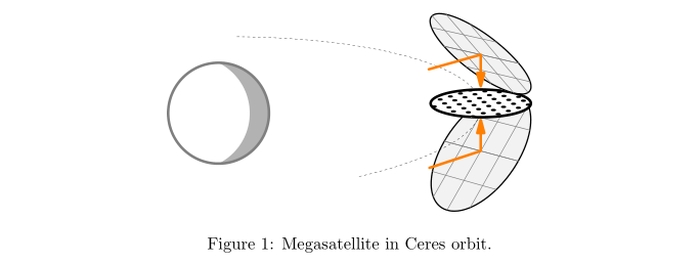
But the review of the O'Neill concept is nice, if a bit outdated.
Ending Pending
Last edited by Void (2026-03-12 09:41:05)
Is it possible that the root of political science claims is to produce white collar jobs for people who paid for an education and do not want a real job?
Offline
Like button can go here