You are not logged in.
- Topics: Active | Unanswered
Announcement
#26 2026-01-06 06:05:12
- Void
- Member
- Registered: 2011-12-29
- Posts: 9,533
Re: Bipolar Mars Terraform Plan
Continuing with the materials of the previous pos: 
The wheels "Mouth" of the device do spinnies on the dirt of a world like Phobos. They can also be steered to help spin the device; I guess.
But what grabs me now is the possible composition of the dust of Phobos.
Quote:
C-type rock
Phobos, the innermost moon of Mars, is primarily composed of C-type rock, similar to blackish carbonaceous chondrite asteroids. It appears to be covered with a layer of fine dust and fine-grained regolith, which is likely created by impacts from other bodies. The surface of Phobos has been heavily cratered and is characterized by a low density, suggesting a mixture of rock and possibly ice.
So without as much optimism if we presume some Carbon and some Oxidized Metals, we are quite close to what Starship needs for filling.
If it is presumed that Hydrogen has to come from the surface of Mars, but Photos does have Carbon and Oxygen, so math may help to understand.
In Starship the weight of Oxygen/Methane is about ~3.6/1
What is the weight of Carbon and Hydrogen?
https://en.wikipedia.org/wiki/Carbon
Quote:
Standard atomic weight Ar°(C)
[12.0096, 12.0116][1]
12.011±0.002 (abridged)[2]
https://en.wikipedia.org/wiki/Hydrogen
Quote:
Standard atomic weight Ar°(H)
[1.00784, 1.00811][1]
1.0080±0.0002 (abridged)[2]
So with math made crude, can I think that in CH4, the Carbon has 12 of the total weight and the four Hydrogens have 4 of the total weight of a Methane molecule?
So, by lifting Hydrogen from Mars, we are lifting the minority of the weight of the fuel which is the minority of the propellants for Starship?
Oxygen/Methane = 3.6/1
Carbon/Hydrogen = 12/4
So a process of refilling from Phobos may be very useful for Starship.
The Stoke Space 2nd Stage may be very useful to lift Hydrogen from the surface of Mars to assist this process to support Starship.
*If there is both Carbon and Oxygen and no Hydrogen in Phobos, it might be useful to have a Oxygen/Co2 propulsion system to use in orbit of Mars. Perhaps the Dust Eater could use it to maneuver.
But this looks pretty hopeful, if Carbon is included in the dust of Phobos, and perhaps also Deimos.
Ending Pending 
Last edited by Void (2026-01-06 06:25:31)
Is it possible that the root of political science claims is to produce white collar jobs for people who paid for an education and do not want a real job?
Offline
Like button can go here
#27 2026-01-06 11:27:55
- Void
- Member
- Registered: 2011-12-29
- Posts: 9,533
Re: Bipolar Mars Terraform Plan
So this device is beginning to look like a top: https://fity.club/lists/suggestions/Spinning-Top-Gif/
Image Quote: 
We need to keep in mind that the gravity of Phobos and Deimos is rather low.
If it is possible to use the wheeled mouth method to draw dust into this spinning device. If the bottom is too pointy and sinks in too much then it can be broadened out.
While dust will not naturally cling to all inner surfaces of the device, we can make slag bricks and put them into bags and fasten them to the inner surfaces, to create radiation protection.
I suppose it might even be possible to embed a Standford torus inside of the "Top".

It could be possible but perhaps not sensible. But the "Top" dust eater is, I think a real possibility.
Ending Pending
Last edited by Void (2026-01-06 11:54:00)
Is it possible that the root of political science claims is to produce white collar jobs for people who paid for an education and do not want a real job?
Offline
Like button can go here
#28 2026-01-06 12:17:44
- Void
- Member
- Registered: 2011-12-29
- Posts: 9,533
Re: Bipolar Mars Terraform Plan
OK, I have this which may be more practical: 
You get portions of the top filled with dust, and then you back away from Phobos and then you embed your crew compartments in the dirt.
You may have some synthetic gravity, and you may have sufficient radiation protection. You may start processing the dirt, into various things.
The majority of the "Top" could be of fabrics, with some "Boning" added.
Ending Pending
Last edited by Void (2026-01-06 12:20:03)
Is it possible that the root of political science claims is to produce white collar jobs for people who paid for an education and do not want a real job?
Offline
Like button can go here
#29 2026-01-07 10:58:47
- Void
- Member
- Registered: 2011-12-29
- Posts: 9,533
Re: Bipolar Mars Terraform Plan
I want to briefly better define the direction of this.
I am being optimistic about Carbon on one or two of the Marian moon. So, then I am hoping that for orbits of Mars, it may be possible to use CO and O2 combustion for propulsion.
Although it might be possible to spin up the tops with friction on Phobos or Deimos, I am moving towards a parent device that would spin the tops up with rotating magnetic fields. So then the tops will become flywheels that store energy.
The parent devices might be powered in part with CO/O2 combustion, but for orbital position, and spin, other means may be available. Perhaps Magdrive or Neumann Drive, perhaps an Oxygen mass driver that ejects Oxygen ice cubes.
So, these spinning tops would need a means to dip down to a small world like Phobos or Deimos, and gather some surface materials.
Then we need a means to rise back up to the parent devices.
We also have a need for a means to transfer the collected "Ore" from the "Flywheel-Tops"< and to the parent devices in Mars orbits.
The tops can also have electric systems in them including an energy source and perhaps batteries.
Some kind of thrusters sufficient for the linear path "Up and Down">
I would prefer to avoid use of combustion propellants, but do not exclude their use.
The parent devices would probably come in pairs, linked to each other so they would not continually build up more and more spin when the would push spin energy into the "Flywheel-Tops".
So, ideally this apparatus can at least partially refill various types of Spacecrafts with propellants.
Again, it may be needed to obtain Hydrogen from Mars itself.
Using mirrors in the orbits of Mars, the energy for this purpose should be relabel from solar energy, unlike the surface of Mars.
So, refilling ships in orbit may be better than to do so on the surface of Mars. Although you will still want some refilling method on the surface of Mars.
A ship intending to go to Earth/Moon or the Asteroid belt would only need to rise up to orbit and be refilled there, so the refilling on the surface of Mars could be a "Small Partial" refilling.
Ending Pending
Last edited by Void (2026-01-07 11:12:30)
Is it possible that the root of political science claims is to produce white collar jobs for people who paid for an education and do not want a real job?
Offline
Like button can go here
#30 2026-01-10 11:27:29
- Void
- Member
- Registered: 2011-12-29
- Posts: 9,533
Re: Bipolar Mars Terraform Plan
I want to import this material from a topic about the Moon: https://newmars.com/forums/viewtopic.ph … 17#p237017
Quote:
I intend to try to have a discipline to avoid chat/politics. I will stay here (I hope) only for technological matters.
I really was excited about this: https://www.bing.com/videos/riverview/r … &FORM=VIRE Quote:
Railguns on the Moon? Elon Musk's Orbital AI Vision Could Build a Thriving Cislunar Economy
Yes, the story is rather optimistic, but it is good for the soul.
Ending Pending smile
So, my hope is that some of the content of that video, can be translated into efforts for Deimos/Phobos/Mars/Asteroids.
From post #28, I still am contemplating this:
I want t o describe better the "Mouth" of the collection process and then proposed chain of method to handle the "Ore".
So, you might imagine a stupid teen doing spins on gravel and tossing gravel into the air.
The tires can be rotated so that the air mis best to collect the ejected materials into the mouth of the Cone of the collector.
The Cone is spinning, so we are now handing, the "Ore" as "Pinned" by centrifugal force to the inside rim of the collector.
The wheels could be like those of a car with texture for traction, or perhaps a bit like riverboat paddles.
I have revised my notion as to hot have these free flying but to be attached to a larger device by a scissors type extender.
https://en.wikipedia.org/wiki/Aerial_work_platform
Image Quote: 
OK POGO-TOP: 
The mouth part can be retracted into the bin, and gates at it's perimeter can open like on a train car that hauls iron ore. The regolith drops into the "Bin".
The device might be able to jump like a pogo stick up and down on the surface of a tiny world, using the scissors jack as the impulse.
The Bin and Mouth parts might spin in opposite directions like a top.
The Base of the Scissors Jack may have actuators that can move it to steer the bounces.
Of course, I have been formulating this while I did the drawing. So, alterations are expected. So, for instance the Bin, might resemble a larger form of the Mouth device. By doing Pogo and Spins, I hope to reduce the amount of thruster gas that might be necessary to manipulate the device.
When the Bin was "Filled", it would then by some means to a facility where it could be unloaded and the "Ore" be processed.
Ending Pending
Last edited by Void (2026-01-10 12:29:00)
Is it possible that the root of political science claims is to produce white collar jobs for people who paid for an education and do not want a real job?
Offline
Like button can go here
#31 2026-02-07 11:03:48
- Void
- Member
- Registered: 2011-12-29
- Posts: 9,533
Re: Bipolar Mars Terraform Plan
I have not been one who has had faith in space elevators. However, some understandings have prompted me to move to the level of hope for a Space Elevator for Mars.
https://marspedia.org/Space_elevator
Quote:
Copilot Search Branding
Concept art – Artofit
A Mars space elevator is a proposed transportation system that could facilitate travel between the Martian surface and orbit, leveraging Mars' lower gravity to simplify construction compared to Earth.
Concept and Design
A space elevator on Mars would consist of a high-tensile cable anchored to the Martian surface and extending into space, potentially reaching a synchronous orbit and beyond. The lower gravity of Mars (about 38% that of Earth) means that the tensile strength required for the cable is significantly less, making the construction of such a structure more feasible.
marspedia.org
Advantages
Cost-Effective Transportation: A space elevator would allow for continuous transport of cargo and possibly passengers to and from Mars orbit without the need for large rockets, significantly reducing costs associated with space travel.
1
Sustainable Access: Unlike traditional rocket launches, which are limited by fuel and logistics, a space elevator could provide a more sustainable and efficient means of accessing space, enabling more frequent missions and research opportunities.
12 Sources
Current Research and Feasibility
Recent studies have explored the feasibility of deploying a space elevator at the L1 libration point between Mars and its moon Phobos. This design would allow for a cable extending towards both Mars and Phobos, facilitating travel in both directions. Theoretical models have been developed to analyze the dynamics of such a system, including the motion of climbers and the effects of gravitational forces.
Springer
Future Prospects
While the technology to build a Mars space elevator is still in the conceptual stage, ongoing research and advancements in materials science may eventually make this ambitious project a reality. Companies like the Obayashi Corporation have expressed interest in developing space elevators, with plans that could potentially include Mars in the future.
Science TimesIn summary, a Mars space elevator represents a revolutionary concept in space transportation, promising to enhance our ability to explore and utilize the Martian environment efficiently.
The materials of this topic also encourage me: https://newmars.com/forums/viewtopic.php?id=11288
"Index» Life support systems» Bogs and Bog, Floating Island Technology, and Roller Solar."
And the materials of this topic also encourage me: https://newmars.com/forums/viewtopic.php?id=11299
"Index» Life support systems» Carbon is the New Metal"
Processing the materials of the moons of Mars might make for a very significant level of habitation of the orbits of Mars.
Mass Drivers from the peaks of mountains of Mars may contribute as well as also space elevators might.
I have seen it said that solar power in orbit is about 7 times as good as power on the surface of Earth. For Mars this also might be true.
While in the beginning power might be beamed to the surface of Mars by microwave and laser, it may be that space elevators could carry electrical power.
The Oxygen of the moons of Mars could be to some extent added to the atmosphere of Mars. This may act like a "Carrier Gas". That is similar to Nitrogen where it will not condense on the poles of Mars. This may alter then atmospheric processes of Mars. Where Oxygen may be expelled from mass drivers that may propel ships in orbit of Mars, it might be possible to cause most of it to fall into the atmosphere of Mars to be reused. Oxygen and other substances might be lifted up the space elevators for reuse.
It seems that Mars crossing and Earth crossing asteroids wander in from the asteroid belt. I think it may be possible to alter their orbits to be Ballistically Captured into Mars orbit. Then these would also be processed to produce Oxygen and "Metas" in orbit of Mars.
This actually could happen much faster than many people might presume, because the solar power in orbit of Mars would be very large, and also robots may provide an almost infinite pool of labor to fill the desired results.
So, this could create a world that becomes increasable suitable for surface life, and will have massive amounts of habitat in orbit of the planet.
Ending Pending
Last edited by Void (2026-02-07 11:20:48)
Is it possible that the root of political science claims is to produce white collar jobs for people who paid for an education and do not want a real job?
Offline
Like button can go here
#32 2026-02-08 12:07:19
- Void
- Member
- Registered: 2011-12-29
- Posts: 9,533
Re: Bipolar Mars Terraform Plan
Now, I am convinced that I have a good plan for human expansion to Mars.
We are informed it seems that SpaceX and others intend to add sun synchronous satellites that may be data centers, to their inventory in space.
Now, I think it is relatively likely that the same could be done for Mars. And you don't need a Mass Driver to get materials from Phobos and Deimos.
https://en.wikipedia.org/wiki/Sun-synchronous_orbit
Query: "Can Mars have sun synchronous Satellites?"
Quote:
Yes
Yes, Mars can have sun-synchronous satellites. These satellites would orbit Mars in a way that matches the planet's solar orbit period, ensuring they pass over the same spot on Mars at the same local time every day. This synchronization is particularly useful for missions that require precise timing, such as weather observation or studying the Martian surface.
Wikipedia
+1Wikipedia
Sun-synchronous orbit - Wikipedia
Query: "Can Synchronous Satellites orbit over the polar areas?"
Quote:
Yes
Yes, Sun-synchronous satellites can orbit over the polar areas. These satellites are designed to pass over the same part of the Earth at approximately the same local solar time, which is particularly beneficial for polar monitoring and environmental monitoring. Sun-synchronous orbits are a type of polar orbit, and they are specifically arranged to ensure that the satellite's altitude and inclination are carefully balanced, allowing it to maintain a constant angle with respect to the sun. This results in consistent lighting conditions, which is crucial for applications like Earth observation and environmental monitoring.
So, I presume that power can be beamed to the polar areas of Mars. Either Laser or Microwave. The atmosphere being thin may be a plus. Dust Storms of course would be a minus.
So, rather than melting the ice caps from the outside down, this would melt the icecaps from the inside out to form covered seas and lakes.

Lasers pointed into the ice from the bottom edge can form melt water streams internal to the ice caps. The water running down can fill reservoirs. The reservoirs could host biological activity.
I have suggested the use of Ice Dams, but in many cases the weight of the ice caps has created a dip in the crust surrounding them.
The tunnels left behind after laser melting may have a use, and it can be possible to have habitat in the water or tunneled into the rock below the water basin.
Byproducts of such "Farming" would likely include greenhouse gasses by intention or not.
So, you start with a covered water basin as your first artificial biome, and then expand to a situation where some open water is permitted, when the air pressure is higher.
It may be noted that waste heat can be used to keep the reservoirs melted. Waste heat also could be radiated to the sky to generate electricity.
Water losses will simply freeze out on the ice caps, so they are not permanent water losses.
Eventually even the outside may become terraformed enough to allow some surface life.
In the meantime you would have lots of habitat in orbit with synthetic gravity as well as these reservoirs.
Agricultural methods may be similar to what is mentioned in this topic: https://newmars.com/forums/viewtopic.php?id=11288
"Index» Life support systems» Bogs and Bog, Floating Island Technology, and Roller Solar."
Ending Pending
Last edited by Void (2026-02-08 12:44:30)
Is it possible that the root of political science claims is to produce white collar jobs for people who paid for an education and do not want a real job?
Offline
Like button can go here
#33 2026-02-09 11:04:18
- Void
- Member
- Registered: 2011-12-29
- Posts: 9,533
Re: Bipolar Mars Terraform Plan
In this drawing from the previous post, there is a possibility that ice tunnels in ice masses may be able to store air.
I am presuming that lasers starting at the base of an ice mass could melt sideways with a bit of up-angle. On Mars, the gravity is .38 that of Earth and the ice is likely colder than that of Earth's poles. The tendency to sag for such ice tunnels may be lower.
It may also be possible to make braces from Carbon or some other materials to help keep them from sagging. And you may pressurize the tunnels as well, perhaps that would reduce sag.
So, during a global dust storm, presuming orbital power is cut off you would have a major air supply.
You may also be living in rock tunnels that are containing residual heat. They may be down in the rock below either ice or water.
So, then you have heat and Air, and presumably you have stored food, either frozen or dried.
You may have nuclear reactors as well, of course.
>>>>>>>>>>>>>>>
I have suggested wind fences made of solar panels in the past. But I also suggest ice pits. That is if you have a body of ice that you can pull water from then you can leave pits that dust might become trapped in.
There are many high latitude ice slabs and some in the mid-latitudes.
https://www.astronomy.com/science/massi … d-on-mars/
Image Quote: 
Quote:
In a study published today in the journal Science, researchers using the Mars Reconnaissance Orbiter (MRO) investigated eight steep and eroded slopes (known as scarps) at various locations across Mars. At each of these locations, they found thick shelves of relatively pure water ice located as little as 3.3 feet (1 meter) below the planet’s surface. Furthermore, some of these massive ice deposits were found to be more than 330 feet (100 meters) thick.
Lets imagine a trenching machine that would eat into the ice slab, leaving a trench. Perhaps it would receive power form orbit. It would take the water vapor from the ice and make Oxygen and Hydrogen. Then from the Atmosphere, Oxygen and Carbon. Then Methane. Then if you had pipelines you could transport the methane across planet. Pipes might be of Cast Basalt???
There would be Methane Leakage, but who cares, it is a greenhouse gas.
The trenches could be across the wind patterns or might be serpentine in nature so as to catch dust, and to store it where dust devils cannot suck it up.
So, perhaps this method could over time reduce the dust load available to Global Dust Storms and so altering the climate to be more favorable to human use.
Ending Pending
Here is a cross section drawing of a "Dust Capture Trench".: 
The ice that would be exposed by trenching would need to be covered by some type of suitable materials after the trenching. Perhaps just regolith may do, or maybe a vapor barrier under the soil is desired.
Ending Pending
Last edited by Void (2026-02-09 11:29:58)
Is it possible that the root of political science claims is to produce white collar jobs for people who paid for an education and do not want a real job?
Offline
Like button can go here
#34 2026-02-10 11:03:16
- Void
- Member
- Registered: 2011-12-29
- Posts: 9,533
Re: Bipolar Mars Terraform Plan
So, the idea of Methane as a transferred commodity on Mars.
Cast Basalt Pipes?
https://www.miningequipmentsupplies.com … ast-basalt
Quote:
Cast basalt pipes are highly durable, wear-resistant piping solutions made from volcanic rock, ideal for transporting abrasive materials in various industrial applications.
What is Cast Basalt?
Cast basalt is a naturally occurring volcanic rock that is melted, cast, and annealed to form a hard, crystalline material. This process results in a product that exhibits exceptional abrasion resistance and corrosion resistance, making it suitable for demanding environments. The Mohs hardness of cast basalt is around 8, which is significantly higher than that of steel, rubber, or polyurethane.
miningequipmentsupplies.com.au
Properties of Cast Basalt Pipes
High Abrasion Resistance: Cast basalt pipes are designed to withstand the wear and tear caused by the transportation of abrasive materials such as coal, ash, and slurry. This property extends the lifespan of the pipes and reduces maintenance costs.
2
Corrosion Resistance: The material is resistant to many acids and alkalis, making it suitable for use in chemical processing and other corrosive environments.
2
Temperature Resistance: Cast basalt can endure temperatures up to approximately 400 °C, which is beneficial in high-temperature applications.
13 Sources
Applications of Cast Basalt Pipes
Mining and Mineral Processing: Used for transporting abrasive materials like coal, ash, and minerals, cast basalt pipes are common in mining operations and power plants.
2
Material Handling: These pipes are ideal for bulk material handling systems, including chutes, hoppers, and cyclones, where wear resistance is critical.
2
Power Generation: Cast basalt lined pipes are often utilized in fossil-fuel power stations for ash slurry transport, providing a reliable solution for high-abrasion environments.
24 Sources
Manufacturing Process
The manufacturing of cast basalt pipes involves crushing volcanic rock, melting it, and then casting it into the desired pipe shape. This process ensures that the pipes maintain their structural integrity and wear-resistant properties throughout their service life.
cumi.com.au
+1
Conclusion
Cast basalt pipes are a cost-effective and durable solution for industries that require high resistance to wear and corrosion. Their unique properties make them suitable for a wide range of applications, particularly in environments where traditional materials would fail. For industries dealing with abrasive materials, investing in cast basalt piping can lead to significant long-term savings and improved operational efficiency.
If you had a tar-like substance as a joint compound, then you could establish a methane pipe network all over Mars.
There appear to be consumable ice deposits on Mars and perennial ice deposits.
The Polar Ice Caps are Perennial, possibly Korolev Crater is Perennial.
The others are fossil and therefor consumable, not naturally renewable.
On Mars, rather than irrigating with water which can freeze, I suggest pipelines for Methane.
More difficult would be parallel pipelines for Oxygen or Synthetic Earth-Like Air.
Power beamed from orbit to the ice deposits could make it possible to synthesize the Methane and Oxygen/Synthetic Air.
Methane piped to a location can allow the creation of water, and so then what is needed for a particular resource access. You can always get Oxygen from the CO2 of the atmosphere of Mars. But for a greater cost you might pipe in Oxygen or Synthetic Air.
So, for the situation of Methane leaks, this would be supportive of the terraforming of Mars.
Beamed power might also contain signal, so it might be involved in AI about Mars.
Orbital AI may need some extra radiation shielding. Hydrogen from Mars and Oxygen from Deimos or Phobos could provide water for that, or regolith from the two moons. But some AI might be embedded into the Mars regolith, I suppose.
It may be posible to access deep burried ice on Mars: https://www.esa.int/Science_Exploration … _s_equator
Image Quote: 
Could power beamed down from orbit power electrical current flow into the ice mass to melt it?
So, you can make electric conductors from Carbon from the atmospheric CO2. So, maybe space two electrodes on the surface by a number of km, then impose electric power between them. At first, perhaps not too conductive in the ground, but salty brine may develop along the lines of conduction.
So, then to generate an Artesian Flow of water. So, then an argument on the surface between artesian water flow up into a body of water and evaporation from the ice on top of that water.
Putting poly vapor barrier on top of the ice and regolith on top of that. Not too much regolith. It has to not weight the ice down too much.
But then as a lake grows you could throttle the amount of electric flow, to control the amount of artesian water flow.
So then to build a Methane and O2/Air production facility. The water supply should last for quite a while.
The water extracted, the "Lake" will descend into a pit that gradually forms.
Water at Candor Chaos might be done this way first. It is much closer to the surface. But we do not know how deep it is.
Sun-Synchronous power platforms in orbit will be able to deliver power to various ice bodies on Mars including near the equator and at the poles.
Ending Pending
Last edited by Void (2026-02-10 11:29:12)
Is it possible that the root of political science claims is to produce white collar jobs for people who paid for an education and do not want a real job?
Offline
Like button can go here
#35 2026-02-14 12:40:18
- Void
- Member
- Registered: 2011-12-29
- Posts: 9,533
Re: Bipolar Mars Terraform Plan
I am wondering about Shad Balls as a tool in space, such as for Mars but other places as well.
https://en.wikipedia.org/wiki/Shade_ball
Quote:
Shade balls are small, black, polyethylene spheres designed to float on the surface of large water bodies, primarily reservoirs. Their primary purposes include:
Slowing evaporation: They help reduce water loss by covering the surface of the water.
2
Preventing chemical reactions: Shade balls block sunlight, which can cause harmful reactions among chemical compounds in the water.
1
Water conservation: Initially used for specific purposes, they have become a tool for conserving water in drought-prone areas.
2
Protecting water quality: They safeguard water supplies from environmental factors that could compromise quality.
1
Deployment example: In 2015, 96 million shade balls were deployed in Los Angeles to combat drought.
1These floating orbs play a significant role in water management and conservation efforts.
Image Quote: 
I think it may be that rather than spherical; these might be polygon. Perhaps they could seat against each other face to face.
At least for Mars, I have felt that ice covered reservoirs may be the easiest place to establish a functioning biome on places like Mars.
But Perhaps Ice with Shade Balls embedded may be even better.
These could be mass created by some industrial process primarily using water and CO2, I think.
The materials for these devices are likely available in abundance on Mars.
https://www.bpf.co.uk/plastipedia/how-i … -made.aspx
Quote:
Hydrocarbons
Plastics are primarily made from hydrocarbons derived from fossil fuels such as crude oil, natural gas, and coal. They can also be derived from natural, organic materials like cellulose, salt, and coal. The main ingredients in plastics include carbon, hydrogen, oxygen, nitrogen, sulfur, and chlorine. These materials undergo a process called polymerization to form the polymers that make up various types of plastics.
British Plastics Federation
+2
So, a reservoir on Mars might include an icy raft of plastic Shade Balls.
I think this may have greater flotation than ice and be more thermally insulating. It may be that is the Shade Ball layer is thick enough the iicy Shade Ball layer may transition into liquid water.
But a layer will be required above this, probably flat, and including sublimation of ice by the dry thin air of Mars.
It may be that above this, a layer of soil may be useful.
Then to put above this would be solar equipment of various sorts, and perhaps rectennas, to receive orbital power.
The water will probably have at least some salt in it. I am interested in various sources for the water. It is possible that Uranium Salts could be harvested by some future technology.
https://discoveryalert.com.au/uranium-s … tion-2025/
Quote:
Seawater Uranium Extraction: Technologies and Commercial Viability
By
Muflih Hidayat
on November 20, 2025
Image Quote: 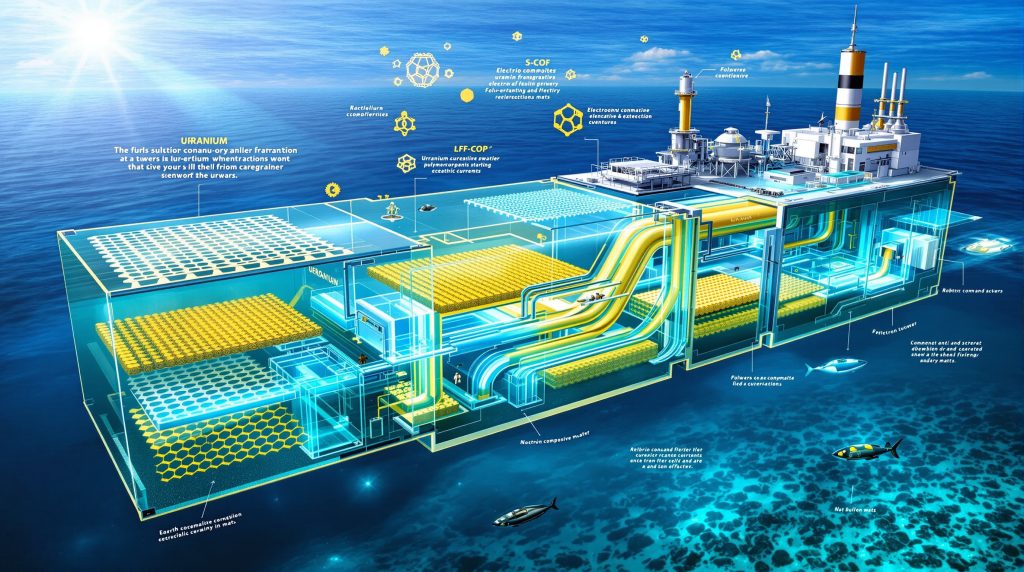
Quote:
Copilot Search Branding
Extracting Uranium from Seawater: Ocean Mining Guide
Uranium extraction from seawater is a promising method to access a vast resource of dissolved uranium, with recent advancements improving efficiency and reducing costs.
Overview of Uranium in Seawater
The oceans contain an estimated 4.5 billion tons of dissolved uranium, which is over 1,000 times the amount found in terrestrial deposits. However, the concentration of uranium in seawater is extremely low, approximately 3 micrograms per liter, making extraction challenging.
22 Sources
Extraction Methods
Electrochemical Extraction: Recent research has developed new materials and methods for electrochemical extraction, which can effectively capture uranium ions from seawater. For instance, a team created a coated cloth that attracts uranium ions more efficiently than previous methods, utilizing a structure with many microscopic nooks to increase surface area.
1
Innovative Techniques: Chinese researchers have introduced a new electrochemical method that uses two copper electrodes to extract uranium, achieving 100% extraction from seawater-like solutions within 40 minutes. This method is noted for being more energy-efficient and cost-effective compared to traditional techniques.
1
Advanced Adsorption Materials: Various advanced strategies, including hydrogel adsorption and porous adsorbents, are being explored to enhance uranium extraction capabilities. These materials are designed to selectively capture uranium while minimizing the impact of competing ions present in seawater.
1
Other substances such as Chlorine, Sodium and Lithium??? might be available by similar methods.
Fossil icy permafrost might serve as an asset. This can line a body of water and prevent its water from sinking into the deeps of Mars. So, this might allow for long lived larger bodies of water particularly near the poles of Mars.
It has been said that lots of water on Mars has settled down into cracks far below the surface. We should not want more of the water to do that. So permafrost is helpful. Even under large bodies of water, it may persist for some time.
For smaller bodies of water, we might look to Buffalo ponds of North America.
https://en.wikipedia.org/wiki/Buffalo_wallow
Quote:
Furthermore, the wallowing action caused abrasion of hair, natural body oils and cellular debris from their hides, leaving the debris in the water and in the soil after the water evaporated. Every year debris accumulated in the soil in increasing concentration, forming a water-impenetrable layer that prevented rain water and runoff from percolating into the lower layers of the soil. Ultimately the water remained for long periods, which attracted more wildlife.
Challenges and Future Prospects
Despite the potential, extracting uranium from seawater faces significant challenges, including the dilution of uranium and the presence of competing ions, which complicate the extraction process. Industrial-scale operations would require large offshore installations capable of processing millions of cubic meters of seawater daily.
1
The ongoing research aims to improve the efficiency and reduce the costs associated with these extraction methods, making it a viable option for supplementing uranium supplies for nuclear power generation in the future.
2In conclusion, while extracting uranium from seawater presents technical challenges, recent advancements in extraction technologies offer promising solutions that could transform the nuclear fuel landscape.
To seal ponds and canals, we might simulate the hair and oils and organic matter mentioned in the quote above.
So, if power satellites sun synchronous, could send power to Mars, the polar areas could be included. And as I have suggested before laser systems might make the polar ice caps of Mars like Swiss Cheeze. Structures that could hold Oxygen and also perhaps robots.
The water extracted could be used to fill bodies of water covered in the manner I have suggested.
The basic water body can then hold substructures such as diving bells, filled with air or partitions filled with water of altered properties, friendly to living things.
I think the use of Chemosynthetic and artificial light are obtainable. It might also be possible to pipe light into the water below the shade balls, using fiber optics. Perhaps at an average amount around that of 5% of that of Earth.
These bodies of water and ice tunnels would offer pressurized and warmed spaces for humans and also robots to function to over time further improve Mars to be suitable to a solar civilization.
Ending Pending
Greenhouse gasses released from these bodies of water then may assist in terraforming Mars. Perhaps increasing the air pressure by as much as 2.5X.
Ending Pending
Last edited by Void (2026-02-14 13:28:45)
Is it possible that the root of political science claims is to produce white collar jobs for people who paid for an education and do not want a real job?
Offline
Like button can go here
#36 2026-02-24 11:16:15
- Void
- Member
- Registered: 2011-12-29
- Posts: 9,533
Re: Bipolar Mars Terraform Plan
I have been working on the notion of "Stone" habitats in orbit. I have considered Ceres or perhaps other assets in the asteroid belt to be good places to try to do it.
I have wondered if it could be done in orbits of Mars, where you may have to lift Ammonia from Mars surface to orbit and then also use the materials of Phobos and Deimos.
And I still wonder about that. But now, I would like to think of adapting it to the surface of Mars.
Here is the orbital materials which might be translatable to that idea: https://newmars.com/forums/viewtopic.ph … 67#p238267 Post #30 of "Index» Terraformation» Rubble Pile Sinter/Glass Jar/Double Cone, Ceres"
To be blunt, can we make a sone igloo?
Presuming that Mars surface materials have been processed, perhaps to get certain things out of them such as Iron, then the tailings might be incorporated into "Stone Domes".
I know everybody wants pretty glass domes with Unicorns in them, but I want a workhorse dome, not a Unicorn.
I presume that you have to get down to bedrock for the dome. Then I suggest piling up regolith. If you had a good source of water, could you cast permafrost? Granted, Mars wants to dry it out, but drying out takes time. You have a good source of water and can keep the permafrost moist. You make a mound. You put a temporary tent over it. That will help keep the moisture in.
You then can use a microwave to melt just the outer few inches of the permafrost into mud. You add bacterial foods such as urine/urea. You let the bacterial or other microbes cure it into rock. You may have only one patch of the mound actively warm at a time. You add more layers, starting at the base and moving up. The Mars soil may be clay-like in places so this might be workable.
But the microbes have to work in rather cool temperatures, otherwise te permafrost mound will melt.
If this works, then after you have created a dome with a thickness of 2-3 meters, you may then enter the permafrost though a planned entrance of some kind and melt the mud that is interior to the dome and remove the mud as water vapor and regolith.
I think I can already improve on this.
Make your permafrost mound as a form, then put a layer of insulating Styrofoam on top of it. Enclose this in a tent, then begin placing a clay-like mud on top of the Styrofoam and keep it warm with microwaves, keep it moist and add foods for the microbes. You may only warm one patch of the dome at a time, to keep the permafrost mound frozen.
You may add things like a mesh of some substance, something similar to rebar and so on, to increase strength.
The enclosing tent has to be somewhat pressurized, otherwise a water phase is hard to establish at a temperature suitable for microbes.
Perhaps after the dome is made, you might pile dry regolith on top of it to thermally insulate it and to provide counterpressure to allow the interior of the dome to be pressurized.
Ending Pending
Last edited by Void (2026-02-24 11:35:26)
Is it possible that the root of political science claims is to produce white collar jobs for people who paid for an education and do not want a real job?
Offline
Like button can go here
#37 2026-02-24 21:13:43
- Void
- Member
- Registered: 2011-12-29
- Posts: 9,533
Re: Bipolar Mars Terraform Plan
So, regolith on Mars is one thing, sand another, clay another thing as well.
https://www.jsg.utexas.edu/news/2025/06 … ient-life/
Quote:
Copilot Search Branding
NASA's Perseverance rover begins main Mars missions | Popular Science
Thick clay deposits on Mars, formed in stable environments with standing water, suggest the planet may have once harbored conditions suitable for ancient microbial life.
Formation of Clay on Mars
Recent studies indicate that thick layers of clay, some reaching hundreds of feet in depth, are widespread on Mars. These deposits formed approximately 3.7 billion years ago in environments that were likely stable and rich in liquid water. The clay layers are primarily found in low-lying regions adjacent to ancient lakes, rather than in areas with fast-moving water, which suggests a calm and conducive environment for life.
The University of Texas at Austin
+2
Geological Significance
The presence of clay is significant because it requires water to form, making these deposits potential time capsules for ancient life. The stability of these clay-rich areas would have minimized destructive erosion, allowing for the accumulation of mineral-rich layers over billions of years. This stability is crucial for preserving any traces of microbial life that may have existed during Mars' wetter past.
Earth.com
+3
Implications for Life
The findings suggest that the clay deposits could have provided ideal habitats for microbial life, if it ever existed on Mars. The combination of abundant water and stable terrain would have created favorable conditions for life to develop and persist. Researchers emphasize that these clay layers might also hold clues about the planet's ancient climate and geological processes, which differ significantly from those on Earth due to the lack of tectonic activity on Mars.
The University of Texas at Austin
+3
Conclusion
In summary, the study of clay on Mars reveals that these deposits are not just geological features but also potential indicators of past life. The stable, water-rich environments where these clays formed could have supported microbial life, making them a focal point for ongoing research into the history of life on the Red Planet. As scientists continue to analyze data from Mars missions, the understanding of these clay deposits will deepen, potentially unlocking more secrets about Mars' ability to support life in its ancient past.
Traditionally we think of using high temperatures to set clay into pottery or bricks.
It is thought that some Mars soil can be compressed into bricks.
But I am wondering if bio-welding might be possible of course I mentioned it in the previous post.
While I suggested piling fresh created permafrost as a form to make a shell over, perhaps a dry pile of regolith might be used, if you put down a vapor barrier on top of it and a tent over it that could holed some pressure temporarily.
Once again, the vapor pressure calculator may be helpful: https://endmemo.com/chem/vaporpressurewater.php
If I understand the Urine Brick process room temperatures may be sufficient for the microbes.
So for 20 C > 23.2977 mbar
So the tent above the work area might be put to a pressure of 25 millibars if that is correct.
So methods to anchor it to the ground using stakes and cables, perhaps and perhaps piling regolith on its perimeter. And then simply compressing Martian atmosphere into it.
I don't know if that would satisfy the needs of the microbes or not. You might mix the clay with foods for the microbes I suppose you could start with a urine simulant. Pack layers of clay down, perhaps mixed with a sand like material if available. Perhaps also putting down several layers of mesh of plastics, metals, Carbon, Mineral Fibers???
For radiation concerns you might make it 2 or 3 meters thick. But Mars has some atmospheric shielding for radiation and you might also stack loose regolith on top of it anyway.
In a vertical direction you would need about 100 feet of water or 110 feet of water ice to compress to 1 bar on Mars.
But presuming that regolith is at least 3 times as heavy then you need about 1/3 of that.
IF the air compression inside the dome is to be 1/2 bar of an N2/O2 mix, then 1/6th of 100 feet. (Very rough estimating).
So, about 5.05968 meters, I guess.
So, if the dome is 3 meters thick then you could put 2 or 3 meters of regolith on top of it. As it would be a dome or an arch, it should not collapse under the weight and the weight should allow a atmosphere of 500 mbar inside of it.
In some cases, I would like to figure out how to build such things under thick ice layers or at the bottom of covered water reservoirs.
I still don't know if Urine Bricks can be made with Clay.
Ending Pending
Last edited by Void (2026-02-24 21:48:07)
Is it possible that the root of political science claims is to produce white collar jobs for people who paid for an education and do not want a real job?
Offline
Like button can go here
#38 2026-03-08 03:13:22
- Void
- Member
- Registered: 2011-12-29
- Posts: 9,533
Re: Bipolar Mars Terraform Plan
Urea Brick: https://www.bing.com/videos/riverview/r … &FORM=VIRE Quote:
This Bacteria Turns Sand Into Solid Stone. No Heat Required. Why Do Building Codes Reject It?
YouTube
Natures Lost Archive
This attracts me because they indicate that some of this might be done underwater.
As you might know, some of my notions involve creation of covered bodies of water on Mars. The byproduct Ammonia would not be that much of a problem, maybe even an asset.
Ending Pending
Last edited by Void (2026-03-08 03:14:47)
Is it possible that the root of political science claims is to produce white collar jobs for people who paid for an education and do not want a real job?
Offline
Like button can go here
#39 2026-03-10 10:32:40
- Void
- Member
- Registered: 2011-12-29
- Posts: 9,533
Re: Bipolar Mars Terraform Plan
OK, this will be better than the "Urea" bricks.
https://www.earth.com/news/fighting-coa … lly-works/
Quote:
Jolting coastal sand with electricity
Now, engineers have found that a trickle of electricity – just a couple of volts, about what a toy flashlight uses – can lock loose coastal sand into a rock-like mass.The current coaxes dissolved minerals already floating in seawater to crystallize between grains of sand, gluing them together almost instantly.
In lab tests, the sand stayed put after only a few days of stimulation and showed strength on par with quarried stone.
Clams and mussels turn seawater’s calcium into sturdy shells without breaking a sweat. Researchers copied that natural chemistry, but replaced metabolic energy with an external battery.
At 2-3 volts, calcium carbonate forms; nudge the voltage to 4 volts and magnesium hydroxide and hydromagnesite join the mix.
These minerals are tougher than standard concrete and can withstand repeated wetting, drying, and salt spray.
Spark of creativity
“Over 40% of the world’s population lives in coastal areas,” explained Alessandro Rotta Loria of Northwestern University, who led the study. “Because of climate change and sea-level rise, erosion is an enormous threat to these communities.”He explained that erosion of coastal sand already causes “billions of dollars in damage per year worldwide” through the loss of land and the disintegration of infrastructure.
Current approaches to mitigate erosion involve building protection structures or injecting external binders into the subsurface.
“My aim was to develop an approach capable of changing the status quo in coastal protection – one that didn’t require the construction of protection structures and could cement marine substrates without using actual cement,” Rotta Loria continued.
It has been my opinion that on Mars large ice masses such as the polar ice caps could be melted internally using lasers, and so yielding melt water to create lakes and seas in.
This also could likely be done nearer to the equator where sufficient ice exists.
Ancient salt deposits likely exist under the soils where once upon a time bodies of water existed.
So, using the electric process it might be possible to build things under the water.
And in the tunnels in the ice, robots could exist.
Ending Pending
Last edited by Void (2026-03-10 10:41:01)
Is it possible that the root of political science claims is to produce white collar jobs for people who paid for an education and do not want a real job?
Offline
Like button can go here
#40 2026-03-13 11:47:25
- Void
- Member
- Registered: 2011-12-29
- Posts: 9,533
Re: Bipolar Mars Terraform Plan
Here is another video about cementing sand with sea water and electricity: https://www.youtube.com/watch?v=2BBLH51XhTo
Quote:
Electricity Turns Sand Into Solid Stone. No Cement Required. Could Concrete Become Obsolete?
The Buried Vault
My notion in this is to revive the seas of Mars as covered bodies of water, and to make Diving Bell type structures using the above technology.
So, to make pressurized space using native raw materials.
Pause (For some time)................
Last edited by Void (2026-03-13 11:49:53)
Is it possible that the root of political science claims is to produce white collar jobs for people who paid for an education and do not want a real job?
Offline
Like button can go here
#41 2026-05-21 10:29:37
- Void
- Member
- Registered: 2011-12-29
- Posts: 9,533
Re: Bipolar Mars Terraform Plan
This will have considerable value for Mars and other worlds as well. (Venus for instance).
https://www.msn.com/en-us/news/technolo … o6#image=1 Quote:
How plasma could speed up the dream of Mars colonization
Story by Nadeem Sarwar•
1w
Quote:
How Plasma Could Speed Up The Dream Of Mars Colonization
©Alones/Shutterstock
Plasma — the energized gaseous phase of matter — is everywhere in the universe, and humanity is reaping its benefits by using it for everything from neon signs to sustainable waste management. An international team of experts has now proposed a system that employs plasma to synthesize oxygen using Mars' atmosphere. Or to put it more accurately, pulling oxygen out of the thin Martian air.As part of the research, the team created Mars-like conditions in a laboratory and shot plasma beams at the gaseous mixture to synthesize oxygen gas. The findings, which have been published in the Journal of Applied Physics, note that plasma technology is scalable, versatile, and more importantly, it can produce more oxygen while also reducing the bulk of machinery needed for the process.
Right now, In Situ Resource Utilization (ISRU) is being seen as the most viable solution for exploration missions to distant bodies like Mars. Even for projects as ambitious as mining asteroids, research suggests establishing a floating base station around Mars' satellites is the way to go forward. That's primarily because hauling tons of critical resources like oxygen and rocket fuel is not practical for long voyages.
However, if there are systems that can utilize the local resources of Mars and turn them into usable materials like breathing gas, the logistics issues can be solved and the mission feasibility goes higher. Plasma tech for synthesizing oxygen on Mars will "likely play a very relevant role in future ISRU strategies," per the latest research.
Quote:
Current state of resource management on Mars
©NASA/JPL-Caltech
NASA has already put an experimental system on the red planet that can convert carbon dioxide into oxygen. Dubbed Mars Oxygen In-Situ Resource Utilization Experiment (MOXIE), the machine is the size of a car battery and operates out of the Perseverance rover. In April of 2021, the MOXIE kit successfully managed to harvest oxygen gas on Mars for the first time.Moxie relies on a system called Solid Electrolysis Cells (SOEC) that passes electricity between two electrodes to create a temperature higher than 1,000 K for breaking down carbon dioxide into water. But it has its own set of drawbacks. For example, the electrode material is susceptible to chemical degradation in the process.
To avoid this fate, it would require a working atmosphere of carbon monoxide, high temperature, and high pressure. All that requires extra gear like a compression system and thermal insulation system, which only adds to the bulk and also shoots up the power requirements.
MOXIE is currently designed to produce only 10 grams of oxygen per hour. According to NASA, To launch off the surface of Mars, astronauts would need 25 metric tons of oxygen and an additional 7 metric tons of rocket fuel. To achieve such numbers, the size of MOXIE needs to be enhanced roughly by a factor of 100. Therefore, it is critical that engineers and scientists develop better-performing, smaller, and more energy-efficient systems for oxygen generation on Mars, which is where the plasma tech can prove to be a gamechanger.
Image Quote:

Quote:
Why is plasma tech tailor-made for Mars?
©Krzysztof Winnik/Shutterstock
The atmosphere of Mars is made up of roughly 96% carbon dioxide — the raw material that needs to be broken down for harvesting oxygen. Aside from feeding this oxygen into base stations, a miniaturized gas conversion device could also be used to produce breathing gas on the go, reducing the need for carrying bulky gas cylinders as astronauts explore the Martian surface.Additionally, the carbon monoxide produced during the plasma-catalyzed breakdown of carbon dioxide can be mixed with oxygen to create the propellant material for rocket fuel. Further decomposition can lead to the production of carbon, which can subsequently be used for the synthesis of other organic molecules or find purpose in construction materials.
A promising possibility is that by altering the plasma arc's chemistry, nitrogen can also be trapped from the Martian atmosphere to make breathing gas and fertilizers, as well. Another advantage is the atmospheric conditions on Mars, which are even more favorable for plasma ignition and related processes compared to that on Earth.
The team behind the latest research notes that the pressure, temperature, and gas composition on Mars are more suited for plasma-based resource harvesting. For example, the argon and nitrogen present in the Martian atmosphere can further enhance the plasma dissociation process. Plus, the power requirements are also significantly lower.
Quote:
Technical advantages of plasma tech
©Merlin74/Shutterstock
When it comes to critical machinery for long missions or dreaming about a crewed exploration on bodies like Mars, the biggest issues are cargo bulk, energy requirement, ease of usage, and efficiency. Bringing plasma into the picture has a few advantages on a technical level.For example, once oxygen has been produced in the plasma chamber, the heat generated by the plasma arc can itself be used to harvest the gas. The ionic conductivity of a membrane for collecting the oxygen ions goes up above a certain temperature level, something that is already attainable in the plasma arc chamber.
The takeaway here is that with plasma technology coming into the picture, there is no need for dedicated pre-heating equipment to increase the membrane's temperature and enhance its oxygen pass-through. The free electrons in the plasma will provide an additional kinetic kick to further boost the movement of oxygen across the membrane.
At the end of the day, plasma-powered tech offers two critical advantages for such missions. It can deliver better synthesis performance by lowering the energy requirements for producing oxygen, and it can also reduce the mass of machinery required to produce the same amount of oxygen as the current system in place.
Quote:
The tricky road ahead
©Supamotion/Shutterstock
Preliminary calculations made by the team suggest that a plasma reactor weighing 6 kilograms can produce 14 grams of oxygen per hour. On the other hand, a 15-kilogram reactor like the MOXIE system can only manage 5.5 grams of oxygen synthesized per hour. Overall, a plasma-powered system can generate six times more oxygen per hour per kilogram of machinery sent to Mars compared to that of a MOXIE-like system.However, there are still a few challenges that need to be tackled. First, where would the oxygen produced by a large plasma system be stored on Mars? Plus, the plasma-membrane tech is still very much a work in progress in the research community. Another major hurdle is going from theory to practicality.
The plasma tech will first have to be demonstrated on Mars to prove that it is actually a more capable alternative to the MOXIE experiment. Doing so would require lots of funding, NASA support, and of course, a ride aboard a rocket to land on Martian soil. According to a report in the New Scientist, the team is hoping to build a working prototype of their plasma-powered oxygen synthesis system in the next couple of years.
Want the latest in tech and auto trends? Subscribe to our free newsletter for the latest headlines, expert guides, and how-to tips, one email at a time. You can also add us as a preferred search source on Google.
I have a query to test my computer with: "Microbes that consume Carbon Monoxide?"
As is often true my computers search engine is a dud.
As is often true my phones search engine is more helpful, quote: "Microbes that consume Carbon Monoxide (CO) are known as carboxydroophs or carboxydovores. The thrive in environments ranging from industrial waste gasses to soil and hot springs. Using specialized enzimes "called carbon monoxide dehydrogenases (CODH) to break down the toxic gas into Carbon and energy.
Query my computer now understood: "+carboxydroophs microbes that consume Carbon Monoxide"
Quote:
Copilot Search Branding
Like
Dislike
Microbes That Consume Carbon Monoxide
Several groups of microbes are capable of metabolizing carbon monoxide (CO), using it as an energy source and helping to detoxify the atmosphere.Key microbial groups and mechanisms
Carboxydotrophic bacteria are a major group that oxidize CO to carbon dioxide (CO₂) for energy. They often use a specialized enzyme called CO dehydrogenase (CODH), which catalyzes the oxidation of CO. This enzyme is found in trillions of microbes in soils and waters, where they consume CO for their own survival while reducing atmospheric levels of this toxic gas www.the-microbiologist.com+1.
Thermophilic hydrogenogenic carboxydotrophs are a subset of carboxydotrophs that live in hot environments such as hydrothermal springs. They possess a CODH–energy-converting hydrogenase (ECH) gene cluster, allowing them to oxidize CO and produce hydrogen gas (H₂) as a byproduct. This H₂ can fuel other microbial communities in the ecosystem pmc.ncbi.nlm.nih.gov.
These microbes are distributed in diverse environments, including freshwater sediments, hydrothermal systems, and soils, and their presence helps regulate CO concentrations, counteracting air pollution and indirectly mitigating climate change by reducing CO’s greenhouse effect www.the-microbiologist.com+1.
Ecological and biogeochemical importance
Globally, over 2 billion metric tons of CO are released annually, but microbes consume about 250 million tons of it, converting it to CO₂ www.the-microbiologist.com. This process is part of the natural carbon cycle and helps maintain breathable air. The Monash University-led study revealed the atomic-level structure of the CO dehydrogenase enzyme, showing how it extracts energy from atmospheric CO and powers microbial cells www.the-microbiologist.com+1.Summary table of key microbes and traits
Microbe Type Habitat Key Enzyme
FunctionCarboxydotrophic bacteria Soils, waters, sediments CO dehydrogenase (CODH)
Oxidize CO to CO₂ for energyThermophilic hydrogenogenic carboxydotrophs Hot springs, hydrothermal sediments CODH–ECH cluster
Oxidize CO, produce H₂General carboxydotrophs Various anaerobic environments CODH
Detoxify CO, support microbial communitiesIn short, carboxydotrophic bacteria and their specialized CODH enzymes are the primary microbial players in CO consumption, with thermophilic hydrogenogenic carboxydotrophs adding a hydrogen-producing role in extreme environments.
Read less
This similar query also got a sensible response from my computer: "+carboxydovore microbes that consume Carbon Monoxide"
Quote:
Copilot Search Branding
Like
Dislike
Images
Videos
Carboxydovore microbes are specialized bacteria that consume carbon monoxide (CO) as an energy source. Here are some key points about these microbes:
CO Consumption: Carboxydovores use carbon monoxide dehydrogenase to convert CO into carbon dioxide (CO2) and hydrogen ions (H+), providing energy for their metabolism.
2
Microbial Diversity: These microbes are part of a broader group of CO-oxidizing bacteria, which play a crucial role in the global carbon cycle by reducing atmospheric CO levels.
2
Ecological Role: The presence of carboxydovores helps detoxify the atmosphere, contributing to the reduction of harmful CO emissions.
2
Research Findings: Recent studies have identified novel carboxydovore strains that can efficiently consume CO, potentially leading to the production of biofuels and other valuable products.
2
Enzymatic Mechanism: The CO dehydrogenase enzyme is essential for the metabolic processes of carboxydovores, allowing them to thrive in environments with low CO concentrations.
2These microbes are vital for understanding the dynamics of CO in the environment and their potential applications in biotechnology and environmental remediation.
6 Sources
From my phone again: "Industrial Biofuel Producers: Strains like Clostridium autoethanogenum can thrive on pure CO. They consume the gas and biologically convert it into valuable fuels and chemicals such as ethanol and acetate.
"
The plasma separation process has to occur at low pressures with cold Mars atmosphere, which is obtainable on Mars.
If you then compressed the gas mix into a water filled vat, I suggest that it may be possible to generate the chemicals mentioned above.
Ethanol would be a fuel you could use.
Acetate can be used with Oxygen to grow yeast and Algae and maybe also some vascular plants. Also, Mushrooms can grow on acetate I think.
A manner of pumping suggested by Calliban and which I had some previous exposure with, I do not recall the name. A stream of water flowing down a thin pipe has air bubble injected into it at the top and compresses the air bubbles with water column pressure.
The reason to want to pump this way is you would be compressing an explosive mixture of gas. CO and O2. So, I hope that the small bubbles isolated by water will prohibit a dangerous level of explosion. Ideally the two gasses will be dissolved into the water at the bottom of the pipe, and not collect into a large pocket of explosive gas.
My computer did very well with that, although I still don't have the name of it. Quote:
Copilot Search Branding
Like
Dislike
Compressing Air Bubbles in a Water Flow with a Thin Pipe
When you inject an air bubble into the top of a thin pipe carrying a flowing water column, the water’s pressure at that point will compress the bubble, and the degree of compression depends on the flow velocity, pipe geometry, and injection conditions.1. Pressure at the Injection Point
At the top of the pipe, the water pressure is determined by the hydrostatic head from the reservoir or pump, plus any dynamic pressure from the flow. For a thin pipe, the velocity is high, so the dynamic pressure term
1
2
ρ
v
2
can be significant. The total pressure
P
at the injection point is:P
=
P
static
+
1
2
ρ
v
2
where
P
static
is the hydrostatic pressure from the water column above,
ρ
is the water density, and
v
is the flow velocity OpenStax.2. Bubble Compression
The injected air bubble will expand or contract to match the local pressure. If the injection pressure is above the bubble’s initial pressure, the bubble will shrink; if below, it will expand. In your case, since the water column pressure is higher than atmospheric, the bubble will be compressed.The compression ratio can be estimated from the ideal gas law:
P
2
P
1
=
T
2
T
1
·
V
1
V
2
If we assume constant temperature,
P
2
/
P
1
=
V
1
/
V
2
, so the volume ratio is the inverse of the pressure ratio.3. Flow Effects on Bubble Size
In flowing water, bubbles behave differently than in static water. High flow rates tend to reduce bubble size because the water’s kinetic energy limits coalescence and allows smaller bubbles to remain stable Academia.edu. In turbulent flow, bubbles may also be entrained and carried downstream, and their size can vary along the pipe due to velocity gradients Academia.edu.4. Experimental Insights
Studies of air bubbles in liquid flow show that:Bubble velocity and size depend on injection rate and flow velocity Academia.edu.
In high-velocity flows, bubbles are smaller and more uniformly distributed.
Pressure gradients from the water column can cause significant compression of bubbles, especially in narrow pipes where velocity is high OpenStax.
5. Practical Considerations
Pipe diameter: Narrower pipes increase velocity for the same flow rate, increasing dynamic pressure and compression.Flow rate: Higher rates increase dynamic pressure and can limit bubble growth.
Bubble injection method: The rate and location of injection affect how quickly and how much the bubble is compressed.
In summary: The air bubble will be compressed by the water column’s pressure at the injection point, with the degree of compression depending on the static and dynamic pressures, temperature, and the bubble’s initial state. In a thin pipe with high flow, the compression will be significant, and bubble size will be smaller due to the high-velocity environment Academia.edu+1.
Read less
So, if microbes consume CO and O2 in the presence of water, in order for them to manufacture Ethanol or Acetate, they have to extract Hydrogen molecules from the water, thus liberating Oxygen.
So, this process could be done in a batch manner where during the sunshine, you generated CO and O2 and injected it into a vat of water (With nutrients), then also during the night the microbes might consume all of the CO to make Hydrocarbons dissolved in the water, and then what would be left on top of the water would be gas of O2, and perhaps N2 and Argon, as you would get them from the Mars Atmosphere. If done correctly on the completion of the "Batch" all the CO would be consumed, rendering the gas mix as suitable for human consumption. You might want Canaries available to test the output before presenting it to humans.
Query: "Canaries in the coal mine, why?"
Quote:
Copilot Search Branding
Like
Dislike
Why “Canary in the Coal Mine” Was Used
The phrase “canary in the coal mine” comes from a real historical practice in which bright yellow songbirds were used as early warning systems for deadly gases in coal mines.The Danger: Carbon Monoxide
Coal mines in the 19th and early 20th centuries often had carbon monoxide (CO) buildup, a gas that is colorless, odorless, and deadly. At high levels, it can cause unconsciousness and death within minutes Nautilus+1. Miners had no reliable instruments to detect it until the canary method was introduced.Why Canaries?
Canaries were chosen because:They are highly sensitive to carbon monoxide and other toxic gases, reacting before humans do Nautilus+1.
They breathe more air per breath than humans, so they absorb more gas and show distress faster Nautilus+1.
They are small and portable, making them easy to carry in cages into the mine Smithsonian Magazine.
When a canary showed signs of distress—such as swaying, gasping, or collapsing—it signaled to miners that the air was unsafe and that evacuation was needed Nautilus+1. In some cases, miners even revived the birds by supplying oxygen Nautilus.
Origins
The idea was proposed by John Scott Haldane, a British physiologist, after an 1896 mine explosion in Wales. He concluded CO buildup was the cause and suggested using animals more sensitive to poison gases than humans. Canaries were the most practical choice Smithsonian Magazine+1.Cultural Impact
Over time, the canary became a symbol of early warning. Miners often treated them like pets, whistling to them in the dark Smithsonian Magazine+1. By the 1980s, the practice was replaced by electronic gas detectors, and the UK officially banned canaries in mines in 1986 Smithsonian Magazine.Modern Meaning
Today, “canary in the coal mine” is an idiom meaning an early warning sign of danger—not literally about birds, but about any indicator that something harmful is about to happen. Examples include:A drop in customer retention as a warning of deeper business problems.
Coral bleaching as a sign of ocean health decline grammarschooling.com.
In short, the phrase exists because canaries literally saved lives underground by detecting invisible, deadly gases before they killed miners.
Read less
So, much simpler than science machines.
Ending Pending
Last edited by Void (2026-05-21 11:20:16)
Is it possible that the root of political science claims is to produce white collar jobs for people who paid for an education and do not want a real job?
Offline
Like button can go here
#42 2026-05-21 13:12:57
- Void
- Member
- Registered: 2011-12-29
- Posts: 9,533
Re: Bipolar Mars Terraform Plan
(th) made a favorable comment about the just prior post: https://newmars.com/forums/viewtopic.ph … 35#p239435
I agree that both Moxie or Plasma method might have value. The chain of factors in the prior post may by variations provide a method of
Energy + CO2 + Water + nutrients to obtain Air and Food wherever the inputs may exist.
That includes just about any space environment where humans breath.
I agree that the contents of that post #41 are of great potential importance.
I will appreciate it if Spacenut does do as you have suggested.
Ending Pending
Last edited by Void (2026-05-21 13:14:00)
Is it possible that the root of political science claims is to produce white collar jobs for people who paid for an education and do not want a real job?
Offline
Like button can go here