New Mars Forums
You are not logged in.
- Topics: Active | Unanswered
Announcement
#426 2026-02-08 15:34:28
- SpaceNut
- Administrator
- From: New Hampshire
- Registered: 2004-07-22
- Posts: 30,844
Re: kbd512 Postings
inputted image and question large double torus stiffness problem over long spans need analyzing
You’re poking right at the hard part of these forms—global stiffness over long, curved spans is where they get sneaky.
Key stiffness issues in a large double-torus truss
Global ring flexibility (hoop modes):
The toroidal geometry wants to “ovalize” under asymmetric loads.Problem: Low in-plane bending stiffness of the ring → large lateral deflections, especially midspan between supports.
Watch for: First few modes being global ovalization or “breathing” of the torus rather than local member bending.
Torsional softness of the ring:
If the torus is essentially a single-layer truss ring, its torsional stiffness is often weak.Problem: Eccentric loads (lighting, rigging, façade panels) twist the ring, causing out-of-plane rotations and secondary bending in chords.
Mitigation: Use a closed box-like section at the macro level—e.g., double chord top/bottom with diagonals forming a tube, or two concentric rings tied with radial webs.
Span-to-depth ratio of the truss:
Long spans with shallow truss depth are inherently flexible.Rule of thumb: For a primary long-span truss, depth ≈ span/15–20 is comfortable; much shallower and deflections dominate.
In a torus: “Depth” is the radial distance between inner and outer chords (or top/bottom chords if vertical). Too small → poor bending stiffness around the ring.
Local member buckling vs. global stability:
Compression chords: Long, lightly braced chords around the torus are prone to elastic buckling if panel lengths are large.
Bracing density: Panel length and diagonal layout control effective buckling length; large toroidal spans often need tighter panelization than straight trusses.
Support conditions and continuity:
Discontinuous rings: If the double torus is segmented (e.g., four quadrants bolted together), joint flexibility can dominate global stiffness.
Support layout: Few supports → large bending in the ring between them; many supports → more statically indeterminate, but stiffer and more redundant.
How to analyze stiffness (conceptual workflow)
Idealize as a ring/torus beam first (macro model):Model: Treat each torus as a curved beam with equivalent ?? (bending) and ?? (torsion) derived from the truss.
Goal: Quickly see global deflections, ovalization, and sensitivity to support layout and span.
Derive equivalent section properties from the truss:
Axial stiffness of chords:??eq=∑???cos2(??)
Bending stiffness: Use chord separation (depth) and chord areas to get an equivalent ? about the ring’s local axes.Torsional stiffness: If you have a closed truss tube, approximate ? from the chord layout; if it’s open, accept that ?? is small and design bracing accordingly.
Refine with a 3D truss FE model:
Nodes: At each panel point along the torus; include both toroids if it’s a “double” system.
Members: Chords, diagonals, verticals, and any cross-ties between the two tori.
Check:
Nodal displacements under worst-case load patterns.
Member forces and utilization.
Buckling factors (linear eigen-buckling) for global modes.
Pay attention to load patterns that “break symmetry”:
Partial loading: Half-ring or quarter-ring loads often govern deflection and member forces.
Eccentric loads: Loads offset from the ring centroid to excite torsion and out-of-plane bending.
Strategies to increase stiffness over long spans
Increase structural depth:Radial depth: Separate inner and outer chords more; larger radius difference → higher in-plane bending stiffness.
Vertical depth: If the torus is vertical, increase distance between top and bottom chords.
Create a true closed tube:
Double torus as a box: Tie the two tori together with regular radial frames so they act as a single closed section.
Benefit: Huge gain in torsional stiffness and resistance to ovalization.
Densify bracing:
Shorter panels: More nodes, shorter members → higher buckling capacity and better distribution of forces.
Diagonal patterns: Use X-bracing or K-bracing patterns that stabilize both chords effectively.
Stiffen joints and segment connections:
Bolted flanges / sleeves: Ensure segment joints are not the weak link; rotational slop here kills global stiffness.
Pre-tensioned connections: Where possible, use preloaded bolts or clamps to reduce slip.
Optimize support scheme:
More supports: If feasible, add intermediate supports to reduce effective span between supports.
Support stiffness: Model support flexibility (e.g., base plates, anchors) realistically—soft supports can negate gains in the truss.
A quick gut-check for your design
If you tell me:Major radius (centerline of torus), Minor radius / truss depth, Number of panels, Chord sizes, and Support locations,
I can walk through a rough equivalent ??, estimate deflections over the longest span, and flag where the double-torus concept is likely to feel “soft” versus robust.
What’s the approximate diameter and depth of the double torus you’re thinking about, and is it for a stage, a roof, or something more permanent?
it indicates that the secondary members made from 30×2 mm is fine. but the primary need to be Much larger chord tubes (think on the order of 150–400 mm OD, with sensible wall thickness), and Real truss depth between chords and between the two tori to build up ?eff.
That is an ouch to support the regolith mass...
150–400 mm OD 4–12mm wall thickness
Truss depth (within each torus) 1–3m between inner/outer or top/bottom chords
Separation between the two tori 20–30m center‑to‑center (this is the single biggest lever on global stiffness)
Panel length 5–10m spacing between nodes
Offline
Like button can go here
#427 2026-02-18 17:18:31
- SpaceNut
- Administrator
- From: New Hampshire
- Registered: 2004-07-22
- Posts: 30,844
Re: kbd512 Postings
I believe that I have found a means to our goal in using regolith and thermoplastics powder was used as the binder for solid shaping the Vectren regolith bags.
See the torus topic for using regolith plus thermoplastics powder and the wiki reference that I have put together. Wiki New building materials and method
Offline
Like button can go here
#428 2026-02-18 23:29:53
- kbd512
- Administrator
- Registered: 2015-01-02
- Posts: 8,533
Re: kbd512 Postings
SpaceNut,
If available engineering data indicates that regolith-filled Vectran is a lower mass solution which remains long-term viable, then we're rolling with that idea. Your solution seems like it should work well enough. I'm happy with using polymer to bind the regolith together. Most "first ideas" tend to be sub-optimal. The exoskeleton framing was only an idea intended to recycle some of those Starships, since many of them are never leaving after they land. If we don't send Starships all the way to the surface, then they're not "lost" to our inability to deliver enough power and equipment to refuel them. I'm not an architectural engineer, so it was no surprise and of little consequence that the first idea I had turned out not to be the best way to build something large enough to house 1,000 people on Mars. That's why we iterate design concepts until something approaching optimal is arrived at. Payload mass not devoted to heavy but relatively weak steel can now be allocated to other necessary equipment.
Do you think we're going to need to "pre-heat" the regolith for adequate mixing of the polymer binder?
Vectran's maximum continuous service temp is 200C, but ideally it should remain between 149C and -62C to avoid loss of fiber tenacity. Vectran melts at 330C. While Vectran fabric is used over temperatures outside this range in LEO, for this to be a very long-term structure we want to avoid creep, which happens faster to polymer fibers when they're placed under load near the edges of their service temperature envelope. The interior fabric layers will be impregnated with Silicone to seal the interior to prevent loss of atmospheric gases. We may want multiple to use multiple Silicone impregnated layers as insurance against punctures. Vectran fiber is already commonly coated with small amounts of Silicone to reduce fiber-to-fiber abrasion, but the kind of Silicone I'm talking about using is a "rubberized" solid. So far as I'm aware, there is no out-gassing issue with these materials aboard ISS, meaning they're approved aerospace materials for human space flight applications. Bigelow Aerospace's BEAM module uses these materials and is presently attached to ISS, but many layers of fabric are used because they're part of an inflatable structure. There is (obviously) no Martian regolith inside them to provide radiation protection, as ISS is largely shielded from CME / SPE / GCR by Earth's Van Allen Belts.
I'm going to introduce the idea of using two additional materials for enhanced fire and impact protection:
I feel as though some sort of thermally and electrically insulating liner material should be applied to the interior wall of the habitat to inhibit accidental fire damage as well.
1. CarbonX fibers "interlock" when exposed to extreme heating, "sealing" the fabric against further heat transfer. I think the interior should be lined with this fabric. Colors are very limited, dark grey or dark blue or black. That might not be ideal for "ambiance", but it is a near-ideal "fire blanket" to protect the interior from fires.
2. To enhance structural integrity to preclude a collapse under the weight of the regolith, we could embed uni-directional fiberglass "bow staves" laced into the interior structure. At ~1,800kg/m^3 of Martian regolith, presuming 2m of overhead protection, the "load" is roughly 280lbs/ft^2. Even with a polymer binder for the regolith and use of a very strong fabric like Vectran, a little additional insurance against a structural failure won't add that much weight.
Here's a photo of a unidirectional fiberglass composite main landing gear bow used for light aircraft:
Placing these supports bows inside the habitat, and possibly outside as well, would ensure that the structure remains adequately supported following some kind of impact event. Maybe they're not needed, but I don't know how regolith with polymer binder behaves under impact at low temperatures.
Offline
Like button can go here
#429 2026-02-19 02:16:12
- SpaceNut
- Administrator
- From: New Hampshire
- Registered: 2004-07-22
- Posts: 30,844
Re: kbd512 Postings
The regolith is heat treated to remove water, co2 ice and any other but that's what we want to do anyways to get these in abundance, Whether we have other sources or not for these. The Regolith is ground to make it a bit finer before adding the plastic powder but I do not think that's outside of the scope for equipment that makes building on mars easier.
Something to note is typical binders ( sulfur) need more heat and from what I have seen does not make for something which does the complete function. Using the even thin plate shaped steel around the Plastic provides more protection.
I did see the temperature range of the Vectren fiber plus the work on the ISS multiple layers to sustain pressure. Mixing parts of each Idea looks promising as the Polymer/regolith use can take on the shapes that we desire.
The only issue I have found is the internal needs to have a support system that does not puncture or cause wear to the inflatables material while its loaded up with floors and equipment as that load is how gravity mass of the items go through.
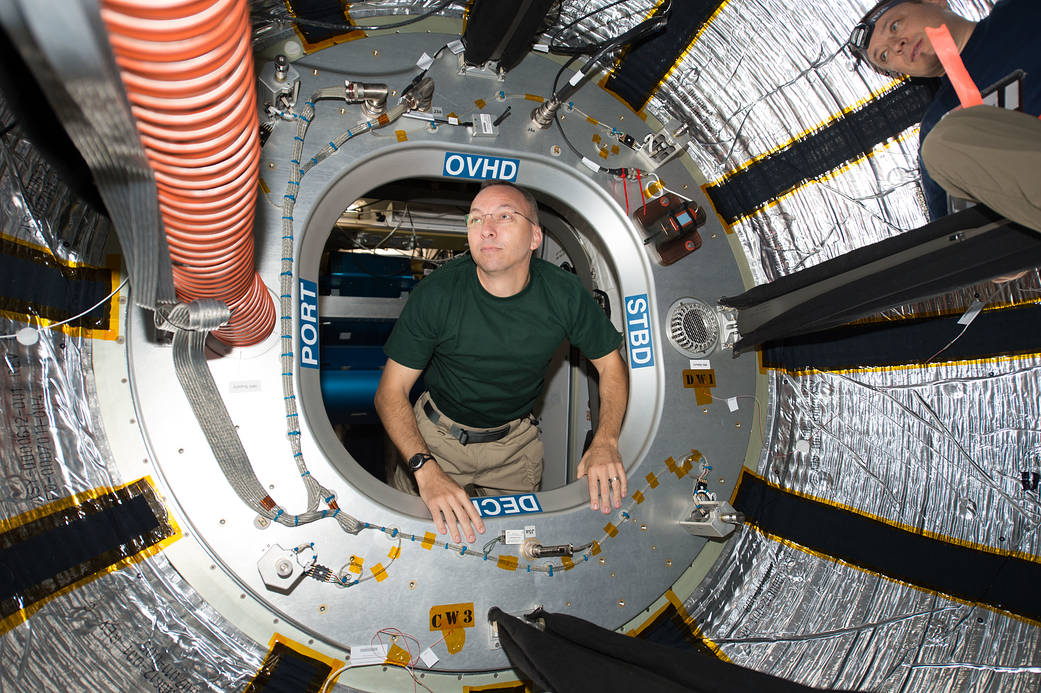
Looks like a metalized foil for the fire safety.
Offline
Like button can go here
#430 2026-03-03 18:03:05
- SpaceNut
- Administrator
- From: New Hampshire
- Registered: 2004-07-22
- Posts: 30,844
Re: kbd512 Postings
composite materials topic wiki has been updated
Offline
Like button can go here
#431 2026-04-22 17:30:42
- tahanson43206
- Moderator
- Registered: 2018-04-27
- Posts: 25,758
Re: kbd512 Postings
For kbd512 re new Projects topic!
Congratulations on this auspicious opening.
I ran across a reference to modern infantry armament in the past day or so... shoulder mounted missiles like Stinger may be part of the battle space. Low flying bomb delivery drones (modern V1's) may be susceptible to prop aircraft.
(th)
Online
Like button can go here
#432 2026-04-23 11:06:46
- tahanson43206
- Moderator
- Registered: 2018-04-27
- Posts: 25,758
Re: kbd512 Postings
For kbd512 ... the link to the NewMars image server reaches the web site, but the web site is currently unable to connect to the database.
You can see the problem if you look at the line SpaceNut added above the main menu on the hope page.
SpaceNut provided links to the Mars Society, to the Lifeboat side, and to the Image server.
At the recent Google Meeting, we took a moment to discuss the situation. There was a key question of access.
Have you had a chance to look into that?
I think the password from the working site (this one) should work for the images site, if we can get to it.
(th)
Online
Like button can go here
#433 2026-04-23 12:06:56
- kbd512
- Administrator
- Registered: 2015-01-02
- Posts: 8,533
Re: kbd512 Postings
tahanson43206,
I am no longer able to connect to the database because the password has changed. Mr Burk changed it.
Offline
Like button can go here
#434 2026-04-23 12:27:31
- tahanson43206
- Moderator
- Registered: 2018-04-27
- Posts: 25,758
Re: kbd512 Postings
Hi kbd512!
Thanks for confirming that. It is not surprising. The hackers got into the site, and it is reasonable to change passwords at the high level where the Webmaster operates, as well as internally with database password.
I'll follow up.
(th)
Online
Like button can go here
#435 2026-05-03 21:34:08
- tahanson43206
- Moderator
- Registered: 2018-04-27
- Posts: 25,758
Re: kbd512 Postings
For kbd512 re 3D print of ribs...
https://newmars.com/forums/viewtopic.ph … 37#p239137
Gemini suggested using a pipe as the spar (or multiple pipes).
Are pipes manufactured with the required strength to serve as a spar?
Also... please consider model aircraft. It might be possible to 3D print the parts for an entire aircraft if you choose the appropriate scale.
The 3D printers I have are the standard consumer grade 400mm x 400 mm x 400 mm box, but the Crealty 30 is quite an impressive machine.
You could print ribs of any length and height that is respectable and width appropriate.
If you mount the ribs on a pipe and secure the assembly with a covering, it seems to me you'd have a decent wing.
For sure it should work for a large model.
There might already be 3D print plans for components of models. I haven't looked.
Update: I found this glider wing section on thingiverse.com
https://www.thingiverse.com/thing:2591508
Please note the crosshatch design ...
(th)
Online
Like button can go here
#436 2026-05-05 18:27:25
- tahanson43206
- Moderator
- Registered: 2018-04-27
- Posts: 25,758
Re: kbd512 Postings
Update for kbd512 re 3D long Z printer:
The Crealty offering is discontinued. There were three manufacturers, and I'm guessing Crealty did not win enough market share to justify keeping this (somewhat exotic) printer.
I investigated the remaining two ... the top-of-the-line would be worth considering for a manufacturing operation.
However, the consumer grade version appears to be suitable for experimentation.
The IdeaFormer IR3 V2 is a belt printer with a build volume of 250x250x∞, linear rails, and a direct-drive extruder. It can print ABS with an optional enclosure.
My question for you is: can you design a wing with the height of the rib limited to 25 centimeters?
I read up a bit on wing design, and learned that a flat bottom is practical and useful for certain flight regimes.
I understand that crop dusters may have curvature of the bottom surface of the wing to increase lift at slow speeds at the expense of increased drag. Manufacture of a 3D printed rib would certainly be easier if you could go with a flat bottom. Holes in the rib can be designed in to accommodate cylindrical spar pipes. This is particularly convenient since the rib will be printed while lying flat. What this means is that there is no need for scaffolding under parts because we would be printing the entire rib in cross section.
The long Z printers print at 45 degrees which is different from most 3D printers which print at 90 degrees vertical. This is done to permit the long-Z feature. A programmer working with this feature needs a slicer that can deliver the Gcode needed by the device. My sense of what is required to create a rib is that there are no difficult surfaces to have to deal with.
However, this is all speculation on my part. I'll attempt to secure information about what it takes to set up the software to use one of these printers.
(th)
Online
Like button can go here
#437 2026-05-09 10:45:11
- tahanson43206
- Moderator
- Registered: 2018-04-27
- Posts: 25,758
Re: kbd512 Postings
Update for kbd512 re IdeaMaker slicer ... The maximum length of the rib I downloaded from Thingiverse appears to be a bit more than 5 feet.
1593.604 millimeters is the autosize maximum possible if the Y distance is 220 millimeters.
I'll try to make an image of the model in the slicer.
The rib shown in this image is a bit over 5 feet long.
Update: USAF modified cropduster:
The OA-1K Skyraider II is a modified crop duster that covers special ops better than an F-35
The US Air Force's new prop plane costs a fraction of a fast jet and can land on a dirt strip with two Hellfires and 14 laser-guided rockets ready to go. Here's why special ops warlords chose this over
(th)
Online
Like button can go here
#438 2026-05-10 20:34:11
- tahanson43206
- Moderator
- Registered: 2018-04-27
- Posts: 25,758
Re: kbd512 Postings
For kbd512 re diesel fuel or gasoline or any hydrocarbon fuel that is subject to Carnot.
It is possible you have not yet seen this report.
https://newmars.com/forums/viewtopic.ph … 18#p239218
Chinese researchers appear to have found a way to defeat Carnot and still use Carbon, by feeding carbon atoms directly into a fuel cell.
If you could use this method you could employ an electric motor for propulsion and eliminate the complexity and mass of the engine, the radiator, the supercharger and perhaps other unnecessary components I don't know about.
I assume the carbon atoms must be transported in a fluid of some kind.
No pressure appears to be necessary for the fuel tanks, although that is speculation on my part.
The output of the reaction would be carbon dioxide, but without the waste associated with incomplete combustion in diesel engines.
Elimination of waste heat would be an advantage on the battle field, and it would represent a cost savings in the civilian market.
(th)
Online
Like button can go here
#439 2026-05-11 04:01:12
- kbd512
- Administrator
- Registered: 2015-01-02
- Posts: 8,533
Re: kbd512 Postings
tahanson43206,
I read the Science Direct article on this. They didn't find a way to "beat Carnot efficiency". They discovered a fantastic new exergy destruction method. Whomever printed that MSN article is too scientifically illiterate to know what they're talking about. They cherry-picked a piece of information they found agreeable to their environmentalism belief system and utterly ignored the rest of the process, which is astonishingly complex and energy-intensive.
You should count the number of different processes required to purify the coal to the point that it can be used at all. One of the requirements includes obtaining coal particles of the correct size. Notice the complete lack of an exergy destruction analysis on the numerous required processes? The preprocessing steps might be good for removing the hazardous impurities in raw coal, which is a fine goal if you don't care about how much input energy is required. The catalyst they're using hasn't been capable of running for longer than half a year (4,500hrs). Beyond that, the energy output per unit of catalyst surface area is very low, around 50mW/cm^2. Hydrogen fuel cells are around 600mW/cm^2 to 1,200mW/cm^2 for comparison purposes. This process won't be used to power any kind of flying vehicle.
Anyway, a Hydrogen fuel cell would weigh about 150kg, at about 2kW/kg. Excluding the mass of the electric motor and the insulation, because it runs at about 800C, assuming direct 1:1 power-to-weight with the PEMFC (unlikely), this DCFC device might weigh 1,800kg to 3,600kg for equivalent electrical power output. That's pure speculation on my part, but it needs 12X to 24X as much catalyst surface area as a PEMFC and every part of it will be high temperature materials, meaning ceramics or refractory metals, such as stainless or superalloys. If we presume that the complete diesel engine weight is around 610kg, because it does, then this device would be about 3X to 6X as heavy as the diesel engine, which is already quite heavy. You could probably power a train or ship with it, although it would still be heavier than a diesel engine for equivalent power output.
Edit:
The SOFC that the US Army and NASA developed to burn diesel fuel had a power-to-weight ratio as high as 5kW/kg because it was a 3D structure with radically improved surface area per unit of catalyst loading, and that ran for over a year on high-Sulfur diesel fuel, but after a year the catalyst was trashed by the Sulfur in the fuel. They dropped the project because the catalyst wouldn't last nearly as long as a diesel engine would, although it did demonstrate 80% conversion efficiency, which is markedly better than the best diesel engines. Someone may eventually solve those problems, but the Army cannot guarantee that there won't be any Sulfur in their numerous fuel sources. The on-road diesel we use here in America has had most of the Sulfur removed, at significant additional energy cost and exergy destruction.
The Chinese research is scientifically interesting, if impractical for anything but a stationary power plant, and likely impractical for other reasons related to exergy destruction associated with all the preprocessing steps to use the coal as fuel and to then capture the CO2. The underlying catalyst tech in most of these high temperature SOFCs is either the same or substantially similar.
Last edited by kbd512 (2026-05-11 04:22:08)
Offline
Like button can go here
#440 2026-05-11 08:13:58
- Calliban
- Member
- From: Northern England, UK
- Registered: 2019-08-18
- Posts: 4,386
Re: kbd512 Postings
TH, the link in the original post has gone inactive. One problem with fuel cells is that surfaces are vulnerable to contamination, especially with sulphur. Historically, there have also been issues with weight, cost and fragility of ceramic membranes in SOFCs. If we want to burn coal in an engine, the traditional approach was to gasify the coal with partial combustion with steam, to produce carburretted water gas. This gas can then be burned in a spark ignition engine or gas turbine. This is old technology now. It has been used in road vehicles. It could be used in trains and ships.
In ships, it might find a niche, because such a ship could be powered using coal, raw biomass, crop residues, forestry wastes and even trash. The fuel wouldn't require much processing aside from being chopped into pieces of the right size. Any plant material available would work. This option hasn't been popular up to now because of the logistics of handling solid fuel, the need for pre-burning furnaces on board the ship (which would take up space in the hull), the cumbersome nature of solid fuel injection into furnaces and the lower energy density of biomass fuel. But this is an option that coukd be made to work if the world finds itself enduring a prolonged shortage of liquid fuels.
Last edited by Calliban (2026-05-11 08:15:54)
"Plan and prepare for every possibility, and you will never act. It is nobler to have courage as we stumble into half the things we fear than to analyse every possible obstacle and begin nothing. Great things are achieved by embracing great dangers."
Offline
Like button can go here
#441 2026-05-11 12:29:01
- kbd512
- Administrator
- Registered: 2015-01-02
- Posts: 8,533
Re: kbd512 Postings
Here's the Science Direct article:
Towards zero-carbon-emission direct coal fuel cells for power generation
Read the section describing the preprocessing steps to use the coal in the fuel cell. There's nothing clean or emissions-friendly about some of those processes, at least not as they're currently done in the real world. Shifting where your emissions and pollution take place is not a solution to anything. IF they can keep the pollutants (heavy metals and other contaminants) out of the air and ground water, then the output product could be a good way to reduce actual air pollution, which does not include CO2. The output of the numerous preprocessing steps is essentially Graphite particles of a predefined size. What they do with the non-conforming particle sizes is not explicitly stated. After all the overhead of those coal cleaning and conditioning processes, then they want to capture the CO2 from this fuel cell after it generates electricity.
Generating electricity at 80% efficiency while taking away much of the energy it had to begin to power the preprocessing steps, and then taking even more power to capture the CO2, means you end up burning more coal to generate the same amount of electricity. I don't consider that to be a technological "win", unless improved fuel efficiency was never the goal.
Offline
Like button can go here
#442 2026-05-18 14:25:11
- tahanson43206
- Moderator
- Registered: 2018-04-27
- Posts: 25,758
Re: kbd512 Postings
For kbd512 ...
If this link survives so you can retrieve the story, I thought you might be interested to see a supersized model aircraft able to carry a passenger.
https://www.msn.com/en-us/travel/articl … 6ea7&ei=25
***
I am interested because they used 3D printing to make some of the components.
(th)
Online
Like button can go here
#443 2026-05-19 08:29:12
- tahanson43206
- Moderator
- Registered: 2018-04-27
- Posts: 25,758
Re: kbd512 Postings
For kbd512...
The aircraft described in the article at the link below has some features that remind me of the design you are working on:
https://www.msn.com/en-us/news/us/air-f … 2a30&ei=35
Story by Jeff Schogol
The Air Force now has 18 new light attack aircraft that are designed to support special operations forces on the ground, and it expects to receive “a handful more” by October, said Lt. Col. Robert Wilson, of Air Force Special Operations Command, or AFSOC.
The single-engine turboprop OA-1K Skyraider II is “essentially a Swiss Army Knife of airborne capability,” that can fly armed reconnaissance, close air support, and precision strike missions, said Wilson, AFSOC’s armed overwatch requirements branch chief.
The Skyraider is designed to support operations that range from counter-terrorism to “aspects of full-on conflict,” Wilson told reporters on Friday. It is capable of carrying weapons, including Advanced Precision Kill Weapon System, or APKWS, laser-guided rockets, and the plane also has rails and pylons on its wings so it can be equipped with more advanced weapons and sensors in the future.
(th)
Online
Like button can go here
#444 2026-05-29 07:03:40
- tahanson43206
- Moderator
- Registered: 2018-04-27
- Posts: 25,758
Re: kbd512 Postings
For kbd512 re build-it-yourself aviation...
Here is an example of a foam based aircraft that flies with electric fans for propulsion ...
https://www.popsci.com/technology/world … eing7779x/
I wonder how the details of the wing might look. The article only shows what appears to be part of the fuselage.
A detail from the article is that the builder used CADCAM to scale the original Boeing drawings to 1/7 scale. That way, he did not have to calculate the structure of the wing. That would have been done by the Boeing engineers.
(th)
Online
Like button can go here
#445 2026-08-12 06:54:32
- tahanson43206
- Moderator
- Registered: 2018-04-27
- Posts: 25,758
Re: kbd512 Postings
For kbd512 re Microsoft Deployment of password less authentication ...
I've posted some information about the new security policy just announced by Microsoft for Azure users.
My impression is that the changes needed are massive (a) and (b) only ** very smart people ** will be able to handle this.
The number of customers impacted is probably significant. It might easily be in the millions world wide.
It will take some serious study to get up to speed on this.
Search term: employment opportunities to assist with Microsoft password less authentication by February 2027.
(th)
Online
Like button can go here