New Mars Forums
You are not logged in.
- Topics: Active | Unanswered
Announcement
#1 Yesterday 18:08:54
- SpaceNut
- Administrator
- From: New Hampshire
- Registered: 2004-07-22
- Posts: 30,014
Designing insitu Mars equipment garage
Whether the equipment is delivered by a cargo starship or via a Conex box delivery system the end is to protect the supply that is very expensive to provide..
A support structure to protect the equipment and crew so as to be able to work in shirt sleeves.
Designing an in-situ Mars equipment garage involves leveraging local resources (ISRU) to provide robust shielding and a pressurized, sealed environment for maintenance, repair, and storage of rovers and other surface equipment.
Key Design Principles
Radiation and Micrometeorite Shielding: The primary structure must protect sensitive equipment from intense solar and cosmic radiation, as well as micrometeorite impacts. This is typically achieved by covering the habitat with a thick layer of Martian regolith.
Airlock and Pressurization System: A multi-stage airlock system is critical for maintaining internal pressure and preventing the ingress of toxic Martian dust (perchlorates) into the main habitat or garage area.
ISRU Material Use: Construction should prioritize the use of local materials (regolith, basalt) to minimize the payload required from Earth.
Modular and Expandable: The design should allow for phased construction, starting with an initial structure and allowing for future expansion as the mission grows.
Construction Methodology
An autonomous, phased approach is generally proposed for construction before human arrival.
Site Preparation: Robotic systems select and prepare the site, which may involve excavating a cavity or a lava tube to utilize natural shielding.
Autonomous Construction: Autonomous 3D-printing robots build the primary structure using a blend of fused regolith and potentially imported binders or prefabricated components like carbon nanotubes.
Internal Outfitting: Inflatable modules or rigid internal liners (e.g., HDPE plastic to provide an airtight seal) are deployed and connected within the protective shell.
Functional Requirements
Vehicle Maintenance Bay: A large, climate-controlled area for repairing rovers and other large equipment.
Airlock System: A large, vehicle-sized airlock for moving equipment in and out, with systems to remove dust.
Power and Communication: Connection to the base's power grid (e.g., nuclear fission units) and communication networks.
Storage and Workshop: Areas for storing spare parts, tools, and raw materials, including a manufacturing bay for 3D-printing spare parts from metals and plastics.
Structure type is not defined as we must know what type of early equipment type as well as the fuels that they will need to make use of. It is suggested to be a separate attached system with possible machine shop capability.
Other suggestions is to possibly make this the staging start foundry for metals processing.
Offline
Like button can go here
#2 Yesterday 18:34:45
- tahanson43206
- Moderator
- Registered: 2018-04-27
- Posts: 23,600
Re: Designing insitu Mars equipment garage
This post is reserved for an index to posts that may be contributed by NewMars members.
Index:
(th)
Offline
Like button can go here
#3 Yesterday 18:45:30
- tahanson43206
- Moderator
- Registered: 2018-04-27
- Posts: 23,600
Re: Designing insitu Mars equipment garage
The idea of needing a garage first showed up in the Airlocks topic.
https://newmars.com/forums/viewtopic.ph … 22#p236522
The problems of dealing with Martian atmosphere and sand carried by the atmosphere will be challenging for human sized airlocks.
The challenge of removing clean air from a garage/hanger sized building and allowing Mars atmosphere to fill the volume will be daunting.
It seems likely to me that vehicles will be serviced by robots (via teleoperation) in volumes shielded from the open atmosphere, but kept at Mars ambient pressure.
The main need will be freedom from grit in the air, and good lighting.
The cost of filling a hanger sized volume with clean air just to service a vehicle will be too high for the average community.
Conceivably a very wealthy corporation or government could indulge in such a luxury.
The time it would take to pump down a large garage or hanger would be lost for maintenance.
I think it far more likely that a sand door will be a basic requirement, good lighting and power for tools, and a system for removing dust from the vehicle will be needed.
(th)
Offline
Like button can go here
#4 Today 08:35:21
- SpaceNut
- Administrator
- From: New Hampshire
- Registered: 2004-07-22
- Posts: 30,014
Re: Designing insitu Mars equipment garage
For SpaceNut .... Your new topic about garage/hanger volume looks promising. I don't think anyone will be able to fill such a volume with very expensive clean air. Clean air will be reserved for use in habitats, and inside sealed vehicles. I can't imagine anyone being able to afford to take the time to pump down a garage or hanger sized volume just to work on a vehicle.
I think it makes more sense to bring the vehicle into a volume where you can close the huge door and let dust settle to the floor.
Mechanical sweepers might be a way to collect the dust, because vacuums aren't going to work in the thin Mars atmosphere.
Ingenuity showed that large fans ** can ** work on Mars.
It might make sense to blow dust off of vehicles before driving them into a garage or hanger.
Humans may have experience performing maintenance in sand storms. It's not something I've heard much about.
(th)
I would say that the standard double door system needs a second set to be able to do a cleaning room function before entry into the dome.
We would also use a SCUBA system which is similar to those used in Desert Storm.

As seen you get a bottled air system 5000 psi composite tank with a filtered snorkel to airlock air using an air mask.
Offline
Like button can go here
#5 Today 10:00:30
- tahanson43206
- Moderator
- Registered: 2018-04-27
- Posts: 23,600
Re: Designing insitu Mars equipment garage
for SpaceNut .... Humans have plenty of experience working on vehicles in the out-doors.
It seems to me highly likely that designers will plan for outside maintenance of most vehicles.
However, your topic here calls for a vehicle sized garage, and that means you will need a vehicle sized airlock.
This will be an extremely expensive operation. I don't think you realize how expensive it is going to be.
The airlock door must withstand 1/2 bar of pressure. it cannot leak, But inevitably, it ** will ** leak.
I hope you can get help from your AI friend to solve ** that ** problem, because you (as a mere human being) won't be able to solve it.
You will be installing and running massive air pumps to scavenge every possible atom of precious oxygen and nitrogen, and you will NOT succeed, because you don't have time enough to run those pumps before your customer is going to be hopping mad because of the delay,
The bill to your customer is going to include the cost of the lost gases. Nitrogen in particular will be precious and it will likely have to be imported.
The bill to replace that nitrogen because your customer wants the vehicle ** inside ** for shirtsleeve servicing will be a major part of the item list, along with rags and oil and other supplies.
Regarding the air tank .... OK ... so your service worker would be wearing a standard Mars suit?
If that is the case,then the garage can be unpressurized and just well lit and dust free (or dust managed).
That might work.
(th)
Offline
Like button can go here
#6 Today 12:05:08
- SpaceNut
- Administrator
- From: New Hampshire
- Registered: 2004-07-22
- Posts: 30,014
Re: Designing insitu Mars equipment garage
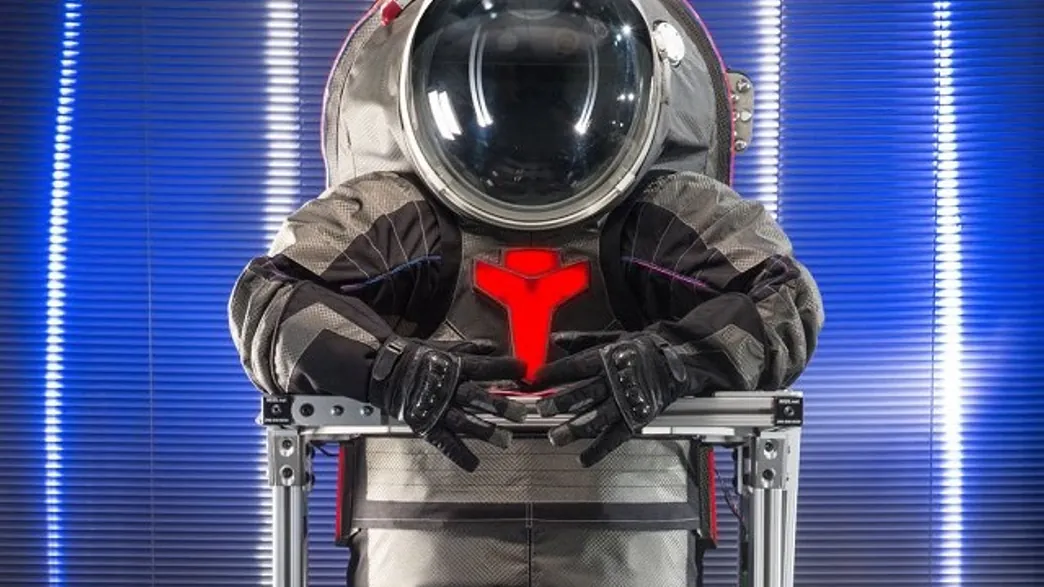
A not with a restrictive easily puncturable space suit where cuts can occur killing the mechanic by venture of being in a near vacuum.
For SpaceNut ... re https://newmars.com/forums/viewtopic.ph … 44#p236544
The text you pasted about airlocks looks reasonable, but there are no references.
This forum needs to get in the habit of providing references for every post that might be assumed by a reader to be something other than an opinion.
I like the discussion about multiple stages of air locks. That looks really tedious to me.
The worry about contaminating Mars is understandable for an initial expedition.
It has nothing to do with Calliban's dome airlock. We aren't going to be worried about contamination of Mars.
You have already started discussion because you are (apparently) worried about CO in Mars atmosphere that might enter the habitat.
I have tried to encourage you to guide your AI to produce useful guidance on how to do that. The AI may have found some NASA documentation but I don't see that has much if anything to do with Calliban's dome.
You provided a problem to solve. Now please guide AI to find a solution.
Offline
Like button can go here
#7 Today 18:38:21
- tahanson43206
- Moderator
- Registered: 2018-04-27
- Posts: 23,600
Re: Designing insitu Mars equipment garage
For SpaceNut ... Post #6 shows an example of a problem posed without a solution.
A not with a restrictive easily puncturable space suit where cuts can occur killing the mechanic by venture of being in a near vacuum.
There are many solutions to this problem. The post could have included at least five that I can think of, and probably a great many more.
Science fiction writers have been dealing with exactly this scenario for decades. Even NewMars members have described solutions but at this point I would have difficulty finding them because this forum is not well equipped for lookups.
Let's stop posting problems without solutions. Readers can decide if the suggested solution works for them.
This forum has the opportunity to provide solutions for readers who are planning to travel to or actually live on Mars.
Humans wear clothing that is made from cloth. Cloth can tear or burn or stretch or fray. So what? A manufacturer of clothing works hard to create products that humans find acceptable for a given purpose, and humans routinely accept whatever risks may be involved.
Occasionally risks may exceed the average person's ability, so groups may step in to provide rules to guide manufacturers.
Regulations for clothing to be worn outdoors on Mars seem to me like a good idea. Some humans don't like regulations. Most humans like having access to products that will perform an advertised function and not kill them. My guess is that most groups on Mars will establish regulations for products manufactured on Mars or imported from outside Mars.
If someone wants to live without regulations, Mars may not be the best choice of a destination.
This topic is supposed to be about building a garage suitable for Mars. Let's return to the topic.
Let's provide solutions.
I'll provide an example:
The door to a large garage on Mars needs to be shaped like a dome. That is the solution.
The problem is that air pressure inside the garage will blow out a flat door.
(th)
Offline
Like button can go here
#8 Today 18:59:39
- SpaceNut
- Administrator
- From: New Hampshire
- Registered: 2004-07-22
- Posts: 30,014
Re: Designing insitu Mars equipment garage
Do you have the list of construction equipment that will be sent? The the design can not go forward until it is known. If you do then what are the statically type or number and dimensions as these are part of how a structure is designed as the floors need to support the mass without cracking. Plus you still need it to fit size and mass on a flight manifest to Mars.
I proposed a need to help in making the equipment last beyond this initial construction otherwise the Dome fails if any piece breaks.
Oh, I forgot air tools, lift devices and other common shop items. Not to mention spare parts like the tires which will most likely be similar to the current rovers that are on mars or tracks.
Offline
Like button can go here