New Mars Forums
You are not logged in.
- Topics: Active | Unanswered
Announcement
#1551 Re: Single Stage To Orbit » Vertical Launch Assist Technologies for SSTO » 2024-05-31 15:05:26
We did talk about the aircraft carrier launch system that was steam powered but also of the electrical version and of a sled as well.
Along with the launch cannon barrels and others in the past.
#1552 Single Stage To Orbit » 500 passenger safety use requirements » 2024-05-31 15:02:54
- SpaceNut
- Replies: 7
Life Support Systems: The document doesn't detail the life support systems for 500 passengers. A detailed analysis of the required systems and their mass and volume is necessary.
Risk and Failure Modes: A comprehensive risk and failure mode analysis should be conducted to identify potential vulnerabilities and mitigation strategies.
Overall, the design specifications for the SSTO spacecraft appear well-considered and technically sound. However, further detailed analysis and engineering studies are recommended before finalizing the design and proceeding with development.
Good question as the passengers needs to be on the ship for the chase, orbital use and the descent before it can be reused after resupplying the ship with the need goods and made ready once more.
Safety is a prime goal for any ship delivering crews to orbit, work while on orbit and during the landing.
Seats are part of that safety mass, maybe overhead luggage storage if not being packed up, maybe space like suits with helmet, Seats are most likely adjustable and would have more plug in capabilities for monitoring the persons vitals during launch and descent. Part of that life support requires food, water ect for any crew use period.
#1553 Re: Unmanned probes » MARCO POLO/Mars Pathfinder » 2024-05-30 19:26:04
Seems that the lander was dropped and only lab equipment development was to be done as indicate in one of the pdf files 2012....
#1554 Re: Meta New Mars » kbd512 Postings » 2024-05-30 19:11:41
The cost is not just materials as you are also talking about the sale of seats which are different than operations costs and even different to assembly or manufacturing costs of the plant that makes the parts.
Rockets costs will vary depending on fuel and oxidizer, it increases not only due to density of them but the thickness of materials to hold them as well as how tall the rocket will be with the engines that can use that fuel.
Change the fuel and engine changes how tall and mass of parts that are used to hold the fuel just as much.
#1555 Re: Meta New Mars » Housekeeping » 2024-05-30 18:00:44
https://www.projectlibre.com/product/pr … ft-project
Not seeing any cost just this
PROJECT MANAGEMENT IN
YOUR BROWSER
ON A SIMPLE SUBSCRIPTION
TEAMS OF 3+ REQUEST A TRIAL WITH THIS FORM. IF INTERESTED IN A PREVIEW RESERVE A TIME AT THIS LINK
#1556 Re: Fully Reusable Two Stage to Orbit (FR-TSTO) » FR-TSTO policy » 2024-05-30 17:53:41
Should we move the space x BFR/starship to this new forum?
There are also 2 other versions that proceeded this version that is being worked on currently.
edit update
Yes, the Facon 9 and its heavy version are a 2-stage rocket, but the second stage is replaced and not recovered on any launch as its expended.
#1557 Re: Fully Reusable Two Stage to Orbit (FR-TSTO) » FR-TSTO policy » 2024-05-30 17:40:04
currently the starship fits into this type of rocket. Also, a carrier plane and rocket would also fit this as well. Then again, the Space Launch Initiative (SLI) was 2 planes doing a rocket plane design.
Here a list of tsto not reusable rockets
https://en.wikipedia.org/wiki/Two-stage-to-orbit
#1558 Re: Meta New Mars » Housekeeping » 2024-05-30 17:36:25
reply to libre project software it appears that a cloud account would allow for the same file to be used for multiple members to make use of in doing input to a project schedule to task timeline.
#1559 Re: Science, Technology, and Astronomy » Rocket Equation » 2024-05-28 19:05:20
tsiolkovsky rocket equation
has been posted about in topics.
https://sentinelmission.org/rocketry-pr … t-equation
The equation is expressed as: Δv = Ve * ln (Mi/Mf)
Where:
Δv = velocity change of the rocket
Ve = exhaust velocity of the propellant
Mi = initial mass of the rocket (including propellant)
Mf = final mass of the rocket (after propellant is expelled)

To orbit 125 miles (200 kilometers) above Earth, a spacecraft must travel at a screaming 17,400 mph (28,000 km/h).
Your 33,480 km/hr is at a higher orbit

the x-33 was 129 mt with 2 engines of 1800 kN of trust each with LH2/LOX fuels and was to have a payload of 5.4 mT.
#1560 Re: Single Stage To Orbit » Vertical Launch Assist Technologies for SSTO » 2024-05-28 19:00:15
You can even take it up with kbd512 Oh, right. The 1.5 stage to orbit Space Shuttle with its 1,739,093kg of propellant mass and 2,635.925m^3 of propellant volume provided the same total impulse as a notional SSTO with 1,387.065m^3 LESS propellant volume and 210,488kg LESS propellant mass.
Lift planes are also considered a half stage for those as well.
Pegasus and a few others come to mind.
I think Nasa knows what a space shuttle was as it could not even leave the launch pad without the high thrust of the srb's so it's not an SSTO.
Also, anything that drops off is not part of the ssto designs as its not getting to orbit.
A falcon 9 is 2 stages and it weight is twice as much loaded at lift off.
#1561 Re: Meta New Mars » Housekeeping » 2024-05-28 18:39:03
The Dr proposal is 200mt at 10 mt to orbit
https://www.spaceline.org/cape-canavera … act-sheet/
total mass at launch 549,054 kg / 1,207,920 lb with PAYLOAD TO LEO 22,800 kg / 50,265 lb
if shuttle to orbit was 10 minutes and from what I have seen the falcons first stage fires 150 sec with the second stage at 354 then thats almost 600 seconds of engine firing that is required at a given isp fully loaded to get to orbit.
#1562 Re: Single Stage To Orbit » Vertical Launch Assist Technologies for SSTO » 2024-05-28 18:28:37
I am reminded that what goes up must come down and that with rockets it's about shape for both as the rocket takes on different drag and friction equations as a result of speed and pressures that its see's in both directions.
To land and take of vertically takes fuel and with the falcons 2 stages that first is not seeing the actual landing speeds from orbit. The same was also so far for the starship even with tps protection.
At this point I would say that we are stilll not on solid ground.
#1563 Re: Single Stage To Orbit » SSTO Airframe and TPS Materials » 2024-05-28 18:20:49
I'm old and obsolete, but in my days there were no materials that even came close to 572 ksi tensile strength, and there were no organic matrix composites that could withstand steady service temperatures above 300 F. The highest strength steels back then were in the 280 ksi class, and all the then-known composites no better than mild steel. The best organic bound material we had available was asbestos-epoxy, and it became junk at 290 F. You had to trowel it on thick, to meet burn time (2-10 sec) as a protectant inside rocket motors.
Let's just say I am an open-minded skeptic about such material claims, especially given the way corporations out-and-out lie in their advertising hype. They will say literally anything to make sales, especially to the government. I saw that happen for decades in the defense industry.
The point of my bounding calculations was to show that getting 9.3 km/s out of a single stage was possible with Isp in the low to mid 400 sec range, but not possible in the low-to-mid 300 sec range. It is possible in the high 300-sec range, but you have very little inert+payload allowance left over. Too low to be in the least credible. Not when the indicated propellant mass fraction is 88+ %, and above 90% as the Isp drops. 100 minus that propellant percentage is all the allowance you have! Your inert and payload fractions have to fit within that. And bear in mind that something surviving one entry is still a hell of a long way from providing a long useful service life!
Entry isn't a single temperature at this-or-that location. It is literally a heat balance among some 5 items, not all of which are present in any given scenario. Consider this: at around Mach 10-to-12 around 50 km up, most shallow-angle entry vehicles are close to, or in, max heating. Depending upon shape and ballistic coefficient, that convective heating rate can be anywhere in the range of 300-3000 W/sq.cm.
It's a short pulse, only several seconds long, but it is several seconds long! It will not be equilibrium, but an equilibrium model is a decent guide to what you have to fight. And a rough guide to the effective driving temperature of the plasma in the sheath about that vehicle is in the range of 3300-4000 K.
If that balance is not achieved, the material is going to soak out locally to that driving temperature, much faster than conduction or convection inward to a heat sink can possibly occur. Your only real, demonstrated, cooling options are high-temperature re-radiation or fast ablation, right from the heated surface. Transpiration cooling analyzes as possibly a good third candidate, but has never actually yet been flown to verify that claim.
I'm not saying that an SSTO few-people-only mover to LEO is impossible. I'm just saying it won't be very attractive, and the design space is very limited indeed. You'd be better off with a TSTO and a few people in a simple capsule. Something we already know works. With a wide range of design options available.
GW
#1564 Re: Single Stage To Orbit » SSTO Minimum Isp to Achieve Orbit » 2024-05-28 18:19:51
"Densified" (Oxidizer and Fuel Melting Points + 10C) Bulk Propellant Densities with Proper Mixture Ratios
LOX: 1,262kg/m^3; RP1: 867kg/m^3; LOX/RP1: 1,124kg/m^3
LOX: 1,262kg/m^3; LCH4: 438kg/m^3; LOX/LCH4: 890kg/m^3
LOX: 1,262kg/m^3; LH2: 77kg/m^3; LOX/LH2: 395kg/m^3Staged Combustion Sea Level Isp, Vacuum Isp, Straight Average Isp for Fuel of Choice
LOX/RP1 (RD-180): 311s; 338s; 324.5s
LOX/LCH4 (Raptor 3): 327s; 356s; 341.5s
LOX/LH2 (RS-25E): 366s; 452s; 409sPropellant Mass and ΔV Results with 50,000kg Vehicle Mass and 1,000m^3 of Propellants of Choice, using Straight Avg Isp
LOX/RP1 Propellant Mass - 1,124t; Vehicle Mass - 50t; Total Mass - 1,174t; ΔV Capability - 10,044m/s
LOX/LCH4 Propellant Mass - 890t; Vehicle Mass - 50t; Total Mass - 940t; ΔV Capability - 9,825m/s
LOX/LH2 Propellant Mass - 395t; Vehicle Mass - 50t; Total Mass - 445t; ΔV Capability - 8,768m/sDemonstrated Engine Sea Level Thrust-to-Weight Ratios
RP1 (Merlin-1D): 184.5:1
LCH4 (Raptor 2): 143.8:1 (Raptor 3 has achieved 169.4:1 in testing)
LH2 (RS-25E): 53.4:1Engine Percentage of Vehicle Dry Mass Fraction to Achieve 1.5:1 Thrust-to-Weight at Sea Level
RP1: Thrust Required - 1,761t; Engine Mass (184.5:1) - 9.545t; Percentage of Vehicle Mass: 19.09%
LCH4: Thrust Required - 1,410t; Engine Mass (169.4:1) - 8.323t; Percentage of Vehicle Mass: 16.646%
LH2: Thrust Required - 667.5t; Engine Mass (53.4:1) - 12.5t; Percentage of Vehicle Mass: 25%RS-68A, RS-83, J-2X, Vulcain 2.1, and RD-0120 all have inferior thrust-to-weight performance when compared to the RS-25. There may be a few experimental LH2 engines I don't have numbers for, but I doubt they were any more performant than our RS-25, else they'd have been touted for their performance, far and wide.
Why does thrust-to-weight matter so much for SSTO?
LH2 is 1/2 the density of the lightest hydrocarbon fuel, and all engines burning LH2 are 3X the weight of any hydrocarbon burning engine, because the pumps required to feed the engines are massive relative to pumps feeding much denser fuels. LH2's 114s Isp advantage over RP1 simply cannot make up for the heavy engines and heavy fuel tanks required to provide equivalent payload performance. Greater Isp is an enabler for SSTO, but heavy engines and excessively voluminous fuel tanks are not, because both of those problems eat so heavily into the available vehicle dry mass fraction, and therefore payload fraction. It's counter-intuitive, or at least it was for me.
Using LH2 is stacking the deck heavily against SSTO, as well as TSTO if LH2 is used in the first stage. LH2 with 70% CH4 gellant by weight, only gives up 50s of Isp to neat LH2, meaning 410s vs 460s, yet it's density (177kg/m^3 vs 77kg/m^3) and O/F ratio (4:1) is such that it out-performs neat LH2. Your tank volume ends up between LH2 and LCH4 for equal ΔV, but you have much more propellant mass to work with. I would imagine that thrust improves. Presumably, you'd have much lighter turbopumps and therefore engines because they're sucking down a more viscous gel instead of a rarefied liquid with almost no mass per unit volume. That means you can have lower tank pressures, too, which helps reduce tank mass, since tank pressurization is one of the major loads to contend with.
O = Oxidizer
F = Fuel
MR = Mixture Ratio
ρ avg = (ρO * ρF * (1 + MR)) / ((ρF * MR) + ρO)I think that's the correct formula to use to determine propellant bulk density. Gelled LH2's bulk density is about 567kg/m^3 if I did my math right. I get the right numbers for LOX/LH2 at 6:1, so I presume it works. My straight average Isp is 363s, and my ΔV capability is therefore 8,945m/s with a 50t vehicle mass and 1,000m^3 of propellant.
Relative to RP1, using LCH4, I need 7% more propellant tank volume for equal ΔV, but only 78% of RP1's propellant mass. There might be a worthwhile trade here, presuming near-identical engine thrust-to-weight, which is presently 91.8% that of RP1, at sea level. Careful evaluation of what engine dry mass does to total vehicle mass is still required. It's probably not possible to make the engine as performant as a RP1 engine, but if it's close enough then that might be good enough.
Relative to RP1, using 70% gelled LH2, I need 39% more propellant tank volume for equal ΔV.
Relative to RP1, using neat LH2, I need 42% more propellant tank volume for equal ΔV.Needless to say, increasing tank volume by 40% is disastrous to the vehicle's dry mass, because stiffness becomes the limiting factor, rather than strength. Modern composites provide strength galore. Their ability to resist deformation, an intrinsic property of the fiber and resin matrix, is only on-par with high strength steel (not by unit weight, obviously). The low thrust-to-weight ratio of LH2 engines only adds insult to injury.
My propellant load is only 561.7t for LH2 vs 1,224t for RP1 for equal ΔV, but increasing volume by 40% is far more problematic than the strength of CFRP. Isp is clearly much better with LH2, so that's good, but even if I use 90% of vacuum Isp for LH2, I can't do anything about the tank volume. At best, my tanks are 38% larger than they are with RP1, using 90% of vacuum Isp for LH2. I know that cube-square works in my favor with LH2, but is that enough to overcome a 40% volume increase? That seems unlikely. My thrust is also 1/4 to 1/3 per unit of engine weight, as compared to RP1, which would be fine if both the tanks and propellant were lighter to compensate, but LH2 propellant weight is only 1/2 of RP1 for equal ΔV, ignoring all other factors. Basically, LH2 is no help to me at all. I can't overcome the volume and thrust-to-weight problems with higher Isp. Using RP1, I can devote more volume of material to enclose a sufficient volume of propellant capable of producing the required ΔV, because the propellant is 3.1X denser and the mass of my engines 3.46X lighter for sufficient thrust.
All those compounding factors make LH2 very unattractive for SSTO. On top of that, there's a long term issue with LH2 permeation of composites. RP1 doesn't have that problem. LOX isn't even much of a problem. LCH4 has free Hydrogen molecules within it, but not that much. For a TSTO upper stage, LH2 is much more attractive, specifically because the booster has to accelerate its own weight plus the upper stage weight. That's where LH2 really shines, because raw thrust is not what produces spectacular upper stage payload performance. About 80% of a TSTO's liftoff mass is the booster stage, so throwing a lightweight upper stage on top, with stellar Isp, really makes it perform quite well for high orbits and escape trajectories. It's a different class of problem, though. You can't fix the booster thrust and propellant density problem with Isp. Incidentally, nuclear engines suffer from the same problems in booster applications- their thrust is too low to make up for their weight. Gravity losses dominate. LH2 nuclear SSTO would be even worse than a conventional LOX/LH2 SSTO.
#1565 Re: Single Stage To Orbit » SSTO Airframe and TPS Materials » 2024-05-28 18:18:56
GW,
At no point in time has any claim been made that SSTO will beat TSTO on payload performance. That never was and will never be in the cards for SSTO. Basic physics says TSTO is superior for orbital launch. However, that is not the point behind SSTO. The point is to use a singular vehicle to send humans, and only humans, into orbit. For any kind of cargo, we will use TSTO or launch assist technologies (for low value materials such as water, gases, and metals). Human transport is the only plausible use case for spending more money, in order to reduce operational cost and complexity- not the complexity of designing or building a SSTO, but the actual operation of one high-performance rocket powered vehicle vs two, for the express purpose of creating an orbital passenger transport that operates similarly to an airline service.
Falcon 9 is a reusable booster with a 6.06% structural mass fraction for the booster stage. It's primarily Al-2195 alloy, which has a yield of 87ksi. T1200 fiber composite has a tensile / yield strength (basically the same thing) for CFRP, of 572ksi. To that, we're going to add SWCNT to the resin matrix. That bumps up yield / shear / buckling strength by about 75% for a given weight, because the CNT literally locks plies of fibers together by wrapping around them, like almost like a double-ended fish hook (what it looks like under a microscope), to the point that a high pressure CFRP PET-lined O2 tank for a firefighter that previously weighed 57lbs then became 6.1lbs for the same CFRP and PET liner, with the SWCNT resin matrix additive, for equivalent strength. The tank holds back the same pressure as a much thicker ordinary CFRP O2 tank, but it's drastically lighter because it's drastically stronger in every dimension.
If we built the Falcon 9's propellant tanks from T1200 composite, there is no reason I can think of as to why it absolutely must remain at or near the same weight as the Al-2195 propellant tanks. It will be both stiffer and stronger, by quite a lot, as compared to its metal-based counterpart. Al-2195 has 15% of the strength of a T1200 fiber composite, or 17.33% the strength of T1100 fiber composite (current technology for high-strength aerospace parts which are mass produced). T1100 fiber composite (the composite, not the fiber itself, which is 2X stronger than the composite) is both stronger and lighter than any metal alloy that is not more brittle than glass. Weaker but cheaper fibers such as T700, T800, and IM7 have been used by NASA and our primes for reducing weight and total fabrication cost, as compared to Al-2195. PROOF 900HT resin has a maximum wet service temperature of 288C, and is CTE-matched to the fiber, which is far more heat than Al-2195 can tolerate without becoming silly putty, with very little loss of tensile strength up to that temperature (somewhere between 10% and 20% loss of strength, but that only happens during reentry when the vehicle is much lighter, because the TPS provides quite a bit of thermal insulation during ascent). It cures at a much higher temperature than that (454C, IIRC), which is how and why I know that resin won't "go soft" (because you have to get it much hotter to cure it). This has been exhaustively tested by the US military for composite parts in close proximity to very hot jet engines. That is how and why we know that it works. It's been tested- a lot.
UltraMet makes 4.4lb/ft^3 toughened aerogel "Space Shuttle tiles", flown in space aboard the X-37 as part of its TPS package. A 243s exposure to 3,500F / 1,927C for a 1inch thick tile (0.367lbs/ft^2 / 3.3lbs/yd^2), resulted in a backside tile temperature of 350F / 177C at the end of the test. 177C is well below 288C (wet service limit for 900HT) or 350C (dry service limit for 900HT resin). Maximum Space Shuttle reentry temperature was 1,477C. Despite that fact, my mass estimate for TPS included RCC for the leading edges and UltraMet tiles everywhere else, even though lighter flexible fabric reusable surface insulation would suffice. NASA is actively developing BNNT and aerogel fabrics which are absurdly lighter than the flexible reusable fabric insulation used aboard the Space Shuttle.
When the composite strength is 572ksi, you're nowhere near the limit of its strength, your stiffness is more than double that of Al-2195, and the thickness of the composite (5.08mm) is more than double that of Aluminum, which means it's 16X as stiff, as compared to 2195. If Falcon 9's metals-based propellant tank structure doesn't provide that kind of strength, yet it's reusable, then how is a much stronger composite going to fail when its subjected to the same forces during ascent (when the vehicle is heaviest)? What I'm working on is, in point of fact, and despite greatly reduced weight, still far stronger than any equivalent metals-based structure. I've allocated more volume of material that is both stiffer and stronger. How is a Falcon 9 booster reusable when it cannot come anywhere near the strength and stiffness of a composite for equivalent weight? What mechanical properties does Al-2195 imbue the structure with?
My Delta-V with 2,000t of LOX/RP1 propellant, at 316s Isp, is 9,746m/s. The Isp of Oxygen-Rich Staged Combustion RP1 fueled engines, without vacuum nozzles, ranges between 311s and 338s, so I chose an Isp value modestly above sea level, since the vehicle won't remain at sea level for more than a handful of seconds. The majority of its ascent time will be spent substantially above sea level, where the engines produce more thrust per unit mass of propellant expended. I need RP1 engines with demonstrated Isp and a 200:1 thrust-to-weight ratio. That's already been achieved, plus a little extra. I'm not invoking any engine technology which hasn't already existed for quite some time now.
Everything that is not "engine" on the Falcon 9 booster weighs 21,370kg. The landing gear weigh about 2,000kg. By definition, the rest of that 19,370kg has to be propellant tank or thrust structure. It's 7.174 cubic meters of metal if it's primarily Al-2195. If it was made from HexCel IM7 fiber composite, then 7,361kg is a good guess as to how much it would weigh. If it was made from T1200 composite, then 2,906kg (no CNT resin additive) is a good guess as to how much it would weigh for equal strength.
25,600kg dry mass / (25,600kg + 395,700kg) = 6.08% dry mass fraction (as-built by SpaceX)
4,230kg + 7,361kg + 2,000kg = 13,591kg (new dry mass fraction with IM7 composite (as-built by Boeing / NASA)
13,591kg / (13,591kg + 395,700kg) = 3.32% dry mass fraction (IM7 / CYCOM 5320-1 resin)
4,230 + 2,906kg + 2,000kg = 9,136kg (new dry mass fraction with T1200 composite (no CNT additives)
9,136kg / (9,136kg + 395,700kg) = 2.26% dry mass fraction (T1200 composite)FYI, the IM7 composite, rather than bursting at 1.5X the pressurization load of the Al-2195 tank, burst at 277psi, which means it was absurdly over-built, but was absolutely guaranteed to pass all load tests. Every single one of these composite substitutes for Al-2195 has been overbuilt to the nth degree. Instead of asking why we're over-building composites 2X to 3X stronger than Aluminum (the reason they're not even cheaper), why isn't anybody asking what the logic is behind making the composites ridiculously stronger than any of the metal structures we routinely accept into service?
Boeing used a whole lot of fiber to avoid putting that tank into an autoclave. It could've been much thinner and lighter than it was, using the same IM7 fiber, with improved H2 permeability rates, had they used their giant autoclaves. Yes, it would take longer, no it probably would not be much cheaper than Al-2195 at that point, but performance is what makes the SLS useful, not saving a trivial amount of money relative to the entire project cost.
Anyway...
Would the landing gear still need to weigh 2t for a rocket stage with less than 1/2 of its original dry mass?
The kinetic energy absorbed by the landing gear is the product of mass and acceleration- ye olde F=ma. If the mass is half but vertical acceleration rate is the same, then you have half the kinetic energy. The vehicle is also dramatically "butt heavier", thanks to the engines and thrust structure now comprising almost 46% of the entire dry vehicle weight, so track width can be narrower for equivalent stability, which further reduces weight. We'll ignore that optimization and focus solely on weight added to make the gear strong enough.
8,136kg (gear now half as heavy, absorbing half as much energy on landing) / (8,136kg + 395,700kg) = 2.01% dry mass fraction
Would we be modestly "heavier than that" after accounting for our engine thrust structure and grid fins?
Yes, but not by a lot. That means a 2.75% dry mass fraction is achievable using 1,000ksi+ composites (T1200 fiber plus SWCNT resin matrix additive) and 200:1 thrust-to-weight ratio RP1 engines with a non-regeneratively cooled RCC nozzles plasma sprayed or CVD coated with UHTC, to prevent oxidation, as already proven to work and reduce weight and engine complexity by NASA engine testing with these nozzles.
The notional SSTO I have in mind is 4.31% payload and dry mass fraction. The 2,000t of propellant provides 9,746m/s of ΔV at 316s fixed Isp (reality is that Isp improves by a little bit more during ascent, up to 338s, 100bar chamber pressure). No aerospike, no nozzle extensions, etc. That should be enough to make up for drag and gravity losses.
To reiterate, I have completely conceded the point that a TSTO will outperform a SSTO, every single time. That is not "the why" behind building a SSTO. There are other factors at play beyond simple fuel cost and payload performance.
Can we also apply our same SSTO composite tech to TSTOs?
We obviously can, and we already have companies like Rocket Labs doing that with their LOX/RP1 TSTOs. We'd be foolish not to, assuming performance matters so much that we're de-justifying SSTOs on the basis of payload performance per unit of dry vehicle mass. It can't possibly be the cost of the composite tech, because we're using that more and more over time, regardless of SSTO vs TSTO. For me, this is more about advancing rocket tech than whether or not a SSTO can deliver more payload than a TSTO. The answer to that question is beyond obvious.
I want to roll our best composite tech, best engine tech, best thermal protection system tech, and best avionics / life support / power / thermal management tech into a single vehicle, to show the entire world what "the best" actually looks like and how astonishing the end result is- something previously thought impossible actually is possible with modern materials. Whether or not it's practical is a different question.
#1566 Re: Single Stage To Orbit » SSTO Minimum Isp to Achieve Orbit » 2024-05-28 18:17:32
Hadn't heard anything I recognized as a failure. Did hear one very short test about 3 days ago, though. That was probably it.
Meanwhile, I have comments relevant to SSTO concepts:
Many correspondents on these forums may make different assumptions than I did, trying to bound what an SSTO can do. It almost doesn't matter, as long as your assumptions are in the ballpark, your result will be, too.
Mission: just assume something like 9.3 km/s of delivered dV covers getting to an orbital destination. That would be for a low-drag configuration with 0.5+ net upward gee at liftoff.
Engine: you probably won't like my modest-technology engines, with only a 2000 psia chamber pressure at the nozzle entrance, only a 2:1 turndown ratio, and about 5% dumped turbopump bleed gas. I've been using an ascent-compromise fixed bell with that, one that is just barely non-separated at sea level and about 80% max chamber pressure. That sacrifices some sea level thrust and Isp for better vacuum thrust and Isp, and pretty much produces a good ascent-average Isp: near 428 s with LOX-LH2. That's a Vex = 4.197 km/s.
You may want to use a bit higher. Fine. Do so. How about 440 sec? Corresponds to Vex = 4.315 km/s. We'll use that.
The mass ratio required to reach destination is exp(dV/Vex) = 8.630. The corresponding propellant mass fraction Wp/Wig = 1 - 1/MR = 0.884, or some 88.4% of the liftoff mass is propellant. THERE IS NO WAY AROUND THAT. My other numbers are right in that same ballpark. Go look for yourself. Go do the calculation for yourself. I just gave you the equations.
That leaves 0.116 (or 11.6%) of the liftoff mass to be both inert mass plus payload mass. THERE IS NO WAY AROUND THAT, EITHER! And my other numbers from the other studies are also right in that same ballpark.
Just remember, the sum of payload plus inert is your dry-tanks burnout mass. Add the propellant to it for your filled-tanks ignition mass. MASS MUST BE CONSERVED! Cannot play games here!
Now if you have 11.6% allowance, and you believe you can build an all-expendable stage with 4.5% inert, which has been done, then that leaves 7.1% max payload fraction. My other studies fell in the 6-8% range, too! Surprise, surprise. LOX-LCH4 did NOT. The Isp is too low, pretty much regardless of what you assume for engine technology. And LOX-RP1 is even a bit lower. Those are SIMPLY NOT candidates for an expendable SSTO application! But LOX-LH2 is, and I got just about the same payload fraction out of a LOX-LH2/LOX-RP1 all-expendable TSTO at 7-8%.
But, based on what SpaceX has already done with its Falcons, the all-expendable launcher market is going to disappear in the next few years. Partial reusability is a bigger contributor to lower cost than payload fraction. We've already seen that in practice.
You have ONLY 11.6% inert+payload allowance using LOX-LH2 in an SSTO, give or take a single % point, depending upon what you assume for your engine and nozzle technologies. SpaceX's "Starship" inert has been running about 120 m.tons in configurations still not fully equipped like a production vehicle. Up to now, the max propellant load has been 1200 tons, and no payload has been carried. That's a stage ignition mass of about 1320 m.tons. The inert is 9.1% at payload 0% and propellant 90.9%. (As I already said, mass must be conserved.)
However, that design has yet to survive entry, and I'm betting its inert mass is going to grow before it is successful. And then they still have to land the thing. So also would a reusable SSTO have to land in some way. That’s going to increase not only the inert but maybe also the dV requirement. Which means your non-propellant allowance is going to go down!
My best guess is that a truly reusable SSTO vehicle that can land by any conceivable means will have an inert mass fraction nearer 15% than any 10% figure. And if that is truly the case, your payload fraction is 2-to-4% NEGATIVE, or worse, which says IN NO UNCERTAIN TERMS that a reusable SSTO is infeasible, even with LOX-LH2.
Even if you could succeed in entering and landing at ~10% inert, your payload fraction will be down under 2%. Partly or fully reusable TSTO's will outcompete you by carrying larger payload fractions than that.
GW
#1567 Re: Single Stage To Orbit » SSTO Minimum Isp to Achieve Orbit » 2024-05-28 18:16:13
gw post on fuels
For all ... this post is about rocket sizing ... GW Johnson provides a spreadsheet and user manual
I'll put the text after the links...
Here is the spreadsheet:
https://www.dropbox.com/scl/fi/600qk03p … yqmag&dl=0Here is the user manual:
https://www.dropbox.com/scl/fi/cuvcuddj … iijai&dl=0Here is an addendum to the user manual:
https://www.dropbox.com/scl/fi/btl8weqm … 0xh7t&dl=0And here is a pdf comparing SSTO and TSTO designs ...
https://www.dropbox.com/scl/fi/rjv90o1o … pg5ak&dl=0And here is the text about the links:
(for NewMars members):
As you know, I did a little simplified vehicle sizing spreadsheet “launch sizing.xlsx”, responding to the latest round of SSTO talk on the forums. These were simplified to one weight statement per stage, no linked burn calculations. That rules out complicated missions and reusability. But it works for simple all-expendables on a simple mission: LEO.
I wrote up a user’s manual for it. At that time, there were only worksheets for SSTO and TSTO expendables. The default examples in those worksheets were just approximate guesses. I went back and adjusted those data by running the “r noz alt.xlsx” spreadsheet to get better Isp data, and I revised the TSTO second stage acceleration requirement at its ignition.
Those data got written up in a document titled “Effects of Better SSTO and TSTO Modeling Data”. It covers both LOX-LH2 and LOX-LCH4 SSTO’s, and a LOX-LH2/LOX-RP! TSTO. I was surprised to find the hydrogen SSTO had about the same payload fraction as the TSTO, close enough to be a serious competitor in the expendable launcher market. I was unsurprised that the methane SSTO turned out as poorly as it did. We have known since before WW2 that low Isp requires more stages, and that is exactly the dilemma where the methane SSTO falls.
I then added a third worksheet “tank volumes” to “launch sizing.xlsx” that estimates the tank volumes and stage dimensions for designs created in the “SSTO exp” and “TSTO exp” worksheets. This is designed to work with engine data from “r noz alt.xlsx”, beyond just Isp. The engine configuration is thrust-rescaled to fit the required thrusts coming from the “SSTO exp” and “TSTO exp” worksheets. And the r-value is used to split propellant into oxidizer and fuel masses.
This third worksheet is documented in an addendum document for the user’s manual for the “launch sizing.xlsx” spreadsheet. Attached hereto are 4 of the 5 listed items (there is no need to transmit the original spreadsheet without the tank sizing worksheet):
1. Excel spreadsheet “launch sizing.xlsx” (original: only worksheets “SSTO exp” and “TSTO exp”, not attached hereto)
2. User’s manual: “User’s Manual Launch Sizing.pdf” (cruder examples for “how-to”)
3. Refined models by “r noz alt.xlsx”: “Effects of Better SSTO and TSTO Modeling Data.pdf” (these are still only weight statement results, no tank volumes or stage dimensions)
4. Added tank sizing to “launch sizing.xlsx”: “Addendum to User’s Manual.pdf”, refined examples complete with tank volumes and stage dimensions (this version attached)
5. Revised spreadsheet file “launch sizing.xlsx”: added worksheet “tank sizing”
I suspect you will want to put these things in that dropbox thingie, with links in a posting somewhere on the forums. The text of this letter could go in that posting with those links.
What I found with these simple tools:
When I tried tank sizing for the methane SSTO, I found I needed an engine cluster that simply would not fit behind a stage that met the “aerodynamically-clean” criterion of stage L/D = 6. The much larger takeoff mass (and required thrust) prevents that. It’s not just unattractive from a payload fraction standpoint, it’s actually geometrically infeasible! It would have to be shorter and fatter for the engines to fit, and that is more drag, more drag loss, and a higher required mass ratio-effective dV, which drives payload fraction even closer to zero.
With the advent of TSTO launchers that have partial reusability (SpaceX’s Falcons), which demonstrably impacts cost even more than payload fraction, I see no point to offering SSTO expendable launchers anymore. They are feasible, and competitive in terms of payload fraction with all-expendable TSTO’s, but they cannot offer any reusability, while the TSTO can (flyback first stages), at the “cost” of somewhat-reduced payload fraction. The expendable market will vanish!
And, by the way, when I do the engine ballistics thing versus altitude, I can get a higher ascent-averaged Isp out of an “ascent compromise” fixed bell, than from any conceivable free-expansion nozzle. Meanwhile, bell extensions, which do work, reduce engine thrust/weight considerably. That adds extra inert mass, costing payload fraction out of otherwise the same design. Plus, they add failure modes the fixed bell simply does not have.
GW
(th)
#1568 Re: Single Stage To Orbit » SSTO Engine Technology » 2024-05-28 18:12:42
GW post on engines and equations
GW Johnson just posted a couple of studies on Single Stage to Orbit and Two Stage to Orbit ....
The spreadsheets can be provided if anyone is interested in seeing them.
Attached are copies in pdf format of two articles I wrote and just recently published on "exrocketman". They are bounding calculations on what can be done toward expendable and reusable vehicles to reach Earth orbit from the surface. One investigates and bounds what can be done SSTO. The other investigates and bounds TSTO. If you want to post these in the drop box thingie, go ahead.
<snip>
This is very simple rocket equation stuff, done in a couple of spreadsheets. The ascent-averaged Isp data come from other stuff I have recently published on "exrocketman", about estimating rocket engine performance. Some of that was done with a version of the bell nozzle rocket spreadsheet used in the orbits+ course. The free-expansion stuff came from a post on "exrocketman" dealing with aerospike nozzles. If anyone wants the spreadsheets, they can have them.
GW
The first file is to be linked from here (SSTO):
https://www.dropbox.com/scl/fi/hu5zc3qc … 3lptv&dl=0The second file is to be linked from here (TSTO):
https://www.dropbox.com/scl/fi/4dnyyqjn … gsvmd&dl=0Here is an update:
This is the one that supports the other two you just posted for me. I meant to post this on "exrocketman" some time ago, but never got around to it until today.
It shows vividly just how easy it is to use the "r noz alt" worksheet in the "liquid rockets.xls" spreadsheet file, plus the Paintbrush-made "engine sizing report.png" file to very rapidly size multiple engines and run trade studies. This is where I got my recommendations for how to size a fixed "compromise" bell nozzle to get really good ascent performance out of it.
That spreadsheet file is an update of the one that is part of the orbits+ course materials. I took that one, deleted the extraneous worksheets, added an altitude performance calculation block with automatic plots, and added a output data block that works perfectly with a "Paintbrush"-made engine sizing report. It becomes cut-and-paste with some minor edits to report a design.
The multiple engine designs I sized for the trade study also make a good data library. Pdf document file attached. It should go with the other two, which were "Bounding Calculations for SSTO Concepts" and "Bounding Calculations for TSTO" that you just posted for me.
Link to pdf goes here:
https://www.dropbox.com/scl/fi/s8v6c0zc … upmdo&dl=0(th)
#1569 Re: Business Proposals » Sea Level Rise Business Opportunity » 2024-05-28 18:09:37
The use of sand berms and large block levees that are to protect have been taken out by storm surges.
Places where the shallow ocean depth are surely some of the areas to look at doing. We will need large pumps and gates to control the ocean water levels for sure.
Reminds me of a submarine dry dock control....
#1570 Re: Exploration to Settlement Creation » Lighthouse, pings, airtraffic control towers for Mars, Europa, Titan » 2024-05-28 18:05:46
We have talk in an oldfart1939 postings about the need for a mars gps system and beacons for the surface of mars to reduce landing distances from 1 rocket to another.
#1571 Re: Human missions » Starship is Go... » 2024-05-28 18:02:04
Engines that are not reliable to go the duration of flight is a huge problem.
#1572 Re: Meta New Mars » Housekeeping » 2024-05-28 17:10:48
here is the image for the libre after putting in a few items for a timeline.

Call this the control for the project that only 1 person organizes and with the post the tracking of all discussions as the index that would be part of the project.
#1573 Re: Exploration to Settlement Creation » ISRU propellant production - energy requirement for the BFR? » 2024-05-27 14:57:25
Combating carbon footprint: Novel reactor system converts carbon dioxide into usable fuel
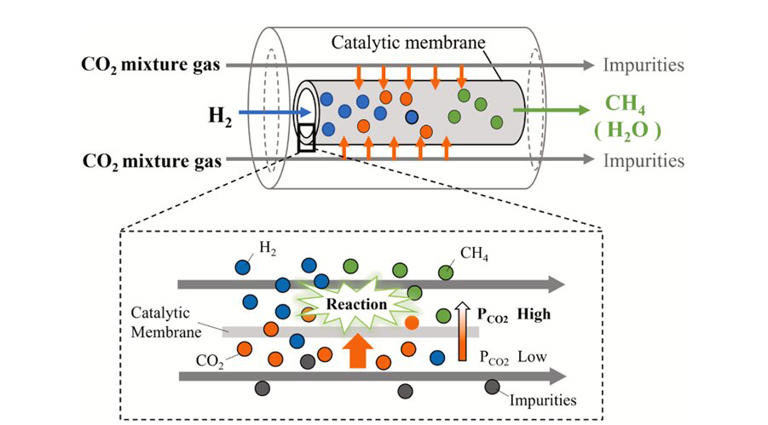
This DMR design helped us reduce temperature increments by about 300 degrees compared to the traditional packed bed reactor..
#1574 Re: Exploration to Settlement Creation » Buried geodesic domes » 2024-05-27 14:50:21
It looks like we need particular dimensions for this to be considered for building and use.
Things like top of the dome to be ALON so as to make use of natural lighting, Number of floors for the crew that could occupy such a place.
Amount of internal area for gardens and other such support that makes this part of a settlement.
#1575 Re: Human missions » Going Solar...the best solution for Mars. » 2024-05-27 14:44:48
The Biggest Pros And Cons Of Installing Solar Panels
There are many reasons why homeowners might consider installing solar panels on their homes, including reducing their carbon footprint and saving on costs. According to Solar Insure, more than 4.2 million households in the U.S. will use the sun to power their homes in 2024, and, according to Forbes, more than 82% of homeowners who installed solar panels would recommend them to others. But, there are important things to know before installing solar panels on your home.
Regardless of where you live, energy costs are going up, prompting homeowners to look at ways they can save money. The comforts afforded to most Americans, like air conditioning, home appliances, and electronics, are difficult to go without as they have become essential to daily life. Installing solar panels can save you an average of $125 monthly, according to Forbes. That means your savings could add up to $1,500 a year. You can also save money when installing your own solar panels at home with these handy tools.
While solar energy systems may save you some money on your monthly utilities bill, they are expensive to install. The cost is reflected in the number of panels needed, the quality of the panels, and the difficulty of the installation. A new solar panel energy system could cost anywhere from $10,000 to around $18,000, according to Forbes, which may be financially unfeasible for some. However, there are available tax credits that can help offset the cost. Finding out how many solar panels you'll need to power your home is a good start to see if installing them is possible.
I wonder what were the reasons that 18% did not like the outcome of the install.
I know that some was due to under sizing the install 2while another is the net metering versus the actual cost of buying the energy.