New Mars Forums
You are not logged in.
- Topics: Active | Unanswered
Announcement
#776 Exploration to Settlement Creation » WIKI Starship repurposed to make or build what we need » 2025-12-13 15:30:19
- SpaceNut
- Replies: 35
This is not a discusion topic
old title Starship repurposed to make first habitat spaces
Broader topic given to make use of more of the ships just doing nothing once the crews leave them empty.
It is said that for the first mission a total of 2 crewed and 4 cargo ships will have landed on mars but that is a science or exploratory mission for a small 20 person crew to use. To which only 1 crewed ship is required to return home.
If a second mission happens but with 50 on each of the crewed ships with even the same cargo ships the amount of resources to build gets real fast for building from what will not leave mars into a permanent station that can be built from its pieces.

Trying to leverage what we have on mars once crews and cargo start landing on its surface.
People on Mars would convert a Starship into a permanent habitat using a combination of heavy-duty robotic equipment and pre-positioned systems to unload or reposition habitat modules from the vertical rocket. SpaceX and NASA are considering several concepts, but there is no single finalized plan.
Key potential methods include:
Jib Cranes and Robotics:
A modified cargo Starship could use deployable jib cranes to lift habitat modules out of the payload bay, rotate them to a horizontal position, and lower them to the ground. Robotic systems, such as an ATHLETE rover with digging tools, could assist in moving the habitat modules and burying them in regolith for radiation protection.Integrated Systems:
The habitat modules would be pre-packed inside the Starship before launch. Once on Mars, internal rail and cable systems could facilitate moving individual modules toward a large side hatch for subsequent lowering to the surface.Tipping the Starship:
Another concept is to land the Starship and then tip the entire structure onto its side to provide a large, easily accessible ground-level habitat space.Landing in a Trench:
The Starship could be designed to land in a prepared trench to align its docking ports with other surface elements, or the habitat could be placed in a trench after offloading.Building Around the Ship:
The simplest, though less efficient, method is to use the landed Starship as a de facto habitat and build additional modules or cover the existing structure with Martian soil (regolith) for radiation shielding. Ultimately, these operations would likely rely on un-crewed cargo missions preceding the first human landing to deliver the necessary offloading machinery, power systems, and basic infrastructure. This ensures the crew's safety and provides a ready habitat upon arrival
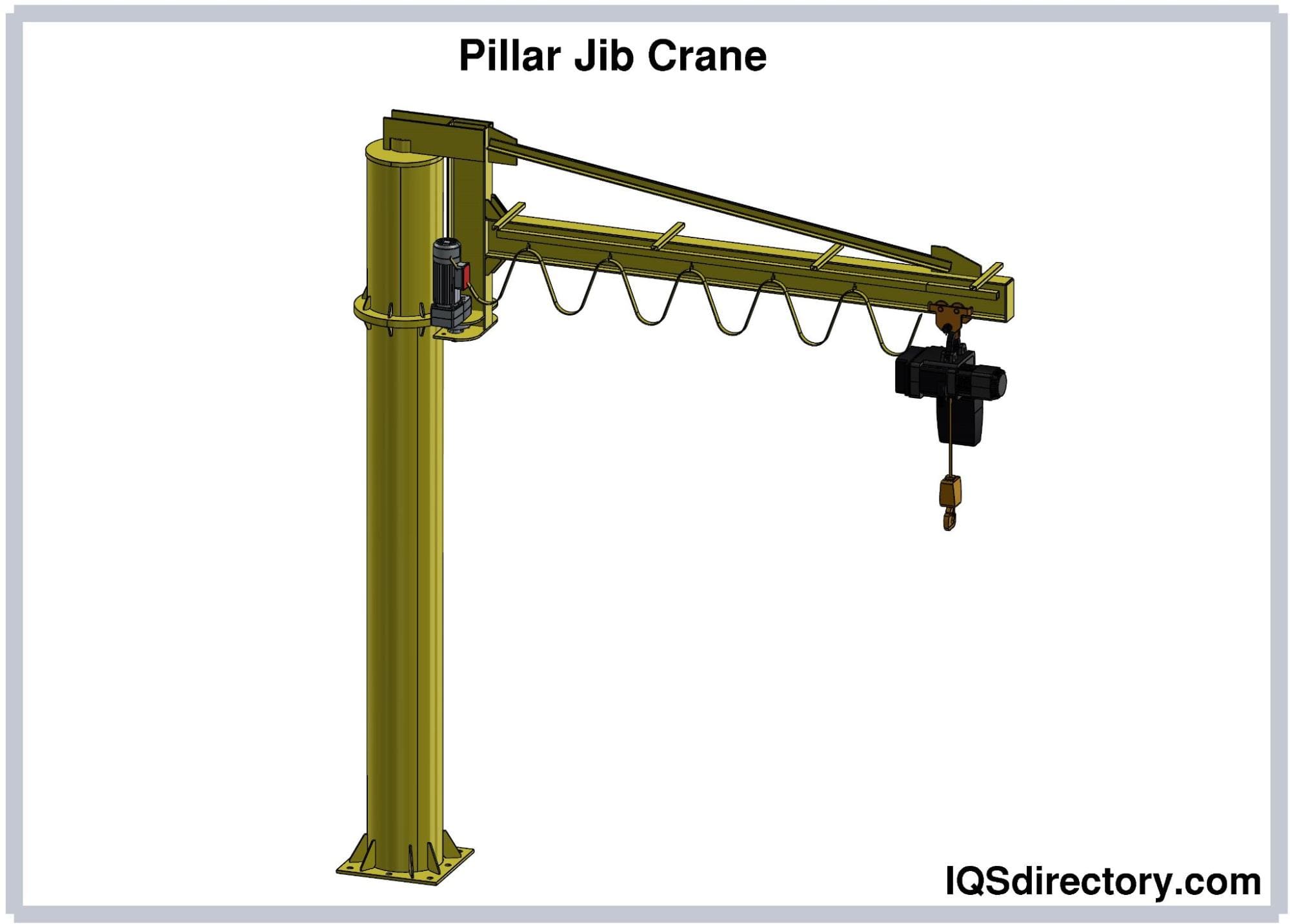
We know the shell materials can be welded once pulled down to the ground in order to make what we need to get started.
Options for Offloading a 90-Ton Common Habitat from its Lander on the Surface of Mars
NASA concepts for using Starship to deliver a 90-ton habitat on the Martian surface
https://ntrs.nasa.gov/citations/20220010430
For welding SpaceX Starship's 304 stainless steel, the key equipment involves advanced, high-speed robotic laser welding machines for precise, fast, single-pass welds, replacing slower TIG/MIG methods, though standard TIG/MIG welders (like inverter-based Synergic ARC 304) with appropriate filler (ER308L) and argon gas are used for other stainless work. SpaceX uses specialized systems for deep penetration and heat conduction to minimize warping, enabling lighter, stronger structures quickly.
Key Equipment & Techniques for Starship (304 SS)
Robotic Laser Welding: The primary method for Starship rings, offering speed, precision, and minimal heat distortion, allowing thinner sheets.
Heat Conduction Welding: For thin sheets, creating clean welds with little warping.
Deep Penetration (Keyhole) Welding: For thicker sections, creating deep, strong single-pass welds.
TIG/MIG Welders (for general use/prototypes):
Inverter-based MIG/MAG: Machines like the Synergic ARC 304 offer advanced features, high duty cycles, and robust wire feeds.
TIG (GTAW): Known for beautiful, high-quality welds, requiring more skill.
Consumables:
Filler Wire: ER308L is standard for 304 stainless steel.
Shielding Gas: Argon-rich gases are essential for stainless steel welding.
Why the Shift to Laser Welding?
Efficiency: Dramatically speeds up assembly, reducing build times from months to weeks.
Weight Reduction: Enables use of thinner steel by creating stronger, consistent welds, cutting overall mass.
Quality: More precise, consistent welds with less warping than traditional methods.
General Stainless Steel Welding Tips
Cleanliness: Always start with clean stainless steel.
Filler: Use the correct filler (ER308L for 304).
Gas: Use appropriate argon mix.
Duty Cycle: Choose a machine with a high duty cycle for continuous work
#777 Re: Meta New Mars » Housekeeping » 2025-12-13 15:06:19
Light that is incandescent or mercury vapor will do so but Low powered LED is not that. Heat is the result of power input that must be lowered to match the device input. The electronic regulation to lower the voltage is where the heat is generated from.
#778 Re: Exploration to Settlement Creation » A City Rises on the Plain... » 2025-12-13 14:50:01
I am reminded of the My Hacienda On Mars plot content and desire to be self sufficiency.
#779 Re: Exploration to Settlement Creation » WIKI Lighting use How and why things are not simple » 2025-12-13 12:43:01
remembering all of the posts from the past is getting harder with age but here it is.
Roll out mirror surface to peel and still on the inside of the dome as deswired.
Hmm. Yes. If only I had a job. Visions of tearing down my garage, building a brand new one. I could give details, but I found this at Amazon. Amazon Canada has free shipping within Canada. Reflective sticker, self-adhesive, 0.1cm thick (1mm), flexable. 50cm x 100cm, CDN$ 12.64 + tax. If the back wall is 18' high x 15' wide, that's 548.64 cm high x 457.2 cm wide, so make the reflective area 550cm x 450cm. That would require 5.5 x 9 rolls = 49.5 rolls. Purchased in whole rolls so 50 rolls. That's $632 + tax. A slightly larger area, but still expensive. And outside garage wall facing the Walipini could get more mirror covering. More money.
(Ps. I dug the URL of the image out of source code for their website. However, clicking on the image takes you to their store, to buy this item. They shouldn't be upset by free advertising.)
::Edit:: Hah! Even better. You suggested Mylar; I did a search and found this. One roll would do, CDN$ 49.99 + tax. Free shipping within Canada. Intended to reflect light for agriculture.
Growneer 4 x 100FT 2 Mil Horticulture Mylar Reflective Film Roll Highly Reflective Covering Sheets For Greenhouse Increasing Temperature Light
https://images-na.ssl-images-amazon.com/images/I/51+gzsvG8DL._AA160_.jpg


Not all areas with in the dome has high intensity light and while in you residential area one will make use of motion sensor' d units.
![Tzumi-Under-Cabinet-LED-Lights-3-Pack-USB-Rechargeable_62d1a2e8-61f5-4cf6-9387-9425181c77f6.323c7c37badeaf2ab60a6ea35851e21c.jpeg?odnHeight=573&odnWidth=573&odnBg=FFFFFF]](https://i5.walmartimages.com/seo/Tzumi-Under-Cabinet-LED-Lights-3-Pack-USB-Rechargeable_62d1a2e8-61f5-4cf6-9387-9425181c77f6.323c7c37badeaf2ab60a6ea35851e21c.jpeg?odnHeight=573&odnWidth=573&odnBg=FFFFFF])
#781 Re: Meta New Mars » GW Johnson Postings and @Exrocketman1 YouTube videos » 2025-12-12 18:42:25
GW's opinion:
[im*g]htt*ps://new*mars.com/php*BB3/down*load/fi*le.ph*p?id=1*32[/im*g]
I used the * to make the string show as text. Just remove them to make the display of the image display.
#782 Re: Exploration to Settlement Creation » WIKI Project construction design meaning for insitu materials » 2025-12-12 18:38:49
This might work for cieling construction for each floor or tier

If the top of the arch is near 4 m with floor joined to each then we can have some where near 26 floors within the dome.
Space requirement to each crew must leave open space for the gardens that will create food and oxygen.
#783 Re: Exploration to Settlement Creation » Companion for Mars Expedition Number One; 17 crew members » 2025-12-12 18:03:41
GW nice Stages of Mars chart missions type and natural progression.
That makes OldFarts topic an Experimentation style mission.
For an initial SpaceX-style Mars mission, you need two crew Starships (carrying perhaps 10-20 people each initially) and four cargo Starships carrying hundreds of tons of supplies (around 400 metric tons total) for a ~3-month transit, all refueled in Earth orbit by additional tanker flights, leading to many launches (around 45 total) to stage the fleet for the Mars rendezvous. The goal is to establish a sustainable presence, requiring massive numbers of flights and cargo over time.
Crew & Cargo Requirements (Initial Mission Concept):
Crew: Two Starships for crew, potentially 10-20 people per ship, though future missions aim for 100+.
Cargo: Four Starships for supplies (habitat, ISRU equipment, food, etc.), carrying about 100 tonnes each (400 tonnes total).
Tankers: Multiple tanker Starships needed for 15 LEO refuels for crew ships and 4 for cargo ships.
Mission Architecture (SpaceX Model):
Launch: Send cargo Starships first on longer, lower-energy paths.
Refuel in LEO: Cargo and crew Starships are refueled in Low Earth Orbit by tanker Starships.
Mars Arrival: Cargo lands first to prepare, then crew arrives.
Surface Operations: Use Mars resources (water ice, CO2) to create fuel for return.
Scale for City Building:
Building a self-sufficient Mars city requires thousands of Starships and millions of tonnes of cargo over many launch windows (every ~26 months).Key Takeaway: Early missions focus on sending massive amounts of cargo and infrastructure ahead, with smaller initial crews, using numerous launches to support the logistics
Architectural problems of a Martian base design as a habitat in extreme conditions
Practical architectural guidelines to design a Martian base
#784 Re: Exploration to Settlement Creation » WIKI Project construction design meaning for insitu materials » 2025-12-12 15:05:27
Another reference topic for construction materials for floors within the structure.
#785 Re: Human missions » Humidity Moisture Habitat Air Management » 2025-12-12 14:58:00
I believe we can make use of the items in this topic Sun + Air = water
The panel would be altered for the solar as all it is doing is supplying power to the system to which we can get power from another source within the dome.
The part we care about is on the cart
Stuff we need is in the box beneath the solar panel.
:max_bytes(150000):strip_icc():format(webp)/__opt__aboutcom__coeus__resources__content_migration__treehugger__images__2017__11__zero-mass-water-source-3322a05d2c624fb3a3ef1212b52d1ce2.jpg)
#786 Re: Exploration to Settlement Creation » Companion for Mars Expedition Number One; 17 crew members » 2025-12-11 19:30:40
making the essentials for life on Mars: fuel, oxygen, and water
Construction Materials on Mars: ISRU
Generating Energy on Mars: ISRU
Another reference topic for construction materials for floors within the structure.
#787 Re: Exploration to Settlement Creation » WIKI Constructing things on Mars equipment needs » 2025-12-11 19:13:01
Everything that we know about mars regolith has been from small sample sizes but images tell us that we are going to need lots of equipment to make use of mars to build and survive with insitu material use.
This is JSC Mars-1 Martian Soil Simulant
Chemical composition mineralogical standard analog based on data collected from the Mars Science Laboratory Curiosity rover. MGS-1 is made by sourcing a spectrum of terrestrial minerals, then mixed together in specific proportions to generally replicate the Martian surface. This is in contrast to previous Mars simulants that were typically sourced from a single terrestrial deposit (basalt or palagonite) fraction of less than 1 millimeter
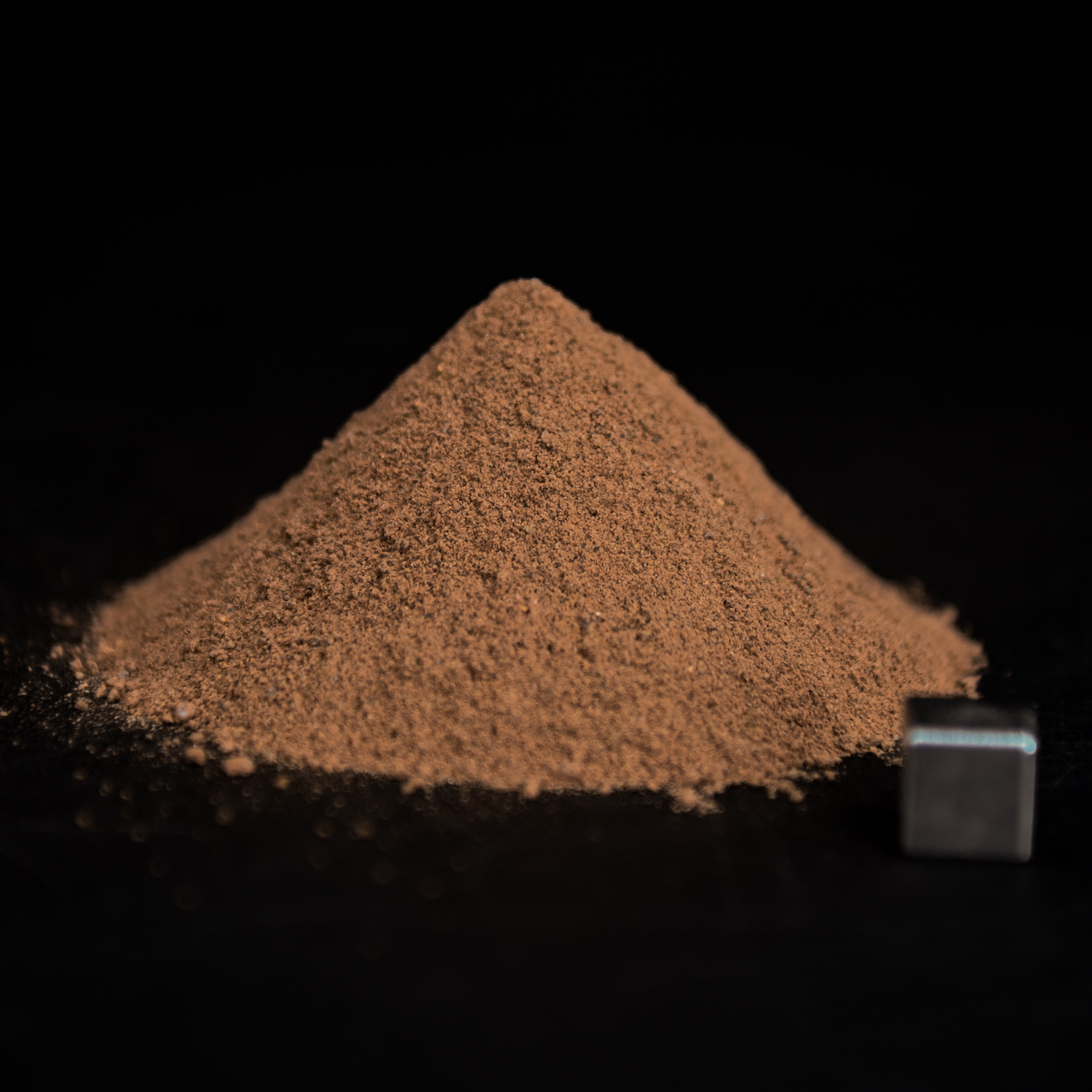
Regolith to Steel Powder, Oxygen & Water with Small Equipment
https://en.wikipedia.org/wiki/Martian_regolith_simulant
After milling to reduce its particle size, JSC Mars-1A can geopolymerize in alkaline solutions forming a solid material. Tests show that the maximum compressive and flexural strength of the 'martian' geopolymer is comparable to that of common clay bricks.
other simulant attempts https://www.themartiangarden.com/mars-simulant
https://en.wikipedia.org/wiki/Martian_regolith
here is the sand with rocks.
https://en.wikipedia.org/wiki/Martian_r … agment.jpg

So lots of preperation of the soil is needed to make use of it in milling it to size, seperating the mineral content and making it perchlorate free.
To build with Mars regolith, milling equipment (like vibratory/planetary ball mills) reduces particle size, while separation methods use techniques like laser sintering, cold sintering (CSP), polymer binders, or microwave systems to bind or melt regolith into structures, often requiring 3D printers for shaping, aiming for materials like bricks, shielding, or metal parts from extracted elements like iron/titanium. Key processes involve size reduction (milling) and consolidation (sintering/binding) to create usable materials like "Mars concrete" or fused components, with focus on robotic, energy-efficient systems.
Milling Equipment & Processes
Ball Milling (Planetary/Vibratory): Used to reduce particle size (PSD) of raw regolith simulant, with planetary mills being faster but roller banks better for large slurries.
Sieving: Separates milled particles into specific size ranges (e.g., 60-mesh).
Separation & Consolidation Technologies
Laser Sintering: Uses high-power lasers to melt and fuse regolith into solid layers, creating paving or structural elements.
Cold Sintering (CSP): Binds regolith with water/alkaline solutions at low temperatures (under 250°C) and pressure, forming strong bricks or blocks.
Polymer Binders: Mixes regolith with polymers (made from Martian CO2/water) for 3D printing concrete-like materials.
Microwave/Solar Sintering: Alternative methods to use focused energy for hardening regolith.
Metal Extraction: Processes like carbonyl metallurgy or vapor deposition extract iron and other metals for 3D printing steel parts.
Additive Manufacturing & End Products
3D Printing (Extrusion/Powder Bed): Deposits processed regolith/binders layer-by-layer, building structures like domes, habitats, tools, or rebar.
Products: Sintered bricks, concrete-like blocks, radiation shielding, metal components (rebar, gears, tools), and coatings.
Key Considerations
In-Situ Resource Utilization (ISRU): The core principle, maximizing use of Martian soil.
Energy Efficiency: Focus on low-energy methods like cold sintering.
Robotics: Automation is crucial for mining, milling, and construction
Another reference topic for construction materials for floors within the structure or ceilings
#788 Re: Exploration to Settlement Creation » WIKI Project construction design meaning for insitu materials » 2025-12-11 19:04:24
This is JSC Mars-1 Martian Soil Simulant
Chemical composition mineralogical standard analog based on data collected from the Mars Science Laboratory Curiosity rover. MGS-1 is made by sourcing a spectrum of terrestrial minerals, then mixed together in specific proportions to generally replicate the Martian surface. This is in contrast to previous Mars simulants that were typically sourced from a single terrestrial deposit (basalt or palagonite) fraction of less than 1 millimeter
https://en.wikipedia.org/wiki/Martian_regolith_simulant
After milling to reduce its particle size, JSC Mars-1A can geopolymerize in alkaline solutions forming a solid material. Tests show that the maximum compressive and flexural strength of the 'martian' geopolymer is comparable to that of common clay bricks.
other simulant attempts https://www.themartiangarden.com/mars-simulant
https://en.wikipedia.org/wiki/Martian_regolith
here is the sand with rocks.
https://en.wikipedia.org/wiki/Martian_r … agment.jpg
So lots of preperation of the soil is needed to make use of it in milling it to size, seperating the mineral content and making it perchlorate free.
To build with Mars regolith, milling equipment (like vibratory/planetary ball mills) reduces particle size, while separation methods use techniques like laser sintering, cold sintering (CSP), polymer binders, or microwave systems to bind or melt regolith into structures, often requiring 3D printers for shaping, aiming for materials like bricks, shielding, or metal parts from extracted elements like iron/titanium. Key processes involve size reduction (milling) and consolidation (sintering/binding) to create usable materials like "Mars concrete" or fused components, with focus on robotic, energy-efficient systems.
Milling Equipment & Processes
Ball Milling (Planetary/Vibratory): Used to reduce particle size (PSD) of raw regolith simulant, with planetary mills being faster but roller banks better for large slurries.
Sieving: Separates milled particles into specific size ranges (e.g., 60-mesh).
Separation & Consolidation Technologies
Laser Sintering: Uses high-power lasers to melt and fuse regolith into solid layers, creating paving or structural elements.
Cold Sintering (CSP): Binds regolith with water/alkaline solutions at low temperatures (under 250°C) and pressure, forming strong bricks or blocks.
Polymer Binders: Mixes regolith with polymers (made from Martian CO2/water) for 3D printing concrete-like materials.
Microwave/Solar Sintering: Alternative methods to use focused energy for hardening regolith.
Metal Extraction: Processes like carbonyl metallurgy or vapor deposition extract iron and other metals for 3D printing steel parts.
Additive Manufacturing & End Products
3D Printing (Extrusion/Powder Bed): Deposits processed regolith/binders layer-by-layer, building structures like domes, habitats, tools, or rebar.
Products: Sintered bricks, concrete-like blocks, radiation shielding, metal components (rebar, gears, tools), and coatings.
Key Considerations
In-Situ Resource Utilization (ISRU): The core principle, maximizing use of Martian soil.
Energy Efficiency: Focus on low-energy methods like cold sintering.
Robotics: Automation is crucial for mining, milling, and construction
#789 Re: Exploration to Settlement Creation » WIKI Project construction design meaning for insitu materials » 2025-12-11 16:03:15
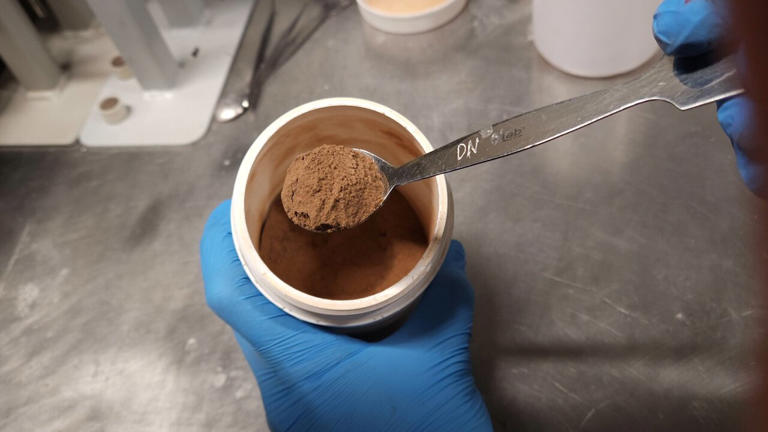
The issue I see is the simulant does notlook anything like the regolith surface of mars images which the rovers have broadcasted.
How to make metals from Martian dirt
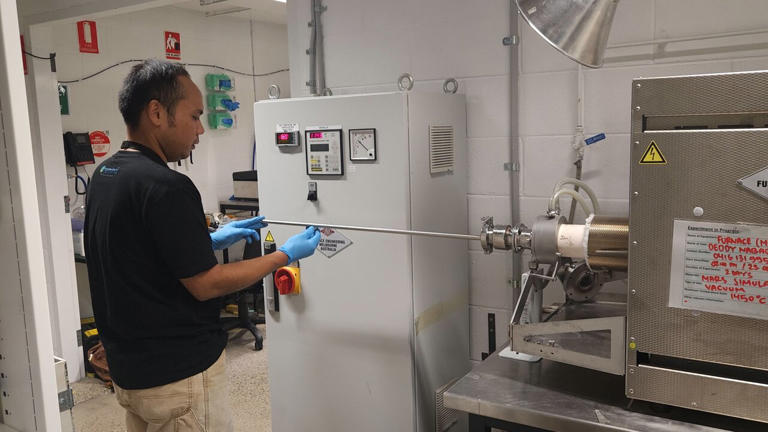
The idea of building settlements on Mars is a popular goal of billionaires, space agencies and interplanetary enthusiasts.
But construction demands materials, and we can't ship it all from Earth: it cost US$243 million just to send NASA's one ton Perseverance Rover to the Red Planet.Unless we're building a settlement for ants, we'll need much, much more stuff. So how do we get it there?
CSIRO Postdoctoral Fellow and Swinburne alum Dr. Deddy Nababan has been pondering this question for years. His answer lies in the Martian dirt, known as regolith.
Building an off-world foundry
As it turns out, Mars has all the ingredients needed to make native metals. This includes iron-rich oxides in regolith and carbon from its thin atmosphere, which act as a reducing agent.Swinburne University of Technology astrometallurgist, Professor Akbar Rhamdhani, is working with Dr. Nababan to test this process with regolith simulant—an artificial recreation of the stuff found on Mars. The work was published in two papers in the journal Acta Astronautica.
https://linkinghub.elsevier.com/retriev … 6525002814
https://www.sciencedirect.com/science/a … via%3Dihub
"We picked a simulant with very similar properties to that found at Gale Crater on Mars and processed them on Earth with simulated Mars conditions to give us a good idea of how the process would perform off-world," he said.
The simulant is placed inside a chamber at Mars surface pressure and heated at increasing temperatures. The experiments showed pure iron metal formation around 1,000°C, with liquid iron-silicon alloys produced around 1400°C.
"At high enough temperatures, all of the metals coalesced into one large droplet. This could then be separated from liquid slag the same way it is on Earth," Professor Rhamdhani said.
Along with Dr. Nababan, Prof Rhamdhani is collaborating with CSIRO's Dr. Mark Pownceby to further advance the process. They're particularly focused on making metals with zero waste, where the byproducts of the process are used to make useful items.
If you can't ship it, make it
ISRU is a growing area of space science because in rocket launches, every kilogram counts. While the cost of launches is going down, the demands of human exploration are immense.But huge developments are already happening, including the first demonstration of ISRU off-world: The MOXIE experiment onboard the Mars Perseverance rover produced breathable oxygen using only the carbon dioxide in the planet's atmosphere.
Metal production is the next giant leap. Professor Rhamdhani hopes Mars-made alloys could be used as shells for housing or research facilities, and in machinery for excavation.
"There are certainly challenges. We need to better understand how these alloys would perform over time, and of course whether this process can be recreated on the real Martian surface," he said.
But in the meantime, Swinburne and its partners are doubling down. Professor Rhamdhani together with Dr. Matt Shaw and Dr. Deddy Nababan from CSIRO recently delivered a four-day joint Swinburne-CSIRO bespoke workshop on astrometallurgy in South Korea, and the feedback was promising.
"We're starting to see increased interest in this field globally as the world gets serious about Mars exploration," he said.
"To make it happen, we're going to need experts from many fields—mining, engineering, geology, and much more."
For Dr. Nababan, the benefits go beyond exploration. He hopes their research will also drive more efficient metallurgy on Earth.
"By doing this, I wish that I can help the development of space exploration, and at the end it will bring good to human life here on Earth."
#790 Re: Exploration to Settlement Creation » Companion for Mars Expedition Number One; 17 crew members » 2025-12-11 16:00:42
Science-driven roadmap for human Mars missions revealed

Why risk billions and decades of effort to send humans to Mars? For leading scientists, the answer is clear: the chance to ascertain whether life ever existed beyond Earth. This guiding purpose underpins the newly released “A Science Strategy for the Human Exploration of Mars,” a comprehensive, 240‑page report from the National Academies of Sciences, Engineering, and Medicine. Co‑chaired by Dava Newman of MIT and Linda T. Elkins‑Tanton of the University of California, Berkeley, the document ranks the most critical scientific objectives for the first crewed missions and addresses the engineering realities that will shape them.
1. The Search for Life as the Prime Directive
Its highest priority is to search for signs of life that could have existed, prebiotic chemistry, or conditions that are habitable, but only within a well-defined area of exploration. In other words, "We're looking for life on Mars," Newman said. "The answer to the question 'are we alone' is always going to be 'maybe,' unless it becomes yes." This will drive landing site selection toward geologically diverse areas with potential biosignatures, such as ancient lava flows or near‑surface glacial ice.
2. Eleven Interconnected Science Goals
In addition to the detection of life, it emphasizes objectives such as characterizing an ancient and present water and CO₂ cycle, mapping the geological record of Mars, studying the dynamics of dust storms, and understanding radiation exposure. Other high-priority objectives involve crew health, microbial stability, and what Mars does physiologically to plants and animals. Each objective is linked to certain measurements, sampling strategies, and environmental monitoring during surface operations.
3. Architecture of Mission Campaign
It assessed four consecutive mission campaigns: The top-ranked includes a human landing of 30 sols, an unmanned delivery of cargo, and a second crewed mission of 300 sols in the same 100-kilometer-wide zone of exploration. The resources will be further focused to maximize scientific return while incorporating advanced robotics for "human-agent teaming" to expand reach and efficiency.
4. Planetary Protection Issues
Most challenging is the problem of protecting Mars from Earth microbes and Earth from possible Martian organisms. The current COSPAR guidelines preclude crewed landings in areas known to have liquid water, but these are precisely the places most likely to be targets for life detection. NASA is developing policies in concert with international partners that define zones for human access while setting aside “pristine” regions. Indeed, the report concludes: “NASA should continue to collaborate on the evolution of planetary protection guidelines, with the goal of enabling human explorers to perform research in regions that could possibly support, or even harbor, life.”
5. In‑Situ Resource Utilization for Propellant and Habitats
The capability to produce oxygen and fuel on the planet would radically lower mission mass in low Earth orbit. Solid oxide electrolysis of Martian CO₂ already demonstrated by the MOXIE technology demonstrator is a relatively simple task: a unit on the Martian surface ingests atmospheric CO₂, turns on, and releases oxygen. This is a radical contrast with lunar ISRU, which requires complex mining and processing of regolith material. Leverage is extreme: ascent oxygen replacement for a mission to Mars might save 240 to 300 tons in LEO per launch.
6. Radiation Hazards and Shielding Solutions
But Mars does not have a shielding protective magnetic field or a thick atmosphere to block most of the dangerous cosmic rays. Research has shown that composite materials-such as selected plastics, rubber, synthetic fibers, and Martian regolith-will be effective in the attenuation of radiation. Water is particularly effective because of its high hydrogen content, while recent innovations involving 3D‑printed hydrogels achieve equal distribution without the risk of leakage. Both could be incorporated into habitats and spacesuits by combining shielding with water storage.
7. Human Health in the Martian Environment
Longitudinal studies are emphasized on crew physiological, cognitive, and emotional health under conditions of Mars: Countermeasure Validation-Radiation, Isolation, Altered Gravity, and Dust. Electrostatically charged dust abounds and pervades systems and lungs; better understanding of its impact is central to production hardware lifetime and human health.
8. Integration of Biological Studies
Missions to Mars will study how the environment affects reproduction and the functioning of the genome in model plants and animals, and how intact ecosystems respond over multiple generations. Such research underpins closed-loop life-supporting systems that are requisite to permanent human settlements that follow.
9. Robotics and Human‑Agent Teaming
Advanced autonomous systems will supplement human crews by performing reconnaissance, sampling, and drilling. The report considers both humanoid and non‑humanoid agents, designed according to mission demands, but with early definition of scientific objectives to control technological developments.
10. Landing Site Criteria and Pre‑Mission Reconnaissance
Sites need to balance scientific potential with engineering feasibility: accessible ice deposits, varied geology, manageable terrain for rovers and deployment of habitat. Pre‑mission robotic surveys will map radiation levels, dust activity and possible biosignature locales that inform final site selection.
11. Policy and Programmatic Context
This roadmap aligns with the strategy of NASA's Moon to Mars program to utilize lunar missions to test technologies and operational concepts. Of course, political will and consistent funding remain a pre-requisite; as Elkins‑Tanton noted, "We've been on Mars for 50 years. With humans there, we have a huge opportunity."
In integrating science priorities with engineering realities-from planetary protection protocols through to ISRU and radiation shielding-it builds a vision for Mars exploration that is aspirational and anchored in technical detail


#791 Re: Science, Technology, and Astronomy » Ferris Wheel in Space as Orbiting Hotel » 2025-12-11 15:45:34
The world’s first space hotel is set to launch in 2027


For decades, the idea of checking into a hotel among the stars has been confined to the realm of science fiction, but that is about to change: the world’s first true orbital resort is now set to launch in 2027. This groundbreaking facility promises to redefine luxury tourism, offering amenities far beyond what one would expect from a mere space station; guests will be able to enjoy fine dining restaurants, fully-stocked bars, a gym, a concert hall, and even a cinema, all while orbiting the planet. But while the opening year is confirmed, the question remains: How exactly will this colossal structure generate gravity for its guests, and what astronomical price tag will come with a room key to the cosmos?
How vacationing in space will become a reality
The era of space tourism is on the horizon, and it’s set to reach new heights in 2027 with the launch of Voyager Station, the world’s first hotel in orbit, developed by Above: Space Development Corporation (formerly Orbital Assembly Corporation). This state-of-the-art luxury resort will circle the Earth while providing artificial gravity, accommodating up to 280 guests and 112 crew members at a time.The station’s innovative design draws inspiration from decades of aerospace research, including the rotating wheel concept originally envisioned by Wernher von Braun. By spinning at roughly 1.5 rotations per minute, Voyager Station will initially replicate the Moon’s gravity and can later be adjusted to mimic conditions on Mars or even Earth, ensuring a comfortable stay for visitors.
Launching from Kennedy Space Center, Voyager Station promises unforgettable experiences above the planet. Upon arrival, travelers dock at a central zero-gravity hub before moving via pressurized elevators to the outer modules, where artificial gravity creates a familiar, Earth-like environment.
What guests can expect aboard Voyager Station
Voyager Station is designed as a vast rotating ring, consisting of 24 specialized modules and spanning approximately 125,000 square feet. Each module serves a distinct purpose, creating a seamless blend of luxury, entertainment, and innovation for guests in orbit. Visitors can enjoy gourmet meals and drinks at the onboard restaurant and bar, attend live musical performances in a concert hall, and stay active in a gym that creatively takes advantage of low gravity. A cinema provides both classic films and exclusive space-themed content, while observation decks offer breathtaking panoramic views of Earth.Guests will move between modules through pressurized transfer shafts, ensuring safety and comfort throughout the station. Before their journey, all travelers undergo comprehensive training to familiarize themselves with zero-gravity movement, the use of space equipment, and emergency procedures. Voyager Station itself is equipped with advanced life support systems and emergency protocols, giving visitors peace of mind as they experience the wonders of space. The result is a meticulously planned, immersive adventure that transforms the idea of a vacation into a truly out-of-this-world experience.
The price of staying in space
For now, space travel remains the domain of the ultra-wealthy — a single trip can cost tens of millions. One early example is Oliver Daemen, a Dutch teenager who became the youngest person to travel to space when he paid $28 million for a brief flight with Blue Origin, the aerospace company founded by Jeff Bezos that specializes in suborbital and orbital space tourism. But the team behind Voyager Station aims to change that. Their vision is to make space vacations more comparable in price to luxury cruises on Earth. According to Tim Alatorre, co-founder, COO, and chair of the board at Above Space, the station itself is relatively affordable to construct; the primary expense lies in reaching orbit.Alatorre notes that advances by companies like SpaceX could soon dramatically reduce launch costs, bringing orbital stays within reach for a wider audience within the next decade. Experts say this initiative represents a historic turning point, because for the first time, everyday people, not just trained astronauts, will be able to live, dine, and exercise in orbit.
How commercial space is heating up
Voyager Station isn’t venturing into uncharted territory alone. Other companies are making strides in commercial space as well. Axiom Space, in partnership with NASA, is developing a commercial module on the International Space Station that will eventually evolve into an independent platform. Meanwhile, Blue Origin and Sierra Space are collaborating on Orbital Reef, a new commercial space station.What sets Voyager Station apart, however, is its singular focus on tourism. Designed with entertainment, leisure, and hospitality at its core, it promises an experience unlike any other in orbit. To prepare for the full-scale station, Above Space will test smaller prototypes — the Gravity Ring and Pioneer Stations — by 2025, refining the technology and ensuring a seamless experience for future guests.
Beyond offering an unforgettable vacation, Voyager Station opens the door to a host of other opportunities. The orbiting resort will support scientific research, educational programs, entertainment ventures, and entirely new ways of working in space, ushering in a bold new era of human activity above Earth. With tourism at the forefront, the station represents a major leap toward making space not just a destination, but a thriving, multifaceted environment for exploration, learning, and leisure.
#792 Re: Exploration to Settlement Creation » WIKI Lighting use How and why things are not simple » 2025-12-11 09:06:48
The more we NewMars members toss posts back and forth, the more I'm getting the impression a mixture of lighting solutions may turn out to be best. We want the interior to re pleasing for humans to enjoy, so the sky scape of light blue LED panels that can be programmed to appear white to simulate clouds seems attractive, but your most recent conversation with your AI friend about grow lights reminds us all that lighting for plants might be best arranged as arrays suspended the ideal distance above the plants. if this were done with skill, it might turn out the interior view seen by humans would be pleasing due to the mixture of colors including light reflected from leaves.
In other words, it might NOT be necessary to create a Sun's equivalent illumination with "sky" panels, because the grow lights could be closer to the intended recipient, while the sky lights provide a level of illumination and combinations of spectra that humans would enjoy, at less energy cost.
Day light recreation of how we precieve night and day with in the large structure.
a slow rotating light support system that shines up towards the dome apex.
to do seasons the angle would be reduced
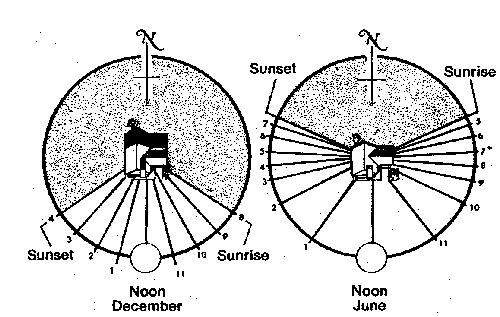
#793 Re: Human missions » Humidity Moisture Habitat Air Management » 2025-12-11 08:53:50
Vents and intakes with fans and lots of sensor are used in both submarines and on the ISS for the cleansing of air plus more.
Submarine air quality management is crucial for crew health in confined spaces, using sophisticated HVAC systems with HEPA/carbon filters, electrostatic precipitators, and CO2 scrubbers (soda lime/regenerative) to remove particulates, odors, and gases like carbon monoxide (CO) and hydrogen (H2). Key processes include oxygen generation (electrolysis), contaminant removal (catalytic burners, filters), constant monitoring (CAMS, NASA tech, portable detectors for O2, CO2, CO, etc.), and strict exposure limits (EEGLs/CEGLs) set by bodies like the National Academies, balancing life support with equipment needs.
Key Systems & Methods
Air Circulation & Filtration: Recirculated air passes through fans, HEPA filters for particles, activated carbon for odors/VOCs, and electrostatic precipitators.
CO2 Removal: Lithium hydroxide (soda lime) or regenerative systems scrub exhaled CO2.
Oxygen Generation: Electrolysis of water (H2O from seawater) produces oxygen (O2); hydrogen (H2) is vented.
Contaminant Control:
CO/H2 Burners: Catalytic oxidizers (using Hapcalite) convert CO and H2 into CO2 and water.
Restricted Items List: Limiting volatile chemicals to reduce atmospheric buildup.
Monitoring & Control
Central Atmospheric Monitoring System (CAMS): Tracks O2, CO2, CO, hydrocarbons, refrigerants, etc..
Portable Detectors: Colorimetric tubes and handheld devices verify levels of acetone, ammonia, chlorine, etc..
Exposure Limits: U.S. Navy sets Emergency (1-hr, 24-hr) and Continuous (90-day) Exposure Guidance Levels (EEGLs/CEGLs) for numerous substances.
Challenges & Innovations
Confined Space: Lack of natural ventilation makes air management critical.
Storage: Non-regenerative systems need stored purification agents, using valuable space.
Research Focus: Developing regenerative technologies and refining exposure limits for contaminants like CO, formaldehyde, and others to enhance crew safety
NASA manages ISS air quality through sophisticated Environmental Control and Life Support Systems (ECLSS) that actively remove CO2 (like Four Bed CO2 Scrubber), filter trace contaminants (TCCS, catalytic oxidation), monitor for particulates (Mochii microscope, AQM monitors), and ensure correct gas mixtures, using advanced sensors (ANITA-2) and strict guidelines (SMACs) to maintain a safe breathing environment for astronauts, tackling challenges from equipment off-gassing, spills, and crew metabolic byproducts.
Key Air Quality Management Systems & Methods:
Atmosphere Revitalization System (ARS): The core system responsible for keeping air fresh.
Carbon Dioxide Removal: Uses sorbent beds that capture CO2, which are then regenerated by heat and vacuum.
Trace Contaminant Control System (TCCS): Removes harmful chemicals via filters (activated carbon, catalytic oxidation) and adsorption.
Monitoring:
Air Quality Monitors (AQM) & ANITA: Gas chromatographs and spectrometers analyze air for dozens of compounds in near real-time.
Mochii: A miniature electron microscope for real-time particle monitoring.
Major Constituent Analyzer (MCA): Measures main gases (O2, N2, CO2).
Contaminant Sources: Sources include crew metabolism, equipment off-gassing, spills, and material degradation.
Guidelines: Spacecraft Maximum Allowable Concentrations (SMACs) set limits for specific contaminants to protect crew health.
Current & Future Focus:
Advanced Sensors: New sensors (like the H2 sensor) are tested for better detection.
Research: Investigating materials to minimize contaminant off-gassing and studying microbial life in the air.
Operational Use: ANITA-2 is being used for operational decisions on trace contaminants
The ISS uses advanced air scrubber systems, primarily the Four Bed Carbon Dioxide Scrubber (4BCO2) and the Amine Swingbed, to remove crew-exhaled CO2 and humidity, regenerating air by using sorbent materials (like zeolites/amines) that absorb contaminants and release them into space or use heat/vacuum for regeneration, minimizing resupply needs and recycling water for future missions like Artemis. These systems are crucial for long-duration stays, recycling vital resources and ensuring breathable air.
Key Technologies & Methods:
Four Bed Carbon Dioxide Scrubber (4BCO2): A next-gen system using commercial adsorbent materials (molecular sieves) to capture CO2 and water vapor, venting the CO2 and allowing water to be recycled.
Amine Swingbed: Uses two beds of amine-based sorbents; one absorbs CO2/humidity while the other is regenerated (desorbed) by vacuum/heat, offering a continuous, energy-efficient process.
Sabatier Reactor (ACLS): Part of the Advanced Closed Loop System (ACLS), it reacts captured CO2 with hydrogen (from water electrolysis) to form water (recycled) and methane (vented).
Zeolites: Older methods used zeolite minerals to trap CO2, which was then released into space when the beds were exposed to vacuum.
LiOH Canisters: Lithium Hydroxide canisters serve as a backup, chemically absorbing CO2 in a non-regenerative process, requiring replacement.
Trace Contaminant Control System (TCCS): Removes other harmful gases and particulates, ensuring air quality.
How They Work Together:
Capture: Sorbent beds (zeolite, amine) or LiOH filters pull CO2 from the cabin air.
Regeneration/Disposal:
Regenerative systems (4BCO2, Amine Swingbed) vent CO2 to space, recover water, and reuse the sorbents.
Non-regenerative LiOH canisters are replaced when saturated.
Recycling: The recovered water is processed for drinking and creating oxygen.
These systems create a "closed-loop" environment, essential for keeping the crew alive and reducing reliance on Earth resupply missions
#794 Re: Unmanned probes » MAVEN Launch | Nov 18, 2013 1:28 p.m. EST » 2025-12-10 19:13:36
NASA loses critical contact with Mars orbiter MAVEN which has orbited Mars for over a decade launched in 2013.
#795 Re: Exploration to Settlement Creation » WIKI Lighting use How and why things are not simple » 2025-12-10 19:01:04
It is not possible to provide a simple, accurate "lumens chart" for a specific grow light's power input (400 W/m²) because lumens are not the correct measurement for plant growth and a direct conversion from wattage to lumens is not feasible without knowing the light's specific spectrum.
Why Lumens Don't Work for Grow Lights
Lumens measure brightness as perceived by the human eye, which is most sensitive to the green/yellow part of the spectrum. Plants primarily use blue and red wavelengths for photosynthesis, which the human eye perceives less efficiently.
For growing plants, the relevant metric is PPFD (Photosynthetic Photon Flux Density), measured in micromoles per square meter per second ($\mu$mol/m²/s). Mars Hydro and other grow light manufacturers provide PPFD charts, not lumen charts.
Mars Hydro PPFD and Wattage Guidelines
While a specific "400 W/m²" product isn't standard, Mars Hydro recommends specific PPFD ranges for different growth stages and suggests the following guidelines for typical LED grow lights (watts per square foot is a general rule):
Growth Stage Recommended PPFD ($\mu$mol/m²/s) Typical Wattage per sq. ft (approx.)
Seedling 100 – 300 10 - 20 W/sq. ft
Vegetative 400 – 600 20 - 30 W/sq. ft
Flowering 600 – 1000 30 - 50 W/sq. ft
Key Takeaway
To determine the ideal setup for your specific Mars Hydro model, you should:
Consult the manufacturer's official PPFD map/chart for your specific model (e.g., TSW2000, FC-E4800) at various hanging heights. This information is typically available on the product page or the Mars Hydro website, such as on their guide to buying LED grow lights or the Mars Hydro blog.
Use a PAR meter or a smartphone app designed for measuring grow light intensity (PPFD/Lux) to get accurate readings at the canopy level.
Adjust the hanging height and dimmer settings according to the plant's current life cycle to achieve the target PPFD, rather than focusing on a lumen value or a fixed wattage/area ratio
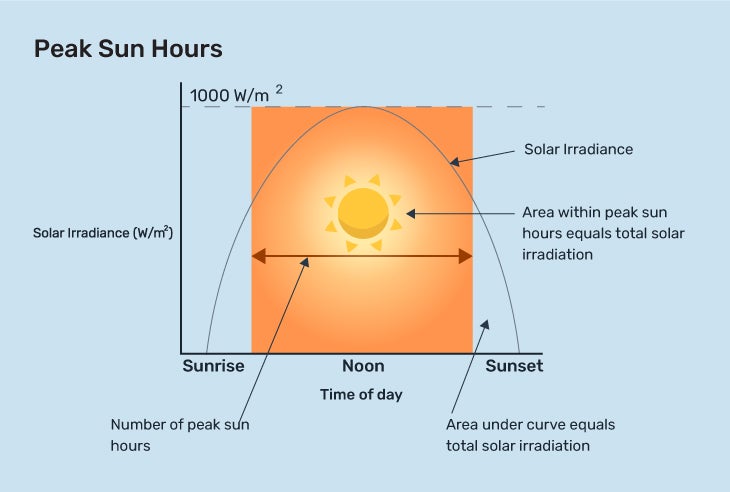
The solar irradiance of \(400\text{\ W/m}^{2}\) on the surface of Mars is approximately \(46,100\text{\ lumens\ per\ square\ meter}\) (lux) under certain clear sky conditions. The conversion from watts per square meter (irradiance) to lumens per square meter (lux, which is a measure of illuminance) depends on the luminous efficacy of the light source's specific spectrum, which is different for Mars' dusty atmosphere than for Earth's. The general conversion factor used for a sunlight-like spectrum is about 93 lumens per watt, though values vary based on atmospheric conditions. Mars Illumination BBCode Chart The following chart uses the conversion factor derived from laboratory measurements (approx. 115.25 lux per W/m²) for a value close to 400 W/m². This is presented in BBCode format. Mars Solar Irradiance to Illuminance (Lux) Conversion [TABLE][TR][TH]Irradiance (W/m²)[/TH][TH]Illuminance (Lux/Lumens per m²)[/TH][/TR][TR][TD]400 W/m²[/TD][TD]~46,100 lx[/TD][/TR][/TABLE] For context, bright sunlight on Earth's surface at noon is about 100,000 lux. The 400 W/m² level on Mars is comparable to an overcast day on Earth or the sun on Earth at noon on a winter day in certain northern latitudes
It seems that 100 W/m^2 incondensents bulbs for Approximately 4.91 megawatts of power would be required to adequately light the parabolic dome on Mars but light intensity from LEDS use quite a bit less.
How to calculate power requirements for large LED lighting projects?
With these constraints, the chart below will provide the approximate total lumens you need for your space; divide the total lumens by the number of light fixtures you plan to use. These calculations use 65-degree beam spread downlights, downlights with tighter beam spread require more
Led Light Requirement Calculator
https://blog.1000bulbs.com/home/100w-equal-led-bulb
Socket Rating Safe LED Options Actual Draw Power
60W Socket Up to 100W equivalent LED 8-15W actual
75W Socket Up to 150W equivalent LED 12-22W actual
100W Socket Up to 200W equivalent LED 18-35W actual
#796 Re: Meta New Mars » Bookmark Bookmarks Find it Again help » 2025-12-10 18:57:51
Find again conversation of mars fuels, process and more
#797 Re: Exploration to Settlement Creation » A City Rises on the Plain... » 2025-12-10 18:49:32
ya reverse or inverse open pit style which is hopefully possible once equipment is there on Mars.

#798 Re: Planetary transportation » Internal combustion engines for Mars » 2025-12-10 16:16:09
Yes, coal can be used in engines similar to wood gas systems, using a gasifier to create flammable synthesis gas (syngas) from the solid fuel, which is then filtered and fed to a modified internal combustion engine, though wood/charcoal was more common during WWII
fuel shortages;
both work by heating fuel in low oxygen to produce combustible gases like Carbon Monoxide (\(CO\)) and Hydrogen (\(H_{2}\)) for powering vehicles or generators, with coal offering steadier, hotter burns but requiring more robust filtration for dust.How Gasification Works (Wood & Coal) Gasification Process:
The fuel (wood, charcoal, or coal) is heated to high temperatures (900-1200°C) in a reactor with restricted air, causing partial combustion and thermal decomposition (pyrolysis).Syngas Production:
This process creates a flammable gas mixture, primarily Carbon Monoxide (\(CO\)) and Hydrogen (\(H_{2}\)), known as synthesis gas or "wood gas" (even with coal).Cooling & Filtering:
The hot gas is cooled and filtered to remove tar, water, and ash particles, preventing engine damage.Engine Fuel: The cleaned syngas is then drawn into the engine (like a car or generator) to power it, replacing gasoline. Similarities &Differences Principle:
The fundamental gasification principle is identical for wood and coal, converting solid fuel into a usable gas.Fuel Handling: Coal burns hotter and longer but produces more dust, requiring better filtration than some wood setups.Usage:
Both were used during fuel shortages (like WWII) to run vehicles and generators, with wood gas more prevalent due to fuel rationing. Engine Adaptations Standard internal combustion engines can be modified to run on this gas by adding the gasifier unit, filters, and controls.Systems often include a hopper for fuel, a reactor/burn chamber, filters (cyclone, radiator), and a blower
To make carbon monoxide, carbon must be burned in an atmosphere with limited oxygen. This releases about 20% of the heat released by complete combustion. The process that Kbd512 has described produces particles of carbon. So that is what we start with. Carbon monoxide has important uses of its own. One such use is the production of reduced iron. Making strong engineering bricks is another use we have noted. But it is a precursor to other more convenient fuels. For example:
CO + H2O + heat = CO2 + H2
2H2 + CO = CH3OH.This is methanol. It is a clean burning liquid fuel that doesn't freeze until -97°C. We could store it in tanks on Mars with very little pressurisation.
#799 Re: Exploration to Settlement Creation » WIKI Lighting use How and why things are not simple » 2025-12-10 16:10:30
Yes light measurement is problematic as we all referrence light intensity as watts rather than lumens.
The brightness of the sun on Earth is not measured in a single lumen value, as lumens measure total light output and the brightness perceived on Earth varies by location and atmospheric conditions. Instead, a common way to quantify it is in lux, which measures illuminance per square meter. At its peak, direct sunlight can reach approximately 100,000 to 140,000 lux. Peak sunlight: A clear, direct sun at its highest point in the sky can deliver a very intense illuminance of around 100,000 to 140,000 lux.Atmospheric effects: The exact amount of lux on the ground varies based on the sun's position and atmospheric conditions like cloud cover, which scatter and filter the light.Power vs. lumens: The sun's total power output is about \(1360\) watts per square meter above the atmosphere (the solar constant). However, lux is a better measure for how bright it appears to the human eye because it accounts for the varying sensitivity of our vision across different wavelengths of light
light electromagnetic spectrum
light electromagnetic radiation physics Faraday Effect
Growing crops on Mars requires controlled, pressurized habitats (like greenhouses or underground chambers) to overcome thin atmosphere, extreme cold, and toxic soil, using hydroponics/aeroponics for space efficiency and LED lights for weak sunlight, with potential crops including microgreens, potatoes, lettuce, tomatoes, and hardy mosses, while larger plots would involve regolith treatment and diversified systems to manage perchlorates and disease. Plots will likely be modular, high-density systems (hydroponics/vertical farms) to maximize volume, but larger, diverse trough systems in treated regolith are also considered for long-term food security.
Key Factors & Solutions
Environment: Mars needs sealed habitats with Earth-like pressure, temperature, and humidity, using LED lights for photosynthesis.
Soil: Martian soil (regolith) contains toxic perchlorates; it must be treated with compost, microbes, and nutrients, or bypassed with soil-free methods.
Water/Nutrients: Hydroponics (water/nutrients) and aeroponics (mist) are efficient, reducing water loss and maximizing density, notes The Mars Society of Canada.
Light: Artificial LEDs are crucial due to weak Martian sunlight.
Atmosphere: CO2 from Mars' atmosphere can be used as plant fuel.
Crop Choices & Plot Design
High-Density/Quick Turnaround: Microgreens (lettuce, radish) are great for small, rapid harvests, requiring less space and fertilizer mass, says Frontiers and Interesting Engineering.
Staples: Potatoes, sweet potatoes, tomatoes, kale, carrots, and strawberries are candidates for pressurized farms, notes Interesting Engineering.
Efficient Producers: Algae (single-cell protein) in pipes offer very efficient biomass production.
Plot Strategy: Diversified, intermingled trough systems in treated regolith are preferred over monocultures to reduce disease and improve nutrients, says spacebotany.uk.
Scaling Up
Scaling from small to large plots introduces new problems (e.g., resource management), showing that proportional growth isn't always possible, as seen in spacebotany.uk.
Future farms will likely use a mix of high-tech hydroponics (for immediate needs) and treated regolith beds (for larger, diversified food systems
#800 Re: Planetary transportation » Internal combustion engines for Mars » 2025-12-10 14:59:09
tahanson43206,
If you have to carry the fuel and oxidizer with you, as you would on any planet except Earth, then pure Carbon doesn't require extra Oxygen atoms to combine with the Hydrogen atoms.
Kilograms of Pure Oxygen for Complete Combustion of 1kg of fuel:
Pure Carbon (32.8MJ/kg; 1kg powdered graphite = 1.05-1.15L; 28.52MJ/L): 2.67kg (2.34L); 3.49L ttl vol, 9.40MJ/L incl O2
Gasoline (44-46MJkg; 1kg = 1.2-1.4L; 32.86MJ/L): 2.3-2.7kg (2.37L); 3.77L ttl vol, 12.20MJ/L incl O2
Kerosene (43-46MJ/kg; 1kg = 1.25L; 36.8MJ/L): 2.93kg (2.57L); 3.82L ttl vol, 12.04MJ/L incl O2
Diesel (42-46MJ/kg; 1kg = 1.16-1.2L; 38.33MJ/L): 3.4kg (2.98L); 4.18L ttl vol, 11.00MJ/L incl O2
Methane (50-55.5MJ/kg; 1kg LCH4 = 2.36L; 23.52MJ/L): 4kg (3.51L); 5.87L ttl vol, 9.45MJ/L incl O2
Hydrogen (120-142MJ/kg; 1kg LH2 = 14.1L; 1L = 10.07MJ/L): 8kg (7.01L); 21.11L ttl vol, 6.73MJ/L incl O2LOX is 1,141kg/m^3 or 1.141kg/L
What can we conclude from that?
1. LH2 is a pretty pedestrian fuel when you need to store the cryogenic oxidizer, too.
2. There's not much difference between pure Carbon powder and Methane, except that making Methane is a lot more difficult and requires a lot more energy and technology than bubbling collected CO2 through a column of liquid Gallium eutectic. You need equipment to collect both H2O and CO2, a Sabatier reactor, a reverse fuel cell, and a really good electrical power source.
3. You do get 17% to 30% more energy per total volume by combusting diesel / kerosene / gasoline, in comparison to Carbon powder, but if you thought making Methane was energy intensive, you're going to need to add a lot more energy-intensive equipment to your chemistry set, and of course, you only get that additional energy by combusting it using additional O2 mass, which means you need to make more O2 from some combination of H2O and CO2. It's a pretty safe bet that all those additional chemical reaction steps will cannibalize whatever gains a dense liquid hydrocarbon fuel provides.
4. The relative complexity of obtaining LCO2 feedstock, on Earth or Mars, is pretty low. It's everywhere in the atmosphere and in the oceans here on Earth. Mars helps us out a bit by having a nearly-pure CO2 atmosphere, but at absurdly low density. Speaking of absurdly low density, LH2 looks great, best of all fuels, except when you must consider the mass of the storage equipment, and then it doesn't look so hot.
5. Of all the fuels listed, and any other liquid hydrocarbon fuels that weren't, if you throw a kilogram of Carbon on the ground, here on Earth or on Mars, that same kilogram of pure Carbon fuel will still be there the next day. We can't make the same claim about any of those other fuels. Carbon doesn't require special storage of any kind. If storing a cryogenic oxidizer is a pain we'd rather not deal with, then why compound the problem with fuels which also have special storage requirements?
Which means we have a place to ship Earths coal and a use for the raw ore.