New Mars Forums
You are not logged in.
- Topics: Active | Unanswered
Announcement
#51 2026-10-07 11:18:36
- Void
- Member
- Registered: 2011-12-29
- Posts: 9,967
Re: Transportation Issues and the Development of Worlds.
From the previous post:
Shimizu puts the system’s maximum output at 13,000 terawatts, roughly 500 times the world’s current electricity consumption. By the company’s reckoning, a solar panel on Earth produces about one-twentieth of what the same panel would produce in space.
With that amount of power then it should be relatively easy to extract and move fresh water into deserts and grow various things including grass. Grass can be converted into synthetic wood, and the synthetic wood be places in permafrost for year around roads and railroads in the Arctic. This would sequester Carbon so if we really wanted to we could bring on an ice age.
Climate control along with greater productivity.
A colder Earth may be offset by beaming power in from the Moon.
Ending
Last edited by Void (2026-10-07 11:19:18)
Be careful what you wish for.
Offline
Like button can go here
#52 2026-10-07 15:15:18
- Void
- Member
- Registered: 2011-12-29
- Posts: 9,967
Re: Transportation Issues and the Development of Worlds.
(th) has issued a challenge: https://newmars.com/forums/viewtopic.ph … 89#p241989
Quote:
tahanson43206
Moderator
Registered: 2018-04-27
Posts: 26,107
Void, you seem to have teamed up with CoPilot to achieve some success in dealing with the complexity of the modern environment.Please ask for help on this quote:
Shimizu puts the system’s maximum output at 13,000 terawatts, roughly 500 times the world’s current electricity consumption. By the company’s reckoning, a solar panel on Earth produces about one-twentieth of what the same panel would produce in space.
We already have solar panels in space. They are used on the ISS , on the Chinese space station, and on countless satellites.
There ** must ** be data to support the claim you have quoted. Please ask CoPilot for help, and please add the new data to the original post, instead of creating a new one.
Please do NOT create a new topic to complain about this request.
Instead, please simply add value to the post you already created.
An average reader will think what you posted is nonsense, but there is a chance it is NOT nonsense.
Please reassure that prospective reader that what you posted makes sense.
(th)
I have only a little time I must be somewhere. Maybe later I can do more.
Query: "How many terrawats of electricity from solar panels is created on Earth?"
Quote:
"Copilot Search Branding
Like
Dislike
Global Solar Energy Generation in Terawatts
As of 2026, the world has about 3terawatts (TW) of installed solar photovoltaic capacity, but the total solar energy hitting Earth’s surface is roughly 173,000TW at any given momentInstalled capacity vs. total solar input
Installed capacity: The global solar fleet now exceeds 3TW of peak generating power — the sum of all solar panels worldwide operating at full output under ideal sunlight. This is the amount of solar electricity available to be generated at one time, not the total energy produced over a year.
Total solar input: Earth intercepts about 173,000TW of solar power continuously at the top of the atmosphere
accelerate-solar.com
accelerate-solar.com
. Only a fraction of this is captured by panels, and even less is converted into usable electricity.Annual generation
While the 3TW figure is a capacity number, actual annual output depends on sunlight hours, weather, and grid use. In 2025, the world added ~700GW of new solar capacity, and global solar electricity production is now in the hundreds of terawatt‑hours (TWh) per year. For example, in 2020 the world used about 856TWh of solar energy
; with capacity growth, this figure is now higher.
Context
1TW ≈ the peak electricity demand of the entire U.S.The 3TW installed capacity means that, on a sunny day, solar could in theory power hundreds of millions of homes
The 173,000TW solar input is ~10,000 times total human energy use
, but most of it is lost to reflection, absorbed by oceans, or occurs when it’s not useful for electricity generation.
In short: The Earth receives ~173,000TW of solar power at any moment, and we have ~3TW of solar panels installed worldwide, producing hundreds of TWh of electricity annually
+1
."
There are three main numbers dealing with solar power:
1) How much is currently generated on Earth. [about 3terawatts (TW) of installed solar photovoltaic capacity]
2) How much could be generated on Earth. [173,000TW at any given moment]
3) How much has been stated for the Moon's potential. [Shimizu puts the system’s maximum output at 13,000 terawatts, roughly 500 times the world’s current electricity consumption.]
All of these are soft fuzzy numbers, certainly not precision.
Query: "How much solar power could be generated on the Moon?"
Quote:
Copilot Search Branding
Solar Power Potential on the Moon
The Moon’s surface receives about 13,000 terawatts of solar energy daily — enough to power the U.S. and China for a year — and a single 20‑meter Blue Origin “Power Tower” could generate over 10kW for lunar operationsTotal Available Solar Energy
Because the Moon has no atmosphere, solar radiation is unattenuated and direct. Estimates suggest ~13,000TW of solar power strike the lunar surface each day. This is roughly 1,300 times the current global terrestrial solar capacity, making the Moon an extremely high‑potential site for energy generation.
Practical Generation Examples
Blue Origin Power Tower: A 20m (65ft) vertically deployed solar array designed for lunar south‑pole operations, capable of >10kW outputThis scale supports communications, science instruments, mobility systems, and other surface assets, but is far too small to power a large settlement on its own.
The vertical design lifts panels above terrain shadows, improving performance in low‑sun‑angle regions
Why Solar Works Well on the Moon
High irradiance: No atmospheric scattering or absorptionProven tech: Solar arrays already power spacecraft and rovers
Scalability: Arrays can be expanded as missions grow
Limitations
Long nights: ~14 Earth days of darkness at most sitesShadows: Craters and ridges can block sunlight, especially near the poles
Dust: Regolith can coat panels and reduce efficiency
Thermal extremes: Very high temps in sunlight, very low in shadow
Potential Applications
Local bases: 10kW+ towers could power small outposts or science sitesLarge networks: Multiple towers and arrays could form a lunar power grid
Energy beaming: Concept proposals (e.g., Luna Ring) suggest generating on the Moon and transmitting power to Earth via microwaves
In summary: The Moon’s solar resource is vast — potentially enough to power entire nations — but practical extraction depends on system scale, location, and engineering solutions for shadows, dust, and long nights. A single modern lunar solar tower could deliver >10kW, and with many such systems, the Moon could become a major renewable energy source for both lunar and interplanetary missions
.
OK, this quote of the above quote helps:
The Moon’s surface receives about 13,000 terawatts of solar energy daily
Query: "What is the relative surface area of the Americas vs. the Moons surface area?"
Quote:
Copilot Search Branding
Relative Surface Area: Americas vs. Moon
The Moon’s total surface area is roughly 1.3 to 1.4 times larger than the combined land area of the Americas (North + South America).Step-by-step calculation
Moon’s surface areaThe Moon is a sphere with a mean diameter of about 3,475 km (2,159 miles)
Surface area formula:
A
=
4
π
r
2Radius
r
≈
1
,
737.5
kmA
Moon
≈
38.0million km
2
(≈ 14.6 million mi²)Americas’ land area
North America (including Canada, Mexico, U.S., Greenland, etc.): ~16.8 million km²
South America: ~16.8 million km²
Combined land area ≈ 33.6 million km² (≈ 12.96 million mi²)
Some sources round the Americas’ total to ~34 million km² for simplicity.
Ratio
Moon area
Americas area
≈
38.0
33.6
≈
1.13
This means the Moon’s surface is about 13% larger than the total land area of the Americas.Context
The Moon’s surface could fit the entire Americas with a small margin left overThis is different from the Moon’s diameter comparison: the Moon’s width is slightly less than the east–west span of the contiguous U.S., but its surface area is still larger than the Americas’ landmass
Final Answer: The Moon’s surface area is roughly 1.13× the combined land area of the Americas — about 38 million km² vs. 33.6 million km².
So, I might dare to speculate that if you covered all of the America's and all of the Moon with solar panels, and you got rid of weather and the atmosphere of Earth, the Moon would produce 1.13× times the electricity, presuming Apples to Apples for the machines used.
Will that be sufficient?
Ending
Last edited by Void (2026-10-07 15:48:41)
Be careful what you wish for.
Offline
Like button can go here
#53 2026-10-07 18:11:07
- Void
- Member
- Registered: 2011-12-29
- Posts: 9,967
Re: Transportation Issues and the Development of Worlds.
There is a certain amount of beauty in the Japan plan. And it can be compatible with suspirations of the west.
If we would consider SpaceX and Blue Origin the front runners (At this time), they would be the west.
SpaceX has aspirations to build out Starlink and Starmind without the Moon, and later to add the Moon. So, for now, we are not dependent on being able to extract materials from the Moon. That is just a further asperation.
The Japan plan also does not require lifting large mass from the Moon. So, we are not obligated to find a way to lift large amounts of Mass from the Moon, in order to incorporate our Moon into the Earth's economy. Later if we find a practical way we can extract mass from the Moon.
For now Starship and the Lander of Blue Origin, could be coupled with NASA's Lithium>Plasma Nuclear drive to bring starter mass to the Moon. Japan intends the Hydrogen go to the Moon. I suggest a Hydrocarbon, as we may like to make Carbon Steel.
But I really do think that we want to see if we could transport Hydrocarbons from a place other than Earth, using Robotics and appropriate propulsion methods. Mars might be a possibility, but the larger asteroids at about 3.0 AU also are attractive.
The Moon as a giant power plant could be very useful to human efforts to rise to higher states of existence, and we might be able to lift more people out of poverty with its assets.
Ending
Last edited by Void (2026-10-07 18:14:01)
Be careful what you wish for.
Offline
Like button can go here
#54 2026-10-09 09:50:37
- Void
- Member
- Registered: 2011-12-29
- Posts: 9,967
Re: Transportation Issues and the Development of Worlds.
It seems that the ESA is working on a metal propellant, Magnesium:
https://www.youtube.com/@SpaceStartupNews
Here is a video about it: https://www.youtube.com/watch?v=4YpSAVlKWr4
Quote:
Magnesium from Moon dust: ESA's MAGPIE propulsion study
NASA is working on Lithium, and I think is further along, but the Moon apparently could supply Magnesium as also I presume Earth can.
This is good news because ultimately any progress in that area eventually becomes common intellectual property for the rest of the world.
https://en.wikipedia.org/wiki/Geology_of_the_Moon
Quote:
magnesia MgO Maria=9.2% Highland=7.5%
(Magnesium Oxide, I think)
So, it can be possible to consider early transport methods, that can use this propulsion and also a currently available chemical propulsion system. For transporting bulk cargo between LEO and Low Lunar Orbit, using Magnesium and then finishing access to the surface of the worlds with chemical propulsion.
Query: "Can Earth/Moon L1 be a good place to refuel transiting"
Quote:
Copilot Search Branding
Like
Dislike
Earth–Moon L1 as a Refueling Hub for Transiting Spacecraft
Yes — recent astrodynamics research shows that the Earth–Moon L1 point can be an efficient, low‑fuel staging region for spacecraft, making it a promising location for refueling if infrastructure and safety measures are in place
spaceonetimes.com
spaceonetimes.com
+2
.Why L1 is attractive for transit
The Earth–Moon L1 Lagrangian point lies between Earth and the Moon where their gravitational pulls balance. Spacecraft near L1 can exploit stable and unstable invariant manifolds connected to Lyapunov orbits, which naturally guide trajectories with minimal propulsion
spaceonetimes.com
spaceonetimes.com
+1
. This means:Low delta‑v: New transfer designs using the Theory of Functional Connections (TFC) and manifold dynamics can save ~58.8m/s in velocity compared to conventional paths
spaceonetimes.com
spaceonetimes.com
+1
.Fuel savings: In orbital mechanics, every m/s saved translates into significant fuel mass reductions, enabling larger payloads or longer missions
nasaspacenews.com
nasaspacenews.com
.Extended dwell time: A spacecraft can remain in a Lyapunov orbit around L1 for weeks or months with only small station‑keeping burns, providing a “parking” phase for servicing
arXiv.org
arXiv.org
.Refueling potential
Because L1 offers low‑energy transfer pathways and a stable “holding” orbit, it is well‑suited for:Mid‑course refueling: A spacecraft could arrive, refuel, and then depart on a low‑cost trajectory to Earth or the Moon.
Multi‑purpose missions: The same L1 staging could serve cargo, crew, and communications infrastructure, similar to concepts for NASA’s Gateway station
spaceonetimes.com
spaceonetimes.com
.Cislunar logistics: L1’s position makes it a natural hub for interplanetary transit routes that pass through the cislunar environment.
Challenges
While the physics is favorable, practical refueling at L1 requires:Infrastructure: A station or depot at L1 to store fuel and support crew.
Safety: L1 is dynamically sensitive; station‑keeping is needed to avoid drifting into unstable paths.
Operations: Coordination with Earth and Moon missions, plus radiation and micrometeoroid considerations.
Bottom line
From an orbital mechanics standpoint, Earth–Moon L1 is a strong candidate for a low‑fuel transit and refueling point
spaceonetimes.com
spaceonetimes.com
+2
. The key enablers are infrastructure development and mission planning that exploit its natural gravitational pathways. Without those, the physics alone doesn’t make it a “good” place — but with them, it could be a strategic advantage for future lunar and cislunar missions.
While I am very interested in the ESA Magnesium plan, I remember that Neumann Drive and Magdrive, may each use Iron or Aluminum as propellants.
But, I think the idea of moving Water and Carbon to points of LEO, L1, and the Moon, may hold promise if the transfer were possible with a high efficiency Metal>Plasma propulsion method.
A Platform in L1 might be where solar energy or nuclear power could be used to cook up combustion propellants from stored water and Carbon.
So, a heavy lifter would bring Water, Carbon, and Metal Propellants to LEO.
We hope that over time methods to extract propellants from the Moon will emerge, but I suggest that Perhaps a "Sky-Crane" might be used to hard drop substances on the Moon.
We could hope that such a "Sky-Crane" could land safely more delicate objects like a sideways Starship carcas.
One notion might be to try to reuse NEUTRON 2nd Stages as a sort of "Quadracopter" resembling device.
Or you might put a centered engine section under a sideways Starship.
https://www.reddit.com/r/rockets2space/ … _reusable/
Image Quote: 
So, a Metal>Plasma spacecraft might retrieve these after they have been left in a accessible orbit.
Or maybe Starship could bring fresh ones to LEO.
These or some other propulsion system like Terran-R 2nd stage, might be arrayed into a Skycrane structure, that may have a fixture like a net between them that you might put a expended Starship into to land it sideways onto the Moon.
The Skycrane and the expended Starships might be transported to Low Lunar orbit, via a refilling at L1 perhaps.
The Skycrane might drop loads onto the Moon, either gentile or Hard Drop.
A Hard Dropped item could be Hollow plastic balls with Carbon particles partially filling the void within.
So, the SkyCrane would drop down from orbit to be above a location and drop these to be retrieved later. That way this version of the Skycrane may have landing legs that are spindly as they do not have to help in the final landing of the cargo.
The Skycrane can be refilled on the surface of the Moon, at least LOX, and if the Hydrocarbon drop method works, then to make fuels from the plastic Balls and the Carbon within.
Yes, I know you want to go get water from the polar areas or from glass beads, and you want to use a mass driver, but it would be really difficult to startup an industrial process on the Moon if you require immediate access to abilities that probably need prolonged development.
Having a method to drop Starship Carcasses on the Moon sideways would also be useful Presuming that you might use an expendable Starship to lift cargo, eventually you might want to dispose of the carcasses on the Moon to turn into workshops and shelters. It is possible that some parts of the Starships such as parts in the engine compartment can be returned to Earth from LEO, and the tankage then delivered to the Moon by a method similar to what I have mentioned.
Ending
Last edited by Void (2026-10-09 10:38:22)
Be careful what you wish for.
Offline
Like button can go here
#55 2026-10-11 08:16:45
- Void
- Member
- Registered: 2011-12-29
- Posts: 9,967
Re: Transportation Issues and the Development of Worlds.
I guess I will look also beyond the Moon for the possibility of materials for building into the space environment:
Quote:
Copilot Search Branding
Like
Dislike
Distribution of Carbonaceous (C‑type) Asteroids in the Asteroid Belt
Carbonaceous asteroids (C‑type) make up about 75% of all known asteroids overall, and dominate the outer asteroid belt — roughly 80% of asteroids beyond ~3AU — but only ~40% in the inner belt near 2AU
Wikipedia
Wikipedia
+2
.Overall abundance
C‑type asteroids are the most common asteroid class in the Solar System, forming around 75% of all known asteroids
Wikipedia
Wikipedia
+2
. They are primitive, volatile‑rich bodies with low albedo (0.03–0.10) and compositions similar to carbonaceous chondrite meteorites
Wikipedia
Wikipedia
+1
.Spatial distribution in the main belt
Outer belt (≈3–3.5AU from the Sun): ~80% of asteroids here are C‑type
Wikipedia
Wikipedia
+2
.Inner belt (≈2AU from the Sun): only ~40% are C‑type
Wikipedia
Wikipedia
+2
.
This gradient reflects their formation in the cold, volatile‑rich outer regions of the early Solar System, where they preserved more water‑bearing minerals and organics
grokipedia.com
grokipedia.com
+1
.Why the distribution is this way
C‑type asteroids are volatile‑rich and dark, making them less detectable than brighter S‑ or M‑types
Wikipedia
Wikipedia
+1
. Their prevalence in the outer belt is linked to:Formation conditions: Cold, low‑temperature environments allowed retention of ices and hydrated minerals
grokipedia.com
grokipedia.com
+1
.Solar nebula composition: Their chemistry is close to the Sun’s, minus volatiles like H and He
Wikipedia
Wikipedia
.Observational bias: Their low albedo means they are harder to detect, so actual proportions may be even higher
Wikipedia
Wikipedia
+1
.
Summary table
Region of Main Belt Distance from Sun
% C‑type asteroidsOuter belt ~3–3.5AU
~80%Inner belt ~2AU
~40%Overall (all belts) —
~75%In short: Carbonaceous asteroids are the dominant asteroid type, especially in the outer main belt, where they make up the vast majority of the population, but are much less common in the inner belt
Apparently the Main Belt contains lots of tiny asteroids: https://eaps.mit.edu/news-impact/mit-as … main-belt/
We have the Earth's Moon, the moons of Mars, and then these might be something to think about.
I am trying to find old and new ways to try to utilize these.
It does seem like we will want to look the Moon over again and see if we can find the same materials that are in Phobos and Deimos, and are in the asteroid belt, particularly the tiny asteroids in the inner belt, and then later the big asteroids more further out.
Dealing with lots of tiny asteroids is going to be different than dealing with larger objects. I anticipate that some of the 40% Carbonaceous asteroids at about 2.1 AU are going to be somewhat like Bennu and Ryugu. So then how to access them and what to do with them?
https://en.wikipedia.org/wiki/101955_Bennu
Image Quote: 
I guess two different notions of how to gain a degree of control of the object might be to surround it or to harpoon it. Also, it might be that these might be pushed. I am presuming a gentle method of propulsion, but not necessarily to bring the whole thing somewhere. But maybe yes to bring it somewhere.
https://newspaceeconomy.ca/2024/10/30/d … %20samples.
Quote:
In asteroid mining or exploration missions, a harpoon could help secure a spacecraft onto the surface of an asteroid, providing stability in the low-gravity environment. This is particularly important for missions that require surface interaction, such as drilling or collecting samples.
One notion would be to build a device from materials from our Moon or from Phobos or Deimos, and to also propel that device using Metal>Plasma propulsion of some kind.

We might hope to begin with the cross section on the Left and end up with the cross section on the Right.
The grey line on the left represents a hinged wall that would be folded over after a cylinder enveloped the asteroid.
After enveloped and harpooned, gentle force would be imposed to increase the spin of the object, and to centrifuge some of the asteroid to the inner walls of the cylinder. A remnant part may be retained in the center, perhaps some big chunks.
So, I am pretty much copying the works in this article: https://www.frontiersin.org/journals/as … 45363/full
Image Quote: 
I have modified it a bit.
A canister shaped net, with harpoons and a door to close.
So, then you have a hollow with some protection from the raw space environment, and perhaps the means to have robotic systems inside that can process the finer materials, to begin making resources.
I added the harpoons of course.
The canister is perhaps of a netting of some kind as the article also suggests.
So, perhaps to get metal and fluid propellants from the regolith.
Ending
Last edited by Void (2026-10-11 09:33:30)
Be careful what you wish for.
Offline
Like button can go here
#56 2026-10-11 10:24:09
- Void
- Member
- Registered: 2011-12-29
- Posts: 9,967
Re: Transportation Issues and the Development of Worlds.
This post is dependent on the just previous post.
There are two numbers I am interested in here. 2.1 AU and 2.0 AU.
The Earth is 1.0 AU of course.
2.1 is sort of the inner belt, where perhaps small chunks of "Ore" might be obtained.
2.0 is resonant to the Earth's orbit.
I guess I can observe that if a propellant system could get raw materials from Phobos or Deimos, it might get similar materials from the small chunks at 2.1 AU.
A capture device at 2.1 AU might be used multiple times. So, you might catch multiple asteroids the size of Bennu and process their materials. So, the processed materials might become space platforms, and habitats. This would be an alternative to setting up Camp out where the big Carbonaceous asteroids are. About 40% of the Asteroids at 2.1 AU may be Carbonaceous, 60% of other types. So, a wide distribution of materials.
So, a crumb catcher plan instead of setting up at Ceres or some other major asteroid.
So, with a envelop with harpoon plan, minimal artificial gravity might be imposed on the ore bodies, and shovels of the type Calliban has suggested might be used at the ends of robot manipulators to bring the raw materials to processing devices.
Clam Shell Shovels?
https://www.bortekpwx.com/product/handi … th-bucket/
Image Quote: 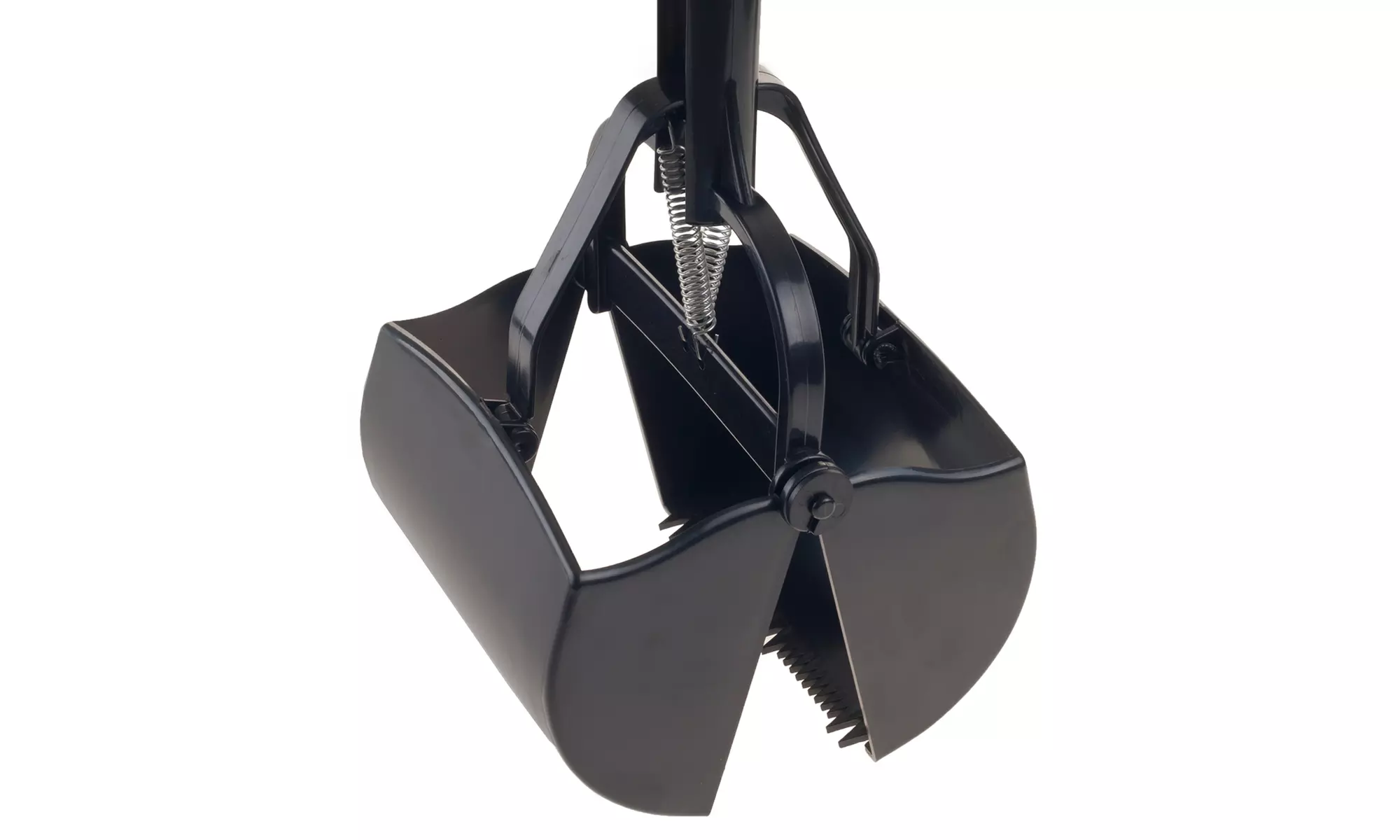
The "Crumb Catcher" might have minimal spin gravity, but such shovels similar to this might be able to place regolith into a centrifugal oven.
Perhaps able in some way to extract materials for propulsion and for structure.
Anyway the distance from the Mars moons to the 2.1 AU crumbs would be almost .6 AU.
More thinking on it at a later time I think.
Ending
Last edited by Void (2026-10-11 10:46:59)
Be careful what you wish for.
Offline
Like button can go here
#57 2026-10-11 11:29:26
- Void
- Member
- Registered: 2011-12-29
- Posts: 9,967
Re: Transportation Issues and the Development of Worlds.
In relationship to the two previous posts I think the concept of a Wheel within a Wheel might be useful.
Quote:
Copilot Search Branding
Like
Dislike
"A wheel within a wheel" is an idiom describing a situation or system that is highly complex, intricate, and often influenced by hidden or interdependent factors.
Meaning and Usage
The phrase is used metaphorically to indicate complexity, hidden layers, or interlocking systems. It can describe situations that are difficult to understand because multiple elements interact in subtle or secret ways. For example, political negotiations, corporate structures, or social hierarchies may be described as "wheels within wheels" to convey their intricate and sometimes opaque natureBiblical Origins
The idiom originates from the Book of Ezekiel in the Bible, where the prophet describes a vision of God’s chariot: “Their appearance and their work was as it were a wheel in the middle of a wheel” (Ezekiel 1:16). In this vision, the wheels are intersecting or nested, capable of moving in any direction without turning, symbolizing divine complexity, omnipresence, and perfect coordination. This imagery has been interpreted as representing the mysterious and intricate workings of divine power.
Symbolic and Modern Interpretations
Beyond religious contexts, the idiom has been applied to mechanical systems, human relationships, and organizational structures. It conveys the idea that understanding the full system requires careful observation and analysis. Examples include:A business owner describing a company with many interdependent departments: “Running my company feels like managing a wheel within a wheel”
Historians describing feudal society as layers of authority and control, each nested within another
Philosophers using it to illustrate the complexity of human consciousness, with layers of thought and perception interacting continuously
.
Summary
In essence, "a wheel within a wheel" captures the notion of nested complexity, whether in divine visions, mechanical designs, or social and organizational systems. It emphasizes that some processes or structures are not immediately apparent, requiring deeper insight to fully comprehend their interconnections and hidden influences.
I am thinking about a "Pie" device and the ability to at times nest a "Crumb Catcher" into it's hub.

So, the Crumb Catcher goes out and envelops and snags a crumb and imposes a small amount of spin gravity on it.
Then the Crumb Catcher is inserted into the Hub for the Crumb Catcher.
Doors are closed, and by some means of shoveling or other the materials are dumped into the vacuum filled chambers (Light Grey) of the Pie Habitat. They fall to the floor of those compartments and then are subject to much greater synthetic gravity. They then can first be processed in vacuum and then by means of airlocks to be processed further if needed in pressurized environments.
Having at least 1/6 g, on a guess may be sufficient for processing the ores.
So, then the Pie Habitat and the Crumb Catchers would move about at about 2.1 AU from the sun.
If the Crumb Catcher brings in big chunks then they might have to be burned to dust using a device similar to that that might be used to drill geothermal wells.
Such a process might export some amounts of various materials to various places in the solar system including Earth/Moon.
But the bulk of materials would make more of these devices or make propellants such as Metal>Plasma propellants.
Water and Carbon might go to the Moon or orbits of Earth, and valuable metals might go to a need in the solar system.
Ending
Last edited by Void (2026-10-11 11:59:24)
Be careful what you wish for.
Offline
Like button can go here
#58 2026-10-11 15:40:36
- Void
- Member
- Registered: 2011-12-29
- Posts: 9,967
Re: Transportation Issues and the Development of Worlds.
This post is a continuation of the previous three posts.
From post #57, quote:
I am thinking about a "Pie" device and the ability to at times nest a "Crumb Catcher" into it's hub.
So, the Crumb Catcher goes out and envelops and snags a crumb and imposes a small amount of spin gravity on it.
Then the Crumb Catcher is inserted into the Hub for the Crumb Catcher.
Doors are closed, and by some means of shoveling or other the materials are dumped into the vacuum filled chambers (Light Grey) of the Pie Habitat. They fall to the floor of those compartments and then are subject to much greater synthetic gravity. They then can first be processed in vacuum and then by means of airlocks to be processed further if needed in pressurized environments.
Having at least 1/6 g, on a guess may be sufficient for processing the ores.
So, then the Pie Habitat and the Crumb Catchers would move about at about 2.1 AU from the sun.
I have been puzzling about building ships on the Moon and perhaps launching them to orbit.
I am considering SiLox as the lifting device.
Quote:
Copilot Search Branding
SiLOX Space Propulsion: Silicon–Liquid Oxygen Hybrid Fuel
SiLOX (Silicon–Liquid Oxygen) is a proposed hybrid rocket propellant that burns nano‑ or porous silicon with liquid oxygen, developed through NASA Kennedy Space Center research as a potential in‑situ resource utilization (ISRU) fuel for lunar and planetary missionsHow It Works
Fuel: Elemental silicon, typically in nano‑ or porous form, produced as a byproduct of regolith processing (e.g., carbothermal reduction or molten regolith electrolysis)Oxidizer: Liquid oxygen (LOX), also extractable from lunar regolith
Combustion: Silicon reacts hypergolicly with LOX, releasing heat and thrust without external ignition
Control: NASA’s KSC team has shown that pre‑treating porous silicon (e.g., in a muffle furnace) and passivating its surface with a controlled oxygen dose can slow the reaction rate, preventing explosive detonation and enabling a stable, controllable burn
Key Advantages
ISRU Potential – Silicon and oxygen are abundant on the Moon, Mars, asteroids, and other bodiesLong Storage – Silicon does not oxidize in vacuum, so it can be stored without active cooling
Hybrid Operation – Can be shut off by stopping LOX flow; burn rate adjustable for high‑thrust launches or efficient cruise
Byproduct Synergy – Uses waste silicon from other ISRU processes, closing the loopMulti‑Mission Use – Same fuel could serve different mission phases depending on burn rate
NASA Research Highlights
Proof‑of‑concept: KSC demonstrated controlled combustion of nano‑ and porous silicon with gaseous and liquid oxygenBurn control: Pre‑treatment and passivation methods allow tuning of reaction rate and total energy release
Applications: Potential for lunar surface hoppers, landers, energy storage, and as a refueling station at the Lunar Gateway
Current Status
SiLOX is not yet a flight‑qualified system. It is at Technology Readiness Level (TRL) 3 (proof of concept). NASA’s Center Innovation Fund project is ongoing, with further work needed on:
Understanding regenerative properties of porous silicon discs
Thermal and electrical energy storage integration
Scaling to mission‑ready systems
In summary: SiLOX is a promising, ISRU‑friendly hybrid propellant concept that could revolutionize deep‑space logistics by enabling fuel production from local resources, but it remains in early research and development stages
.
This claim seems reasonable, quote:
How Much Easier Is Lunar Orbit Launch Compared to Earth?
2. Energy requirement
Energy per unit mass scales with the square of escape velocity
Earth: ~60MJ/kg to reach LEO.
Moon: ~3MJ/kg to reach LMO.
This is 20 times less energy per kilogram from the Moon.
Normally, if we think of building structure from Moon materials, we think about Mass Drivers and multiple launches.
But I consider that in some ways the Moons surface is more protected, and the gravity may allow us to construct large machines similar to how we might do it on Earth.
Could a version of the "Pie habitat" be constructed on the Moon and launched to its orbit?
The "Pie habitat would need to be constructed in a minimal manner, revised to be skimpy on mass used, but still able to do it's task.
And after launch it would be desired to move it to Bennu or something like Bennu.
https://www.geologybites.com/harold-c-connolly-jr
Image Quote: 
So, then to refill and expand from the materials of Bennu, and then proceed on to Deimos.
Then from there to the Asteroid Belts inner edge.
I realize that this does not seem easy to do, but it is a different way.
The initial path from Lunar Orbit to Bennu would require a lot of propulsion, but I believed that Bennu has enough materials for about 7.5 Standford Torus. That was from a prior query.
I changed the Query because I kept getting strange answers this time, so: "What is the weight of a Standford Torus compared to the Asteroid Bennu?" Quote:
Copilot Search Branding
Like
Dislike
Stanford Torus vs. Asteroid Bennu: Weight Comparison
The Stanford Torus is estimated to weigh about 10million metric tons, while asteroid Bennu is roughly 100million metric tons — meaning Bennu is about 10 times heavier than the Stanford Torus.Stanford Torus mass
Design studies for the Stanford Torus — a proposed NASA space habitat for ~10,000 people — give a total mass of about 10million metric tons (10megatons) when including the habitat structure, radiation shield, and atmosphere
RTF | Rethinking The Future
RTF | Rethinking The Future
+2
. This figure comes from NASA’s 1975 Summer Study and later detailed designs, which allocate ~95–98% of the mass to radiation shielding made from lunar regolith or similar material
digitalhabitats.global
digitalhabitats.global
+1
.Asteroid Bennu mass
Asteroid Bennu, a near-Earth object studied by NASA’s OSIRIS-REx mission, has an estimated mass of ~100million metric tons (100megatons). This is based on its measured diameter (~490m) and assumed bulk density (~1,400kg/m³).Comparison
Stanford Torus: ~10×10⁶tBennu: ~100×10⁶t
Ratio: Bennu’s mass is roughly 10 times that of the Stanford Torus.
Context
While the Stanford Torus is a conceptual habitat designed for human habitation in space, Bennu is a natural asteroid. The Torus’s mass is dominated by its radiation shield, and its volume is far smaller than Bennu’s, but Bennu’s density and size make it significantly heavier.In short: Bennu is about an order of magnitude heavier than the Stanford Torus, despite the Torus being a much more complex engineered structure.
My concept is not a leisure home for white collar affluence. Instead, I am looking for a blue collar solution.
Somehow, we have to be able to build a seed machine on the Moons surface, launch it to orbit and send it to Bennu. I don't know if we could find any asteroid between those steps to refill from.
The task is very, very big, but still I want to work with it and get a skeleton of the possibilities.
I am presuming that the propulsion after getting to Moon orbit would be Metal>Plasma. And that by way of an electric power supply.
It is possible that the device might replicate at Bennu, and one enhanced copy of it to go to Deimos, and do the same.
Then finally from Demos to 2.1 AU in the Asteroid Belt to work with very tiny asteroids and again to enhance itself and replicate.
To launch from the Moon, I am imaging a more or less disk-shaped object that will be able to hole LOX, and around it's perimeter many Hybrid engines where Silicon would be burned in Oxygen to get lift.
At this point consider it a story in a SciFi book, and then think if there is any way to do it.
I imagine most of the labor on the Moon to be robots with some directions from Earth.
I wanted to establish this flow of thinking as an alternative to Mass Driver delivery of small packets to orbit with the necessity of processing and assembly in orbit. Not that Mass Drivers are wrong but this might also be right in some situations.
Ending
Last edited by Void (2026-10-11 16:27:05)
Be careful what you wish for.
Offline
Like button can go here
#59 2026-10-13 10:40:48
- Void
- Member
- Registered: 2011-12-29
- Posts: 9,967
Re: Transportation Issues and the Development of Worlds.
While the idea of building large spaceships on the surface of the Moon and launching them to orbit using SiLox is attractive, I have to wonder if we could build a similar device from 2nd stages launched to LEO.
Building a space station our of Starships?
Quote:
Copilot Search Branding
Like
Dislike
Building a Space Station Out of Starships
NASA and SpaceX are actively exploring the idea of converting Starship into orbital space stations, with designs ranging from single‑ship “wet labs” to multi‑ship rotating habitats
Space.com
Space.com
+1
.Current NASA–SpaceX Collaboration
NASA’s Collaborations for Commercial Space Capabilities‑2 (CCSC‑2) program includes SpaceX as one of seven companies working on advanced low Earth orbit (LEO) capabilities
Space.com
Space.com
. This includes using Starship as both a transport vehicle and an in‑space destination. NASA has also partnered with other firms (Blue Origin, Northrop Grumman, Axiom Space) to develop commercial LEO stations, and Starship is seen as a potential modular building block
Space.com
Space.com
.Conceptual Designs
Single Starship “Wet Lab”: One Starship could be modified in orbit to serve as a large research module, with tanks opened for lab space and possibly detachable engines
NASASpaceFlight.com
NASASpaceFlight.com
.Multi‑Ship Stations: Designs like Cuzza Futurism’s propose 16 Starships plus cargo from other launches for a station with solar arrays, or a rotating section for artificial gravity up to 200m in diameter
NextBigFuture.com
NextBigFuture.com
.NASA Renderings: Show two connected Starships forming a rotating habitat for 1g, with large internal volume and radiation shielding
NextBigFuture.com
NextBigFuture.com
.Feasibility and Engineering Considerations
Advantages
NASASpaceFlight.com
NASASpaceFlight.com
+1
:Starship’s steel hull is weldable and modifiable in orbit.
Each Starship offers more volume than the ISS, enabling 350+ crew at ISS standards.
Potential for modular expansion by adding more Starships.
Challenges
NASASpaceFlight.com
NASASpaceFlight.com
+1
:Requires on‑orbit assembly or pre‑built modules; welding and joining in microgravity is complex.
Radiation shielding needs careful design; orbits below ~500km can be safer but require re‑boosting to avoid atmospheric drag
NASASpaceFlight.com
NASASpaceFlight.com
.High cost and risk of large‑scale in‑space construction; some propose building most of the station on Earth and assembling in orbit
NASASpaceFlight.com
NASASpaceFlight.com
.Proposed Methods:
Robotic assembly hangars in orbit to weld and join modules
NASASpaceFlight.com
NASASpaceFlight.com
.Ion drives for orbital insertion and re‑boosting
NASASpaceFlight.com
NASASpaceFlight.com
.Multiple launches to add length/volume; each Starship could add ~23m to a cylinder
NASASpaceFlight.com
NASASpaceFlight.com
.Example Scales
40m diameter cylinder from ~5 Starship launches could host gardens and parks
NASASpaceFlight.com
NASASpaceFlight.com
.Torus designs like VERA (300m wide) could house 1,000 guests and 200 crew
NextBigFuture.com
NextBigFuture.com
.Bottom line: Building a space station from Starships is technically plausible and is under active NASA–SpaceX study, but it demands innovative in‑space manufacturing, modular design, and cost control. The most near‑term path may be converting individual Starships into large research modules, with multi‑ship rotating stations as a longer‑term goal
Space.com
Space.com
+2
.
https://www.nextbigfuture.com/2023/06/n … ation.html
Quote:
NASA Will Make SpaceX Starship into Space Stations
June 18, 2023 by Brian Wang
I suggest a new type of Starship for doing this.

You might have two types of "Capsule" to put on an "Expendable Starship".
You might put Crew Dragon, or a larger "Starfall Capsule.
The 2nd stage would be left in orbit to build large structures with, and perhaps the engines and other parts might return to Earth with a "Starfall" capsule.
In dealing with Crew Dragon, then you might have an escape method if the launch goes wrong.
Query: "How much does Crew Dragon with escape thrusters, without the trunk?" It appears that you need more than that.
Quote:
Copilot Search Branding
Like
Dislike
Crew Dragon with Escape Thrusters, Without Trunk — Mass and Thrust
A Crew Dragon capsule without its cargo trunk but with the 8× SuperDraco launch‑abort engines weighs about 7,700kg (16,976lb) dry, plus ~2,000kg of abort‑system propellant, giving roughly 9,700kg total
Wikipedia
Wikipedia
+1
.Mass breakdown
Dry mass (pressurized capsule only): ~7,700kg (16,976lb)
Wikipedia
WikipediaAbort system propellant (SuperDraco fuel): ~2,000kg (4,409lb)
Space Exploration Stack Exchange
Space Exploration Stack ExchangeTotal with abort engines but no trunk: ~9,700kg (21,380lb)
This is significantly lighter than the full Crew Dragon + trunk configuration (12,500kg launch mass with trunk)
Wikipedia
Wikipedia
+1
, because the trunk (37m³ unpressurized volume) and its payload are omitted.Escape thruster capability
Engines: 8× SuperDraco thrusters
Wikipedia
Wikipedia
+1Thrust per engine: 71kN (16,000lbf)
Wikipedia
Wikipedia
+1Total thrust: ~570kN (128,000lbf)
Space Exploration Stack Exchange
Space Exploration Stack ExchangeSpecific impulse: ~300s (N₂O₄/MMH)
Wikipedia
WikipediaWith the abort system attached, the capsule can accelerate away from a failing Falcon 9 at ~3.25g in the most demanding case
Space Exploration Stack Exchange
Space Exploration Stack Exchange
.Why the trunk matters
The trunk is not just cargo space — it’s part of the abort sequence for aerodynamic stability
Wikipedia
Wikipedia
. Removing it reduces mass and drag, but also changes the abort dynamics. In normal operations, the trunk is jettisoned only shortly before re‑entry; in an abort, it stays attached to the capsule
Wikipedia
Wikipedia
.In summary:
Mass: ~9,700kg with abort engines, no trunk
Thrust: ~570kN total from 8× SuperDraco
Dry mass: ~7,700kg capsule only
This configuration is lighter and more maneuverable in orbit, but the trunk’s presence in full‑size Crew Dragon is critical for both payload capacity and abort safety.
So about 10 tons, but you need more assets for safety. We might consider if other capsules could be hosted in this manner as well, such as Orion, for a greater weight penalty?
Query: "How much can Starship lift in expendable mode?"
Quote:
Copilot Search Branding
Like
Dislike
Starship Expendable Mode Payload Capacity
In expendable mode, SpaceX’s Starship is projected to lift roughly 250–300tonnes to Low Earth Orbit (LEO), with some optimistic estimates up to ~300tonnes using improved Raptor engines
NextBigFuture.com
NextBigFuture.com
+1
.Current and Targeted Capabilities
Current design targets: SpaceX’s public specs list 100–150tonnes to LEO for fully reusable operation
orbitalradar.com
orbitalradar.com
.Expendable mode: If the upper stage (Starship) is not recovered and is instead discarded after flight, the vehicle can deliver ~250–300tonnes to LEO
NextBigFuture.com
NextBigFuture.com
+1
.Elon Musk’s latest statement (May 2023): With improved Raptor3 engines, Starship should reach ~300tonnes expendable and ~180tonnes reusable
Newslines
Newslines
.Historical context: Two years earlier, Musk estimated 250tonnes expendable and 150tonnes reusable
NextBigFuture.com
NextBigFuture.com
.Why Expendable Mode Increases Payload
In expendable mode, the Starship upper stage is not required to perform a controlled re‑entry and landing, which reduces structural and thermal constraints. This allows more propellant and mass to be delivered to orbit, pushing the payload well above the 100–150tonne reusable target
orbitalradar.com
orbitalradar.com
+1
.Comparisons
Falcon 9: ~22.8tonnes to LEO
orbitalradar.com
orbitalradar.comFalcon Heavy: ~63.8tonnes to LEO
orbitalradar.com
orbitalradar.comSaturn V: ~140tonnes to LEO (record)
Starship’s expendable mode payload is more than double Saturn V’s record and ~4–5× Falcon Heavy’s.
Practical Notes
These figures are theoretical or target values; actual performance depends on engine performance, mission profile, and integration with the Super Heavy booster.SpaceX has not yet flown a fully expendable Starship; current flights are part of the integrated flight test program
Payload
Payload
.The expendable mode is not the primary operational plan, but it is relevant for record‑setting launches or special missions.
In short: Starship’s expendable mode is designed to deliver ~250–300tonnes to LEO, with the upper bound tied to future Raptor engine improvements
NextBigFuture.com
NextBigFuture.com
+1
.
So, in the most optimistic notion, perhaps a 20-ton penalty for lifting a Capsule to LEO, and an addition 280 tons of perhaps propellants, and a Carcas of the 2nd stage, perhaps weighing 80-100 tons.
The other version with a Starfall Capsule might bring propulsion parts back down.
This could be particularly useful if spaceport facilities become congested. Also not landing a Starship on a tower, reduces the number of times that a tower might be damaged by a catch, so the towers might do more launches.
All of this is a distance off, but I think that if the current version of Starship can be validated, these other options look very sensible to me.
So, I imagine building a version of this out of Starship expended 2nd stages:
I might make a drawing of a notion on that later.
Ending
Last edited by Void (2026-10-13 11:19:06)
Be careful what you wish for.
Offline
Like button can go here
#60 Yesterday 10:35:40
- Void
- Member
- Registered: 2011-12-29
- Posts: 9,967
Re: Transportation Issues and the Development of Worlds.
From the previous post, quote:
I suggest a new type of Starship for doing this.
You might have two types of "Capsule" to put on an "Expendable Starship".
You might put Crew Dragon, or a larger "Starfall Capsule.
The 2nd stage would be left in orbit to build large structures with, and perhaps the engines and other parts might return to Earth with a "Starfall" capsule.
I do not think that it would be in the interest of space futures for only one rocket company to survive.
The bottleneck may be launching sites. 71% of the Earth's surface is covered in water. Yes, launch platforms can be built, but one thing that seems to have emerged from SpaceX's idea for heat shield, is the secondary ablative shield. I have read that 2 layers can protect the Metal.
Perhaps 1-3 layers would do it for capsules. Certainly, they are going to have a scheme for Starfall.
Whatever scheme SpaceX has should work for traditional shaped capsules as well: https://en.wikipedia.org/wiki/SpaceX_Starfall
Quote:
Starfall is space capsule class designed to return payloads to Earth from orbit/near orbit, developed by SpaceX. The vehicle intends to provide uncrewed, point-to-point cargo delivery of earth and space-manufactured products by providing atmospheric reentry and recovery. Starfall builds on SpaceX experience with Dragon capsules and Starship reentry technologies.[1]
Looking at the "Western Space Companies", (Usually with strong association with the USA), assorted materials are available. Using a Starfall method, the propellant tanks can be left in LEO for any of for instance Blue Origin, Terran-R, And SpaceX could relatively easily get to such a situation.
For now those carcasses including propulsion devices could be reused in orbit, perhaps as parts of Space Stations, Moon Bases, and metal propellants. Down the road a bit perhaps it may be possible to bring the engines back in Starfall capsules.
I really don't see why Orion could not be brought to LEO by some version of Starship, perhaps New Glen.
Query: "Could Starship lift NASA Orion Moon Ship to LEO?"
Quote:
Copilot Search Branding
Like
Dislike
Could Starship Lift NASA’s Orion to LEO?
Yes — in principle Starship could lift NASA’s Orion capsule to low Earth orbit (LEO), but it is not the current NASA plan, and it would require significant technical and operational changes.Current NASA capability
Today, the Space Launch System (SLS) is the only launch vehicle certified to lift the ~27‑metric‑ton Orion crew capsule to lunar orbit
. NASA’s Artemis program relies on SLS for Orion launches, and Orion is not designed to be launched by a commercial heavy‑lift vehicle.Starship’s capability
SpaceX’s Starship is designed as a fully reusable heavy‑lift launch system, with a Super Heavy booster and Starship upper stage capable of delivering over 100 metric tons to LEO
newspaceeconomy.ca
newspaceeconomy.ca
. In theory, a Starship could carry Orion to LEO if:The Orion capsule were adapted for launch on Starship (e.g., a special mounting adapter)
.The mission profile allowed for in‑orbit refueling or direct delivery.
NASA or a commercial customer accepted the risk and cost.
NASA’s Office of Inspector General has noted that commercial alternatives like Starship are under consideration for future missions, but “in the near term, SLS is the only launcher with the capability to lift Orion to lunar orbit”
.Why it’s not the current plan
Integration complexity: Orion is not built for Starship launch; adapting it would require new interfaces and possibly a custom adapter
.Mission profile: NASA’s Artemis plan uses SLS to launch Orion, then docks with Starship HLS in lunar orbit for crew transfer
Wikipedia
Wikipedia
. Using Starship to launch Orion directly would remove Orion’s role in the current architecture.Certification and safety: NASA’s human‑rated launch systems are certified for Orion; Starship is still in development and not certified for NASA crewed missions.
Cost and schedule: While Starship could be cheaper, NASA’s current budget and schedule rely on SLS for Orion.
Hypothetical scenario
If Starship could lift Orion to LEO, a possible mission concept would be:Launch Starship with Orion pre‑stowed or mounted
.Refuel in LEO if needed.
Deliver Orion to LEO for crew operations or transfer to Starship for lunar missions.
This would be a commercial‑style payload delivery rather than a NASA‑certified crew launch, and would require NASA to accept the operational and safety changes.
Bottom line: Starship could lift Orion to LEO in principle, but NASA is not using it now because SLS is the only certified option for Orion, and the current Artemis plan is built around that integration
+1
.
Dragon is a good one, but Orion is expensively perhaps more suitable for deeper space as is.
Both Capsules could perhaps use the escape technology if a launch went bad.
I would think that various options might be chosen.
1) At worst, expend the Super Heavy, lift the stack of the 2nd stage to LEO, refill and off to the Moon.
2) Reused the Super Heavy, and lift the stack to of the 2nd stage to LEO, refill and off to the Moon.
A "Lunar Sky crane", might be used to drop expended boosters on to the Moon, and would perhaps be able to move a Capsule of some kind to the surface of the Moon and back to orbit.
The Moon can supply Oxygen, and Metal>Plasma Propellants might enable the transport the moving of Methane or Hydrogen or the makings for such propellants to a "Moon Proximate" location. A location where spacecraft could be refueled, perhaps not Oxygen.
So, a craft for instance being topped off for Methane at L1, might proceed to the Moon and land and have Oxygen topped off on the Moon or proximate to the Moon, from Lunar Oxygen.
Various Metha-Lox and Hydro-Lox engines are going to be available to build "Sky Cranes". This would enable landings and launches, and the ability to land Boosters sideways on the Moon, perhaps even into skylights. Possibly such a propulsion device might even be able to move a sideways booster from a skylight into a Lunar Lava Tube.
If you made a road inside of a lava tube using regolith, then wheels could be used to move landed boosters into a lava tube.
Even landing a booster sideways into a skylight would improve the conditions for the booster shell as per temperature and radiation.
Query: "How much protection does a Lunar Skylight provide relative to the surface of the Moon?"
Quote: Quote:
Copilot Search Branding
Like
Dislike
Protection Offered by a Lunar Skylight Compared to the Moon’s Surface
A lunar skylight is the surface opening into a subsurface lava tube or cavern, often formed when the roof of a volcanic channel collapses
Wikipedia
Wikipedia
. Its protective value relative to the Moon’s surface depends on the depth, roof thickness, and structural integrity of the underlying lava tube.Depth and shielding
Many identified skylights, such as the Marius Hills Pit, are 30–36m (100–120ft) below the surface
Wikipedia
Wikipedia
+1
. This depth already provides significant shielding from micrometeoroids and some solar particle events compared to being on the surface, because the overlying regolith and rock absorb or deflect impacts and radiation. However, the protection is still less than that of a fully enclosed, thick‑walled habitat.Roof thickness and stability
Research shows that stable lunar lava tubes can have roof thicknesses as thin as ~2m (6.6ft) for ~1km‑wide tubes
Wikipedia
Wikipedia
, but larger tubes require much thicker roofs — often hundreds of meters — to remain stable
www.leonarddavid.com
www.leonarddavid.com
. The skylight’s safety depends on the roof’s tensile strength and the absence of seismic or meteoroid damage. If the roof is compromised, the skylight offers little protection.Radiation and environmental hazards
On the Moon’s surface, radiation levels are ~150× higher than on Earth
Astronomy Magazine
Astronomy Magazine
, and temperature swings exceed ±250°C
Tech Times
Tech Times
. A skylight inside a lava tube can reduce exposure to these hazards compared to the surface, but the shielding is still limited by the overburden thickness and rock type. For example, 30m of regolith plus rock can attenuate some cosmic rays and micrometeoroids, but not all — especially high‑energy solar particle events.Comparison to surface exposure
Surface: No shielding from space weather, micrometeoroids, or thermal extremes.
Skylight: Partial shielding from depth and roof mass; protection improves with greater depth and thicker roof, but still less than a fully enclosed, multi‑meter‑thick habitat.
Subsurface lava tube (no skylight): Can offer the best natural protection if the roof is intact and thick enough, but still vulnerable to seismic events and large impacts.
Bottom line
A lunar skylight provides moderate protection relative to the surface — better than being exposed, but not equivalent to a purpose‑built, thick‑walled habitat. Its safety depends on the lava tube’s depth, roof thickness, and structural integrity. For maximum safety, future lunar bases would likely combine skylight access with additional shielding or active habitat construction
www.leonarddavid.com
www.leonarddavid.com
+2
Query: "Gyrotron to carve rock?"
Quote:
Copilot Search Branding
Like
Dislike
Gyrotron Technology for Rock Drilling
Yes — a gyrotron can be used to “carve” or drill rock by directing high‑power millimeter‑wave energy into it, vaporizing the material as the borehole advances, as demonstrated in MIT research and now in a commercial geothermal drilling project
Interesting Engineering
Interesting Engineering
+2
.How it works
A gyrotron is a high‑power vacuum electronic device that generates intense millimeter‑wave radiation (30–300GHz) by accelerating electrons in a strong magnetic field until they emit coherent electromagnetic waves
theoryofabsolutes.com
theoryofabsolutes.com
+1
. In drilling, the gyrotron’s beam is aimed down a borehole and absorbed by the rock, heating it to thousands of degrees so it melts and vaporizes, removing material without mechanical bits
Interesting Engineering
Interesting Engineering
+1
.MIT’s earlier work showed that at ~28GHz, millimeter‑wave intensities of 1–2kW/cm² can melt granite, basalt, and limestone in minutes, with temperatures exceeding 3000°C
library.psfc.mit.edu
library.psfc.mit.edu
. The method avoids the “pressure wall” and “heat wall” limits of conventional drilling, where bits wear out or electronics fail at depths beyond ~5–10km
trendytechtribe.com
trendytechtribe.com
.Current commercial application
Kyoto Fusioneering (KF), a fusion‑hardware specialist, has been ordered by Quaise Energy to supply a continuous‑duty gyrotron for Quaise’s millimeter‑wave drilling system
Interesting Engineering
Interesting Engineering
+1
. This is the first commercial order for KF’s plasma‑heating tech outside fusion. The system:Uses no downhole drill bits — energy is delivered from the surface.
Targets superhot geothermal resources at depths/temperatures beyond mechanical drilling’s economic limits.
Requires continuous operation (unlike pulsed fusion experiments) to advance the borehole
Interesting Engineering
Interesting Engineering
+1
.Advantages over conventional drilling
No mechanical wear — no drill bits to replace.Access to deeper, hotter resources — potentially 20km deep
trendytechtribe.com
trendytechtribe.com
.Possible in‑situ vitrification of borehole walls for casing
library.psfc.mit.edu
library.psfc.mit.edu
.Guided propagation in borehole dimensions, with good penetration through obscurations
library.psfc.mit.edu
library.psfc.mit.edu
.Challenges
Engineering hurdles include:Maintaining continuous megawatt‑class output in a borehole environment
Interesting Engineering
Interesting Engineering
+1
.Managing plasma breakdown and reflected power in rock
library.psfc.mit.edu
library.psfc.mit.edu
.Scaling lab results to field conditions.
In short: Gyrotrons are already proven in fusion and can, in principle, “carve” rock by vaporizing it with millimeter‑wave energy. MIT has demonstrated the physics, and Quaise Energy is now building a real‑world system to use it for deep geothermal drilling
Where it probably does not make sense to pressurize a lava tube, Walling the entrance to a tube with a low pressure tenting, might allow the collection of gasses emitted by using a gyrotron on Moon rocks.
Tunnels carved with a gyrotron, might be prescribable. The dust from Gyrotron carving might be processed into varioius materials.
It is not impossible that water could be collected from that process. We don't know what the water content would be for rock in Lava Tubes.
Otherwise, another base might retrieve water from a alternate source on the Moon.
Some Lunar rock may have significant water, but perhaps not most rock.
Perhaps the Soviets found an unusual section of rock: https://www.technologyreview.com/2012/0 … n-in-1976/ Quote:
Soviet Moon Lander Discovered Water on the Moon in 1976
The last Soviet mission to the moon, Luna-24, returned to Earth with water-rich rocks from beneath the lunar surface. But the West ignored the result.
By Emerging Technology from the arXivarchive page
May 30, 2012
Quote:
One of the least known missions is the Soviet Luna-24 sample-return mission which landed on the lunar surface in August 1976. This drilled some 2 metres into the lunar surface, extracted 300 grammes of rock and then returned to Earth. An impressive feat by any standards but one that has been largely forgotten in the west.
A Soviet team analysed the sample and found unambiguous signs of water in the rock–they reported that water made up 0.1 per cent of the sample’s mass. In 1978, they published the result in the Russian journal Geokhimiia. This journal also has an in English language version but it was not widely read in the West.
Crott says that today the work has been almost entirely forgotten. “No other author has ever cited the Luna 24 work,” he says.
As I recall, the deeper they drilled the more water they found.
Drilling with a Gyrotron on the Moon might yield water and other resources, and information, but if a carving method could be created from a Gyrotron, then water and minerals could be liberated while creating improved habitation space.
Ending
Last edited by Void (Yesterday 11:31:26)
Be careful what you wish for.
Offline
Like button can go here