New Mars Forums
You are not logged in.
- Topics: Active | Unanswered
Announcement
#101 2025-10-03 11:03:18
- Void
- Member
- Registered: 2011-12-29
- Posts: 9,911
Re: Permenance Movement
Calliban,
You stimulated me to attempt to imagine a Biocompatible Heat Engine in Space: https://newmars.com/forums/viewtopic.ph … 69#p234669
Might need further work, but I think it approaches being useful.
Ending Pending 
Be careful what you wish for.
Offline
Like button can go here
#102 2026-07-17 11:12:26
- Calliban
- Member
- From: Northern England, UK
- Registered: 2019-08-18
- Posts: 4,397
Re: Permenance Movement
My wife and I are enjoying our last day in Sweden. Tomorrow we fly back to the UK. On our way to Farlun this morning, we drove past this water wheel, which appears to drive machinery in one of the adjacent buildings using wooden rods for power transmission.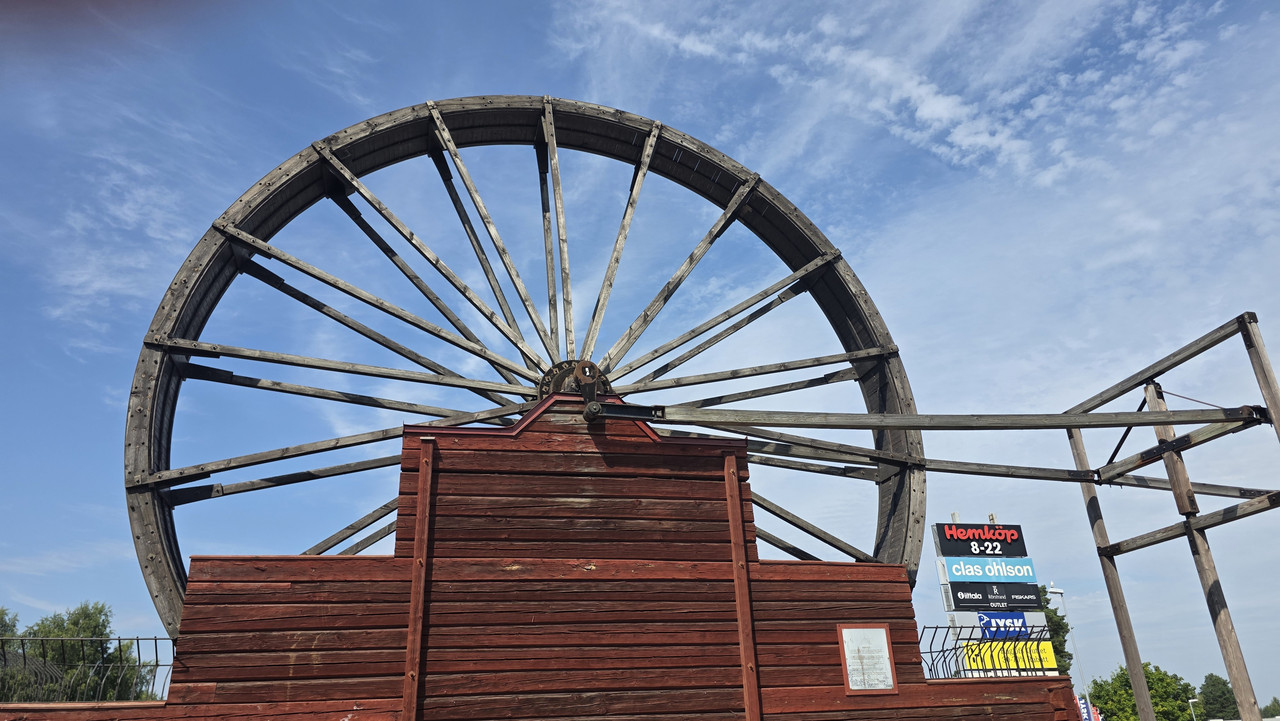
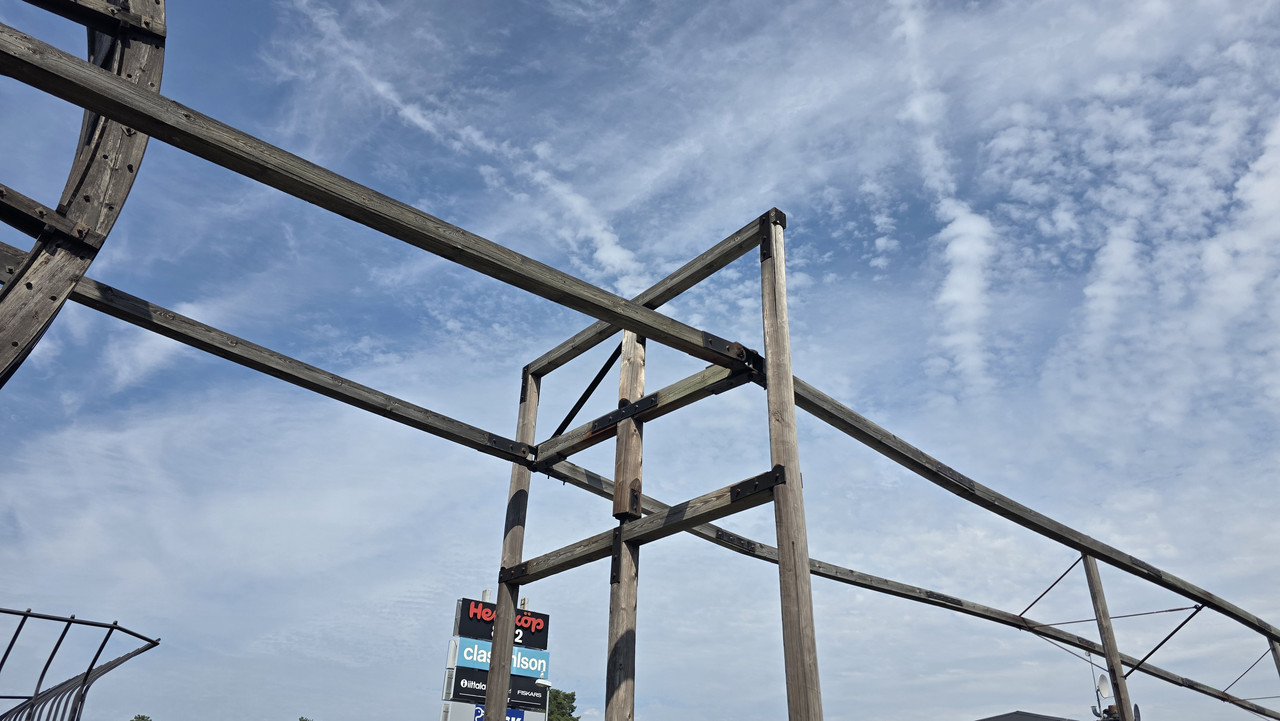
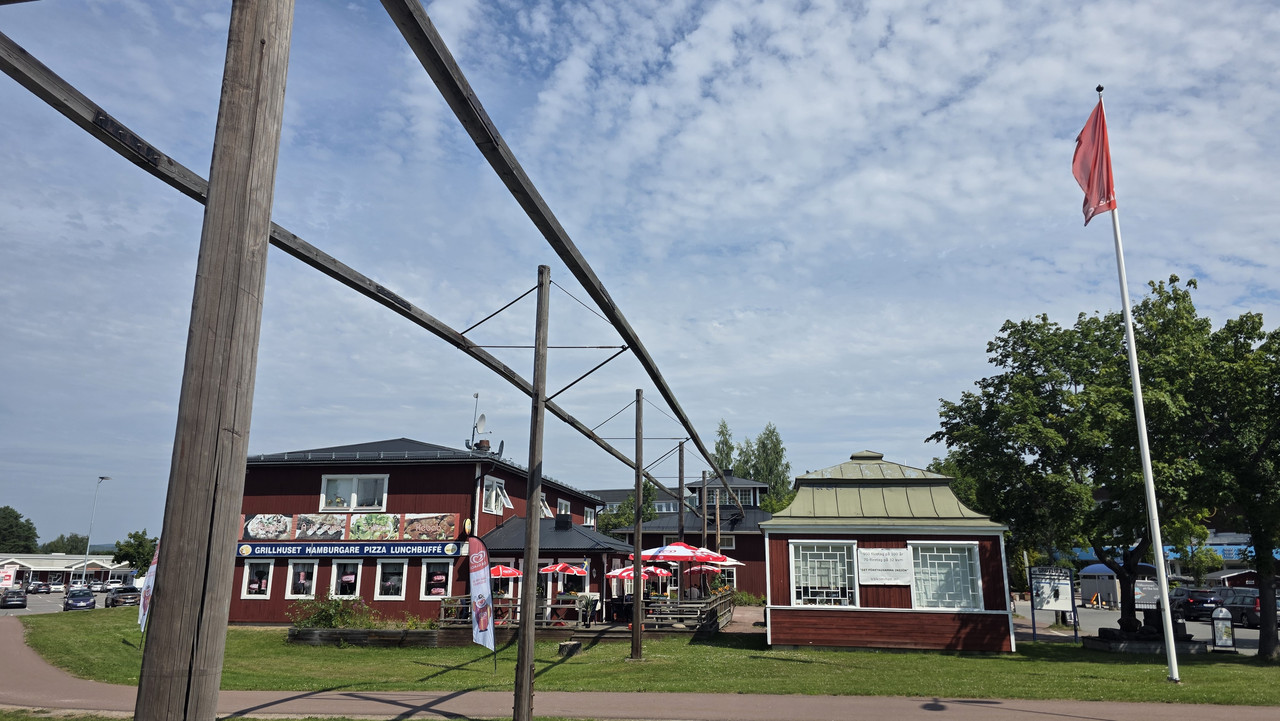
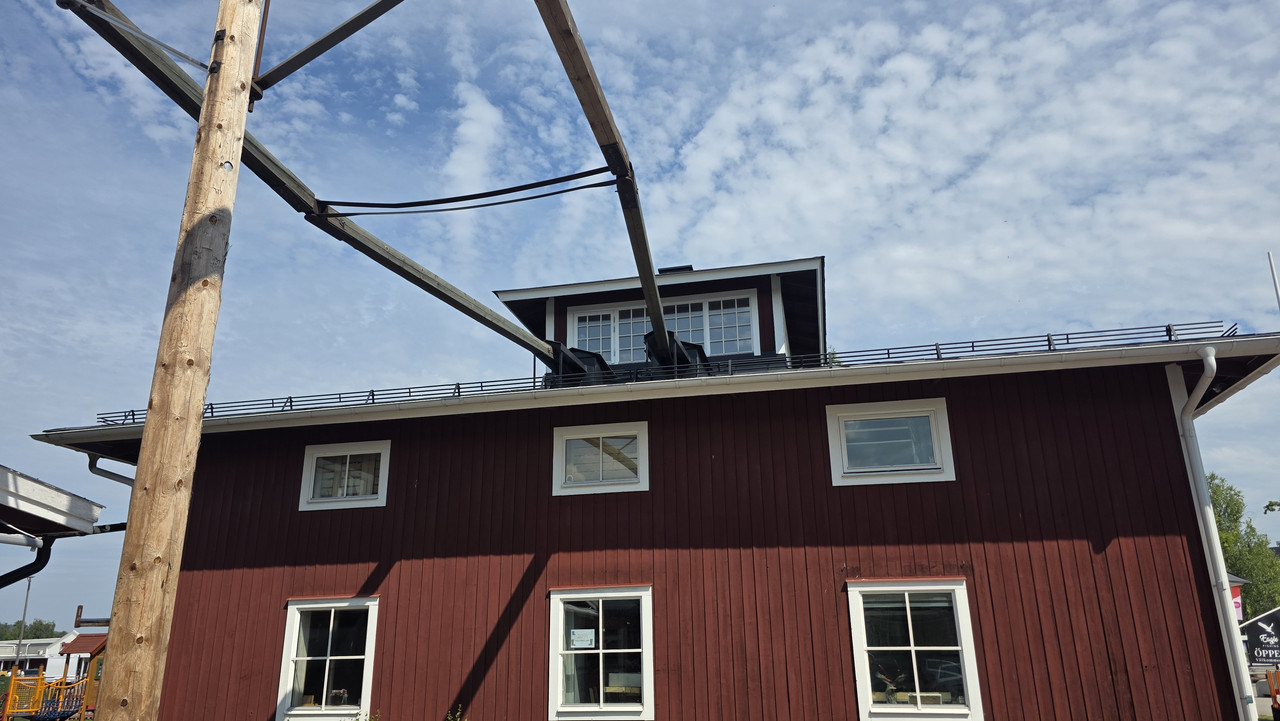
This is a working example of the Stangenkunst that Kris DeDecker has written about on Lowtech magazine. The rods can transmit power long distances from a prime mover like a waterwheel to machinery that consumes the power. I have read about other examples, where a single steam engine was able to power a dozen or so oil pumps using pole mounted rods to transmit power. Today, the technology has largely been overtaken by electricity. But it retains niche applications where mechanical power transmission is more suitable, i.e where mechanical power is harvested and mechanical power is the desired output.
A well maintained system could remain functional for several decades to centuries. I have been unable to discover what this particular device was used for.
Last edited by Calliban (2026-07-17 11:15:44)
"Plan and prepare for every possibility, and you will never act. It is nobler to have courage as we stumble into half the things we fear than to analyse every possible obstacle and begin nothing. Great things are achieved by embracing great dangers."
Offline
Like button can go here
#103 2026-07-22 13:22:33
- Calliban
- Member
- From: Northern England, UK
- Registered: 2019-08-18
- Posts: 4,397
Re: Permenance Movement
Why we should build with stone again.
https://youtu.be/VVaWmEI9O1w
Unlike concrete, stone does not degrade. Reinforced Concrete became popular because it can be cast into complex shapes relatively easily. It can also take tensile loads, thanks to its steel core. Unfortunately, reinforced concrete degrades quickly in a hydrosphere, as moisture migration through the concrete matrix causes steel oxidation and swelling. This cracks and ultimately disintegrates the concrete. Stone lasts for centuries or even millenia. With modern sawing techniques, stone can be cut into regular modular components that are more suitable to modern construction. CNC machining can carve the most intricate shapes. It can even take tensile loads by drilling holes and applying pre-stressing cables. Timbrel vaults can be build from thin stone tiles, that are glued or cemented together.
I am interested in the potential for stone construction on Mars. We find no shortage of stone in any image taken of the red planet. It is amply mixed in with bulk regolith and can be separated through sieving. We can use computer aided sawing to cut these pieces into regular blocks, tiles and slivers.
Stone can be joined using PVA glue. This has a shear strength of 3-8MPa upon drying. Curing at increased temperature can increase strength to 14MPa. However, if stone components are held in compression, the PVA does not need to withstand shearing or tensile stresses. It exists primarily to maintain the shape of stone assemblies as they are being constructed or transported. PVA glue is easy to synthesise. It is produced by the controlled oxidation of the vinyl acetate monomer in water solution. The monomer itself is produced by reaction between ethylene, acetic acid and oxygen, over a palladium catalyst. We have discussed ethylene and acetic acid before, as they are both easily synthesised from carbon dioxide and hydrogen
So PVA glued is a material that can be produced in abundance on Mars using simple chemistry and a sufficient energy source. Only thin films are needed to join precisely cut stone surfaces. Using this glue, a wide range of structural units can be produced and assembled into structures, using processed surface stone.
Last edited by Calliban (2026-07-22 13:44:24)
"Plan and prepare for every possibility, and you will never act. It is nobler to have courage as we stumble into half the things we fear than to analyse every possible obstacle and begin nothing. Great things are achieved by embracing great dangers."
Offline
Like button can go here
#104 2026-07-22 14:38:11
- Calliban
- Member
- From: Northern England, UK
- Registered: 2019-08-18
- Posts: 4,397
Re: Permenance Movement
Numerous people have used lasers to etch images and letters into stone. This man is able to use a laser to cut through thin stone sheets. But I cannot find much information on laser cutting of larger sections. It may be that lasers aren't suitable for cutting thick stone sections.
https://youtu.be/3Gdt5xZAa7Q
The traditional solution for stone cutting is rotating discs. Cheaper ones are made from bonded fibre reinforced silicon carbide. More professional cutting uses steel discs, with the rim being a cermet, with industrial grade diamond powder set within a steel matrix. On Mars, these could be produced domestically, with diamond powder being imported. Or we could import the discs from Earth, which is likely to be the solution of choice, at least initially.
Circular saw blades typically range between 0.8 - 3.2mm in thickness. A 1m diameter, 0.8mm thick blade would weigh about 4.5kg. Duck.ai tells me that a well maintained blade will have a life expectancy of around 5000m2 of stone surface. So a 4.5kg imported blade should be able to cut 1000 tonnes of stone in large sections. Smaller sections are presumably more wear intensive, because surface area to volume ratio increases. If a 5kg blade can cut 1000 tonnes, that is a mass ratio of 200,000:1. And the spent blades are refined metals that can be recycled.
For cutting of loose stones to be efficient, we need a machine that is able to map the shape of each rock that enters it. The rock will be x-rayed to detect internal fractures. The intrrnal computer then chooses the optimal cutting programme for the rock. This will determine the number, shape and size of stone elements to be derived from an input rock of specific size and, shape.
Last edited by Calliban (2026-07-22 15:09:11)
"Plan and prepare for every possibility, and you will never act. It is nobler to have courage as we stumble into half the things we fear than to analyse every possible obstacle and begin nothing. Great things are achieved by embracing great dangers."
Offline
Like button can go here
#105 2026-07-22 15:33:36
- Calliban
- Member
- From: Northern England, UK
- Registered: 2019-08-18
- Posts: 4,397
Re: Permenance Movement
This video (presumably from India) shows local masons building a timbrel vault.
https://youtu.be/fRatLAAH30E
Using nothing more than tiles and adhesive, these vaulted floors are able to support heavy operational loads despite being only a few inches thick. This is possible because tile is immensely strong in compression. But the catenary arch must be carefully shaped to ensure that the line of force does not leave the surface of the tile. If it does, the result is shearing stresses that will likely fail the structure. The uncertainty introduced by point loads can be managed by ensuring a minimum thickness of the surface - typically no less than 2 inches and by putting a flat tile floor over the structure with filling between. This spreads loads over the entire vault improving stability.
Here is a short clip showing a tile staircase.
https://youtube.com/shorts/Log2OZvFZBE
On Mars, we can build vaults like this using baked tiles or thin stone tiles. PVA based adhesives can be used between tiles.
Last edited by Calliban (2026-07-22 15:45:41)
"Plan and prepare for every possibility, and you will never act. It is nobler to have courage as we stumble into half the things we fear than to analyse every possible obstacle and begin nothing. Great things are achieved by embracing great dangers."
Offline
Like button can go here
#106 2026-07-22 16:02:35
- Void
- Member
- Registered: 2011-12-29
- Posts: 9,911
Re: Permenance Movement
Good Stuff Calliban!
Ending Pending
Be careful what you wish for.
Offline
Like button can go here
#107 2026-07-25 19:03:34
- Terraformer
- Member
- From: The Fortunate Isles
- Registered: 2007-08-27
- Posts: 4,017
- Website
Re: Permenance Movement
In a way, concrete is simply taking the use of mortar to the extreme, where the mortar is mixed with tiny pieces of stone and then poured into shape. Less extreme than modern concrete is the Roman style, which uses bigger pieces of stone -- more rubble than gravel -- and is laid rather than poured. I definitely think the Roman style of construction is due a comeback, given that the labour and complexity should actually be lower than modern bricklaying if forms are used.
Would like to see more stone hexagonal pavers being cut. Hexagons are easier to lay than squares or rectangles due to the way they tessellate, and I like stone more than asphalt so if we can replace a lot of asphalt that'd be great.
Use what is abundant and build to last
Offline
Like button can go here
#108 2026-07-26 16:16:49
- Calliban
- Member
- From: Northern England, UK
- Registered: 2019-08-18
- Posts: 4,397
Re: Permenance Movement
Terraformer, I agree that stone paving is a more aesthetic and more long-lasting solution than asphalt. On the topic of concrete, the Romans never did anything so stupid as putting steel reinforcement into concrete. Doing this immediately gives concrete tensile strength. You can build things with reinforced concrete that would be impossible without reinforcement. But it reduces effective lifetime to decades, because the steel corrodes, causing the concrete to split and crumble.
If we stopped trying to build tensile concrete structures and designed for compressive loads, our concrete structures would last much longer. Ironically, we are better placed to do that now, even though no one can be bothered to do it. Computer aided design tools allow the design of thin concrete shells that follow the line of effective force within a structure. But it means making ceilings curved and staggering walls outward to absorb lateral forces. No one can be bothered because the people doing the building are only interested in short investment windows. They don't care if the structure is still standing in 50 years, because they will be dead by then. And no one is prepared to pay a penny more than they have to for a structure. Which is sad and tells us a lot about the quality of people we seem to be creating these days.
Last edited by Calliban (2026-07-26 16:21:05)
"Plan and prepare for every possibility, and you will never act. It is nobler to have courage as we stumble into half the things we fear than to analyse every possible obstacle and begin nothing. Great things are achieved by embracing great dangers."
Offline
Like button can go here
#109 2026-07-29 18:20:55
- Terraformer
- Member
- From: The Fortunate Isles
- Registered: 2007-08-27
- Posts: 4,017
- Website
Re: Permenance Movement
We don't need to give up reinforced concrete, yet. Basalt fibre mesh is commercially available. Not quite as good as steel in some applications, but a lot more durable and more similar to the concrete in expansion contraction etc. A basalt reinforced concrete road could last quite a long time.
(Been thinking recently on this for a bit of worldbuilding where the magic comes back in 2014. Has mage bred asphalt eating bacteria that force us to have either concrete or gravel roads. Among other things.)
Use what is abundant and build to last
Offline
Like button can go here