New Mars Forums
You are not logged in.
- Topics: Active | Unanswered
Announcement
#1 2025-12-19 07:27:44
- tahanson43206
- Moderator
- Registered: 2018-04-27
- Posts: 25,572
Architectural Engineering on Mars
This topic is offered for NewMars members who might wish to help to build up a collection of knowledge/tips/insights about how to design and build structures and groups of structures on Mars.
As an experiment, this topic is configured as one with Continuous Improvement as a theme.
In the 20 years+ life of NewMars, posts have been created and then left unchanged. This topic will provide an opportunity for members to experiment with the idea of correcting errors in posts when they are pointed out. There should be no embarrassment in making corrections when new information becomes available. Everyone makes mistakes, and in the Age of AI, we see even more mistakes.
Wikipedia is built up on the exact same policy. Anyone on Earth can apply for a position as a Wikipedia editor and make changes to posts. Other editors will examine the changes and correct them as necessary. This process continues until stability occurs.
In late 2025, NewMars members have been considering the implications of Calliban's vision of a Superbowl sized building on Mars.
One of the factors that will influence design decisions is the prevailing temperature of the planet, both at the surface and below.
It appears that while the temperature may rise as measurements are taken closer to the core, there is a region below the surface where temperatures may be found in the -50 degree Celsius range. While on-the-ground measurements have not yet been taken meters below the surface, it would seem prudent to assume the planet wide estimate of -50 degrees (or so) is likely.
Accordingly, building designers might do well to plan for such temperatures.
This topic is available for NewMars members who might have an interest in best practices for design and construction of habitats of various sizes and in various locations.
It appears likely that all habitats where humans will spend much time will have a covering of several meters of regolith to reduce the impact of radiation. On Earth, galactic and solar radiation is attenuated by our atmosphere, but that service is not available at Mars.
Other factors that will surely influence planning for architecture include the range of materials available locally, and the kind and amount of energy available.
This opening post can be edited as other important factors become apparent.
(th)
Offline
Like button can go here
#2 2025-12-19 07:28:27
- tahanson43206
- Moderator
- Registered: 2018-04-27
- Posts: 25,572
Re: Architectural Engineering on Mars
This post is reserved for an index to posts that may be contributed by NewMars members.
Index:
Post #3: SpaceNut https://newmars.com/forums/viewtopic.ph … 32#p236332
This post includes links to two studies, in addition to an image about habitation and a set of points about habitation.
(th)
Offline
Like button can go here
#3 2025-12-19 18:04:45
- SpaceNut
- Administrator
- From: New Hampshire
- Registered: 2004-07-22
- Posts: 30,831
Re: Architectural Engineering on Mars
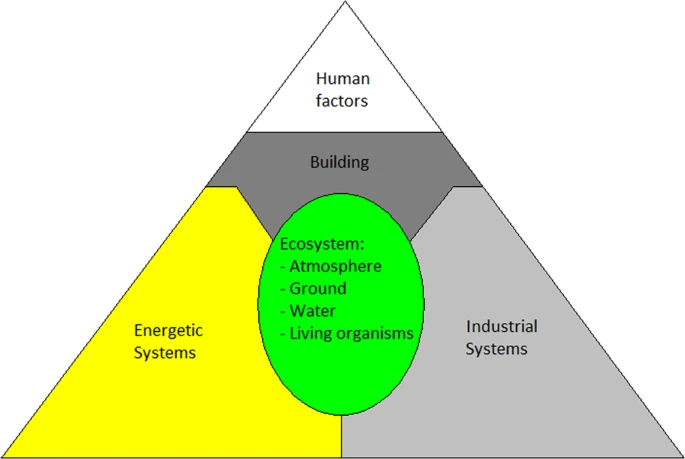
A Mars habitat mission requires robust life support (air, water, power), radiation shielding, extreme thermal control, and durable structures to withstand Mars' harsh environment, plus systems for food, waste, communication, and medical care; crew needs include psychological resilience, STEM skills, and physical fitness, as seen in NASA's simulations focusing on teamwork, resource limits, and isolation challenges to prepare for long-duration stays and self-sufficiency.
Key Habitat & System Requirements
Life Support: Closed-loop systems for air (CO2 scrubbing, oxygen generation) and water recycling, plus reliable power (solar, nuclear) for continuous operation.
Structure: Must handle extreme cold (avg. -62°C), low atmospheric pressure, dust, and significant internal pressure forces (over 2,000 psf).
Resources: In-situ resource utilization (ISRU) for water/fuel, food production (hydroponics), and efficient waste management.
Protection: Shielding against cosmic and solar radiation, dust mitigation systems, and robust thermal control.
Interfaces: Commonality with other vehicles (rovers, landers) for power, data, and crew transfer.
Crew & Operational Requirements (NASA Analog Missions)
Crew Profile: Healthy, motivated US citizens/residents (ages 30-55), non-smokers, with STEM Master's degrees or equivalent experience, and strong teamwork/problem-solving skills.
Psychological Health: Focus on managing isolation, confinement, interdependence, communication delays, and developing strong interpersonal skills.
Operations: Simulate realistic stressors like equipment failures, resource limitations, and communication blackouts for long durations (e.g., ~378 days).
Mission Class & Duration
Opposition Class: Shorter stays (e.g., 30 days at Mars) with Venus flyby.
Conjunction Class: Longer stays (e.g., 500+ days at Mars) due to orbital mechanics, requiring more self-sufficiency
Moon to Mars (M2M) Habitation Considerations
What's the Bare Minimum Number of People for a Mars Habitat?
Minimum Acceptable Net Habitable Volume for Long‐Duration Exploration Missions
Sustaining Human Presence on Mars Using ISRU and a Reusable Lander
Offline
Like button can go here
#4 2025-12-21 07:49:59
- SpaceNut
- Administrator
- From: New Hampshire
- Registered: 2004-07-22
- Posts: 30,831
Re: Architectural Engineering on Mars
Parts of What we need to go to Mars - short term projects some of which applies to exploration as well as for building.
Offline
Like button can go here