New Mars Forums
You are not logged in.
- Topics: Active | Unanswered
Announcement
#101 Re: Not So Free Chat » Politics » 2026-01-09 02:27:54
Nothing Was Leared YouTube Channel - White Liberal News Good For US Means Bad For Us ep 103
"Join us next time when we tell you how much better we are as liberals than everyone else." - Karen
#102 Re: Meta New Mars » kbd512 Postings » 2026-01-09 02:11:09
This link covers some of the ceramic fibers being used in these parts:
Oxide-oxide ceramic matrix composites enabling widespread industry adoption
I would be remiss if I did not mention the role that NASA's and DOE's partnership programs as the genesis for the commercialization of a lot of these lab curiosities. Science for its own sake still matters, but so does directed science, aka "engineering", aimed at solving real world problems. NASA helps industry develop the basic "know-how" to retire risk to begin to apply aerospace technologies to the ordinary everyday world that the majority of us inhabit.
#103 Re: Meta New Mars » kbd512 Postings » 2026-01-09 01:53:31
tahanson43206,
Using materials like Alumina and BNNT, it's feasible to produce SCO2 engines with 1,300C TITs and 66% thermal-to-mechanical efficiency, with the weight of Aluminum metal and both absolute strength and strength-to-weight far surpassing any Inconel super alloy at 1,300C. At that point, there's little to argue over the benefits of this technology. It will be smaller / lighter / stronger / longer-lasting / more thermally efficient than any competing thermal engine technology. It's rapidly becoming a close runner-up to Solid Oxide Fuel Cells, but at much greater power density.
Reliable direct conversion (of hydrocarbon fuels) SOFCs are now approaching 5kW/kg in commercialized applications, and they achieve 70% to 80% thermal efficiency. I've read about lab-scale test articles achieving 8kW/kg. Plate-out of the electrodes and destruction of the membranes from Sulfur contamination continues to be a problem, although use of Methane vs denser fuels (Propane, kerosene, diesel) ameliorates this problem. SCO2 gas turbine engines are capable of power densities about 20X that of SOFCs by using CMCs combining Alumina with advanced fiber reinforcements like BNNT.
Do you see those big white components in these gas turbine engines?: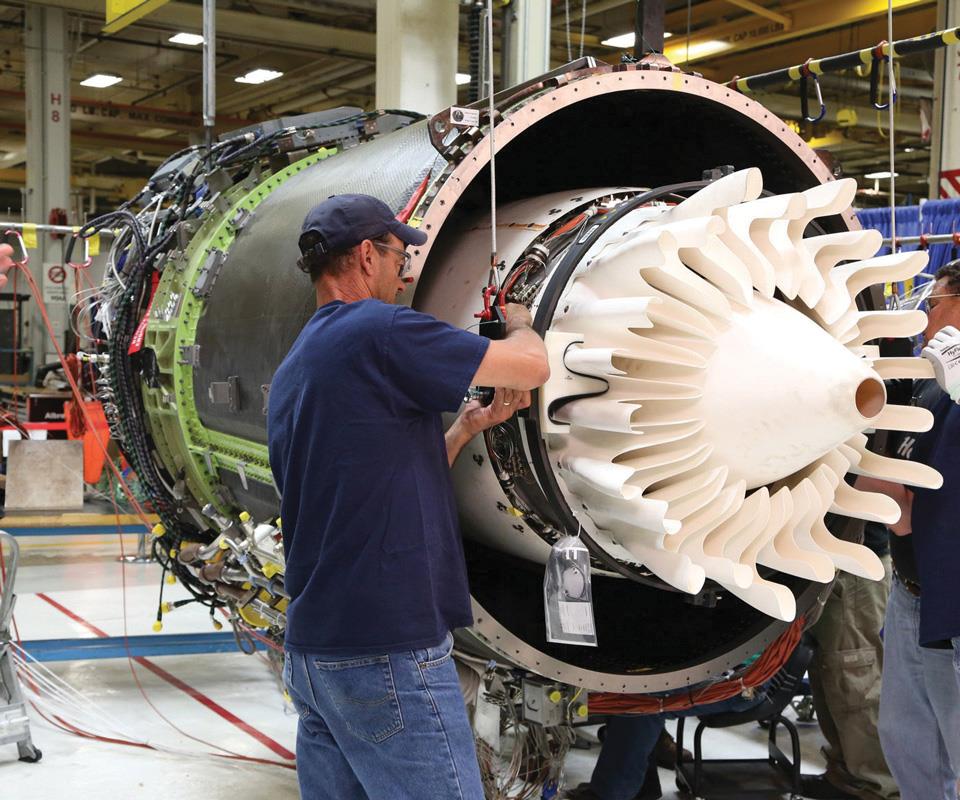
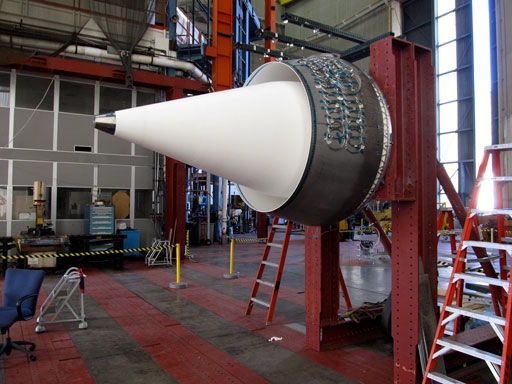
Those are Alumina-based CMCs. They're ceramic fiber reinforced metal oxide matrix composites (Alumina binder with Nextel fibers or something similar) with some plasticity to them, meaning they behave less like glass rods and more like sheet metal, but with significant thermal shock tolerance. They're not stronger than metals at room temperature, nor harder than pure ceramics, nor stiffer than Carbon fibers, yet they have a highly desirable mix of those properties combined with greater tensile strength than super alloys at combustion temperatures. Did I mention how light they are? They're similar in density to Aluminum. Even after hundreds of hours of operation, they still look brand new, because they're already oxidized to the point that no additional oxidation is possible. Have you ever noticed how metals exposed to such extreme temperatures look "rusted" or "blackened" or "every color of the rainbow"? That is actually surface oxidation damage to the base metal alloy. After a certain amount of accumulated oxidation damage, they become scrap metal.
A master's level thesis on testing these materials:
All-Oxide Ceramic Matrix Composites - Thermal Stability during Tribological Interactions with Superalloys - Daniel Vazquez Calnacasco - Luleå University of Technology, Department of Engineering Sciences and Mathematics
Preface
This project was performed between September 2019 and May 2021 as part of the Advanced Materials Science and Engineering (AMASE) Master Program, coordinated by the European School of Materials (EUSMAT) through an Erasmus+ scholarship.The work focused on the interactions between a ceramic matrix composite and a superalloy when subjected to tribological testing and was carried out under the supervision of professors Marta-Lena Antti and Farid Akhtar at the Division of Engineering Materials of Luleå University of Technology (Sweden) in collaboration with GKN Aerospace Engine Systems, Sweden.
The composites studied in this work are often referred to in the literature with different terminologies involving the acronym “CMC” for Ceramic Matrix Composites, preceded by a suffix, such as in: i) “Oxide” or “All-Oxide” CMC (OCMC), ii) Oxide-Oxide CMC (Ox-Ox or Ox/Ox CMC), iii) Continuous-Fiber Ceramic Composites (CFCC), iv) Long Fiber Composites (LFC) v) Ceramic Fiber-Matrix Composites (CFMC) and vi) Fiber Reinforced Ceramics (FRC & FRCMC). In this work the term OCMC is preferred.
When addressing a composite in this document, the nomenclature will consist of three components, in the following order: fiber/(interphase)/matrix. If only two components are written, such as in “N720/A”, it will be understood that the composite has a porous matrix and no interphase.
A NASA CMC Development Partnership Project with Rolls-Royce and COI ceramics:
[url=https://ntrs.nasa.gov/api/citations/20150018257/downloads/20150018257.pdf]OXIDE/OXIDE CERAMIC MATRIX COMPOSITE (CMC)
EXHAUST MIXER DEVELOPMENT IN THE NASA ENVIRONMENTALLY RESPONSIBLE AVIATION (ERA) PROJECT[/url]
The very last slide shows pictograms of the process steps that COI Ceramics uses to make these parts.
Anyone who wants to see practical hybrid-electric aircraft take flight should be onboard with this tech, because every other energy storage and conversion technology is a pretender to their cause. At the present time, there are no electro-chemical batteries or fuel cells in existence that come within a country mile of the power-to-weight requirements for modern long range turbine-powered and kerosene-fueled aircraft.
Seeing designs with 20-30% increase in fuel economy over existing conventional gas turbine powered aircraft would be pretty spectacular.
This comment from Reddit User "discombobulated38x" is one of the best simplified explanations of current large turbofan engine design that I've seen in awhile:
Jet engine efficiency is made up of two things Thermal efficiency (Nth) and propulsive efficiency (Np).
Nth is 1 when all of the energy liberated by fuel is extracted (so exhaust gas is same temperature as at compressor exit) which is obviously impossible.
Np is 1 when the jet velocity matches the free stream velocity (so no thrust is created).
The goal of a turbofan is to lower the jet velocity, increasing the propulsive efficiency.
I'm struggling to think of a simple way to explain this, but if you take a turbojet, which has, say, Nth of 0.4 (in reality the faster you go the better this number gets), the mass flow is going to be low and the jet velocity (very) high. This means the engine doesn't generate much thrust when moving slowly, but still generates most of that thrust at high (supersonic) speeds, when the free stream velocity is close to the jet velocity (jet velocity not being supersonic as it is so much hotter than the free stream gas).
If you slap a power turbine on the back of that engine and hook it up to a fan it can comfortably generate an order of magnitude more thrust, but at a much lower jet velocity.
What this means is that your thrust at cruise greater, and is propulsively efficient, having a jet velocity as close as possible to the free stream velocity.
You also you have bucket loads more thrust at takeoff, which makes getting off the ground easier.
All of this is done for the same fuel burn. The higher propulsive efficiency at all stages of flight means more thrust is generated per kg of fuel burnt.
The biggest issue with high bypass turbofans is that the tip speed is limited to just over Mach 1 for a couple of reasons. This sets the speed of your low pressure rotor, which means you need a high diameter low pressure turbine with multiple stages to get the work extraction up.
It also means you need a much longer high pressure compressor, which comes with a whole host of its own issues. Pratt & Whitney and GE have mitigated this slightly by adding booster stages to the core, linked to the fan, which do a little but not much. Rolls-Royce on the other hand have gone for a three shaft architecture, which is substantially more complex, but allows for much more efficient compression, resulting in an engine that is substantially shorter and lighter than the competition at a cost of massively increased complexity/part count.
Pratt & Whitney (and RR, but they're behind the game here, partly because they don't have a competing product and partly because they have 3 shaft) have fixed both of these issues by developing a geared turbofan, in which the mass of a huge, slow LP turbine is removed, being replaced with a high speed intermediate/low pressure turbine and a big heavy gearbox. This drives an IP compressor at high speed, and then the fan via a reduction gearbox, decoupling fan diameter/tip speed and turbine speed.
It is a very nifty design, but the gearbox is incredibly hard to design, and to Pratts credit they appear to have nailed it on their PW1000 narrow body engine family. RR have a demo vehicle at the wide body end of the market called UltraFan, and that has the largest aerospace gearbox ever made, which has topped 87,000 horsepower. It's a thing of beauty.
I've not seen a GE9X cutaway yet (and suspect it will be a few years before I do), but GE are stuck with a huge, multi stage LP turbine, not that that seems to have deterred them from producing the biggest, highest bypass ratio having, most powerful aerospace gas turbine on the planet.
#104 Re: Science, Technology, and Astronomy » Fighter jets: F-35 vs Gripen vs Avro Arrow » 2026-01-08 23:45:28
RobertDyck,
If Donald Trump tries to interfere, the fact stores will be held in Canada, tools in Canada, skilled technicians in Canada, with supplies from Sweden, with stores of supplies in Sweden. If Donald Trump tries to interfere, that interference would have no effect on Canadian operational aircraft for many months if not years.
President Trump is gone in 3 years. There are presently at least 20 times more F-35 airframes and components being used every day than there are Gripen-Es in the entire world. By the time Canada quits dithering on their purchase decision, President Trump will no longer be in office. You should know that because Canada already makes parts for the F-35. They've never made, repaired, or alternatively sourced any spare parts for a Gripen. Building a domestic supply chain for Gripen parts will take the better part of a decade, by which time the rest of the world will have 6th generation fighters in service. When all the BS about performance is shown for exactly what it is, you won't have anyone to blame except yourselves. This has been a running theme with Canada since the Avro Arrow.
As hilarious as it would be to watch Canada operate Elbonia's Air Force, I actually think more highly of you than you do of yourselves, apparently. There isn't a first rate Air Force in the entire world which is not developing stealthy aircraft. Either everyone but Sweden is stupid, or they know exactly what stealth means in the context of tactical fighters and are working as fast as they can to "catch up" to modernity. Why do you think the European Union nations are working on their own stealth fighters?
When the Avro Arrow was cancelled, NASA was given first pick of their engineers.
Your country is contemplating purchasing fighters that have been rendered obsolete against modern air defense systems and air superiority fighters, all to thumb your noses at one man who will be gone in 3 years time. Nostalgia doesn't win any fights against similarly capable opponents. Good luck. You'll need it.
#105 Re: Science, Technology, and Astronomy » Coal-fired Brayton Cycle Supercritical CO2 Boilers » 2026-01-08 23:10:10
With a 1,300C TIT, they're talking about getting 66% thermal efficiency.
That would be a very significant step-change for marine and aircraft propulsion systems, and across a very significant power output range. The most efficient conventional large turbofan engines are 46% thermally efficient, but only at maximum thermodynamic output. Extracting two-thirds of the mechanical energy out of the total available thermal energy in every kilogram of fuel burned would be a stunning achievement for gas turbines. For a 1GWe power plant where all of the core plant components easily fit on perhaps 5 semi trucks, that is jaw-dropping performance.
I will always be a sailor at heart, so I think of it this way:
An 80,000t to 110,000t aircraft carrier nominally requires 208MW of power to move at 30+ knots. SCO2 gas turbines would be so light and compact that the ship could have a quadruple redundant power and propulsion plant, such that each of the four plants can propel the ship at maximum speed. Destruction of 3 out of 4 power plant compartments from bomb hits wouldn't slow the ship at all. Each plant is so much smaller than a steam plant that it can have its own armored engine compartment at the aft end of the ship, because the equipment has a very minor effect on how the ship sits in the water. The steam plants were so large and heavy that the entire hull from about amidships aft, just below the waterline and all the way to the keel, was filled with various boilers, engine rooms, steam piping, shafting, and backup diesel generators. With a SCO2 propulsion system, the gallery deck, which is situated just below the flight deck and above the hangar bay, could be almost empty except for the aircraft catapults and arresting gear. There would be no need to put squadron ready rooms there, staff workspaces, and berthing compartments, because most of the hull would be a cavernous empty space available for the air wing personnel. This would reduce the carrier's metacentric height and improve stability following battle damage.
For aircraft, existing airframes could just about double their cruising range for no increase in fuel load or engine weight.
I don't know how other people think about those kinds of performance improvements, but I consider them to be a "step change" in engine capability.
#106 Re: Science, Technology, and Astronomy » Fighter jets: F-35 vs Gripen vs Avro Arrow » 2026-01-08 15:38:46
What European Fighter Jets Have Critical US Components?
Sweden's Saab Gripen
Of the European fighter jets, the Gripen is by far the most dependent on international parts (while Sweden has a respectable military industry, it is far from capable of manufacturing all the parts needed for a 4.5+ generation fighter jet). Only a comparatively small amount of the components and systems found on the Gripen are actually designed and manufactured by Swedish contractors.Example US contractors for the Saab Gripen:
General Electric: F414-GE-39E turbofan engine
Honeywell: Life Support SystemsTyphoon Eurofighter
...
Even so, American DNA can be found all through the Eurofighter. In 2012, Northrop Grumman reported it had been contracted to provide inertial and satellite navigation systems for Tranche 3 of the Eurofighter Typhoon.Example US contractors for Typhoon Eurofighter:
Lockheed Martin: Sniper Advanced Targeting Pod
Collins Aerospace: Large Area Display
Honeywell: Life Support Systems
Northrop Grumman: Inertial and satellite navigation systemsDassault Rafale
Example US contractors for the Dassault Rafale:
HiRel Connectors, Inc.: Electrical & Electronic Connectors
Collins Aerospace: Pitot probe; ice detectors; air data total air temperature sensors
The Lee Company: Hydraulic Systems, Restrictors
Lockheed Martin: Sniper Advanced Targeting Pod
Aerotech Herman Nelson, Inc.: Portable heaters (Canadian contractor)So could the Europeans produce an all-European 4.5+ generation fighter jet without US contractor input? Possibly, but the reality is none of them do (although the Rafale may come close).
#107 Re: Science, Technology, and Astronomy » Fighter jets: F-35 vs Gripen vs Avro Arrow » 2026-01-08 14:28:41
RobertDyck,
The problem is with what you think you know that just isn't so.
For example: you claim the F414 engine is manufactured in the US. But that's wrong.
The primary American component in the Saab Gripen's engine is the core turbofan unit, specifically the General Electric (GE) F414-GE-39E engine, which powers the Gripen E/F variants, providing significantly more thrust and performance than older models. Other US companies like Honeywell also supply critical systems like life support, making roughly a third of the Gripen's systems American-sourced, meaning US export controls apply.
When China forges crankshafts and American machine shops perform the finishing machining operations, that doesn't mean the cranksahft was actually "made" in America, nor does it mean said machine shop can actually forge a crankshaft.
Maybe you don't make the distinction, but try to assemble an AIM-120 without the radar unit and computer provided by Raytheon or the rocket motor provided by ATK and let me know how that goes.
Lockheed-Martin insists all maintenance work for F-35 must be done in the US.
Lockheed-Martin insists that all depot level repair work be done by a qualified unit if they will still be held responsible for the end result. This doesn't apply to Israel or most of the F-35s used by the Europeans, for example. Sign a waiver and take full ownership of the repair work. If your people screw it up, then it's on you. Most people who want their product to come with workmanship guarantees are going to take their $20M fighter jet engine back to the factory that made it for refurbishment. If you're confident in your repair abilities, then sign the damn waiver and take full ownership of all components and any mistakes. Otherwise, quit whining that the primary contractor insists on repair work to the product they partially "own", by contractual agreement, even though they don't want to, is done at a suitable depot with factory trained techs. No finger-pointing if one of your depot repair techs doesn't understand the task and the jet crashes as a result.
We've already been over this thorny issue with the GE and Pratt split-contract engines that power the F-14D / F-15 / F-16.
#108 Re: Science, Technology, and Astronomy » Coal-fired Brayton Cycle Supercritical CO2 Boilers » 2026-01-08 14:11:19
tahanson43206,
An organization the size of a Nation may be required to make it work on a large scale.
The portion of the design work that requires truly advanced engineering capabilities is modeling of the turbine's dynamic behavior during ramp-up / ramp-down. You need a supercomputer to do this. Trial and error won't cut it. The reason SCO2 gas turbines didn't exist until about 25 years ago was this exact problem.
It seems unlikely that specialized coatings can be applied to 3D printed parts using 3D printer technology at it exists in 2025.
Chemical Vapor Deposition works on pretty much any part you can throw in the tank.
Can you find examples of 3D printable parts for SCO2 devices?
Easily. Google "3D printed SCO2 turbine components".
SwRI study examines oxide growth in additively manufactured metals in sCO2 environment
Nobody is trying to hide the progress being made on this tech, it's simply not widely reported on. America, China, the United Kingdom, South Korea, Japan, and various other Asian and European Union countries are all working on this technology. It's an area of active development.
The most significant technical challenges are:
1. Modeling turbine flow behavior with SCO2- you really need a supercomputer to do this, and AI would probably help some more
2. Using the correct refractory materials with well-matched CTEs (this actually took quite a bit of experimentation)
3. Modeling and fabricating the heat recuperators and air separator units (for power cycles that use enriched O2)- advanced machining such as chemical etching, diffusion bonding, and selective laser metal sintering are used here, because these units are not like "tube and fin" models used by steam turbines or other more common heat exchangers
4. Long term failure mode analysis with significant thermal gradients and CO2 impurities at-play
5. Selection of appropriate sealing and lubrication materials. This is challenging, but not impossible.
#109 Re: Not So Free Chat » Peter Zeihan again: and also other thinkers: » 2026-01-08 01:35:42
RobertDyck,
Ukraine is justified in attacking Russian ships anywhere, considering Russia is currently invading Ukraine with intent to completely annex all their territory, make Ukraine cease to exist.
I don't recall anyone stating that they're not justified. Unfortunately for them, they don't have the manpower and coordination to win a land war with Russia. Their actions in combat are admirable, but courage only takes you so far. The math doesn't work. At some point, training, sheer numbers, and logistics become determining factors. If we put our troops on the battlefield, Russia's war with America will be over shortly after it starts. I'm pretty sure that's what President Trump just did. I think his patience in dealing with Russia is wearing thin.
But attacking shipping of a country with which you are not at war?
President Trump first made a genuine good faith effort, on behalf of both America and Ukraine, to stop the war in Ukraine. That was an act of pure generosity and kindness to everyone involved. President Putin's actions made it clear that he did want that. Russia has now entered into the "finding out" phase.
During President Trump's first term in office, the Russians and their mercenaries deliberately attacked American troops in Syria. Our Air Force then decided that a quick terraforming project was in order. By the time the shooting was over, there were no more Russian troops left. I'm sure some pieces of them were left somewhere, just not ones that anyone could ever identify.
International trade cannot exist as long as countries allow piracy.
From the age of sail to the present day, piracy has never stopped, nor has trade. Your assertion about this and all available evidence are at odds with each other. Shipping will become more costly at certain times and in certain places.
#110 Re: Not So Free Chat » Peter Zeihan again: and also other thinkers: » 2026-01-07 22:40:35
RobertDyck,
Weren't you the one endlessly advocating for sending weapons to fight the Russians in Ukraine?
Now that America is directly and actively pushing back on Russia by hitting them where it hurts most, you're shocked that we did it?
#111 Re: Science, Technology, and Astronomy » Coal-fired Brayton Cycle Supercritical CO2 Boilers » 2026-01-07 22:25:23
tahanson43206,
The seals we use are various grades of stainless steels and ceramics, not any kind of plastic. At the temperatures involved it should be obvious why. Virtually every modern piston engine uses multi-layer stainless steel gaskets to hold in combustion pressure. Modern diesel engines use 2,000bar fuel injection pressures and achieve 200bar combustion pressures. The labyrinth seals do leak some CO2, but we also use other inert gases like Argon to put external pressure on the sealing surfaces to hold the CO2 in. Argon is a very heavy gas, so leakage through sealing surfaces is less of an issue. Small Argon filled chambers at each end of the shaft do a good job. A longer shaft also reduces the temperature gradient so there's fewer leaks associated with thermal expansion. The other sealing mechanism we use with longer shafts and lower shaft temperatures is lube oil. Steam turbines already use lube oil.
Stress corrosion cracking can be greatly limited by applying ceramic coatings to the surfaces of the parts. The tech I'm talking about is no different at all than current gas turbine engine tech. Steam turbine and conventional gas turbine blades are also very susceptible to stress corrosion cracking. I've mentioned Silicon Nitride coatings multiple times on this forum, because it's used to coat steam and gas turbine blades, amongst other things.

#112 Re: Not So Free Chat » Greenland » 2026-01-07 22:10:56
Greenland Courts China in Snub to Trump
Greenland's foreign minister has said it is seeking deeper cooperation with China and potentially a free trade agreement, according to Chinese state news agency Xinhua.
Is the Polar Silk Road a Highway or Is It at an Impasse? China's Arctic Policy Seven Years On
#113 Re: Science, Technology, and Astronomy » Fighter jets: F-35 vs Gripen vs Avro Arrow » 2026-01-07 21:33:59
RobertDyck,
Well, you're still responding, though not in a way that exemplifies the behavior of someone who is more concerned with their nation's defense than complaining about President Trump. You've made no attempts to engage with the substance of the arguments I've made, and more than a few of your assertions are provably wrong. You could always make a data-backed logical argument to prove me wrong. I keep telling myself that you're capable of more, because I still believe you are.
#114 Re: Science, Technology, and Astronomy » Coal-fired Brayton Cycle Supercritical CO2 Boilers » 2026-01-07 14:16:02
Steam vs Supercritical CO2 Power Turbine Size Comparisons:
The 1GWe SCO2 power turbine will easily fit on a single semi truck. The 1GWe steam turbine? No chance of that ever happening.
Toshiba's 25MWe Allam cycle SCO2 Power Turbine and Combustor Cutaway: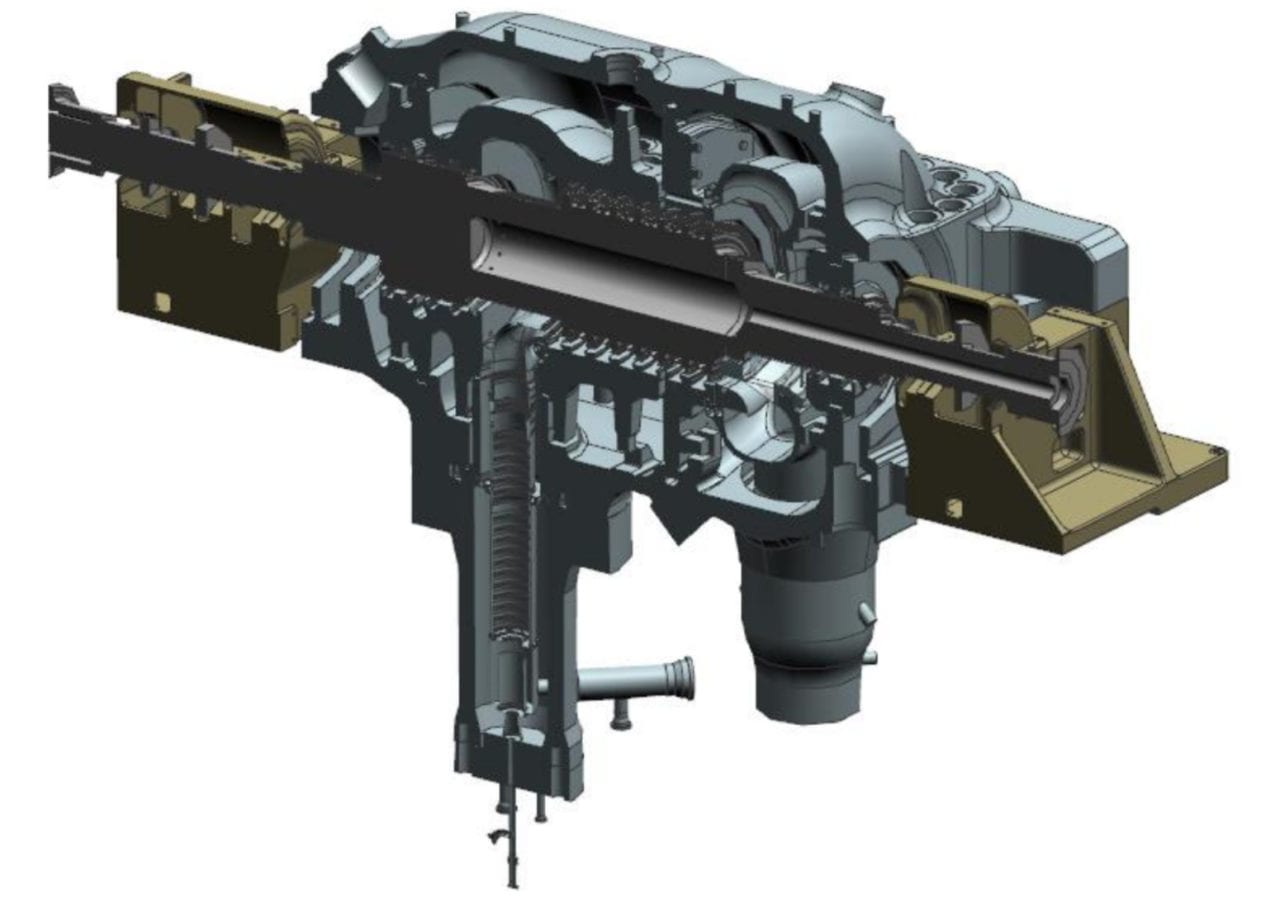
The extra casings surrounding the power turbine are there to recirculate hot CO2.
Edit:
This is a waste heat recovery turbine size comparison between SCO2 and steam: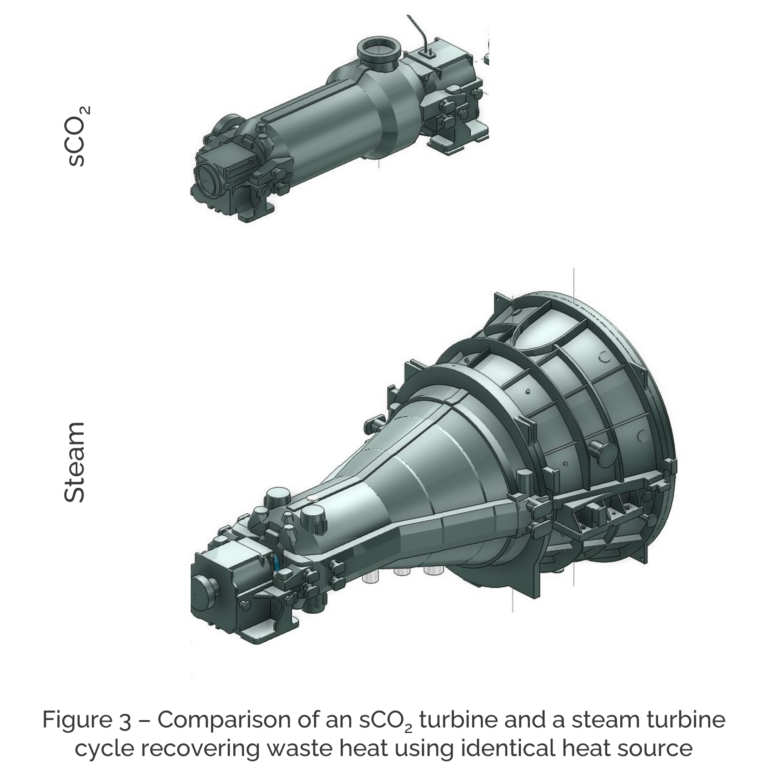
One of those devices is clearly much smaller than the other.
Steam turbines typically have many many blades that must be very carefully weighed and assembled in a specific order to maintain the balance of the rotating assembly.
SCO2 turbines tend to be machined from monolithic blocks of refractory metal alloys, formed from 3D printed powdered / sintered metal, or precisely cut using wire EDM. This is practical because even 1GW SCO2 power turbines are so small compared to steam turbines.
#115 Re: Science, Technology, and Astronomy » Coal-fired Brayton Cycle Supercritical CO2 Boilers » 2026-01-07 12:25:55
A short YouTube video on the Chinese SCO2 gas turbine power plant used to provide additional electrical power to their steel mill without burning more coal:
CGTN News - World's first commercial sCO2 power generator begins operation in China
Edit:
In case the point isn't clear, that steel mill is also a grid-connected power source.
#116 Re: Science, Technology, and Astronomy » Coal-fired Brayton Cycle Supercritical CO2 Boilers » 2026-01-07 12:15:28
tahanson43206,
After posting the above, and noting that steam has a major advantage on Earth due to the installed base and the almost negligible advantages of an SCO2 equivalent system, it seems to me unlikely SCO2 will make much progress on Earth.
Gas turbines and heat recuperators that are 10X smaller than steam equivalents are not an "almost negligible advantage". All that metal and machining costs real money. Even if the steel grades used in a steam turbine are modestly cheaper, they're not 10X cheaper than the steels used in SCO2 turbines. The difference in sizing of the major pieces of plant equipment are "the entire city block" vs "one house on the block". All the stuff in one house can be crammed into a Starship and shipped to Mars. Shipping an entire city block's worth of equipment is not practical. There is no reality-based scenario where any kind of steam turbine comes close to out-performing the SCO2 turbine. It's not cheaper, it's not smaller, it's not easier to repair, it's not easier to assemble and disassemble for transport, it's not faster to ramp-up and ramp-down to load-follow, and it's definitely not minimizing CO2 emissions.
China National Nuclear Corporation already has their first grid-connected SCO2 power plant in Guizhou. It's very small, only a pair of 15MW waste heat SCO2 turbo-generators, but that waste heat was otherwise at the wrong temperature for using steam, because it was waste heat from steel making. Would you rather they burn more or less coal?
The first generation of any new technology will take time to establish its footing. I don't judge combustion engines on the relative success or failure of Ford's Model T. That engine and vehicle was a joke compared to any modern turbocharged inline 4 cylinder engine in a mini SUV. Modern I4's produce as much horsepower and torque as a muscle car era V8, at less than half the weight and displacement. Modern family vehicles are only possible because their turbo I4's deliver V8 torque and power at half the size and weight, all day long.
This article does a good job of indicating exactly how the Allam-Fetvedt Cycle works, why it's a significant improvement over what we presently have in the form of steam and conventional gas turbines, and why Net Power is pursuing it, despite cost overruns and delays, which are related to problems with the Air Separator Units, rather than the SCO2 gas turbines and heat exchangers:
This Power Plant Runs on CO2
One of the reasons it's "good far Mars", is that it recaptures and recirculates the exhaust effluent, instead of dumping it in the atmosphere. It's the first power plant to demonstrate it can do that economically, meaning so much of the power isn't consumed trying to recompress the CO2 for storage that it's not worth the cost and energy involved. It's a CO2 recycling system deliberately built into the power plant as an integral design feature, rather than as an afterthought. Those Air Separator Units will also become critical life support infrastructure pieces for a Mars colony.
#117 Re: Not So Free Chat » Greenland » 2026-01-07 11:04:53
It would appear that Denmark and the EU are now ready to send ships and troops to defend Greenland. Problem solved without America having to devote more of our own troops and money to doing what Denmark always should have been doing themselves as a real functional NATO ally. Deeds, not words. Talk is cheap. Mounting a credible defense against an attack never is.
This was posted today:
Denmark, Greenland seek Rubio meeting after Trump remarks
Showing up is half the battle. When you actually show up and put in the work, both your allies and enemies take notice. Paying lip service to the idea of defending Greenland is no longer sufficient. When we station our military forces somewhere, it's not merely for sake of appearances. We will use it, if need be. Deterrence works much better when your enemies know, in no uncertain terms, that hostile actions will beget immediate overwhelming consequences. Men like Vladimir Putin and Xi Xinping only respect real routinely demonstrated military power. Whether or not our liberals are squeamish about that, or wish to complain that every last dime of public money isn't going to their favorite government handout program, they only sleep soundly in their beds at night because we're both willing and able to fight and win against all adversaries.
#118 Re: Science, Technology, and Astronomy » Fighter jets: F-35 vs Gripen vs Avro Arrow » 2026-01-07 01:55:55
If it's not apparent yet from the photos provided above, all the "real money" spent on the F-35 program was dumped into the sensors and software to provide a "bubble" of spatial awareness, plus the computer program telling the pilot what to pay attention to and what can be safely ignored. That's why it took so long to fully develop. It had almost nothing to do with the flight control software or engine or airframe, even though all of those things are their own little technological marvels. There is no other aircraft in existence that provides the same level of situational awareness as the F-35, to include the F-22.
We don't pay lip service to the idea of going back and fixing defects in components or software, either. When we discover that something is broken, we commit to solving the problems until it "just works". Denying that problems exist or hoping your enemy doesn't discover the flaws in the system is not an acceptable way to do business. To their credit, Lockheed-Martin has worked with their team of contractors to find and fix all observed airframe, engine, and software problems. Does it take them longer than we'd like it to? Yes. Is it cheap? No. Does it mean we have confidence that the platform is ready for combat by the time it sees combat? Absolutely. All effort is now directed at future enhancements and meeting the production (16 new tails per month) and repair schedules.
If you are not aware of what is going on around your plane at all times, against anyone who has a plane with the F-35s capabilities or modern air defense systems, you're as good as dead. If someone hasn't come along to kill you yet, that's because you had no serious effect on their operations. To this very day, most pilots who were shot down were either completely unaware that they were under attack, or so lacking in basic information about the direction that the threat was coming from that they couldn't do anything about it.
Here in the West, we spend so much time and effort training fighter pilots that we cannot afford to forfeit their lives, simply because some electronic gadget that could provide threat and target awareness wasn't installed in their jet due to cost-cutting measures. We need them to survive their first 5 to 10 combat missions to gain the experience required to operate in the new threat environment.
If they fly prior generations of combat jets, then half of them get shot down on every mission they fly against enemy air defenses and fighters in virtually all of the war games conducted during the past 25 years. Statistically speaking, that means none of them live long enough to see the end of their first combat deployment. Nobody is left to train the next replacement group of pilots. Worse than that, the production rates for modern combat jets are so low that there won't be replacements available in any meaningful period of time. Absent complete destruction of enemy air defenses, an entire squadron of Vipers or Strike Eagles or Rafales or Typhoons could be lost on a single mission over heavily defended territory. There's no way to conjure up replacement jets and aircrew. Anyone who isn't already in the training pipeline is unlikely to see action before the war is over, and there are never enough tails once the shooting starts.
China is producing about 200 J-20s per year as of 2025, so only 16 planes per month spread across 5 different production lines. Even for China it would now appear that there's a hard limit on resources devoted to any one piece of military equipment. Russia hasn't even come close to replacing combat-related aircraft losses in the Ukraine War. There's no reason to believe that America, China, Russia, or anyone else for that matter, ever could. These combat jets are no longer Aluminum sheet metal bent into shape and riveted. The tooling to make the airframes runs well into the tens of millions of dollars, and their engines are "OMG" expensive. Trained and efficient production line workers cannot be summoned from the talent pool, either. If money is no object, then sure, we could spend a major portion of GDP to produce more jet engines, but that is now as unrealistic as thinking you can afford to lose half your fighter jet squadron per mission.
Oddly enough, the Chinese are also starting to accept that this is how modern air combat really works. They have just as many problems with training / retaining new pilots and meeting production schedules as we do. They're not churning out their new J-20s or J-35s any faster than we are, and for the same reason. These machines are hideously complex. Each one is now so costly as to almost become a strategic asset. Losing them to human error, inadequate training, or limited survivability in the threat environment are no longer viewed as practical, even during a war. If you fail to swiftly establish air superiority and use it to wipe out the enemy's war machines, then you'll fight a desperate grinding war of attrition until one side breaks under the constant pressure, and that process could take years. All the while, you're losing young men at frightening rates, money is being burned like there's no tomorrow, and in a very real sense, the opportunity cost of having the war drag on is more economically damaging than the deaths and national debts because it can keep taking from your people generations after the war is over. I've yet to see ships produced quickly and effectively when the shipyard was under cruise missile attack, either. The WWII production methods don't work with modern weapon systems. The "quick and dirty" substitute weapons are iron bombs and artillery shells, which means you have to get close enough to use them. Whoever is able to control the skies is going to dictate which pieces of military equipment remain usable. Knock out the oil refineries or power plants and the entire war machine grinds to a halt. Here in America, we've determined that we cannot afford to allow that to happen to us, so everything we develop for the air power domain is to ensure that happens to our enemies first. Attrition warfare is a losing proposition, as both WWI and WWII already proved.
#119 Re: Meta New Mars » kbd512 Postings » 2026-01-07 00:36:36
As far as "beyond piston engines" is concerned, not to beat a dead horse, but I truly believe that the absolutely incredible power density of Supercritical CO2 systems is the most likely contender. A 250kW (335hp) SCO2 gas turbine rotor is roughly the same size as the US Silver Dollar. The heat exchanger power density can reach 700MWth+ per cubic meter. That means the power turbine, burner, and heat exchanger assembly can be roughly the same size of a shoebox. It'll be relatively heavy if made exclusively of refractory metals vs RCC, but as far as compactness and thermodynamic efficiency are concerned, nothing else comes close.
My contention is that hybrid electric powertrains are not only possible but truly practical using SCO2 gas turbines and small Lithium-ion battery packs. At 160Wh/kg, a 26kg battery pack is sufficient for 60 seconds worth of stored electricity to allow the motors to quickly accelerate to highway speeds.
Alternatively, a purely mechanical powertrain using a CFRP flywheel could store 1.976kWh in a 26kg flywheel and deliver a 130kW / 174hp burst of power for rapid acceleration. The SCO2 gas turbine could be truly tiny. Now that we have geared CVTs, this new transmission tech would permit optimized power delivery without electronic shifting.
Last but certainly not least, the dramatic simplification of the powertrain using either of these solutions could make cars significantly lighter.
#120 Re: Meta New Mars » kbd512 Postings » 2026-01-06 23:51:33
Lest we forget our automotive history, here are a few images of the Chrysler recuperated gas turbine car engine:
Engine installation at the factory: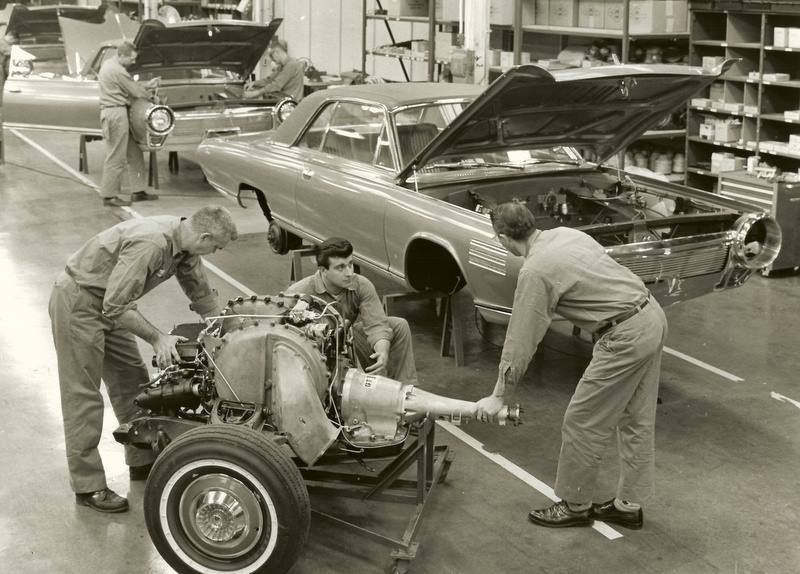
Flow Path / Operating Diagram: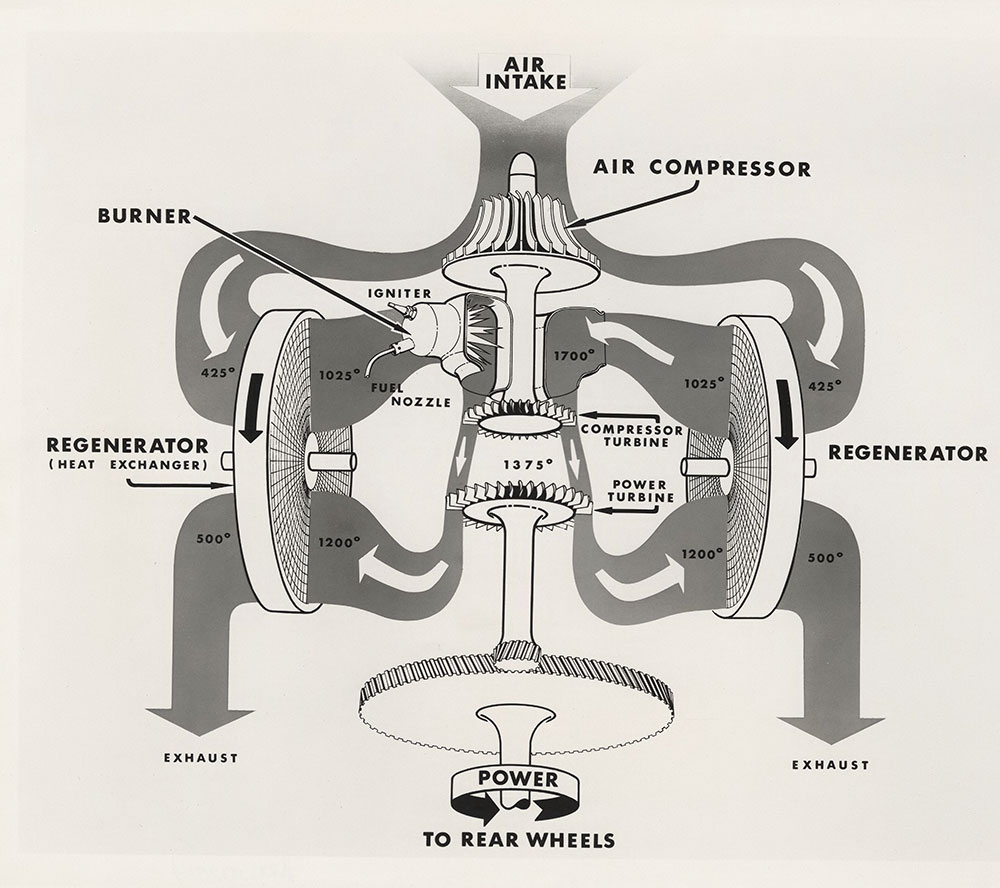
Recent photos of the engine and transmission: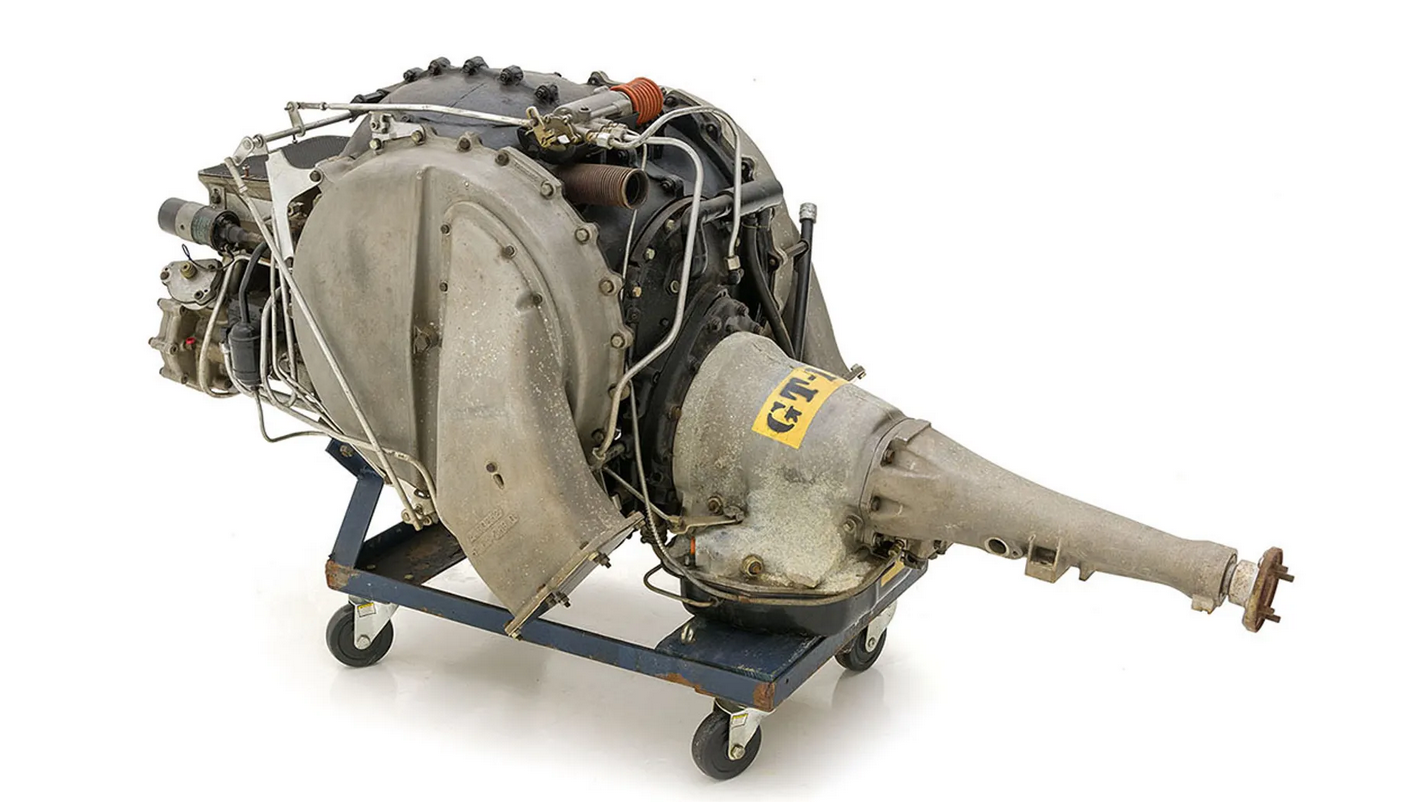

Older photo of the intake side:
Engine Diagram:
Vehicle Powertrain Diagram:
Chrysler went through 7 generations of gas turbine engine technology in an attempt to make the tech reliable, durable, affordable, and fuel efficient enough to be worth manufacturing for the general public. Unfortunately, their efforts never resulted in a saleable product. When Lee Iacocca took the bailout from Uncle Sam, part of the deal was to kill this program because Chrysler sunk a huge amount of their R&D budget into its development.
General Motors had their own turbine powered concept car, but again, development was insufficient to result in a saleable product.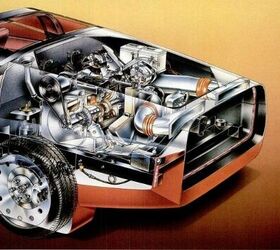


Jaguar attempted a gas turbine electric powered car, also amounting to nothing. A few prototypes were built and tested, nothing more.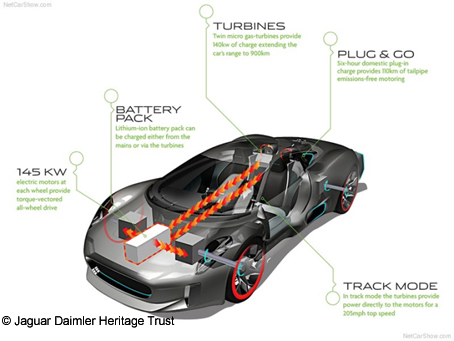
As an electric hybrid using a micro gas turbine + small battery + electric traction motors, the concept actually makes a lot more sense.
The LearJet bubbas worked on this thing: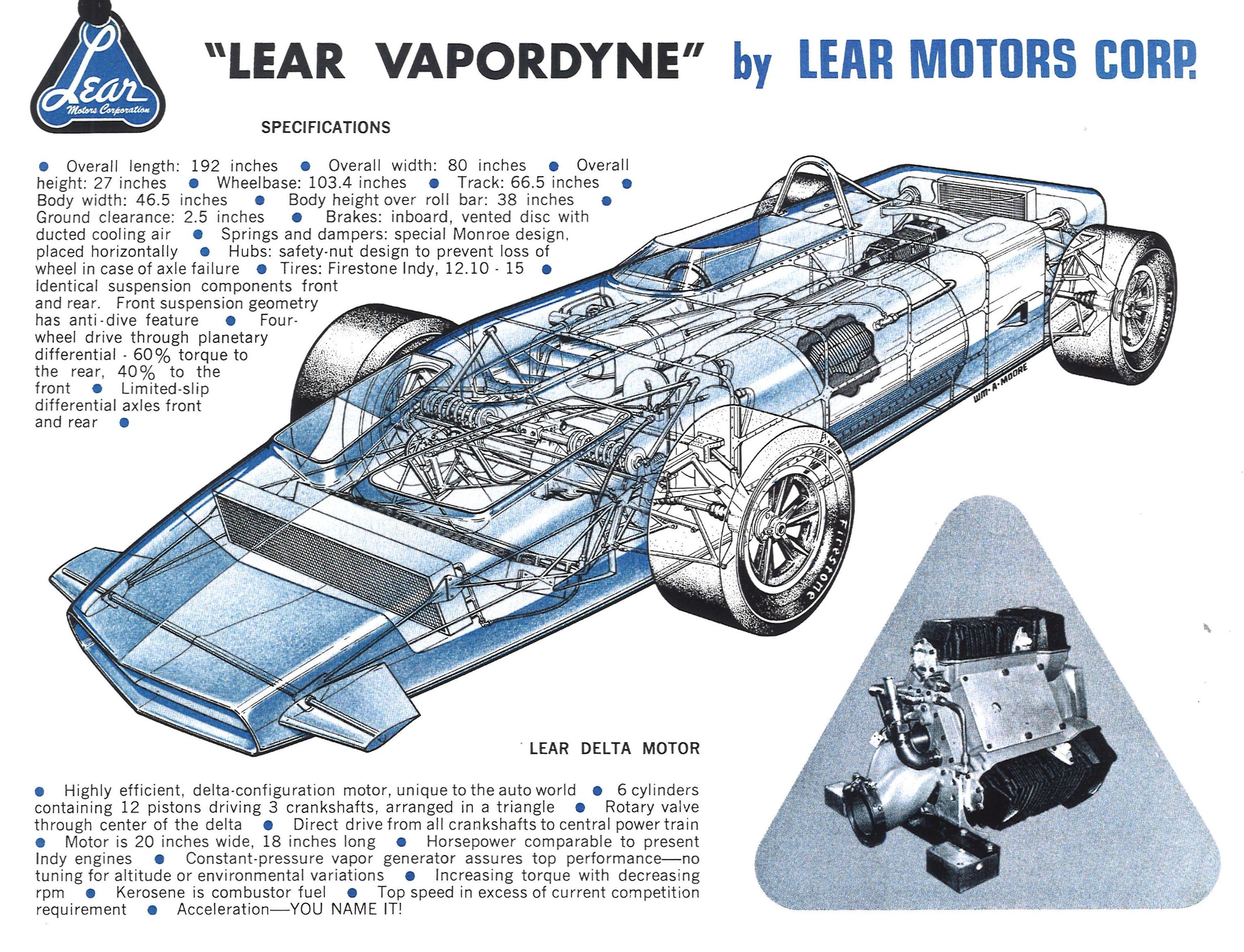
In the 1960s, everyone thought gas turbines would power everything:
Bill Bessler built a steam powered car for General Motors in the 1970s. It's primary claim to fame was dramatically reduced smog emission prior to catalytic converters, but fuel economy was only 15mpg. Dutcher worked on a steam powered car for California in the 1970s as well.
US DoE tested a Stirling engine car in the 1980s to early 1990s:
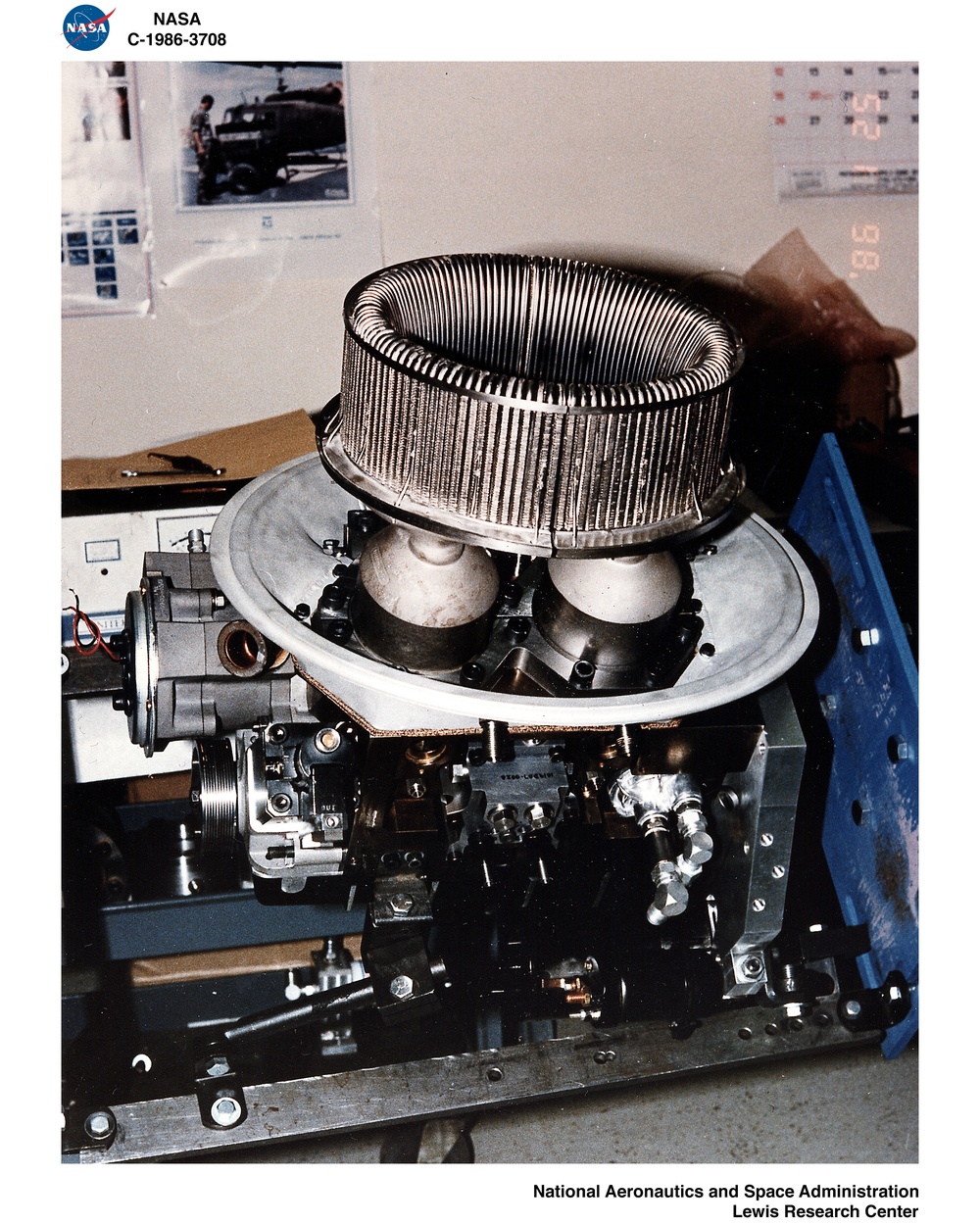
Could we get better performance from gas turbine an external combustion engines using modern FADEC technology?
Probably.
Will they ever be as cheap and cost-effective as piston engines at output below about 550hp or so?
Possibly, but not likely. The materials and manufacturing methods used to deal with the heat are expensive, full stop.
#121 Re: Not So Free Chat » Greenland » 2026-01-06 22:59:38
Void,
The only thing we're really interested in doing with Greenland at the end of the day is keeping it out of Russian and Chinese hands while capitalizing on the resources there, instead of leaving them in the ground where they don't help anyone. America has finally stopped allowing proxies to dictate terms to us. We don't need to continue playing stupid games that result in everyone winning stupid prizes.
#122 Re: Meta New Mars » kbd512 Postings » 2026-01-06 20:50:10
tahanson43206,
I'm not sure if he understands how significant the friction and Reynolds losses will be in the sort of machine he's proposing. Have you noticed that all geared turbofans use reduction drives to power the fan or prop, but nobody puts anything like what he's envisioning in the hot section of the turbine where the hot gas is expanding? Gears, hinges, and whatnot in the part of the machine that's hot enough to melt Iron typically don't last very long. The only reason hot section components don't melt in modern turbines is that they use boundary layer cooling, thermal barrier coatings, and smooth flow through the core.
If someone thought they could extract significant additional power, they'd not-so-simply work out how to make a mechanical advantage device work. Even in the context of steam turbines operating at more survivable temperatures, said mechanism is still likely to fail. There are basic fluid and thermodynamic phenomenon that would "sap power" from the device he wants to create, even if the mechanical bits don't overheat and warp.
While it may not be technically impossible, there are easier and simpler ways to extract more power from expanding gas. This kinda reminds me of the Librato (sp?) engine. That guy actually built one, and technically it was more thermodynamically efficient than a conventional diesel piston engine due to the mechanical advantage the mechanism provided, but it also vibrated itself to death when scaled up, even though it kinda sorta worked at a very small scale. There have been all manner of novel mechanical advantage engines designed to extract additional power, but most of them end up being more trouble than they're worth.
Whenever engineers want to increase energy conversion efficiency, they increase the temperature delta and/or add another row of blades to the expansion turbine to extract more power. They stop when the mass / size of the expansion turbine becomes impractical, and instead use the hot exhaust effluent to flash water to steam to run a geared steam turbine in a secondary power transfer loop. This is a good system for a stationary power plant of even a ship with a high quality heat source, such as a gas turbine engine.
Chrysler used a large recuperator stage to make their automotive gas turbine more efficient because more turbine blades were and are expensive, but had to stop when the thing filled the engine bay. They also used "blade disks" or "blisks" vs traditional individual turbine blades, because a blisk is a single near-net-shape casting which minimizes finishing machining operations. At 410lbs, the turbine was still lighter than an all-Iron V8, but not by a lot, it burned a more expensive fuel, even though it could technically run on Chanel No 5, and on top of that it was made from precision machined refractory metals that could not be repaired by shade tree mechanics. Fuel economy at idle with a gas turbine is horrific, even today. The turbine engine ultimately made 130hp and 425-450lb-ft of torque. The torque was phenomenal for the time, so acceleration to highway speeds was very respectable, but total power was also very limited. Once you're on the highway, passing a slower driver is more difficult. It would've been fine for 55mph, but passing someone at 70mph going up a hill would be difficult. Unfortunately, all of the materials tech added up to an engine that was much more expensive than an equally capable gasoline fueled piston engine. I think it would still be more expensive using modern manufacturing tech. Modern piston engines are mostly cast Iron moving bits / Aluminum for blocks or heads or covers / plastic for intake manifolds since it heats soaks less than Aluminum. Those are the cheapest and lightest materials that get the job done, and they do the job admirably.
The all-Aluminum LS1 V8 engine from the turn of the century made 305-350hp and 335-365lb-ft of torque. The most modern 6.6L L8T version of the LS engine architecture makes 401hp and 464lb-ft of torque. These all-Aluminum engines also weigh about 400-425lbs, fully dressed, without fluids. They're weight-equivalents of that Chrysler turbine, about the same size, make considerably more power, burn less fuel, burn gasoline instead of kerosene or diesel, and don't cost nearly as much to manufacture as a gas turbine because nearly every part of the engine is a casting or powdered metal part or plastic. Modern casting and powdered metallurgy is so good that it's considerably stronger than the more expensive low-alloy steel forgings from the muscle car era. The factory forged crankshafts and connecting rods from the muscle cars are not as strong as the modern stuff. We used so many forgings for so long for sake of consistency of forged parts.
We quit considering small gas turbine engines because of the aforementioned idle fuel consumption problem combined with the fact that none of them are significantly lighter or smaller than equivalently powerful piston engines. Modern turbocharged I4s are cranking out 200-250hp and 250-350lb-ft of torque and only weight about 250lbs with fluids and accessories. Gas turbines can be made lighter, but only when idle fuel economy, service life, and cost considerations are tossed out the window. Gas turbines still work great for mostly steady-state applications like aircraft and electric power plants.
#123 Re: Meta New Mars » Recruiting expertise for NewMars Forum topics: » 2026-01-06 10:10:14
All high performance aerospace vehicles and power plants utilize turbine engines, so someone who is familiar with turbomachinery design would be an excellent addition to the New Mars Forums, if he's interested.
#124 Re: Science, Technology, and Astronomy » Fighter jets: F-35 vs Gripen vs Avro Arrow » 2026-01-05 00:52:05
If both range and supersonic speed are all-important, then why was the F-111 never adopted by Canada?
The TF-30 engines are significantly larger in diameter than the F-135, so a pair of F-135 engines should make it climb like the F-14D. I've never heard anyone claim that a Tomcat couldn't climb well. F-111F's initial climb rate was almost 26,000fpm, so increasing thrust by 71% should provide a 45,000fpm initial climb rate at 100,000lb MTOW, same as the F-14D. It'll reach 40,000ft in less than 3 minutes. At a realistic combat weight with full internal fuel and weapons only, it'll "only" climb as fast as any existing fighter.
While this proposed long range interceptor technically has sufficient thrust to hit Mach 3 at altitude, we'll ignore such fanciful nonsense in favor of an airframe that still maneuvers like a world class air superiority fighter because we don't have to make the entire airframe out of refractory metals to cope with Mach 3 heating.
The F-14D carried 2,916 gallons of internal and external fuel. In combat configuration, F-14D was limited to 6.5g, whereas the F-111F was limited to 7.33g. Using modern high strength steels and composites, a modernized F-111 would be an 8g capable plane with full internal fuel and air-to-air weapons loadout. Empty weight would be nearly identical to the F-14D. A notional CF-111 Thrust-to-Weight Ratio (TWR) with 5,043 gallons of internal fuel vs max fuel, 8X internal Peregrine, and 500lbs for the crew would put it at 1.08:1, which is sufficient to accelerate in a vertical climb after takeoff.
This notional CF-111 would be equipped with 2X F-135 engines, regular ejection seats for the crew vs the historical crew escape pod, and 8X Peregrines in the internal weapons bay. The wing and fuselage skins would be CFRP, same as all other modern fighters. This puts empty weight at the same as the F-14D Tomcat.
Empty Weight TWR Chart
CF-111: 1.97:1
Typhoon: 1.67:1
F-15EX (no CFTs): 1.66:1
F-22A: 1.62:1
Su-57: 1.57:1
Rafale-C: 1.57:1
Su-35S: 1.53:1
F-35A: 1.47:1
Gripen-E: 0.94-1:1
CF-111 combines "all the thrust" with "all the fuel", because you're not going anywhere without fuel. It beats every modern and historical tactical fighter in existence at the TWR game by a considerable margin.
Did I mention that the CF-111's nose would have more space for a larger AESA radar array than any other tactical fighter?
The APG-77 X-band radar supposedly has a detection range of about 510km against a Tu-95, so a 50% larger and more modern / powerful array ought to be able to detect any Russian bomber that the radar has line-of-sight to.
However, more modern fighter jet radars like the APG-81 and APG-85 trade some detection range in favor of image detail:
Imagine having a fighter jet radar capable of providing very high resolution video imagery of inbound enemy aircraft, so that your interceptor pilot knows exactly what kind of aircraft he's shooting at, rather than simply seeing a "blip" on his screen.
F-22 pilots still see "blips" on their radar, with some limited imaging capability against ground targets, whereas F-35 pilots see this on their radar: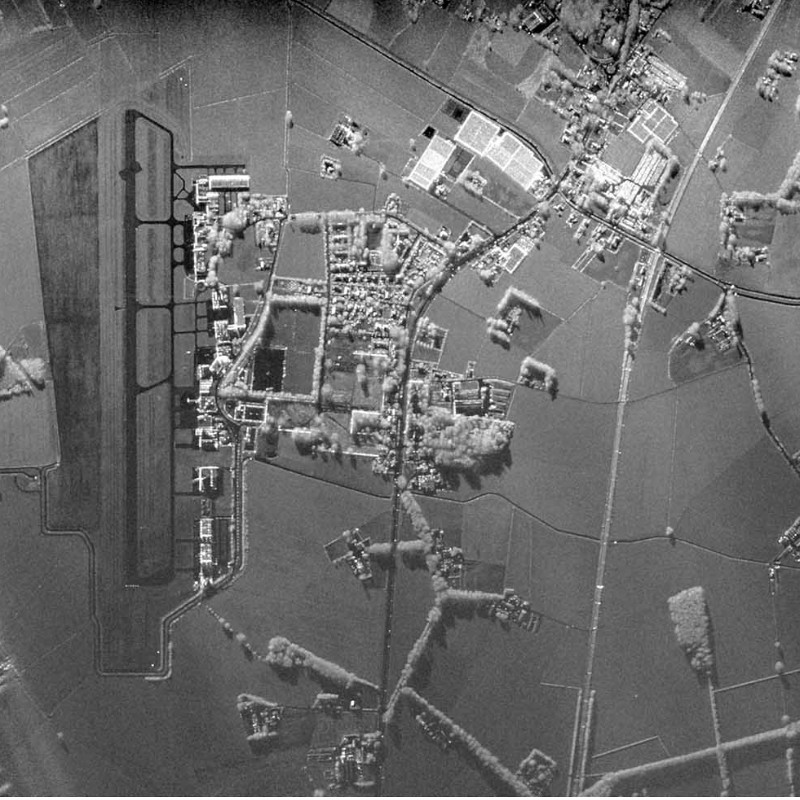
The F-22 pilot can technically "see" at greater distances because its radar operates in a lower frequency band, but has only limited information about what the radar is actually "looking at".
The F-35 pilot can "see" an image-correlated overlay of the combination of their imaging radar with IR and UV. It's a black-and-white motion picture of threats, as-if the pilot has "eyes" in the X-band, IR band, and UV band, all at the same time. The computers backing these sensors also automatically classify imagery targets as potential threats vs friendlies. A Block IV F-35 pilot will "see" an even higher resolution correlated sensor imagery overlay. When APG-85 rolls in, they will see very high-definition / very high-frame rate correlated sensor imagery. This data can then be "shared" with friendly air defense assets, so that the platform which detects the target doesn't also have to fire at the target. This capability is useful when your jet is out of missiles, but your wingman or a nearby AEGIS-equipped ship is not.
Knowing exactly what your sensors have detected is very important, because it tells you whether or not you're about to shoot down a Tu-160 vs an Airbus passenger jet.
This proposal is all the thrust that a pair of the most powerful fighter jet engines in the world can provide, plus more internal fuel to keep them running than any other tactical fighter in existence, plus more radar imaging detail than anything the Russians or Chinese have in a combat jet. That seems like a better than average proposition for finding and shooting down enemy bombers.
The downside, of course, will be the operating cost. Big fancy fighter jets cost big money, so there will be fewer of them.
#125 Re: Science, Technology, and Astronomy » Fighter jets: F-35 vs Gripen vs Avro Arrow » 2026-01-04 18:47:26
RobertDyck,
Canada needs a fighter jet that can travel great distances, intercept Russian bombers, and shoot them down.
There is no other single-engine fighter jet that can travel farther than the F-35 on internal fuel, with weapons.
This is not even debatable. It's been demonstrated in combat by Israeli F-35s flying SEAD missions into Iran. They flew over 1,300 miles to the target, then flew 1,300 miles home. They were in the air for over 4 hours, flying at cruise speed, at high altitude.
Anyone who thinks otherwise needs a map and a calculator.
Russian bombers have radar that can see an F-35 fighter.
The Tu-95 can see the F-35 on its radar, but not the Gripen-E?
S-300 batteries have radars about the same size as the Tu-95's wingspan, yet they couldn't do anything to the F-35s that wiped them off the map.
Make it make sense.
Russian bombers can fly faster than an F-35.
Tu-95s top speed is 575mph and it's cruising speed is 440mph.
Tu-160s cruising speed is 600mph, and at 40,000ft it can hit 1,380mph.
F-35A's cruising speed at 35,000ft is 690mph, and top speed is 1,200mph.
Gripen-E's cruising speed at altitude is 796mph (Mach 1.2 at 35,000ft), and top speed is 1,300mph.
All this mental masturbation is related to 80mph to 180mph worth of "speed difference" at the altitudes where all of the aircraft involved can fly fastest, if it doesn't matter whether or not any of them have enough fuel to make it home. Mind you, no Gripen-E is ever going to hit 1,300mph with the external fuel and missiles to make both its range and weapons loadout equivalent to the F-35.
The entire "un-reality" of this fictitious air defense scenario is so laughably absurd that nobody who has been a fighter pilot or an air defense system operator would ever believe it.
Gripen can be scattered over the land with a single aircraft here, a single one there.
Maybe.
And able to handle arctic cold.
One would hope.
With minimal maintenance.
Actual data disagrees with your assertion here.
F-35As incur fewer maintenance hours per flight hour, according to real world data across a fleet of more airframes than total Gripen production.
F-35A: 4.8MMH/FH <- hard data from entire fighter wings of F-35As
Gripen-E is "aiming for" 5-10MMH/FH <- aspirational
F-35As are already beating Gripen-E MMH/FH projections.
Gripen-E has higher maximum speed,
In airshow configuration.
Airshows don't involve hanging multi-hundred gallon fuel tanks and ordnance on the wings.
higher cruise speed,
Once again, in airshow configuration.
Aerodynamic drag slows things down real quick. The speed delta between the F-35A and a "supercruising" Gripen-E is only 100mph. That means it's cruising speed is 13.3% faster than the F-35A. Ask a fighter pilot if you can increase drag by 10-15%, keep thrust the same, and still fly at the same speed.
lower operational cost.
One would hope, since Gripen-E has lesser combat capabilities than the F-35, but their cost accounting is also very creative.
It can intercept Russian bombers.
If CF-188s are already intercepting Russian bombers, then so can the F-35.
You seem to labor under the assumption that the Gripen can do all of the things on its spec sheet, all at the same time. It cannot because basic flight physics says it cannot.