You are not logged in.
- Topics: Active | Unanswered
Announcement
#1076 Re: Interplanetary transportation » Multi-Ship Expeditions, Starboat & Starship, Other. » 2025-06-08 21:16:58
The Angry Astronaut has an item that might excite nuclear propulsion fans: https://www.youtube.com/watch?v=q5Nrl5k … yAstronaut Quote:
New Breakthrough! The fastest nuclear drive yet!
The Angry Astronaut
If it could work, I think maybe it would best be a booster to help push Starship out of the Earth/Moon gravitation.
So, if it gave a filled Starship a push from a lower orbit of Earth, the Starships, full propellant tanks could protect the crew/cargo compartment from the danger of radiation from it. Such a multistage in orbit process makes sense to me.
I have always felt that it would make sense to use a Starship booster to give a departing Starship a push, so that it could conserve it's propellants and have more on arrival to Mars.
I have always had notions of multi-ship/booster methods to extend that capabilities of the system that is under development.
Until and perhaps after the development of a nuclear booster, It might be possible that some sort of combination might have advantages. I will offer one. Not that I am sure of it, but I will offer it to be picked up or put down or changed.
A lot of this is what is in my head so may not conform to previously validated notions of what to do from better people than me. Here goes.
3 Ships
-A naked split ship.
-A Starship Shortie
-A Starship of the best power and capability available. The big one.
I will make a drawing:
Not a fantastic drawing and a drawing of a half-baked idea. But if you want to bake something you have to bake it half way before you can complete the baking: 
-OK, so the naked split ship is relatively no frills, no heat shield, no flaps/motors. And upon reaching LEO, it's Cargo Section can be removed. That section can be reused as space station materials or propellants for a electric propulsion method.
-The Shortie is not a Mini. But it may reduce the amount of propellants needed for a return trip to Earth from Mars.
-The Maximum Ship is a cargo ship, and may use some of it's propellants to get the stack to pass by the Moon.
At the Moon, then Locomotive portion of the Split ship might either fire engines on it's own to go into a Lunar Orbit, or land on the Moon.
At the Moon, the combination Shortie/Maximum may attempt an Oberth burn passing close to the Moon to head to Mars.
For the moment I do not think I am wrong but perhaps I will be up for education.
So, the Split Ship feeds materials to various Space station/Base building operations as scrap, after the Locomotive section boosts the two other ships their way.
The Shortie/Maximum stack may spin for spin gravity. But my notion is that it would be possible to make the main propellant tanks habitable on the way. At least one cabin near the engine section.
I expect that the Maximum Ship could still land if it had header tanks for that purpose still filled with propellants.
The Shortie would likely be the one humans could land in, but perhaps some contingency would be available to save the crew using the resources of the Shorty/Maximum ships, if the Shorty came up with some unfortunate fault.
If landed successfully, the Maximum being already partly converted to habitation, might remain on Mars for further alterations for that purpose.
The Shorty, would be refilled, and would be the machine to head back to Earth.
It may need some further developed methods though to return crew safely all the way.
Some of the things I have seen for that would include multiple passes though the atmosphere to slow down. But that might cause trouble with the Van Allen Belt.
So more is needed, and uncertainties remain.
Ending Pending 
#1077 Re: Science, Technology, and Astronomy » Rotating Detonation Engine » 2025-06-08 20:41:17
A thing that has confused me about chemical rocket engines, is do they have to do their burns in the shortest time possible to get the most desired effect?
Of course, when rising though the Earth's atmosphere maximum tolerable thrust is desirable as you want to reduce gravity losses. For example, the wrong thing to do would be to hover above a point until the propellant are all consumed.
But the machines being lifted can tolerate only a certain level of force towards the maximum, which would be an explosion, I suspect.
So, I suspect it would be some time before the rotating detonation engine could be used to make a machine rise from the surface of the Earth, though the Earth's atmosphere.
But once in LEO, and practical vacuum in orbit, could a small engine be used to do a long, small burn to propel a ship such as the Moon or Mars? The presumed oscillations which apparently may be part of the device might be managed if it were a small engine, relative to the mass of the machine it was mounted on, a spacecraft.
That is my guess, that it might be the lowest hanging fruit for the new engine described.
Ending Pending
#1078 Re: Exploration to Settlement Creation » Agriculture Study Mars Pure CO2 Greenhouse » 2025-06-07 21:10:41
I had to set you strait (th), sorry about that but not too sorry: https://newmars.com/forums/viewtopic.ph … 01#p232101
I think it would be wonderful to be able to make gardens as in your post, to have the means to make pressurized enclosures on Mars, and maybe other worlds.
The method is clearly having some merit.
Ending Pending
#1079 Re: Human missions » Starship is Go... » 2025-06-07 20:51:49
My response to posts #2097 and #2098, even though perhaps I should not dare.
With this new system they have chain of many new things that they are working on and each one may affect the others, so no surprise that it is messy. (I respect your assertions GW Johnson).
They have tried various things that failed and then had to try another. They tried tumbling the stack to separate the two stages. That did not work well. At least they had good sense to try another. The hot staging. I think they may be getting it cleaned up now.
I think the Superheavy is coming along nicely now. I am impressed anyway for how much that is worth. If they can implement the new sideways dive method, then they can probably afford the dry mass of the device between stages, to stay attached to the Superheavy. And if the Raptor 3's are as good as they claim, then Superheavy, could really be a gem, I think.
But Superheavy, resembles a oversized Falcon 9 1st Stage. They changed to Methane, and use Stainless Steel. As I understand it they have to burn less propellants to protect the Superheavy from entry stresses as the Stainless Steel may endure more abuse than the Aluminum/Lithium alloy that I believe is used for Falcon 9 1st Stage. The great hope, not yet proven is that the Superheavy will not coke up like the Falcon 9 1st Stage.
I don't know if they are ever going to put landing legs on the Superheavy. I guess never say never is what to say about that. The catch tower makes me nervous, but if it works, it is very efficient as the idea is the Superheavy could eventually be restacked in a few hours/days, refilled and used again with little maintenance.
So, not all of this is proven, but I am very impressed with the Superheavy already.
And we can still understand why SpaceX is not publicly traded on the Stock Market, as if some bean counters got ahold of it at this point they would likely circle back to the past, to make quick bucks.
At this point what a circle back would look like would be model Starship after the Falcon 9 2nd Stage. No reuse, abandon to splash in the ocean. Drop 2 fairings on the way up, and deploy Starlink, and other payloads.
Then you could go ahead and try to build the 2nd Stage from a lighter material.
And I am not sure that eventually they may not do some of that as an option.
But really it is far better for the future if they do not chicken out, for chicken feed. No guarantees that they can make the Starship worthwhile, but I think there are lots of chances that they can get it done. And if they do, it will really be something.
Ending Pending
#1080 Re: Water on Mars » Large underground reservoir of water on Mars » 2025-06-07 10:27:52
(th) Has taunted me in another topic. A bit like this: https://www.bing.com/videos/riverview/r … &FORM=VIRE
His taunting is in this post: https://newmars.com/forums/viewtopic.ph … 00#p232100
Here is his taunt:
Mars doesn't have a lot of water, so I think it's unlikely a system like this would come into existence any time soon, but Void's writings often include an abundance of water, so a system like this may happen somewhere.
Alright, what is it for a planet to "Have" water?
Mars has deep water in abundance in the manner described in this topic. Earth has an abundance of water in Ringwoodite, which is also underground.
I think the reason Mars has its underground water is "Gravitational Squeeze" and continental subduction. It does not appear to have enough of either. And perhaps also it lacks the amount of heat to erupt water back to the surface.
If the Earth's oceans attempted to flow into deep fractures in rock, the gravitational squeeze of the planet may still be Sufficient to squeeze the cracks shut and force the water back to the surface. Apparently not so for Mars at this time.
But do we care as much about water that we cannot use?
Earth has too much water in almost 3/4 of the surface. Mars does not have that problem. Granted you can get fish out of the ocean so that surface area is not a total waste. And you can get low friction transport from the Earth's surface water, so that is of value but at the same time oceans separate land. Due to nationalism, it can be convenient to have an ocean between you and a competitor though, that is true.
But other than to maintain Earth's climate as suitable, we have very little use for water deeper than 100 feet, I would assert. (30.34 meters).
How much water (Surface) does the internet claim Mars has? https://marsed.asu.edu/mep/water
Quote:
30 meters (100 feet) GEL
Mars has a very small amount of water compared to Earth. Scientists estimate that the total of Martian water is about 30 meters (100 feet) GEL, which means the global equivalent layer of water if it were spread evenly over the surface. Most of this water is frozen in the polar caps and region. However, some researchers suggest that much of the original water on Mars is still there, but trapped in the rocks and clay.
Arizona State University
+1
So, virtually all is in the form of ice though. But for Earth the majority of the surface is covered with water too deep to permanently inhabit. Not so on Mars. Mars can give us almost the same surface "Land" area as the Earth does. And if it were a cue ball in shape every and we were crazy we could cover every part of the surface of Mars with 110 feet of water ice.
So, you have to be careful when you say Mars is dry. It is Freeze-Dried, with most water as ice deep down and in the polar ice caps. Some though is even adsorbed into the soils.
So, just because you see what looks dry does not mean that if you warmed it up it could continue to be dry.
A simplistic analysis will not do to describe Mars.
We have a similar situation in our tundra. The precipitation is very low, but the ground is boggy. But technically the tundra's are deserts according to precipitation. But the evaporation rate is low, and the permafrost a few inches below the melted soil tends to be impermeable and to inhibit the drainage of water.
https://www.fs.usda.gov/land/ecosysmgmt … s/120.html
Quote:
8 inches (200 mm) annually
The precipitation rate for the northern tundra is generally very low, often less than 8 inches (200 mm) annually. However, the arctic tundra receives about 15 to 25 cm (6 to 10 inches) of precipitation each year, which includes rain/snowfall and melting snow and ice.
USDA
+2
You have to be able to think bigger than the librarians think. They only need a remnant brain to repeat thoughts of people who originally formulated words to describe what they understood with a greater mind. But words simply put likely do not form the mental scaffolding needed to come up with those thoughts, to perceive reality in a less simple way.
Sadly the world is constructed so that the librarians can raid the fruits of a true thinkers' abilities. Librarianism is the pathway back to the stone age, as it breeds people with smaller brains. We Classify and Grade them, and give them pieces of paper that they are entitled to rule, and to take from those who carry the actual burden of thinking.
Some people with those pieces of paper actually think but most only pose.
Chew on that (th).
Ending Pending
#1081 Re: Terraformation » Pluto Realms » 2025-06-06 19:21:04
Yes indeed. You might like this if you have not seen it before: https://www.youtube.com/watch?v=TNRQFKV … saacArthur Quote:
Colonizing Pluto & The Acheron River
Isaac Arthur
813K subscribers
So, a space elevator between Pluto and Charon, crossing though the barycenter.
The idea that "2017 OF201" may have a hundred or more siblings, is of great interest. As you have pointed out the hill spheres maybe enormous.
In taking these things largely apart, quite a lot of structure could be manufactured. One somewhat weird idea would be to extract the materials and make a giant ball of "Foam", encompassing the entire Hill sphere if that were possible.
Foam: https://www.slideshare.net/slideshow/fo … 6/24926136
Quote: 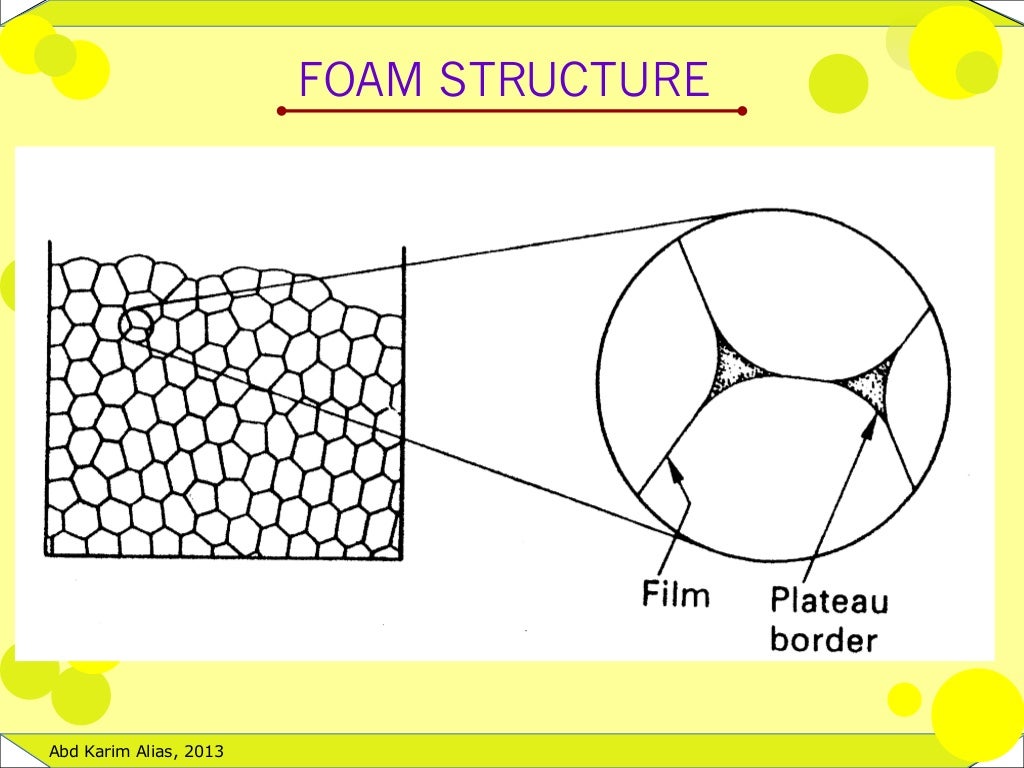
If the "Foam World" were made in the shape of a red blood cell this might help to radiate heat out.
https://www.gettyimages.com/detail/phot … /637422184
Image Quote: 
So converting a whole dwarf planet to one shape like one blood cell and having an internal structure like foam, maybe cells in cells so to speak.
The hill sphere would be modified by the warping of the shape.
A cross between a torus and a disc.
In the case where the world is beyond the Heliopause, then perhaps to be able to collect interstellar gasses and dust. A greater density may exist where the solar wind collides with the interstellar winds.
Various cells within could have features like spin gravity devices, and seas perhaps.
So, perhaps worlds that will be giant spaceships, and seek out other dwarf planets to convert, perhaps even rogue dwarf planets.
Even to travel to "Feed" on the Heliopause of other stars, to migrate though the galaxy and maybe even further. Even the spaces between galaxies are said to have some stars.
An interesting fate for the human race and their machines, if the higher powers allow it.
If there are as many dwarf planets as may seem at this point, and if fusion does become practical, then rather than a great interest in Dyson Spheres, which seem to be of doubtful merit, this would be the path of higher civilizations, and they would be rather hard to detect wouldn't they.
So, Isaac Arthur might consider carefully interested Aliens, perhaps. If they were interested, they could take over our robots. In fact they would introduce us to robots, so that we would depend on the robots that they would take over. Scarry!, but not Scarry.
Actually other than anthropology I don't think they would want to spend their time messing with us or messing us up.
But they could keep an eye on us from a distance once they introduced us to computers and robots. We will probably be beaming information between planets and they could probably intercept it.
But they might never introduce themselves to us.
Ending Pending
#1082 Re: Terraformation » Pluto Realms » 2025-06-06 11:42:50
I suppose that technically this new discovery is vastly beyond Pluto/Charon, but I have not done much in terraforming for some time, so I will put a copy here: https://www.msn.com/en-us/news/technolo … r-AA1FVewU
Quote:
An Extreme Dwarf Planet Discovery Challenges Our Understanding of the Solar System’s Outer Frontiers
Story by James Thompson • 4d •
4 min read
Quote:
“2017 OF201 spends only 1% of its orbital time close enough to us to be detectable. The presence of this single object suggests that there could be another hundred or so other objects with similar orbit and size; they are just too far away to be detectable now,” said Sihao Cheng of the Institute for Advanced Study, underscoring a discovery that is quietly rewriting the map of our solar system (Live Science).
https://en.wikipedia.org/wiki/2017_OF201
Quote:
2017 OF201 is an extreme trans-Neptunian object and dwarf planet candidate, estimated to be at least 550 kilometres (340 miles) in diameter. It was announced in 2025 by Sihao Cheng, Jiaxuan Li, and Eritas Yang, who discovered the object in archived telescope images from 2011 to 2018. With an absolute magnitude of between 3 and 4, 2017 OF201 may be the brightest known object in the Solar System that does not have a directly estimated size. The orbit of 2017 OF201 is extremely large and elongated, bringing it from 45 to 1,630 astronomical units (0.00071 to 0.02577 ly) away from the Sun.
So, from the orbit of Pluto/Charon out to the Inner Oort Cloud.
Good chances it does not resemble Charon, but since we have no pictures, I want to compare the two.
https://en.wikipedia.org/wiki/Charon_(moon)
Quote:
Charon (/ˈkɛərɒn, -ən/ KAIR-on, -ən or /ˈʃærən/ SHARR-ən),[note 1] formal designation (134340) Pluto I, is the largest of the five known natural satellites of the dwarf planet Pluto. It has a mean radius of 606 km (377 mi). Charon is the sixth-largest known trans-Neptunian object after Pluto, Eris, Haumea, Makemake, and Gonggong.[19] It was discovered in 1978 at the United States Naval Observatory in Washington, D.C., using photographic plates taken at the United States Naval Observatory Flagstaff Station (NOFS).
So, one characteristic, size is similar between 2017 OF201 and Charon.
I have been thinking about Charon off and on. Presuming some form of fusion power, it is a reservoir of fuel, I presume. Reading of theories of its structure there is some hope that the crust is mostly undifferentiated. That might mean rocky materials in the ice after all.
Theoris of structure, (Image Quotes): 

So, not just a big ball of water ice as I had thought.
So, could hollow worlds be built of these materials and anchored in a "L" type location, or a Barycenter? Or in the case of a single object, perhaps orbit it like a moon?
So, if silicates are in the crust, then metals and glasses, also with a distribution of Carbon, Hydrogen, Oxygen, and Nitrogen organic structure like wood or ropes.
It seems like we are getting hints of fusion being closed in by various efforts, once that might become true, then these worlds may not be the wastelands we currently may think them to be.
Ending Pending
#1083 Re: Science, Technology, and Astronomy » Utilizing Superpower (Per Rethink X, Tony Seba) » 2025-06-06 10:15:51
So, I have been thinking what would be next after working with relatively simple bulk materials, and having initial donations of sophisticated materials from Earth.
Perhaps we mimic the human progression through materials. Stone age, various metals ages, Industrial ages, and finally we seem to be entering a higher-level robotics age.
In this projection of possibility robots have already been injected well before their natural progression. But these then are donated from Earth.
If Mars is a child, then a child must be offered strong support to become adult enough to thrive in a very difficult situation which might offer high rewards. That is what Mars is.
Blue Origin and Metalysis offer entry into the metals ages, but solar may not keep up. The solar that Blue Origin can create is relatively low efficiency. On the Moon that might be worthwhile, but on Mars, a lesser solar flux exists.
So, it looks good that in the USA it appears we will encourage the production of small nuclear reactors to power data centers.
So, if the correct political, geopolitical, and technical barriers can be overcome, it seems to me that the donation of nuclear power plants of a small size, makes sense. One thing that the population of Mars Robot/Human can offer back is science data.
So, possibly, this gets a Mars into the age of Metal production.
I may rest this line of thinking now, because I have already projected very far into the future, and the more time projection you use the more likely that your concepts will not resemble what will actually happen.
I may however return to interest in our best planet, Earth.
Ending Pending
#1084 Re: Interplanetary transportation » Multi-Ship Expeditions, Starboat & Starship, Other. » 2025-06-05 21:51:23
Isaac Arthur has given us another video: https://www.bing.com/videos/riverview/r … ORM=VAMGZC
Quote:
Orbital Shipyards - Building Fleets in Space
YouTube
Isaac Arthur
216 views
He has some interesting ideas.
In launch #9, a leak made the ship derelict to some extent. Ultimately it crashed with limited control from SpaceX, into the atmosphere.
Had this been later in time the ship would likely have made orbit, and then exhibited the trouble. The options then would be to repair it, or to move it to a higher orbit as scrap at a rendering/Ship building facility.
I also think that a ship that is it's own cargo might make sense. It only has the capability to make it to orbit, and then be taken as salvage materials. A variation on that would be that it could do a one time flight carrying a useful cargo, then go to scrap.
Such a ship would be simplified as to not have header tanks, flaps/motors, or heat shield.
Returning to "The ship as it's own cargo", it may become true that such a Starship could make it to LEO by SSTO means. This would make sense, if when taken to "Scrap", what was built from it and other ships had significant value justifying such a process.
At one point Elon Musk thought that Starship could possibly do a feeble SSTO. Maybe it could. But you would want an orbital tug, perhaps using electric propulsion to take hold of it once it made it to orbit. Such a ship might be built to live hours or days, which might simplify its structure and reduce it's cost.
Ending Pending
#1085 Re: Human missions » Starship is Go... » 2025-06-05 20:14:02
I think we should keep the faith.
They are going to stop using Ullage gas to orient the ship and according to what I have read they will install gyroscopes.
They also hope to find a way to use the flaps to right the ship, even if it comes in upside down.
In an actual orbital situation, they could drain off the leaking tank so that no more spin impulse would occur. Then the gyros could hopefully correct it's spin. It is also hoped that the flaps could then assist in orienting the ship.
Then it would have the Header Tanks to try to get into the atmosphere with and land.
But that may leave a problem. Will the ship be stiff enough without, pressurization of a main tank? Well, that is an important question anyway, as the main tanks may have completely boiled off by the time a ship made it to Mars. I don't know if the ship needs main tank pressurization to travel though the atmosphere without breaking up.
But in the case where the ship had gone orbital, and had such a mishap, it might be possible to plug the leak, and refill then ship if needed.
The Block 3 Ship will have the raptor 3 engines which are better, I hear. Also, it may be of a longer length, so may not have the same type of stresses. Maybe it will be better or worse. I would not know.
If it is worse, then perhaps they will indeed need to move back to the block 1 size.
But I think it is going to be some time before these ships will be trusted for human space flight. A number of years. So, there is time to work the kinks out, and use it for freight. In Lunar Operation though the criteria will be different. It will not have to airbrake to the Earth's surface and then do a landing on a 1 g world. So, it may be safe for humans for Lunar Missions much before safe for humans Earth or Mars.
Patience Required..................
Ending Pending
#1086 Re: Science, Technology, and Astronomy » Utilizing Superpower (Per Rethink X, Tony Seba) » 2025-06-05 19:33:32
In the previous post I did not yet firmly establish a liquid water method with the growth of any "Crop".
Now I will suggest one to do in the ice tunnels. This is not to say that you could not have transparent greenhouses on the surface, but I want liquid water plumbing so that water from expanded tunnels can be moved to a use position.
Related to the drawing in the previous post here and another: 
During serious dust storms this would be mothballed more or less, and the robots to retreat to a hibernation chamber(s) where perhaps nuclear like a kilopower from NASA could keep them charged and sufficiently warm.
The growth of "Crops" would be possible in the warm water tank, and also in the cold gutter type plumbing for water distribution/flow, in the ice tunnel.
While this is intended to be life support for a robot community, various factors that could give life support to humans as well, are developed in this concept.
The management of temperatures will be very important. We only want ice to melt when we want it to, and we don't want to freeze the water tanks with water still in them.
It is important to have a thin roof so that excess heat can be radiated out. In order to keep the ice tubes cold enough heat pumping of some type may be needed. But hopefully natural convection of thin air will be sufficient.
Ending Pending
#1087 Re: Interplanetary transportation » Could Blue Origin offer its own rocket to the Moon? » 2025-06-05 19:30:58
I am a fan of SpaceX, but I hope the Blue Origin people can do their own path to good accomplishments. It looks like a valuable device. I would think that if it could be propelled to Mars with an electric rocket that might make it even better.
Ending Pending
#1088 Re: Science, Technology, and Astronomy » Utilizing Superpower (Per Rethink X, Tony Seba) » 2025-06-05 10:11:18
Perhaps this illustration will help describe a desire, but it does not guarantee success: 
Additional things may be needed like roof and tunnel supports that might have to be made of more substantial materials.
But if this can be done and if the ice can be kept cold enough to not subside, then this method may make it possible to have robot work areas all over the ice slabs on Mars.
Ending Pending
Some of the above methods may be directly transferable to methods for Earth.
This topic is about "Superpower", but I think I will add several articles of interest that might point to a bright future for the human race:
https://www.msn.com/en-us/weather/topst … r-AA1G5uJ2
Quote:
A Buried Giant: Scientists Unearth Clean Energy Source Under USA Capable of Powering Earth for 170,000 Years
Story by Marian Avila • 22h •
3 min read
https://www.msn.com/en-us/news/technolo … r-AA1G9oPE
Quote:
Innovative company deploys cutting-edge system to pull energy from deep underground: 'Will not run out for millions of years'
Story by Joseph Clark • 2h •
2 min read
Quote:
As ThinkGeoEnergy detailed, Exceed Geo Energy is teaming up with Peregrine Turbine Technologies to launch a geothermal energy system that runs on supercritical carbon dioxide.
Unlike older geothermal plants that use steam, this setup circulates a pressurized form of CO2 through a closed loop deep underground to pull heat from dry rock — no drilling into geysers or releasing harmful pollution.
And then gasoline from air? https://www.msn.com/en-us/news/technolo … r-AA1FAC7w
Quote:
US startup unveils fridge-sized machine that makes gasoline out of thin air
Story by Aamir Khollam • 1w •
3 min read
Well, if these things emerge, it will be a very nice future indeed.
Geothermal partners very nicely with solar and wind energy. You can conserve the ground heat when the sun is shining or the wind blowing.
Ending Pending
#1089 Re: Interplanetary transportation » Could Blue Origin offer its own rocket to the Moon? » 2025-06-05 09:30:21
I consider this to be a nice item: https://www.bing.com/videos/riverview/r … 6d6c5526de Quote:
Blue Origin’s Cislunar Transporter: A Fuel Shuttle for the Moon, Mars and Beyond
YouTube
Space Startup News
3 views
It seems that they have a depot that will store Hydrogen and Oxygen without boiloff.
Also mentioned is sourcing Oxygen from the Moon at a favorable price, either from ice or from regolith.
It is intended to be able to deliver propellants to the Moon or Mars orbits, it seems.
Ending Pending
#1090 Re: Science, Technology, and Astronomy » Utilizing Superpower (Per Rethink X, Tony Seba) » 2025-06-04 18:04:00
I want say that hoped for things are not certain things. They will have to be tried.
If possible it would be nice to build vertical walls of compressed Martian soil, and then to roof them over with something. My idea is a very stiff tar paper or perhaps even fiberglass.
You could place solar panels on the outside of the vertical walls, in the manner I suggested, but it is not mandated. You could use heliostats to send extra photons to the solar panels, but it is not mandated.
Should these buildings be built on top of slabs of ice, you could have connecting shafts in the ice below, and some of the ice sheets are as big as California and Texas combined. This robot habitat would be kept at a cold temperature. I nominate -10 degrees Centigrade.
For robots this could be a good temperature, to help keep their motors cool.
In the manners I have suggested in previous posts, electricity and heat could be collected and stored.
Even if the typical habitat temperature is -10 degrees Centigrade, this does not prevent the installation of tanks of water where algae or cyanobacteria might be grown. They would need Oxygen, and fuels such as Hydrogen, Methane, and Acetate to use as food.
Oils and Tars might be extracted from the farmed organisms.
Fibers could be from Basalt to make Tarpaper.
Or if you could make a resin you could try to do an opaque fiberglass. These to make coverings for the surface dwellings.
If there were a means to grow hemp, then many products could come from that.
Here is that old article about an ice slab on Mars: https://www.space.com/30502-mars-giant- … y-mro.html Quote:
A giant slab of ice as big as California and Texas combined lurks just beneath the surface of Mars between its equator and north pole, researchers say.
This ice may be the result of snowfall tens of millions of years ago on Mars, scientists added.
Quote:
The ice the scientists found measures 130 feet (40 m) thick and lies just beneath the dirt, or regolith, or Mars.
"It extends down to latitudes of 38 degrees. This would be like someone in Kansas digging in their backyard and finding ice as thick as a 13-story building that covers an area the size of Texas and California combined," Bramson said.
Such an extensive ice sheet had never been seen at these latitudes before, study team members said.
So these buildings would probably have lifts/elevators to go down into the ice tunnels which connect them.
And geothermal heat storage could be installed into the rock below them perhaps in some cases. But there would be a concern not to melt the ice sheets.
Human Habitats could be enmeshed into this major structure.
It is not all solved, but I think some of this may have validity.
Ending Pending
#1091 Re: Science, Technology, and Astronomy » Utilizing Superpower (Per Rethink X, Tony Seba) » 2025-06-04 13:01:58
I want to work a bit more with the materials from this post: https://newmars.com/forums/viewtopic.ph … 50#p231950 Quote:
Maybe this will be enough for some to understand:
There are several ways to collect thermal energy, from this apparatus. I did indicate a gap between the two bifacial panels. Perhaps either a closed or open method could use the Saudi's cooling method.
As for a simple way to collect heat, imagine air convection upwards towards the apex inside of the roof. There can be a pocket there to collect a volume of warm air. The roof will be made to allow air to flow up to that in underside edge gutters.
For Earth, if you wanted to include a heat pump, then even air say a few degrees above freezing would be useful. On Mars, you might try to compress the air directly after filtering the dust out of it. Perhaps you could do a heat pump achievement that way, concentrating the vibrations, and then passing them though a radiator into a fluid of some kind.
Then releasing the compressed gas possibly to cause CO2 Snow to some extent???If we are going to use the Saudi's cooling materials on the back side of each panel, then we do have a means of improving the lifetime and efficiency of the panels, if we do not overheat them.
But of course if you are pushing light onto the panels from heliostats, you do indeed have the chances of overheating the panels, so you would want a very good and responsive process control to monitor the temperature of the Panels, so that the Heliostats can be directed away if the temperature gets too high.

Instead of bifacial solar panels we could build a building and use the East and West walls, as mounting for solar panels.
Here is something that may have application on both Earth and Mars: 
On Earth the advantages can be protection from Hail. Also the heated air will become accessible at the bottom of the Eaves of the House. Obviously strong wind will interfere with that when it occurs. If you wanted to put a glaze in front of your solar panels, that would correct that problem.
On Earth a problem with this system would be that you need heliostats for both the East and West side, and they would only be of service half of the day. But if your Heliostats can be mobile, then they can move from East to West and then West to East.
I really have been thinking about this more for Mars.
I am really looking to shelter robots. A room temperature of -10 Degrees Centigrade may be preferable. In the thin air this may help with cooling of motors. I suppose there could be a minimal pressurization of the buildings which could help with cooling.
The buildings could be very long north/south, or there may be multiple instances of the East and West of each other, with the Heliostats between them.
So, my intention in this is to harvest both the electric and the solar heat. For Mars, I am hoping that warm Mars air can be sucked in and filtered of dust and then compressed to increase the heat. In the manner of a heat pump.
And that the collected heat, could be stored into mass, solid or containers of water.
In the event of global dust storms or high latitude winters, the robots might hibernate in a huddle around a nuclear power source.
So, most work would be done off of solar energy, but nuclear would keep the work force alive.
A Norwegian heat pump can reach 180 degrees C, so that would be a hoped-for capability.
Here is a drilling method for heat pumps that might be useful in this scheme: https://cleantechnica.com/2025/01/21/bo … lications/
Quote:
In much of Europe, the temperature of the Earth 250 meters (820 feet) below the surface is a constant 14º C (57º F). That makes it an ideal temperature for ground source heat pumps — cool enough to conquer heat in the summer and warm enough to heat any building in the winter. But drilling down far enough to access that temperate zone can be costly and often requires large drilling rigs powered by diesel engines. Borobotics is a Swiss company that has invented an autonomous mini drilling machine that is just 13.5 cm wide and 2.8 meters long (5½ inches by 9¼ feet). Setting it up requires less that 8 square meters (86 square feet) of space, which means it needs no more space than the typical garden or parking space.
This may actually be sufficient to keep robots safe during a global dust storm of high latitude winter. But it would be nice to have some nuclear.
The exact nature of the buildings could be different than I have shown, but the method is illustrated.
The method may be able to harvest both heat and electricity from sunlight. Also a vertical surface, is likely to be possible to keep clean in the Martian environment. A vertical surface may shed more heat from convective heat flow than a more horizontal situation.
I would be happy to get comments on this.
In this other topic I have made my case that robotics that are emerging should be able to build quite a lot on Mars even before humans might arrive. https://newmars.com/forums/viewtopic.ph … 41#p232041
Ending Pending
#1092 Re: Science, Technology, and Astronomy » Humanoid and other robots. » 2025-06-04 12:44:10
This causes me to be even more positive about robotic lead expansion into the solar system. However, I am less sure about the persistence of humans in such a future.
https://www.youtube.com/watch?v=7oAlD3l … %2CNewYork
Quote:
Ray Kurzweil with David S. Rose: The Singularity is Nearer
The 92nd Street Y, New York
401K subscribers
As I said in the previous post, I think it would be quite workable to send various types of robots to Mars, and with a Starlink around Mars, they could build first primitive structure, but over time bootstrap up to full cities. At some point humans could be included.
I am going to suggest that the Asteroid belt is in the Solar System "Sun Belt". That is a somewhat arbitrary claim, but if a device is free floating in space, I feel, that by the time you get beyond the main asteroid belt, while solar would work well, you might wish to have some form of nuclear.
The space around Mars falls into that category, but on Mars itself, while solar may make a very big contribution, we probably at least want some Kilopower power sources from NASA to start with.
And I think that it will turn out to be capable of doing the same on certain asteroids, such as Ceres. And the point is that if robot labor works as well as we might think it will, it will be very practical to move large quantities of substances from other worlds to the Earth/Moon subsystem.
So, it will be rather a good civilization, if it does not kill itself.
Ending Pending
#1093 Re: Not So Free Chat » Void Postings » 2025-06-04 08:36:08
Request from the just previous post:
Would you be willing to grant kbd512 (our Junior Administrator) permission to modify (erase) the text that is of concern? We would (in this scenario) leave your post exactly as it is, except for removal of identifying information that we have been asked to remove. We are talking about a post that you created almost a year ago, so it is unlikely many readers will ever see it.
Again, this is NOT about you! This is our (Admins) attempt to deal with a most unusual request.
(th)
I say yes, and grant the requested permission. I hope the person requesting will be OK.
I expect that I will never know what post or what it was about.
Ending Pending
#1094 Re: Science, Technology, and Astronomy » Humanoid and other robots. » 2025-06-03 20:38:40
I have been thinking about robots on Mars. The advertised nature of robots like Optimus is that they have a fair amount of autonomy. Also, they can learn 100 tasks a day, and also due to a hive mind factor, they can share all of the learned tasks to other Optimus robots.
Previously, I thought that the time latency between Earth and Mars would prohibit effective direction of robot work on Mars. Now I think that that concern can be overcome.
Here is a description of the time latency between Earth and Mars: https://www.nasa.gov/wp-content/uploads … mrc=1adf04
Quote:
Between 3 to 20 minutes
The time latency between Earth and Mars varies based on the distance and the time of day. Generally, it takes between 3 to 20 minutes for a message to travel from Earth to Mars, depending on the position of the planets. For example, during the Mars conjunction, the delay can be as long as 22 minutes4. A round-trip message would take approximately 28.45 minutes3. This delay is primarily due to the speed of light
That would try a human's patience. However, it seems that SpaceX will put a Starlink around Mars if all works out. If you then have a computer system of strong power that runs 24/7. It could have the patience to work with robot assets on the surface of Mars. It could help solve problems that the robots on Mars had not solved, by rehearsing simulations with robots on Earth. All of that perhaps without human intervention. But of course humans could be called in if that is not good enough.
So, then the computer on Earth would be told by humans who were likely advised by AI of sophistication, what a good plan would be. Then the wakeful computer on Earth could be advised of how actions on Mars were going to plan. The computer with robots on Earth could offer solutions to kinks in the execution of the plans, and if needed people would be called in to assist.
This likely allows a great deal of what is needed for the support of humans on Mars to be installed prior to any humans landing on the planet.
I think that is very good.
Ending Pending
#1095 Re: Interplanetary transportation » Multi-Ship Expeditions, Starboat & Starship, Other. » 2025-06-03 13:14:20
Continuing, the Starships could have their cargo compartments cut off, and kept in a relatively low Earth orbit to construct things with.
The "Locomotive" might travel to the Moon to be of service there. If a Starship has a dry mass of 120 tons, perhaps the Locomotive might be 60 to 80 tons dry mass.
If Oxygen begins to be produced from the regolith of the Moon, then the Ships may in part be refilled on the surface of the Moon, to allow repeated excursions to orbit and to land.
Depots, sent from LEO to orbit the Moon could supply Methane. The ships would lift things like extra Oxygen or regolith to orbit. Regolith might in this case be treated and refined materials. For instance Iron Oxide.
The Locomotives would run until failure at which point they would become scrap metal.
So a stream of Oxygen may travel from the Moon to LEO in the form of Oxygen or perhaps Iron Oxide, or Aluminum Oxide. A Stream of Methane would travel from LEO to the orbits of the Moon.
The scrap in part can be converted to propellant for Magdrive or Neumann Drive. This will be the means to transport cargos from Low Lunar Orbit to Low and Medium Earth Orbits.
Similarly some scrap from the cargo sections of the Starship will be converted into propellant for Magdrive or Neumann Drive, to facilitate the transport of bulk mass from Low and Medium Earth orbits.
So, we would not be burning liquid fuels, except to rise from a worlds surface to an orbit and back, and except for the case of moving humans swiftly between the Earth and Moon.
Should this system have enough excess Oxygen then it might help fill ships destined for Mars.
I think it could be good.
Ending Pending
#1096 Re: Not So Free Chat » Void Postings » 2025-06-03 12:19:26
Problem solved as I hoped, a day after I could find it: https://newmars.com/forums/viewtopic.ph … 26#p232026
Ending Pending
#1097 Re: Interplanetary transportation » Multi-Ship Expeditions, Starboat & Starship, Other. » 2025-06-03 11:39:19
OK, I now can find the video, that I did not get yesterday in the last post: https://www.bing.com/videos/riverview/r … &FORM=VIRE
Quote:
Why Starship's 'FAILURE' Just Made SpaceX UNSTOPPABLE... Mind-blowing!
YouTube
Future Space
1.2K views
13 hours ag
From post #86, just previous:
Anyway the video indicates that the destructive testing they did with the Superheavy points to modifications that could cut propellant use by 30% and cut cost for a trip to Mars by 70%. And apparently it can increase payload, by ??? It seems to involve, the methods they used on the #9 Superheavy test, and gives hope that future Superheavys will be able to tolerate the maneuver.
Anyway they intend to put gyros into the ship to control spin and have a backup plan. They hope to be able to right the ship before it burns up just using the flaps, if it enters in a wrong configuration. Apparently, they will not use ullage gas thrusters.
So, after all, lots of good stuff.
In post #85, I did some rough calculations about the value of a Starship sent to LEO and then moved to a rendering facility for reuse/repurpose/recycle: https://newmars.com/forums/viewtopic.ph … 16#p232016
Quote:
I speculate that you could lift ~300 tons to orbit, reusing the Superheavy, but leaving the Starship in orbit.
If they do get to the rate of build of 1000 Starships a year, what if 250 of those were made to not return to Earth?
That would be 100 extra tons to LEO per each of the 250. And the ships would still be in LEO or maybe boosted up a bit higher. So, an extra 25,000 tons to LEO. And if the ships are 120 tons dry mass then another 30,000 tons of metal. The ships as well if refilled might be used for an additional service.Additional service might be construction of Space Stations, as well, or the rendering of some of the metal to propellants for Magdrive or Neumann Drive.
If refilled some of these ships might be able to fly one way to land on the Moon, to become a resource for bases there.
They also might be refilled to send massive probes to other worlds. In that case the second use of the Starship would be finished by abandoning it to a solar orbit or around another planet, I suppose.
If SpaceX were to build 1000 ships a year, and left 250 of those a year stranded in LEO, then that would be almost 21 ships per month. Rather than to burn them in the atmosphere, lifting them higher slowly with an electric rocket tug could make sense. So, then you would have an input of 30,000 tons of mostly metal, to such a rendering facility each year.
One thing you could do to start with is remove the cargo sections from the rest of the ship, and to repurpose each of them. Cargo sections to be joined into space stations perhaps, or maybe large ships to travel to Mars. The Propulsion sections could be converted to land on the Moon, and become a resource there, as it would be hard to make high quality Stainless Steel on the Moon, at least at first.
Some materials might be converted into propellant for Magdrive or Neumann Drive. This might be used to move Stranded Starships, from LEO to a higher orbit where rendering facilities might be created.
Also possible to look into might be power stations of some kind.
So, at some point you would need to do a calculation. How much value does a Starship have returned to the Earth, against how much value it may provide, being rendered into beyond LEO uses.
You might choose to return a certain portion of the Starships, and leave the balance in orbit for conversion. Obviously if they are to be used in a rendering facility to convert, you would not be likely to bother with a heat shield, or other landing parts such as Flaps and Motors.
Things like gyros, avionics, and engines might be returned to Earth in some cases.
Ending Pending
#1098 Re: Interplanetary transportation » Multi-Ship Expeditions, Starboat & Starship, Other. » 2025-06-02 22:47:55
Continuing with the materials of the previous two posts, interesting things are given in a video that I cannot fetch with my computers search engine: "Future Space, Why Starship's 'Failure' Just Made SpaceX Unstoppable...Mind-Blowing!"
This is not too unusual. I will find something with my smartphone, and then my computer search engine cannot find it.
Perhaps tomorrow it will become available.
Anyway the video indicates that the destructive testing they did with the Superheavy points to modifications that could cut propellant use by 30% and cut cost for a trip to Mars by 70%. And apparently it can increase payload, by ??? It seems to involve, the methods they used on the #9 Superheavy test, and gives hope that future Superheavys will be able to tolerate the maneuver.
Anyway they intend to put gyros into the ship to control spin and have a backup plan. They hope to be able to right the ship before it burns up just using the flaps, if it enters in a wrong configuration. Apparently, they will not use ullage gas thrusters.
So, after all, lots of good stuff.
Ending Pending
#1099 Re: Interplanetary transportation » Multi-Ship Expeditions, Starboat & Starship, Other. » 2025-06-02 21:26:22
Here are some interesting claims: https://www.youtube.com/watch?v=FcollPP … aceXReport
Quote:
Elon Musk’s NEW Starship Plan SHOCKS NASA: 200 Tons To Orbit!?
SpaceX Report
The new Block 3 will be stretched and use Raptor 3 engines, and is said to be able to lift 200 tons to LEO, fully reusable.
That system is said to be able to lift 400 tons to LEO, if the whole rocket "Thrown away".
Block 3 will have 3 instead of 4 grid fins.
The old ships 10, 11, and 12 will be outdated so are either for scrap or for destructive testing.
Block 3 will not launch on pad "A", but will launch from pad "B".
I speculate that you could lift ~300 tons to orbit, reusing the Superheavy, but leaving the Starship in orbit.
If they do get to the rate of build of 1000 Starships a year, what if 250 of those were made to not return to Earth?
That would be 100 extra tons to LEO per each of the 250. And the ships would still be in LEO or maybe boosted up a bit higher. So, an extra 25,000 tons to LEO. And if the ships are 120 tons dry mass then another 30,000 tons of metal. The ships as well if refilled might be used for an additional service.
Additional service might be construction of Space Stations, as well, or the rendering of some of the metal to propellants for Magdrive or Neumann Drive.
If refilled some of these ships might be able to fly one way to land on the Moon, to become a resource for bases there.
They also might be refilled to send massive probes to other worlds. In that case the second use of the Starship would be finished by abandoning it to a solar orbit or around another planet, I suppose.
>>>>>>>>>>>>>>>>>>>>>>>>>>>>>>>>>>>>>
Another interesting idea would be a "Shortie" Starship. Where SpaceX very much is into stretching Starships, by shrinking the tanks, and the cargo compartment the dry mass might be reduced in these cases.
Where there is interest in moving from 6 engines to 9 on the stretched Starships, could a shortie get by with 2 Sea levels, and 2 Vacuums? That would reduce dry mass a little and also reduce engine cost a bit.
This would not be a Mini-Starship that Dr. Zubrin wants, but it might give similar service. So, you might partner a "Shortie-Starship with a Full-Starship for a flight to Mars. As for the Moon, a "Shortie-Starship" might be a better fit.
It might be more suitable for bringing people back from Mars as to use less propellants that have to be manufactured on Mars.
Particularly if the Shortie-Starship could be refilled in several places. Oxygen on the surface of the Moon, and from Depots placed in useful positions in orbits of the Moon and the Earth. The Depots might be positioned there by electric-plasma propulsions. A Shorty would be less inclined to tip over, and also might disturb regolith or landing pads less.
Ending Pending
Dr. Zubrin seems to think that a ship that can deliver 30 tons of payload to the Moon or Mars, might be quite useful. Perhaps a "Shorty-Starship" could. What if it's dry mass were 60 tons instead of 120 tons? 40 tons?
Ending Pending
#1100 Re: Life support systems » Cast Basalt » 2025-06-02 18:31:21
Thanks for the contribution kdb512. I like this stuff.
Ending Pending