New Mars Forums
You are not logged in.
- Topics: Active | Unanswered
Announcement
#1 2026-10-06 19:09:11
- Void
- Member
- Registered: 2011-12-29
- Posts: 10,006
Obtaining materials from Brines-Seas and working with polar ice.
I very willing to modify this as the moderators may specify.
I am seeing notions about extracting materials from Sea Water, and I presume that such technology might also apply to other brines.
https://www.bing.com/videos/riverview/r … ec70054cd2 Quote:
Utube, getting water and Uranium from sea water
0:50US Company to Extract Uranium from Seawater: A Breakthrough for Nuclear Energy?
While this could be developed for Earth, it may be suitable to other Seas and brine sources. I have hopes that the salt for the ancient seas of Mars may still exist as salt deposits underground.
Enceladus and Europa may have seas that can be accessed. We might even try to figure out if we could get into the now frozen oceans of Charon and maybe existing oceans of Pluto, etc.
Quote:
Copilot Search Branding
Does Charon Have a Now Frozen Ocean?
Current evidence suggests Charon once had a subsurface ocean that has since frozen, but there is no confirmed proof of a liquid ocean today.What the data show
NASA’s New Horizons mission (2015) revealed that Charon’s surface contains broad cryovolcanic plains, massive fault systems (such as Serenity and Mandjet Chasmata), and other geological features that are consistent with the refreezing of a past subsurface oceanThermal and orbital evolution models indicate that in Charon’s early history, internal heat from radioactive decay and residual formation heat likely kept a layer of water liquid beneath its icy crust
. As the moon cooled, this ocean would have frozen, expanding and stressing the overlying ice shell. This process could have:Fractured the ice shell, producing the long “pull‑apart” faults and chasms seen today
Triggered cryovolcanism, where pressurized water was expelled through fractures
Modeling and constraints
Recent modeling by Southwest Research Institute and collaborators found that ocean freezing could explain Charon’s large canyons and surface stresses, but that the ice shell was likely too thick for the ocean to fully penetrate and erupt in the present. The timing of the freeze is uncertain, but it is thought to have occurred after Charon’s orbital circularization and cooling
.
Current status
While the ocean hypothesis is strong for Charon’s past, there is no direct evidence of a liquid ocean now. The consensus is that Charon is now a frozen, tidally locked icy moon with a solid ice shell over a solidified interior. The “frozen ocean” is a remnant of its thermal history, not an active one.
In short: Charon almost certainly had a subsurface ocean in the past, and that ocean has since frozen, leaving behind the distinctive surface features we see today. There is no confirmed evidence of a liquid ocean existing now.
As that ocean would freeze, I believe that the salts may concentrate, perhaps even erupting to the surface as Charon's water expanded from freezing.
From the standpoint of computing, Charon could be considered a fossil reservoir of cold. Suppose its entire surface were covered in some type of solar collector and laser light might be beamed to it. Then the export product would be computations, and also perhaps water or Hydrocarbons, presuming that Charon has Carbon compounds. As portions of the frozen sea were thawed with waste heat, access to salts may be possible, including perhaps Uranium salts.
For the Earth, if we could find a number of substances to extract then the process might become practical.
I think that Potassium might be another target. If we could create microbes that would sequester it out of the ocean water, perhaps that would be a good path.
Quote:
Copilot Search Branding
Potassium in Seawater
Seawater contains about 400 parts per million (ppm) of potassium, mainly as dissolved K⁺ ions, making it a natural but relatively minor source compared to other mineralsConcentration and Form
On average, ocean water has ~0.04% potassium by weight, which equals roughly 400mg/L. This is about 10–15 times higher than typical river water (2–3ppm)
. In seawater, potassium exists almost entirely as potassium ions (K⁺)
Source of Seawater Potassium
Potassium enters the oceans through natural weathering of rocks and minerals (e.g., feldspars, clay minerals) and from hydrothermal vents on the seafloor
. Over time, much of it settles into ocean sediments, so the dissolved amount is relatively stable but not extremely highComparison with Other Ions
Potassium is one of the six most abundant ions in seawater (alongside chloride, sodium, sulfate, magnesium, and calcium). However, its concentration is much lower than sodium (~10,800ppm) or chloride (~19,300ppm)
Extraction and Use
While seawater contains potassium, it is not a major commercial source because:The concentration is low compared to rock salts and mineral deposits.
Extraction would require large-scale desalination and ion separation, which is energy-intensive
Most commercial potassium is obtained from potassium chloride (KCl) mining and other mineral sources
Research and Isotopes
Recent studies show that modern seawater has a consistent potassium isotope composition (+0.12‰) regardless of location or depth, and is heavier than the bulk silicate Earth, reflecting long-term geochemical processes
nicerlab.ldeo.columbia.edu
nicerlab.ldeo.columbia.edu
.In summary: Seawater does contain potassium (~400ppm), but it is a minor and costly source compared to terrestrial mineral deposits. It is mainly present as K⁺ ions, derived from rock weathering and hydrothermal activity, and is more relevant for scientific study than for large-scale extraction.
Frankly my concern is that even if Canada remains friendly, Potash may eventually become scarce. Presuming RethinkX is correct about precision fermentation leading to the abandonment of farm land, then I want a vast resource to fertilize Grass crops. That might require Nitrogen, but perhaps such grasses can be made to fix Nitrogen.
It does not look like we can get Phosphorous from sea water so that has to be mined.
Grass as a crop can be fashioned into artificial wood. Artificial wood can be used, (I think), to build year around roads and railroads in the permafrost of the North. This may be valuable in itself, but also will sequester Carbon from the atmosphere.
If it is true that CO2 is warming the climate, then here is a path to increased wealth that may also be a good treatment for that supposed problem.
If we can learn to work with icy objects like Charon, this may adapt us to move outward into habitation of rogue objects between stars.
The early Universe did not have much Uranium, but now it apparently is making more all the time.
Calliban, I think has indicated that a fusion reaction can be used to better fission Uranium and it's byproducts.
So, the skill to work with Seawater to extract materials, may serve the human race well if they go on such a quest for expansion.
>>>>>>>>>>>
It seems that Potassium extraction would be benefited by desalination.
I have been considering a undersea method of desalinization.
It is different than the methods that use reverse osmosis, and may not be as good as that.
Query: "Desalinization of sea water by reverse Osmosis where the fixtures are in deep water?"
Quote:
Copilot Search Branding
Deep‑Water Reverse Osmosis Desalination
Deep‑sea reverse osmosis (DSRO) systems place RO membranes 400–600m below the surface, using the ocean’s natural hydrostatic pressure (≈40–50bar) to push seawater through membranes, producing potable water with 30–50% lower energy use than land‑basedHow it works
Location & pressure: Pods or modules are anchored on the seabed at 400–600m depth, where ambient pressure is ~40–50barProcess: Seawater is drawn into the pod; the natural pressure forces it through semi‑permeable RO membranes, removing salts, bacteria, viruses, pesticides, and PFAs
Energy savings: Because the ocean’s pressure does the “pushing,” pumps “suck” freshwater rather than “push” seawater, cutting energy use by 30–50% compared to conventional SWRO
Water quality: Below ~200m, sunlight is absent, so algae and biofouling are minimal, reducing pretreatment needs
Example systems
Deep Sea Reverse Osmosis (DSRO) podsModular, tethered to the seabed, each producing ~4,000m³/day.
Freshwater piped to the surface; designed for harsh deep‑sea conditions.
Tested at the U.S. Navy’s Deep Ocean Simulation Center; next step is an open‑ocean pilot off California.
Flocean™
Automated, unmanned, modular subsea SWRO.
Uses deep‑sea water’s stability and cleanliness to cut costs and environmental impact.
Targets 95% less land use than coastal plants; potential to halve water costs.
Advantages
Lower energy demand due to ambient pressure
Reduced environmental footprint: No brine discharge at the surface, minimal pretreatment chemicalsScalability: Modular pods can be added to match demand
Consistent feedwater quality: Deep‑sea water is stable in temperature and composition
Challenges
High deployment cost: Subsea installation, cabling, and maintenance are expensiveEngineering complexity: Must withstand extreme pressure, corrosion, and currents
Infrastructure: Requires reliable surface‑to‑depth piping and power for auxiliary systems.
Outlook
DSRO is moving from lab and simulation trials to pilot projects in Norway, California, and Japan
genviss.in
genviss.in
. If costs and engineering hurdles are overcome, it could offer a low‑energy, decentralized, and eco‑friendly source of freshwater for coastal and offshore communities
So, I can already see that if you are going to bring fresh water from deep in the ocean, that fresh water will be cold. Therefore perhaps useful as cooling water for industrial purposes such as data centers.
>>>>>>>>>>
My notion is more, to create pressurized air bubbles deep in the ocean. Let's say a diving bell at high pressure.
You put a data center into it and discharge heat into the water. The dense cold air inside the chamber is subject to convection, but also could have forced convection, and condensation occurs on the inner walls of the chamber.

This may or may not be worth it. A power line (Not shown) brings electricity to the Data Center. The Data Center produces heat which is discharged into the water below the data center. Rather than depending on boiling for this distillation process evaporation and condensation would be the nature of the process. The waste heat could produce fresh water.
The diving bell is a heat exchanger, It could have fins on both the inside and outside surfaces.
If we could figure out how to extract Uranium and Potassium, I guess that is a wish.
The pressure in the diving bell would be very high, so that only extreme diving methods would allow humans there, but robots might work there.
It may be possible that the apparatus could be brought closer to the surface at times.
The result of the heat of the data center being discharged in the surrounding water would be that the water will warm and might bring nutrients up towards the sunlight.
So, it is not like OTEC where you pull cold sea water up at a cost.
An earlier version of this was not including a data centers waste heat, but reversed OTEC where you would suck warm water from the surface down into the diving bell and let it evaporate. That would be energy consuming though. But if you want cold fresh water, perhaps it is worth it.
Ending
Last edited by Void (2026-10-26 11:27:26)
Be careful what you wish for.
Offline
Like button can go here
#2 2026-10-07 09:04:33
- Void
- Member
- Registered: 2011-12-29
- Posts: 10,006
Re: Obtaining materials from Brines-Seas and working with polar ice.
For Mars, it is not certain that a form of sea could be rebuilt. But here is one step in that direction.
Quote:
Copilot Search Branding
Blue Origin’s Moon “Power Tower” Solar System
Blue Origin’s “Power Tower” is a 20‑meter‑tall, vertically deployed solar array designed to deliver over 10kW of electricity to future Moon Base operations at the lunar south poleWhat it is
The Power Tower is a vertically extended photovoltaic system that lifts solar panels well above the lunar surface to capture sunlight in challenging terrain. It is intended to power multiple assets — such as rovers, scientific instruments, communications gear, and life‑support systems — rather than just a single landerKey specs
Height: ~20m (some descriptions note 26m total height when mounted on Blue Moon MK1 lander)Output: >10kW continuous power
Design: Modular architecture to allow multiple towers in a surface power network
Deployment: Pole extends upward, arms unfold to lower solar arrays
Why it’s needed
At the lunar south pole, the Sun often stays low near the horizon, and crater rims or mountains cast long shadows. Elevated solar arrays can avoid these shadows and access “peaks of eternal light” — areas with near‑continuous sunlight. This makes them ideal for sustained power generation.
Development and testing
Evolution of LAMPS: Power Tower builds on the Lunar Array Mast and Power System (LAMPS), developed by Blue Origin subsidiary Honeybee Robotics and tested at NASA’s Johnson Space Center in 2024
.Ground test: A real deployment test was conducted on Earth on July 22, 2026, in a lunar analog environment
NASA link: Intended to support NASA’s Artemis Moon Base plan, with the first phase running to 2029 and a target operational date of 2032
.Role in lunar infrastructure
Blue Origin envisions the Power Tower as lunar power infrastructure — similar to terrestrial grids — where multiple towers form a network to supply electricity across the surface. This could reduce the need for each mission to carry its own power systems and enable longer‑duration, more complex operations.
In short: The Power Tower is a high‑altitude, modular solar system aimed at providing reliable, high‑capacity power for a future lunar south pole base, addressing the unique lighting challenges of the Moon’s polar regions
.
https://www.msn.com/en-us/news/other/bl … r-AA2dD4Pr Quote:
Blue Origin reveals massive ‘power tower’ to deliver solar electricity on the Moon
Story by Kouceila Rekik • 1d • 6 min read
Image Quote:
Quote:
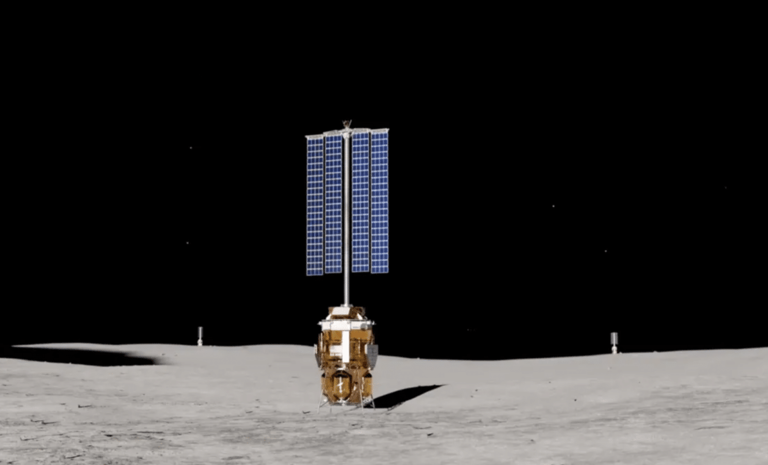
Blue Origin has unveiled a 20-meter-tall solar power system designed to supply more than 10 kilowatts of electricity to future operations at the moon’s south pole, pointing toward a lunar future in which power infrastructure may become as important as landers and rovers themselves.
The design modified for the Mars polar ice caps would capture energy, and change the albedo of the ice caps, and provide means of terraforming Mars. Because of the seasonal nature of the ice caps and evaporation and condensation processes, the setups may need robotic actuation. They may be set to collect solar energy part of the year and then altered to survive a long winter.
What is the ratio of the length of the Mars year to that of the Earth?
Quote:
Copilot Search Branding
Like
Dislike
Ratio of Mars Year Length to Earth Year Length
A Mars year is about 1.88 times longer than an Earth year.Step-by-step reasoning:
Earth year length:
An Earth year is defined as 365.256 days (sidereal year)Mars year length:
Scientific measurements show that Mars completes one orbit around the Sun in 686.97 Earth daysRatio calculation:
Ratio
=
Mars year (Earth days)
Earth year (Earth days)
=
686.97
365.256
≈
1.88
Interpretation:
This means one Martian year lasts almost twice as long as one Earth year — specifically, about 1.88 Earth yearsFinal Answer:
The ratio of the length of a Mars year to an Earth year is approximately 1.88:1
So seasonal changeovers would not be nearly as frequent as for Earth.
In it ice caps, ice caves could be created to put sensitive equipment into to survive the winter. Perhaps the solar arrays.
A Mars summer almost twice as long as that of Earth, might support biochemical activities in the base of each of these mechanical "Trees".
The change of albedo would increase the rate of ice sublimation on the surface so you would need means to adjust the devices for that. Again robotic actuation. Over time the thickness of the ice caps would decrease, and the area they covered may increase.
Each "Tree" could use biological or Abiotic means to produce greenhouse gasses. It might be noticed that you could use artificial snow for insulation of the bases where life might be hosted.
Deep tunneling with lasers may provide ice caves and streams of melt water to move to the edges of the ice caps perhaps to fill ice covered pools of water.

With just a little pressurization of the ice tubes and the input of energy by way of laser beam, streams of liquid water might be extracted, and ice cave systems could be extended.
The ice and mechanically covered lakes might be the beginnings of seas.
Here is an article about the North Ice Cap: https://www.msn.com/en-us/science/envir … r-AA2dGP8w
Quote:
Scientists just found something unexpected in Mars’ polar ice
Story by Lydia Amazouz • 1d • 5 min read
Interesting.
Ending
Last edited by Void (2026-10-07 09:51:19)
Be careful what you wish for.
Offline
Like button can go here
#3 2026-10-08 09:43:22
- Void
- Member
- Registered: 2011-12-29
- Posts: 10,006
Re: Obtaining materials from Brines-Seas and working with polar ice.
I think I have an idea for extracting nutrients from the deep oceans.
It may or may not be wise to do.
Supposing we could have tankers that carry Acetate in the manner that Oil Tankers or Liquid Natural Gas do.
Then we might have a location that will manufacture Acetate from surplus energy. Perhaps Australia with Solar Energy or the North Sea with wind.
If we inject Acetate and Oxygen into the deeps of the Ocean where nutrients are, then we may promote a food chain.
The resulting biomass harvested then could be processed where eventually the nutrients could be put into farm land.
Quote:
Copilot Search Branding
Recovering Potash from Animal Waste
Animal manure is a rich, natural source of potassium (K₂O) that can be processed into usable potash fertilizer, with typical values ranging from ~4.6 to 14.4 lbs K₂O per ton depending on species and feed
University of Alaska Fairbanks
University of Alaska Fairbanks
.Potassium Content in Common Manures
Animal
K₂O (lbs/ton)Beef feedlot
12.8Dairy cow
4.6Swine
6.4Horse 14.4
Sheep
24.0Poultry (no litter)
8.4These values are in addition to nitrogen and phosphorus, and manure also supplies organic matter that improves soil structure.
How to Recover Potash from Manure
Collection & Storage
Gather manure promptly to minimize nutrient loss. Store in dry, well‑aerated conditions to prevent leaching and odor issuesComposting
Mix manure with carbon sources (e.g., straw, wood chips) in a 1:2–1:3 ratio. Compost for 3–6 months to stabilize nutrients, reduce pathogens, and improve handling. This process also concentrates potassium in the composted productBioleaching / Extraction
Research shows that bioleaching of manure ash or composted material can release potassium into solution for recovery. This can be combined with biochar production to immobilize nutrients and improve soil application efficiency
Processing into Fertilizer
Direct application: Apply composted manure to fields; potassium is released slowly, reducing leaching
Fertilizer blending: Extract K₂O via leaching and blend with other nutrients for a commercial potash product
Biochar integration: Incorporate biochar into manure to improve nutrient retention and slow release
Frontiers
Frontiers
.Benefits of Using Animal Waste for Potash
Circular economy: Recycles nutrients from livestock into crops, reducing reliance on mined potash
Environmental: Lowers greenhouse gas emissions from manure management and reduces waste disposal issues
Soil health: Organic potassium improves soil structure, water retention, and microbial activity
Practical Tips
Test manure for K₂O content before processing; values vary with diet, bedding, and animal type
University of Alaska Fairbanks
University of Alaska FairbanksFor large‑scale recovery, consider combining manure with other K‑rich agricultural by‑products (e.g., crop residues)
Apply processed potash according to soil test recommendations to avoid over‑application.
In summary: Animal manure contains significant potassium that can be recovered through composting, bioleaching, or direct application. Processing it into a potash fertilizer not only recovers a valuable nutrient but also supports sustainable, circular agricultural practices
Frontiers
F
It is not so much that I am afraid of Potash being cut off to America long term, but that fertilizers for agriculture are a thing that may continue as needed if supplies run out.
Algae and Yeast can grow in the dark using Acetate and Oxygen, I beleive.
A chamber lowered to a depth where nutrients would be present might have screens that prevent the entry of large organisms.
The chamber could be presented with Acetate and Oxygen and the Nutrient rich water could be circulated to allow something like Yeast or Algae to absorb the nutrients while consuming Acetate and Oxygen.
The Yeast or Algae harvested might be harvested to be fish food. That food transported to aquiculture associated with regular farm fields, may provide fertilizers.
Fish either emit Ammonia or Urea. Such water might be useful to water plants with.
The fish that might grow may be food for Humans and Livestock. The waste can have nutrients extracted such as Potash.
Fish waste could either be fed to livestock, or perhaps directly be applied to field crops.
This process might not only provide Nitrogen fertilizer, but Potash and I presume perhaps Phosphorous.
Ending
Last edited by Void (2026-10-08 10:11:23)
Be careful what you wish for.
Offline
Like button can go here
#4 2026-10-08 14:32:11
- Void
- Member
- Registered: 2011-12-29
- Posts: 10,006
Re: Obtaining materials from Brines-Seas and working with polar ice.
Generally, for Oceans and internal drainage lakes, Nutrients are sequestered from land to the water.
An exception may be birds that catch fish and bring their droppings into land, Or animals that may catch food at a shoreline or tidal zone.
So, I believe that there are a lot of lands that are barren because of lack of nutrients, not just lack of precipitation. This seems to have been the case for Iceland until a invasive plant from Alaska was introduced there.
Quote:
Copilot Search Branding
Like
Dislike
Nootka Lupin — The Alaskan Nitrogen‑Fixing Plant in Iceland
The invasive plant you’re referring to is Lupinus nootkatensis, commonly called Nootka lupin or Alaskan lupin
www.spacegroup.no
www.spacegroup.no
+1
.Origin and introduction
Native to coastal Alaska and parts of western Canada, the Nootka lupin is a perennial legume in the pea family (Fabaceae)
Wikipedia
Wikipedia
. In 1945, Iceland’s Forest Service imported seeds from Alaska to combat severe soil erosion and prepare barren volcanic and ash soils for reforestation
www.spacegroup.no
www.spacegroup.no
+1
. The plant was chosen because it can fix atmospheric nitrogen through root nodules containing nitrogen‑fixing bacteria, enriching poor soils and improving conditions for future tree growth
www.spacegroup.no
www.spacegroup.no
+1
. It also extracts phosphorus from poor soils
www.spacegroup.no
www.spacegroup.no
+1
.Ecological role and spread
Initially hailed as a restoration success, the lupin spread rapidly because it was unpalatable to sheep, had no close relatives to compete with, and could form dense, one‑metre‑tall stands
www.spacegroup.no
www.spacegroup.no
. Its nitrogen‑fixing ability and strong root system stabilized soils, but the plant also altered soil chemistry, favoring its own expansion and smothering mosses, lichens, and native herbs
www.spacegroup.no
www.spacegroup.no
+1
. Studies show that high lupin cover significantly reduces native plant diversity in heathlands and woodlands
Times of India
Times of India
+1
.Current status
Today, Nootka lupin is designated an invasive species in Iceland
Wikipedia
Wikipedia
. It dominates lowland areas, replaces native flora, and is projected to expand further under climate change
Times of India
Times of India
+1
. While it still provides soil stabilization and nitrogen enrichment, its dominance is considered an ecological problem, and management efforts are underway to control its spread
www.spacegroup.no
www.spacegroup.no
+1
.Summary
Name: Lupinus nootkatensis (Nootka lupin / Alaskan lupin)
Origin: Coastal Alaska, western Canada
Introduced to Iceland: 1945 for erosion control and reforestation
Key trait: Fixes atmospheric nitrogen via root nodules, enriching poor soils
www.spacegroup.no
www.spacegroup.no
+1Current status: Invasive, dominant in many lowland areas, reducing biodiversity
Times of India
Times of India
+1This plant’s story is a classic example of how an ecological restoration species can become an invasive threat when it alters ecosystems beyond its intended role.
So such plants are a way to improve the Nitrogen in soil or artificial fertilizers can do so at a significant expense of energy, I believe.
I don't know about other nutrients, but am aware of Potash which involves Potassium and use often taken from mines, or can be extracted from animal and human waste.
If a method can be established where cold water nutrients can be presented to Yeast or Algae along with Oxygen and Acetate, then I feel that this might be a good way to extract the nutrients back out of the Oceans.
Perhaps something like this would work: 
The top would be human diver accessible, and if the whole thing were put sideways near the surface diver accessible as well.
I am not certain, but I think the metabolism of Yeast or Algae digesting will warm the input cold nutrient rich water.
When deployed vertical, then I suppose a stream of yeast or algae output could be collected near the top.
I am not showing means of buoyancy, but you would need something.
The product output to make animal feed for fish or other animals would be a path for various nutrients to be pulled out of the Ocean and distributed to farmlands and other lands as well.
Supertankers might bring the Acetate in in bulk. The method of insertion of additional Oxygen might involve pumping air, or some other means.
A future crop to fertilize could be grasses, perhaps to make artificial wood out of.
Ending
Last edited by Void (2026-10-08 14:55:47)
Be careful what you wish for.
Offline
Like button can go here
#5 2026-10-08 21:13:12
- Void
- Member
- Registered: 2011-12-29
- Posts: 10,006
Re: Obtaining materials from Brines-Seas and working with polar ice.
This is interesting: https://www.bing.com/videos/riverview/r … 29ca67d862 Quote:
China Just Built The Data Center Microsoft Gave Up On
YouTube
AI Andrew
9 views
8
My dream would be to do the AI cooling while drawing nutrients up for Yeast or Algae to use while being fed Acetate and Oxygen.
If fresh water could be obtained in the process that would be a plus.
Ideally some method to extract the Uranium from the produced brine.
In addition, ideally with a method mix the brine with sea water to dilute it to a safe level.
Ending
Last edited by Void (2026-10-08 21:16:52)
Be careful what you wish for.
Offline
Like button can go here
#6 2026-10-09 20:06:12
- Void
- Member
- Registered: 2011-12-29
- Posts: 10,006
Re: Obtaining materials from Brines-Seas and working with polar ice.
From post #4, I have been considering this some more, quote:
Perhaps something like this would work:
The top would be human diver accessible, and if the whole thing were put sideways near the surface diver accessible as well.
I have been edging towards what I think is a proper query: ''Organisms in the sea that travel up and down daily, how far do they travel?"
Quote:
Copilot Search Branding
Like
Dislike
Daily Vertical Migration in the Sea — How Far Organisms Travel
Many marine animals, especially zooplankton like copepods and krill, as well as some fish and squid, perform a diel vertical migration (DVM) — a daily journey between deep waters and the surface
NOAA Ocean Exploration
NOAA Ocean Exploration
+1
.Typical travel distance:
Most migrators start in the twilight zone (mesopelagic layer), about 200–1,000 meters (600–3,300 feet) below the surface
Woods Hole Oceanographic Institution
Woods Hole Oceanographic Institution
+1
.At night, they ascend toward the surface layer (epipelagic zone), often reaching just a few meters below the top.
This means the vertical displacement is usually on the order of several hundred meters — for example, from ~200 m deep to near the surface, or up to ~1,000 m in some cases
Woods Hole Oceanographic Institution
Woods Hole Oceanographic Institution
+1
.Smaller zooplankton may move less vertically, while larger species like lanternfish can travel the full 200–1,000 m range
Science Sensei
Science Sensei
.Why they do it:
Feeding: Surface waters at night are rich in phytoplankton and other prey, and darkness hides them from visual predators
NOAA Ocean Exploration
NOAA Ocean Exploration
+1
.Predator avoidance: Daytime in deeper waters reduces exposure to surface predators
NOAA Ocean Exploration
NOAA Ocean Exploration
+1
.Other benefits: Avoidance of UV damage, use of colder deeper waters for growth, and exploitation of currents for food
NOAA Ocean Exploration
NOAA Ocean Exploration
.Scale of the migration:
This is the largest synchronous animal migration on Earth, involving billions to trillions of individuals daily across the globe
NOAA Ocean Exploration
NOAA Ocean Exploration
+1
.The movement is not limited to one species — it spans crustaceans, mollusks, fish, and jellyfish
Wikipedia
Wikipedia
.In summary:
Most marine organisms that migrate daily in the sea travel hundreds of meters vertically each day, typically from the twilight zone (200–1,000 m deep) to near the surface, with the exact distance depending on species, depth, and environmental conditions
So, most feeding is probably at the surface at night based on microbes that do photosynthesis.
But does some feedings occur further down?
If so then do these organisms bring nutrients up from below/
If not, if we introduced Acetate and Oxygen into lower nutrient rich waters and simulated starlight and Moon light down that far, would they feed on the at those depths?
Growing Yeast and Algae may be useful, but could you farm particular species of multicellular life in such an enclosure?
It needs more thinking.
Ending
Last edited by Void (2026-10-09 20:17:26)
Be careful what you wish for.
Offline
Like button can go here
#7 2026-10-10 10:26:12
- Void
- Member
- Registered: 2011-12-29
- Posts: 10,006
Re: Obtaining materials from Brines-Seas and working with polar ice.
I am learning quite a lot more about nutrients in the seas.
This is a bit dry and lengthy, but lots of information in it: https://www.bing.com/videos/riverview/r … 621d8bf83e
Quote:
Marine Ecology Lecture- Continental Shelf Ecosystems
YouTube
James Douglass
5.5K views
Where before I was very interested in deep cold water with nutrients in it.
But this video indicates that sediments can hold lots of nutrients. Unless something stirs them back up I presume they eventually become parts of rocks. And the nutrients then are locked up, until that rock can be eroded again by some process.
Two interesting alternatives then exist: 1) Vacuum up sentiments, or process the output of rivers into the sea before the sedimentation occurs.
So, if you could combine a nutrient source with an energy source, (Acetate & Oxygen) you might capture nutrients into Yeast or Algae, or a creature that might eat Yeast or Algae produced.
Query: "What nutrients are in Ocean sediments?"
Quote:
Copilot Search Branding
Like
Dislike
Nutrients Found in Ocean Sediments
Ocean sediments are rich in a variety of macronutrients, micronutrients, and trace elements that play key roles in marine biogeochemical cycles and ecosystem productivity.Major nutrients
Nitrogen (N) – Present mainly as nitrates, ammonium, and organic nitrogen from decomposed organic matter. Nitrogen is essential for protein synthesis and is a limiting nutrient in many marine systems
www.marinebiodiversity.ca
www.marinebiodiversity.ca
.Phosphorus (P) – Found as phosphate, vital for ATP, DNA, and RNA. Phosphorus in sediments often comes from weathered rocks, organic debris, and human inputs
www.marinebiodiversity.ca
www.marinebiodiversity.ca
.Carbon (C) – Stored in both organic (dead plankton, detritus) and inorganic forms (carbonates). Organic carbon in sediments supports microbial food webs and is part of the ocean’s carbon sink
Coastal Wiki
Coastal Wiki
+1
.Silicon (Si) – Incorporated into diatom frustules and radiolarian skeletons; released during silica dissolution and recycled in sediments
Coastal Wiki
Coastal Wiki
+1
.Other essential elements
Iron (Fe) – A trace metal that can limit productivity in certain regions; present in both dissolved and particulate forms in sediments
www.marinebiodiversity.ca
www.marinebiodiversity.ca
.Calcium (Ca) – Found in carbonate shells and skeletons, contributing to the calcium carbonate component of sediments
Wikipedia
Wikipedia
+1
.Sulfur (S) – Present in organic matter and sulfide minerals, part of the sulfur cycle
Wikipedia
Wikipedia
.Trace metals and minerals
Sediments also contain trace metals such as manganese, copper, zinc, and selenium, often associated with manganese nodules or organic-rich layers
Wikipedia
Wikipedia
+1
. These can be micronutrients for marine life or pollutants depending on concentration.Sources in sediments
Nutrients in ocean sediments originate from:Biogenous material – remains of plankton, shells, and other marine organisms
Wikipedia
Wikipedia
.Terrigenous input – weathered land particles carrying nutrients
Wikipedia
Wikipedia
.Hydrogenous deposits – minerals precipitated from seawater, such as phosphorites
Wikipedia
Wikipedia
.Microbial activity – remineralization of organic matter releases nutrients back into the sediment and water column
Coastal Wiki
Coastal Wiki
.Ecological role
These nutrients are recycled through marine biogeochemical cycles, supporting primary production, food web energy flow, and carbon sequestration
Coastal Wiki
Coastal Wiki
+2
. Sediments act as both a storage reservoir and a source of nutrients, influencing coastal productivity and climate regulation.In summary: Ocean sediments contain nitrogen, phosphorus, carbon, silicon, calcium, sulfur, iron, and various trace metals, all of which are integral to marine life and global nutrient cycling
Wikipedia
Wikipedia
+3
https://en.wikipedia.org/wiki/Marine_sediment
Image Quote:
So, I might put an eye on the output of the Mississippi River into the Gulf of America. (Mexico).
The water could perhaps be conducted into a chamber of some kind that is highly aeriated, and Acetate could be introduced.
Yeast or Algae then to be the base of a food chain that could cycle nutrients back into farmlands that are in the rivers drainage basin.
Query: "Can nutrients be extracted from Maneure?"
Quote:
Copilot Search Branding
Like
Dislike
Extracting Nutrients from Manure
Yes — nutrients can be extracted from manure through processes such as composting, anaerobic digestion, and other recovery methods, producing concentrated, plant‑available fertilizers or other products
U.S. Environmental Protection Agency
U.S. Environmental Protection Agency
+1
.How Manure Contains Nutrients
Manure is rich in nitrogen (N), phosphorus (P), and potassium (K), along with organic carbon, sulfur, and trace elements
U.S. Environmental Protection Agency
U.S. Environmental Protection Agency
+1
. On average, 70–80% of dietary nitrogen, 60–85% of phosphorus, and 80–90% of potassium in animal feed are excreted in manure
UMass Amherst
UMass Amherst
+1
. These nutrients are the same key components of commercial fertilizers.Extraction and Recovery Methods
Manure nutrient recovery is the process of separating and concentrating these nutrients from manure for reuse
sustainability-directory.com
sustainability-directory.com
. Common approaches include:Composting – Aerobic breakdown of manure reduces odor, kills pathogens, and stabilizes nutrients, making them more evenly available to plants
U.S. Environmental Protection Agency
U.S. Environmental Protection Agency
.Anaerobic digestion – Microbial breakdown in oxygen‑free conditions produces biogas (energy) and a nutrient‑rich digestate that can be applied as fertilizer
gardenerbible.com
gardenerbible.com
.Liquid/solid separation – Solids can be used for bedding or soil amendment; liquids still contain ~50% of original nutrients and can be land‑applied or processed further
U.S. Environmental Protection Agency
U.S. Environmental Protection Agency
.Phosphorus recovery – Chemical or biological processes can precipitate phosphorus from manure liquids for use as a fertilizer or other product
sustainability-directory.com
sustainability-directory.com
.These processes can yield more portable, balanced, and plant‑available nutrient products than raw manure
U.S. Environmental Protection Agency
U.S. Environmental Protection Agency
+1
.Benefits and Considerations
Resource value – Recovered nutrients reduce reliance on synthetic fertilizers and close nutrient loops in agriculture
sustainability-directory.com
sustainability-directory.com
.Environmental impact – Proper management prevents nutrient loss to waterways and reduces odor and pathogen risks
U.S. Environmental Protection Agency
U.S. Environmental Protection Agency
+1
.Application – Nutrient‑rich products can be used on‑farm, in gardens, or sold as commercial fertilizer
U.S. Environmental Protection Agency
U.S. Environmental Protection Agency
+1
.In summary: Nutrients can indeed be extracted from manure, and modern technologies allow this to be done efficiently, turning what is often considered waste into a valuable, sustainable resource.
So, it could be that processing devices could be put on the shallow sea floor of the river delta, and be beyond the damages that bad weather might produce.
Since this "Food Chain" would not be light dependent, it can be down as far as is convenient for the protection of the devicees.
The river in this case has barge transport, and the delta is also, convenient to Ocean shipping, so Acetate might be manufactured at locations where energy is available for it.
But it will be necessary to areate the process strongly, I expect, but otherwise it might become anoxic.
Clamlike creatures might be fed the Yeast or Algae, they are low activity organisms for perhaps they will burn less calories than fish, but I am not sure.
So, as I understand it the nutrients that might be concentrated may include items listed in the previous query.
Query: "What organisms could extract Uranium from water?"
Quote:
Copilot Search Branding
Like
Dislike
Organisms That Can Extract Uranium from Water
Several types of living organisms have been shown to take up or remove uranium from water, though the mechanisms differ between accumulation in tissues and active biomineralization.1. Aquatic invertebrates (bioaccumulation)
USGS laboratory studies have demonstrated that freshwater snails, such as Lymnaea stagnalis (pond snail), can accumulate uranium from dissolved uranium in water under a wide range of natural conditions
USGS.gov
USGS.gov
+1
. Uranium can enter these organisms directly from the water or via diet, and once inside, it is retained for long periods, leading to higher concentrations over the organism’s lifespan. Bioavailability is influenced by water chemistry — for example, higher alkalinity, hardness, or dissolved organic matter can reduce uptake
USGS.gov
USGS.gov
.2. Anaerobic bacteria (bioremediation)
Recent research from the Helmholtz‑Zentrum Dresden‑Rossendorf and collaborators found that anaerobic bacteria living in the oxygen‑depleted, uranium‑contaminated water of the flooded Schlema‑Alberoda uranium mine in Germany can “eat” dissolved uranium
poochinthehouse.wordpress.com
poochinthehouse.wordpress.com
+2
. When supplied with glycerol as a carbon source, these microbes convert soluble hexavalent uranium (U(VI)) into a stable pentavalent uranium mineral (FeU(V)O₄) that becomes locked in their cell walls. This process can remove about 95% of dissolved uranium from water within ~130 days
poochinthehouse.wordpress.com
poochinthehouse.wordpress.com
+1
. This is not simple accumulation but a metabolic transformation into a non‑mobile form.3. Other potential uranium‑interacting organisms
While the above are the most documented, other microorganisms (e.g., certain fungi and algae) and macroorganisms (e.g., aquatic plants, invertebrates) can adsorb or bind uranium to their surfaces or tissues, though these are generally less efficient and more variable than the bacterial mineralization process
USGS.gov
USGS.gov
+1
.Key differences
Bioaccumulation (snails, some fish, invertebrates): Uranium is stored in tissues, potentially posing toxicity risks.
Biomineralization (uranium‑reducing bacteria): Uranium is chemically transformed into a stable mineral, reducing its mobility and toxicity in water.
In summary:
Macro‑organisms: Freshwater snails (Lymnaea stagnalis) and possibly other aquatic invertebrates can take up uranium from water
USGS.gov
USGS.gov
+1
.Micro‑organisms: Anaerobic, uranium‑reducing bacteria in contaminated mine waters can extract and immobilize uranium via stable mineral formation
poochinthehouse.wordpress.com
poochinthehouse.wordpress.com
+2
.These findings suggest that both traditional bioaccumulation studies and emerging bioremediation approaches can exploit different organisms to interact with uranium in water, but the mechanisms and environmental implications differ significantly.
So, I expect Uranium is more likely to come from Sea water.
But if you could extract it and also get nutrients that might be a good deal.
Ending
Last edited by Void (2026-10-10 10:59:11)
Be careful what you wish for.
Offline
Like button can go here
#8 2026-10-10 11:18:38
- Void
- Member
- Registered: 2011-12-29
- Posts: 10,006
Re: Obtaining materials from Brines-Seas and working with polar ice.
Continuing with the prior post, I think that a Biochar of Yeast or Algae, if done perhaps with concentrated solar energy, might produce hydrocarbons, and leave behind a biochar that would have the nutrients in it.
So, then perhaps Electric trucking and barges might move the biochar to farm fields.
The nutrients would then leach our of the biochar.
Ending
Be careful what you wish for.
Offline
Like button can go here
#9 2026-10-15 10:14:52
- Void
- Member
- Registered: 2011-12-29
- Posts: 10,006
Re: Obtaining materials from Brines-Seas and working with polar ice.
I was looking for this: "Utube, America's New $15Trillion Ocean Discovery Could End Oil Forever, Sep 30, 2026"
But got this instead: https://www.bing.com/videos/riverview/r … 35e1830d51 Quote:
China's $15 Trillion Ocean Discovery Is 10x Bigger Than Oil
YouTube
Rajesh Rajesh
It may be similar to what I was looking for.
OK, here it is after all: https://www.youtube.com/watch?v=i0KPKvhei64
Quote:
America's New $15 Trillion Ocean Discovery Could End Oil Foreve
OK, I recognize that this "Fiber-Basalt" technology may be good for building on Mars.
In particular I am interested in underwater structures, such as Diving Bells in which habitats could be built inside of created bodies of water.
This could also perhaps be done on Earth as well in shallow sea water. Continental Shelves perhaps.
On Earth we may not want the compression though, but on worlds like Mars we likely would want it.
The water column differential pressure would also be reduced on lower gravity worlds such as Mars.
The other factor that may be of value is that if you use Basalt Fibers and Resin, then you extract Carbon and Hydrogen from CO2 and H20, to make the resin, and so then release Oxygen to the atmosphere of Mars.
So, that seems like a good plan.
Also, in working with the Asteroid Belt, perhaps artificial habitats in the vacuum of space could be built from this material, or a material where you have extracted some of the metals first. The plan would likely work on icy worlds also such as Ceres and Callisto.
Ending
Last edited by Void (2026-10-15 10:25:41)
Be careful what you wish for.
Offline
Like button can go here
#10 2026-10-26 11:30:33
- Void
- Member
- Registered: 2011-12-29
- Posts: 10,006
Re: Obtaining materials from Brines-Seas and working with polar ice.
So, I am going to propose something strange, "Pykrete Ice Caps". While I am hoping that this could be expanded to soil permafrost, I am proposing it first for northern Ice Caps. I am hoping that heat loss can be increased by increasing surface area.
At the same time I am hoping that deep sea nutrients can be extracted to grow grass to make hay bales to serve as an ingredient for such a material similar to pykrete.
I believe that this is a time to rev the engines of progress and not to go into a green neutral of slow death.
Quote:
Record highs
The highest recorded temperature at Summit Station is 2.2°C (36.0°F)
Wikipedia
Wikipedia
+1
. This is only slightly above freezing and has never been sustained. Even in the warmest months, the ice surface remains frozen, and the air temperature rarely exceeds 0°C for long.Why so cold?
The extreme cold is due to:High altitude (over 3,000m) and thin air, which hold less heat
Climates to Travel
Climates to Travel
.High albedo of the ice, which reflects most sunlight back into space
scienceinsights.org
scienceinsights.org
.Polar climate (Köppen EF), where no month averages above freezing
Wikipedia
Wikipedia
.Summary (False!!!)
In summer, the center of the Greenland ice cap is cold, with average highs near 10°C and record highs around 2°C, meaning it is permanently frozen despite the longest daylight hours
Do, you see how the AI tries to lie about it in the summary?
At any rate I am looking for a means to sequester Carbon and also produce a resource.
Quote:
Copilot Search Branding
Like
Dislike
Wind Power Potential of Central Greenland
Central Greenland has high wind power potential, with mean wind speeds around 6m/s at 10m height and wind power densities exceeding 400W/m² in some areas, making it suitable for large-scale wind farm development
DTU Research Database
DTU Research Database
+1
.Resource Assessment
Meteorological studies, including those by Kjeller Vind Teknikk (KVT) and the Danish Technical University, show that Greenland’s wind resources are among the most promising in the Arctic
www.vindteknikk.com
www.vindteknikk.com
+1
.Mean wind speed: ~6.1m/s at 10m height in studied sites such as Sarfannguaq
DTU Research Database
DTU Research Database
.Wind power density: >400W/m² in favorable zones, with IRENA data indicating some areas exceeding 1.8–2.0kW/m² at 100m
IRENA – International Renewable Energy Agency
IRENA – International Renewable Energy Agency
.Annual generation potential: For a 100kW wind turbine, estimated 20‑year average production cost ~0.85DKK/kWh, competitive with diesel generation (~2.29DKK/kWh)
DTU Research Database
DTU Research Database
.Strategic Plans
Greenland is pursuing an ambitious wind power strategy:1.5GW wind farm target: The first large-scale project, led by Anori A/S, will supply power for hydrogen and green ammonia production
greenbusinessbarbados.com
greenbusinessbarbados.com
+1
.Multiple sites: KVT has proposed turbine layouts for several locations, including the west coast and inland areas
www.vindteknikk.com
www.vindteknikk.com
.Pilot projects: Viking Wind is supplying Sisimiut with a turbine to demonstrate feasibility
greenbusinessbarbados.com
greenbusinessbarbados.com
.Challenges
While the potential is high, technical and logistical constraints exist:Harsh Arctic climate with strong winds, icing, and permafrost
www.vindteknikk.com
www.vindteknikk.com
+1
.Limited grid infrastructure and high transport costs for equipment
diversedaily.com
diversedaily.com
.Need for robust meteorological data and site-specific engineering.
Outlook
With wind speeds and power densities in central Greenland well above global averages for onshore wind, the region could host multi‑gigawatt wind farms if infrastructure and climate adaptation measures are addressed. The current 1.5GW plan is a stepping stone toward making wind the primary electricity source by 2050
greenbusinessbarbados.com
greenbusinessbarbados.com
.In summary: Central Greenland’s wind resource is substantial, with mean speeds ~6m/s and power densities >400W/m², supporting large-scale renewable energy projects. Strategic plans and pilot initiatives are underway, but climate, infrastructure, and cost challenges remain to be overcome.
So, let's say we might create heat exchanger fins our of specially crafted hay bales stack and wetted to freeze. Then with robotic labor make sure that they stay covered in reflective snow.
These then might serve as pedestals for windmills. The windmills might power things like AI.
The increased surface area would increase radiation to the sky of heat and between radiator fins cold air would pool that could be a coolant.
The exhaust heat could go up stacks on the towers of the windmills.

This trough can even have a road of wood or other materials.
The sun in the arctic will not be high in the sky, so it is possible that main structures can be kept frozen.
Of course, greens will hate this because of course industry is evil and the solution to make resources last is to not tap them but to get rid of most of the people.
There is virtually not animal or plant life on the ice cap to disturb but I trust that they will react negitively.
I was told in school that art oscillates between scenes of wilderness in the extreme and well groomed parkland.
In any case problems could be spontaneous hay fires, so you would need to prevent that. Anyway, plants and animal that have been buried in permafrost, can be thousands of years old.
Ending
Last edited by Void (2026-10-26 12:04:57)
Be careful what you wish for.
Offline
Like button can go here
#11 2026-10-26 12:01:36
- Calliban
- Member
- From: Northern England, UK
- Registered: 2019-08-18
- Posts: 4,443
Re: Obtaining materials from Brines-Seas and working with polar ice.
Magnesium sulphate seems to be the most common salt on Jovian moons. Magnesium is usable as a structural metal. Similar to aluminium in its properties. Ice could be used as a compressive structural material or a shielding material. Any dissolved methanol in extraterrestrial water could be used used to make acetate (for food production) or a feedstock for polymer production. Uranium is obviously very useful. It could be profitably extracted on Earth if we had breeder reactor cycles. I am uncertain of its concentration in the water on other worlds.
"Plan and prepare for every possibility, and you will never act. It is nobler to have courage as we stumble into half the things we fear than to analyse every possible obstacle and begin nothing. Great things are achieved by embracing great dangers."
Offline
Like button can go here
#12 2026-10-26 12:06:17
- Void
- Member
- Registered: 2011-12-29
- Posts: 10,006
Re: Obtaining materials from Brines-Seas and working with polar ice.
Well thanks for the contribution.
My basic plan is to go deep enough in the ocean where nutrients are rich. Then farm life using Oxygen and fuels like Acetate, Methane, Hydrogen. The provided materials will give energy for metabolism. The life, for instance microbes will absorb nutrients and depending on the type might absorb certain metals such as Uranium or Magnesium.
Filter feeders such as mollusks might even further concentrate the metals.
Then Fertilizer and metals might be extracted from the microbes or mollusks.
The fertilizer could then fertilize fields of grass/hay. The collected grass/hay can be used to make artificial wood or bales of hay for Pykrete on an Ice Cap, thus sequestering Carbon.
The structures "Hopefully" will increase radiation of heat into the universe and allow the cold to be used as a resource. Also perhaps wind power could be harnessed.
And yes, this might work for brines on other worlds.
Ending
Quote:
Copilot Search Branding
Like
Dislike
Microbes That Sequester Uranium
Several microorganisms have been shown to bind, immobilize, or metabolize uranium, making them candidates for bioremediation of contaminated sites.Key examples and mechanisms:
1. Actinobacteria, Firmicutes, and Cyanobacteria (Zoige mine soil)
A 2025 Microbiology Spectrum study of uranium-contaminated soil in Sichuan, China, identified Actinobacteria as a biomarker for high-uranium soils, with Firmicutes and Cyanobacteria positively correlated with uranium levels. These groups were linked to amino acid and fatty acid biosynthesis pathways that may aid in uranium sequestration
ASM Journals
ASM Journals
.2. Glycerol-fed mine-water bacteria (HZDR, Germany)
Researchers at the Helmholtz-Zentrum Dresden-Rossendorf found that certain bacteria from flooded uranium mines can incorporate dissolved uranium into their cell walls when supplied with glycerol. Over 130 days, ~95% of dissolved uranium was removed, converted into a stable pentavalent uranium compound (U(V)) that remains fixed under both anaerobic and aerobic conditions
Save the Water
Save the Water
+1
.3. Geobacter species (Michigan State University)
Geobacter bacteria use protein nanowires to electrochemically reduce uranium, trapping it in mineral form, and also lipopolysaccharide “molecular sponges” on their cell surfaces that adsorb uranium like a sponge. This dual mechanism can immobilize up to three-quarters of the uranium they process, packaging it into vesicles for release
MSUToday
MSUToday
.4. General microbial processes
Reviews note that microbes can sequester uranium via biosorption (surface binding), bioreduction (chemical change to less mobile forms), biomineralization (incorporation into minerals), and bioaccumulation (uptake into cells)
Frontiers
Frontiers
.Why this matters:
These microbes can reduce uranium mobility in water and soil, lowering toxicity and environmental spread. The HZDR and Geobacter systems, in particular, show stable immobilization and potential for engineered bioremediation.In summary:
Actinobacteria, Firmicutes, Cyanobacteria – soil sequestration via metabolic pathways
ASM Journals
ASM JournalsMine-water bacteria (HZDR) – glycerol-driven cell wall incorporation into stable U(V)
Save the Water
Save the Water
+1Geobacter – nanowire reduction + lipopolysaccharide adsorption
MSUToday
MSUTodayThese findings suggest that selecting and engineering such microbes could be a promising strategy for cleaning up uranium-contaminated environments.
So, having lots of Uranium will be dangerous, but we have poisons also and live with it.
But lots of Uranium could power many large spacecrafts, perhaps using Metal>Plasma propellants.
Ending
Last edited by Void (2026-10-26 12:15:20)
Be careful what you wish for.
Offline
Like button can go here
#13 2026-10-28 19:17:40
- Void
- Member
- Registered: 2011-12-29
- Posts: 10,006
Re: Obtaining materials from Brines-Seas and working with polar ice.
The idea of sculpting ice caps with woven grass. It may or may not ultimately be a sensible thing to do. Time will tell.
I have suggested hay bales. Injected with water to freeze, then might become a form of building block.
More sophisticated woven things have history: https://en.wikipedia.org/wiki/Reed_boat
Image Quote: 
So, then if you also consider: https://en.wikipedia.org/wiki/Pykrete
Quote:
Pykrete (/ˈpaɪkriːt/, PIE-creet)[1] is a frozen ice composite, originally made of approximately 14% sawdust or some other form of wood pulp (such as paper) and 86% ice by weight (6 to 1 by weight).[2]
So, if you can use similar methods to ventilate ice masses, and associate methods to maintain a preferred albedo in the sunlight, ice mass evolution might be modified.
At the same time if you can inter grassy materials in the ice is will be a form of Carbon capture.
If at the same time you might harness wind power and use robotic labor, such a system might be maintained and expanded.
There could be a problem with vermin that might try to eat the materials but that likely could be managed.
Trenches, shafts, and horizontal/diagonal, shafts lined with woven pykrete might allow deep ventilation of ice masses.
The objective to stabilize it and keep it colder.
As I have said this is a thing to consider.
Can it be extended to high Arctic places and maybe low Arctic Permafrost? I don't know.
Ending
Last edited by Void (2026-10-28 19:33:03)
Be careful what you wish for.
Offline
Like button can go here
#14 2026-10-29 09:38:05
- Void
- Member
- Registered: 2011-12-29
- Posts: 10,006
Re: Obtaining materials from Brines-Seas and working with polar ice.
I am interested in creating a plan "B" for the Earth in case the "Doomers" somehow turn out to be correct about climate change/warming.
I also hope that this technology might be exportable to other worlds as many worlds are icy.
I also hope in creating many technologies that we can keep ahead of the "Verbal and Violent Decay". I believe that nature does not value intelligence except that it might promote pattern retention/repititions.
The natural "Verbal and Violent Decay" is when a mutant subset of humans who have lost technological/industrial skills learns to predate on those who have not lost them they become the "Takers" that take from the "Makers".
The often get assigned to titles by elite structures of a similar type of people. They may also get stupid college degrees that have verbal orientations. Cheerleaders to cheer on knuckle draggers to express the violence the "Verbal and Violent" crave.
It is a great danger to true civilizations I beleive.
The particular technology I am promoting here is basically "Woven Pykrete", and the hoped-for adaptation to work with ice masses of considerable sizes.
It could be experimented with in the Northern Hemisphere possibly with relatively low levels of disruption to living systems. It may be compatible with robotics and even limited human habitations. It might be coupled with wind energy extraction.
While I have mentioned Greenland, I think I recall, perhaps smaller scale initiation might make more sense. Perhaps the glaciers of Iceland or other arctic islands with glaciation.
Iceland or Baffin Island might be considered:
https://www.mountainguides.is/blog/icel … cier-facts
Image Quote: 
https://en.wikipedia.org/wiki/Baffin_Island
Quote: 
Russia and others may have glaciers and ice caps as well.
The ice may be somewhat stable or rather unstable.
Ideally stable ice can be further stabilized by ventilating it and to maintain a desired albedo.
Cooling may be an issue for robots so a woven pykrete cavity in an ice mass may not be that much of a problem for properly designed robots.
The ice mass might be ventilated to cool it particularly in the winter: 
The wind might be tapped on Earth, but on Mars perhaps sunshine might be tapped.
Last edited by Void (2026-10-29 10:09:30)
Be careful what you wish for.
Offline
Like button can go here
#15 2026-10-29 10:05:01
- Calliban
- Member
- From: Northern England, UK
- Registered: 2019-08-18
- Posts: 4,443
Re: Obtaining materials from Brines-Seas and working with polar ice.
Space colonisation is a very poor Plan B if we are facing disaster on Earth. There are three important reasons:
1) There is no foresseable circumstance under which Mars, the moon or anywhere else will provide an easier environment to live on than Earth. That remains the case even if the Earth is devastated by disaster. Even under the worse circumstances, Earth has air that we can breath and fresh water.
2) On Earth we benefit from a large and well established society that provides us with many manufactured goods and services that will be difficult to replicate anywhere else, for a long time to come. If we lose that, then being on another planet will be worse not better. Even after a nuclear war, it will be easier to rebuild on Earth than Mars.
3) A colony anywhere else in the solar system will depend upon Earth for resupply until it can manufacture literally everything for itself. That may indeed happen over time, but building a parallel society cannot be the reason for existence of such a colony. It will take centuries and trillions of dollars to build a parallel civilisation on Mars. To justify the sort of investment needed, it must provide economic value to people on Earth. That implies that Earth exists as place that benefits from and support the colony.
Building a lifeboat is a poor reason to colonise another planet. It will take a very long time to become self-sufficient and Earth will still be the best place to be even after a disaster. Reasons to colonise new places are access to new resources that can benefit the home world. That then provides a source of investment income needed to grow the colony. Becoming a second home without needing support from the old one, will take a very long time.
Last edited by Calliban (2026-10-29 10:09:23)
"Plan and prepare for every possibility, and you will never act. It is nobler to have courage as we stumble into half the things we fear than to analyse every possible obstacle and begin nothing. Great things are achieved by embracing great dangers."
Offline
Like button can go here
#16 2026-10-29 10:11:10
- Void
- Member
- Registered: 2011-12-29
- Posts: 10,006
Re: Obtaining materials from Brines-Seas and working with polar ice.
I am trying to invent a new technology that may assist the climate control of the Earth, and if it adapts to Mars and other worlds that is simply a plus. Robots may have a lower "Room Temperature" than humans so existence in ice may be suitable to some types of them.
Also, heat pump technology can allow a warm room inside of a "Woven Pykrete Chamber/Tunnel". Possibly even allowing human habitation..
I am going with the idea that fertilizers can be extracted from brine using biology, and the fertilizers along with chemical and other energy sources can allow the growth of vegetation types suitable to make "Woven Pykrete".
So, for Earth this would allow the sequestering of Carbon into "Woven Pykrete Structures", thus allowing for the burning of hydrocarbons as this is what humans somewhere on the planet will do if we like it or not.
The harvesting of unutilized wind on ice masses and perhaps even on tundra in places will take some of the load off of other environments.
Robotic systems within the ice might manufacture things of value.
Ending
Last edited by Void (2026-10-29 10:16:50)
Be careful what you wish for.
Offline
Like button can go here
#17 2026-10-29 11:47:03
- Void
- Member
- Registered: 2011-12-29
- Posts: 10,006
Re: Obtaining materials from Brines-Seas and working with polar ice.
Continuing............Here are some drawings again...........
A skyscraper inside of a "Woven Pykrete Chamber".
A trench which might have a road in its bottom:
Various shafts and tunnels in a body of ice:
On Earth windmills and perhaps nuclear might provide power. Cooling might come from natural or forced convection, heat pumps, or evaporative cooling.
So, if Carbon is interred in the ice mass in the form of woven plant materials then Carbon is sequestered. If the Ice has a net cooling inside then it may flow to the sea slower.
I want it understood that I neither confirm nor deny a crisis in climate, but I do offer a method of treatment, that may have value in any case.
Much warming has been natural along with sea level rise. In the case that that is largely natural, we still might modify or reduce the rate of sea level rise with this set of techniques.
Ending
Last edited by Void (2026-10-29 11:53:58)
Be careful what you wish for.
Offline
Like button can go here
#18 2026-10-29 19:33:00
- Void
- Member
- Registered: 2011-12-29
- Posts: 10,006
Re: Obtaining materials from Brines-Seas and working with polar ice.
While Earth is the most important planet to work with as per the methods of this topic also Mars has interested me, but Titan is one as well.
Geothermal and other energy sources may make sense. Query: "Geothermal power for Saturn's Moon Titan?
Quote:
Copilot Search Branding
Like
Dislike
Geothermal Power on Saturn’s Moon Titan
Research shows that geothermal energy is a technically feasible and potentially efficient power source for Titan, with a simple pre‑critical Rankine cycle using methane as the working fluid identified as the most efficient option under Titan’s conditions
freezetech.ru
freezetech.ru
+1
.Why geothermal energy is considered for Titan
Titan, Saturn’s largest moon, has a thick nitrogen atmosphere (~1.5 bar), abundant surface water and hydrocarbons, and relatively low gravity (1.352m/s²)
freezetech.ru
freezetech.ru
. These factors make it a candidate for future human or robotic bases. Geothermal power could provide continuous, weather‑independent electricity without relying on solar or wind, which are affected by Titan’s dense, absorbing atmosphere
arXiv.org
arXiv.org
.How it would work
A recent study by Voronov, Zharov, and Apsit evaluated several thermodynamic cycles for Titan’s geothermal systems:Pre‑critical Rankine
Post‑critical Rankine
Two‑cascade Rankine
Brighton cycle
freezetech.ru
freezetech.ru
+1They selected working fluids from Titan’s native atmosphere and surface resources to minimize transport from Earth. The analysis compared cycle efficiencies for different fluids, superheating levels, and pressures.
Key finding:
All considered cycles were feasible under Titan’s conditions.
A simple pre‑critical Rankine cycle using methane as the working fluid achieved the highest efficiency for the given conditions
freezetech.ru
freezetech.ru
+1
.Methane is abundant in Titan’s atmosphere and could be sourced locally, reducing mission mass.
Potential advantages
Local resource use: Methane and water could be mined or extracted in situ, avoiding large Earth shipments
freezetech.ru
freezetech.ru
.Reliability: Geothermal power is independent of solar cycles and wind patterns.
Efficiency: Methane‑based Rankine cycles can outperform other options under Titan’s low‑temperature, high‑pressure environment
freezetech.ru
freezetech.ru
+1
.Challenges and considerations
Heat source availability: Titan’s subsurface heat flux is unknown; geothermal potential depends on internal heat and tectonic activity.Engineering in extreme cold: Systems must operate at very low temperatures and pressures, requiring robust materials and insulation.
Integration with ISRU: Geothermal could complement other in‑situ resource utilization methods (e.g., methane combustion, hydropower)
arXiv.org
arXiv.org
.Broader context
While geothermal is promising, other energy options for Titan include solar (highly efficient despite distance), wind at ~40km altitude, hydropower from lakes like Kraken and Ligeia, and chemical energy from methane or acetylene
arXiv.org
arXiv.org
+1
. A hybrid system might combine geothermal with these for resilience.In summary: Geothermal power on Titan is scientifically plausible, with methane‑based Rankine cycles showing the best efficiency in current models. However, its practical deployment depends on confirming subsurface heat availability and developing cold‑adapted engineering solutions
The above was a useful result from the AI, also mentioning other energy options.
Titan with energy, is a better option than Mars, in my opinion, except for the much greater distance.
It might be that the cryovolcanic actions may have laid deposits of brine accessible to get materials from. Perhaps on the surface or not too far down in the icy crust.
It is thought that Titans crust may hold lots of thermally insulating clathrates which makes the idea of geothermal more probable than might be supposed.
Ending
Last edited by Void (2026-10-29 19:36:32)
Be careful what you wish for.
Offline
Like button can go here
#19 Yesterday 10:03:07
- Void
- Member
- Registered: 2011-12-29
- Posts: 10,006
Re: Obtaining materials from Brines-Seas and working with polar ice.
For Mars, brine might come from an Aquifer, but also the soil might be washed into water to create brine.
There may be salt domes, which may have differentiated deposits or not.
So, poisoned soils/regolith may be a resource more than a hazard if you can handle it properly.
Ending
Last edited by Void (Yesterday 10:06:57)
Be careful what you wish for.
Offline
Like button can go here