New Mars Forums
You are not logged in.
- Topics: Active | Unanswered
Announcement
#1 2026-07-13 06:17:14
- Void
- Member
- Registered: 2011-12-29
- Posts: 9,698
Conductive/Metal Propellants with Electric Power
The management can of course give me directions to corrections for this.
Actually, a device reported to be from NASA has me excited. What I have seen of it is that it uses Lithium. Lithium is said to be light in the Earth's gravity field, and apparently can work in this device.
And then previously I was aware of Magdrive which champions Iron, Aluminum, and Copper propellants.
Also Neumann Drive reportedly can use most substances in the periodic table.
https://www.jpl.nasa.gov/news/nasa-fire … s-to-mars/
Quote:
NASA Fires Up Powerful Lithium-Fed Thruster for Trips to Mars
April 28, 2026
Quote:
Copilot Search Branding
Like
Dislike
NASA is developing lithium-fed magnetoplasmadynamic (MPD) thrusters, a high-power electric propulsion technology that could enable faster, more efficient missions to Mars.
Overview of Lithium Propellant Technology
NASA’s Jet Propulsion Laboratory (JPL) is testing lithium-fed MPD thrusters, which use lithium metal vapor as a propellant. Unlike conventional chemical rockets, these thrusters employ strong electric currents interacting with magnetic fields to accelerate lithium plasma, producing continuous thrust over long durations
NASA
NASA
+1
. This method is highly efficient, using up to 90% less propellant than traditional rockets, and allows spacecraft to gradually reach extremely high speeds, such as the 124,000 mph achieved by the Psyche mission’s solar-powered electric thrusters
NASA
NASA
+1
.Recent Testing and Performance
In February 2026, JPL successfully tested a prototype lithium MPD thruster at 120 kilowatts, over 25 times the power of current high-power electric thrusters
NASA
NASA
+2
. The thruster operated inside the CoMeT (Condensable Metal Propellant) vacuum facility, a specialized chamber designed to safely handle metal vapor propellants and simulate space conditions
NASA
NASA
+1
. During testing, the thruster’s tungsten electrodes reached temperatures above 5,000°F, demonstrating both ignition stability and sustained performance at unprecedented power levels
dailygalaxy.com
dailygalaxy.com
.Advantages of Lithium Propellants
High thrust and efficiency: Lithium plasma allows greater acceleration than conventional ion or Hall-effect thrusters
NASA
NASA
+1
.
Reduced launch mass: Efficient propellant use lowers the amount of fuel needed, enabling heavier payloads or larger crews for human missions
ScienceDaily
ScienceDaily
+1
.
Scalability: Future designs aim for 500 kilowatts to 1 megawatt per thruster, potentially supporting multi-megawatt systems for crewed Mars missions
NASA
NASA
.
Compatibility with nuclear power: Pairing lithium MPD thrusters with nuclear electric propulsion could sustain long-duration missions while maintaining high speeds and payload capacity
NASA
NASA
+1
.
Solid Propellant Applications
In addition to plasma thrusters, lithium-aluminum alloys are being explored as additives in solid rocket propellants for mass-limited in-space missions. These alloys can improve performance metrics such as delta-velocity and payload efficiency compared to standard aluminized composite propellants
NASA
NASA
.Future Prospects
NASA’s lithium propulsion research is part of a broader effort to develop megawatt-class electric propulsion systems. Fully operational lithium MPD thrusters could significantly reduce travel time to Mars, support human exploration, and enable new mission architectures previously impractical with conventional propulsion
NASA
NASA
+2
. Challenges remain, including thermal management and long-duration operation, but ongoing tests provide critical data for scaling up these systems.
In summary, lithium propellants represent a promising frontier in electric propulsion, offering high efficiency, strong thrust, and the potential to transform deep space exploration and human missions to Mars.
I was a bit disappointed that Lithium is not very available on the Moon.
But I see that Lithium/Aluminum Alloys are being considered. But the mention on that is a bit confusing. It might be refereeing to solid rockets only.
Well, anyway Aluminum can come from the Moon.
https://ptable.com/?lang=en#Properties
https://www.chemistrylearner.com/the-periodic-table
Image Quote: 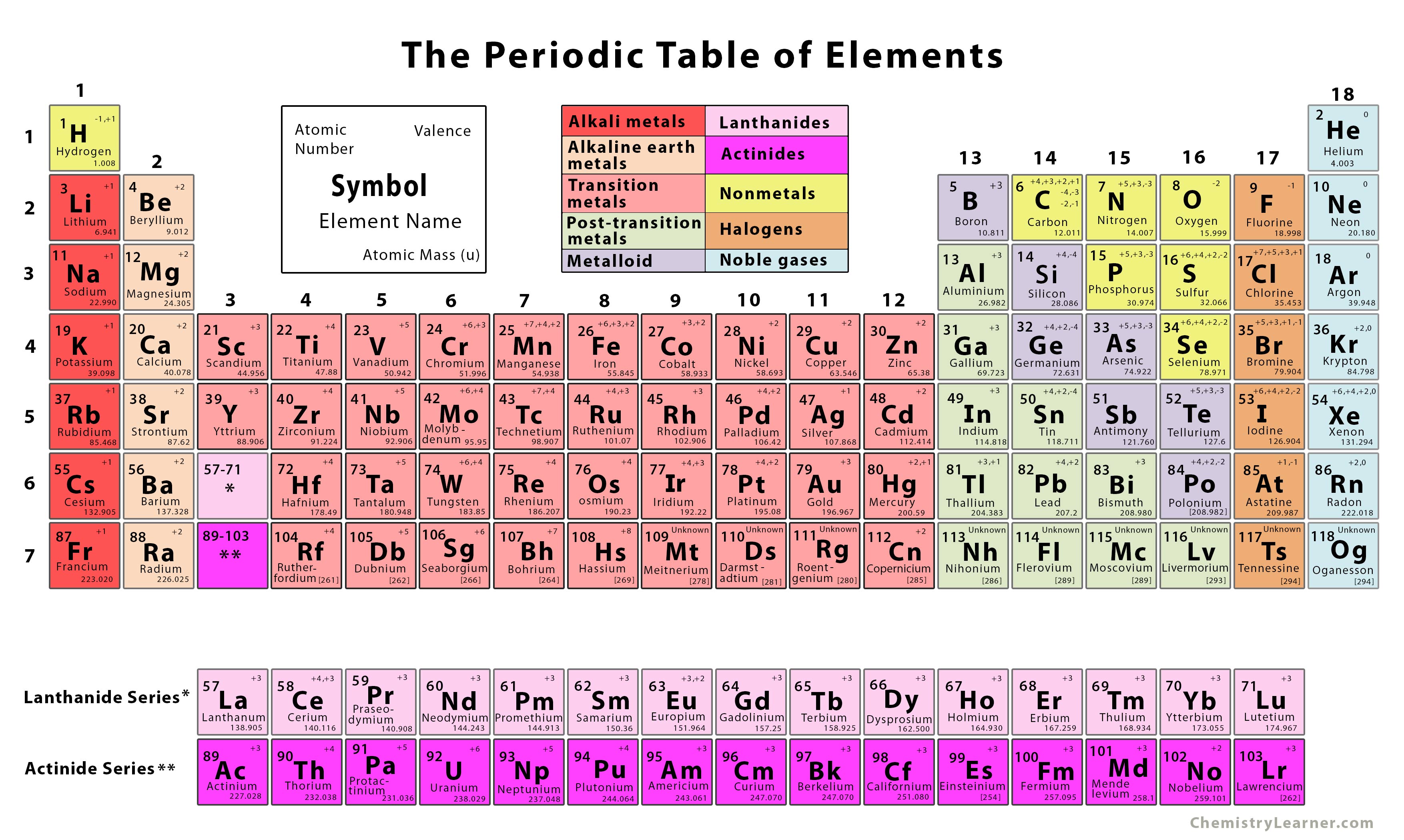
In the evolution of this new technology, perhaps there may be a element or alloy, that can be obtained on the Moon and would still be light enough to lift from Earth.
If available on the Moon and Earth, then also available on other worlds including asteroids.
Query: "What elements is the Moon made of?"
Quote:
Moon elements
Copilot Search Branding
Like
Dislike
Elements and Composition of the Moon
The Moon is a differentiated rocky body made of three main layers — a crust, mantle, and core — with its chemistry dominated by silicate minerals and metals Science Mission Directorate+1.Major elements
The most abundant elements in the Moon are:Oxygen (O) – ~45% by weight, mostly in minerals like plagioclase feldspar and pyroxene Wikipedia+1
Silicon (Si) – a key component of lunar silicates sentinelmission.org
Magnesium (Mg) – common in the mantle and basaltic rocks sentinelmission.org
Iron (Fe) – in both silicate minerals and the metallic core sentinelmission.org
Calcium (Ca) – especially abundant in the crust (anorthositic highlands) Wikipedia+1
Aluminum (Al) – also prominent in the crust Wikipedia+1
Minor and trace elements
Other elements present in smaller amounts include:Titanium (Ti) – concentrated in ilmenite in some mare basalts Wikipedia+1
Manganese (Mn), Chromium (Cr), Sulfur (S), Uranium (U), Thorium (Th), Potassium (K) Wikipedia
Hydrogen (H) – in trace amounts, likely from solar wind Wikipedia
Carbon (C) and Nitrogen (N) – in very small quantities Wikipedia
Mineral composition
Crust: Dominated by plagioclase feldspar (calcium-rich anorthosite in highlands) and anorthositic rocks Geology In+1
Mantle: Rich in olivine, orthopyroxene, and clinopyroxene; more iron-rich than Earth’s mantle Wikipedia+1
Core: Small, metallic iron–nickel alloy with some sulfur Wikipedia
Key differences from Earth
The Moon is depleted in water and volatile elements compared to Earth, and its crust is thicker on the far side Science Mission Directorate+1.In summary, the Moon is made mostly of oxygen, silicon, magnesium, iron, calcium, and aluminum, with important minor elements like titanium, manganese, and chromium, arranged into a layered structure of crust, mantle, and core.
I wonder about Magnesium or Calcium.
The Neuman Drive can use both of those: https://neumannspace.com/metal-propellants/
Image Quote: 
But they are not nearly as light as Lithium I am seeming to understand.
Anyway, this could shift the way things might be done, if you could "Ping-Pong" between the Earth and Moon with propellants available at each end. Particularly if a Mass Driver can move the propellants to an orbit.
Depending on safety issues, a Starship could be carried between LEO and Lunar orbit, and then only need a small number of Metha-Lox propellants to do it's work.
These propulsion systems have a long way to go, I am sure.
But they could be powered by:
1) Direct Solar, (OK for Earth/Moon?)
2) Laser Solar, (Lighter weight, and OK between proximate worlds.
3) Nuclear, Interplanetary.
I would wish I could live another century (Health), so as to see how these systems work out.
Ending Pending 
Last edited by Void (2026-07-13 06:57:40)
Is it possible that the root of political science claims is to produce white collar jobs for people who paid for an education and do not want a real job?
Offline
Like button can go here
#2 2026-07-13 07:03:06
- tahanson43206
- Moderator
- Registered: 2018-04-27
- Posts: 25,271
Re: Conductive/Metal Propellants with Electric Power
This post is reserved for an index to posts that may be contributed by NewMars members.
This topic would appear to have significant upside potential, as NewMars members track research and development of more powerful systems.
For all (I don't know the answer to this) ... can Lithium be made by fusion? We know that Helium certainly can be made by fusion.
If Lithium can be made by fusion, then it would seem possible to create a useful propellant.
A stream of fast moving Lithium atoms would be a hazard for space travelers who happen to be downstream from one of the more powerful engines as described.
Index:
(th)
Offline
Like button can go here
#3 2026-07-14 13:04:11
- Void
- Member
- Registered: 2011-12-29
- Posts: 9,698
Re: Conductive/Metal Propellants with Electric Power
(th) said:
This topic would appear to have significant upside potential, as NewMars members track research and development of more powerful systems.
I agree with that.
Solar Thermal might be another path. As I recall kdb512 indicated that supercritical CO2 turbines could be a way to get power in space. I wonder if there will be a Carbon Wrapped Generator that could be more efficient, as the Carbon Wrapped Motor of Tesla.
That is also likely solar cells are still going to get to be better.
If fusion comes into effect or better fission, than there things may have room to improve as well.
As far as NASA doing Nuclear-Electric-Lithium, it is quite possible that some metal from the Moon might eventually be made to work. Maybe not as well, but well enough.
Ending Pending
Last edited by Void (2026-07-14 13:09:08)
Is it possible that the root of political science claims is to produce white collar jobs for people who paid for an education and do not want a real job?
Offline
Like button can go here
#4 2026-07-14 16:57:57
- Void
- Member
- Registered: 2011-12-29
- Posts: 9,698
Re: Conductive/Metal Propellants with Electric Power
In post #2, (th), said:
A stream of fast moving Lithium atoms would be a hazard for space travelers who happen to be downstream from one of the more powerful engines as described.
Yes, that is somewhat undiscovered, the level of danger. Of course you would not stand behind a running jet engine either.
Do, these ever throw chunks? Or is it generally possible to send out just plasma? The stream should move so fast that the stream would move into the distance at a very high rate.
I suspect that the Neumann Drive is relatively the more passive version of such devices. (I think).
Query: "What is the ejection speed of the output of a Neumann Drive?"
Quote:
Copilot Search Branding
Like
Dislike
The Neumann Drive produces plasma exhaust with ejection speeds in the tens of kilometres per second EcoModder.com. This is achieved through its patented Centre‑Triggered Pulsed Cathodic Arc Thruster (CTPCAT) technology, which erodes a solid conductive fuel rod to create plasma that is accelerated away from the spacecraft in short, high‑current pulses EcoModder.com.In terms of specific performance metrics, the drive has been reported to achieve an Isp (specific impulse) of up to 144km/s under optimal conditions, with a more typical value around 110km/s NASASpaceFlight.com. Specific impulse is directly related to exhaust velocity — higher Isp means higher effective exhaust speed — so these figures indicate that the Neumann Drive’s plasma plume can reach tens of km/s, well above conventional ion thrusters and competitive with some advanced electric propulsion systems.
Key points:
Exhaust velocity: Tens of km/s (exact value depends on operating parameters and fuel choice) EcoModder.com.
Isp range: Up to 144km/s (record), typical ~110km/s NASASpaceFlight.com.
Mechanism: Solid metal fuel rod eroded by cathodic arc discharge into plasma, accelerated without electrostatic grids or neutralisers EcoModder.com.
Advantages: High Isp, high fuel density, no hazardous propellants, quasi‑neutral exhaust, and rapid operational readiness Neumann Space+1.
In summary, the Neumann Drive’s output ejection speed is tens of kilometres per second, with performance metrics placing it among the highest for solid‑fuel electric propulsion systems.
Query: "what is the escape velocity for the solar system?"
Quote:
Copilot Search Branding
Like
Dislike
The escape velocity of the solar system from Earth's distance is approximately 42.1 km/s (about 26 miles per second)
stackexchange.com
stackexchange.com
+1
. This is the speed required for an object to break free from the Sun's gravitational influence and escape the solar system.
So, perhaps somewhat self-cleaning. However, I think a magnetic plasma traveling though the Solar wind might get slowed down to it's speed eventually, but still headed out.
Query: "What is the speed of the solar wind?"
Quote:
Copilot Search Branding
Like
Dislike
Speed of the Solar Wind
The solar wind — a stream of charged particles (mostly electrons, protons, and alpha particles) flowing outward from the Sun’s corona — travels at very high speeds, typically 250–750 km/s (about 450–1,400 miles per second or 1 million–2.5 million miles per hour) when it reaches distances beyond a few solar radii Wikipedia.Typical Speed Ranges
Fast solar wind: Around 750–800 km/s (≈1.7–1.8 million mph) from coronal holes near the Sun’s poles, especially during periods of low solar activity BIRA-IASB.Slow solar wind: Around 300–400 km/s (≈600,000–800,000 mph) from streamers and equatorial regions NASA/Marshall Solar Physics+1.
Moderate/high-speed streams: Often 500–700 km/s (≈1–1.3 million mph), which can trigger geomagnetic storms and bright auroras auroramap.org.
Why Speed Varies
The solar wind’s speed depends on its source:Coronal holes (open magnetic field regions) produce the fastest streams.
Active regions and streamers (closed magnetic field structures) produce slower winds.
Speeds can also change with the Sun’s rotation, creating corotating interaction regions where fast and slow winds meet BIRA-IASB.
Impact of Speed
Higher speeds mean more kinetic energy delivered to Earth’s magnetosphere, increasing the likelihood of auroras and space weather events auroramap.org. For example, speeds above 500 km/s with favorable magnetic field conditions often produce vibrant auroral displays.In summary: The solar wind’s speed is not constant — it ranges from about 300 km/s (slow) to 800 km/s (fast), with most interplanetary speeds between 400–750 km/s, depending on solar conditions and location Wikipedia+2.
OK, if anything the solar wind may couple to the magnetic plasma plume and drag it out of the inner solar system faster.
In some cases, I think safety could be enhanced by shooting the plume slightly above and then below the orbital plane where the bulk of orbital machinery might "Live".
But the big thing about this is we are beginning to see "Rock Rockets". That is rocks being converted into propellants. Any stony or other object can be a propellant source.
And the power supplies available to drive these should continue to improve over time.
Ending Pending
Last edited by Void (2026-07-14 17:13:19)
Is it possible that the root of political science claims is to produce white collar jobs for people who paid for an education and do not want a real job?
Offline
Like button can go here
#5 2026-07-15 06:24:38
- Void
- Member
- Registered: 2011-12-29
- Posts: 9,698
Re: Conductive/Metal Propellants with Electric Power
I again will mention that I think that power supplies in orbits may become lighter and perhaps more efficient. This could be true for Solar panels, and I think also for thermal electric generation.
Thermal Electric Generation could include Nuclear but also Solar.
Here is something that I think I might understand a little.
https://www.motorbiscuit.com/teslas-car … -heard-of/
Quote:
The payoff shows up in two places: the carbon sleeve rotor generates a stronger electromagnetic field than a metal-retained rotor – which is traditionally made from high-strength steel.
The other benefit is that the rotor can sustain higher RPM, since the carbon sleeve largely prevents the copper from expanding outward under radial acceleration.
Both of those things compound: a stronger EM field means more torque from the same amount of current, and higher sustainable RPM means more power from a physically smaller package.
Tesla’s design allows operation in the range of 20,000 rpm – roughly 25% higher than previous motor generations.
So, I am hoping that a similar thing might be done with electric generators, to reduce the dry mass, and increase the output per mass.
Actually, it is more that less eddy currents might be produced which produce heat, and more of the rotational energy might produce usable electricity. (I hope).
My understanding is that supercritical CO2 can have a very small turbine.
But as I have said, it is also possible that better solar panels mass/output may also show up.
Ending Pending
Here is a bit about solar panels as an alternative:
Query: "Lighter weight solar panels for space?"
Quote:
Copilot Search Branding
Like
Dislike
Lightweight Solar Panels for Space Applications
Lightweight solar panels for space are ultra-thin, flexible, and often made from advanced polymers or thin-film cells, enabling deployment on delicate spacecraft surfaces and reducing launch mass.Why Lightweight Panels Matter in Space
In space, every kilogram of mass affects launch costs and mission design. Traditional rigid panels with glass substrates are heavy and can damage delicate spacecraft surfaces. Lightweight panels reduce structural load, allow for more flexible deployment, and can be integrated into spacecraft skins or deployable structures Renogy+1.Key Technologies
Thin-film photovoltaics: Materials like amorphous silicon, cadmium telluride, or copper indium gallium selenide (CIGS) are used to make cells thin and flexible Renogy.Polymer substrates: Instead of glass, advanced polymers or ultra-thin glass reduce weight while maintaining durability Renogy+1.
Flexible cell designs: Apollo Power’s patented flexible solar cells show minimal efficiency loss after impact (0.7% vs. 4.9% for semi-flexible panels) Apollo Power.
Bifacial and high-efficiency cells: Some portable space-grade panels use N-type cells with up to 25% efficiency, capturing more sunlight in constrained orbits energyreservoir.com.
Space-Specific Benefits
Lower launch mass: Reduces fuel and cost for satellite and spacecraft missions.Adaptability: Can be mounted on curved or non-load-bearing surfaces without structural reinforcement Apollo Power.
Durability: Designed to withstand space radiation, thermal cycling, and micrometeoroid impacts.
Integration: Can be part of deployable solar arrays or integrated into spacecraft hulls for dual-purpose energy and protection.
Examples & Innovations
Apollo Power flexible panels: Fire-resistant, ultra-lightweight, and suitable for industrial, transportation, and space-like mounting environments Apollo Power.Starpath ultra-thin space solar panels: Recently unveiled, optimized for low-mass, high-efficiency space deployment Payload.
NASA SBSP research: While not yet operational, NASA studies space-based solar power systems that could benefit from lightweight, high-efficiency panels for in-orbit energy collection NASA.
Considerations for Space Use
Radiation hardening: Essential for long-duration missions.Thermal management: Lightweight panels must handle extreme temperature swings in space.
Deployment reliability: Must unfold or integrate without snagging or damage.
Efficiency vs. weight trade-off: High-efficiency cells are preferred, but ultra-thin designs can match or exceed terrestrial lightweight panel performance Renogy.
In summary, lightweight solar panels for space combine advanced thin-film or polymer-based cells with ultra-low mass and high durability, enabling more efficient spacecraft design, reduced launch costs, and new deployment possibilities. For mission-critical applications, choosing panels with proven radiation and thermal resilience is key.
And then there is room for further discovery of the propulsion methods themselves.
>>>>>>>>>>
So, I was under the impression that Magdrive could only use Iron, Aluminum, or Copper, but I inquired further:
Query: "What propellants can Magdrive use?"
https://newatlas.com/space/super-magdri … metal-fuel
Quote:
Space Systems
Super Magdrive rocket thrusters run on heavy metal
By Joe Salas
October 05, 2024
Quote:
New metal-eating thrusters gobble iron to power spacecraft forever
Any metal, including iron
Magdrive, a space tech startup, has developed a new kind of space thruster that can use any metal, including iron, as a fuel source. The new thruster could, in theory, refuel on the hop by mining asteroids, providing near-infinite ranges if ever deployed.
The NASA drive focuses on lightweight Lithium to bring up from Earth, in contrast.
Neumann Drive can use almost any metal, and also Carbon and Silicon.
Generally any electrically conductive substance.
I have my eye on table salt. The reason is that it is a relatively safe way to get Chlorine into space, but Sodium also.
https://en.wikipedia.org/wiki/Sodium
Quote:
Melting point 370.944 K (97.794 °C, 208.029 °F)
Quote:
Copilot Search Branding
Like
Dislike
Sodium (Na) is a highly reactive, soft, silvery-white alkali metal with atomic number 11, essential for both industrial applications and biological functions.
Basic Properties
Sodium has the chemical symbol Na, derived from the Neo-Latin natrium, and an atomic number of 11. It has an atomic mass of approximately 22.98977 and consists of 11 protons, 12 neutrons, and 11 electrons arranged in three electron shells ([Ne]3s¹)
Wikipedia
Wikipedia
+1
. Sodium is a soft, silvery metal that can be cut with a knife at room temperature and is highly reactive, especially with water, forming sodium hydroxide and hydrogen gas
Wikipedia
Wikipedia
+1
. Its crystal structure is body-centered cubic (BCC) with a lattice constant of 4.23 Å
ChemicalAid
ChemicalAid
.Occurrence and Compounds
Sodium does not occur freely in nature due to its high reactivity. It is commonly found in minerals such as halite (NaCl), feldspars, sodalite, and natron. Sodium compounds are highly soluble in water, making sodium and chlorine the most abundant dissolved elements in oceans
Wikipedia
Wikipedia
+2
. Common sodium compounds include:Sodium chloride (NaCl) – table salt, used in food and de-icing roads.
Sodium carbonate (Na₂CO₃) – used in glass, detergents, and water softening.
Sodium hydroxide (NaOH) – used in soap and chemical manufacturing.
Sodium sulfate (Na₂SO₄) – used in paper, glass, and detergents
Encyclopedia Britannica
Encyclopedia Britannica
+1
.
Physical and Chemical Characteristics
Density: 0.97 g/cm³
Melting point: 97.8°C
Boiling point: 882.9°C
Mohs hardness: 0.5
Highly reactive with water and oxygen, forming oxides and hydroxides
Science Notes and Projects
Science Notes and Projects
+1
.
Sodium is lighter than water and must be stored under oil to prevent reaction with moisture in the air
Encyclopedia Britannica
Encyclopedia Britannica
.
Here is a topic on Newmars.com that deals with using Chlorine to extract substances from ore, perhaps even Iron.
https://newmars.com/forums/viewtopic.php?id=11305
So, now if Starship can lift Table salt to orbit, then perhaps in orbit of the Moon, Iron/Oxide from the Moon, can be treated with Chlorine extracted from Table salt, while the Sodium is used as a propellant.
This may liberate Oxygen??? Dangerous??? I am not a chemist.
In any case you could drop table salt or Iron Chloride out of a landing ship and recover the salts later, I think.
https://en.wikipedia.org/wiki/Iron(III)_chloride
Quote:
Boiling point
316 °C (601 °F; 589 K) (anhydrous, decomposes)[1]
280 °C (536 °F; 553 K) (hexahydrate, decomposes)
So, heat of impact may matter and so would scatter. High impact might scatter the salt.
But say you drop 100 tons of Salts, either Sodium Chloride or Iron Chloride off of a landing ship, then the landing legs do not have to endure the inertia of the 100 tons of salt payload.
Salts being soluble, extracting them from regolith might be facilitated usine water.
Probably high impact speeds are not practical. But if you dropped the salts in a Lunar night into sized gravel, they might evaporate and then quickly condense on the gravel.
Chlorine and Sodium are available on the Moon, but then you have to mine and process the regolith.
If you deliver Chlorine as part of a salt, then it may be reused many times in the extraction of substances like Iron. At least that is what I think has been said in the materials of: https://newmars.com/forums/viewtopic.php?id=11305
"Index» Life support systems» Flash Recycling, Salt Electric Mining"
I am hoping that it would be possible to manufacture an Iron Oxide on the Moon, using Chlorine to extract Iron and Oxygen from the Lunar regolith.
The Iron Oxide lifted or (Mass Driver) to orbit, Sodium Chloride from Earth, the Chlorine used to push Oxygen out of the Iron Oxide, and to produce Iron Chloride, and also in the process to produce Sodium metal to use as propulsions at, near, and from the Moon.
Maybe???
Ending Pending
Last edited by Void (2026-07-15 07:13:12)
Is it possible that the root of political science claims is to produce white collar jobs for people who paid for an education and do not want a real job?
Offline
Like button can go here
#6 2026-07-15 07:38:14
- Void
- Member
- Registered: 2011-12-29
- Posts: 9,698
Re: Conductive/Metal Propellants with Electric Power
To add to the just prior post. It seems that molten salts can conduct electricity. But I fear corrosion.
Query: "Can Molten salts conduct electricity?"
Quote:
Like
Dislike
Yes, molten salt conducts electricity because its ions are free to move, unlike in solid salt where they are fixed in a crystal lattice.
How Molten Salt Conducts Electricity
Molten salts are ionic compounds that, when heated past their melting point, transition from a rigid solid to a liquid state. In solid form, salts like sodium chloride have positively charged cations and negatively charged anions locked in a fixed crystal lattice, preventing them from moving and making solid salt an electrical insulator
scienceinsights.org
scienceinsights.org
+2
.
When the salt is heated to its melting point (for sodium chloride, around 801°C), the crystal lattice breaks down. The ions become mobile in the liquid, allowing them to carry an electric current. This process, called ionic conduction, differs from metallic conduction because it relies on the physical movement of ions rather than the flow of electrons
scienceinsights.org
scienceinsights.org
+2
.Mechanism of Conduction
When an external voltage is applied across molten salt:Cations (positively charged ions) move toward the cathode (negative electrode).
Anions (negatively charged ions) move toward the anode (positive electrode).
This coordinated movement of ions constitutes the electric current. Electrochemical reactions may also occur at the electrodes, where ions gain or lose electrons, forming new chemical species
scienceinsights.org
scienceinsights.org
.
Applications
The high ionic conductivity of molten salts makes them valuable in industrial processes and energy systems:Aluminum production via the Hall-Héroult process uses molten cryolite to dissolve aluminum oxide for electrolysis
scienceinsights.org
scienceinsights.org
.
Metal purification and extraction of reactive metals that cannot be processed in water-based solutions
scienceinsights.org
scienceinsights.org
+1
.
Advanced energy storage systems, where molten salts serve as both heat transfer fluids and conductive media
scienceinsights.org
scienceinsights.org
.
In summary, molten salts are excellent conductors of electricity due to the freedom of their ions to move in the liquid state, while solid salts remain insulators because their ions are fixed in place
scienceinsights.org
scienceinsights.org
+2
.
But I fear corrosion. Oxygen is bad enough if it is generated, and Chlorine is even worse.
But perhaps there may be a way.
Ending Pending
Last edited by Void (2026-07-15 07:41:27)
Is it possible that the root of political science claims is to produce white collar jobs for people who paid for an education and do not want a real job?
Offline
Like button can go here
#7 2026-07-15 19:44:36
- Void
- Member
- Registered: 2011-12-29
- Posts: 9,698
Re: Conductive/Metal Propellants with Electric Power
(th) said: https://newmars.com/forums/viewtopic.ph … 07#p240307
Quote:
tahanson43206
Moderator
Registered: 2018-04-27
Posts: 25,176
For Void re study of propulsion using ions...From quick glances at your many posts I get the impression you are trying to learn about many subjects, and you share little bits of the experience with your readers.
In your recent investigation of propulsion using ions, I was inspired to wonder if any atom (metal or not) might be used for acceleration if it is stripped of electrons. My impression is that cosmic rays are a category of objects which have been accelerated by stellar forces. My impression is that magnetic fields in space must be the force that provides the acceleration our instruments record.
In your study of this phenomenon, have you discovered anything that humans are doing to replicate what nature does?
(th)
A path to a possible increase in assesses to improved results is generally worth some investment of time and interest.
I do not fully understand still how a Hall thruster works. Some of these things are using electric force, and some using magnetic force.
Yes, in sending a power pulse of voltage and current, that vaporizes and even turns the mass to plasma with a magnetic field we mimic Lightning.
But in these devices we might also, think that their maybe magnetic nozzles. Possibly even a magnetic pulse that may cast the matter of the plasma into a "Action" direction to move a spacecraft into a "Reaction" direction.
It is quite understandable if we do not have all the nuts and bolts of these machines. I have an idea of what they do and how they do it. but to do it wall must include art not generally casually given away.
But it was true, that typical electric rockets which were using inert gasses as propellants, were historically low powered and the propellants were expensive, such as Xenon.
They were not considered very practical for going to the Moon or Mars. The were suitable to go to Ceres and Vesta, because given a long running time, they could eventually achieve some valuable things.
But now we are approaching much greater thrusts, and also the propellants generally being solids, are easy to store.
This may bring good results.
The "smell", (Current Indications), of it coming out of the oven is promising. Of course, I think it needs attention.
Ending Pending
Last edited by Void (2026-07-15 19:58:46)
Is it possible that the root of political science claims is to produce white collar jobs for people who paid for an education and do not want a real job?
Offline
Like button can go here
#8 2026-07-19 08:55:11
- Void
- Member
- Registered: 2011-12-29
- Posts: 9,698
Re: Conductive/Metal Propellants with Electric Power
I believe that I have something that belongs in this family, but may be a bit outside the topic title. If necessary I will change the topic title.
https://www.bing.com/videos/riverview/r … &FORM=VIRE
Quote:
China Just Turned Coal Into Electricity. Without Burning a Single Gram
YouTube
Strategic Axis
7.8K views
Quote:
Copilot Search Branding
Like
Dislike
China’s “Zero-Carbon” Coal-to-Electricity Breakthrough
Chinese researchers led by Xie Heping at Shenzhen University and the Chinese Academy of Sciences have developed a zero-carbon-emission direct coal fuel cell (ZC-DCFC) that generates electricity without burning coal Interesting Engineering+1.How It Works
Instead of the traditional coal-fired process — burning coal to make steam, driving turbines, and generating electricity — the ZC-DCFC uses direct electrochemical conversion.Preparation: Coal is pulverized into a fine powder, dried, purified, and chemically treated to optimize reactivity.
Fuel cell setup: The processed coal is fed into the anode chamber, while oxygen enters the cathode side.
Electrochemical reaction: Inside an oxide membrane, coal particles are oxidized, producing electricity directly without heat or mechanical motion.
Carbon capture: The CO₂ produced is captured on-site and can be converted into useful chemicals like synthesis gas or stabilized into compounds such as sodium bicarbonate Interesting Engineering+1.
Why It’s Different
No combustion: Eliminates the need for boilers, steam cycles, and turbines, bypassing the Carnot efficiency limit that caps traditional coal plants at ~40% TechRadar+1.Higher efficiency: Theoretical efficiency could reach up to 90%, potentially doubling that of conventional plants TechRadar+1.
Closed-loop carbon management: CO₂ is not released into the atmosphere but is reused or stored, reducing net emissions Business Today+1.
Environmental and Strategic Context
Coal has long been linked to high emissions and inefficiency. China, the world’s largest coal consumer, still relies heavily on it — nearly 60% of its electricity in 2024 came from coal Earth.com. This technology could allow China to reduce emissions without abandoning domestic coal reserves overnight, offering a cleaner pathway for fossil fuel use Business Today+1.Current Status
The ZC-DCFC is still in the experimental stage. While it proves the concept, scaling it into a full power plant would require robust, durable fuel cell systems and efficient carbon conversion/storage infrastructure Earth.com.In short: China’s new coal fuel cell reframes coal as an electrochemical energy source rather than a combustible fuel, promising high efficiency, direct electricity generation, and controlled carbon handling — a major shift in how coal could be used in the future.
Avoiding reference to Jealous thinking, I will point out that most China inventions are likely to benefit most western people. And most western inventions will eventually benefit the China people.
I want to point out something about a potential for space travel here.
We do have Hydro-Lox and Metha-Lox combustion rockets. We do not have Carbon/Oxygen rockets. Carbon is not available as a fluid fuel at this time with existing technology, and likely never will be.
I was already interested in CO/O2 rockets with the thought that O2 and maybe even Carbon could be had from the Mars moons, and perhaps in the case of Carbon from Mars.
The problem with CO/O2 is that you have already Oxidized the Carbon about halfway. But if you could have a process that took advantage of both Oxygen slots in the Carbon burn process then you have considerably more resource as per energy.
It is apparent that you can take water and do space thrusting with it, turning it into a plasma. I think this technology may be parallel to one that may use CO2 instead of H20.
https://magazine.unibo.it/en/articles/u … space-fuel
Quote:
Using Water as a New Space Fuel
WET – Water-based Electric Thrusters, the new European project coordinated by the University of Bologna, will study the fundamental processes that regulate the formation and behaviour of plasma generated from water in order to attain the goal of designing an electric powertrain capable of propelling spacecraftMatter and the Universe
Quote:
Copilot Search Branding
Like
Dislike
Water Plasma Electric Thrusters — How They Work and Why They Matter
Water-based electric thrusters, such as the Water-based Electric Thrusters (WET) project, are a new class of spacecraft propulsion that uses water as a propellant by converting it into plasma and accelerating it with electric fields to produce thrust Interesting Engineering+1.How They Work
Water to Gas: Liquid water is vaporized into steam.Ionization to Plasma: The steam is ionized using electrical energy, creating a plasma — a superheated mixture of free electrons and ions.
Acceleration: Charged particles in the plasma are accelerated through an electric field, producing thrust without combustion Interesting Engineering.
This process is similar to other electric propulsion systems (e.g., Hall-effect or ion thrusters), but instead of xenon or other gases, it uses water, which is abundant in space (on the Moon, asteroids, comets) Interesting Engineering+1.
Advantages
Abundant Propellant: Water can be mined from celestial bodies, enabling in-space refueling and reducing the need to launch large fuel masses from Earth Interesting Engineering.Low Power Operation: WET thrusters are designed for 500–1,000 watts, making them ideal for small satellites (SmallSats) with limited power budgets Interesting Engineering+1.
High Efficiency: Specific impulse (Isp) can be very high — for example, Miles Space’s Poseidon M1.5 thruster achieved 4,800 seconds Isp at just 1.5 watts of power, enabling long-duration, low-thrust missions SpaceNews.
Environmental Benefits: No harmful emissions; safer than toxic chemical propellants like hydrazine Interesting Engineering.
Applications
SmallSat Missions: Long-duration station-keeping, orbit adjustments, and deep space navigation.Deep Space Exploration: Potential for sustainable missions where fuel mass is a major constraint.
In-Space Refueling: Could support future space stations or interplanetary missions using local water resources Interesting Engineering+1.
Current Developments
WET Project (EU): Coordinated by the University of Bologna, this Horizon Europe initiative brings together nine institutions to study plasma formation from water and design a scalable electric thruster for spacecraft CORDIS+1.Miles Space: Has flown a water-vapor plasma thruster on a cubesat, demonstrating ultra-low-power operation and high efficiency SpaceNews.
Challenges
Plasma Stability: Maintaining and controlling water plasma in space is complex.Material Compatibility: Thruster components must withstand high temperatures and corrosive plasma.
Scaling: Moving from lab-scale to large spacecraft systems requires further engineering.
In summary, water plasma electric thrusters represent a promising shift toward sustainable, efficient, and resource-based propulsion for space missions, especially for small satellites and long-duration deep space travel Interesting Engineering+2.
So, here is a situation where the chemical energy of Carbon/Oxygen can be accessed, as well as the produced CO or CO2 as propellants.
In the case of fully consuming Carbon in a fuel cell the output would be CO2 which you might expel to produce thrust, with a plasma method similar to the "WET" process.
Further, you may also couple nuclear or solar power to this as an additional power source.
High-quality Carbon would be a solid powder, which you would have to feed into the fuel cell. (Some tricks needed for that).
Oxygen has the problem of boil off, unless you bring cumbersome amounts of extra dry mass to inhibit it. However, if you would consume the boil-off Oxygen as it was generated you would not have to work too hard to inhibit boil-off.
In addition, although you would be rigged to deal with Carbon and LOX as the two major inputs, if you had an auxiliary power source such as Nuclear or Solar, you could also process CO and CO2. (This is just a flexibility that may be useful).
As per abundance, the value of Carbon in space may be variable to location and utility to a purpose, such as thrust.
Places with significant Carbon:
-Mercury (Yes)
-Venus (Yes)
-Earth (Yes)
-Moon (NO!)
-Deimos & Phobos? (Maybe)
-Mars (Yes)
-Asteroid Belt/Terrestrial Crossers (Often)
-Outer Planet moons (Yes in many cases). (Often)
So, although Carbon is more valuable than Oxygen, (Unless needed for breathing), it is available in many situations of interest.
>>>>>>>>>>>>>
Earth is the first location where it might be considered. Perhaps Carbon from Earth and Oxygen from the Moon, supplemented by an auxiliary power source such as nuclear or solar, may be a good case.
>>>>>>>>>>>>>
In the case of Deimos and Phobos we may hope to obtain both Carbon and Oxygen from these two Moons. Oxygen is certain, Carbon not as much Certain.
Query: "Is there carbon in Phobos and Deimos?"
Quote:
Copilot Search Branding
Like
Dislike
Yes — Phobos and Deimos contain carbon, and their surfaces are rich in carbonaceous material, though the exact origin and distribution of this carbon are still debated.Reflectance spectroscopy of both moons shows abundant carbon, which is not consistent with the composition of Martian surface rocks NASA Technical Reports Server (NTRS). This suggests that their bulk mineralogy is more similar to carbonaceous chondrites — a type of meteorite rich in carbon and organic compounds — than to typical Martian crustal materials NASA Technical Reports Server (NTRS).
One leading hypothesis is that Phobos and Deimos formed from debris after a large impact on Mars, and that their carbon-rich surfaces were later “decorated” by interplanetary dust particles (IDPs). These IDPs, which are rich in carbon, are delivered in much higher flux to the moons because they orbit within Mars’s gravity well, intercepting more dust than asteroids in the outer belt NASA Technical Reports Server (NTRS). Models estimate that Phobos accretes about 128kg of IDP material per year, and Deimos about 41kg, enough to produce the observed carbon-rich surface spectra NASA Technical Reports Server (NTRS).
Recent laboratory and remote-sensing studies have also searched for spectroscopic analogs of their surfaces, supporting the idea that their carbon content is significant and may be preserved in their regolith Oxford Academic.
In summary:
Yes, carbon is present in both Phobos and Deimos.
The carbon is likely both from their original formation material and from ongoing infall of carbon-rich IDPs.
Their surfaces resemble carbonaceous chondrites, not typical Martian rocks.
The exact proportion of carbon in the bulk versus the surface layer is still under study.
>>>>>>>>>>>>>
So, now several processes are available.
1) Nuclear-Electric + Fuel-Cell=Combustion + Plasma thrust with CO2
2) Solar-Electric + Fuel-Cell=Combustion + Plasma thrust with CO2
3) Partial Oxidation of Carbon to produce electric power and then a chemical burn CO/O2.
4) Same as #3, but adding a burn stimulant such as Methane to the burn process.
>>>>>>>>>>>>>
In the event that Deimos and Phobos do not have significant Carbon, then Carbon can be obtained from Mars and reacted with the moons materials to extract Oxygen in orbit. Moxie might be involved, in orbit.
>>>>>>>>>>>>>
If it is learned how to fully refill propellants Carbon and LOX from the moons Deimos and Phobos, then we have a method to refuel from objects like Bennu and perhaps Ryugu.
I think generally Nuclear Electric + Chemical Electric + A bit of Solar power is the way to go. So, then you have possible "Grid" power from three different sources. This may save a mission if something breaks.
>>>>>>>>>>>>>
This "Slow Burn" method of propulsion would more resemble Electric Rockets, than "Quick Burn" chemical rockets do.
Ballistic Capture would be available as an option, heat shield not required.
I think this beast might be a good thing for the Asteroid Belt.
Ending Pending
Last edited by Void (2026-07-19 09:49:09)
Is it possible that the root of political science claims is to produce white collar jobs for people who paid for an education and do not want a real job?
Offline
Like button can go here
#9 2026-07-19 10:34:09
- Void
- Member
- Registered: 2011-12-29
- Posts: 9,698
Re: Conductive/Metal Propellants with Electric Power
From (th): https://newmars.com/forums/viewtopic.ph … 11#p240411
Quote:
tahanson43206
Moderator
Registered: 2018-04-27
Posts: 25,242
For Void re post about making electricity using pulverized carbon....the result of the combustion is CO2.
The headline writer probably thought it would be cute to write the words used.
Perhaps it was.
China Just Turned Coal Into Electricity. Without Burning a Single Gram
Oxidation occurs. I suppose the popular use of the word "burn" might account for the wording of the title.
Without the reader imagining a hot fire with smoke rising from a chimney, I suppose the title would have little impact.
I think this is a case of "poet's license".
This would appear to be an energy storage system, in which carbon is used as the energy storage device.
Once the device is charged with pure carbon particles, it appears the CO2 is saved so it cannot be contaminated.
If you have the time and the question is of interest to you, please consider asking your AI friends to explain clearly how this energy storage system works.
It might even be interesting to learn the history of the process. It might turn out that the principles were known 100 years ago.
How does this energy storage system compare to other energy storage systems such as lead acid batteries or lithium batteries, or many other systems invented by humans over history?
It may have distinct advantages, or it might turn out to have so much baggage it is not practical.
(th)
I think I have already explained that this could be a fantastic propulsion system in space.
The author or the article promotes a propaganda, and obscures reality for political purposes. That is not my problem. I choose not to care much about it.
Yes, there has been precursor technology.
The device could be called a "Carbon Fuel Cell, or Battery".
The point is the exhaust can be used to propel a spacecraft after the energy has been extracted. Supplemental power can be added such as nuclear-electric or solar electric.
The required primary materials Carbon and Oxygen can be obtained from many locations in the solar system.
I had misgivings about feeding the Carbon to the fuel cell, but now realize that in low or microgravity a gas could be used to produce a slurry of gas and Carbon dust and that fluid could be conducted into the fuel cell from a "Carbon Dust Reservoir".
The gas could be Argon or more likely CO2 from the "Burn" process.
Ending Pending
Last edited by Void (2026-07-19 10:41:44)
Is it possible that the root of political science claims is to produce white collar jobs for people who paid for an education and do not want a real job?
Offline
Like button can go here
#10 2026-07-19 12:39:10
- Void
- Member
- Registered: 2011-12-29
- Posts: 9,698
Re: Conductive/Metal Propellants with Electric Power
The more I look at this the better it gets.
I think that a dream spaceship/platform, would have 3 power sources.
1) Carbon/Oxygen fuel Cell.
2) Nuclear Fission-Electric
3) Solar-Electric with thin mirror options.
From Deimos and Phobos we can get Oxygen.
We hope to get Carbon.
We may get Hydrogen in small amounts likely.
We could get Iron
And other propellants like Silicon and Aluminum may be obtainable.
From Mars we may get Chlorine which may help with extractions.
So, this system would be a sort of an Omnivore, and a generalist.
The techniques to obtain resources from Demos/Phobos/Mars, will apply to the Asteroid Belt and beyond.
It is very good!
Ending Pending
Last edited by Void (2026-07-19 12:42:23)
Is it possible that the root of political science claims is to produce white collar jobs for people who paid for an education and do not want a real job?
Offline
Like button can go here