You are not logged in.
- Topics: Active | Unanswered
Announcement
#1 2024-02-20 20:09:08
- Void
- Member
- Registered: 2011-12-29
- Posts: 9,572
Mars Direct 3 is a Mars mission architecture developed by Miguel Gurre
I don't recall this being reviewed on this site: https://www.bing.com/videos/riverview/r … ORM=VRDGAR Quote:
Mars Direct 3 | A Proposal for SpaceX's Mars Program | Miguel Gurrea
YouTube
The Mars Society
7.1K views
10 months ago
I don't feel I am qualified to judge the notions of this, but I like some of them for sure, and it seems to be accepted as good for review by The Mars Society.
I will try not to be intrusive as much as I have been upstairs here though. But this video is interesting.
Done
Last edited by Void (2024-02-20 20:11:38)
Is it possible that the root of political science claims is to produce white collar jobs for people who paid for an education and do not want a real job?
Online
Like button can go here
#2 2024-02-21 18:19:02
- SpaceNut
- Administrator
- From: New Hampshire
- Registered: 2004-07-22
- Posts: 30,780
Re: Mars Direct 3 is a Mars mission architecture developed by Miguel Gurre
I this needs its own topic.
youtube Mars Direct 3 is a Mars mission architecture developed by Miguel Gurrea video
Mars Direct 3 is a Mars mission architecture developed by Miguel Gurrea with permission and based on the work of Dr. Robert Zubrin and the technology of SpaceX, and is intended to be a serious proposal for SpaceX. The concept has and may continue to evolve and adjust based on feedback. The paper, presentations and video have been published by The Mars Society with permission.
Offline
Like button can go here
#3 2024-02-21 20:48:49
- Void
- Member
- Registered: 2011-12-29
- Posts: 9,572
Re: Mars Direct 3 is a Mars mission architecture developed by Miguel Gurre
I understand why Elon Musk and SpaceX do not want to divert to a Mini-Starship, as they must make the Starship work above all.
The closest thing that exists for a Mini-Starship is the 2nd stage of Terran-R.
But that one is not being made to be reusable. But perhaps down the line, SpaceX could team up with Relativity Space to make an upgraded version that could serve as a Mini-Starship.
Done
Last edited by Void (2024-02-21 20:50:56)
Is it possible that the root of political science claims is to produce white collar jobs for people who paid for an education and do not want a real job?
Online
Like button can go here
#4 2024-02-22 08:13:44
- tahanson43206
- Moderator
- Registered: 2018-04-27
- Posts: 24,899
Re: Mars Direct 3 is a Mars mission architecture developed by Miguel Gurre
For SpaceNut re link to PDF by Miguel Gurrea
Thank you for encouraging our members to take a look at that 13 page document.
I can see why the Mars Society would have given official support to this work.
At a first scan impression, this document appears to show the kind of deep thought that will be needed to successfully pull off a first landing on Mars, including a stay and safe return.
(th)
Offline
Like button can go here
#5 2024-02-22 10:03:52
- GW Johnson
- Member
- From: McGregor, Texas USA
- Registered: 2011-12-04
- Posts: 6,235
- Website
Re: Mars Direct 3 is a Mars mission architecture developed by Miguel Gurre
This is a good safe plan, with a high probability of recovering the crew, while also planting the seeds of a real base. It beats the ever-loving hell out of anything I ever saw coming from NASA and its "old space" favored contractors!
This person did with SpaceX tinkertoys what I tried to do with non-SpaceX conceptual tinkertoys in my Mars mission plans: include a way out at every step. He did a wonderful job. Even better than what I did.
What SpaceX now has to do is quite clear: make Starship work, first and foremost as the orbital transport that it really is (the rest will follow when that is done). Then, use the moon lander technologies and the Starship technologies to build the small vehicle, making the Direct 3 big ship/small ship approach possible.
By the way, the small ship in his study is also pretty much the combined suborbital hopper/orbital taxi that I looked at. Such could serve a long time in that role between widely separated fully developed bases, and in loading/unloading other ship designs in low Mars orbit. Such roles will appear much later in the base development and colonization, they won't appear early. But they will appear.
GW
GW Johnson
McGregor, Texas
"There is nothing as expensive as a dead crew, especially one dead from a bad management decision"
Offline
Like button can go here
#6 2024-02-29 17:27:35
- SpaceNut
- Administrator
- From: New Hampshire
- Registered: 2004-07-22
- Posts: 30,780
Re: Mars Direct 3 is a Mars mission architecture developed by Miguel Gurre
Thanks to Void we have another to make use of in "Mars Direct 3 is a Mars mission architecture developed by Miguel Gurrea" topic.
https://www.marspapers.org/paper/Gurrea_2021.pdf
Plus Mars direct was a 40mT payload
https://www.marspapers.org/paper/Zubrin_1991.pdf
A reuseable craft requires the means to make the fuel of choice.
Offline
Like button can go here
#7 2025-09-21 17:33:34
- SpaceNut
- Administrator
- From: New Hampshire
- Registered: 2004-07-22
- Posts: 30,780
Re: Mars Direct 3 is a Mars mission architecture developed by Miguel Gurre
bump
Offline
Like button can go here
#8 2026-03-06 16:29:50
- SpaceNut
- Administrator
- From: New Hampshire
- Registered: 2004-07-22
- Posts: 30,780
Re: Mars Direct 3 is a Mars mission architecture developed by Miguel Gurre
well I ran the pdf through copilot to get info.
1. Mission Motivation & Context
A crewed Mars mission is becoming feasible due to SpaceX’s Starship, reusable launch systems, and falling launch costs.Existing architectures lack detail, rely heavily on risky ISRU assumptions, or require enormous power systems.
Mars Direct 3 aims to be simple, safe, modular, and achievable with near‑term technology.
? 2. Core Innovation: The Big Ship – Small Ship Strategy
Starship is used as a cargo lander only — it does not return to Earth.A smaller vehicle, the Caravel, is used for crew transport and Earth return.
This separation:
Reduces fuel production requirements dramatically
Reduces solar/nuclear power needs
Improves safety by reducing ISRU dependence
Allows multiple cargo ships to pre‑deploy infrastructure
⚠️ 3. Three Major Concerns Addressed
Concern 1: Reliance on water extraction for return fuel
Extracting hundreds of tons of water is risky (machinery failure, contamination, inaccessible ice).Mars Direct 3 avoids this by bringing methane from Earth and producing only oxygen on Mars.
Concern 2: Enormous power requirements
Producing 710 tons of methalox for a Starship return requires ~1.9 MW and 57,000 m² of solar panels.Caravel needs only 140 tons of oxygen, requiring ~205 kW — a 10× reduction.
Concern 3: Lack of detail in existing plans
Mars Direct 3 provides a fully specified architecture: vehicles, rovers, ISRU, power systems, contingency plans, and mission timelines.?️ 4. Safety as the Primary Goal
The architecture is designed so the crew survives even if:Water extraction fails
ISRU fails
Up to three of four ships crash
A global dust storm lasts a month
The crewed lander crash‑lands but remains intact
Cargo lands far from the intended site
This is one of the strongest safety‑first designs proposed for Mars.
?️ 5. Vehicles & Hardware
Starship (Cargo)
125 tons to Mars surfaceBecomes a static industrial facility after landing
Carries methane, ISRU equipment, solar panels or reactors, cranes, and rovers
Caravel (Crew Lander/Return Vehicle)
32‑ton dry mass180 tons fuel capacity
~170 m³ habitable volume
Uses Raptor Jr. engines for safe low‑thrust Mars landing
Returns to Earth via rendezvous with a Starship in Earth orbit
Raptor Jr. Engines
Small methalox engines for landing6 engines, each ~8 tons thrust
Allows soft landing without soil excavation risks
Rovers
Tanker rover (fuel) — moves methane/oxygen between shipsTanker rover (water) — moves extracted water
Pressurized rover — 500 km range for exploration
Solar panel deployment rover — automated panel setup & cleaning
⚡ 6. Power Systems
Two options:Solar
Caravel return fuel requires 24.8 tons of panelsStarship‑only architecture would require 98 tons
Big Ship–Small Ship strategy drastically reduces mass and complexity
Nuclear (Kilopower‑like reactors)
10 kW per reactorCaravel+Starship mission needs 25 reactors (~32.5 tons)
Starship‑only mission needs 97 reactors (~126 tons)
Immune to dust storms and night cycles
? 7. First Launch Window (Uncrewed)
Two ships are sent:Starship Victoria
Main ISRU and power plantCarries:
45 tons methane
CO₂ electrolyzers
Water electrolyzers
Sabatier equipment
Gas liquefiers
Solar panels or reactors
Deployment rovers
Becomes a permanent industrial facility on Mars
Caravel Pinta
Uncrewed Caravel used for redundancy and pre‑deploymentProvides backup return capability and additional cargo
1. Cargo to Mars Surface
From the table in Section 2.1:Caravel payload to Mars: 26.5 tons
This is the maximum mass the Caravel can deliver to the Martian surface when used as a cargo lander or when carrying equipment ahead of the crew.
? 2. Cargo on Crew Flight (Launch Mass Breakdown)
Section 3.1 gives the launch configuration:Dry mass: 32 tons
Fuel at launch: 64.3 tons
Cargo: 26.5 tons
Total launch mass: 122.8 tons
This confirms the same cargo capacity: 26.5 tons.
? 3. Cargo on Return to Earth
Section 3.3:Caravel returns with 5 tons of cargo
This is the mass of samples, data drives, small equipment, etc.
So:
Return cargo capacity: 5 tons
? 4. Cargo carried by uncrewed Caravels
The uncrewed Caravel (e.g., Caravel Pinta) also carries 26.5 tons of cargo, identical to the crewed configuration.This is important because Mars Direct 3 uses multiple Caravels to pre‑deploy redundancy and backup return vehicles.
Caravel Mission Mode Cargo Mass
To Mars surface (crewed or uncrewed) 26.5 tons
Return to Earth 5 tons
Launch cargo inside Starship (LEO) 26.5 tonsWhy this matters in Mars Direct 3
The architecture relies on:Starships delivering heavy cargo (up to 125 tons each)
Caravels delivering precision cargo and redundancy (26.5 tons each)
Only Caravels return to Earth, so their cargo return mass is intentionally small (5 tons)
This division is what makes the Big Ship–Small Ship strategy work.
Since starship even as cargo payload can not bring LCH4 due to boiloff with no active cooling system and is not large enough to carry the methane as gaseous either.
Shipping water would be better as it does not boiloff....
Offline
Like button can go here
#9 2026-03-07 20:43:20
- Void
- Member
- Registered: 2011-12-29
- Posts: 9,572
Re: Mars Direct 3 is a Mars mission architecture developed by Miguel Gurre
I think the plan is still very good.
but what some people are missing about the slowdown to Mars, is it may ultimately accelerate a Mars success.
Starship has its own Starlink as a customer, and will likely have the military as a customer. They will have their data centers as customers, and other people data centers as customers. And NASA is already a customer for Starship technology..
Human activities on the Moon will probably develop heavy equipment and robot construction groups.
And smaller ships might be developed.
So, when SpaceX starts churning out large numbers of Starships the cost for them will be low, and the maturity of the hardware will be advanced.
Better a Moon base and a Mars colony delayed by 5 years that succeeds than a failure from haste.
Ending Pending 
Last edited by Void (2026-03-07 20:47:11)
Is it possible that the root of political science claims is to produce white collar jobs for people who paid for an education and do not want a real job?
Online
Like button can go here
#10 2026-03-08 17:18:15
- SpaceNut
- Administrator
- From: New Hampshire
- Registered: 2004-07-22
- Posts: 30,780
Re: Mars Direct 3 is a Mars mission architecture developed by Miguel Gurre
Fixing the boiloff means adding mass and power requirements to perform the task.
Active cryogenic cooling systems use external power, mechanical components (like pumps or compressors), and cryogens (liquid nitrogen, helium, or neon) to maintain temperatures below (123 K). These systems enable precise, high-efficiency, and continuous cooling for aerospace, medical (MRI), and industrial applications.
Key Components and Types
Mechanical Cryocoolers: Use compression/expansion cycles to remove heat, often using helium gas. Common types include Stirling, Gifford-McMahon, and Pulse Tube coolers.
Cryogen-Based Systems: Utilize direct application of liquid nitrogen or helium for instant, high-rate cooling.
Cryogenic Heat Pipes: Employed to move heat away from components and keep liquids in their liquid state.Common Applications
Aerospace: Cooling satellite sensors (e.g., Webb telescope's MIRI), propellant storage, and space simulations.
Industrial/Manufacturing: High-speed machining, food freezing, and material testing.
Medical & Research: MRI scanners, superconducting magnets, and laboratories.Advantages
Performance: Capable of maintaining extremely low, stable temperatures.
Flexibility: Provides both cooling and heating capabilities in industrial processes.
Efficiency: Modern, closed-loop systems (e.g., Pulse Tube) are compact, low-mass, and highly reliable
An important step even for starship current systems.
Offline
Like button can go here
#11 2026-03-08 18:44:01
- SpaceNut
- Administrator
- From: New Hampshire
- Registered: 2004-07-22
- Posts: 30,780
Re: Mars Direct 3 is a Mars mission architecture developed by Miguel Gurre
Mentioned in our google meet.
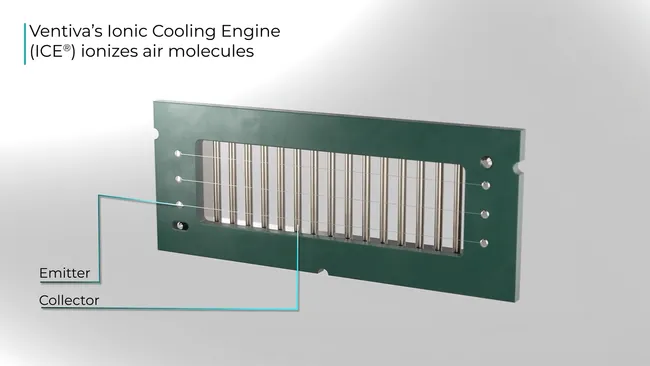
Ionic cooling, such as Ventiva's Ionic Cooling Engine (ICE) or Ionic Wind technology, is a fan-less, solid-state thermal management solution that uses electrohydrodynamic (EHD) flow to move air without moving parts. It operates by creating an electric field between electrodes to ionize air, creating a silent, vibration-free, and energy-efficient airflow ideal for compact, high-performance electronic
Key Aspects of Ionic Cooling Technology:
Mechanism: A high-voltage, low-current wire (emitter) ionizes air, which then rushes toward a grounded electrode (collector), creating a "wind".
Advantages: Silent operation (no fans), zero vibration, and high reliability due to no moving parts.
Applications: Specifically designed for space-constrained environments like laptops, tablets, edge servers, AI boxes, and medical devices.
Performance: It allows for higher sustained performance by providing efficient cooling, often outperforming traditional fans in compact spaces.
Innovation: Beyond air cooling, "ionocaloric" cooling is a different method that uses ions to drive solid-to-liquid phase changes for refrigeration.
Ionocaloric cooling is an emerging, efficient technology that uses ion flow from salt to drive phase changes (solid-to-liquid) for temperature regulation, offering potential for high-efficiency refrigeration. It can achieve a
temperature change with less than one volt. While distinct from traditional cryo-fuel storage, ionic liquids are used in advanced compression for hydrogen, improving efficiency and reducing contamination.
Linde
Linde
+3
Ionic Cooling Technology Overview
Mechanism: Uses salts to trigger phase changes in a material, absorbing heat when melting and releasing it when solidifying.
Efficiency: Potential to exceed current vapor-compression systems, which have high global warming potential.
Application: Researchers are testing this method for its high temperature-change capability with low voltage input.
Berkeley Lab News Center (.gov)
Berkeley Lab News Center (.gov)
+3
Ionic Liquids in Fuel Management
Ionic Compressors: Used to compress hydrogen gas (e.g., up to 100 MPa) without conventional lubricants, ensuring high purity for applications like fuel cells.
Benefits: These systems reduce wear and tear and have fewer moving parts than piston compressors.
Linde
Linde
Cryogenic Fuel Management (Context)
Challenges: Cryogenic fuels (like liquid hydrogen,
) experience significant boil-off in storage, which is a major issue for long-duration space missions (e.g., Mars).
Solutions: NASA is developing, newatlas.com active cooling and insulation systems, such as advanced cryocoolers, to achieve zero boil-off.
Fusion Cooling: In fusion devices, forced flow cooling ScienceDirect.com is used to manage the temperature of superconducting magnets using helium
Offline
Like button can go here