New Mars Forums
You are not logged in.
- Topics: Active | Unanswered
Announcement
#376 2025-11-23 17:49:06
- tahanson43206
- Moderator
- Registered: 2018-04-27
- Posts: 25,365
Re: Google Meet Collaboration - Meetings Plus Followup Discussion
System check went well as UTC 23:48 ... The waiting room is due to open a bit before 1:00 UTC.
7 PM Houston, 8 PM New Hampshire, mid-Morning Australia
Waiting room is open 1:00:00
(th)
Offline
Like button can go here
#377 2025-11-30 09:26:55
- tahanson43206
- Moderator
- Registered: 2018-04-27
- Posts: 25,365
Re: Google Meet Collaboration - Meetings Plus Followup Discussion
Today is Google Meeting day for NewMars.
All members (and guests) are welcome, if you can work the time into your schedule.
As a reminder, we are willing to open the meeting at an earlier time that might work better for our European members.
The existing time (midnight or 1 UTC) was convenient for the folks living in Texas and New Hampshire.
No time is ideal for everyone.
The existing time would (hopefully) work for a member living in Australia. The time there would be mid-morning ( I understand ).
That would be right in the middle of a workday morning, of course.
Special meetings can be arranged at almost any time that the participants and host(s) can agree upon.
Such a special meeting is planned for 1 PM Houston time today. kbd512 (our webmaster) and I are planning a work session to see if we can bring the NewMars image server up on the Mars Society system. The test system on the Azure account has proven itself to be reliable, and usable by NewMars members.
The regular meeting is scheduled for 1:00 UTC, 7 PM Houston, 8 PM New Hampshire, and mid-Morning New Hampshire.
I hope to have a run of extendedMerlin from time zero to 3 seconds to show to attendees. The run is in progress now, standing at 2.49 seconds.
This run will (if all went well) show operation of the new volume heating system from the start of a run for a full 3 seconds. For the first 2 seconds we slowly increase the flow of hydrogen into the heating tube, until we reach the prescribed rate of 2 kg/s. We then have a full second of operation at full flow with 40 MW of thermal energy added uniformly to the 24,000 cells in the intake, exactly as the physical heating system would supply thermal energy to the incoming hydrogen in deep space. Because of the ridiculous large nozzle throat (25 cm) we only see about a bar of pressure in the intake, but we'll see that improve when we reduce the size of the throat to better match GW Johnson's recommendation of (about) 3 cm for hydrogen.
I note that kbd512 has found documents from NASA and from other sources showing much smaller diameter throats. The Merlin engine was designed for massive flows of hydrocarbon fuel and liquid oxygen. Hydrogen would (apparently) perform better with a much smaller throat. Work on a small throat for the OpenFOAM is scheduled for next week. ChatGPT5 offers a minimum of 3 options for reducing throat size. Two are temporary methods that are implemented with adjustments to the control dictionaries. The "permanent" solution involves changing the mesh. That option is attractive because we would be building new mesh on the existing Merlin engine mesh. That seems easier to me than trying to remove cells from the mesh, as would be the case if we were trying to increase throat size. I am looking forward to trying the three options and learning about the strengths and weakness of each.
The fourth option is to create an entirely new mesh for the hydrogen engine and extended intake. While that is certainly possible, it is a ** lot ** of work, and I'm hoping one of the easier alternatives will meet our requirements. The temporary solutions involve creating a mathematical "washer" shape to be inserted into the existing mesh at run time. The resulting opening will (most likely) create turbulence because the opening will not be rounded smoothly like the existing mesh, but it should certainly build up pressure in the intake, and allow more time for hydrogen to warm up before it reaches the throat and departs for deep space. If one of the temporary solutions shows significant gains (as seems likely) we can embark upon finding a permanent solution.
Update: For those who might be curious, the CFD model should be able to compute the behavior of hydrogen in the intake if we set the throat diameter too small. The pressure should rise beyond the bursting point of any known material. The CFD model would (presumably) not break, but past the bursting point of known materials, the results are not particularly useful.
(th)
Offline
Like button can go here
#378 2025-11-30 11:57:43
- GW Johnson
- Member
- From: McGregor, Texas USA
- Registered: 2011-12-04
- Posts: 6,251
- Website
Re: Google Meet Collaboration - Meetings Plus Followup Discussion
It's not the identity of hydrogen that makes the big difference. It is merely the interplay of mass flow rate, throat area, the effective c*-velocity of the chamber conditions, and the resulting chamber pressure. Hydrogen vs something else merely changes the c*-velocity, by several-to-many percent, but not by really large factors. The temperature is higher but the molecular weight is lower. Those effects upon c* are in the same direction, though (see below).
All species, no matter how they are heated, must obey the nozzle flow rate equation: wnoz = Pt CD At gc / c* where CD is the discharge efficiency of that choked throat: effective A / geometric A, and is usually rather close to, but never exactly equal to, 1.
As for c*, there is an equation for it, too: c* = square root of (gc R Tc GF / gamma), where GF is a function of gamma, but it is always pretty close to 2.9 in numerical value. The square root reduces the effects of large changes in Tc. The molecular weight shows up in the gas constant R, which is the molar universal value divided by the molecular weight. That is actually the bigger change with non-combustion heated hydrogen, simply because the molecular weight is greatly lower than that of most other species, and the effect is only reduced some by the square root.
GW
PS: the GF is (gamma + 1)/2 raised to an exponent that is (gamma + 1)/(gamma - 1). We have modeled hydrogen's gamma as 1.4 from cryogenic to 1000 K, decreasing linearly to 1.286 as the temperature increases to 3000 K, with molecular weight constant at 2.016 throughout that temperature interval. Beyond 3000 K, dissociation changes all those numbers. It is not molecular hydrogen anymore.
Last edited by GW Johnson (2025-11-30 12:04:45)
GW Johnson
McGregor, Texas
"There is nothing as expensive as a dead crew, especially one dead from a bad management decision"
Offline
Like button can go here
#379 2025-11-30 18:59:36
- tahanson43206
- Moderator
- Registered: 2018-04-27
- Posts: 25,365
Re: Google Meet Collaboration - Meetings Plus Followup Discussion
Google Meeting for Sunday the last day of November, 2025, is under way
00:59:22
Open for business....
Post meeting notes:
This was another ** very ** productive meeting ...
GW Johnson and kbd512 are both set up on the new image server.
All NewMars members are welcome to register with the new images server. I left registration open for now. I'll close registration when the first spammer finds the site and breaks in. In the mean time registrations are welcome from NewMars members.
***
Work on the OpenFOAM study of the Optical Plane rocket engine will resume next week with three different ways of creating the effect of a smaller throat. One method involves setting a porous "wall" in front of the throat. The amount of porosity will (I gather) simulate the effect of having a smaller throat.
The next method is to mathematically create a ring or washer shaped structure dynamically at run time. This is (apparently) a bit more difficult, but it will allow us to see what an opening of 3 centimeters will "look" like to the hydrogen gas we are pumping through the system.
The third method is more challenging, and it is where I want to end up. This involves creating a mesh shaped like the ideal engine that GW Johnson has prescribed, and blending or merging it into the existing mesh. I am attracted to this option because we are shrinking the throat, and the new mesh will (if all goes well) blend seamlessly into the existing Merlin engine mesh, so that the original Merlin Mesh will be inside the new mesh. I'm told (by ChatGPT5) that this procedure will result in a model that looks to the gas like the engine GW Johnson would like to see for this application.
The distinct advantage of this approach is that all the rest of the mesh is retained and I don't have to worry about it.
This whole process is likely to take to the end of the year.
(th)
Offline
Like button can go here
#380 2025-12-07 07:44:44
- tahanson43206
- Moderator
- Registered: 2018-04-27
- Posts: 25,365
Re: Google Meet Collaboration - Meetings Plus Followup Discussion
Today is Google Meeting day for NewMars.
The waiting room will open shortly before 1 AM UTC, 7 PM Houston, 8 PM New Hampshire, and mid-morning Australia time.
We have a report on the outcome of GW Johnson's requested special run of the extendedMerlin model. It shows 5 force-tons of thrust given 20 kg/s of intake flow, despite heating the hydrogen to only 300 Kelvin which is about 80 degrees Fahrenheit. This result is obtained while keeping the 25 centimeter throat that is associated with the original Merlin engine design. ISP is calculated to be 250.
A question I am hoping we will discuss is how the momentum transferred to the ship compares, if we feed propellant at 20 kg/s for one second giving 5 tons-force, or if we feed 2 kg/s for ten seconds giving 1/2 ton-force. It seems to me the momentum imparted would be the same but am looking forward to learning what would actually happen.
In previous discussion we have considered reducing the throat size to 3 centimeters, and I presume that would improve the performance of the 2 kg/s flow. ISP should improve, but that remains to be seen.
We have a suggested location for craters for Caliban, GW Johnson and Void to use as building sites. The site is calculated to be 54 kilometers from the Viking 1 landing site, which may be seen at trek.nasa.gov/Mars.
Calliban has proposed a 200 meter diameter open interior dome with LED lighting inside to provide Earth-like illumination,
GW has proposed buildings with traditional supporting columns in the interior, with windows to the outside.
Void has shown images of solar energy collectors arranged inside a crater.
Other reports are highly likely.
If we are lucky we may get to take a deep dive into some interesting topic with kbd512 as our Internet guide.
Thanks again to kbd512 for providing the new NewMars Image Server. The server is working well. New images are being added every day, and old ones are being ported from the Azure test server as time permits.
All NewMars members are eligible to store original images on the image server. Registration for existing members is open at present.
(th)
Offline
Like button can go here
#381 2025-12-07 17:31:52
- tahanson43206
- Moderator
- Registered: 2018-04-27
- Posts: 25,365
Re: Google Meet Collaboration - Meetings Plus Followup Discussion
Systems check at 23:29 UTC went well ... we are on track to open the waiting room at just before 1 AM UTC.
Houston time will be 7 PM, New Hampshire time will be 8 PM, and if we were to have someone from the West Coast, the time there would be 6 PM.
If anyone in Australia were to decide to join the meeting, it would be mid-morning
UTC 59:59 the waiting room is open.
This was another interesting and productive meeting. The decision I was looking for was which of three possible approaches for the next phase of development of the extendedMerlin model should be given priority. It amounted to a coin toss, so I'll proceed with the washer approach instead of the porous filter one.
As a reminder for anyone might be intererested, the Merlin engine model we are using came from the "factory" with an intake diameter of 25 centimeters. We've been running hydrogen with that diameter, at flow rates of 2 kg/s and 20 kg/s. Last week i ran a series over 0 to 7 seconds for the 20 kg/s case. We got a thrust of nearly 5 tons-force.
That compares to .5 tons-force for 2 kg/s which was produced by our first successful run with the new even heating method.
Next week, I'll attempt to configure the model to simulate a 3 centimeter throat. This particular approach introduces an "object" shaped like a flat washer into the throat. The result will create turbulence, because the flow at the opening will not be smooth as would be the case with a properly designed throat. However, we ** should see increased temperature in the intake, and the ISP should improve from the present value of 250.
We did not get to the mass of the optical collection devices, so I'll have to add that back to the agenda for next week. I am now starting to to think about how the Optical Plane vessel might be constructed in the Real Universe, now that we have evidence kbd512's discovery of optical capture devices will actually work.
Update: During the week just ended, Void posted a link to a video about the inventor of the Merlin Engine. There is a Wikipedia page about this gent. He was the first employee hired by Elon Musk for the new company SpaceX.
(th)
Offline
Like button can go here
#382 2025-12-14 08:12:29
- tahanson43206
- Moderator
- Registered: 2018-04-27
- Posts: 25,365
Re: Google Meet Collaboration - Meetings Plus Followup Discussion
Today is Google Meeting day for NewMars ...
Hopefully our regular attendees will be able to schedule the time to join.
All other NewMars members are welcome to attend...
We have a number of interesting topics to consider, and new ones come up every meeting.
Deep dives into the Internet are a feature provided by kbd512
Possible items for discussion:
1) A remote controlled camera for Zoom meetings.
I will try to have this camera ready for demonstration this evening. The camera only works with Zoom, because the Zoom app has been modified to allow it's use. I am hoping the camera will facilitate remote presence at special events which I cannot attend in person.
2) We have a decision to make about how to proceed with the extendedMerlin model for the Optical Plane vessel.
As things stand, we appear to have achieved an ISP of 250, which is decent but not what is thought to be possible.
The existing model has been tested with a flow rate of 2 kg/s and one of 20 kg/s.
The model is stable with both, and it delivered the thrust predicted by GW Johnson for the greater mass flow.
The choice of the next test series is between a porous filter and a washer shaped mathematical structure.
kbd512 voted in favor of the washer shape last meeting, and we have an opportunity for GW Johnson to weigh in this week.
3) Calliban's Dome is a possible subject for discussion. We have a Crater selected on Mars, and I am hoping that we (NewMars) can begin working on developing a plan for exploring the crater with one or more probes, and then organizing a fleet of robot equipment to build the dome and the related infrastructure. In recent days we've been discussing how to illuminate the dome and how to manage the air.
As usual, we will plan to open the waiting room at 1:00 UTC.
That time is 7 PM Houston, 8 PM New Hampshire and mid-Morning in Australia.
(th)
Offline
Like button can go here
#383 2025-12-14 18:59:19
- tahanson43206
- Moderator
- Registered: 2018-04-27
- Posts: 25,365
Re: Google Meet Collaboration - Meetings Plus Followup Discussion
The waiting room is open...
This was another successful meeting...
Topics included Vandenberg Space Base, prospects for SpaceX there, and discussion of SpaceX receiving approval to build a launch facility for Starship at Cape Canaveral.
Topics included Calliban's dome, the forces at work in the building walls, and procedures for managing the air and various fluids.
The decision was made to proceed with the "washer" option for the OpenFOAM investigation of extendedMerlin for Optical Plane.
A variety of other topics came up briefly.
(th)
Offline
Like button can go here
#384 2025-12-14 21:47:16
- RobertDyck
- Moderator
- From: Winnipeg, Canada
- Registered: 2002-08-20
- Posts: 8,498
- Website
Re: Google Meet Collaboration - Meetings Plus Followup Discussion
In 1999, I did propose the Mars Roadrunner project. At that time the idea was a ride to space as a get-away special on the Shuttle. 150 pounds total, fit into an oil barrel shape container. I spoke to the individual at NASA in charge of small Shuttle projects. He said $8,000 US funds for any US educational institution, or $27,000 for anyone else. However, he apologized saying that's not you go up and come down. It was $2 million if you just let got of the Shuttle and stay in orbit. But he said if a NASA agency (as he called it, cost center to be picky) sponsored US, we get a free ride. And he with our connections (Mars Society) we would have no trouble getting that. At the time we had a couple senior research fellows from the Ames Research Center on the board of directors. (200 pounds, or 150 pounds plus ejection mechanism)
I got detailed technical information on the NSTAR ion engine used for Deep Space One. I spoke with the lead engineer at the Glenn Resear Center who developed the engine. As he put it, he sent everything allowed outside the US. Everything short of the blueprints. So spiral out of LEO, head to the Moon. Use the Moon for gravity assist (0.5 km/s addition delta-V) then slow route to Mars. Expect 2 years to Mars. In space performance report says 3,000 second Isp. Xenon gas propellant.
At that time we had a Mars Society member from Australia who just graduated with his PhD in aerospace engineering specializing in aeroshells. He offered to design the aeoshell including heat shield. Unfortunately he's no longer available. He now works for SpaceX as their primary Mars guy.
We were going to deploy a weather balloon using Dr Zubin's design. He just tested a prototype, paid by NASA, deployed in Earth's upper atmosphere where temperature and pressure are the same as Mars. They used a weather balloon to lift it, then deployed the Mars balloon.
At the time I worked for a company that specialized in developing software for embedded systems using the QNX operating system. That was used for the vision system on CanadArm, both for Shuttle and ISS.
We were going to use a Mars UHF antenna to transmit data to Mars orbiters: MGS, Mars Odyssey, MRO, Mars Express. We would need NASA's permission not use their obiter(s) as a communication relay, and the Deep Space Network to communicate with it. We would ESA's permission if we were to use Mars Express. However, a later project would build a dish array using used large satellite TV dishes as a Deep Space Station not communicate with an orbiter passed it's extended mission. We never did find the dishes, but in 2002 when I spoke to a woman at a Canadian Space Agency workshop, she liked the idea. She (through her company, Thoth Technology Inc.) gained control of a disused 50-foot radio astronomy dish in Canada, in a radio quiet zone in Algonquin Park. She's working with a University. One goal is to use that as a Deep Space Station for Mars missions.
Offline
Like button can go here
#385 2025-12-14 22:07:56
- RobertDyck
- Moderator
- From: Winnipeg, Canada
- Registered: 2002-08-20
- Posts: 8,498
- Website
Re: Google Meet Collaboration - Meetings Plus Followup Discussion
When NASA was preparing to launch MRO, they didn't behave room on the Deep Space Network for all the Mars missions. Something nhad to be sacrificed. Then someone "accidentally" sent a bad command that deactivated MGS. Grrr! I don't believe it was an accident. I wish Caroline's station in Algonquin Park was ready, so NASA didn't have to kill MGS. I wanted to use MGS as a communication relay satellite.
Her company's website:ThothX
(Why is her "significant other" now listed as CEO, and she's not listed on the leadership team at all?)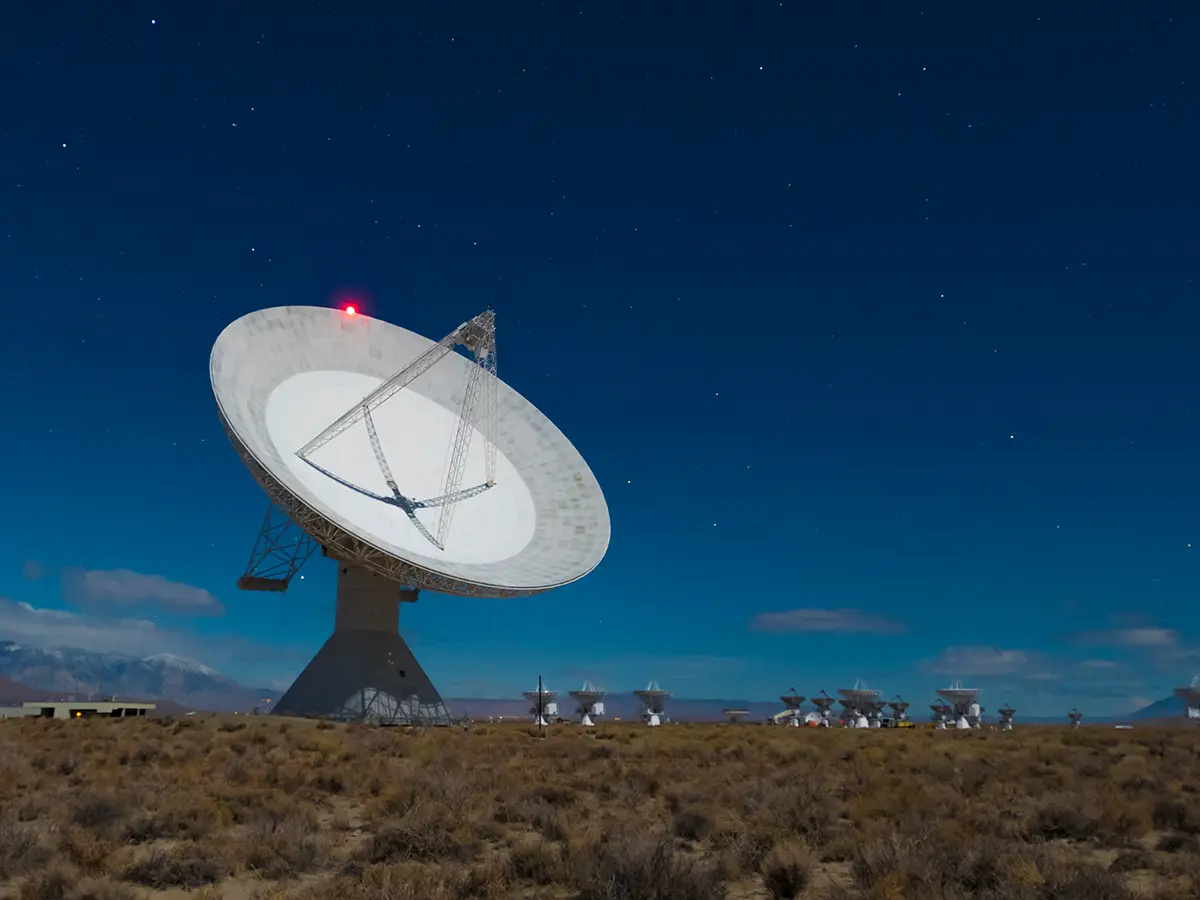
Offline
Like button can go here
#386 2025-12-14 22:43:41
- RobertDyck
- Moderator
- From: Winnipeg, Canada
- Registered: 2002-08-20
- Posts: 8,498
- Website
Re: Google Meet Collaboration - Meetings Plus Followup Discussion
My point is if you want to get serious about exploring the craterz sending a probe is possible. It will cost. SpaceX has a SmallSat Rideshare program. Cost estimate for 100Kg to Sun Synchronous Orbit $650,000
Offline
Like button can go here
#387 2025-12-21 08:18:54
- tahanson43206
- Moderator
- Registered: 2018-04-27
- Posts: 25,365
Re: Google Meet Collaboration - Meetings Plus Followup Discussion
For RobertDyck re #386
Thanks for the guidance for sending a probe to collect data on the crater we are considering for Calliban's Dome.
The cost will be greater because the flight package has to reach Mars and achieve a landing, so $650,000 shows the first tier of expense.
A rover with the capability of Curiosity would be a starting point, but the rover needs to be able to drill deep, which no rover to date has been able to do. The ** only ** drill mechanisms that have been proven to work with all materials found so far on Mars are the small diameter drills used to take samples. It seems to me that this proven technology can drill deep, if it is deployed in an incremental excavation of small amounts of material over a wide area.
This post is to announce plans for today's Google Meeting.
It will be opened at 1 AM UTC, 7 PM Houston, 8 PM New Hampshire and mid-morning Australia.
If current plans hold I hope to have a test run of OpenFOAM completed for review.
We also have opportunities for GW Johnson and kbd512 to report on their activites over the past week.
GW Johnson has completed updating of his 1980's software to run in emulation in 2025. This was quite an achievement, facilitated in part by the technical wizards who invested countless hours in writing the code with no financial reward of any kind.
kbd512 has written long posts about fighter jet design and performance, and those posts include history of actual missions flown in the Gulf War of recent years.
(th)
Offline
Like button can go here
#388 2025-12-21 16:30:16
- tahanson43206
- Moderator
- Registered: 2018-04-27
- Posts: 25,365
Re: Google Meet Collaboration - Meetings Plus Followup Discussion
Systems check went well at 22:29
The waiting room will open at 1:00 UTC
We are "on the air" at 59:52
While we're waiting for folks to join, I decided to look around at the latest version of Google Meeting...
kbd512 arrived ... I'll have to come back later.
Link for readers: https://www.youtube.com/watch?v=6Xx1GXjRbMk
About machine learning rocket design.
Here is a link provided by RobertDyck ... https://assets.resurgamhub.org/f/302191 … fc3b/1.jpg
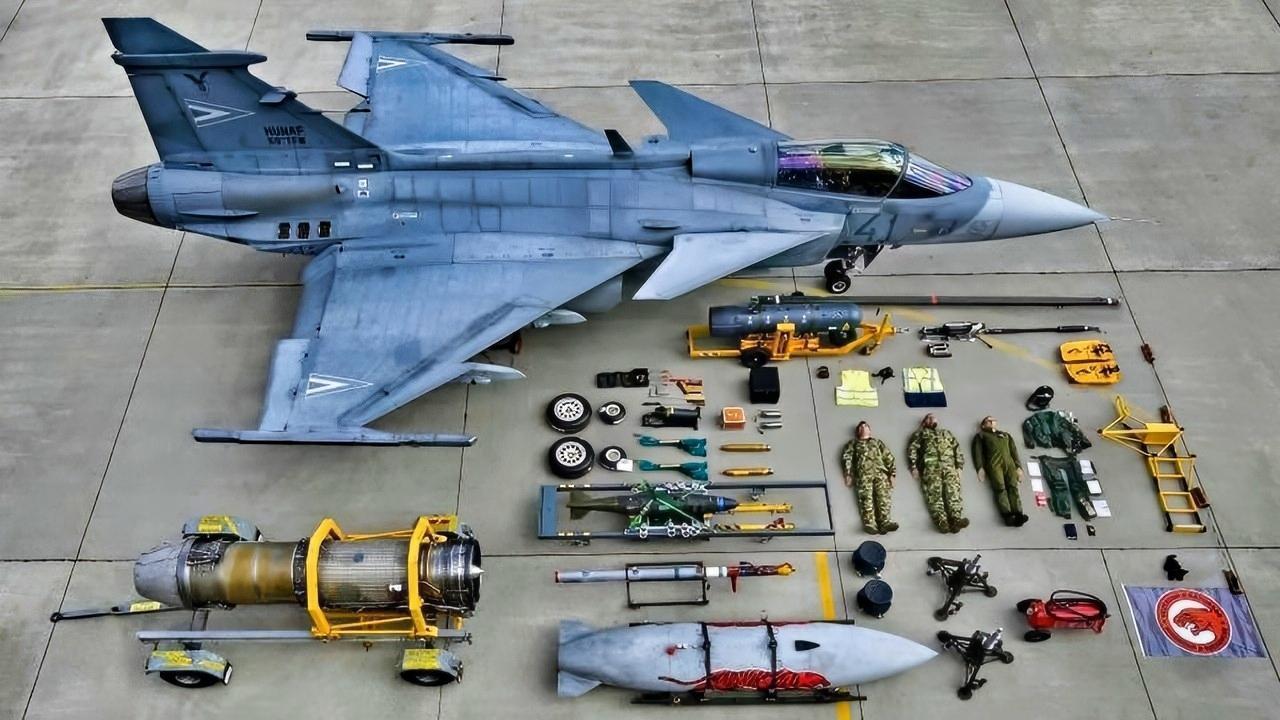
That link shows the Gripen fighter jet that Canada is considering along with the already purchased F-35's from the US.
Reminder for Rob: If you get time, please provide the link to the video about the 8 signs of civilization collapse.
This was another interesting meeting, with a nice variety of subjects covered.
Regarding changes to Google Meeting ... the features I need for a meeting are all still present, but they have moved around a bit. Google is offering new features in the "fee paid" section. One of those in the "fee paid" section that is ** very ** interesting is a feature to allow streaming to YouTube for an audience.
We don't have a need for that feature at the moment, but I have seen it in operation and it definitely works.
(th)
Offline
Like button can go here
#389 2025-12-21 21:51:57
- RobertDyck
- Moderator
- From: Winnipeg, Canada
- Registered: 2002-08-20
- Posts: 8,498
- Website
Re: Google Meet Collaboration - Meetings Plus Followup Discussion
We had a discussion. Tom asked what I've been doing. When I was a child, I was required to attend Sunday School at the United Church. My mother told me to have an open mind, do not blindly believe what they said. But Sunday School teachers tried to say you must believe without question. Religion was strong in the early 1960s. So I've looked at what archaeologists have found, where did our religion come from, and what can be verified.
When talking about history, the last few years I've talked about Sumer aka Sumeria. The reason is that's the origin of the Old Testament. Those who learned the story of Joseph and the Coat of Many Colours will know his parents were Abraham and Sarah. Abraham came from the city of Eridu. That is the original capital of Sumer.
I could describe what archaeology tells us about many stories from the Old Testament. Some confirmed, but details of reality don't match the fairy-tale like stories that Sunday school teachers preach to preschool children.
This however also shows a long view of history. Rise and fall of Sumer, which spans thousands of years. Sumer was conquered by the Akkad, who ruled the Mesopotamian valley for only a few centuries. Then a natural disaster wiped out their empire. Cities became city-states, ruled by a king. These cities went to war with each other for resources. Eventually one city, conquered the entire Mesopotamian valley again: the city of Babel. The empire was known as Babylon. Yes, over a thousand years after the fall of Babylon, Greeks called the city Babylon and the empire Babylonia, but Babylonians themselves called the city Babel, and the empire Babylon. Documents do still exist, in the Babylonian language using the cuneiform alphabet written on clay tables. A palace was found in the city of Nineveh, another city mentioned in the Old Testament. The library of Nineveh includes a great number of documents. Nineveh was the capital of Assyria, a country that existed the same time as Babylon, depending which time period.
There have been many collapses of empires. In addition to Sumer, Akkad, Babylon, there's also Minoa, Bronze-Age Collapse, Rome. When you look at the world, not just western society, there's also Middle China, Angkor Wat (what is now Cambodia), Maya (Mexico).
By the way, Minoans did not call themselves that. One archaeologist found the remains of the palace of Knosos on the island of Crete, trying to prove the story of King Minos and the Minotor was based on something real. He named the civilization for king Minos. But archaeologists later found a tomb in Egypt of a senior government official (not a pharaoh) who had a depiction painted on the wall of foreign dignitaries paying tribute to the Pharaoh. Each nation was named. The Minoan people were called Keftiu (or kftı͗w). At least in the Egyptian language. The Bible refers to the people of Caphtor, which is believed to mean the people of Crete.
Elon Musk has said we live in a time when settlement of Mars is possible, but this is a narrow window of time. We don't know how long this will last. Civilization has collapsed many times, our civilization may lose the ability to travel through space. If we don't settle Mars now, it may be a thousand years, or maybe two thousand, before humanity has this ability again.
Offline
Like button can go here
#390 2025-12-28 07:48:39
- tahanson43206
- Moderator
- Registered: 2018-04-27
- Posts: 25,365
Re: Google Meet Collaboration - Meetings Plus Followup Discussion
For RobertDyck re Post #389 ... thanks for adding history of human civilization and invention of religion to the Google Meeting topic.
Today's post is to remind our Admins and Members that we will be holding the last Google Meeting of 2025 this evening.
We will open the waiting room at 1 AM UTC. Our European members are welcome if they can stay up that late.
The time is 7 PM in Houston, 8 PM in New Hampshire, and 6 PM in Seattle if someone out that way would care to attend.
It is also mid-morning in Australia, and that is on a work day, so I'm not expecting anyone.
We have a successful run of the extendedMerlin engine to report.
The main focus of the meeting is the direction the Admins and Members want to take the forum. This forum started as a discussion group for space enthusiasts back in 2001 and it achieved some success, with a peak membership of over 1000 humans and many thousands of robots. We've cleaned out all the robots, but there are very few active humans left.
We have an opportunity to build a new community of young people who are either planning to help settle Mars on site, or (more likely) to help to make that exploration and settlement possible right here on Earth.
We have the opportunity to help young humans to build careers for themselves and teams to achieve objectives, whether in business or in government roles.
(th)
Offline
Like button can go here
#391 2025-12-28 17:28:29
- tahanson43206
- Moderator
- Registered: 2018-04-27
- Posts: 25,365
Re: Google Meet Collaboration - Meetings Plus Followup Discussion
System check went well at 18:26 New Hampshire time...
We'll open at 1 AM UTC ...
Reminder: Access is via the top link here; https://newmars.com/forums/viewtopic.php?id=10593
We are open at 50:44 UTC
(th)
Offline
Like button can go here
#392 2025-12-28 19:04:50
- SpaceNut
- Administrator
- From: New Hampshire
- Registered: 2004-07-22
- Posts: 30,824
Re: Google Meet Collaboration - Meetings Plus Followup Discussion
The link is coming up in Russia on my cellphone will try computer
Offline
Like button can go here
#393 2025-12-28 19:18:25
- kbd512
- Administrator
- Registered: 2015-01-02
- Posts: 8,533
Re: Google Meet Collaboration - Meetings Plus Followup Discussion
I've tried to join several times now. No luck.
Offline
Like button can go here
#394 2025-12-28 19:23:29
- kbd512
- Administrator
- Registered: 2015-01-02
- Posts: 8,533
Re: Google Meet Collaboration - Meetings Plus Followup Discussion
SpaceNut,
Were you able to join the call?
Offline
Like button can go here
#395 2025-12-28 19:37:50
- kbd512
- Administrator
- Registered: 2015-01-02
- Posts: 8,533
Re: Google Meet Collaboration - Meetings Plus Followup Discussion
tahanson43206,
I'm still receiving a message indicating that the host has to allow me to enter the meeting. I'm going to drop off.
Offline
Like button can go here
#396 2025-12-28 20:08:46
- SpaceNut
- Administrator
- From: New Hampshire
- Registered: 2004-07-22
- Posts: 30,824
Re: Google Meet Collaboration - Meetings Plus Followup Discussion
I was able to join using the computer and had to ask to join once putting in may name to join. It did not come up automatically.
Offline
Like button can go here
#397 2025-12-28 20:14:59
- kbd512
- Administrator
- Registered: 2015-01-02
- Posts: 8,533
Re: Google Meet Collaboration - Meetings Plus Followup Discussion
SpaceNut,
I made several attempts, but it kept saying "waiting for the meeting host to admit you".
Offline
Like button can go here
#398 2025-12-28 20:15:11
- tahanson43206
- Moderator
- Registered: 2018-04-27
- Posts: 25,365
Re: Google Meet Collaboration - Meetings Plus Followup Discussion
For kbd512 ... I am ** really ** sorry about missing your request to join! SpaceNut joined and I had to turn the volume down because his Chromebook could not lower it's volume. I also neglected to set up the window to watch the waiting room. And on top of everything, I neglected to watch the forum ...
That's a pretty long list of mistakes.
***
I will simply ** have ** to do a better job as host. I could make excuses but there is no point. I really dropped the ball on this occasion.
***
My goal for this meeting was to try to at least ** think ** about how we might be able to increase membership, and having SpaceNut here was a good thing, but having you here would have been a ** really ** good thing! I would like to see if we can do better in 2026 than we have for the past five years after we dealt with the spammer flood.
***
You can be sure I'll be going over everything that went wrong this evening, in hopes of handling the same combination better in the future.
(th)
Offline
Like button can go here
#399 2025-12-28 20:17:09
- kbd512
- Administrator
- Registered: 2015-01-02
- Posts: 8,533
Re: Google Meet Collaboration - Meetings Plus Followup Discussion
tahanson43206,
No worries. I thought something was wrong with my computer or internet connection. We'll still be able to meet next Sunday.
Offline
Like button can go here
#400 2025-12-28 20:33:40
- tahanson43206
- Moderator
- Registered: 2018-04-27
- Posts: 25,365
Re: Google Meet Collaboration - Meetings Plus Followup Discussion
For kbd512 re #399 ... Thank you for your generosity ... This was like fumbling the ball after the quarterback sent a perfect pass right to the goal line.
We Americans have been seeing a ** lot ** of that in recent weeks with the college playoffs.
This host business is a bit like a on-handed-paper-hanger scenario. I didn't realize how dependent I had become on your steady presence.
The incident is a reminder to me to up my game substantially, in case we are lucky enough to have a full house of participants. We have multiple roles. Master of Ceremonies is just one role ... Display management is another. Waiting Room Attendant is a critically important role.
I had a presentation all lined up on the success of the extendedMerlin model, and dove into it with SpaceNut. The bottom line is that after working on this since April, we have a ** real ** honest-to-goodness burn in progress, and I was hoping to be able to show it to you and GW. Oh well! We can try again next year.
I will run one more second to be sure the new configuration is stable, and then proceed to reducing the throat to 3 centimeters.
The numbers appear to be coming out near where you and GW were looking, but I won't be satisfied until I hear confirmation from the two of you.
In thinking about the failure this evening, I'd like to remind you that (hopefully) you have direct telephone numbers available ... I have a line direct to an answering machine with a loud voice, and there is always the pager, which I am wearing in right now.
At our next meeting, it might be worth going through the drill with both of those so you are confident you have the right numbers.
Hopefully we'll be able to carry NewMars through the coming year by at least holding the current level of activity.
We might be able to increase membership in consultation with the Mars Society. They do not currently advertise us. We have had one or two applicants from new members of the Mars Society, but I'm guessing they found us by Google Search instead of from the Mars Society itself.
(th)
Offline
Like button can go here