New Mars Forums
You are not logged in.
- Topics: Active | Unanswered
Announcement
#151 2022-08-22 18:15:17
- tahanson43206
- Moderator
- Registered: 2018-04-27
- Posts: 25,878
Re: How's the Society doing right now?
Sponsorship Opportunities with the 2022 Mars Society Convention
The Mars Society will be holding its 25th Annual International Mars Society Convention October 20-23, 2022, this year in-person, at Arizona State University in Tempe (outside Phoenix).
The Mars Society has held its international convention every year since 1998. Our last on-site event was convened in 2019 at the University of Southern California in Los Angeles, with approximately 400 people in attendance and 100 speakers over the course of the four-day event.
Facing the global pandemic, Mars Society leadership decided to go virtual for its 2020 and 2021 conventions. In addition to hearing key scientists, commercial space executives, government officials, and members of the media discuss Mars and space exploration, attendees were able to network with each other and the speakers using a variety of virtual tools including a conference session scheduling application, chat and collaboration tools, and virtual networking tools.
This year's convention, marking a quarter of a century, will be a combination of both formats, with both in-person and virtual attendees, allowing for continued expansion of our public and online audience, with the same state-of-the-art virtual options and networking tools.
Last year, we had over 5,000 people joining us to watch the convention online, and we expect more this October, in addition to the usual hundreds of people attending the event in-person in Arizona.
Sponsors involved in supporting our international convention will receive a first-class presence in our event experience and will also be mentioned across our print and online materials leading up to and during the conference. There will be three primary levels of sponsorship - Gold, Silver, and Bronze - $5,000, $2,500 and $1,000 respectively.
For more details about this year's convention sponsorship options, please visit: https://bit.ly/39JE3Tn, and for general information about the convention and the Mars Society, go to: https://www.marssociety.org. Please email James Burk, Mars Society Executive Director, at: jburk@marssociety.org with any questions.
The Mars Society
11111 West 8th Avenue, unit A
Lakewood, CO 80215 U.S.A.
www.marssociety.org
https://www.facebook.com/TheMarsSociety
@TheMarsSocietyCopyright (c) 2022 The Mars Society
All rights reserved.
(th)
Offline
Like button can go here
#152 2022-08-22 18:23:10
- tahanson43206
- Moderator
- Registered: 2018-04-27
- Posts: 25,878
Re: How's the Society doing right now?
Voyager Space CEO Dylan Taylor to Discuss Future of Space Industry at Mars Society Convention
The Mars Society is pleased to announce that Dylan Taylor, Chairman & CEO of Voyager Space, a multi-national space holding firm that acquires and integrates leading space exploration enterprises globally, will give a plenary talk about how the commercial space industry will likely evolve over the next five years during the 25th Annual International Mars Society Convention, scheduled for October 20-23 at Arizona State University (Tempe).
As an early-stage investor in more than 50 emerging ventures, including Accion, Kepler, York, Astrobotic, Made in Space, Relativity, and Planet, Mr. Taylor is widely considered one of the most active private space investors in the world.
Mr. Taylor’s technical background, global business experience and passion for space make him a unique figure within his industry. He regularly speaks and writes about the future of the space economy and is sought after by the media for his expertise in the financial aspects of space investing as well as industry dynamics. In addition, Mr. Taylor flew on board Blue Origin’s NS-19 mission into space in December 2021.
He has also had an extensive philanthropic impact on the space industry. In 2017, Mr. Taylor founded the nonprofit and social movement, Space for Humanity, which seeks to democratize space exploration and develop solutions to global issues through the scope of human awareness to help solve the world’s most intractable problems. Additionally, he is the Co-Founding Patron of the Commercial Spaceflight Federation, which seeks to promote the growth of commercial space activity.
For more details about this year’s Mars Society convention, including online registration, call for papers, and volunteer and sponsorship opportunities, please visit our web site (www.marssociety.org). Also please note that early bird ticket prices are available until Wednesday, August 31st, 5:00 pm MT.
The Mars Society
11111 West 8th Avenue, unit A
Lakewood, CO 80215 U.S.A.
www.marssociety.org
https://www.facebook.com/TheMarsSociety
@TheMarsSocietyCopyright (c) 2022 The Mars Society
All rights reserved.
(th)
Offline
Like button can go here
#153 2022-08-26 19:35:45
- tahanson43206
- Moderator
- Registered: 2018-04-27
- Posts: 25,878
Re: How's the Society doing right now?
White House Asst. Director for Space Policy to Address 2022 Mars Society Convention
The Mars Society is pleased to announce that Ezinne Uzo-Okoro, White House Assistant Director for Space Policy, will speak virtually about “In-Space Capabilities for Mars and Beyond” at the 25th Annual International Mars Society Convention on Friday, October 21st, 1:30 pm EST / 10:30 am PST.
Ms. Uzo-Okoro determines civil and commercial space policy priorities for the White House Office of Science and Technology Policy. Her portfolio includes Orbital Debris, In-space Servicing, Assembly, and Manufacturing (ISAM), Earth Observations, Space Weather, Aeronautics, and Planetary Protection.
In 17 years at NASA, she contributed to over 60 missions and programs – as an engineer, technical expert, manager, and executive – in earth observations, planetary science, helio-physics, astrophysics, human exploration, and space communications, which represent $9.2B in total program value. At NASA Headquarters, she led a helio-physics portfolio of spaceflight missions, including PUNCH, TRACERS, and MAGIC.
While at NASA Ames, Ms. Uzo-Okoro directed the Small Spacecraft Mission Design Division, including the Mission Design Center, led teams in developing advanced spacecraft mission concepts, and developed partnerships with government agencies. In several Chief Engineer roles, she provided oversight for over 20 programs on systems engineering and software systems as technical authority. She led a mission design concept for a constellation of eight small satellites for the HelioSwarm mission.
At NASA Goddard, within the flight segment, she contributed significantly in areas of engineering leadership and technical development of flight hardware and software on several spacecraft missions, including TESS (launched 2018), NICER (launched 2017), GPM (launched 2014), Constellation Program - Orion/EFT-1 (launched 2014), ELC (launched 2009), and Cassini (Saturn's Orbit Insertion in 2004). Within the ground segment, she co-led the $300M Spacecraft Communication and Navigation Integration Project with JPL and NASA Glenn partners. She served as the technical authority on over 20 mission operational readiness reviews. Within R&D, she led the development of remote-sensing image registration algorithms, which resulted in NASA-owned registration algorithm patents.
Ms. Uzo-Okoro holds a bachelor's degree in Computer Science from Rensselaer Polytechnic Institute; master’s degrees in Systems Engineering, Space Robotics, and Science & Technology Policy, from Johns Hopkins University, MIT, and Harvard University, respectively; and a Ph.D. in Space Systems from MIT on the robotic assembly of satellites.
She founded Terraformers.com to grow affordable food through productive and networked backyard gardens, as a precursor to growing food in space. Her immigration story is profiled in President George W. Bush’s book, 'Out of Many, One'.
For more details about this year’s Mars Society convention, including online registration, call for papers, a list of confirmed speakers, and volunteer and sponsorship opportunities, please visit our web site (www.marssociety.org). Also please note that early bird ticket prices are available until Wednesday, August 31st, 5:00 pm MT.
The Mars Society
11111 West 8th Avenue, unit A
Lakewood, CO 80215 U.S.A.
www.marssociety.org
https://www.facebook.com/TheMarsSociety
@TheMarsSocietyCopyright (c) 2022 The Mars Society
All rights reserved.
(th)
Offline
Like button can go here
#154 2022-08-27 17:22:39
- tahanson43206
- Moderator
- Registered: 2018-04-27
- Posts: 25,878
Re: How's the Society doing right now?
2022 Mars Society Convention to Receive Briefing about Model Mars STEAM Learning Platform
The Mars Society is pleased to announce that Dr. Jan Millsapps, a veteran filmmaker and Professor Emeritus of Cinema at San Francisco State University, will give a presentation during the 25th Annual International Mars Society Convention (October 20-23, 2022 at ASU in Tempe) about Model Mars, a unique, interdisciplinary STEAM learning platform that invites young people from around the world to create their own futures as virtual settlers living in simulated communities on Mars.
Launched in early 2022 by Dr. Millsapps and her development team, Model Mars serves as an “edutainment” platform designed to prepare young people for living on the Red Planet. The prototype experience, involving youth participants and advisors from five continents, culminated in a Mars-wide convocation and opening of the virtual Mars Museum. The Model Mars project was also recently featured at a United Nations event in Daejeon, South Korea.
In addition to her work on Model Mars, Dr. Millsapps is considered a pioneering figure in the new media movement, an early web innovator, and an accomplished writer. She has also produced films, videos, and interactive media on subjects ranging from domestic violence to global terrorism and has written two space-themed novels.
Her recent documentary, Madame Mars: Women and the Quest for Worlds Beyond, premiered at the United Nations in Vienna and has been shown at Puerto Rico’s famed Arecibo Observatory, the venerable University of Cambridge in the U.K., the New York Academy of Sciences’ Global STEM Summit, and at numerous film festivals, winning first prize for a professional documentary at the 2019 Raw Science Film Festival in Los Angeles. In 2020-21 she and her film were chosen for the U.S. State Department’s educational and cultural exchange program, the American Film Showcase, with screenings to date in Kyrgyzstan, Columbia, Pakistan, Czechoslovakia, Indonesia, and Germany.
Dr. Millsapps has spoken about the need for diversity in space at several Mars Society Conventions, the United Nations, the SETI Institute, and at the Bay Area Taste of Science. In 2021 she gave a keynote address on space equity at the Space and Extreme Environment Research Center in Brazil. She is also a founding member of the global Space4Women support and advocacy group, and in 2020 was named a mentor for the Space4Women network by the United Nations Office of Outer Space Affairs (UNOOSA).
For more details about this year’s Mars Society convention, including online registration, call for papers, a list of confirmed speakers, and volunteer and sponsorship opportunities, please visit our web site (www.marssociety.org). Also please note that early bird ticket prices are available until Wednesday, August 31st, 5:00 pm MT.
The Mars Society
11111 West 8th Avenue, unit A
Lakewood, CO 80215 U.S.A.
www.marssociety.org
https://www.facebook.com/TheMarsSociety
@TheMarsSocietyCopyright (c) 2022 The Mars Society
All rights reserved.
(th)
Offline
Like button can go here
#155 2022-09-07 20:32:17
- tahanson43206
- Moderator
- Registered: 2018-04-27
- Posts: 25,878
Re: How's the Society doing right now?
NASA Assoc. Admin. Bhavya Lal to discuss Mars nuclear propulsion at 2022 Mars Society Convention
Dr. Bhavya Lal, NASA Associate Administrator for Technology, Policy, and Strategy, will give a plenary talk about the strategic and policy challenges related to nuclear propulsion for a human mission to Mars during the 25th Annual International Mars Society Convention, scheduled for October 20-23, 2022 at Arizona State University.
Dr. Lal is responsible for providing evidence-driven advice to NASA leadership on internal and external policy issues, strategic planning, and technology investments. She also provides executive leadership and direction to the Office of Technology, Policy and Strategy within the office of the administrator. Dr. Lal is currently the acting chief technologist of NASA, the first woman to hold the position in NASA’s 60+ year history.
Before joining NASA, she had served as a member of the Presidential Transition Agency Review Teams for both NASA and the Department of Defense. For 15 years prior to that, Dr. Lal led strategy, technology assessment, and policy studies and analyses at the Institute for Defense Analyses (IDA) Science and Technology Policy Institute (STPI) for government sponsors including the White House Office of Science and Technology Policy (OSTP), the National Space Council, NASA, Department of Defense, and other Federal Departments and Agencies.
Dr. Lal holds bachelor’s and master’s degrees in nuclear engineering from the Massachusetts Institute of Technology (MIT), a second master’s from MIT’s Technology and Policy Program, and a Ph.D. in Public Policy and Public Administration from George Washington University.
For more details about this year’s Mars Society convention, including online registration, call for papers, and volunteer and sponsorship opportunities, please visit our web site (www.marssociety.org).
The Mars Society
11111 West 8th Avenue, unit A
Lakewood, CO 80215 U.S.A.
www.marssociety.org
https://www.facebook.com/TheMarsSociety
@TheMarsSocietyCopyright (c) 2022 The Mars Society
All rights reserved.
(th)
Offline
Like button can go here
#156 2022-10-29 21:12:44
- tahanson43206
- Moderator
- Registered: 2018-04-27
- Posts: 25,878
Re: How's the Society doing right now?
Red Planet Bound [Blog]
In Person or Proxy to Mars and Beyond?
By Larry Klaes, Guest WriterIn 1972, singer, pianist, and composer Sir Elton H. John (born 1947) released a song titled “Rocket Man”. This music piece, which was inspired by a Ray Bradbury (1920-2012) science fiction story of the same name, has an individual who sees his job in outer space not as some grand adventure as one might expect of a typical astronaut, but rather as ordinary and isolating.
Not only does this Rocket Man miss Earth and his wife living there, declaring “it’s lonely out in space,” he also says that “Mars ain’t the kind of place to raise your kids/In fact it’s cold as hell/And there’s no one there to raise them/If you did.”
As a life-long space and astronomy enthusiast, when I first became aware of this song, I was highly disappointed with its message. “Rocket Man” was a definite reflection of the counterculture era, where many rejected what they saw as the militant flaws and antiquated traditions of society which held back all but a select privileged few.
The space program fell into that category, being seen as a vehicle of a predominantly white male military-industrial complex. That it was also so publicly prominent only made it an even easier target for criticism, especially the kind that asked why we were spending money on sending humans to the Moon when there were so many problems on Earth that needed fixing first.
Even as a kid I knew this was an “apples and oranges” situation. The National Aeronautics and Space Administration, or NASA, was funded far less than most other government agencies of that era, a status that remains to the present day. Diverting all its resources to social agendas would have been a temporary band aid at best, not a real solution to modern civilization’s myriad of problems.
Nevertheless, the general public which had supported the early bold declaration of “sending a man to the Moon and returning him safely to the Earth” within ten years had undergone a significant sea change by the time NASA was actually placing astronauts on our planet’s nearest celestial neighbor at the end of the 1960s and into the early 1970s.
I had grown up in that era of the early Space Age when humans were actively circling Earth in preparation for launching representatives of our species to land on the Moon while robotic probes had begun to reveal other worlds such as Venus and Mars. I bought into the future storyline of the 1968 film 2001: A Space Odyssey and all those other pro-space entertainment media so prevalent then that humanity would almost automatically spread out and colonize first the Moon and then the other places in our Sol system, before moving on into the wider Milky Way galaxy.
I did not pay much attention to the geopolitical and social forces driving and affecting the space programs then, not just because I wasn’t able to fully comprehend them as a naive kid, but also because I felt they were only temporary issues, ones humanity would conquer as easily and rightly as we were doing with our move into outer space. After all, didn’t Star Trek show a future just a few centuries from now where Earth was united, we were flying about the galaxy in fancy starships, and dealing with all sorts of new alien neighbors as part of a collective called the United Federation of Planets (UFP).
So, when I heard Elton John warbling a very popular tune that said the starry realm was unpleasant, lonely, and not something good for bringing up children in, I was concerned his words would only add fuel to the fire that was already setting back our “manifest destiny” in the Final Frontier in the beginning of the 1970s.
The Apollo lunar program was already being defunded after the seventeenth mission, which in turn was killing off any plans for manned lunar colonies. The logical promise of sending humans on to the planet Mars after the success of Apollo, as soon as the 1980s it was being declared, was also placed on a shelf. No one was saying such missions were being cancelled, but it was pretty obvious that no one at NASA was seriously working on such an adventure by then, nor would they be any time soon.
Many in the West thought that America’s superpower rival, the Soviet Union, would pick up the gauntlet we had dropped and soon there would be cosmonaut boot prints on the Moon and Mars as they went on to become the dominant society throughout the Sol system and beyond.
Since then, a lot has changed. The American manned space program is not only picking up again, with real plans to settle the Moon with a new generation of astronauts as well as send these explorers on to Mars in the 2030s, but there is also a new Space Race of a kind, this time mainly with China. Upon jumping into this race with their first successful satellite launch in 1970, the “People’s Republic” now has a second crewed space station circling Earth while simultaneously conducting automated rover and sample return missions to the Moon and their first wheeled explorer conducting science on the Red Planet.
My attitude and views on our ventures into the Final Frontier have also changed over the decades. I am still quite the space supporter, but I am seeing it now as happening in certain different ways, in particular how we should venture into the void directly with fellow human beings.
When I used to read and hear certain professionals, whom I automatically assumed should have been big supporters of manned space exploration and settlement, publicly state that robots were better for exploring the cosmic void than human beings, I was indignant. They were going against the virtually predestined vision for our species expansion into the Milky Way galaxy and all those other stellar islands out there. Humans had to be an integral part of this future, otherwise our species and society would end up either stagnating or outright destroying itself in the very nest of its birth. No one in their right mind would keep a child in their crib and expect them to develop properly otherwise.
To read the full blog, please click here.
The Mars Society
11111 West 8th Avenue, unit A
Lakewood, CO 80215 U.S.A.
www.marssociety.org
https://www.facebook.com/TheMarsSociety
@TheMarsSocietyCopyright (c) 2022 The Mars Society
All rights reserved.
(th)
Offline
Like button can go here
#157 2023-03-31 12:42:07
- Mars_B4_Moon
- Member
- Registered: 2006-03-23
- Posts: 9,809
Re: How's the Society doing right now?
We had discussion on newmars on a future with Privatized Moon Missions and Commercial Private Space Stations
Here is News a Private Astrobiology Mission to Find Life
'Mars Society in Favor of ALFA Mars Initiative to Find Martian Life before Human Exploration'
https://www.marssociety.org/news/2023/0 … ploration/
A new science project initiated by ALFA Mars (Agnostic Life Finding Association – Mars), a group of scientists, engineers, science communicators, and volunteers aiming to determine whether indigenous life is present today on Mars before humans walk on its surface, has received the public backing of the Mars Society, the world’s largest space advocacy group dedicated to the human exploration and settlement of the red planet.
“We believe that ALFA Mars offers a new and important approach to locating current life on the red planet, one that should be supported in a variety of ways to ensure that its mission is carried out prior to the initial human exploration of Mars,” said James Burk, Mars Society Executive Director.
ALFA Mars is developing an instrument that will isolate genetic polymers from large volumes of Martian subsurface ice, mined during future Mars ISRU missions, in an effort to find evidence of present day life. The concentrated biomolecules will then be analyzed on-site to determine whether they are truly traces of the Martian biosphere. Scientists from the ALFA Mars team are convinced that a small and flexible private mission has a high chance of finding life on Mars before humans set foot there.
“We are an international astrobiology group with the goal of finding life on Mars before the first humans arrive there. Since government agencies currently do not share our objective, we have decided to pursue our mission with private funding”
Administered by the Foundation for Applied Molecular Evolution, ALFA Mars is actively seeking research and industry collaborators, financial support, and volunteers to move forward with its planned mission to detect life on the red planet.
Offline
Like button can go here
#158 2023-03-31 14:37:24
- tahanson43206
- Moderator
- Registered: 2018-04-27
- Posts: 25,878
Re: How's the Society doing right now?
For Mars_B4_Moon ... re #157
Thank you for bringing this initiative to our attention!
Please keep an eye on developments, and post anything you think might be worth keeping in the forum archive.
(th)
Offline
Like button can go here
#159 2023-05-08 06:31:10
- tahanson43206
- Moderator
- Registered: 2018-04-27
- Posts: 25,878
Re: How's the Society doing right now?
While investigating procedure to submit papers to the Mars Society, I discovered they'd made a calm and thorough assessment of the recent Starship launch...
April 20th, 2023
Mars Society Hails Starship Flight Test
The Mars Society today congratulated SpaceX for the first flight test of its fully reusable Starship space launch system. The test flight, which for the first time launched the Starship upper stage integrated with its Superheavy booster, was, by a factor of two, the most powerful rocket launch in human history. Lasting over three minutes, the flight test revealed numerous issues with the system, including insufficient protection of the launch infrastructure, failures during launch or flight of eight out of… READ MORE >
(th)
Offline
Like button can go here
#160 2023-06-14 17:18:04
- tahanson43206
- Moderator
- Registered: 2018-04-27
- Posts: 25,878
Re: How's the Society doing right now?
Here is a report of a new book supported by Mars Society ...
Mars Society’s Telerobotic Mars Expedition Design Book Now Available Online
Yahoo
/
InboxThe Mars Society <info@marssociety.org>
UnsubscribeSat, Jun 10 at 9:29 AM
MARS SOCIETY ANNOUNCEMENT
View this email in your browserMars Society’s Telerobotic Mars Expedition Design Book Now Available Online
The Mars Society’s latest publication, “Telerobotic Mars Expedition Design: New Ways to Explore Mars”, a 152-page paperback / e-book published by Polaris Books and edited by Frank Crossman, is now available for purchase online at Amazon.com and Barnes & Noble.
In January 2022, the Mars Society announced the holding of an international contest – Telerobotic Mars Expedition Design Competition – for the best design plan of diverse teams of specialized robots using a 10-metric ton Mars lander, an essential requirement for any human Mars exploration mission. Contest planning requirements focused on engineering design, mission cost, science return, exploration preparation, and schedule.
Systems were demonstrated by using expeditions consisting of platoons of robots, including wheeled or treaded ground rovers, helicopters, airplanes, balloons, or other types of flight vehicles, and legged robots, including those in humanoid, cat-like, or insectoid forms. Missions of this type could return scientific bonanzas while also preparing Mars landing sites for human arrival.
With over 20 teams having participated in the 2022 contest, six groups from around the world that submitted the best overall telerobotic expedition designs were announced during the 25th Annual International Mars Society Convention in October, with those winners designated to have their plans incorporated into the new publication.
“The book has six team designs of the coordinated efforts of several distinct types of robots (flyers, four-legged walking, wheeled and tracked) that reach Mars in a 10-ton payload via a powered landing to the surface. The robot platoons are deployed to gather critical information that will pave the way for future human missions, but they also conduct their own science experiments.
“Four of the six designs include advanced analysis tools to search for microbial life on Mars. One design uses VR to tele-robotically coordinate and drive the robot platoons from Earth. Another one coordinates over a hundred flying robots and two-dozen walking robots carried in robot transporters to explore lava tubes for future human habitation,” said Mr. Crossman.
Obtain your copy of “Telerobotic Mars Expedition Design” today via Amazon or Barnes & Noble and prepare yourself for an extraordinary journey on how humanity can use robotics to greatly increase the exploration of the Red Planet and lay the groundwork for future human bases and settlement on Mars.
For more details about the Mars Society, its mission, programs, and publications, please visit: marssociety.org.
The Mars Society
11111 West 8th Avenue, unit A
Lakewood, CO 80215 U.S.A.
www.marssociety.org
https://www.facebook.com/TheMarsSociety
@TheMarsSocietyCopyright (c) 2023 The Mars Society
All rights reserved.
(th)
Offline
Like button can go here
#161 2023-06-15 16:20:32
- RobertDyck
- Moderator
- From: Winnipeg, Canada
- Registered: 2002-08-20
- Posts: 8,578
- Website
Re: How's the Society doing right now?
Re post #159, here's the full post from the Mars Society web page:
Mars Society Hails Starship Flight Test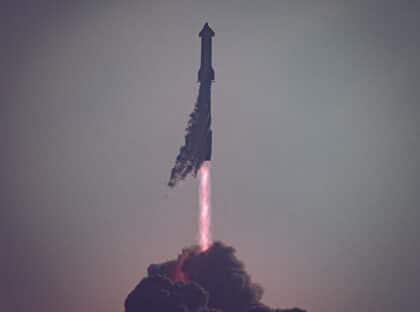
April 20, 2023
The Mars Society today congratulated SpaceX for the first flight test of its fully reusable Starship space launch system. The test flight, which for the first time launched the Starship upper stage integrated with its Superheavy booster, was, by a factor of two, the most powerful rocket launch in human history.Lasting over three minutes, the flight test revealed numerous issues with the system, including insufficient protection of the launch infrastructure, failures during launch or flight of eight out of the Superheavy’s 33 Raptor engines, and failure of the system to separate the Starship from the Superheavy as designed. These issues can now be corrected in preparation for the next flight test.
Commenting on the test, Mars Society President Dr. Robert Zubrin said “The Starship test flight today was a remarkable achievement. The vehicle was able to survive numerous subsystem failures to make it through Max Q and all the way to stage separation, thereby providing a wealth of data to SpaceX engineers to now correct and then move forward.
Last edited by RobertDyck (2023-06-15 16:24:29)
Online
Like button can go here
#162 2023-06-15 16:28:14
- RobertDyck
- Moderator
- From: Winnipeg, Canada
- Registered: 2002-08-20
- Posts: 8,578
- Website
Re: How's the Society doing right now?
Weird! If I add the last paragraph of the post, it causes an internal server error.
::EDIT:: Remainder of above post from the Mars Society website... (Ps. If you click the title above, it will take you to the original article.)
SpaceX’s methodology is to build, fly, crash, and fix what went wrong, then try again, each time pushing further into the flight envelope. On its first try, Starship made it halfway through its flight envelope. It may take them a few more tries before they make it all the way and become fully operational, finally achieving the dream of cheap access to orbit. But they will do it.
“And when that day comes, the human race will be halfway to anywhere.”
Last edited by RobertDyck (2023-06-15 20:07:29)
Online
Like button can go here
#163 2023-06-15 17:10:51
- tahanson43206
- Moderator
- Registered: 2018-04-27
- Posts: 25,878
Re: How's the Society doing right now?
For RobertDyck...
I have found that when Apache is having a fit, it is possible to break up a post into little chunks. All the post is present. It is simply distributed over multiple Post ID's. We have plenty of Post ID's, so this solution may be of interest to our members.
(th)
Offline
Like button can go here
#164 2024-07-21 06:35:45
- tahanson43206
- Moderator
- Registered: 2018-04-27
- Posts: 25,878
Re: How's the Society doing right now?
For all ....
The email below arrived today... I had applied for a membership in a new service that Executive Director James Burk had recommended.
The application was entered some time ago, but it would have been shortly after our Google meeting with Mr. Burk. In any case, after a bit of delay, here is the response:
Something in the text I attempted to post caused the dreaded AISE, so I'll try reducing the post to just the key concept...
OK... whatever text was causing the problem is gone, and the essence of the email is preserved.
The Mars Society
From:
Sat, Jul 20 at 10:12 PMThe Mars Society
Welcome to The Mars Society
We can't wait to see what you share and what you gain from our Network.
By default you’ll receive a Daily Digest email with a collection of your notifications from the day in The Mars Society.The Mars Society The Mars Society
A society committed to lifting the community, knowledge, and technology needed to take us to Mars.
Humanity needs a vehicle that can take us to Mars. Not a rocket built by today’s billionaires. This journey requires one that’s built by all of us...
(th)
Offline
Like button can go here
#165 2024-09-04 06:18:40
- tahanson43206
- Moderator
- Registered: 2018-04-27
- Posts: 25,878
Re: How's the Society doing right now?
For years I've been keeping up with events at the Mars Society thanks to email announcements.
That service stopped and I did not notice ...
Thus, I missed news of the 2024 Mars Society convention.
Register for the 2024 International Mars Society Convention!
The Mars Society
https://www.marssociety.org › news › 2024/03/12 › save...
Mar 12, 2024 — Mark your calendars for the 2024 International Mars Society Convention, taking place Thursday, August 8th through Sunday, August 11th at the University of ...
This is just ** one ** of the many activities that must have placed demands on Mr. Burk's time.
*** Follow up: The last update posted to this topic was in June of 2024:
Sat, Jun 10 at 9:29 AM
The computer that received these announcements is still waiting to be plugged in.
(th)
Offline
Like button can go here
#166 2024-09-04 07:07:57
- tahanson43206
- Moderator
- Registered: 2018-04-27
- Posts: 25,878
Re: How's the Society doing right now?
Here is just one of the many announcements at marssociety.org;
The Mars Society
Attention STEM Educators!August 24, 2024
Education, Humans To Mars, K-12, Mars curriculum, Science, Spaceflight, STEM, Students, The Mars Society
News & AnnouncementsMy name is Nicole Willett, Director of Education Programs at the Mars Society, the world’s largest humans-to-Mars advocacy group. We are excited to offer a comprehensive STEM curriculum designed for all grade levels (K-12) and are looking for teachers to implement these projects and activities in their classrooms—completely free of charge!
Understanding the challenges of tight budgets, we’re providing these resources at no cost. All we ask in return is for your feedback on the activities via a brief Google Form, which will only take a few minutes of your time. As a former science educator with 20 years of experience, I know how valuable your time is!
The curriculum includes detailed instructions for teachers, slideshows, videos, student materials, and alignment with educational standards. If you’re interested in participating, please reply to this email (nicolew@marssociety.org). I’m also available to provide additional information through email or Zoom.
Below is a list of activities available for various grade levels. Please include the activities you’re interested in when you reply.
Mid to High School:
Humans to Mars Engineering Design Competition (2 options available, 1-6 week program)
Student Lectures on Mars (Research & Presentations)
Terraforming Mars (Research, Presentations & Diorama Building)
Humans to Mars (Research, Presentations & Diorama Building)
Build a Mars Rover (Upcycled Materials or Purchase a Kit)
Mars Rover Obstacle Course (Accompanies Mars Rover Project)
Learning Extension: Finding Life on Mars (Research & Presentations)
Build a Mars Habitat (Small or Large, Upcycled or New Materials)K-5:
Mars Mallows (Food Activity—Learning the Shape & Color of Mars)
Build a Mars Habitat (Small)
Build a Mars Rover (Upcycled or New Materials)Please feel free to share this unique opportunity offered by the Mars Society with any other educators who might be interested. We look forward to working with you to inspire the next generation of space explorers!
(th)
Offline
Like button can go here
#167 2026-03-07 07:26:55
- tahanson43206
- Moderator
- Registered: 2018-04-27
- Posts: 25,878
Re: How's the Society doing right now?
We have an announcement from the Mars Society about the latest competition...
Message Body
MARS SOCIETY ANNOUNCEMENTHigh School Students!
Design Your Own Mission to Mars This SummerThe Mars Society is excited to announce the Fifth Annual International Mission to Mars Engineering Design Competition, a dynamic virtual summer program open to high school students ages 13–19 worldwide. The program will run June 8 through July 10, 2026, offering students an immersive opportunity to tackle real-world challenges related to human exploration of the Red Planet.
During this five-week competition, students will think and work like aerospace engineers and mission planners by designing a comprehensive human mission to Mars lasting up to 18 months. Working together in teams, participants will develop mission concepts addressing key aspects of Mars exploration, including:
Habitats and life support systems
Scientific instruments and research goals
Power generation and sustainability solutions
Rovers, vehicles, and surface mobility strategies
Crew composition and mission operationsThroughout the program, students will participate in live online lectures, workshops, and discussions led by leading scientists, engineers, and experts from NASA, the aerospace industry, and academia. These sessions provide valuable insight into real-world space exploration while helping students strengthen their STEM problem-solving, teamwork, and critical thinking skills—experience that can stand out on college and scholarship applications.
The competition is supervised by Nicole Willett, Education Director of the Mars Society, who brings extensive experience in STEM education and youth outreach. Under her guidance, students receive mentorship while exploring potential future careers in science, engineering, and space exploration.
The entire program is conducted virtually, allowing students from around the world to participate and collaborate with peers who share a passion for space and STEM.
Application Deadline: May 15, 2026 (5:00 PM PST) – For full details and to apply, please click here.
https://education.marssociety.org/compe … b9402000a5Educators are encouraged to share this opportunity with their students, and the poster for the program may be printed and distributed to help inspire participation.
If you have questions about the 2026 summer competition, please contact Nicole Willett at nicolew@marssociety.org.
If you’ve ever dreamed of helping humanity reach Mars, Summer 2026 may be your launch window.
The Mars Society
Our mailing address is:
1100 Johnson Road, Suite 18257
Golden, CO 80402 U.S.A.
www.marssociety.org
https://www.facebook.com/TheMarsSociety
@TheMarsSocietyCopyright © 2026 The Mars Society, Inc., All rights reserved.
You are receiving this you joined the Mars Society or gave us your email address.
(th)
Offline
Like button can go here
#168 2026-04-20 12:18:33
- tahanson43206
- Moderator
- Registered: 2018-04-27
- Posts: 25,878
Re: How's the Society doing right now?
We have another announcement from the Mars Society...
Harper’s Magazine Feature: Redshift – Rehearsing for Humanity’s Future on Mars
InboxNew Mars Forums Mailer
A Harper's Magazine feature article about Crew 315's analog mission at the Mars Society's MDRS - Mars Desert Research Station in southern Utah.
Redshift – Rehearsing for Humanity’s Future on Mars
By Elena Saavedra Buckley, Harper’s Magazine, 04.15.26To become a Martian colonist, I first had to fill out a Google Form. It asked me about my aviation know-how, medical training, and experience “working in extreme environments.” I sheepishly wrote “N/A” each time, adding a note that highlighted my cooking and social skills. It turned out that this was okay: I was only going to Utah, after all, and the institution running the show was not a multibillion-dollar federal agency but the Mars Society, a scrappy nonprofit. The organization was founded in 1998 by the aerospace engineer Robert Zubrin to advocate for human settlement of the red planet. In 2002, it opened the Mars Desert Research Station, a simulated Martian settlement—laboratory, theater, and summer camp all at once. Located in a corner of rural southeastern Utah, the MDRS’s environment looks enough like Mars to play the part while still being accessible to participants and potential donors. (Antarctica and the Atacama Desert, arguably the best Martian analogues on Earth, are harder sells.)
I was accepted into a crew in late 2024, but our plans for a November launch date were quickly foiled when the man who was supposed to be our commander stopped replying to emails from mission support. Plenty of real-life space missions experience delays—over the thirty-year course of the U.S. Space Shuttle program, at least eighty missions were scrapped—but the obstacles here seemed avoidable. A month before we were meant to depart, Sergii Iakymov, the Ukrainian aerospace engineer who helps run the MDRS, told us our mission had been called off. “This decision is final,” he wrote. “We wish you all the best!”
Fortunately, there was another Google Form, and I managed to join a new crew that would be heading out in April. The commander of this mission, Dave, was a founding member of the Mars Society. He emailed to welcome me (“Howdy Elena”) and attached a photo of himself in aviator sunglasses, brandishing a small troll doll in front of the rotund white structure where we would soon be living together.
The MDRS is the longest-running Martian habitat in the world; more than three hundred crews have traveled there to live together, eat freeze-dried food, drive “rovers” through the desert in helmeted space suits, and work on research projects. Most Martian simulations are lengthy affairs: one conducting NASA-sponsored research on the slopes of Mauna Loa, in Hawaii, lasts at least four months, while NASA’s simulations at the Johnson Space Center, in Houston, span a full year. The longest-ever Martian simulation, beginning in 2010 at the Institute of Biomedical Problems in Moscow, went on for 520 days.
The Mars Society’s simulations, on the other hand, are usually two weeks long. Crew members’ research projects can seem a bit perfunctory, often involving testing gadgets or mimicking the sort of fieldwork that might someday be done on Mars. (This isn’t to say that the longer-term missions always produce mountains of technical research. In Russia, the six crew members played a lot of Guitar Hero, and mission control had to fake a fire to keep them alert.) Most participants are either graduate students or ordinary Mars enthusiasts, the majority of whom pay the Mars Society between $2,000 and $3,500 to attend. Only a handful of them have ever actually made it into space. It wasn’t initially clear to me what, exactly, the organization’s simulation had done to nudge humanity toward the red planet. It seemed more like an elaborate team-building exercise, a logistically complicated and expensive ropes course for space-travel diehards.
In the months before the mission, I attended regular Zoom meetings with my fellow crew members. There were two younger professionals in their thirties: Michael, who would be the crew’s engineer, and Koi, our health-and-safety officer. Then there were two retirees: Tim, who was serving as a “crew artist,” and Dave, who I learned had taken part in five previous MDRS simulations. These were people who could list every one of NASA’s rocket types, who had opinions on whether Mars was best reached directly from Earth or from a base on the moon. I would be the crew journalist, a traditional MDRS position best described as a kind of pro bono PR rep. My tasks would consist of writing daily summaries of our days on the planet that the Mars Society could then post on its website and Facebook pages. (I would also water the plants in the greenhouse.) Together we made up Crew 315, or, as we called ourselves, Crew Phoenix—a name that had been chosen by the rest of the team before I joined, supposedly for its connotations of rebirth; we wanted to revive a planet that may have once hosted life, but that had died long ago.
As our launch date approached, we prepared our proposals for research projects that could conceivably be completed in two weeks. The ones I designed were rudimentary, to say the least: one involved collecting samples of desiccated soil in order to, I claimed, “better understand how similar features on Mars might have formed”; the other had me monitoring a store-bought oyster-mushroom growth kit on a shelf in the greenhouse. We booked our flights and bought blue one-piece flight suits on Amazon that were almost certainly intended as Halloween costumes. We spent hours discussing the logistics of ordering customized mission patches.
To read the full article, please click here.
(th)
Offline
Like button can go here
#169 2026-04-21 12:30:25
- tahanson43206
- Moderator
- Registered: 2018-04-27
- Posts: 25,878
Re: How's the Society doing right now?
This announcement is about a volunteer opportunity helping with risk management at the Mars Society analog stations.
New Mars Forums Mailer
Tue, Apr 21 at 2:03 PM
Message Body
MARS SOCIETY ANNOUNCEMENTSeeking Experts: Join the Mars Society’s Safety & Risk Management Advisory Committee
The Mars Society is pleased to announce the formation of a new Advisory Committee on Safety & Risk Management, aimed at strengthening safe, ethical, and resilient operations across its global network of analog research stations.
This committee will serve as an independent advisory body, providing expert guidance to the Mars Society leadership team, including Executive Director James Burk, and Director of Safety Russ Nelson. Its work will support ongoing efforts to enhance safety standards, improve operational practices, and align with international best practices in analog space research.
Purpose & Scope
The Advisory Committee will contribute to:
Development and review of safety policies and protocols
Evaluation of incidents and identification of lessons learned
Identification of emerging risks across analog missions
Promotion of best practices in safety, ethics, and operational resilience
Harmonization of safety approaches across all Mars Society analog facilitiesAreas of Expertise Sought
We invite Expressions of Interest from qualified Subject Matter Experts with demonstrated experience in one or more of the following areas:
Occupational Health & Safety
Disaster & Emergency Management
Medical / First Response
Human factors, crew psychology, and team dynamics
Field research or austere/remote environment operations
Engineering, habitat systems, or technical safety
Space analog operations, research ethics, or governanceApplicants with expertise in additional relevant areas are also encouraged to apply with appropriate justification.
Committee Role & Expectations
Selected members will:
Serve in a non-operational, advisory capacity
Review safety policies, procedures, and program updates
Provide input on significant incidents and post-mission analyses
Participate in annual meetings, with optional ad hoc sessions as needed
Support cross-program collaboration and safety standardizationMembership Requirements:
Must be an active Mars Society memberPositions are voluntary and appointed by the Director of Safety
Terms will be reviewed periodically to ensure continued relevance and expertise
Oversight of the committee will be provided by the Executive Director, through the Director of Safety.
How to Apply
Interested individuals are invited to submit an application package via email including:
Mars Society Membership ID number
(Join here: https://www.marssociety.org/join/)
Statement of Interest (1–2 pages maximum) outlining:
Relevant expertise and professional background
Potential contributions to analog safety and risk management
Experience in remote, extreme, or research environments (if applicable)
Current résumé or CV demonstrating subject matter expertise
One professional reference who can speak to your qualifications
Submit applications to: rnelson@marssociety.org.Selection Process
Applications will be reviewed on a rolling basis. Shortlisted candidates may be contacted for follow-up discussions prior to appointment.Join Us
The Mars Society welcome expressions of interest from professionals across disciplines and regions who are committed to advancing safety, ethics, and resilience in analog space research. Help shape the future of safe human exploration—on Earth and beyond.The Mars Society
Our mailing address is:
1100 Johnson Road, Suite 18257
Golden, CO 80402 U.S.A.
www.marssociety.org
https://www.facebook.com/TheMarsSociety
@TheMarsSocietyCopyright © 2026 The Mars Society, Inc., All rights reserved.
You are receiving this you joined the Mars Society or gave us your email address.
Email Marketing Powered by Mailchimp
(th)
Offline
Like button can go here
#170 2026-04-26 12:57:21
- tahanson43206
- Moderator
- Registered: 2018-04-27
- Posts: 25,878
Re: How's the Society doing right now?
This announcement invites papers for the upcoming 2026 Convention:
Submit an Abstract – 2026 International Mars Society Convention
InboxInbox
Message 1 of 1. For JAWS, turn virtual PC Cursor on if needed.New Mars Forums Mailer
·
Sun, Apr 26 at 2:02 PM
Message Body
MARS SOCIETY ANNOUNCEMENT
View this email in your browserSubmit an Abstract – 2026 Int'l Mars Society Convention
The 2026 International Mars Society Convention is now accepting abstract submissions for presentations covering all aspects of Mars exploration and settlement.
We welcome proposals across a wide range of topics, including science, engineering, technology development, human factors, public policy, economics, and other key areas shaping the future of the Red Planet.
This global gathering will bring together scientists, engineers, policymakers, industry leaders, and space advocates to share ideas, research, and strategies for advancing human exploration of Mars. Whether your work is technical, conceptual, or interdisciplinary, we encourage you to contribute to the conversation.
To be considered for in-person presentation during the October convention at the University of Southern California in Los Angeles, please submit a 150–300 word abstract by Saturday, June 27th (5:00 pm MT) via: convention.marssociety.org.
The Mars Society
Our mailing address is:
1100 Johnson Road, Suite 18257
Golden, CO 80402 U.S.A.
www.marssociety.org
https://www.facebook.com/TheMarsSociety
@TheMarsSocietyCopyright © 2026 The Mars Society, Inc., All rights reserved.
You are receiving this you joined the Mars Society or gave us your email address.Want to change how you receive these emails?
You can update your preferences or unsubscribe from this list.Email Marketing Powered by Mailchimp
Reply
Forward
(th)
Offline
Like button can go here
#171 2026-05-02 06:33:59
- NewMarsMember
- Member
- Registered: 2019-02-17
- Posts: 2,072
Re: How's the Society doing right now?
This document arrived by email today! It is chock full of reports on activities of the Mars Society, chapters and initiatives. Much of the focus is upon activities for young people. The Houston Chapter is featured, showing their recent collaboration with the North Houston NSS chapter in hosting science fair winners. This forum has been following the North Houston chapter for several years.
Red Planet Pulse Newsletter (May 2026)
New Mars Forums Mailer
·
Fri, May 1 at 6:04 PMRed Planet Pulse logo
May 2026Powered by chapters. Driven by members. Focused on Mars.
Editor’s Note
Greetings, Martian explorers!Spring is bringing new excitement to the global Mars Society community. From youth STEM initiatives to Mars analog research and field studies, there’s plenty to share!
In this edition:
● Isaacman emphasized the current Moon-to-Mars groundwork in NASA planning.● Mars Society 2026 International Convention announced
● Poster design for convention announced.
● International youth chapter engages young people around the world to explore the scientific, ethical, and humanitarian dimensions of Mars exploration.
● Costa Rica Chapter announcement
● Challenges, competitions, Mars novels, and more!
● Recent developments in Mars exploration news
Isaacman Emphasized the Current Moon-to-Mars Groundwork in NASA Planning
At the 2026 Space Symposium in Colorado Springs, Jared Isaacman, NASA’s 15th Administrator and aerospace leader, outlined a clear and pragmatic vision for humanity’s path to Mars. While much of his address focused on near-term lunar efforts, his message was unmistakable: Mars remains the ultimate destination, but getting there requires disciplined execution today.
Isaacman emphasized that current missions under the Artemis program are not detours, but essential stepping stones. The Moon serves as a proving ground where technologies, operations, and human systems can be tested and refined before committing to the far greater challenges of Mars. From resource utilization to sustained human presence, these efforts are laying the groundwork for deep-space exploration.
Isaacman stated, regarding the moon, “It’s the perfect proving ground to master what comes next.”
A central theme of his remarks was the need to accelerate the pace of space operations. Isaacman highlighted the importance of increasing launch frequency—from timelines measured in years to those measured in months—while expanding collaboration between government and commercial partners. This shift toward a more industrial, repeatable approach to spaceflight is critical for enabling the scale required for a Mars mission. He referred to these high-frequency lunar missions as, “Where we will master the skills necessary for when the day comes that NASA astronauts embark on a journey to plant the stars and stripes on Mars.”
Although Mars was not the immediate focus of current programs, it was clearly positioned as the strategic north star. Technologies such as advanced propulsion, long-duration life support, and deep-space mission architectures are all being developed with Mars in mind. In this framework, each Artemis mission represents incremental progress toward a much larger objective.
By Jennifer Jones | On-site coverage, Space Symposium — April 13, 2026, Colorado Springs
Save the Date - 2026 Mars Society International Convention
Get ready for the 29th Annual International Mars Society Convention — the place to be for anyone excited about the future of Mars exploration. Join scientists, engineers, aerospace executives, space journalists, and space advocates from around the world for a few days packed with talks, panels, and big ideas about getting humans to the Red Planet.
This year’s convention will take place October 22-24 on the University of Southern California (USC) campus in Los Angeles, bringing the conversation right to the heart of the Mars community. Whether you’re presenting research or just curious about what’s next for space exploration, there’s something here for you.
Online registration is now open, so be sure to grab your spot. And if you’ve got research, ideas, or projects to share, don’t forget to submit an abstract and be a leader in the conversation!
Finally, please stay tuned via the organization’s social media platforms for regular updates about the 2026 convention, including speaker and panel announcements. We hope to see you at USC this fall!
Poster Design Competition for 2026 Mars Society Convention
In addition to all the fun, learning, and advocating planned for the upcoming International Mars Society Convention in October, the organization is excited to announce its annual poster design contest—and we’re calling on creative minds around the world to take part.
If you have a passion for graphic design and a love for Mars and space exploration, this is your opportunity to help shape the visual identity of our biggest event of the year.
Chapter Highlights & Local Activities
Global Youth Philanthropy (GYP) Chapter Launches a New Generation of Mars Advocates
The Mars Society is excited to spotlight one of its newest and most innovative chapters: the Global Youth Philanthropy (GYP) Chapter, led by Michael Wang. Emerging from an organization already dedicated to empowering young people through global collaboration, storytelling, and research, the GYP Chapter represents a unique and forward-thinking approach to Mars advocacy. With active participation spanning Boston, Canada, and China, the chapter reflects a truly international foundation from its inception. Rather than viewing Mars exploration as separate from challenges on Earth, GYP sees it as a natural extension of its mission—connecting questions of sustainability, cooperation, and the future of humanity across both worlds.
What sets the GYP Chapter apart is its focus on youth engagement through creativity and global dialogue. In its first year, the chapter is launching its flagship initiative, “Voices for Mars: Global Youth Roundtable,” an online event designed to bring together young people from around the world to explore the scientific, ethical, and humanitarian dimensions of Mars exploration. Early collaboration with international Mars Society chapters—including Costa Rica, and China—demonstrates the global reach and momentum already building behind this effort. Notably, the collaboration extends beyond events: the Costa Rica Chapter Leader has joined the GYP advisory board, further strengthening international ties and shared leadership. Alongside this, GYP is developing a series of short, engaging educational videos aimed at making Mars exploration more accessible and inspiring to younger audiences.
Looking ahead, the GYP Chapter envisions building a vibrant, interconnected global network of future Mars leaders—connecting students, researchers, and advocates through mentorship, collaborative projects, and cross-cultural partnerships. Their approach emphasizes not only participation, but leadership—empowering young people to actively shape the future of space exploration. At the same time, the chapter brings a valuable perspective to the Mars Society by highlighting the humanitarian implications of Mars exploration, including how technologies and international cooperation in space can benefit life on Earth.
As the GYP Chapter officially launches with its online celebration on April 4, it stands as a powerful example of how the next generation is stepping forward to carry the mission onward. By blending science, storytelling, and global citizenship, this chapter is helping to expand both the reach and the meaning of Mars exploration.
Houston Chapter & SEFH Winners
The Houston Chapter teamed with the North Houston Chapter of the National Space Society as a Special Awarding Agency at the Science and Engineering Fair Houston (SEFH) on February 14th. Covering 23 counties and 1,200 students in grades 8–12, judges from the Mars Society selected several standout projects.
Winners will present at upcoming chapter meetings and receive Dr. Robert Zubrin–autographed books, along with other awards.
Mars Society ambassadors and members are encouraged to share local events, mentor young participants, and support chapter expansion globally.
Houston Mars Society Chapter Facebook page — Visit now!
Costa Rica Chapter Ignites a New Space Frontier
The Mars Society is proud to highlight the launch of the Mars Society Chapter of Costa Rica (MSCR), led by Chapter President Manfred Xirinachs—a bold and inspiring effort to help build a space industry from the ground up. Led by a passionate vision to create opportunities where few previously existed, the chapter emerges from years of grassroots work, including the founding of the Red PlaNet aerospace organization and the development of the Summit Tower microgravity facility.
These efforts culminated in international collaboration through an analog astronaut mission at Habitat Marte in Brazil, where the global reach and impact of the Mars Society became clear—and the motivation to bring that opportunity back to Costa Rica took shape.
Now officially established, the Costa Rica Chapter is already moving forward with ambitious plans to connect local talent with global space initiatives. Early efforts include organizing hands-on engineering competitions, hosting public exhibitions to showcase space technology, and building pathways to help candidates prepare for international analog missions.
With a focus on training and empowering a new generation of contributors, the chapter aims to demonstrate that meaningful participation in space exploration is possible from anywhere in the world. Their vision aligns powerfully with the Mars Society mission: to build the infrastructure, talent, and momentum today that will carry humanity to Mars tomorrow.
Chapter Growth Strategy: Leveraging LinkedIn for Outreach
Mars Society Director of Chapters Ron Storie is encouraging Chapter Leaders to use LinkedIn as a powerful outreach tool for recruitment and engagement. Over the past six months, he has built more than 3,000 connections—reporting greater success in forming meaningful relationships than with other platforms. These efforts have helped launch a new chapter in Costa Rica, which is relying almost completely on LinkedIn, and are supporting growth in the Dominican Republic and the University of New Mexico.
LinkedIn enables Chapter Leaders to build targeted local networks by connecting with professionals interested in space, science, and education. It also provides tools to promote events, share content across platforms, and identify potential members and partners, making it an efficient and strategic way to expand chapter reach and impact.
Find a Chapter near you
Mars Challenges & Youth ProgramsFifth Annual International Mission to Mars Design Program
High school students ages 13–19 worldwide can apply to participate in a virtual human mission to Mars engineering design competition (June 8 – July 10, 2026) organized by the Mars Society and its education director Nicole Willett.Teams will address habitats, life support, power, mobility, scientific instruments, and crew operations, guided and lectured by NASA engineers, aerospace experts, and senior Mars Society mentors.
Application Deadline: May 15, 2026, 5:00 PM PST.
University Rover Challenge (URC 2026)
May 28–30, Mars Desert Research Station, Utah
The University Rover Challenge (URC) is the premier international robotics competition for university teams, held annually at the Mars Desert Research Station in Utah. Student-built rovers are tested in realistic Mars-like conditions, performing tasks such as autonomous navigation, scientific sampling, and equipment operation.
The competition challenges participants to apply engineering, programming, and teamwork skills while simulating the complexities of human exploration on Mars. Led by director Kevin Sloan, URC provides an unparalleled hands-on experience, inspiring the next generation of space engineers and scientists.
Mars Food Challenge - Mars to Table
The Mars to Table Challenge allows multidisciplinary teams to design integrated, Earth-independent food systems for long-duration human missions. This competition emphasizes closed-loop sustainability, crew nutrition, and terrestrial applications.
Teams are developing systems through September 2026, with NASA prize money for U.S. participants and recognition for international teams. The entry registration deadline for the NASA Mars to Table Food Challenge is July 31, 2026, at 8:59 PM EDT.
Featured Content
Zubrin: Don’t Let the Moon Derail Mars
Mars Society President Dr. Robert Zubrin critiques Elon Musk’s apparent pivot toward the Moon, warning it could delay or derail humanity’s push to Mars. The op-ed emphasizes that while the Moon may seem easier to reach, it is far less suited for building a self-sustaining human presence than Mars.
Read more: https://www.marssociety.org/news/2026/0 … rin-op-ed/.
From Utah to Mars: Inside a Simulated Future of Human Exploration
A recent Harper’s Magazine feature article follows an analog astronaut experience at the Mars Society’s Mars Desert Research Station, where participants simulate missions in a Mars-like environment to prepare for future exploration. It blends humor and skepticism, portraying the program as part science, part experiment in human resilience—and part reflection of our enduring desire to reach Mars.
Read more: https://www.marssociety.org/news/2026/0 … e-on-mars/.
How a Visit to NASA Inspired a Novel (Red Planet Bound Blog)
Acclaimed sci-fi author Amie Kaufman describes how a visit to NASA helped spark the idea for a Mars-based novel, showing how real-world science can fuel imaginative storytelling. The blog also highlights the back-and-forth between fiction and science, where writers draw inspiration from space exploration while scientists themselves are often inspired by stories.
Read more: https://www.marssociety.org/news/2026/0 … -rpb-blog/.
Red Planet Live Update
Red Planet Live (RPL), hosted by our popular science communicator Ashton Zeth, is currently on a brief hiatus while Ashton is on maternity leave.
We’re excited for the show’s return and will provide more details soon through the Mars Society’s social platforms. In the meantime, explore the RPL archives and catch up on earlier podcast episodes on YouTube.
RPL is available across major platforms, including Spotify, Amazon Music, Apple Podcasts, and YouTube.
Mars Exploration News — Recent Highlights
Nuclear Spacecraft to Mars: NASA’s SR-1 Freedom Mission
NASA has announced an ambitious new step toward deep-space exploration with the planned launch of Space Reactor-1 (SR-1) Freedom, the first nuclear-powered interplanetary spacecraft, targeting Mars before the end of 2028. Designed to demonstrate advanced nuclear electric propulsion, the mission represents a major leap in enabling efficient, long-duration travel beyond the Moon.
When SR-1 Freedom reaches Mars, it will deploy the Skyfall payload—Ingenuity-class helicopters intended to continue exploring the Martian surface—marking a significant expansion of aerial exploration on the Red Planet. This mission not only advances propulsion technology but also lays the groundwork for sustained human and robotic exploration of Mars and beyond.
This announcement comes as NASA unveils initiatives to achieve America’s National Space Policy, which also includes going back to the moon, building a Moon Base, ensuring American presence in low Earth orbit, and advancing world-changing discoveries.
Read more: https://www.nasa.gov/news-release/nasa- … ce-policy/.
Underground Water on Mars Suggests Extended Habitability
NASA’s Curiosity rover has uncovered more than 20 complex organic compounds preserved in Martian rock dating back 3.5 billion years—including several types never before confirmed on Mars. These molecules, spanning carbon-, sulfur-, and nitrogen-based chemistry, demonstrate that ancient organic material can survive the planet’s harsh environment far longer than previously thought. While not evidence of life, the discovery significantly advances our understanding of Mars’ past habitability and brings scientists one step closer to answering one of humanity’s biggest questions: Was Mars ever alive?
Read more: https://www.nature.com/articles/s41467-026-70656-0.
Perseverance AI Navigation Integration
NASA’s Perseverance rover has used AI planning to autonomously navigate terrain on Mars — a first for the mission — and continues exploring the ancient delta region of Jezero Crater, providing deeper insight into the planet’s watery past and environments that could have once supported life. The autonomous drive capability increases the rover’s science productivity by enabling safer, faster traversal with less human intervention.
Read more: https://www.nasa.gov/missions/mars-2020 … e-on-mars/.
Blue Origin & NASA ESCAPADE
NASA and Rocket Lab’s ESCAPADE mission, launched atop a Blue Origin New Glenn rocket, sent twin satellites — “Blue” and “Gold” — toward Mars to study how the solar wind interacts with the planet’s weak magnetic field. This research will improve the understanding of atmospheric loss and space weather dynamics around Mars as the spacecraft prepares for Mars orbit insertion in 2027.
Read more: https://science.nasa.gov/mission/escapade/.
Proposed Budget Cuts Threaten Mars Science Efforts
A proposed White House budget for fiscal year 2027 has raised serious concerns about its impact on NASA’s Mars research efforts. The plan includes a nearly 47% reduction to NASA’s science programs and introduces a loosely defined “Mars Technology” funding line with minimal detail, raising questions about future priorities and transparency.
Critics also warn the proposal could strain international partnerships, including NASA’s role in supporting the European Space Agency’s Rosalind Franklin Mars rover, while highlighting that high-quality science data from Mars remains heavily dependent on sustained public investment.
Read more: https://www.msn.com/en-us/money/economy … r-AA20O4Qs.
Become a Part of the Mars Society Movement
The Mars Society is the world’s largest and most influential space advocacy organization dedicated to the human exploration and settlement of Mars. If you are not currently a member, please consider joining. There has never been a more exciting time to be involved with the humans-to-Mars movement.JOIN TODAY
Through your support, we’re able to advance cutting-edge analog research, deliver meaningful outreach and education initiatives, and empower chapter activities worldwide. Every contribution helps sustain our work and brings us one step closer to making Mars exploration a reality.
DONATE today to support these programs and more!
Can’t Get Enough Mars? Neither Can We!
Check out other exciting stories and announcements on the Mars Society website. Have an interesting story or accomplishment to share? Send story suggestions to mstoltz@marssociety.org to be considered for publication.
Thank you for your support
of The Mars Society’s mission.
Together, we’re building the future of human exploration and settlement on Mars!The Future of Space
Exploration Starts Here.
LEARN MORECopyright (C) 2026 The Mars Society, Inc.. All rights reserved. You are receiving this you joined the Mars Society or gave us your email address.
Our mailing address is:
The Mars Society1100 Johnson Road, Suite 18257
Golden, CO 80402
If anyone is interested in seeing links or images that were included in the email, a practical way of delivery would be by email. I'll send a copy to NewMarsMember(at)Gmail.com so anyone can request a copy.
However, after review of this post line by line, I think there are enough links to cover most of the material in this document.
(th)
Recruiting High Value members for NewMars.com/forums, in association with the Mars Society
Offline
Like button can go here
#172 2026-05-21 06:55:29
- tahanson43206
- Moderator
- Registered: 2018-04-27
- Posts: 25,878
Re: How's the Society doing right now?
We received another email from Mars Society today:
Conversation View
Stand Up for NASA Science & America’s Space Future
New Mars Forums Mailer
·
Wed, May 20 at 2:02 PM
Message Body
MARS SOCIETY ANNOUNCEMENTStand Up for NASA Science & America’s Space Future
The Mars Society is proud to join a broad coalition of scientific organizations, advocacy groups, industry associations, labor unions, and research institutions in urging Congress to reject the proposed FY 2027 cuts to NASA’s space science programs.
Led by The Planetary Society, this joint effort reflects growing concern across the American space community that these proposed reductions would seriously damage U.S. leadership in planetary exploration, scientific discovery, technology development, and STEM education. We invite supporters to read and share the coalition’s joint letter to members of Congress calling for strong support of NASA Science.
For decades, NASA’s science missions have expanded humanity’s understanding of Mars, the Moon, Earth, and the broader cosmos while inspiring millions of students, researchers, engineers, and space advocates across the United States. The proposed cuts would jeopardize dozens of missions and research programs, weaken the nation’s scientific workforce, and undermine the long-term goals of human exploration beyond Earth.
We encourage Mars advocates, space supporters, scientists, students, and members of the public throughout the country to speak out in support of NASA and its vital science initiatives. American leadership in space exploration depends not only on launching astronauts and spacecraft, but also on maintaining the robust scientific foundation that makes exploration meaningful and sustainable.
“Exploration without science is just tourism. The Mars Society has argued for more than three decades that the case for sending humans to other worlds rests on what we learn when we get there, and that learning starts with the robotic missions, the data analysis, and the trained workforce that NASA’s Science Mission Directorate makes possible. The proposed 46 percent cut would terminate more than 50 missions and push NASA science funding to its lowest inflation-adjusted level since 1984. It would gut the very capability that Artemis depends on, and that any future human mission to Mars will depend on. The American public has made clear in poll after poll that they want their country to lead in space science. Congress should listen, and reject these cuts as decisively as they did last year," said James Burk, Mars Society Executive Director.
The Mars Society remains committed to working with our partners in the space community and with Congress to help protect NASA Science and ensure the United States continues leading the world in exploration, discovery, and the human future in space.
The Mars Society
Our mailing address is:
1100 Johnson Road, Suite 18257
Golden, CO 80402 U.S.A.
www.marssociety.org
https://www.facebook.com/TheMarsSociety
@TheMarsSocietyCopyright © 2026 The Mars Society, Inc., All rights reserved.
You are receiving this you joined the Mars Society or gave us your email address.Email Marketing Powered by Mailchimp
Reply
(th)
Offline
Like button can go here
#173 2026-05-21 17:19:59
- tahanson43206
- Moderator
- Registered: 2018-04-27
- Posts: 25,878
Re: How's the Society doing right now?
And ** another ** email from Mars Society!
Conversation View
Mars Technology Institute Featured in New Red Planet Live InterviewMessage 1 of 1. For JAWS, turn virtual PC Cursor on if needed.
New Mars Forums Mailer
·
Thu, May 21 at 2:03 PM
MARS SOCIETY ANNOUNCEMENTMars Technology Institute Featured in New Red Planet Live Interview
Red Planet Live, the Mars Society’s podcast, has released a new pre-recorded interview special focused on the work and future vision of the Mars Technology Institute (MTI), a research initiative dedicated to advancing technologies essential for long-term human settlement on Mars.
The episode features conversations with Quinn Morley, CEO & Co-founder of Unleashed Robotics, Shaun Riddell, CEO of Space DIRT, and Julien Villa-Massone of Dynamik Orbits, exploring breakthrough developments in robotics, artificial intelligence, biosignature research, autonomous systems, and sustainable energy technologies designed to help build resilient off-world communities.
Operating under the Mars Society umbrella, MTI continues to support research aimed at accelerating humanity’s path toward becoming a multi-planet civilization.
We invite you to check out the new RPL episode, now streaming on the Mars Society’s YouTube channel at: youtu.be/GN3zszVtkkE.
Red Planet Live will return to live 60-minute programming on Tuesday, July 21st (5:00pm PST) with host Ashton Zeth. The featured guest for the show will be announced in the near future through the Mars Society’s social media platforms.
The Mars Society
Our mailing address is:
1100 Johnson Road, Suite 18257
Golden, CO 80402 U.S.A.
www.marssociety.org
https://www.facebook.com/TheMarsSociety
@TheMarsSocietyCopyright © 2026 The Mars Society, Inc., All rights reserved.
You are receiving this you joined the Mars Society or gave us your email address.Want to change how you receive these emails?
You can update your preferences or unsubscribe from this list.Email Marketing Powered by Mailchimp
(th)
Offline
Like button can go here
#174 2026-08-24 15:19:00
- tahanson43206
- Moderator
- Registered: 2018-04-27
- Posts: 25,878
Re: How's the Society doing right now?
Mars Society is sponsoring a writing contest ... Submissions are due in September...
New Mars Forums Mailer
Mon, Aug 24 at 4:14 PMMARS SOCIETY ANNOUNCEMENT
Calling All Mars Dreamers: “Imagine Mars” Writing Contest Still Open
UPDATE: By popular request, the submission deadline for the Imagine Mars Story Contest has been extended! You now have until Monday, September 7, at 5:00 pm MT to submit your story and share your vision of life on the Red Planet.
The Mars Society is pleased to announce the launch of the Imagine Mars Story Contest, a new creative writing competition organized by our Missouri Mars Mavens chapter. Spearheaded by chapter leader Kevin Kelly, the contest invites students, aspiring writers, space enthusiasts, and dreamers of all ages to imagine what life on Mars could look like in the years and decades ahead.
Whether your vision features the first settlers building thriving communities, groundbreaking scientific discoveries, or the everyday adventures of living on the Red Planet, the Imagine Mars Story Contest encourages participants to explore humanity’s future on Mars through original storytelling.
All submissions must be written in English and submitted in DOCX format. Entries submitted in any format other than DOCX will not be accepted. Stories must also meet the following word-count requirements:
Senior Division: 2,000–6,000 words
Junior Division: 1,250–4,000 words
Winning entries will receive prizes and have the opportunity to inspire others to think about the challenges and possibilities of becoming a multi-planetary civilization.
The Mars Society applauds the Missouri Mars Mavens for creating this exciting initiative to spark creativity, encourage interest in Mars exploration, and inspire the next generation of explorers, scientists, engineers, and storytellers.
Ready to imagine the future? Visit the contest website to learn more about eligibility, submission guidelines, deadlines, and prizes—and start writing your journey to Mars today!
The Mars Society
Our mailing address is:
1100 Johnson Road, Suite 18257
Golden, CO 80402 U.S.A.
www.marssociety.org
https://www.facebook.com/TheMarsSociety
@TheMarsSocietyCopyright © 2026 The Mars Society, Inc., All rights reserved.
You are receiving this you joined the Mars Society or gave us your email address.
(th)
Offline
Like button can go here