New Mars Forums
You are not logged in.
- Topics: Active | Unanswered
Announcement
#1 2026-01-15 15:28:31
- SpaceNut
- Administrator
- From: New Hampshire
- Registered: 2004-07-22
- Posts: 30,862
KBD512 Biosphere structure of cast basalt
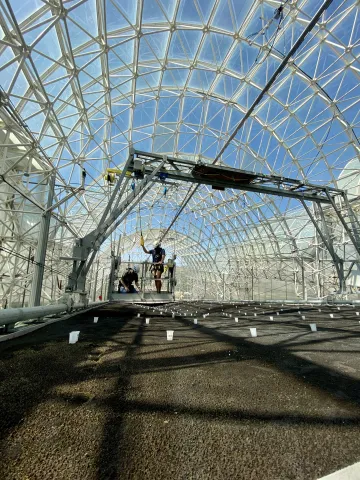
The system of internal support utilizes both curved and flat wall structures.
SpaceNut,
I was thinking of using a combination of 304L from the expended Starships and indigenous materials in a "space frame" design wherein the Starship steel provides external structural support so that locally-sourced cast basalt tiles interlock into the space frame and are pressed outwards and into the space frame by internal pressurization, with sealing accomplished using either a thin internal layer of stainless sheet steel welded into the space frame, over the top of the inner tile faces, or a Silicone-based adhesive sealant could also be used. We can bring enough 304L and Silicone sealant from Earth to build this kind of structure by scrapping / recycling the Starships. I don't think it's feasible to bring enough concrete or basalt tiles, hence why that material must be locally sourced.
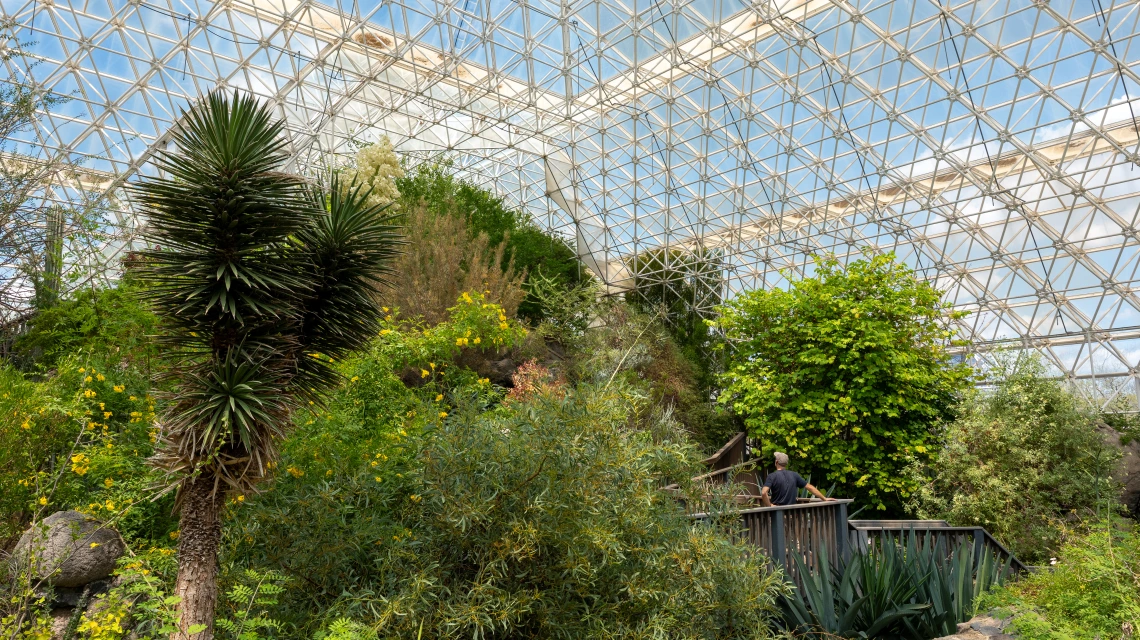
Do you remember the structure of the "Biosphere 2" built in Arizona?
So, imagine that we create a giant ring-shaped habitat, rather than a Super Dome, so as to keep tensile stresses sane, so as to economize on recycled steel, so as to allow us to safely use cast basalt tiles without the thickness of said tiles needing to greatly resemble the stones used to build the pyramids. This maximizes internal volume, minimizes material consumption. We can still build a Super Dome from locally sourced meteorite Nickel-steel, but for sake of argument presume that we can only handle local production of indigenous liquid water, atmospheric gases, and one construction material that we only have to melt and cast into a limited number of molds. More could always be done using more equipment and labor, but we have to bring those things with us.
This is the building that has the stepped shape.
Offline
Like button can go here
#2 2026-01-15 15:29:41
- SpaceNut
- Administrator
- From: New Hampshire
- Registered: 2004-07-22
- Posts: 30,862
Re: KBD512 Biosphere structure of cast basalt
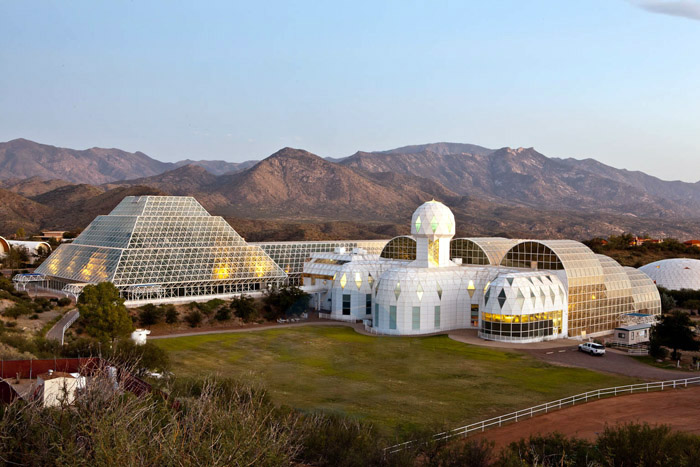
Framing for glass or in this case cast basalt panels.
The Mars cast basalt manufacturing process involves melting Martian basalt/regolith in a furnace (around 1200-1500°C), pouring the liquid rock into molds to form shapes like bricks, pipes, or tiles, and then carefully cooling (annealing) the cast product in kilns to control crystallization, eliminating internal stress and creating durable, wear-resistant structures for planetary habitats.
Key Steps in Manufacturing Cast Basalt for Mars
Raw Material Preparation: Basalt rock or Martian regolith (soil) is collected and processed.
Melting: The material is heated in an electric furnace to a molten state, typically around 1200-1500°C, similar to terrestrial glassmaking.
Molding: The molten basalt is poured into molds to create desired shapes, such as bricks, tubes, or structural components.
Annealing (Controlled Cooling): This crucial step involves slow, controlled cooling in a kiln over many hours, often from high temperatures (e.g., 800°C) down to lower ranges (480-520°C) and then to room temperature, to prevent cracking and develop optimal strength.
Finishing: Products can be used as-is or further processed, like being lined with cement grout for enhanced durability.Why It's Ideal for Mars
In-Situ Resource Utilization (ISRU): Uses readily available Martian basalt.
Durability: Creates hard, strong, abrasion-resistant, and chemically inert materials.
Versatility: Can form building blocks (bricks, beams, columns, domes) and structural reinforcements.
Energy Efficiency: Basalt melts at relatively lower temperatures compared to some metals, making it suitable for solar or nuclear-powered Martian systems
Offline
Like button can go here
#3 2026-01-16 18:16:54
- SpaceNut
- Administrator
- From: New Hampshire
- Registered: 2004-07-22
- Posts: 30,862
Re: KBD512 Biosphere structure of cast basalt
Some of KBD512 posts for the cast basalt is in Ring Habitat on Mars Doughnut Torus
This Stanford Torus structure artistic rendering from Nichlas Benjamin is more in line with what I had in mind for the exterior support rest of the habitation ring:
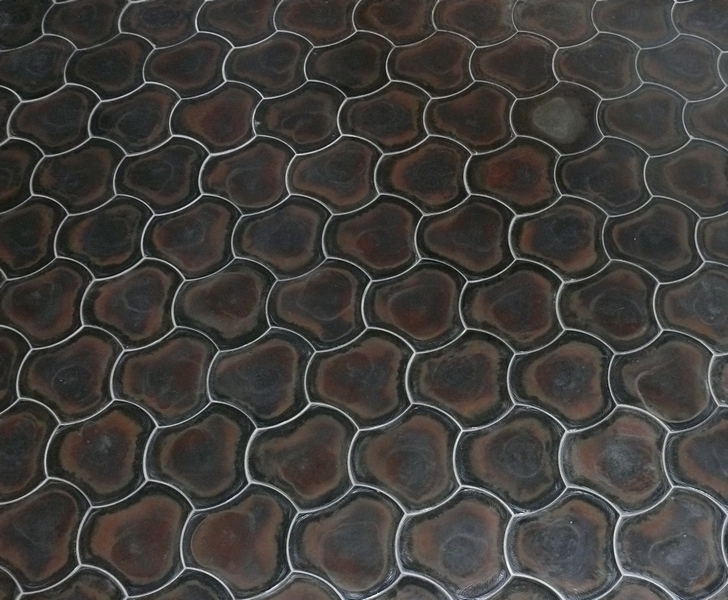
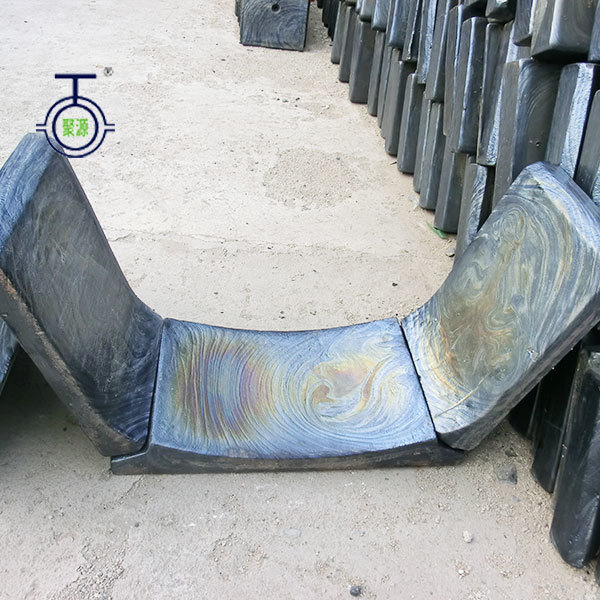
The interior would be lined with cast basalt tiles like these:
Basalt can be cast into relatively complex shapes and has a strikingly beautiful natural appearance:
So, basic concept is as follows:
1. excessive number of floors requiring elevators, with reduced structural materials strength and therefore mass requirements,
2. Starship's 304L stainless steel is converted into a tubular exoskeleton / space frame. The external frame is intended to allow for thermal expansion and contraction in the Martian temperature extremes between day and night.
3. Cast basalt tiles / blocks are inserted into the frame and sealed using Silicone caulk.
4. Liquid CO2 will be pumped through the space frame in an attempt to improve upon the room temperature strength of 304L, and to regulate its temperature to avoid excessive expansion and contraction. We want to keep that stainless cold, definitely below zero, because it's weaker than A36 at room temperature, but not mildly cryogenic because we start to lose ductility and we definitely want to keep that. We're after about 517MPa to 621MPa. We don't go any colder than is required to achieve that yield strength.
5. The structure size / progression is ultimately limited by the number of arriving Starships. We have around 70t of the right kind of material to work with per Starship. The engines are higher grades of stainless that would be repurposed for making fasteners, tooling, and molds.304L Temperature vs Yield Stress for Conventional 304L (green) and Laser Powder Bed Fusion (red):
As the graph above shows, laser sintering of 304 powder delivers high yield strength, partially due to formation of martensite, but we don't want martensite formation in a steel exposed to cryogenic temperatures, so we're sticking with a conventional cold-rolled seamless tubing material produced in a miniature electric arc furnace that accepts bits of recycled Starship hull scrap steel. The yield strength mechanical property is reduced, but that other important metallurgical property, namely an austenitic grain structure which confers ductility at very low temperatures, is more important for our application than pure tensile strength, which we are "thermally improving" by keeping the steel cold using cold LCO2.


Offline
Like button can go here
#4 2026-01-16 18:42:02
- SpaceNut
- Administrator
- From: New Hampshire
- Registered: 2004-07-22
- Posts: 30,862
Re: KBD512 Biosphere structure of cast basalt
Again shape still may change as its never been built as if we are on mars.
It is unknown how fast the mining of ore, processing to be able to cast panels, but to make and weld the frame is also a question. Time and crew size plus equipment causes the build to be pushed across multiple cycles.
Funny we have been there for Cast Basalt
With Basalt melting at temperatures of 1175 - 1350°C, depending on composition.
Similar equipment for other mining operations.
Basalt mining and processing require extremely wear‑resistant, high‑capacity equipment because basalt is one of the hardest and most abrasive natural stones. The core machinery includes drilling/blasting tools, heavy-duty loaders, jaw and cone crushers, VSI sand makers, vibrating screens, and dust‑controlled conveyor systems.
Below is a clear, structured breakdown of the full equipment lineup and process flow, grounded in the latest industry data.
? What Equipment Is Used for Basalt Mining & Processing?
1. Mining / Quarrying Equipment
Basalt is typically extracted from open‑pit quarries.Extraction Tools
Drilling rigs – for blast‑hole drilling in hard rock.Explosives & blasting systems – controlled fragmentation of basalt benches.
Hydraulic excavators (30–70 ton) – for loading blasted rock.
Wheel loaders & haul trucks – transport raw basalt to the processing plant.
? 2. Primary Processing Equipment (Crushing)
Basalt’s hardness (Mohs 5–6.5) demands high‑strength crushing machines.Primary Crusher
Jaw CrusherHandles large basalt blocks up to 700–1200 mm.
High-strength manganese plates.
Example: C6X Jaw Crusher.
Secondary Crusher
Hydraulic Cone CrusherIdeal for medium-hard basalt.
Produces uniform, cubical aggregates.
Multi‑cylinder design reduces wear costs.
Tertiary Crusher (Optional)
VSI Sand MakerUsed when producing manufactured sand or highly cubic aggregates.
Common in asphalt and concrete aggregate plants.
? 3. Screening & Sorting Equipment
Vibrating screens (2–4 decks)Separate crushed basalt into size fractions (e.g., 0–5 mm, 5–12 mm, 12–22 mm).
High-strength screen meshes
Required due to basalt’s abrasiveness.
? 4. Material Handling Systems
Belt conveyors (650–1000 mm width)Abrasion‑resistant belts and dust‑proof covers.
Hoppers & feeders
Heavy-duty vibrating feeders with wear liners.
? 5. Optional Processing Equipment
Depending on the final product:For Manufactured Sand
VSI or HVI sand-making machinesAir separators for fine control
For High‑Quality Aggregates
Hydraulic cone crushers (HPT, HP series)Washing systems (log washers, spiral washers)
For Basalt Fiber Production
Basalt melting furnaceFiber drawing equipment
Winding machines
? 6. Typical Basalt Crushing Plant Configuration
Based on industry-standard setups:Stage Equipment Purpose
Feeding Hopper + Vibrating Feeder Regulated feeding of raw basalt
Primary Jaw Crusher First-stage size reduction
Secondary Cone Crusher Produces uniform aggregates
Tertiary VSI Crusher Sand making / shaping
Screening Multi‑deck Vibrating Screen Size classification
Conveying Belt Conveyors Material transport
Example capacity: 250–450 TPH basalt plant with jaw + cone + VSI + screens.? Tips for Choosing Basalt Processing Equipment
Prioritize wear resistance (manganese steel, ceramic liners).Use compression crushers (jaw + cone) to reduce wear costs.
Ensure dust suppression for environmental compliance.
Choose variable-speed feeders to stabilize plant output.
For sand production, include VSI or HVI machines.
? Sources
MINEVATE Basalt Crushing & Screening PlantLiming Heavy Industry Basalt Crusher Overview
Zoneding Basalt Crushing Plant Guide
CCE Online News – Basalt Quarry Equipment Selection
Fote Machinery – Basalt Crushing Process & Machines
Designing interlocking cast‑basalt thick tile panels for use on Mars is a fascinating challenge because it blends planetary engineering, materials science, and in‑situ resource utilization (ISRU). You’re essentially asking: How could we manufacture basalt‑based structural panels on Mars that lock together like giant LEGO blocks and survive Martian conditions?
Let’s build a complete, realistic process from extraction to finished interlocking tiles.
? 1. Basalt as a Martian Manufacturing Feedstock
Basalt is abundant on Mars. It’s chemically similar to terrestrial basalt and ideal for:Casting into tiles or panels
Melting into basalt fiber
Forming abrasion‑resistant surfaces
Thermal and radiation shielding
Its melting point (~1200–1250°C) is high but manageable with electric or solar‑thermal furnaces.
? 2. Full Process for Creating Interlocking Cast Basalt Panels on Mars
Step 1 — Basalt Collection & Pre‑Processing
Robotic excavators or small autonomous rovers gather basalt rubble.Material is crushed into uniform feedstock (5–20 mm).
Magnetic separation removes iron-rich particles if needed for furnace efficiency.
Mars advantage: Low gravity reduces wear on crushers and conveyors.
Step 2 — Melting the Basalt
Basalt must be melted into a homogenous liquid.Possible furnace types for Mars
Solar‑thermal concentrator furnaceUses mirrors to reach >1300°C
No oxygen required
Ideal for daytime production
Electric resistance furnace
Powered by nuclear or solar arrays
More stable temperature control
Induction furnace
Efficient if basalt is pre‑enriched with iron
The melt is held at ~1250–1350°C.
Step 3 — Casting Into Interlocking Tile Molds
This is the heart of your idea.Tile geometry
Interlocking basalt tiles could use:Tongue‑and‑groove edges
Dovetail joints
Hexagonal puzzle‑fit geometry
Male/female castellated edges
These shapes prevent lateral shifting and allow construction without adhesives.
Casting process
Pre‑heated molds (steel, ceramic, or regolith‑ceramic composite) are prepared.Molten basalt is poured into molds under low atmospheric pressure.
Controlled cooling prevents cracking.
Annealing phase relieves internal stresses.
Thickness:
20–80 mm for structural panels
100–150 mm for radiation shielding or load‑bearing walls
Step 4 — Controlled Cooling & Annealing
Mars’ environment is extremely cold, so cooling must be regulated, not passive.Tiles are cooled in insulated chambers to avoid thermal shock.
Annealing at 500–600°C for several hours improves toughness.
Step 5 — Surface Finishing
Depending on use:Polished for interior habitats
Textured for traction on exterior walkways
Grooved for mechanical interlock with regolith backfill
Coated with thin basalt‑fiber mesh for crack resistance
Step 6 — Quality Testing
Tiles must survive:Thermal cycling from −120°C to +20°C
Dust abrasion
Low‑pressure fracture tests
Radiation exposure simulations
Impact resistance (meteoroid micro‑debris)
? 3. Assembly of Interlocking Panels on Mars
Dry‑fit construction
Because water is scarce, tiles should assemble without mortar.Possible assembly methods
Robotic arms place tiles into interlocking patterns.Regolith backfill locks panels in place.
Basalt‑fiber tie rods or pins reinforce joints.
Vacuum‑tight interior walls may use a thin polymer seal between tiles.
? 4. Why Cast Basalt Panels Are Ideal for Mars
Radiation shielding (dense, high‑silica material)Thermal stability
Abrasion resistance against dust storms
ISRU‑friendly (basalt is everywhere)
Non‑toxic, non‑flammable
Long lifespan
Interlocking geometry reduces the need for adhesives, which are expensive to transport from Earth.
? 5. Optional Enhancements
Basalt‑fiber reinforcement
Mixing chopped basalt fiber into the melt increases toughness.Hollow‑core tiles
Reduce mass and improve insulation.Embedded channels
For wiring, heating loops, or gas lines.Self‑locking hexagonal tiles
Inspired by honeycomb structures for pressure‑resistant habitats.If you want, I can also design:
A specific interlocking geometryA full production line layout for a Martian basalt tile factory
A tile panel standard (dimensions, tolerances, strength specs)
A robotic assembly system for building habitats with these tiles
The most promising sites cluster around volcanic provinces, ancient lakebeds, and polar regions, according to recent analyses.
Below is a clean, practical breakdown of where humans would actually mine on Mars based on current science.
? 1. Best Locations for Basalt Mining (for cast basalt tiles, ISRU construction)
Basalt is everywhere on Mars, but the richest, freshest, and easiest‑to‑access deposits are:Tharsis Volcanic Province
Includes Olympus Mons, Ascraeus Mons, Pavonis Mons, Arsia MonsGiant basaltic shield volcanoes
High‑purity basalt ideal for casting, fiber production, and structural materials
Highlighted as resource‑rich volcanic zones
Elysium Planitia
Young basaltic lava plainsSmooth terrain → easy rover access
Good for large‑scale basalt tile production
Gale Crater Region
Curiosity rover confirmed basaltic provenance in sedimentsAbundant basalt fragments transported by ancient rivers
Jezerο Crater
Perseverance rover found basaltic igneous rocks in crater floorEasy to collect and crush for ISRU
❄️ 2. Best Locations for Water Ice Mining
Water ice is the most valuable early resource.Mid‑Latitude Ice Deposits
Arcadia PlanitiaUtopia Planitia
Vast subsurface ice sheets
Easy to access with shallow drilling
Polar Regions
North Polar Layered DepositsThick, clean water ice
Highest volume but harder to reach for early missions
? 3. Metal & Mineral Mining Locations
Based on rover samples and meteorite analysis:Volcanic Slopes of Tharsis & Elysium
Likely sources of:Nickel
Chromium
Titanium
Identified as high‑value targets for future mining robots
Hematite‑Rich Regions
Meridiani Planum (Opportunity rover site)Contains iron oxides (hematite “blueberries”)
Sulfur, Chlorine, Potassium, Phosphorus
Widely distributed in Martian regolithUseful for agriculture, batteries, and chemical processing
? 4. Best Locations for Construction Materials (Regolith, Basalt, Silicates)
Valles Marineris walls – layered basalt and sedimentLava tubes in Tharsis & Elysium – natural shelters + basaltic rock
Isidis Basin – basaltic plains with fine regolith
?️ 5. Summary Table: What to Mine and Where
Resource Best Locations Why
Basalt Tharsis, Elysium, Gale, Jezero Casting, tiles, fibers
Water Ice Arcadia, Utopia, Poles Life support, fuel
Metals (Ni, Ti, Cr) Tharsis volcanoes Concentrated in volcanic flows
Iron Oxides Meridiani Planum Hematite nodules
Silicates Everywhere Glass, ceramics
Salts & Volatiles Regolith globally Agriculture, chemistry
? If your goal is specifically basalt tile production for Mars:
The top two mining zones are:⭐ Elysium Planitia
Flat, accessible, young basaltIdeal for large automated factories
⭐ Tharsis Montes (volcano slopes)
Highest‑quality basaltRich in metals for tools and furnace components
If you want, I can also map out:
A full mining + processing base layout
A site selection comparison (Elysium vs Tharsis vs Jezero)
A logistics plan for transporting basalt to a casting facility
Offline
Like button can go here
#5 2026-01-17 19:58:00
- SpaceNut
- Administrator
- From: New Hampshire
- Registered: 2004-07-22
- Posts: 30,862
Re: KBD512 Biosphere structure of cast basalt
The industrial production of cast basalt blocks is a multi-stage process involving melting raw basalt at very high temperatures and annealing it to create a durable, abrasion-resistant product. The total, comprehensive production cycle is often shortened in modern methods to roughly 5 to 6 days (approx. 130 hours), according to manufacturing patents.
Here is the breakdown of the time required for each phase:
Mining/Quarrying (Raw Material Gathering): Variable, depending on the scale of the operation, but typically, this is done in bulk.
Melting (Smelting): Basalt is melted at temperatures between 1280°C and 1500°C. Some studies indicate that the melting process itself, in a batch furnace, lasts about 4.5 hours.
Molding (Casting): The molten basalt is poured into molds or cast into cylinders. This is done shortly after melting.
Annealing (Heat Treatment/Crystallization): This is the most crucial, time-intensive step. The molded basalt is placed in a kiln for annealing to eliminate internal stresses and form a microcrystalline structure. This process usually takes 16 to 21 hours, though some specialized processes might take longer depending on the thickness of the material.
Cooling to Room Temperature: After annealing, the tiles are cooled, which can take an additional 9 to 14 hours.
Total Production Cycle Time:
Older, traditional methods could take significantly longer.
Modern, optimized manufacturing processes aim for a, total production cycle (from raw material to finished cast) in a significantly shorter timeframe, with some patents mentioning a, total cycle of 130+ hours (approx. 5.4 days).
Other Factors:
Preparation: Before melting, the basalt may need to be crushed into smaller particles.
Customization: Special molds and cooling processes for specific shapes or custom designs may increase the total turnaround time
Making things fast if we collect mars basalt sand.

Black Sand Dunes on Mars taken by NASA’s Curiosity Rover,
It appears that, Mars has abundant basalt sand, derived from volcanic activity, making up much of its dark dunes and regolith, with minerals like olivine, unlike Earth's quartz-dominant sands, creating unique features like "sandfall" streaks from sublimating dry ice.
Key Characteristics
Volcanic Origin: Mars's surface is dominated by basaltic rocks, the same dark volcanic rock common on Earth, so Martian sand is typically basaltic.
Dark Color: This basalt composition gives Martian sand its characteristic dark color, similar to dark volcanic sand beaches on Earth.
Primary Minerals: The sand contains igneous minerals like olivine and pyroxene, indicating formation through physical breakdown (wind, thermal stress) rather than extensive chemical weathering.
Dune Fields: Vast dune fields, such as the North Polar erg and the Bagnold Dunes, are composed of this basaltic sand.
Unique Martian Phenomena
Dark Sand Cascades: In the Martian spring, sunlight warms seasonal dry ice (frozen CO2) on dunes, causing it to sublimate (turn to gas) and trigger sand slides, leaving behind dark streaks that look like "trees" or "sandfalls".
Light Dust Cover: While the sand is dark, much of the Martian surface is covered by lighter-toned dust, which can obscure the dark sand unless it's actively moving or newly exposed.
Exploration
Curiosity Rover: The rover has extensively studied dark basaltic dunes in the Bagnold Dune Field, observing active sand movement and ripple formation.
BASALT Program: NASA's BASALT (Biologic Analog Science Associated with Lava Terrains) project studies Earth's volcanic areas to understand potential Martian environments for human exploration
Basalt sand is widespread on Mars, forming vast dark dunes, especially around the North Polar erg (Olympia Undae), where winds sculpt them into active patterns, and in regions like Meridiani Planum (seen by Opportunity) and near volcanoes like Syrtis Major, often appearing dark or blueish due to mineral composition, contrasting with the reddish dust and sometimes mixed with gypsum.
Key Locations & Features:
North Polar Region (Olympia Undae): A massive ring of basaltic (and some gypsum) sand dunes, some over 100 feet high, showing active movement and sublimation-driven "tree-like" streaks.
Meridiani Planum: Explored by the Opportunity rover, this area features basaltic sand grains, sometimes forming spherical aggregates, with distinct dark patches.
Syrtis Major: A large volcanic region where dark basaltic sand and rock are prominent, showcasing volcanic origins for the sand.
Impact Craters: Many craters expose underlying basalt layers, providing sources for sand that gets reworked by wind.
Characteristics:
Color: Dark, often appearing black or bluish in images due to volcanic minerals like olivine.
Formation: Created from volcanic eruptions and mechanical weathering, then shaped by wind (aeolian processes).
Activity: Dunes are very active, shifting significantly over time, influenced by seasonal frost and dry ice sublimation.
How it's Found:
Orbital imagery (like NASA's Mars Reconnaissance Orbiter (MRO) and its HiRISE camera) reveals large dune fields.
Rovers (Curiosity, Opportunity) analyze surface sands up close, confirming their basaltic composition
basalt sand/regolith can be used to 3D print a habitat on Mars, but not directly as a 100% pure, raw powder. It requires a binding agent or a sintering process to form solid structures.
NASA-awarded concepts, such as AI SpaceFactory's "MARSHA" project, successfully used a composite material derived from basalt fiber mixed with a biodegradable, bio-polymer binder (PLA) produced from plant waste, demonstrating that indigenous materials can be used for in-situ construction.
Here is the breakdown of how basalt is used in Martian 3D printing:
1. The Method: Basalt Composites (Most Feasible)
Basalt Fiber + Bioplastic (PLA): AI SpaceFactory used a basalt fiber-reinforced polylactic acid (bf-PLA). The basalt is extracted from local rock, and the PLA is derived from plants grown on Mars, making it renewable.
Performance: This composite passed NASA’s pressure, smoke, and impact tests, proving to be stronger and more durable than traditional concrete.
Basalt-Cement Mixture: Another approach involves creating a "Martian concrete" using pulverized basalt rock, water (if available), and a binder.
2. Alternative: Sintering (Direct with Heat)
Selective Laser Melting: Raw Martian basalt regolith can be heated to over 1,100°C–2,000°C, causing it to melt and solidify into a solid, glass-like material.
Challenges: This process is extremely energy-intensive, making it difficult to power with current solar technology on Mars for building entire structures.
3. Key Challenges to Direct Use
Need for Binders: Raw, fine-grained, sharp-edged basalt regolith on its own is not adhesive. It requires a binder to be 3D printed, particularly in low-pressure, low-temperature environments.
Thermal Management: The extreme temperature fluctuations on Mars (-153°C to +20°C) can cause rapid cooling and warping of materials like PLA during the printing process.
Energy Requirements: Producing enough basalt fiber or sintering large amounts of rock requires immense power (kilowatts per hour).
Summary of Feasibility
Basalt is considered a premier "in-situ" material because it is abundant on Mars. While not used as a pure, raw powder, it acts as the primary ingredient (filler) in 3D-printable compounds
Offline
Like button can go here
#6 2026-01-18 18:16:52
- SpaceNut
- Administrator
- From: New Hampshire
- Registered: 2004-07-22
- Posts: 30,862
Re: KBD512 Biosphere structure of cast basalt
Basalt sand processing is a multi-stage industrial process, rather than a single-step action. Because basalt is an extremely hard, high-density rock (\(2.8-3.0\text{\ g/cm}^{3}\)), processing focuses on efficient, multi-stage crushing, typically lasting for a few minutes per batch, but operating continuously. Basalt Sand Processing Time Chart Note: This represents the mechanical processing time of rock-to-sand in a typical industrial crusher.
Production Stage OperationEstimated Time (Duration)
1. FeedingVibrating Feeder (removes debris)Continuous (immediate)
2. Primary CrushingJaw Crusher (\(>300\text{mm}\rightarrow <50\text{mm}\))Seconds to Minutes
3. Secondary/FineCone Crusher (\(50\text{mm}\rightarrow \text{smaller}\))Seconds to Minutes
4. Sand MakingVSI Crusher (shapes and grinds)Seconds to Minutes
5. ScreeningSeparating particle sizesContinuous (concurrent)
6. Washing/DewateringWashing & Drying (if wet process)10–30+ minutes
Total Cycle TimeRaw Rock \(\rightarrow \) Finished Sand\(<1\text{\ hour\ per\ batch}\)
Key Processing Steps & Considerations
Crushing Technology: Due to the hardness of basalt, laminated principle crushing equipment is recommended to minimize wear and tear.
Production Volume: Large-scale, high-capacity plants (e.g., 350-400 TPH) are common for basalt, focusing on creating construction aggregate, asphalt material, and manufactured sand.
Dry vs. Wet Process: Dry, vertical shaft impact (VSI) crushers are often used to create a uniform particle size, while wet processes are used to wash and remove fine dust.
Performance Metrics: The process aims for high efficiency, with a high crushing rate and low operational costs
[table]
[tr][td][b]Process Step[/b][/td][td][b]Description[/b][/td][td][b]Estimated Time[/b][/td][/tr]
[tr][td]1. Quarrying/Mining[/td][td]Extracting raw basalt rock[/td][td]1-3 Days[/td][/tr]
[tr][td]2. Primary Crushing[/td][td]Jaw crusher reduces rock size[/td][td]2-5 Hours[/td][/tr]
[tr][td]3. Secondary/Fine Crushing[/td][td]Cone crusher/Impact crusher[/td][td]3-6 Hours[/td][/tr]
[tr][td]4. Screening[/td][td]Separating by particle size[/td][td]1-2 Hours[/td][/tr]
[tr][td]5. Washing/Drying[/td][td]Removing fines/Moisture control[/td][td]4-12 Hours (varies by drying method)[/td][/tr]
[tr][td]6. Bagging/Shipping[/td][td]Packaging and dispatch[/td][td]1-2 Days[/td][/tr]
[/table]
Typical Production Metrics
Production Capability: 154,000 T/month (system capacity).
Throughput: 30–700+ t/h (depending on line size).
Basalt Hardness: High (139-185 MPa) requires heavy duty equipment.
Offline
Like button can go here
#7 2026-01-18 19:54:29
- SpaceNut
- Administrator
- From: New Hampshire
- Registered: 2004-07-22
- Posts: 30,862
Re: KBD512 Biosphere structure of cast basalt
Isogrid technology, which involves creating rigid, lightweight triangular-stiffened structures, is a critical technique for designing space-hardened habitats and shells on Mars. While specific "plug-and-play" software labeled "Isogrid Maker for Mars" does not exist, aerospace and structural engineers use several advanced CAD and simulation tools to model these, often utilizing additive manufacturing (3D printing) for implementation.
Key Software and Modeling Techniques for Mars Domes:
Autodesk Fusion 360: Used for parametric modeling of isogrid structures. It allows engineers to create, test, and adapt the geometry of triangular ribs, which is critical for optimization.
Continuous Composites (CF3D): NASA-selected technology that uses advanced robotics to print continuous carbon fiber in isogrid rib patterns for space applications.
Finite Element Analysis (FEA) Software: Tools like ANSYS or NASTRAN are used to simulate the structural loads (internal pressure vs. external atmosphere) on isogrid domes to ensure they can withstand Martian conditions.
Roboze One+400: A 3D printer specifically used in research for producing high-performance, lightweight isogrid structures.
Geodesic Dome Calculators: For the basic geometry of polyhedral domes, tools that calculate chord factors and strut lengths are used.
Applications on Mars:
3D Printed Shells: Research suggests using 3D-printable inner spherical shells and outer parabolic domes to protect habitats from the Martian climate.
Regolith Manipulation: Techniques like sintering or microwave melting of Martian regolith are planned for creating geodesic domes.
Structural Efficiency: Isogrid designs are used to minimize mass while maximizing pressure resistance, necessary for transporting materials from Earth or using indigenous resources.
Commonly Used Tools:
CAD: Autodesk Fusion 360, SolidWorks, CATIA.
Analysis: ANSYS, Abaqus, Altair HyperWorks.
Manufacturing: Specialized 3D printing software (slicers for robotic arms).
These tools are part of a broader approach to designing and testing Martian habitat structures, which must be both lightweight for transit and rigid enough to handle the 101 kPa pressure differential on Mars
Offline
Like button can go here
#8 2026-01-18 20:44:57
- kbd512
- Administrator
- Registered: 2015-01-02
- Posts: 8,533
Re: KBD512 Biosphere structure of cast basalt
Here are a couple of alternative habitat shapes we could also try, rather than a simple torus:
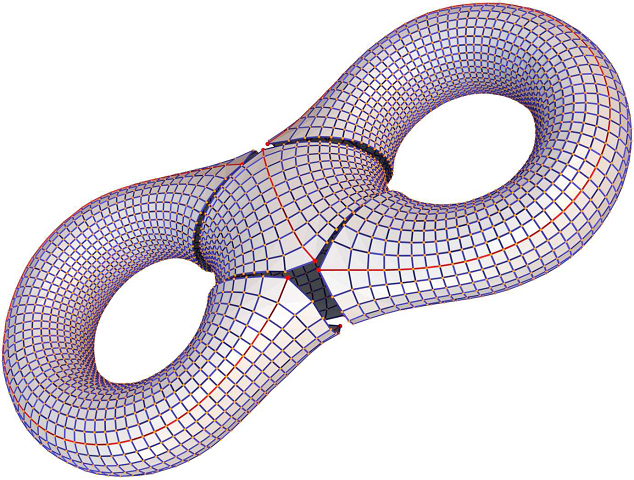
Apparently this one cannot be linked to:
The advantage would be incorporation of a smaller, albeit still fairly large common area for the colonists to gather in.
Offline
Like button can go here
#9 2026-01-18 20:52:30
- kbd512
- Administrator
- Registered: 2015-01-02
- Posts: 8,533
Re: KBD512 Biosphere structure of cast basalt
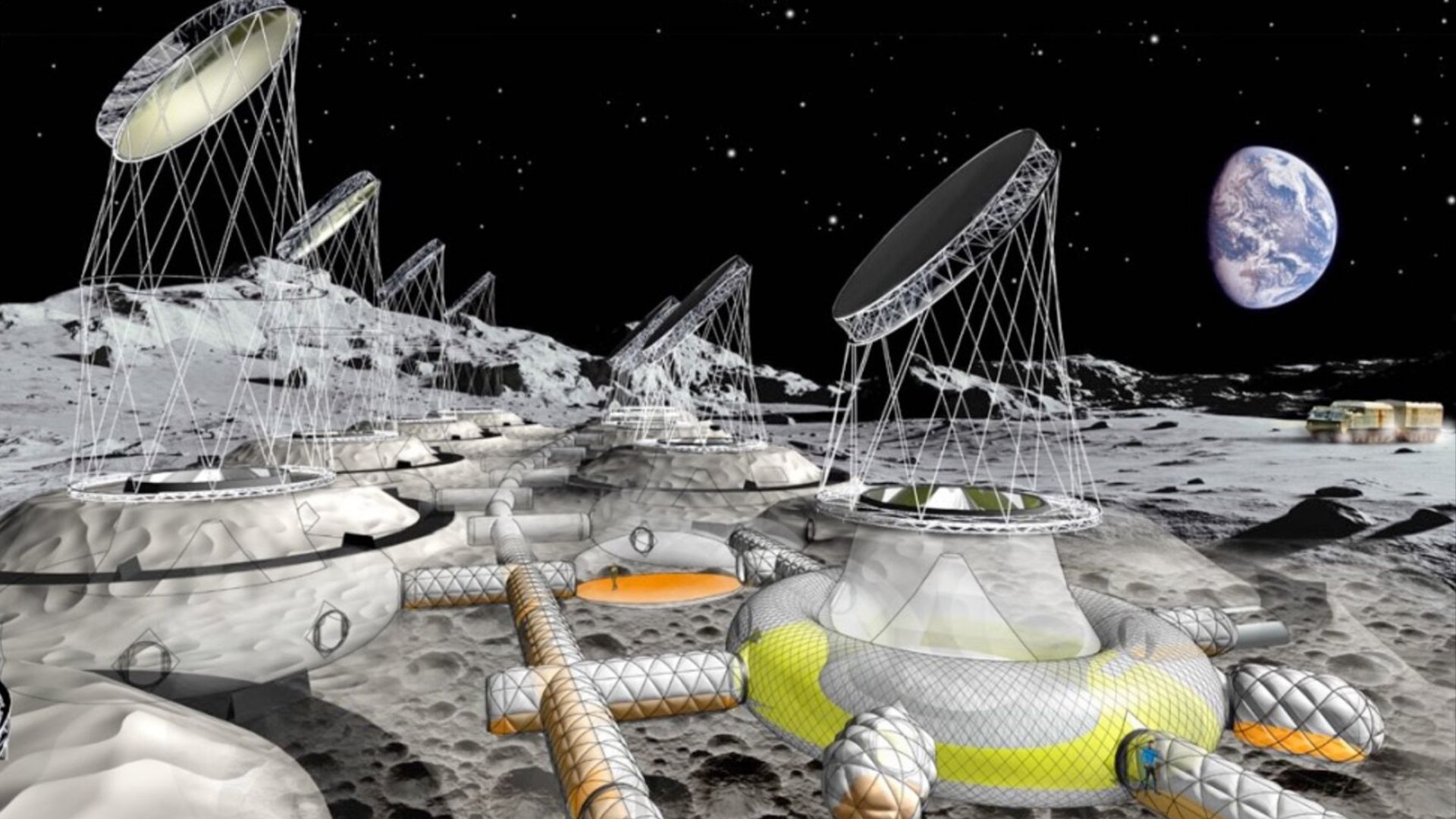
Here's some NASA concept artwork showing a toroidal habitat on the moon:
Offline
Like button can go here
#10 2026-01-19 00:11:14
- kbd512
- Administrator
- Registered: 2015-01-02
- Posts: 8,533
Re: KBD512 Biosphere structure of cast basalt
Is it more material-efficient to use an external tubular steel space frame or a geodesic exoskeleton structure for the building?
Some examples of geodesic aircraft structures from WWII:


Offline
Like button can go here
#11 2026-01-19 06:38:53
- SpaceNut
- Administrator
- From: New Hampshire
- Registered: 2004-07-22
- Posts: 30,862
Re: KBD512 Biosphere structure of cast basalt
Please start a wiki for all collected final design content.
we will use these discussions as the companion to gather questions to fill in content.
Offline
Like button can go here
#12 2026-02-05 14:17:17
- Calliban
- Member
- From: Northern England, UK
- Registered: 2019-08-18
- Posts: 4,400
Re: KBD512 Biosphere structure of cast basalt
I decided to do some research into the composition and likely melting point of martian black sand. This appears to be the most suitable material for cast basalt on the Martian surface.
Curiosity's Investigation of the Bagnold Dunes, Gale Crater [black sands]
https://agupubs.onlinelibrary.wiley.com … 18GL079032
'CheMin data show that sands from Phases 1 and 2 are composed of five main components: plagioclase feldspar, olivine, augite, pigeonite, and X-ray amorphous materials (Achilles et al., 2017; Ehlmann et al., 2017; Rampe et al., 2018). Minor amounts of hematite, magnetite, anhydrite, and quartz are detected in both Gobabeb and Ogunquit Beach, and ~7 wt.% phyllosilicate is detected in Ogunquit Beach.'
Plagioclase feldspar: melting point is 1100°C for sodium based plagioclas, to 1553°C for pure calcium plagioclas.
https://www.science.smith.edu/~jbrady/p … page04.php
My analysis of this document, which analyses the plagioclase in Martian meteorites, suggests a 60% Ca and 40% Na abundance on average. This suggests that melting will begin at 1220°C and the sample will be fully liquid at 1400°C.
https://www.sciencedirect.com/science/a … 3709005651
Martian olivine appears to average at 30% Fe and 70% Mg, by number density. This suggests a complete liquidus at 1700°C, with melting starting at 1200°C. The two components are quite well intermixed.
https://www.science.smith.edu/~jbrady/p … page04.php
Augite is the most common pyroxene. It melts at ~1000°C.
http://mingen.hk/augite.html
Pigeonite is part of the pyroxine group of minerals. Melting point ~1000°C.
To summarise: Martian black sand consists of a mixture of basalt based minerals. Melting will begin at 1000°C and complete liquidus will not occur until 1700°C. At 1250°C, a substantial fraction of the components are liquid. The material will have the properties of a viscous colloidal paste. This may be suitable for injection moulding. However, the presence of suspended solids within the paste may make it relatively abrasive. We need to keep this in mind when designing equipment that is designed to process this hot material.
On the other hand, this reference suggests that all silicate based basaltic rock will be fully molten at 1200°C and complete solidification can be assumed at 600°C.
http://hyperphysics.phy-astr.gsu.edu/hb … trock.html
Either way, temperatures in the ~1200°C range appear to be adequate to turn the sand into a mouldable liquid. The exact reological properties of the liquid (viscosity, solud content, abrasiveness, etc) are things that we would need to test on a simulant material here on Earth, because they have a bearing on exactly how we can use this material. If the liquid is relatively fluid in this temperature range, then we can sand cast it in cast iron moulds. These are things that we could initially import but should be able to make on Mars once we have the ability to produce iron from native materials.
Last edited by Calliban (2026-02-05 14:35:27)
"Plan and prepare for every possibility, and you will never act. It is nobler to have courage as we stumble into half the things we fear than to analyse every possible obstacle and begin nothing. Great things are achieved by embracing great dangers."
Offline
Like button can go here