New Mars Forums
You are not logged in.
- Topics: Active | Unanswered
Announcement
#976 Re: Business Proposals » Business Opportunity Harness Tides on Earth and elsewhere » 2025-10-07 14:32:33
#977 Re: Business Proposals » Business Opportunity Harness Tides on Earth and elsewhere » 2025-10-06 14:18:25
Tide low to high as seen is a 2 times a day event for most of the earth with a rise of near nothing to 30 ft vertically in place along the shore line. The cadeance is very slow to get energy from but the flow of water entering a shore line stream to marsh land up stream can get a large volume in that rise with the right equipment to make power with.
Ocean wave power is also a method but with any of these comes the question of the land ownership and regulations for the equipment.
AI Overview
Tidal Power Faces a Fickle Future with Rising Seas ...
Ocean tide power, or tidal energy, is a form of renewable energy that harnesses the gravitational interaction between the Earth, Moon, and Sun to create electricity from the natural rise and fall of ocean tides. This clean energy is generated by using specialized structures like tidal barrages, which act like dams across bays, or tidal turbines, underwater propellers that convert the kinetic energy of tidal currents into electricity. While expensive to build, tidal energy offers a reliable and predictable power source with significant potential for sustainable energy systems.
How it Works
Gravitational Pull: The consistent pull of the moon, sun, and Earth's rotation creates predictable cycles of high and low tides.
Harnessing Movement: This natural water movement is captured and converted into electricity through two main methods:
Tidal Barrages: A dam-like structure is built across an estuary or bay, creating a tidal basin. During high tide, water flows into the basin, and during low tide, it's released through turbines in the barrage to generate power.
Tidal Turbines: These underwater devices, similar to wind turbines but built to withstand water's greater density, are placed in fast-flowing tidal streams. As the water moves past, it spins the turbine blades, which in turn drive a generator.
Types of Tidal Energy Systems
Tidal barrages: Use dams to create a large difference in water level, storing potential energy.
Tidal lagoons: Similar to barrages but are partly enclosed areas of the ocean, allowing water to flow in and out through turbines.
Tidal stream generators: Place turbines on the seafloor to capture the kinetic energy of strong tidal currents.
Advantages
Clean Energy: Produces minimal greenhouse gases compared to fossil fuels.
Predictable: Tidal patterns are consistent and predictable, providing a reliable power source.
High Power Output: Because water is much denser than air, tidal turbines can generate a high amount of electricity from a relatively small device.
Disadvantages
High Costs: Initial construction costs for tidal energy systems are substantial.
Geographic Limitations: Economically viable tidal power generation requires locations with significant tidal ranges, which are not found everywhere.
Environmental Impact: The presence of turbines or barrages can have negative effects on marine life and ecosystems
#978 Re: Human missions » Starship is Go... » 2025-10-04 15:28:02
Starship's fully reusable cargo capacity to Low Earth Orbit (LEO) is up to 150 metric tons (330,000 lbs), with a design target of over 100 tons to Mars and the Moon. The vehicle's block design aims to increase this capacity over time, with Block 2 aiming for 100-150 tons and Block 3 targeting 200 tons.
Capacity by Block (LEO):
Block 1: Aimed for approximately 100 tons.
Block 2: Designed to carry 100-150 tons to LEO.
Block 3: Targeted to carry up to 200 tons to LEO.Key Factors for Capacity:
Full Reusability: The design focuses on full reusability, impacting overall capability.Orbital Refueling:
Starship is designed to be refueled in orbit, allowing it to carry more payload to other destinations like Mars.Expended Configuration:
When not fully reusable, Starship is projected to carry even larger loads, potentially 250+ tons to orbit.Cargo Configuration:
Starship can be configured for a variety of payload types and can autonomously deploy them to Earth, Lunar, or Martian surfaces.The height of the full Starship stack, consisting of the Super Heavy booster and the Starship upper stage, varies by block, with recent versions like the Block 2 being around 404 feet (123.1 meters) tall and larger versions like Block 4 reaching approximately 466 feet (142 meters). The height of the two stages are: Block 2, the upper Starship spacecraft, is 171 feet (52.1 meters) tall, and the Super Heavy booster is 232 feet (71 meters) tall.
Full Starship Stack Height by Block
Block 1: Approximately 398 feet (121.3 meters).
Block 2: Around 404 feet (123.1 meters).
Block 3: About 408 feet (124.4 meters).
Block 4: Approximately 466 feet (142 meters).Component Heights
Starship spacecraft (Ship): The 171-foot upper stage.
Super Heavy booster: The 232-foot first stage.
These measurements represent the integrated launch system, not just the spacecraft or the booster alone, and are subject to change as the system continues to be developed
edit:
its about the volume shape between the blocks that means problems for the cargo we would want.
Block 1 is just 23 m tall with the internal diameter of 9 M but is the cylinder to where it arcs
Block 2 they are striving for 52 m for that same 9 m diameter.
These make and placement of moon equipment to fit a fresh design to make use of the internal volume.
#979 Re: Human missions » International Space Station (ISS / Alpha) » 2025-09-29 10:06:53
Nasa is ready to throw it away and yet we have no replacement or even growth of such a network of orbiting habbitats to make use of.
The ability to loft goods to the station for the astronaut scientists seems to almost skipped a beat, Carrying Supplies For ISS Astronauts, NASA's Cygnus XL Spacecraft Suffers Engine Malfunction
Cygnus XL spacecraft experienced engine trouble during its journey. The mishap temporarily delayed the delivery of more than 11,000 pounds of supplies to astronauts aboard the ISS. When the spacecraft's main engine shut down earlier but the Cygnus XL and its nearly five tons of supplies made it to ISS
What did those 11,000 pounds of supplies contain? Essential materials for research, maintaining the ISS, and various other provisions to support the ISS crew through early 2026. This stuff is priceless to those ISS astronauts, and the loss of it would have been a major blow.Malfunctions are an inevitable part of supply chain logistics in space
For now, the ISS crew is no doubt happy to have all that cargo, which includes food, oxygen, and nitrogen, plus spare parts for the station's waste filtering system that gives them their fresh drinking water.

#980 Re: Human missions » Starship is Go... » 2025-09-29 10:03:04
Still not seeing why lift capability in the 100, 150 or even 200 mT is something that we truely need if we can not afford to pay for it once we are there. This is the Nasa habbit of throwing things away once its up there no matter what its size is.
Next is the shape of what can be lofted to orbit since is based on the lifter and stage to bring it there.
#981 Re: Human missions » Starship is Go... » 2025-09-28 15:44:16
Another SpaceX Test Gone Wrong - Here's Why Metal Tiles Aren't Going To Work
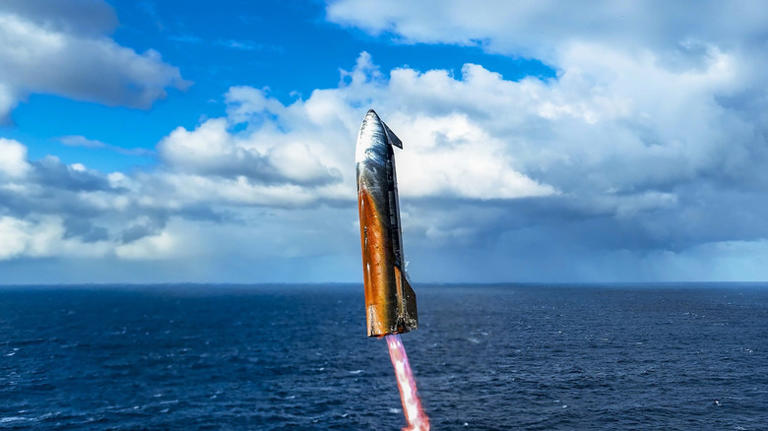
From the outset, SpaceX's tenth Starship test flight in late August looked like a near-perfect success. The massive rocket had a clean launch from Starbase, sailed smoothly into space, and guided itself to a splashdown in the Indian Ocean within a mere few feet of its target. It's the kind of accuracy that would have seemed impossible only a few years ago.
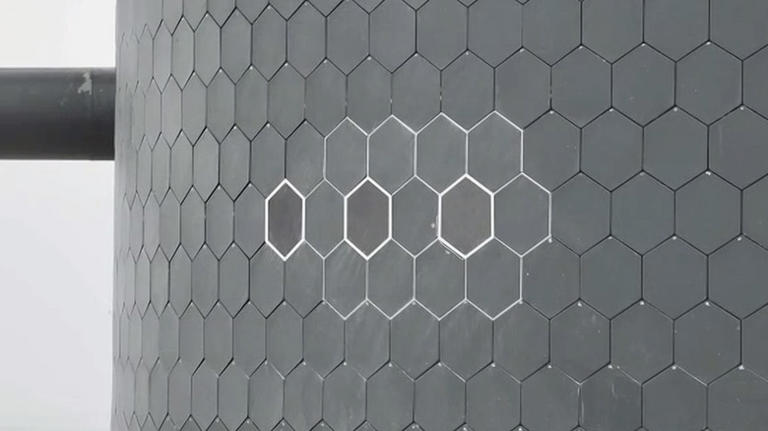
But once the replay videos began circulating, engineers were swift to spot something concerning. The sleek stainless steel sides of the Starship weren't gleaming silver anymore, having been replaced with streaks of a rusty orange hue. Elon Musk later explained that the color came from three experimental metallic tiles that had oxidized during reentry. While SpaceX had hoped for a different result, they noted that some tiles were intentionally removed to test the vehicle's response, and in turn they have now gained valuable data that will help improve the next iteration of the Starship.Although the mission can still be considered a success, especially when you factor in how many SpaceX rockets have exploded this year, the lesson still hits hard. If Starship is ever going to fly people to orbit, let alone try to go to the Moon or Mars, it needs a heat shield that works every time and can be used again. And right now, that piece of the puzzle is still missing.
Bill Gerstenmaier, a former NASA veteran who is now in charge of build and flight reliability at SpaceX, summed up the result in a straightforward way: "The metal tiles... didn't work so well." Luckily, the problem wasn't a disaster, as the Starship's stainless-steel hull held up. However, the tiles rusted quickly in the high-oxygen, high-temperature environment of reentry. While it may have suffered some serious burns, at least it didn't go up in flames like the previous SpaceX Starship which exploded in June 2025.
The result is not exactly surprising when you consider that NASA played with the same idea in the 1970s, with those tests never making it past the lab. The space shuttle instead relied on 24,000 notoriously fragile ceramic tiles that were the only thing that stood between the orbiter and obliteration. SpaceX is now testing a new "crunch wrap" material to better seal gaps between tiles, having already shown signs of promise on the most recent flight in the form of darker spots against the surrounding burnt white metal.
Metal tiles promised simplicity, but the flight proved they're more complicated than initially believed. They may resist cracks and chips better than ceramic, but if they can't survive the most critical part of the mission, they're a dead end.
The patches of white residue where heat seeped through gaps, eroding the protective layer beneath. Engineers have been quick to identify potential remedies to the patches of white residue where heat seeped through gaps, eroding the protective layer beneath. SpaceX now aims to seal the tiles using the new "crunch wrap" approach, which will basically wrap each tile so they interlock more securely, fixing the weak spot without adding the complexity of traditional gap fillers.
That's what Flight 11, expected as soon as October, is meant to prove. If it works, Starship will take another step toward true reusability. Beyond that, SpaceX plans to roll out the upgraded "V3" Starship with improved Raptor engines and refined shielding. Only once that vehicle flies will we know if Musk's dream of a massive stainless steel rocket that can launch, land, and relaunch in quick succession is realistic. SpaceX's ambitions now hinge on perfecting a heat shield that can comfortably handle reentry again and again. Until that problem is solved, Mars and the Moon remain firmly out of reach.
#982 Re: Science, Technology, and Astronomy » Google Meet Collaboration - Meetings Plus Followup Discussion » 2025-09-28 08:14:13
Another week has gone and the contractor has given excuses for not being back, I am at the point of contacting a lawyer due to the delays as winter approaches, Still hoping that the contracted work will be accomplished as it will cost me less than trying to get the money out of the contractor.
#983 Re: Human missions » Starship is Go... » 2025-09-28 08:09:23
Yet man made it with just the 1 launch which begs to question going bigger does it make sense.
https://www.mnealon.eosc.edu/RocketSciencePage1.htm
It seems so long ago that we started this topic. in 2018 with estimates of cargo, refueling and more and it makes no sense to get to orbit with a ship that only has fuel to land back on earth.
#985 Re: Interplanetary transportation » Space-Tugs » 2025-09-26 16:45:01
#986 Re: Interplanetary transportation » Cycloid Payload Delivery Mechanism for Mars - Moon » 2025-09-26 16:44:14
#987 Re: Exploration to Settlement Creation » Designing the best greenhouse demonstrator for Mars » 2025-09-26 16:39:30
https://www.designindaba.com/articles/c … and-beyond
https://www.nasa.gov/science-research/l … -on-earth/
The lists that follow should be part of the crops that such a demonstrator
A "NewMars lunar inflatable garden" does not refer to a specific, named project but describes an inflatable greenhouse concept being developed by NASA and others, primarily the University of Arizona. These Bioregenerative Life Support Systems (BLSS) use plants to create a sustainable, closed-loop environment for long-duration space missions, including future outposts on the Moon or Mars.
Core life support systems
Air revitalization: Plants use photosynthesis to absorb the carbon dioxide exhaled by astronauts and convert it into breathable oxygen. This process is more sustainable and autonomous than relying on oxygen tanks or physiochemical scrubbers alone.
Water recycling: Water vapor released by plants through transpiration is collected and purified. This system, along with recycling wastewater from the crew, provides clean water for drinking and irrigation.
Food production: The garden grows fresh, nutritious food, supplementing the freeze-dried and pre-packaged meals typically consumed on missions. This provides essential vitamins and minerals and improves crew morale.
Waste management: Biological waste, including inedible plant biomass and human waste, can be recycled. Microorganisms in the BLSS break down the waste into nutrients that are then used to feed the plants.
Inflatable garden design
Radiation shielding: The Moon has no atmosphere or magnetosphere to protect against space radiation. Inflatable greenhouse prototypes are designed to be covered with a layer of lunar soil (regolith) after deployment to shield the plants from harmful cosmic rays.
Artificial lighting: With the garden buried for protection, plants are grown under controlled LED lights. These lights are highly energy-efficient and provide the optimal light spectrum for photosynthesis. Some concepts also explore using rotating mirrors to direct natural sunlight into the buried greenhouse.
Hydroponics: To save weight and avoid using alien soil, plants are grown using a hydroponic system. Nutrient-rich water is circulated directly over the plant roots, which are typically supported by a cable-based system.
Durable materials: The inflatable structures are made from high-strength, flexible materials that can be compactly stowed for launch. The material for NASA's LIFE (Large Integrated Flexible Environment) habitat, which includes a garden system, is made of Vectran, a fiber stronger than steel.
Benefits beyond physical survival
Psychological well-being: For long, isolated missions, exposure to greenery, gardening, and fresh food has a significant positive impact on the mental health of astronauts. It creates a connection to Earth and a sense of normalcy.
Increased sustainability: The closed-loop nature of the BLSS reduces dependence on resupply missions from Earth. This minimizes launch costs and makes long-duration missions to distant locations like Mars more feasible
40 mt payload content food for a crew of 4 journey.
For a four-person Mars mission, the food tonnage would be between 6.6 and 15 tons, depending on the total mission duration and whether resupply missions or local food production are used. The total mass includes the food itself plus the necessary packaging. Key factors influencing food tonnage Mission duration
A Mars mission is typically estimated to be a round trip of 2 to 3 years, with a stay on the Martian surface. The total mass of food required is a direct product of the mission length.
Average daily mass:
A standard estimate for space food is about 1.83 kg (4 lbs) per astronaut per day.Total food mass calculation: Assuming a 2.5-year (912.5-day) mission, the total food tonnage for four astronauts would be calculated as follows:
1.83 kg/person/day * 912.5 days * 4 astronauts =6,680 kg
This equals about 6.7 metric tons.Mission architecture
The overall mission plan significantly affects the food tonnage that must be launched from Earth.All prepackaged:
If all food is launched from Earth, the tonnage would be at the high end of the estimate, especially if extra supplies are included for safety margins or emergencies. Some proposals suggest sending supply caches to Mars ahead of the crew.Partial local production:
Integrating local food production, such as growing crops in a Martian habitat, could dramatically reduce the amount of food that needs to be carried. A diet supplemented with fresh vegetables and other produce could significantly lower the initial launch mass.Food type
The composition of the food is a critical variable. Freeze-dried vs. whole food: Freeze-dried or dehydrated food contains much less water, making it far lighter to transport than whole food.Packaging: Packaging, while individually light, adds up over the course of a multi-year mission. Innovations in lighter, more efficient packaging could contribute to reducing overall tonnage. Contingency supplies Mission planners must also account for potential issues and emergencies.Buffer stock: A contingency supply of food is often included to cover mission extensions or unforeseen problems, adding significant mass to the total payload. For a 4-person, 900-day mission, a 500-day contingency supply could add over 10 tons of mass.
Example calculation
Here is a breakdown of a potential scenario for a four-person, 2.5-year (913-day) Mars mission. Daily food intake per person: 1.83 kgTotal crew-days:4 people * 913 days=3,652 person-days
Total food mass: 3,652 person-days * 1.83 kg/person/day=6,698 kg
Base food tonnage: Approximately 6.7 metric ton
Perishable food items are foods that will spoil, decay, or become unsafe to eat if not kept refrigerated or frozen, including meats, poultry, seafood, dairy products, eggs, cooked leftovers, and most fresh fruits and vegetables, especially those that are cut, chopped, or lack a hard outer skin.
Meat, Poultry, and Fish
Raw meats: such as ground beef, steaks, lamb, and pork.
Poultry, like fresh chicken, turkey, and duck.
Fish and seafood, including fresh fish, shrimp, lobster, and all types of shellfish.
Deli meats, which are processed and sliced.
Dairy and Eggs
Milk, cream, and yogurt.
Cheese, including soft and hard varieties.
Butter .
Eggs .
Fruits and Vegetables
Most fresh fruits and vegetables are perishable, particularly those without a hard skin like berries, tomatoes, and lettuce.
Cut or chopped produce, as this increases the rate of decay.
Cooked Foods and Leftovers
Any cooked leftovers, such as stews, cooked rice, and prepared meals.
Prepared salads: and other dishes containing perishable ingredients.
Other Perishables
Drinks with live bacteria, like some juices.
Sauces and dips: (like hummus, pesto, and sour cream), once opened.
Some baked goods, especially those with dairy or cream.
Non-perishable food items are shelf-stable and do not require refrigeration, including canned goods (fruits, vegetables, meats, soups, beans), dried goods (rice, pasta, oats, dried fruit, nuts, seeds, jerky, dried beans), shelf-stable milk and juices, and pantry staples like peanut butter, honey, cooking oil, sugar, and crackers.
Canned & Pouched Foods
Proteins: Tuna, salmon, chicken, and beans.
Vegetables: Corn, green beans, carrots, and other vegetables.
Fruits: Peaches, pineapple, applesauce, and other fruits.
Soups & Stews: Meat-based, vegetable-based, and other ready-to-eat options.
Dried & Grains
Grains: Rice, oats, pasta, and couscous.
Legumes: Dried beans, lentils, and peas.
Snacks: Nuts, seeds, dried fruits (raisins, apricots), trail mix, jerky, and granola bars.
Pantry Staples
Spreads: Peanut butter, jelly, and other nut/seed butters.
Sweeteners & Sauces: Honey, sugar, syrup, and jarred pasta sauces.
Oils: Vegetable oil and other cooking oils.
Baking Ingredients: Pancake mix and powdered milk.
Beverages: Shelf-stable powdered milk, bottled water, and juice boxes.
Other Shelf-Stable Items Crackers and melba toast, Ready-to-eat meals (like MREs), and Hard candies
#989 Re: Meta New Mars » Housekeeping » 2025-09-25 17:22:56
passage was about food within living spaces which is the ISS.
#990 Re: Human missions » International Space Station (ISS / Alpha) » 2025-09-25 14:47:52
https://www.nasa.gov/wp-content/uploads … 90ad510f08
Approximately 2.5 year mission
Earth‐to‐Mars transit: ~6 months
Mars surface stay: ~18 months
Mars‐to‐Earth transit: ~6 months
A 5‐yr shelf life requirement is expected
Food prepositioning may be required to accommodate high mass and volume
of food
Production and stowage will take time due to volume
The current food system would become unacceptable before the mission
ended
No refrigerators or freezers available for food preservation
#991 Re: Meta New Mars » Housekeeping » 2025-09-25 14:42:27
The meal packaging for ISS to have fresh meals means vaccumn packaging, frozen food and these all have lots of mass in the packaging.
#992 Re: Meta New Mars » Housekeeping » 2025-09-24 16:26:52
talking about cargo in a not so cargo topic seems out there.
Perishable food items are foods that will spoil, decay, or become unsafe to eat if not kept refrigerated or frozen, including meats, poultry, seafood, dairy products, eggs, cooked leftovers, and most fresh fruits and vegetables, especially those that are cut, chopped, or lack a hard outer skin.
Meat, Poultry, and Fish
Raw meats: such as ground beef, steaks, lamb, and pork.
Poultry, like fresh chicken, turkey, and duck.
Fish and seafood, including fresh fish, shrimp, lobster, and all types of shellfish.
Deli meats, which are processed and sliced.
Dairy and Eggs
Milk, cream, and yogurt.
Cheese, including soft and hard varieties.
Butter .
Eggs .
Fruits and Vegetables
Most fresh fruits and vegetables are perishable, particularly those without a hard skin like berries, tomatoes, and lettuce.
Cut or chopped produce, as this increases the rate of decay.
Cooked Foods and Leftovers
Any cooked leftovers, such as stews, cooked rice, and prepared meals.
Prepared salads: and other dishes containing perishable ingredients.
Other Perishables
Drinks with live bacteria, like some juices.
Sauces and dips: (like hummus, pesto, and sour cream), once opened.
Some baked goods, especially those with dairy or cream.
most are short life and even when frozen will not meet the needs.
Non-perishable food items are shelf-stable and do not require refrigeration, including canned goods (fruits, vegetables, meats, soups, beans), dried goods (rice, pasta, oats, dried fruit, nuts, seeds, jerky, dried beans), shelf-stable milk and juices, and pantry staples like peanut butter, honey, cooking oil, sugar, and crackers.
Canned & Pouched Foods
Proteins: Tuna, salmon, chicken, and beans.
Vegetables: Corn, green beans, carrots, and other vegetables.
Fruits: Peaches, pineapple, applesauce, and other fruits.
Soups & Stews: Meat-based, vegetable-based, and other ready-to-eat options.
Dried & Grains
Grains: Rice, oats, pasta, and couscous.
Legumes: Dried beans, lentils, and peas.
Snacks: Nuts, seeds, dried fruits (raisins, apricots), trail mix, jerky, and granola bars.
Pantry Staples
Spreads: Peanut butter, jelly, and other nut/seed butters.
Sweeteners & Sauces: Honey, sugar, syrup, and jarred pasta sauces.
Oils: Vegetable oil and other cooking oils.
Baking Ingredients: Pancake mix and powdered milk.
Beverages: Shelf-stable powdered milk, bottled water, and juice boxes.
Other Shelf-Stable Items Crackers and melba toast, Ready-to-eat meals (like MREs), and Hard candies
try to eat while on the journey if you have no supplies after these go bad, or if you need extra oxygen if the equipment fails. You need the safety net with you along the way or it a fail that you do not recover from.
#994 Re: Human missions » International Space Station (ISS / Alpha) » 2025-09-24 14:57:49
In 2030, the International Space Station will be deorbited: driven into a remote area of the Pacific Ocean.
I'm an aerospace engineer who has helped build a range of hardware and experiments for the ISS. As a member of the spaceflight community for over 30 years and a 17-year member of the NASA community, it will be hard for me to see the ISS come to an end.
Astronauts performing research inside the space station and payload experiments attached to the station's exterior have generated many publications in peer-reviewed science journals. Some of them have advanced our understanding of thunderstorms, led to improvements in the crystallization processes of key cancer-fighting drugs, detailed how to grow artificial retinas in space, explored the processing of ultrapure optical fibers and explained how to sequence DNA in orbit.In total, more than 4,000 experiments have been conducted aboard the ISS, resulting in more than 4,400 research publications dedicated to advancing and improving life on Earth and helping forge a path for future space exploration activities.
The ISS has proven the value of conducting research in the unique environment of spaceflight—which has very low gravity, a vacuum, extreme temperature cycles and radiation—to advance scientists' understanding of a wide range of important physical, chemical and biological processes.
Keeping a presence in orbit
But in the wake of the station's retirement, NASA and its international partners are not abandoning their outpost in low-Earth orbit. Instead, they are looking for alternatives to continue to take advantage of low Earth orbit's promise as a unique research laboratory and to extend the continuous, 25-year human presence some 250 miles (402 kilometers) above Earth's surface.In December 2021, NASA announced three awards to help develop privately owned, commercially operated space stations in low-Earth orbit.
For years, NASA has successfully sent supplies to the International Space Station using commercial partners, and the agency recently began similar business arrangements with SpaceX and Boeing for transporting crew aboard the Dragon and Starliner spacecraft, respectively.
While these stations are being built, Chinese astronauts will continue to live and work aboard their Tiangong space station, a three-person, permanently crewed facility orbiting approximately 250 miles (402 km) above Earth's surface. Consequently, if the ISS's occupied streak comes to an end, China and Tiangong will take over as the longest continually inhabited space station in operation: It's been occupied for approximately four years and counting.
It will be several years before any of these new commercial space stations circle Earth at around 17,500 miles per hour (28,000 kilometers per hour) and several years before the ISS is deorbited in 2030.
So while you have a chance, take a look up and enjoy the view. On most nights when the ISS flies over, it is simply magnificent: a brilliant blue-white point of light, usually the brightest object in the sky, silently executing a graceful arc across the sky.
Our ancestors could hardly have imagined that one day, one of the brightest objects in the night sky would have been conceived by the human mind and built by human hands.
#995 Re: Interplanetary transportation » Miniature ITV for Mars Flyby and Exploration Missions » 2025-09-24 14:44:18
For a four-person Mars crew, the total water tonnage required would be around 23 tons for a 30-month mission, based on advanced recycling technology with a 98% recovery rate. The actual tonnage could be significantly higher without such systems.
The total mass for a Mars mission is determined by several factors:
Mission duration:
A typical round trip to Mars, including time on the surface, is estimated to last 32 to 38 months, or about 1,000 to 1,140 days.Water recycling efficiency:
Modern systems, like the one on the International Space Station (ISS), can recycle over 98% of the water from astronaut breath, sweat, and urine.Water requirements per person:
An astronaut needs approximately 1 gallon (3.8 kg) of water per day for drinking, food preparation, and hygiene. Water tonnage calculation Using the approximate 32-month (960-day) mission duration, here is the breakdown of the water tonnage for a four-person crew:1. Calculate the gross water requirement Daily consumption per person: 3.8 kg.Total daily consumption (4 crew): 3.8 kg * 4=15.2 kg Gross mission total: 15.2 kg/day * 960 days=14,592 kg.
2. Factor in water recycling Total water recycled (98%): 14,592 kg * 0.98=14,290.1 kg.
Makeup water needed: 14,592 kg -14,290.1 kg =301.9 kg.This figure (301.9 kg) represents only the water needed to replace what is lost from the recycling system, but does not include the initial supply for the journey itself.
3. Determine the initial water supplyThe total tonnage launched from Earth would need to cover the water lost through recycling, provide a safety reserve for emergencies, and possibly function as a radiation shield during the deep-space transit. A more comprehensive NASA estimate calculates total requirements, including water for food production and other needs. For a four-person, 500-day mission, one estimate puts the total water mass at 3,450 kg (about 3.5 tons) with closed-loop systems. Scaling this figure to a 32-month mission gives us a more realistic total.
NASA 500-day estimate: 3.5 tons for 4 crew.Annualized NASA estimate: 3.5 tons * (365/500)=2.56 tons/year
32-month mission estimate: 2.56 tons/year * (32/12)=6.83 tons. The critical role of water for a crewed Mars mission The wide range of water tonnage estimates highlights the complexity of mission planning.
Radiation shielding: Because water is an effective material for blocking space radiation, some mission designs include launching extra water from Earth to serve as radiation shielding during the transit to Mars.In-Situ Resource Utilization (ISRU):
To significantly reduce launch mass, future missions will rely on ISRU to create water and fuel from Martian resources.Mass trade-offs: A mission might carry more water from Earth as a backup, or rely on ISRU, which requires more complex equipment and energy. Based on these considerations, a modern Mars mission would launch with an initial water tonnage in the single-digit range, supplemented by highly efficient recycling systems. The total mass that must be accounted for over the full mission lifetime, however, would be closer to the 23-ton figure, with most of it being continuously recycled.
#996 Re: Interplanetary transportation » Miniature ITV for Mars Flyby and Exploration Missions » 2025-09-24 14:40:06
40 mt payload content food for a crew of 4 journey.
For a four-person Mars mission, the food tonnage would be between 6.6 and 15 tons, depending on the total mission duration and whether resupply missions or local food production are used. The total mass includes the food itself plus the necessary packaging. Key factors influencing food tonnage Mission duration
A Mars mission is typically estimated to be a round trip of 2 to 3 years, with a stay on the Martian surface. The total mass of food required is a direct product of the mission length.
Average daily mass:
A standard estimate for space food is about 1.83 kg (4 lbs) per astronaut per day.Total food mass calculation: Assuming a 2.5-year (912.5-day) mission, the total food tonnage for four astronauts would be calculated as follows:
1.83 kg/person/day * 912.5 days * 4 astronauts =6,680 kg
This equals about 6.7 metric tons.Mission architecture
The overall mission plan significantly affects the food tonnage that must be launched from Earth.All prepackaged:
If all food is launched from Earth, the tonnage would be at the high end of the estimate, especially if extra supplies are included for safety margins or emergencies. Some proposals suggest sending supply caches to Mars ahead of the crew.Partial local production:
Integrating local food production, such as growing crops in a Martian habitat, could dramatically reduce the amount of food that needs to be carried. A diet supplemented with fresh vegetables and other produce could significantly lower the initial launch mass.Food type
The composition of the food is a critical variable. Freeze-dried vs. whole food: Freeze-dried or dehydrated food contains much less water, making it far lighter to transport than whole food.Packaging: Packaging, while individually light, adds up over the course of a multi-year mission. Innovations in lighter, more efficient packaging could contribute to reducing overall tonnage. Contingency supplies Mission planners must also account for potential issues and emergencies.Buffer stock: A contingency supply of food is often included to cover mission extensions or unforeseen problems, adding significant mass to the total payload. For a 4-person, 900-day mission, a 500-day contingency supply could add over 10 tons of mass.
Example calculation
Here is a breakdown of a potential scenario for a four-person, 2.5-year (913-day) Mars mission. Daily food intake per person: 1.83 kgTotal crew-days:4 people * 913 days=3,652 person-days
Total food mass: 3,652 person-days * 1.83 kg/person/day=6,698 kg
Base food tonnage: Approximately 6.7 metric ton
Perishable food items are foods that will spoil, decay, or become unsafe to eat if not kept refrigerated or frozen, including meats, poultry, seafood, dairy products, eggs, cooked leftovers, and most fresh fruits and vegetables, especially those that are cut, chopped, or lack a hard outer skin.
Meat, Poultry, and Fish
Raw meats: such as ground beef, steaks, lamb, and pork.
Poultry, like fresh chicken, turkey, and duck.
Fish and seafood, including fresh fish, shrimp, lobster, and all types of shellfish.
Deli meats, which are processed and sliced.
Dairy and Eggs
Milk, cream, and yogurt.
Cheese, including soft and hard varieties.
Butter .
Eggs .
Fruits and Vegetables
Most fresh fruits and vegetables are perishable, particularly those without a hard skin like berries, tomatoes, and lettuce.
Cut or chopped produce, as this increases the rate of decay.
Cooked Foods and Leftovers
Any cooked leftovers, such as stews, cooked rice, and prepared meals.
Prepared salads: and other dishes containing perishable ingredients.
Other Perishables
Drinks with live bacteria, like some juices.
Sauces and dips: (like hummus, pesto, and sour cream), once opened.
Some baked goods, especially those with dairy or cream.
Non-perishable food items are shelf-stable and do not require refrigeration, including canned goods (fruits, vegetables, meats, soups, beans), dried goods (rice, pasta, oats, dried fruit, nuts, seeds, jerky, dried beans), shelf-stable milk and juices, and pantry staples like peanut butter, honey, cooking oil, sugar, and crackers.
Canned & Pouched Foods
Proteins: Tuna, salmon, chicken, and beans.
Vegetables: Corn, green beans, carrots, and other vegetables.
Fruits: Peaches, pineapple, applesauce, and other fruits.
Soups & Stews: Meat-based, vegetable-based, and other ready-to-eat options.
Dried & Grains
Grains: Rice, oats, pasta, and couscous.
Legumes: Dried beans, lentils, and peas.
Snacks: Nuts, seeds, dried fruits (raisins, apricots), trail mix, jerky, and granola bars.
Pantry Staples
Spreads: Peanut butter, jelly, and other nut/seed butters.
Sweeteners & Sauces: Honey, sugar, syrup, and jarred pasta sauces.
Oils: Vegetable oil and other cooking oils.
Baking Ingredients: Pancake mix and powdered milk.
Beverages: Shelf-stable powdered milk, bottled water, and juice boxes.
Other Shelf-Stable Items Crackers and melba toast, Ready-to-eat meals (like MREs), and Hard candies
#997 Re: Interplanetary transportation » Miniature ITV for Mars Flyby and Exploration Missions » 2025-09-24 14:12:31
A fully fueled Starship carries 1,200 metric tons of propellant (liquid methane and liquid oxygen) in its tanks. Earth departure for the 40 mt cargo needs to get to mars.
For a Mars mission carrying a 40-metric-ton payload, a Starship uses approximately 676 metric tons of fuel for the Earth departure burn after being fully refueled in Earth's orbit. The vehicle is powered by Raptor engines that burn liquid methane and liquid oxygen.
A staship fully loaded at earth orbit with fuel and just a 40mt cargo still requires for a propulsive landing more than I had thought due to the mass of the ship of 85mt for the early versions.
For a propulsive landing on Mars with a 40-ton payload, a SpaceX Starship would need approximately 30 to 40 tons of methalox propellant for the final landing burn. The Raptor engines use sub-cooled liquid methane (CH₄) as fuel and liquid oxygen (LOX) as the oxidizer.
Assuming all goes well with a landing is the question leaves quite a bit of fuel still in the ship once on mars surface.
To return to earth from mars with just 10 mT of cargo needs.
For a Starship with an 85-metric-ton dry mass and a 10-metric-ton payload to return from Mars, it would need approximately 340 metric tons of fuel synthesized on the Martian surface. The overall mission requires significant fuel production and refueling in low Earth orbit (LEO)
total fuel load at earth= 1200 mt
departure = 676 mt
landing = 40 mt
return launch = 340 mt
----------------------------
required 1056 mt
#998 Re: Exploration to Settlement Creation » Mars Water regolith soils 1 foot depth only » 2025-09-24 14:08:49
cargo requires both on first missions to go with a crew but for preloading one can use the slow barge method it still needs both depending on the item being shipped.
current goods go by Dragon truck which has both for all sorts of items including food.
to which this is not about cargo but building material for insitu refueling.
edit
something to remember is that a space tug goes orbit to orbit but does not land on a planet.
They would require an orbital platform to transfer the cargo to a down freighter to the planets surface.
End result of processed and dried regolith means it is ready for brick making if binders are present to build with plus a kiln.
This starts all insitu processes and uses.
#999 Re: Interplanetary transportation » Miniature ITV for Mars Flyby and Exploration Missions » 2025-09-23 17:30:26
Mars flyby Mission Architecture of Spacecraft
by Vimana Notion Design Team India
#1000 Re: Human missions » Why Artemis is “better” than Apollo. » 2025-09-23 17:20:44
The Orion capsule's mass varies, with a fully loaded mass of over 20 tonnes (44,000 lbs) for Artemis V, including a 13,500 kg European Service Module (ESM) and 8,600 kg of propellant. After its separation from the SLS rocket, Orion is expected to have a mass of approximately 26,375 kg.
Orion Spacecraft - Key Mass Specifications
Total Orion Launch Mass:
Over 20 tonnes (44,000 lbs)
Mass After SLS Separation (example):
Approximately 26,375 kg (58,147 lbs)
Crew Module Launch Weight (example):
22,900 lbs
Service Module Launch Weight (example):
34,085 lbs
Total Mass on Earth with Fuel (example):
10,000 kg for Lunar View refuelling module
Breakdown by Component (Example - Artemis V):
European Service Module (ESM):
Total launch mass: 13,500 kg
Propellant: 8,600 kg
Potable water: 240 kg
Oxygen: 90 kg
Nitrogen: 30 kg
Factors Influencing Mass
Mission Profile:
Mass specifications change between missions (e.g., Artemis I vs. Artemis II) due to varying propellant loads.
Payload:
Any additional cargo or equipment carried by the capsule will contribute to its overall mass.
Mission Duration:
A longer duration in space requires more supplies, increasing the mass of the service module and, consequently, the overall Orion spacecraft
he Artemis program's Orion capsule has a life support system (ECLSS) that is primarily limited by the amount of onboard consumables it can carry. The maximum endurance for a four-person crew is 21 days in a standalone mission. This limitation is tied to the design of the capsule itself, though its endurance can be significantly extended by docking with other spacecraft.
Standalone mission limitations
Duration: The Orion capsule is designed to support a crew of four for up to 21 days for missions that do not dock with another habitat.
Consumables: The 21-day limit is due to the fixed amount of food, water, oxygen, and nitrogen stored within the capsule.
Carbon dioxide and humidity: The system uses a regenerable carbon dioxide and humidity removal system, which is an advancement over the Apollo-era technology. However, the efficiency of this system is critical, and a design flaw identified in 2023 with the Atmosphere Revitalization System circuitry had to be addressed to prevent potential high levels of carbon dioxide.
Waste management: Storage capacity for human waste is another constraint on the total mission duration.
Docked mission capabilities
While a standalone Orion can only support its crew for a few weeks, its life support capabilities can be extended when it is connected to a larger habitat or module.
Lunar Gateway: When docked to a future habitat like the Lunar Gateway, Orion can support a crew for up to six months while its own systems are in a quiescent, or standby, mode. The Gateway will provide the additional consumables and robust life support needed for longer lunar missions.
Potential for Mars missions: Orion's subsystems were designed with flexibility in mind and could theoretically be integrated into a larger transport system for a future mission to Mars, potentially lasting up to 1,000 days. In such a scenario, the primary life support would be handled by other modules, and Orion would serve as the crew transport and safe-haven.
Emergency and redundancy
The life support system is built with redundancy and backup capabilities to ensure crew safety during a critical event.
Spacesuits: In the event of a cabin depressurization, the crew can survive for several days in their pressurized Crew Survival System (CSS) spacesuits, allowing for a return to Earth.
System redundancy: The ECLSS is designed with redundancy to keep critical systems functioning if a single component fails