New Mars Forums
You are not logged in.
- Topics: Active | Unanswered
Announcement
#901 Re: Not So Free Chat » Zaanse Schaanes Windmill Museum, Holland. » 2025-11-06 17:19:27
The only place that even comes close in my state is in Portsmouth down near strawberry bank.
#902 Re: Exploration to Settlement Creation » Pedestrian Martian Cities » 2025-11-06 15:39:24
The idea of walking in space suits are not the open feeling of being under a protective dome.
Or walking in that of a under ground world in subway tunnels.
#903 Re: Interplanetary transportation » Landing Platform off Earth Moon Mars Other » 2025-11-04 17:54:20
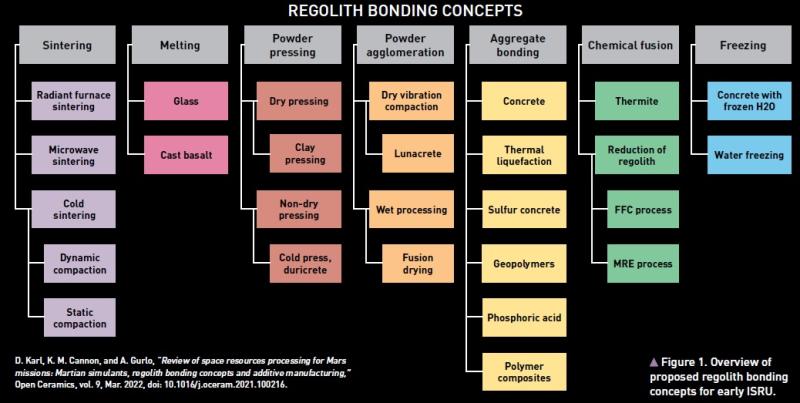
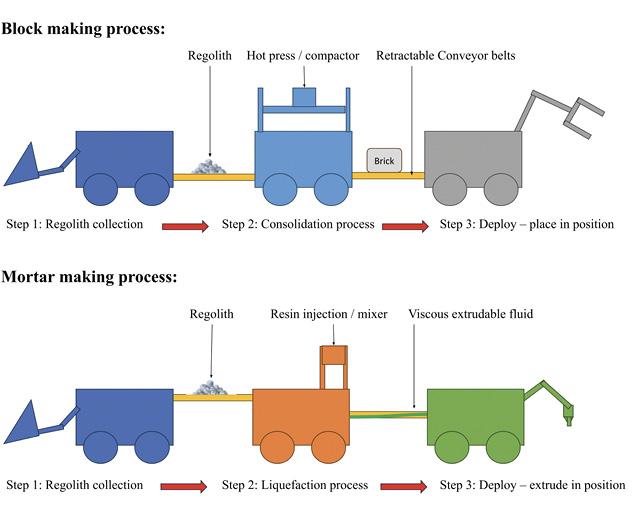
We talks about concrete and sintering regolith.
One topic carried a robotic unit that created a paving from the lunar use.
Paving the road for large area sintering of regolith
Laser melting manufacturing of large elements of lunar regolith simulant for paving on the Moon
Lunar construction with regolith and robots
#904 Re: Not So Free Chat » Zaanse Schaanes Windmill Museum, Holland. » 2025-11-04 17:39:42
I showed the images of Holland to my youngest son and the first thing that he noticed was the people walked and the bicycles not the large number of cars that we use in the US.
Next was the outdoors eating which we only have a few places that are still doing so in the summers since covid hit.
#905 Re: Meta New Mars » Housekeeping » 2025-10-31 16:49:50
The lawyer's office sent the engagement email with signature letter for the retainer today. It is pricy but in the end if it get the house done that's all that matters.
Government shutdown sucks as I am working everyday but not getting any pay until the budgets get signed.
#906 Re: Meta New Mars » Housekeeping » 2025-10-30 14:33:05
rebuilding the house
Its been at a stand still due to contractor being a ghost and town code protecting rather than going after him.
Got Lawyer filing papers to terminate unperformed work getting refund of up front deposits and then filing papers with States AG for criminal and civil suits.
#907 Re: Human missions » Starship Lunar Lander and landing legs » 2025-10-29 15:44:07
here is one of many topics.
Much changes when a lunar version does not need to come back to earth.
Six-legged freaks - can the Starship land on those legs?
The legs were also part of our discusions on Landing legs for the BFR
some feel that a starship for the moon is over kill SpaceX should withdraw Starship as an Artemis lunar lander.
Of course the Mars version is also a puzzle with the full sized starship for colonizing feeling that support for the ship requires Starship concrete Mars landing pad
Of course right sizing the ship is another alternative. Forty 40 Ton Mars Delivery Mechanism
#908 Re: Not So Free Chat » Erroding birthright citizenship » 2025-10-28 17:20:48
The issues facing americans after nearly a century of not removing has finally caught up to ordinary Americans.
US citizen, 67, ‘has ribs broken’ by Border Patrol agents after being dragged out of car while driving home into street they’d blocked off
seems that your papers do not matter just color and being in the wrong place...
#909 Re: Not So Free Chat » Politics » 2025-10-28 17:04:23
Several major US businesses failed in the 1990s due to factors like increased competition, failure to adapt to market changes, and poor management, including the iconic department store chain Woolworth's and PC manufacturer Compaq. Other notable failures include the defunct toy retailer KB Toys and Frito-Lay's fat-free "WOW! Chips" line, which failed due to digestive side effects.
Retail and department stores
Woolworth's: Faced increasing competition from stores like Walmart and Target, leading to the closure of its U.S. five-and-dime stores in 1997 before the parent company rebranded as Foot Locker.
KB Toys: Went bankrupt and vanished due to competition from big-box retailers and the rise of e-commerce.
Gantos: A women's clothing chain that filed for bankruptcy and liquidated its stores by the end of the decade.
Technology
Compaq: Once the largest PC supplier, it faltered due to product quality issues and an inability to keep up with low-cost competitors like Dell. The company was eventually acquired by Hewlett-Packard in 2002.
Etoys.com: An early online toy store that collapsed when the dot-com bubble burst.
Tiger Electronics: Its "Arzone" portable gaming device failed due to its blurry screen and clunky gameplay.
Food and drink
Frito-Lay WOW! Chips: The "fat-free" chips, made with Olestra, caused severe digestive issues for many consumers, leading to the product's failure.
Zima: This clear, carbonated malt beverage was marketed as a sophisticated alternative to beer but failed to gain traction with consumers.
Other
Blockbuster Video: While its collapse occurred in the early 2000s, its failure to adapt to streaming and buy Netflix was rooted in the 1990s, making it a notable example of a 90s-era business failing to look ahead
Several major US businesses failed in the 2000s due to issues like accounting scandals, failure to adapt to new technology, and a lack of innovation. Prominent examples include Enron and WorldCom (accounting fraud), Blockbuster and Polaroid (failure to adapt to digital streaming and photography, respectively), and the dot-com bubble failures like Pets.com and Webvan.
Failed due to accounting scandals
Enron: Once a leading energy company, its collapse in 2001 was one of the largest accounting scandals in history, says the FBI.
WorldCom: The telecommunications giant also collapsed due to a massive accounting scandal in 2002.
During the 2010s, many long-standing US businesses failed due to a combination of new technology, shifting consumer behavior, and heavy debt. The "retail apocalypse" was a primary driver, as e-commerce giants like Amazon displaced traditional brick-and-mortar stores.
Prominent failures in the 2010s
Retail
Toys "R" Us: Filed for bankruptcy in 2017 and closed all US stores in 2018. It struggled to compete with Amazon and Walmart and was burdened with massive debt from a leveraged buyout in 2005. The brand later attempted a comeback with a smaller footprint.
Sears Holdings Corp: The parent company of Sears and Kmart filed for bankruptcy in 2018. The iconic department store chain suffered a slow decline from intense competition from big-box and online retailers.
Borders: The bookstore giant filed for bankruptcy in 2011 and liquidated its remaining stores. It failed to adapt to the shift to online bookselling and e-readers, leaving its customers and website to its competitor, Barnes & Noble.
Payless ShoeSource: The discount shoe retailer filed for bankruptcy in 2017 and 2019, closing all 4,400 stores across 30 countries. It was unable to compete with online retailers and other discount stores.
RadioShack: Known for electronics and batteries, RadioShack filed for bankruptcy twice during the decade (2015 and 2017). It was a victim of changing tech trends and fierce online competition.
The Bon-Ton: The regional department store chain, which operated stores like Carson's and Younkers, filed for bankruptcy in 2018 and liquidated after not turning a profit since 2010.
American Apparel: The clothing retailer filed for bankruptcy in 2015 and 2016, weighed down by debt and sales declines. The brand now operates as an online-only business.
Entertainment
Blockbuster: The video rental chain, which once had over 9,000 stores, filed for bankruptcy in 2010. The company failed to adapt to the new competitive landscape of Netflix, Redbox kiosks, and streaming services.
Movie Gallery: This competitor to Blockbuster and parent of Hollywood Video filed for bankruptcy in 2010, resulting in the closure of all its 2,400 US locations.
Technology and others
Theranos: The blood-testing startup, founded by Elizabeth Holmes, was one of the most high-profile tech failures of the decade. The company, which was valued at $9 billion at its peak, dissolved in 2018 after it was exposed as fraudulent.
Eastman Kodak Co.: The film photography giant filed for Chapter 11 bankruptcy in 2012. The company, which invented the first digital camera, failed to capitalize on the digital revolution and was a "corporate America poster child" for a company that resisted transition.
BlackBerry: Once a leader in mobile devices, BlackBerry's popularity waned in the 2010s due to its slow adoption of touchscreen technology and app ecosystems. The company exited the smartphone business in 2016 to focus on cybersecurity.
Hummer: The SUV brand was discontinued in 2010 after parent company General Motors filed for bankruptcy the year before. The brand fell out of favor following the 2008 oil price spike and a shift toward fuel-efficient vehicles
Many US businesses failed in the 2020s, especially during the initial COVID-19 pandemic, including retailers like J.C. Penney, Neiman Marcus, J. Crew, and Brooks Brothers. Other significant failures included Bed Bath & Beyond, which went bankrupt in 2023, and Pier 1 Imports, Modell's Sporting Goods, and Art Van Furniture, which all filed for bankruptcy in 2020. Financial institutions like First Republic Bancorp and SVB Financial Group also failed.
Major retail bankruptcies in the 2020s
Bed Bath & Beyond: Filed for bankruptcy in 2023.
J.C. Penney: Filed for bankruptcy in 2020.
Neiman Marcus: Filed for bankruptcy in 2020.
J. Crew: Filed for bankruptcy in 2020.
Pier 1 Imports: Closed all stores after filing for bankruptcy in 2020.
Modell's Sporting Goods: Filed for bankruptcy in 2020.
Art Van Furniture: Filed for bankruptcy in 2020.
Brooks Brothers: Filed for bankruptcy in 2020.
Tuesday Morning: Filed for bankruptcy in 2020.
Sur La Table: Closed many stores during its 2020 bankruptcy process.
Lord & Taylor: Filed for bankruptcy in 2020.
Financial sector failures
First Republic Bancorp: Failed during the banking turmoil in 2023.
SVB Financial Group: Failed during the banking turmoil in 2023
#910 Re: Not So Free Chat » Politics » 2025-10-28 17:01:36
There is another part of the picture and that is the businesses that failed.
Notable American businesses that failed in the 1960s include the Studebaker Corporation, the Lehigh and New England Railroad, and early ventures by American Motors (AMC). These failures highlight how quickly a company's fortunes could change due to new competition, changing consumer tastes, and poor management.
Studebaker Corporation
For over a century, Studebaker was a household name that produced wagons, cars, and trucks. But intense competition and insufficient resources eventually led to its downfall.
The rise of compact cars: In the late 1950s, Studebaker's compact Lark model had a sales bump. But its advantage disappeared in the 1960s when the "Big Three" (General Motors, Ford, and Chrysler) introduced their own compacts.
Lack of capital: Studebaker lacked the funds to invest in the frequent redesigns needed to compete with larger automakers. This led to cost-cutting measures, including closing its main factory in South Bend, Indiana, in 1963.
High-risk gamble: In a final effort to boost sales, Studebaker released the innovative Avanti sports coupe in 1963. However, production problems and a costly labor strike doomed the project. The company ceased all automotive production in 1966.
American Motors Corporation (AMC)
While AMC survived the 1960s, its missteps during this decade paved the way for its later collapse. After early success with compact, economical cars, management decided to chase trends instead of building on its niche.
Failed strategy: In the mid-1960s, AMC's strategy was to compete directly with the Big Three by creating trendy, larger, and more powerful vehicles.
Disastrous model: A prime example of this failure was the 1965 Marlin, a large and ungainly "pony car" meant to compete with the wildly successful Ford Mustang.
Lost momentum: By abandoning its unique focus on smaller, efficient cars, AMC lost its edge. When the larger automakers began making more economical vehicles in the 1970s, AMC could not keep up due to its limited resources.
Lehigh and New England Railroad (LNE)
Many American railroad companies struggled in the 1960s, a trend that accelerated in the following decade. The LNE was a major early casualty.
Dependence on coal: The LNE's fortunes were tied to the anthracite coal industry in Pennsylvania. As the demand for coal rapidly declined, the railroad's future became untenable.
Preemptive shutdown: Even while still turning a profit, the LNE's board saw the writing on the wall and decided to cease all railroad operations in October 1961, liquidating while they still had assets.
Pan American World Airways (Pan Am)
Though the company did not go bankrupt until 1991, the roots of its decline can be found in the 1960s. After being the world leader in international travel, the airline began to face significant challenges.
Overextension: Under CEO Juan Trippe, Pan Am became overextended with a sprawling route system that was costly to maintain.
Large investment: The company made a massive investment in a fleet of Boeing 747 jumbo jets in the mid-1960s. This proved to be a risky move, as an economic downturn and rising fuel prices in the following decade made the jets much more costly to operate.
Growing competition: The 1960s saw intense competition from both foreign and domestic airlines. Without a strong domestic route network, Pan Am was left vulnerable
Several notable US businesses failed in the 1970s due to various factors like changing consumer preferences, technological advancements, and economic downturns, including department store chains like Bonwit Teller and W.T. Grant, and the Franklin National Bank. The decline of large manufacturing employers also had a devastating impact on regional economies, as seen with the "Boeing Bust" in Seattle.
Retail
W.T. Grant: A large department store chain that went bankrupt in 1976.
Bonwit Teller: An upscale department store that eventually lost its prestige and was demolished.
S. S. Kresge: In 1977, this company sold its original stores and renamed the Kmart stores to Kmart.
E. J. Korvette: Another large retail chain that is no longer in business.
Bonwit Teller: An upscale department store that lost its prestige and was eventually demolished.
Banking
Franklin National Bank: A large bank that failed in 1974 due to issues in its foreign exchange portfolio and was eventually acquired by European-American Bank & Trust Company.
Technology
Sony Betamax: While a 1975 invention, the Betamax format ultimately lost the "format war" to VHS, largely because rival companies adopted the competing VHS format and Sony kept its format proprietary.
Manufacturing
Boeing: The cancellation of the SST program in 1971 led to massive layoffs and a significant economic downtown in the Seattle area, a period known as the "Boeing Bust".
Other sectors
Pan American World Airways (Pan Am): The airline, once a symbol of American innovation in air travel, failed to withstand economic pressures and turbulent times, collapsing in 1991
Several major US businesses failed in the 1980s due to various factors like market shifts, failed product launches, and the Savings and Loan crisis. Examples include KCO, a video game and toy company that went bankrupt after an overextension into computers, and the failure of RJ Reynolds' "Premier" smokeless cigarettes. The steel industry also began its major decline in the late 1980s, with Bethlehem Steel starting its decline during that period, and the Savings and Loan crisis led to the failure of many financial institutions.
KCO: The company, known for Cabbage Patch Kids, went bankrupt in the mid-1980s after launching the unsuccessful Atom computer and failing to compete with Nintendo's NES.
RJ Reynolds: Introduced a failed smokeless cigarette called "Premier" in 1989, which was pulled after only five months due to poor consumer reception and a high cost of over $300 million.
Bethlehem Steel: Began its significant decline in the late 1980s as the US transitioned away from industrial manufacturing, although it didn't fully close until 1998.
Savings and Loan institutions: The Savings and Loan crisis of the 1980s and early 1990s resulted in the failure of many banks, with 1,617 FDIC-insured commercial and savings banks closing or receiving financial assistance during that period
#911 Re: Meta New Mars » Housekeeping » 2025-10-28 16:48:58
The attacks are most likely due to the azure site. Then the software which we are making use of the phpbb3.
The newmars site allows me to see all of the ip's that come in for a user and also ip stats of those that tickle the forum.
#912 Re: Not So Free Chat » Huricane season 2025 » 2025-10-27 17:35:41
There has been quite a few but none coming close to hitting the US.
Hurricane Melissa live updates: Jamaica braces for Category 5 storm with 'catastrophic and life-threatening' winds and flooding
with 175 mph winds
#913 Re: Not So Free Chat » Politics » 2025-10-27 17:10:08
Since 2020, the U.S. has experienced a historic surge in new business applications, with record-breaking numbers filed in 2021 and 2023. This sustained period of high business creation is a significant shift from previous decades and was primarily driven by pandemic-induced disruptions and a changing labor market.
New business applications per year
Data based on information from the U.S. Census Bureau.
Year Business Applications Change vs. Prior Year Notes
2020 4.4 million +24.5% A sharp increase during the first year of the pandemic, with applications soaring 51% higher than the 2010–2019 average.
2021 5.4 million +23.5% A new annual record for business applications, largely influenced by pandemic-era economic and labor shifts.
2022 5.0 million -6.0% A slight dip from the 2021 peak, but applications remained well above pre-pandemic levels.
2023 5.5 million +8.1% The highest number of new business applications ever recorded in a calendar year.
2024 5.21 million -4.77% A moderation from the 2023 peak, though still a period of robust entrepreneurship.
2025 Projected millions +3.15% (partial data) As of August 2025, over 3.5 million applications had been submitted, indicating that a high level of business formation is continuing.
Key drivers and characteristics of the boom
Pandemic as a catalyst: The COVID-19 pandemic fueled entrepreneurship by necessity, as many people who lost their jobs started their own businesses.
Shift in work: The rise of remote work and the gig economy gave people more flexibility to pursue entrepreneurial ventures.
Growth in specific sectors: Initial growth was most significant in sectors that supported the "home-based economy," such as e-commerce (retail trade), transportation, and personal services.
Increased diversity: New entrepreneurs in the 2020s have been more diverse than in the past, with women, Black, Asian, and Hispanic shares of self-employed Americans near all-time highs.
Mix of high and low-propensity businesses: The surge included both "high-propensity" businesses, which are likely to hire employees, and a large number of sole proprietorships and ventures less likely to have a payroll.
Long-term outlook
This era of heightened business creation marks a new, higher "plateau" for entrepreneurship in the United States. The surge has proven to be more than a temporary blip, representing a lasting shift in the country's economic landscape
So the shift of job types is clear.
#914 Re: Not So Free Chat » Politics » 2025-10-27 17:08:27
The 1990s saw the rise of new businesses in both the retail and tech sectors, driven by the advent of the internet and the growth of large-scale retail. Prominent examples include the expansion of big-box stores like Walmart and Target and the founding of online pioneers such as Amazon and eBay. The tech industry also saw the emergence of companies like AOL and Yahoo!.
Tech and e-commerce
Amazon and eBay: Founded in the 1990s, these companies were early pioneers of e-commerce, providing online alternatives to traditional brick-and-mortar stores.
AOL and Yahoo!: The 1990s saw the massive growth of the internet, and companies like AOL, with its dial-up service, and Yahoo!, a search engine and web portal, became household names.
Palm: This company was a leader in the early personal digital assistant (PDA) market before the rise of modern smartphones.
Retail
Big-box retailers: Companies like Walmart and Target expanded significantly in the 1990s, offering a wide variety of products at low prices and changing the retail landscape.
Blockbuster: The video rental giant was at its peak in the 1990s before the advent of streaming services.
Einstein Bros. Bagels: This coffee and bagel chain was established in 1995.
Other sectors
Alamo Drafthouse Cinema: A unique cinema-and-restaurant concept, the Alamo Drafthouse was founded in 1997.
Align Technology: This company, founded in 1997, is the maker of the Invisalign clear aligners.
Energy Transfer: This company, founded in 1995, is a major player in the midstream energy sector
The 2000s saw a rise in new businesses across various sectors, particularly in technology, with notable examples including Alarm.com, 2U, and 5-hour Energy. The decade also witnessed the founding of companies focused on areas like e-commerce, with Ocado launching in 2000, and the emergence of businesses in fields that would grow to include telemedicine and clean beauty by the end of the decade and into the next.
Technology and internet companies
Alarm.com: A company specializing in the smart home and security sector, founded in 2000.
2U: An online education platform that was established in 2008.
ActiveCampaign: A marketing automation and email marketing software company, founded in 2003.
51 Minds Entertainment: An entertainment production company that began in 2004.
Consumer goods and food
5-hour Energy: The popular energy shot brand was created in 2004.
AG Jeans: A denim and apparel company established in 2000.
4moms: A company that produces innovative children's products, founded in 2005.
Other notable companies
Ocado: Although based in the UK, this e-commerce grocery company launched in 2000 with a tech-focused approach to home delivery.
Acceleron Pharma: A biopharmaceutical company that started in 2003
he 2010s saw the rise of many new US businesses, particularly in technology, such as the mobile app economy giants like Uber, Spotify, and Snapchat. While the decade had a lower overall entrepreneurship rate compared to previous eras, it was marked by a surge in highly influential tech startups that grew rapidly through digital platforms and venture capital. Notable examples include Square, Airbnb, and Pinterest, as well as The Real Real in the luxury resale market.
Examples of new businesses from the 2010s
Technology and Apps:
Uber: Founded in 2009, the ride-sharing service grew exponentially throughout the 2010s to become a global mobility giant.
Square: Launched in 2010, this company revolutionized small business payments by creating a simple credit card reader for mobile devices.
Spotify: After launching in Europe in 2008, it entered the US in 2011, shifting the music industry from ownership to a streaming subscription model.
Snap Inc.: The parent company of the Snapchat app, which launched in 2011, became a major player in the social media landscape.
Pinterest: This visual discovery engine launched in 2010 and became a leading platform for inspiration and e-commerce.
E-commerce and Services:
The Real Real: Founded in 2011, this online luxury resale retailer grew rapidly, eventually opening its first brick-and-mortar store in 2017.
Airbnb: While founded in 2008, the short-term rental platform saw its most significant growth in the 2010s.
Beyond Meat: This plant-based meat company was founded in 2009 but gained significant traction in the 2010s before its major IPO in 2019.
Other industries:
Instant Pot: This multi-cooker became a household name after its 2010 release, supported by a massive social media community.
GoFundMe: The online fundraising platform was founded in 2010, providing a new way for individuals and organizations to raise money.
Entrepreneurship trends in the 2010s
Lower Entrepreneurship Rate: The decade was marked by one of the lowest rates of new business creation in recent US history.
Slow Job Growth: New firms hired fewer workers in 2019 than they did in 1982, despite the larger overall workforce.
Growth of the Mobile App Economy: The mobile app store ecosystem provided a new, low-capital way for many startups to reach a massive scale very quickly
#915 Re: Not So Free Chat » Politics » 2025-10-27 17:06:16
The 1960s saw the rise of new businesses in various sectors, including fast food franchises like Domino's Pizza and the first discount retailers such as Kmart, Walmart, and Target. The decade was also characterized by the growth of large conglomerates, the development of shopping centers, and the establishment of tech and service companies like Medtronic, Dolby Laboratories, and Instinet.
Retail and consumer goods
Discount Retailers: Kmart was the first, opening in 1962, followed by Walmart and Target in the same year, which introduced a new model of bulk purchasing to offer lower prices.
Franchises: The franchise boom was in full swing, with chains like Domino's Pizza, McDonald's, and Holiday Inn expanding rapidly.
Shopping Centers: More than 8,000 shopping centers were built during the decade, changing how and where people shopped.
Technology and services
Tech and Manufacturing: Companies like Medtronic, Teradyne, and Dolby Laboratories were founded.
Financial Services: NationsBank, Duane Reade, and Jackson Hewitt were among the new financial and service businesses.
Logistics and communication: Sea-Land Service pioneered containerized shipping, and Instinet launched an electronic system for institutional investors.
Conglomerates and hospitality
Conglomerates: A wave of business acquisitions led to the formation of large, diversified conglomerates like ITT Corp. and Litton Industries.
Hospitality: New hotels were built to accommodate the growing population, and new restaurant chains emerged, such as the Playboy Club
he 1970s saw the establishment of many new US businesses, particularly in the tech sector with the rise of semiconductors and venture capital firms like Sequoia Capital and Kleiner Perkins. Other notable companies started in this decade include retail giants like Days Inn, Chili's, and Chi-Chi's; technology and software companies such as Atari and Microsoft; and others like Intel and Acadian Ambulance. The business landscape also reflected broader societal changes, with the emergence of niche stores catering to specific subcultures, such as record stores and boutiques.
Technology and computing
Intel: A major player in the semiconductor industry, which saw significant growth in memory products like the Intel 1103 DRAM.
Microsoft: Founded in 1975 by Bill Gates and Paul Allen.
Atari, Inc.: Founded in 1972, it became a major force in the video game industry.
Venture capital firms: The decade saw the founding of Silicon Valley's top venture capital firms, such as Sequoia Capital and Kleiner Perkins Caufield & Byers, both established in 1972.
Retail and services
Days Inn: A hotel chain that began in the 1970s.
Chili's and Chi-Chi's: Two popular restaurant chains that were established during this period.
Apple Computers: Though not a business startup in the 1970s, the company was founded in 1976.
Specialty stores: A rise in niche stores, including record stores and boutiques, reflected the segmentation of the market and counterculture movements.
American Home Shield: A company that was established in 1971.
Other notable businesses
Amdahl Corporation: A computer company established in the 1970s.
Acadian Ambulance: A company that was established in 1971.
DeLorean Motor Company: A car company established in 1975
The 1980s saw the establishment of many new US businesses, spanning various sectors like technology, retail, and direct sales. Notable tech companies founded during this decade include Adobe Inc. and Synnex. Retail and service-based companies like The UPS Store and ShowBiz Pizza Place also emerged. The direct selling industry experienced significant growth, with companies like Herbalife and The Pampered Chef being founded in the 1980s.
Technology and software
Adobe Inc.: A company that would become a giant in the software industry.
Synnex: A technology services company.
Access Software: A video game developer.
Symbolics: A computer company specializing in Lisp machines.
Retail and food service
ShowBiz Pizza Place: A family entertainment center and restaurant chain.
The UPS Store: A retail franchise focused on packing and shipping services.
Amy's Kitchen: A company that prepares and sells frozen organic meals.
Sierra Nevada Brewing Co.: A craft brewery.
Direct sales
Herbalife: A company that sells nutrition, weight management, and skincare products.
The Pampered Chef: A company specializing in kitchen tools.
Nu Skin: A company in the beauty and wellness sector.
Stampin' Up!: A company focused on paper crafting supplies.
Other sectors
Aéropostale: An American lifestyle clothing company.
Airgas: A distributor of industrial gases.
American Graphics Institute: A company providing design and technology training
#916 Re: Not So Free Chat » Politics » 2025-10-27 15:11:44
Since the start of the 2020s, numerous US businesses have either gone bankrupt or significantly downsized, with the COVID-19 pandemic serving as a major catalyst for existing financial troubles. Many of these were retailers and restaurant chains that struggled with lockdowns, reduced foot traffic, and shifts in consumer behavior.
Some of the most prominent businesses that went under or dramatically downsized since 2020 include:
Retailers
Bed Bath & Beyond: The home goods retailer, a "recent COVID-19 failure" according to U.S. News, officially filed for bankruptcy in 2023.
Lord & Taylor: After filing for bankruptcy in 2020, the department store chain closed all of its remaining locations in 2021.
J.C. Penney: The long-standing department store filed for bankruptcy in 2020. It was eventually purchased by mall owners Simon Property Group and Brookfield Asset Management, which led to a smaller footprint.
Neiman Marcus: The luxury department store filed for bankruptcy in 2020 and emerged with a reduced debt load.
Pier 1 Imports: The home goods retailer filed for bankruptcy in 2020 and liquidated all of its stores. Its brand name was later relaunched as an online-only store.
Tailored Brands: The parent company of Men's Wearhouse and JoS. A. Bank, filed for bankruptcy in 2020 due to decreased demand for professional wear. It closed hundreds of stores and emerged with less debt.
GNC: The nutrition and supplement retailer filed for bankruptcy in 2020 and closed a significant number of its stores.
Stein Mart: The discount retail chain filed for Chapter 11 bankruptcy in 2020 and liquidated its stores.
Papyrus: The stationery and card company went out of business in early 2020, closing all of its stores.
Century 21: The off-price retailer filed for bankruptcy in 2020 and shuttered its physical stores.
Brooks Brothers: The menswear retailer, which had struggled as business attire became more casual, filed for bankruptcy in 2020 but was later purchased and saved from total shutdown.
Restaurants and entertainment
Friendly's: The family-friendly restaurant chain filed for Chapter 11 bankruptcy in 2020.
Sizzler: The restaurant chain filed for bankruptcy in 2020, blaming the pandemic for indoor dining closures.
Souplantation / Sweet Tomatoes: The parent company of these buffet restaurants announced the permanent closure of all 97 US locations in 2020.
Chuck E. Cheese: The parent company of the family entertainment chain filed for bankruptcy in 2020.
Cirque du Soleil: The entertainment company filed for bankruptcy in 2020 after the pandemic halted its productions.
Le Pain Quotidien: The cafe and bakery chain filed for bankruptcy in 2020 and sold all of its US locations.
Other sectors
Hertz: The car rental company filed for bankruptcy in 2020 as travel came to a halt during the pandemic.
Remington Arms: The gun manufacturer filed for bankruptcy in 2020.
24 Hour Fitness: The gym chain filed for bankruptcy in 2020 after pandemic-related closures.
Gold's Gym: The fitness chain filed for bankruptcy in 2020 but planned to keep hundreds of locations open.
Intelsat: The satellite operator filed for bankruptcy in 2020 but continued operations
While jobs are being filled the issue is old businesses have comeback after leaving.
Sure new business have stated
Data from the US Census Bureau shows a record-breaking 5,481,437 new businesses were started in 2023. The onset of the pandemic in 2020 has driven a surge in new business creation, so the number of new businesses is trending up. On average, there are 4.7 million businesses started every year.
#917 Re: Not So Free Chat » Politics » 2025-10-27 15:10:39
Several major U.S. businesses either left or went out of business in the 1990s, often due to bankruptcy or acquisition. Examples include the major retailer Montgomery Ward and the electronics company Compaq Computers, which was bought by Hewlett-Packard in 2002. The decade also saw major shifts in retail, leading to the bankruptcy and closure of numerous smaller chains and the decline of large department stores like Montgomery Ward, according to this Quora post and this Facebook post.
Montgomery Ward: A major department store that struggled with competition from big-box retailers and filed for bankruptcy, eventually closing all stores in 2001.
Compaq: A computer company that was a dominant force in the 1990s but was acquired by Hewlett-Packard in 2002, effectively ending its independent existence.
Edison Brothers Stores: A parent company to many 90s retailers like Coconuts and Sam Goody's, it went bankrupt in the 1990s and sold off its various brands.
Circuit City: The electronics retailer struggled with competition and filed for bankruptcy in 2008, closing all its stores.
Tower Records: The once-dominant music retailer filed for bankruptcy in 2006.
Radio Shack: The electronics chain filed for bankruptcy in 2015, marking the end of an era for the company.
Blockbuster: The video rental giant was unable to compete with the rise of streaming services and filed for bankruptcy in 2010.
Toys "R" Us: The toy retailer, once a symbol of childhood, filed for bankruptcy in 2017 and closed its stores, though the brand has since made a comeback.
Other businesses that left in the 90s
Pan Am: The airline ceased operations in 1991.
Kodak: The photography giant struggled to adapt to the digital age, filing for bankruptcy in 2012.
Enron: The energy company was involved in a massive accounting scandal that led to its collapse in 2001.
Polaroid: The instant photography company filed for bankruptcy in 2001.
Some of the most prominent U.S. businesses to leave or disappear during the 2000s were major brands in technology, retail, and manufacturing. The reasons they left varied, including failure to adapt to new technology, poor management, intense competition, and—in the case of companies that relocated overseas—corporate tax inversions.
Companies that went out of business
Blockbuster: The video rental giant failed to adapt to the rise of online DVD rentals (like Netflix) and streaming services. The company filed for bankruptcy in 2010.
Compaq: Once the largest personal computer supplier, Compaq was acquired by Hewlett-Packard in 2002. Internal conflicts and poor strategy weakened the brand, which was phased out by HP.
Enron: The energy company collapsed in 2001 due to a massive accounting fraud scandal that hid billions in debt.
Lehman Brothers: The 150-year-old investment bank declared bankruptcy in 2008, holding over $600 billion in assets. Its collapse is considered a significant event that contributed to the global financial crisis.
Limewire: This popular peer-to-peer file-sharing software was shut down in 2010 after a U.S. federal court ruled that it had committed copyright infringement.
WorldCom: This telecommunications rival to AT&T was undone by a major accounting fraud scandal in the early 2000s. It filed for bankruptcy and was later acquired by Verizon.
Borders: The book and music retailer struggled to compete with online competitors and filed for bankruptcy in 2011.
Companies that moved overseas
Anheuser-Busch: The St. Louis-based beer maker was acquired by the Belgian company InBev for $52 billion in 2008. The new parent company, AB InBev, is headquartered in Belgium.
Seagate Technology: The hard-drive manufacturer moved its global headquarters to the Cayman Islands in 2000 and then to Ireland in 2010.
Tyco International: This diversified manufacturing conglomerate relocated its incorporation to Bermuda in 1997. It faced a major scandal in the early 2000s involving its top executives, who were convicted of looting the company.
Accenture: The consulting firm, spun off from the accounting firm Arthur Andersen, reincorporated in Bermuda in 2001.
IBM's Personal Computer division: In 2005, IBM sold its PC division to the Chinese company Lenovo. This move enabled IBM to focus on software and services.
Cooper Industries: This electrical products manufacturer reincorporated in Bermuda in 2002. It was acquired by Eaton in 2012.
Ingersoll-Rand: The industrial manufacturer moved its incorporation to Bermuda in 2002. It has since relocated its official domicile to Ireland.
Factors that drove companies to leave the US
Acquisitions and foreign ownership: Many American brands, such as Sunglass Hut, Ben & Jerry's, and Anheuser-Busch, were acquired by foreign companies during this era.
Corporate tax inversions: To lower their corporate tax burdens, some companies reincorporated their businesses overseas, often in countries with lower tax rates.
Failure to innovate: Companies like Blockbuster and Compaq were unable to adapt to new technologies and market shifts, leading to their demise.
Financial crisis and poor management: The 2008 financial crisis devastated many businesses, including Lehman Brothers. Other companies, like WorldCom and Enron, suffered from corporate misconduct and accounting scandals.
Shifting manufacturing overseas: The trend of outsourcing manufacturing accelerated in the 2000s. Companies seeking lower labor costs and less regulation moved production to countries like China and Mexico
Multiple U.S. businesses either left the country, went out of business, or moved significant operations overseas during the 2010s due to factors such as globalization, shifting consumer trends, and tax laws.
Iconic companies that went defunct
Blockbuster: The video rental giant declared bankruptcy in 2010. It had failed to compete with the rise of streaming services like Netflix and mail-order rentals.
Borders: The bookstore chain went out of business in 2011. Like Blockbuster, it was unable to adapt to the rapidly changing retail landscape dominated by online sellers like Amazon.
RadioShack: A decades-old electronics retailer, RadioShack began closing stores in 2010 and filed for bankruptcy in 2015.
Toys R Us: After years of competition from big-box retailers and e-commerce, the iconic toy store declared bankruptcy in 2017.
Barneys New York: The luxury department store closed its doors in 2019 after facing financial difficulties throughout the decade.
American Apparel: This apparel retailer, known for its "Made in the USA" manufacturing, lost its cultural relevance and was purchased out of bankruptcy by a Canadian company in the mid-2010s.
Companies that moved their headquarters (corporate inversions)
Corporate inversions were a major trend in the early 2010s, where U.S. companies would merge with smaller foreign firms to reincorporate abroad and reduce their tax burden. The U.S. government put the kibosh on such deals in 2014.
Burger King: In 2014, the fast-food chain merged with Canadian company Tim Hortons to form Restaurant Brands International, which was headquartered in Canada.
Seagate Technology: The hard-drive manufacturer officially moved its global headquarters to Ireland in 2010.
Valient: The pharmaceutical company merged with Canada's Biovail in 2010 and relocated its headquarters to Canada.
Companies that offshored operations
A large number of companies offshored manufacturing and other operations during the 2010s to reduce costs, leading to job losses in the U.S..
Cisco Systems: Between 2010 and 2014, the networking company saw its percentage of overseas workers rise from 25% to 46%, primarily in China and India.
Hewlett-Packard (HP): In 2010, the company laid off human resources employees in the U.S., transferring their functions to Panama.
Hilton Worldwide: Also in 2010, the hotelier moved a reservations center to the Philippines to save money.
Ford Motor Company: A significant portion of Ford's workforce was moved out of North America during the 2010s. By 2009, the North American workforce made up only 37% of its total payroll.
JPMorgan Chase: The bank moved its telephone banking operations to the Philippines in 2010
#918 Re: Not So Free Chat » Politics » 2025-10-27 15:08:31
Business that have left the US
AI Overview
A variety of American businesses either left the U.S. or closed down entirely during the 1960s, a decade of significant shifts in the U.S. economy. This included the merger of prominent brands, the expansion of some companies into foreign markets, and the failure of many smaller businesses.
Acquisition and consolidation
The 1960s saw many companies become targets for acquisition, leading to the disappearance of once-familiar names.
Good Humor: The Ohio-based ice cream company, founded in the 1920s, was purchased in 1961 by the British-Dutch company Unilever.
Kinney Shoes: This shoe retailer, which started in 1894, was acquired by the F.W. Woolworth Corporation in 1963. It was later shut down completely in 1998, though its legacy remains part of Foot Locker.
Ling-Temco-Vought (LTV): In the 1960s, conglomerates like LTV expanded rapidly by acquiring other businesses. As the era ended, many of these highly leveraged companies saw their fortunes unravel.
American Motors Corporation (AMC): Formed by a merger in 1954, AMC struggled to compete with the "Big Three" U.S. automakers and was eventually acquired by Chrysler in 1979.
Expansion overseas
Many U.S. companies started moving production and expanding operations into other countries, spurred by foreign competition and changes in international trade laws.
Offshoring and nearshoring: U.S. manufacturing began moving to countries with lower labor costs. For example, some factories moved to Mexico, a process facilitated by customs laws that incentivized U.S. firms to conduct labor-intensive assembly operations there.
McDonald's: The fast-food chain expanded internationally in the 1960s, opening its first locations in Canada and Puerto Rico in 1967.
Business failures
For many small businesses and retailers, the 1960s were a time of increased competition from larger corporations.
Decline of small farms: Nearly a million small farms disappeared in the 1960s, consolidated into larger operations that benefited from new farming technologies and government subsidies.
End of an era for retailers: While some famous brands like Woolworth's, Montgomery Ward, and Gimbels wouldn't vanish until later decades, the 1960s marked a period of declining relevance as they struggled against newer competitors like discount chains.
Early signs of deindustrialization
While most major job losses happened later, the 1960s showed early signs of deindustrialization, particularly in the "Rust Belt."
Competition from Europe and Japan: By the mid-1960s, European and Japanese industries had recovered from WWII and began producing cars and other goods that competed directly with U.S. manufacturers.
Early manufacturing job shifts: The manufacturing sector began a longer-term decline in its share of total U.S. employment. The industry moved production to lower-cost domestic areas and, increasingly, overseas
Major US businesses did not "leave" the country in the 1970s, but many either declined, went bankrupt, or were acquired by international conglomerates due to significant economic turmoil. Key factors contributing to this trend included stagflation, increased foreign competition, and two severe oil crises.
Iconic brands that faded or were sold
Oldsmobile: At its peak, this General Motors brand produced America's best-selling car in 1976. However, it saw declining sales as flashier import models gained popularity in the following decades, and GM ultimately discontinued the marque in 2004.
Howard Johnson's: A roadside icon famous for its orange-roofed restaurants, Howard Johnson's was a popular fast-food chain that peaked in the 1970s. However, it struggled to adapt to new competition and evolving consumer tastes, with the brand's restaurant business eventually dissolving.
Woolworth's: The F.W. Woolworth Company, a beloved "five-and-dime" store chain, began facing financial difficulties in the latter half of the 20th century. While it survived into the 1990s, the company eventually closed its US stores.
Sunglass Hut: While the brand still exists, its American ownership ended in the 70s. Founded in Miami in 1971, optometrist Sanford Ziff grew the company to 100 stores by 1986. The Ziff family sold their interest, and Italian eyewear giant Luxottica acquired the chain in 2001.
Reasons for business decline in the 1970s
The era's economic upheaval created a challenging environment for many American businesses.
Stagflation: This unusual economic combination of stagnant growth and high inflation meant consumers had less purchasing power, which hurt sales. Companies could not simply raise wages to compensate, leading to worker dissatisfaction and pressure on profits.
Increased competition: After decades of American dominance, new overseas competition emerged from economies like Japan and Germany. This was particularly impactful on US manufacturing, as foreign companies offered more fuel-efficient cars and cheaper, higher-quality products.
Oil crises: Two major oil price shocks in 1973 and 1979 quadrupled oil prices and caused gas shortages. This sent production costs soaring and drastically shifted consumer demand away from large, gas-guzzling vehicles.
Deindustrialization: This trend began in the 1970s as companies sought cheaper labor, moving jobs and capital out of established industrial centers. This shift hit cities in the "Rust Belt" especially hard, weakening the tax base and local economy
Multiple well-known U.S. businesses and entire industries failed or underwent significant decline in the 1980s, primarily driven by a severe economic recession and the Savings and Loan crisis.
Notable businesses that left in the 1980s
Retail and entertainment
D'Lites: A fast-food chain that offered health-conscious options, D'Lites filed for bankruptcy in 1986, largely because larger competitors started offering healthier items and the public's interest in healthy eating waned.
E.J. Korvette: One of the original discount department stores, E.J. Korvette filed for bankruptcy in 1980 and liquidated its stores.
Toys "R" Us (pre-reorganization): While the brand continued, its financial troubles began in the 1980s amid increasing competition.
F.W. Woolworth Company: The five-and-dime store giant started its long decline in the 1980s, although it continued operating for years.
Babbage's: A software and video game retailer that is now part of GameStop.
Pizza Time Theatre: Founded by Atari creator Nolan Bushnell, this franchise with animatronics went bankrupt in 1984 and merged with competitor ShowBiz Pizza Place, which later rebranded as Chuck E. Cheese's.
Video rental stores: The home video rental business took off in the 1980s with the rise of VHS, but many local and smaller chains failed during this time.
Financial sector
The Savings and Loan (S&L) crisis of the 1980s led to the failure of over 1,000 S&L institutions.
Lincoln Savings and Loan Association: A California-based S&L that was central to the political scandal involving the Keating Five, failed in 1989.
Financial Corporation of America: The parent company of American Savings and Loan, this was the largest S&L at the time of its 1988 bankruptcy.
Industrial sector
Bethlehem Steel: Once the second-largest U.S. steel producer, the company was in decline by the late 1980s due to foreign competition and decreasing domestic demand for manufactured goods. Though the company did not file for bankruptcy until 2001, its shipbuilding business was gone by 1997.
Texaco: The American oil company filed for bankruptcy in 1987 in the middle of a legal dispute with Pennzoil. It emerged from bankruptcy in 1988 and was later acquired by Chevron.
Economic conditions driving 1980s business failures
The early 1980s recession: The U.S. suffered back-to-back recessions from 1980 to 1982. In an effort to combat high inflation, the Federal Reserve raised interest rates, which led to a sharp increase in unemployment and a decline in manufacturing.
The Savings and Loan crisis: Deregulation in 1980 allowed S&Ls to pursue higher-risk investments. When interest rates rose, many became insolvent, and risky commercial real estate loans turned sour. The crisis ended up costing taxpayers an estimated $124 billion.
Global competition: U.S. industrial and manufacturing firms faced new pressure from lower-cost labor in other countries, leading to a decline in America's industrial base
#919 Re: Science, Technology, and Astronomy » Trough Solar Collector- Design- Construction- Operation- Maintenance » 2025-10-26 16:47:06
In concentrated solar power (CSP) systems, thermal oil is used as a heat transfer fluid (HTF) and can also function as a thermal energy storage (TES) medium. There are no standardized, universally applicable charts for the volume of thermal oil, as the required volume is specific to the design of each individual plant and its storage capacity.
The volume of thermal oil in a CSP plant depends on the system's design and operating parameters, including:
Total system capacity:
The overall power output of the plant.Collection area:
The size of the solar field (e.g., parabolic troughs) that collects the solar energy.
Storage capacity:
The number of hours the plant can operate on stored thermal energy after the sun sets.
Type of CSP technology:
Parabolic trough systems are most commonly associated with thermal oil, while solar tower systems often use molten salt, which allows for higher operating temperatures.
Thermal oil properties:
The specific heat, density, and operating temperature range of the chosen thermal oil (e.g., Therminol 66). How thermal oil volume is calculated for a CSP plant While no generic chart exists, the total thermal oil volume is derived from several key calculations:1. Thermal energy storage (TES) volume: This is the most significant part of the thermal oil volume. It is calculated based on the required storage capacity and the oil's thermal properties. Formula:\(V_{\text{storage}}=\frac{E_{\text{storage}}}{\rho \cdot c_{p}\cdot \Delta T}\) \(V_{\text{storage}}\) = Volume of thermal oil in the storage tanks (m\({}^{3}\))\(E_{\text{storage}}\) = Total thermal energy required for storage (in Joules or kWh)\(\rho \) = Density of the thermal oil (kg/m\({}^{3}\))\(c_{p}\) = Specific heat capacity of the thermal oil (J/kg·K)\(\Delta T\) = The temperature difference between the hot and cold oil in the two-tank storage system (K)
2. Heat transfer fluid (HTF) volume: This is the volume of oil circulating through the solar collector field, piping, and heat exchangers. Formula:\(V_{\text{HTF}}=V_{\text{collectors}}+V_{\text{piping}}+V_{\text{exchangers}}\) \(V_{\text{collectors}}\) = Volume of oil inside the receiver tubes of the parabolic troughs.\(V_{\text{piping}}\) = Volume of oil in the network of pipes connecting the solar field to the storage and power block.\(V_{\text{exchangers}}\) = Volume of oil within the heat exchangers that transfer heat to the power cycle (e.g., steam generator).
3. Expansion volume: Thermal oil, like any fluid, expands and contracts with temperature changes. An expansion vessel is required to accommodate this volume change and maintain system pressure.
Example:
Thermal storage volume calculation The following example illustrates the calculation for a 100 MW CSP plant with 6 hours of thermal oil storage.Assumptions:
Storage capacity: 6 hoursHeat transfer fluid:Thermal power rating:
100 MWth (assuming a 100 MW electric power output, the thermal power is higher due to turbine efficiency)Temperature difference (\(\Delta T\)): 390°C (hot oil) - 290°C (cold oil) = 100 KOil density (\(\rho \)): ~780 kg/m³ at the average temperatureSpecific heat (\(c_{p}\)): ~2.3 kJ/kg·K Calculation: Total thermal energy (\(E_{\text{storage}}\)):\(E_{\text{storage}}=\text{Power}\times \text{Time}=100\text{\ MWth}\times 6\text{\ h}=600\text{\ MWh}\)Convert to Joules:\(600\text{\ MWh}\times 3.6\times 10^{9}\text{\ J/MWh}=2.16\times 10^{12}\text{\ J}\)Required storage volume (\(V_{\text{storage}}\)):\(V_{\text{storage}}=\frac{E_{\text{storage}}}{\rho \cdot c_{p}\cdot \Delta T}=\frac{2.16\times 10^{12}\text{\ J}}{(780\text{\ kg/m}^{3})(2300\text{\ J/kg\cdotp K})(100\text{\ K})}\approx 12,000\text{\ m}^{3}\) This is the volume for the thermal energy storage tanks alone.The total volume would also include the fluid in the collector field and piping, which could add another 10% to 20% to the total.
Factors that determine the quantity of solar oil include:
System scale:
The quantity of thermal oil is a function of the solar collector area and the thermal energy storage tank volume. Larger systems require significantly more oil.Thermal energy storage (TES):
If the system uses thermal oil for energy storage, a large tank is required, which dramatically increases the oil quantity. Some studies use storage tanks ranging from 8 m³ to 30 m³ or more. Other designs use different storage media, like molten salt or ceramic rocks, which would eliminate or reduce the need for thermal oil.Specific project design:
Research and project reports involving solar ORC systems often mention the specific quantities used for their particular setup. For example, a 2017 study mentions a 10 m³ thermal oil storage tank used with a 160 m² collector area.AI Overview
In an experimental ORC (Organic Rankine Cycle) solar car, the alternator or generator can run at very high speeds. In one specific study by ORC Orosz, a maximum generated power of 6.3 kW was produced at a speed of 20,000 RPM.Factors that influence the alternator's RPM
The rotational speed is not fixed and depends on several factors:
System optimization:
The control system of the ORC balances the variable heat input from the solar field with the fixed characteristics of the expander and alternator. This dynamic control is used to maintain optimal operating parameters, which can influence the RPM.Optimal operating point:
The alternator RPM can be controlled to maintain efficiency. In the ORC Orosz study, the isentropic efficiency of the expander peaked at 35.2% at 20,000 RPM and was 27% at 15,000 RPM.Load and power output:
The speed will also vary based on the electrical load and the desired power output. In the example given, the peak power was generated at 20,000 RPM, but the system would run at different speeds to meet lower power demands.
This high-speed operation is a characteristic of some specialized generators used in ORC systems, which are very different from the standard alternators found in conventional combustion engine vehicles.
#920 Re: Not So Free Chat » Politics » 2025-10-26 14:52:46
It is said that the federal collection plates for the tarrifs but its coming at the price of inflation to all americans. The purpose is to create american jobs but its not having that effect.
AI Overview
Trump's tariffs have raised federal revenue by approximately $174 billion in 2025, a figure that is increasing monthly, with the government collecting about $30 billion in customs duties in a single month (September 2025). The total estimated revenue increase over the fiscal year 2025 is projected at $174.9 billion, or 0.57% of GDP, making it the largest tax increase since 1993.
2025 Federal Revenue: The tariffs are expected to increase federal tax revenues by an estimated $174.9 billion in 2025.
Monthly Collections: The government collected about $30 billion in tariff revenue in September 2025 alone.
Year-to-Date Collections: As of early September 2025, the U.S. had collected over $158 billion in tariffs.
Cumulative Estimates: Some analyses estimate that tariffs announced by the Trump administration through April 2, 2025, could raise about $3.3 trillion for fiscal years 2026 through 2035.AI Overview
During President Trump's first term, tariffs led to some job gains in protected industries like steel but caused a net loss of manufacturing and overall jobs. The negative impact on employment was due to higher material costs and retaliatory tariffs from other countries. This pattern has been repeated during his 2025 tariff actions, with recent reports confirming manufacturing job losses.Job gains in protected industries
Steel and aluminum:
Tariffs in 2018 led to a brief uptick in employment within the metals sector, with some estimates suggesting a gain of about 1,000 steel jobs. Similarly, the 2025 tariffs led to praise from the steel industry, though it is unclear if this has translated to lasting job growth.Wages:
Some evidence suggests that wages for steelworkers increased following the 2018 tariffs.
Job losses in other industriesDownstream manufacturing:
Industries that use steel and aluminum experienced significant job losses because tariffs increased their material costs. A 2020 study estimated that the 2018 metals tariffs led to a reduction of about 75,000 manufacturing jobs outside the protected sector.Trade war and uncertainty:
The overall manufacturing sector saw a net loss of jobs during the first Trump administration's trade wars. In 2025, economic uncertainty caused by new tariffs contributed to job losses in the construction and manufacturing sectors and a broader slowdown in hiring across the economy.Agriculture:
Farmers were significantly harmed by retaliatory tariffs from countries like China, which curtailed purchases of American products such as soybeans. Recent moves to increase beef imports from Argentina have also drawn bipartisan criticism for undercutting American cattle ranchers.
Overall economic impactMacroeconomic effects:
Broader economic analyses found that the tariffs had a net negative effect on the U.S. economy, reducing GDP and overall employment. Higher import costs also resulted in higher prices for consumers.Long-term trends:
The long-term decline of manufacturing employment in the U.S. is largely due to increasing automation and productivity, not trade deficits alone. Economists argue that tariffs are a costly and inefficient way to address these trends and are unlikely to reverse them
#921 Re: Science, Technology, and Astronomy » Thermal Energy Storage » 2025-10-26 14:43:24
The red tank is the expansion tank and sizing is due to pressure after the fluid is warmed.
AI Overview
To size a solar thermal expansion tank, first calculate the total volume of the solar loop, including pipes, collectors, and heat exchanger. Next, determine the expected thermal expansion of the fluid, which is a percentage of the total volume based on the temperature difference. Finally, select a tank with an acceptance volume that is at least the calculated amount of expansion, and a total tank volume that is greater than the total system volume, using manufacturer's guidelines or a formula like the one provided by SunMaxx Solar to ensure proper pressure management.1. Calculate total system volume Add the volume of the fluid in the pipes to the volume of the solar collectors and the heat exchanger. Use manufacturer data sheets for the collectors and heat exchanger. Calculate pipe volume by multiplying the total length of the pipe runs by the fluid capacity per 100 feet (found in tables) based on pipe size and type. .CM8kHf text{fill:var(--m3c11)}.CM8kHf{font-size:1.15em}.j86kh{display:inline-block;max-width:100%} 2. Calculate the required acceptance volume This is the volume the tank needs to accommodate as the fluid expands. Fluid expansion is calculated based on the fluid type and the temperature change. For example, a common propylene glycol solution expands by slightly less than 5% between \(35^{\circ }F\) and \(200^{\circ }F\). You can use the following formula to estimate the acceptance volume: Acceptance Volume = System Volume: (\(V\)) x Coefficient of Thermal Expansion (\(\Delta T\) between max and min temp) x Safety Factor 3. Select the expansion tank Acceptance Volume: Choose a tank whose "acceptance volume" is greater than the calculated acceptance volume from the previous step. Total Volume: The "total volume" of the selected tank must be greater than the total system volume you calculated in step 1. It is better to slightly oversize the tank than to undersize it. If you are unsure, consider selecting a tank one size larger than what the calculations suggest, especially in high-temperature systems.
#922 Re: Home improvements » Heat Pump - Heat Pumps » 2025-10-26 14:35:14
AI Overview
An all-purpose heat pump refrigerant pressure and temperature (PT) chart is not available because the pressure-temperature relationship varies dramatically by refrigerant type. Instead, specific PT charts must be used for common refrigerants like R-410A, R-22, and R-134a.
The purpose of a PT chart
HVAC technicians use a PT chart to diagnose and troubleshoot a system by comparing the measured pressure to the saturation temperature of the refrigerant.
The chart applies to the saturated state, where both liquid and vapor refrigerant coexist.
By reading a pressure gauge and cross-referencing it with the chart for the correct refrigerant, a technician can confirm the system's boiling (evaporator) and condensing (condenser) temperatures.
During a system check, the chart is used to determine the correct superheat and subcooling levels, which helps confirm proper system function.
Pressure and temperature charts for common heat pump refrigerants
R-410A (Most modern heat pumps)
R-410A, sold under trade names like Puron, is a modern, high-pressure refrigerant used in most new heat pumps.[center]R-410A Refrigerant: Pressure-Temperature Chart[/center]
[table]
[tr]
[td]Temperature (°F)[/td]
[td]Pressure (PSIG)[/td]
[td]Temperature (°F)[/td]
[td]Pressure (PSIG)[/td]
[td]Temperature (°F)[/td]
[td]Pressure (PSIG)[/td]
[/tr]
[tr]
[td]-40[/td]
[td]11.6[/td]
[td]30[/td]
[td]96.8[/td]
[td]100[/td]
[td]317.0[/td]
[/tr]
[tr]
[td]-30[/td]
[td]22.5[/td]
[td]35[/td]
[td]107.0[/td]
[td]105[/td]
[td]340.0[/td]
[/tr]
[tr]
[td]-20[/td]
[td]36.8[/td]
[td]40[/td]
[td]118.0[/td]
[td]110[/td]
[td]365.0[/td]
[/tr]
[tr]
[td]-10[/td]
[td]55.2[/td]
[td]45[/td]
[td]130.0[/td]
[td]115[/td]
[td]391.0[/td]
[/tr]
[tr]
[td]0[/td]
[td]70.0[/td]
[td]50[/td]
[td]142.0[/td]
[td]120[/td]
[td]418.0[/td]
[/tr]
[tr]
[td]5[/td]
[td]78.3[/td]
[td]60[/td]
[td]170.0[/td]
[td]125[/td]
[td]446.0[/td]
[/tr]
[tr]
[td]10[/td]
[td]96.8[/td]
[td]70[/td]
[td]201.0[/td]
[td]130[/td]
[td]476.0[/td]
[/tr]
[tr]
[td]15[/td]
[td]96.8[/td]
[td]75[/td]
[td]217.0[/td]
[td]135[/td]
[td]507.0[/td]
[/tr]
[tr]
[td]20[/td]
[td]70.0[/td]
[td]80[/td]
[td]235.0[/td]
[td]140[/td]
[td]539.0[/td]
[/tr]
[tr]
[td]25[/td]
[td]87.3[/td]
[td]90[/td]
[td]274.0[/td]
[td]145[/td]
[td]573.0[/td]
[/tr]
[/table]How to use a P-T chart
Gather readings: With the heat pump running, use a manifold gauge set to measure the suction (low-side) and liquid (high-side) pressures.
Match pressure to temperature: Find the measured pressure on the chart and locate its corresponding temperature. This tells you the saturation temperature of the refrigerant in that part of the system.
Perform calculations: For instance, you can check the evaporator coil's saturation temperature against the air temperature entering it. The difference between these values indicates the superheat, which helps a technician assess the system's charge and cooling performance.
#923 Re: Science, Technology, and Astronomy » Trough Solar Collector- Design- Construction- Operation- Maintenance » 2025-10-24 17:39:44
I figure that if it can be done over in Africa then I should be able to build something too that works. Sun-powered system developed by MIT students could provide electricity, heat and cooling to rural schools and clinics.
Bringing power to the people — and heat as well
Affordable solar power using auto parts could make this electricity source far more available.
This system uses 4 troughs that are 3 m x 5m to collect the suns energy into oil that is heat exhanged for a Freon boiler to turbine and then heat exchanged to heat hot water and and then air cooled before recompressing the freon for the next cycle. The turbine produces 1 kw for the 24hr a day use from a 6 solar hrs of collection. The hot water side is 10 kw into 200 to 300 gallons of water as well.
From the facts that one more collector area gives more electrical and thermal energy greater than 3kw is enough for my use when it can be stored in batteries and a sine wave invertor to provide power when I need it.
Make inprovements to construction where possible.
SMALL SCALE SOLAR ORC SYSTEM FOR DISTRIBUTED POWER
#924 Re: Home improvements » Heat Pump - Heat Pumps » 2025-10-24 17:21:02
It is a misconception that a heat pump is gaining enrgy from the earth as heat rather its using the loop to when producing heat the ground loop is sinking cold. when the air condition is on a blowing cold into the home it is sinking heat to the colder earth.
In the winter, a ground loop heat pump cycle draws low-grade heat from the earth. A fluid circulates through underground pipes, absorbing the ground's natural heat. This warm fluid transfers its heat to a refrigerant in the heat pump, which then becomes a very hot gas after being pressurized. A reversing valve sends this hot gas to an indoor heat exchanger, where the heat is released into the home's air distribution system.
Step-by-step cycle
Heat absorption:
In winter, an antifreeze fluid is pumped through the underground loop, absorbing the low-grade heat from the earth, which is warmer than the outside air.Heat transfer:
The warm fluid returns to the heat pump and transfers its heat to a refrigerant through a heat exchanger.
Compression: The refrigerant is then compressed, which significantly increases its temperature.Heat distribution:
A reversing valve directs the superheated refrigerant to an indoor heat exchanger coil. Here, the heat is transferred to the air, which is then circulated throughout the home via ductwork.Refrigerant expansion:
The refrigerant, now cooler, passes through an expansion device, drastically lowering its temperature and pressure.Cycle repeat:
The now cold refrigerant returns to the ground loop heat exchanger, ready to absorb more heat from the ground and repeat the cycle.
#925 Re: Science, Technology, and Astronomy » Trough Solar Collector- Design- Construction- Operation- Maintenance » 2025-10-23 15:02:58
Solar collector Using
To boil liquid Freon at atmospheric pressure, the required temperature depends on the specific type of refrigerant, as "Freon" refers to a family of different chemicals.
Common Freon refrigerants and their boiling points at atmospheric pressure:
[] Freon-12 (R-12): Boils at approximately -29.8°C (-21.6°F). This refrigerant is an ozone-depleting substance and has been largely phased out.
[] Freon-22 (R-22): Has a boiling point of around -40.8°C (-41.4°F). Like R-12, this refrigerant is a hydrochlorofluorocarbon (HCFC) and is being phased out.Freon 410A (R-410A): A blend that boils at approximately -51.6°C (-60.8°F). It is an HFC refrigerant and a common replacement for R-22.
Key considerations
Boiling temperature is dependent on pressure. The boiling points listed above are specifically for atmospheric pressure. In a refrigeration system, the refrigerant's pressure is varied to control the boiling and condensing temperatures. For example, to raise Freon's boiling point, its pressure must be increasedThe temperature required to boil liquid "freon" varies significantly based on the specific type of refrigerant and, most importantly, the system's pressure. For example, at atmospheric pressure, R-22 boils at approximately \(-40^{\circ }F\) (\(-40^{\circ }C\)). However, in a typical HVAC system, pressure is much higher in the condenser, which raises the boiling point to a much higher temperature, allowing it to release heat. Pressure is the key factor: The temperature at which a refrigerant boils is called its saturation temperature, and it changes drastically with pressure. Higher pressure leads to a higher boiling point.Examples of boiling points:R-22: Boils at about \(-40^{\circ }F\) (\(-40^{\circ }C\)) at atmospheric pressure, but can boil at a higher temperature of \(+20^{\circ }C\) at a pressure of 6 atmospheres.R-410A: Boils at \(-51^{\circ }C\) at atmospheric pressure.R-134a: Boils at \(-26^{\circ }C\) at atmospheric pressure.Evaporator vs. condenser: A refrigerant enters the evaporator as a cold, low-pressure liquid and boils at a very low temperature to absorb heat. In the condenser, pressure is increased, which raises the boiling point to a higher temperature so the refrigerant can release heat to the surroundings.