New Mars Forums
You are not logged in.
- Topics: Active | Unanswered
Announcement
#876 Re: Human missions » A private sector Lunar Mining colony - Getting the money » 2016-06-25 07:14:11
The Moon would be a great location for an antimatter plant. It has vacuum, solar energy, and proximity to Earth and its markets. The Moon gets 1380 watts per square meter same as Earth, but the advantage is, the Moon is desolate, and the Moon has a vacuum. It is 3476 km in diameter, think of a circular solar array 3476 km in diameter. The area is 9,489,632,999,510.09 square meters, and it intercepts 13,095,693,539,323,924.2 watts of solar power, a watt is a joule per second. The Moon can produce 0.145709242 kg of matter/antimatter per second with perfect conversion of the energy it receives from the Sun, every minute it would produce 8.74255452 kg, every hour it would produce 524.5532712 kg, every day 12.5 metric tons, in a year it would have 4595 tons of matter/antimatter, probably best stored on the far side of the Moon, so that the bulk of the Moon would shield the Earth from a matter/antimatter explosion should anything go wrong.
#877 Re: Interplanetary transportation » Mission to Venus » 2016-06-23 08:28:53
Venus has plenty of Solar Energy above the clouds
#878 Re: Science, Technology, and Astronomy » We need a new RLV - Moving beyond the shuttle » 2016-06-23 08:26:33
With respect the reuseability there seems to be no need for the SSTO, Nuclear or a space elevator... just a plain ordinary rocket that can be even partially br reused seems to be enough of a game changer....
If you want something more than a research base with a handful of scientists, you will need complete reusability, you will want to expend nothing but fuel and energy, and not create junk and scrap all along the way. Now it would help if their pieces than came off could be retrieved and reused, instead of having to build replacement parts for each trip. The less we have to manufacture the less it will cost.
#879 Re: Human missions » 3D printing of solar cells » 2016-06-23 08:21:34
What "environment" does Mars have and how do you "pollute" it? Mars' environment is deadly to humans, and after were done fabricating solar panels there, it will still be deadly to humans! I'd say Mars has some problems with its environment.
#880 Re: Interplanetary transportation » COTS - status » 2016-06-22 06:08:50
High profits by oligopoly players will have the effect of bringing in more competition? If SpaceX can do it, it will be followed by a lot of copycats trying to do the same. There is no reason to suppose that only SpaceX can reuse its rocket stages, so any advantage SpaceX reaps will be only temporary until other companies get in on the act. In the meantime SpaceX can raise a lot of money with its cheaper access to space than its competitors.
#881 Re: Science, Technology, and Astronomy » We need a new RLV - Moving beyond the shuttle » 2016-06-22 06:00:57
Josh will need to fix his posts and I will fix the remaining
Who knew that we would be routting for a Reuseable Launch Vehicle...
SpaceX is reusing a part of its vehicle. It seems easier to reuse a vehicle in pieces than to build an SSTO vehicle, unless you want to go nuclear! I find nothing wrong with a vehicle that comes apart to put a part of itself in orbit, and then has all of its pieces recovered, put back together and then reused. A space elevator, which I think he was talking about, has part of itself continuously in space, to deliver payloads to space, so we are waiting for someone with enough guts to build one. Maybe a Mars colonial transporter can deliver enough tonnage into orbit to drop down a space elevator, then we can really colonize Mars and other places!
#882 Re: Interplanetary transportation » Mission to Venus » 2016-06-22 05:56:19
Since Venus has an atmosphere that has a voltage to it I am wondering if we can do drop cbles with conduction plates to create power from this oddity..
Electric charge post....
http://newmars.com/forums/viewtopic.php … 57#p130057
Basically it sounds like you want to harness lightning.
#883 Re: Human missions » 3D printing of solar cells » 2016-06-22 05:53:04
Even if we can make them from the Insitu resources we still will need to import the equipment to mine the minerals, to process them and then the machine to make the cells within plus the power sources to make each device function....The mass from Earth keeps getting bigger and bigger as we try to go solar PV panels.....
What materials do we really need to make solar panels? silicon? Is that a rare mineral that we need to dig deep in order to find? or is it a common ingredient in sand?
#884 Re: Human missions » Musk's plans for Mars » 2016-06-21 06:51:17
wherever it is placed, it needs to be away from steep slopes as they could be subject to landslips and cliff falls. These may be triggered by human activity and must not result in burying of the base.
Huh? What?
#885 Re: Human missions » Earth has captured a second moon, says NASA » 2016-06-19 20:15:53
I kind of think the real estate we could build in space would have more value than any gold or platinum we may send down to Earth, that gold and platinum has to compete with that mined on Earth, and the idea reminds me of that Disney Cartoon Poccahontas, people getting off the ship and immediately start digging for gold. I don't expect this particular asteroid of be laced with precious metals, precious metals are rare, and it will take some work to find them. If truly a large portion of this asteroid was precious metals, I'd worry about those precious metals becoming not so precious. The value of gold is almost entirely in its scarcity. Of more interest would be those materials for which there are industrial uses, but I think the most valuable thing of all is this asteroid's location, it is a source of raw materials from which we can build things in space. It might be enough to get us started on that vision of Space colonization that Gerard O'Neill had. I've been reading this stuff since the 1970s, and I would like to see this get started before I die of old age! it is 2016 for God sake, I'd like to see more than a piddling rehash of Apollo on Mars. I'd like to see people getting off this planet in large numbers, and for space travel to become common place, rather than a Big Deal with government funding of billions of dollars. I would like to see a time where an average middle class person, who is not working for NASA, can simply buy a ticket and travel in space, maybe even live there!
#886 Re: Human missions » Earth has captured a second moon, says NASA » 2016-06-19 11:39:29
So what's the hard part about making a Bernal Sphere colony? if you assume you already have all the material on site, such as this asteroid? Maybe you might need to bring in some water, I don't know. I was thinking of inflating a balloon in space around it, not necessarily so astronauts don't need space suits, but to form a sphere, and then by grinding up rocks, separating them out into certain components an adding water, we could make concrete. We would set the concrete along the walls of the balloon, perhaps by rotating the balloon and then after the concrete hardens we use that as a shell to build other things out of that. We would need to make glass for the windows to let in light, and we'd use the metals to make the mirrors. Maybe some gold could be shipped Earthwards to finance the project, later on we could sell real estate inside the Bernal Sphere.
I guess the only thing we don't have a lot of is labor, perhaps robots can be brought up, 3-D printers that make things out of concrete, perhaps some metal printers. Maybe build a mass driver with 3-D printers perhaps, using excess rubble as propellant to shift this asteroid into a closer orbit around Earth. NASA is far too cautious, look at what its doing compared to SpaceX.
#887 Re: Human missions » Earth has captured a second moon, says NASA » 2016-06-19 09:17:19
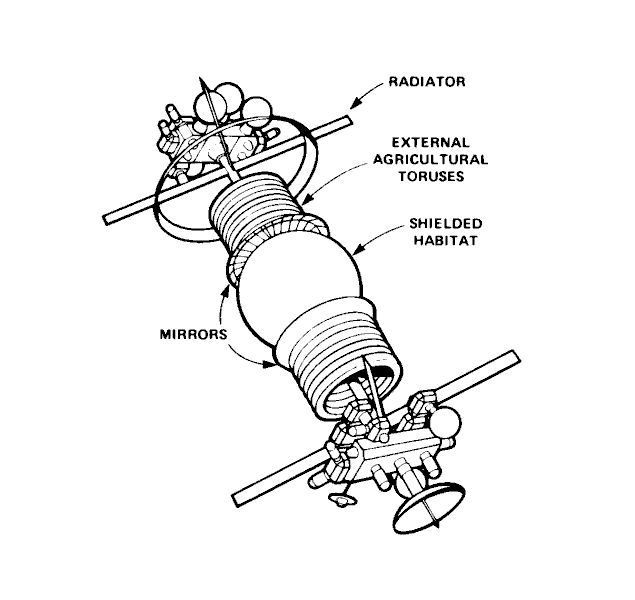
The closer the better, We need constant access to it, sort of like we have with the Moon. that 40 meter to 100 meter rock would be just the right size for building a space colony out of. I think the first step would be to bring a 500 meter wide spherical balloon , it will need an opening 100 meters wide so we can bag this rock, and, then we close the balloon and inflate it around this asteroid. Then we mine the asteroid and move the material to the inside surface of the balloon. I think the balloon would be the framework for a Bernal Sphere colony.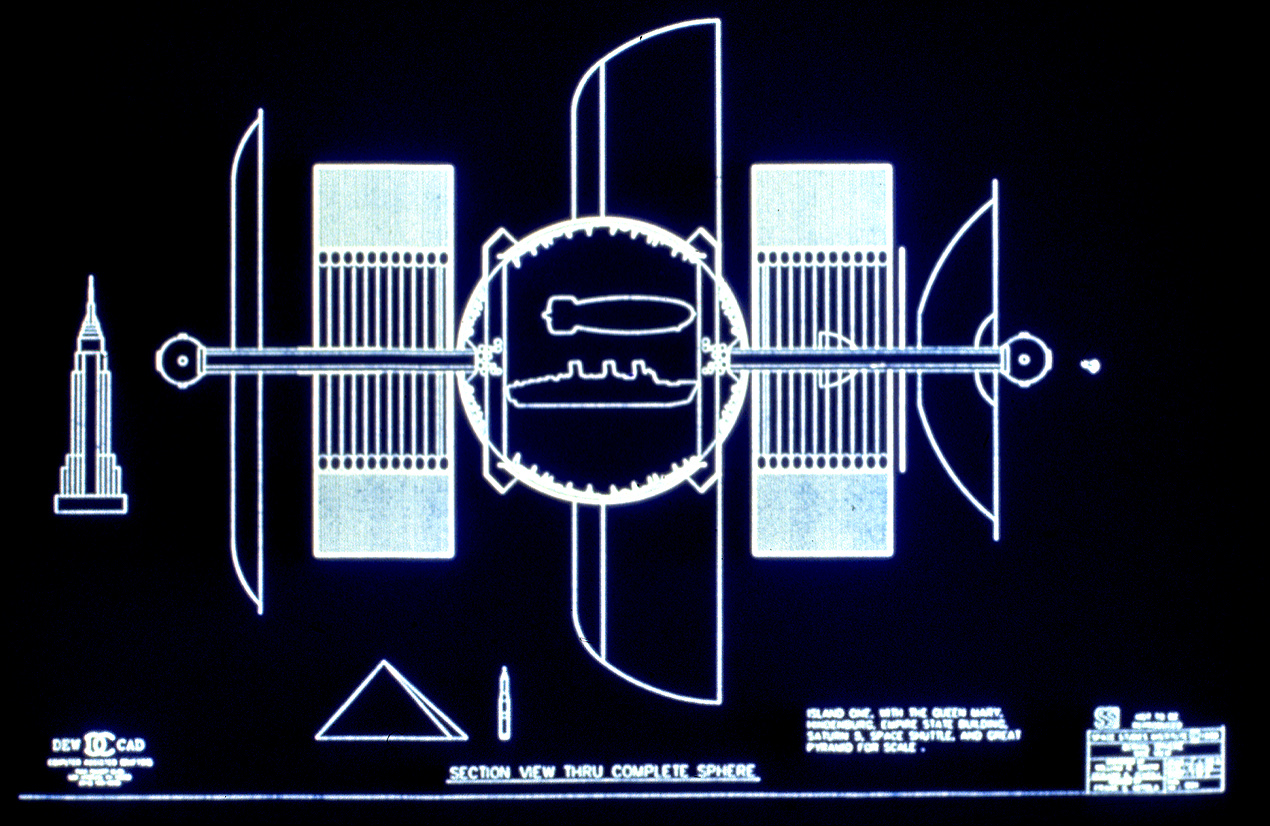
#888 Re: Human missions » Earth has captured a second moon, says NASA » 2016-06-19 07:09:55
if it is Earth's distance from the Sun, it likely contains no water, unless it somehow recently got there.
In Figure 3, the most common (modal) value of the distribution falls at 2.63 g/cm3, roughly the density of quartz, an abundant rock-forming mineral. Few density values for these upper crustal rocks lie above 3.3 g/cm3.
If this rock is 40 meters in diameter, that is 4000 centimeters which is 64,000,000,000 cubic centimeters which would weigh 168,320 metric tons, lets say its 200,000 metric tons as the low estimate.
If it is 100 meters across it would weigh 3,125,000 metric tons. You know this mass is roughly equivalent to one of Gerard O'Neill's proposed Space Colonies, probably one of the smaller ones such as the Stamford Torus or the Bernal Sphere. We got all the material already out there, we don't even need to mine it from the Moon! What are the chances of converting it to an actual space colony, lets say the Bernal Sphere for instance? Lets say we build it in place, in the orbit it now stands in, what would the say the difficulties would be?
9.5 million miles (15,288,768 km) About 51 light seconds away 1.7 minutes time delay.
#889 Re: Human missions » A private sector Lunar Mining colony - Getting the money » 2016-06-18 19:16:18
Im sorry that is wrong the USSR and its successor state Russia have completed many Mars Missions.
Distance is an issue. The USA and ESA have both a history of Martian Failure.
The USSR was just a name change for the Russian Empire, Much as Saint Petersburg became Leningrad and then became Saint Petersburg again, when Lenin took it over after deposing and executing the Czar and his family. The modern state of Russia is just the former Empire resuming its former name. The USSR was just an episode in Russian history, nothing more.
#890 Human missions » Earth has captured a second moon, says NASA » 2016-06-18 18:41:07
- Tom Kalbfus
- Replies: 32
-A possible destination for Orion. It gets as close as 9.5 million miles
Earth has captured a second moon, says NASA
A mini-moon has been orbiting our planet for only around 100 years.
Bryan Nelson
June 17, 2016, 4:54 p.m.
8.2K 26 41
265
<iframe width="638" height="359" src="https://www.youtube.com/embed/SbbAnVU4rmY" frameborder="0" allowfullscreen></iframe>
https://youtu.be/SbbAnVU4rmY
Well, this is awkward. Earth's relationship with the moon is no longer a monogamous one. Scientists have identified a second, mini-moon orbiting our planet that has probably only been around for about 100 years, reports NASA.
This second moon looks to be a recently captured asteroid, and like a mistress, its subtle dance with Earth may be fleeting, only sticking around for a few centuries. Still, it's a remarkable event that proves just how dynamic our gravitational relationship is with near-Earth objects.
The video above showcases in detail the path of the new moon's orbit as it bobs up and down like a tiny float in choppy water. As said, it's small, measuring in at only around 120 feet across and no more than 300 feet wide, which is probably why it has taken so long for scientists to spot it. (It was only just spotted last April.) Its distance from Earth varies from between 38 and 100 times the distance of our planet’s primary moon
#891 Re: Terraformation » The Case for Jupiter: Which is more hospitable? Jupiter or Saturn? » 2016-06-18 18:30:34
There are things we could build in LJO that we couldn't build elsewhere. Recall my suspension bridge idea around Venus?
We might build a larger version of this around Jupiter, a suspension bridge hanging above the atmosphere but orbiting fast enough to cancel out 1.5-Gs of Jupiter's gravity. If it completes an orbit every 3.825283394551562 hours then the remaining gravity felt on the band's top surface would be 1-G. I calculated this with the orbit calculator using Jupiter's radius and 0.6 of Jupiter's mass to find the orbit velocity. since gravity is proportional to mass at the same distance, this will leave a downward gravity of 1-G.
#892 Re: Human missions » A private sector Lunar Mining colony - Getting the money » 2016-06-18 18:18:48
Well its better than the Russians who have lost 100% of the missions they sent to Mars! The competition is greater now, chances are more likely in the 2020s.
#893 Terraformation » The Case for Jupiter: Which is more hospitable? Jupiter or Saturn? » 2016-06-18 08:13:23
- Tom Kalbfus
- Replies: 7
After Mars which one would be colonized first and how? Jupiter has strong gravity, but it is four times warmer than Saturn, this would mean less energy would be expended in keeping the habitats warm. If one wants to walk around freely in the Jovian environment, say in the gondola of a balloon, one would need to be in an exoskeleton with perhaps a counter pressure suit to keep the blood flowing the brain. There are exoskeletons in development by the military. So one just needs to wear one of those all the time. When one goes to sleep, one can take it off. Since lying flat under around two and a half gees isn't so bad. The hard part about living in the atmosphere would be going back into space, since the orbit velocity of even low Jupiter orbit is quite high. The other problem is getting through the strongest van allen belt radiation in the Solar System, but once in the atmosphere or just above it, then Jupiter's strong magnetic field would protect you from solar flares.
Another place humans can inhabit is low Jupiter orbit. In the extreme upper atmosphere of Jupiter, there is enough atmosphere to block the charged particles from the lower Van Allen belts from orbiting here, but the atmosphere is tenous enough to permit a space station to orbit here with some station keeping.
Using the orbit calculator: http://orbitsimulator.com/gravity/artic … ator2.html
I get an orbit period of around 3 hours for a low orbit around Jupiter. the actual period at Jupiter's radius is 2.9630517763243946 hours. I guess Jupiter's radius is defined as that altitude where the air pressure is the same as Earth's at sea level, so an actual orbit will be above that, so it would take three hours to complete a circular orbit just above the Jovian atmosphere. In orbit we wouldn't have to worry about Jupiter's gravity. We would need to provide gravity in fact through rotation, if we wanted to stay there for a long time. Getting there is easier than getting back. We can use Jovian atmospheric braking to slow down into a low Jupiter orbit. We can use a steep elliptical orbit to get our passengers quickly through the Van Allen radiation belts, with lots of shielding. Unfortunately Jupiter's atmosphere cannot similarly accelerate objects to Jovian escape velocity, which is a real high number, which is 59.366 km/sec!
#894 Re: Interplanetary transportation » Rocket Monopoly - United Launch Alliance » 2016-06-18 07:50:06
Why do business always look at reducing the number of emplyees as the solution to getting costs down...as we have discussed before there goes the art of making rockets as most are at retirement age....
Because salaries are the entire cost when you look at every level of production when getting the rockets produced and launched, whether it be mining the raw materials, manufacturing, producing rocket fuel, or actually launching the vehicles. The more we can eliminate salaries and wages paid along the way, the more we can reduce costs!
The Centennial-based rocket company is the largest contractor for U.S. government space missions.
"As ULA continues our transformation, we have determined that a reduction in force is necessary," said spokeswoman Jessica Rye, in a statement. "ULA’s intention is to accomplish most, if not all of the reductions via voluntary separation. We anticipate up to 375 employees separating from ULA across all five locations."
It has local headquarters, Florida and California launch facilities and manufacturing sites in Harlingen, Texas and Decatur, Alabama.
The company employs 3,700 people nationwide. About 1,700 of them work locally, primarily in engineering and ULA’s administrative functions.
ULA cuts 375 jobs as new commercial space-race heats up
Centennial maker of rocket launchers to shed 10% of workforce as it tries to stay competitive as SpaceX and other startups join space race
ULA has spent the past year making changes and finding ways to cut costs so it's more streamlined and less reliant on government contracts. Last June, it cut 12 positions, or 30 percent of its executive team.
A month later, it announced it would put a small engineering team in Pueblo to bring some of its rocket testing in house. The propulsion testing facility will help the company's existing Atlas and Delta rockets and its new Vulcan launch system, which will include reusable booster engines.
#895 Re: Human missions » 3D printing of solar cells » 2016-06-18 07:45:53
I think we need to manufacture solar cells locally rather than bring them from Earth. If the solar cells produced locally are less efficient, we just manufacture more of them to make up the difference. What also is important is if we can print batteries locally, since like the Earth, most places on Mars do not enjoy constant sunshine. The great thing about Mars is that is has more space than we need to establish solar farms for all of our power requirements. I wonder if we can have automated probes that can manufacture and lay out solar cells on the surface of Mars, lets say we substitute that for a nuclear reactor. We just lay out enough solar cells manufactured locally to equal the power output of nuclear reactor and then some for overnight storage. No need for the power to be constant for fuel manufacture, we just need the ability to store the fuel produced during the day overnight.
#896 Re: Human missions » A private sector Lunar Mining colony - Getting the money » 2016-06-18 07:37:01
I do not think we'll go to the Moon only or to Mars only, I don't think it is a choice between the Moon or Mars. I think a scenario where we go all out for Mars while pretending the Moon is not there and ignoring it is an unrealistic one. I think the scenario of an all out drive to send people to Mars with international partners as part of a UN agency is unrealistic, with the expectation that everything else will be put aside with a single-minded drive for Mars.
I think Obama's cancellation of the Constellation program was foolish, the fact of the matter is, the Moon is easier to get to, and for that reason alone, we are likely to see more footprints on the Moon before we see footprints on Mars. The capability to go to Mars includes the capability to go to the Moon. Going to the Moon is not necessary for going to Mars, there is no need to build a fuel plant on the Moon, there is no need to build a shipyard in orbit to assemble an interplanetary spacecraft for getting to Mars either. A Mars Mission can be broken up into three parts:
1) Getting to Mars
2) Staying on Mars
3) Getting back to Earth
Each phase of the mission can be handled separately through pre-supplies. Probably the easiest to accomplish would be staying on Mars, for that existing vehicles can land supplies on the surface of Mars to last between arrival at Mars and the next launch window back to Earth. We don't need special vehicles for that, we can use what we have for sending probes to Mars, if we land enough of them on Mars, then astronauts who land there will have enough supplies to last. Getting there requires a vehicle that can keep the astronauts alive for 180 days without resupply, and going back could require another vehicle.
The Moon is a lot easier, it just has higher fuel requirements than an International Space Station mission, the launch window to the Moon is constantly open, so long as we have a vehicle which can get us there.
As for a base, we just can launch supplies to the Moon ahead of the astronauts SpaceX can probably use its existing Vehicles for this. Air bags can cushion the landing on the Moon, if they are dropped from a low enough altitude.
#897 Re: Unmanned probes » Juno - Jupiter Polar Orbiter » 2016-06-16 06:11:37
Is it even possible to scoop up enough atmosphere to use a neclear power engine to force the probe back into a higher orbit as it slows each time on its way downward towards the planet efore being boosted back into a more stable orbit....
You can use atmospheric grazing to slow down to a lower orbit, the only problem is the orbit you end up in without correction is one where part of it dips into the atmosphere, so what you need is a rocket boost at the high end of the orbit to raise up the lower end of the orbit. The atmosphere is great for slowing down without expending propellant, but you need to raise your velocity at the apogee of the orbit so your satellite doesn't dip back down into the atmosphere during the second orbit after slow down. You need to expend a little propellant to circularize you orbit after performing the atmospheric grazing maneuver, otherwise you will slow down even more with the next orbit. So you need to raise the low part of your next orbit so you miss the atmosphere after it has done its job of slowing you down to get you here.
Low Jupiter orbit is much like low Earth orbit, in that there is a trace amount of Jupiter's atmosphere which basically prevent radiation bands from accumulating there. At higher orbits, there is nothing to prevent Jupiter's magnetic field from accumulating charged particles from the sun and creating radiation hazards. In low Jupiter orbit, your orbit will slowly decay just like in Low Earth orbit, but a satellite could stay up there for years with a minimum propellant expenditure to maintain orbit.
#898 Re: Unmanned probes » Juno - Jupiter Polar Orbiter » 2016-06-15 06:01:02
Better lifeless Legos than something truly alive. That's a harsh place.
GW
I think there is a relatively radiation free zone just above Jupiter's atmosphere, just like there is just above Earth's, if we can get within 200 km above Jupiter's cloud tops, a probe there could last quite a long time. The best way to get into a circular orbit around Jupiter would be with an atmosphere grazing maneuver. You'd need an ablative heat shield to slow down the probe, and then a rocket burn to circularize the orbit afterwards, and like a low Earth orbiting space craft, you'd need periodic rocket burns to keep the probe from falling into the atmosphere. So far only one space agency has ever sent probes to Jupiter or any of the outer planets, that would be NASA. Russia hasn't even sent one probe there.
#899 Re: Human missions » Musk's plans for Mars » 2016-06-14 17:06:25
Corruption is a substitute for hard work, it just so happens that SpaceX does the hard work, and makes money by providing a superior product rather than by bribing someone for exclusive access.
#900 Re: Human missions » Musk's plans for Mars » 2016-06-14 13:24:39
Space X profits from a good relationship with NASA and undercutting the thin political justification for SLS and Orion could make Space X enemies. Why do that?
Because the NASA people in charge will get fired, and those that replace them will give Space X new contracts that would have otherwise gone to Boeing. If SpaceX can do it better, they should show it, and those people who's career is to waste taxpayers money will be out of a job, and no longer a concern to SpaceX. I think Donald Trump for one would be sympathetic to this view point if he ever becomes President.
There are plenty of things they can do with the Falcon Heavy and Dragon to demonstrate their abilities without looking like they are intentionally undermining Congressional decisions about NASA.
Those Congressmen and women who are shown up to be wasting money should be properly gotten rid of, every two years there are elections. Its not the job of SpaceX to preserve the jobs of pork barrel spenders in Congress. If they are shown up, then the public should get rid of them for wasting their money. Money that's wasted on the SLS could instead go towards more Falcon Heavies that get the job done cheaper! SpaceX owes nothing to Boeing, if they can't compete, they should get out of the business! The winners of contracts should be the best bidders, not the campaign contributors or kickback salemen.
The Falcon Heavy and the Dragon cost a tenth as much as SLS and Orion and will cost a lot less to use. NASA didn't even want SLS. It's a pork barrel project imposed on NASA by Congress, but NASA now has to justify it and defend it. Why should Space X make that harder for NASA to do?
Because they want more of NASA's money. NASA has only a finite amount to spend, and the more Boeing gets, the less SpaceX gets, now why should SpaceX give up business in order to share the Market with Boeing. If Boeing can't compete with them on price and quality, they should not compete at all, and their friends in Congress should be gotten rid of, because they are not serving the public but themselves!
That would be biting the hand that feeds them.
The had that feeds them is the American Taxpayer, they decide who is in Congress, and right now they are very angry! Congressmen who use taxpayer money to get themselves reelected are ill-serving the public. As a side note, we really need to clean the House and Senate, not with any particular party, but get rid of those who get kickbacks and campaign contributions from contractors who buy votes rather than produce quality at a low price.
The only way to properly win a bid is by producing the most for the least, not through gifts to congressmen and Senators, nor for building factories and production facilities in certain districts to facilitate votes! those things make it more expensive, the low bidder who can deliver should always win the contract. No more living with corruption or accommodating one self to it.