New Mars Forums
You are not logged in.
- Topics: Active | Unanswered
Announcement
#51 Re: Planetary transportation » Drilling on Mars » 2007-11-09 17:53:04
Once the drilling has begun the effect of the drill boring through the ground will help to anchor the rig or vehicle. How I know this is true is when I worked on an oil rig we hit a tough spot and the front of the rig started bouncing in the air, this means that the drill bit was bouncing and pulling at the same time.Perhaps a similiar approach to the intial anchoring of the rig could be designed by employing small drills on the stabilizer legs of maybe five feet, these drills would then drill down anchorning the rig.
I was mistaken in the above that the drilling process really doesn't anchor the rig but is a result of the drill bit bouncing off a formation that it hasn't been able to drill through.
#52 Re: Planetary transportation » Who would be intrested? -Design a set of vehicles for mars- » 2007-11-09 17:43:30
The MPLM could be sent up as one unit. There wouldn't be any need to assemble it on the surface except for maybe adding the tires.If NASA is able to come up with a way to design the vehicle that once the cargo container has parachuted to Mars and would then be able to be rolled out one end ,waiting for the naughts to arrive. Then we have a winner
#53 Re: Planetary transportation » Roads on Mars » 2007-11-09 17:03:38
What I was thinking for the roads would involve a team of robots that would go first remove any small to medium debris. The larger debris would then be removed by using the four robots to collectively move the larger debris. After this has been accomplished the robots would then have their blades removed and heavy packer drums installed. These drums would be solid steel and weight around 400 lbs each. The robots would then pack the surface down until it was flat. If a storm were to tear the roadway up the robots would be redeployed ,fix the damage and then return to their storage bay.
The roads on Mars wouldn't be paved like they are here on Earth, there wouldn't be a need to pave them.
This is what is needed:
A robot that can employ a blade to push the smaller debris out of the way.
A robot that can empoy a roller of 400 lbs
The above system must be interchangeable
The robot must have a robotic arm to aid in the removal of debris
Please submit all ideas here or send them to me at dryson@hotmail.com
#54 Re: Planetary transportation » Who would be intrested? -Design a set of vehicles for mars- » 2007-11-08 17:05:58
I think I may have found a solution to the whole problem we are facing here.
http://www.nasa.gov/pdf/167126main_Tran … istics.pdf
You will have to download the pdf file but its worth it. I would make a folder called D & D Rover Project ( Dragoneye and Dryson Enterprises)
put the pdf in there and go from there.
If you look at the MPLM and the particulars we may have a potential winner. I like the interior size and the length. Two of these MPLM's docked together would give the crew more then enough area to house some racks for sack time, research, comm, medical ,waste management and more then enough storage space.
#55 Re: Planetary transportation » Roads on Mars » 2007-11-08 16:41:39
Those are all very good ideas, but we have to clear the roadway surface before laying any raillines. What are some ideas to remove the rocks and boulders out of the way? Is there a way to then pack down the surface to make the road a hard enough surface to easily run at around 40 mph on?
#56 Re: Planetary transportation » Who would be intrested? -Design a set of vehicles for mars- » 2007-11-08 16:38:55
so lets figure the vehicle at 20,000 lbs to be on the safe side for the time being.
#57 Re: Planetary transportation » Roads on Mars » 2007-11-07 21:30:38
Terraformer posted this : Has anyone considered a vehicle that would glassify the Martian surface? It could first be sent as a probe and would build roads and a landing strip for the astronouts. It could be sent to sites of interest and the crew could just drive along the road. If it isn't to slippy.
Well Terraformer I would suggest designing a robotic package of maybe four robots that would employ a blade type system to move the smaller rubble out of the way. For larger objects of maybe 200 lbs or larger we would for the time being have to go around them, unless a way could be found to use the four robots to move the rock out of the way.
A team should be comprised to decide where a suitable base would be at.
Why is this area to be used as a base? (this should be based on what we want the naughts to accomplish, survey of a particular area, esatblishing a base of operations, or drilling beneath the surface.)
Once decided maps of the area which can be obtained via nasa should be looked at to determine where the least amount of large objects are located and where the easiest places for roads to built would be located at.
Get back to either Dragoneye or Myself with this information.
#58 Re: Planetary transportation » Rover launch vehicle » 2007-11-07 21:14:04
http://www.newmars.com/forums/viewtopic.php?t=3797
This is probably the most important aspect of the design. Once the decision has been made on what the diameter and length of the rover is going to be we will have to go back and first design the payload section of rocket to carry the rover to Mars. Once the general layout for the payload section has been designed we can back and tweak the payload section's structural support, then add the rocket motor and guidance systems . along with the pc operating systems that control the motor functions.
The last part of the design would be the fuel storage system.
Under Construction[/url]
#59 Re: Planetary transportation » Who would be intrested? -Design a set of vehicles for mars- » 2007-11-07 21:11:26
just doing some research and i decided to make it roughly the same size as a city bus (100" wide/tall by 40' long) that submarine is 50' long and 96" in diameter, so mine will end up being 120" shorter than that sub (still able to cary along a towed unit) but the same size in diameter.
As far as getting the vehicle there, it can technically be assembled out there (not very hard to do)
and it isn't like that shutle needs to be manned so you can send it out there ahead of time and all...
the motors on the vheicle could be a temporary power source for the camp till things are setup for more permanent use.
Oaky lets slow do and start doing the number crunching on the rover.
First we will need to know the weight of each major component.
major components would be:
1.The engine block
2.Axles and Tires (would also include shocks, struts or other cushioning
system)
2a.For the shock absorbtion system I have a theoretical design
that uses magnets. That can be discussed later on if warranted.
3.The structural tubing (interior frame)
4.Hull plating (exterior covering)
4a. The mathametical calculations will be failry easy once a
determination has been made on how thick the tubing and hull will be
along with the length of each individual tubing and what each hull
plating will be.
secondary components would be:
1.Crew compartment - To make life simpler, the design I suggest using
is the the new Orion model [url]
http://www.nasa.gov/mission_pages/const … rion_contr
act_images.html[/url]. This model when reconfigured to accomodate four
naughts instead of six would make one of the most important parts of the rover complete without having to even brainstorm to much.
2. EVA suit up area - If we look at the foreward section of the Orion we
can see the EVA hatch. A similiar set-up would be used for this design
since the design has already been proven to work and not much re-
work would be involved in placing it in another location.
tertiary components would be:
1.Life system system including computer operating systems and
ventilation (circulation to keep the atmosphere fresh and not stale)
2.Comm system including wiring paths and antenneas
3.Waste management system for a three day venture ( I would just step
outside and go, but this system wouldnt be very applicable for the
female naught as there are not any bushes. anyway)
This should maybe take a year or so to complete once we sit down and
start compiling the data.
I have starter another post called ROVER LAUNCH VEHICLE.
This post will be in conjuction with the Rover Vehicle.
#60 Re: Planetary transportation » Who would be intrested? -Design a set of vehicles for mars- » 2007-11-06 17:03:00
as far as why not to use steel... it wouldn't really matter seeing as the planet makes everything weigh less since the gravity isn't as strong over there. so i'm not too concerned about weight. not to mention the motors are VERY light weight compared to most setup's out there.
You have to figure in the money spent on getting the rocket that would carry your rover into space along with the cost of sending the rover to Mars.
The Aluminum and titanium mix would reduce the overweight but would cost more then the steel structure. The reduced cost in using aluminum and titanium in respect to the cost of launching a steel structure rover could be spent on making the rover better.
I was looking for a solution to the spacesuit issue and may have come up with a variant to yours
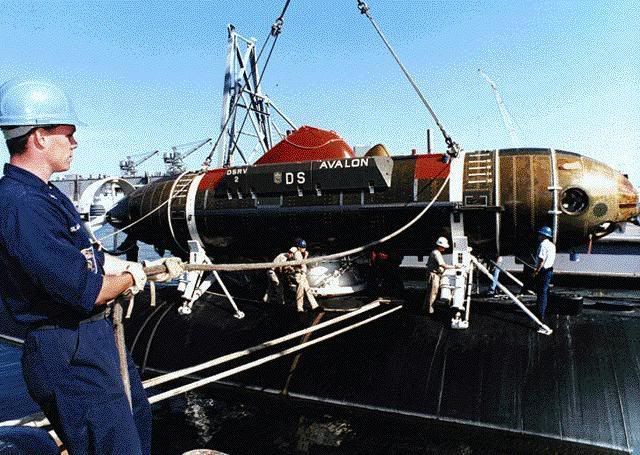
http://www.fas.org/man/dod-101/sys/ship/dsrv.htm
You'll notice the overall length would be perfect. With the structural support made out of aluminum and the hull made from titanium this SRV would provide various options to the naughts.
1.The area where the propeller is located would be where the engine compartment would be.
2. You could design the portion directly to the fore of the engine compartment as the EVA suit-up area. The hatch would either have to be on the side or on top. This area would have to be able to be pressurized and handle the extra amount of pressurization and depressurization.
3. The area directly fore of this section would be the sleeping area for extended trips, a small med lab in case a naught was injured along with a small science lab.
4.The final section would be the crew cab where of the course the operations of piloting the rover and the robotic arm would take place.
#61 Re: Planetary transportation » Who would be intrested? -Design a set of vehicles for mars- » 2007-11-05 18:55:30
I thought that i said that further up in my post that the earth bound one that i'm personally building will be mostly of composits and aluminium. but the one out there since usually cost isn't a big thing would be aluminum/titanium...
ok i reread my post and i didn't clarify what i was talking about in there... that steel part of the vehicle would be for most of the interior portions of it and it would be stainless so it wouldn't corrode.
I understand that you dont need a vehicle that goes very fast on the surface, but say they land in an area and want to scope out another area maybe say 2 days away with out using a take off vehicle... going 20mph to go 200 miles would take 10 hours... being able to go 70-80mph *assuming it clears its own path from most rock debris* it would take just under 3 hours.
as far as the crew pod being small this is intended for 2 personell and i'm actually currently trying to make sure that it fits on the roads here in the US so that when i'm in testing i can take it to various places and make sure i dont need to redesign any various parts of it.
I'm sure that the mars version will be almost identicle but i will add a trailor to it for extra storage, power, and anything else to allow there to be more room in the crew quarters.
I'd also really like for the vehicle to be able to do all the work from inside it instead of having to get out every time they need to look at something. so a nice set of robotic arms or something would be nice. but for my version it will be pretty plain mostly to test out the platform more than anything.
Why not make the whole frame one alloy?
Aluminum for the inside and a titanium hull?
This type of structural design would increase the overall speed to around 40 MPH. The steel would add considerable weight to the overall structure.
Here's a thought as well. Instead of wantiing the vehicle to get there faster, add the trailer to the vehicle, the items that would have been stored in the vehicle which are now being towed would free up that amount of space in the vehicle. This added space could be used for a place for one of the astronaughts to sleep on while the one drives. That way the journey could run non-stop from point A to point B.
Why wouldn't you want to get out and walk on the surface of Mars? Thats part of the reason for being there. To sit in the crew cab and let a robotic arm do the job would be defeating the purpose of being there in the first palce.
#62 Re: Science, Technology, and Astronomy » Black Hole question » 2007-11-04 19:56:30
I have a question.
If two black holes existed along each others parallel geometric plane what would happen?
Would both blakcholes inexorably pull each other apart while building upon each other at the same time?
#63 Re: Planetary transportation » Who would be intrested? -Design a set of vehicles for mars- » 2007-11-04 19:52:09
Now Im not trying to put down your idea dragoneye I,m just trying take what you have designed and twist it this way or that to possibly see a new approach to what you have desinged.
Please continue.
#64 Re: Planetary transportation » Who would be intrested? -Design a set of vehicles for mars- » 2007-11-03 19:15:09
for starters the vehicle wouldnt need to go 60-70 mph. Heres your first Martian ticket. Slow down son.
The steel composits would add weight to intial launch of the vehicle from earth which would require more money spent on fossil fuel. This also means more pollution. An aluminium frame mixed with titanium reinforcements would be best. The AL/TI (Aluminum = AL Titanium = TI)
structure would also be more resiliant to the corrosive effects of the Martian atmosphere. WIth the winds producing very bad wind storms, a steel body would deteriorate. Think of Mars as a big sand blaster. The steel will flake off when tiny grains of Martian soil hit it. Aluminium and Titanium are less likely to flake in this manner.
I do like the overall structural design of the rover though.
Perhaps a larger crew compartment should be incorporated into the design, extend the rear of the rover back along the x axis maybe ten feet. Make the crew compartment a seperate vehicle with it's own engine.
The rear of the rover would be the equipment storage area. This part of the vehicle could be left behind to conserve the energy of the crew compartment when the crew would use the crew compartment to explore or in case of emergency.
#65 Re: Planetary transportation » Drilling on Mars » 2007-11-03 18:48:44
The current composition of the Martian atmosphere is:
CO2: 95.32%
Nitrogen: 2.7%
Argon: 1.6%
O2: 0.13%
CO: 0.07%
H2O: 0.03%
neon, krypton, xenon, ozone, methane: Trace
Then this means that there shouldnt be any flash explosions from the drilling process. What about possible underground gas pockets though. If Mars doesn't have any underground pockets of these gases then Mars would be like the Moon or an asteroid.[/quote]
#66 Re: Planetary transportation » Who would be intrested? -Design a set of vehicles for mars- » 2007-10-28 19:09:43
yea they are really cramped, that is a good design for use out there, but it would be better to give it a bit more clearance, and you have to think about the tires since the tires will be a big issue. i've actually been working on a design that would work out there but i'm going to wait to announce any more info on it until i have more work done on it, thus far i have the motors set in it, the frame (all tube frame) and the basic locations of the wheels and the seating area. otherwise i still need to insert all the basic driving components... im' actually going to build it too so i'm designing it pretty accurately.
Now is the frame going to be steel or aluminum or titanium? With the frame structure don't forget about deciding if the frame will be welded or bolted together.
#67 Re: Planetary transportation » Who would be intrested? -Design a set of vehicles for mars- » 2007-10-28 19:07:26
The BDRM were notoriously cramped if I remember correctly. Theres also a fuel issue.
Design re-vamp 1.
1a.What about cutting off the portion behind the driver and a-driver section? This would leave this area open for easier access but would still afford the astronaughts with more then enough protection from sand storms.
1b.Instal skirting that can be folded up and down. A good example can be seen by looking at the Sherman tanks from WW II that had water skirting attached to it and then pulled up around the commanders cupola.
This type of skirting would obviously need to be very durable possibly made from aluminum or maybe .125" thick of titaninum but would still need to be able to be ran on a rail system. This would increase the area behind driver a-driver section so they could stand up and move around.
The power source would be the Hydrogen Fuell Cell engine.
The tires would be made from the deployable landing system material that encloses a lander in bubbles and then bounces around.
#68 Re: Interplanetary transportation » New Fuel » 2007-10-28 18:41:02
What about flour? That explodes. If mixed with a solid powdered oxidiser...
Wouldn't this type of fuel eventually lead back to solid rocket boosters?
#69 Re: Planetary transportation » Drilling on Mars » 2007-10-28 18:39:21
Only if you've Terraformed Mars first. If you haven't there is no O2 to burn.
What about other gases that have low temperature flash points that are on Mars? Would the drilling process in any way ignite them?
If not then this may be a very good idea on how to drill for various reasons
1. Lasers are ran off of electricty and not fossil fuels like the big oil rigs are. A solar collection array could be set up to collect the UV rays then convert those rays into the electrical power needed to operate the laser drill.
2. Less equipment hauled to Mars mean less money spent on fossil fueled vehicles
#70 Re: Interplanetary transportation » New Fuel » 2007-10-28 15:32:27
Here is an interesting propellant. Coffee Creamer. When I served in the military and we went out on our camping trips into the woods we would take the coffe creamer, which was in a solid granular state, open the small packet up and pour the contents slowly out. Next we held a lighter about an inch or so away from the creamer as is poured out. If the lighter was positioned just right in relation to the lighter the coffee creamer would
ignite unitl the flame traveled to the opening where the flame then went out.
Perhaps this type of chemical reaction when used in conjunction with a pressurized system could provide a means of thrust. Maybe not on the main booster engine scale but maybe as a minature manuvering thruster system.
#71 Re: Planetary transportation » Who would be intrested? -Design a set of vehicles for mars- » 2007-10-27 16:27:39
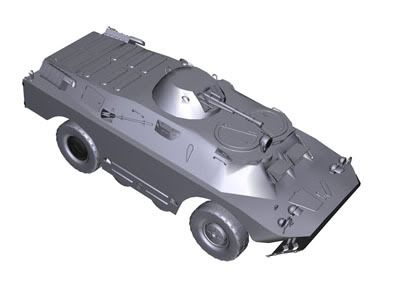
This military vehicle would be a perfect design for transportation on Mars.
Just remove the cannon turret, add various life support systems, (the BDRM comes already built with a system that creates an airtight vehicle. This system is meant to keep the crew and soldiers carried safe from gas and chemical attacks.) including, heating and communications systems along with equipment suites to use in soil gathering or other expierements and you have the perfect Mars Rover.
#72 Re: Planetary transportation » Drilling on Mars » 2007-10-27 16:14:03
I worked on an oil rig for a brief time and what I learnt while I was there was that drilling is an art form. You have to have a certain type of touch and be able to feel through the controls and the pipe what is going on under the surface.
I don't think the usual Earth based drilling equipment would work on Mars.
A different approach would be to develop a mining laser that combines maybe four or five lasers in such a manner that they would minick the action of the drilling process. As the laser bores into the ground the need for a means to remove the cuttings would be eleviated due to the heating and glassifiying of the ground (Glassify - verb, means to heat a surface or area to a point where the surface takes on a smooth molten appearance.
The only problem with this appraoch is that when you drilled through a gas pocket the lasers would ignite the gas creating a blowout which will destroy the mining rig.
#73 Re: Interplanetary transportation » Rocket Monopoly - United Launch Alliance » 2007-10-27 15:49:01
So much for the idea of using competition to get a good deal for CEV launches.
Sometimes competition between rivals negates the desired outcome on the whole. Competing sometimes also negates systems that when incorporated into one design could increase the overall effectiveness of both teams singular goal.
#74 Re: Interplanetary transportation » WARP DRIVE, AHEM! » 2007-10-27 14:47:08
We know that laser light travels at the speed of light. We also know that the photons travel along orbital paths. We also know that lasers use gases as a source to create the beam which contain atoms.
I will use two lasers for this theory,
Laser one: Laser one would have inert atoms attached to the photons by using nano tubing that remain inert (meaning the two atoms do not create a release of energy when joined together or come into close vicinty of each other)
Laser two:Laser two would be a mirror of laser one except for the atoms attached to the laser photons would react with the atoms attached to the photons from laser one.
These lasers would need to be aligned to such precision that
the orbital paths from each laser would collide with each other at the same time. When the photons collide with each other they should cancel each ones energy out but when the two inert atoms that have been attached to the photons collide and become active their collision in theory would release an amount of energy equal to that of the atoms used.
This release of energy would not be a light speed reaction but would be close to that of lightspeed. This is because the process of when the atoms collide would create a planck time moment where reaction would be stalled due to the restructing of the atoms colliding and then releasing their energy.
To increase the thrust yield more lasers would be used to create a more energetic release or thrust.
To decrease the thrust yield fewer lasers would be used to create a less energetic release or thrust
Who cares what Einstein says. If everyone listened to those that said a plane can't fly then this website wouldn't even exist.
Those who conform to what is a perceived norm are more likely to become un-intelligent versus those who look for new theories upon which to build the future.
#75 Re: Interplanetary transportation » WARP DRIVE, AHEM! » 2007-10-27 14:40:32
we have to remember that mass is the weight of an object.
We also know that in order for your bowling ball to even exist the atoms that comprise the material that makes the bowling ball must move at a certain rate of velocity to create the bowling ball. And how does the bowling ball keep its shape? Through the munipulation of how many atoms and at what rate the atoms move. If the atoms didn't move at all then the bowling ball would most likely be a gaseous state.
So gravity is created by how fast the atoms move within a particluar environment and how they interact with other atoms in this environment. Mass is just how much an atom weighs, mass does not create gravity.
Perhaps if you stopped trying to add a conatation of religion into the calculation then you would see what I mean.