New Mars Forums
You are not logged in.
- Topics: Active | Unanswered
Announcement
#51 Re: Meta New Mars » Housekeeping » 2026-01-28 15:24:33
Good news from the numbers run for just the sleeping part of the ring. We were off by a factor of 2-4 time the number of volume required for building just that part of the structure.
Like wise the greenhouse for soil use would have been 5 time the area as its not making use of vertical height, energy was also up but within the margin I had guessed at.
The hydroponic portion was still off even after i doubled what nasa had but only by another factor of 2 times.
So you can hopefully this would not been good.
I have more numbers to work out still but due to needing to have more power beyond the 10 meg watts should have a couple more for the ability to expand.
Still lots of other stuff to compute.
#52 Re: Meta New Mars » Housekeeping » 2026-01-27 18:37:50
In discussions you will need to put the opinions with in the topics and then do the branch for what you feel is off topic. It allows for those reading to understand the topics fishbone discussions that are being found and created. This happened to some degree with the large ship.
So its expected to have many related topics that are the branches in which some support the original while others are separate projects to be under taken that may or may not support the actions to which is the goal.
Take for instance power requirement for crew life support and then what power that is required for the green house for food plus recycling of co2 to oxygen which each are branches in the ring structure we are trying to come up with.
These are both power but its the sum of each which must be achieved.
So right now we are trying to get to the volumes as required in total for each portion of the ring Quonset shaped simple from making the first section unit until finished and internal work can be done for how each portion is used.
Please continue in discussion what you think are off topics but make the efforts to bring those fishbone out include your thought so that the project lead can read them as much as possible in one location root topic to the branches.
#53 Re: Meta New Mars » Housekeeping » 2026-01-27 15:31:32
For SpaceNut about Ring Habitat topic...
Please do NOT copy this post into the habitat topic.
What I think might work in this situation is to separate the smelting branch from the main trunk.
You have already introduced a post that does not contribute directly to the habitat ring topic.
That post can tell our readers to branch to another topic if they want to.
My goal and desire is that we will prepare a series of posts that a future reader can follow from beginning to end, and know how to set up the habitat.
Posts about other topics can be indicated.
We can either ship the Quonset huts ready made from Earth, or we can make them on Mars from Mars materials.
In any case, a discussion about how to smelt iron on Mars needs it's own topic.
Calliban would be the right person to lead a topic about how to smelt iron on Mars, and what to do with it.
You and I are NOT the right people to lead that topic.
Do we already have a topic about how to smelt iron on Mars? We might!
If we do, just point to it and continue building the topic so if flows cleanly from the opening post to the finished plan.
Reminder: We are now waiting for kbd512 to make the decision about how big he wants the Quonset hut to be. Once we have that information, we can figure out how to deploy 250 huts inside and outside the roadway ring. Until then we can work on something else.
The roadway will serve all residents. It will be a source of all fluids including gases. It will also be the passage for spent gases if we do not clean the air in each habitat. I think it would make sense to clean the air in each habitat, because every habitat needs to be able to operate independently in case of an accident that rips open the roadway corridor.
kbd512 has provided an opportunity for us to think about equipment that is under the habitat, because he indicated he would elevate the habitats above the regolith rather than dig down into it. Remember that kbd512 has chosen a location where water is believed to be abundant.
it seems to me that each habitat needs it's own power generator for emergencies, so the form that would take seems worth it's own topic.
(th)
Is the Ring Habitat on Mars Doughnut Torus a wiki or discussion?
If its a wiki I will remove my content, if you want a fishbone for further discussion and exploration of discussion.
1 then make the post
2 give the new link for discussion
if you want your idea of of bring it to mars to build move the other post to your discussion topic
Imported Equipment and Maintenance Garage for Mars which is the same structure that you wanted to consider.
I will even give the starship data for the bay opening which is 8 Meters x 8 meters x 22.5 meters tall. Solve to how much you can put into the opening and staying under the 100 Mt of mass that each can bring to mars.
For your next post we do not know how many are required or what the final count will be due to having insufficient specification.
#54 Re: Meta New Mars » kbd512 Postings » 2026-01-27 15:13:00
kbd512 Items that we know with many blanks still yet to determine overall volume needed
Developing anything on Mars with incomplete information is a project doomed to fail.
KBD512's only spec is as follows.
The 4 crew sleeping quarters is a volume of 125 m cubic meters which with 2.5 m floor to ceiling means 5m by 10 m long but what is missing?
Simple math: 1000 crew / 4 only gives a volume that is incomplete at 250x 125 m^3 = 31,250 cubic meters of volume
Here is some of the missing that changes that numbers as doors are required to exit or enter through, Whether these are pressurized doors, Hallways on either side, how adjacent quarters are placed next to each other as a curve leaves the walls at angles to the center of the shape, Are there going to personal hygiene within each quarters or are they combined as a central galley/ kitchen, food stores for dries or canned, freezer refrigeration, Mess table area for crew to eat area.
Quarters need ventilation, heating humidity control, linen areas for doing laundry and drying, how about exercise area and equipment, ect...
Without numbers or lights, outlets for individual occupants are further not specified items which are required.
Then there is the totals for all life support items to which include volumes needed to build as well.
power requirements beyond 10kw for 2 crew on the surface is for 1,000 will be 5 Meg watt
waste management A 4-person crew can generate up to 2,500 kg of waste in a one-year mission. A 3-year, 8-person crew is projected to generate roughly 12,600 kg of inorganic waste alone.
air scrubbing and replenishment
medical care, surgery, recovery Area: 23-28 sq meters per crew patient bed for monitoring, leave space for all side of bed for a minimum to support 50 crew
galley/kitchen, refrigeration/ freezing, dry food storage
greenhouse which is volume for 1,000 need per single person is 2m x 4m x5m = 40 cubic meter x 1,000 = 40,000 cubic m volume
power still needs calculations for LED
#55 Re: Exploration to Settlement Creation » Ring Habitat on Mars Doughnut Torus » 2026-01-27 15:10:07
Developing anything on Mars with incomplete information is a project doomed to fail.
KBD512's only spec is as follows.
The 4 crew sleeping quarters is a volume of 125 m cubic meters which with 2.5 m floor to ceiling means 5m by 10 m long but what is missing?
Simple math: 1000 crew / 4 only gives a volume that is incomplete at 250x 125 m^3 = 31,250 cubic meters of volume
Here is some of the missing that changes that numbers as doors are required to exit or enter through, Whether these are pressurized doors, Hallways on either side, how adjacent quarters are placed next to each other as a curve leaves the walls at angles to the center of the shape, Are there going to personal hygiene within each quarters or are they combined as a central galley/ kitchen, food stores for dries or canned, freezer refrigeration, Mess table area for crew to eat area.
Quarters need ventilation, heating humidity control, linen areas for doing laundry and drying, how about exercise area and equipment, ect...
Without numbers or lights, outlets for individual occupants are further not specified items which are required.
The large ship was 19 Meters wide for the floor, so is this realistic as well?
#56 Re: Exploration to Settlement Creation » Ring Habitat on Mars Doughnut Torus » 2026-01-26 18:44:03
Its still just art from what it thinks meets what the words are telling it.
So the Quonset hut from repurposed starship emptied stainless steel shell seems to be winning for materials to use.
This is where we need the smelting information so as to reform the materials and start the process to make insitu resource use.
Smelting is also required to make the basalt blocks as well. So the stainless and basalt use the same unit?
#57 Re: Exploration to Settlement Creation » Ring Habitat on Mars Doughnut Torus » 2026-01-26 18:23:10
Here are the ones copilot generated without spokes as fed in from post 20 above
#58 Re: Exploration to Settlement Creation » Ring Habitat on Mars Doughnut Torus » 2026-01-26 15:09:03
For kbd512 re Ring Habitat on Mars...
SpaceNut described the decision tree for a project as like the bone structure of a fish.
That image stuck with me ... At the same time, the "D" shape you described reminds me of Quonset huts.
Now (an hour or so later after daily chores are complete) it came to me that the two ideas might go together...
If you set up a string of Quonset huts for the roadway and then extend Quonset huts like spokes on both the inside and outside, you could provide comfortable (and private) quarters for 250 families and keep the circumference of the entire structure to a lesser value than might otherwise be the case.
We have members who can draw with computers. It would be fun to see what that idea might look like.
We also have members who can persuade AI drawing programs to create images, so perhaps someone will venture in that direction.
This would be like SpaceNut's fishbone structure looped into a circle.
(th)
A 1,000-crew, self-sustaining Mars habitat utilizing a ring-shaped, Quonset-hut design made of stainless steel offers a durable, high-volume, and potentially scalable solution to extraterrestrial habitation. By leveraging a curved structural form, the habitat distributes pressure efficiently while allowing for modular construction using materials suitable for the harsh Martian environment, such as stainless steel (analogous to Starship technology).
Structural & Design Concepts
Quonset Hut Shape: The semi-circular cross-section is ideal for pressure vessels, as it distributes stress uniformly. Large-scale, curved metal arches provide high durability and resistance to exterior pressure loads.
Ring Configuration: A ring shape allows for a modular, expandable colony where segments can be added, and it provides a circular, continuous loop for efficient, self-contained, and self-sufficient living spaces.
Dimensions & Pressure: To house 1,000 crew members, a large-radius ring (likely over 500 meters in diameter) would be required to provide sufficient living, working, and agricultural space. The 0.5 bar pressure (roughly half Earth's sea-level pressure) is a common, manageable target for reducing structural load compared to 1 bar while still allowing human comfort.
Materials: Stainless steel is a prime candidate due to its high strength, relatively low cost, and durability, especially under the extreme temperature fluctuations on Mars. It also allows for easier welding/fabrication using robots (such as "Atomic Liberation of Propellant and Habitat" (ALPH) units).
Sustainability & Life Support (In-Situ Resource Utilization - ISRU)
A self-sustaining colony requires producing resources on-site to minimize resupply from Earth:
Shielding: To protect against radiation and potential, albeit low, atmospheric leakage, the stainless steel structure would likely need to be covered by 1-2 meters of Martian regolith.
Food Production: Hydroponic or aquaponic systems, potentially using processed Martian regolith, would be integrated into the habitat, perhaps in specialized greenhouse segments of the ring.
Water & Air: Local water ice could be mined to supply water for drinking, cleaning, and electrolysis to produce oxygen for breathing and hydrogen for fuel.
Construction Materials: While the initial structure uses transported or on-site fabricated steel, subsequent expansion could utilize 3D-printed materials made from local basalt fiber and binders.
Safety and Operational Factors
Pressurization Risk: The 0.5 bar pressure differential requires robust construction to avoid explosive decompression, with particular attention to airlocks and structural seams.
Modular Safety: The ring structure should be segmented with pressure-tight, closable doors (airlocks) to allow for sealing off damaged sections without affecting the entire colony.
Energy Generation: The colony would require massive solar arrays and, most likely, compact nuclear reactors to sustain the 1,000-person population, greenhouses, and processing machinery.
This configuration provides a sustainable, long-term habitat that combines the proven, rugged design of a Quonset hut with modern, material-efficient, and self-reliant Mars technologies
#59 Re: Meta New Mars » Housekeeping » 2026-01-26 13:24:23
The topics are discussion topics not special ones which require discussion "Communications" / opinions to take place in discussions not in special those are the wiki that are created....
So wiki or project titles in the respective folder for them for the topic as such as I have done.
Indicate that its not a discussion topic as I did.
Whether we are admin or not does not give a difference in discussion.
Absolutely none...
We are not a publishing house of finished papers
Topics without discussion are echo chamber
#60 Re: Exploration to Settlement Creation » Ring Habitat on Mars Doughnut Torus » 2026-01-26 12:32:55
Please be brave to post in the topic
For SpaceNut re post on kbd512's ring habitat...
http://newmars.com/forums/viewtopic.php … 47#p237647
Thanks for finding and showing that hint about SpaceX more spacious accommodation for travelers.
For kbd512's habitat, I think we should be thinking of long term comfort. Those 1000 people kbd512 is going to shelter will need lots of space. There will eventually be kids in that volume, so it needs to be spacious.
I haven't read the paper you linked, but I'm hoping it is leading in the direction of spacious quarters.
I think a good model for scale is a motel, but not an economy one. This is NOT a time to be limited in thinking.
Mars has plenty of raw material to be shaped into comfortable quarters, so I hope you will lean toward spacious comfort and away from cramped economy.
It may be a good time to remind everyone, participants and readers alike.... this is NOT a NASA project.
This is the Capitalist System at work.
We are NOT building something that government bureaucrats requested, as might be the case for a military base.
We ARE working on a decent quality long term living situation where people would actually pay good money to live for six Earth months or longer.
RobertDyck has cited Earthly ocean going ships as examples to study. Some people actually live on such ships for years at a time, but they are free to walk out on the deck where the open ocean is all to be seen, along with the wide open sky.
The habitat you are helping kbd512 to design is NOT going to have ** anything ** open to the environment, and that environment is going to be deadly on both the short term and the long term.
Speaking of RobertDyck ... he has published some of an architectural study in which he took part. As I recall the images, there was plenty of space provided for residents and visitors.
The structure you are helping kbd512 to design needs to be like that. Safe and comfortable, but uplifting to the spirits as well. How you and kbd512 will achieve that I don't know, but what I ** do ** know is that the customers who will pay good money to live in this habitat will be looking for it.
(th)
The vision of both Kbd512 and Robertdyck for large ship can both be used for some layout information but they differ greatly.
Since we are processing stainless steel from multiple starships, we will need to have the largest volume to work with.
Which is a progression of landed not used vehicle approx. 70m tonnes that remain after each crew change until we have enough to build with.
Which once remelted and formed into the structural elements can be used to create the settlement building.
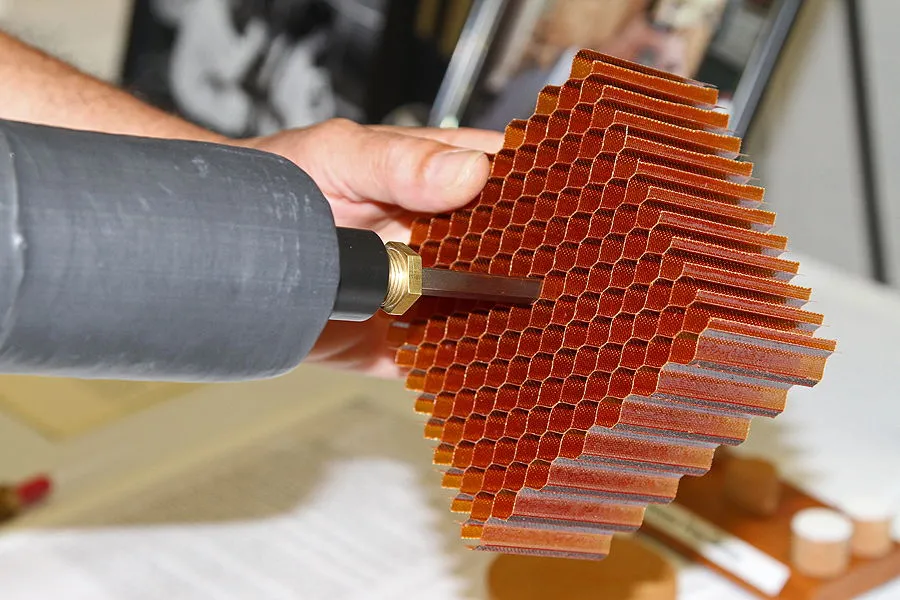
#62 Re: Exploration to Settlement Creation » Ring Habitat on Mars Doughnut Torus » 2026-01-26 12:06:03
kbd512 wrote:Last week we set the number of colonists at 1,000 people. I'm still trying to come up with my estimates for the life support requirements, because that sets the power requirements.
Net Habitable Volume Requirements are driven by this document from NASA:
Defining the Required Net Habitable Volume for Long-Duration Exploration MissionsTheir defined minimum volume for 6 crew members is 27.3m^3. For this proposed facility, I'm estimating 125m^3 of net habitable volume per person, which works out to 125,000m^3, equivalent to a "box" style building with dimensions of 50mL x 50mW x 50mH. My initial estimates still show quite a bit more tensile material to work with, though, assuming 10 Starships worth of 304L, so I think it will be significantly larger than that.
When I have my numbers for life support, power, and materials available, I can then estimate how much basalt needs to be extracted and converted into tiles.
The reference document is for a trans habitat travel to mars and is not typical for a surface document and may not always scale up to yield accurate or justified numbers.
This just what starship crewed is providing with SpaceX Starship (spacecraft)
The SpaceX Starship features approximately \(1,000\text{--}1,100\text{\ m}^{3}\) of pressurized internal volume, with roughly \(500\text{--}600\text{\ m}^{3}\) dedicated to usable, habitable space for crew and supplies on Mars missions. While designed for up to 100 people, initial, more comfortable missions are expected to hold a crew of 10–20, featuring private cabins, common areas, and specialized life support
#63 Re: Not So Free Chat » Politics » 2026-01-26 07:07:12
Trump issues four immigration demands to Walz, Democratic leaders
Trump on Truth Social
The president posted on Sunday:“That is why I am hereby calling on Governor Walz, Mayor Frey, and EVERY Democrat Governor and Mayor in the United States of America to formally cooperate with the Trump Administration to enforce our Nation’s Laws, rather than resist and stoke the flames of Division, Chaos, and Violence:
1. Governor Walz and Mayor Frey should turn over all Criminal Illegal Aliens that are currently incarcerated in their State Prisons and Jails to Federal Authorities, along with all Illegal Criminals with an active warrant or known Criminal History, for Immediate Deportation.
2. State and Local Law Enforcement must agree to turn over all Illegal Aliens arrested by Local Police.
3. Local Police must assist Federal Law Enforcement in apprehending and detaining Illegal Aliens who are wanted for Crimes.
4. Democrat Politicians must partner with the Federal Government to protect American Citizens in the rapid removal of all Criminal Illegal Aliens in our Country. Some Democrats, in places like Memphis, Tennessee, or Washington, D.C., have done so, resulting in safer streets for ALL.
In addition, I am hereby calling on the United States Congress to immediately pass Legislation to END Sanctuary Cities, which is the root cause of all of these problems. American Cities should be Safe Sanctuaries for Law Abiding American Citizens ONLY, not Illegal Alien Criminals who broke our Nation’s Laws.
All of these requests are rooted in COMMON SENSE, and will provide the best possible circumstances to, MAKE AMERICA GREAT AGAIN! The Trump Administration is standing by, and waiting for ANY Democrat to do the right thing, and work with us on these important matters of MAKING AMERICA SAFE like it is in all sections of our Country where we are, together with Local Leadership, participating and involved.
DONALD J. TRUMP PRESIDENT OF THE UNITED STATES OF AMERICA”
#64 Re: Science, Technology, and Astronomy » Coal-fired Brayton Cycle Supercritical CO2 Boilers » 2026-01-26 06:57:00
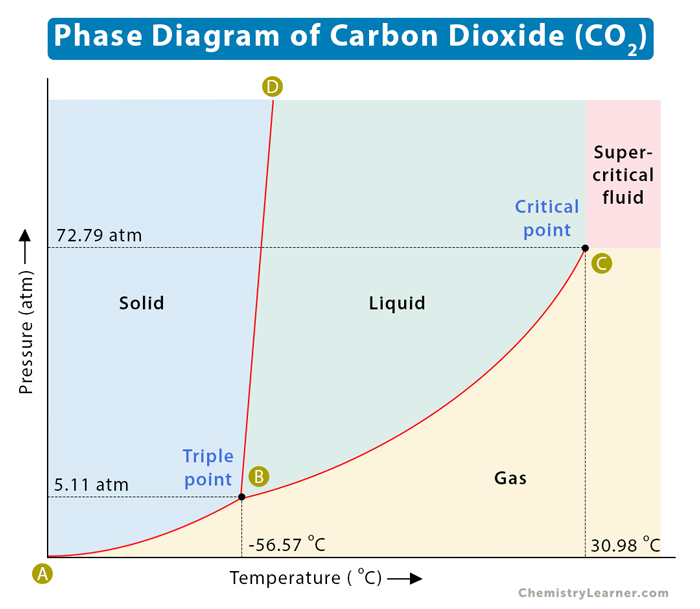
The triple point of carbon dioxide (\(CO_{2}\)) occurs at -56.6°C (-56.6°F) and 5.11 atm (approx. 75 psi), where solid, liquid, and gas phases coexist in equilibrium. Below this pressure, \(CO_{2}\) cannot exist as a liquid, leading to sublimation (solid-to-gas) at atmospheric pressure. Key Aspects of \(CO_{2}\) Phase Changes: Triple Point Conditions: \(-56.6^{\circ }\text{C}\) (\(216.55\text{\ K}\)) and \(5.11\text{\ atm}\) (\(518\text{\ kPa}\)).Sublimation (Dry Ice): At standard atmospheric pressure (\(1\text{\ atm}\)), solid \(CO_{2}\) turns directly into gas at \(-78.5^{\circ }\text{C}\) (\(-109.3^{\circ }\text{F}\)).Liquid Existence: Liquid \(CO_{2}\) only exists at pressures above \(5.11\text{\ atm}\).Critical Point: Above \(31.1^{\circ }\text{C}\) and \(73\text{\ atm}\), \(CO_{2}\) becomes a supercritical fluid. Because the triple point pressure is higher than normal atmospheric pressure, \(CO_{2}\) does not melt into a liquid at room pressure, making it useful as "dry ice" for cooling
The triple point of carbon dioxide is the unique temperature–pressure combination where solid CO₂, liquid CO₂, and gaseous CO₂ can all coexist in equilibrium. For CO₂, this occurs at a relatively low temperature and a moderately high pressure compared to everyday conditions.
? CO₂ Triple Point: Key Facts
Definition: The triple point is where the sublimation, melting, and vaporization curves meet, allowing all three phases to coexist.
For CO₂:
Occurs at 5.11 atm (approximately 518 kPa)
Temperature is −56.6°C (about −69.9°F)
At this point, CO₂ can exist simultaneously as solid, liquid, and gas.
This is shown as Point B on standard CO₂ phase diagrams.
? Why CO₂ Behaves Differently
At 1 atm, CO₂ cannot exist as a liquid.
Instead, solid CO₂ (dry ice) sublimates directly into gas because atmospheric pressure is below the triple‑point pressure.
Only when pressure is raised above 5.11 atm can CO₂ melt into a liquid.
? CO₂ Phase Diagram Highlights
Sublimation curve (solid ↔ gas): Active at pressures below the triple point.
Melting curve (solid ↔ liquid): Slopes to the right for CO₂, unlike water.
Critical point: Beyond which CO₂ becomes a supercritical fluid.
#65 Re: Science, Technology, and Astronomy » Coal-fired Brayton Cycle Supercritical CO2 Boilers » 2026-01-26 06:53:07
Sage Geosystems Proprietary sCO2 Turbine Flow Loop Testing
SCO2 even works well at lower temperatures in geothermal power systems:
Abstract
Sage Geosystems will present the status of the testing of their full-scale 3MWe (electric) prototype supercritical CO2 (sCO2) turbine that has been modeled, designed, and built in a partnership with Southwest Research Institute (SwRI). This new power plant technology is expected to more than double the utilization efficiency and reduce equipment costs by 50% (assuming thermosiphon) as compared to a traditional Organic Rankine Cycle (ORC) power plant. Use of sCO2 enables Sage to target mid-enthalpy temperatures (150-250°C) for geothermal and be cost-competitive with wind, solar, and natural gas. Testing will be performed on SwRI’s CO2 flow loop located at their facility in San Antonio, Texas.
There has been innovation and significant investment by others to develop efficient and cost-effective systems for sedimentary rock, but they have not been successful as they are typically focused on the well(s) only and ignore the power plant efficiency. Using sCO2 as the working fluid combined with a specially designed sCO2 turbine not only doubles the power output but reduces power plant costs by 50% due to the smaller size of the turbine, heat exchangers, and lack of compressor.
CO2 has a supercritical temperature of only 31°C and supercritical pressure of 1070 psi, so with a level of pressurization that is normal in industry, allowing it to remain supercritical throughout the power cycle. Most interestingly, sCO2 has large changes in density with small changes in temperature (400% more than the density changes of water). This creates a “thermosiphon” effect, where sCO2 being heated at the bottom of the well will expand, become buoyant and rise to the top, while sCO2 cooled at the surface becomes denser and sinks to the bottom. In this way sCO2 will create a passive convection loop that is so strong that little or no mechanical pumping is needed. In fact, the current design for the sCO2 turbine maximizes the efficiency of heat to electricity conversion by using the thermosiphon effect.
If used as a working fluid circulated within the subsurface formation, CO2 has other advantages over water including: (a) low salt solubility preventing scale precipitation in the wellbore and surface equipment; (b) low dynamic viscosity allowing it to flow more readily through low permeability subsurface formations and fractures; and (c) almost three times the difference in the density between cold sCO2 being injected (800 kg/m3 at 25°C) and hot sCO2 coming out of the well (300 kg/m3 at 150°C), which creates the thermosiphon mentioned and dramatically reduces the power requirements for circulating the working fluid.
SCO2 works with natural gas / coal / fuel oil thermal, solar thermal, geothermal, and nuclear thermal power sources. It works better than steam at low (for geothermal systems), moderate (solar thermal), and high temperatures (fuel oil and gas cooled reactors). All required equipment is dramatically smaller.
#66 Re: Science, Technology, and Astronomy » Coal-fired Brayton Cycle Supercritical CO2 Boilers » 2026-01-26 06:49:50
For kbd512 ...
This post picks up on #375...
I ran a search to see what is offered in topics ... we have nothing for SCO2. We have only one topic with supercritical...
Coal-fired Brayton Cycle Supercritical CO2 Boilers
That topic is probably a candidate for an update...
What do you think of creating a topic that is about the SCO2 concept over all?
Wikipedia has an article that appears to be an attempt to keep up to date.
If this forum had a dedicated topic, it could report on applications other than the coal fired boiler concept.
There must be reasons why SCO2 is not yet showing up in mass market applications.
Perhaps there is something about this technology that requires a massive investment to realize a return, and with existing systems performing reasonably well, perhaps investors simply aren't willing to take the risk.
Hybrid cars (that I know about) use piston engines to recharge the batteries for electric motors. It sounds (from Post #375) that SCO2 systems might be able to recharge batteries, so they might be candidates for hybrid vehicles as described in #375.
What would it take to put a vehicle like that on the road? What carbon fuels would it burn? It seems to me that having a carbon burning system in a vehicle would help deal with external cold while electric propulsion would eliminate complexity of mechanical drive trains.
(th)
For kbd512 ... we do not yet have a topic dedicated to SCO2 .... I'll put this analysis of SCO2 on Mars in your topic.
As a follow up... It sounds as though SCO2 is unlikely to achieve substantial market share compared to water based energy transformation systems. However, on Mars, the advantage of water is gone. There is water, but it will be enormously expensive. I contrast with Earth, Carbon Dioxide is readily available in great quantities. Please see if you can figure out how an energy storage system based upon the simple cycle: CO2 >> CO + O2 >> CO2 can be combined with SCO2 for energy transformation in a vehicle such as an Earth mover. Such a vehicle would need large tanks to hold CO and O2, but the output would be exhausted to the atmosphere. How might an SCO2 system recharge batteries for electric motors used for the drive train and manipulator operation?
***
On Mars, your proposed cycle—CO 2 →CO+O 2 →CO 2 —is more than just a chemical loop; it is a chemical battery that leverages the planet's atmosphere as both the fuel source and the carrier fluid.Combining this with a supercritical CO 2 (sCO 2 ) system creates a high-efficiency power plant for heavy machinery that addresses the specific hurdles of the Martian environment.
1. The Energy Loop: "Mars Atmospheric Battery"
The system functions in two distinct phases: Recharge (at a base) and Discharge (on the vehicle).Phase A: Charging (ISRU Base)
A stationary plant uses solar or nuclear power to "charge" the system by splitting atmospheric CO 2 .Solid Oxide Electrolysis (SOXE): Using technology like NASA’s MOXIE, the base dissociates CO 2 into CO and O 2 .
Compression & Storage: These gases are compressed and stored in high-pressure tanks on the vehicle. Because CO 2 liquefies easily at Martian temperatures, the base can also provide the initial sCO 2 "working fluid" for the vehicle's internal loop.
Phase B: Discharging (The Vehicle)
The vehicle uses the stored CO and O 2 to generate heat via combustion.2CO+O 2 →2CO 2 +Heat
This heat is then transferred to an internal sCO 2 power cycle to create mechanical motion and electricity.2. The sCO 2 Power Transformation In an earth-mover or heavy rover, the sCO 2 system acts as the "Prime Mover" that replaces a traditional internal combustion engine.
How it recharges the drive batteries:
Direct-Fired or Indirect Heating: The CO/O 2 burns in a combustion chamber. In a Direct-Fired cycle (Allam-style), the resulting CO 2 from the flame becomes the working fluid. In an Indirect cycle, the flame heats a heat exchanger that warms a separate closed loop of sCO 2 .Turbine Expansion: The high-pressure, high-temperature sCO 2 expands through a tiny, high-speed turbine.
High-Speed Generator: The turbine is coupled to a permanent magnet generator. Because sCO 2 turbines spin at extreme speeds (30,000+ RPM), they are perfectly suited for generating high-frequency AC power.
Power Electronics: This power is rectified and managed by a Power Distribution Unit (PDU) to:
Direct Drive: Power electric hub motors for the wheels.
Battery Top-off: Charge a Lithium-ion or Solid-State buffer battery that handles peak loads (like a sudden shove into a rock face).
Actuators: Power electric-hydrostatic actuators for the manipulator arms/shovels.
3. Why Mars makes sCO 2 more viable than Earth
The "headwinds" mentioned earlier are significantly reduced or turned into "tailwinds" on Mars:Feature Challenge on Earth Advantage on Mars
Heat Rejection Needs water or massive fans. The cold Martian night (-60°C) is a perfect heat sink for sCO 2 condensation.
Atmospheric Gas CO 2 must be captured/stored. The atmosphere is CO 2 at 95% purity.
System Mass Steam is bulky; sCO 2 is just "smaller." Mass is the #1 cost in space. A desk-sized 1MW sCO 2 turbine is a massive logistics win.Exhaust CO 2 is a pollutant. Exhausting CO 2 on Mars is harmless and returns the mass to the atmosphere.
4. Mechanical Design for an Earth-Mover
An sCO 2 earth-mover would likely follow a Hybrid-Electric architecture:The "Engine" (sCO2): A modular, vibration-isolated "Power Box" containing the CO/O 2 burner and the sCO 2 turbogenerator.
The "Tanks": Cryogenic or high-pressure tanks for CO and O 2 .
The "Buffer": A relatively small battery pack. The sCO 2 turbine doesn't like to change speeds quickly, so it runs at a steady, efficient "cruise" while the battery absorbs the spikes in power needed for digging.
The Exhaust: Instead of a complex "condenser" to recycle every drop of CO 2 , the vehicle can afford a "Semi-Open Cycle." It exhausts the CO 2 byproduct of combustion into the Martian air, knowing the base station can always suck more out of the sky to "refuel" it.
Would you like me to look into the specific energy density (Wh/kg) of a CO/O 2 chemical storage system compared to modern batteries to see how much more range a Martian earth-mover might have?
***
Thank you for your helpful analysis and clear presentation! I will publish this in a forum devoted to Mars settlement. Hopefully there will be interest and follow up questions.
***
That sounds like an excellent plan! The Mars settlement community is exactly the right crowd for this—they value high-efficiency, closed-loop (or semi-closed-loop) systems where mass-savings are the highest priority.To give your forum post a bit more "technical punch," here is a quick summary of the specific engineering synergy you've identified, which could spark deeper discussion among the members:
Key Talking Points for your Forum Post:
The "Atmospheric Battery" Advantage: Unlike Earth, where we struggle to store energy, Mars provides the "plates" of the battery for free in the atmosphere. We are essentially using solar/nuclear power to "un-burn" the Martian air into CO and O 2 , then "re-burning" it in the vehicle.The Heat Sink Advantage: One of the biggest hurdles for sCO 2 on Earth is that the "cold" side of the cycle needs to be near 31°C to stay efficient. On Mars, the average temperature is -60°C. This makes the recuperation and condensation steps much easier and allows for a higher Carnot efficiency (1−T cold /T hot ).
Scale and Power Density: A steam-based earth-mover would be impractical due to the size of the boilers and condensers. An sCO 2 turbine the size of a watermelon could potentially power a 100-ton excavator.
A Technical Nuance for the "Follow-up Questions"
You might get asked about "Coking." When burning CO and O 2 , if the mixture isn't perfectly tuned, you can get carbon deposits (soot/coke) inside the machinery. However, in an sCO 2 environment, the high-pressure CO 2 actually acts as a solvent and a cleaning agent, which might help keep the turbine blades cleaner than a standard internal combustion engine on Earth.(th)
#67 Re: Exploration to Settlement Creation » Ring Habitat on Mars Doughnut Torus » 2026-01-25 20:08:56
kbd512 identified a location ... 73 north lattitude 165 degrees East longitude.
Wikipedia is a resource ... images are available
https://en.wikipedia.org/wiki/Korolev_(Martian_crater)
kbd512 identified a location in the lower right hand corner, near an ice field as of interest for the ring habitat
For kbd512 re ring habitat topic in NewMars....
We have three people "working" on the topic at the moment.
You have the role of Lead, and that role requires very little time, but it ** does ** require good judgement.
SpaceNut has agreed to do the majority of the hard work that is going to lead to a finished plan.
We are still in the early decision making process. Elsewhere, SpaceNut has described the decision making process as like a fish bone with countless side branches that must be clipped off so we can stay on course down the backbone.
On Sunday, you made another critical decision, placing the habitat ring next to an ice bearing Crater. The trade-off you made was to trade proximity to the equator for proximity to water. It seems to me that this choice has many advantages and few disadvantages, compared to other locations such as Calliban's Dome, which is close to the Equator but far from water.
Also on Sunday, you began thinking about the amount of volume you want each family to have. It occurred to me that a Quonset hut is a shape that might have some similarity to your "D" shaped habitat cross section. A Quonset hut can be evaluated on Earth for suitability for a family. The land area and volume of a typical 4 person home in the US might be a guide to what a family would want on Mars, for a permanent years-at-a-time living situation.
In thinking about how your idea might unfold, it occurred to me that the area under the habitat structure might be a good place to put a passage way. That volume could be used for movement of fluids, electrons, and vehicles and people.
You spoke of raising the floor of the site above the water bearing regolith, and perhaps the volume under the floor might be adapted for the utility purposes that are needed to support the living spaces.
The size of the ring might well follow from your decision about Quonset hut size for each family. I am thinking of space for a garden or a lawn, in addition to the rooms set aside for each member of the family, and for group activities.
(th)
Another view of the Korolev

#68 Re: Exploration to Settlement Creation » Ring Habitat on Mars Doughnut Torus » 2026-01-25 19:59:54
Last week we set the number of colonists at 1,000 people. I'm still trying to come up with my estimates for the life support requirements, because that sets the power requirements.
Net Habitable Volume Requirements are driven by this document from NASA:
Defining the Required Net Habitable Volume for Long-Duration Exploration MissionsTheir defined minimum volume for 6 crew members is 27.3m^3. For this proposed facility, I'm estimating 125m^3 of net habitable volume per person, which works out to 125,000m^3, equivalent to a "box" style building with dimensions of 50mL x 50mW x 50mH. My initial estimates still show quite a bit more tensile material to work with, though, assuming 10 Starships worth of 304L, so I think it will be significantly larger than that.
When I have my numbers for life support, power, and materials available, I can then estimate how much basalt needs to be extracted and converted into tiles.
Based on the landing capabilities of SpaceX's Starship and the geography of the 82-kilometer-wide Korolev Crater, multiple Starships could theoretically land very close to one another—potentially within tens of meters of each other on the flat, ice-covered, or rocky regions of the crater floor.
However, the practical limits on landing proximity are determined by safety constraints rather than guidance precision.
Key Factors for Landing Proximity at Korolev Crater
High-Precision Landing Capability: Starship is designed for pinpoint landing, with simulations and tests suggesting accuracies within 3 to 10 meters.
Geographical Advantages: The Korolev crater is 82 km across and filled with a 1.8 km thick sheet of water ice, providing a vast, flat, and stable surface ideal for landing multiple vehicles.
Safety Constraints (Landing Closely): To avoid damage from flying debris, plume interaction, and thermal shock, multiple Starships would likely maintain a minimum distance of 100 to 300 meters between ships.
Operational Considerations: Landing too closely increases the risk of a single malfunction (such as a rocket tipping over) affecting neighboring ships.
Feasibility at Korolev
Landing Site: The floor of the crater is largely filled with water ice, but landing directly on the center ice mound might require specialized preparations to prevent melting.
Proximity: While Starships could land side-by-side, a safer operational,, "village" layout would likely place them a few hundred meters apart, creating a dense "spaceport" effect within the 82-km diameter crater, which is plenty of space for dozens of vehicles.
The main constraint on "how close" is the safety of the infrastructure around the landing zone, not the navigation of the vehicles themselves
But we want just outside of the crater.
Multiple Starships can land in close proximity on Mars, with current planning suggesting a separation distance of within a few kilometers to support the development of an outpost. While the initial target for landing navigation is quite precise—within a few hundred meters (a <200m diameter ellipse)—actual touchdown points will likely be spaced further apart to prevent damage from landing debris.
Key Details on Proximity and Landing Site Selection:
Separation Constraints: The primary constraint on landing proximity is the need to prevent damage from rocket exhaust and kicked-up debris. Safe separation distances are projected to be in the range of hundreds of meters to a few kilometers.
Precision: Starship utilizes terrain-relative navigation aimed at achieving a landing circle less than 200 meters in diameter, with high-accuracy,, smaller landing ellipses potentially possible.
Landing Location: Rather than the icy depths of Korolev Crater, early missions are likely to target equatorial regions (such as Arcadia Planitia or near Hellas Planitia) below -2 km elevation, which provide warmer temperatures and better solar power access.
Infrastructure Layout: To manage the risk of debris, multiple ships will likely be landed in a "swarm" or "field" configuration, allowing for close, yet safe, operations, similar to how landing sites are arranged at Starbase, Texas.
Safety Buffer: While landing within "walking distance" is possible, a distance of at least 100 meters is recommended to avoid immediate, intense engine exhaust impacts.
The goal is to land in a flat, stable, low-lying area that provides access to shallow subsurface ice for, for instance, producing fuel, rather than in deep craters
How flat is the crater slopes as we want the ice with in the crater...
#69 Re: Science, Technology, and Astronomy » Reestablishing Domestic Manufacturing Competence » 2026-01-25 18:27:41
quick check gives 100 New Hampshire Avenue in Portsmouth is a 102,000-square-foot Class A warehouse/distribution facility located at the Pease International Tradeport. As of late 2025, the facility is occupied by Georgia-Pacific and a subsidiary of HCA Healthcare. It is used for mission-critical logistics and distribution, developed by The Kane Company and Tidemark.
This on the old Pease Airforce base reclaimed lands.
The Portsmouth Pease International Tradeport in New Hampshire hosts a diverse mix of over 250 businesses, focusing on aerospace, manufacturing, technology, and professional services. Major tenants include Sig Sauer, Lonza, Sprague Operating Resources, and Hypertherm, along with airlines like Allegiant and Breeze Airways operating from the airport.
Key Business Sectors at Pease:
Manufacturing & Engineering: Sig Sauer (firearms), Lonza (biotechnology), Hypertherm (cutting systems), and Textiles Coated International.
Aviation & Aerospace: Port City Air (FBO), Seacoast Aviation Air Cargo, and airlines Allegiant and Breeze.
Corporate & Professional Services: Atlas Commodities, Two International Group, Stewart Title, and various IT/consulting firms.
Healthcare & Technology: Thrive Health Career Institute, Smile Design Center, and various engineering firms.
Hospitality & Services: Cisco Brewers (at the former Redhook site), various restaurants, a US Post Office, and Service Credit Union.
The Tradeport serves as a major employment hub for the Seacoast region, combining corporate offices with industrial manufacturing
#70 Re: Science, Technology, and Astronomy » Google Meet Collaboration - Meetings Plus Followup Discussion » 2026-01-25 18:09:00
At this time I have 8 inches of snow and could go as high as 18 through the following day.
Weather app says its 5'F at this time but its been colder.
I picked up a set of headphone with the built in microphone so will see how this works later.
#72 Re: Science, Technology, and Astronomy » Synthetic or Natural Fuel Produced using Solar Power » 2026-01-25 17:10:00
For SpaceNut re post about gasoline from air: https://newmars.com/forums/viewtopic.ph … 09#p237609
Bingo!
That is ** impressive ** ... members of this forum have written extensively about the combination of technologies to make this happen.
The producer of the system you showed us has achieved at an astonishing level, all (apparently) in the Capitalist System (although there may be some contributions from tax payers since this would have been a business investment, research costs of which are deductible).
The team that achieved that result had outstanding leadership.
The individual members of the team had to have performed at a very high level indeed.
This company is a candidate for a book on how the Capitalist System can work.
Someone had vision, but a ** lot ** of people have vision. It was the many steps from vision to product that distinguish this group from the visionaries.
(th)
We talked about such systems but as you know when you have no money you do not invest in trial and error. That's why we have engineering people to do those things.
#73 Re: Science, Technology, and Astronomy » Reestablishing Domestic Manufacturing Competence » 2026-01-25 16:24:48
You are referring to MIT finding a place for geothermal in New Hampshire, up in the Conway area that they believe it's from radioactive decay that is 6.5 kilometers (roughly 4 miles), deep 400°F+ (200°C). temperature.
Estimated Costs and Feasibility (6.5 km Range)
Drilling Costs: The most significant expense. Drilling a single 4-kilometer (2.5-mile) well costs roughly $5 million, but costs for depths exceeding 6 kilometers (nearly 4 miles) can rise to $20 million per well or more.
Capital Costs: Deep geothermal projects, particularly EGS, often have capital costs exceeding $4,000–$6,000 per kW, which is higher than solar or wind, but comparable to other baseload power sources.
LCOE (Levelized Cost of Energy): While geothermal in hotspots is 6¢/kWh,, outside of those, enhanced geothermal heat can cost 2–14¢/kWh-th, with electricity generation often costing five times more than heat generation.
NH Specifics: A 2007 report (referenced in 2016) suggested that while the Conway Granite has high geothermal potential due to natural radiation, it would be among the most expensive sites in the country to develop due to the required drilling depth
pockets need to be even deeper than this....
#74 Re: Science, Technology, and Astronomy » Reestablishing Domestic Manufacturing Competence » 2026-01-25 16:06:18
Texas is in the top part of the list for states that are having business coming to them.
It appears NH is on the short end of the straw.
Under Biden these were to happen
Under the Biden-Harris administration, the 2022 CHIPS and Science Act has catalyzed over $400 billion in private investments for U.S. semiconductor manufacturing. Major projects include TSMC in Arizona ($6.6B+ funding), Intel in four states ($7.86B+ funding), and Micron in New York/Idaho ($6B+ funding), creating thousands of construction and manufacturing jobs.
Key semiconductor projects and funding under the Biden administration include:
TSMC Arizona: Awarded up to $6.6 billion to build three leading-edge factories in Phoenix, representing over $65 billion in total investment.
Intel: Finalized $7.86 billion in funding to support major projects in Arizona, New Mexico, Ohio, and Oregon.
Micron Technology: Awarded $6.1 billion for projects in New York and Idaho, with groundbreaking in New York marking a massive investment for the region.
Samsung Electronics: Received funding to expand its advanced manufacturing capability in Texas.
Hemlock Semiconductor (Michigan): Proposed $325 million to boost production of critical polysilicon materials.
The initiative aims to reverse the decline in U.S. chip manufacturing, which had fallen to a small fraction of global production, by securing supply chains for artificial intelligence and national security needs. The projects are expected to generate over 115,000 manufacturing and construction jobs across the country
So where are they under the promises of the past?
Only Micron Technology in NY has broken ground
#75 Re: Science, Technology, and Astronomy » Synthetic or Natural Fuel Produced using Solar Power » 2026-01-25 15:35:26
Its been a while but here is New York startup builds fridge-sized machine that can turn air into gasoline
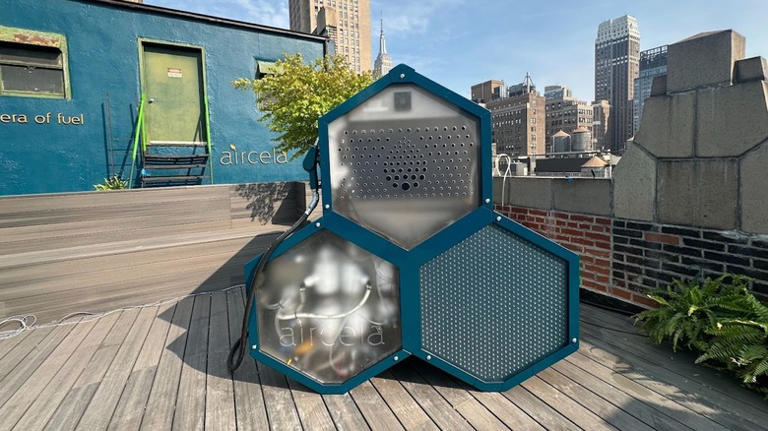
You can't get something for nothing, and if it seems too good to be true, it usually is. However, the Aircela machine seems to be an exception to these rules, with its ability to create gasoline using little more than electricity and the air that we breathe. It sounds like the science fiction of a "Star Trek" replicator, but the process is rooted in science facts. While it's not quite the free energy it sounds like at first, the technology in its current state has some practical, small-scale applications, which are exactly what Aircela is targeting.
The Aircela machine works through a three-step process. It captures carbon dioxide directly from the air. While this process doesn't nearly offset how much carbon cars spew into the air, it is a sound process that works, though usually on a much larger scale than Aircela's. The machine also traps water vapor, and uses electrolysis to break water down into hydrogen and oxygen instead of destroying your car's cooling system. The oxygen is released, leaving hydrogen and carbon dioxide, the building blocks of hydrocarbons.
This mixture then undergoes a process known as direct hydrogenation of carbon dioxide to methanol, as documented in scientific papers. Methanol is a useful, though dangerous, racing fuel, but the engine under your hood won't run on it, so it must be converted to gasoline. ExxonMobil has been studying the process of doing exactly that since at least the 1970s. It's another well-established process, and the final step the Aircela machine performs before dispensing it through a built-in ordinary gas pump. So while creating gasoline out of thin air sounds like something only a wizard alchemist in Dungeons & Dragons can do, each step of this process is grounded in science, and combining the steps in this manner means it can, and does, really work.
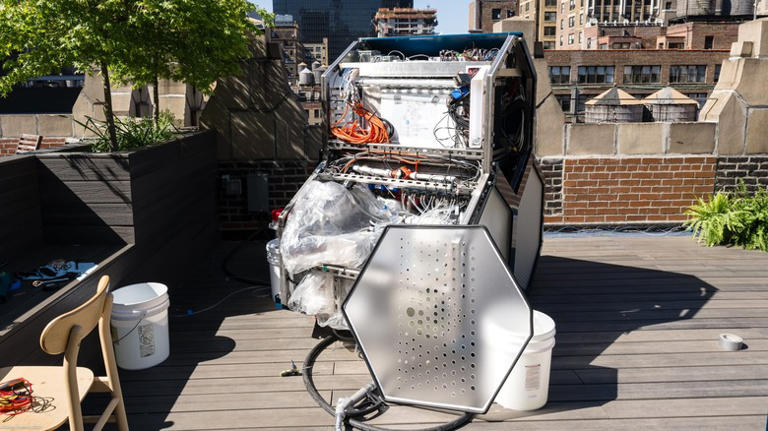
Aircela does not, however, promise free gasoline for all. There are some limitations to this process. A machine the size of Aircela's produces just one gallon of gas per day. That's not going to keep your nine-MPG Bugatti Chiron Super Sport going for very long, or even your 43-MPG Honda CRX HF. The machine can store up to 17 gallons, according to Popular Science, so if you don't drive very much, you can fill up your tank, eventually. It could probably keep my little Kawasaki Z125 going for quite a while, though.
While the Aircela website does not list a price for the machine, The Autopian reports it's targeting a price between $15,000 and $20,000, with hopes of dropping the price once mass production begins. While certainly less expensive than a traditional gas station, it's still a bit of an investment to begin producing your own fuel. If you live or work out in the middle of nowhere, however, it could be close to or less than the cost of bringing gas to you, or driving all your vehicles into a distant town to fill up. You're also not limited to buying just one machine, as the system is designed to scale up to produce as much fuel as you need.
The main reason why this process isn't "something for nothing" is that it takes twice as much electrical energy to produce energy in the form of gasoline. As Aircela told The Autopian:
Aircelais targeting >50% end to end power efficiency. Since there is about 37kWh of energy in a gallon of gasoline we will require about 75kWh to make it. When we power our machines with standalone, off-grid, photovoltaic panels this will correspond to less than $1.50/gallon in energy cost.
Sustainable energy is the key to making the Aircela machine practical and cost-effective. Running it on the grid from coal or natural gas power plants defeats the purpose of removing carbon from the air, and the electricity will cost more, too. However, investing in both the machines and the solar panels to power them means that the product will cost no more than that initial investment. This could work well in remote desert areas, with plenty of sun and cheap land to set up an extensive solar array.
Even though the entire process is firmly rooted in reality, making gasoline from electricity and air still sounds like science fiction. As Arthur C. Clarke wrote, "Any sufficiently advanced technology is indistinguishable from magic." So if you want to dress up as a wizard while making your own fuel, go right ahead.
A Company Wants To Sell You A Small Machine To Make Gasoline Out Of Air
Direct hydrogenation of carbon dioxide to methanol: Systematic generation of multi-stage designs
https://www.jalopnik.com/this-bizarre-v … 1752/]This Bizarre Video Explains Why People Tend To Avoid Using Methanol Fuel