New Mars Forums
You are not logged in.
- Topics: Active | Unanswered
Announcement
#701 Re: Exploration to Settlement Creation » Radiation amount type risk mitigation » 2025-12-24 14:38:39
Suppose we did simply create an open pit "mine" of the kind shown by SpaceNut in Post #30. The "Superdome" that Calliban want to build is merely a means to an end- pressurized living space, presumably appropriately "greened" using seeds brought from Earth. Apart from holding in the pressure, I presume the most important secondary reason for piling on so much regolith over the structure is to block-out space-based radiation, primarily the highly penetrating and damaging (slowly but surely) Galactic Cosmic Rays (GCR). All available literature from NASA indicates that using approximately 2m of regolith shielding is sufficient to absorb enough of the dose to remain below lifetime limits. GCR is not like SPE / CME radiation, in that it consists of ionized nuclei, ranging in weight from Hydrogen to Iron, although it's over 90% Hydrogen in practice, traveling through space near the speed of light. There's no practical passive shielding material for an interplanetary spacecraft due to shielding mass, but once the settlers arrive on Mars we're obligated to provide appropriate protective measures incorporated into the engineering of habitable spaces.
Here's a question I'd like the AI to answer for us:
By constructing Calliban's Superdome at the bottom of the open pit mine shown in Post #30, how much Solar Particle Event (SPE) / Coronal Mass Ejection (CME) / Galatic Cosmic Ray (GCR) radiation will the open pit mine block by erecting the dome at the bottom of the pit?If the protection provided is still insufficient for humans, is it enough for the plants to survive all or most SPE / CME / GCR?
Maybe the humans will still need to temporarily seek more substantial shelter during a SPE / CME, presumably by evacuating to tunnels carved into the rock underneath the dome or into the walls of the pit. I'm thinking of the open pit mine as being somewhat akin to "castle walls", used to protect the people inside from powerful space-based radiation rather than invaders, but a castle nonetheless. The Superdome at the bottom is the castle's "keep"- for keeping the people inside warm / fed / clothed.
Erecting a giant dome is supposed to be a significant quality of life improvement for the settlers, so if it still gets sufficient sunlight to grow plants using fiber optics and/or mirrors arrayed around the pit, then perhaps the effort to dig the pit and erect the Superdome at the bottom of the pit still represents an acceptable energy trade for the long term security and psychological support of a miniature Earth-like environment.
Its is a far less requirement than 10M of regolith to just move only 2 Meter to do protection for the spiral road around the dome for compression and protection.
#702 Re: Exploration to Settlement Creation » WIKI Constructing things on Mars equipment needs » 2025-12-24 14:30:29
A comprehensive iron ore processing and steel production facility on Mars would require an integrated suite of mining, comminution, beneficiation, and refining equipment. A 200-meter diameter is a massive scale, likely referring to the entire facility's footprint rather than a single piece of equipment, and would enable significant production capacity.
Required Equipment: The equipment would function in a sequence from raw material extraction to finished product, much like on Earth, but adapted for the Martian environment and the use of in-situ resources.
1. Mining and Raw Material Handling Excavation and Loading: Robotic rovers and excavators with magnetic systems could collect iron-rich regolith or access concentrated ore deposits.
Transportation: Robust, self-driving transport systems (e.g., heavy-duty rovers or a rail system) to move ore from the mine to the processing plant.
Crushing and Grinding: Equipment such as jaw crushers, hammer mills, and ball mills would be needed to break down the iron ore into fine particles for processing.
2. Beneficiation and Concentration Sizing and Screening: Vibrating screens and classifiers to sort particles by size.
Separation: Magnetic separators are key for iron ore beneficiation, potentially complemented by flotation equipment, to increase the iron concentration in the ore.
Dewatering/Filtration: Equipment like filter presses or vacuum filters would be necessary if wet processing is used, to remove water from the concentrated ore.
3. Iron & Steel Production Martian steelmaking would likely favor direct reduction or electric arc furnaces over traditional blast furnaces due to the lack of abundant coking coal and the availability of atmospheric \(\text{CO}_{2}\) and water ice for reactants/power generation.
Ore Agglomeration: Pelletizing or sintering machines to form the fine concentrate into larger, usable pellets.
Reduction Reactors/Furnaces:Direct Reduction Kiln: Equipment to reduce iron oxides using hydrogen and/or carbon monoxide derived from Martian resources.
Electric Arc Furnace (EAF): An EAF would melt the sponge iron (produced from direct reduction) and allow for the controlled addition of carbon (extracted from the Martian atmosphere's \(\text{CO}_{2}\)) and other alloying elements to produce specific steel grades.
Continuous Caster/Molds: Machinery to form the molten steel into basic shapes (e.g., billets, slabs) for further processing.
Ladle Furnace: Used for final refining of the steel.
4. Manufacturing and Finishing Rolling/Finishing Mills: Large mills to shape the raw steel into plates, sheets, beams, or pipes.Additive Manufacturing (3D Printing): Metal powder bed fusion or directed energy deposition machines could use the produced steel powder for on-site fabrication of parts and infrastructure. Infrastructure and Support Equipment Power Systems: The entire process requires enormous amounts of power, suggesting large-scale nuclear fission reactors or extensive concentrating solar power (CSP) fields and storage systems.
Gas Processing Plant: A complex system involving electrolysis cells (like NASA's MOXIE technology) and chemical reactors (e.g., Sabatier reaction) to produce the necessary oxygen, hydrogen, and carbon monoxide from the Martian atmosphere and water ice.Habitat and
Maintenance Facilities: Pressurized environments, repair shops, and storage facilities for personnel and spare parts.Fume Extraction Equipment: Systems to manage and clean process gases, essential for operational efficiency and safety in a closed environment
#703 Re: Human missions » International Space Station (ISS / Alpha) » 2025-12-24 13:20:21
Russia’s bold plan to recycle ISS modules for new space station, will it work?
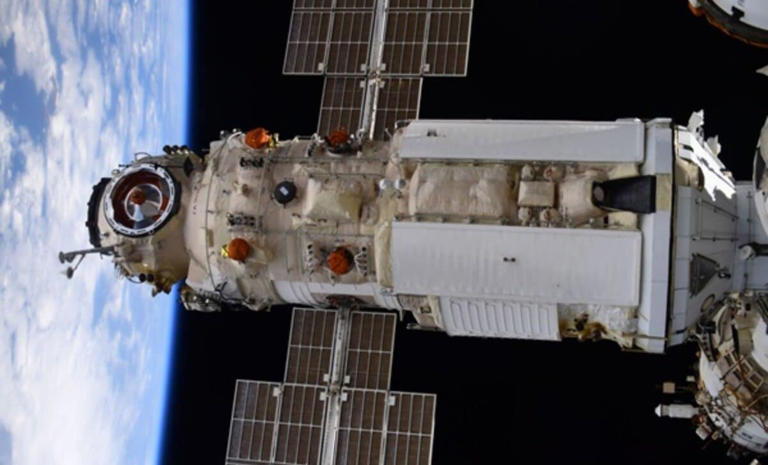
Russia’s Roscosmos is taking an unconventional route to its new space station, by recycling old modules from the International Space Station (ISS). With the ISS slated for retirement, Roscosmos has announced plans to repurpose several modules from the Russian segment of the station, marking a significant shift in the country’s space station strategy.
The new Russian Orbital Station (ROS) will incorporate modules like Zarya, Zvezda, Poisk, Rassvet, Nauka, and Pricha. These aging structures, which have been orbiting Earth for nearly 30 years, will be separated from the ISS once the program concludes, forming the heart of the new station. It’s a move that raises questions about the long-term durability of these modules and the scientific viability of the station as a whole.
A Shifting Vision for Russia’s Space Future
For years, Roscosmos has been toying with the idea of an independent space station. Initially, the Russian Orbital Service Station (ROSS), a successor to the Orbital Piloted Assembly and Experiment Complex (OPSEK) project, was supposed to be entirely new, free of the ISS’s aging modules. But by 2021, the plan shifted to an even bolder vision: creating a new space station using some of the hardware that has already been in orbit for decades.
According to the report published inUniverse Today, the re-use of ISS modules marks a significant departure from Roscosmos’ previous plans, and according to a recent statement from Oleg Orlov, director of the Institute of Biomedical Problems at the Russian Academy of Sciences (RAS), the decision reflects the growing financial constraints and geopolitical shifts the country has faced in recent years.
With many of the ISS modules showing their age, particularly the Russian ones, it may seem like a cost-effective move, but some experts are skeptical of just how feasible it is to recycle these old, often problematic pieces of hardware.
Aging Modules and Serious Concerns
While the idea of recycling ISS modules may seem like a quick fix, there are significant concerns about the condition of the modules Roscosmos plans to repurpose. As Maria Sokolova of New Izvestia pointed out, some of the Russian modules are well over 25 years old and have suffered considerable wear and tear. The Zarya module, for instance, is 27 years old, and Zvezda, which is another key module for the new station, is not far behind.These modules were designed for a much shorter operational lifespan, and the harsh conditions of space, including extreme temperature fluctuations and radiation, have taken their toll. Still, with Roscosmos under financial strain and facing limited options, recycling the modules could be seen as the only realistic path forward.
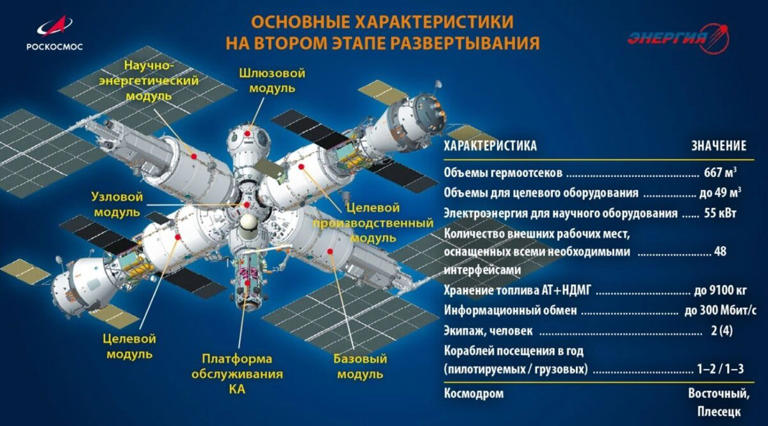
They do own there modules which are shared in a partnership that is coming to its end.
The US should also look to do the same for the Halo...
#704 Re: Human missions » Humidity Moisture Habitat Air Management » 2025-12-24 12:01:05
The thoughts of making use of Co as a fuel got me thing about the safe levels for inside the habitat space of the large 200 m diameter dome.
This ties into atmosphere detection for fire as well plus more.
In a Mars dome with a reduced atmospheric pressure of 0.5 bars (50 kPa or approximately 7.25 psi), the safe level of carbon monoxide (CO) for continuous human exposure is likely to be similar to, or potentially even lower than, the limits recommended for Earth environments, as the toxicity of CO is related to its partial pressure and its ability to bind with hemoglobin, which is a key part of oxygen transport.
While reduced total pressure can alter gas dynamics, the goal for a safe habitat is to maintain the internal environment within established safe limits developed from extensive medical and occupational studies.
Recommended Safe Levels
Standards from major health and occupational organizations for Earth-based, 1-atmosphere environments include:
OSHA Permissible Exposure Limit (PEL): 50 parts per million (ppm) averaged over an 8-hour workday.
NIOSH Recommended Exposure Limit (REL): 35 ppm averaged over a 10-hour workday, with a ceiling of 200 ppm for any 15-minute period.
EPA/WHO/ASHRAE (General Indoor Air Quality): The maximum indoor safe level is considered to be 9 ppm for an 8-hour average. This limit is more stringent and is intended for the general population and continuous exposure, making it more applicable to a long-term habitat.
NASA Standards: For long-duration spaceflight, NASA applies strict standards, with levels typically kept much lower than occupational limits to account for continuous exposure in a closed system. The average CO concentration in the ISS cabin is typically <2 mg/m³, which is well below terrestrial limits.
Considerations for a Reduced-Pressure Mars Dome
The human body's uptake of CO depends on its partial pressure in the inhaled air, which leads to the formation of carboxyhemoglobin (COHb) in the blood, reducing oxygen-carrying capacity. The lower total pressure of 0.5 bars does not change the fundamental toxicity of CO; the concentration in ppm (parts per million) remains the critical measurement for health standards.
Therefore, for the safety and long-term health of inhabitants in a Mars dome, the most appropriate and safe level would be the stringent public health recommendation of no more than 9 ppm over an 8-hour period, or as close to zero as possible.
Exposure to levels of:
50 ppm over 8 hours is the occupational limit for healthy workers, but not ideal for continuous living.
200 ppm or greater will cause physical symptoms such as headaches and dizziness after a few hours and is considered dangerous for prolonged exposure.
Continuous monitoring and effective filtration/atmosphere revitalization systems are crucial to keep CO concentrations extremely low in a closed Martian habita
Carbon Monoxide Levels and Exposure Limits Chart
This page also covers others that we will need to ensure with the Dome does not reach deadly or near critical levels.
#705 Re: Exploration to Settlement Creation » A City Rises on the Plain... » 2025-12-24 11:44:30
We have started to give itemized things required to ensure safety.
So lets plan for "clark's calamity", when bad luck is all you have
Methane backup not nuclear vs solar
Planning of cargo as noted must be planned for as Constructing a human mission, a tonne at a time
Fire on the ISS, lunar base or Mars habitat or domes
There are many products and reuses that are all part of the planning for man to use the large Dome.
AirLocks
Equipment Garage
#707 Re: Martian Politics and Economy » Martian Calender - I have created a martian calender... » 2025-12-24 11:31:53
Just a note of the topics for Earth on this Mars Sol day.
Merry Christmas and Happy Holidays to all of the posters and lurkers!
Holidays
Real holiday flashing lights...
#708 Re: Not So Free Chat » Merry Christmas and Happy Holidays to all of the posters and lurkers! » 2025-12-24 11:28:15
Merry Christmas to all of you not just the NewMars forum members.
#709 Re: Civilization and Culture » Holidays » 2025-12-24 09:27:58
It is funny how many topics we have for special days of the earth year.
#710 Re: Exploration to Settlement Creation » "clark's calamity", when bad luck is all you have » 2025-12-24 09:25:23
what could be issues within a Dome on Mars.
#711 Re: Exploration to Settlement Creation » Methane backup not nuclear vs solar » 2025-12-24 09:24:28
just a back up from insitu resources
#712 Re: Exploration to Settlement Creation » Constructing a human mission, a tonne at a time » 2025-12-24 09:23:40
leveraging cargo to mars surface
#713 Re: Exploration to Settlement Creation » Fire on the ISS, lunar base or Mars habitat or domes » 2025-12-24 09:22:34
bump for dome construction issue to include.
Sprinkler heads with a finer mist capability seems to me a do able.
Plus if these are controllable they can be used to produce rain for the internal Dome plants that are there for earth like feel.
#714 Not So Free Chat » NASA's Jared Isaacman new leader makes his priorities clear on day one » 2025-12-23 19:01:01
- SpaceNut
- Replies: 8
NASA's new leader makes his priorities clear on day one
NASA’s new leader, billionaire entrepreneur Jared Isaacman, is making his priorities for the space agency clear in his first days on the job.
Isaacman was sworn in Thursday as the 15th administrator of NASA. The same day, President Donald Trump signed an executive order directing NASA to return astronauts to the moon by 2028, begin the development of a permanent outpost on the lunar surface by 2030, and lay the foundations for future exploration of Mars.
The order will likely provide a roadmap for Isaacman and NASA.
“Within the next three years, we are going to land American astronauts again on the moon, but this time with the infrastructure to stay,” Isaacman told NBC News in an interview after his swearing in on Thursday.
He has stepped into the role at a key time for NASA: The Trump administration has made it an urgent objective to return astronauts to the moon before China’s astronauts reach the lunar surface.
“We are faced with another space race,” Isaacman said.
The next phase of NASA’s return-to-the-moon program, known as Artemis, could launch as early as February. The mission, Artemis II, will send four astronauts on a roughly 10-day flight around the moon to test the agency’s Space Launch System rocket and Orion spacecraft.
The Artemis III flight that will follow is expected to land astronauts near the moon’s south pole.
Under Isaacman, NASA is expected to continue its push toward more commercialization. Companies like SpaceX and Blue Origin are set to play a critical role in the space agency's efforts to return to the moon, and Isaacman said other private space firms will support the agency’s lunar ambitions, as well.
Trump's executive order on space policy calls for developing a “vibrant commercial space economy through the power of American free enterprise,” and outlines a plan to wind down the International Space Station by 2030 and launch commercial space stations in its place.
The order also focuses on nuclear power in space. Building on a directive from Transportation Secretary Sean Duffy, who served as acting administrator of NASA before Isaacman was confirmed, it sets a goal to develop a nuclear reactor that is ready to launch to the moon by 2030.
Isaacman said nuclear power in space will be key to exploration beyond the moon, including future missions to Mars.
One of the challenges he faces as administrator, however, will be executing the White House’s vision with a limited budget.
Current funding across the U.S. government extends through Jan. 30. After that, NASA faces the possibility of significant budget cuts, particularly to its science operations.
Despite that looming obstacle, Isaacman expressed optimism about the agency’s ability to juggle the administration’s priorities.
“Whether it’s $25 billion or $20 billion, that’s an awful lot of money coming into the agency every single year,” he said. “We’ve got the best and brightest that are capable of taking on numerous challenging endeavors — the near impossible — simultaneously.”
“In the president’s space policy, it’s the opportunity to go back to the moon, establish the infrastructure there, and then make investments in the future technology like nuclear to set up for Mars missions,” Isaacman said. “I think with the resources that are provided, the commitment from the president here in the White House with that space policy, we’re going to be able to get the job done.”
Executive Orders
December 18, 2025
ENSURING AMERICAN SPACE SUPERIORITY
#715 Re: Science, Technology, and Astronomy » Speed of Sound of Gas vs Velocity of Payload » 2025-12-23 18:52:33
I think this is where this should go.
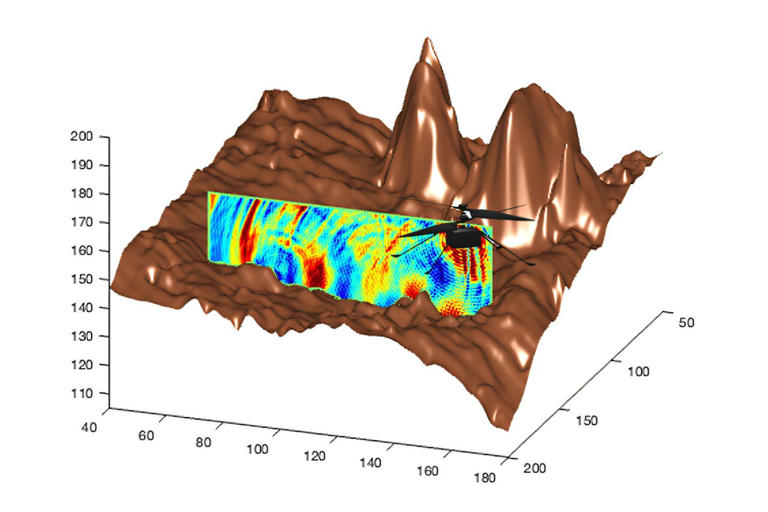
Acoustic signals have been important markers during NASA's Mars missions. Measurements of sound can provide information both about Mars itself—such as turbulence in its atmosphere, changes in its temperature, and its surface conditions—and about the movement of the Mars rovers.
Using these sound measurements to the best extent possible requires an accurate understanding of how sound propagates on Mars. Charlie Zheng, a professor of mechanical and aerospace engineering at Utah State University, and his doctoral student Hayden Baird, presented their work simulating sound propagation on Mars at the Sixth Joint Meeting of the Acoustical Society of America and Acoustical Society of Japan, running Dec. 1–5 in Honolulu, Hawaii.
"We expect that the study will provide deeper insight into weather and terrain effects on acoustic propagation in environments that are not easily measured," said Zheng. "The Martian environment is obviously one of them."
Baird and Zheng's work uses NASA's measurements of the atmospheric conditions and terrain on Mars, most of which have been previously modeled at meter-scale resolutions. They also had access to decades of data about the red planet's atmospheric composition and properties, as well as seismic studies that measure the ground porosity—all factors that play into how sound propagates.
"The setup of the simulation model used in this study relies heavily on previous results from multiple scientific disciplines," said Baird.
Focusing on the Jezero crater, the 2021 landing and exploration site of NASA's Perseverance rover and its attached Ingenuity helicopter, the researchers simulated how sound moves through and scatters off the region's complex terrains, whether it comes from a moving or stationary source. This will help them understand how other atmospheres compare to our own.
The researchers hope their model will help identify signals and patterns that indicate specific Martian atmospheric events. In the longer term, it may even help with sensor designs for future missions to other planets or moons to study atmospheric conditions.
"This study is a beginning to dive into many potential areas of planetary research," said Zheng.
Provided by Acoustical Society of America
This story was originally published on Phys.org.
#716 Re: Exploration to Settlement Creation » Buried geodesic domes » 2025-12-23 18:04:12
Part of why we should and could re-use the cargo ships for raw materials to build with first and then later with natural sources.
The Starship spacecraft is built from large cylindrical rings of this steel, with each ring weighing around 1600 kg (3,600 lbs) and 21 rings used per ship. SpaceX's Starship has a consistent diameter of 9 meters (30 feet) for both the Starship upper stage and a height of 121.3 m (398 ft). These cylinders have a height of 1.83 m (6 ft), and a thickness of 3.97 mm (0.156 in). Super Heavy booster is 71 m (233 ft) tall, 9 m (30 ft) wide.
Total rocket Height
Block 1: 121.3 m (398 ft)
Block 2: 123.1 m (404 ft)
Block 3: 124.4 m (408 ft)
Block 4: 142 m (466 ft)
So some math and we have how much can be repurposed.
#717 Re: Life support systems » Crops » 2025-12-23 17:55:30
Its not the first time I have heard of Duckweed but much like algae that can be eaten people have gotten those early days of life out of the normal menu of choices.
#718 Re: Planetary transportation » Internal combustion engines for Mars » 2025-12-23 17:54:04
The what appears to Th is that they are difficult on earth and make no profits for the other fuels of choice.
The requirements for using a propane forklift on Earth, governed by agencies like OSHA, focus heavily on ventilation, safety equipment, and specific operating procedures to manage exhaust fumes and the flammable nature of propane.
The query "propane forklift whats required for mars use" is likely a hypothetical or creative question. Current official safety and operational requirements (e.g., from OSHA) are designed for Earth-based environments with breathable atmospheres, specific gravity, and regulatory frameworks.However, applying the same principles to a hypothetical Mars scenario, the following Earth-based safety requirements would need to be addressed and significantly modified for the Martian environment:
Key Requirements & Martian Adaptations
Atmosphere: Mars' atmosphere is primarily carbon dioxide and extremely thin. An internal combustion engine (ICE) requires a significant amount of oxygen for fuel combustion.Mars Adaptation: The forklift would be unable to operate in the Martian atmosphere as is. It would require a self-contained oxygen supply system for combustion, or, more practically, a completely different power source (like electric, which is better suited for no-emission operation in enclosed or unventilated areas).
Ventilation & Emissions: On Earth, adequate ventilation is mandatory to prevent the buildup of carbon monoxide and other harmful exhaust byproducts in enclosed spaces.
Mars Adaptation: The exhaust would need to be processed or vented to the outside of any enclosed habitat to prevent contamination. The lack of a breathable atmosphere outside makes this a critical life-support issue.
Safety Equipment & Training: Operators on Earth require specific training, PPE (gloves, eye protection, flame-retardant clothing), and adherence to safety protocols for handling propane tanks.
Mars Adaptation: Operators would require highly specialized training and a self-contained life support system (spacesuit) to operate both the vehicle and handle fuel in the exterior Martian environment.
Fuel Storage & Handling: Earth regulations require secure, well-ventilated storage areas for propane cylinders, away from ignition sources and high-traffic areas.
Mars Adaptation: Storage would need to withstand extreme Martian temperatures and reduced atmospheric pressure, and be integrated into the habitat's safety systems.
Gravity: The surface gravity on Mars is about one-third of Earth's. This would affect the forklift's stability, load capacity, and maneuvering characteristics, especially on inclines.
Mars Adaptation: The forklift's design and operational procedures would need to be recalculated and tested to ensure stability in lower gravity.
Ultimately, a standard Earth-based propane forklift is not feasible for Mars use without a complete re-engineering of the entire system to function in an oxygen-deprived, low-gravity, and harsh environment.
For propane forklifts in cold weather (like Mars!), you need winter-blend propane, heated cabs/engine blocks, proper cold-rated oils/fluids, insulated PPE for operators, keeping tanks warm/full (or indoors), and ensuring excellent ventilation for exhaust, as propane vaporizes poorly when too cold, impacting performance and safety.
Fuel & System Needs:
Winter-Blend Propane: Uses more butane for better vaporization in the cold.Tank Management: Store spare tanks indoors or in heated enclosures; keep tanks warmer (fuller tanks are better).
Heated Components: Install engine block heaters and heated cabs for easier starts and operator comfort.
Cold-Rated Fluids: Use synthetic engine oils and hydraulic fluids designed for low temperatures.
Antifreeze: Check and ensure proper antifreeze levels and freeze protection.
Regulator Warmth: Engine coolant running through the regulator helps warm the propane.
Operator & Safety:
Insulated PPE: Operators need insulated gloves, layered clothing, anti-fog glasses, and warm, non-slip boots.Ventilation: Crucial for exhaust gases; ensure adequate airflow, especially when warming up.
Warm-Up Routine: Warm the engine outdoors first, then gently move the mast/controls to warm up hydraulics before work.
Maintenance & Checks:
Inspect Hoses & Seals: Cold can make them brittle; check for cracks or stiffness.Check for Leaks: Especially around the regulator and hoses.
Drain Water: Regularly drain any water buildup from LPG tanks.
Key Challenge: Propane's inability to vaporize in extreme cold is the primary hurdle, requiring significant heating and specialized fuel/equipment
So it would seem that re-engineering the equipment is needed even when you can solve the fuel and engine issues.
AI suggest using an electric powered equipment to use a large battery pack or a fuel cell system is considered a much more practical and efficient solution for Mars missions than adapting an Earth-based fueled engine.
#719 Re: Meta New Mars » Housekeeping » 2025-12-23 15:56:50
Actually its the second Christmas without her as she passed on 9-20-24.
She loved this time of the year best.
#720 Re: Exploration to Settlement Creation » WIKI Project construction design meaning for insitu materials » 2025-12-23 15:42:31
Technical Notes 31 - Brick Masonry Arches
300 plus pages Practical architectural guidelines to design a Martian base
Architectural problems of a Martian base design as a habitat in extreme conditions
#721 Re: Planetary transportation » Internal combustion engines for Mars » 2025-12-23 15:14:33
While there aren't standard engines running directly on a simple CO + O2 mix (CO is an exhaust product, not usually fuel), research explores using CO-rich syngas (CO + H2) or adding CO2/CO to fuels for oxy-fuel combustion in specialized engines (like rocket engines, ship engines for CO2 carriers), and engines can be designed to reform CO2 into fuel, but these are for specific applications or research, not typical vehicles.
Key Concepts & Applications:
Oxy-Combustion/Oxy-Fuel Engines: These use pure oxygen (or enriched air) and a fuel, potentially with CO2 added for control, to increase efficiency and reduce NOx/soot, seen in research for power plants and some ship engines.
Syngas (CO + H2): Carbon monoxide mixed with hydrogen (syngas) can be used as fuel in modified internal combustion engines, common in gasification systems.
CO2 as a 'Fuel' (Reforming): Some systems use engines (like Rapid Compression Machines) to convert CO2 and other gases into valuable syngas (CO + H2) for reuse, creating a circular carbon economy.
Rocketry: NASA studied CO and O2 as propellant combinations for potential rocket engines.
CO2 Carriers: Engines like MAN B&W's ME-GI are used to power ships transporting liquid CO2, though they burn traditional fuels, not the transported CO2.
Why Not Just CO + O2?
CO is a Product: Carbon monoxide (CO) is usually the "ash" from burning carbon-based fuels, not the fuel itself; it needs more oxygen to become stable CO2.
Energy Density: While CO burns, engines are optimized for hydrocarbons or hydrogen. Direct CO + O2 combustion requires specialized systems to manage extreme temperatures and efficiency.
In summary, while not standard, research and niche applications are developing ways to utilize CO, CO2, and oxygen in advanced combustion systems, focusing on efficiency or carbon capture, often using syngas mixtures
#722 Re: Exploration to Settlement Creation » To RTG or not to RTG the size is the question » 2025-12-23 14:35:01
Well the desire to use an RTG of the Perseverance size just does not make to common test of financial responsibility.
The Perseverance rover's power source is a Multi-Mission Radioisotope Thermoelectric Generator (MMRTG), essentially a nuclear battery using heat from plutonium-238 decay to generate steady electricity (around 110 watts) and heat for its systems on Mars, providing reliable power for its long mission unlike solar panels. Provided by the U.S. Department of Energy, this compact device uses the Seebeck effect with thermocouples, offering dependable power for years in the cold Martian environment, crucial for science and operations.
How it Works:
Heat Source: The MMRTG contains plutonium-238 dioxide, a ceramic material that releases heat as it naturally decays.
Conversion: Thermoelectric couples (semiconductors) convert this heat directly into electrical current through the Seebeck effect, creating a temperature difference.
Electricity & Heat: The system produces both electricity for the rover and heat to keep its instruments and systems warm in extreme cold.
Reliability: With no moving parts, MMRTGs are highly reliable and provide continuous power for extended missions, essential for deep space and Mars exploration.
Key Features:
Power Output: Starts at about 110 watts and gradually decreases over time as the plutonium decays.
Fuel: Uses plutonium-238, a robust and long-lasting radioisotope.
Heat Management: Has "fins" to radiate excess heat and also provides warmth for the rover.
Provider: Supplied to NASA by the U.S. Department of Energy (DOE).
Why it's Used:
Provides consistent, long-term power, independent of sunlight, making it ideal for Mars exploration.
Compact and durable for space travel.
Enables long-duration missions and complex scientific operations far from the Sun
https://en.wikipedia.org/wiki/Perseverance_(rover)
While the total Perseverance rover mission cost around $2.7 billion, the specific Radioisotope Thermoelectric Generator (RTG) powering it isn't itemized in the overall budget, but similar NASA RTGs cost roughly $100 million each, requiring plutonium and years of production, with Perseverance using about 10.6 pounds of plutonium for its.
RTG Specifics
Cost: While not a separate line item, similar NASA RTGs cost around $100 million to produce.
Plutonium Content: The system on Perseverance uses about 10.6 pounds of plutonium-238.
Production: RTGs are complex systems built at national labs (Oak Ridge, Los Alamos) and assembled at Idaho National Laboratory (INL) over years, involving robotic assembly and rigorous testing.
Perseverance Rover Total Cost Breakdown
Total Mission: ~$2.7 billion (including inflation, closer to $2.9 billion).
Spacecraft Development: ~$2.2 billion.
Launch Services: ~$243 million.
Operations (2-yr prime): ~$200-300 million.
So, while the RTG is a critical component, its significant cost is bundled into the overall spacecraft development, with estimates placing it around $100 million for the power system alone.
https://en.wikipedia.org/wiki/Multi-mis … _generator
The MMRTG cost an estimated US$109,000,000 to produce and deploy, and US$83,000,000 to research and develop. For comparison the production and deployment of the GPHS-RTG was approximately US$118,000,000.
it only produced the 100 watts that was used for the cycle of 3.5 hours which gave us the stated 300 watts for the device to make oxygen and the co as its is an incomplete design.

Yes an RTG gives continuous power but its at a very low level, at a very high cost and the device to use that power is a mismatch as its cycles.
#723 Re: Exploration to Settlement Creation » To RTG or not to RTG the size is the question » 2025-12-23 14:25:39
For SpaceNut re new posts in MOXIE topic ...
Thanks for the new posts you added, with what sure looks like ** very ** encouraging news of larger scale operations on Earth.
My point was (and remains) that the original small MOXIE unit could be replicated in large numbers and deployed to Mars with an RTG able to provide the 300 watts it needs. It does NOT need to be mounted in a rover. That was convenient for the research mission.
Your posts show that researchers/engineers are working on larger scale versions.
That is all good, but the fact remains, the ONLY such system tested on Mars is the 300 watt version.
So we should be able to figure out how many 300 watt units are needed to supply oxygen for humans or fuel and oxidizer for machinery.
***
In one of your posts you seemed (as I read it) to think that carbon monoxide had never been tested on Earth for internal combustion engines. I am 95% confident that kbd512 researched that long ago and found that such engines had most definitely been tested on Earth.An internal combustion engine that runs on CO and O2 will produce less power than would an engine that has hydrogen in the fuel, but I question why that makes a difference. To make hydrocarbon fuels will consume energy that you might be able to get back if you have an engine designed for it, but why bother? CO and O2 make a perfectly acceptable energy storage system and the whole process is so much simpler, I just don't see why anyone would go to all the trouble of fooling around with hydrogen.
(th)
#724 Re: Unmanned probes » Perseverance New 2020 Mars Rover based on MSL » 2025-12-22 18:49:13
Perseverance may soon set a Mars rover mileage record
One standout moment came when NASA reported that Perseverance used its navigation cameras to complete a single drive of exactly 1,350.7 feet, or 411.7 meters, a stretch that set a new personal best for the rover and highlighted how efficiently it can now move across Jezero’s surface. That feat, documented in a mission update on 1,350.7 and 411.7 meters of progress, was not just a stunt; it demonstrated that the rover’s autonomous systems can safely handle long, continuous traverses that are essential for any bid at a distance record.
Recent mission commentary notes that the rover’s six wheels have already carried it roughly 25 miles, or about 40 kilometers, since touchdown, a figure that puts Perseverance in direct contention with the longest-ranging Mars rovers of the past. That cumulative distance, cited in a discussion of how far the rover has gone at around 40 kilometers, reflects not only the rover’s mechanical durability but also the mission team’s willingness to keep pushing the envelope on daily drive plans.
#725 Re: Civilization and Culture » Civilization collapse, signs of the past and may be happening now » 2025-12-22 16:19:05
How distortions occur by creating labels that are not accurate.
"Rich people" are a diverse group with varied political views, and it is a misconception to characterize them all as holding the same ideology. Historically, the very wealthy have often leaned conservative (right-wing), but recent trends, particularly in the U.S., show a shift where many in the upper-income brackets, especially the college-educated or those in certain industries, are increasingly likely to be liberal or lean Democratic.
General Trends in the U.S.
Overall Political Affiliation: Polling data has indicated that when party leanings of independents are included, the wealthiest 1% of Americans were somewhat more Republican-leaning than the rest of the population, although this gap was not as large as other demographic differences like education level.
Income vs. Education: One of the most significant factors is education. High-income individuals who also have a college or postgraduate degree are more likely to support Democratic candidates, creating a "U-shape" in voting patterns by income level, where both the lowest and highest income groups show increased support for the Democrats compared to middle-income brackets.
Industry and Occupation: Political affiliation among the wealthy often depends on their source of wealth and occupation.
People in traditional industries like oil, manufacturing, real estate, and finance tend to be more right-wing or Republican.
Those in high-tech, human services, arts, and professional/scientific occupations tend to be more liberal or Democratic.
Ideology vs. Party: While wealthy individuals might lean toward one party, their views on specific issues, particularly economic ones, can still be conservative. Many are generally conservative in the classical sense of resisting change to a system that has benefited them financially.
Variations Among Different "Rich" Groups
Billionaires: A small group of high-profile billionaires like George Soros and Bill Gates are known for liberal donations, while others like Charles Koch are strongly conservative. The general perception is that the vast majority of billionaires are very right-wing on economic issues, even if a few prominent ones are liberal.
Celebrities/Entertainers: People in the entertainment world and arts tend to lean strongly liberal, which often leads to the public perception that many rich people are left-leaning.
"Old Money" vs. "New Money": Some analyses suggest that "old money" (inherited wealth) might have different political attitudes than "new money" (self-made), with those who became rich through disruptive entrepreneurship sometimes leaning more liberal than those whose wealth is tied to long-standing, traditional industries.
In conclusion, the political views of the rich are not monolithic. While economic self-interest often drives support for conservative, pro-capitalist, and lower-tax policies, factors like education, occupation, and personal values mean many affluent people align with the left or the Democratic party, especially on social issues