New Mars Forums
You are not logged in.
- Topics: Active | Unanswered
Announcement
#29251 Re: Human missions » ISS Woes & To-Mars » 2004-11-16 08:25:17
RUSSIA'S SPACE AGENCY AND NASA LAUNCH TALKS ON SIZE OF 2005 ISS SHARES and the list of reciprocal services under the ISS plans for 2005 though to the future.
ROSCOSMOS HEAD ON FUTURE OF ISS of which the Russian segment of the International Space Station (ISS) should be completed in seven years. This article also talks of further modules after the 2010 time frame for the shuttle discontinuation.
#29252 Re: Space Policy » Bush Sets Wrong Goal? » 2004-11-16 08:15:55
As you noted tourism is a provider service not really a high return industry.
#29253 Re: Science, Technology, and Astronomy » New Solar Power Technology » 2004-11-16 07:47:56
Not to mention that the process you describe would be one of the first used in space for the purpose of smelting.
#29254 Re: Space Policy » Bush Sets Wrong Goal? » 2004-11-16 07:05:14
To have investment returns there must be investors and at the current instant we have governments as the investors. They are not looking for profits or returns to offset paying Nasa to do this work.
We could look at the SpaceShipOne process in that it was to win a prise but that bar is to low. We could look at what will become of having do it which is more sub orbital flights at around the $3,000 price tag. Still to low on the ladder of space flight.
One must look at space as more than just being a provider of a means to get there taxi for crews, or that of being a cargo lift service provider.
At the current time space is about doing scientific research, the learning though exploration process and not of any permance or lasting presense in space though to do that would cost more.
Ultimately the return on investment is the return of material or goods from space and not services to those that are doing the work.
#29255 Re: Human missions » Post central for information on CEV 2 - ...continue here. » 2004-11-16 06:30:59
Ok, So prizes for incentive to design the next CEV lets say for only a 100million payout. Lets for one moment think about the current pairing off the big space providers, do you think that they would be willing to shell out the needed cash that is estimated at 25billion for all possible flavors of the CEV or would they even start with no contracts, let allow finish, I think not. They are to use to the current gravy train system.
So that now only leaves the alternative space ventures as the entrants to this new prize contest foriegn or otherwise IMO. Also lets not rule out the Russians or possibly India and a few other developing space nations.
If the SpaceshipOne were a good model on the cost to develope then one would be looking to have for the 100million dollar prise an up front cash and or garentee of funds of at least 200million if not more. That would be to just provide one working model basically.
I would much rather put forth the idea or at least plant the seed that future contracts to and for the big space providers hinge on there own independ CEV to LEO to be launched on there own products as a direct purchase. That the prices for this unit would be some where between the current atlas V and the Delta 4 pricing per unit flat fee payed. With no garranty or contracts to ever purchase anything from either.
I know that this last paragraph is fantasy but it would shake things up abit.
#29256 Re: Not So Free Chat » Bush next four years agenda - Can he achieve his goals » 2004-11-15 14:35:32
Update on the Bush resignations.
Powell, 3 others leaving Cabinet
Accelerating the shake-up of President Bush's inner circle in advance of his second term, the White House Announcement raises the total to six.
#29257 Re: Science, Technology, and Astronomy » New Solar Power Technology » 2004-11-15 14:28:26
They are basically glass, not so hot for road surfaces and would not do well with contamination on the cell either or being wet or snowed on. Plows would definitely do them in....
#29258 Re: Not So Free Chat » Border crossings - and Terrorism » 2004-11-15 14:25:34
In a local paper was an article on Three U.S. land crossings begin testing new border security technology
We have always used technology to secure the borders but since 911 it has been slowly but surely increased even to the point of being an anoyance for those coming and going by planes.
Getting into America at three U.S. land crossings is about to get a little more complicated for some visitors.
Gateways from Mexico at Laredo and Douglas, Ariz., have been chosen to begin testing the Homeland Security Department’s increased border security technology on Monday. The Canadian border city of Port Huron, Mich., also is participating.
Other little know facts to me at least was on temporary border crossings.
Mexican citizens holding Border Crossing Cards, or laser visas, would not be subject to the printing and photographing.
The cards allow Mexicans to enter the United States for short visits, as long as they do not travel more than 25 miles from the border in Texas, California and New Mexico; and 75 miles in Arizona.
#29259 Re: Not So Free Chat » CIA Tumult » 2004-11-15 13:51:12
Just an agency that its people have forgotten what they are supposed to be doing much like the current NASA. They are tasked with more than the simple job of intelligence gathering into one of becoming one within these various rouge organizations wishing to do harm to anyone and everyone that do not follow there teachings and or other objectives as set down by there leaders.
The failure of the organization as a whole points to the number of activities that they must carry out with the number of personnel that they have which in this case is overload.
#29260 Re: Science, Technology, and Astronomy » New Solar Power Technology » 2004-11-15 12:29:05
yup solar cells back then were very costly to make, some what fragile and did not produce that much in seasonal locations or should I say the further north you were.
There has been a lot of advances in the efficencies of them over the years not to mentions they seem to get more power out of them some how on Mars than expect without dust devils blowing though.
I had though of using solar panels on a sort of dual function way.
Have you ever been driving done the roads either in early morning or late towards sun down. Well then you have probably been asaulted by solar glare. One could make a sloar blind accross the local highways at probably 25 feet in the air that stretches from side to side. Making them about 6 ft wide and on a pivot point to allow them to be possitioned for the best tracking of the sun though out the day. These could be spaced at any distance appart that would create a sort of tunnel effect blocking the high intensity glare during them times.
The energy could be save for later use for street lighting or for off setting the cost of local governments energy needs.
#29261 Re: Life on Mars » A new methane thread - Starting from more recent data » 2004-11-15 12:17:58
I am wondering if that is what occurs in the releasal of the hydrogen peroxide from within the Water from a Stone article changes which happen to the salt formations of various types.
#29262 Re: Human missions » Post central for information on CEV 2 - ...continue here. » 2004-11-15 11:48:39
Speaking of scramjet technology if it were not for theNASA cancels technology development programs after today possible mach 10 flight it would have been followed up by yet 2 more in the series.
A little dated but still with great info and images of the proposed ships.
NASA developing hypersonic technologies for future
X-43B 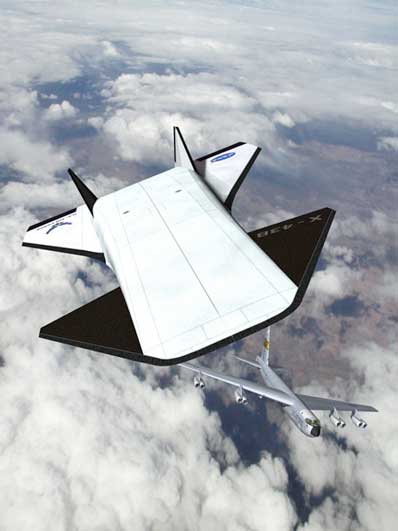
Hypersonic Airbreathing Propulsion Branch at Langley Research Center
#29263 Re: Human missions » ISS Woes & To-Mars » 2004-11-15 11:23:38
US-India space cooperation: the next level though this is an article from the carry over of the lunar probe topic it does contain info on there respply efforts for use as a cheaper unit than the Europeans ATV. A low-cost Earth-to-Moon supply carrier might be a valuable business niche for the future. It would also give India a strong claim for participation in the Vision for Space Exploration. Great stuff for how India has come a long way to be a solid provider in the space business.
India would earn its equity in the ISS by developing and building an automated logistics spacecraft, akin to Russia’s Progress or Europe’s Automated Transfer Vehicle (ATV). The Geostationary Launch Vehicle (GSLV) that ISRO has successfully used three times can put at least two or three tons into low Earth orbit (LEO). From its launch site on the Bay of Bengal, it should be able to reach the ISS with a reasonable load of fuel, water, or other supplies. This India Space Logistics Vehicle (ISLV) could be designed by India’s own space industry, with minimal help from the US and Russia.
Europe’s ATV is the Rolls Royce of ISS resupply; the only thing more costly is the shuttle. Not only is it exceptionally costly compared to Russia’s Progress, but its complex ground control system makes it the perfect anti-model. The ATV is probably designed to give Europe’s space industry a technological starting point for a future manned capsule. That’s fine, as an industrial development policy, but it insures that the ATV is never going to be a truly cost effective delivery van.
#29264 Re: Water on Mars » Closer view of springs inside Endurance crater. » 2004-11-15 11:14:05
Water from a Stone or at least how it may be trapped at present time. This also could answer the where did it go question in that it is locked away in a salt configuration. But will it be to sensitive to the changes that a sample might see as we try to bring one back.
Magnesium Sulfate is found in many mineral waters, and in sea water. It is also known as Epsom Salt. 
#29265 Re: Space Policy » Space fairing Nations - The ever changing view » 2004-11-15 11:02:24
Well it would appear that India is selling space on the lunar probe.
Five nations shortlisted for slot in ISRO's moon mission from five nations including the US, UK and Germany, for a slot on India's unmanned moon mission 'Chandrayaan-1' to be undertaken by 2006-07.
The run down on what has been put into it so far Chandrayan-I X-ray spectrometer (CIXS-II) from Britain, Near Infra-red spectrometer (SIR) from Germany, Sub-ked Atom Reflecting Analyser (SARA) from Sweden in collaboration with ISRO's Space Physics Laboratory, Radiation Dove Monitoring Experiment (RADOM) from Bulgaria and Mini-Synthetic Apperture Radar (Mini-SAR) from America.
ISRO had allotted 10 kgs and 10 watt of power for space agencies of other nations and had invited international bids for the purpose that had evoked 15 responses from 10 nations.
#29266 Re: Mars Analogue Research Stations » Do your own research for the cause! - What have you done for Mars Lately? » 2004-11-15 10:54:41
Thanks for posting this here. I have always wonder how much of my blogging could be utilized other than for my own personel venting and now I know it is possible to help at least by doing so.
#29267 Re: Martian Politics and Economy » Laser Communication-Earth/Mars - Mars/Earth Laser Comunication » 2004-11-15 09:51:55
NASA To Test Laser Communications With Mars Spacecraft Staes that work is under way to build a 300million dollar experiment. Most of this is due for the need of bandwidth of image transmition. Much involvement with the military on this as well.
#29268 Re: Science, Technology, and Astronomy » Designing robotic probes to explore - The novel approach to speed » 2004-11-15 09:42:22
Much has been talk of under the CEV forums for heavy lift and for staying power requirements for manned or cargo mission where be it to the moon, mars and or just simply to the ISS.
Marshall hopes to put robotic probes on diet Cutting fuel weight would free room for science tools
The article talks of how we must be able to deliver the probes vast verity of sensors, gadjits to the place that we wish to explore and how that being much heavier for all these tools to get the most out of having sent the probe to its destination. Some times means that we are stopped before we start due to the amount of rocket fuel necessary to get it off the ground.
Everything from gravity boosts to air breaking must be used to get the most out of the fuel for lift off to getting the probe into orbit around the destination.
#29269 Re: Human missions » The need for a Moon direct *2* - ...continue here. » 2004-11-15 09:31:34
While NASA tests station's staying power Agency shifts focus to research for moon, Mars trips it is realigning its self to better achieve the goal of the vision. NASA goal is to keep the station with a permanent, rotating crew for at least 15 to 20 years, "but that may extend out ... and there will be other crews on" other stations or bases. The ultimate goal, which is very lofty, is to never go without a human presence in space again.
A lot of good stuff in this article.
#29270 Re: Human missions » ISS Woes & To-Mars » 2004-11-15 09:16:41
Saw this last week some time ago on another web site. It is in regards to finding what is making all the noise that they have been hearing for quite some time now and of the recent inspection in that area.
#29271 Re: Human missions » Return to flight slipping » 2004-11-15 09:09:31
But this is also where the argument on skill retention comes in, civil servants and of unions.
I had stated that as a cost saving measure early in the discussion of how to create more funds for the CEV. For a period of approximately going on 2 years we could have saved anywhere from as low as 3billion to as high as 8billion in my best guestimates.
#29272 Re: Unmanned probes » SMART-1 - ESA lunar orbiter » 2004-11-15 08:48:58
Great Ion thruster diagram Rxke. Also caught the creation theory of the moon picture.
#29273 Re: Human missions » Post central for information on CEV 2 - ...continue here. » 2004-11-15 07:05:02
The problems with fuels are they come in two forms liquid and solid some requiring special handling while others fridged cold temperatures. We already know that solids while good for cargo are really a no go for people. For the lack of a shut down and restart capability which this is not part of the problems for a combo or hybird systems being partly solid while also being either gaseous or liquid as part of the burn system.
It is the projected billions of dollars in developement that is killing the CEV before it starts, not its configuration of being expendable, or re-usable, not the argument of being a capsule or plane and it its definitely not about fuel types used to get us there. It is not even about the requirement of heavy lift for that is a seperate issue of logistics.
#29274 Re: Space Policy » Bush Sets Wrong Goal? » 2004-11-15 06:50:54
AS you noted the moon plans are so tightly wrapped with mars was one of the reasons that I started the moon direct topic. To qoute from the orginal.
In Many of the discusions of topics we come back to what did the president mean by first the Moon and then beyound. To use the moon as a stepping stone to space.
To sustain a Moon project does this mean a base, colonization and or can it be one shot after the other with nothing permanent ever built.
We can keep looking a startup cost as well as the long term cost but are they really what is important to exploration.
If we go to the moon should we be looking to develope self sufficiency and less dependence on Earths resources.
Should the moon be the next Launching pad to beyound?
The questions keep coming or going and even Nasa is looking for information as to what is meant in the commissions report.
I think we do need both plans but the problem is on of affordability for all activity and that is where Nasa is having its difficulties. And IMO both should be on going simutainously
not ont followed by the other decades or even a century later. I could see maybe a few years but there is no real reason to wait other than that to which is caused by underfunding the whole space activity that Nasa engages in.
#29275 Re: Human missions » Return to flight slipping » 2004-11-14 22:04:22
A couple more articles that appeared in the orlandosentinel
Fears rise over cuts, shuttle schedule
Interviews, documents show managers' concern
http://www.orlandosentinel.com/news....s-space
Nearly two years after the Columbia disaster, some NASA managers fear that cost-cutting measures and pressure to resume shuttle launches are jeopardizing critical safety reforms.
Confidential interviews with shuttle officials, as well as internal NASA documents and e-mails obtained by the Orlando Sentinel, portray a program rushing to fly again despite serious money problems and growing concerns about meeting an ambitious schedule.
To help balance its books, for example, NASA is considering hundreds of layoffs at Kennedy Space Center even as workers prepare for shuttle Discovery's planned liftoff in May. Internal schedules show that 61/2 months of processing work on Discovery remains, but the orbiter must be rolled out of its hangar in 41/2 months to make the May launch window.
NASA is studying a variety of options at KSC, although there is no guarantee any will be adopted. They include:
Beginning the layoffs in February of 276 contract shuttle workers and increasing overtime 3 percent to 45,000 hours. The move would reduce NASA's ability to meet the current launch schedule by shrinking the work force to levels comparable to those before the Columbia accident. Savings: $16.6 million in 2005.
Starting a targeted layoff of 100 workers Dec. 1 "aimed at lower performers and critical skills that are least detrimental to processing." The briefing notes that "any layoff implementation would likely damage employee morale" and hasten the departure of skilled workers. Savings: $8.6 million in 2005.
Carrying out an aggressive attrition plan in January that would fill only one of every four job openings instead of three of four. A drawback is that vacancies created by attrition likely would result in the loss of critical skills. Savings: $4.6 million in 2005.
Diverting virtually all workers who are doing a maintenance overhaul of shuttle Endeavour to preparing Discovery and Atlantis for launch. The move would save about 17,000 planned hours of overtime but would delay Endeavour's return by a year and cause future schedule delays. Savings: $1.5 million in 2005.