New Mars Forums
You are not logged in.
- Topics: Active | Unanswered
Announcement
#76 2026-08-14 08:22:03
- Void
- Member
- Registered: 2011-12-29
- Posts: 9,962
Re: AquaWorlds (Water Holding and Water Transporting Methods)
Here is a video with ideas about space construction: https://www.bing.com/videos/riverview/r … &FORM=VIRE
Quote:
How to Build in Space — for Life on Earth | Ariel Ekblaw | TED
YouTube
TED
164.3K views
Jun 13, 2025
AI insights
Key moments in this video
I can already see how this could work well with an "Expendable(Not Really)" Starship method.
I have recently observed talk about hosting Lunar Starship missions by using 5-6 special propellant ships of a Version 4?
These would not be reusable. But they could be "Additional-Usable".
https://www.aureliainstitute.org/tesserae
Image Quote: 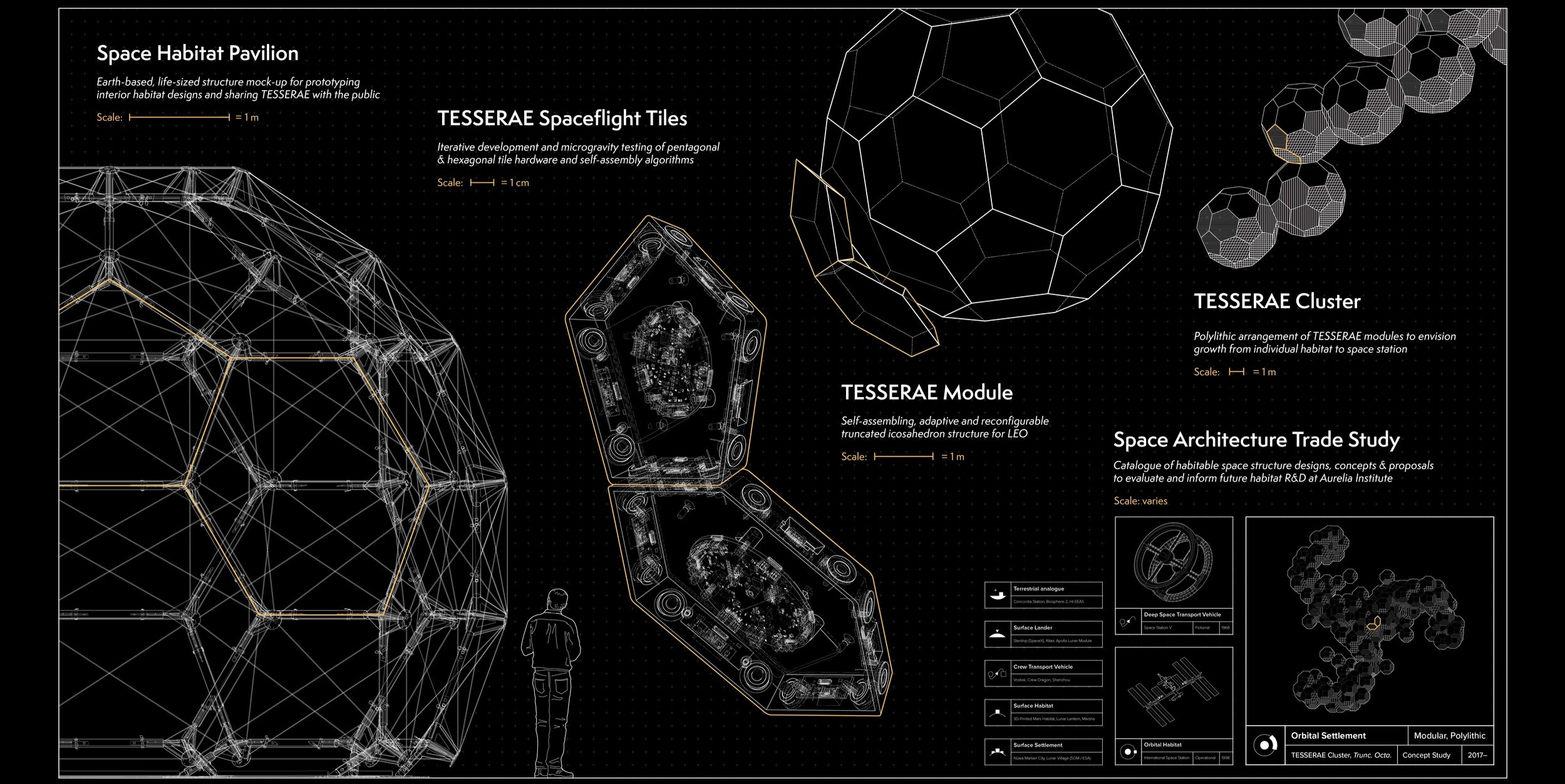

I am presuming that a "Starfall Capsule" could bring desirable parts back down to the surface of the Earth. Parachutes and Splash Down.
The rest of a ship could be cut up inside of a Bucky-Ball.
The engines and special parts be put into a Starfall Capsule.
The rest of the ship be converted into useful parts, or Propellant Metals for Magdrive or Neumann Drive.
The interior of this bucky ball would not be pressurized, but could contain robotics capable of the work. With care humans with minimal suits similar to SpaceX Flight suits might work inside as the environment would be buffered. Temperature, Lighting, and Utilities such as umbilical's.
The Engines could be packed into the Starfall Capsule, along with other valuable parts.
I see no particular reason that the Starfall capsule needs a Starship heat shield, just a ablative one would do.
A trick to make the impact on water softer would be to fire an explosive device into the water just before splash down to produce and abundance of bubbles in the water that the capsule splashes down into.
So, this method would also supply method to use metals to propel payloads towards the Moon.
Such payloads could be attached to the outsides of a Lunar Starship in orbit of the Moon. Then the Lunar Starship could land. I think that ideally the place to put such additional payloads onto would be the landing legs.
So, I think this can make some sense.
Ending Pending 
Last edited by Void (2026-08-14 08:55:25)
Be careful what you wish for.
Offline
Like button can go here
#77 2026-08-14 09:55:18
- Void
- Member
- Registered: 2011-12-29
- Posts: 9,962
Re: AquaWorlds (Water Holding and Water Transporting Methods)
Building on the previous post, (th) suggested this: https://newmars.com/forums/viewtopic.ph … 39#p240939
https://www.nasa.gov/missions/tech-demo … -overview/
Image Quote: 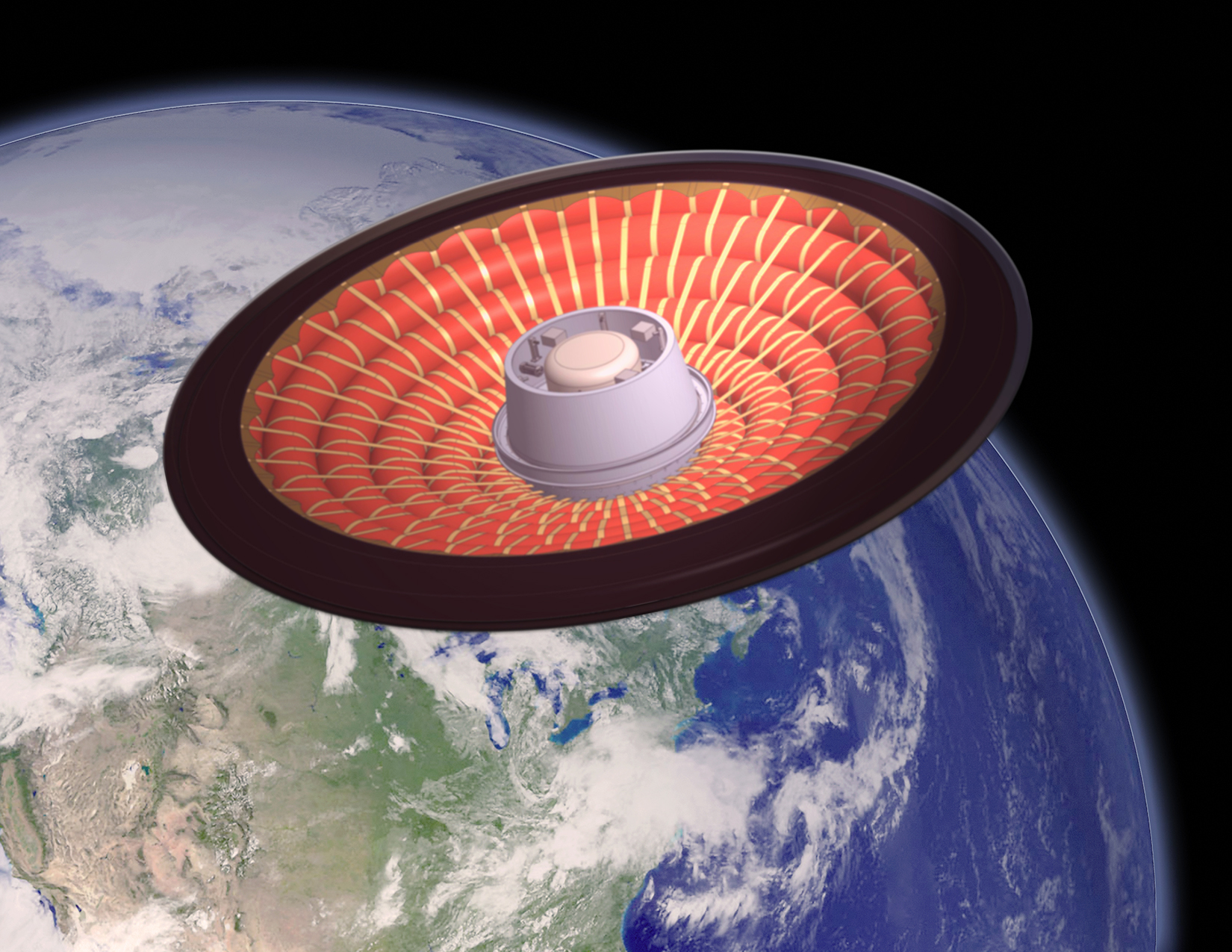
Yes, sometimes the answer to low cost could be mass-production. That might be a way to go.
If we presume that each Lunar Starship mission might be supported by 6 Starships expended to Orbit, that is 6 to 9 engines per ship, so then 36 to 54 engines, at a price of 1/4 million each? $9,000,000 to $13,500,000 in engines alone, but you also have other parts as well of significant value.
If it would be possible in addition to produce 100 tons of metal propellants per ship, then 600 tons of metal propellants.
If Magdrive has a propellant efficiency of 10 times that of Metha lox, that is the equivalent of 6000 tons of propellants.
If Neumann Drive has a best-case propellant efficiency of 30 times that of Metha Lox, then 18,000 tons of propellants.
(Of course these are slow acceleration devices, but the Magdrive will likely have more acceleration than the Neumann Drive).
If Iron propellants can be evolved from the Moon, then you have the means to moving slow tons of materials from LEO to Low Lunar Orbit, presuming the propulsion devices can use both Stainless Steel and Iron.
Having the Stainless Steel as propellants then you could move tanks of water and Carbon to Low Lunar Orbit and manufacture Metha Lox and Hydro Lox for ships to be refilled in Low Lunar Orbit. Should sufficient water be available from the Moon then you only have to bring Carbon out to the Low Lunar Orbits.
Ending Pending
Magdrive and Neumann Drive have some growing up to do, but they would be useful:
https://magdrive.space/products/rogue/
Quote:
The Magdrive Rogue is a compact, high-thrust electric propulsion system for satellites and spacecraft in LEO today, deep space and beyond tomorrow.
https://neumannspace.com/neumann-drive/
Quote:
Our Products
The Neumann Drive’s superior electric propulsion system doesn’t just focus on performance; it covers the full mission lifecycle.
Our product range covers CubeSat, SmallSat and specific client requirements.Simple, solid-state, robust design with flight heritage
Rapid manufacturing capability
Available – off-the-shelf, fully fuelled
Plug & Play integration
Ability to fulfil mission requirements
Safe to handle and operate
Sustainable propellants
In-space refuelling / mission extension
Minimal logistics and regulatory paperwork
Patent protected in many countries including in the U.S. (US Patent No 10,807,741)
The Neumann Drive’s unique solid metallic propellant rod is unrivalled in the market. The rod can be made (on Earth and in space) of any solid conductive metals and alloys – including the many tons of various metals already in orbit.
Ending Pending
An interesting wrinkle on the above would be the use of Magnetite.
https://en.wikipedia.org/wiki/Magnetite
Quote:
Magnetite is a mineral and one of the main iron ores, with the chemical formula Fe2+Fe
3+
2
O4. It is one of the oxides of iron, and is ferrimagnetic;[6] it is attracted to a magnet and can be magnetized to become a permanent magnet itself.[7][8] With the exception of extremely rare native iron deposits, it is the most magnetic of all the naturally occurring minerals on Earth.[7][9] Naturally magnetized pieces of magnetite, called lodestone, will attract small pieces of iron, which is how ancient peoples first discovered the property of magnetism.[10]
We have recently been discussing space drives that can use Oxygen and space drives that may use Iron.
A system using Magnetite and Water, may provide both.
A little Hydrogen and Solar heat might extract Oxygen from Magnetite and convert it to Iron, making both propellants available.
Magnetite might be purposely manufactured on places like the Moon and exported.
It might be relatively easy to shoot out of a Mass Driver???
In any case both Magnetite and Water are relatively easy to store and handle, relative to other chemical propellants.
And for special situations it might be possible to expel Magnetite dust out of a Mass Driver to propel a spacecraft.
Ending Pending
Last edited by Void (2026-08-14 10:26:39)
Be careful what you wish for.
Offline
Like button can go here