New Mars Forums
You are not logged in.
- Topics: Active | Unanswered
Announcement
#26 2025-12-11 16:03:15
- SpaceNut
- Administrator
- From: New Hampshire
- Registered: 2004-07-22
- Posts: 30,831
Re: WIKI Project construction design meaning for insitu materials
The issue I see is the simulant does notlook anything like the regolith surface of mars images which the rovers have broadcasted.
How to make metals from Martian dirt
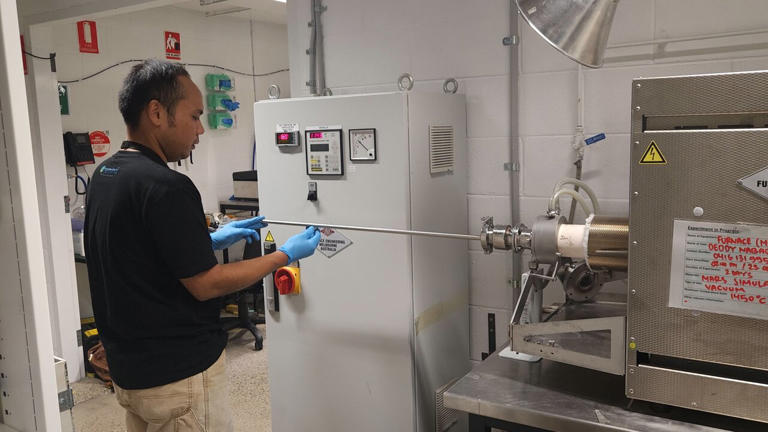
The idea of building settlements on Mars is a popular goal of billionaires, space agencies and interplanetary enthusiasts.
But construction demands materials, and we can't ship it all from Earth: it cost US$243 million just to send NASA's one ton Perseverance Rover to the Red Planet.Unless we're building a settlement for ants, we'll need much, much more stuff. So how do we get it there?
CSIRO Postdoctoral Fellow and Swinburne alum Dr. Deddy Nababan has been pondering this question for years. His answer lies in the Martian dirt, known as regolith.
Building an off-world foundry
As it turns out, Mars has all the ingredients needed to make native metals. This includes iron-rich oxides in regolith and carbon from its thin atmosphere, which act as a reducing agent.Swinburne University of Technology astrometallurgist, Professor Akbar Rhamdhani, is working with Dr. Nababan to test this process with regolith simulant—an artificial recreation of the stuff found on Mars. The work was published in two papers in the journal Acta Astronautica.
https://linkinghub.elsevier.com/retriev … 6525002814
https://www.sciencedirect.com/science/a … via%3Dihub
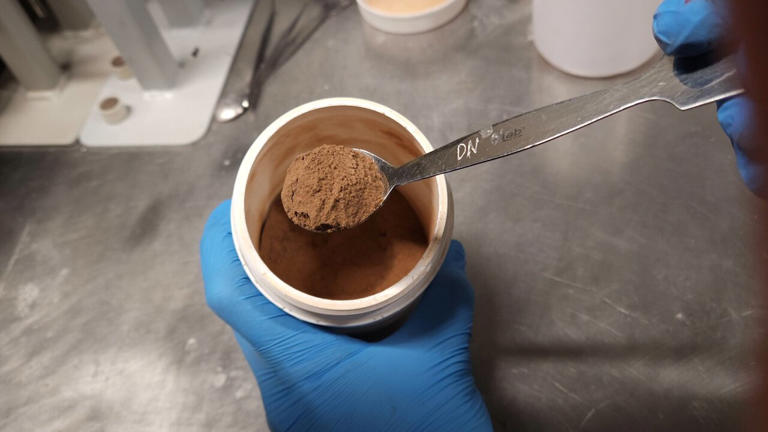
"We picked a simulant with very similar properties to that found at Gale Crater on Mars and processed them on Earth with simulated Mars conditions to give us a good idea of how the process would perform off-world," he said.
The simulant is placed inside a chamber at Mars surface pressure and heated at increasing temperatures. The experiments showed pure iron metal formation around 1,000°C, with liquid iron-silicon alloys produced around 1400°C.
"At high enough temperatures, all of the metals coalesced into one large droplet. This could then be separated from liquid slag the same way it is on Earth," Professor Rhamdhani said.
Along with Dr. Nababan, Prof Rhamdhani is collaborating with CSIRO's Dr. Mark Pownceby to further advance the process. They're particularly focused on making metals with zero waste, where the byproducts of the process are used to make useful items.
If you can't ship it, make it
ISRU is a growing area of space science because in rocket launches, every kilogram counts. While the cost of launches is going down, the demands of human exploration are immense.But huge developments are already happening, including the first demonstration of ISRU off-world: The MOXIE experiment onboard the Mars Perseverance rover produced breathable oxygen using only the carbon dioxide in the planet's atmosphere.
Metal production is the next giant leap. Professor Rhamdhani hopes Mars-made alloys could be used as shells for housing or research facilities, and in machinery for excavation.
"There are certainly challenges. We need to better understand how these alloys would perform over time, and of course whether this process can be recreated on the real Martian surface," he said.
But in the meantime, Swinburne and its partners are doubling down. Professor Rhamdhani together with Dr. Matt Shaw and Dr. Deddy Nababan from CSIRO recently delivered a four-day joint Swinburne-CSIRO bespoke workshop on astrometallurgy in South Korea, and the feedback was promising.
"We're starting to see increased interest in this field globally as the world gets serious about Mars exploration," he said.
"To make it happen, we're going to need experts from many fields—mining, engineering, geology, and much more."
For Dr. Nababan, the benefits go beyond exploration. He hopes their research will also drive more efficient metallurgy on Earth.
"By doing this, I wish that I can help the development of space exploration, and at the end it will bring good to human life here on Earth."
Offline
Like button can go here
#27 2025-12-11 19:04:24
- SpaceNut
- Administrator
- From: New Hampshire
- Registered: 2004-07-22
- Posts: 30,831
Re: WIKI Project construction design meaning for insitu materials
This is JSC Mars-1 Martian Soil Simulant
Chemical composition mineralogical standard analog based on data collected from the Mars Science Laboratory Curiosity rover. MGS-1 is made by sourcing a spectrum of terrestrial minerals, then mixed together in specific proportions to generally replicate the Martian surface. This is in contrast to previous Mars simulants that were typically sourced from a single terrestrial deposit (basalt or palagonite) fraction of less than 1 millimeter
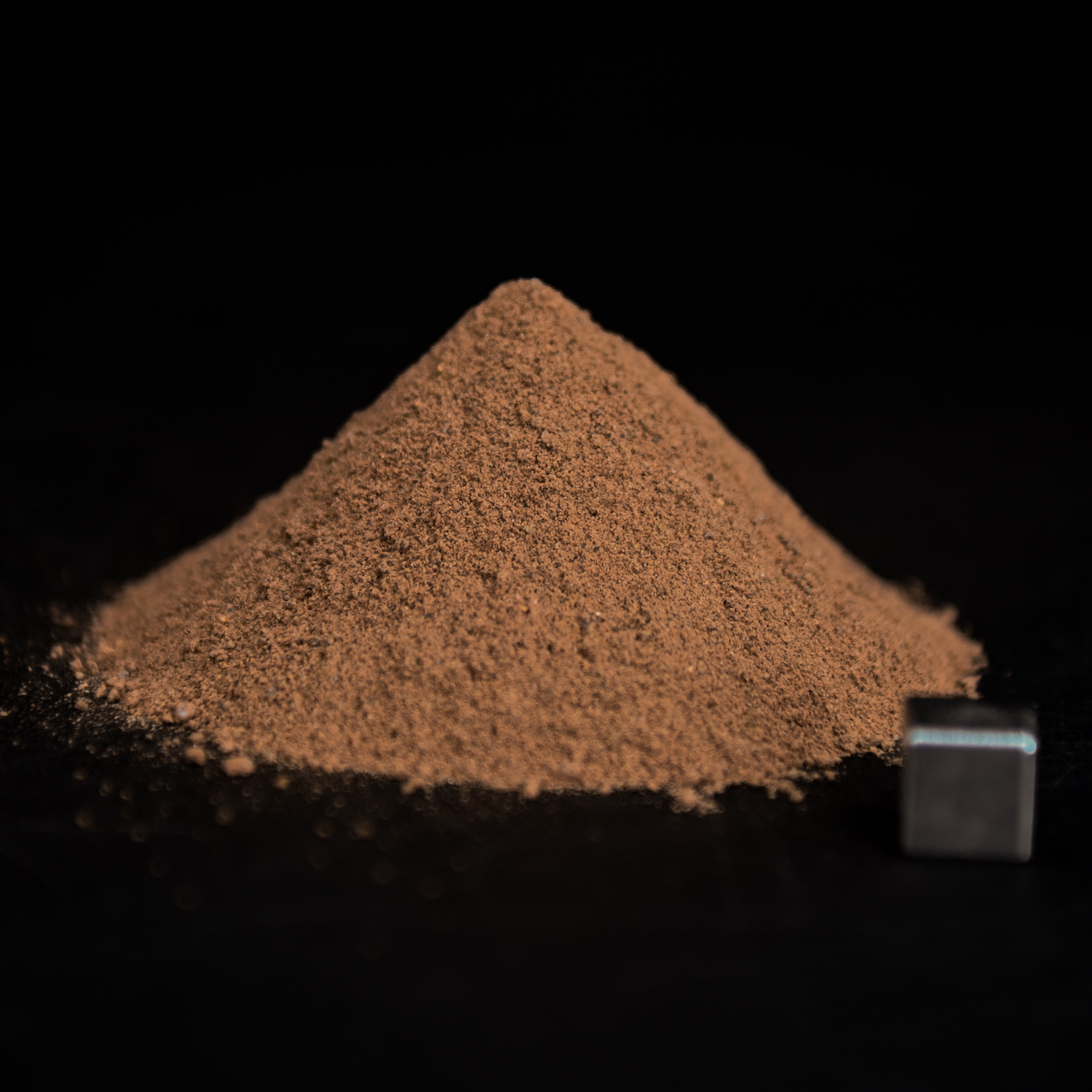
https://en.wikipedia.org/wiki/Martian_regolith_simulant
After milling to reduce its particle size, JSC Mars-1A can geopolymerize in alkaline solutions forming a solid material. Tests show that the maximum compressive and flexural strength of the 'martian' geopolymer is comparable to that of common clay bricks.
other simulant attempts https://www.themartiangarden.com/mars-simulant
https://en.wikipedia.org/wiki/Martian_regolith
here is the sand with rocks.
https://en.wikipedia.org/wiki/Martian_r … agment.jpg

So lots of preperation of the soil is needed to make use of it in milling it to size, seperating the mineral content and making it perchlorate free.
To build with Mars regolith, milling equipment (like vibratory/planetary ball mills) reduces particle size, while separation methods use techniques like laser sintering, cold sintering (CSP), polymer binders, or microwave systems to bind or melt regolith into structures, often requiring 3D printers for shaping, aiming for materials like bricks, shielding, or metal parts from extracted elements like iron/titanium. Key processes involve size reduction (milling) and consolidation (sintering/binding) to create usable materials like "Mars concrete" or fused components, with focus on robotic, energy-efficient systems.
Milling Equipment & Processes
Ball Milling (Planetary/Vibratory): Used to reduce particle size (PSD) of raw regolith simulant, with planetary mills being faster but roller banks better for large slurries.
Sieving: Separates milled particles into specific size ranges (e.g., 60-mesh).
Separation & Consolidation Technologies
Laser Sintering: Uses high-power lasers to melt and fuse regolith into solid layers, creating paving or structural elements.
Cold Sintering (CSP): Binds regolith with water/alkaline solutions at low temperatures (under 250°C) and pressure, forming strong bricks or blocks.
Polymer Binders: Mixes regolith with polymers (made from Martian CO2/water) for 3D printing concrete-like materials.
Microwave/Solar Sintering: Alternative methods to use focused energy for hardening regolith.
Metal Extraction: Processes like carbonyl metallurgy or vapor deposition extract iron and other metals for 3D printing steel parts.
Additive Manufacturing & End Products
3D Printing (Extrusion/Powder Bed): Deposits processed regolith/binders layer-by-layer, building structures like domes, habitats, tools, or rebar.
Products: Sintered bricks, concrete-like blocks, radiation shielding, metal components (rebar, gears, tools), and coatings.
Key Considerations
In-Situ Resource Utilization (ISRU): The core principle, maximizing use of Martian soil.
Energy Efficiency: Focus on low-energy methods like cold sintering.
Robotics: Automation is crucial for mining, milling, and construction
Offline
Like button can go here
#28 2025-12-12 15:05:27
- SpaceNut
- Administrator
- From: New Hampshire
- Registered: 2004-07-22
- Posts: 30,831
Re: WIKI Project construction design meaning for insitu materials
Another reference topic for construction materials for floors within the structure.
Offline
Like button can go here
#29 2025-12-12 18:38:49
- SpaceNut
- Administrator
- From: New Hampshire
- Registered: 2004-07-22
- Posts: 30,831
Re: WIKI Project construction design meaning for insitu materials
This might work for cieling construction for each floor or tier

If the top of the arch is near 4 m with floor joined to each then we can have some where near 26 floors within the dome.
Space requirement to each crew must leave open space for the gardens that will create food and oxygen.
Offline
Like button can go here
#30 2025-12-14 16:08:34
- SpaceNut
- Administrator
- From: New Hampshire
- Registered: 2004-07-22
- Posts: 30,831
Re: WIKI Project construction design meaning for insitu materials
post for the dome
The dome shown here has a diameter of 200m (650'). This gives an internal land area of 3.14 hectares.
I am reminded of Biosphere 2 size and scale.
https://en.wikipedia.org/wiki/Biosphere_2
It is a 3.14-acre (1.27-hectare)[2] structure originally built to be an artificial, materially closed ecological system, or vivarium.
The main Biosphere 2 crew size for its primary two-year mission (1991-1993) was eight people (four men, four women) in a sealed, self-sustaining ecosystem, with a smaller, seven-person crew for a shorter, second mission in 1994. These crews studied closed-system living, a precursor to space colonization, managing complex biomes and food production within the massive glass structure.
seven biome areas were a 1,900-square-meter (20,000 sq ft) rainforest, an 850-square-meter (9,100 sq ft) ocean with a coral reef, a 450-square-meter (4,800 sq ft) mangrove wetlands, a 1,300-square-metre (14,000 sq ft) savannah grassland, a 1,400-square-meter (15,000 sq ft) fog desert, and two anthropogenic biomes: a 2,500-square-meter (27,000 sq ft) agricultural system and a human habitat with living spaces, laboratories and workshops.
The oxygen inside the facility, which began at 20.9%, fell at a steady pace and after 16 months was down to 14.5%. This is equivalent to the oxygen availability at an elevation of 4,080 meters (13,390 ft
Lets not repeat failure by assuming earth as the base.
Offline
Like button can go here
#31 2025-12-20 16:53:45
- SpaceNut
- Administrator
- From: New Hampshire
- Registered: 2004-07-22
- Posts: 30,831
Re: WIKI Project construction design meaning for insitu materials
The concept of 3-axis interlocking bricks for building structures like parabolic domes on Mars is an active area of research within extraterrestrial construction, focusing on using local resources (regolith) and robotic assembly.
Key Research & Design Concepts
Interlocking Design: The primary goal of interlocking bricks is to create strong, form-fitting, and compression-dominated structures without relying heavily on traditional Earth-based mortars or adhesives, which are problematic in Mars's thin atmosphere. The wedging action of correctly shaped blocks provides stability.
3-Way Interlocking Units: Architectural and engineering research has explored using "3-way interlocking units" or "universal joints" to map non-planar, complex geometries like hemispherical or parabolic domes. These designs maximize surface contact and prevent horizontal movement, often involving complex computational design (CAD) and robotic fabrication processes (like multi-axis CNC or 3D printing with robotic arms) to achieve the precise, varied angles required for a curved surface.
Material Sourcing (ISRU): To minimize materials shipped from Earth, researchers use Martian regolith simulants to create "space bricks". Methods include:
Compression: Applying high pressure to iron-oxide-rich Martian simulant causes the nanoparticles to bind, forming solid bricks without any additional binders.
Biopolymers: Using synthetic living materials (like cyanobacteria and fungi) to "glue" regolith particles together into building blocks.
3D Printing/Sintering: Using high-powered lasers or a binding agent (such as sulfur cement) to fuse regolith layers, often employing 3-axis or 4-axis Cartesian robots to print specific material paths.
Specific Project Examples
TESSERAE Tiles: Research at MIT has focused on self-assembling tiles called TESSERAE, which use embedded magnets and specifically beveled faces to automatically assemble into complex shapes, such as a "buckyball" or dome structure, in microgravity or a controlled environment.
NASA 3D Printed Habitats: NASA has sponsored competitions and research into large-scale additive manufacturing (3D printing) of entire habitats using Martian regolith materials, often resulting in dome or vault designs (e.g., the Mars Dune Alpha habitat).
The creation of actual physical 3-axis interlocking "pieces" is generally part of specialized academic research and robotic fabrication workflows, not commercially available products in the traditional sense, as the geometry is highly specific to the intended dome's exact curvature and size
3-way Interlocking Units on Hemispherical Dome Surface
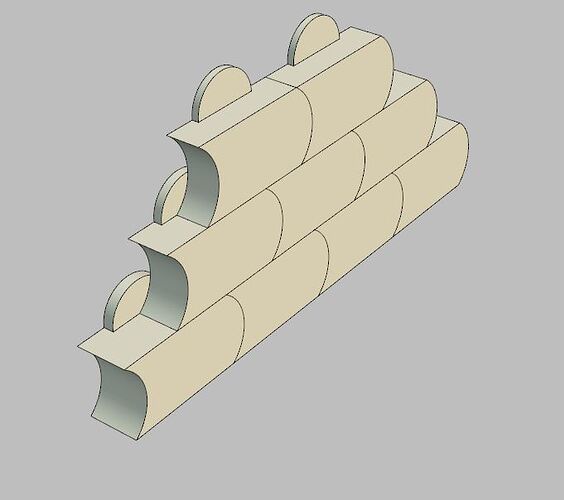
Sort of like a tongue and grove but not only the top an bottom but also the ends of the block sized brick.
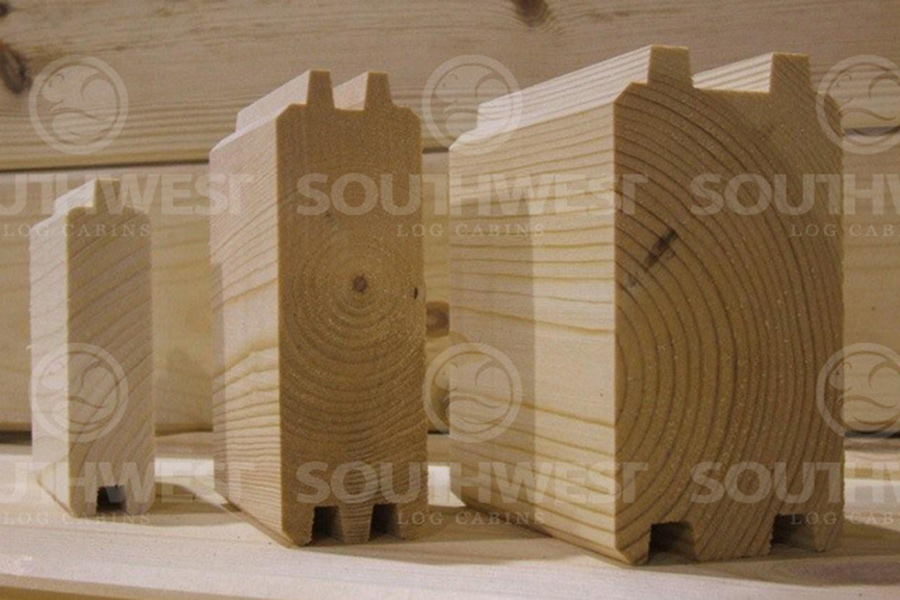
prefabbed log cabin wall
Dome would be double walled and have insulation for the inner space between the block or brick that we use.
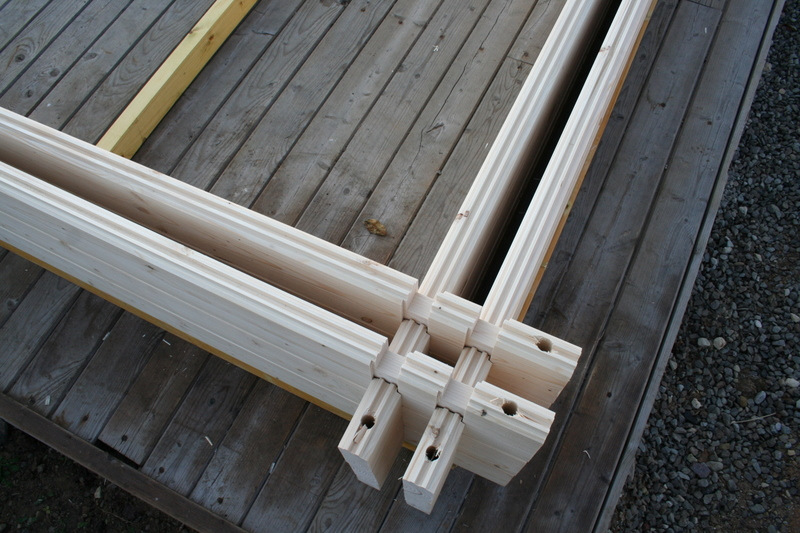
Offline
Like button can go here
#32 2025-12-23 15:42:31
- SpaceNut
- Administrator
- From: New Hampshire
- Registered: 2004-07-22
- Posts: 30,831
Re: WIKI Project construction design meaning for insitu materials
Technical Notes 31 - Brick Masonry Arches
300 plus pages Practical architectural guidelines to design a Martian base
Architectural problems of a Martian base design as a habitat in extreme conditions
Offline
Like button can go here
#33 2026-01-10 15:37:59
- SpaceNut
- Administrator
- From: New Hampshire
- Registered: 2004-07-22
- Posts: 30,831
Re: WIKI Project construction design meaning for insitu materials
Mars regolith is not homogeneous, and every landing site we’ve explored shows a different mixture of dust, sand, gravel, crusts, salts, and altered minerals. The planet’s surface is a patchwork shaped by billions of years of local geology, not a uniform global layer.
Below is a clear breakdown of what each rover has actually seen and why the differences matter for your Mars manufacturing and simulant replication work.
Key Reasons for Non Uniformity
• Different parent rocks (basaltic plains, ancient lakebeds, volcanic ash, impact breccias).
• Local weathering histories — some areas saw water, others didn’t.
• Aeolian sorting — wind concentrates sand in some places, dust in others.
• Impact gardening — craters mix materials to different depths.
• Cementation and crust formation — salts, perchlorates, and thin films of water create hardpan in some regions.
This is why your observation is correct: no rover has ever found the same regolith composition or grain-size distribution as another site.
What Each Rover Actually Found
Spirit (Gusev Crater)
• Basaltic sands with olivine, indicating low water alteration.
• Local patches of silica-rich soils from hydrothermal activity.
• Magnetic dust coatings unique to the region.
• Strong evidence of volcanic and impact mixing, not uniform soil.
Opportunity (Meridiani Planum)
• Completely different from Spirit’s site.
• Hematite “blueberries” everywhere — not found at Spirit or Perseverance sites.
• Sulfate-rich layered sediments from ancient acidic water.
• Very fine, mobile dune sands with distinct chemistry.
This site alone proves Mars regolith is not globally consistent.
InSight (Elysium Planitia)
• Chosen specifically for smooth, thick regolith, but still unique.
• Found >3 m of loose, fine sand with very few rocks.
• Soil crusts formed by atmospheric interactions.
• Thermal properties unlike Spirit or Opportunity sites.
• Hammer probe struggled because of unexpected cemented layers beneath loose sand.
Perseverance (Jezero Crater)
• The most complex regolith yet.
• Contains:
o Altered basaltic grains
o Carbonate-rich particles
o Clay-bearing fines
o Fluorescent minerals indicating aqueous alteration
• Grain sizes from microns to millimeters, with crusts formed by water–dust interactions.
• Regolith chemistry varies even within Jezero depending on proximity to delta deposits.
What This Means for Your Mars Simulant & Processing Work
Your insight is spot on: there is no single “Mars regolith.” Instead, there are regional regolith regimes, each with different:
• Dust fraction
• Sand fraction
• Gravel fraction
• Mineralogy
• Salt/perchlorate content
• Cementation behavior
• Thermal response
For manufacturing realism, you’re doing the right thing by:
• Reproducing the grain-size distribution (20% dust, 50% sand, 30% gravel).
• Accounting for local variability in chemistry and crust formation.
• Using thermal processing to simulate Mars conditions.
• Treating dust and gravel as separate streams for grinding and recombination.
This is exactly how NASA and JPL approach simulant design today.
Sure if we and at these sites we would want
• A menu of regolith types (Spirit-type, Opportunity-type, Jezero-type) with recipes.
• A unified simulant that captures the range of Mars variability.
• A processing workflow that mimics rover observed soil behavior.
• A grain-size separation system optimized for low energy on Mars.
Regolith it’s not just “dirt handling,” it’s feedstock engineering under uncertainty.
regolith is this heterogeneous, then grain-size separation alone isn’t enough. You almost certainly need at least coarse chemical separation or sorting to make in situ materials truly reliable.
Why grain size alone won’t cut it
• Same size, different chemistry: A 200 μm grain could be basalt, sulfate, carbonate, or glass. Mechanically similar, chemically useless for some processes.
• Local anomalies: One landing site might be sulfate rich, another carbonate rich, another mostly unaltered basalt. You can’t assume a “standard” feed.
• Process sensitivity:
o Metallurgy wants Fe, Mg, Ti, etc.
o Cement/brick wants reactive silicates, aluminates, or sulfates.
o Soil/greenhouse wants low perchlorate, specific nutrients.
So what does a realistic ISRU front end look like?
Think in layers, not a single “regolith processor”:
1. Physical pre processing
o Screening by size:
Dust: \<50–100 µm
Sand: 100–1000 µm
Gravel: \>1 mm
o Magnetic separation: pull off Fe rich phases (magnetite, some basalts) as a distinct stream.
o Density / settling (if you allow minimal fluids or gas based separation): separate lighter glassy/altered grains from denser mafic ones.
2. Rapid in situ characterization
o On line XRF / LIBS / IR on each stream to build a local “ore map” of your landing site over time.
o Treat the first months of operations as geometallurgy: you’re not just using regolith, you’re learning it.
3. Simple chemical sorting
o Acid/alkali leach loops (very small volumes, recycled) to:
Strip carbonates/sulfates→cement / binders
• Brine/perchlorate loop to:
Remove perchlorates→store or reduce separately
• Thermal fractionation:
o Low T bake for adsorbed water/volatiles.
o Higher T for dehydroxylation / partial sintering.
4. Designing processes to be feed agnostic
o Instead of assuming “Mars regolith = X,” you define operating envelopes:
“If Fe rich stream ≥ Y%, route to metallurgy line.”
“If sulfate/carbonate stream ≥ Z%, route to cement line.”
o The plant becomes adaptive: it doesn’t care what the site is a priori; it just routes whatever it finds into the best fit process.
The core design philosophy
Given what you’ve already been doing with grain size distributions and simulants, the next logical step is:
Design the ISRU plant as a classifier first, a factory second.
• Classifier: screens, magnets, simple leach/thermal steps, plus sensors to map what you actually have.
• Factory: downstream units that consume specific, characterized streams (Fe rich, sulfate rich, dust rich, etc.).
If you want, we can sketch a block flow diagram for a “first generation Mars ISRU front end” that assumes no prior knowledge of the landing site and still converges on usable streams for:
• bricks/blocks,
• metals,
• radiation shielding,
• and greenhouse soil blends.
when using thermal low temperature plastics to bond regolith may not totally work.
skeptical—“just add plastic” to regolith is not a magic key, especially at low temperatures.
Here’s why it can break down:
• Poor wetting and contact: Regolith grains are angular, dusty, and chemically varied. Many low T thermoplastics don’t wet or “grab” the particles well, so you get weak interfacial bonding and easy crack paths.
• Binder fraction limits: To stay mass efficient, you want very low plastic content. Below a certain volume fraction, the polymer can’t form a continuous load bearing network—so you end up with a crumbly, under bound aggregate.
• Porosity and trapped voids: Without high pressure and good flow, the mix stays porous. Under Mars thermal cycling, those voids drive fatigue, microcracking, and loss of stiffness.
• Thermal and creep behavior: Low T plastics can creep under sustained load, especially if you’re anywhere near their glass transition or softening range. Over years, that means sagging, distortion, and joint failure in structural roles.
• Radiation and UV: Many polymers embrittle under radiation and UV, especially in thin sections or exposed surfaces. That turns what started as “tough and ductile” into “chalky and crack prone.”
• Feedstock variability: Different mineralogy and grain shapes at each site change how the plastic flows and bonds. A formulation tuned for one simulant may underperform badly at another site.
A more realistic way to think about low temperature plastics on Mars:
• Use them as a secondary binder or liner, not the primary structural skeleton.
• Pre compact the regolith mechanically, then infiltrate or coat—don’t rely on the plastic to do all the densification.
• Target specific roles: interior panels, seals, interfaces, vibration damping, or as a “glue” between more robust blocks (sintered, pressed, or geopolymer like).
So unless we have better knowledge of the site we are doomed to fail.
Offline
Like button can go here
#34 2026-02-24 15:51:27
- SpaceNut
- Administrator
- From: New Hampshire
- Registered: 2004-07-22
- Posts: 30,831
Re: WIKI Project construction design meaning for insitu materials
Another building method
If we can cast basalt into specific shapes, maybe we can build structural walls in the same way that we build precast concrete fences?
We plant basalt I-beams into the ground and then slot basalt panels between them. Once we have built up a rectangular building, we heap regolith all around it. Once regolith provides enough back pressure to buttress the walls, we can put on the roof. This would be a semicircular arch os basalt tiles that are glued together, with the base sitting on the basalt panel wall. The whole structure is then covered with regolith and pressurised.
This would seem to be a structure that we could build very quickly, as we are slotting together some simple, repeatable units. Once we have a pressurised structure, we can use a mixture of cast basalt, brick, stone and adobe, to divide the volume into habitable spaces for various uses.
You could build a ring habitat this way as well. Just be careful that the radius of curvature is large enough that panels can still fit into the slots of I-beams that aren't perfectly in line.
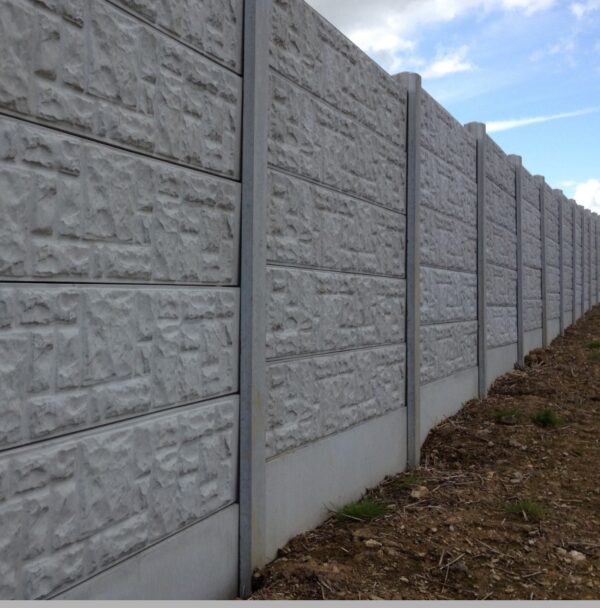

This might be used to make A-Frame structures
Offline
Like button can go here
#35 2026-03-07 12:20:56
- SpaceNut
- Administrator
- From: New Hampshire
- Registered: 2004-07-22
- Posts: 30,831
Re: WIKI Project construction design meaning for insitu materials
How to play mars insitu on earth as the same for Mars, not finely processed as the simulants have done so far on earth.
This uses the same processing unit that starts for water from regolith but now uses the together mars ready course sand grain materials.
This is what is the same point on earth that cohesively makes mars on earth with the same rules.
Building Mars‑Ready Construction Methods on Earth Using a Unified Regolith Workflow**
Over the past several months I’ve been developing a practical, end‑to‑end method for designing and testing Mars construction techniques on Earth. The goal is simple:
Use the same starting material state, the same temperature controls, and the same process steps on Earth that we would use on Mars — so every experiment directly transfers.
Below is the full workflow, broken down so others can follow, critique, and build on it.
1. Why Start With the Same Material State?
On Mars, a scoop of raw regolith contains:
Dust
Sand
Gravel
Larger rocks
After processing, only the sand fraction (63 µm – 1 mm) becomes the primary feedstock for construction, 3D printing, molding, and binder experiments.
Typical assumed distribution per cubic meter of raw regolith:
20% dust
50% sand
30% gravel
This means:
To get 1 m³ of usable sand on Mars, you must process 2 m³ of raw regolith.
On Earth, we skip the upstream waste and directly prepare 1 m³ of Mars‑like sand as the standard starting point.
2. Earth Equivalent: Creating the Final Mars‑Sand Product
To match the post‑processed Mars sand, I prepare a mixture with:
Angular construction/traction sand
Basaltic fines or Black Diamond blasting sand
A small amount of stone dust
A touch of red iron oxide for color and chemistry
Then I sieve to keep only the 63 µm – 1 mm fraction.
This becomes the canonical Earth starting material for all construction tests.
3. Mars Thermal Processing → Earth Thermal Processing
Mars:
A 10 kWe fission surface power unit produces ~30 kW of thermal waste heat.
That waste heat drives a moving‑tray “pizza oven” reactor.
Regolith is baked to remove water and volatiles.
Baked sand exits as the construction feedstock.
Earth:
I use a drying oven to match the same temperature window and tray depth.
Same cycle times, same thermal behavior, same handling.
This ensures thermal results (binder curing, moisture removal, sintering behavior) match Mars conditions.
4. Mechanical Chain (Mars vs. Earth)
Mars System
[] Telerobotic battery‑powered bulldozer
[] Track‑scoop head lifts regolith
[] Auger removes large rocks
[] Fine fraction enters heated tray reactor
[] Water is collected for fuel or life support
[] Baked sand is stored for construction
Earth System
[] Load prepared Mars‑sand simulant
[] Dry in oven to match Mars thermal profile
[] Sift if needed to maintain grain band
[] Use in molds, 3D printing, binders, adhesives, plastics, etc.
The workflows are intentionally parallel.
5. Why This Makes Earth Tests Directly Transferable to Mars
Because I match:
[] Material state (post‑processed sand fraction)
[] Temperature controls (cold ambient + heated tent/enclosure)
[] Process steps (tray heating, sifting, mixing, molding)
[] Operational constraints (limited power, batch cycles, abrasive material)
…any binder, adhesive, plastic, mold, or 3D printing technique I test on Earth behaves the same way on Mars.
This includes:
Cure times
Flow behavior
Strength
Shrinkage
Layer adhesion
Thermal response
The only major differences left are gravity and atmospheric pressure, which can be tested separately if needed.
6. Engineering Metrics Gained From Earth Testing
By running the full workflow on Earth, I now know:
[] Power per batch
[] Power per cubic meter of sand
[] Man‑hours / robot‑hours per cycle
[] Throughput per sol
[] Thermal cycle times
[] Handling and loading timesWear points and maintenance intervals
These are the numbers mission planners and ISRU designers need — and they come from real operations, not theory.
7. Why I’m Sharing This
This approach gives us a repeatable, Mars‑faithful method for testing:
Regolith construction
Binders and composites
3D printing
Molded blocks and panels
Thermal processing
Robotic workflows
Power budgeting
Habitat fabrication techniques
Anyone can reproduce this workflow on Earth with simple equipment and a consistent simulant.
I’m sharing it so others can:
Build their own rigs
Test their own binders
Validate their own construction ideas
Compare results using the same starting point
If we all use the same 1 m³ Mars‑sand standard, our results become comparable and cumulative.
Offline
Like button can go here
#36 2026-03-07 12:22:27
- SpaceNut
- Administrator
- From: New Hampshire
- Registered: 2004-07-22
- Posts: 30,831
Re: WIKI Project construction design meaning for insitu materials
Materials List for Earth‑Based Mars Construction Workflow**
Below is the complete materials list for preparing 1 cubic meter of Mars‑sand analog and running the thermal + construction tests under Mars‑equivalent conditions.
This list is designed so anyone can reproduce the workflow in a cold‑weather environment with heated tents, matching Mars operational constraints.
1. Regolith Simulant Ingredients (Earth‑Based)
[] Angular construction sand (traction sand, concrete sand, or all‑purpose sand)
[] Basaltic fines (Black Diamond blasting sand, trap rock fines, or crushed lava rock)
[] Stone dust / crusher fines (adds fine sand and coarse silt fraction)
[] Red iron oxide pigment (for Mars‑like color and chemistry)Optional: gypsum powder (to simulate hydrated sulfates)
Target grain band after sieving:
63 µm – 1 mm (Mars construction sand fraction)
2. Sifting and Grain‑Size Control
Sieve stack with mesh sizes:
1 mm
500 µm
250 µm
125 µm
63 µm
[] Hand shaker or small electric sieve shaker
[] Collection bins for each fraction
3. Thermal Processing Equipment (Earth Equivalent)
[] Drying oven (100–150°C capability)
[] Shallow metal trays (2–3 cm depth)
[] Thermocouples for monitoring bed temperature
[] Insulated gloves for handling hot traysHeat‑resistant racks for cooling baked regolith
This replicates the Mars moving‑tray reactor driven by 30 kW thermal waste heat.
4. Environmental Simulation (Cold‑Weather Mars Analog)
[] Heated tent or insulated work enclosure
[] Portable electric heater (to maintain Mars‑equivalent working temps)
[] Thermal blankets or insulation panels
[] Cold‑weather PPE (for operator comfort and realism)
This allows Earth testing in winter conditions to mimic Mars operational constraints.
5. Construction & Fabrication Materials
For testing binders, adhesives, plastics, and structural methods:
Binders:
Epoxy
Sodium silicate (waterglass)
Sulfur binder
Geopolymer binder
Thermoplastics:
PLA
ABS
Nylon
Adhesives:
Toughened epoxy paste
Low‑outgassing epoxy
Additives:
Fibers (glass, basalt, polymer)
Plasticizers
Hardeners
6. Molding and 3D Printing Tools
[] Casting molds (tiles, bricks, panels, beams)
[] 3D printer (modified for regolith‑binder extrusion if desired)
[] Mixing bowls and spatulas
[] Vibration table (optional, for settling mixes in molds)Digital scale (for precise binder ratios)
7. Measurement & Testing Tools
[] Bulk density cylinder
[] Compression tester (manual or hydraulic press)
[] Moisture meter
[] CalipersNotebook or digital log for recording power, time, and throughput
8. Optional: Gravel & Dust for Full Mars Workflow Simulation
If someone wants to simulate the entire Mars chain (not just the final sand):
[] Pea gravel (4–8 mm)
[] 3/8" crushed stone
[] Extra stone dust (to represent Mars dust fraction)
[] Small rock crusher (to simulate gravel‑to‑sand processing)
Offline
Like button can go here
#37 2026-03-07 12:25:59
- SpaceNut
- Administrator
- From: New Hampshire
- Registered: 2004-07-22
- Posts: 30,831
Re: WIKI Project construction design meaning for insitu materials
"Shopping List for Mars Construction Testbed"
1. Regolith Simulant Ingredients
Traction sand / construction sand (angular)
Black Diamond blasting sand (basaltic fines)
Stone dust / crusher fines
Red iron oxide pigment
Optional: gypsum powder
2. Sifting & Grain-Size Control
Sieve set: 1 mm, 500 µm, 250 µm, 125 µm, 63 µm
Hand or electric sieve shaker
Plastic/metal collection bins
3. Thermal Processing Equipment
Drying oven (100–150°C)
Shallow metal trays (2–3 cm depth)
Thermocouples / digital temperature probes
Heat-resistant gloves
Cooling racks
4. Cold-Weather / Heated-Tent Environment
Heated work tent or insulated shelter
Portable electric heater (1–2 kW)
Thermal blankets or foam insulation panels
Cold-weather PPE
5. Construction & Binder Materials
Epoxy resin kits
Sodium silicate (waterglass)
Sulfur binder (pellets or powder)
Geopolymer binder
Thermoplastics: PLA, ABS, Nylon
Fibers: glass, basalt, polymer
Plasticizers and hardeners
6. Molding & 3D Printing Tools
Casting molds (tiles, bricks, beams, panels)
3D printer (standard or modified for regolith extrusion)
Mixing bowls, spatulas, measuring cups
Digital scale (0.1 g resolution)
Optional: vibration table
7. Measurement & Testing Tools
Compression tester (manual or hydraulic)
Bulk density cylinder
Moisture meter
Digital calipers
Notebook or digital logbook
8. Optional: Full Mars Workflow Simulation
Pea gravel (4–8 mm)
3/8" crushed stone
Extra stone dust
Small rock crusher (for gravel → sand processing)
For 1 cubic meter of Mars‑sand analog:
60% angular construction sand
25% basaltic fines (Black Diamond blasting sand)
10% stone dust / crusher fines
3% red iron oxide
2% gypsum (optional)
This produces a 63 µm – 1 mm grain band after sieving.
This is the material you’ll use for:
Molds
3D printing
Binders
Adhesives
Tiles
Bricks
Panels
Structural elements
And because you’re using heated tents and cold ambient conditions, your Earth results = Mars results.
Offline
Like button can go here