You are not logged in.
- Topics: Active | Unanswered
Announcement
#1201 Re: Science, Technology, and Astronomy » Geothermal and Geothermal Battery (Changed Title 12/21/23) » 2025-05-01 11:55:26
This post is dependent on the just prior post as it is for the Moon, where the prior was for Earth and Mars.
The drill system would likely have to be revised to use CO2 as the working fluid instead of water. If that is possible then for the Moon, there could be some promise.
The Moon is rock with extreme temperature variation as common to much of the surface.
I expect that under the loose regolith, the rock may be less fractured. It would be needed to have a method to plug the fractures that may exist.
As for CO2 on the Moon, I have suggested various methods to make it more economical to have and use on the Moon.
Here are some suggestions in another topic: https://newmars.com/forums/viewtopic.ph … 18#p231318 https://newmars.com/forums/viewtopic.ph … 55#p231355
Some of the earlier posts in that topic may have more materials.
Anyway, as I see it, Carbon for the Moon has two concerns: 1) How much does it cost to get it to the Moon? 2) What is it worth on the Moon?
If the worth of Carbon is high, then it may be worth getting from Earth to the Moon or from another source to the Moon.
Looking at the Equator of the Moon as an example, it should be possible to get very high heat into CO2 to store in a rock reservoir drilled by the device shown in the prior post.
As for the cooling side, the Moon offers lots of resources to make heat exchangers with. Using a sun shade cold should be possible even in the day, and of course the night will offer very deep cold.
So, then you might be able to create a "Battery" that can generate electricity 24/7. In great part made of rock.
Ending Pending 
Of course, some day Mercury. Mercury already has lots of Carbon on it's surface.
Ending Pending
#1202 Re: Science, Technology, and Astronomy » Geothermal and Geothermal Battery (Changed Title 12/21/23) » 2025-05-01 11:13:07
I think this is of interest, as it contains some specs to observe to understand what it can do, apparently.
https://interestingengineering.com/ener … mal-energy
Quote:
Swiss firm develops autonomous drill machine to tap shallow geothermal energy
Developed by the Zurich-based startup Borobotics and nicknamed ‘Grabowski’, the drill measures only 5.3 inches in diameter and 9 feet in length.Updated: Jan 19, 2025 07:39 AM EST
Photo of the Author Christopher McFadden
Christopher McFadden
Quote:
However, despite its clear advantages, the drill is not without drawbacks. The first and most critical is that it tends to be slower than conventional drills. Additionally, it can only drill up to a maximum depth of 1,640 feet (500 meters).
This has both an Earth and Mars interest, I think.
For Earth, it is my feeling that if you decentralize power, that advantages the kind of culture I prefer. Solar is potentially decentralized, and this looks like it could be as well. If used with a heat pump, then in the summer, as you cool your house, you lay up neat for the winter, and in the winter, of course you lay up cooling for the summer.
I think that in generally for the "American Ways", (Maybe other similar countries as well, maybe Canada), we want a certain amount of individuality and a certain amount of hiving, or collective process. Of course by collective I am not talking commies, rather large utilities. But that is the point, commies and fascists, adore collective centralization as then they can threaten to cut off utilities, or slowly drain the wealth from individuals to support inefficiency at the central controls.
For Mars, it appears that the weight of the drill system may be compatible with shipping them from Earth and getting a desired result on Mars. It is a potential way to turn "Dumb Rock" into machinery, with a minimum of consumption of high-quality processed materials.
From a Solar point of view, you could draw "Dumb Heat" from the sun, using a heat pump, as long as the sun caused solar panels to generate electricity. The electricity and heat are almost simultaneous.
So the best heat pump I am aware of from Norway can get up to 180 degrees C, which on Mars could be valuable indeed: https://www.pv-magazine.com/2021/08/19/ … heat-pump/
Quote:
The world’s hottest heat pump
A Norwegian consortium has built an industrial heat pump that can reach a temperature of up to 180 degrees Celsius. The machine can be used with different industrial processes that rely on steam as an energy carrier and can reduce a facility’s energy consumption by between 40% and 70%, as it enables the recovery of low-temperature waste heat.August 19, 2021 Emiliano Bellini
Those temperatures are considered good enough for some industrial processes, and some heat storage in rocks, near that temperature would likely be a welcome emergency source of heat during problem events, even perhaps Global Dust Storms, or high latitude winters.
And perhaps a similar system could be able to store cold. Mars is very generous with cold.
A hot and a cold unit each potentially could generate power.
Eavors system might be adapted to this situation, I think: https://www.eralberta.ca/story/first-of … oad-power/ Quote:
Eavor Technologies Inc. has developed the world’s first closed-loop geothermal system. In a demonstration project near Rocky Mountain House, Alberta, the Eavor-Lite facility uses existing oil and gas drilling technology and expertise to facilitate the development of an innovative energy supply.
The technology—dubbed the Eavor-Loop™—circulates a proprietary fluid that collects heat from below the earth’s surface in a multi-kilometre loop. Demonstration at this scale will provide the validation needed to de-risk identified commercial opportunities in Canada and around the world.
So, an adaptation of their technology along with the Swiss drill, might be able to be created on Mars, where the things Mars has to offer can become an advantage.
1) Lots of rock.
2) Fluctuating temperatures/Solar Energy.
And if you had nuclear, power similar applies, as you would have backup energy if the nuclear plant needed maintenance/repairs.
But even if you had nuclear, and no solar electric these drilled networks could make a good radiator system/ Storage of heat. And you could still pull heat out of simple thermal solar panels, perhaps using a heat pump method.
Ending Pending
#1203 Re: Science, Technology, and Astronomy » Humanoid and other robots. » 2025-04-29 20:55:18
https://www.bing.com/videos/riverview/r … &FORM=VIRE
Quote:
I Went Inside China’s ‘Robot Army’ Factories -- What I saw shocked me...
YouTube
The Electric Viking
167 views
So, who is going to kill us first, China or Robots? I think this guy is a good dude, but many Australians have swallowed the line that Australia is only in Asia. Australia is about as Asian as North America is.
Anyway, I do not take China for a fool.
Some of my original thinking is that Industrial Mentality came from the Indus Civilization and migrated into greater Asia, and somewhat into Europe.
Typically, the city line, Dublin<>London<>Paris<>Rome<>Athens<>Egypt. So, the "West" did come somewhat out of Egypt. These cities seem to foster arrogant rulers who, have contempt for those who work with hands. Even so, Egypt once did amazing works. It is a puzzle. It is hard to get the fancy dandies who feed on the western peoples to see industrial people as worthy, as their whole game is to belong to a collective superior people above others.
So, yes I am not surprised if the people from the Indus are rather good at industry.
We will have to see how this works. I think that balance is always the best way. Probably North America will revive it's own Indus inheritors, and retain tolerance for the fancy dandies. There might have to be some fancy spankings for them though, if they insist on doing stupid games, then the saying is "Stupid Prizes".
Ending Pending
#1204 Exploration to Settlement Creation » Korolev Crater Settlement Notions. » 2025-04-29 19:18:26
- Void
- Replies: 1
Yes, I have looked at this before, but thinking about it, I think I can present reasons why it might be a good option.
https://en.wikipedia.org/wiki/Korolev_(Martian_crater)
Quote: 

For early people on Mars, water will be more useful than gold. In mining, including mining ice, not having to remove overburden may be very important.
So, then a side view as I understand Korolev from it's picture: 
First of all, there could be an issue with avalanches, however remote, so the initial settlement will be strictly robotic.
The "Notch" may be a bit protected per hard radiation problems.
The robots will be at least partly powered by fission nuclear power, as that has to be done on Mars, anyway, to have any hopes of surviving a global dust storm or a northern winter.
In the notch, it appears that there will be access to massive amounts of water ice, and also regolith, but the regolith will not be an overburden over the ice.
So, we have had dreams of nuclear robots melting their way into the seas of Europa. This will be easier. Probably can tunnel sideways. Various sources of heat from nuclear might do the tunneling. While liquid is a possible option, I rather think that a laser could vaporize long tunnels in the ice sideways, and suck the water vapor into a compressor to make liquid water.
The ice tunnels could become shelter for robots particularly in the winter. This avoids blasting, drilling, though regolith to get to ice, and provides some shelter.
Tunnels could be gridiron in nature: https://en.wikipedia.org/wiki/Grid_plan
Image Quote: 
So, if you wanted to you could have a robot place a nuclear reactor down some short tunnel, and have power cables that would bring the power out and leave the radiation inside of a barrier of ice.
You would have access to Earth (regolith), wind (Atmosphere), water (Ice) and fire (nuclear then also solar then maybe fusion).
As you would add robots to the community as the tunnel system expanded, you would develop propellant manufacture, water storage and purification, and other functions.
Particularly you could implement electric powered precision fermentation, so that large amounts of bulk food would be created and stored as frozen.
So, I think that although the location is indeed rather cold, it has a lot to offer.
As it was built up you could gradually begin to staff it with actual humans after a time.
I think it is a very good solution for the challenge of radiation.
From Calliban, about the radiation challenge: https://newmars.com/forums/viewtopic.ph … 58#p212658 Quote:
Calliban
Member
From: Northern England, UK
Registered: 2019-08-18
Posts: 4,000
Anton Petrov discusses radiation on Mars.
https://m.youtube.com/watch?v=aTBnjzpqsd8"Plan and prepare for every possibility, and you will never act. It is nobler to have courage as we stumble into half the things we fear than to analyse every possible obstacle and begin nothing. Great things are achieved by embracing great dangers."
One thing I do know is that for instance the Romans felt that their water supplies of a very high importance.
Given nuclear and solar power, there is a vast amount of water to be had in Korolev Crater.
And yes eventually even a ice covered melted sea might be created in the notch somewhere.
Ending Pending
#1205 Re: Interplanetary transportation » Multi-Ship Expeditions, Starboat & Starship, Other. » 2025-04-29 09:05:07
I would never say that I am no longer interested in Starship. I do want to see it do it's LEO achievements at the very least. And I think that they did well to go to stainless steel.
But I am extremely interested in what offshoots could come from Neutron, with its dominantly Carbon makeup.
Again, I think the logic of Starship has merit, and that bigger will likely be better, but it is going to be a big risk to develop but even so have very big rewards.
The Neutron, at its size, will offer many relaxations on launch sites, I expect. And I do think that it could have 1st Stage flyback retrograde, after refilling from a at sea landing platform. Not needing huge launch towers on a barge maybe a big win at that size. My impression is that that is the case with Neutron.
While I understand that at first the goal will be to make money by launching hardware to orbit.
But I have some further speculation of perhaps a no-payload launch scheme(s).
Pause.....Coffee.....
Two possible schemes:
1) Carbon/Argon.
2) Carbon/Carbon.
https://en.wikipedia.org/wiki/Rocket_Lab_Neutron
Quote:
Neutron is a partially reusable medium-lift two-stage launch vehicle under development by Rocket Lab. Announced on 1 March 2021, the vehicle is designed to be capable of delivering a payload of 13,000 kg (28,700 lb) to low Earth orbit in a partially reusable configuration,[3] and will focus on the growing megaconstellation satellite delivery market.[4] The vehicle is expected to be operational sometime in 2025.[3][5] It uses LOX and liquid methane propellant on both stages of the vehicle.[4]
So, 13 tons payload to LEO, but also the 2nd stage's mass as well, if you repurpose it.
So, with #1 (Carbon/Argon), you could extend the 2nd stage, to include a 3rd propellant tank for Argon.
With Starship, you could refill, the three tanks, or maybe just the Argon tank. (Options).
If you have electric rocket propulsion methods in orbit, then you can exercise those options.
I have already mentioned how I think that Carbon could have great value on the Moon, at the very least.
If you have a collection of modified Neutron 2nd stages, which have brought Argon up to LEO, or if Starship brings the three propellants to LEO, Methane, Oxygen, Argon, then you can assemble a "Barge" of materials. You would have the electric propulsion device, solar or nuclear, a collection of modified Neutron upper stages, and you could then include a depot or two, which being highly protective in nature can contain Methane, Oxygen, and Argon.
Then this whole thing can ascend to higher orbits for whatever purposes are desired. Probably without human crew, so the Van Allen Belts would not be so much trouble.
If....The Neumann Drive can be upsized, then you could do the 2) Carbon/Carbon version of this.
Let's suppose that instead of Argon for propellant Carbon is the electric rocket propellant. It might need humanoid robots to feed the pieces of Carbon into the drive.
Anyway then the Barge can go to the Moon orbits.
For both cases #1, or #2, suppose that Starship could lift multiple landing leg assemblies for used Neutron 2nd Stage devices, so that they could land on the Moon.
For each landing of a Neutron 2nd stage, the legs and any cargo would be left behind on the Moon as a Carbon rich asset. Such landing leg assemblies might also include plastic components containing Hydrogen and Carbon, and even perhaps "Edible Structures" which with preparation could easily be made into food. NASA has studied "Edible Structure" in the past.
Edible structure would likely include Carbon, Hydrogen, Oxygen, and maybe a bit of Nitrogen.
There are desert animals that do not have to drink water. They just make water or extract water from their food.
So, if you balance things out, a human(s) can eat food, and oxidize it, and some of the Hydrogen will be incorporated into water formation, and some of the Carbon will be oxidized into CO2 formation. The somewhat disgusting process would be to recycle the urine and humidity from perspiration from humans to make fresh water. Then to make a soup from that water and dissolved "Edible Structure". (Sort of a Pee Soup).
Well, they do pretty much that on the ISS now. So, you don't have to bring tanks of water to the Moon, just edible structure landing legs for "Pee-Soup".
But I am not wild about huge amounts of humans on the Moon, only useful humans, and lots of robots.
So, Carbon Parts, Plastic Parts, and "Edible Structure Parts". As landing legs for the Neutron 2nd stage devices.
The Neutron 2nd Stages would be used until they became inoperable, and then if possible, the Carbon in them and any Hydrogen in them would be recaptured for repurpose.
The Depot in orbit would fill the 2nd stages with Oxygen and Methane for a landing. They would overfill the Methane, so that the ship could go back to orbit again. Ideally Oxygen from the Moons raw materials would be available to refill the Oxygen to the 2nd stages. Ideally the Oxygen might be overfilled, so that the 2nd stages reaching a low lunar orbit could use the excess Oxygen to land again.
Maybe the 2nd stages would be good for 10 trips, so that would be 10 sets of "Edible Structure" landing legs, plus any payload the ships would bring down to the Moons surface.
So, this would most likely be a good way to build bases on the Moon where no local water is available. Perhaps the Equator, as the Equator is easier to access as per amount of propellants needed.
Perhaps eventually their could even be a Carbon Starship 2nd stage, so very sized up.
Ending Pending
#1206 Re: Interplanetary transportation » Multi-Ship Expeditions, Starboat & Starship, Other. » 2025-04-26 17:07:19
This seems very good: https://www.bing.com/videos/riverview/r … ORM=WRVORC
Quote:
Solar Furnace
YouTube
AnthroFuturism
192 views
I am largely in agreement with the contents, and of course much of it is better than mine.
Since for his reasons, the equator of the Moon is favored, and I tend to agree, then I am even more sure that I would like to have a way to import substances such as Carbon, Hydrogen, and Nitrogen.
First of all I think that a major activity would be to lift water and Carbon to LEO. Then if you had a space factory in orbit, you could make Methane and Oxygen. Those are compatible with Starship and perhaps 2nd Stage Neutron.
But if plastics could be manufactured, then you could make garbage bags and packing peanuts.
https://www.ebay.com/itm/114440275410?v … cbfdad7f3b
A product that can be purchased, apparently: 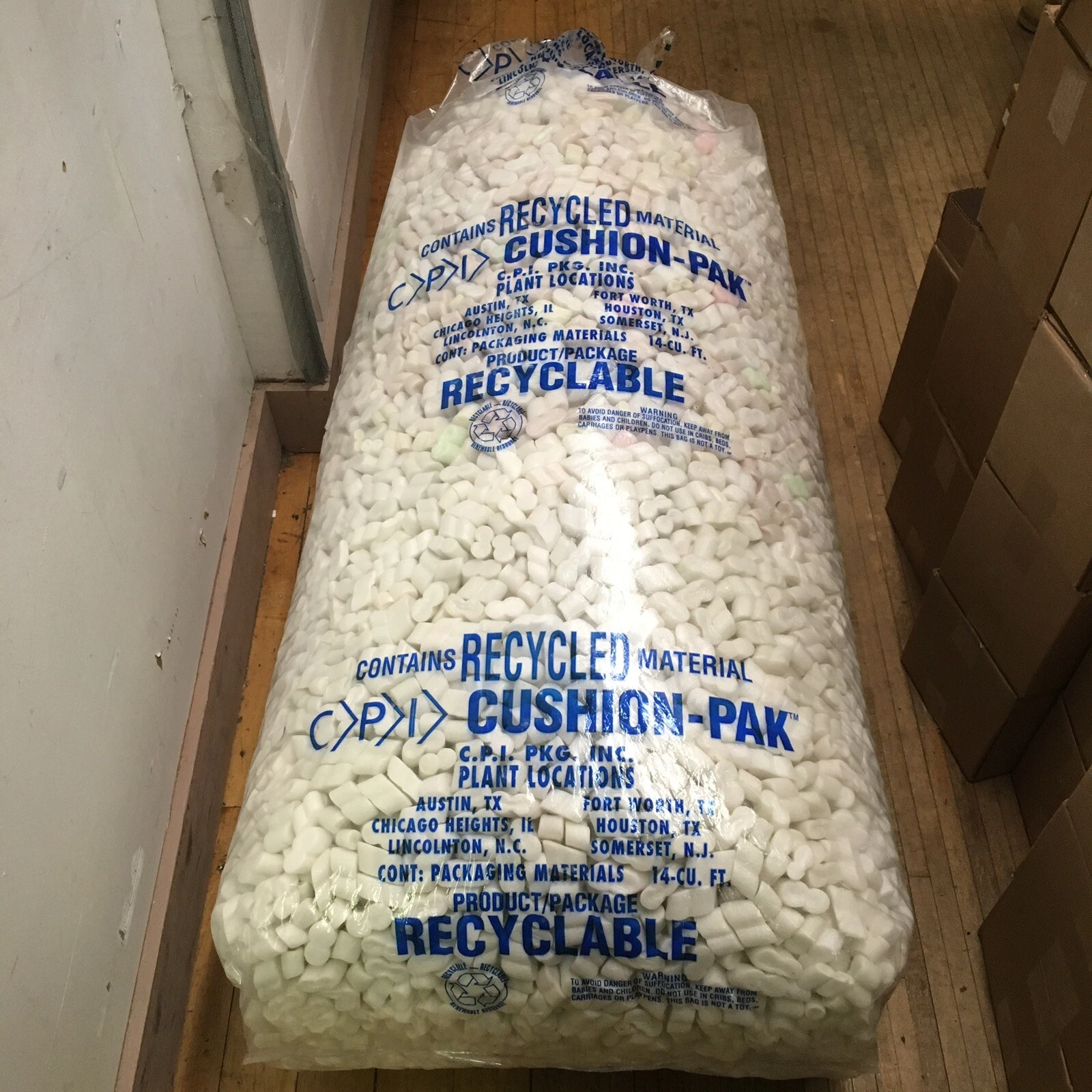
We might want to put those inside of some kind of Carbon or other fiber sack. It is hoped that the bags if they do not rupture will inhibit outgassing from the packing peanuts.
So, then this is another case where I hope these can be ejected from a landing ship, at a rather low altitude over the Moon. Probably just prior to the ships "Thump-Down".
A certain temperature of the Moon might be more ideal than others. For instance when the environment is somewhat near room temperature. This will happen twice in an equatorial Lunar Day.
Obviously, we prefer the bags to not rupture on impact, but even if they did, if you collected the materials, the loss might not be that much.
While I would hope to get Carbon from crashed ships, or worn-out ships, this would be a way to do it as well, and the plastic of the "Packing Peanuts" would hold some Hydrogen, and maybe a little Nitrogen.
So, as before the reply question to "What is the cost to import this stuff? then "What is the worth of having it there?".
Ending Pending
Packing Peanuts: https://en.wikipedia.org/wiki/Foam_peanut
Polystyrene is mentioned, but this other option is very interesting:
Starch-based
Packaging peanuts made from bioplastics (thermoplastic starch)
In the early 1990s, starch-based packing peanuts were developed as a more environment-friendly alternative. The starch in the peanuts comes from crop-based sources rather than petroleum-based polystyrene, and is non-toxic. One of the first brands of biodegradable peanuts, Biofoam, is made from the grain sorghum;[5] other brands are made from corn starch.[6] Biodegradable foam peanuts have no electrostatic charge, another benefit over polystyrene. Being biodegradable and nontoxic, they are also safe for humans and pets if ingested accidentally.[7] However, they are not produced in food-safe conditions, and are not recommended for eating. Also, during the manufacturing process, the nutritional value is removed from starch-based packing peanuts. This removes edible components, such as sugars, that would otherwise attract rodents and bugs.[8] Their main drawbacks compared with polystyrene are lower resilience, higher weight (6.5 to 13 g per litre/0.4 to 0.8 lb per cubic foot), dust creation, potential attraction of rodents, and higher price. While polystyrene peanuts are soluble in acetone, starch-based peanuts are soluble in water, so starch based products can be disposed with down the sink, dissolving on contact with water.[9]
So, can they be made for astronauts to consume, and then of course the result of that would then be as valuable as gold on the Moon, I think.
Ending Pending
Starch: https://en.wikipedia.org/wiki/Starch
Well it has Carbon, Hydrogen, and Oxygen. So, the Oxygen is a burden, but maybe it is worth it.
Ending Pending
The bags though will be of plastic, I expect.
Ending Pending
#1207 Re: Interplanetary transportation » Multi-Ship Expeditions, Starboat & Starship, Other. » 2025-04-26 16:26:21
I think it can be true that it might be correct to respond with the question "What is the cost of sending Carbon to the Moon?" with the question "What is the worth of Carbon on the Moon?".
Carbon on the Moon would open many doors. As always Carbon seems to be a magic substance, doing so many things at times.
It is not so much a question of how the Moon lacks things, as how many things can be opened up if you import Carbon to the Moon.
Ending Pending
#1208 Re: Terraformation » Worlds, and World Engine type terraform stuff. » 2025-04-26 16:16:06
From post #1797:
I have made some changes. Again, I only think this might be close to possible, but in a test of reality may need more innovation:

If this does turn out to be possible, it sort of might open up methods for the icy crusts of worlds in the solar system further from the sun than Mars. So, adapting to the Mars polar ice caps would be a rehearsal for that.
CO2 to float in should be available on many of those worlds, such as Ceres, Callisto, and Titan, and others.
A subsurface network of tunnels could join multiple instances of such rotor worlds.
Keeping chambers sufficiently cool should be fairly possible in such cold environments.
Ending Pending
#1209 Re: Not So Free Chat » Peter Zeihan again: and also other thinkers: » 2025-04-26 10:47:41
George Friedman is one of my favorites: https://www.bing.com/videos/riverview/r … &FORM=VIRE Quote: George Friedman Predicts the Next 50 Years of Global Affairs and the Importance of Space Domination
YouTube
Tucker Carlson
8K views
I have learned about the problem of Specialization from his articles. Basically, after WWII we had "Generalist Thinkers" who while alive kept the country in line. This allowed us to prosper with specialists until the Generalists died off.
Now we have had the problem of specialists trying to run things, but they only understand their own specialty, so they are not suitable to be "Generals".
As it happens, I think that we have some fairly broad generalists in government now, somehow.
Ending Pending
I think I will need to review this diagram. Looks like I screwed it up. I'm not sure. But I don't have time now.
China is indeed surrounded, but everyone is surrounded on the surface of a sphere.
But the importance of India to us, among other things such as marvel of their culture, is that if China is not nice to us they have to wonder what India might do. And if China is not nice to India, they have to wonder what North America might do.
Ending Pending
#1210 Re: Interplanetary transportation » Multi-Ship Expeditions, Starboat & Starship, Other. » 2025-04-26 10:15:02
I took a look at data centers in space and on the Moon. I did not have an original idea, at all, of course.
https://www.datacenterdynamics.com/en/n … a-centers/
Quote:
Stealthy startup Lonestar plans Moon-based data centers
For off-world disaster recovery
So, some support for the idea indicates that I was not totally stupid to think about it. Thats good!
It may seem to some that I am advocating away from SpaceX's Stainless Steel Starship. Not at all. I do think however that Carbon structure could be very good for SSTO or 2nd Stages that go to orbit and never try to land again. (SSTO may be possible).
A think I do not like to see overused is binary thinking. Similar to sports games, tribalism, as a method to evaluate merit.
I give myself credit to have been interested in the numbers 3, and 6. Tesla was interested in 3, 6, and 9.
But of course the reason is I have electrical training and "Delta" and "Y" are both 3 pointed geometries, so I probably absorbed the concepts from the genius of the inventors of electric thinking.
But yes, still, I avoid binary thinking and prefer "Delta" and "Y" thinking.
For instance the concepts of 1) Colonizing existing worlds, and 2) Building artificial worlds, could be a binary process. Breed the human to have a war about it to settle the matter and try to breed the male population into Homo Erectus again. Throw in some Hypergamous cheer leaders to breed excessively with the winner.
That's an interesting slogan "Make Humans Homo Erectus Again!" MHHEA
The point being trying to breed the human race back to Dominant Man Homo Erectus sheds talents. This superman is a stupid concept.
So, from my point of view two parties encouraged to war with each other, ignores the 3rd party, which is outside.
For instance, for the space program, it became a meal ticket to make a siphon(s), to direct money as socialism to the anointed. Part of making this work is to keep two parties fighting with each other intensely so that the 3rd party will not be noticed picking money out of the facilities for common good.
But sometimes the 3rd Party could be like parents, to cause two parties to work together for a whole group gain.
So, I do not have a super contest between Stainless Steel, or Carbon. I would despise that.
It does seem that Stainless Steel may be better for a reusable 2nd Stage for Earth. Not necessarily so for the Moon.
As I see it if you had lots of Carbon, Nitrogen, and Hydrogen on the Moon, the Moon would be much more valuable.
Well it is not like that but adding even a little more of any of those will upgrade the value of the Moon.
Even a crashed Carbon ship might have quite a lot of value on the Moon.
It would be similar for any "Stony World".
Ending Pending
#1211 Re: Interplanetary transportation » Multi-Ship Expeditions, Starboat & Starship, Other. » 2025-04-25 20:08:24
With the various notions added to this topic, now I would like to drift back towards the topic title.
I believe that SpaceX will eventually be successful with a Stainless-Steel Starship, including propellant tankers, and that may support a whole host of other things, both from SpaceX and other vendors.
As for SLS, eventually it will retire. Apollo did, the Space Shuttle did.
Dr. Zubrin and others have expressed opinion that Starboat would be good for Mars and for the Moon. But SpaceX does not want to divert from what is on it's plate now, and I do not blame them for that.
But at least for the Moon, could we put together a reasonable substitute for Starboat, using "Leftovers".
Possible Leftovers:
-Orion Capsule.
-Dragon Capsule
-Falcon 9 2nd stage
-Neutron 2nd stage
-2nd Stage of Terran-R
Also, I might add 2nd stage of NOVA from Stoke Space.
Various engines, many Methane fuel, One RP-1, One Hydrogen.
Some of the above are abandoned to burn in the atmosphere, after one use. However, if Starship(s) do emerge, it may be possible to bring propellants that can efficiently be used in electric rockets could perhaps collect these to a construction point in an orbit, being somewhat efficient. There, perhaps some reuses for the Moon may make sense, possibly collecting them into assemblies.
Many of these could be brought to orbit as fresh items using Starship as an alternative.
I would think to resort to this as it may be a way to go smaller scale for the Moon, while not having to totally develop new hardware.
I would wonder if one of the Capsules could actually be hosted on a collection of 2nd stages, that would be able to actually land on the Moon and then ascend back to orbit. Something like that could perhaps be serviced in Lunar Orbits, from an orbital Starship.
Also, if robots are to be the main force of labor, then such machines may be able to land them on the Moon in special places as well.
I don't think it will be desired to create a large population of people on the Moon.
I do not think that Mars should wait too much for the Moon to develop, but if the Moon does develop then it may become useful to future Mars effort.
Ending Pending
#1212 Re: Interplanetary transportation » Multi-Ship Expeditions, Starboat & Starship, Other. » 2025-04-25 12:31:34
So, it turns out that Carbon can be used in the production of reduced Silicon: https://www.popsci.com/diy/article/2005 … icon-sand/ That and a heat source.
Quote:
Industrially, silica is converted to pure silicon by heating it with coke (the form of coal, not the drink) in a furnace. But there’s an even easier, if less cost-effective, method that I learned from Jason Stainer, a science teacher in England. All you have to do is heat a mixture of common silica sand and magnesium powder in a test tube. The magnesium steals the oxygen atoms from the silica, leaving elemental silicon.
No reaction is perfect, and in this case you’re left with a mixture of magnesium, magnesium oxide, magnesium silicide and silicon in the bottom of the test tube. Fortunately, the best way to purify it is also the most entertaining. I told my 8-year-old Harry Potter fan that I had prepared a fire potion.
So, Carbon with heat can win Oxygens heart away from Silicon. This also produces CO2, which can then be split into Carbon and Oxygen. Might not be a bad way to get Oxygen.
OK, so plants work with Carbon but not so much Silicon, so that is why we may have Coal, but not pure Silicon as fuel.
So, I think that a Silicon Sponge/Foam, with Aluminum powder/beads in it might make a fairly good fuel for a solid rocket, especially if it is preheated. to say 800 degrees C??? If the casing for the hybrid rocket fuel section is to be heated, a danger with too much heat is that the Steel Shell will lose strength.
I am not an expert about that.
It seems that Steel and Silicon are somewhat close as to the melting point, I think.
If you had a way to heat the structure from the inside out, then you might get the Silicon sponge to a higher temperature, while not compromising the Steel Shell's strength.
But melted Aluminum particles should be possible inside of the sponge.
Ending Pending
#1213 Re: Interplanetary transportation » Multi-Ship Expeditions, Starboat & Starship, Other. » 2025-04-25 12:03:49
OK, the previous post suggests a method to support operations on the Moon with Carbon from Earth, and a method perhaps to extract mass from the Moon to orbit for useful purposes.
But I am wondering about data centers on the Moon. Probably solar energy runs them.
Well, here is an alternative. Perhaps data centers in orbit of the Moon, where the chips come from Earth but the supporting mass may come from the Moon. Radiation is a concern for that. Perhaps on the surface of the Moon after all under significant shielding.
I have seen evidence that NASA has had a look radiator technology for the Moon.
https://engineering.tamu.edu/news/2024/ … re%20range. Quote:
Hot or Cold: Adapting to Lunar Extremes
Dr. Darren Hartl has partnered with NASA to design an adaptable radiator that combats the moon’s extreme temperatures as lunar exploration continues.
March 28, 2024 By Alyssa Schaechinger
I would certainly look at the work of NASA on radiators on the Moon.
Chips are becoming more and more dense for computations vs. mass. So, maybe the cost to ship them to the Moon would not be that prohibitive. But you would need to be able to leverage moon raw materials to give support for the data centers that may be desired.
Again, the purpose of this would be to get a useful product from the Moon, using Moon energy, and matter.
A computational result transmitted from the Moon to Earth would be the product. And of course, data would transfer from the Earth to the Moon.
This avoids using power supplied on Earth for data centers. (I have nothing against that).
But the Moon would have an exportable product, which could help to support movement of goods and services between Earth<>Moon, using propulsive technologies.
Ending Pending
#1214 Re: Interplanetary transportation » Multi-Ship Expeditions, Starboat & Starship, Other. » 2025-04-25 10:53:18
I do think that it is good to look for resources such as water at the Lunar poles, but I have a sense that this has become a sort of obsession that has locked up the total amount of options.
If your spacecraft are like the SLS, then yes, you need that water to go any further into the solar system. And as reality has measured it, even the Artimus program, does not have enough reach on it's own to do it.
I am not particularly an advocate of making SLS obsolete, at least not yet.
I would say though that I am very interested in a parallel path to the Equator of the Moon, using Carbon and other material methods.
For the moment I will set aside the notion of a Carbon Starship to mount on a modified, Superheavy.
Dropping back to mess around with Neutron. If a modified 2nd Stage could be mass produced, and launched to LEO, then an electric rocket method might get them to the Moon, and then having some left-over Oxygen and Methane might allow landings. In this case I am anticipating that the modified 2nd stage would be given landing legs of Carbon, and have three propellant tanks, Oxygen, Methane, and Argon. Boil off is a problem needing solving.
So, a electric rocket device might collect these 2nd stages and perhaps put them into a shaded envelope, to reduce boil off. I would tap into the Argon to move the collection to the Moon.
Then if the 2nd stages had enough propellants left they could seek to land to a Lunar spot on the equator.
So, now you have some mostly Carbon shells on the Moon.
The Development of an engine that burns Carbon Monoxide could be helpful.
So, then in addition to that I suggest an attempt at a Carbon Sponge Hybrid Rocket.
The Carbon Sponge would be having metal beads in its structure.
Presuming Steel shells for the rockets, then filling it with this sponge. If the metal beads inside may be of combustible metals, then the entire fuel part of the rocket could be put into an oven. You could only heat the Steel so hot or it would melt.
Melting point of Steel: https://www.theworldmaterial.com/meltin … emperature. Quote:
1300-1540°C (2370-2800°F)
The melting point of steel is 1300-1540°C (2370-2800°F), depending primarily on the chemical composition of the steel, which can affect the strength of the bonds between atoms. The stronger the bond strength between atoms, the higher the melting temperature.
A Carbon Sponge inside of these shells would not likely melt but could sublimate: https://en.wikipedia.org/wiki/Carbon
Quote:
Sublimation point 3915 K (3642 °C, 6588 °F)
So, the Carbon could be hotter than the Steel as long as the Steel remained solid. That would require an internal heating method, and good timing to not melt your Steel Shells.
If you put metal beads inside of the Carbon Sponge, such as Aluminum, then there are temperature concerns for that: https://en.wikipedia.org/wiki/Aluminium Quote:
Phase at STP solid
Melting point 933.47 K (660.32 °C, 1220.58 °F)
Boiling point 2743[4] K (2470 °C, 4478 °F)
So, we might want to melt the Aluminum Beads but not boil them, prior to launch.
So, also, we don't want the fluid Aluminum to dribble out of the rocket engine, we hope that the hot Carbon Sponge can hold these little droplets by physical effects.
So, then, I suggest a LOX tank added for launch and then you need a turbine that would burn a little CO fuel, and the inject an Oxidized flow into the Hot Rocket shell.
These devices being on top of the Hot Rocket Shell, could also facilitate steering with side thrusters, and at some point a thruster that can finish the orbit to circular, after the solid rocket motor has been used up.
Then what you had in orbit of the Moon, would be metal or silica remnants, I expect. Possibly some extra LOX.
The solids perhaps could be used as propellant in a Neumann Drive or Magdrive, or to build things in orbit. The LOX of course could have value as well for various options.
I went through this exercise to see how close to practical we might get with a modified Neutron Technology.
It seems to me that it might be possible to do something of value.
This gives some perception so that if we ever did try this, perhaps on a Starship scale we would better know what might be possible and useful and how a larger system should be constructed.
I have suggested a Carbon Sponge with Aluminum Beads in it. Perhaps we could be able to substitute Silicon for Carbon. Silicon is native to the Moon.
https://en.wikipedia.org/wiki/Silicon
Quote:
Melting point 1687 K (1414 °C, 2577 °F)
Boiling point 3538 K (3265 °C, 5909 °F)
Maybe it would work. But we still would likely want the Carbon Monoxide and LOX turbopump to supply Oxidizer.
I am not sure I would want an alloy of Aluminum and Silicon, but rather a Silicon "Sponge" with Aluminum beads in it.
But the Alloy: https://en.wikipedia.org/wiki/Aluminium … con_alloys
A Silicon Sponge could be considered a fuel, especially if preheated. But I am hoping the melted Aluminum beads inside of the sponge will also be a better fuel.
So, then using Silicon as Sponge, then it may not be necessary to have too much Carbon for the Carbon Monoxide for the Turbopump. But you would need some, and the ships sent could provide it.
The Carbon could be used to reduce regolith and so to make regolith materials into fuels as well. Silicon and Aluminum, also a Steel Shell. Actually I feel aware that more than that is needed to refine Aluminum and Silicon.
But anyway, maybe the contents of this post could suggest a direction to take for launching from the Moon, mostly using Lunar materials made into resources.
Ending Pending
These "Rockets" would not only fly on chemical energy stored, but also to some extent on thermal energy stored, similar to a steam rocket.
Ending Pending
#1215 Re: Interplanetary transportation » Multi-Ship Expeditions, Starboat & Starship, Other. » 2025-04-24 19:33:23
I found this: https://www.bing.com/videos/riverview/r … &FORM=VIRE Quote:
US Strategic Propellant Reserves: How Space Startups Can Benefit
YouTube
Space Startup News
11 views
Of course I agree, but also have large notions involving various uses of Carbon related possibilies.
Ending Pending
#1216 Re: Interplanetary transportation » Multi-Ship Expeditions, Starboat & Starship, Other. » 2025-04-24 19:05:26
Preheated Carbon Sponge Hybrid Rocket.
I will expect that someday it will be considered worth it to do something like a Mass Driver on the Moon, or a Rail Gun, etc.
But for now I am trying to work with lower scale methods, that may make sense to be precursor to that.
Even then, perhaps this device might be used inside of an electric launch method.
But a Carbon Sponge???
OK, this is on me. Any query about Carbon Sponge brings up biochar in soil. Not a bad thing but not what I seek.
So, a Carbon sponge impregnated with Lunar metal fuels.
Aluminum and other metals might be featured. The sponge of Carbon it is hoped can hold its posture of stiffness while the metal droplets it holds will have been rendered of the liquid phase. This inside of a solid rocket shell, perhaps tilted towards steel. Preheated, perhaps by magnetic induction and then the device launched by the pushing of LOX into it from an above location of a LOX reservoir.
More properly, then these devices attached to a liquid fueled rocket of some kind that can finish them to a Lunar orbit when they themselves have burned out.
The Steel metal shells then are the cargo/prize in orbit.
Ending Pending
#1217 Re: Interplanetary transportation » Multi-Ship Expeditions, Starboat & Starship, Other. » 2025-04-24 18:44:24
A minor notion that has come to me is a magnetic Carbon catcher.
While a ship might bring Methane to the Moon which would have Carbon in it, and the ship would be in large part made of Carbon, it may also be possible to drop Carbon dust at an altitude and have it collected into a crater, before a ship lands.
OK, I think I am allowed to use this as it is an advertisement for a product: https://www.amazon.com/SPACECARE-Magnet … 373&sr=8-5 Image Quote: 
So, an electromagnet(s) in a small crater might make a nice shock absorbing and cooling beard to allow Carbon particles to impact into. By allowing to cool over time and then dropping Carbon, both the cold and the structure disruption may allow the Carbon to not vaporize too much.
Then you might separate the mixture using magnetics later to recover the Carbon and reuse the magnetic materials.
Carbon tolerates heat rather well.
https://en.wikipedia.org/wiki/Carbon
Quote:
Sublimation point 3915 K (3642 °C, 6588 °F)
So, really something you might retain on impact, especially if the magnetic "Beard" would do shock absorption and also be cold prior to impact. The Moon should be able to produce Iron, Magnetite, and Nickle in fine particles for this purpose. Warning, I think that upon impact the compression of the magnetic field may produce a counter EMF in the electromagnetics, which could be a source of damage???
Anyway if this could be pulled off, the fuel needed to land Carbon on the Moon might be reduced.
Ending Pending
#1218 Re: Interplanetary transportation » Multi-Ship Expeditions, Starboat & Starship, Other. » 2025-04-24 18:18:53
I feel that the case for Carbon is really shaping up.
I did find that rather than using electrolysis for splitting Methane alone, Pyrolysis would be helpful and could be powered by solar.
Here is one article: https://www.kit.edu/kit/english/pi_2015 … -oxide.php Quote:
Press Release 139/2015
Crack it! Energy from a Fossil Fuel without carbon di-oxide
IASS and KIT develop a technology to produce hydrogen from methane without carbon dioxide emissions
That article is a bit old, but apparently the process has the Carbon byproduct I want.
This query might provide you with more information: "Methane cracking with electrolysis utilizes heat often provided by solar energy or other renewable sources, to break down methane into its constituent elements hydrogen and solid carbon." (Don't include the quote marks).
Result: https://www.bing.com/search?q=Methane+c … 80&pc=DCTS
So, as I see it a natural gas pipeline could provide hydrogen and carbon in a convenient way. The Hydrogen could be burned in a power plant perhaps, maybe a Peaker plant.
The Carbon could be fashioned into objects. I suppose it might be nice if they could be of a size that a railway could handle. So for manufacturing Carbon Starships, I guess it might need to be done on a seashore so that a city could get power, and barges could carry the produced ships. Our eastern and gulf coastal canals might work for that.
I am not a Carbon Doom Goblin. However, if it is possible to meet near net zero, in a manner that is quite beneficial, then I would like that. Making Carbon ships will help with that, and also building power production on the Moon and in Earth/Moon space may make it even Carbon negative.
While the idea of power beaming has been explored, we might also think to make data centers on the Moon. Two problems emerge for that, it may be necessary to import all the chips from Earth, and you need cooling. Cooling is hard in a vacuum, unless you have lots of mass to make heat exchangers with. Then you need a coolant. Oxygen and water are the native options for the Moon but if you are importing Carbon then you can use CO2 or perhaps CO.
As I have said you would have a lot of mass to make heat exchangers with and also you could produce sunshades as well to help keep the radiators cool in the daytime. I would also think you could use heat pumps to make the radiators hotter, and so get better performance out of them.
So, Data Centers on the Moon. Granted there is time latency, but perhaps it would be workable.
I don't want to put endless subtopics in the same post, so I will start another post.
Ending Pending
#1219 Re: Interplanetary transportation » Multi-Ship Expeditions, Starboat & Starship, Other. » 2025-04-24 13:15:18
I want to chase this around a bit more.
If we get to a situation where robot labor is on average 1/25th the cost of human labor and make spacecraft with that low cost labor, then the idea of exporting Carbon to the Moon becomes less silly. Especially if the Carbon earns it way in transit, by being a great deal of the structure of the ship.
1/25th is just a number I pulled out of the air. If SpaceX employees earn an average or $25.00 per hour, and robots can do much of the work for $1.00 per hour, then 1/25th perhaps.
A starship disposed of can lift ??? Tons to orbit.
https://payloadspace.com/payload-resear … iguration/
Quote:
According to SpaceX, Starship is currently capable of hauling ~200 tons to LEO in an expendable configuration, making it the most capable rocket ever developed. It would take nine Falcon 9 expendable flights to deliver the same payload volume as one expendable Starship flight.
But there are some unanswered questions. 1) A largely Carbon stripped down Starship would be lighter than a Stainless Steel one, so then >200 Tons, I presume. 2) By Expendable Starship do they expend the Superheavy also to get to 200 tons? (I hope not).
Playing a game, if a Carbon Starship had 3 propellant tanks, then Oxygen, Methane, Argon. If the ship could get to LEO with leftover, Oxygen, Methane, and all of the Argon, could an electric rocket in orbit hook up and escort the ship to a Moon orbit? Then at the Moon orbit it might either have enough Oxygen to land or receive a fill of more Lunar Oxygen.
Then it would land on the Moon, perhaps the Equator or near so. Ideally it would have left over Methane so that it might ascend again with a load of Lunar LOX, or so the Methane can be donated to surface operations.
(An Argon tank could probably be put into the nose section, I think.)
An alternate and lesser fuel to use can be Carbon Monoxide, but I think the desire would be to use Carbon on the surface of the Moon near the Equator. Apparently, Carbon could also be used in a Neumann Drive, but Argon from Earth may work well. Also, Neumann Drive could run on many types of Lunar substances. Magdrive could run on Aluminum or Iron.
As for robot labor on the Moon, this should be of many sorts, and likely will become low cost, if it can be built at a reasonable price with Lunar and Imported Materials.
Ideally Oxygen could be lifted to Lunar Orbits, to fill Starships on their way to Mars, perhaps.
So, a Starship would leave LEO for the Moon orbits, with just the Oxygen needed for that, and then a safety margin. It would then be refilled at the Moon orbits with the full amount of Oxygen needed.
It is possible that with electric propulsion it would also be possible to move LOX to LEO from the Moon.
Other exports from the Moon could be power to Earth, and maybe data centers on the Moon.
Ending Pending
If we could find an economical way to export Carbon to the Moon, this would help the Hydrocarbon industries.
If for instance Methane could go to a use where the Hydrogen would be stripped off and consumed to generate electricity, and the Carbon be made into spacecraft structure, then that might be a way to do it. Of course I don't know how possible that is. It might also be done for oil, particularly light oil. But it might be possible that Coal mining could provide Carbon for export to the Moon.
Ending Pending
#1220 Re: Interplanetary transportation » Multi-Ship Expeditions, Starboat & Starship, Other. » 2025-04-24 11:09:36
I wonder if microwave, Carbon assisted Pyrolysis would be the better way to go. This could be powered both by solar and nuclear, and allows the container to be cooler than the regolith being processed, perhaps.
Also, I suspect that Metalysis, using Carbon might be a more developed version: https://metalysis.com/
Perhaps some combination of methods, for instance heating the container to a certain heat using solar heat, and then heating the regolith/Carbon mix a bit more with microwaves. Add some sort of Metalysis process?
Well anyway something should be possible.
Ending Pending
Converting CO2 back to Organic materials, and Oxygen might be done by organic method, such as Algae during day, but that needs some water.
Otherwise, CO2 can be split by electrolysis or possibly plasma methods I believe.
Moxie might be used or a plasma reaction by simulating Mars conditions on the Moon: https://www.freethink.com/space/produce-oxygen-on-mars
Quote:
A plasma reactor could help astronauts breathe on Mars
A new system could create oxygen, nitrogen, and other crucial supplies from Mars’ atmosphere.
The two things desired are to build structure on the Moon, and to Export Oxygen for ships like Starship.
Ending Pending
#1221 Re: Interplanetary transportation » Multi-Ship Expeditions, Starboat & Starship, Other. » 2025-04-24 10:33:54
Due to previous posts, I am developing the notion of a dual Moon access process.
1) Polar Water.
2) Carbon imported to the equator of the Moon.
1) Polar Water will often be a one time use item if it is to be used for rocket fuel.
2) Carbon though expensive to import, can be reused multiple times for an economic benefit, except if it is also used as a fuel.
A dry equator would not look very attractive to a human powered economy. However, for a robot dominated economy, Carbon could be very helpful. I do not say that polar water facilitated economies at the poles will not occur, but suggest that the Equator might be facilitated very nicely if Carbon can be imported at a reasonable price, for the merit it might have in processing Lunar materials.
In theory, based on Elon Musk's historical notions that Starship might be able to go SSTO, if it lacked a heat shield, legs, and a significant cargo, I will not rule SSTO out.
But more likely the model presented by Rocket Lab with a 2 Stage Neutron may be of value, if the 2nd stage could be repurposed.
I have argued that it could be possible to size up a 2nd stage primarily of Carbon, to launch on a modified Superheavy, by SpaceX.
In either case the 2nd stage given assistance could be used to do work in lifting cargo to LEO, and then the 2nd stages could be converted for a second mission to the Moon.
Using Electric rockets, it might be possible to fill the Oxygen Tanks of these devices with Argon, and the Methane tanks with Methane. Then they would fly to the Moon orbits, and be refilled with Oxygen, perhaps from the Moon, and then they would land, perhaps at the equator of the Moon.
Solving boiloff will be desired.
The equator would primarily be populated by robots, but maybe just a few humans. Water needs would be relatively small. But for water needed, residual Methane might be reacted with Oxygen to create water, and CO/CO2.
If sufficient Methene were landed, then it might be possible to use these ships again to lift Lunar Oxygen to Lunar Orbits. I believe that the equator of the Moon has an advantage over the poles for this activity.
Crashed or worn out ships might be recycled for their materials, including Carbon of course.
I see solar Pyrolysis of regolith, assisted by Carbon as a way to reduce Lunar ores of Oxygen. Then the CO/CO2 produced, could be processed to recover the Carbon again, along with Oxygen.
I expect that the Carbon is not infinitely recyclable but might be reused many times.
I suppose that as soon as it might become possible to get Carbon from other parts of the solar system for a lower price then that might occur.
Keep in mind that one of the cost savers in this scheme is the presumed very low cost of robot labor on the Moon and also the Earth, which will drop the price of hardware, and reduce the cost of extracting materials from the Moon.
Ending Pending
#1222 Re: Interplanetary transportation » Multi-Ship Expeditions, Starboat & Starship, Other. » 2025-04-23 10:22:40
The previous posts involving Carbon might offer an interesting business case for Mars.
If the Moon and most inner system asteroids are stony and some are metal, they may lack Carbon more then they lack Hydrogen. The solar wind seems to implant a little Hydrogen into the regolith of many asteroids, but not much Carbon.
Solar Pyrolysis using Carbon though may be very useful in processing Lunar Regolith and Stony/metal asteroid materials.
A spacecraft mass manufactured on the surface of Mars primarily of Carbon and Plastics, could be an export from Mars, that could help to unlock the wealth that could be in the materials of the Moon and many asteroids.
A list of Earth Crossing Asteroids: https://en.wikipedia.org/wiki/List_of_E … _asteroids
So, if primarily using robot labor, these things could be produced in mass, as SSTO, devices which could be collected in Mars orbit, they could then be filled with Argon, and electric propulsion could be used to move the spacecraft shells to places where Carbon would have high value, to extract resources from stony and metal Near Earth Orbit Asteroids.
Those mining operations could export processed materials to Venus, Earth, and Mars. Mars would be able to buy things from Earth/Moon, and other places by creating a "Carbon Currency".
The ships would include some plastics so Hydrogen also could be transported in the plastics of the ships.
Ending Pending
#1223 Re: Not So Free Chat » Peter Zeihan again: and also other thinkers: » 2025-04-23 09:50:01
https://www.bing.com/videos/riverview/r … 4e26a538ca Quote:
Psychologist breaks down 'assassin culture' in the left: 'WOLVES IN SHEEP'S CLOTHING'
YouTube
Fox News
30.7K views
While male psychopaths are very much suspected, because women are the mothers of any children that exist, we seldom think that there could be trouble from female psychopaths. I think those will be found in hive mind subgroups along with some of the males.
I think sometimes the only payment these people need is to know that they set someone else back in a cruel way.
A greed about pulling other people down while hoping that may get you into a more favorable situation.
I think one action of particular cruelty has been to convince women and some men that having children is not in their interest. So, I think the problems are primarily caused by a cycle of promiscuous, opportunity being promoted, and yet to make all sex, including reproductive sex as wrong and even criminal.
Gentetic selfishness. Interfering with the reproduction of others, in hopes of dominating the gene pool as to be a "Winner", and to be cruel to those you can deceive. As for some of these people the suffering of others is a pleasure for their selves, giving them a sense of power.
Ending Pending
#1224 Re: Interplanetary transportation » Multi-Ship Expeditions, Starboat & Starship, Other. » 2025-04-23 09:41:00
I took a look at the use of Carbon in spacecraft. It seems more extensive than I thought. It can be used in rocket nozzles and heat shields along with more common uses in fuel tanks and I suppose landing legs.
So, possibly ships mostly made of Carbon could be landed on the Moon, for the purposes I expressed in the just previous post.
Ending Pending
#1225 Re: Terraformation » Worlds, and World Engine type terraform stuff. » 2025-04-23 09:12:23
There are many ice slabs in the mid-latitudes of Mars. Not nearly as thick as polar deposits, but still, it might be possible to do a more modest but similar trick in those.
https://www.sciencealert.com/new-resear … ter-liquid
Quote:
Vast, Thick Ice Sheets Have Been Found Buried All Over Mars
Space
11 January 2018
ByBen Guarino, Washington Post
Quote:
The slope rises as high as London's Big Ben tower. Beneath its ruddy layer of dirt is a sheet of ice 300 feet (90 metres) thick that gives the landscape a blue-black hue. If such a scene sounds otherworldly, it is. To visit it, you'll have to travel to
So, maybe with a roof of synthetic Pykrete, chambers which might accommodate some sort of spin gravity device might be possible.
Here is a plan for a minimum sized synthetic gravity device. I would hope that larger than that could be accommodated in the 90 meter thick ice slabs of the mid-latitudes of Mars: https://futurism.com/the-byte/device-ar … vity-space
Quote:
Like a Record, Baby
/ Sci-Fi Visions
This Room-Sized Device Could Create Artificial Gravity in Space
byVictor Tangermann
Updated 7.3.19, 10:31 AM EDTMGM/Victor Tangermann
MGM/Victor Tangermann
Maybe the idea of artificial gravity isn't so crazy after all.
Weight Gain
You've probably seen one featured in a science fiction movie, including "2001: A Space Odyssey" — massive centrifuge-like space stations that spin around a center point to create the sensation of artificial gravity for off-world travelers.While we have yet to build such a large system in open space, researchers from University of Colorado at Boulder have decided to miniaturize the effect instead, with a device small enough to fit inside a room that spins participants to mimic the effect of Earth-like gravity.
Artificial Gravity
Spin Zone
Creating the illusion of gravity could be of great benefit to astronauts struggling with the not-yet-fully-understood effects of microgravity for months at a time."The point of our work is to try to get more people to think that maybe artificial gravity isn't so crazy," Kathrine Bretl, a graduate student involved in the project said according to a statement. "Maybe it has a place outside of science fiction."
Vomit Comet
Unfortunately, motion sickness is still as much of a thing here on Earth as it is in space — one of the reasons why scientists have shied away from the idea in the past. The team decided to put that to the test and invite volunteers to spin on their centrifuge for 10 vomit-inducing sessions.The results were promising: at 17 revolutions per minute, the effect became tolerable over time.
"As far as we can tell, essentially anyone can adapt to this stimulus," aerospace engineer Torin Clark, who led the team said.
READ MORE: Artificial gravity breaks free from science fiction [University of Colorado at Boulder]
More on the effects of microgravity: Zero Gravity Causes Worrisome Changes In Astronauts' Brains
So, if you dug a hole in the ice slab, and then mixed that ice water with fibers, and then refroze it onto a dome, perhaps a sufficient large chamber would be possible.
Of course then the Ice content has to be kept stable from melting or evaporating by various methods of cold and vapor barriers. But something might be possible.
Ending Pending