You are not logged in.
- Topics: Active | Unanswered
Announcement
#51 Re: Terraformation » Orbital Mirrors for the Transantarctic Mountains » 2016-10-07 08:43:32
I thought about this too, then I thought, do I want this "Sun" to be up all the time? If we were to turn off this "Sun" so the people in Antarctica can have some night, this statite would fall towards the Earth, you see what keeps it up is radiation pressure, and it not only has to reflect light towards a particular area on Earth, it also has to levitate itself with that same light, the direction the light has to be reflected in in order to levitate itself might not be in the same direction we want to reflect light in in order to warm a patch of Earth. It might be better to use a thicker, heavier mirror, still a solar sail, but one which can't levitate itself against the force of gravity, instead it uses light pressure to constantly change it orbit, when it is not over Antarctica, the orbit change is so that it is orbiting at right angles to the direction of the Sun, we call this a Solar Synchronous Orbit, it orbits in such a way that the Sun is always visible, it orbits over the poles, and is angled at 45 degrees to the incident light rays, and as it passes over that particular patch, it changes its orientation, using light pressure, to reflect light on that particular patch of ground. From the point of view of those on the Ground, the Sun will appear to rapidly rise from the South, go directly overhead, and then set in the opposite horizon, at times where will appear to be two Suns in the sky at the same time, one, low above he horizon, and one rising to its zeneith almost directly over head and then setting in about 4 hours. During winter, the transantarctic mountains will experience a series of 8-hour days with about 4 hours of sunlight and 4 hours of darkness.
http://www.users.globalnet.co.uk/~mfogg/zubrin.htm
radiation pressure vectoring for propulsion and for illumination can be made simultaneous by various methods.:
- using more mirrors and creating complex photonic pressure kinetic system
- using multi-direction reflection and/or photonic thrusting ( via say absorbtion ) and
- more complex trajectory / quasy-orbit(s) ...
'cuz countries might not be so happy about big mirror orbiting over their territories.
How much big, and on what orbit you say?
#52 Re: Terraformation » Orbital Mirrors for the Transantarctic Mountains » 2016-10-07 05:36:22
Thank you, Tom, for the good back-on-Earth topic!
Thoughts, inspired by this.:
[1] https://en.wikipedia.org/wiki/Transantarctic_Mountains are 3500km long and 200-ish (average) wide. I.e. Total area of 700 000-ish km2. That is twice Japan, or 20-ish Swirzerlands. I.e. fits hundreds of millions of people easily! And only 5% of whole Antarctica.
[2] The soleta ( orbital mirror ) could be not orbiting, but Solar sail ( https://en.wikipedia.org/wiki/Solar_sail & https://en.wikipedia.org/wiki/Solar_sail#Materials ) material Statite ( https://en.wikipedia.org/wiki/Statite ) which to hover exactly over Antarctica. Other mirror ( Optics ) hardware materials option is host of vacuum baloons ( I already shared these: http://www.niac.usra.edu/files/studies/ … 4Crowe.pdf & http://www.niac.usra.edu/files/library/ … 4Crowe.pdf ), too.
[3] The mirror material can be launched this way.: http://www.iase.cc/accelerator.htm -- shooting machine gun way with enough Hertz of frequency in plasmoid way could keep open atmospheric exit corridor. This corridor acting like giant cable shortcuting the ionosphere could actually provide much of the energy for the launcher ( also we have ready available massive hydro- , wind and geothermal power )...
[4] The sail-mirror ( or the swarm of such ) kept 'inflated' and static by balance of redirected sun-light and earth's gravity over the target -- could also be modular-ly managed and to run diurnal and seasonal cycle of ... as it is desired or seen fit.
[5] The presence of well lit and warmer patch of 5% the Antarctic total area, could be mitigated so this to not switch-on negative effects ... the surrounding areas could be additionally cooled off to compensate. ( Blanketted by insulation layer, solar powered Peltier fridges ... etc., so exactly to mimic the conditions and effects - regional and global of an Antarctica without terraformed TAM area ). This is achievable by preventing evaporation/precipitation/air humidity effects and keeping the extra illuminated 'oases' very dry on the top, i.e. drop irrigation systems. And by illuminating ONLY the exact targets while keeping the surroundings into the dark?
[6] The overall natural sun light flux would be far smaller then the total TAM area of 700k km2 multiplied by the average Swiss-equivalent flux, and the Soleta could be quite smart beaming EXACTLY as much as needed on area and in time! With very high precision. More advanced optical system can modulate not only by intensity, but also ... color, phase, ... Thus agricultural patches will peak in red and blue, the towns and cities will either have 24/7 noon or what the inhabitants vote for ( and buy from the National Climate Stability Board similarly to the 'carbon credits' - all illths' mitigation could be marketized, tokenized, monetized ... ).
[7] In fact Transantarctica would be a terrific country!:
- quite linear which will give quite good geometry of the trans-country backbone transport system ( most probably www.et3.com ! )
- it will have North Coast and South Coast, which could have dozens of thousands of miles coast line each if so fractalized as , say, Greece or Norway. Plenty of coast length to have lotsa ports, beaches, 24/7/365 tropical resorts few miles away from 24/7/365 ski resorts. ( It is comparatively easy to keep cold waters from shallow balmy waters apart by underwater barriers of different kind - inflatable, bubbly dynamic ones etc. ).
- the TAM country one of the biggest on Earth in terms of prime realty, would be right in the middle of a vast region of over 20 mln. km2 of natural riches - land and oceanic ones, mineral and biological ...
- beautiful nature! clean air. marvelous sightseengs and panoramas. http://wallpaperfolder.com/wallpapers/swiss+landscape or https://www.google.bg/search?q=southern … landscapes . Also think Chile, Norway, Himalayan countries ...
- 99% of the freshwater on Earth. Safely kept frozen. ( The minerals mining can go selectively under the ice sheet ).
- blue sky. never rain... but lush land. 99% wilderness (national park) by area on land and sea. ...
[image] http://img.wallpaperfolder.com/f/58EEDF … e-best.jpg [/image]

#53 Re: Terraformation » Terraforming putative Proxima Planet » 2016-10-07 01:15:19
http://www.sciencealert.com/the-closest … d-in-water
Raft islands and continents.
Made by [astronomical] 'metals' mined outta the water.
#54 Re: Terraformation » Shackleton Dome » 2016-10-05 06:57:52
Why not few dozens to hundreds of meters wide and kilometers long lava tube?
http://www.siliconindia.com/shownews/Af … cid-2.html
http://www.currentscience.ac.in/Volumes/100/04/0524.pdf
thousands of them ...
they can be even illuminated by global system of fiber optics with natural light.
#55 Re: Terraformation » Moreover on interstellar planemos » 2016-10-03 01:18:26
That's a hard one, but I'll give it a shot - a black hole. Nothing else allowed, you have to extract all the mass-energy you need for a supramundane shell from the black hole itself (well, you're allowed the seed equipment...).
Blackholes are PRIME realty.
https://en.wikipedia.org/wiki/Penrose_process & https://en.wikipedia.org/wiki/Blandford … ek_process
So given only a black hole + only some seed equipment one could mine all the energy / mass needed for construction and running of a form of ultimate habitat.
http://www.orionsarm.com/fm_store/TheKernel.html
Places, I'd suggest inside a star. Only really doable with exotic matter and wormholes.
Star-lifting. Supra-stellar habitats.
Re. red dwarfs, the smallest are expected to last for 10 trillion years. That's very roughly 1000 times as long as the universe has lasted so far. I don't think running out of stars is going to be the biggest worry, unless there's a grey goo scenario that dissembles them all. It's far more likely the universe will die off before that point...
Yes, there are PLENTY of asymptotically optimal, but human life on Earth is not confined to the optimal locations, isn't it?
#56 Re: Terraformation » Moreover on interstellar planemos » 2016-10-03 01:13:58
Karov,
Not enough time to read the whole article just now, I did take a look.
I likely will annoy you, but I feel I should have further conversation on the trans human concern. I think it could become possible to deal with the low gravity, by changing the genome of humans, after they are born, but leaving the germ line unaltered. Using viruses this could prove to be possible. Experiments are actually currently on-going on that topic.
http://www.inspiredinsider.com/liz-parr … interview/
Bioviva: The Woman Who Wants to Genetically Engineer You
Others, have notions of medicines which could keep you lean and muscular even if you eat rich foods, and don't exercise. So, my point is that with the scale of fantastic technology being contemplated here, it is not against logic in my opinion to suppose that such alterations of adults could compensate for low gravity, while keeping the primary intentions of the population as very similar to humans now. The medicine then could be about as trivial as normal dental treatments. (Maybe)
Annoyed?  No way.
I just say the basic humans reversible or irreversible modification to adapt for various non-earth-like environments just makes the topic INFINITE.
In order to 'tame the infinity' I stick to 'baseline' human condition habitability specs.
#57 Re: Terraformation » Moreover on interstellar planemos » 2016-10-01 09:49:06
Void,
It will no longer be attractive to dash off even to Proxima b (Or it's presumed sibling planemos), rather a chunky interstellar medium would presumably offer many more local options to set up house, and would discourage fast speeds as well by collision hazards.
Yes, the LAND location is irrelevant. Only local surface gravity matters - regardless whether the LAND is::
- rocky planet surface,
- raft floating over liquid ocean/lake/sea or into vast bottomless atmosphere
- plot part of infra-atmospheric rotator-town into a zero-G Virga
- patch of alive solid foam over icy crust of Europa like world
- plate hang over a gas giant via kinetic rings
- suprasolar shell ...
For a speculated future human heritage holding "Species or type/kind organism/machine/cyborg", I will presume a similarity to typical "Now" human ambitions. Just because it is convenient for any projection speculation.
I think anything post- or trans-human , anything beyond the human-now, the baseline human form ... totally derails the very notion of "terraforming", 'cuz why to change the environment, when we adapt ourselves, or make ourselves ubiquitous in terms of tolerable living conditions?
I suppose Ceres to Ganymede size might be presumed to be reasonable to try to eventually "Shell". I am not a natural lover of the concept, as I always pessimistically presume that the sky will eventually fall. But if the main residence of "Pseudo-Humans" would be a raft of Ice/Machine over a deep ocean of water, then not all the residents would perish in such a mishap, so it is possible to think of a "Civilization" with hopes of prolonged continuity, if such worlds are habituated by the means presumed by current speculation. Therefore an investment in the methods might be merited.
after-humans are beyond terraforming. This is, one.
Two, NO trans-numanization is unchangeable and irreversible!
Or rather 'two' is before 'one'.
The Lower-G locations ... :
I again, advise this.: http://www.gdnordley.com/_files/Gravity.pdf to be read VERY carefully, and also
Para-terraforming or more generally the non-gravitational atmospheric confinement methods ( mostly including solid state matter and utilizing its intrinsic tension streghth, OR combination of gravity, solid-matter closing and electromagnetism ) , where naturally fall ALL the variety of rotating habitats where the 1G surface is not a spheroid but cylindrical in shape ...
all these REQUIRE rotation of the whole habitat or parts of it in order to provide for 1G islands.
The 1G requirement could be avoided using partial , not so dehumanizing methods, though. But this is another topic.
This is good recent conceptual dev.: http://www.ultimax.com/whitepapers/Shel … Sfinal.pdf
May be it is time to start a terraforming-challenge competition over here, ah? 
By proposing the least terraformable objects and places
#58 Re: Terraformation » Moreover on interstellar planemos » 2016-10-01 09:30:21
It is difficult to imagine a synthetically constructed star ever being an efficient means of producing energy. The power density of the sun is 276.5 W/m3. Compare that to a nuclear reactor on Earth, which has power density of 10’s MW/m3 – a 5 order of magnitude difference. And the sort of stars you are talking about will have much lower reaction rates than the sun – orders of magnitude lower for dim dwarf stars. Now consider that only a small fraction of the energy released by that star can be intercepted by orbiting planets, plenemos, whatever. To produce the smallest synthetic star you must gather several thousands of Earth masses of diffuse interstellar gas. Are you seriously proposing that this is most efficient means for an interstellar species to produce the energy it needs? Human beings tend to be quite stingy with their time and resources. We tend to invest them in ways that give us the highest return most rapidly. This drives us towards the most efficient technologies, the highest power densities, fastest travel, etc. The successful plan is the one that gives the biggest bang for the buck. Stars are only efficient for human beings if we are able to exploit something that nature has already provided.
Mastering nuclear fusion in compact reactors will be a precondition for colonising our outer solar system. We will need to master this technology before we even attempt to reach something like an interstellar planemo. This is not an unachievable goal for humanity, the things holding it back have more to do with capital investment and competitiveness against nuclear fission here on Earth, not technical achievability.
Antius,
Well, ALL you need in order to start a gravitational fusion reactor is to put together 75 Jovian masses and to step little bit aside.
It shall burn steadily for over ONE QUADRILLION years with zero maintenance.
NO energy will be wasted using simple methods like dysoning, solasing, etc. e.g. OPTICS.
But one does not NEED to do so.
It is just 'pushing down the already falling' - it is acceleration of a natural process and all the forces involved are already present and vectored into the right direction.
This gives also the energy and momentum for distillation of the astronomical 'metals' out, putting them together for building habitable LAND, and making little stars from pure H/He mixtures.
ALSO,
more importantly.:
Even staying with the natural ready stars without to star-lift or star-pouring ...
see the estimates for the total GALACTIC luminosity!
NO murky places in the Universe at all.
Using mere optics each and every plot of land regardless of its location can be cheaply provided with optimal luminosphere.
---
A earth like planet in Solar Oort cloud on say 1 ly from Sun would need only 160 000 times wider then the planetary diameter of mirror or lense system in order to get illuminated properly with natural star light.
The optic system might be anything - swarm of vacuum bubbles, flakes, meso-scale objects ...
---
Which is more efficient and easier to maintain - a replicator swarm of optical elements - or fusion reactors?
#59 Re: Terraformation » Moreover on interstellar planemos » 2016-09-26 01:41:01
Void,
Not 'displeased' at all, mate
Pls, mind.: the definition of planemo ( shorthand of PLAnetary Mass Object ) indeed covers really impressive range of masses.
I.e. from 1/10th of Pluto's mass to 13 Jupter masses (the brown dwarf deuterium-lithium fusors range is between 13 and 75 jovian masses, 75 is the red dwarfs treshold when the gravitational confinement is strong enough naked protons ( H1 ) to star fusing into He4.), bellow approx. 1/10th of Pluto mass the objects don't pull themselves strong enough to get rounded. 1/10th of Pluto's mass corresponds, depending on composition / i.e. density, i.e. chemical composition / to between 300 and 700 km diameter. ...
The criterion , you know is self-rounding by self-gravity.
See again this - http://arxiv.org/abs/1201.2687
Thus study uses Pluto mass as a lower treshold of base of estimation the planemo numbers, placing them in the 100 000-ish per star range.
If we use the fundamental planemo mass lowest threshold then the planemo galactic population goes to rather a MILLION planemos per fusor!
Given the demonstrated galactic radiation pressure onto dusticles in dense molecular clouds as a compatifier and cometesimals and planetesimals formator ( way before the proplyd-ing of stellar and sub-stellar formation )... perhaps THIS would be the explanation about the SO BIG plenty of planemos population ( if it gets confirmed by observations ).
See this again, also.: https://arxiv.org/abs/0705.1599
It seems that size/mass vs number power law holds from smallest to universal scale. ( Which is logical - see Earth, it has few continents, but zillions of islands ... the bigger the fewer, the smaller the more ...)
Other argument is the Oort clouds of the fusors.
They are SO wide, that indeed they overlap.
The Oort cloud (/ˈɔːrt/ or /ˈʊərt/,[1] named after the Dutch astronomer Jan Oort), sometimes called the Öpik–Oort cloud,[2] is a theoretical cloud of predominantly icy planetesimals believed to surround the Sun to as far as somewhere between 50,000 and 200,000 AU (0.8 and 3.2 ly).
IN FACT aka "Oort clouds" are GALACTIC phenomenon, which at stars get swirled / whirlpooled just locally.
And 'icy planetesimals' is wrong impression about its population. Because the 'radiation pressure preproplyd formation mechanism' it seems has upper threshold which is in crossection with the accretion formation lower one ...
Which draws the following quite realistic, logical and expected ( confirmed piece by piece practically everyday with newer and newer discoveries) :: in Milky way - TRILLIONS ( 10exp12s) of fusors/stars , QUINTILLIONS ( 10exp18s ) of planemos/planets, ...
It is comparativelly easy to guestimate how much of these all are Earth-, Mars- , lunar or Pluto-sized.
As I many times noted gravitational confinement stellar core fusion is the most efficient. And easiest. Most thermodynamically efficient, too.
There is absolute plenty of natural light.
Which is easy to harvest with Archimedian level of Sci-Tech. Mirrors and lenses.
Thus, each and every suitable planemo in and out of a galaxy can be illuminated to the desired degree.
AND, if the 1G planemos (regardless whether they are interstellar or star-bound) are SO numerous, as we scratched-the-surface-about in the Proxima topicin this forum, perhaps the time of icy Pluto-like realty will never come ...
#60 Re: Terraformation » "Rip Van Winkle" of Mars » 2016-09-24 03:03:16
What is the first thing that would clue you off that you were on Mars? What else would you notice that was different from Earth?
Acc. to Gerald Nordley the plants and animals won't be just taller.
They'll be HUGE in all dimensions.
#61 Re: Terraformation » Moreover on interstellar planemos » 2016-09-22 11:44:17
So you are basically talking about building stars from nebula,
Yes. And chemical differentiation, so almost all [astronomical] 'metals' to end up making planets, and the [threshold minimum] red dwarf fusor made almost entirely of hydrogen and helium.
accumulating hydrogen gas distributed over volumes measured in cubic light years.
the dense molecular clouds [bok gobules] are compact - as much as the solar system - even more compact = under half a ly wide...
How do you propose to do this?
SRAs. Replicators. Replicator magsails, mirrors, ramscoops ... Easy.
Also, why bother?
I mentioned/replied that - as a form of monumental art.
Because we can.
"Why bother?" - is universal question, which is also valid for terraforming per se itself ...
Nature has already done the difficult job of building stars and planets over Eons. We do not need to build our own stars, just take advantage of what nature has thoughtfully provided. There would appear to be no shortage of stars, planets and rogues within our galaxy.
I agree. There are plenty. And yet plenty of uncoalesced material too. In fact it is the same old story - regardless whether one star lifts, supra-bodies etc. The Big Terr ( by analogy with Big Oil or Big Ag ) will be the major business. Dealing with planets will be like nowadays DYI and SME bizes The Big Terr will scale much-much upper...
If the goal is to provide energy for new planets, why not build a big fusion reactor on an interstellar rogue planet and light the surface using illuminators on giant towers?
There are plenty of natural fusors. Te natural gravity confinement way is excellent & ubiquitous. Easier to manipulate natural star light on arbitrary distances.
This is a task beyond humanity as it exists today, but it would always appear easier to do this than build an entire star – many orders of magnitude easier.
I do not agree. See the scale. You compare 1000000BC camp fire 'ease' with global electric systen 'difficulty'.
Also stars 'build themselves' - they just can't overcome their self-gravity
#62 Terraformation » Flooding Saharan Depressions » 2016-09-22 08:43:14
- karov
- Replies: 0
[image]http://4.bp.blogspot.com/-YtPIEGellSo/T … a+copy.jpg[/image]
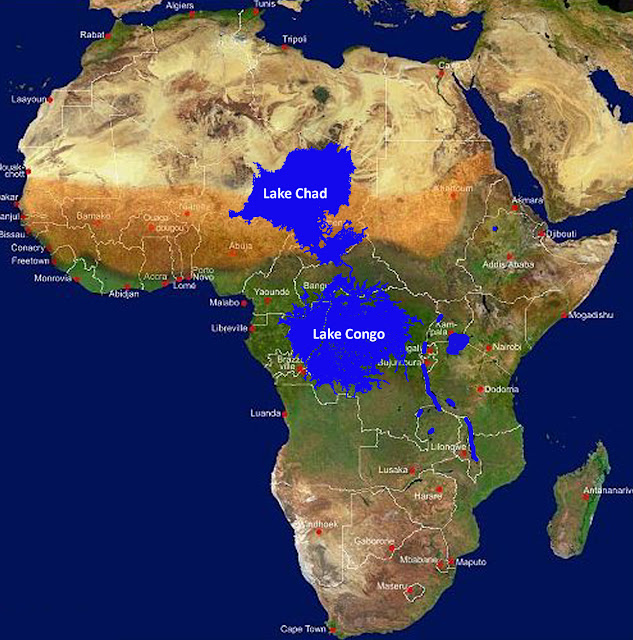
&
[image]https://www.sciencenews.org/sites/default/files/13529[/image]
&
[image]http://www.kcl.ac.uk/ImportedImages/Sch … lakes1.jpg[/image]
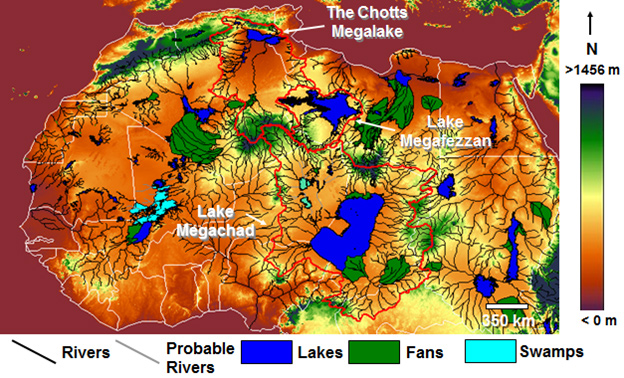
&
[image]http://xefer.com/image/congolake.jpg[/image]
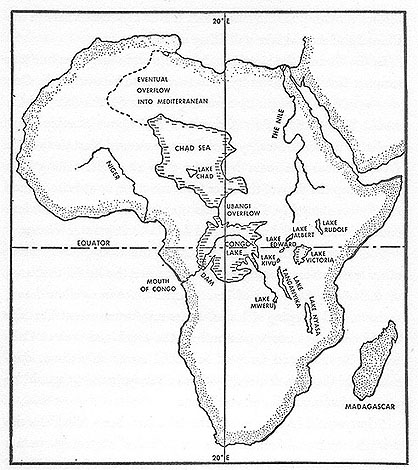
+ Fezzan, Darfur, Tushka, Qattara ...
#63 Re: Terraformation » Moreover on interstellar planemos » 2016-09-22 08:34:43
Are you suggesting that we deconstruct stars to provide fuel for fusion reactors?
The diametrically opposite - condensing out of molecular clouds the optimal mass distro of fusors-planemos, so stars to be smallest of red dwarfs burning for quadrillions of years and planets to be all 1G-ish surface gravity...
#64 Re: Terraformation » Moreover on interstellar planemos » 2016-09-21 23:44:38
But I struggle to harmonize.
?
#65 Re: Terraformation » Moreover on interstellar planemos » 2016-09-21 06:10:09
More precision on B68.:
[1] Example of 'smallest star'.: https://en.wikipedia.org/wiki/2MASS_J0523-1403
All stars should be at least 8.7 percent as wide as our own sun, with average brightnesses no less than 0.00125 percent that of Earth's star, researchers said. They further calculated that all stars likely have surface temperatures of at least 3,140 degrees Fahrenheit (1,727 degrees Celsius).
from.: http://www.space.com/21420-smallest-sta … dwarf.html
by mass.: about 7.5% Sun's.
Hence, B68 makes more then 200 fusors - rather 260-270.
x 100-ish 1G surface gravity planemos per star... ( this is only if we seek solid rocky surfaces, not shell worlds on top of H/He gas giants ... which makes the proportion fusors to planemos practically arbitrary -- in fact given the low luminocity of the smallest stars and the big surface areas of the puffy H/He planets there is a crossection in the mass budgeting where the luminosphere power EXACTLY matches the geospheric surface if we go supramundane, but because the project is Baseline Human Monumental Art one lets stick to as natural fusors as possible and as natural planets as possible ... )
About longevity.:
http://mrphome.net/starlifecalculator.htm
Wow!
A smallest fusor / red dwarf of 75 jovian masses ( 0.0075 Sol's ) = lives longer then 2 000 000 000 000 000 ( two QUADRILLION ) years !!!
About radiation.:
the overall illumination ...
One smallest star emits 0.00125% of Sun's.
x 250 = all these 250+ condensed out of B68 would emit just a THIRD of 1% of the Sun's output!
But, our Sol is still quite excessive - it outputs enough to feed with light two billion+ planets like Earth.
So, the dim 250 minimal fusors can still power over 6 000 000 Earths, not 'just' 20 000 (!)
Yes, the most efficient way is not to coalesce planets outta the available 'metals', as planets are famous to be tremendously, horibly areally inefficient , but the most economical way is to utilize the metals to actually shell the stars, to encapsulate them into multi-layered supra-stellar habitats, BUT...
again - but because the project is Baseline Human Monumental Art one lets stick to as natural fusors as possible and as natural planets as possible ...
#67 Re: Terraformation » Moreover on interstellar planemos » 2016-09-20 13:05:24
Void,
black holes, dark matter, spacetime ... manipulation lean too strongly to post- and transhuman states.
There terraforming will not be so much needed I'm afraid.
It is necessary for near baseline humans.
---
Back to calcs.
IF Barnard 68 (B68) has similar chemical composition to what is considered to be the initial solar primordial nebula one, THEN B68 has ~2 solar masses of H/He and 0.04 solar masses of [astronomical] 'metals'. Lets make them 0.05 by 'allowing' quite a few H into the planetary mass-mix.
One solar mass is 333 000 Earths.
x 0.05 = 16 650 Earths
By playing with density distribution etc. lets round them up to 20 000 of 1G-ish planemos.
At the 1% solar mass red dwarfs threshold we have enough material for 200-ish fusors of almost pure H/He.
About 100 Planets per fusor.
100 stars + 20 000 habitable planets within a region measured about half a light-year across.
Or less... what is the minimum spacing between these stars, while still the galactic pull prevails?
#68 Re: Terraformation » Moreover on interstellar planemos » 2016-09-19 06:13:32
Yeah,
most probably will occur that cometesimalization and planetemalization occur in-cloud in prior with respect with accretion and proplyd formation.
most probably will occur that the two processes - interstellar radiation pressure driven compactificaton & gravitational accretion kinda-sorta "meet in the middle" - the biggest radiation-formed objects' field merge with the smallest gravity-accretion ones ( the Earth-size?)
and even it naturally and logically may occur that into the molecular clouds ( bok globules ) the biggish radiation-driven-together solid , 'metalic' nucli are natural ( like raindrop ) nucleation 'dusticles' to jump-start the gravitational accretion proplyds formation, when big enough to deal with H/He as runaway mass-sinks ... laying the foundations of stars, brown dwarves, gas giant free-range chicken ... pardon gas- and icy-giants
which proplyds stir, mix up and eat and launch intergalactically cometesimals and planemos like centrifugal slong-shots.
---
Now I conclude that this inevitable natural process could be accelerated and refuned by use of SRAs ( self-replicating automata ).
The energy gradients needed ARE there - gravitational, magnetic, photonic ...
The mass and chemical compsition IS there ... only the 'metals' must be in more optimal way distilled out of the mix, and condensed into good planets with good 1G-ish LAND on them...
The stars - preferably of the dwarfest of all red dwarfs type ( for the sake of efficiency and long life of about a QUADRILLION years each ) - would consist of almost pure H/He mix.
Yes, I'm talking about the exactly diametrically opposite process of aka Stellar Husbandry ( https://en.wikipedia.org/wiki/Star_lifting ). ( to put stars together , not to decant them out )
I'll play out the scenario with some more known molecular cloud to see how much fusors and planemos we can count in out of such material.
btw, the location and orbits if such of the planemos is entirely arbitrary, because first they'll be too many to densely park them in neat orbits around the suns to utilize the 'natural HZ' and because luminospherics are entirely local issue.
the planets can soak light from the newborn red dwarfs cluster and also from any ambient source within the galaxy. ...
#69 Re: Terraformation » Moreover on interstellar planemos » 2016-09-17 07:39:09
10exp12 to 10exp20 kg objects condensing out within the molecular clouds way before they to collapse into proplyds
corresponds to 10s to 100s of km diameter ones.
Given the universal mass distribution and pre-stellar chemistry of molecular coulds it could be easily estimated the distro of numbers of objects vs their mass vs mass of the cloud.
Now imagine a molecular cloud whose magnetic fields are fine scale manipulated so ALL the astronomical 'metals' condense into neat 1g planet surfaces and all H/He into neat QUADRILLION years long living red dwarfs ( of 80-ish Jovian masses )...
These molecular clouds are comparativelly compact, even the giant ones, hence a SRAs ( self-replicating automata ) will do the job in exponential fashion in few centuries ...
#70 Terraformation » Moreover on interstellar planemos » 2016-09-17 05:45:29
- karov
- Replies: 33
I always suspected that right into the dense molecular clouds way before pre-stellar, proplyd formation etc., goes condensation of solid bodies.
Some links.:
[1] http://link.springer.com/chapter/10.100 … _13#page-1
[2] https://books.google.bg/books?id=gFv-CA … ls&f=false
[3] http://paperity.org/p/39513900/interste … lar-clouds
...
#71 Re: Terraformation » Terraforming putative Proxima Planet » 2016-09-17 04:07:40
Void,
Lotsa links here -:- http://worldbuilding.stackexchange.com/ … ked-planet
incl. about Coriolis, winds and precipitation.
Very interesting topic, in fact I'm very glad that the picture is SO complex and variable.
I'll diagonalize them all shortly.
#72 Re: Terraformation » Terraforming putative Proxima Planet » 2016-09-16 04:05:11
It appears that these 'dull' eyeball planets are not so dull after all.
There is really extensive sci-tech literature covering suprisingly deep aspects of these.
On Arxiv only there are a > life-time-to-read-all amount of articles!
In fact eyeball ones - the simplest - are one just class of variety - and they have also massive complexity and variety, zillions of factors combining in zillions of ways!
Few examples.:
[1] https://arxiv.org/pdf/1411.0540v1.pdf
[2] https://arxiv.org/pdf/1412.5575v1.pdf
etc.
Imagination can't cope with the shear amount of eyeball ( in narrower sense ) and dwarf stars ( in wider ) possible arrangements!
#73 Re: Terraformation » Terraforming putative Proxima Planet » 2016-09-16 02:47:02
If the year is only 11 days long, seasonal variation wouldn't account for much anyway, a planet the size of Earth would take time to cool down and warm up. I don't think winters and summers that are 2 to 3 days long would do much.
Correct point, but I guess Void is right, that any kind of oscilations - no matter how subtle, weak and brief - would add up to create complex 'resonance' picture.
#74 Re: Terraformation » Terraforming putative Proxima Planet » 2016-09-15 07:41:50
I think the kind of technologies that can get us to Proxima, can do quite a bit towards Terraforming the planet Remember Forward's idea of a laser sail? Wha if we parked that behind Proxima to reflect light onto the dark side?
Yeah!
That's what I'm 'insisting' on all the time.
With optics EVERYTHING from just a few stellar radii, to few light years is illuminable.
With simple mirrors and lenses ancient optics, not to mention lasers and more sophisticated tech.
#75 Re: Terraformation » Terraforming putative Proxima Planet » 2016-09-15 07:39:20
Now you might consider what would happen on less simple models of such planets where you have variations of combinations of:
-Coriolis effect.
-Spin rate.
-Tilt of axis.
-How circular is the orbit.
-Nature of the atmosphere.
-Flare activity.
-?
Well, tidal locking tends to extinguish not only axial rotation, i.e. diurnal cycle difference from year cycle ( libration or 'swindle' ), but also eccentricity ( elliptic orbits circularized ) and axial tilt ( i.e. 'noding'), too.
So most of the dwarf fusors' inner planemos shall be dull in these aspects.
But "most" in case of DOZENS of TRILLIONS of such per galaxy ... gives quite sizeable 'minority population' of 10exp12 - 10exp13 digits still.