New Mars Forums
You are not logged in.
- Topics: Active | Unanswered
Announcement
#426 Re: Not So Free Chat » Greenland » 2026-01-18 17:44:42
If all bases come home, that means we are headed to be isolationism once more and we know what happened after we were a nation on that course what happened.
National isolationism is a foreign policy where a country avoids political, military, and sometimes economic alliances and involvement with other nations, focusing instead on domestic issues and self-reliance, exemplified historically by the U.S. under Washington's Farewell Address, aiming for neutrality and avoiding "foreign entanglements". While often seeking economic engagement, it emphasizes non-intervention in foreign wars and disputes, though it can manifest through trade restrictions (protectionism) or diplomatic detachment.
Key Characteristics
Avoidance of Alliances: Refusal to join binding military pacts or international agreements that might draw the nation into foreign conflicts.
Non-Intervention: Staying out of other nations' wars and political disputes, a concept rooted in George Washington's warning.
Self-Reliance: Focusing national efforts on internal development and security.
Economic Policies: Can include protectionist tariffs to shield domestic industries from foreign competition.
Historical Example: United States
Founding Era: Early U.S. policy, guided by Washington, sought commercial ties but political detachment from Europe.
19th Century: Maintained political isolation while expanding territory.
Interwar Period (1930s): Strong isolationist sentiment, reinforced by the Great Depression and WWI trauma, leading to Neutrality Acts.
End of Era: The attack on Pearl Harbor in 1941 effectively ended this period of broad isolationism
#427 Re: Science, Technology, and Astronomy » Natural hydrogen (known as white hydrogen or gold hydrogen) » 2026-01-18 16:01:26
Researchers discover massive hydrogen system beneath the Pacific Ocean
Far below the surface of the western Pacific Ocean, scientists have uncovered a geological system that reshapes how you may think about Earth’s hidden energy potential. Deep beneath thousands of meters of water, a massive network of ancient underground structures points to the presence of large amounts of natural hydrogen formed deep within the planet.
Hydrogen is the most common element in the solar system and a promising clean fuel. Yet on Earth, large natural stores have been difficult to find. Most hydrogen used today is produced through industrial methods that rely on fossil fuels. This new discovery suggests the planet itself may generate far more hydrogen than once believed.
Researchers from the Institute of Oceanology of the Chinese Academy of Sciences, working with international collaborators, identified the system on the east Caroline Plate, west of the Mussau Trench. The team analyzed a vast group of underground formations that show clear signs of intense hydrogen driven activity in the distant past.
The Mussau Trench is not active today. It began forming about 25 million years ago and has long since stopped moving. Despite this quiet history, the seafloor nearby holds dramatic clues of powerful forces that once shaped the region.
The scientists discovered a cluster of huge cylindrical structures known as breccia pipes. They named the formation the Kunlun pipe swarm. Each pipe measures between 450 and 1,800 meters wide, making them some of the largest known structures of their kind beneath the ocean.
These pipes are filled with broken rock fragments, showing signs of violent formation. Their steep walls and layered shapes resemble kimberlite pipes found on land, which are created by explosive geological events. Several smaller bowl shaped craters sit within the larger pipes, suggesting repeated bursts of energy over time.
Based on energy estimates, forming structures this large would require explosive force equal to millions of tons of TNT. Scientists believe hydrogen provided that power.
Traces of a Hydrogen Driven System
The team also found clear evidence of hydrothermal activity tied to hydrogen rich fluids. Hydrothermal fluids are hot mixtures of water and minerals that rise through cracks in the Earth’s crust. In the Kunlun pipes, these fluids once sprayed through tiny channels along pipe walls and through cracks in rock piles.Many of the rocks show yellowish coloring, likely caused by microbial mats. These mats are layers of microorganisms that thrive in chemically rich environments. Their presence suggests the system supported life fueled by chemical energy rather than sunlight.
Hydrothermal life was not limited to microbes. Researchers observed entire biological communities near the pipes. Scorpionfish, which sit at the top of the local food chain, were common. Because predators need a large food supply, scientists believe extensive microbial growth exists within the rock piles at the base of the pipes, even if much of it remains hidden.
Seismic Signals Point to Gas Movement
The discovery did not rely on visual evidence alone. Over 28 days, researchers recorded more than 800 small earthquakes along a 150 kilometer stretch crossing the trench. These short seismic events point to ongoing gas movement beneath the seafloor.Chemical testing of hydrothermal fluids added another clue. Nitrogen isotope analysis showed a strong atmospheric gas component, meaning gases from the surface likely mixed with hydrogen rising from deep within the Earth.
Unlike previously known hydrogen rich systems, this one sits far from active plate boundaries. Most similar discoveries occurred near spreading ridges or active faults, such as the well known Lost City hydrothermal field. Kunlun lies about 80 kilometers from active plate margins, showing that hydrogen formation does not require ongoing tectonic motion.
Why Hydrogen Fits the Evidence
Hydrogen can store and release enormous energy under pressure. Scientists calculated that one ton of hydrogen expanding rapidly from deep pressure levels to seafloor pressure could release energy equal to 0.21 tons of TNT. If hydrogen reacted with oxygen, the energy release would be even greater, about 150 times stronger than simple expansion.Such power matches what would be needed to blast out pipes of this scale. According to Prof. XIAO Yuanyuan, first author of the study, the results suggest a vast amount of hydrogen formed deep in the oceanic mantle and later escaped upward. “It could be economically mineable in the future,” XIAO said.
The hydrogen likely formed through reactions between seawater and mantle rocks, a process that produces both heat and hydrogen gas. Over time, pressure built until sudden releases carved out the pipes now seen on the seafloor.
Rethinking Earth’s Hidden Resources
This discovery changes how scientists view Earth’s natural hydrogen cycle. It shows that large hydrogen systems can form far from volcanic hotspots and remain hidden for millions of years. It also raises questions about how many similar systems exist elsewhere beneath the oceans.For now, the Kunlun pipe swarm offers a rare window into deep Earth chemistry. It also shows how powerful chemical reactions can shape geology, ecosystems, and possibly future energy options.
Practical Implications of the Research
This research expands understanding of how hydrogen forms and moves inside Earth. It may guide future studies searching for natural hydrogen resources on land and under the sea.While deep ocean mining is not currently practical, the findings could influence long term clean energy research.
Understanding these systems also helps scientists better model Earth’s geology, gas cycles, and deep life ecosystems, benefiting both environmental science and future energy planning.
Research findings are available online in the journal Science Advances.
#428 Re: Terraformation » Landmaking » 2026-01-18 15:51:45
Biosphere 2 shape with KBD512 Biosphere structure of cast basalt
but the reality was They locked humans in a fake Earth for 2 years and the experiment imploded
In the early 1990s, eight people agreed to vanish from the world and live for two years inside a sealed glass habitat in the Arizona desert, a kind of fake Earth built to see whether humans could survive in a closed ecosystem. The project, called Biosphere 2, was supposed to be a dress rehearsal for space colonies and a bold test of whether we could bottle an entire planet. Instead, the grand experiment unraveled in a tangle of oxygen crashes, food shortages, and human conflict that still shapes how scientists think about living off-world.
Three decades later, the story of that first mission reads less like a clean scientific trial and more like a pressure cooker drama about what happens when you try to compress Earth into a box and lock people inside. The failures were real and sometimes dangerous, but so were the lessons about climate, engineering, and human psychology that emerged from the implosion.
#429 Re: Human missions » Why Artemis is “better” than Apollo. » 2026-01-18 12:26:23
Artemis II: NASA's mega Moon rocket arrives at launch pad

Nasa's mega rocket has been moved to the launch pad in Cape Canaveral, Florida, as the final preparations get underway for the first crewed mission to the Moon in more than 50 years.
Over almost 12 hours, the 98m-tall Space Launch System was carried vertically from the Vehicle Assembly Building on the 4-mile (6.5km) journey to the pad.
Now it is in position, the final tests, checks - and a dress rehearsal - will take place, before the go-ahead is given for the 10-day Artemis II mission that will see four astronauts travel around the Moon.
Nasa says the earliest the rocket can blast off is 6 February, but there are also more launch windows later that month, as well as in March and April.
The rocket began moving at 07:04 local time (12:04 GMT) and arrived at Launch Pad 39B at the Kennedy Space Center at 18:41 local time (23:42 GMT).
The rocket was carried by a huge machine called a crawler-transporter, travelling at a top speed of 0.82 mph (1.3 km/h) as it trundled along. Live coverage captured the slow-moving spectacle.
Nasa said the rocket will be prepared over the next few days for what it calls a "wet dress rehearsal" - a test for fuel operations and countdown procedures.
The Artemis II crew - Nasa's Reid Wiseman, Victor Glover and Christina Koch and Canadian astronaut Jeremy Hansen - were at the Kennedy Space Center watching the rocket as it was moved.
In just a few weeks, the four astronauts will be strapped into a spacecraft, perched on the top of the rocket, ready to blast off to the Moon.
It will be the first crewed mission to the Moon since Apollo 17 landed on its surface in December 1972.
Nasa said the mission could take its astronauts further into space that anyone has been before.
Artemis II is not scheduled to land on the Moon, but will instead lay the groundwork for a future lunar landing led by the Artemis III mission.
Nasa said the launch of Artemis III will take place "no earlier than" 2027. But, experts believe 2028 is the earliest possible date.
Koch said it was an amazing feeling to see the rocket.
"Astronauts are the calmest people on launch day. And I think... it feels that way because we're just so ready to fulfil the mission that we came here to do, that we've trained to do," she said.
Hansen said he hoped the mission would inspire the world.
"The Moon is something that I've taken for granted. I've looked at it my whole life, but then you just glance at it and glance away," he said.
"But now I've been staring at it a lot more, and I think others will be joining us and staring at the Moon a lot more as there will be humans flying around the far side and that is just good for humanity."
Before Artemis II heads to the Moon, the first two days of their mission will be spent in orbit around the Earth.
"We're going to be going into an orbit almost right away that is 40,000 miles out - like a fifth of the way of the Moon," Koch told BBC News.
"We will have the Earth out the window as a single ball, something none of us have seen in that perspective.
"And then we're going to travel a quarter of a million miles away… we're going to do a lot of science and operations along the way."
While they fly around the far side of the Moon, the crew will have three hours dedicated to lunar observation - to gaze, take images and to study its geology, which will help plan and prepare for a future landing at the Moon's south pole.
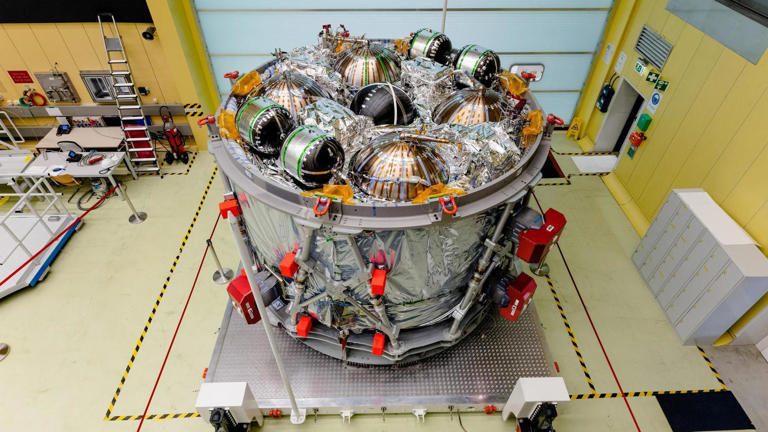
A key part of the Orion spacecraft that the astronauts will be flying in was made in Bremen in Germany.
The European Service Module, which sits behind the crew capsule, is the European Space Agency's contribution to the mission and has been built by Airbus.
"The European Service Module is so important - we basically can't get to the Moon without it," says Sian Cleaver, a spacecraft engineer at Airbus.
"It provides the propulsion that Orion needs to get us to the Moon."
Its large solar arrays will generate all the electrical power for the craft, she adds.
"We've also got these big tanks full of oxygen and nitrogen, which are mixed to make air, and also water, so that we can provide everything that the astronauts need in the crew module to keep them alive on their journey."
Inside their cleanroom, the team is busy building more modules for future Artemis missions. Each one takes about 18 months to put together but has taken thousands of engineering hours to design. Everything on board has to work perfectly.
"We've got to get those astronauts to the Moon and then back again, completely safely," says Cleaver.
With the rocket now on launchpad 39B, the Artemis team is working around the clock to get it ready for lift off.
The mission has already faced years of delays, and Nasa is under pressure to get the astronauts on their way as soon as possible. However, the US space agency said it would not compromise on safety.
John Honeycutt, chair of the Artemis mission management team, said: "I've got one job, and it's the safe return of Reid and Victor and Christina and Jeremy.
"We're going to fly when we're ready... crew safety is going to be our number one priority."

#430 Re: Exploration to Settlement Creation » WIKI Project Designing for Mars » 2026-01-18 12:08:54
We launched the evening with discussions of kbd512's vision of a ring/dome habitat
SpaceNut joined in with numerous suggestions for materials and procedures.
We settled on a population to serve: 1000
That is a nice round number to work with. SpaceNut agreed to consult his AI friends to see if any of them can work out the requirements for all the equipment needed to sustain that population.
We are in need of fresh water and sewerage systems, and the equipment to recover fresh water from the sewerage.
SpaceNut is in an industry that deals with humans in closed life support environments.
Hopefully he will be able to help kbd512 size the complex.
Kbd512 gave us an expectation that some support systems would be inside the building and some outside.
#431 Re: Exploration to Settlement Creation » WIKI Project Designing for Mars » 2026-01-18 12:08:47
cooling or dehumidiation
For a structure with a 200 m (656 ft) diameter and 120 m (394 ft) tall parabolic dome, standard High-Volume, Low-Speed (HVLS) ceiling fans, typically with diameters up to 7.3 meters (24 feet), would be used in a calculated array to provide effective air circulation. Multiple fans, rather than a single massive fan, are required due to the immense size of the space.
Step 1: Calculate the Floor Area and Assess Fan Coverage The floor area of the dome is a circle with a radius of 100 m:\(\text{Area}=\pi \times \text{radius}^{2}=\pi \times 100^{2}\approx 31,416\,\text{m}^{2}\,(338,166\,\text{ft}^{2})\)A single large HVLS fan (e.g., 7.3 m diameter) typically covers between 900 and 1,500 square meters. For cooling purposes, the coverage area is roughly five times the fan's diameter for large-blade fans, but for destratification (air mixing in very high spaces), it can be up to ten times.
Step 2: Determine the Number and Placement of Fans Given the vast area, an array of fans is necessary. The general guideline is to space fans a distance equal to at least one fan diameter apart, or up to three times the diameter depending on the manufacturer and application. For consistent coverage, a grid pattern is ideal. For such a massive, open space, consulting with an HVLS expert for a custom layout drawing is crucial. The number of 7.3-meter (24-foot) fans could range from 21 to over 30 to cover the entire area effectively, depending on specific airflow requirements and building obstructions.
Step 3: Consider Ceiling Height and Fan Mounting The 120 m (394 ft) ceiling is extremely high. While fans perform well when mounted between 6 and 12 meters (20 to 40 feet) above the floor, longer downrods might be needed to position the fans within the occupied zone for optimal air movement. The fans must also maintain safe clearance from the floor (at least 3 m or 10 ft) and other structural elements.
Answer: For a parabolic dome ceiling with a 200 m diameter and 120 m height, multiple HVLS fans with diameters typically ranging from 6.1 meters to 7.3 meters (20 to 24 feet) would be required. The exact number and strategic placement of fans, likely exceeding two dozen units, should be determined through a professional airflow study to ensure uniform air circulation and temperature control
Commercial 7m (7-meter) fans refer to large industrial fans, often HVLS (High-Volume, Low-Speed) ceiling fans, used for cooling vast spaces like warehouses, factories, malls, and arenas, providing massive airflow (measured in CFM) for comfort and energy efficiency in huge commercial areas. You'll find them as massive ceiling units or powerful pedestal/wall-mounted fans designed for serious air movement, not typical home use, with high CFM ratings (thousands) for effective cooling.
Key Characteristics:
Size & Type: Look for HVLS fans (often 7 feet or more in diameter) or large pedestal/wall fans, not standard residential ceiling fans.
Airflow (CFM): Measured in Cubic Feet per Minute; higher CFM means more air moved, crucial for large spaces (e.g., 7000+ CFM is common).
Applications: Warehouses, factories, gyms, shopping centers, agricultural buildings, and large event spaces.
Benefits: Better air circulation, reduced heat, improved comfort, and energy savings over traditional AC in large buildings.
Where to Find Them:
Home Improvement Stores: The Home Depot offers large industrial ceiling fans.
Online Marketplaces: Alibaba.com has many manufacturers for 7m industrial fans.
Specialty Retailers: Amazon.com (for large pedestal/wall fans) and industrial fan suppliers.
When searching, use terms like "HVLS fan," "industrial ceiling fan," "large commercial fan," or specify CFM and diameter (like 7ft or 7m) for best results
#432 Re: Exploration to Settlement Creation » WIKI Project Designing for Mars » 2026-01-18 12:08:40
High-concentration iron ore locations on Mars are found in areas rich in hematite, like Meridiani Planum (famous for "blueberries"), Vallis Marineris, and Utopia Planitia, with the whole planet covered in iron-rich dust, though mining quality requires locating purer deposits. Martian iron exists as abundant hematite (\(Fe_{2}O_{3}\)), easily found in regolith and concretions, and also as metallic nickel-iron meteorites, providing resources for potential In-Situ Resource Utilization (ISRU) to produce steel.
Key Locations & Forms of Iron Meridiani Planum: Known for abundant hematite spherules ("blueberries") found by the Opportunity rover, indicating past water activity that concentrated the ore.Utopia & Amazonis Planitia: Maps show high iron content in these mid-latitude regions.Vallis Marineris & Sinus Meridiani: Detected as deposits of coarse-grained, grey crystalline hematite.
Meteorites: Nickel-iron meteorites litter the surface, offering a direct source of metallic iron that doesn't oxidize easily in Mars' atmosphere. How It Can Be Used for Steel Hematite Reduction: Martian regolith (soil) and hematite deposits are rich in iron oxide (\(Fe_{2}O_{3}\)). Researchers are exploring processes like pyrolysis (heating the dirt to 1000°C) under Martian conditions to extract metallic iron.Metallic Iron Source: The nickel-iron meteorites can be melted down, potentially alloyed with other elements, and cast.
Challenges: While iron is abundant, creating quality steel requires finding concentrated, pure deposits and overcoming challenges like the low-oxygen Martian atmosphere for processing. In Summary: Mars is iron-rich, with rich hematite deposits (like the "blueberries" at Meridiani Planum) and common meteorites providing raw materials. Future colonists could use these local resources to establish an "Iron Age," though significant processing will be needed to extract and refine the metal for steel production
Iron ore is exceptionally abundant on Mars, generally found as iron oxides (magnetite, hematite) in the red dust and surface regolith. High-concentration deposits are primarily located in the northern lowlands spanning from Utopia Planitia to Amazonis Planitia, as well as within Acidalia Planitia. Hematite-rich areas suitable for mining include Meridiani Planum, Valles Marineris, and Aureum/Iani Chaos. Here is a breakdown of how to locate, extract, and convert Martian iron into stainless steel.
High-Concentration Iron Locations on Mars Meridiani Planum: Known for large, concentrated deposits of gray, crystalline hematite (\(Fe_{2}O_{3}\)), particularly small spherules known as "blueberries".Valles Marineris & Chaos Terrains: These areas show signs of ancient water activity that concentrated iron oxides.
Northern Lowlands (Utopia/Amazonis Planitia): Identified by orbital gamma-ray spectrometers as having the highest concentrations of surface iron.Impact Craters (Southern Highlands): High-grade ore systems likely exist in the subsurface, exposed by large crater impacts.
Meteorites: Nickel-iron meteorites are relatively common on the surface, offering a source of high-grade, pre-reduced iron that does not require smelting. How to Make Steel on Mars Since conventional coal-based smelting (coke) is not available, Martian steel production will rely on hydrogen reduction or electric processes. Mining and Concentration: Magnetic processing and sieving can be used to separate iron-rich dust from the regolith.
Reduction (Extracting Iron):Hydrogen Reduction: Hydrogen (produced via electrolysis of Martian water ice) can be used to remove oxygen from iron oxide at roughly 800°C.
Direct Electrolysis: Using heat and electricity to break the bonds between iron and oxygen.Pyrolysis: Heating iron-rich regolith to 1000°C–1400°C to extract iron and create alloys.
Carbon Addition: To turn iron into steel, carbon is necessary. This can be sourced from the atmospheric \(CO_{2}\).Electric Arc Furnace (EAF): The resulting iron can be melted with carbon in an electric arc furnace to produce steel. How to Make Stainless Steel Stainless steel requires iron alloyed with chromium (usually 10.5% or more) and often nickel or molybdenum for corrosion resistance.
Obtain Alloying Elements:Chromium/Nickel: These are essential for stainless steel. While iron is abundant on Mars, finding high concentrations of chromium may require targeted prospecting in volcanic, hydrothermal regions (e.g., Tharsis region).
Recycling: Initial stainless steel production may rely on recycling the high-grade stainless steel from landing vehicles (e.g., SpaceX Starship).
Refining (AOD/VOD Process): The molten iron is transferred to a converter, such as an Argon Oxygen Decarburization (AOD) converter, where oxygen and argon are blown through the melt to reduce carbon content and add chromium/nickel.
Casting and Shaping: The refined molten stainless steel is cast into slabs or billets and shaped into sheets, pipes, or beams.
Key Challenges Energy Consumption: Producing steel requires massive amounts of power, requiring a large-scale solar or nuclear power infrastructure.
Gravity Constraints: Smelting in low gravity (0.38g) requires specialized machinery, likely centrifuges, to separate impurities from the metal.
Refractory Materials: Furnaces need specialized lining to withstand temperatures up to 2200°C
#433 Re: Exploration to Settlement Creation » WIKI Project Designing for Mars » 2026-01-18 12:08:24
Colony or settlement sized
Designing a Mars water system for a crew of 4-6 (initial) to dozens (colony) relies on In-Situ Resource Utilization (ISRU), primarily extracting water from Martian soil/ice via heating or microwave drilling, supplemented by high-efficiency closed-loop recycling of hygiene/wastewater, plus atmospheric water harvesting (like MARRS), all integrated with habitats (MHUs) and power (solar/nuclear), ensuring redundancy for survival and growth.
1. Water Sources & Extraction (ISRU)
Subsurface Ice/Hydrated Minerals: The main source; systems heat regolith (200-500°C) or use microwave energy down boreholes to vaporize water, then collect and condense it.
Atmospheric Water: Systems like MARRS (Mars Atmospheric Resource Recovery System) capture water vapor from the thin Martian atmosphere.
2. Water Processing & Recycling (Life Support)
ECLSS (Environmental Control and Life Support Systems): Highly reliable systems (similar to ISS) to recycle water from urine, humidity, and hygiene.
Bioregenerative Systems: Using algae or plants (in greenhouses/hydroponics) to further purify water and produce food, reducing Earth dependence.
3. System Design for Different Crew Sizes
Early Missions (4-6 crew): Focus on robust, high-reliability closed-loop systems with significant storage (1000+ days' supply) and initial ISRU capability.
Colony (Growing to 20+): Requires large-scale, scalable ISRU plants, modular habitats (MHUs) with extendable capacity, and robust power generation (solar/nuclear).
4. Key Components & Concepts
ISRU Hardware: Mobile units (like Honeybee Robotics' MISWE) for exploration and extraction.
Habitat Modules (MHUs): Inflatable structures with integrated water processing, living areas, and crop growth zones.
Power: Thin-film solar arrays or small nuclear reactors to power extraction and life support.
Redundancy: Critical for survival; backup storage, parallel systems, and emergency escape routes within habitats.
5. Water Needs Estimation
Baseline: Around 0.6-0.7 kg/person/hour (consumption, hygiene, plant growth) in a gravity environment, with high reclamation.
Plants: Require additional water (approx. 0.003 kg/hr/person) not easily reclaimed.
Example Design Framework (for a growing colony)
Initial Landing: Crew of 4-6 with pre-deployed ISRU hardware and life support units.
Expansion (Year 2+): Increase crew (6, 12, 24 per mission) using new missions, deploy larger ISRU facilities, establish larger crop areas, and build more habitat clusters.
ISRU Integration: Automated systems extract water, feed it to storage, processing units, and greenhouses, ensuring continuous supply
The Mars Homestead Project, led by the Mars Foundation and founded by Bruce Mackenzie, focuses on designing the first permanent settlement on Mars using local materials (In-Situ Resource Utilization - ISRU) to support a growing colony. The project emphasizes expanding beyond Earth-dependent exploration to a self-sufficient colony through agricultural and industrial development, rather than just short-term survival.
Key Aspects of the Mars Homestead Colony-Sized Approach
Initial Settlement Structure: The initial base is designed to support up to twelve individuals, eventually growing into a larger, permanent manufacturing community.
ISRU and Life Support: The core concept is "Don't Manage Scarcity; Exploit Abundance," utilizing Martian regolith, water ice, and the atmosphere (CO2) for fuel, construction, and life support.
Construction Methods: The project proposes building habitats by mining and processing local materials, including brick-making, utilizing volcanic caves, or using pressurized, excavated spaces.
"Linear City" Design: Inspired by Paolo Soleri, the layout focuses on constructing along the edge of a mesa or landform to allow for easy expansion.
Energy Generation: The design incorporates nuclear power plants and surface-based solar arrays to power mining, refining, and manufacturing operations.
Common Themes in Associated Presentations
"To Arrive, Survive & Thrive!": A common presentation title from the Mars Foundation (2006) focusing on the mission to design, fund, build, and operate the first permanent settlement.
Technical Papers: Numerous presentations have been given at Mars Society Conventions (e.g., Bruce Mackenzie, 22nd Annual Convention) focusing on the structural architecture, such as "lava casting" (an ISRU approach using local soil for structural elements).
Development Stages: Presentations often detail the progression from landing and initial shelter to a self-sustaining, growing, and thriving colony.
For a detailed look at the slides, you can view the 2006 overview presentation or search for Bruce Mackenzie's presentations on the Mars Society YouTube channel
Mars Homesteads colony plan to recycle waste
Dead link marshome.org site now gone
Related topic Sewage treatment
#434 Re: Exploration to Settlement Creation » WIKI Project Designing for Mars » 2026-01-18 12:07:27
Exploration sized
Designing a Mars water production system for a crew of 4-6 involves a multi-pronged approach: In-Situ Resource Utilization (ISRU) from Martian soil/ice, highly efficient water recycling (up to 98%+ on ISS) for transit, and robust storage/treatment systems, requiring advanced drills/miners, Sabatier reactors, electrolysis units, filtration (RO/Forward Osmosis), and storage tanks (FRP/PEX) with nanotechnology for a 1.5-2.5 year mission to meet hygiene, metabolic, and fuel needs. Crew size (often 4-6) dictates scale, with larger crews needing more redundancy and capacity, but fewer crew (e.g., 3) significantly reduces mass/cost, influencing system design. Key System Components & Design Principles Water Sourcing (ISRU):Regolith Extraction: Drills/heaters (like Mars Ice Drill concept) to extract water vapor from Martian soil (regolith) or subsurface ice.Atmospheric Extraction: Condensing atmospheric water vapor, though less direct than soil extraction.Chemical Conversion (Sabatier/Electrolysis): Using imported hydrogen and atmospheric \(\text{CO}_{2}\) to make methane fuel and water (\(\text{H}_{2}\text{O}\)), then electrolyzing water for breathing oxygen/rocket oxidizer.Water Production & Processing:Water Recovery System (WRS): Similar to ISS, recycling urine, humidity condensate, hygiene water with high efficiency (near 98%).Treatment: Reverse Osmosis (RO), Forward Osmosis (FO), distillation, and advanced filtration for purification.Storage: Lightweight tanks (Fiber-Reinforced Plastic - FRP, crosslinked Polyethylene - PEX) with leak detection, heating to prevent freezing.Life Support Integration:Metabolic Water: Generated from food/fuel (like the movie The Martian's concept using rocket fuel, though ISRU is preferred).Hygiene Water: Separate loop with efficient recovery and reuse. Crew Size Considerations (4-6 Astronauts) 6 Crew (Conjunction Class Mission): Longer stays (18 months surface), higher demand for water, requires larger ISRU units, more robust recycling, significant water storage redundancy.4 Crew (Transit/Surface): Lower overall demand, potentially simpler systems, but still needs high reliability for long durations (400-500 days transit + surface stay).Smaller Crew (3): Significantly reduces mass/cost/complexity, making larger ISRU systems more feasible or requiring less overall capacity, but fewer hands for maintenance. Mission Profile Example (6 Crew, ~2.5 Years Total) Transit (9-12 months): Relies heavily on recycled water, backup supplies (30+ metric tons if all water carried).Surface Stay (18 months): ISRU becomes critical for sustaining hygiene, metabolic needs, and propellant production for return.Key Design Goal: Minimize water mass from Earth; maximize ISRU & recycling to make the mission feasibl
#435 Re: Exploration to Settlement Creation » WIKI Project Designing for Mars » 2026-01-18 11:57:26
project design to produce water on mars system for science mission size
Designing a Mars water production system for science missions involves extracting subsurface ice or hydrated minerals, processing them (heating/microwave), and collecting the vapor, using methods like drills (Coiled Tubing), heated regolith extraction (C.R.A.T.E.R.), or Rodriguez Wells, focusing on reliability, low mass, power efficiency for tasks like life support (ISRU) and propellant, with key components including drills, heaters, condensers, storage, and potentially atmospheric processors for oxygen/methane.
Core Concepts & Technologies
In-Situ Resource Utilization (ISRU): The overarching goal is using local Martian resources (water ice, atmospheric CO2) to create needed consumables (water, oxygen, methane fuel).
Extraction Methods:
Drilling: Using drills (like the Mars Ice Drill or Coiled Tubing) to reach buried ice, potentially melting it in situ.
Regolith Heating: Heating Martian soil (regolith) to release bound water molecules (e.g., 200-500°C).
Rodriguez Well (Rodwell): A method using a well to access large subsurface ice deposits, especially glacier-like forms.
Processing & Collection:
Microwave Heating: Efficiently freeing water from soil.
Condensers: Cooling water vapor to collect liquid water.
Storage: Tanks for storing extracted water.
Atmospheric Processing (for oxygen/methane): Using the Sabatier process (CO2 + H2 → CH4 + H2O) to make fuel, creating water as a byproduct.
System Design for Science Missions (Scalable)
Targeting: Use orbital data to find shallow subsurface ice or hydrated minerals, crucial for accessibility.
Excavation/Drilling Unit: A robust, potentially semi-autonomous system (e.g., drill with air/water jets) to reach the ice/hydrated material.
Processing Unit:
Heating Element: For regolith (microwaves/resistive heating) or sublimating ice.
Separation/Condensation: Capturing water vapor.
Collection & Storage: A reliable system to meter and store the water in tanks, potentially with internal heating/cooling loops.
Power & Control: Solar/RTG power, autonomous controls for simple operations, and telemetry for remote monitoring.
Integration (Optional): Link to a life support system (like CHRSy) for crewed missions or propellant production.
Example Project Elements (Student/Small Scale)
C.R.A.T.E.R. System (Colorado School of Mines): A conveyor belt system to feed Martian soil into a microwave-heated casing for water extraction.
Mars Ice Drill (FAU): A drill to penetrate ice, heat it, and pump water to the surface for collection
Designing a Mars water system for a science mission (e.g., 3-6 crew) involves In-Situ Resource Utilization (ISRU) like extracting subsurface ice (drilling/melting) or atmospheric vapor, combining with water recycling (ISS-style) for reliability, and using systems like Sabatier reactors for propellant/oxygen production, all needing redundancy and significant power (160kW+) for a ~1.5 yr stay, balancing mass/cost with crew needs for drinking, hygiene, science, and crucial life support. Key Design Components & Technologies Water Sourcing (ISRU)Subsurface Ice Extraction: Drilling (e.g., Coiled Tubing method) to access buried ice, followed by melting.Atmospheric Extraction: Capturing water vapor from the Martian atmosphere.Waste & Recycling: Advanced systems to recover water from urine, humidity, and hygiene, similar to ISS but with higher reliability for Mars.Water Processing & StoragePurification: Filtration, reverse osmosis, distillation, and UV treatment.Storage: Durable tanks (FRP, PEX) with anti-freeze/heating to prevent freezing, plus distribution piping.Water for Propulsion & Life SupportSabatier Reactor: Uses imported Hydrogen (\(H_{2}\)) and Martian Carbon Dioxide (\(CO_{2}\)) to create methane (\(CH_{4}\)) fuel and water (\(H_{2}O\)).Electrolysis: Splits water into Hydrogen and Oxygen, providing breathable air and rocket propellant (for ascent/return). Crew Size & System Implications Crew Size (e.g., 3-6): Impacts total water needed (drinking, hygiene, food prep, science), influencing habitat volume, water processing capacity, and ISRU system scale.Mass & Cost: ISRU dramatically cuts Earth-launched mass by using local resources, making missions feasible and more autonomous.Reliability: Higher redundancy and robust systems are critical due to the long travel time and inability to quickly resupply if systems fail. Example Mission Scenario (6 Crew) Pre-deployed Cargo: Habitat, ISRU plant, Descent/Ascent Vehicle (DAV) sent ahead.Crew Transit: Transported in a separate vehicle, potentially using water electrolysis for propulsion.Surface Operations: ISRU system extracts water, processes it, and stores it; water is used for life support and creating propellant for return. Key Considerations for Science Missions Power: Significant power (160kW+) needed for ISRU, life support, and thermal control.Science Payload: Water use for scientific experiments (e.g., hydroponics, sample processing) must be budgeted.Planetary Protection: Strict protocols for handling potential Martian microbes
Water Extraction from Martian Soil
The topic we have
ISRU Technology Development for Extraction of Water from the Mars Surface
#436 Re: Exploration to Settlement Creation » WIKI Project Designing for Mars » 2026-01-18 11:57:14
dummy page
#437 Re: Exploration to Settlement Creation » WIKI Project Designing for Mars » 2026-01-18 11:57:03
project design to produce food for mars crew sizes during colony or settlement missions
Designing a Mars food system involves closed-loop, resource-efficient bioregenerative systems, integrating high-yield crops (wheat, soy, sweet potatoes), microbial/algae protein, potentially cultured meats, and fungi, within vertical farms using Martian regolith amendments and recycled water, requiring minimal external resupply for large settlements, focusing on nutrition, caloric density, minimal waste, and crew effort, as highlighted by NASA's Deep Space Food Challenges.
Core Components of a Martian Food System
Crop Production:
Vertical Farms: Soil-less, hydroponic/aeroponic systems in controlled environments (modules) to maximize space and nutrient delivery.
Suitable Crops: High-calorie staples like wheat, corn, soybeans, peanuts, and sweet potatoes.
Soil Enhancement: Using Martian regolith (soil) amended with organic matter from composted waste, fungi, and worms for long-term soil building.
Protein Sources:
Microbial/Algae: Cultivating bacteria, fungi (mushrooms), and algae for nutrient-rich protein.
Insects/Cultured Meat: Crickets or lab-grown meat could supplement diets, reducing space/resource needs compared to traditional livestock.
Resource Management (Closed-Loop):
Water Recycling: Essential for all life support, including hydroponics.
Waste Management: Incineration or biological digestion (anaerobic) to recover nutrients and water, minimizing stored waste.
Atmosphere Control: Regulating CO2, temperature, humidity within grow modules.
System Integration:
Modular Design: Interconnected modules for different functions (growing, processing, living).
Automation & AI: To manage complex growing conditions and minimize crew labor.
Energy Efficiency: Critical for lighting and environmental control, potentially using solar or nuclear power.
Design Considerations for Scale
Initial Crews (Small Scale): Focus on high-efficiency, pre-packaged food supplemented by early, compact growing systems.
Settlement Growth (Large Scale): Shift to large-scale, self-sustaining systems, modeling needs for potentially thousands or millions, incorporating tunnels for space.
Nutritional Completeness: The system must provide 100% of required nutrients, not just calories, for long-duration health.
Key Technologies & Challenges
Genetic Engineering: Modifying plants for higher productivity and CO2 consumption.
3D Bioprinting: For creating complex food structures.
Sustainability: Achieving food independence from Earth, a significant long-term goal.
This project design concept integrates ideas from NASA's challenges and scientific modeling, emphasizing bioregenerative life support for sustainable Martian settlements.
#438 Re: Meta New Mars » Housekeeping » 2026-01-18 11:39:28
A Borehole Thermal Energy Storage (BTES) system, involving a series of U-tube pipes connected in a closed-loop and drilled 50–200m deep, would be necessary to transfer heat between the habitat and the deep ground.
The ground loop is dug and the filled where you would like it so if you want the loop in the ziggurat structure it could be done on even beneath the entire structure the loop does not care where it is so long as its at a given depth to become a stable location of temperature gradient.
As far as something to hold internal items that are not load baring for the structure it depends on how much materials remains after the dome is built.
I gave you in the topic two different methods to get what we need one that costs power energy and one that uses waste radiated heating with less energy being used to achieve the goal.
The heat pump also give cooling while a separate cooling loop is required to supplement the waste heat system which increases resources that might not be present.
#439 Re: Home improvements » Heat Pump - Heat Pumps » 2026-01-18 09:16:35
Ground heat pumps (geothermal) are a promising concept for Mars settlements, using the relatively stable underground temperature of the regolith for efficient heating and cooling, supplementing solar/nuclear power, and can even be reversed to manage waste heat, though deep drilling for consistent heat is challenging initially, requiring significant infrastructure. While NASA currently lacks deep Mars data, shallow systems could exploit the day-night temperature swings, and larger, deep-drilled systems offer long-term potential for large-scale colonies, making them key for sustainable power and thermal management.
How it works on Mars
Heating: In winter or cold periods, heat is extracted from the ground (regolith) and transferred into habitats.
Cooling: In summer or during peak operation, the system can reverse, dumping waste heat into the ground to cool habitats.
Shallow vs. Deep: Shallow systems use the day-night temperature difference, while deeper systems tap into the planet's consistent internal heat, similar to Earth's geothermal systems.
Benefits for Mars settlements
Efficiency: Heat pumps are much more efficient than electrical resistance heating, using less power for the same thermal effect, according to a presentation at AAPG 2017.
Reduced Transport: Uses local resources (regolith) and electricity, reducing reliance on fuel imports from Earth, notes the AAPG presentation.
Waste Heat Management: Effectively uses waste heat from industrial processes or power generation, as discussed in a Reddit thread.
Reliability: Less affected by Martian dust storms that hinder solar power, as noted on the NASA Spaceflight Forum.
Challenges
Drilling: Deep drilling for consistent geothermal sources is technologically challenging and expensive for early colonies, though feasible for later-stage settlements, as pointed out in a Quora discussion.
Data Gap: NASA currently has limited data on Mars's internal thermal gradients, notes a NASA document.
Future potential
Geothermal is considered a vital long-term solution for large, self-sustaining Martian societies, potentially alongside solar and nuclear power, states a Utah FORGE article.
A ground heat pump system for a 200-meter diameter, 120-meter tall Mars settlement dome would serve primarily as a high-capacity, long-term thermal management system rather than a standard HVAC unit, leveraging the high insulating capacity of Martian regolith to maintain comfortable internal temperatures (approx. 20°C) against an average ambient temperature of -63°C. Due to the immense heat loss to the cold Mars environment, this system would likely require over 1 MW of heating power, with the ground acting as both a heat source and a heat sink.
Key Technical Considerations
Heat Loss and Power Needs: A 200m dome (volume ~83 million m³) has massive surface area, requiring substantial energy to prevent heat loss, with estimates exceeding 100 MW of heating during, for instance, a cold winter night.
Regolith as Insulation: Martian regolith is a poor thermal conductor (approx. 0.039 W/(m·K)), which is beneficial, as it acts as a natural insulator when used to cover or bury portions of the dome.
Subsurface Temperatures: While surface temperatures fluctuate wildly (-153°C to 20°C), deep underground temperatures on Mars are generally below the freezing point of water, requiring the heat pump to manage a large, constant temperature differential.
System Design (BTES): A Borehole Thermal Energy Storage (BTES) system, involving a series of U-tube pipes connected in a closed-loop and drilled 50–200m deep, would be necessary to transfer heat between the habitat and the deep ground.
Operational Strategy
Thermal Regulation: The system would likely operate as a water-to-water heat pump to deliver radiant, in-floor heating at the ground level, maintaining a stable temperature.
Waste Heat Usage: The heat pumps can be used in tandem with nuclear reactor waste heat (approx. 210 kW of thermal energy per 40 kWe reactor) to warm the surrounding regolith barrier, which helps keep the dome insulated.
Thermal Conductivity Management: The system would need to ensure the ground remains frozen outside the dome to prevent the leakage of liquid water or air through the soil, using the ice as a natural sealant.
Advantages and Challenges
Advantage - Efficiency: Ground source systems provide high efficiency, potentially reducing energy demand by 25-50% compared to conventional, less efficient systems.
Challenge - Installation: Drilling deep boreholes in Martian soil requires robust, heavy-duty mining equipment that must be brought from Earth or constructed locally.
Alternative: Given the high energy demand, a combination of thermal insulation (like an inflated dome with an insulating layer) and in-floor heating is often considered more practical than relying solely on heat pumps.
Given the scale, the heat pump would likely function as part of a hybrid system, managing the base temperature while, for instance, nuclear or solar-powered radiators handle peak heating/cooling loads
#440 Re: Exploration to Settlement Creation » WIKI Project Designing for Mars » 2026-01-18 09:09:08
Exploration style mission:
Designing a Mars food system involves creating integrated, closed-loop systems that blend pre-packaged rations with on-site production (hydroponics, cellular agriculture, insect farming) for nutrition, sustainability, and psychological well-being, addressing challenges like Martian soil toxicity, radiation, and resource limitations with technologies like AI climate control, specialized LEDs, water recycling, and nuclear power, as seen in concepts like NASA's Mars to Table Challenge and Project MarsGarden.
Core Components of the Food System
Pre-packaged Meals: Initial supply of nutrient-dense, shelf-stable foods, with some processed for variety (e.g., grain milling for bread).
Hydroponics/Aeroponics: Growing crops (leafy greens, herbs, small fruits, potatoes) without soil in nutrient-rich water, using filtered Martian water and LED lighting.
Cellular Agriculture: Culturing meat (like chicken) and fungi for protein, reducing reliance on Earth-based livestock.
Insect Farming: Crickets or mealworms provide efficient protein, requiring minimal space and resources.
Waste Recycling: Algae and fungi break down human waste and CO2 to create compost and O2, closing the loop.
Design Considerations & Technologies
Environment: Greenhouses (like MarsGarden) offer radiation shielding (via ice/water layers) and psychological benefits, creating a familiar Earth-like space.
Energy: Nuclear reactors provide consistent power, crucial for lighting and life support.
Water: Martian water ice is melted, filtered, and used for irrigation.
Soil: Martian regolith is toxic (perchlorates) and needs washing, enriching, or bypass through hydroponics.
Automation & AI: AI manages climate (lighting, temperature) and monitors plant health for autonomous operation.
Resource Efficiency: Focus on systems with minimal mass (Equivalent System Mass) and waste, maximizing water and nutrient recycling.
Key Challenges
Sustainability: Achieving independence from Earth resupply for multi-year missions.
Nutrition & Palatability: Ensuring balanced diets and combating "menu fatigue" with diverse, tasty foods.
System Integration: Seamlessly blending different technologies (hydroponics, bioreactors) with life support systems.
Acceptability: Overcoming potential aversion to novel foods like algae or insect protein.
Current Efforts
NASA's Deep Space Food Challenge & "Mars to Table": Global competitions seeking integrated, self-sustaining food system designs.
CHAPEA (Crew Health and Performance Exploration Analog): Testing food systems in Mars-analog environments.
Project HOME (Hydroponic Operations for Mars Exploration): Researching hydroponic systems and crop yields (e.g., Moringa oleifera) under simulated Martian conditions
#441 Re: Exploration to Settlement Creation » WIKI Project Designing for Mars » 2026-01-18 09:08:54
project design to produce food for mars crew sizes during science missions
Designing a food system for Mars missions involves integrating prepackaged staples, hydroponics/aeroponics for fresh produce, and novel methods like bioreactors for protein, all managed by AI with 3D printing for customization, to ensure nutrition, prevent menu fatigue, minimize waste, and support crew morale through variety and flavor, addressing challenges like resource scarcity, toxicity, and microgravity effects. NASA's "Mars to Table" challenge pushes for holistic, self-sustaining designs combining these technologies, from waste recycling to nutrient synthesis, for long-duration independence.
Key Components of a Mars Food System
Prepackaged Food & Preparation:
Staples: Shelf-stable, nutrient-dense, space-optimized foods, with advanced packaging to protect against light, gases, and physical stress.
Processing: Equipment for mixing, heating (under reduced pressure), and sterilization, possibly using bioreactors for converting waste products.
Fresh Produce (Hydroponics/Aeroponics):
Gardens: Closed-loop systems using mineral-laced water (hydroponics) or mist (aeroponics) for vegetables (carrots, peppers) and fruits.
Light & Water: LED lighting and mirrors to supplement Mars' weaker sunlight; filtered Martian ice for irrigation.
Novel Production Methods:
Microbial/Gas Fermentation (HOBI-WAN): Using bacteria, electricity, air (CO2, H2), and recycled urea (from urine) to create protein-rich powders, reducing reliance on Earth supplies.
Cellular Agriculture: Potential for lab-grown meat for complete nutrition and variety.
Technology & Logistics:
3D Printing: Synthesizing food from macronutrient powders (proteins, starches, fats) with added flavors/micronutrients, offering customization and reducing waste.
AI & Automation: Managing climate control, nutrient delivery, and recipe generation for optimal health and morale.
Challenges & Solutions
Martian Soil: Toxic (perchlorates); needs washing, enriching, or bypassing with soilless systems.
Microgravity/Partial Gravity: Affects fluid dynamics, bubble behavior, and microbial settlement; requires forced mixing and tailored system design.
Waste Management: Recycling urine (nitrogen source) and organic waste into compost/nutrients.
Menu Fatigue: Variety is crucial for long-term physical and mental health, addressed by combining sources and adding flavor/texture options.
Project Design Example (Integrated System)
A Mars food system integrates these: a core bioreactor for protein, hydroponic bays for greens, 3D printers for varied textures, and pre-packaged essentials, all managed by an AI system that adjusts recipes based on crew needs and available resources, turning waste into nutrients for a truly self-sufficient cycle
#442 Re: Exploration to Settlement Creation » WIKI Project Designing for Mars » 2026-01-18 09:08:45
More dummy place holders
#443 Re: Exploration to Settlement Creation » WIKI Project Designing for Mars » 2026-01-18 09:05:12
A thermosyphon cooling system uses natural convection (hot fluid rises, cold fluid sinks) to circulate a coolant (like water or oil) for passive, pump-free heat removal, relying on gravity and density changes to create a continuous flow from a heat source to a radiator or heat sink and back. Common in early cars (Ford Model T), modern electronics, and solar water heaters, it's simple, reliable, and energy-efficient but best for lower heat loads where the radiator sits above the heat source.
How it Works (Engine Example)
Heat Absorption: Water in the engine's water jacket absorbs heat from the cylinders.
Rising Hot Water: The heated water becomes less dense and rises through an upper hose to the radiator's top tank.
Cooling in Radiator: Air passing over the radiator fins (often aided by a fan) cools the water as it flows down through the tubes.
Sinking Cold Water: The now cooler, denser water sinks to the radiator's bottom tank and returns to the engine via a lower hose, completing the cycle.
Key Principles & Components
Natural Convection: Relies on the difference in density between hot and cold fluids.
Gravity: The radiator must be positioned higher than the heat source for gravity to assist flow.
No Pump: Eliminates the need for a mechanical water pump, saving energy and reducing complexity.
Heat Exchanger: A radiator or cooling coils dissipate heat into the surrounding air or another cooling medium.
Applications
Automotive: Older cars (e.g., Ford Model T) and some small engines.
Electronics: Cooling CPUs and power modules in servers, telecom base stations, and control panels.
Solar: Solar water heaters use thermosiphons to circulate water.
Industrial: Cooling mechanical seals in pumps.
Advantages & Limitations
Pros: Simple, reliable, low maintenance, no extra energy input needed.
Cons: Less efficient for high heat loads; requires specific vertical positioning (radiator above engine/heat source)
#444 Re: Exploration to Settlement Creation » WIKI Project Designing for Mars » 2026-01-18 08:55:20
Martian Dome Air Management Guidance
This one is about guidance for managing the air inside a large living space under consideration for Mars. The building would be a dome with base diameter of 200 meters and elevation of 120 meters. The wall and ceiling of the dome would be in the shape of a catenary. LEarth Analogues for Large Enclosed Space Air Management
Your habitat is a combination of a massive enclosed volume, like a stadium or dome, with the closed-system requirements of a submarine or spacecraft.
1. Large Structure HVAC and Airflow (Dome Structures, Malls, Airports)
The primary challenge in a large dome is ensuring uniform air quality and thermal comfort across the massive volume, especially given the height.
Air Circulation: The search results highlight the use of High-Volume Low-Speed (HVLS) fans (like large industrial ceiling fans) to prevent air stagnation, particularly at floor level where people are. These fans help push lower, cooler air upwards and assist in the distribution of conditioned air.
Air Stratification (A Key Dome Concern): Hot air rises. In a 120m high dome, this is a significant concern, leading to a massive temperature gradient (stratification) between the floor and the ceiling, wasting energy, and stressing the dome structure's seals.
Solution: Air-Rotation Technology (as mentioned in the search) or similar systems are designed to gently and evenly mix the air from floor to ceiling to maintain uniform temperatures and reduce heat loss through the upper structure.
Ventilation Strategy: Earth-based mechanical ventilation in large buildings often involves injecting fresh air at lower levels and extracting stale air from upper layers. In your Mars dome, the "fresh air" source is the recycled and regenerated interior air, making the Air Change Rate (ACH) a metric for circulation and purification, rather than exchange with the outside.
2. Confined and High-Occupancy Systems (Cruise Ships, Hotels, Submarines)
The closed nature of the Martian habitat requires lessons from environments where air is continuously recycled and filtered.
Contaminant Control: In a sealed environment, pollutants (Volatile Organic Compounds (VOCs) from materials, human biowaste, cooking, and off-gassing from machinery/soil) must be actively removed.
Cruise Ships: Use advanced air quality systems for external compliance (SOx, NOx), but internally, the focus is on robust filtration (including HEPA for particulates/microbes) and ventilation adjustments based on CO 2 monitoring in high-occupancy areas like dining halls.
Submarines/Spacecraft (Most Relevant): These use multi-stage Atmosphere Revitalization Systems (ARS):CO 2 Removal: Technologies like Solid Amine Systems (Sabatier reaction on ISS for water recovery) or Amine Swing-Bed systems are essential.
Trace Contaminant Removal (TCR): Catalytic oxidizers and activated carbon beds are used to remove VOCs and other gaseous byproducts.
Oxygen Generation: Electrolysis of water is the primary method, which is presumed to be possible in your habitat.
Humidity Management: The search noted high humidity leading to condensation and mold in domes. Given the presumption of sufficient water for residents and a large green space, humidity control will be critical to prevent condensation on the cold dome walls (which could lead to degradation and corrosion) and to maintain plant health. Dehumidification units will be necessary.
Pressure Management: Unlike the Earth examples, your dome must maintain a pressure differential with the near-vacuum of Mars. The air management system is integral to structural integrity (for air-supported domes) or, at least, minimizing leakage in rigid structures.
?️ Key Design Considerations for the Martian Dome
Based on the Earth analogies, here are the most critical air management elements for your catenary dome:
Design Element Goal Earth Analogue Guidance
Air Circulation Prevent stagnation and stratification in a 120m-high volume. Utilize HVLS fans and Air-Rotation Systems to ensure uniform temperature and air quality from floor to apex.
Atmosphere Revitalization Maintain breathable O 2 /N 2 mix and remove metabolic byproducts. Implement a Closed-Loop System (Submarine/ISS ARS model) for CO 2 removal, O 2 generation (via water electrolysis), and N 2 makeup/recycling.
Contaminant Control Remove particulates and trace gases (VOCs, etc.).
Use high-efficiency HEPA filtration for particulates and dedicated Trace Contaminant Removal (TCR) beds (activated carbon/catalytic oxidizers) for gases.
Energy Efficiency Minimize power consumption for air handling on Mars. Use demand-response strategies (adjusting ventilation based on real-time CO 2 and occupancy) and highly efficient motors/fans. The dome shape itself is inherently more efficient for heating/cooling than a cube.
Monitoring & Safety Ensure resident health and system stability. Employ a network of real-time air quality sensors (for O 2 , CO 2 , CO, VOCs, humidity, and temperature) to trigger enhanced ventilation/filtration modes as needed (similar to "Max-Vent Mode" in industrial domes).
Dehumidification systems remove excess moisture from the air to improve comfort, health, and building integrity by preventing mold, allergens, and structural damage, using methods like refrigeration (cooling coils to condense water) or desiccants (absorbing moisture). These systems range from portable units for basements to whole-house integrated systems or large industrial setups, often connecting to HVAC or operating independently for precise humidity control (aiming for 40-60% RH).
Types of Systems
Refrigerant Dehumidifiers: Use a chilled coil to cool air below its dew point, condensing water into a collection pan or drain, similar to an air conditioner but focused on moisture removal.
Desiccant Dehumidifiers: Employ moisture-absorbing materials (desiccants) to pull water from the air, offering precise control in varied temperatures, ideal for industrial or low-humidity needs.
Whole-House Systems: Integrated with your HVAC, these handle humidity for the entire home, often using a dedicated dehumidifier to reduce the AC's load.
Portable Units: Standalone devices for specific rooms, basements, or crawl spaces.
Ventilation Preconditioning: Systems that dehumidify incoming outdoor air before it enters the building, reducing load on main systems.
Key Benefits
Health: Reduces mold, mildew, dust mites, and allergens, improving respiratory health.
Comfort: Eliminates that "sticky" feeling, making indoor air feel cooler.
Property Protection: Prevents warping, rot, musty odors, and pest issues in homes and structures.
HVAC Efficiency: Allows air conditioners to focus on temperature (sensible load) rather than moisture (latent load).
Common Applications
Residential: Basements, crawl spaces, whole homes, especially in tight, energy-efficient houses.
Commercial/Industrial: Warehouses, manufacturing, data centers, hospitals, pools, and ice rinks requiring specific low humidity levels
#445 Re: Exploration to Settlement Creation » WIKI Project Designing for Mars » 2026-01-18 08:54:47
Gasses inside are hot so they float to the top of the dome accumulating. Cold gasses sink and can come from the floor building up over time.
other is from bacteria and plant growth plus from the humans that are inside.
Also this was the heat source from burning methane for the food soil growth cells to keep temperature to create co2 but incomplete burn makes Co...
Human respiration primarily involves taking in oxygen and exhaling carbon dioxide and water vapor, but the air we breathe out is a mixture containing nitrogen, unused oxygen, and trace amounts of other waste gases like volatile organic compounds (VOCs), nitric oxide (NO), and ammonia (NH3). While carbon dioxide is the main waste product of cellular respiration, exhaled air still contains a significant amount of nitrogen (about 78%) and some oxygen (around 16%).
Key Gases Given Off Carbon Dioxide (\(CO_{2}\)): The primary waste gas, produced when cells use oxygen to break down sugar for energy.Water Vapor (\(H_{2}O\)): A byproduct of cellular metabolism, released as humidified vapor.
Nitrogen (\(N_{2}\)): The most abundant gas in the air, most of which is exhaled unchanged, as humans don't use it.Oxygen (\(O_{2}\)): A portion of the oxygen we inhale isn't used and is exhaled, which is why rescue breaths in CPR can still provide oxygen.
Trace Gases: Small amounts of other substances, including:Volatile Organic Compounds (VOCs).Nitric Oxide (NO).Ammonia (NH3).Carbon Monoxide (CO).Alcohol (when consumed).
The Process Inhalation: Air (21% Oxygen, 78% Nitrogen, ~0.04% Carbon Dioxide) enters the lungs.
Gas Exchange: In the alveoli (tiny air sacs in the lungs), oxygen moves into the blood, and carbon dioxide moves from the blood into the alveoli.
Exhalation: The diaphragm and chest muscles push air out, carrying the waste \(CO_{2}\) and water vapor, along with unused nitrogen and oxygen, out of the body
For a structure with a 200 m (656 ft) diameter and 120 m (394 ft) tall parabolic dome, standard High-Volume, Low-Speed (HVLS) ceiling fans, typically with diameters up to 7.3 meters (24 feet), would be used in a calculated array to provide effective air circulation. Multiple fans, rather than a single massive fan, are required due to the immense size of the space.
Step 1: Calculate the Floor Area and Assess Fan Coverage The floor area of the dome is a circle with a radius of 100 m:\(\text{Area}=\pi \times \text{radius}^{2}=\pi \times 100^{2}\approx 31,416\,\text{m}^{2}\,(338,166\,\text{ft}^{2})\)A single large HVLS fan (e.g., 7.3 m diameter) typically covers between 900 and 1,500 square meters. For cooling purposes, the coverage area is roughly five times the fan's diameter for large-blade fans, but for destratification (air mixing in very high spaces), it can be up to ten times.
Step 2: Determine the Number and Placement of Fans Given the vast area, an array of fans is necessary. The general guideline is to space fans a distance equal to at least one fan diameter apart, or up to three times the diameter depending on the manufacturer and application. For consistent coverage, a grid pattern is ideal. For such a massive, open space, consulting with an HVLS expert for a custom layout drawing is crucial. The number of 7.3-meter (24-foot) fans could range from 21 to over 30 to cover the entire area effectively, depending on specific airflow requirements and building obstructions.
Step 3: Consider Ceiling Height and Fan Mounting The 120 m (394 ft) ceiling is extremely high. While fans perform well when mounted between 6 and 12 meters (20 to 40 feet) above the floor, longer downrods might be needed to position the fans within the occupied zone for optimal air movement. The fans must also maintain safe clearance from the floor (at least 3 m or 10 ft) and other structural elements.
Answer: For a parabolic dome ceiling with a 200 m diameter and 120 m height, multiple HVLS fans with diameters typically ranging from 6.1 meters to 7.3 meters (20 to 24 feet) would be required. The exact number and strategic placement of fans, likely exceeding two dozen units, should be determined through a professional airflow study to ensure uniform air circulation and temperature control
Commercial 7m (7-meter) fans refer to large industrial fans, often HVLS (High-Volume, Low-Speed) ceiling fans, used for cooling vast spaces like warehouses, factories, malls, and arenas, providing massive airflow (measured in CFM) for comfort and energy efficiency in huge commercial areas. You'll find them as massive ceiling units or powerful pedestal/wall-mounted fans designed for serious air movement, not typical home use, with high CFM ratings (thousands) for effective cooling.
Key Characteristics:
Size & Type: Look for HVLS fans (often 7 feet or more in diameter) or large pedestal/wall fans, not standard residential ceiling fans.
Airflow (CFM): Measured in Cubic Feet per Minute; higher CFM means more air moved, crucial for large spaces (e.g., 7000+ CFM is common).
Applications: Warehouses, factories, gyms, shopping centers, agricultural buildings, and large event spaces.
Benefits: Better air circulation, reduced heat, improved comfort, and energy savings over traditional AC in large buildings.
Where to Find Them:
Home Improvement Stores: The Home Depot offers large industrial ceiling fans.
Online Marketplaces: Alibaba.com has many manufacturers for 7m industrial fans.
Specialty Retailers: Amazon.com (for large pedestal/wall fans) and industrial fan suppliers.
When searching, use terms like "HVLS fan," "industrial ceiling fan," "large commercial fan," or specify CFM and diameter (like 7ft or 7m) for best results
#446 Re: Exploration to Settlement Creation » WIKI Project Designing for Mars » 2026-01-18 08:54:42
Submarine air quality management is crucial for crew health in confined spaces, using sophisticated HVAC systems with HEPA/carbon filters, electrostatic precipitators, and CO2 scrubbers (soda lime/regenerative) to remove particulates, odors, and gases like carbon monoxide (CO) and hydrogen (H2). Key processes include oxygen generation (electrolysis), contaminant removal (catalytic burners, filters), constant monitoring (CAMS, NASA tech, portable detectors for O2, CO2, CO, etc.), and strict exposure limits (EEGLs/CEGLs) set by bodies like the National Academies, balancing life support with equipment needs.
Key Systems & Methods
Air Circulation & Filtration: Recirculated air passes through fans, HEPA filters for particles, activated carbon for odors/VOCs, and electrostatic precipitators.
CO2 Removal: Lithium hydroxide (soda lime) or regenerative systems scrub exhaled CO2.
Oxygen Generation: Electrolysis of water (H2O from seawater) produces oxygen (O2); hydrogen (H2) is vented.
Contaminant Control:
CO/H2 Burners: Catalytic oxidizers (using Hapcalite) convert CO and H2 into CO2 and water.
Restricted Items List: Limiting volatile chemicals to reduce atmospheric buildup.
Monitoring & Control
Central Atmospheric Monitoring System (CAMS): Tracks O2, CO2, CO, hydrocarbons, refrigerants, etc..
Portable Detectors: Colorimetric tubes and handheld devices verify levels of acetone, ammonia, chlorine, etc..
Exposure Limits: U.S. Navy sets Emergency (1-hr, 24-hr) and Continuous (90-day) Exposure Guidance Levels (EEGLs/CEGLs) for numerous substances.
Challenges & Innovations
Confined Space: Lack of natural ventilation makes air management critical.
Storage: Non-regenerative systems need stored purification agents, using valuable space.
Research Focus: Developing regenerative technologies and refining exposure limits for contaminants like CO, formaldehyde, and others to enhance crew safety
NASA manages ISS air quality through sophisticated Environmental Control and Life Support Systems (ECLSS) that actively remove CO2 (like Four Bed CO2 Scrubber), filter trace contaminants (TCCS, catalytic oxidation), monitor for particulates (Mochii microscope, AQM monitors), and ensure correct gas mixtures, using advanced sensors (ANITA-2) and strict guidelines (SMACs) to maintain a safe breathing environment for astronauts, tackling challenges from equipment off-gassing, spills, and crew metabolic byproducts.
Key Air Quality Management Systems & Methods:
Atmosphere Revitalization System (ARS): The core system responsible for keeping air fresh.
Carbon Dioxide Removal: Uses sorbent beds that capture CO2, which are then regenerated by heat and vacuum.
Trace Contaminant Control System (TCCS): Removes harmful chemicals via filters (activated carbon, catalytic oxidation) and adsorption.
Monitoring:
Air Quality Monitors (AQM) & ANITA: Gas chromatographs and spectrometers analyze air for dozens of compounds in near real-time.
Mochii: A miniature electron microscope for real-time particle monitoring.
Major Constituent Analyzer (MCA): Measures main gases (O2, N2, CO2).
Contaminant Sources: Sources include crew metabolism, equipment off-gassing, spills, and material degradation.
Guidelines: Spacecraft Maximum Allowable Concentrations (SMACs) set limits for specific contaminants to protect crew health.
Current & Future Focus:
Advanced Sensors: New sensors (like the H2 sensor) are tested for better detection.
Research: Investigating materials to minimize contaminant off-gassing and studying microbial life in the air.
Operational Use: ANITA-2 is being used for operational decisions on trace contaminants
The ISS uses advanced air scrubber systems, primarily the Four Bed Carbon Dioxide Scrubber (4BCO2) and the Amine Swingbed, to remove crew-exhaled CO2 and humidity, regenerating air by using sorbent materials (like zeolites/amines) that absorb contaminants and release them into space or use heat/vacuum for regeneration, minimizing resupply needs and recycling water for future missions like Artemis. These systems are crucial for long-duration stays, recycling vital resources and ensuring breathable air.
Key Technologies & Methods:
Four Bed Carbon Dioxide Scrubber (4BCO2): A next-gen system using commercial adsorbent materials (molecular sieves) to capture CO2 and water vapor, venting the CO2 and allowing water to be recycled.
Amine Swingbed: Uses two beds of amine-based sorbents; one absorbs CO2/humidity while the other is regenerated (desorbed) by vacuum/heat, offering a continuous, energy-efficient process.
Sabatier Reactor (ACLS): Part of the Advanced Closed Loop System (ACLS), it reacts captured CO2 with hydrogen (from water electrolysis) to form water (recycled) and methane (vented).
Zeolites: Older methods used zeolite minerals to trap CO2, which was then released into space when the beds were exposed to vacuum.
LiOH Canisters: Lithium Hydroxide canisters serve as a backup, chemically absorbing CO2 in a non-regenerative process, requiring replacement.
Trace Contaminant Control System (TCCS): Removes other harmful gases and particulates, ensuring air quality.
How They Work Together:
Capture: Sorbent beds (zeolite, amine) or LiOH filters pull CO2 from the cabin air.
Regeneration/Disposal:
Regenerative systems (4BCO2, Amine Swingbed) vent CO2 to space, recover water, and reuse the sorbents.
Non-regenerative LiOH canisters are replaced when saturated.
Recycling: The recovered water is processed for drinking and creating oxygen.
These systems create a "closed-loop" environment, essential for keeping the crew alive and reducing reliance on Earth resupply missions
#447 Re: Exploration to Settlement Creation » WIKI Project Designing for Mars » 2026-01-18 08:53:33
From initial thoughts of reactor waste heat.
We will be on a very cold place when we live inside the 200m diameter by approximate 120m tall parabolic dome that we will build a small settlement within capable of provide for a permanent stay on mars once fully outfitted. The piled regolith gives 2 things with the activity in radiation protection but also insulation from the cold mars.
We have humidity, scrubbing of internal air, waste management, water creation, fuel and air to breath and so many more things.
AI generated content for the questions
Calculating the exact heating wattage for a dome on Mars requires detailed engineering specifications for the dome's construction materials and internal environment, but a rough estimate based on available data suggests the heating load would be tens to hundreds of megawatts (MW), primarily due to extreme heat loss.
The key factors that make heating a challenge on Mars are: Extreme temperature difference: The average temperature on Mars is around -63°C (-82°F), with nighttime temperatures plummeting to -73°C (-100°F) or lower. Maintaining a comfortable internal temperature (e.g., 20°C or 68°F) would require a temperature differential of over 80-90°C, leading to significant heat flow out of the dome.
Minimal atmospheric insulation: The Martian atmosphere is extremely thin, about 0.6% of Earth's atmospheric pressure, and composed mostly of carbon dioxide. This provides virtually no insulating "thermal blanket," allowing heat to dissipate rapidly into space.
High heat loss: The thin atmosphere combined with the low thermal conductivity of Martian soil (which acts as a good insulator for buried sections, but means heat loss to the air is a major concern for exposed surfaces) means that any exposed surface will lose heat very quickly through a combination of convection (minimal but present) and significant radiative transfer.
Estimated Heat Loss Calculation (Conceptual) Engineers on forums and in research have made preliminary calculations based on typical construction methods and Martian conditions: One such estimate for a 150m diameter, 75m tall dome (a similar scale to yours) with a 6cm thick glass shield (an R-value of ~0.06 m²K/W) suggests a heat flux of around 2,667 W/m² during a winter night.For your 200m diameter dome, the exposed surface area would be significant (the surface area of a 200m diameter hemisphere is \(\approx 62,800\,\text{m}^{2}\)).Multiplying the area by the heat flux gives a massive heat loss in the range of 100 MW or more.
This energy demand is enormous and highlights the need for: Exceptional insulation materials (far better than a single layer of glass).Potentially burying large portions of the habitat to use the regolith as insulation.Integration of life support systems, computing, and other activities as internal heat sources to recover as much thermal energy as possible.Robust, high-efficiency power sources on Mars to meet this demand
The wattage required to heat a Mars dome depends heavily on internal temperature requirements, the specific thermal properties of the regolith, and the Mars environment. Using standard engineering formulas and typical Mars regolith properties, the estimated heating wattage for a 200m diameter, 120m tall dome with a 10m regolith barrier is likely to be in the range of several hundred kilowatts (kW) to over a megawatt (MW) to counteract heat loss.
This calculation involves several key factors:
Heat Loss Formula: The basic principle for conductive heat loss is given by Fourier's law: \(Q=(\frac{k}{t})*A*(T_{inside}-T_{outside})\).\(Q\) is the rate of heat transfer (Watts).\(k\) is the thermal conductivity of the material.\(t\) is the thickness of the insulation.\(A\) is the surface area.\(T_{inside}\) and \(T_{outside}\) are the internal and external temperatures.
Key Parameters:Dome Surface Area: A dome of this size has a significant surface area exposed to the Martian environment.Thermal Conductivity (\(k\)): Martian regolith is a poor thermal conductor, with an average conductivity around 0.039 W m⁻¹ K⁻¹ in the shallow subsurface. This low conductivity is a major advantage for insulation.
Temperature Difference: Mars' surface temperatures vary widely, from around -153°C to 20°C (-225°F to 70°F). The required internal temperature for human habitation would likely be around 20°C (68°F). The external temperature would vary seasonally and daily, requiring the heating system to handle a large temperature differential, especially during Martian night and winter.
Other Factors: The presence of a CO₂ atmosphere (which increases conductivity slightly compared to a vacuum), internal air pressure, and potential ground ice or salt cementation can affect the effective thermal properties.
Estimated Wattage:
One conceptual design for a 250m diameter Mars habitat (Craterhab) lists a power input of 116 kW, though the exact shielding and internal conditions are not specified. The 10m thick regolith provides excellent insulation, but the sheer surface area of a 200m dome results in a substantial total heat loss that needs constant heating to counteract.A full engineering calculation with specific \(T_{inside}\) and minimum \(T_{outside}\) values is needed for a precise figure. The required wattage would represent a major power demand for the habitat
response after adding in waste heat from a 40 kilowatt reactor
The 40-kilowatt (kW) reactor produces a total thermal output (waste heat plus useful power) that can be harnessed. A 40 kWe (kilowatt-electric) reactor designed for Mars surface power would actually produce around 250 kW of thermal energy as waste heat, which is more than sufficient to heat the massive regolith barrier. The amount of wattage required for the regolith barrier depends entirely on the desired internal temperature of the habitat and the external Martian environmental conditions, but the available waste heat from the reactor is a substantial 250 kW.
Available Waste Heat A nuclear reactor generating 40 kWe (kilowatts of electricity) has a thermal efficiency of roughly 15-20%. Therefore, the total heat produced (\(Q_{total}\)) is significantly higher than the electrical output.
The waste heat (\(Q_{waste}\)) can be estimated as the difference between total thermal power and electrical power: Total Thermal Power: Approximately 250 kWth (kilowatts thermal).
Electrical Output: 40 kWe.Waste Heat Available: \(\approx \) 210 kW (250 kW - 40 kW). This 210 kW of heat can be passively transferred via heat pipes to the surrounding regolith. Heating Requirements & Thermal Properties The need for heating is to counteract heat loss to the extremely cold Martian environment.
Average Martian Temperature: The average surface temperature is around -63°C (210 K) but can plummet to -140°C at the poles.
Regolith Thermal Conductivity:
Martian regolith is a poor thermal conductor, with an average conductivity of approximately 0.039 W/(m·K). This low conductivity provides natural insulation. Given the immense size of the structure (200m diameter, 120m tall dome with a 10m thick barrier), the massive volume of regolith will have significant thermal mass and excellent insulating properties. The low thermal conductivity means that heat loss to the outside environment would be slow.
Conclusion
The 210 kW of available waste heat from the 40 kWe nuclear reactor is ample to warm the regolith radiation barrier and likely the habitat itself, potentially even requiring a dedicated heat rejection system (radiator panels) to prevent overheating if not all the waste heat is needed for the habitat's thermal management. The primary engineering challenge would be efficiently distributing the heat throughout the large volume of the regolith barrier as needed for thermal control
#448 Re: Exploration to Settlement Creation » WIKI Project Designing for Mars » 2026-01-18 08:52:19
A ground heat pump system for a 200-meter diameter, 120-meter tall Mars settlement dome would serve primarily as a high-capacity, long-term thermal management system rather than a standard HVAC unit, leveraging the high insulating capacity of Martian regolith to maintain comfortable internal temperatures (approx. 20°C) against an average ambient temperature of -63°C. Due to the immense heat loss to the cold Mars environment, this system would likely require over 1 MW of heating power, with the ground acting as both a heat source and a heat sink.
Key Technical Considerations
Heat Loss and Power Needs: A 200m dome (volume ~83 million m³) has massive surface area, requiring substantial energy to prevent heat loss, with estimates exceeding 100 MW of heating during, for instance, a cold winter night.
Regolith as Insulation: Martian regolith is a poor thermal conductor (approx. 0.039 W/(m·K)), which is beneficial, as it acts as a natural insulator when used to cover or bury portions of the dome.
Subsurface Temperatures: While surface temperatures fluctuate wildly (-153°C to 20°C), deep underground temperatures on Mars are generally below the freezing point of water, requiring the heat pump to manage a large, constant temperature differential.
System Design (BTES): A Borehole Thermal Energy Storage (BTES) system, involving a series of U-tube pipes connected in a closed-loop and drilled 50–200m deep, would be necessary to transfer heat between the habitat and the deep ground.
Operational Strategy
Thermal Regulation: The system would likely operate as a water-to-water heat pump to deliver radiant, in-floor heating at the ground level, maintaining a stable temperature.
Waste Heat Usage: The heat pumps can be used in tandem with nuclear reactor waste heat (approx. 210 kW of thermal energy per 40 kWe reactor) to warm the surrounding regolith barrier, which helps keep the dome insulated.
Thermal Conductivity Management: The system would need to ensure the ground remains frozen outside the dome to prevent the leakage of liquid water or air through the soil, using the ice as a natural sealant.
Advantages and Challenges
Advantage - Efficiency: Ground source systems provide high efficiency, potentially reducing energy demand by 25-50% compared to conventional, less efficient systems.
Challenge - Installation: Drilling deep boreholes in Martian soil requires robust, heavy-duty mining equipment that must be brought from Earth or constructed locally.
Alternative: Given the high energy demand, a combination of thermal insulation (like an inflated dome with an insulating layer) and in-floor heating is often considered more practical than relying solely on heat pumps.
Given the scale, the heat pump would likely function as part of a hybrid system, managing the base temperature while, for instance, nuclear or solar-powered radiators handle peak heating/cooling loads
While there are no established, officially published standards for geothermal ground loop installations on Mars, terrestrial guidelines for horizontal ground loops (which require 6-10 feet or 2-3 meters depth for stable temperatures) are insufficient due to the extreme Martian environment. Based on Mars-specific thermal, radiation, and environmental data, the requirements for a horizontal loop system on Mars would be:
Minimum Depth for Thermal Stability: To avoid the rapid, extreme daily and seasonal temperature swings on the Martian surface, the loops must be buried beneath the thermal skin depth, typically at least 3–5 meters (10–16+ feet) deep.
Radiation Protection: To avoid ionizing surface radiation, the ground loop and associated habitat infrastructure should be buried at least 1 meter (3.3 feet) deep.
Operating Conditions: The loop system must be designed to work in an environment where the average surface temperature is roughly -63°C (-81°F).
Working Fluid: Conventional water-antifreeze mixtures would not work; the system would likely require specialized, low-temperature, non-freezing heat transfer fluids (e.g., specific brines or pressurized refrigerants) to operate in the subsurface temperatures of approximately -30°C to -40°C.
Key Challenges for Martian Ground Loops:
Thermal Inertia and Conductivity: Martian soil is extremely dry and porous with very low thermal conductivity (approx. 0.039 W m−1 K−1). This means that the soil does not move heat well, requiring much longer or more extensive loops compared to Earth-based systems to achieve the same heating capacity.
Excavation Difficulty: The InSight mission demonstrated that digging on Mars is extremely challenging, as the soil can be highly cohesive (cemented duricrust) or very loose, preventing tools from gaining necessary traction.
Ground Surface Constraints: The surface, although cold, is subject to daily temperature variations of over 15 K. The "optimal" depth of 6-10 feet on Earth is only to avoid freezing, whereas on Mars, it is to find a slightly less cold, more consistent temperature range.
Recommendation: Due to the low thermal conductivity of Mars soil, a vertical borehole system, going down tens or hundreds of meters, would likely be far more effective than a horizontal system to access the necessary heat for a habitat
For a horizontal ground loop heat pump system on Mars, particularly for a large structure such as a 200 m diameter, 120 m tall habitat, the depth requirement for ground loops is significantly deeper than on Earth due to the need to escape massive daily surface temperature swings, radiation, and low soil thermal conductivity.
Recommended Minimum Depth:
Depth: At least 3 to 5 meters (approx. 10–16 feet) below the surface.
Reasoning: To achieve a stable temperature, loops must be placed below the diurnal and annual thermal skin depths, as the Martian regolith is a poor thermal conductor (approx. 0.039 W/m K).
Alternative: Given the scale of the structure, vertical borehole loops (100–300 ft deep) are often more efficient than horizontal trenches due to better heat exchange in deeper, more stable, and potentially denser material.
Key Factors for Mars Application:
Soil Properties: The soil is highly porous (60%) and acts as an insulator, requiring longer pipes and deeper, more extensive trenching for horizontal systems.
Thermal Stability: While surface temperatures can fluctuate wildly, a depth of 3-5 meters provides a relatively stable, though very cold, base temperature (approx. 220 K or -53°C).
Loop Type: Due to the 200m diameter, a slinky loop or vertical bore field would likely be necessary to manage the thermal load.
Safety: A depth of 3+ meters also provides necessary shielding for the loop system against surface radiation and potential meteoroid impacts
#449 Re: Exploration to Settlement Creation » WIKI Mars structure heating requirements » 2026-01-18 08:51:44
A ground heat pump system for a 200-meter diameter, 120-meter tall Mars settlement dome would serve primarily as a high-capacity, long-term thermal management system rather than a standard HVAC unit, leveraging the high insulating capacity of Martian regolith to maintain comfortable internal temperatures (approx. 20°C) against an average ambient temperature of -63°C. Due to the immense heat loss to the cold Mars environment, this system would likely require over 1 MW of heating power, with the ground acting as both a heat source and a heat sink.
Key Technical Considerations
Heat Loss and Power Needs: A 200m dome (volume ~83 million m³) has massive surface area, requiring substantial energy to prevent heat loss, with estimates exceeding 100 MW of heating during, for instance, a cold winter night.
Regolith as Insulation: Martian regolith is a poor thermal conductor (approx. 0.039 W/(m·K)), which is beneficial, as it acts as a natural insulator when used to cover or bury portions of the dome.
Subsurface Temperatures: While surface temperatures fluctuate wildly (-153°C to 20°C), deep underground temperatures on Mars are generally below the freezing point of water, requiring the heat pump to manage a large, constant temperature differential.
System Design (BTES): A Borehole Thermal Energy Storage (BTES) system, involving a series of U-tube pipes connected in a closed-loop and drilled 50–200m deep, would be necessary to transfer heat between the habitat and the deep ground.
Operational Strategy
Thermal Regulation: The system would likely operate as a water-to-water heat pump to deliver radiant, in-floor heating at the ground level, maintaining a stable temperature.
Waste Heat Usage: The heat pumps can be used in tandem with nuclear reactor waste heat (approx. 210 kW of thermal energy per 40 kWe reactor) to warm the surrounding regolith barrier, which helps keep the dome insulated.
Thermal Conductivity Management: The system would need to ensure the ground remains frozen outside the dome to prevent the leakage of liquid water or air through the soil, using the ice as a natural sealant.
Advantages and Challenges
Advantage - Efficiency: Ground source systems provide high efficiency, potentially reducing energy demand by 25-50% compared to conventional, less efficient systems.
Challenge - Installation: Drilling deep boreholes in Martian soil requires robust, heavy-duty mining equipment that must be brought from Earth or constructed locally.
Alternative: Given the high energy demand, a combination of thermal insulation (like an inflated dome with an insulating layer) and in-floor heating is often considered more practical than relying solely on heat pumps.
Given the scale, the heat pump would likely function as part of a hybrid system, managing the base temperature while, for instance, nuclear or solar-powered radiators handle peak heating/cooling loads
#450 Re: Science, Technology, and Astronomy » Robots becoming useful... » 2026-01-18 08:27:23
A "NASA RRAP document" most likely refers to the NASA Robotics Alliance Project (RAP) Robotics Design Guide, a community-focused resource for student robotics competitions. However, depending on context, it could also mean documents from the Regional Resiliency Assessment Program (RRAP) (like an Argonne National Lab report on dependency analysis) or potentially documents related to the NASA Research Park (NRP), such as environmental reports. To find the right one, specify if it's for robotics, environmental review, or regional resilience.
Here's a breakdown of possibilities:
For Robotics Teams: The primary document is the NASA RAP Robotics Design Guide, a collaborative guide for FIRST, VEX, and other robotics competitions, available on NASA's Robotics website.
For Environmental/Site Planning: Look for documents under the NASA Research Park (NRP) public repository, which includes Environmental Impact Statements and other reports.
For Resilience/Analysis: A document like the Regional Resiliency Assessment Program (RRAP) Dependency Analysis Framework, found via Argonne National Laboratory, focuses on infrastructure interdependencies